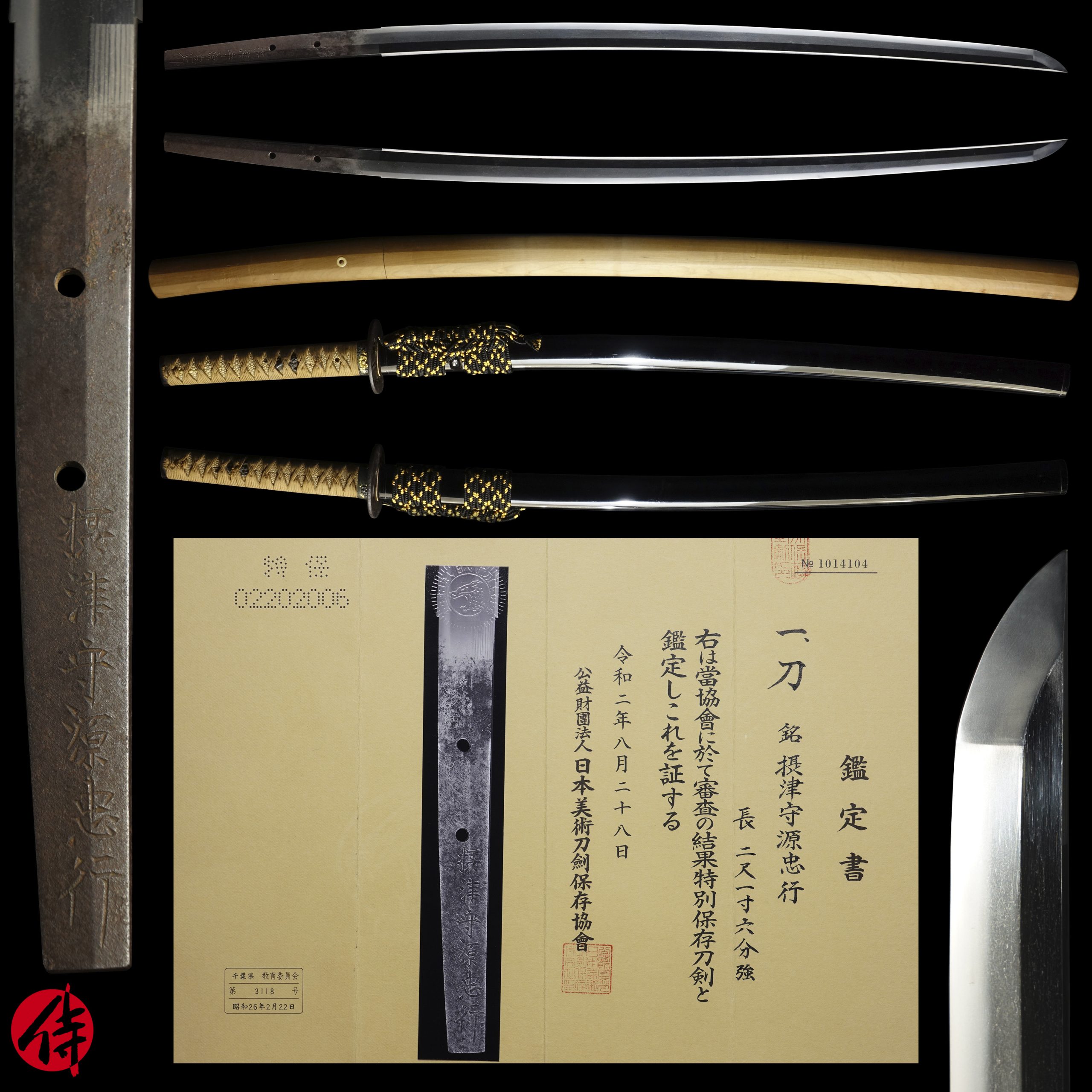
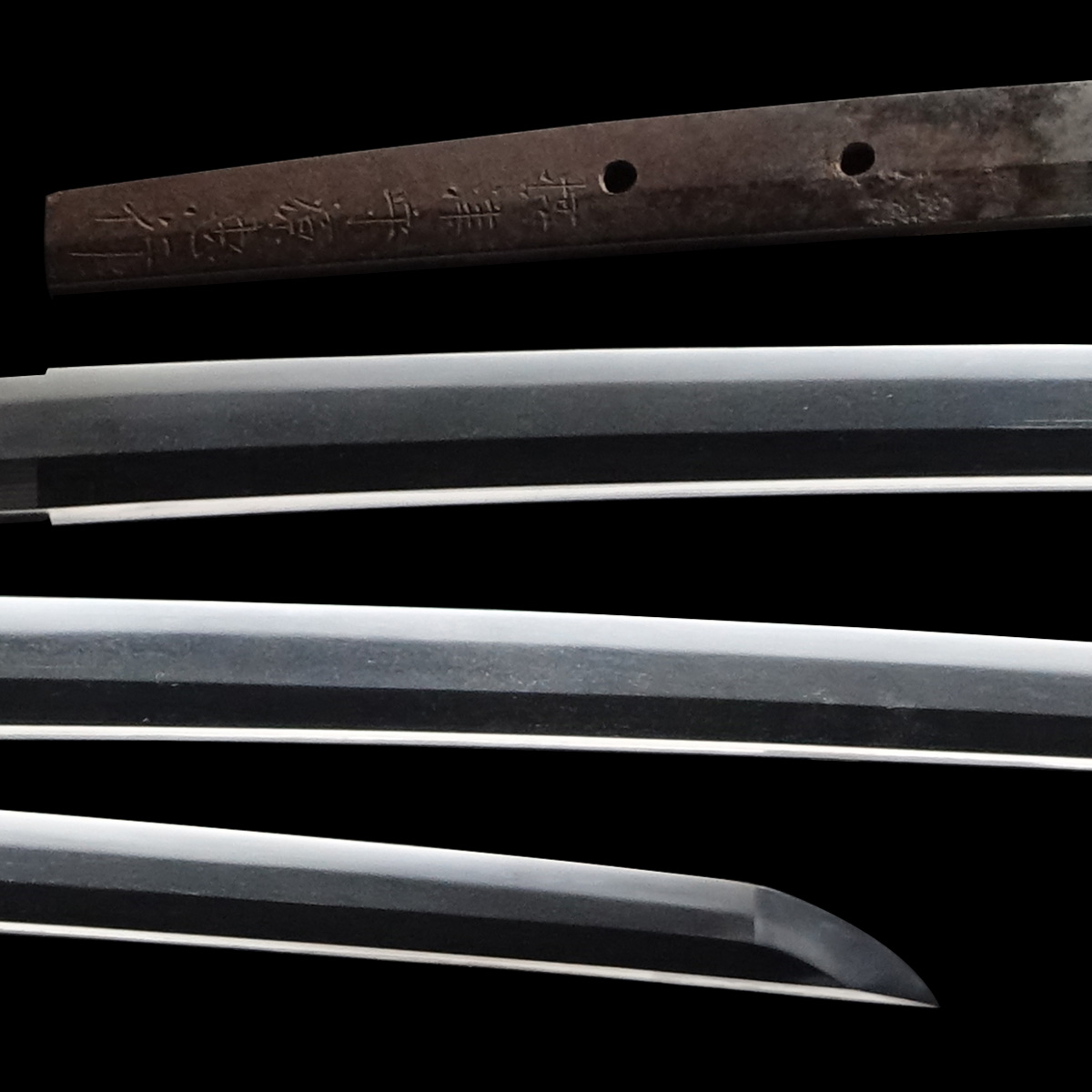
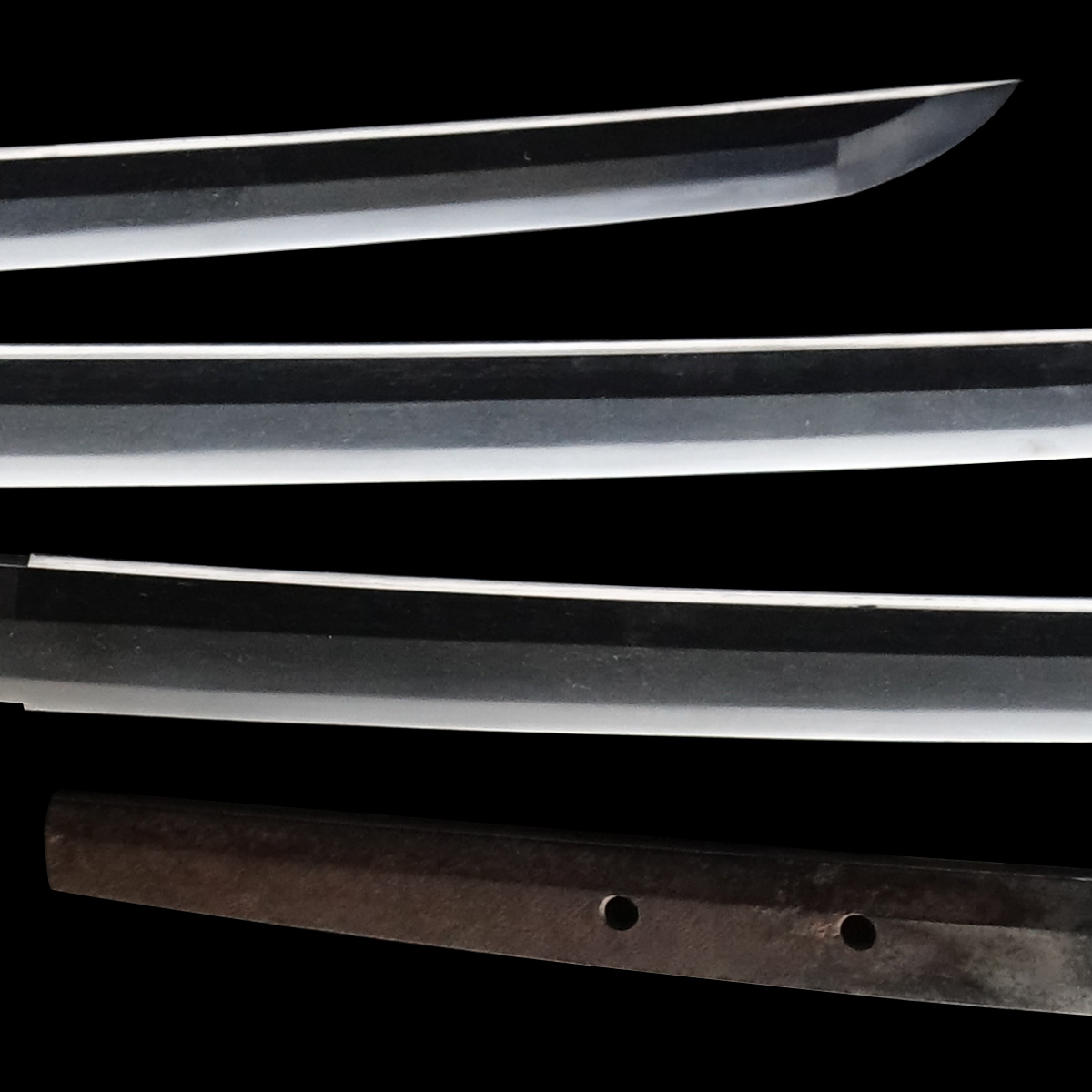
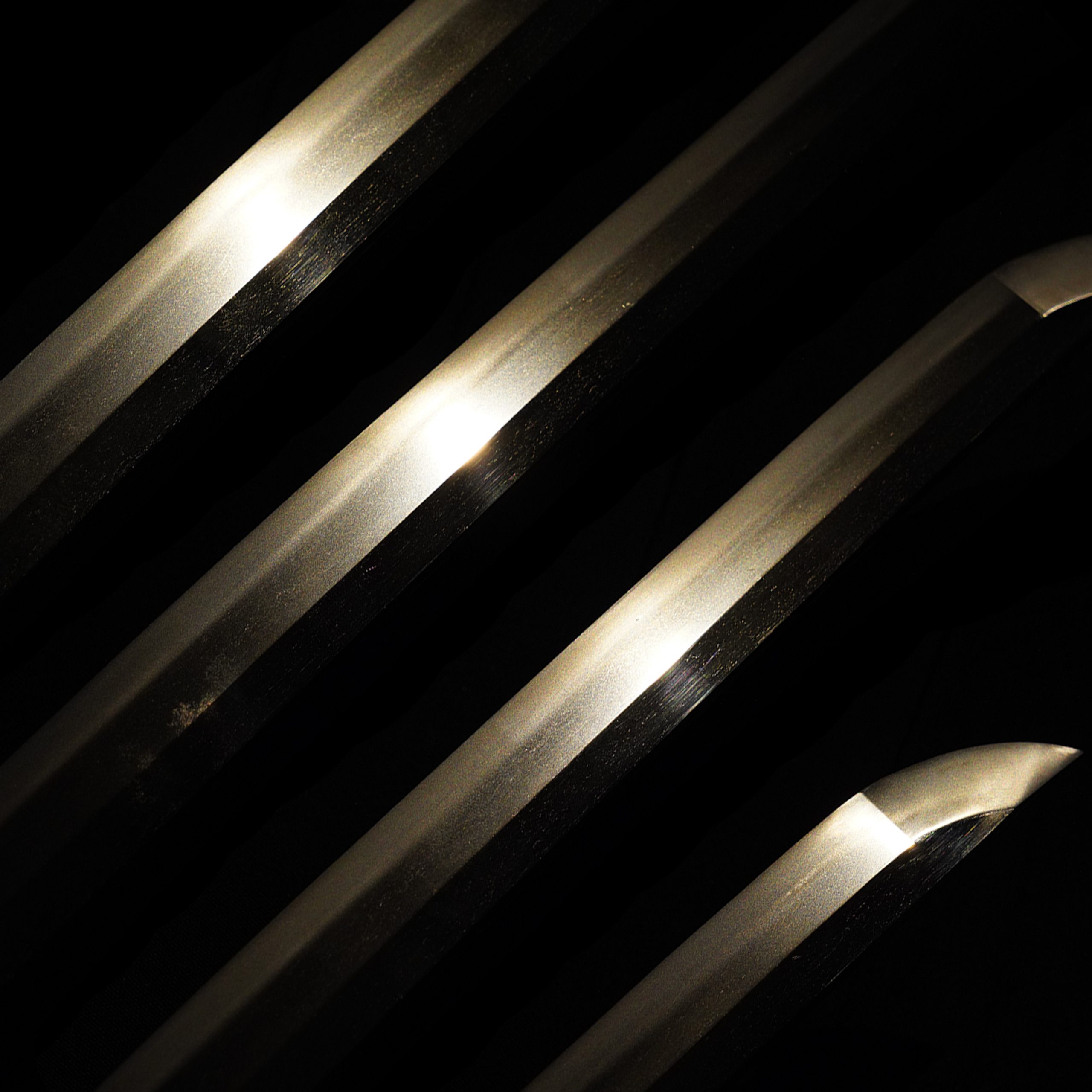
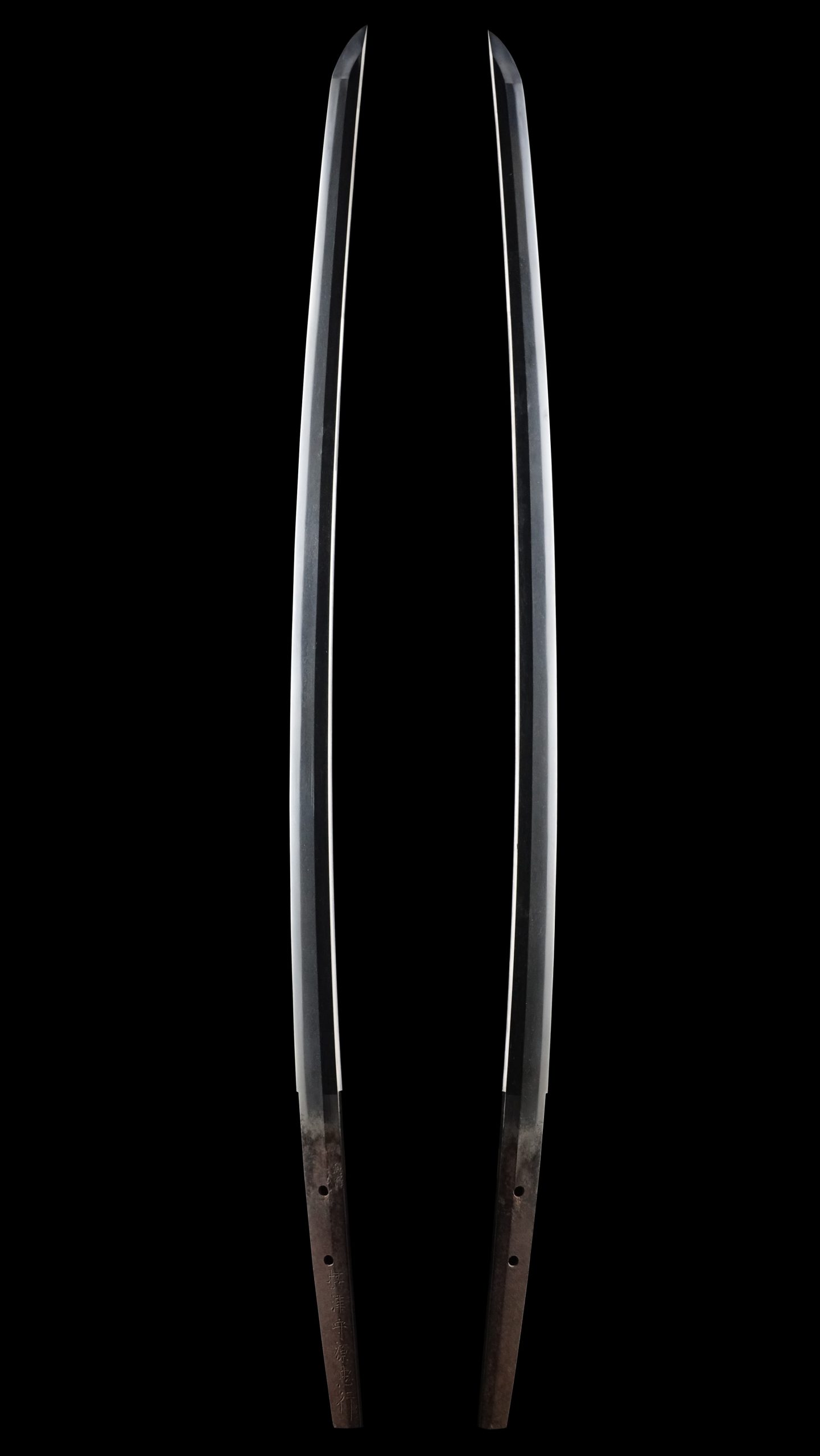
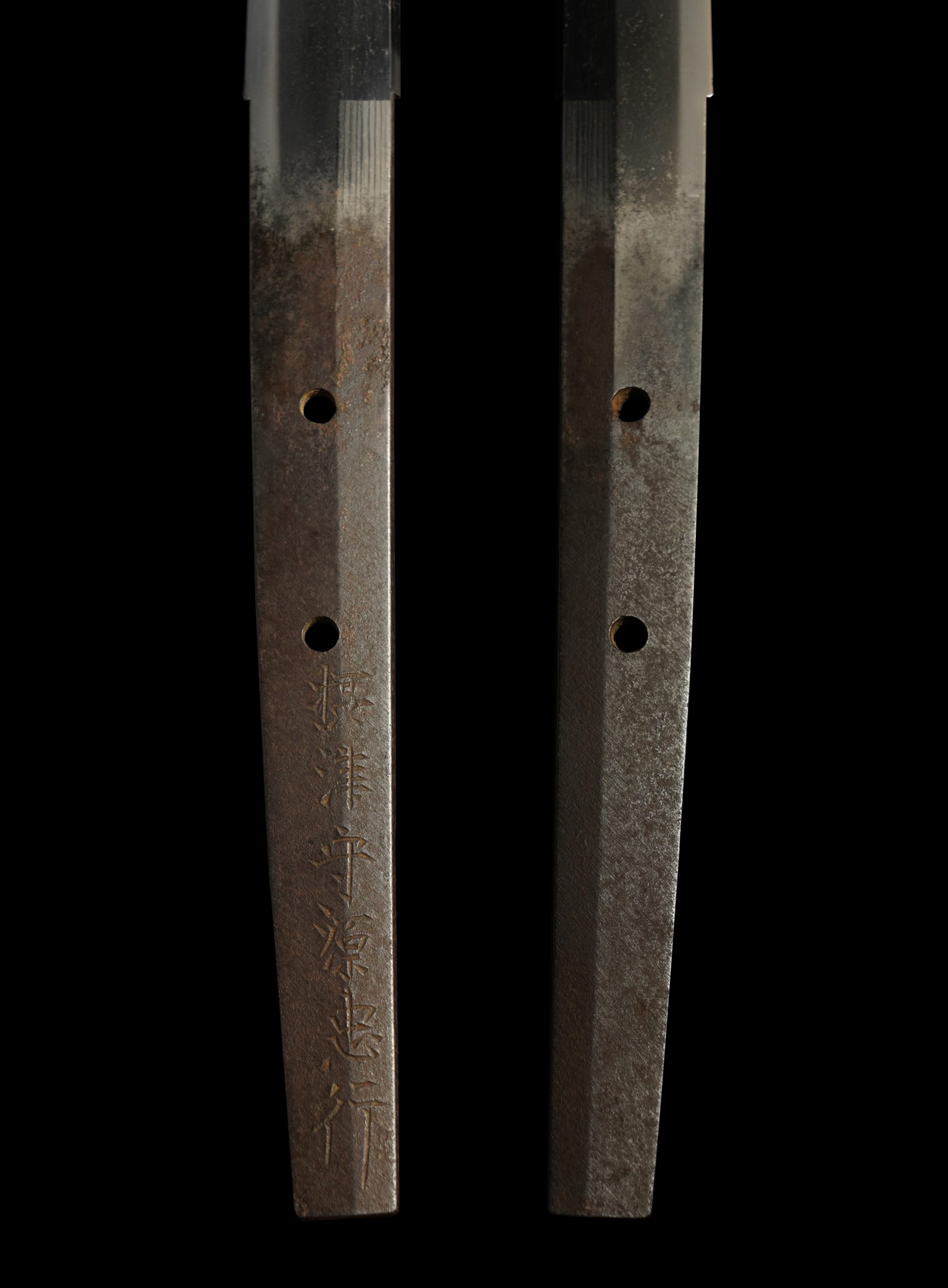
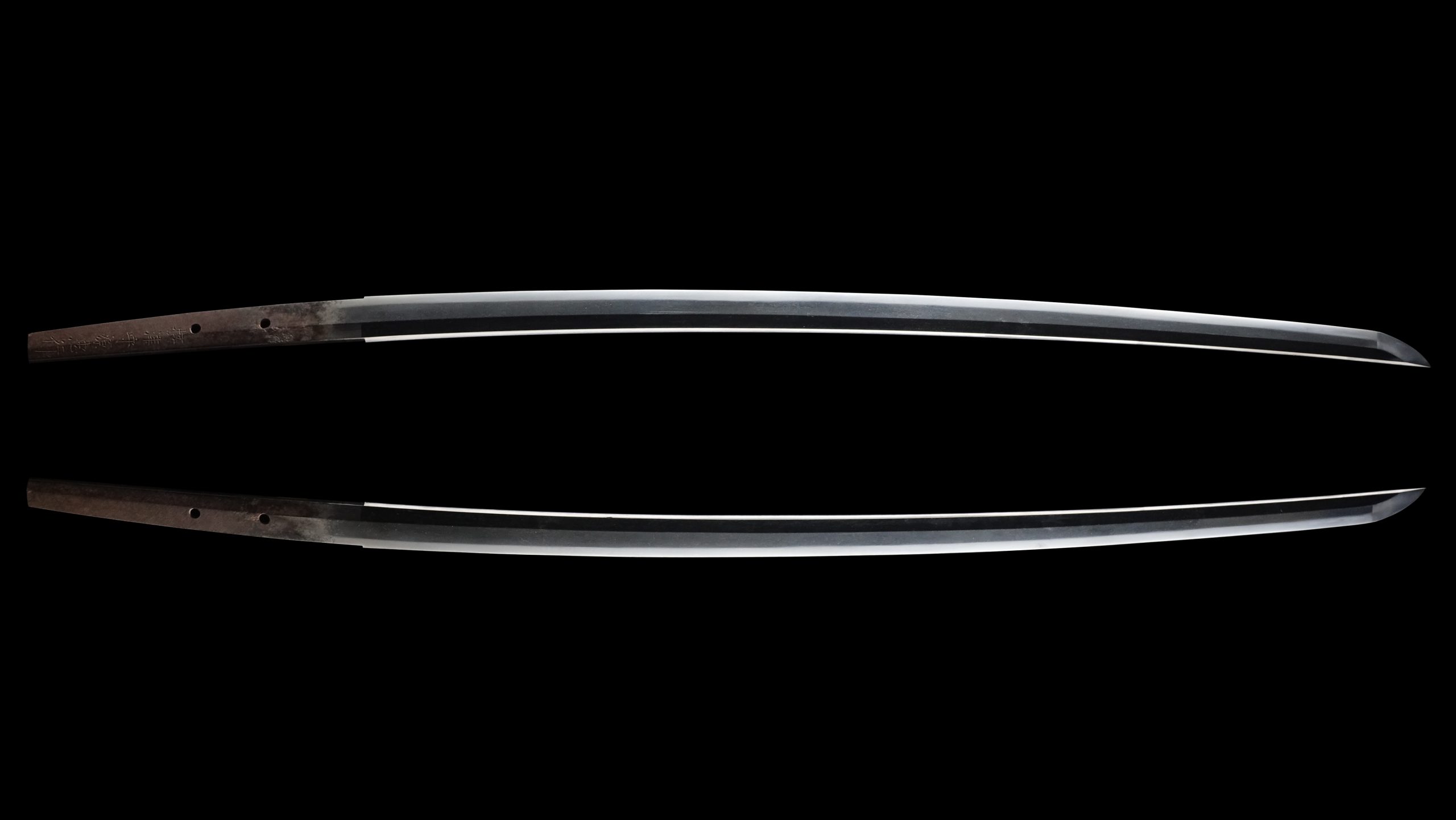
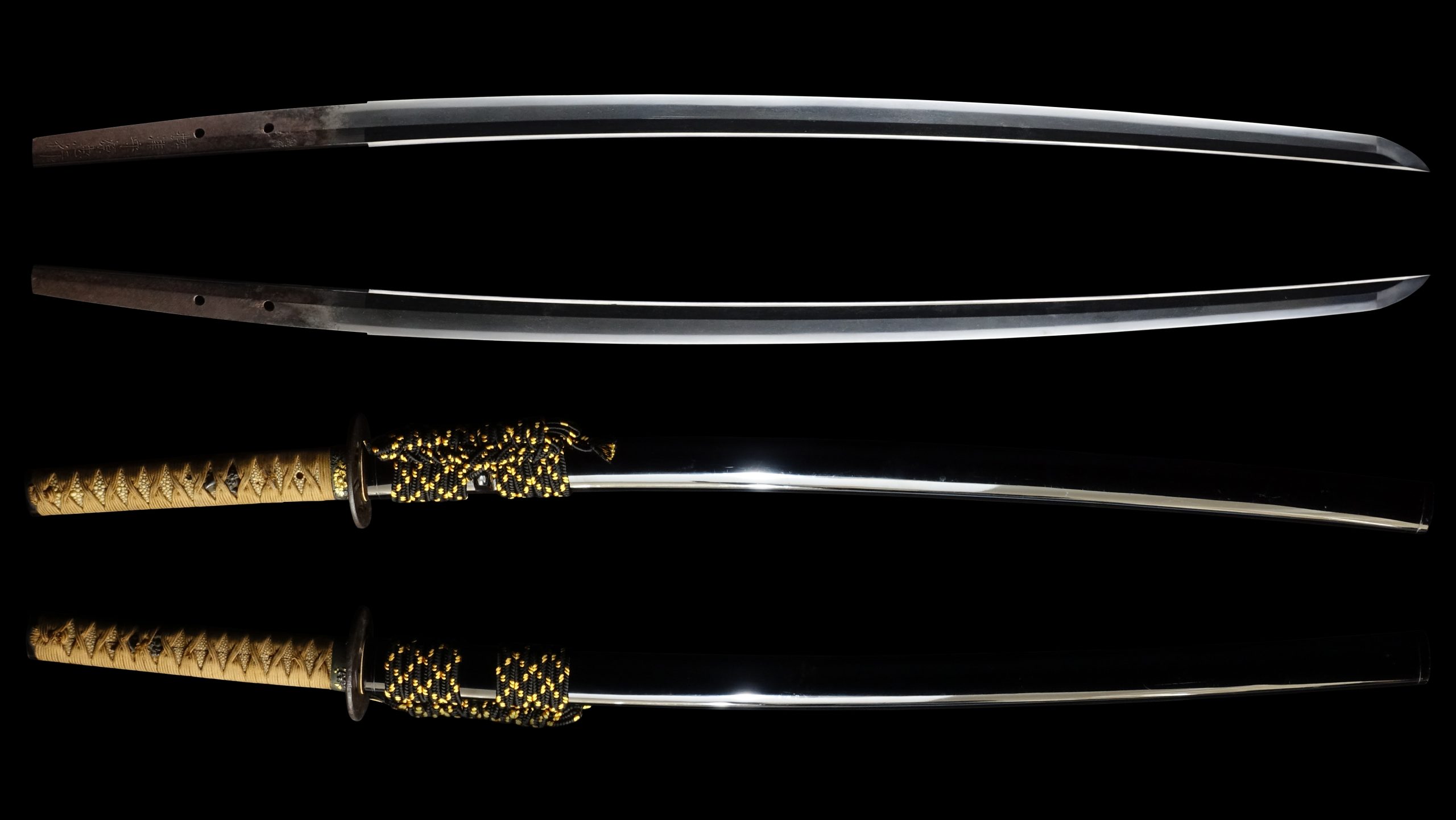
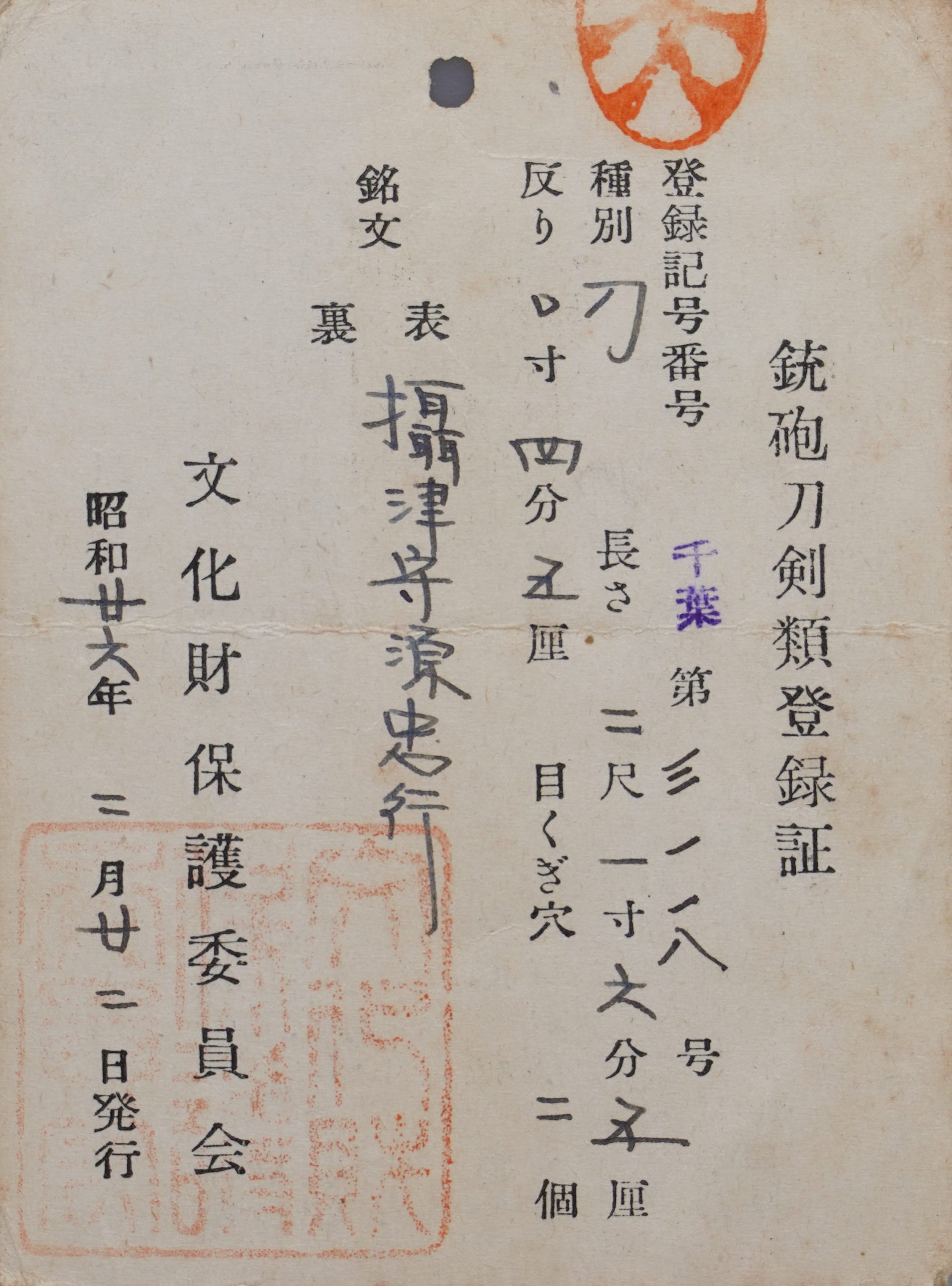
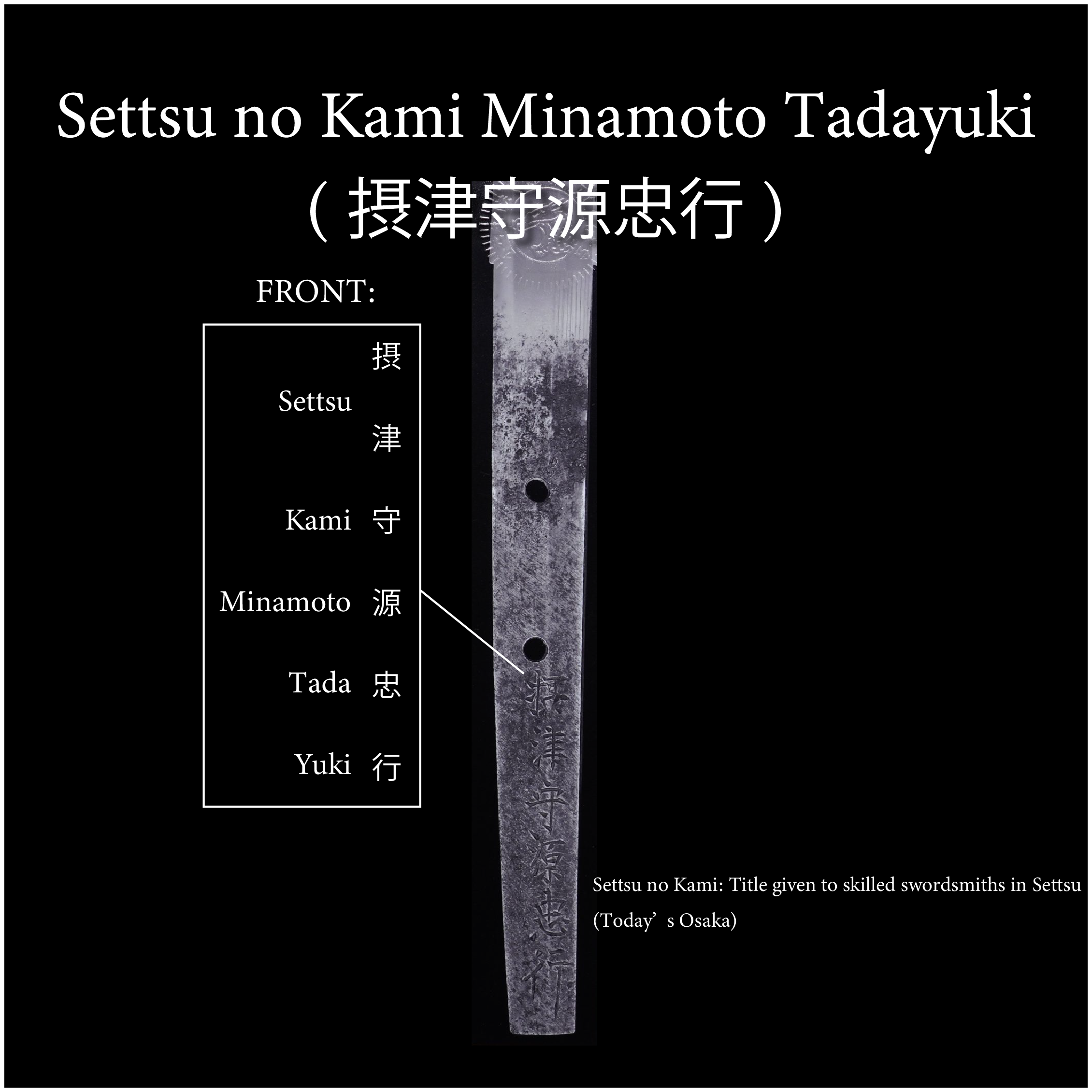
This blade was forged by Settsu no Kami Minamoto Tadayuki(摂津守源忠行) during the early Edo Period. Based on the signature and NBTHK authentication paper, we believe the second-gen Tadayuki forged it.
The first-gen Tadayuki was the younger brother of Awataguchi Omi no Kami Tadatsuna(粟田口近江守忠綱), one of the most famous swordsmiths in Osaka in the early Edo period. It is said that the first-gen Tadayuki was an apprentice of Tadatsuna, so was the second-gen. And the first-gen and often did Daimei for Tadatsuna while the second-gen helped them forged great swords.
Daimei is a regular act where an apprentice or a child of the swordsmith signed his master’s name with his master’s permission, being involved in a sword-forging.
While the first-gen Tadayuki used Fujiwara as his sir name, the second-gen used Minamoto. The second-gen Tadayuki was a niece of Tadayuki dedicated his career to working for Tadatsuna. Therefore, there aren’t many remaining works signed by the second-gen Tadayuki.
The blades forged by Tadayuki are categorized as Osaka Shinto. Shinto is Japanese Sword terminology that refers to the swords forged during 1596-1781. The blades made in Osaka area during this period are called Osaka Shinto. There are many famous swordsmiths in this Osaka Shinto era. After Hideyoshi Toyotomi built Osaka castle, Osaka city flourished as a castle town and became the business center. Many swordsmiths moved to Osaka to look for better opportunities. They not only forged swords for those Samurai who lived in Osaka but also for feudal lords nationwide. Ikanshi Tadatsuna(Awataguchi Omi no Kami Tadatsuna), Inoue Shinkai, and Tsuda Sukehiro are the most famous ones among those many swordsmiths.
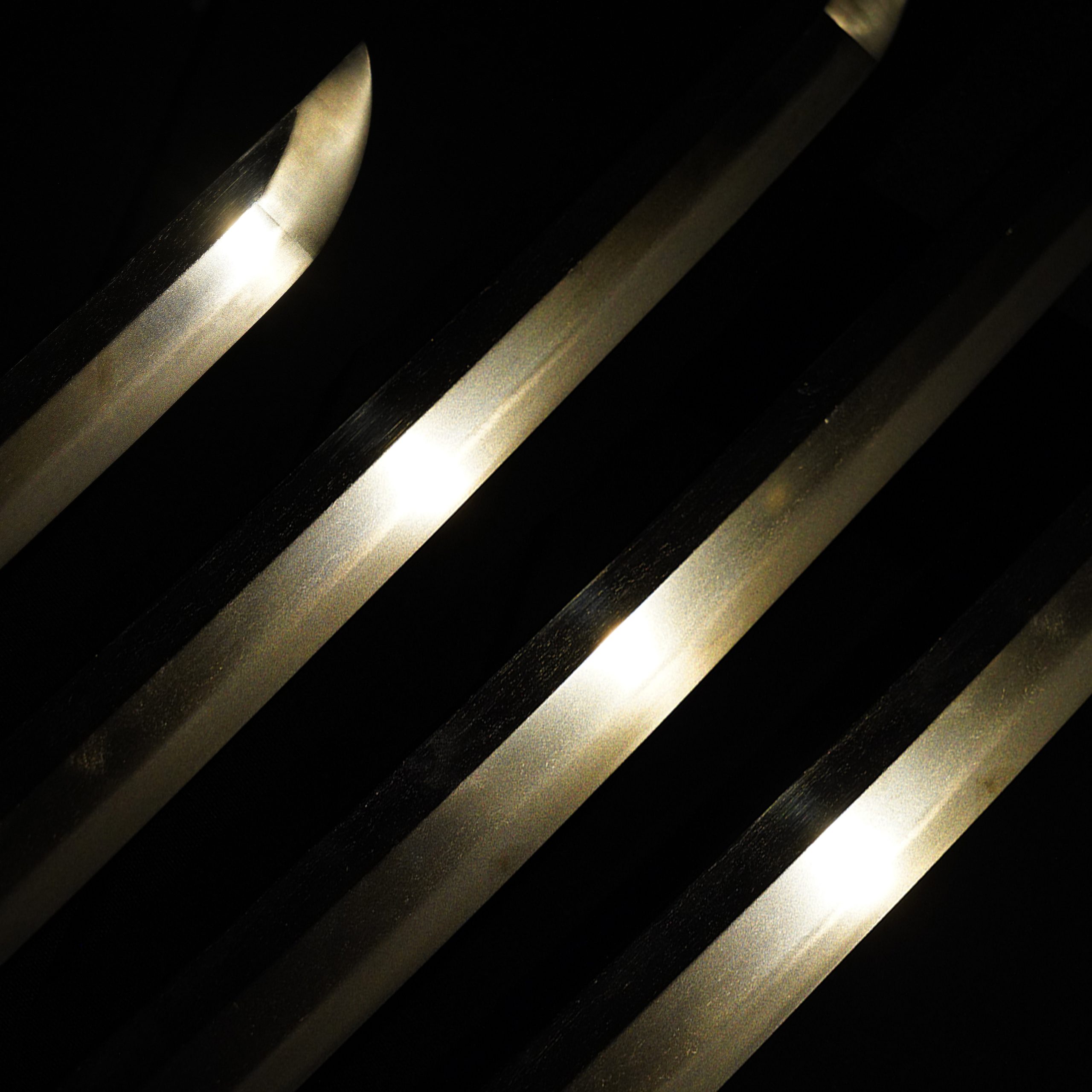
One of the most notable characteristics of Osaka Shinto is its beauty in Jigane. Jigane is a visible steel surface pattern created by folding and hammering during the forging process), which made it possible by the location of Osaka. Osaka had close access to the Tamahagane(special carbon steel to make Japanese swords) production sites. The swordsmiths residing in Osaka were able to get high-quality carbon steel from these sites.
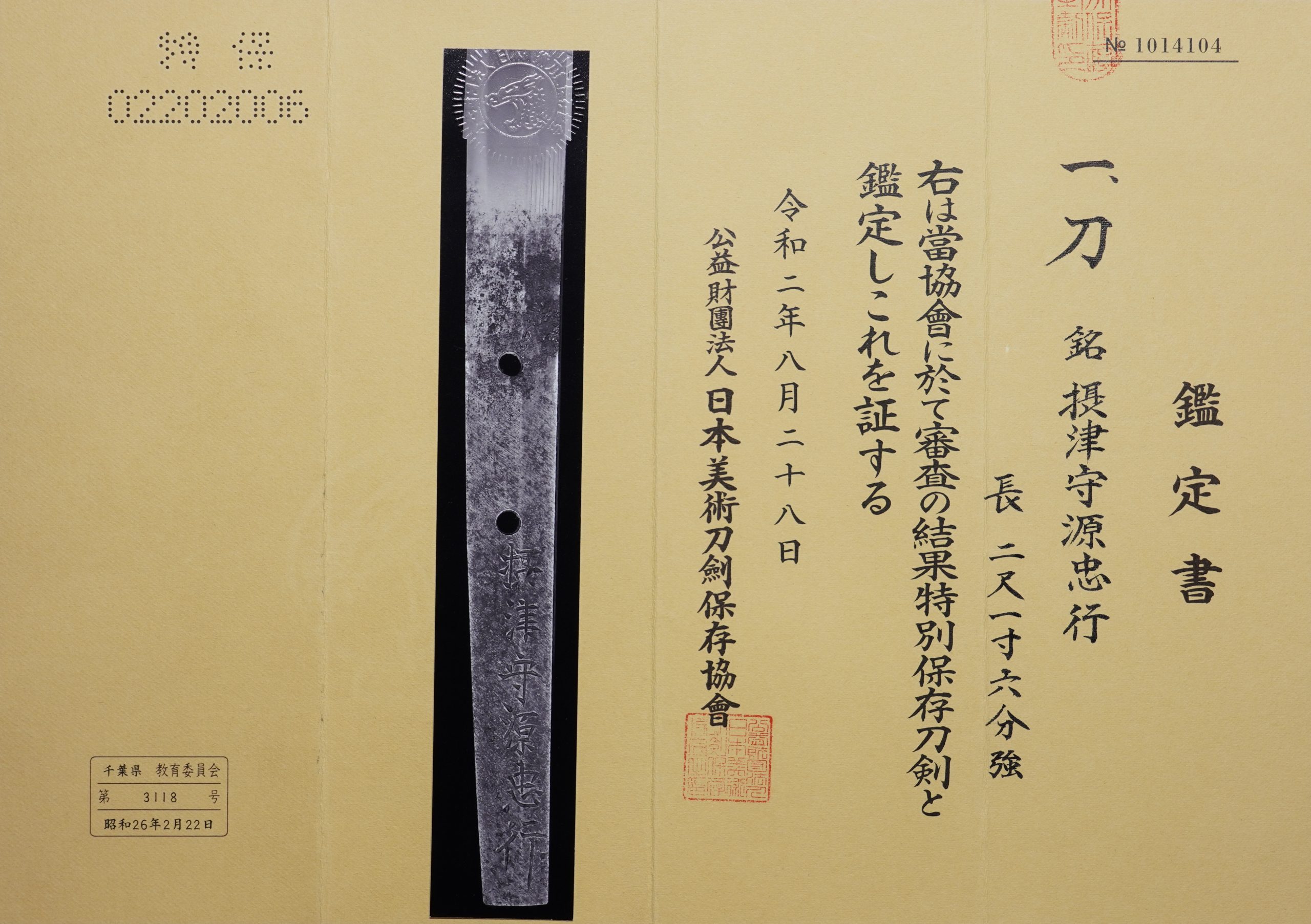
This blade is appraised as a Tokubetsu Hozon Token(特別保存刀剣) issued by NBTHK(Nihon Bijutsu Touken Hozon Kyokai:日本美術刀剣保存協会).
Curvature(Sori)
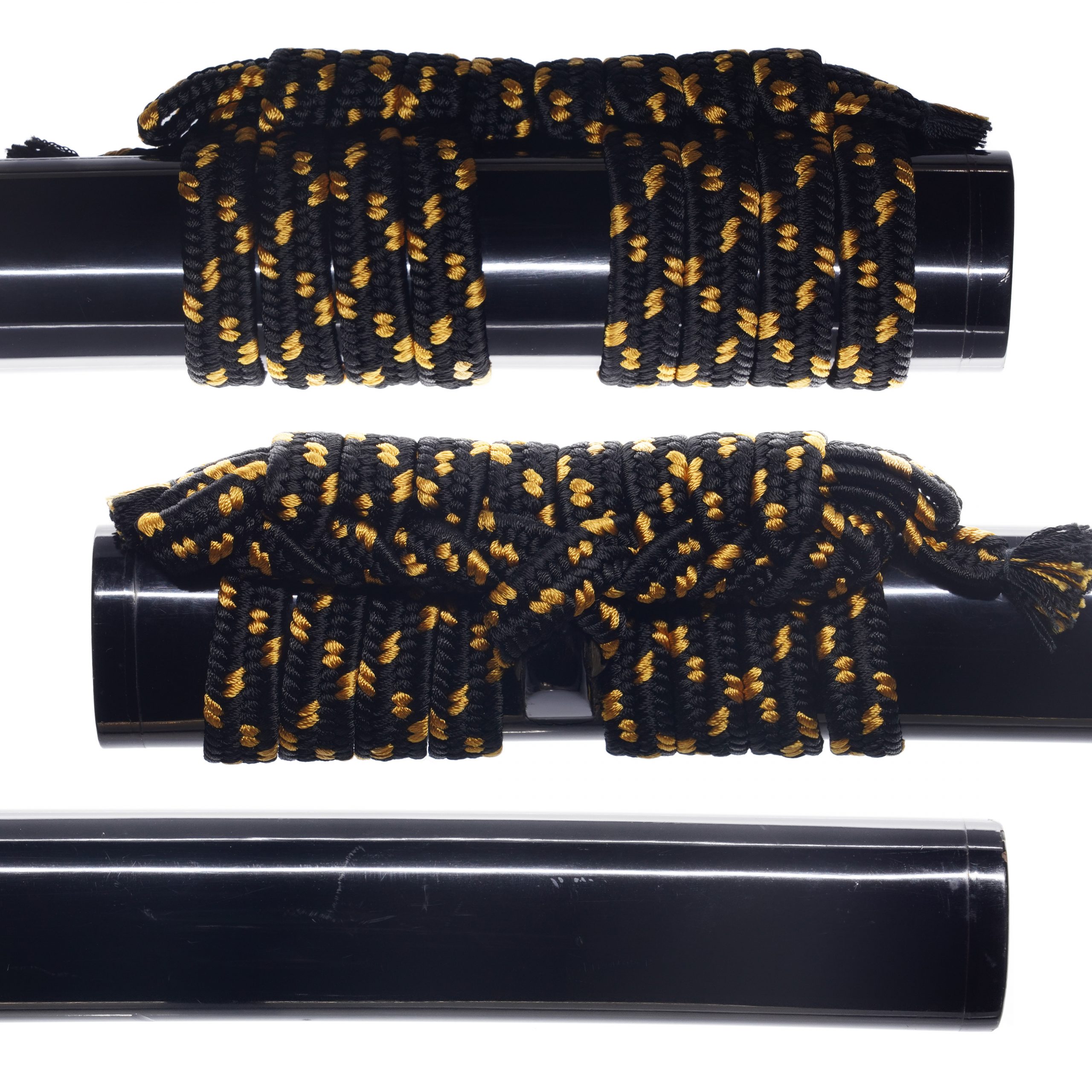
For more detailed measurement of the blade/sword mounting
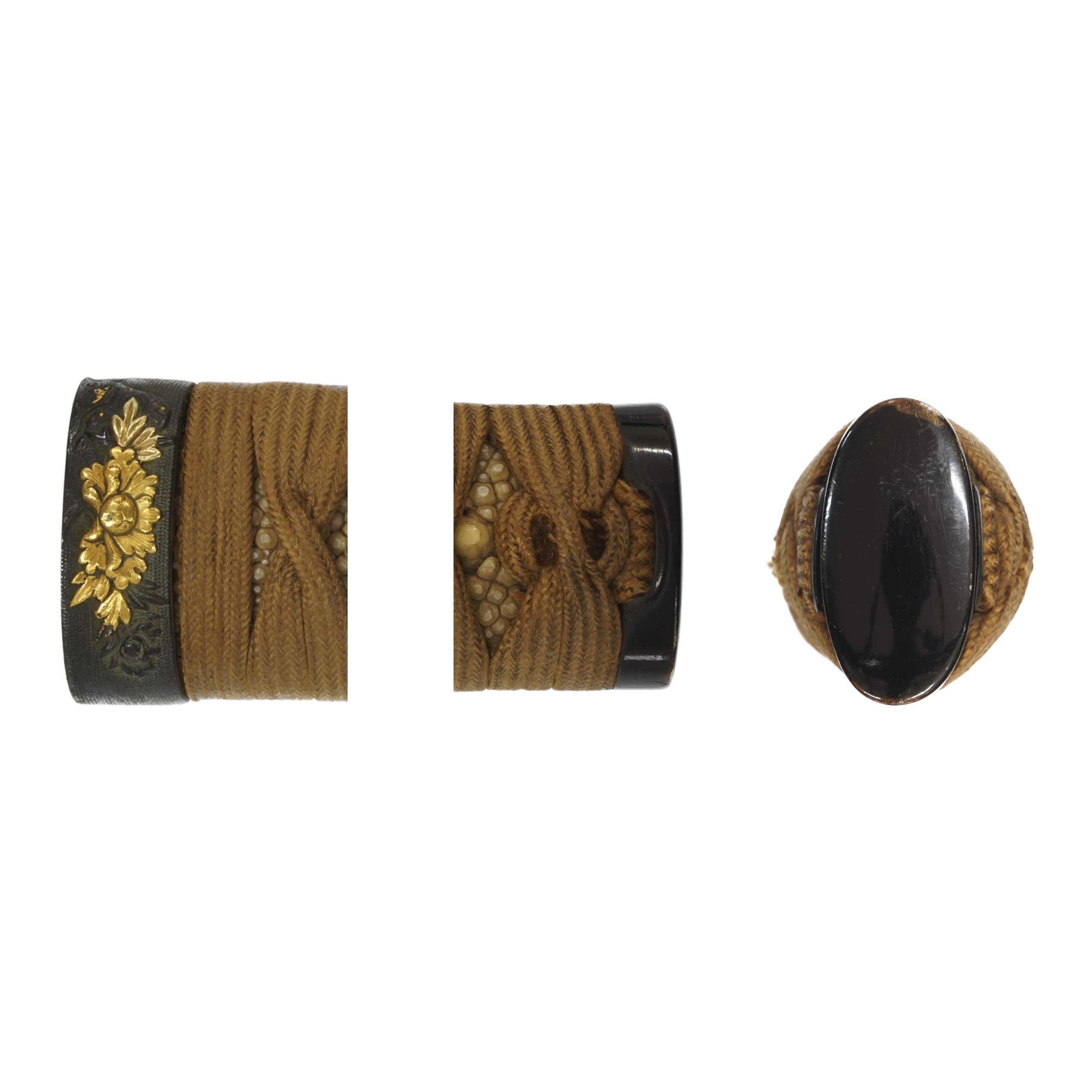
Fuchi-Kashira
Peonies are designed on this Fuchi Kashira. The gold is applied to these petals, buds, and leaves. According to a theory, peony represents happiness, wealth, nobleness, and gorgeousness. This flower pattern has been treated as a kind of good-omen motif; people regarded it as a rich harvest sign. Peony is called “Botan” in Japanese. When we write this flower’s name in Japanese, its second letter means mountain hermit medicine that would give us eternal youth. Based on the meaning of this letter, the peony pattern symbolizes eternal youth and longevity.
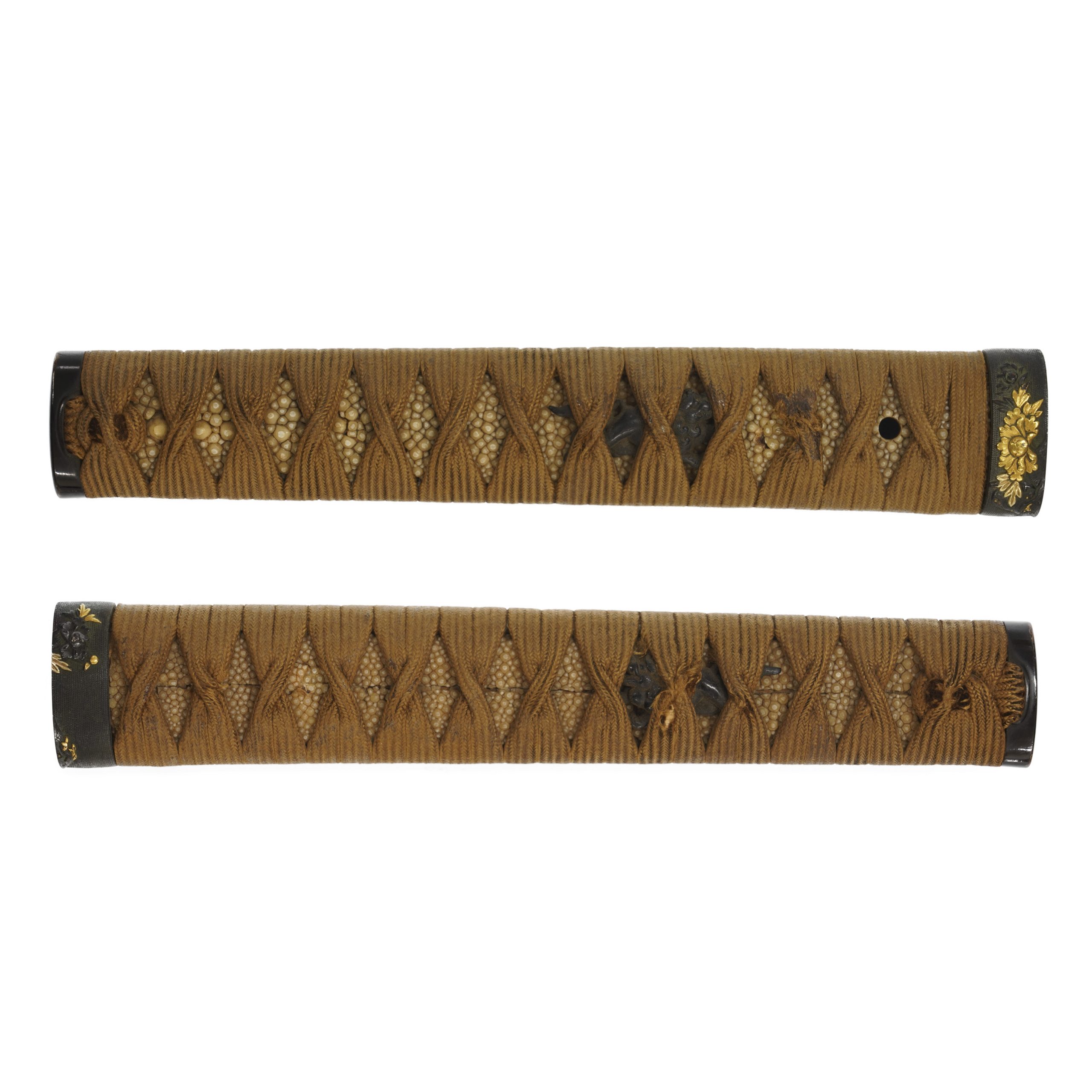
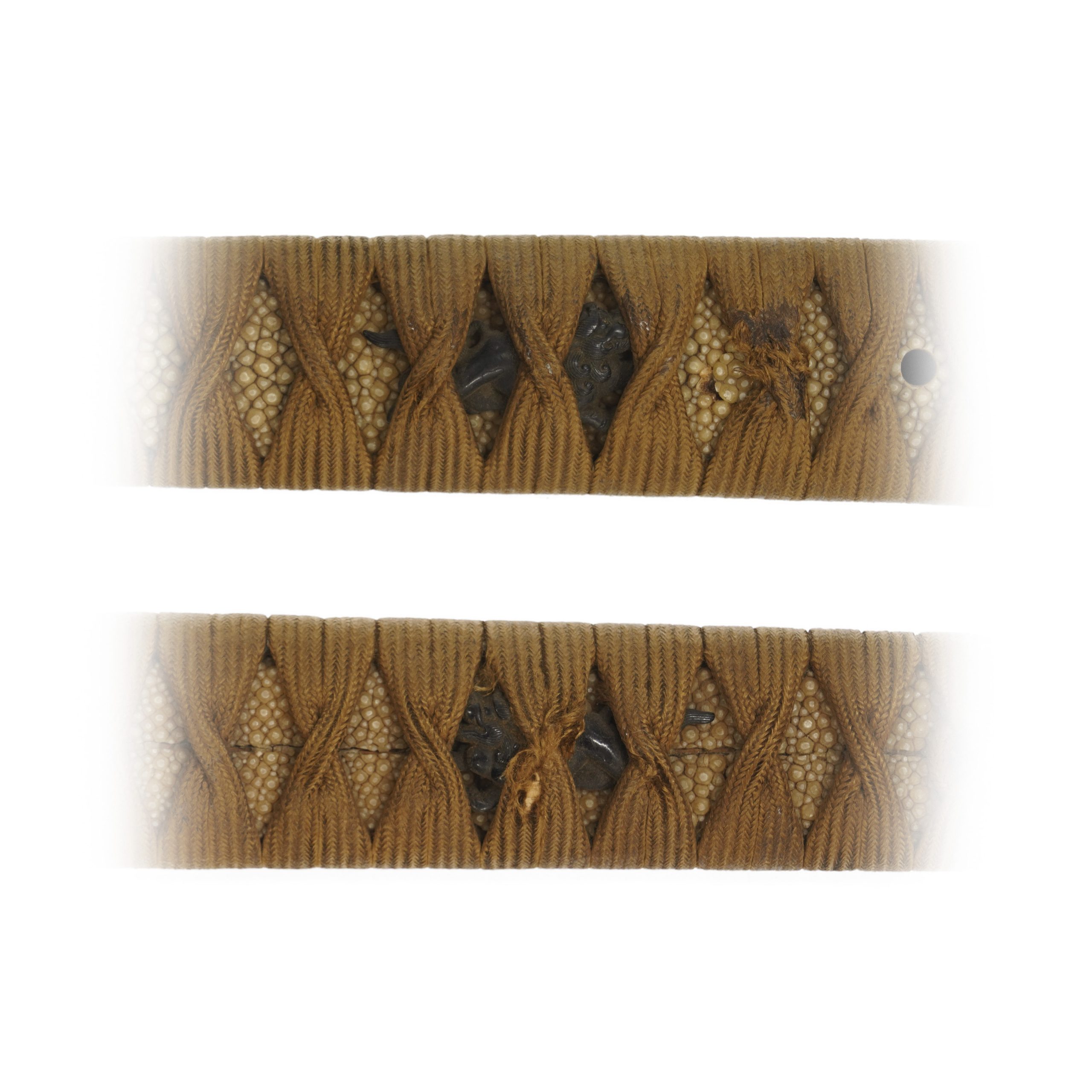
Tsuka and Menuki
Based on its curly hair, this Menuki’s motif might be the Kara-Jishi (唐獅子). Shishi (獅子) means a lion in Japanese, and Kara-Jishi is a lion brought from China to Japan in the Toh period (唐, Tang dynasty, 618-907). The Kara-Jishi typically has curly hair for its head, neck, body, and the tale. In Buddhism, Kara-Jishi is regarded as a symbol of wisdom, and Monju Bosatu (文殊菩薩, Manjushri Bodhisattva) rides lions. According to a theory, Kara-Jishi originates from Komainu (狛犬, stone guardian dogs that exorcize evil spirits).
Now, when you look at the entire of the Tsuka (handle) of this sword, you will notice that the Kara-Jishi is put between peony flowers because of the position of Menuki and Fuchi Kashira. This combination is a classical subject. There is a Houwa (法話, Buddhist monks tell the story of Buddhism in an easy-to-understand manner) that treats Kara-Jishi and peony. The lion is called the king of the beasts. However, even this invincible animal has only one fear; a bug in the lion’s body. This pest grows in the hair and eventually breaks the skin and bites the flesh. Nevertheless, it dies if it is exposed to be the night dew of peony. Therefore, the lion rests under peony flowers at night, looking for a haven. The maker of this Koshirae (general term of sword mountings) might have chosen due to this folklore.
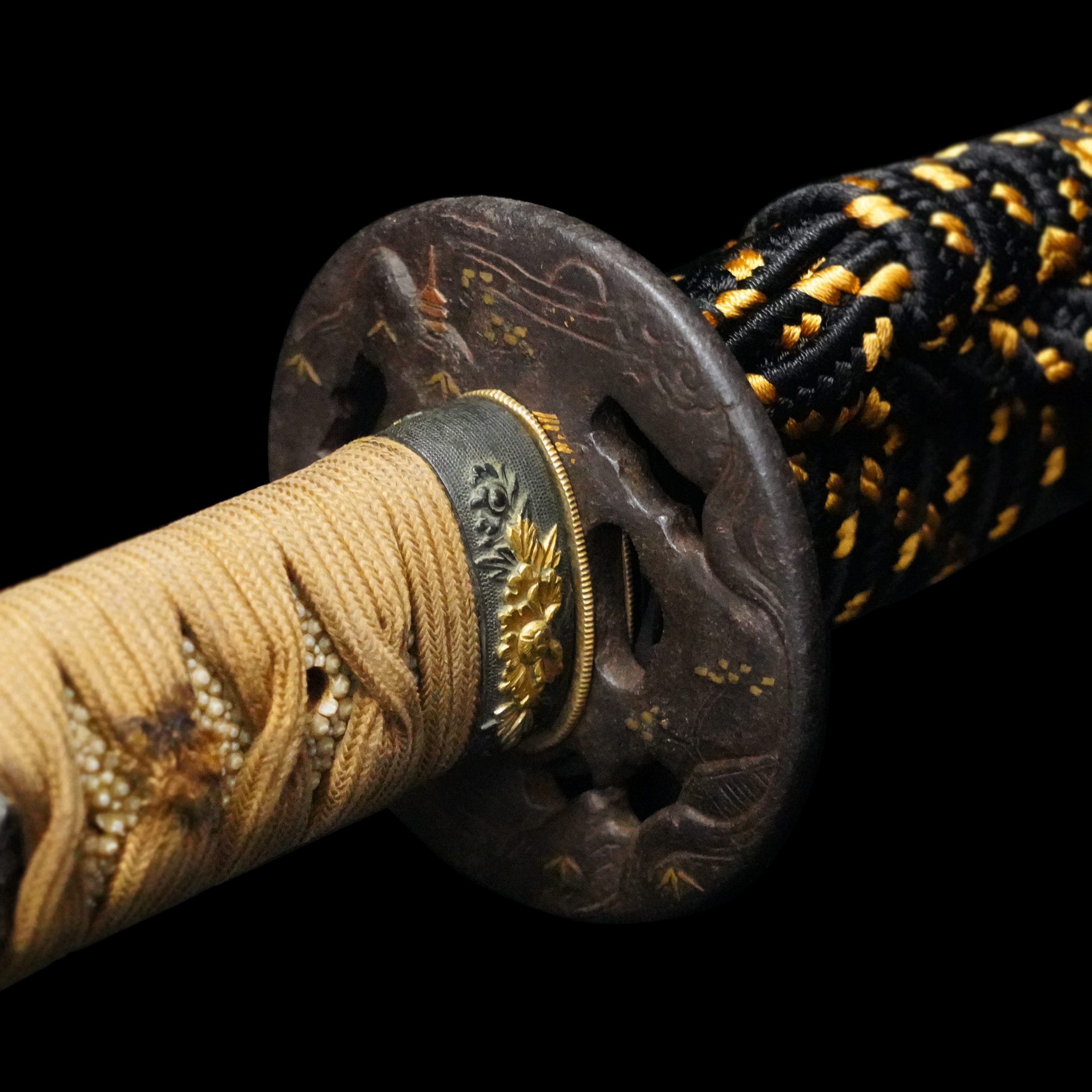
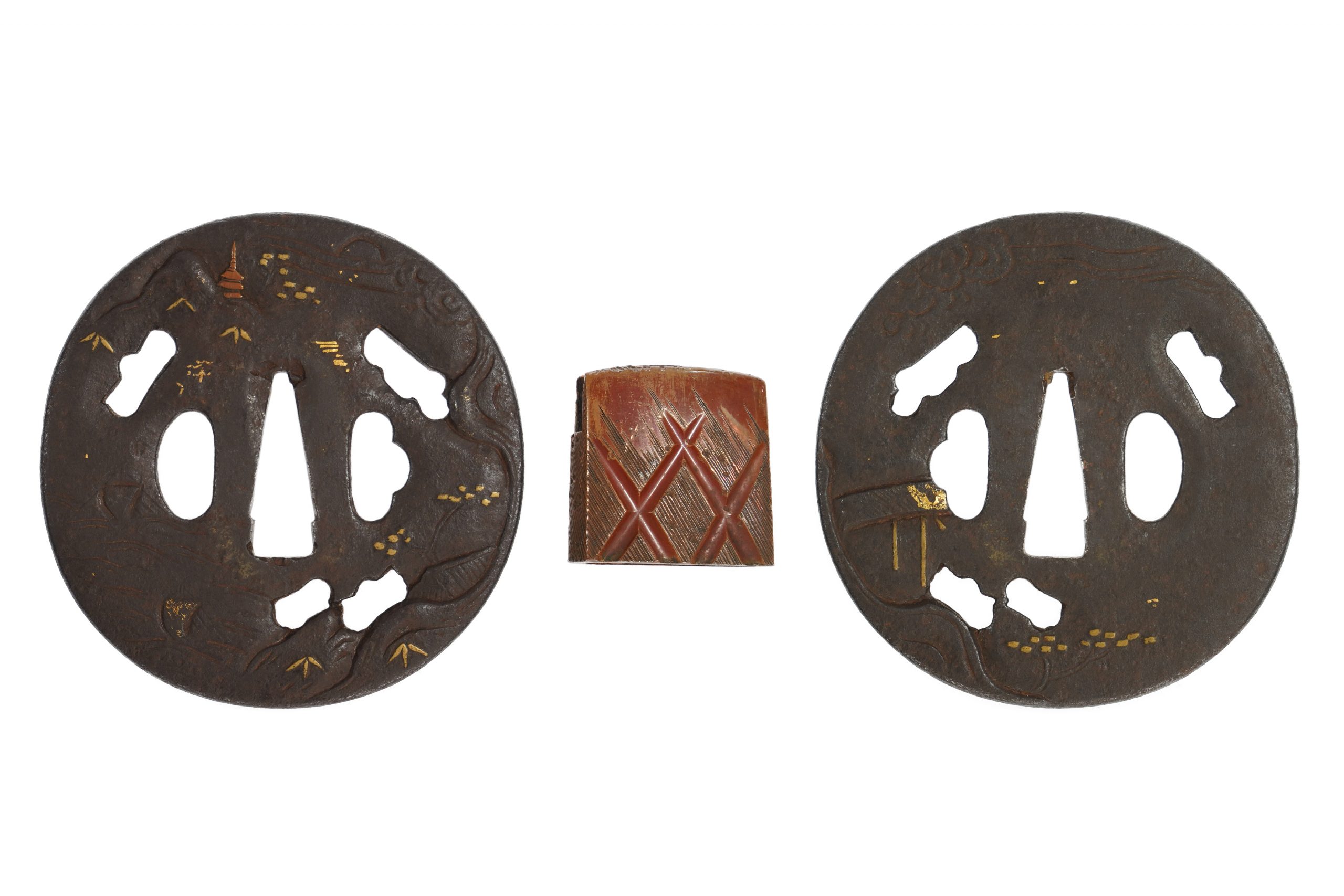
Tsuba and Habaki
Circle-shaped Tsuba made from iron. Sansui Zu (山水図) is the theme of this Tsuba. It is a landscape painting that depicts mountains and watersides. It is said this design was brought to Japan from the Continent. Human characters are sometimes described together. Some themes treat a scene from the story, legend, or folklore.
The natural scenery is elaborately expressed in this work. The mountain’s surface with vegetation is in the short-range view, and you would find small ships on the water behind it. In the distant view of the screen, you could see towering mountains and the building, which looks like a temple. Some parts are inlaid with golden metal (probably brass); it gives the gorgeousness for this Tsuba’s appearance.
Authentication Paper
They authenticated the blade on Aug 19th in the 2nd year of Reiwa (2020). They appraised it as a Tokubetsu Hozon Touken, the blade especially worth preserving for Japanese society.

 NihontoWatch