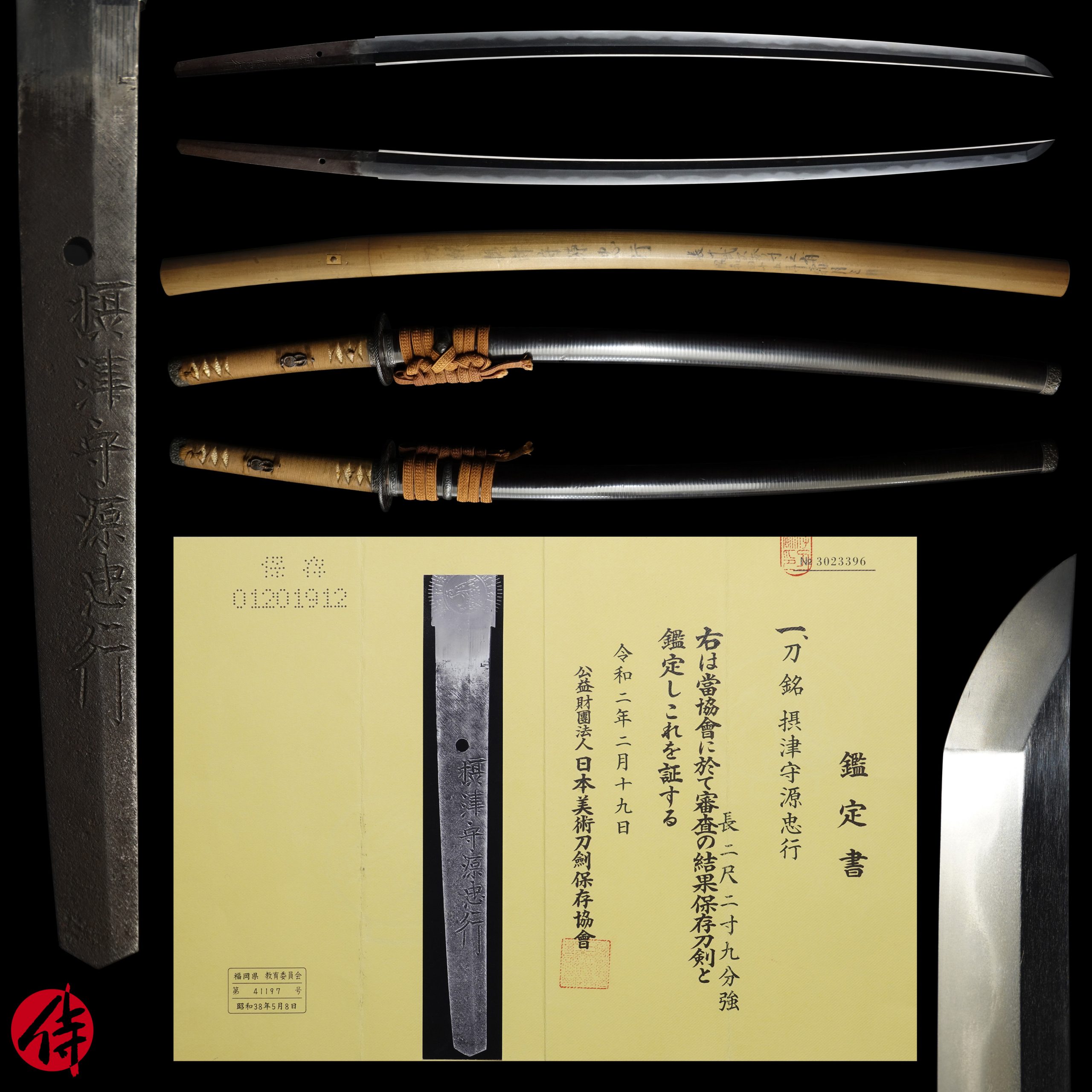
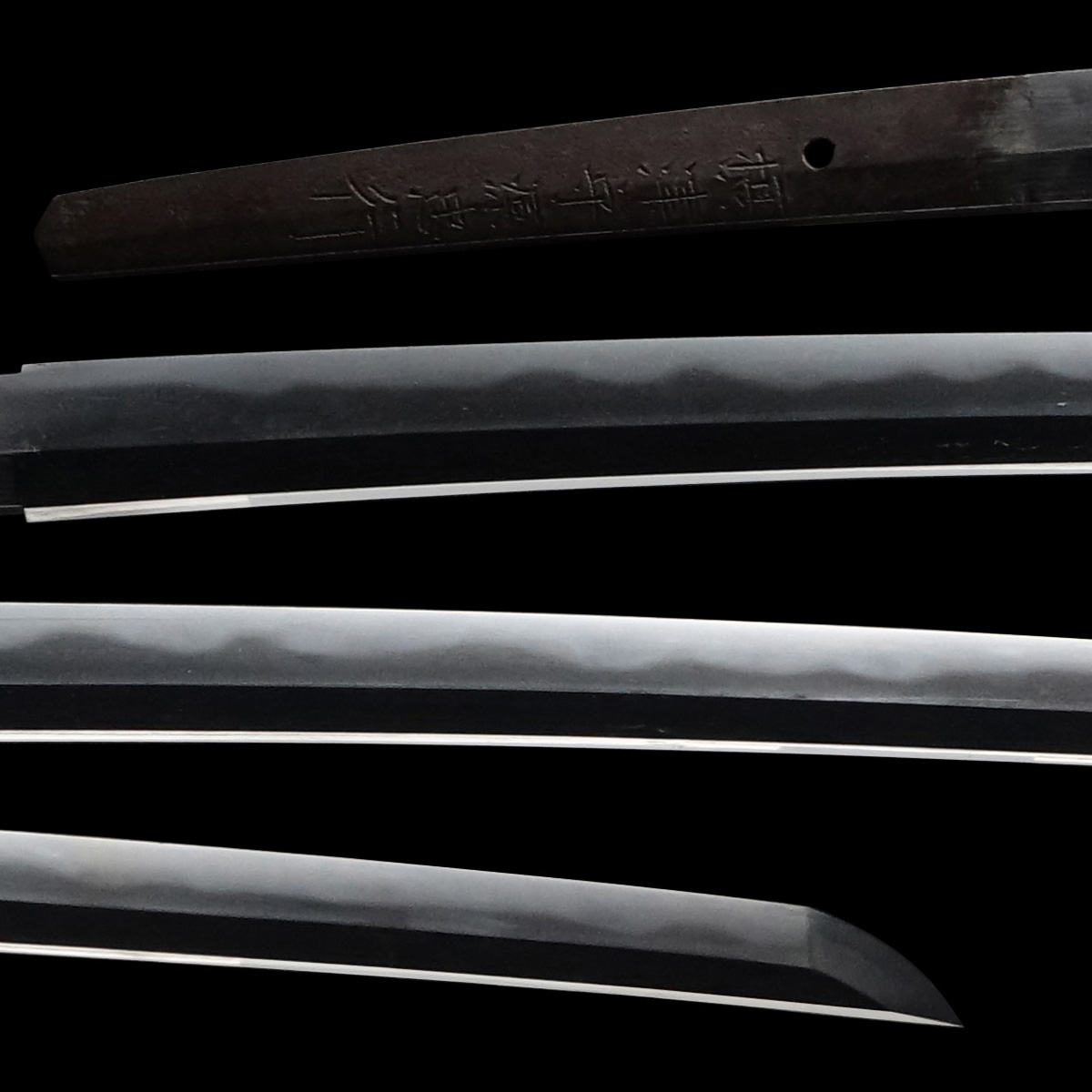
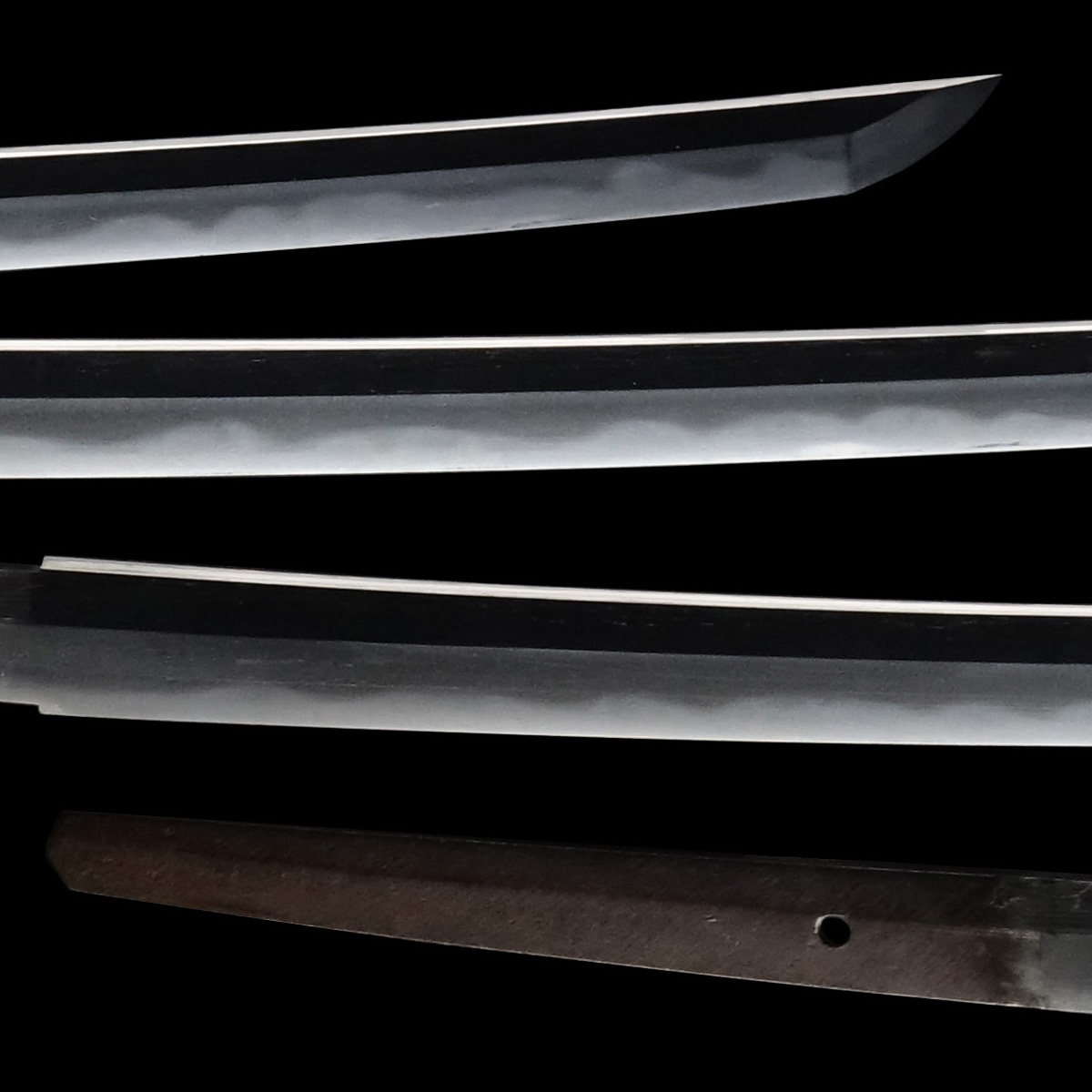
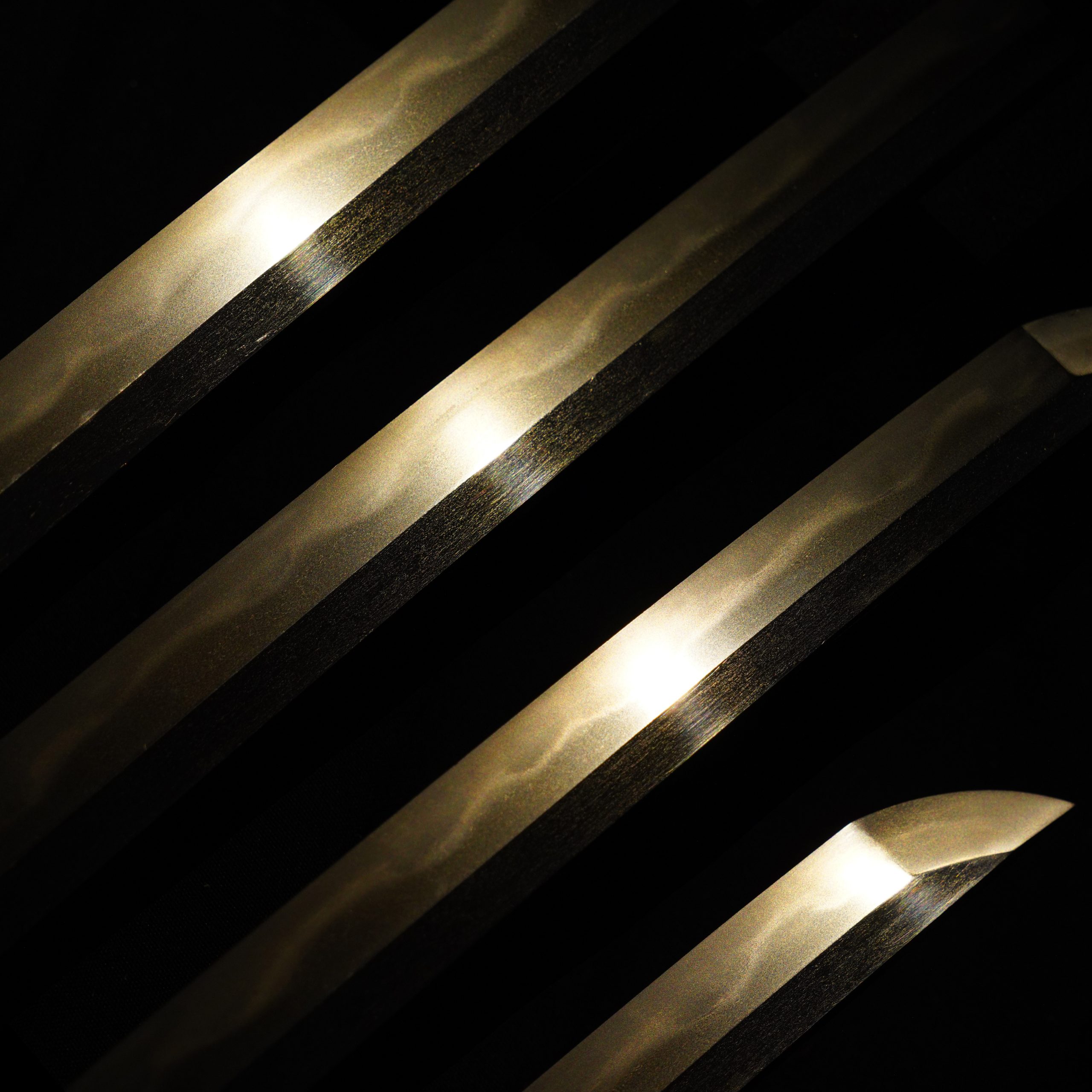
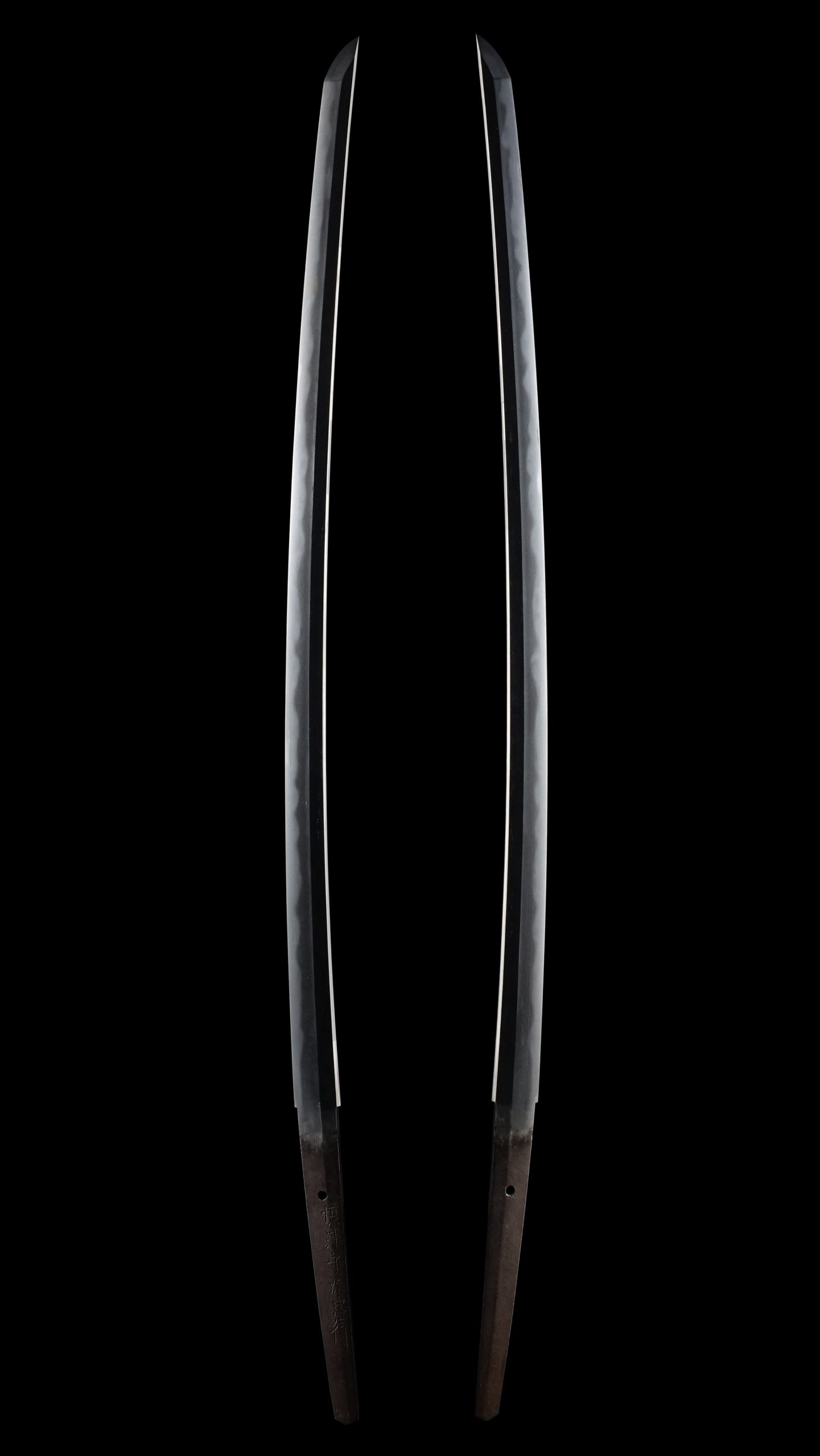
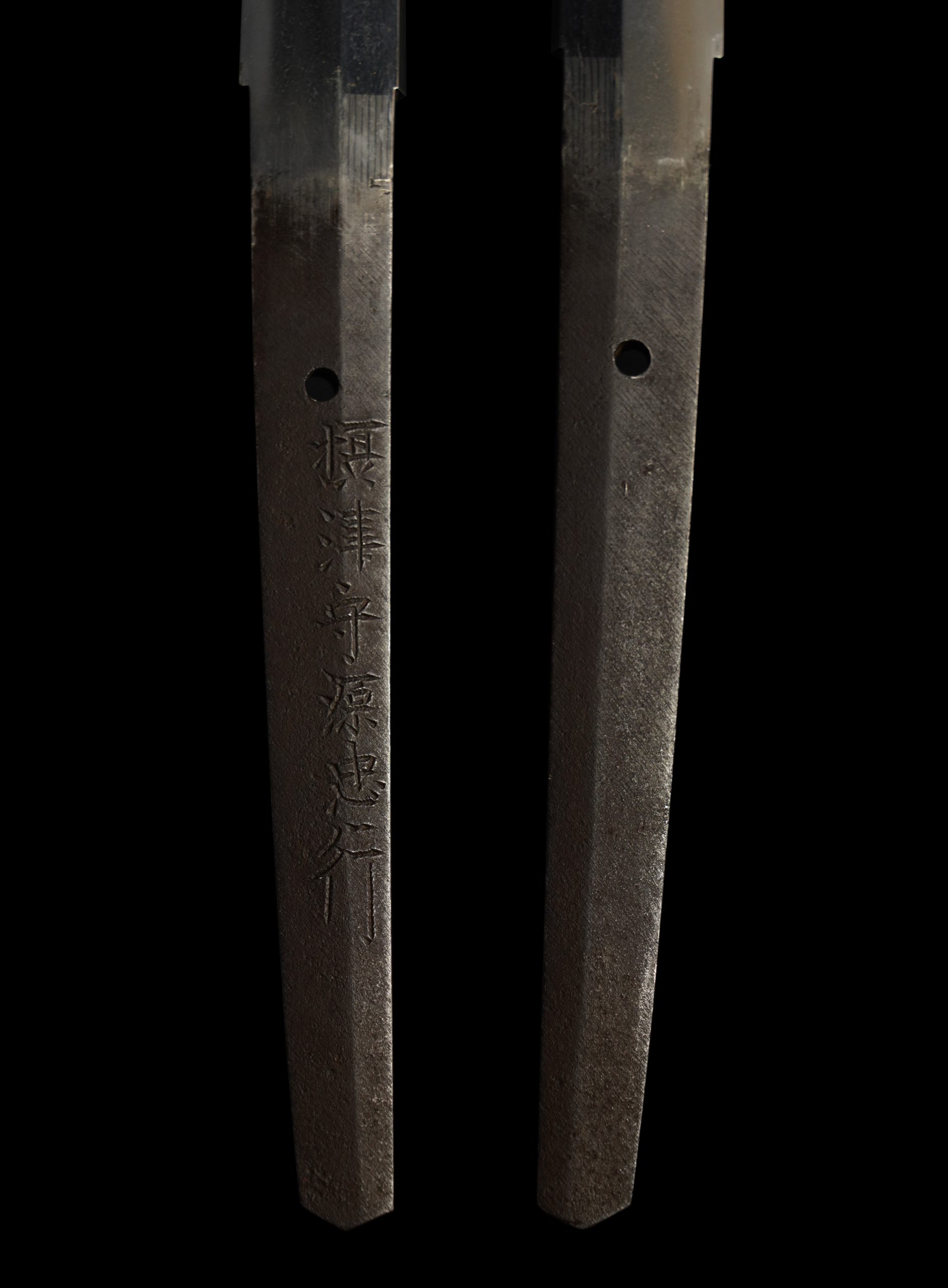
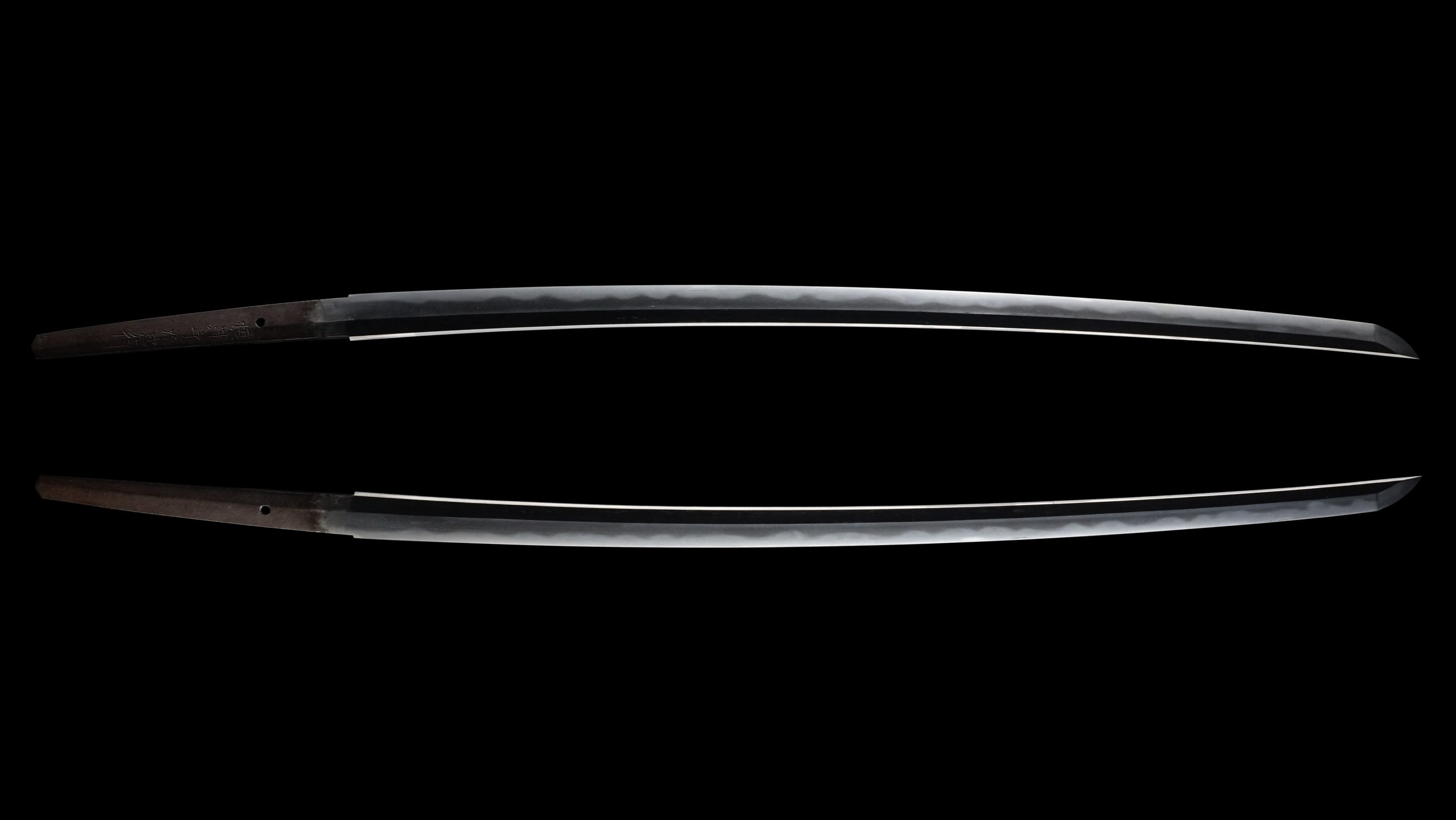
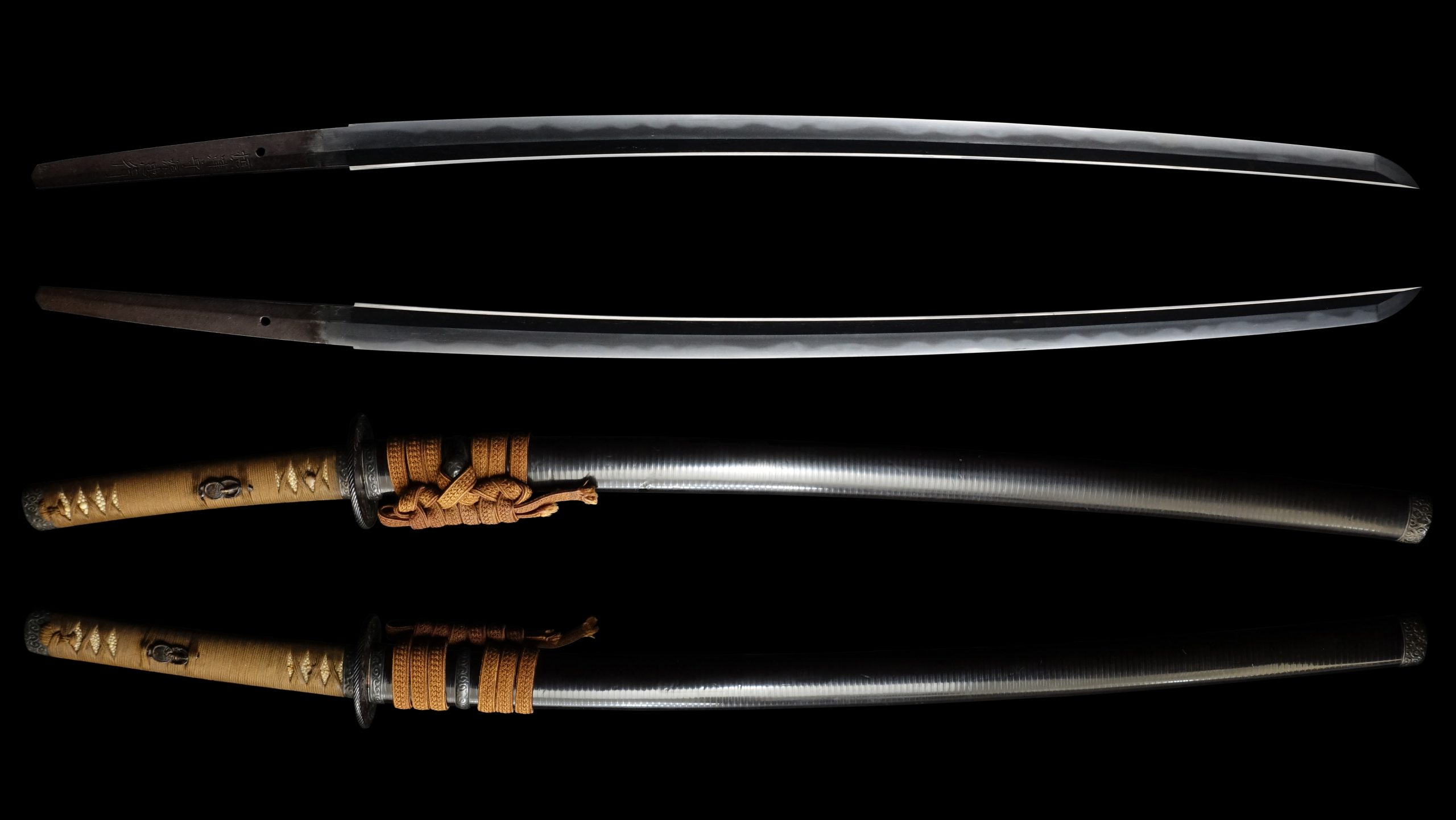
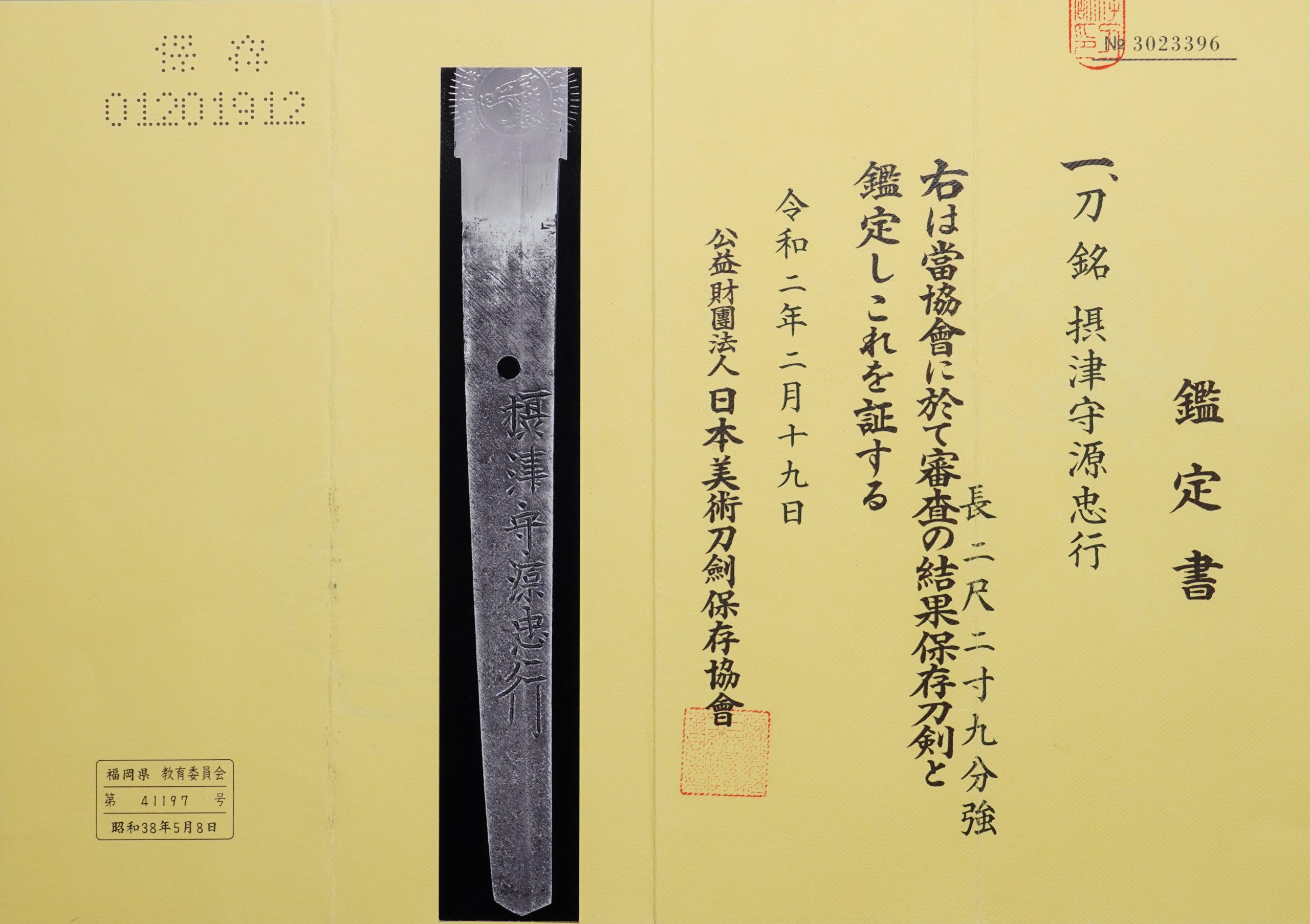
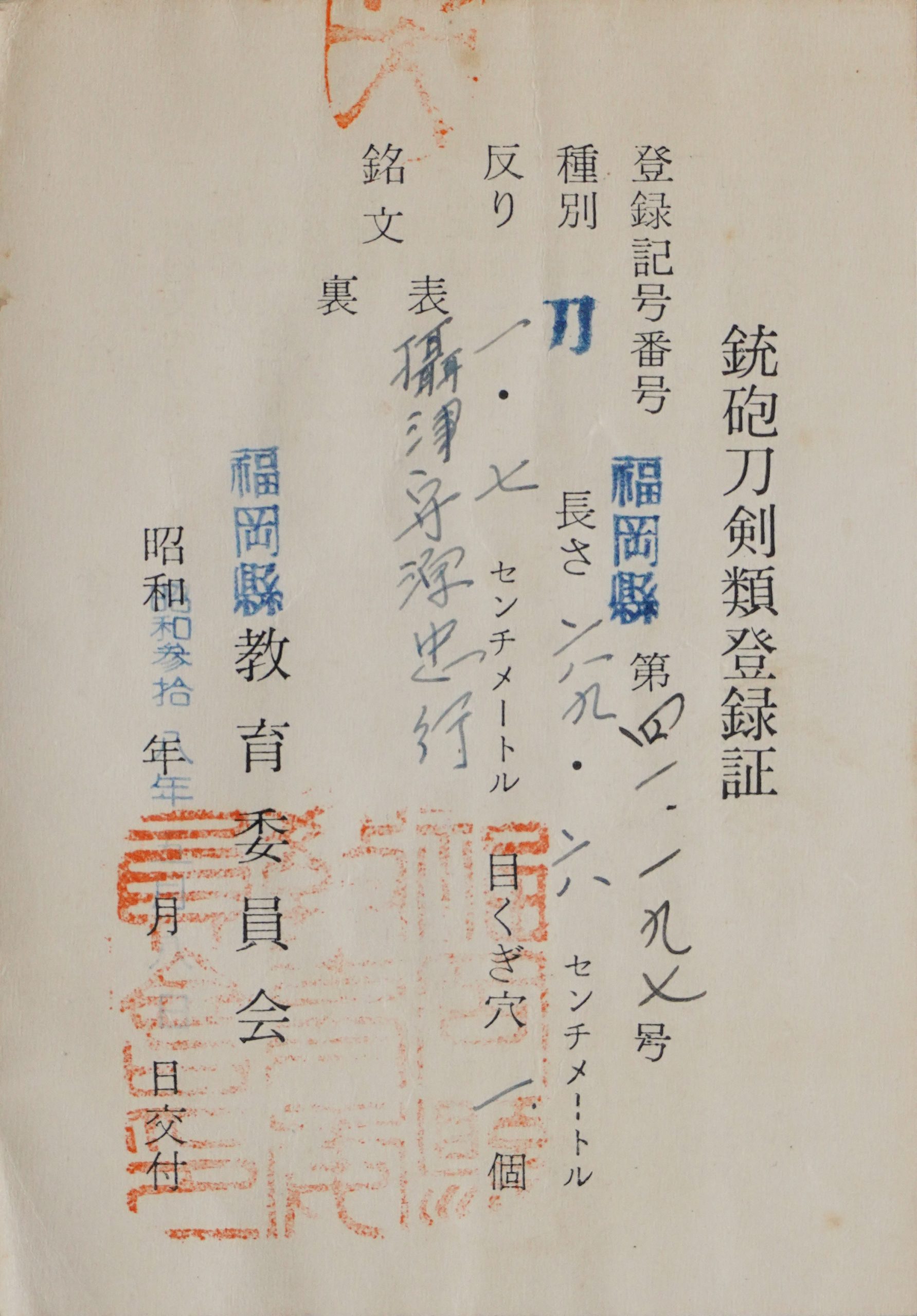
This blade was forged by Settsu no Kami Minamoto Tadayuki(摂津守源忠行) during the early Edo Period. Based on the signature and NBTHK authentication paper, we believe the second-gen Tadayuki forged it.
The first-gen Tadayuki was the younger brother of Awataguchi Omi no Kami Tadatsuna(粟田口近江守忠綱), one of the most famous swordsmiths in Osaka in the early Edo period. It is said that the first-gen Tadayuki was an apprentice of Tadatsuna, so was the second-gen. And the first-gen and often did Daimei for Tadatsuna while the second-gen helped them forged great swords.
Daimei is a regular act where an apprentice or a child of the swordsmith signed his master’s name with his master’s permission, being involved in a sword-forging.
While the first-gen Tadayuki used Fujiwara as his sir name, the second-gen used Minamoto. The second-gen Tadayuki was a niece of Tadatsuna and dedicated his career to working for Tadatsuna. Therefore, there aren’t many remaining works signed by the second-gen Tadayuki.
The blades forged by Tadayuki are categorized as Osaka Shinto. Shinto is Japanese Sword terminology that refers to the swords forged during 1596-1781. The blades made in Osaka area during this period are called Osaka Shinto. There are many famous swordsmiths in this Osaka Shinto era. After Hideyoshi Toyotomi built Osaka castle, Osaka city flourished as a castle town and became the business center. Many swordsmiths moved to Osaka to look for better opportunities. They not only forged swords for those Samurai who lived in Osaka but also for feudal lords nationwide. Ikanshi Tadatsuna(Awataguchi Omi no Kami Tadatsuna), Inoue Shinkai, and Tsuda Sukehiro are the most famous ones among those many swordsmiths.
One of the most notable characteristics of Osaka Shinto is its beauty in Jigane. Jigane is a visible steel surface pattern created by folding and hammering during the forging process), which made it possible by the location of Osaka. Osaka had close access to the Tamahagane(special carbon steel to make Japanese swords) production sites. The swordsmiths residing in Osaka were able to get high-quality carbon steel from these sites.
This blade is appraised as a Hozon certificate issued by NBTHK. This authentication paper was only given to Japanese swords, worth preserving by Nihon Bijutsu Touken Hozon Kyokai(the Society for the Preservation of the Japan Art Sword).
Curvature(Sori)
For more detailed measurement of the blade/sword mounting
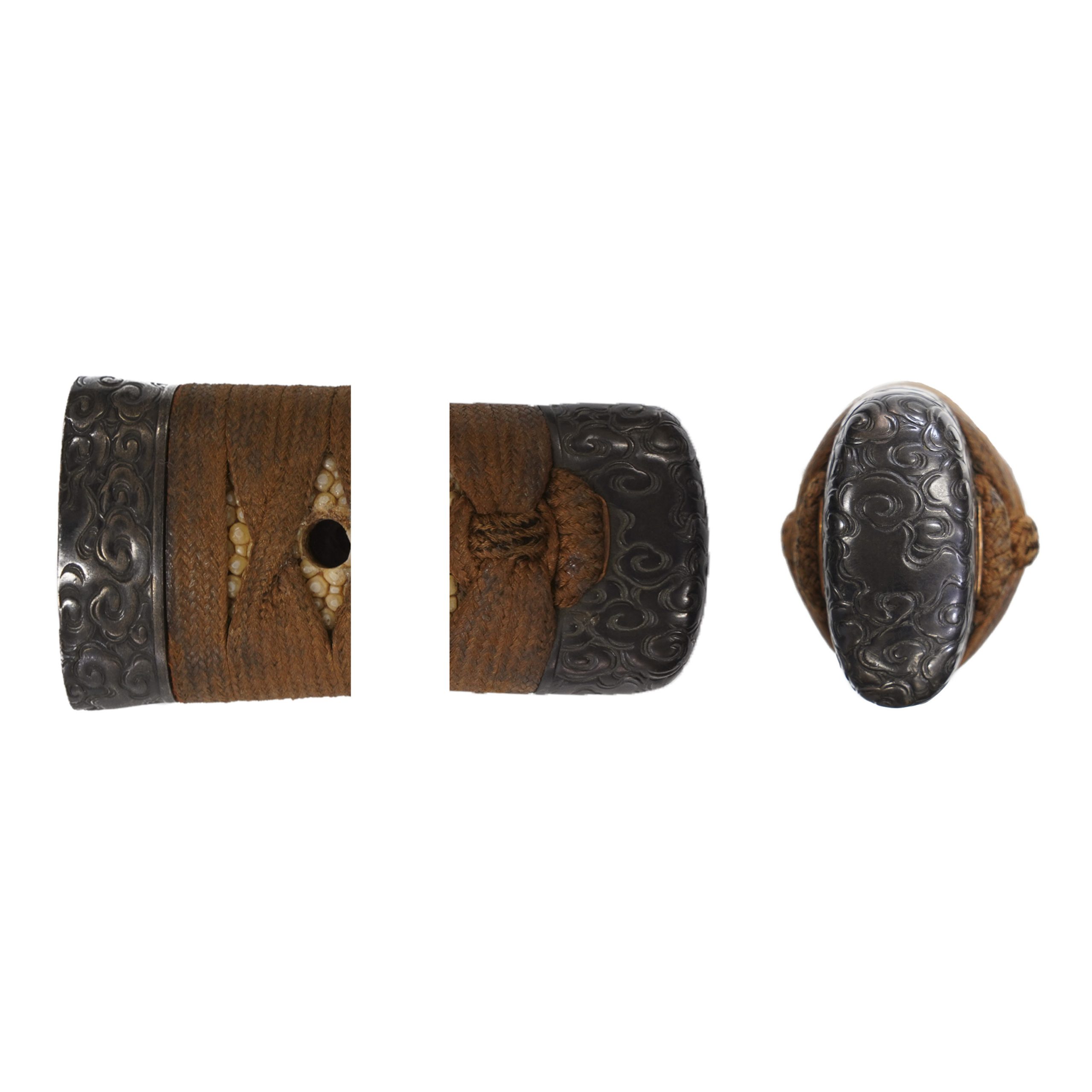
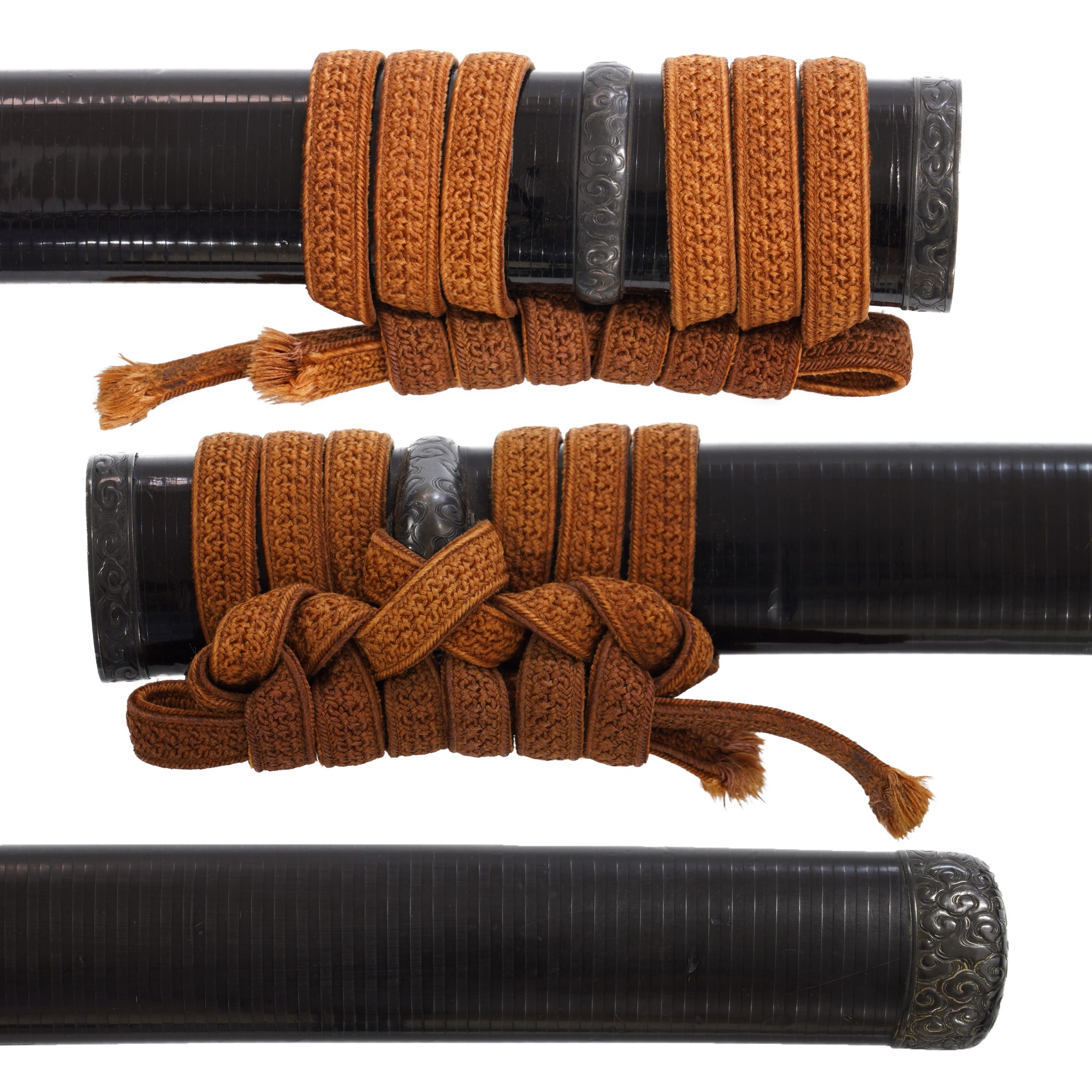
Fuchi-Kashira
The cloud pattern is engraved for the entire surface of this Fuchi Kashira. A theory says dragons and gods dwell in clouds. Since clouds were associated with these superhuman existences, people regarded the clouds as a good omen that would bring something good. Therefore, this motif has also been appreciated for Kimono (traditional Japanese costume). Clouds constantly change their shapes and repeatedly appear so that it is thought this design represents reincarnation. Samurai, who went to the battlefield, might have wished some of the cloud’s magical power would come to him.
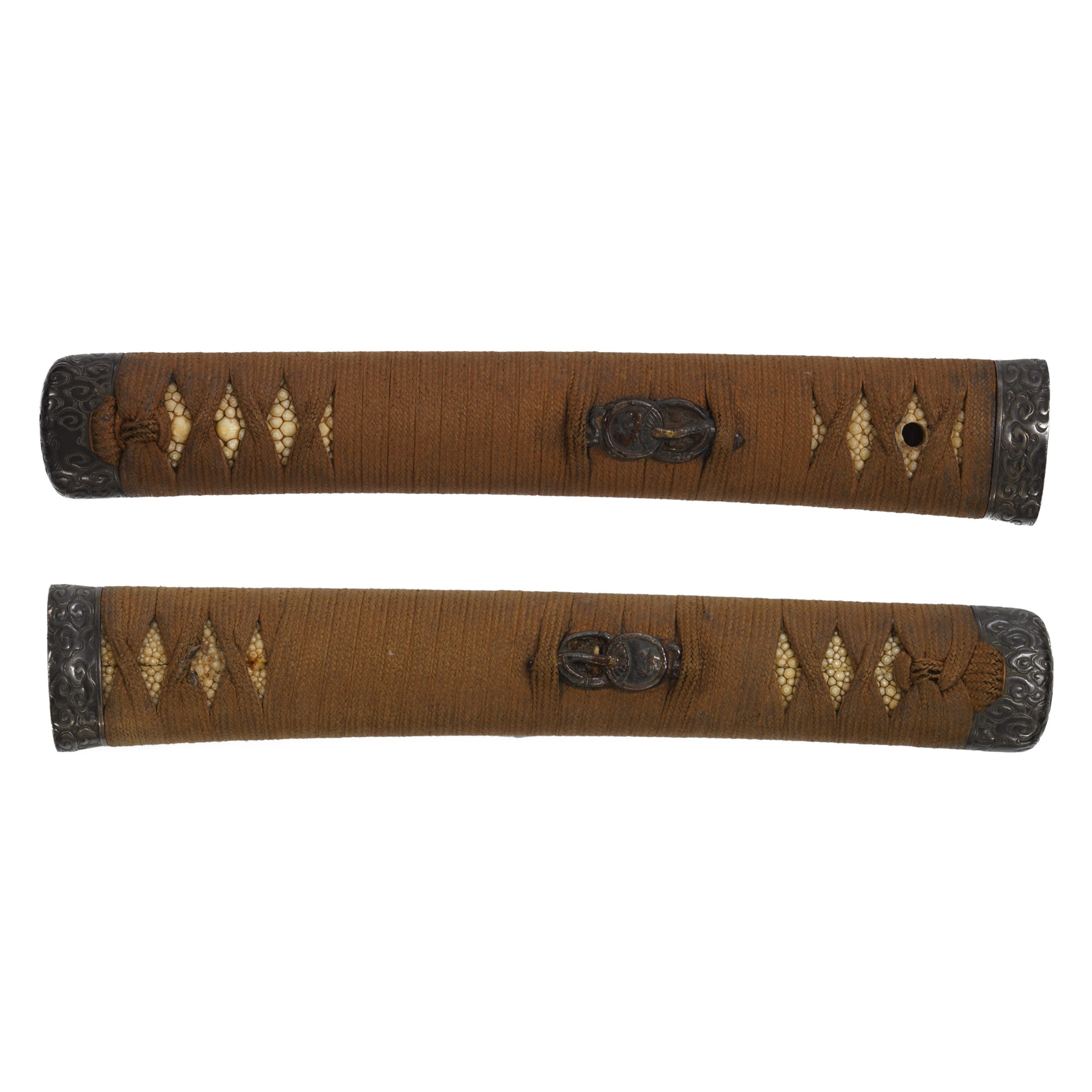
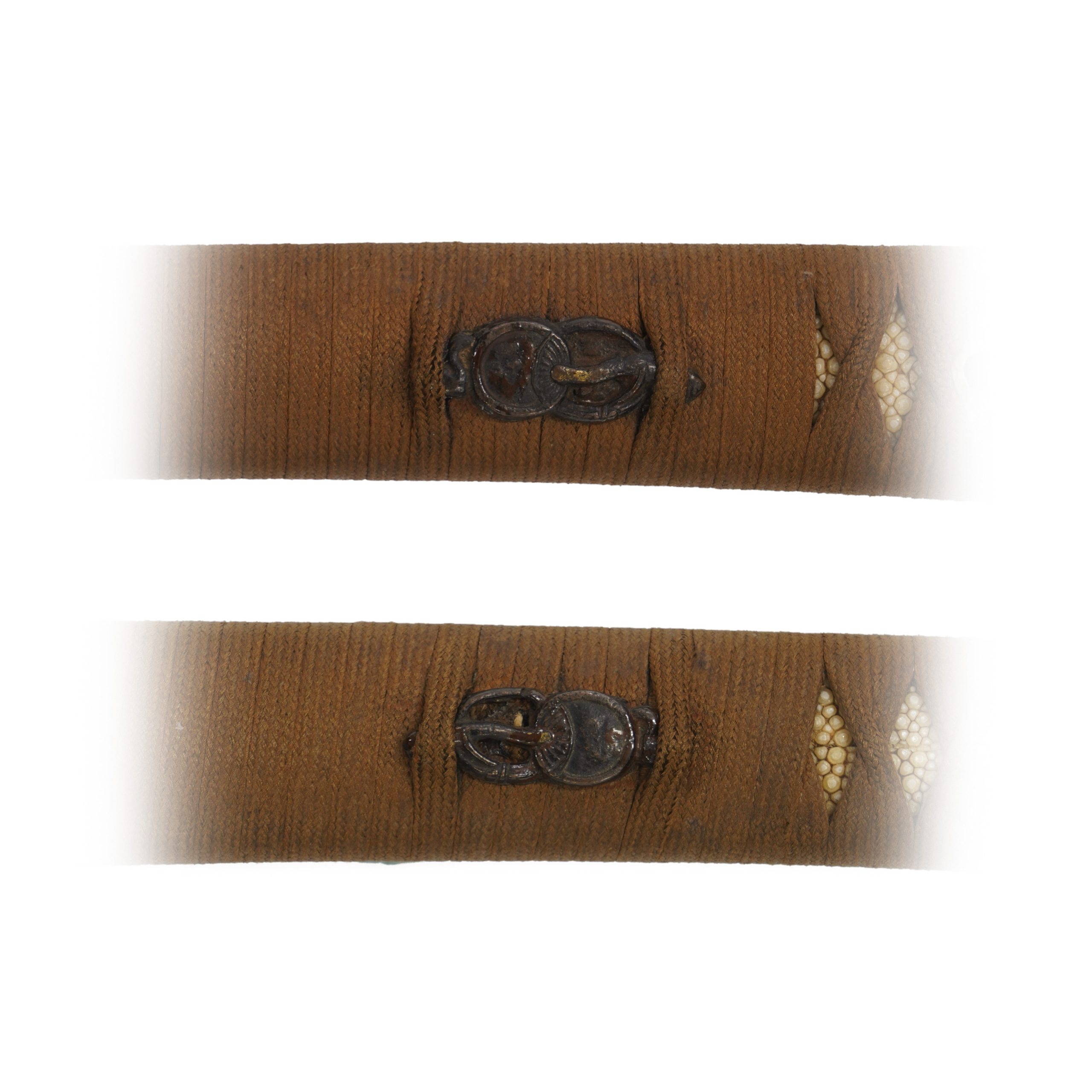
Tsuka and Menuki
It is challenging to judge what the motif is for this Menuki. Seeing from its shape, it might be Uchiwa (団扇, Japanese fan). The fan itself was brought to Japan from the continent in the Nara period (710-794). According to records, Uchiwa was used in the then court or the aristocracy. In addition, after the Ohnin-Bunmei era (応仁・文明年間, 1467-1487), military commanders used Gunbai-Uchiwa (軍配団扇), which is made of leather or iron. They encouraged their subordinates by using it. Also, it was used for ordering the arrangement of an army: For example, placement of troops, the date and time of advance and retreat. It is the origin of the Gunbai, which Sumo (相撲, Japanese wrestling) referees use to judge victory or defeat.
This Menuki’s motif, its shape looks more likely Uchiwa, which is used for cooling. It is generally made of bamboo bone and is covered with paper. It seems natural that this tool, which is deeply related to the Samurai culture and people’s daily lives, was introduced as a motif of sword mountings.
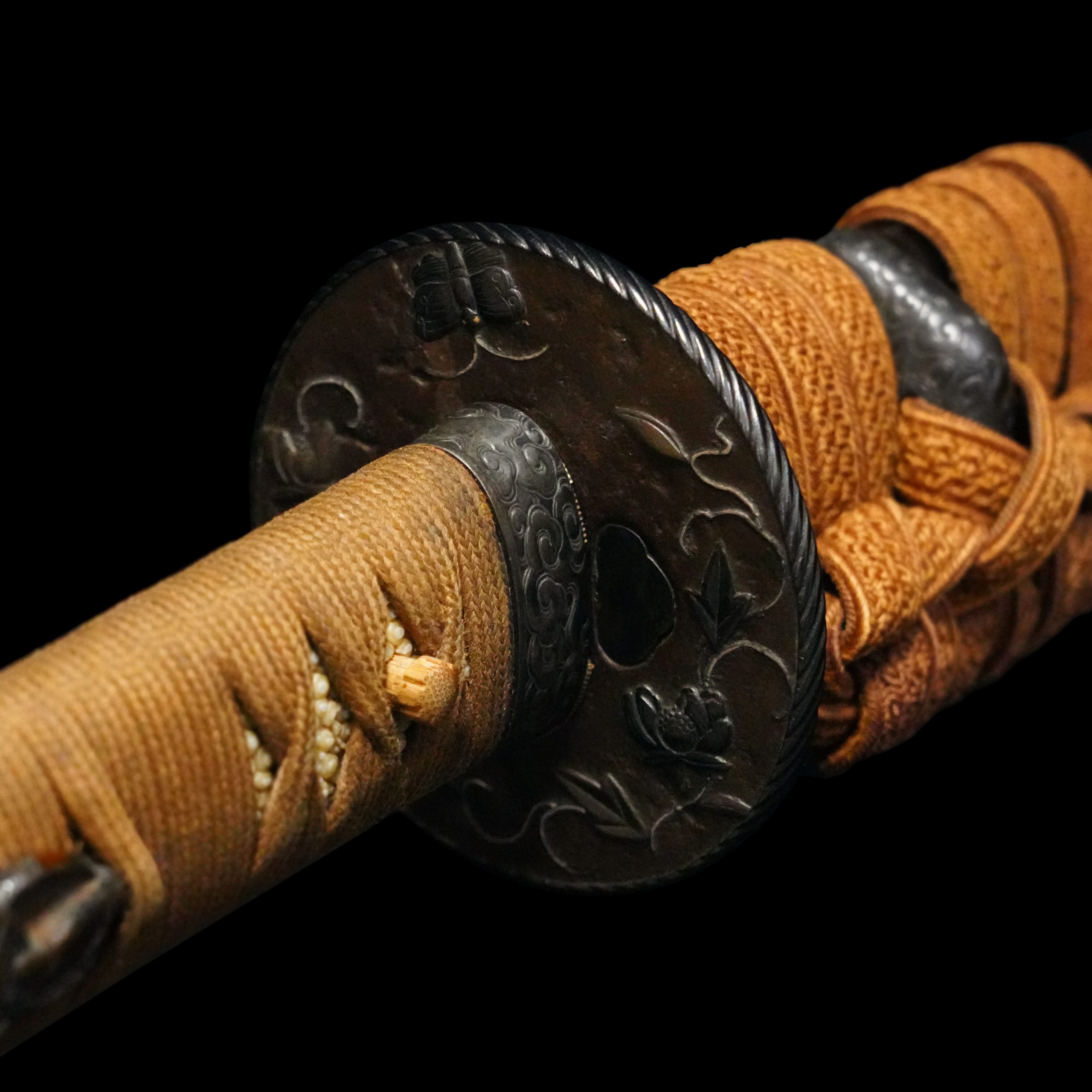
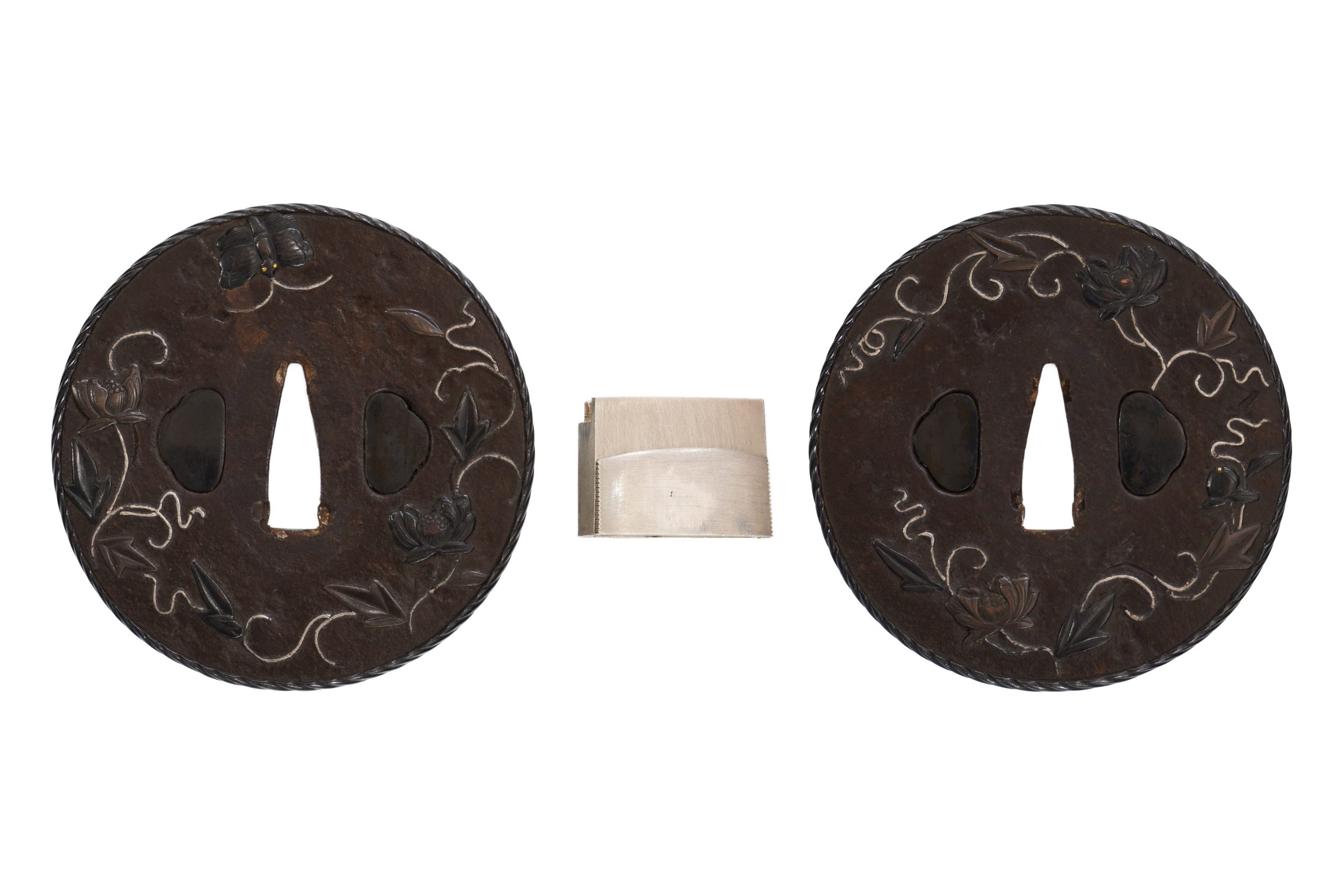
Tsuba and Habaki
Circle-shaped Tsuba made from iron. Its edge is framed with a metal plate which is designed in a rope pattern. This decorative technique is called Fukurin (覆輪): it gives the Tsuba a gorgeous beauty and has practicality, such as preventing the wear of the edge part. Moreover, it prevents the wear and tear of the Kimono if the edge damages it by touching the cloth.
A butterfly and peony flowers are designed for this Tsuba. The butterfly’s feelers and peonies’ stalks are inlaid with silver: it shines elegantly. A larva becomes a chrysalis, and it grows up to a butterfly. Since this insect changes its looks, it symbolizes reborn. It is said that is why Samurais loved the butterfly motif. Also, as butterflies make a couple on good terms, this motif represents happy marriage.
Peony represents happiness, wealth, nobleness, and gorgeousness. This flower pattern has been treated as a kind of good-omen motifs that would bring a rich harvest. Peony is called “Botan” in Japanese. When we write this flower’s name in Japanese, its second letter means mountain hermit medicine that would give us eternal youth. By the meaning of this letter, the peony pattern symbolizes eternal youth and longevity.
Authentication Paper
They authenticated the blade on Feb 19th in the 2nd year of Reiwa (2020). They appraised it as Hozon Touken, the blade worth preserving for Japanese society.

 NihontoWatch