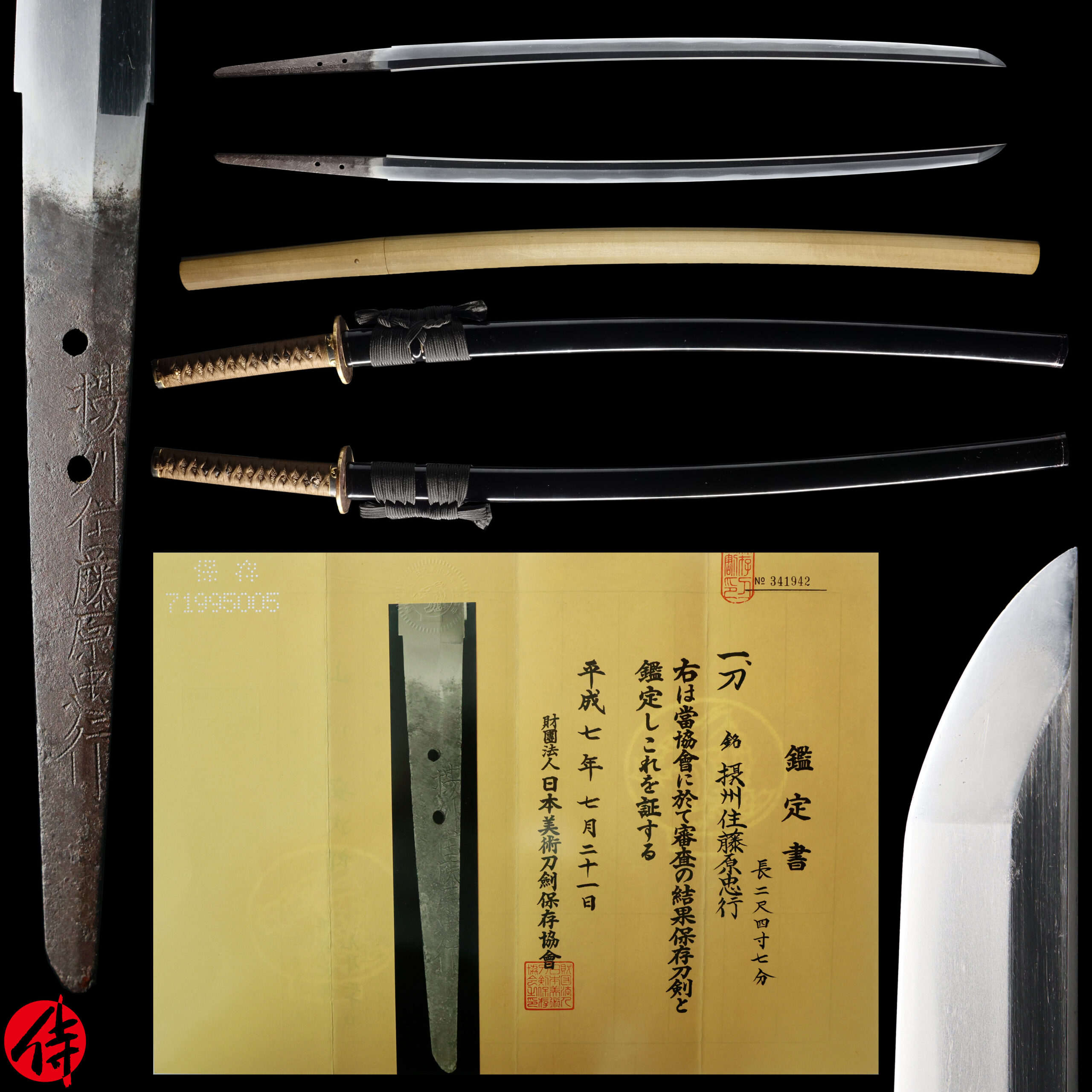
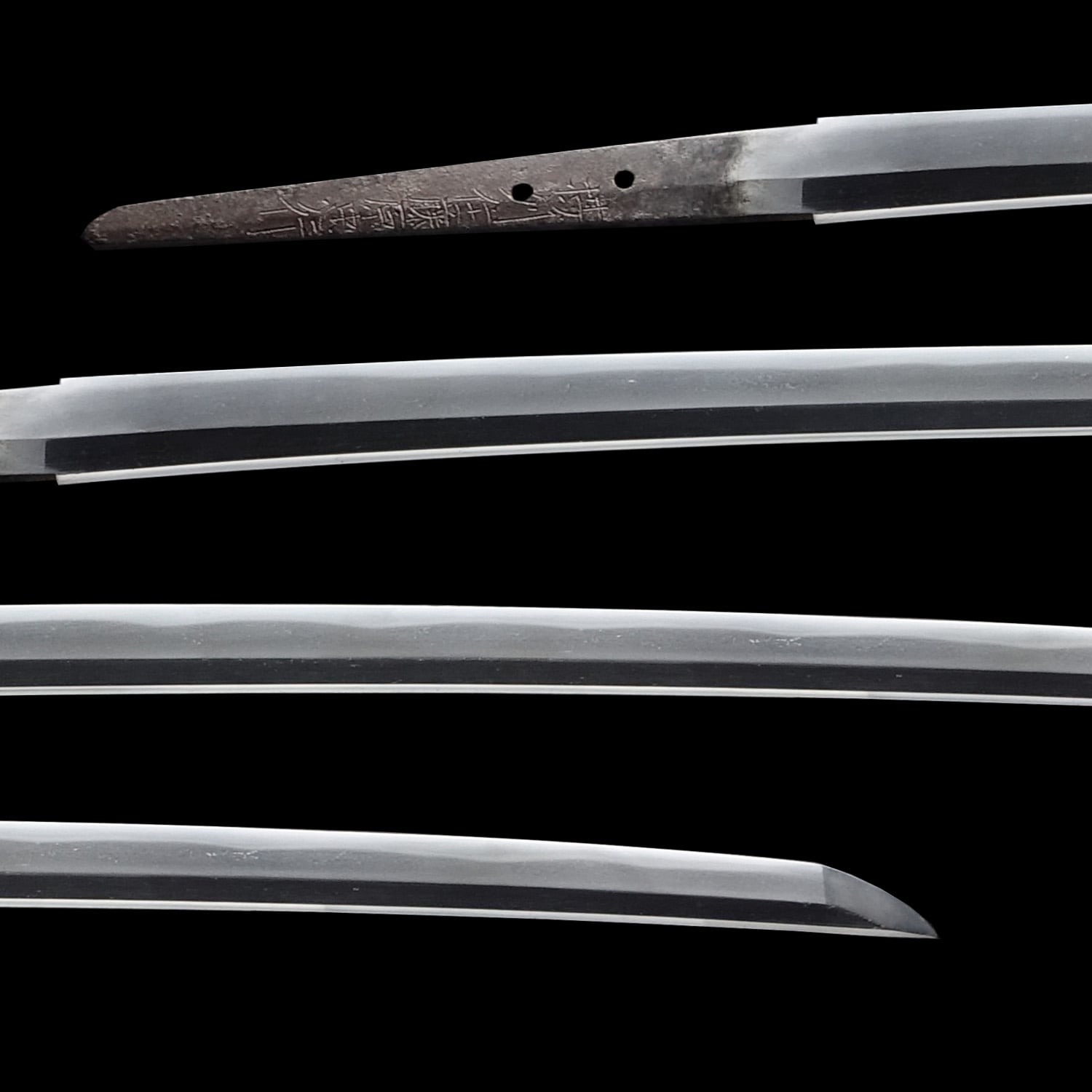
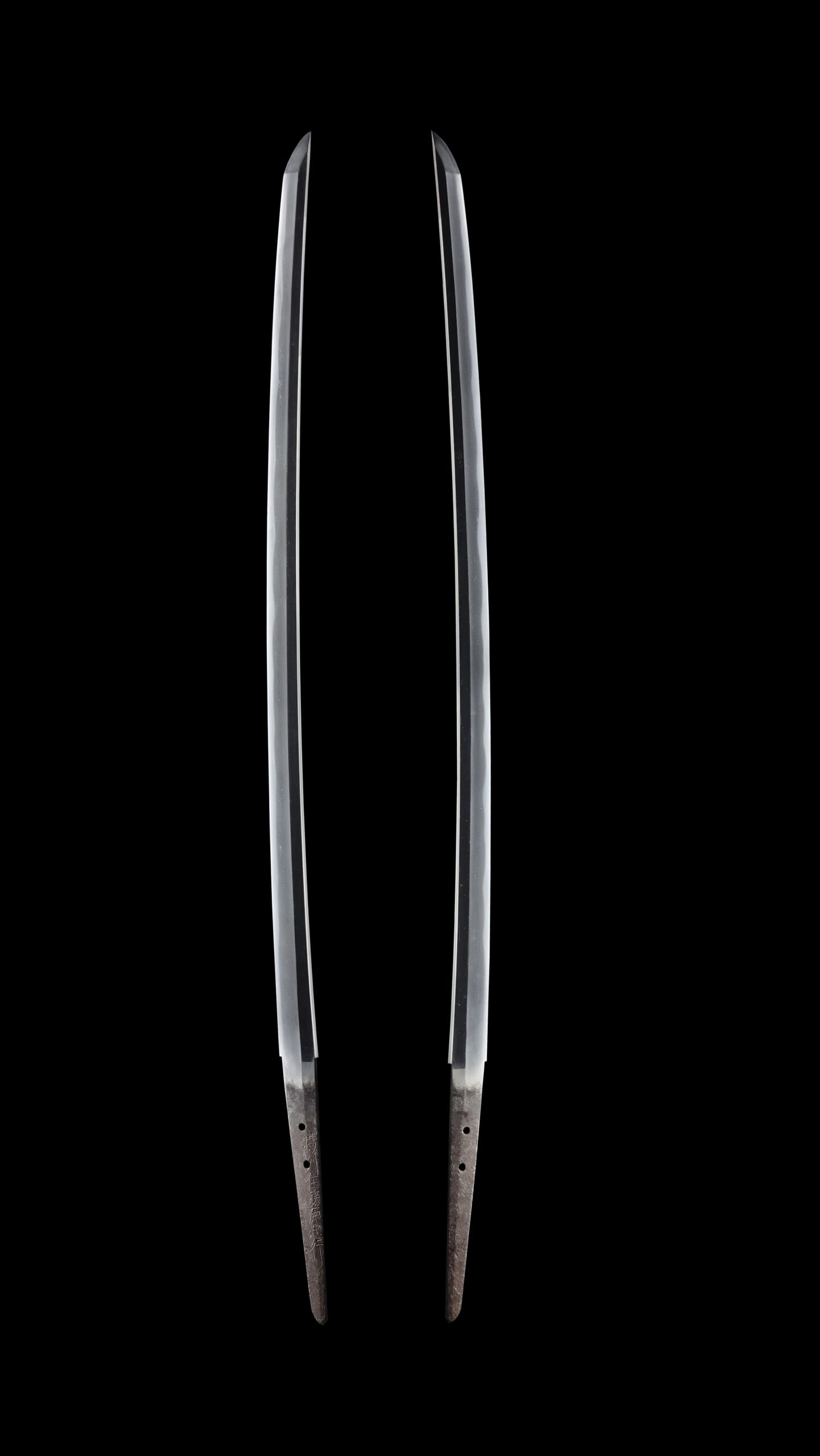
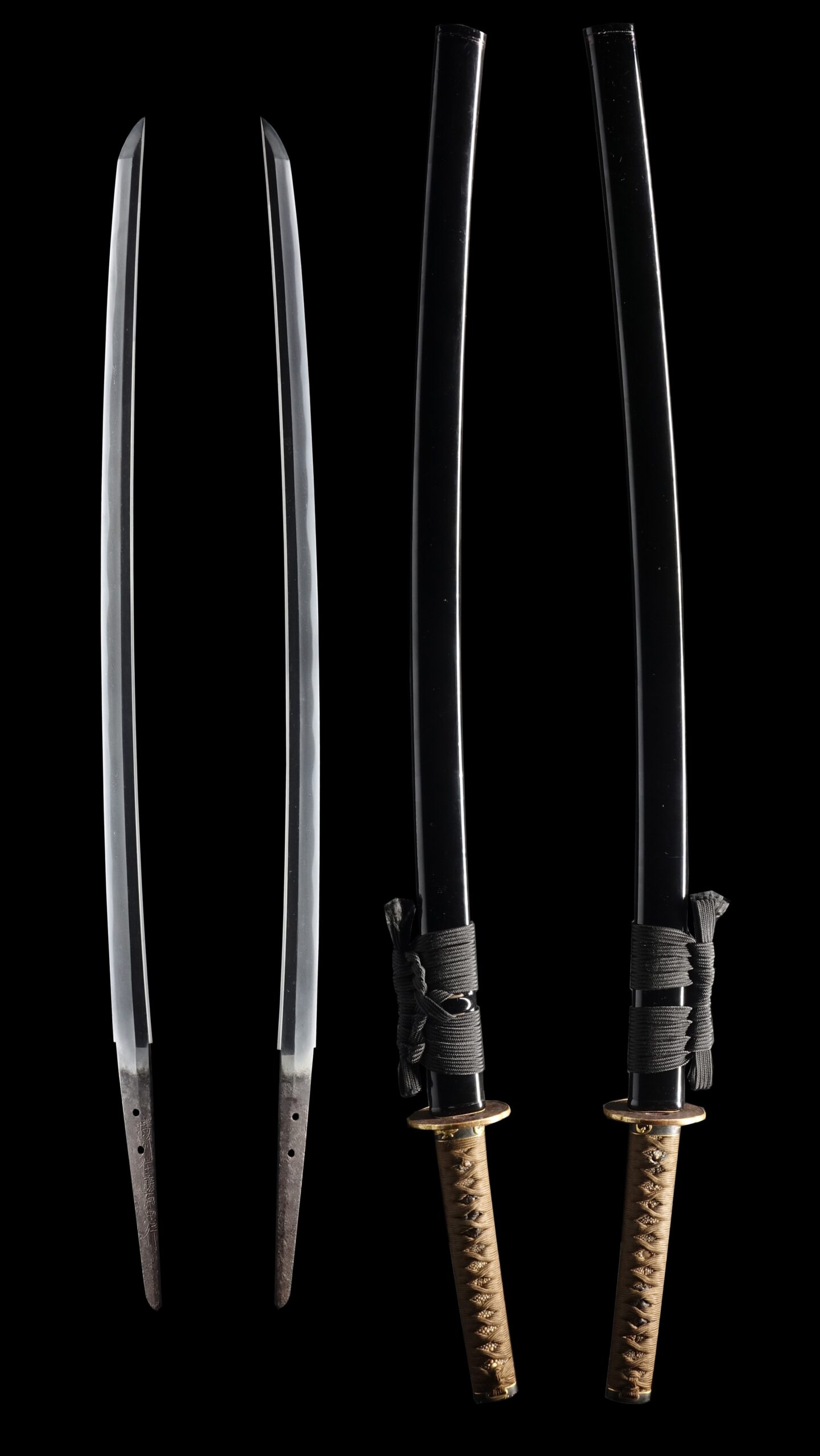
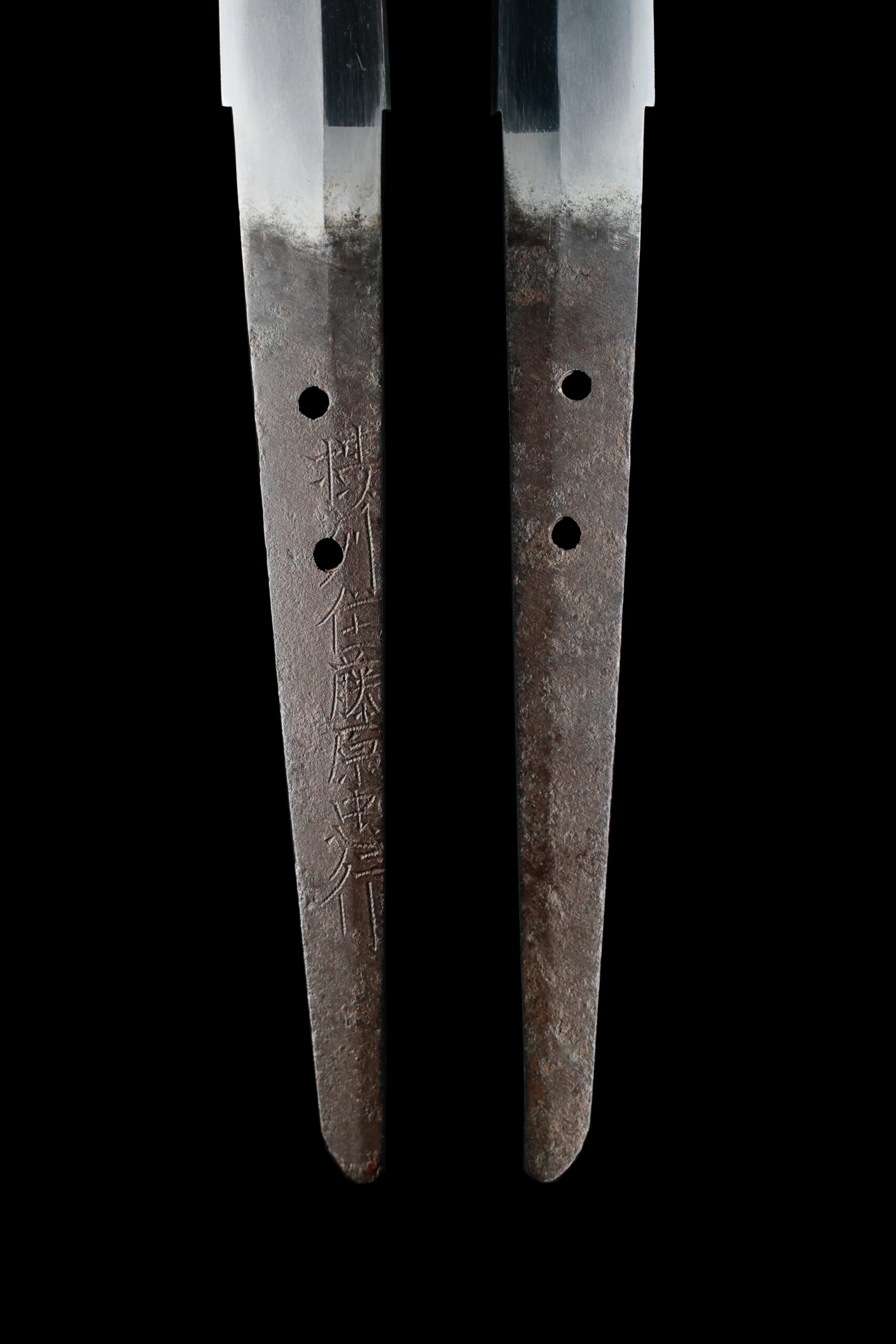
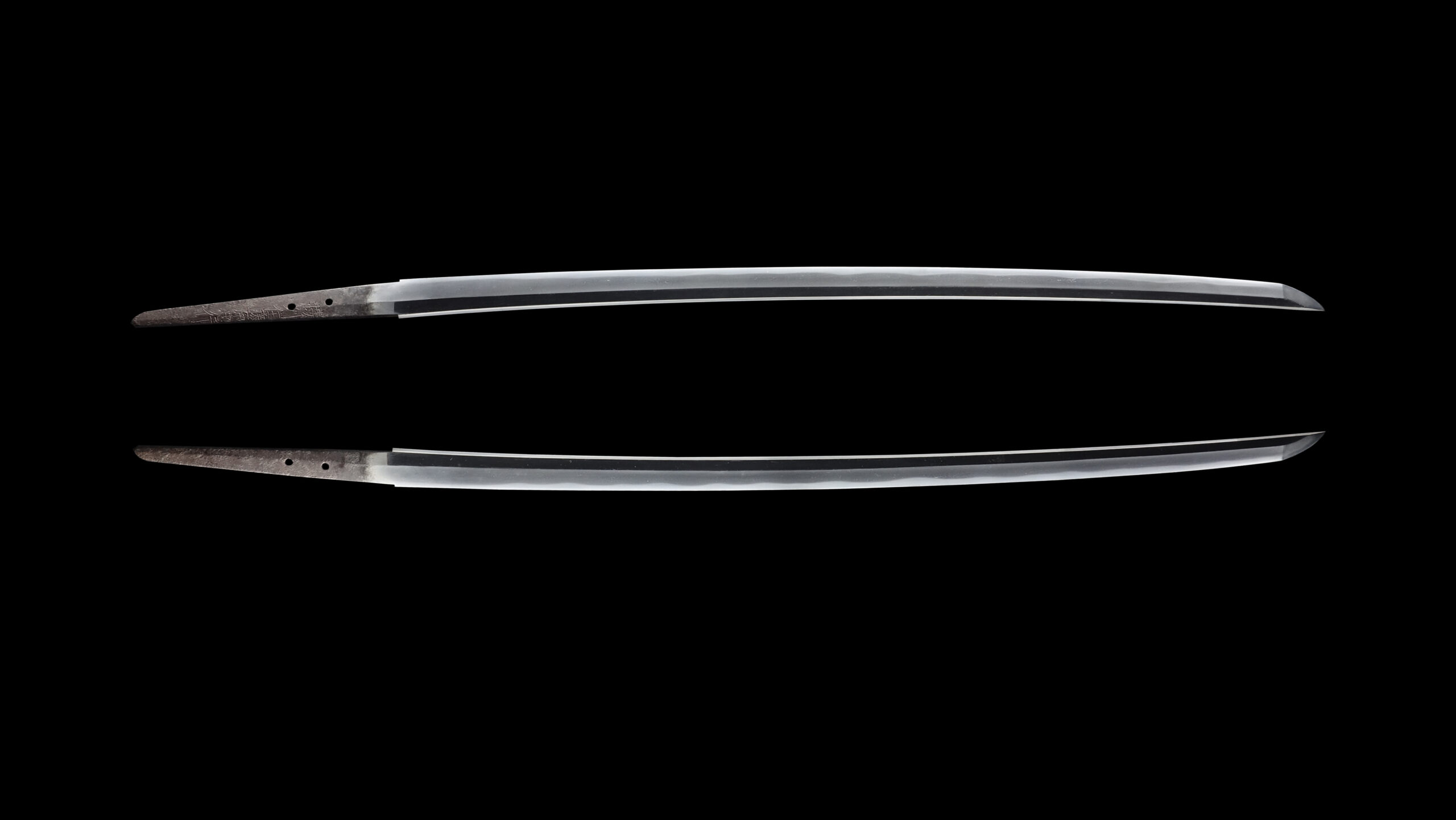
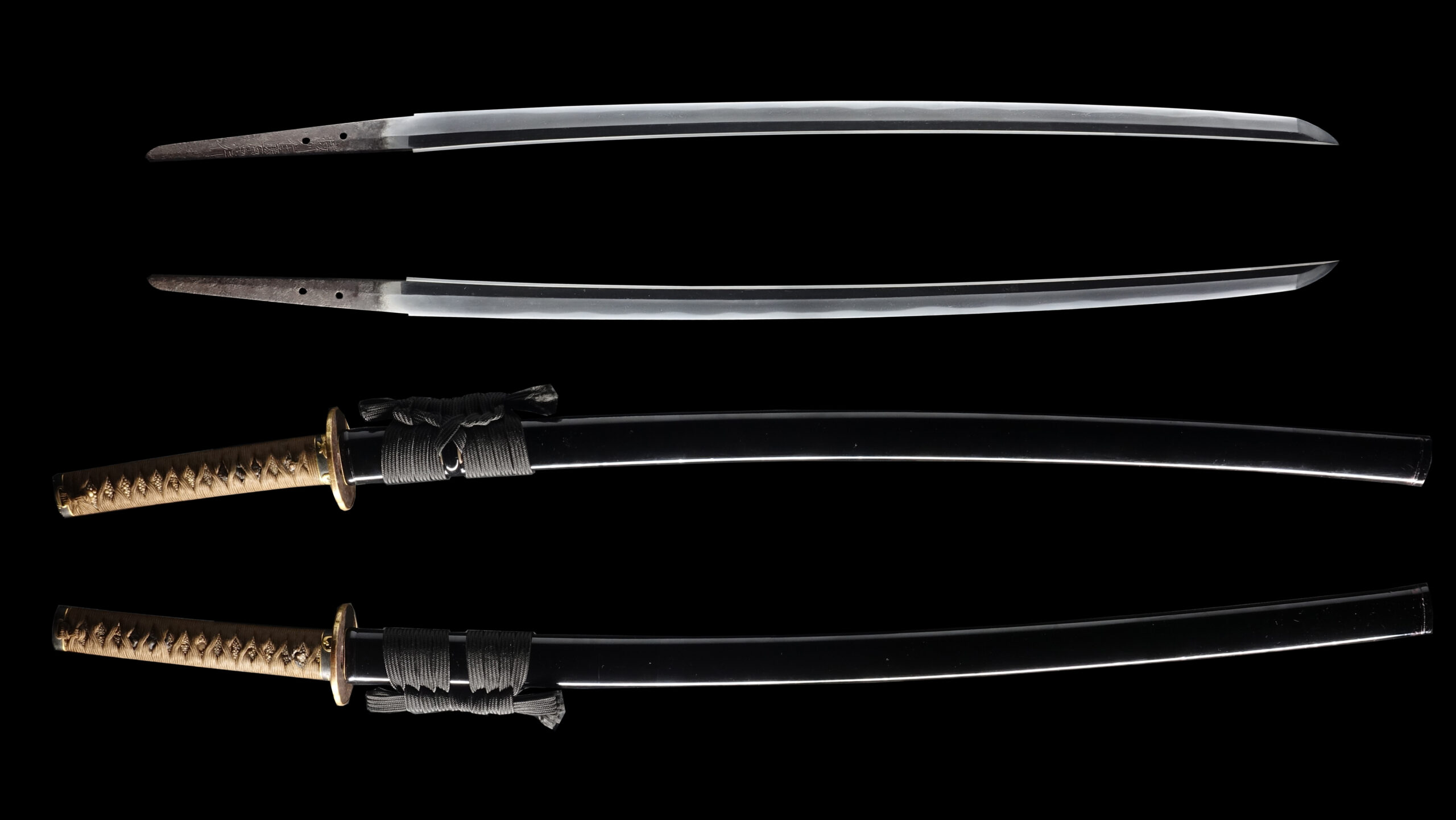
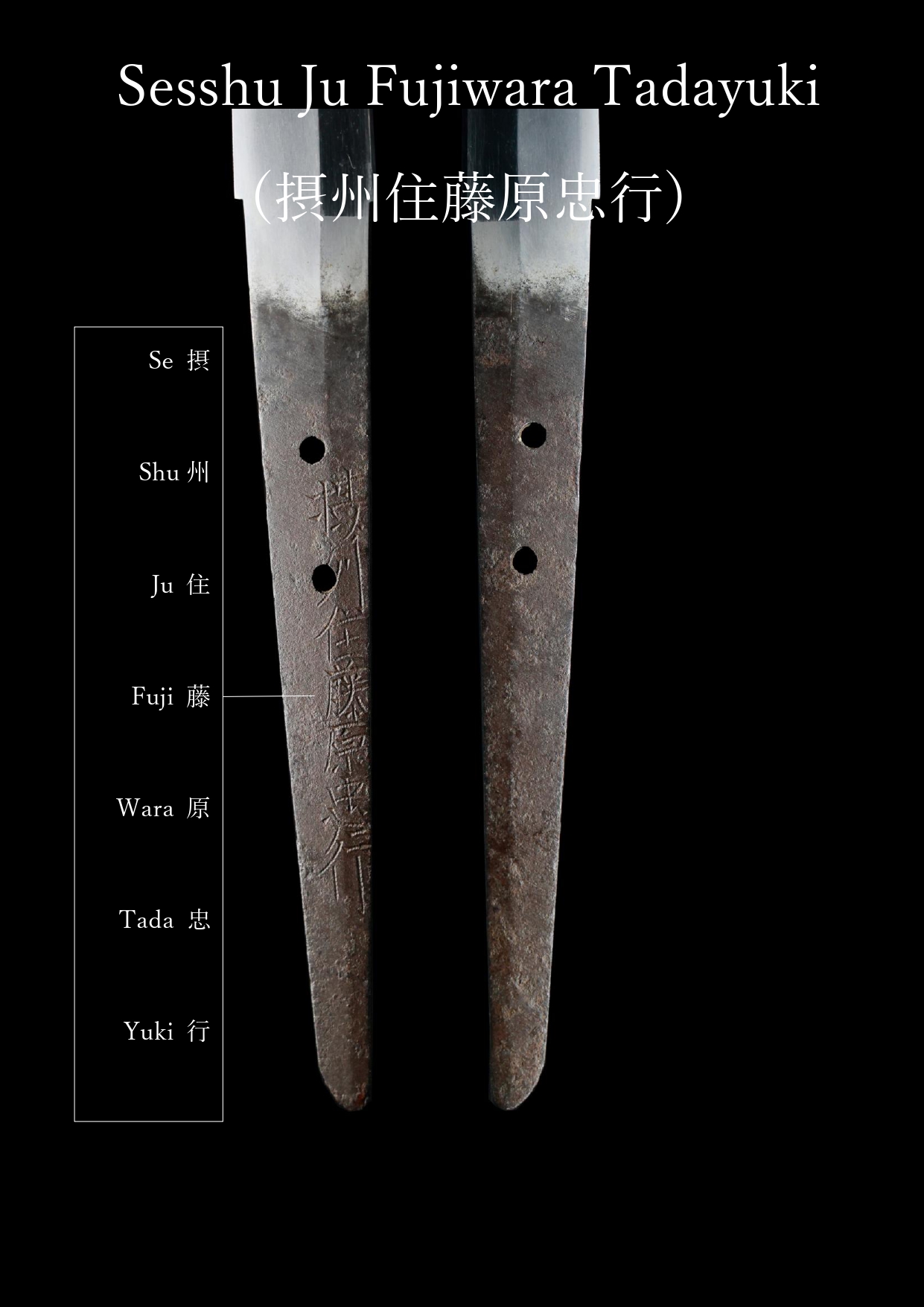
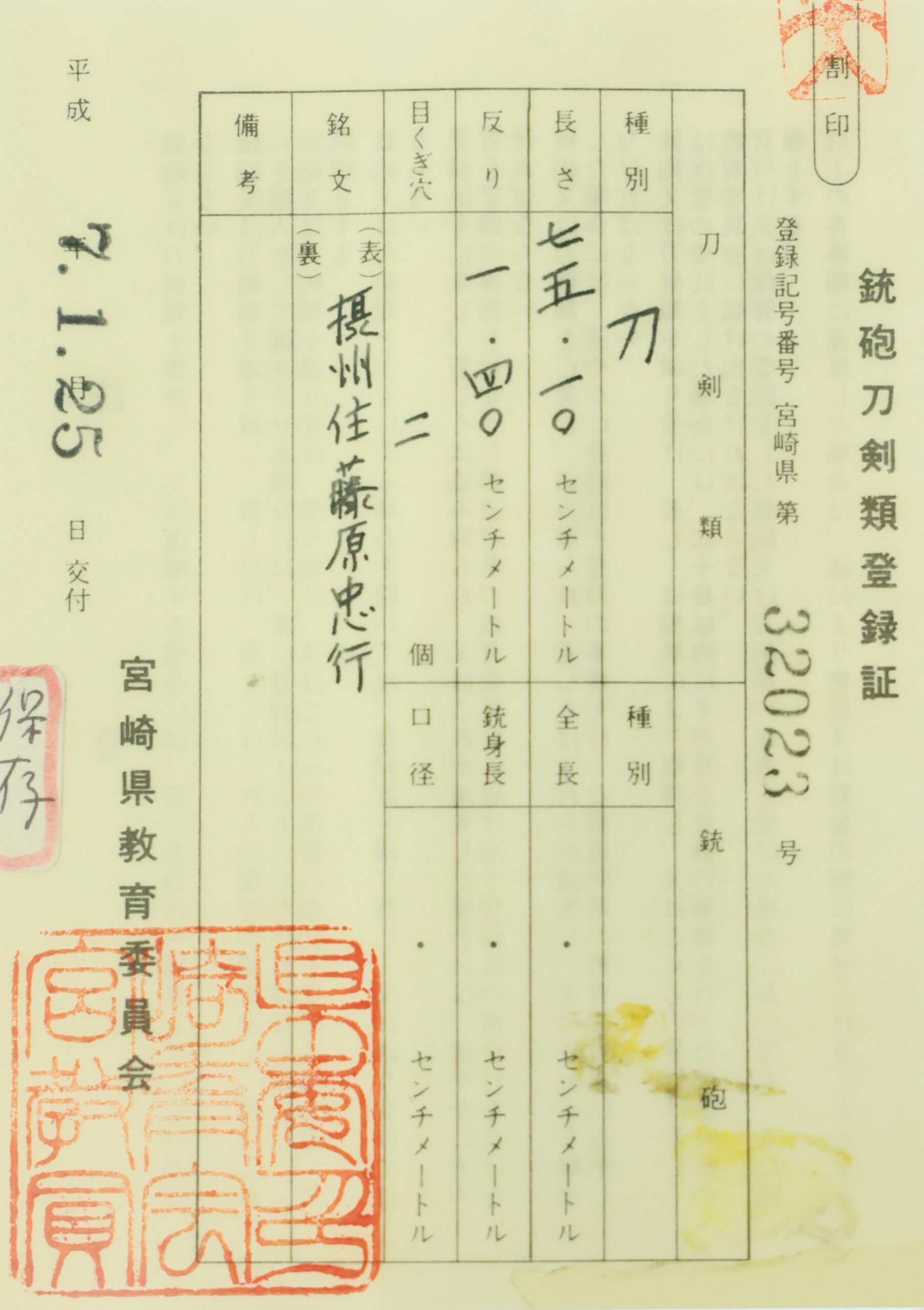
This blade was forged by Sesshu Ju Fujiwara Tadayuki (摂州住藤原忠行), whose birthname is Tarouemon (太郎右衛門), during the early Edo Period (the late 17th century). Sesshu is another name of Settsu province (today’s Osaka) and Sesshu Ju means that he resided in this area when he forged this blade. The maker’s name Tadayuki lasted several generations during the Edo period. Based on the signature, we believe the first-gen Tadayuki forged it.
The first-gen Tadayuki was the younger brother of Awataguchi Omi no Kami Tadatsuna (粟田口近江守忠綱), one of the most famous swordsmiths in Osaka in the early Edo period. It is said that the first-gen Tadayuki was an apprentice of Tadatsuna, so was the second-gen. And the first-gen often did Daimei for Tadatsuna while the second-gen helped them forged great swords. Daimei is a regular act where an apprentice or a child of the swordsmith signed his master’s name with his master’s permission, being involved in a sword-forging.
After the first-gen Tadayuki was given the honorable title Settsu no Kami (摂津守), he began to sign the name of Settsu no Kami Tachibana Tadayuki (摂津守橘忠行), Settsu no Kami Fujiwara Tadayuki (摂津守藤原忠行) and other name on his blade. Also, it is said that among the several-gen Tadayuki, the first-gen was most appreciated for his high sword-forging skill and the sharpness of his blades.
The blades forged by Tadayuki are categorized as Osaka Shinto. Shinto is Japanese Sword terminology that refers to the swords forged during 1596-1781. The blades made in Osaka area during this period are called Osaka Shinto. There are many famous swordsmiths in this Osaka Shinto era. After Hideyoshi Toyotomi built Osaka castle, Osaka city flourished as a castle town and became the business center. Many swordsmiths moved to Osaka to look for better opportunities. They not only forged swords for those Samurai who lived in Osaka but also for feudal lords nationwide. Ikanshi Tadatsuna (Awataguchi Omi no Kami Tadatsuna), Inoue Shinkai, and Tsuda Sukehiro are the most famous ones among those many swordsmiths.
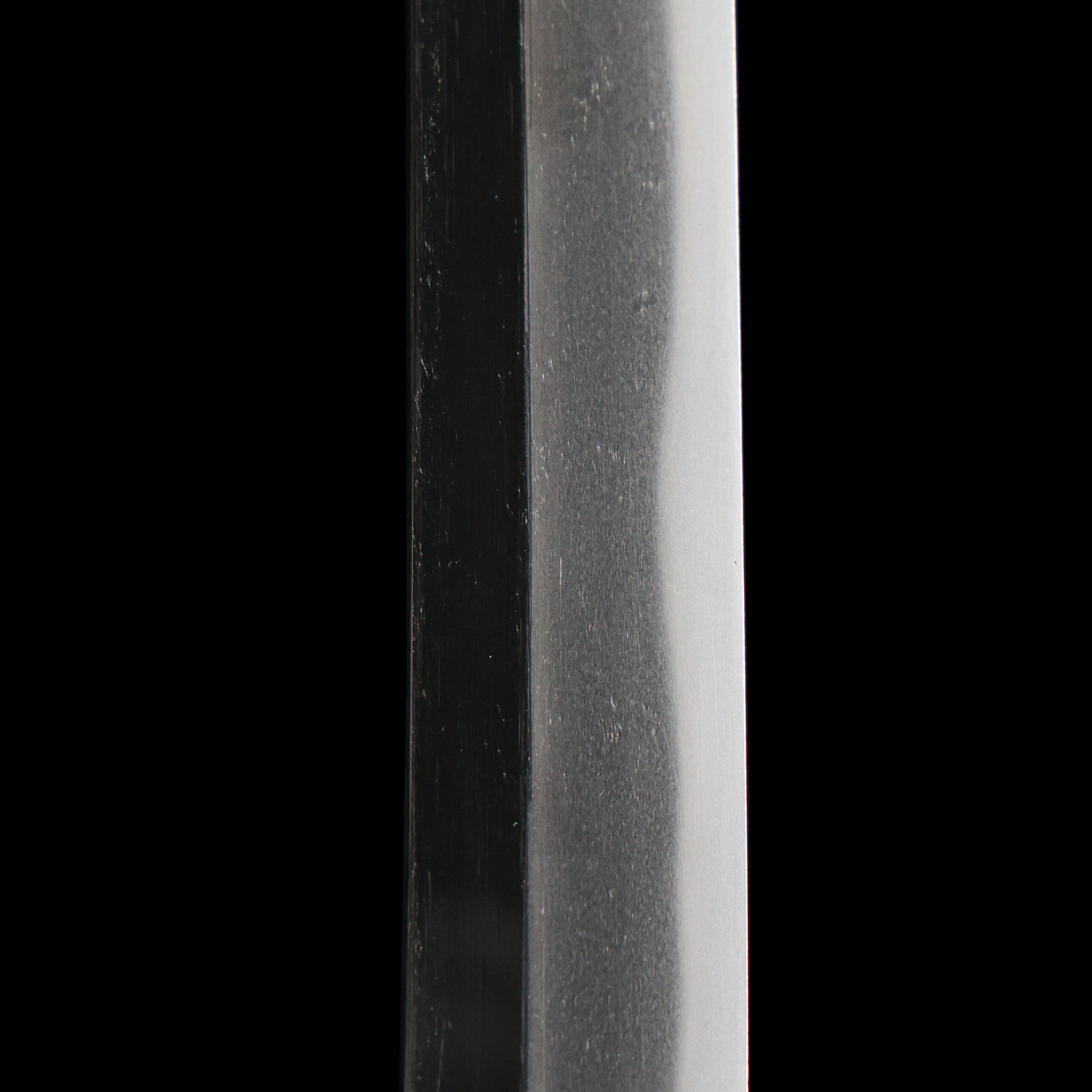
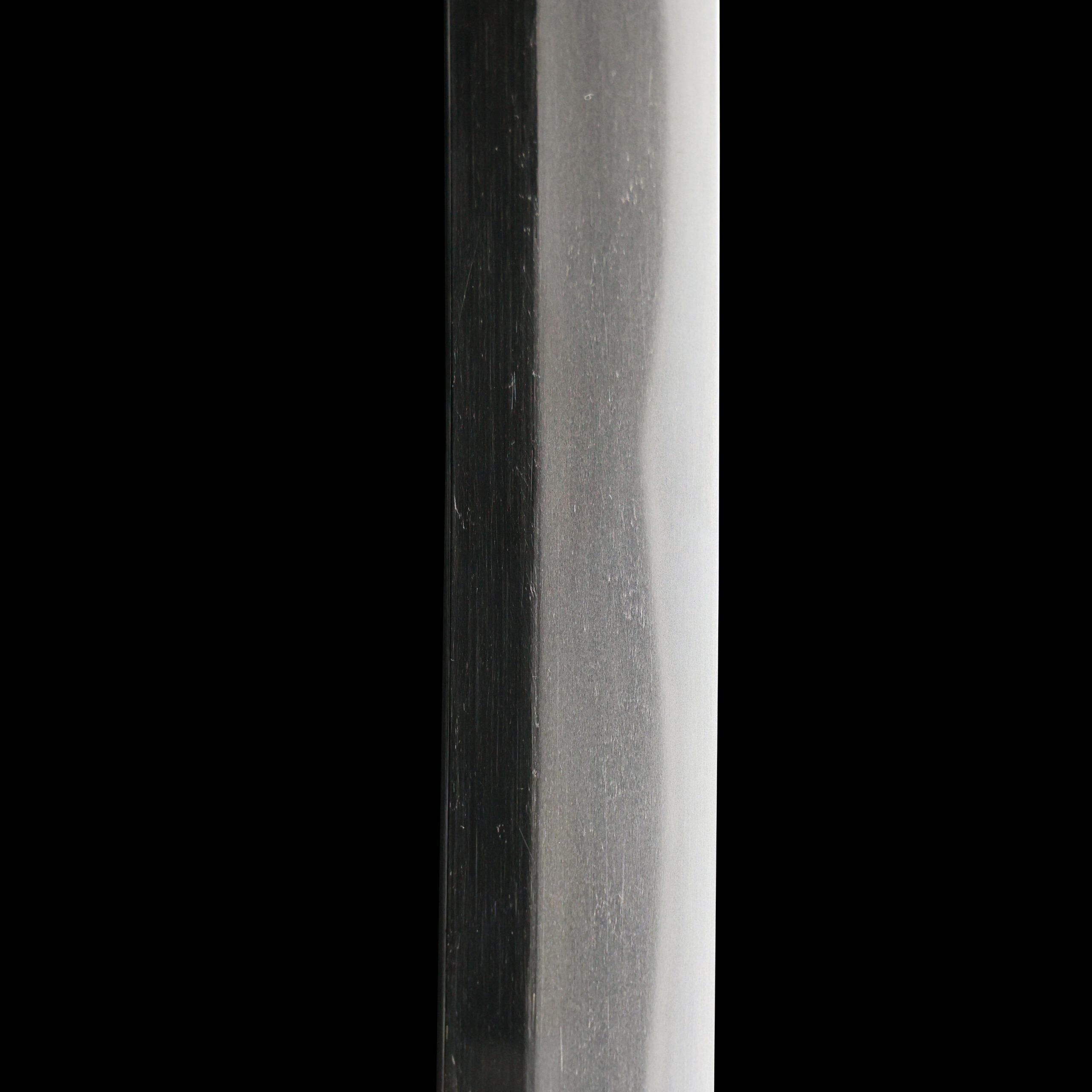
One of the most notable characteristics of Osaka Shinto is its beauty in Jigane. Jigane is a visible steel surface pattern created by folding and hammering during the forging process), which made it possible by the location of Osaka. Osaka had close access to the Tamahagane (special carbon steel to make Japanese swords) production sites. The swordsmiths residing in Osaka were able to get high-quality carbon steel from these sites.
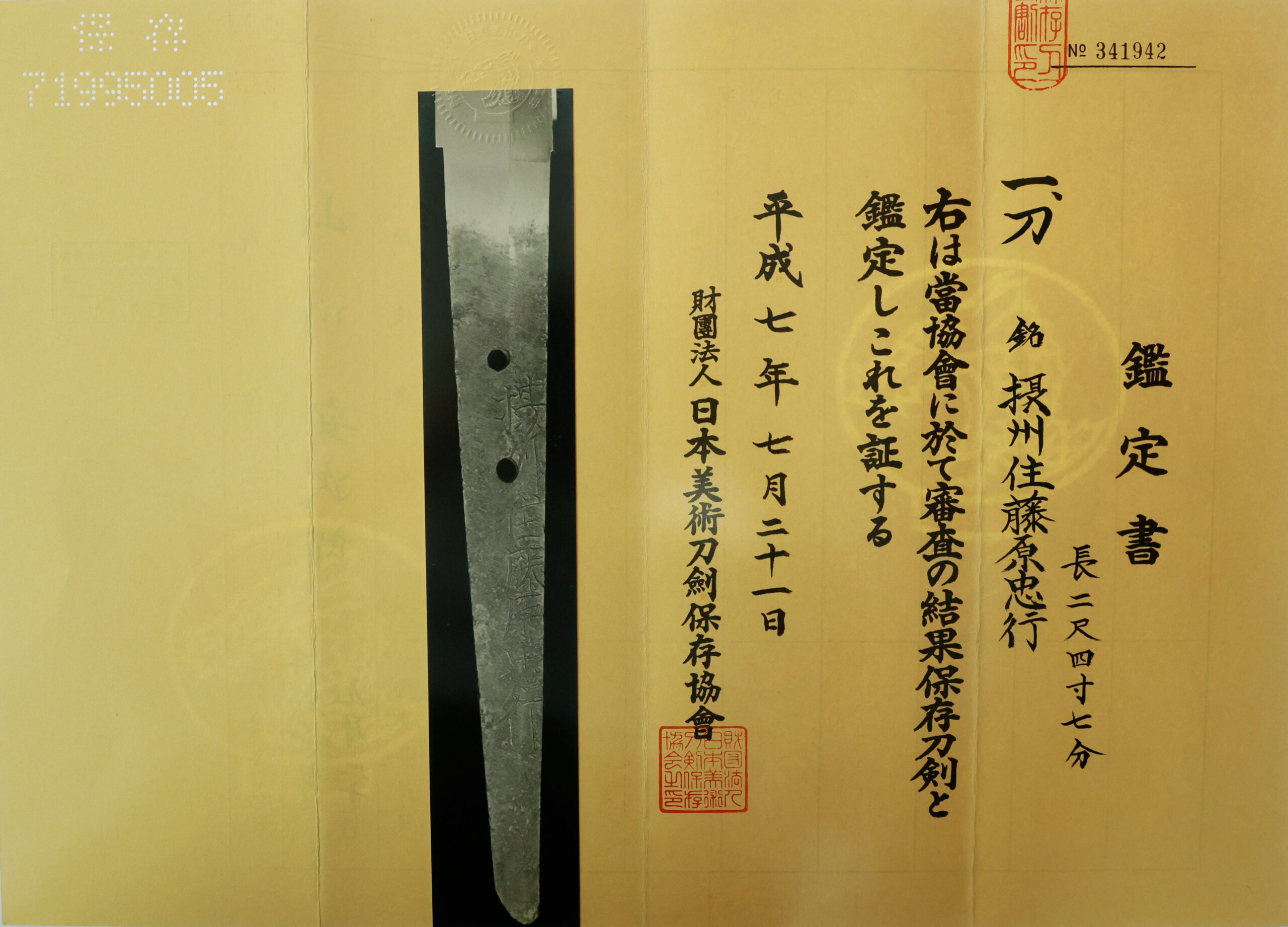
This blade is appraised as a Hozon Touken (保存刀剣) issued by NBTHK (Nihon Bijutsu Touken Hozon Kyokai: 日本美術刀剣保存協会).
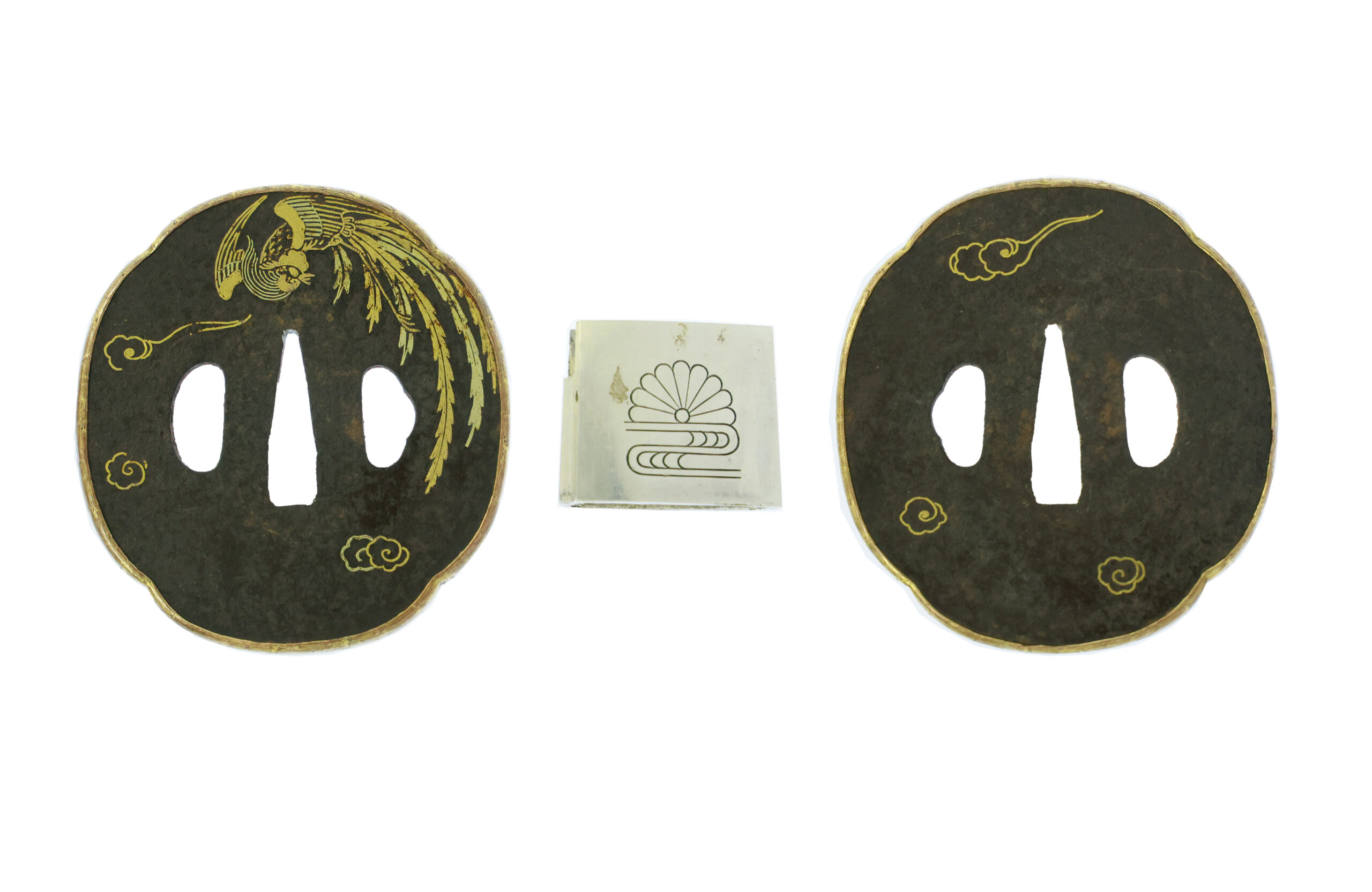
Fuchi-Kashira
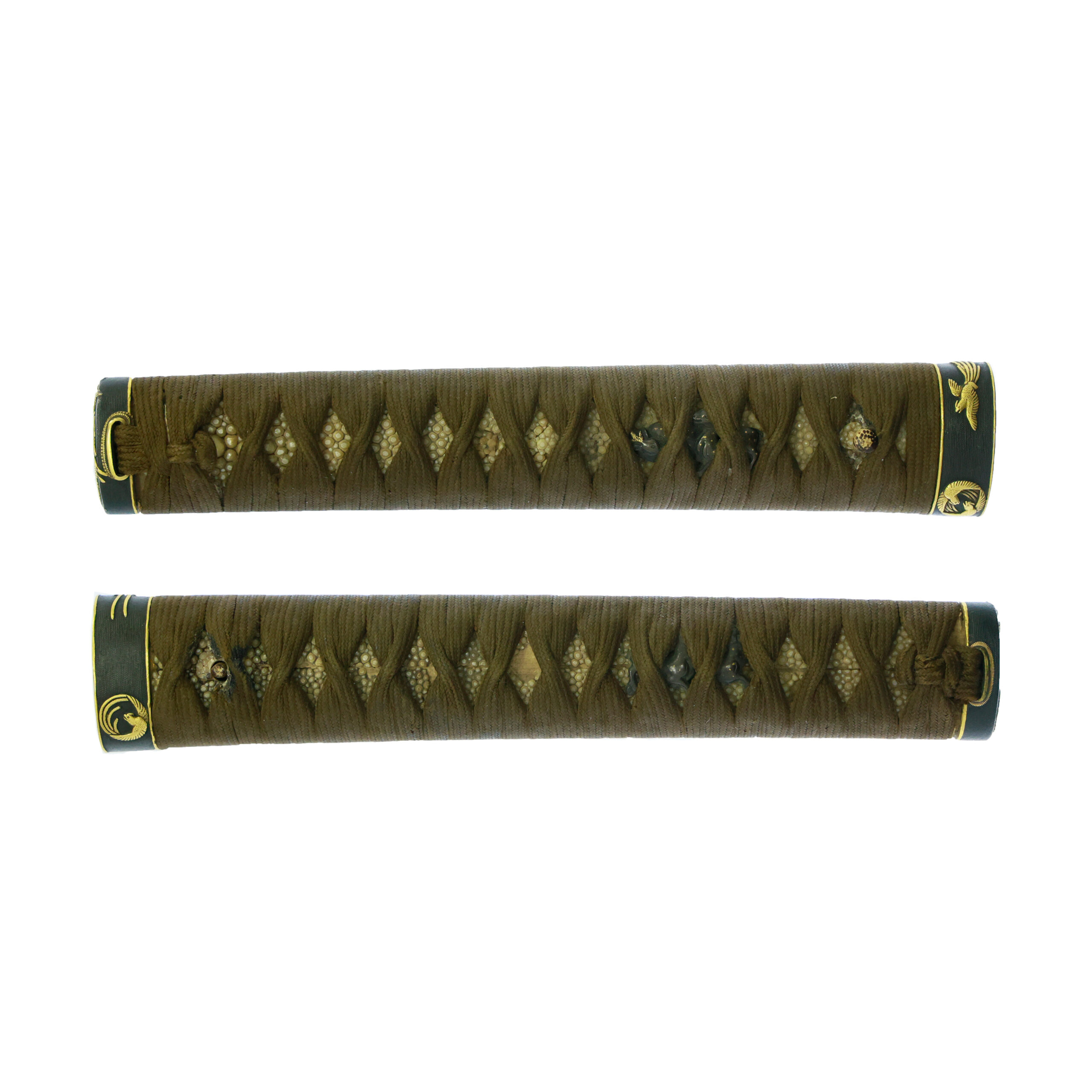
The Fuchi-Kashira features an intricate gold inlay (kin-zōgan, 金象嵌) design of a Fenghuang (鳳凰, also known as Houou in Japanese), one of the four mythical creatures collectively known as the “Shirei” (四霊), along with the Kirin (麒麟, Qilin), Kame (亀, Turtle), and Ryū (龍, Dragon). The Houou is a divine beast that resembles a blend between a chicken and a peacock. In ancient China, it was regarded as an auspicious omen, believed to appear only during the reign of a virtuous and wise emperor. In Japan as well, the Houou is admired for its elegant form and is often used in traditional art and decoration.
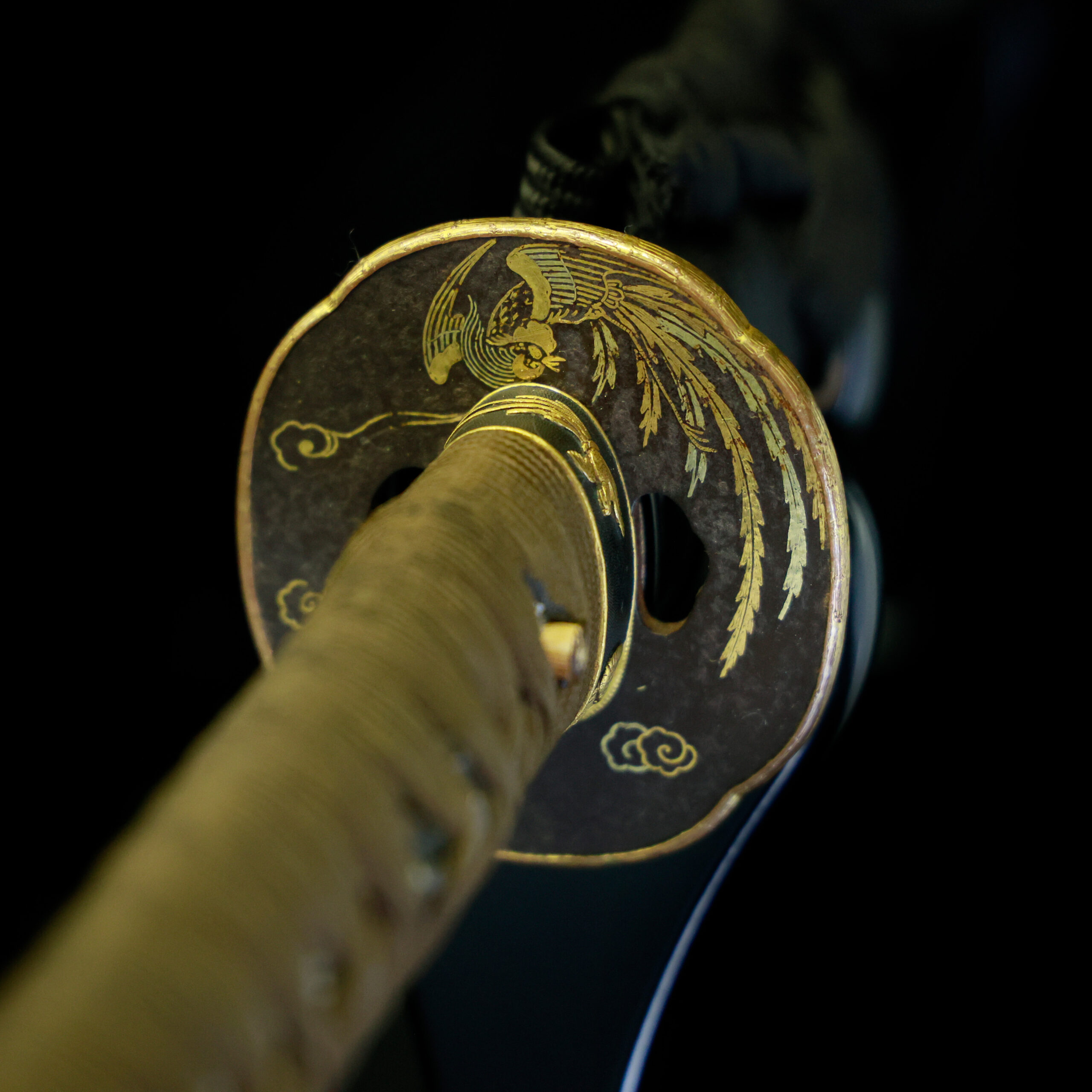
The tsuba (sword guard) also depicts a beautifully rendered Houou soaring among the clouds, creating a strong sense of aesthetic and symbolic unity across the sword fittings.
The background of this piece is crafted using the Nanako-ji (魚子地) technique, a traditional metalworking method commonly used in sword fittings and other decorative metal objects. The term “Nanako” (魚子) literally means “fish roe,” while “ji” (地) refers to the surface or background. This technique involves meticulously hammering the metal surface with a specialized punch to create a dense pattern of tiny, uniform raised dots, resembling fish eggs. This finely textured background enhances the overall aesthetic of the piece while providing a striking contrast to decorative elements such as inlays and carvings, highlighting the exceptional craftsmanship of Japanese artisans.
Tsuka and Menuki
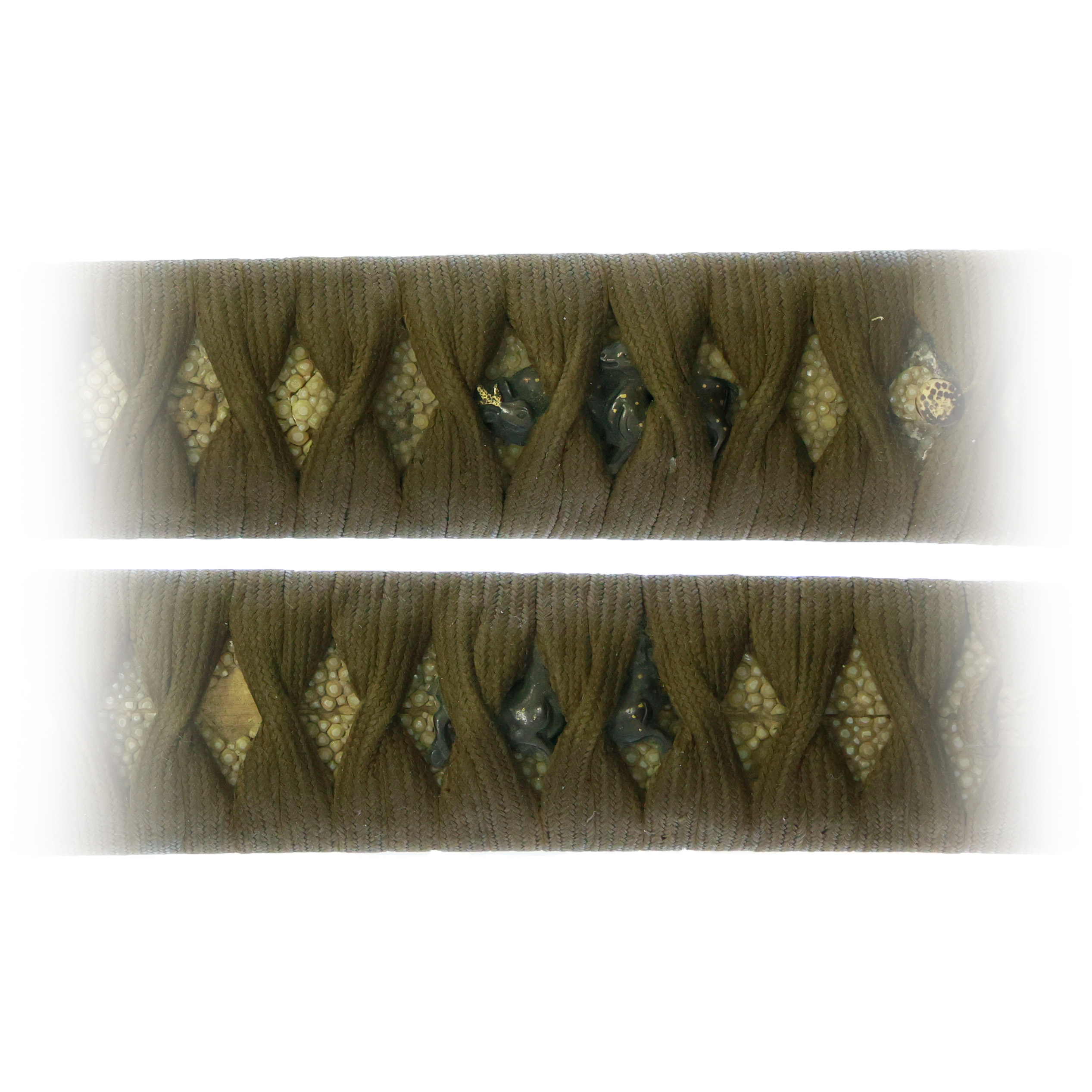
The theme of this menuki is the deer (鹿, shika), an animal that has been revered throughout Japan for centuries. Deer are considered sacred creatures and have long been regarded as messengers of the gods in Shinto tradition. At ancient shrines such as Kasuga Taisha in Nara and Kashima Jingu in Ibaraki, deer are still protected and treated with deep respect as “shinroku” (神鹿)—divine deer.
In the Muromachi period (1336–1573), killing a sacred deer was considered a serious crime punishable by death. Even today, harming these protected animals is subject to penalties under local regulations in certain areas, reflecting how deer continue to be cherished and respected in modern Japan.
*Please keep in mind that there is some peeling on the ray skin (鮫皮, Samegawa) of the handle.
Tsuba and Habaki
This blade’s Habaki is decorated with the Kikusui-mon (菊水紋), a crest that depicts chrysanthemum flowers floating on running water. The Kikusui-mon has long been regarded as a symbol of longevity and good fortune, originating from an ancient Chinese legend. According to the tale, one could prolong their life by drinking water that flowed through a field of chrysanthemums. Because of this association, the design came to be treated as an auspicious motif.
It is believed that the use of the Kikusui pattern began during the Kamakura period (1185–1333). The design often features a beautiful combination of chrysanthemum blossoms and flowing water, embodying both elegance and symbolic meaning.
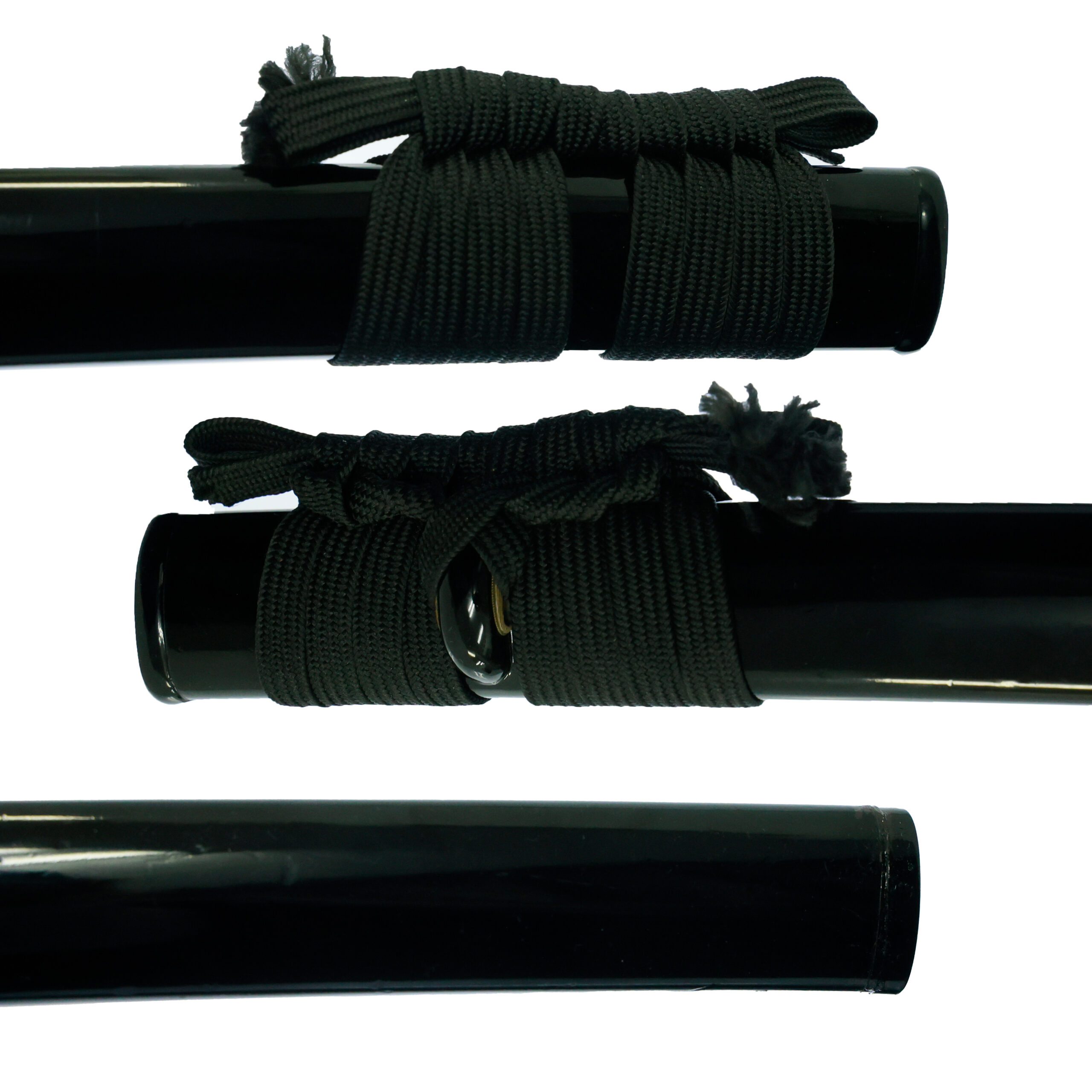
Saya
This scabbard is covered with black lacquer. Due to its high waterproof effect, lacquer has been used since ancient times in Asia. The blade of a Japanese sword is made of iron, and moisture is the greatest enemy of iron. For the purpose of carrying the blade without degrading it, people devised a method of coating the scabbard with lacquer. To prevent not only moisture but also rain and snow from penetrating the inside of the scabbard, it was necessary to apply multiple layers of lacquer. The Nushi (塗師, lacquerers) was born precisely because advanced techniques were required to handle the complicated processes.
Authentication Paper
They authenticated the blade on July 21st in the 7th year of Heisei (1995). They appraised it as Hozon Touken, the blade worth preserving for Japanese society.


 NihontoWatch