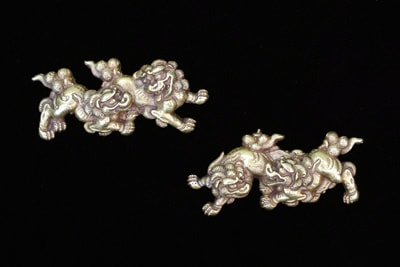
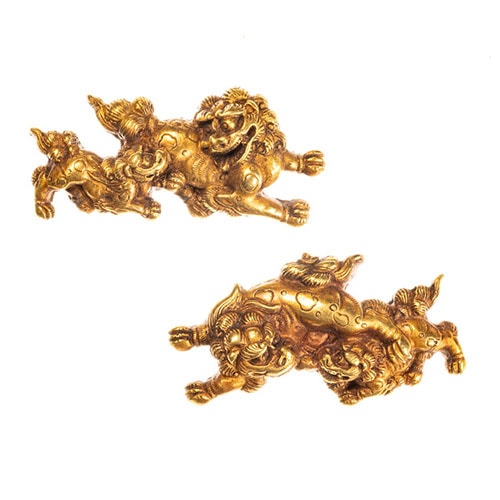
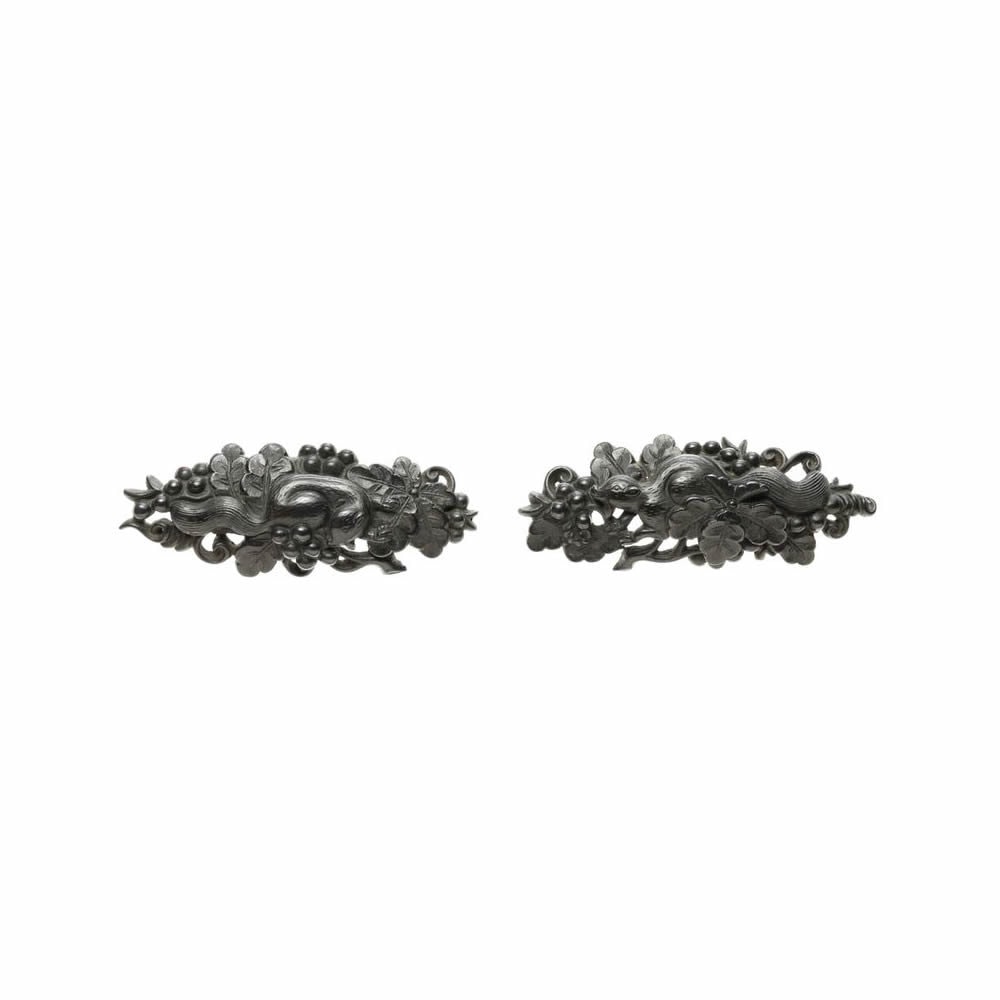
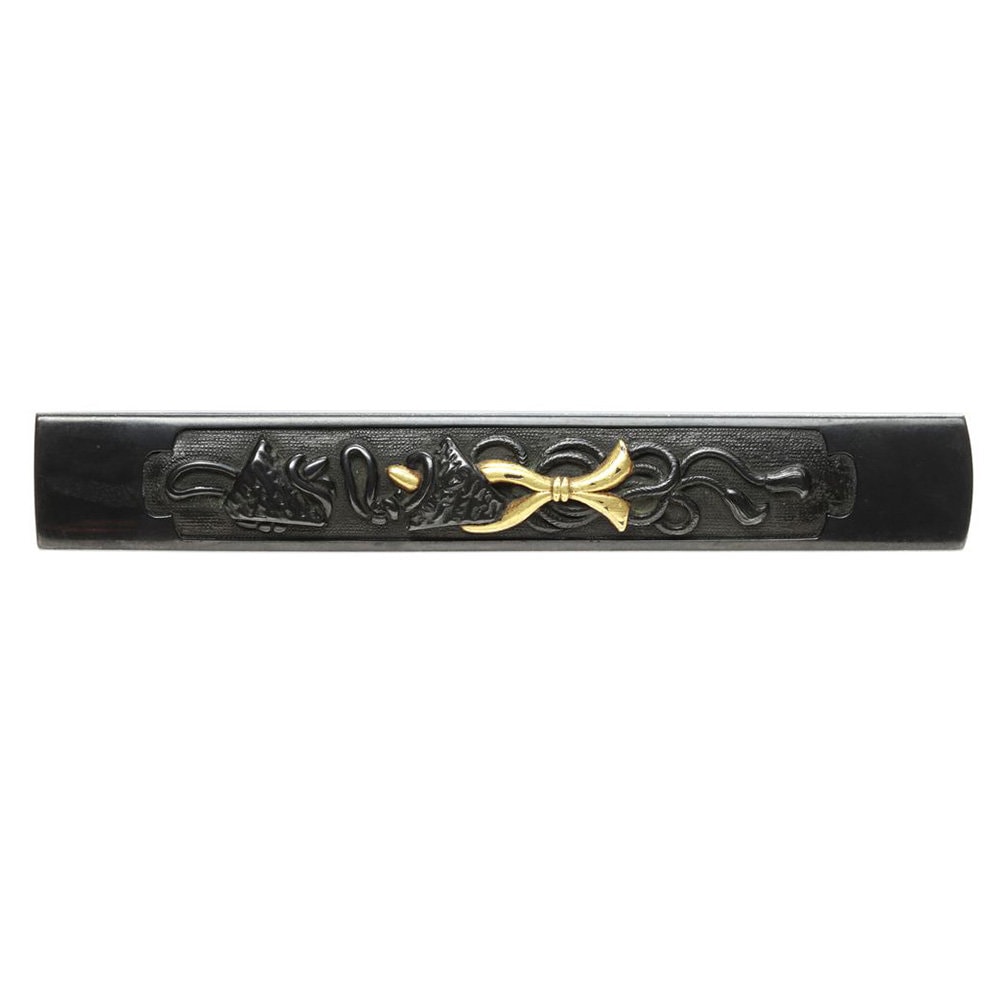
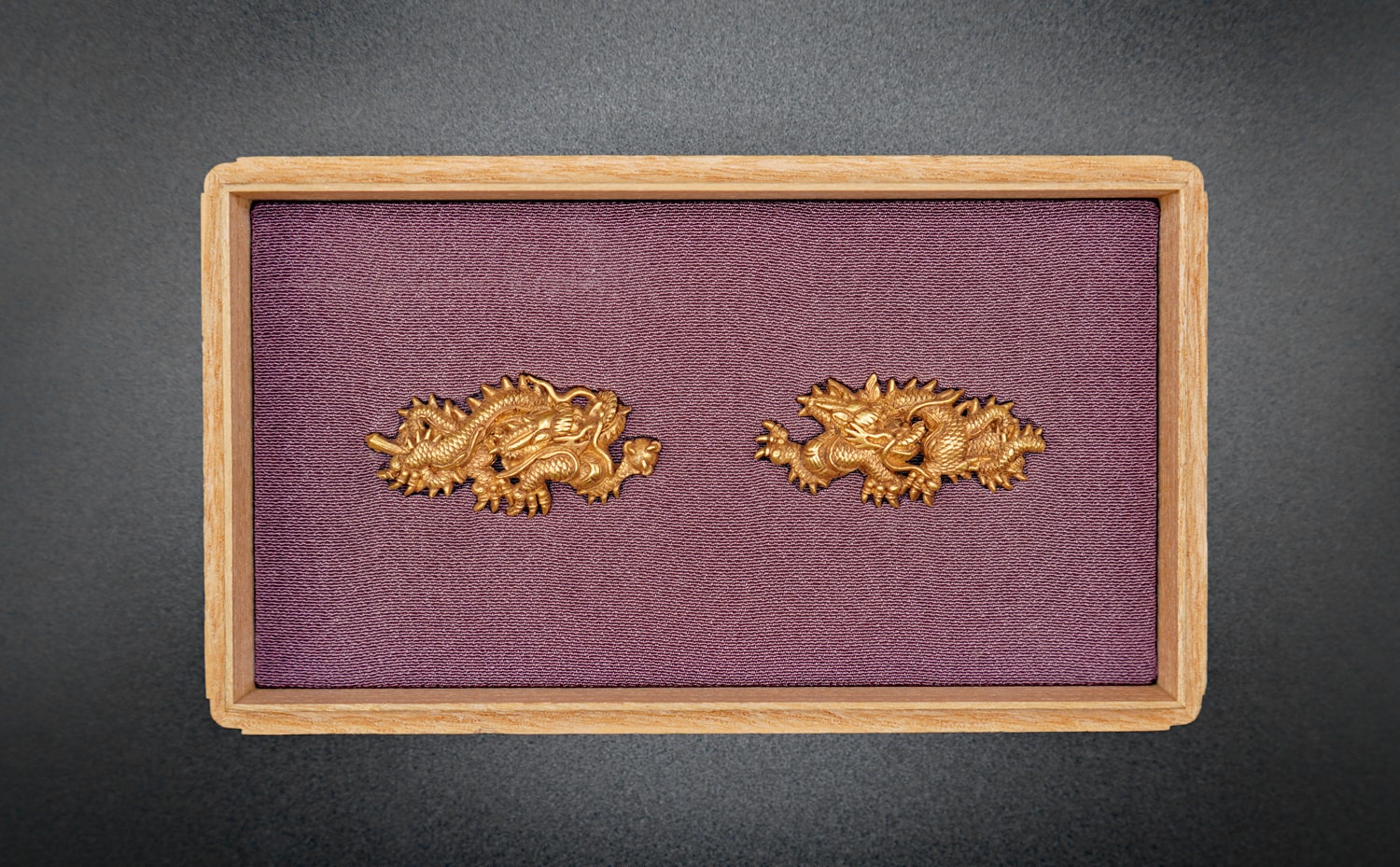
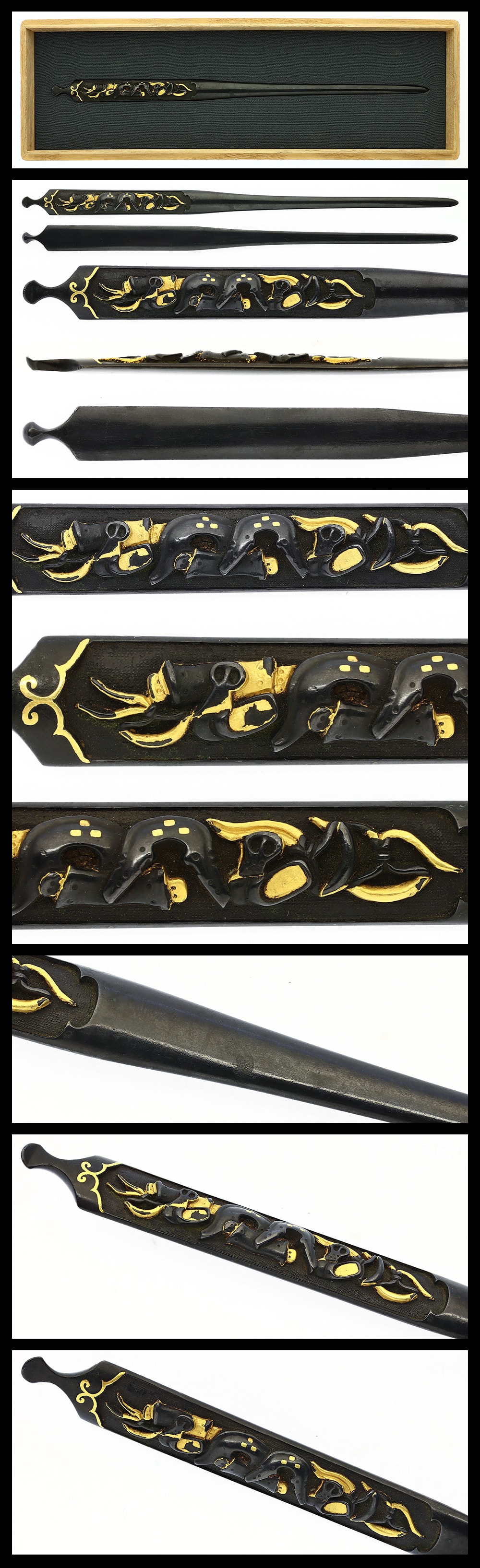
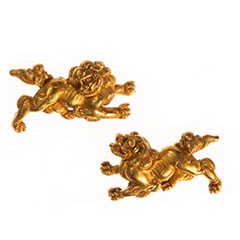
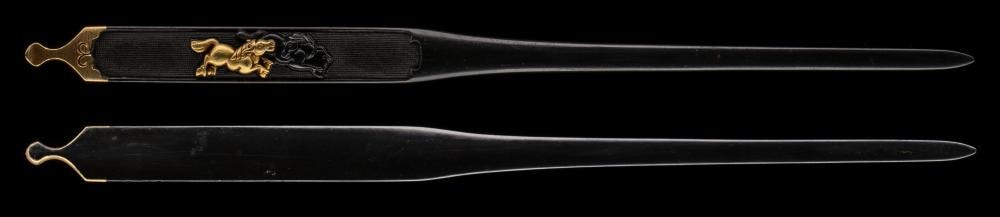
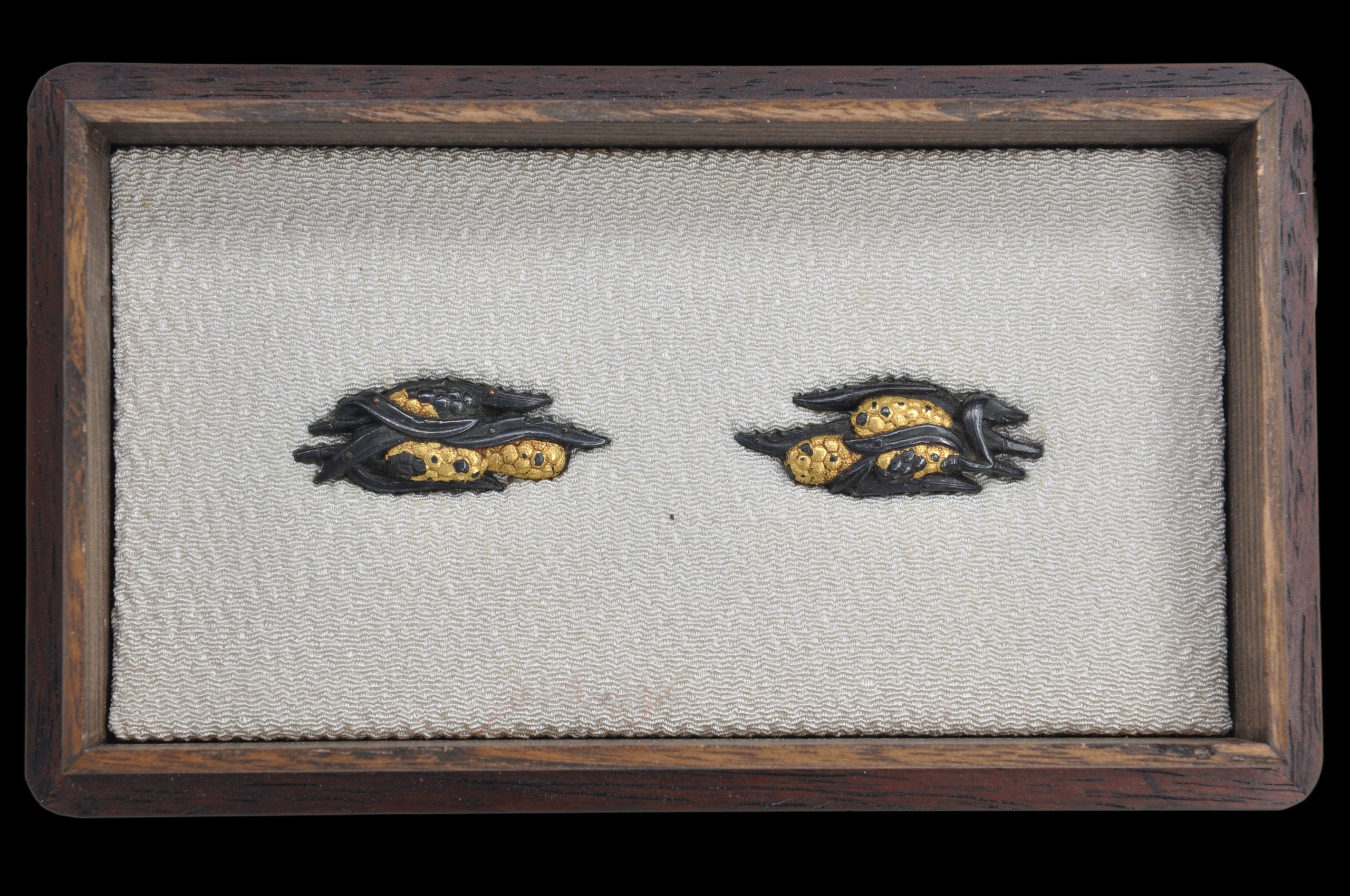
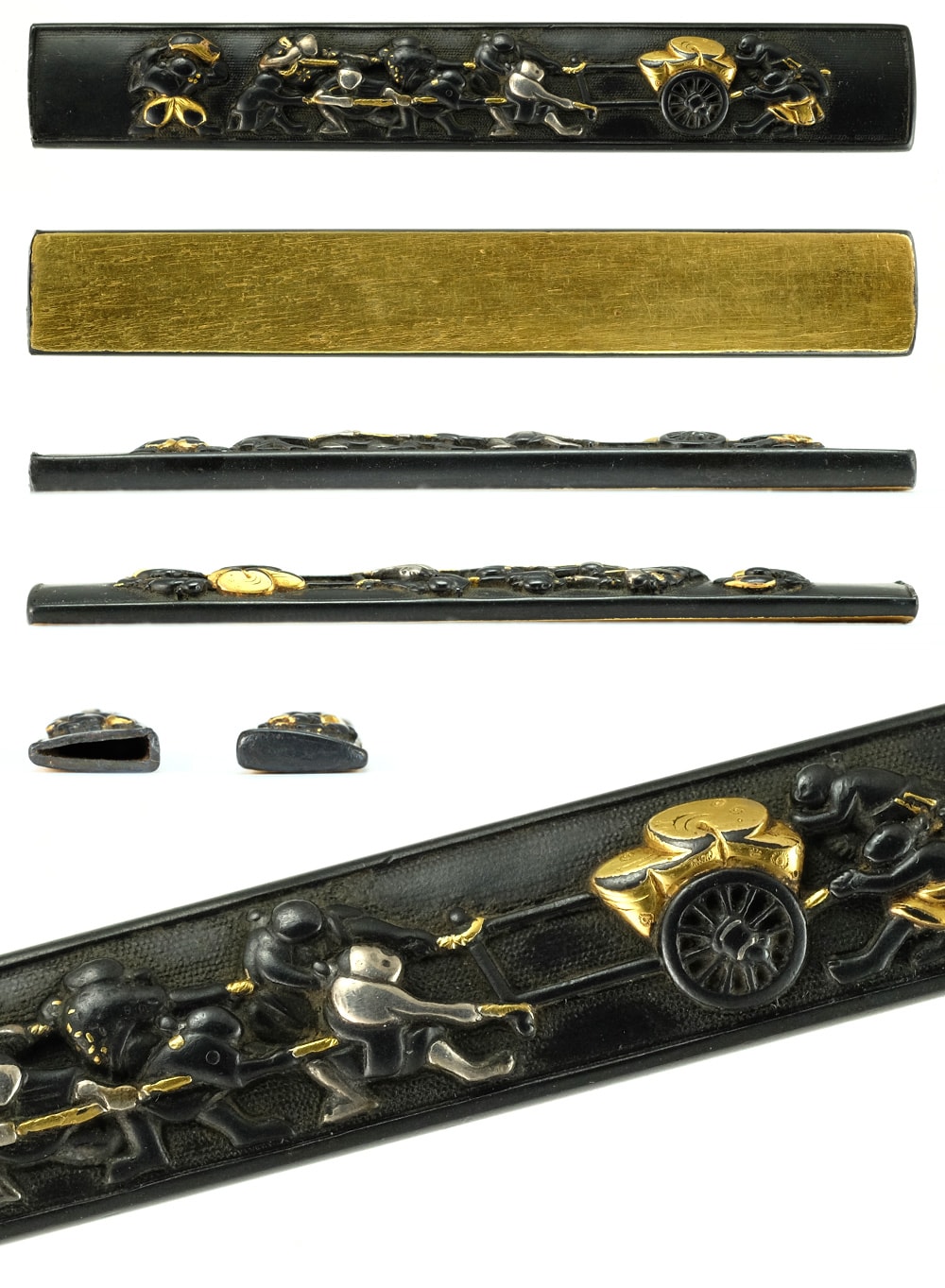
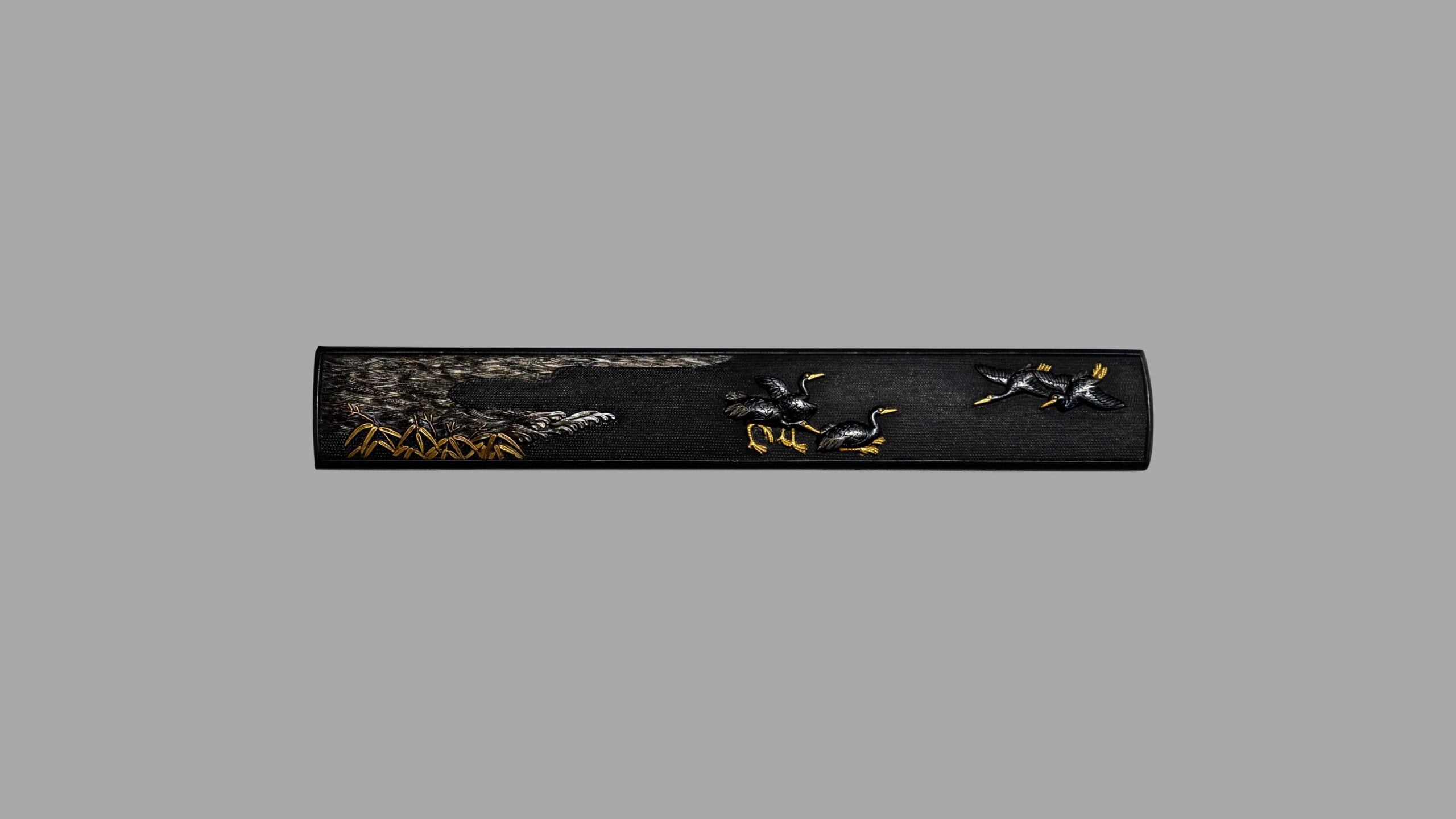
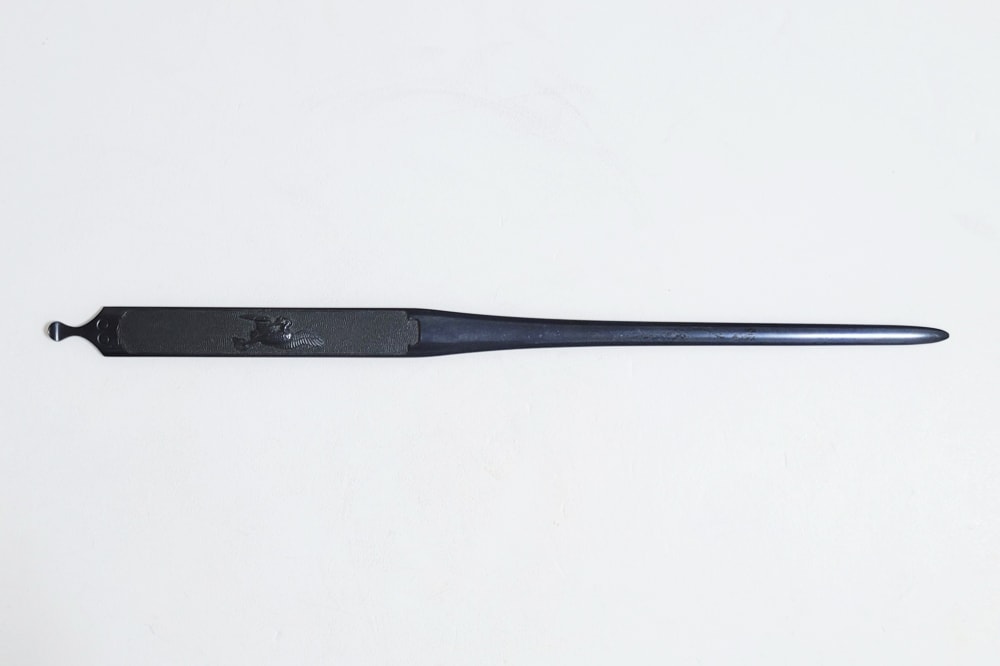
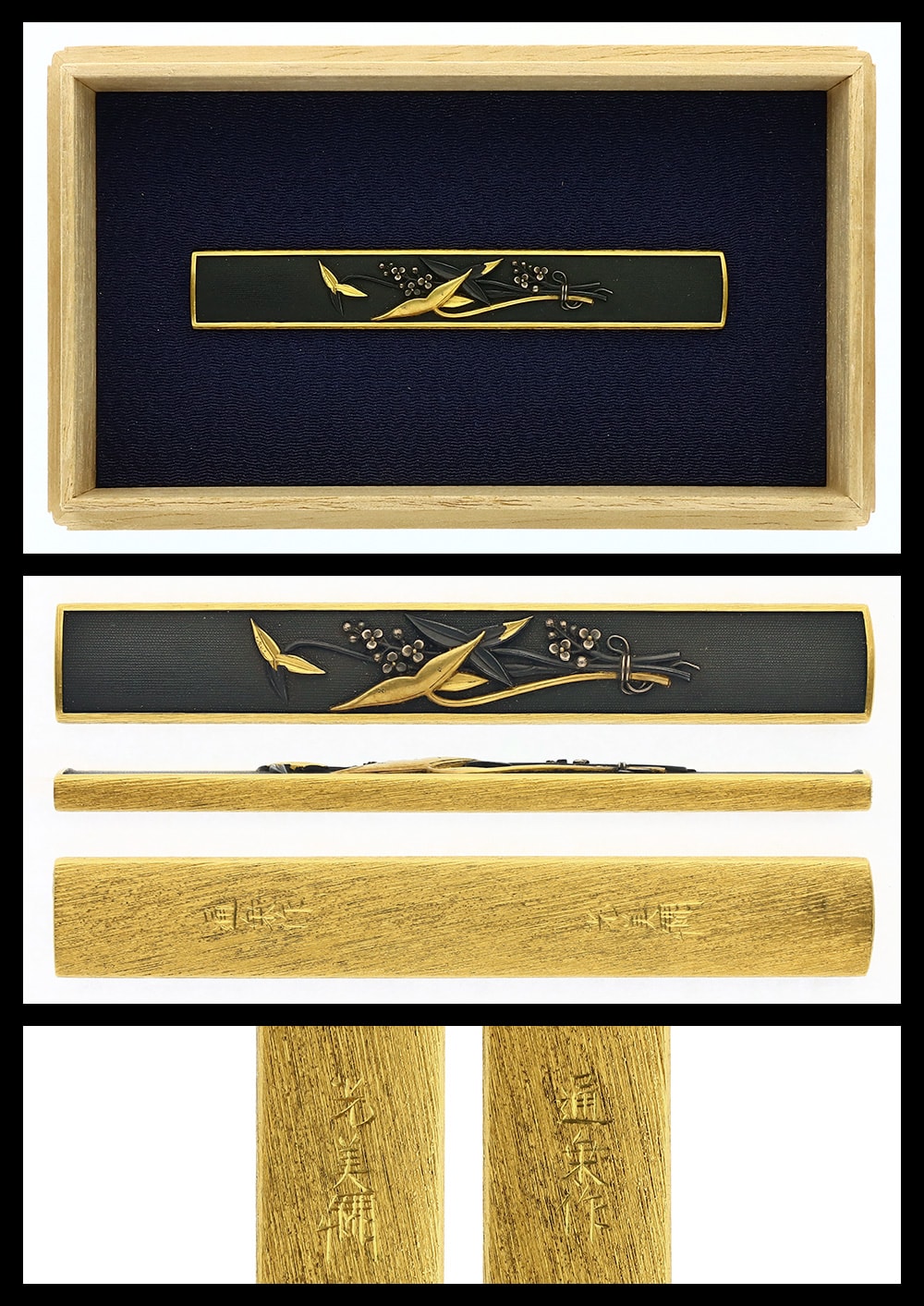
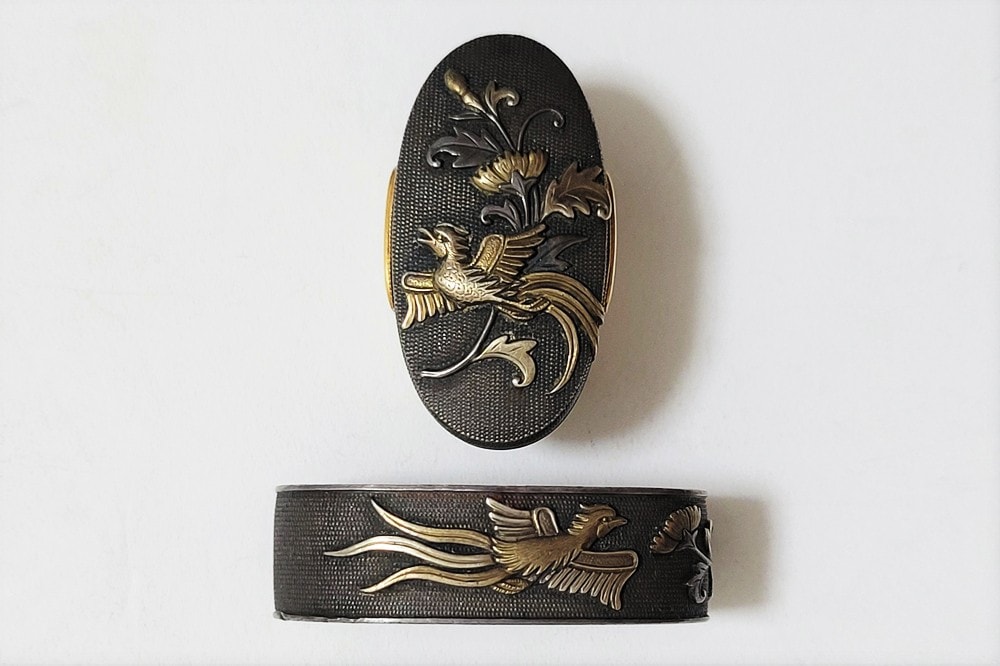
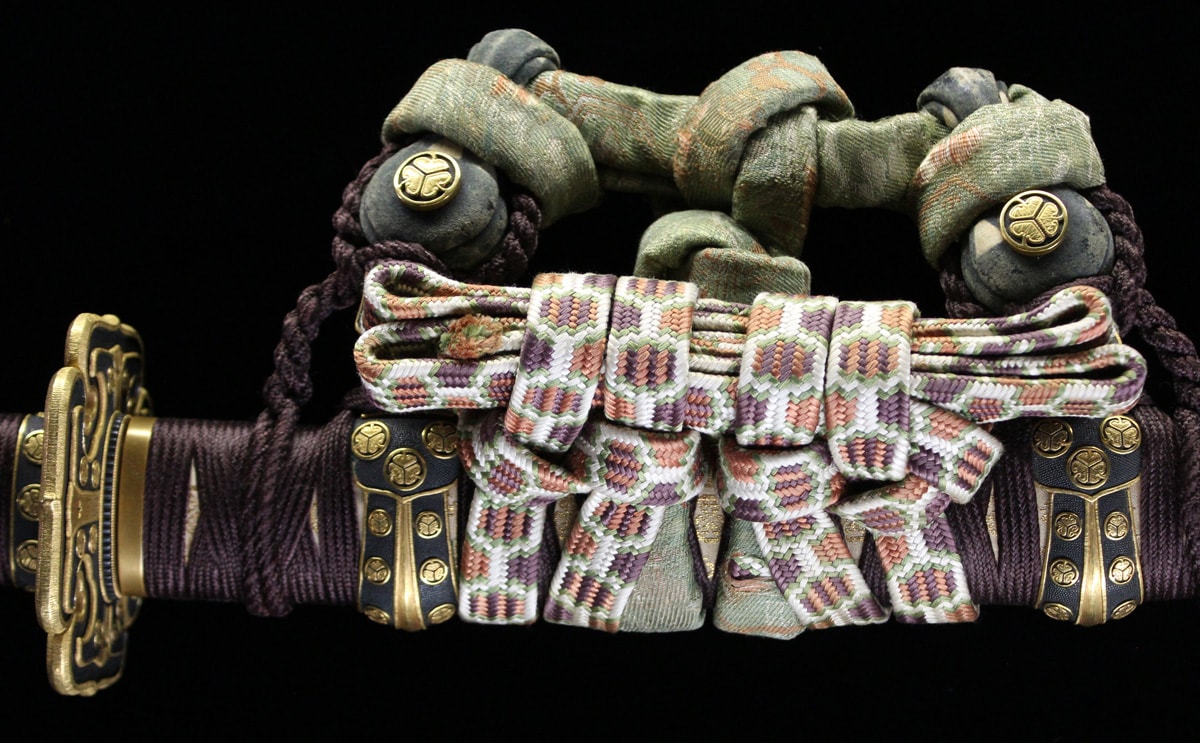
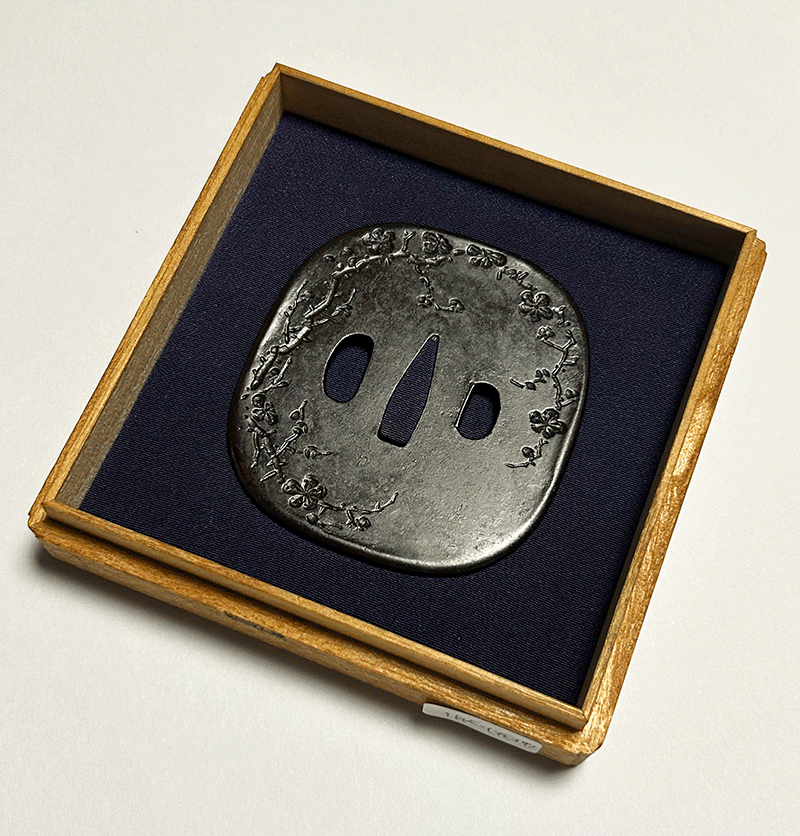
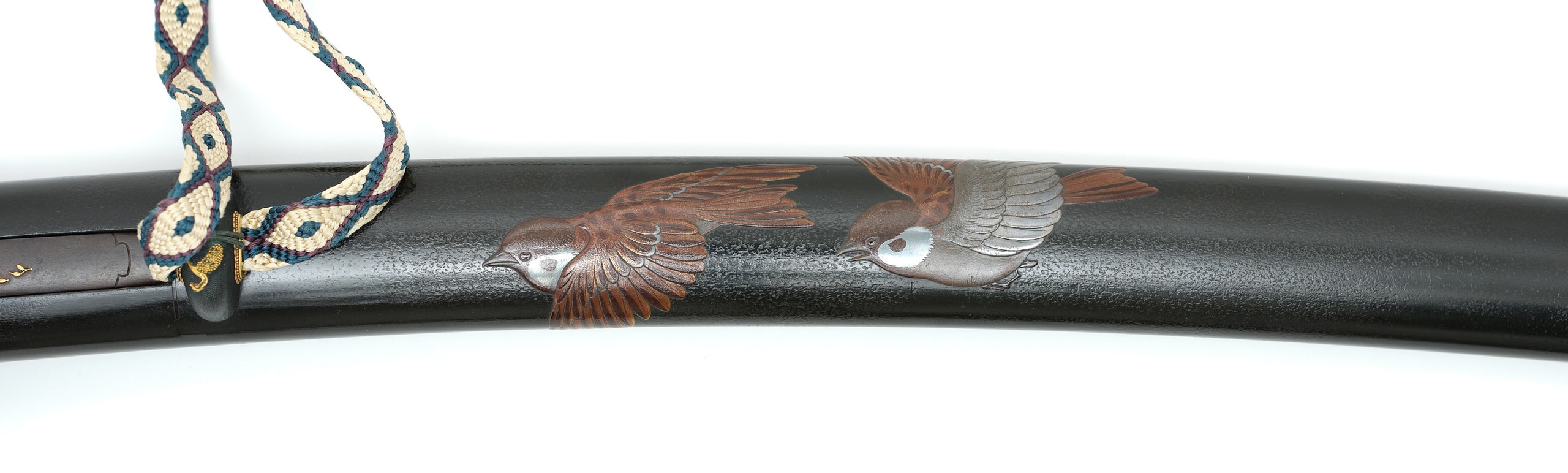
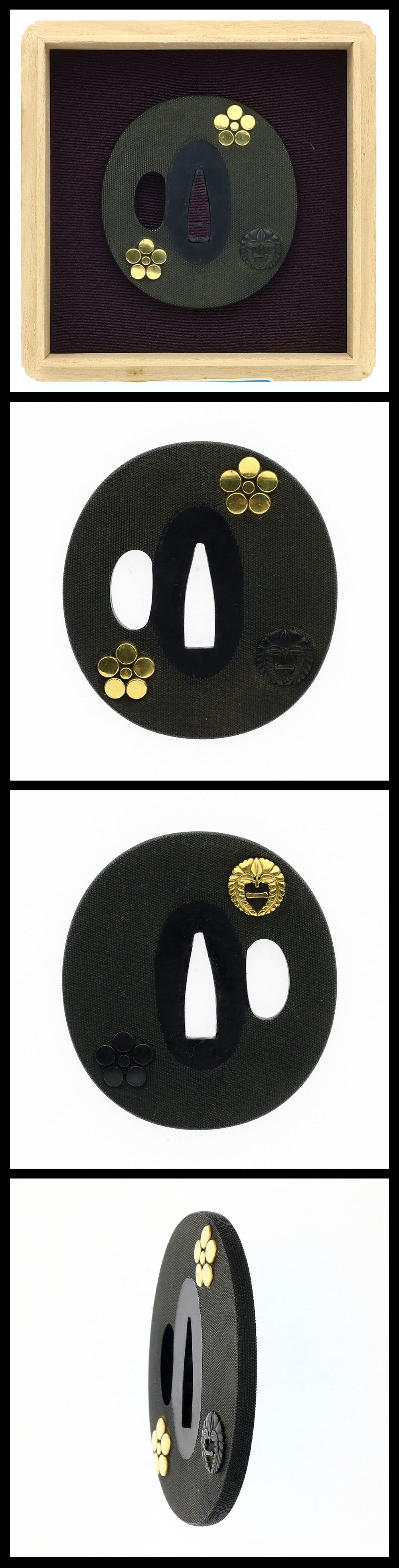
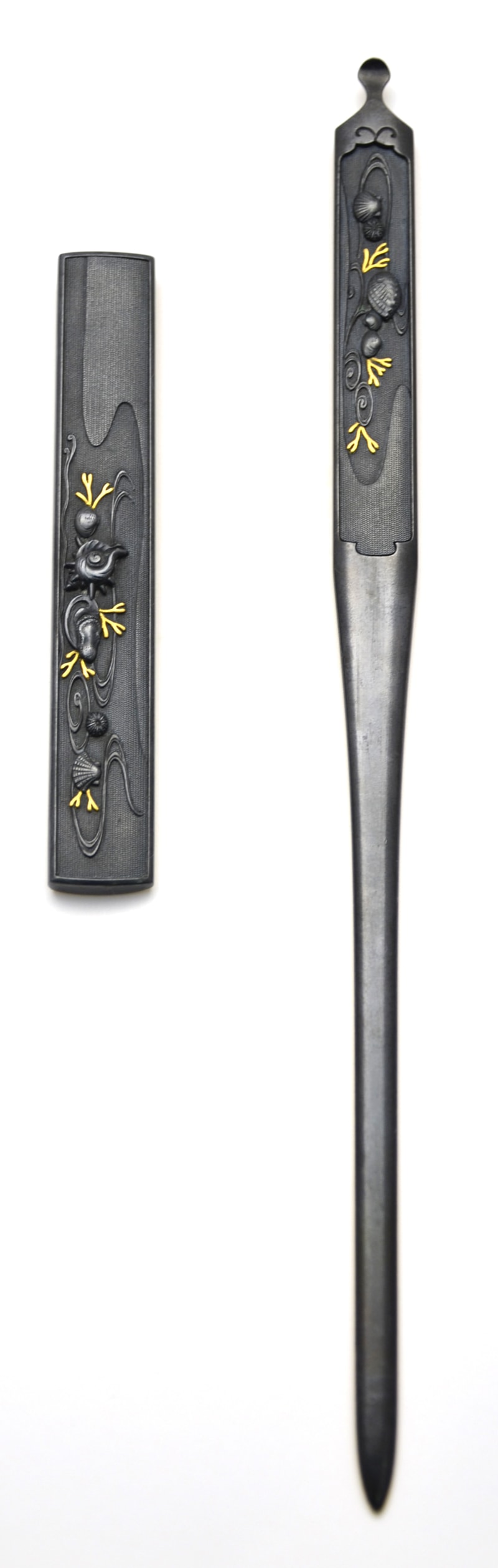
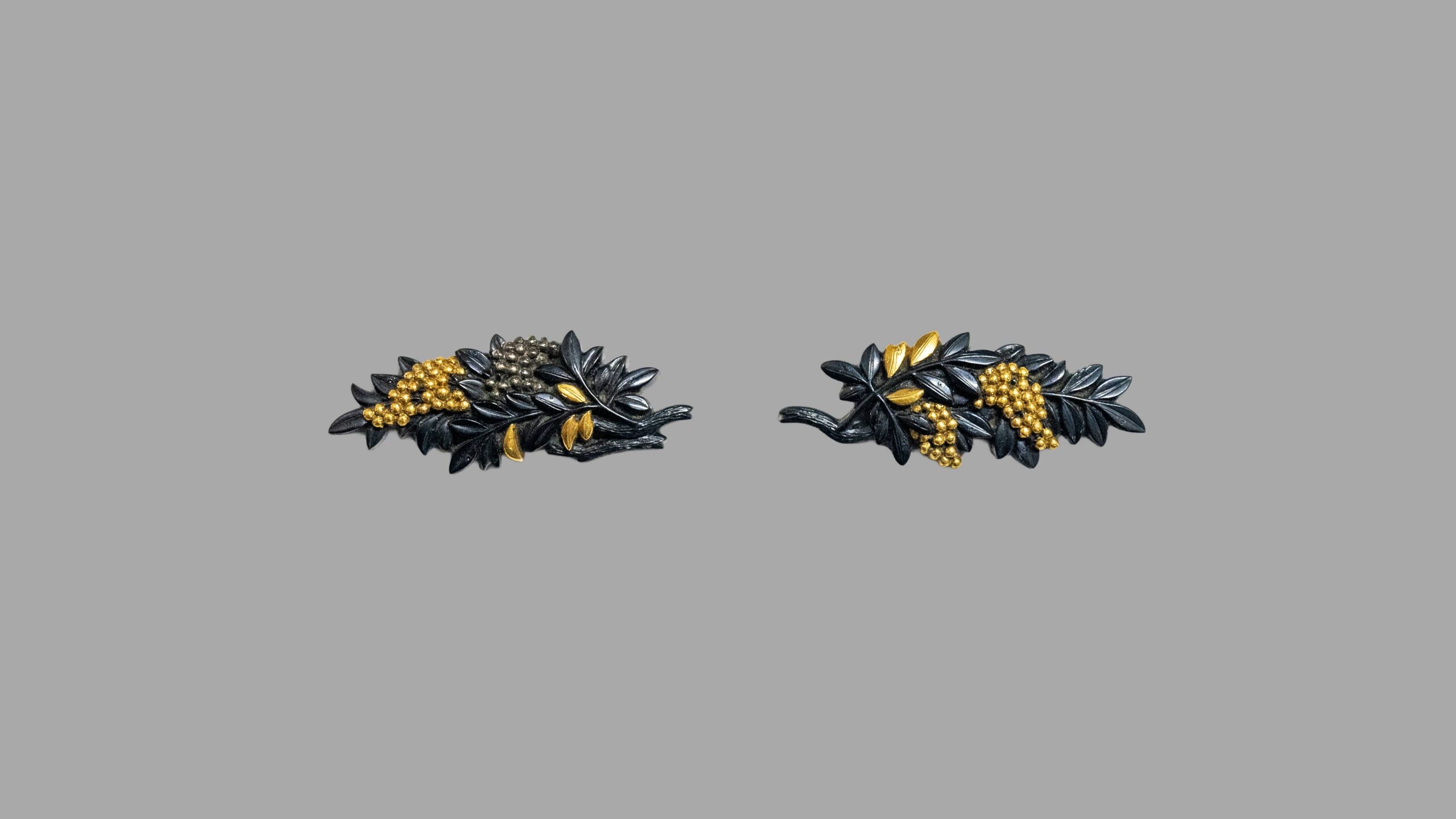
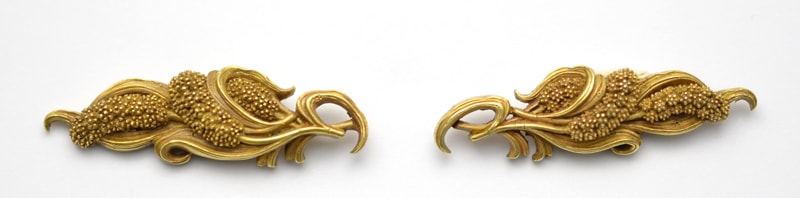
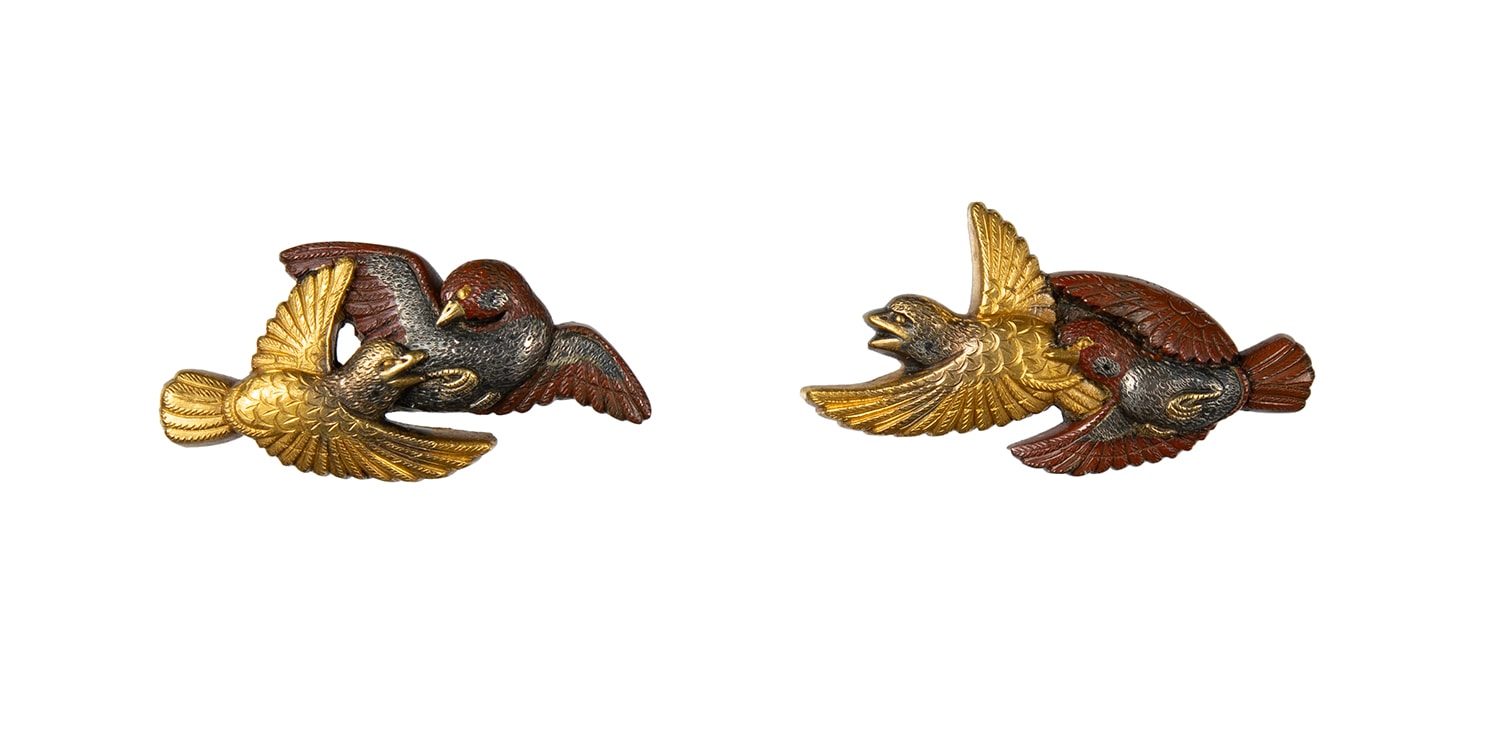
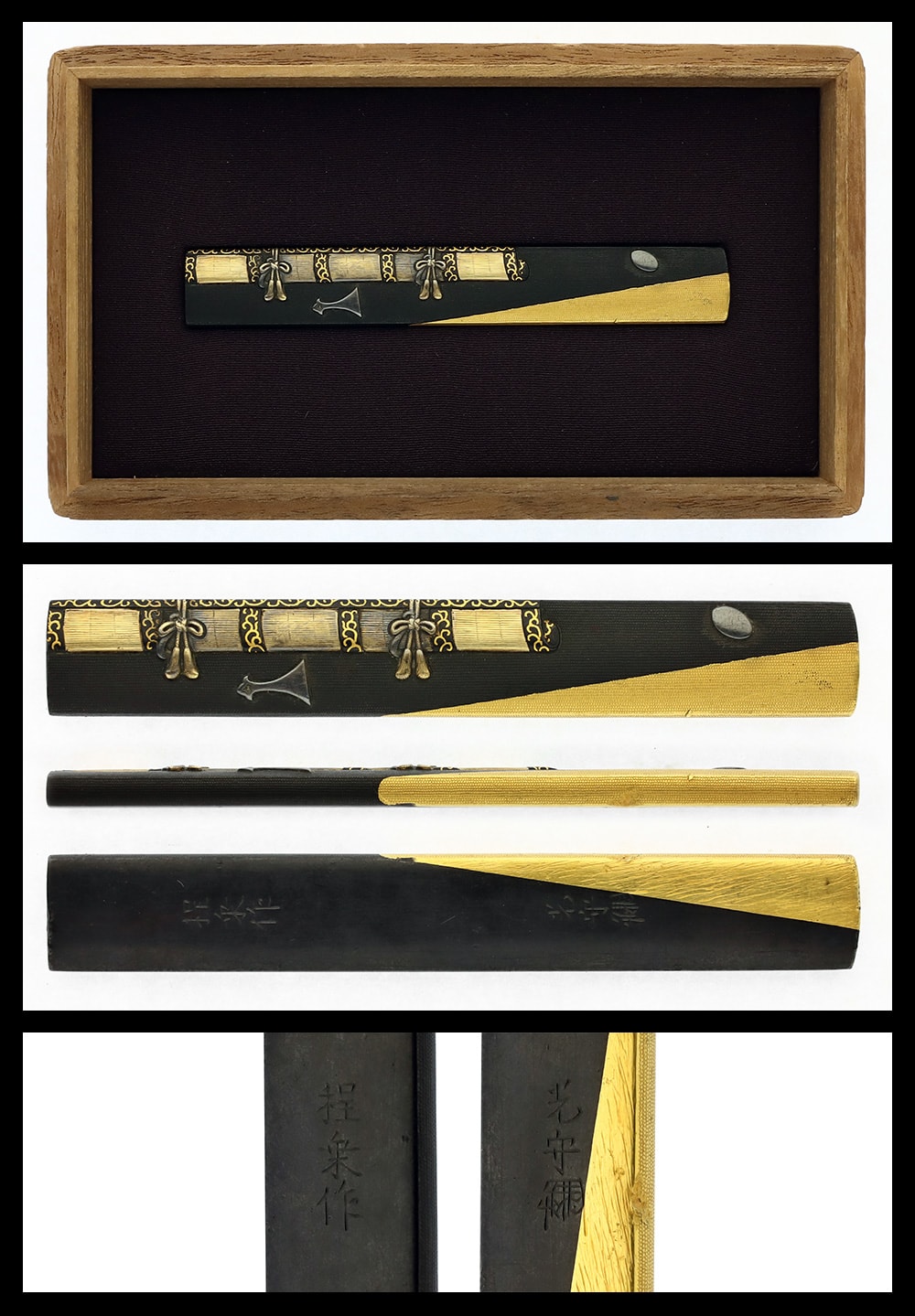
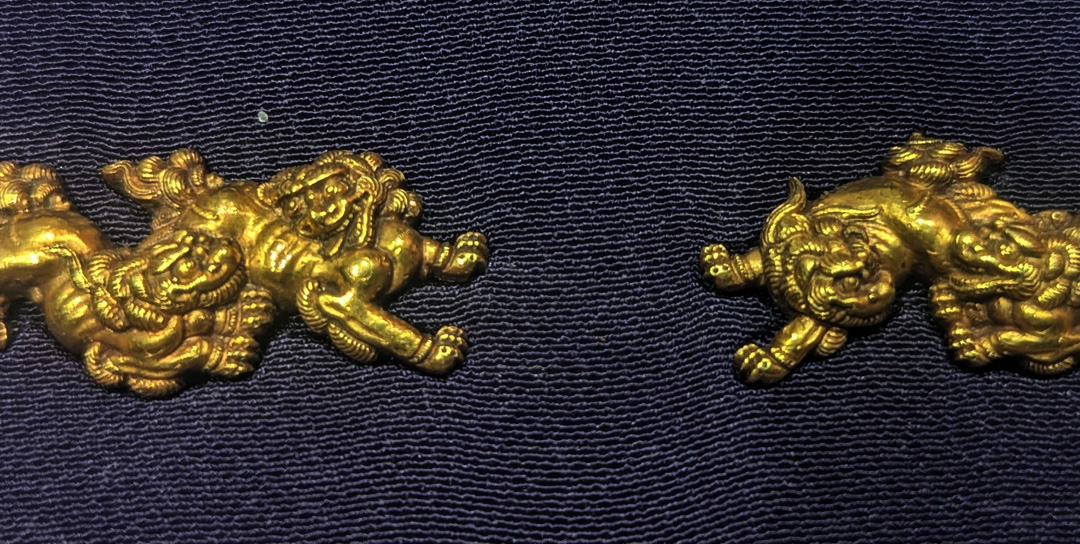
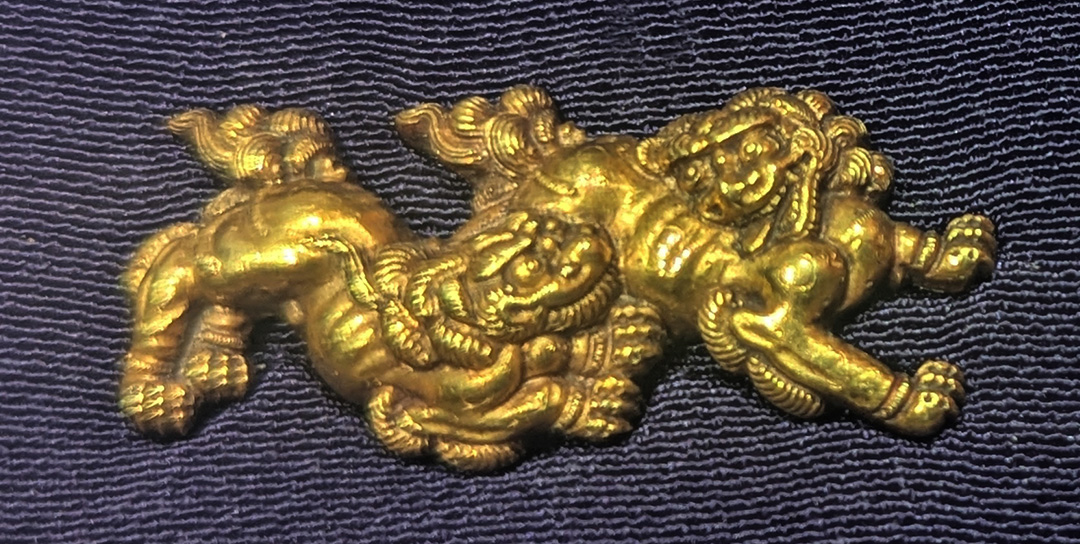
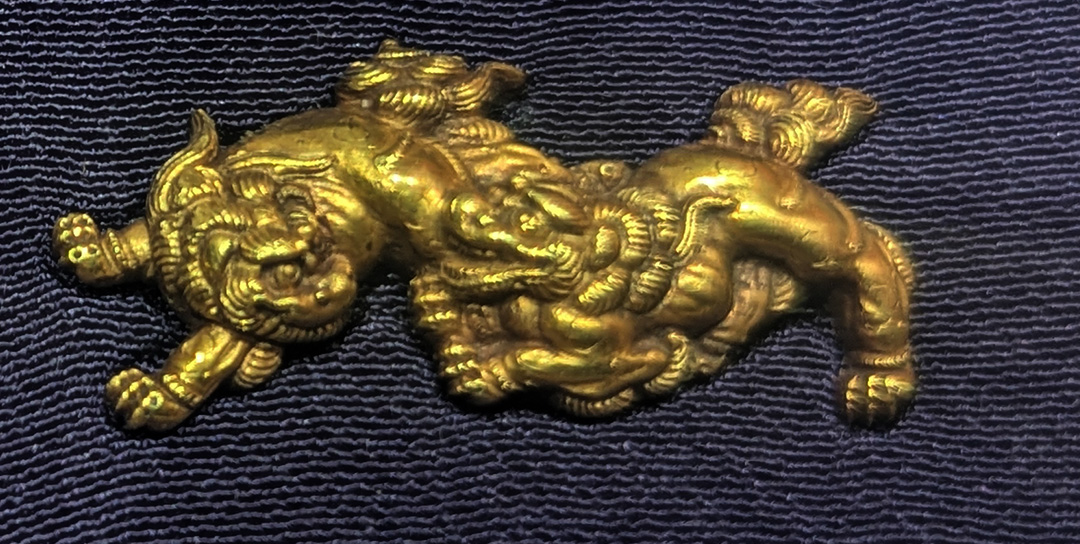
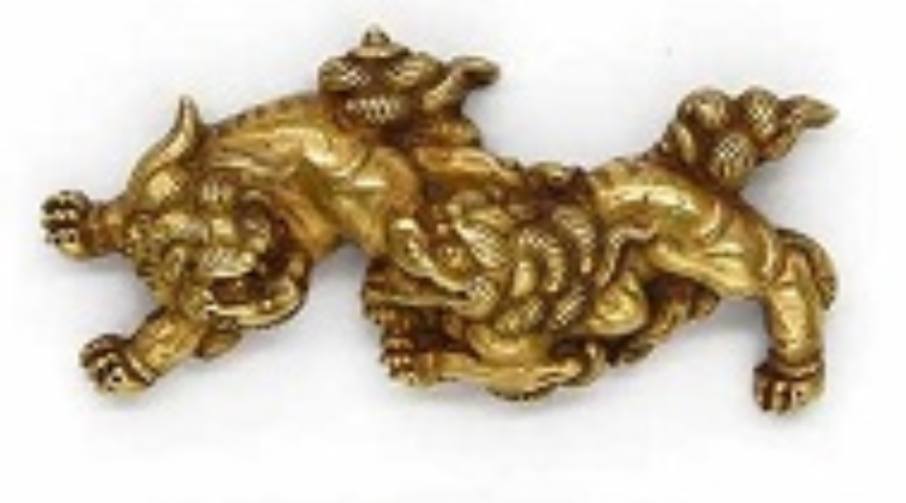
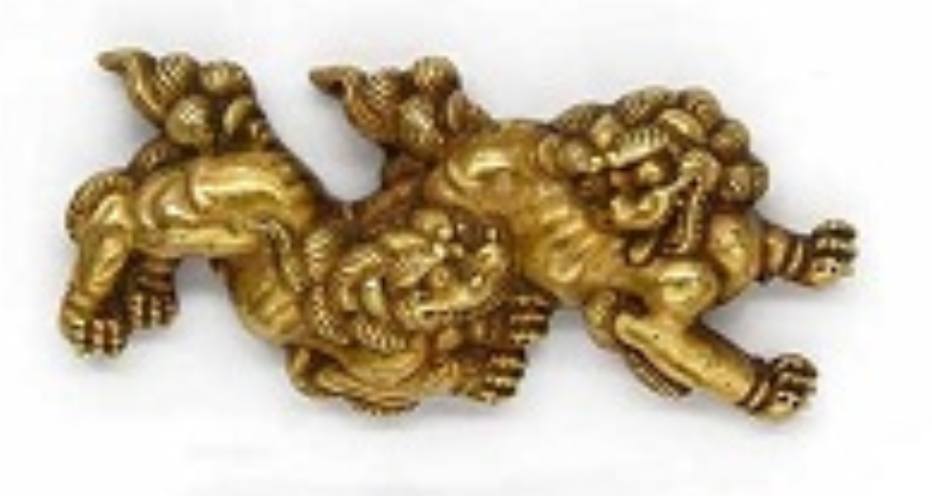
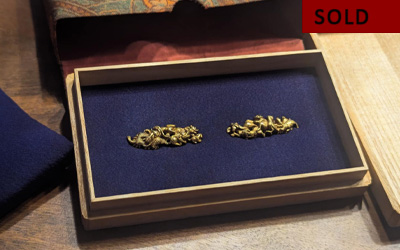
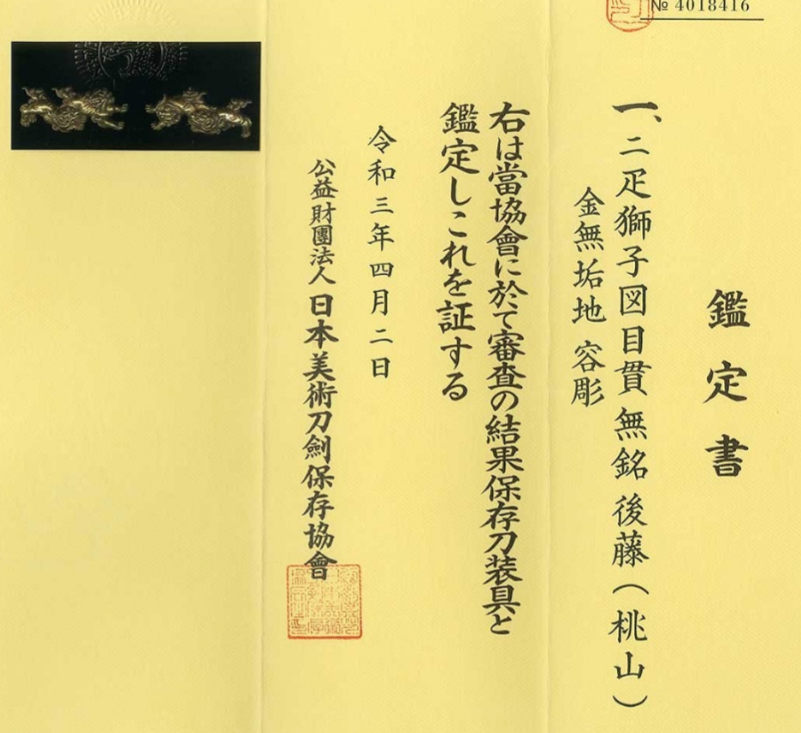
A pair of solid gold Goto school menuki from the Momoyama period, depicting shishi (lion-dogs). The menuki are unsigned, consistent with early Goto works, and are accompanied by a NBTHK Hozon Tōsōgu certificate. This set is housed in a custom presentation box and is a rare and highly collectible addition to any serious Japanese sword fitting collection.
 NihontoWatch
mumei · Goto · Momoyama
Ko-Goto School
Momoyama
Unsigned
Tokuho (NBTHK)
Iebori · Kyoto
The term Ko-Gotō refers to works of the Gotō family from the time of the first master, Yūjō, in the Muromachi period, through approximately the fifth master, Tokujō, in the Momoyama period, for which it is not possible to determine the individual artist's personal name. These unsigned pieces represent the formative period of the Gotō house—the official metalworkers to the Ashikaga and later Tokugawa shogunates—and embody the foundational aesthetic principles that would define the school's centuries-long dominance of elite tōsōgu production. Learn more →
A Hozon-certified fitting of notably superior craftsmanship and condition, often with signature or workmanship of high reference value.
The NBTHK (Nihon Bijutsu Tōken Hozon Kyōkai, the Society for the Preservation of Japanese Art Swords) is a public-interest incorporated foundation founded in 1948 and supervised by Japan’s Agency for Cultural Affairs (Bunkachō); it is based at the Japanese Sword Museum in Tokyo. Its expert panels physically examine each submitted work (shinsa) and issue a certificate (kanteishō) ranking it by artistic and historical merit. NBTHK papers are the most widely recognized standard of authentication for Japanese swords and fittings.
NBTHK official siteA pair of solid gold Goto school menuki from the Momoyama period, depicting shishi (lion-dogs). The menuki are unsigned, consistent with early Goto works, and are accompanied by a NBTHK Hozon Tōsōgu certificate. This set is housed in a custom presentation box and is a rare and highly collectible addition to any serious Japanese sword fitting collection.
NihontoWatchmumei · Goto · Momoyama
Ko-Goto School
Momoyama
Unsigned
Tokuho (NBTHK)
Iebori · Kyoto
The term Ko-Gotō refers to works of the Gotō family from the time of the first master, Yūjō, in the Muromachi period, through approximately the fifth master, Tokujō, in the Momoyama period, for which it is not possible to determine the individual artist's personal name. These unsigned pieces represent the formative period of the Gotō house—the official metalworkers to the Ashikaga and later Tokugawa shogunates—and embody the foundational aesthetic principles that would define the school's centuries-long dominance of elite tōsōgu production. Learn more →
A Hozon-certified fitting of notably superior craftsmanship and condition, often with signature or workmanship of high reference value.
The NBTHK (Nihon Bijutsu Tōken Hozon Kyōkai, the Society for the Preservation of Japanese Art Swords) is a public-interest incorporated foundation founded in 1948 and supervised by Japan’s Agency for Cultural Affairs (Bunkachō); it is based at the Japanese Sword Museum in Tokyo. Its expert panels physically examine each submitted work (shinsa) and issue a certificate (kanteishō) ranking it by artistic and historical merit. NBTHK papers are the most widely recognized standard of authentication for Japanese swords and fittings.
NBTHK official site