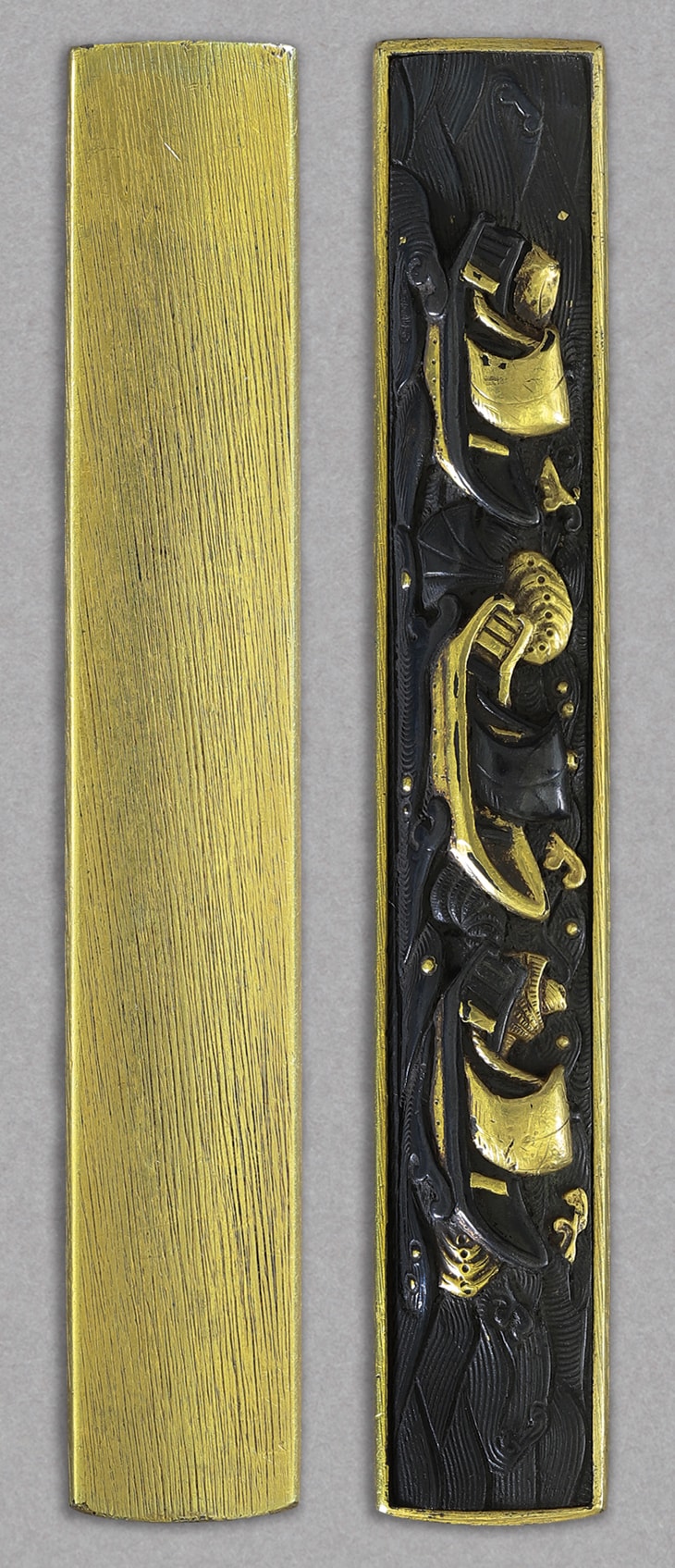
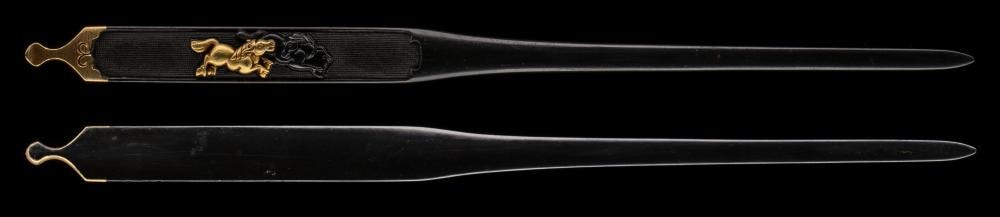
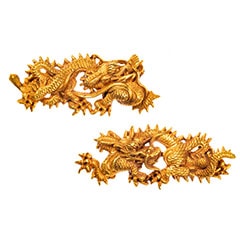
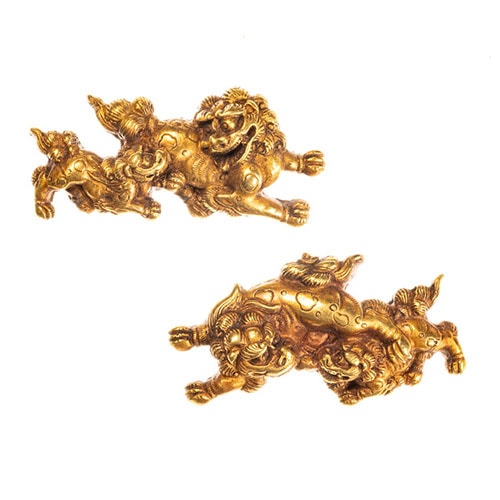
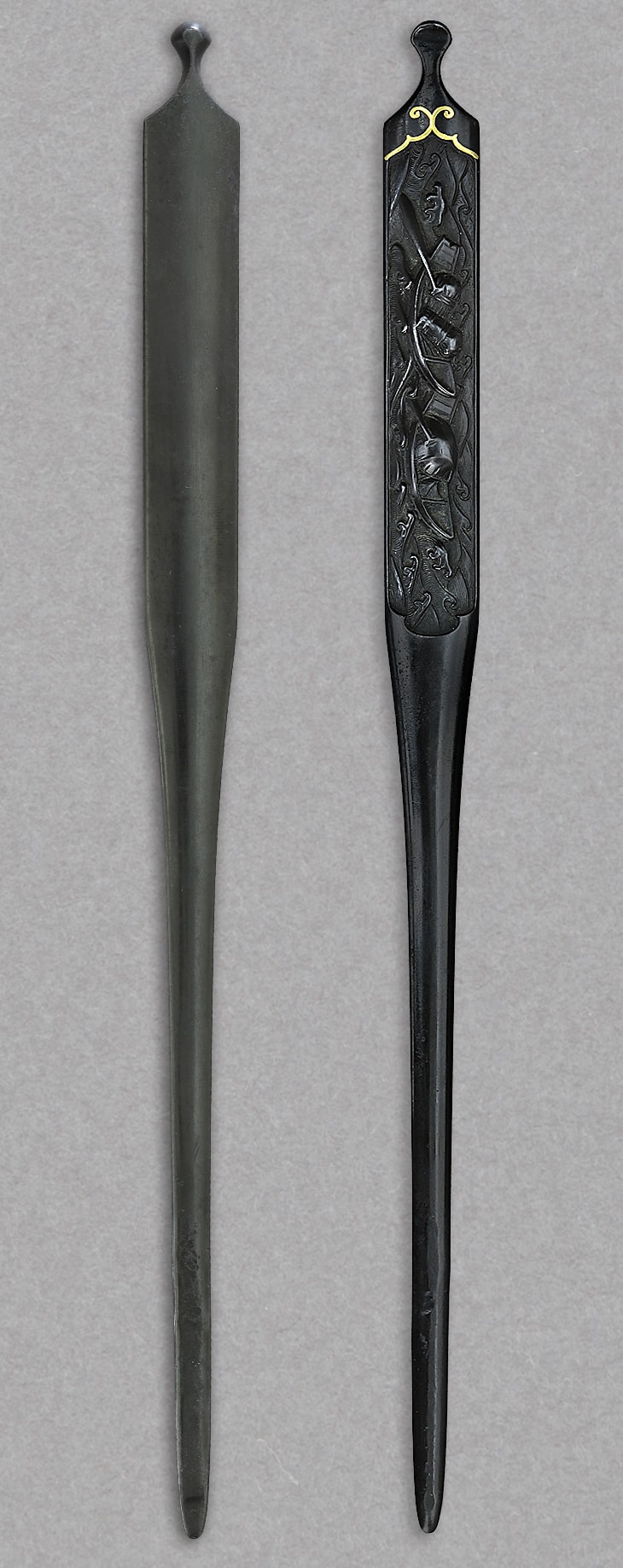
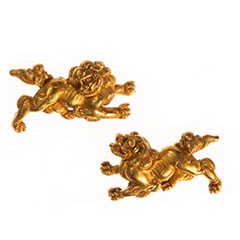
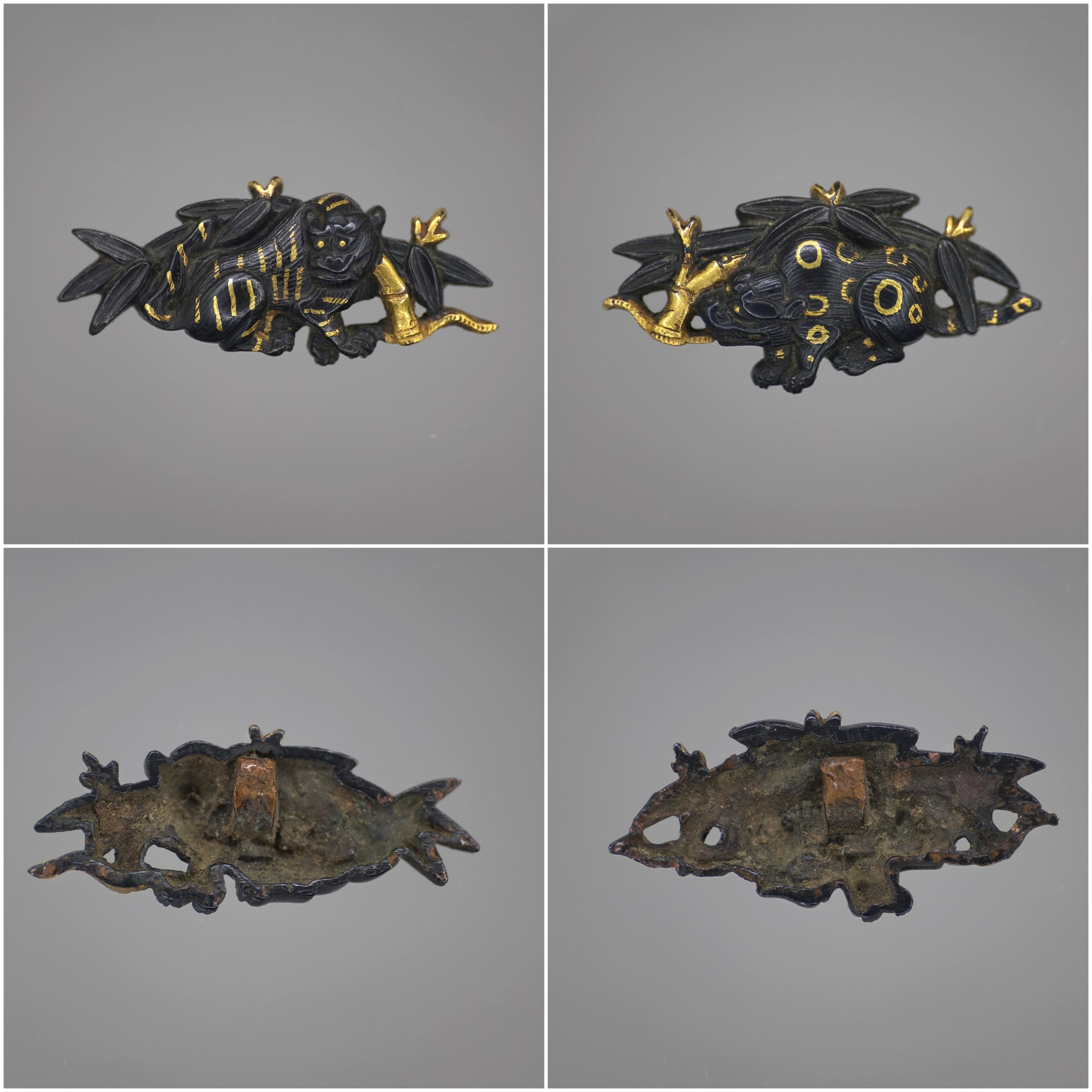
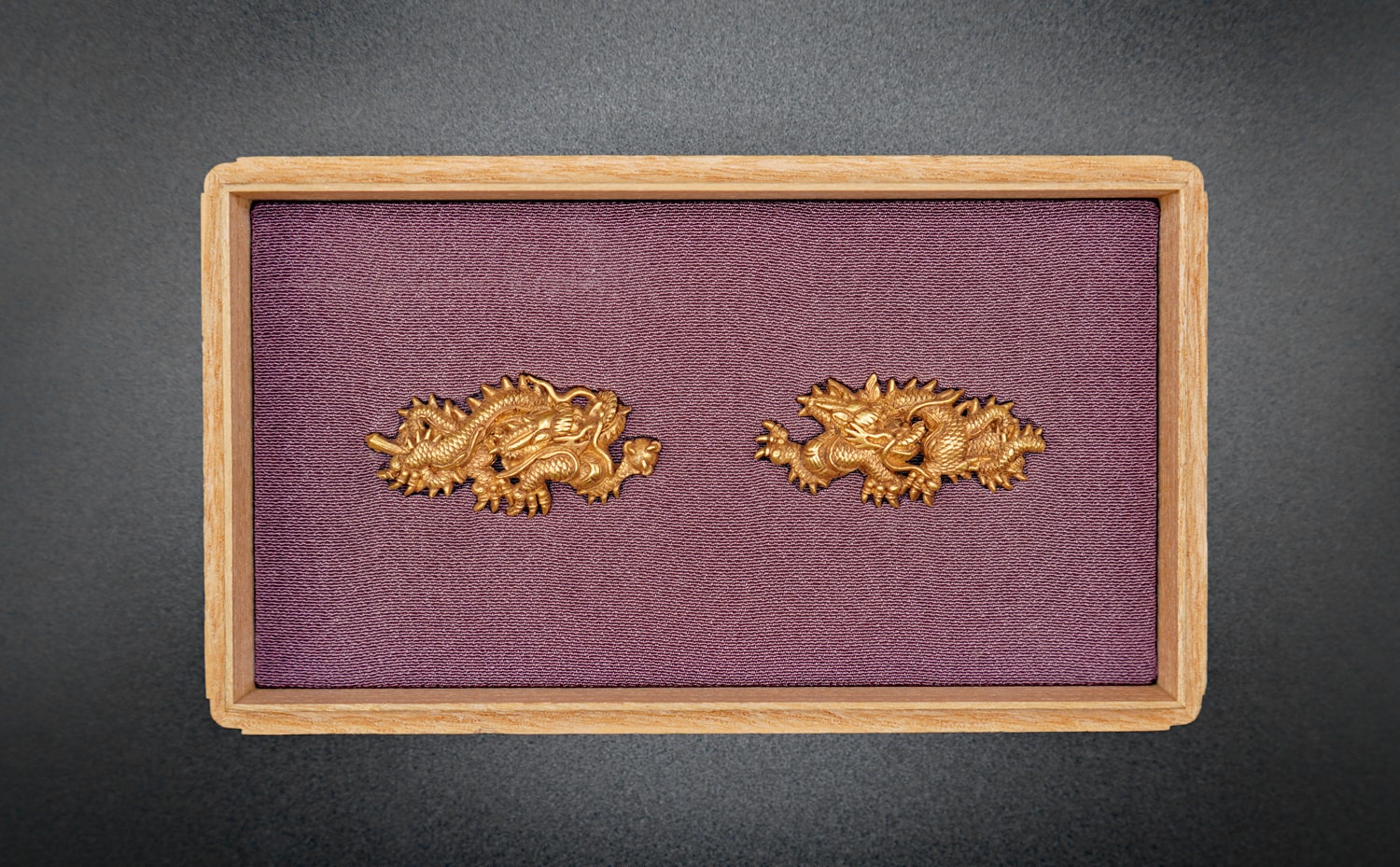
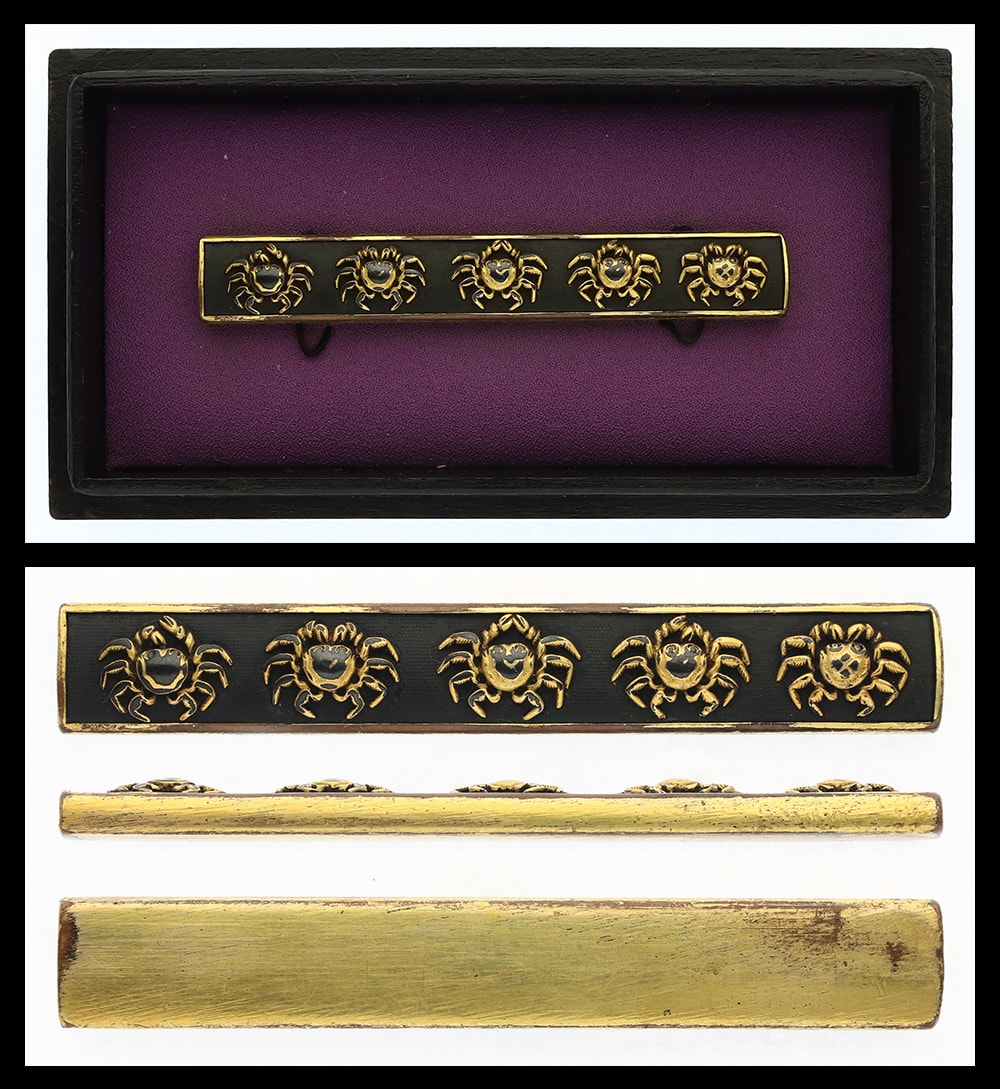
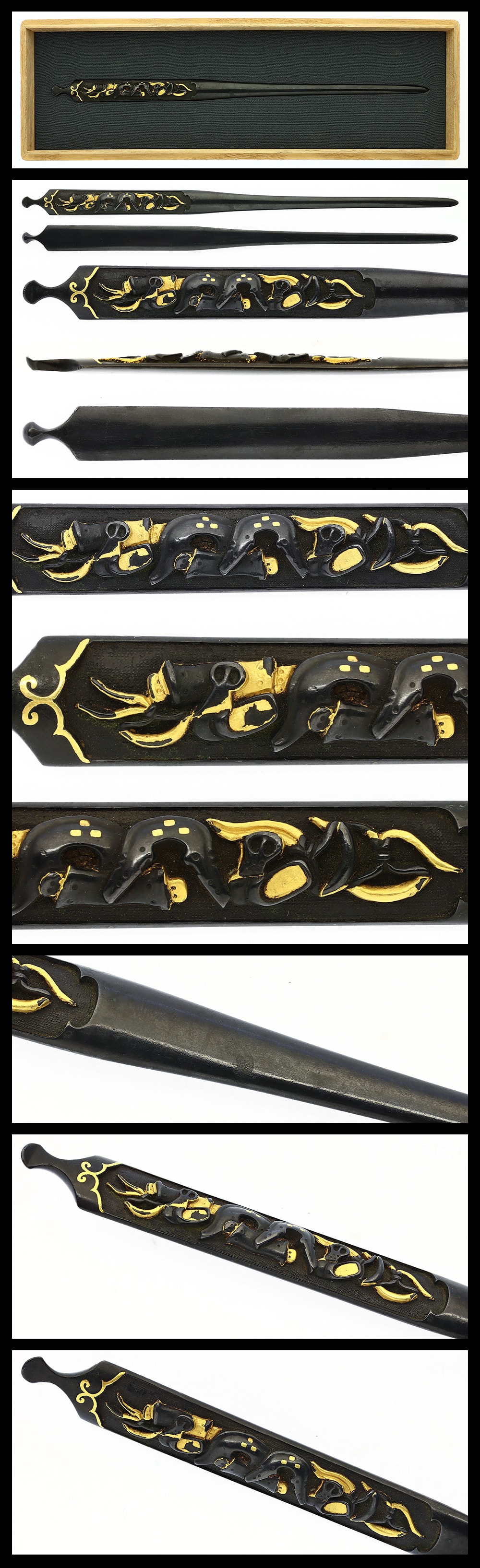
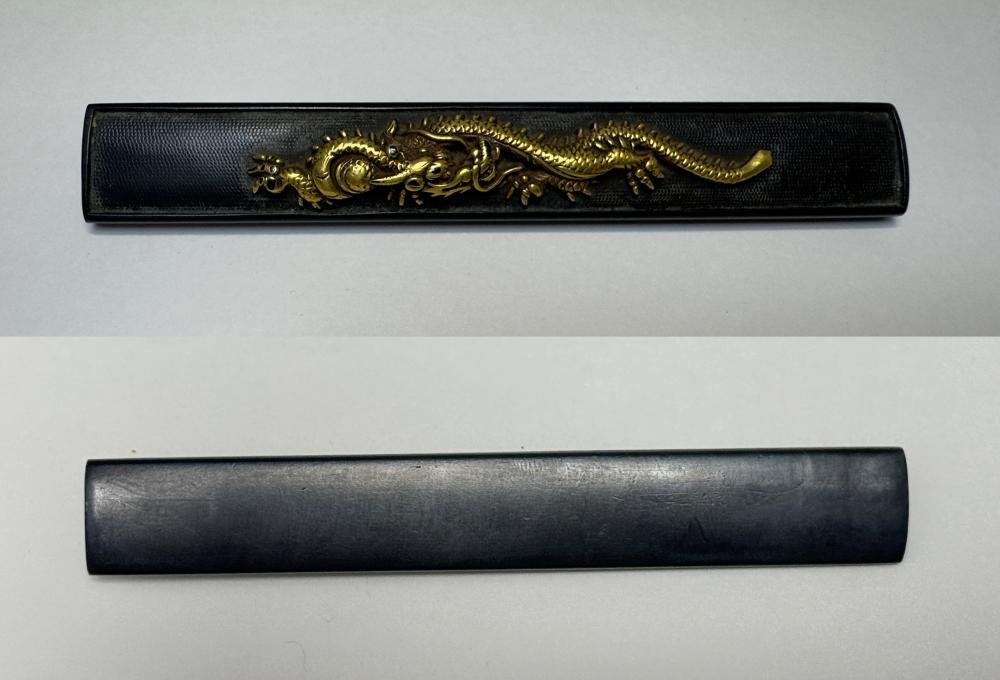
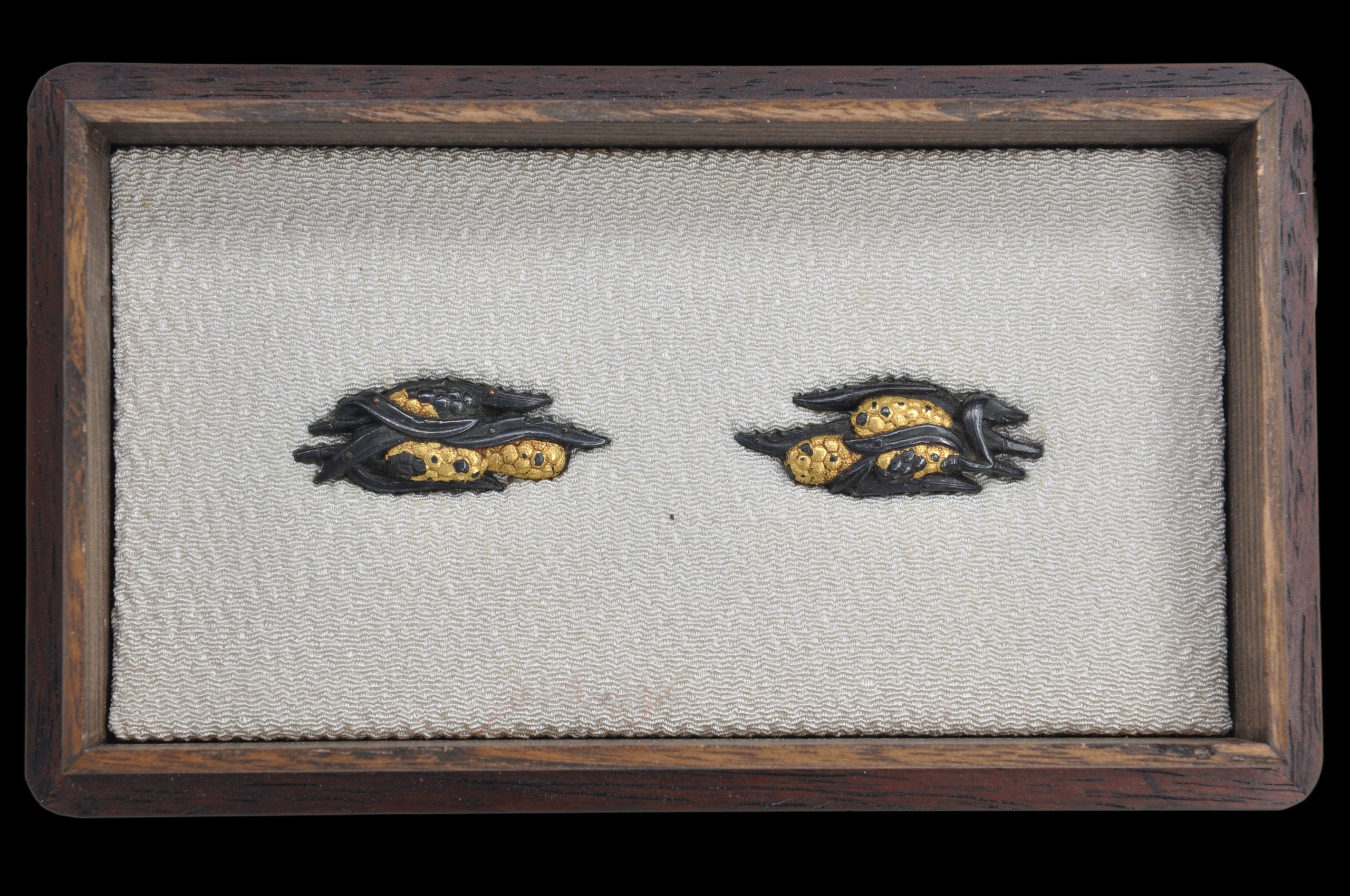
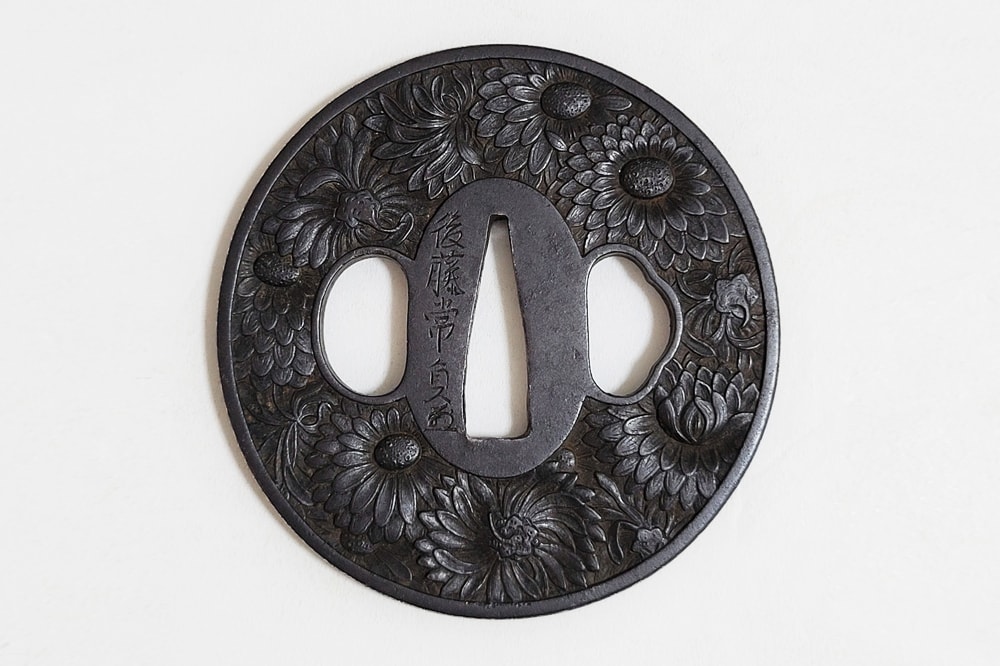
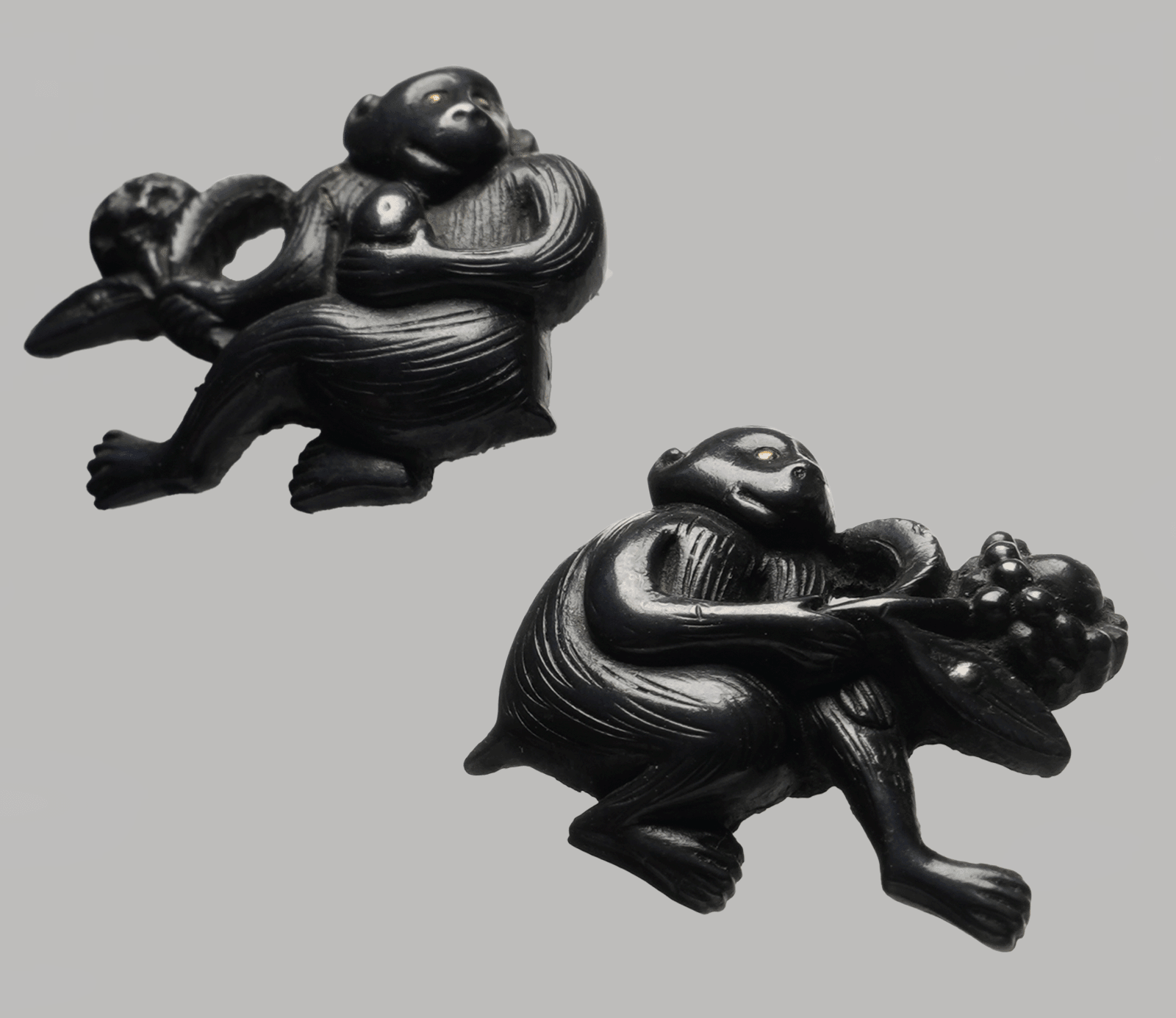
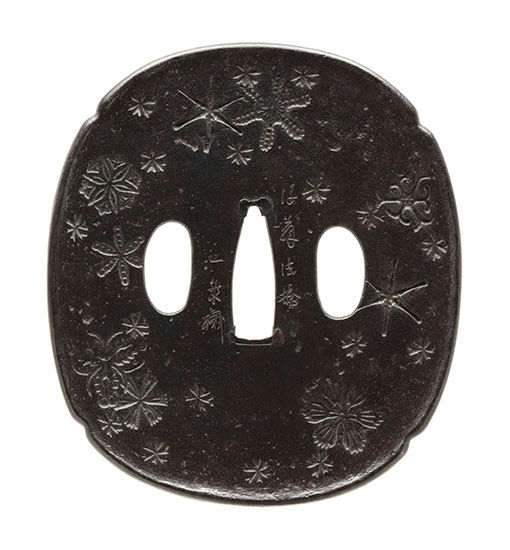
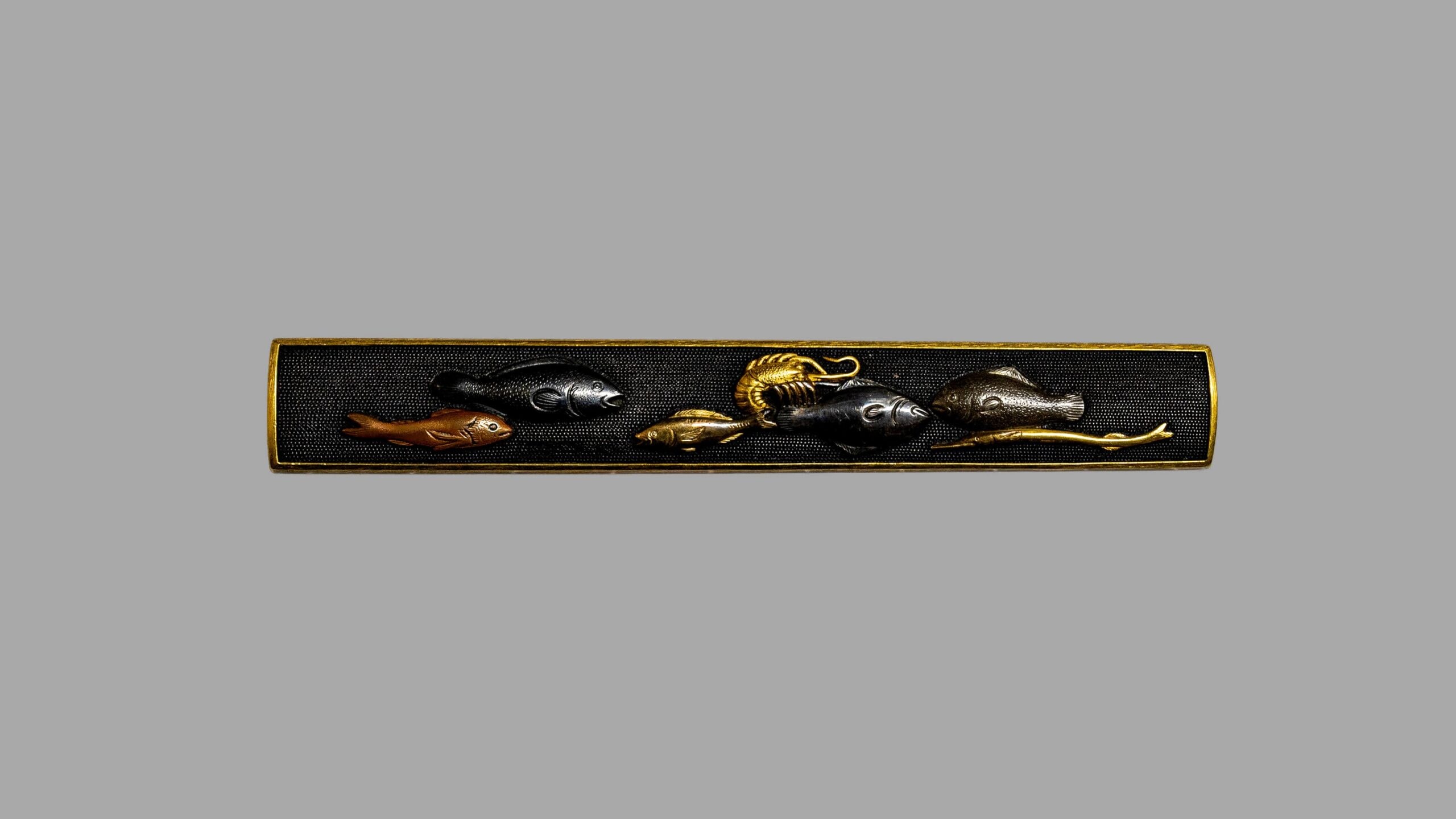
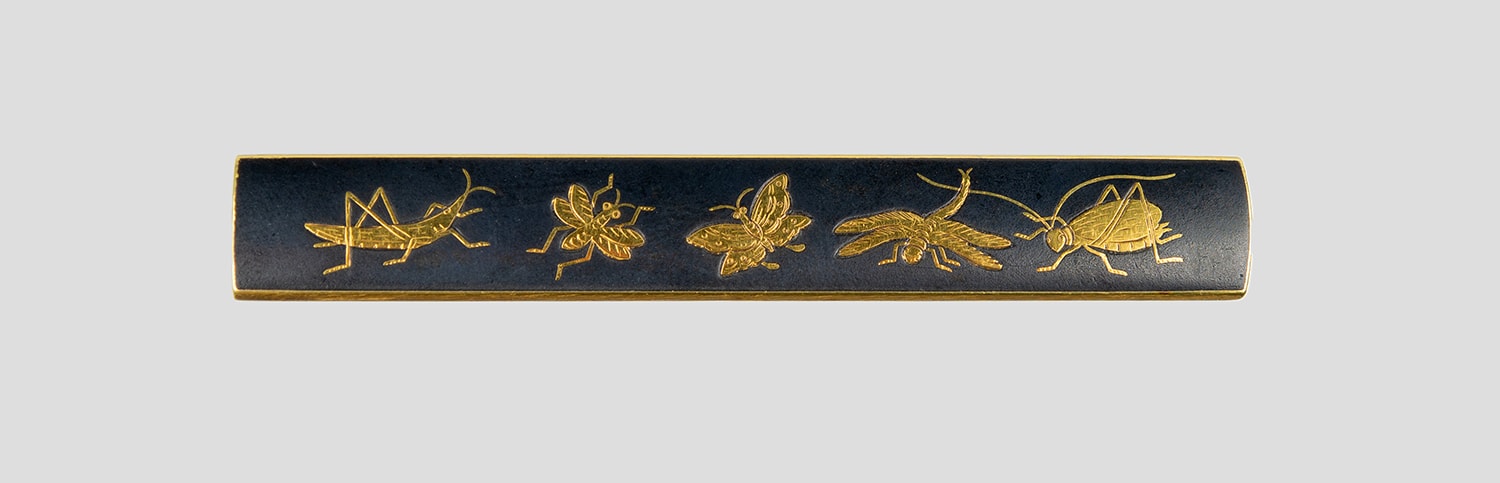
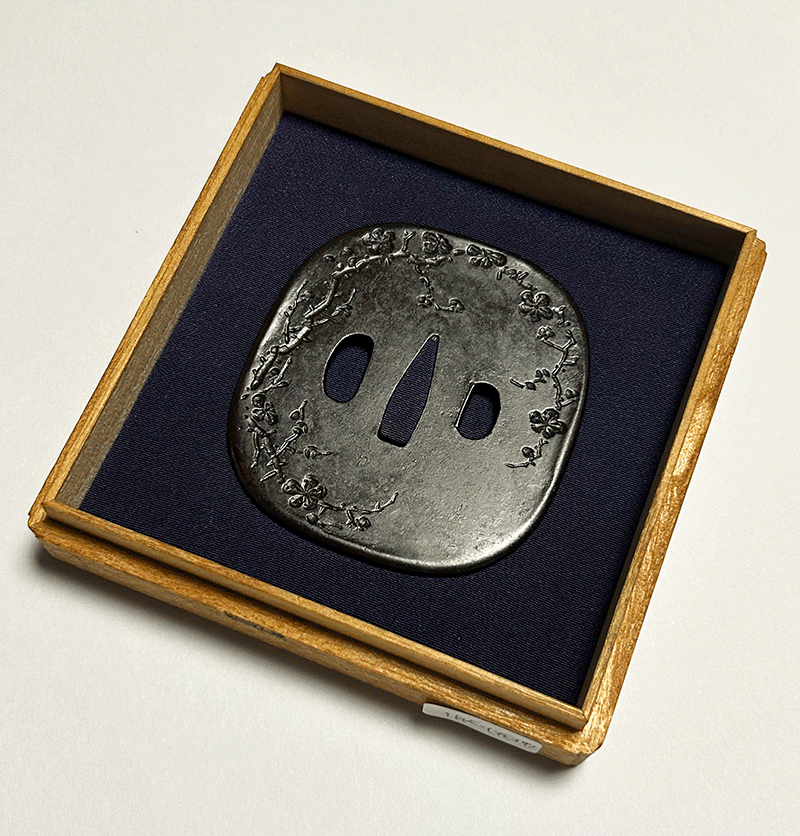
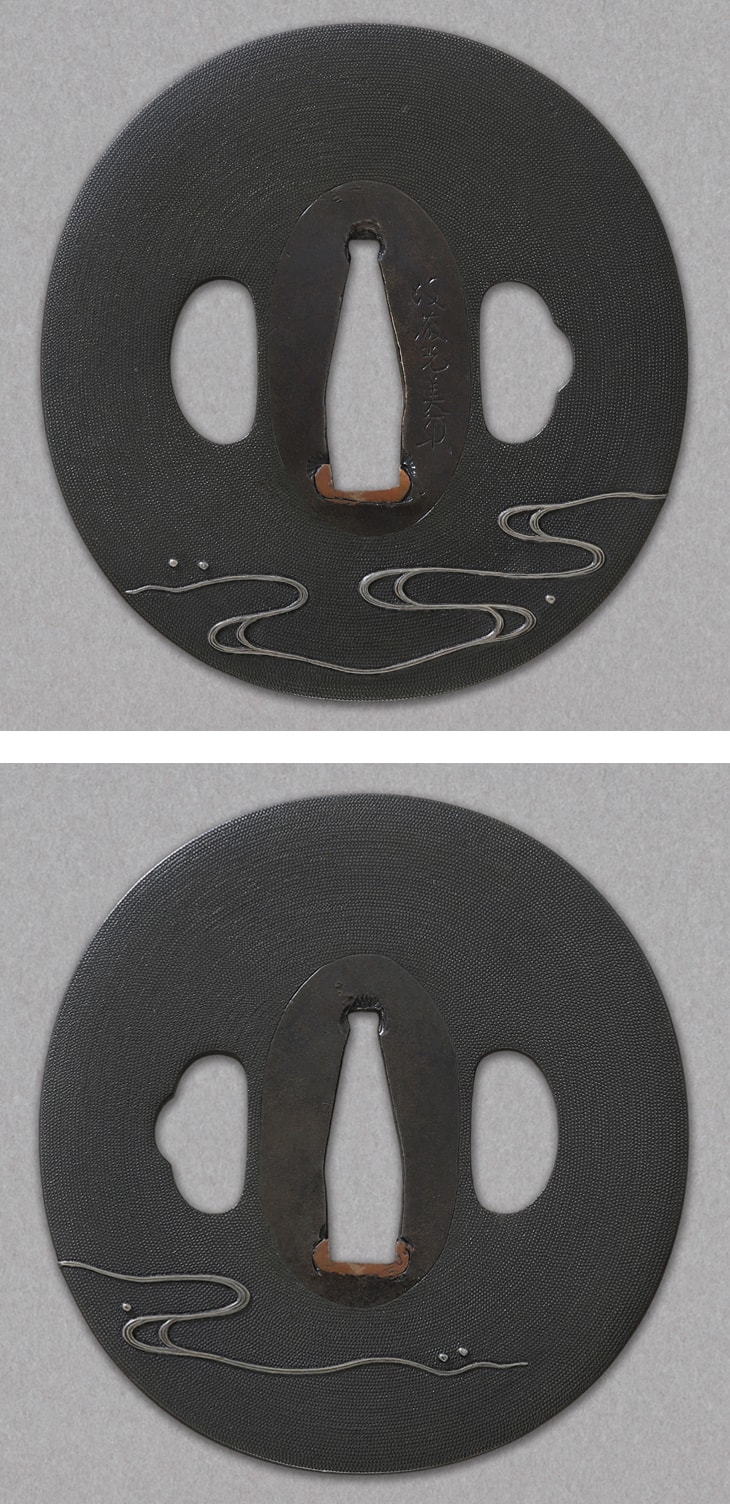
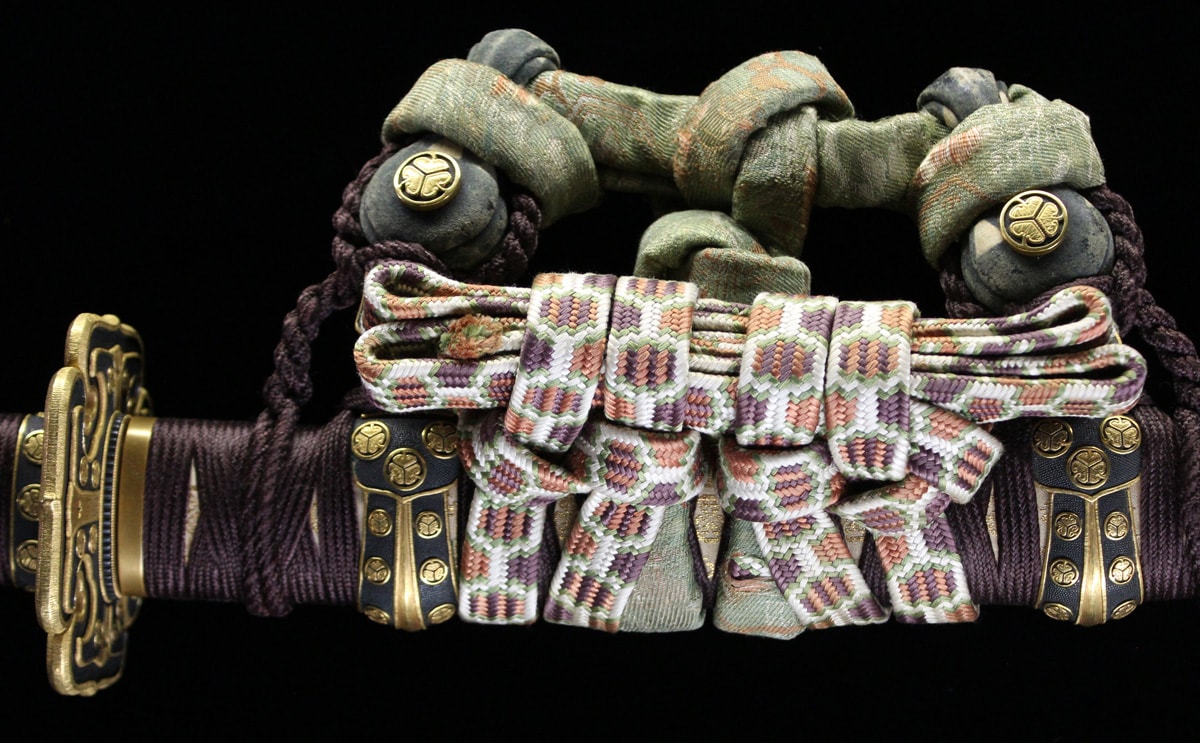
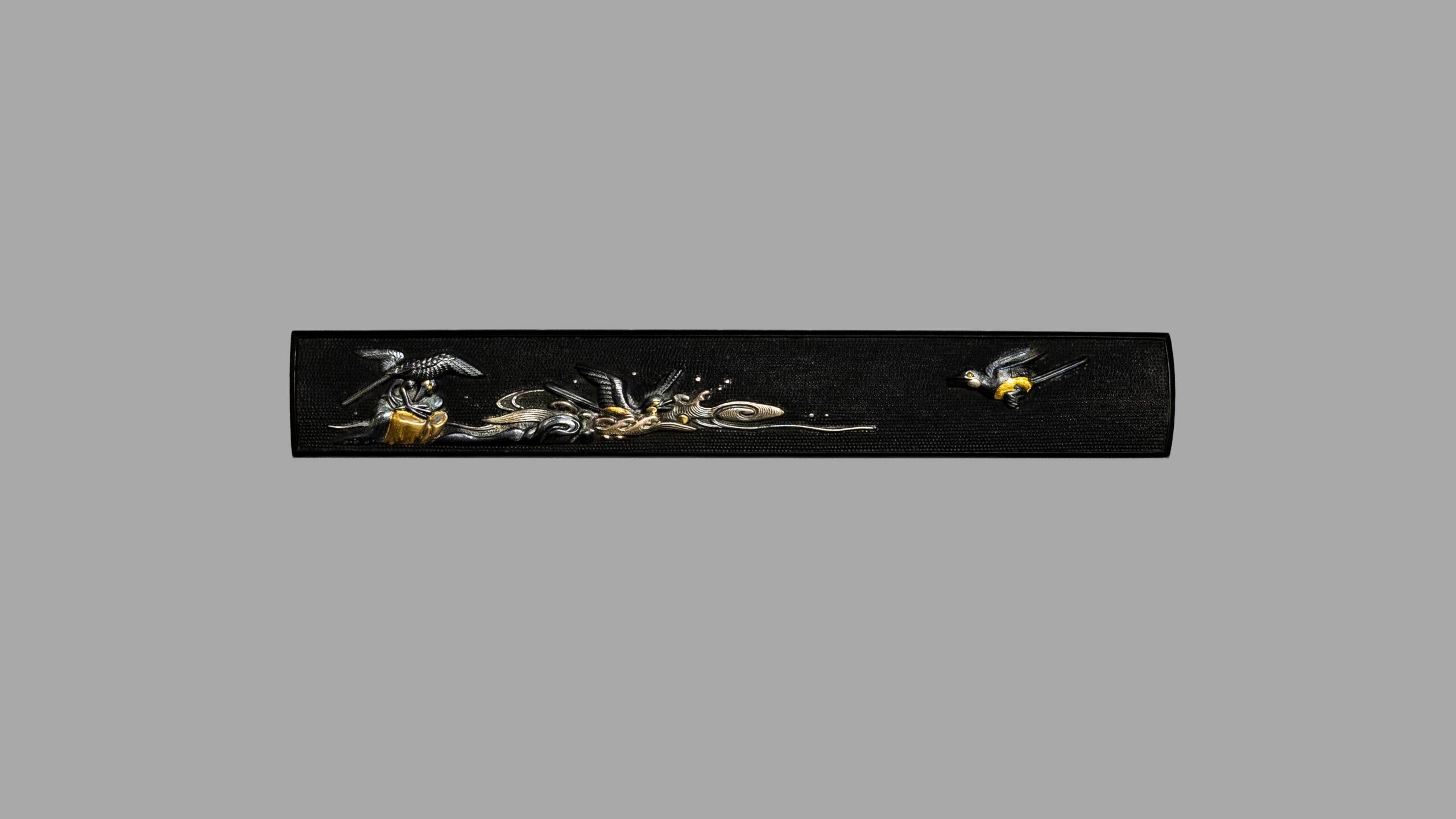
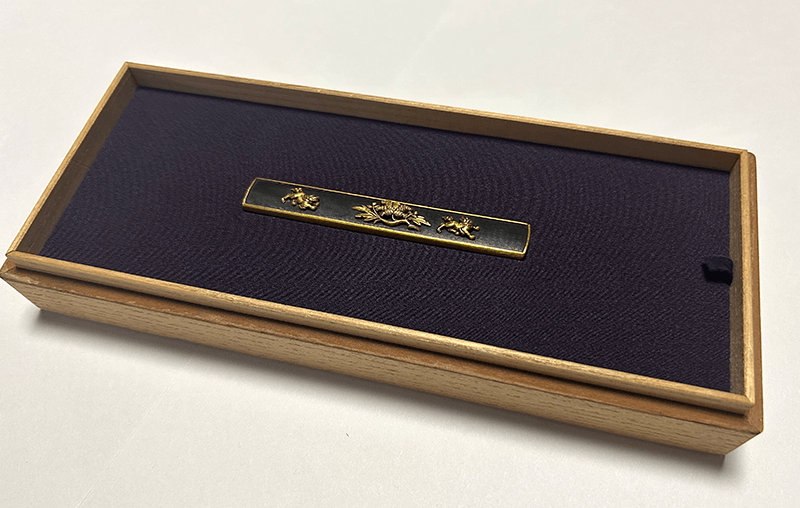
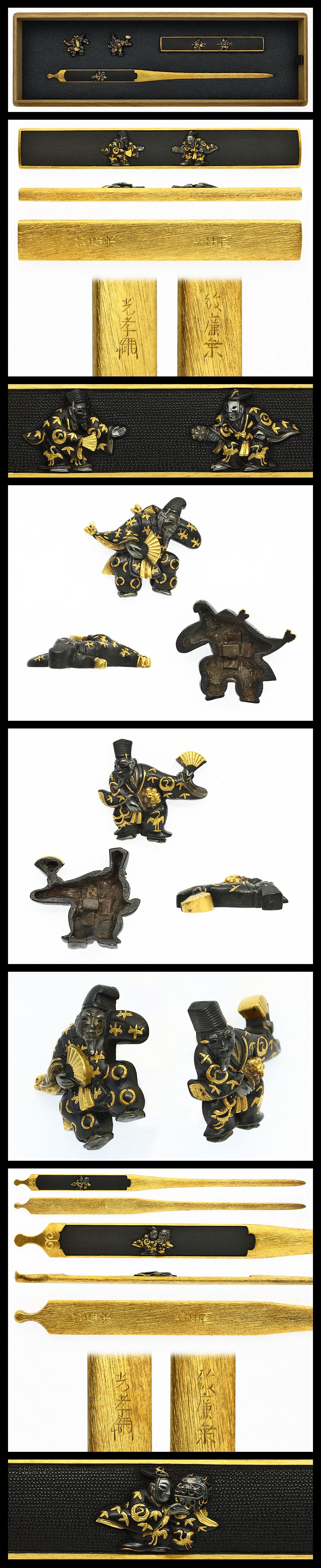
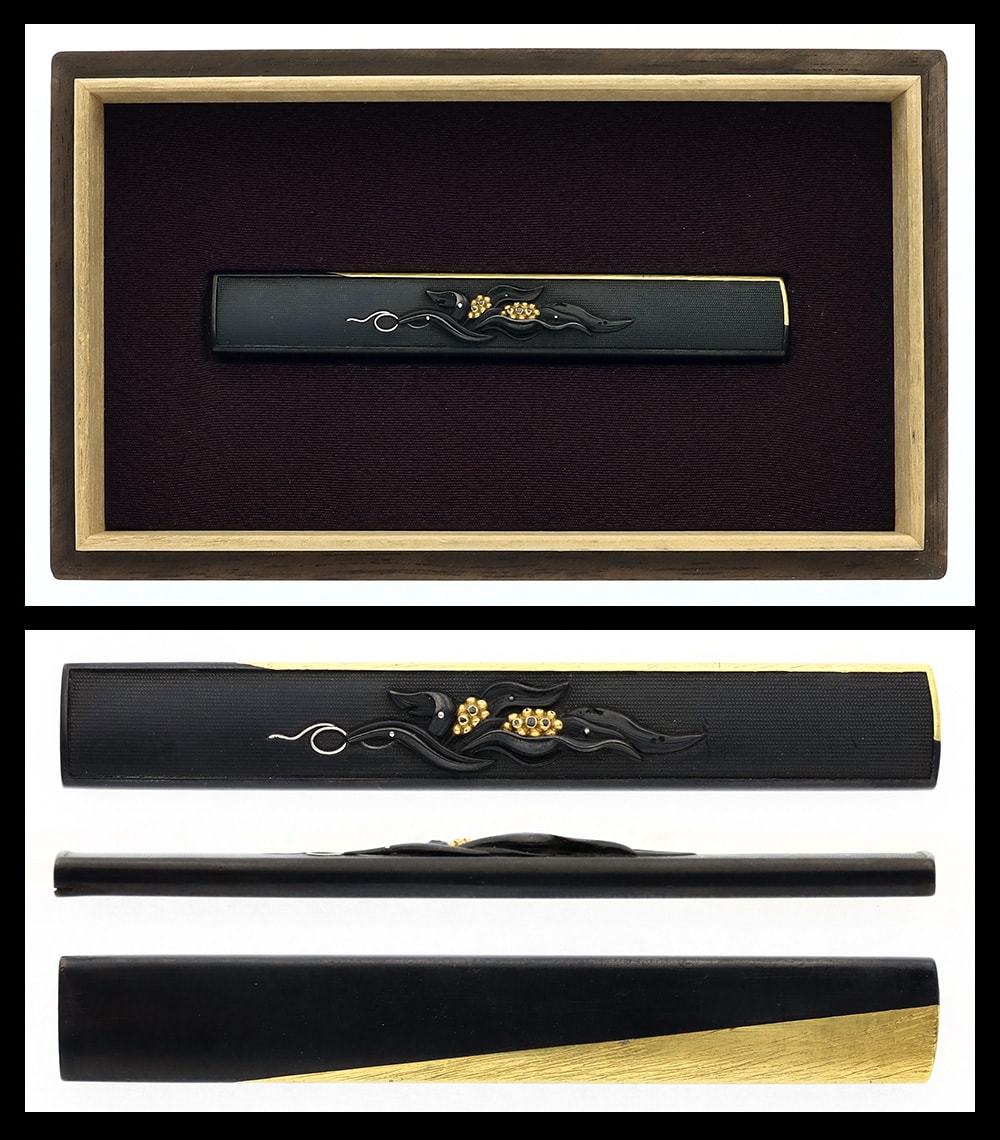
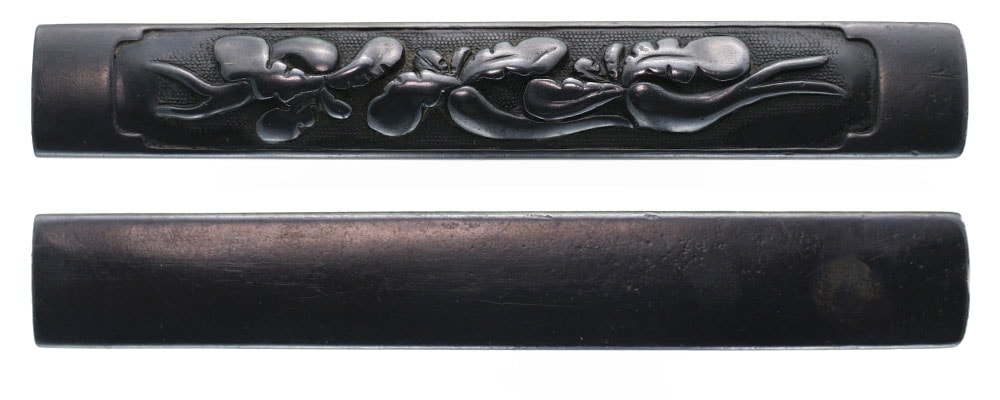
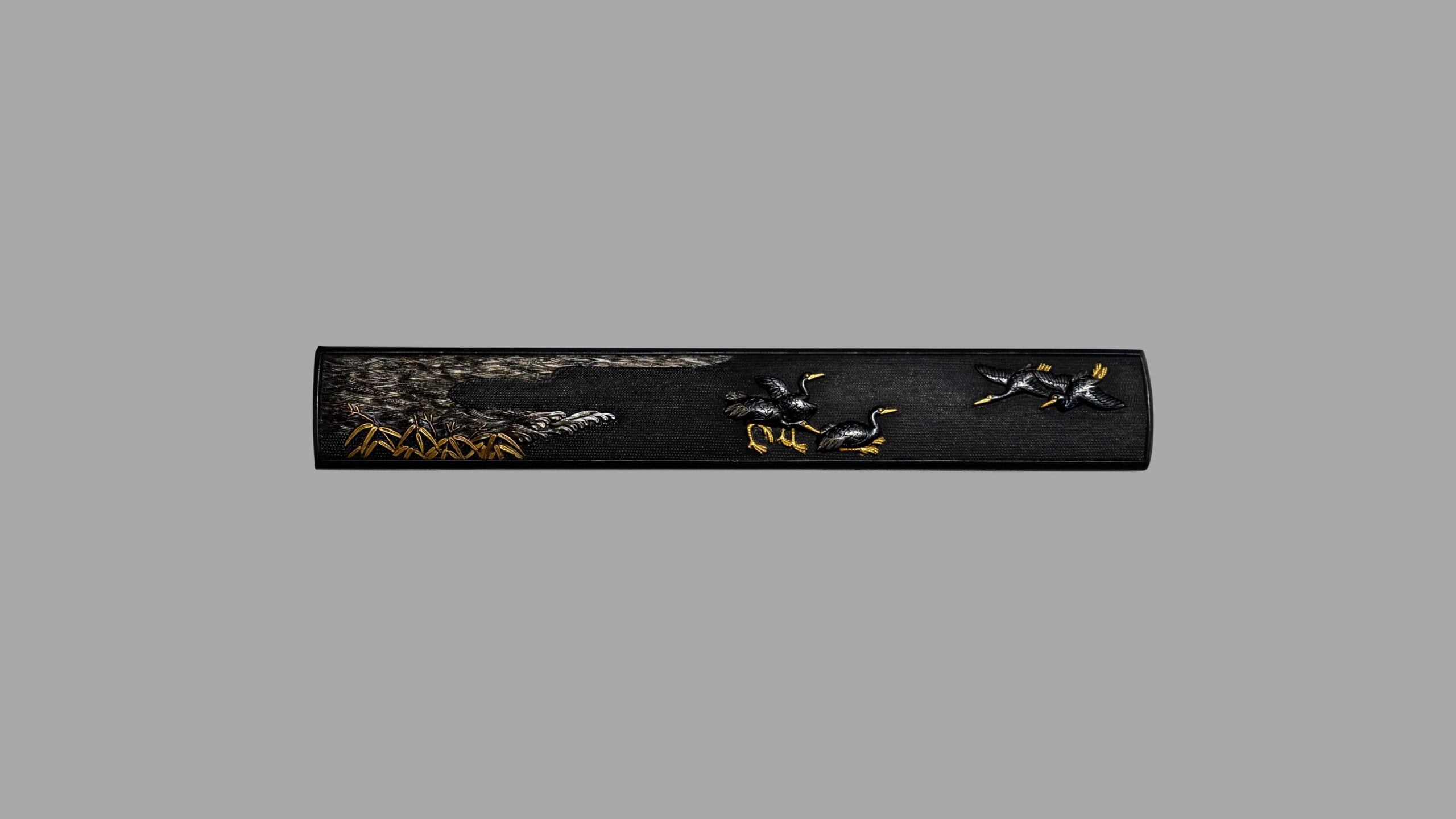
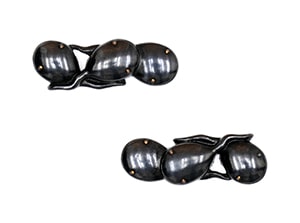
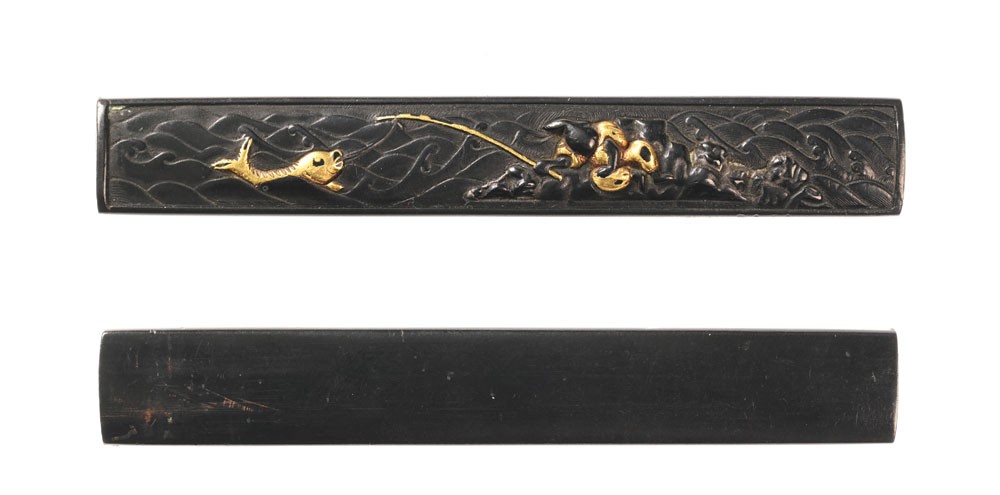
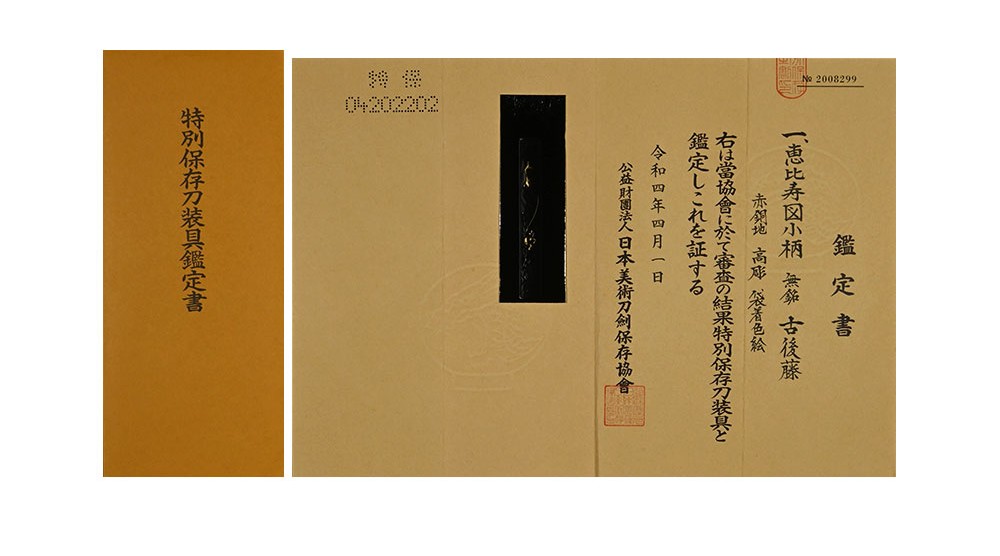
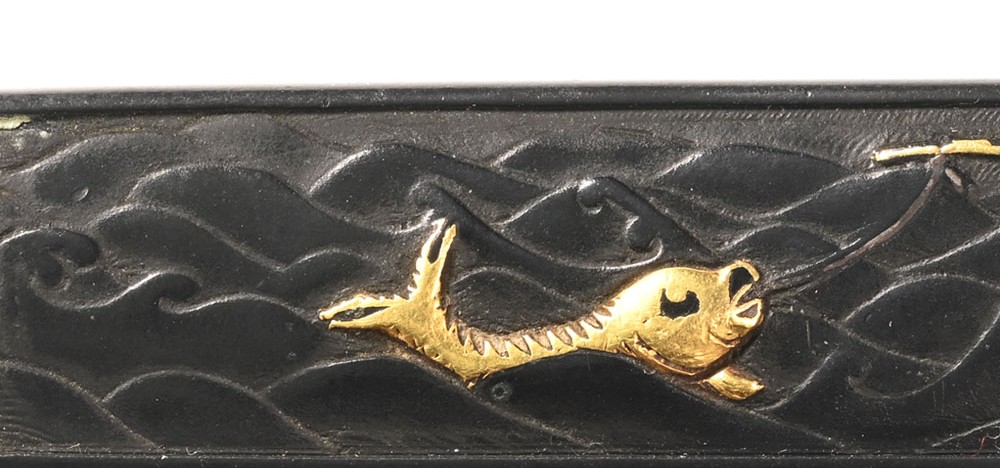
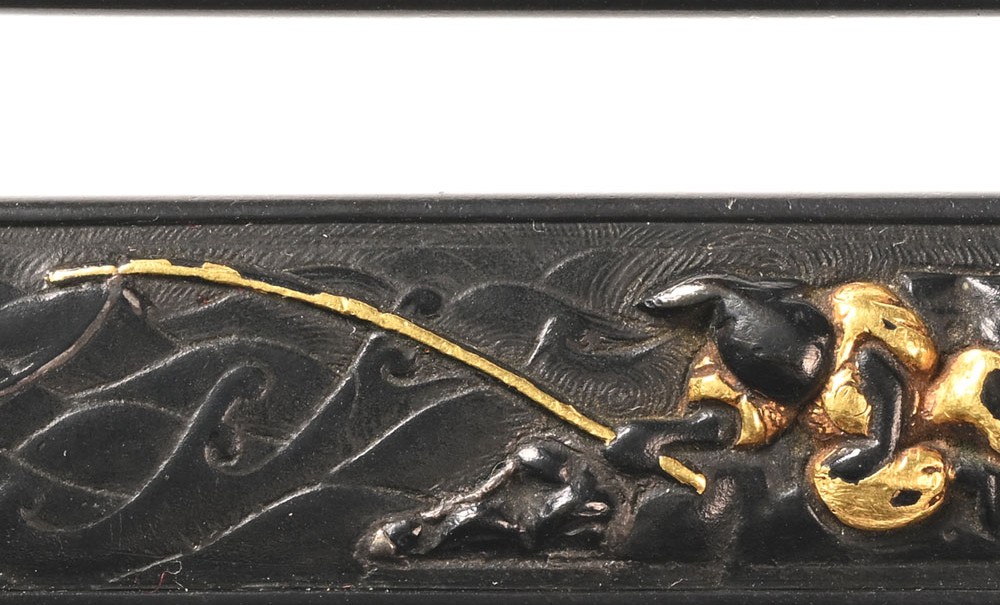
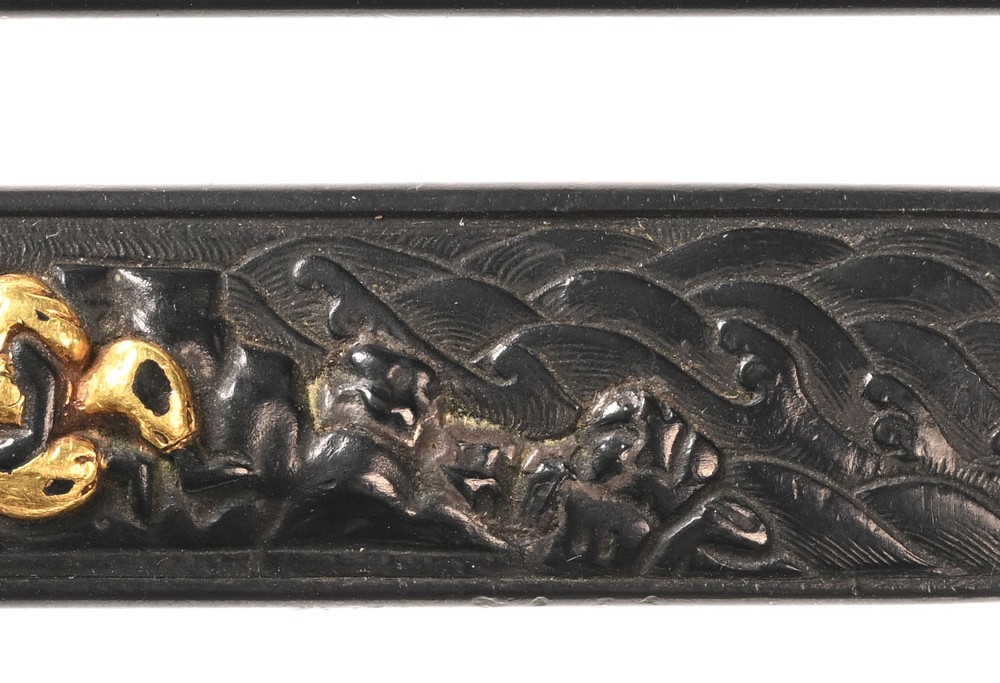
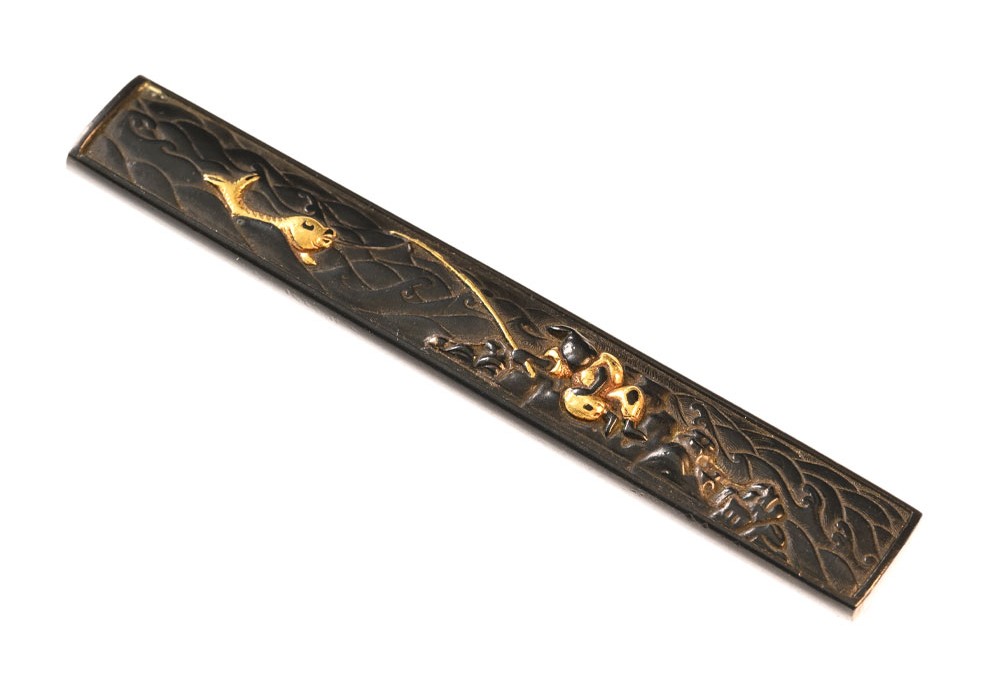
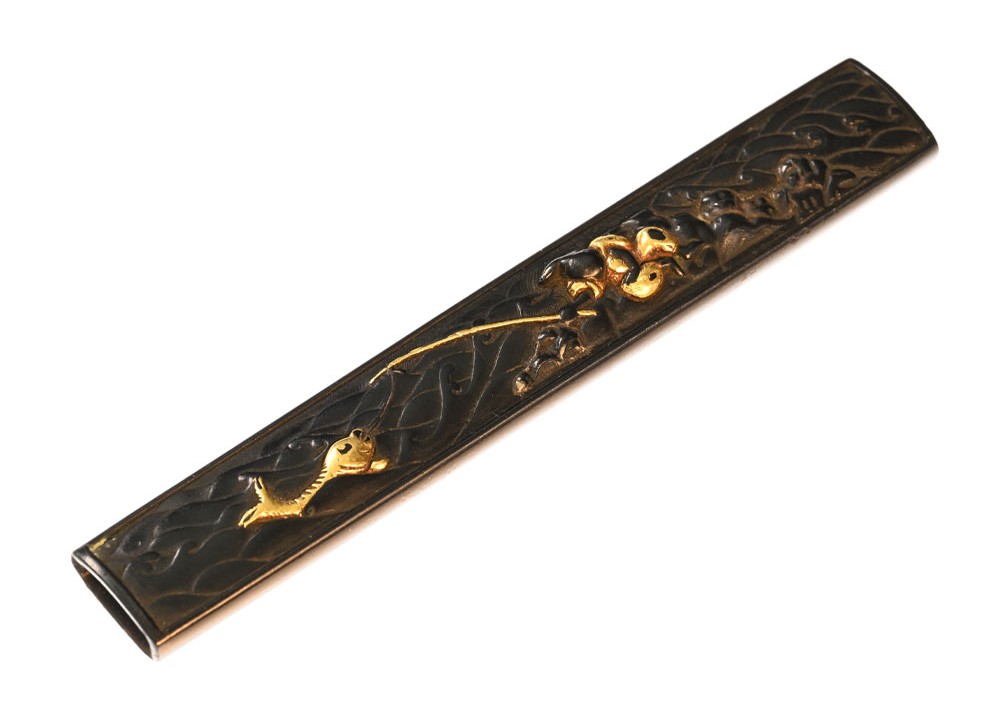
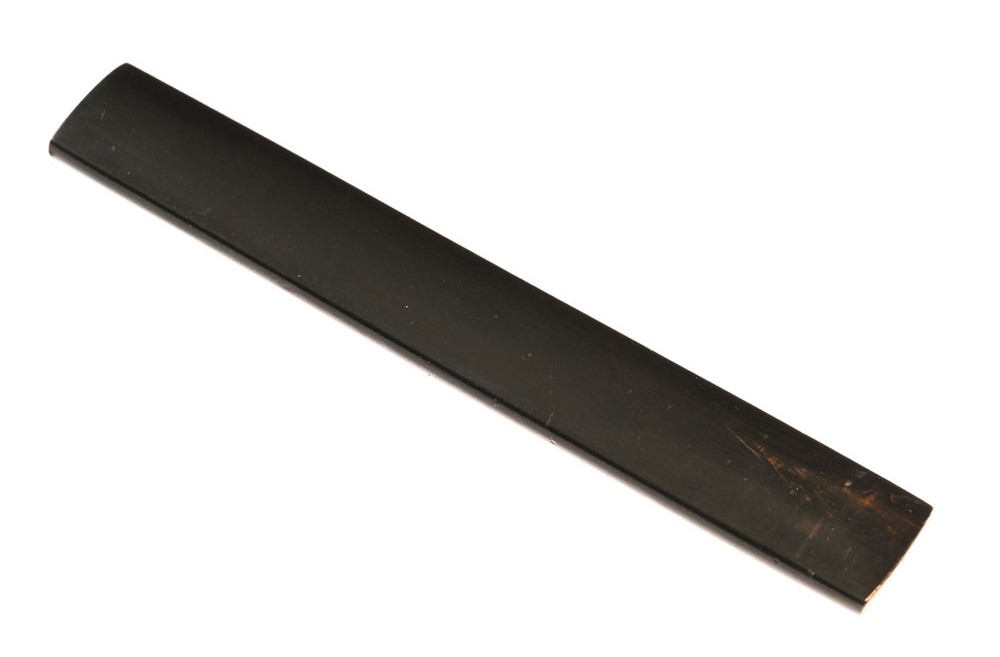
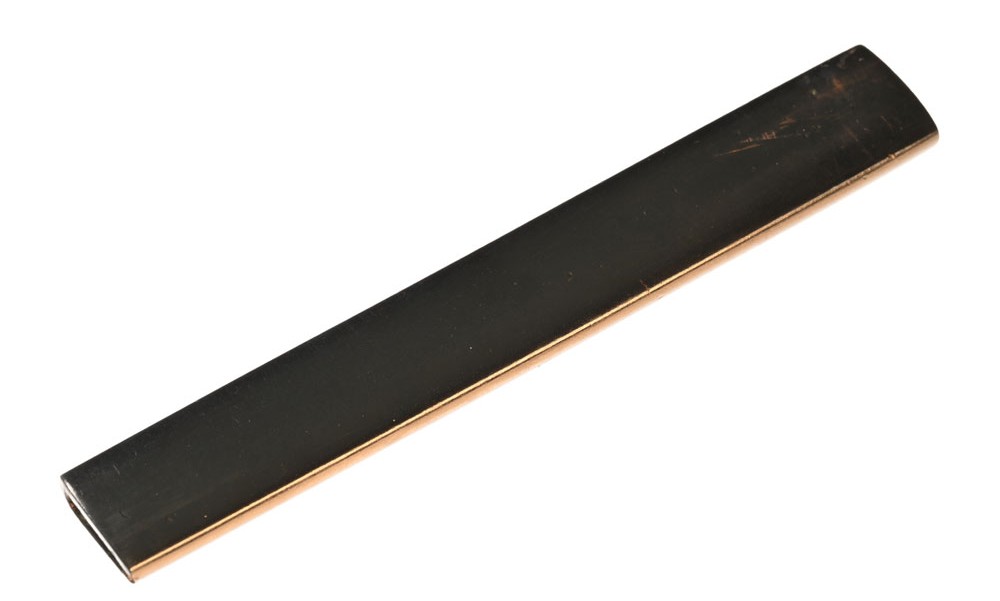
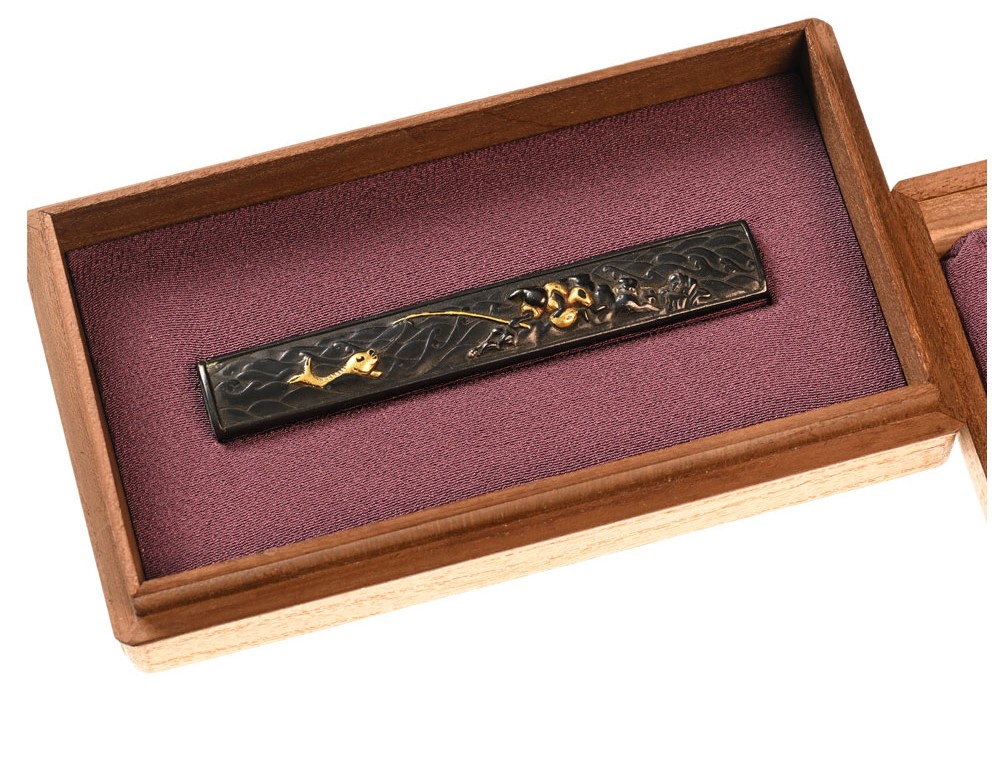
This is a kozuka (small knife handle) from the KoGoto school, featuring a design of Ebisu. It is made of shakudo with takabori (high relief carving) and fukurogi-kine (gold inlay). The piece is certified as Tokubetsu Hozon by the NBTHK.
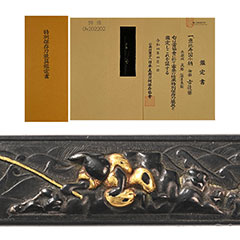
Certificate reading — 無銘(古後藤)
 NihontoWatch
Goto · Momoyama
Ko-Goto School
Momoyama
Tokuho (NBTHK)
Iebori · Kyoto
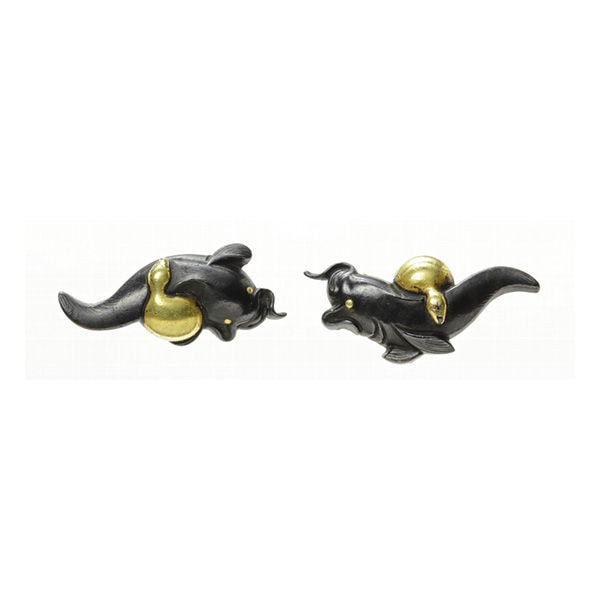
The term Ko-Gotō refers to works of the Gotō family from the time of the first master, Yūjō, in the Muromachi period, through approximately the fifth master, Tokujō, in the Momoyama period, for which it is not possible to determine the individual artist's personal name. These unsigned pieces represent the formative period of the Gotō house—the official metalworkers to the Ashikaga and later Tokugawa shogunates—and embody the foundational aesthetic principles that would define the school's centuries-long dominance of elite tōsōgu production. The designation encompasses works that display characteristic Gotō workmanship but differ in certain technical details from the securely attributed output of named masters such as Jōshin (third generation), making individual attribution impossible while affirming the broader family tradition. Ko-Gotō works demonstrate a consistent technical repertoire that became the hallmark of the school's approach: compositions are typically executed on shakudō nanako-ji grounds—jet-black surfaces meticulously worked with dense fish-roe texturing—and feature motifs rendered in takabori (high relief) with pronounced three-dimensional modeling. The decoration frequently employs gold uttori iroe, a subdued polychrome metal finishing technique that imparts a softened, lustrous glow to raised elements, often complemented by gold and silver zōgan (inlay) for accent details such as dewdrops or small ornamental flourishes. Subjects drawn from nature predominate: seaweed and shells, pine and wisteria, melons and loquats, chrysanthemums, holly, and aquatic motifs including catfish amid waves. Narrative and symbolic themes also appear—Idaten pursuing a demon, paired sheep, horse tack, and the Zen-inspired gourd-and-catfish pairing famously depicted by Josetsu.
These motifs are arranged with compositional ingenuity, balancing sumptuous surface treatment with dignified restraint, and the carving technique consistently displays the forceful yet refined hand characteristic of the Gotō lineage. The scale of Ko-Gotō kōgai tends toward the imposing—frequently exceeding twenty-two centimeters in length with substantial nikuoki (volume and thickness)—reflecting their primary use on uchigatana during the Muromachi period. The artistic significance of Ko-Gotō work lies in its establishment of the aesthetic standards and technical vocabulary that subsequent generations of the Gotō house would elaborate and refine. The antique patina (koshoku) often present on surviving examples—where the gold uttori has naturally flaked or mellowed over centuries—imparts a depth and evocative character prized by connoisseurs as evidence of age and authenticity. While later Gotō masters would produce signed works with increasingly pictorial and decorative tendencies, Ko-Gotō pieces retain a pattern-like quality tempered by emerging pictorial treatments, representing a transitional aesthetic between earlier ornamental abstraction and the fully realized e-fū (pictorial style) of later periods. The use of apotropaic motifs such as holly—believed to ward off evil spirits—reflects the cultural context of these works as protective talismans as well as objects of refined craftsmanship. As a category, Ko-Gotō serves both a practical taxonomic function within tōsōgu connoisseurship and a conceptual one, preserving the recognition of works whose high quality and characteristic execution confirm Gotō family authorship even when the passage of centuries has obscured the individual hand responsible. Learn more →
A Hozon-certified fitting of notably superior craftsmanship and condition, often with signature or workmanship of high reference value.
The NBTHK (Nihon Bijutsu Tōken Hozon Kyōkai, the Society for the Preservation of Japanese Art Swords) is a public-interest incorporated foundation founded in 1948 and supervised by Japan’s Agency for Cultural Affairs (Bunkachō); it is based at the Japanese Sword Museum in Tokyo. Its expert panels physically examine each submitted work (shinsa) and issue a certificate (kanteishō) ranking it by artistic and historical merit. NBTHK papers are the most widely recognized standard of authentication for Japanese swords and fittings.
NBTHK official siteReturns/exchanges/cancellations not accepted after shipment except for significant defects; if defective, return/exchange possible within 3 days of arrival (return shipping paid by customer).
¥260,000
This is a kozuka (small knife handle) from the KoGoto school, featuring a design of Ebisu. It is made of shakudo with takabori (high relief carving) and fukurogi-kine (gold inlay). The piece is certified as Tokubetsu Hozon by the NBTHK.
Certificate reading — 無銘(古後藤)
NihontoWatchGoto · Momoyama
Ko-Goto School
Momoyama
Tokuho (NBTHK)
Iebori · Kyoto
The term Ko-Gotō refers to works of the Gotō family from the time of the first master, Yūjō, in the Muromachi period, through approximately the fifth master, Tokujō, in the Momoyama period, for which it is not possible to determine the individual artist's personal name. These unsigned pieces represent the formative period of the Gotō house—the official metalworkers to the Ashikaga and later Tokugawa shogunates—and embody the foundational aesthetic principles that would define the school's centuries-long dominance of elite tōsōgu production. The designation encompasses works that display characteristic Gotō workmanship but differ in certain technical details from the securely attributed output of named masters such as Jōshin (third generation), making individual attribution impossible while affirming the broader family tradition. Ko-Gotō works demonstrate a consistent technical repertoire that became the hallmark of the school's approach: compositions are typically executed on shakudō nanako-ji grounds—jet-black surfaces meticulously worked with dense fish-roe texturing—and feature motifs rendered in takabori (high relief) with pronounced three-dimensional modeling. The decoration frequently employs gold uttori iroe, a subdued polychrome metal finishing technique that imparts a softened, lustrous glow to raised elements, often complemented by gold and silver zōgan (inlay) for accent details such as dewdrops or small ornamental flourishes. Subjects drawn from nature predominate: seaweed and shells, pine and wisteria, melons and loquats, chrysanthemums, holly, and aquatic motifs including catfish amid waves. Narrative and symbolic themes also appear—Idaten pursuing a demon, paired sheep, horse tack, and the Zen-inspired gourd-and-catfish pairing famously depicted by Josetsu.
These motifs are arranged with compositional ingenuity, balancing sumptuous surface treatment with dignified restraint, and the carving technique consistently displays the forceful yet refined hand characteristic of the Gotō lineage. The scale of Ko-Gotō kōgai tends toward the imposing—frequently exceeding twenty-two centimeters in length with substantial nikuoki (volume and thickness)—reflecting their primary use on uchigatana during the Muromachi period. The artistic significance of Ko-Gotō work lies in its establishment of the aesthetic standards and technical vocabulary that subsequent generations of the Gotō house would elaborate and refine. The antique patina (koshoku) often present on surviving examples—where the gold uttori has naturally flaked or mellowed over centuries—imparts a depth and evocative character prized by connoisseurs as evidence of age and authenticity. While later Gotō masters would produce signed works with increasingly pictorial and decorative tendencies, Ko-Gotō pieces retain a pattern-like quality tempered by emerging pictorial treatments, representing a transitional aesthetic between earlier ornamental abstraction and the fully realized e-fū (pictorial style) of later periods. The use of apotropaic motifs such as holly—believed to ward off evil spirits—reflects the cultural context of these works as protective talismans as well as objects of refined craftsmanship. As a category, Ko-Gotō serves both a practical taxonomic function within tōsōgu connoisseurship and a conceptual one, preserving the recognition of works whose high quality and characteristic execution confirm Gotō family authorship even when the passage of centuries has obscured the individual hand responsible. Learn more →
A Hozon-certified fitting of notably superior craftsmanship and condition, often with signature or workmanship of high reference value.
The NBTHK (Nihon Bijutsu Tōken Hozon Kyōkai, the Society for the Preservation of Japanese Art Swords) is a public-interest incorporated foundation founded in 1948 and supervised by Japan’s Agency for Cultural Affairs (Bunkachō); it is based at the Japanese Sword Museum in Tokyo. Its expert panels physically examine each submitted work (shinsa) and issue a certificate (kanteishō) ranking it by artistic and historical merit. NBTHK papers are the most widely recognized standard of authentication for Japanese swords and fittings.
NBTHK official siteReturns/exchanges/cancellations not accepted after shipment except for significant defects; if defective, return/exchange possible within 3 days of arrival (return shipping paid by customer).
¥260,000