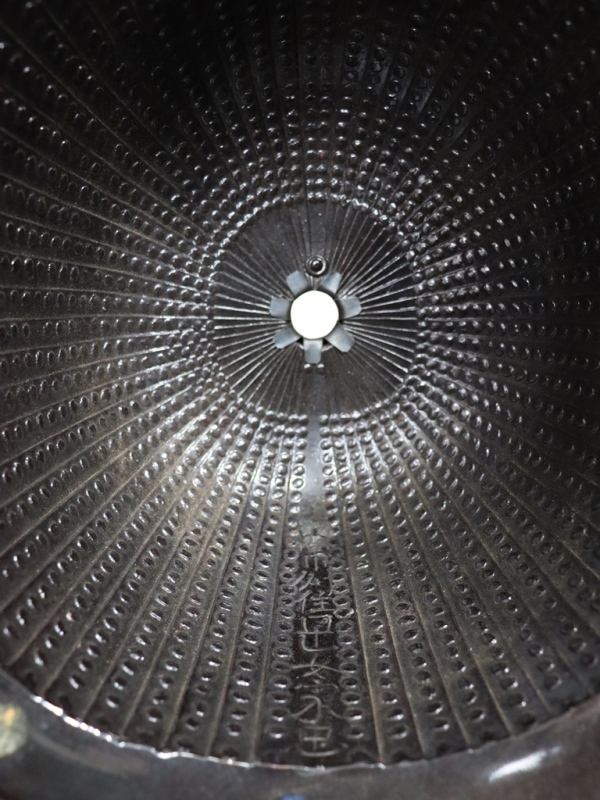
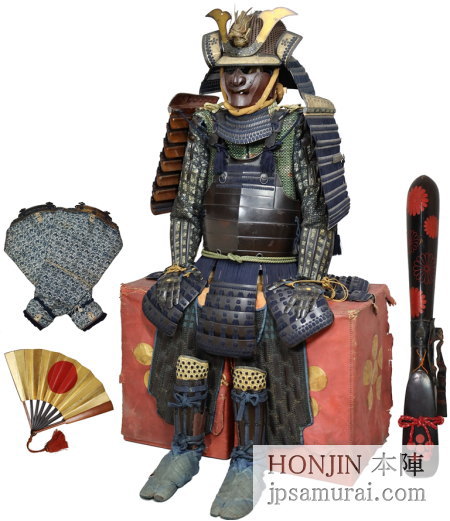
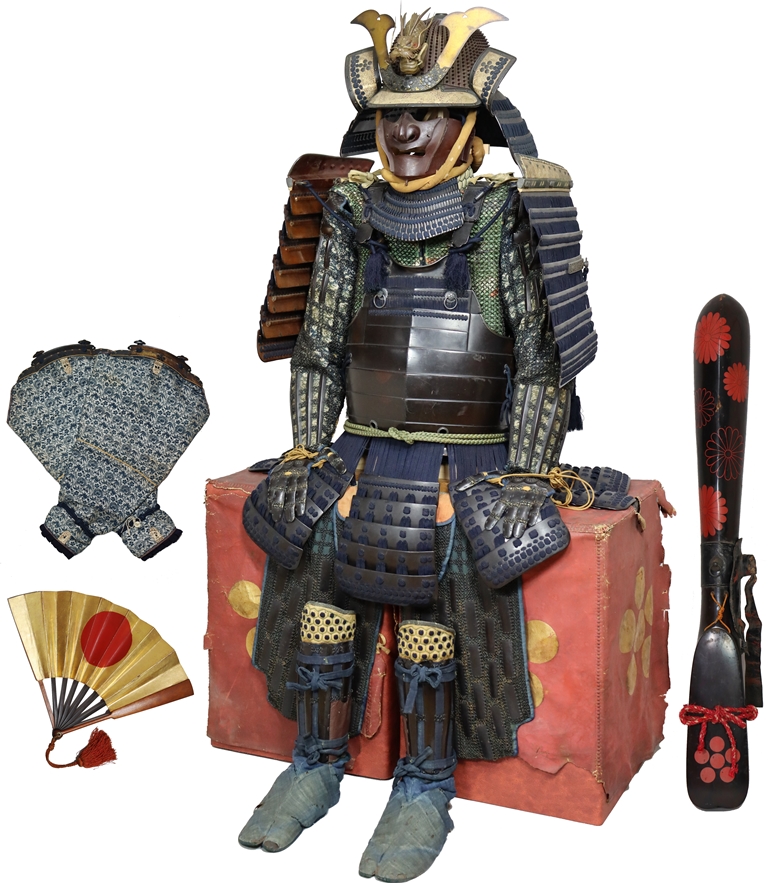
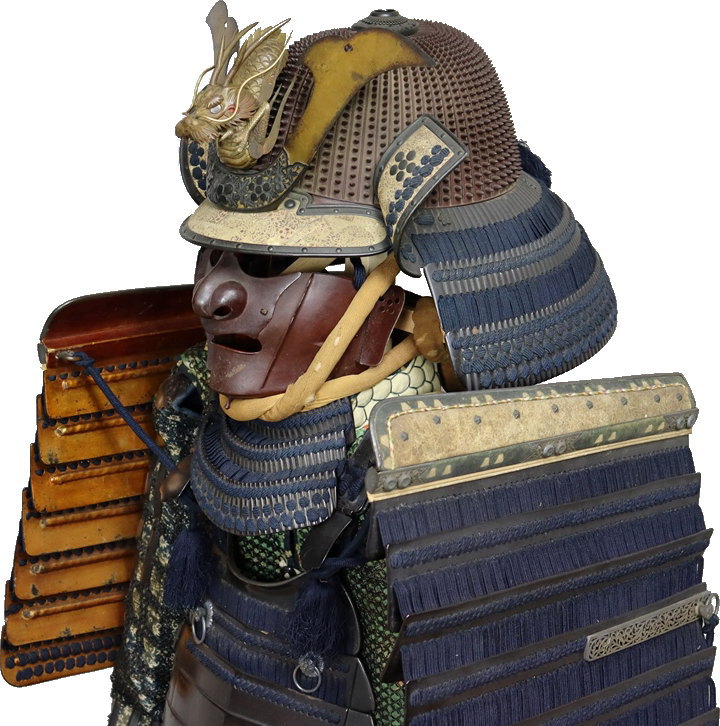
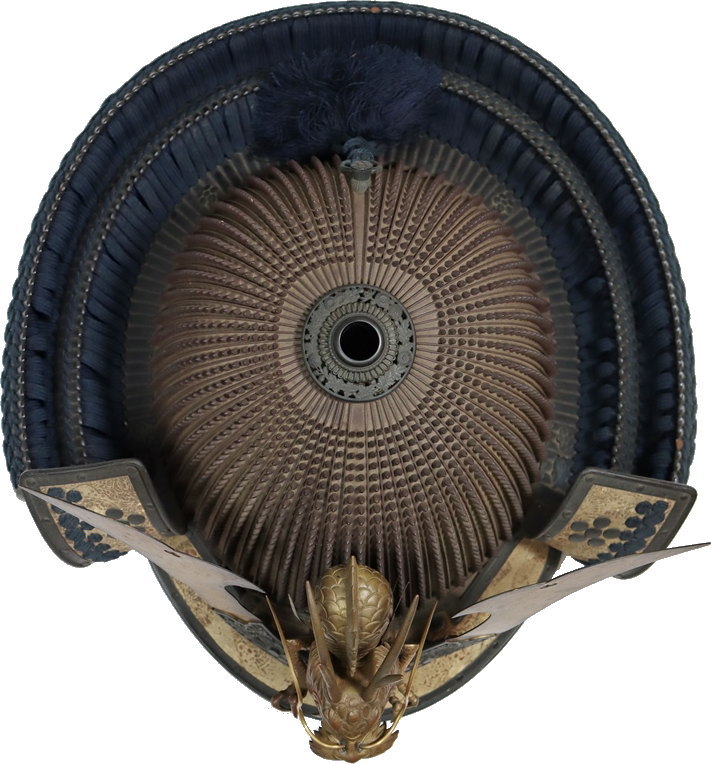
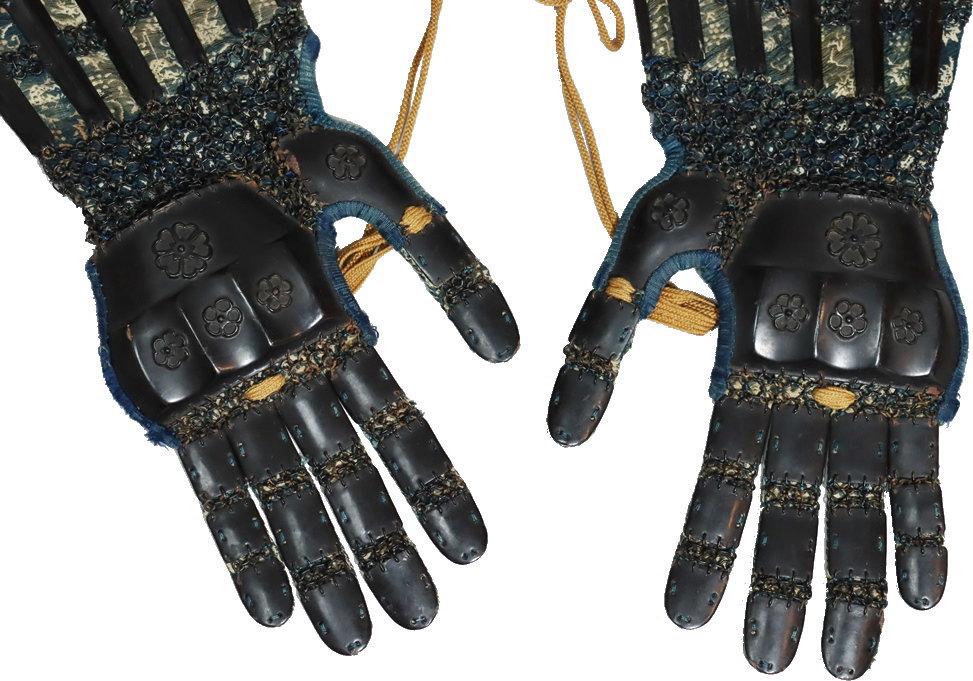
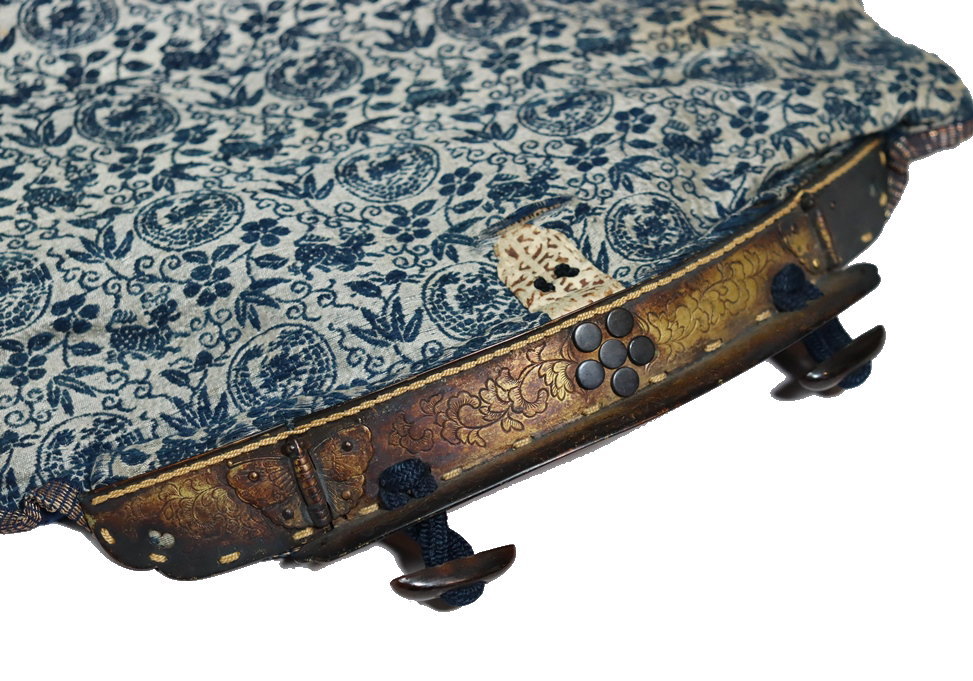
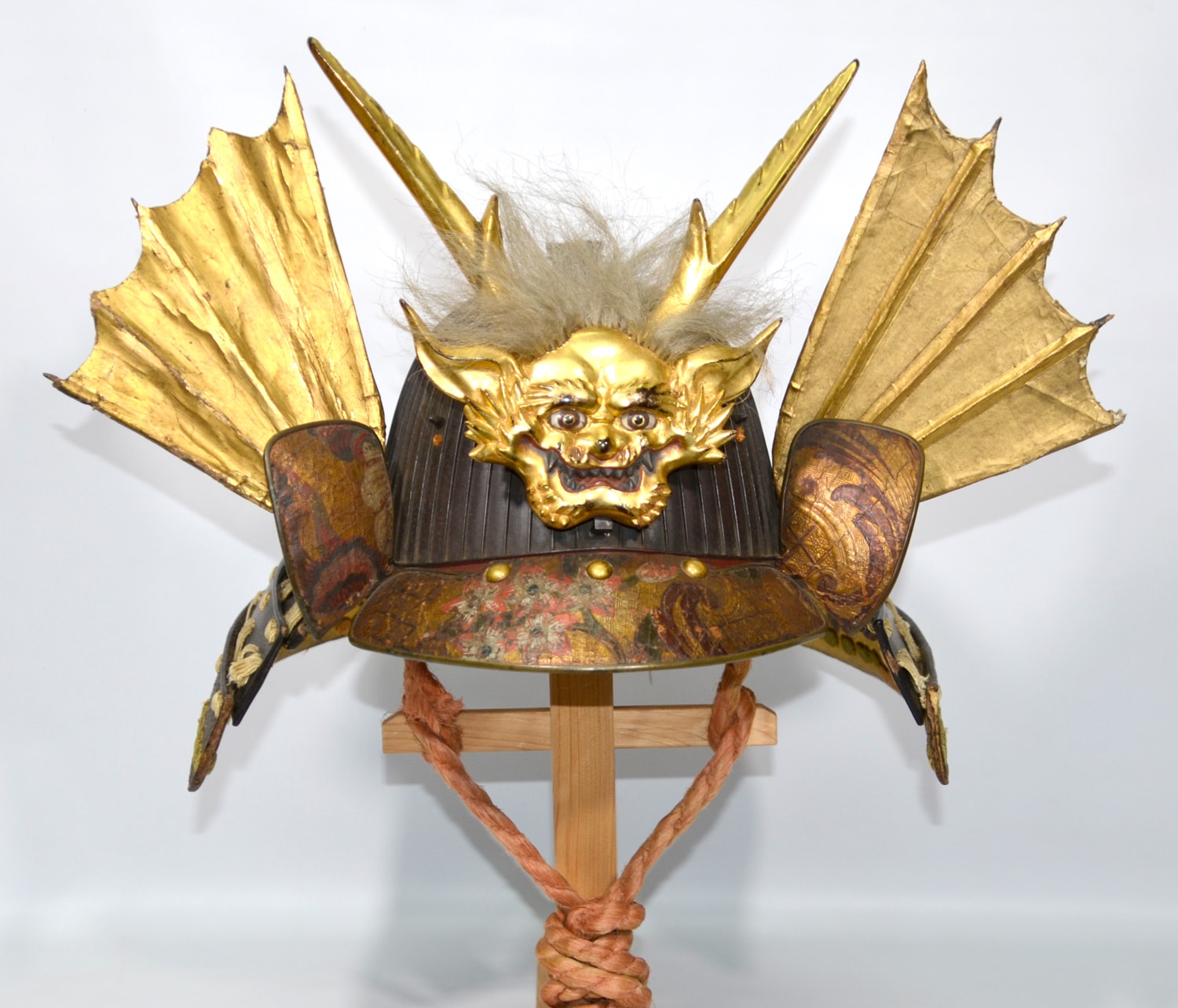
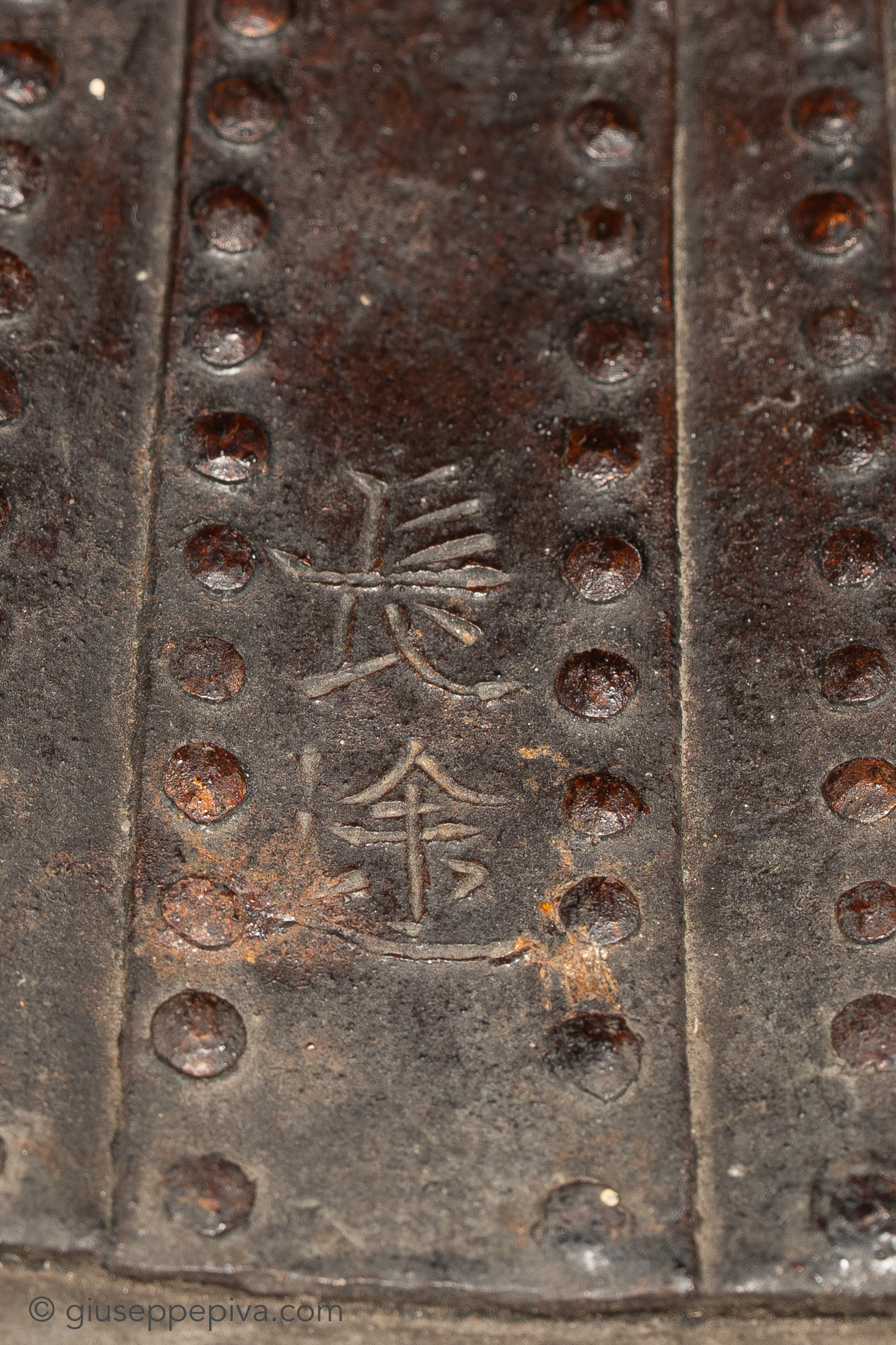
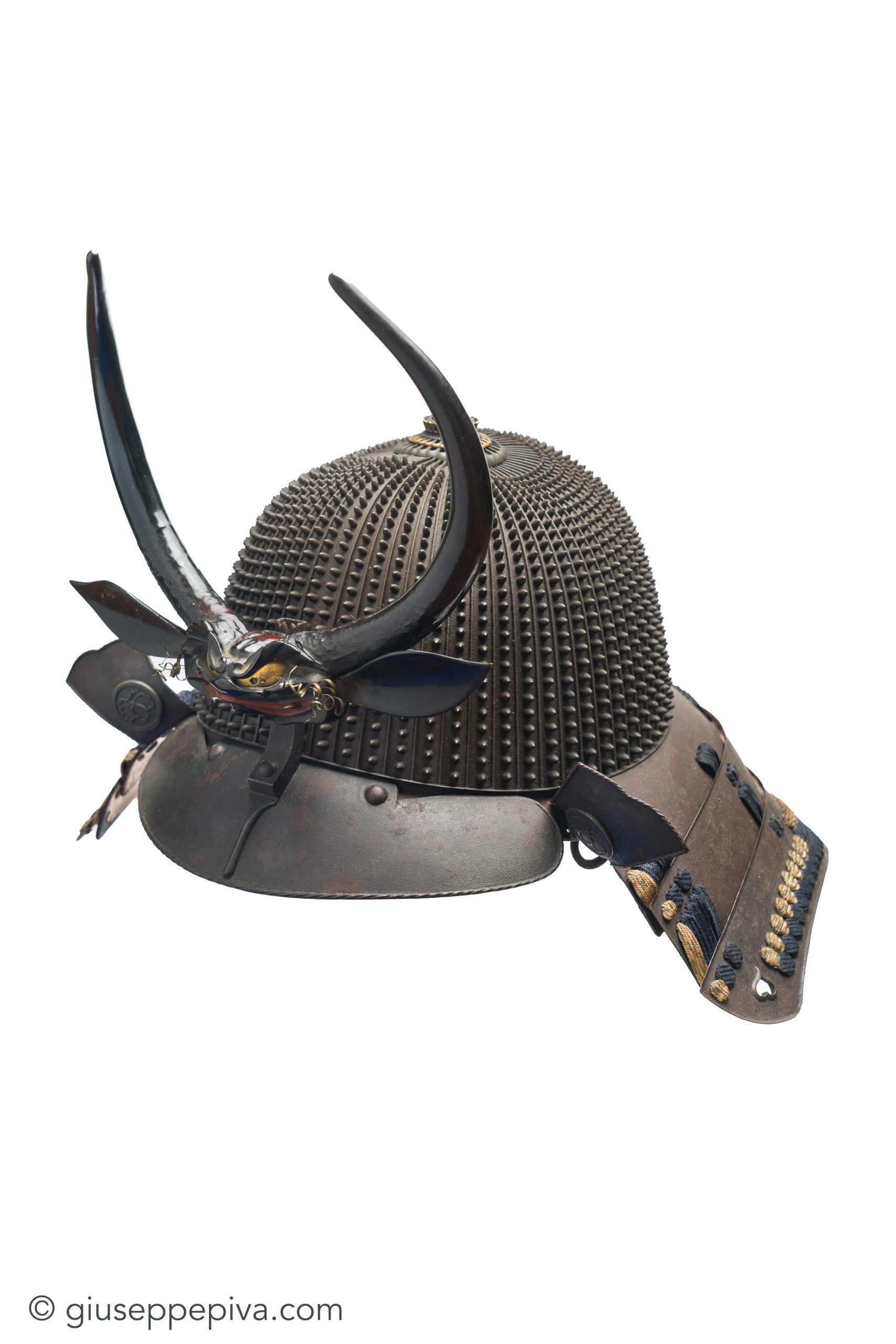
A heavy nimai-do gusoku (two-piece cuirass armor) with an okegawa (tub-sided) construction, handed down from the Toda family of the Matsumoto clan. The kabuto is a meticulously crafted 62-plate hoshi-bachi (riveted bowl) signed by Saotome Ietada. The interior of the do features a byakudan-nuri (sandalwood lacquer) finish, and the kote (sleeves) have an unusual five-fingered construction. Numerous accessories are included.
 NihontoWatch
mei · Saotome · Edo
Tosei-gusoku · Okegawa-dō
Full gusoku (complete suit)
62-plate · Hoshi-bachi
Saotome
Saotome Ietada
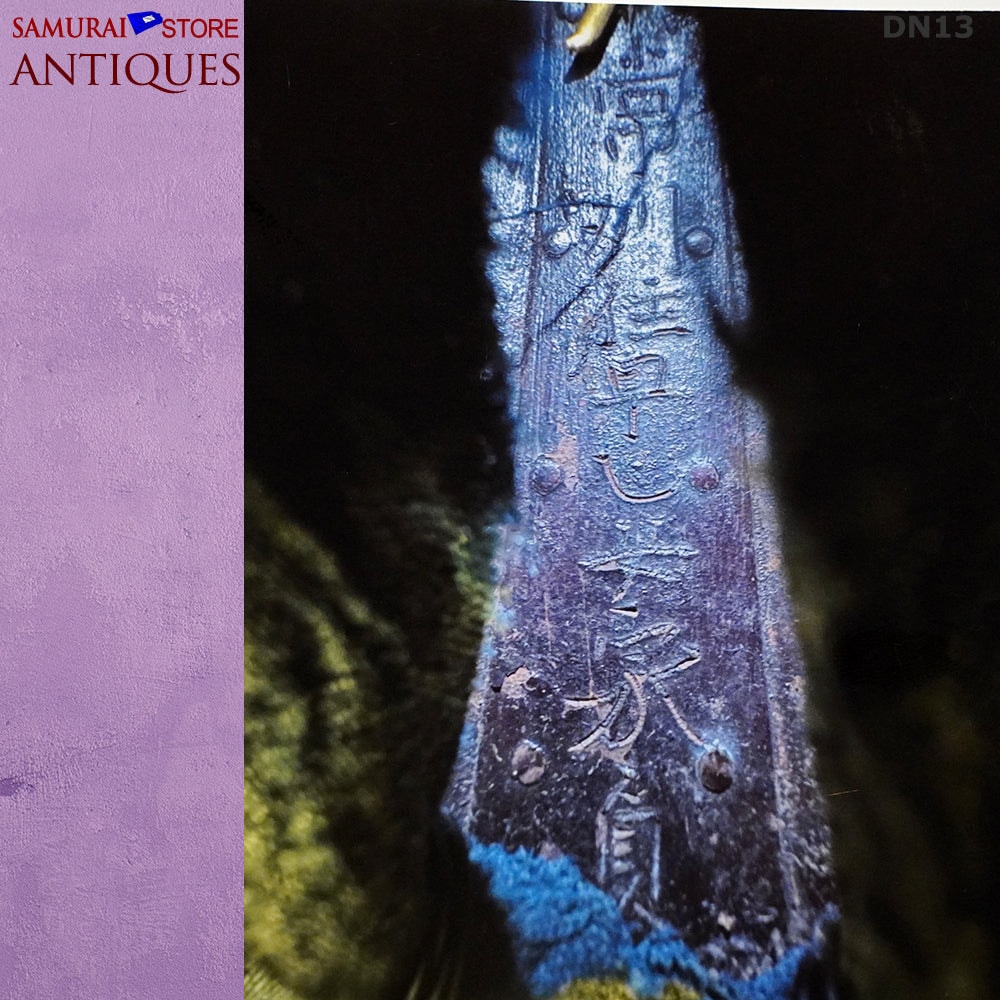
Signed · On the kabuto bowl
Edo
Toda family (Matsumoto clan)
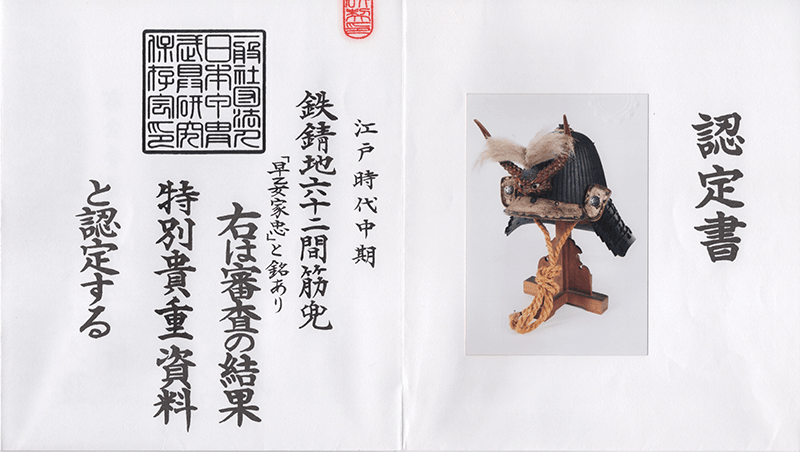
We could not find an authenticity certificate on the seller’s listing. Japanese armour is normally certified by the Nihon Katchū Bugu Kenkyū Hozon Kai (the armour society). Without one, the attribution is the seller’s own assessment and has not been independently verified — treat it with caution and ask the dealer about certification before buying.
Price on request
A heavy nimai-do gusoku (two-piece cuirass armor) with an okegawa (tub-sided) construction, handed down from the Toda family of the Matsumoto clan. The kabuto is a meticulously crafted 62-plate hoshi-bachi (riveted bowl) signed by Saotome Ietada. The interior of the do features a byakudan-nuri (sandalwood lacquer) finish, and the kote (sleeves) have an unusual five-fingered construction. Numerous accessories are included.
NihontoWatchmei · Saotome · Edo
Tosei-gusoku · Okegawa-dō
Full gusoku (complete suit)
62-plate · Hoshi-bachi
Saotome
Saotome Ietada
Signed · On the kabuto bowl
Edo
Toda family (Matsumoto clan)
We could not find an authenticity certificate on the seller’s listing. Japanese armour is normally certified by the Nihon Katchū Bugu Kenkyū Hozon Kai (the armour society). Without one, the attribution is the seller’s own assessment and has not been independently verified — treat it with caution and ask the dealer about certification before buying.
Price on request