 NihontoWatchNihontoWatch
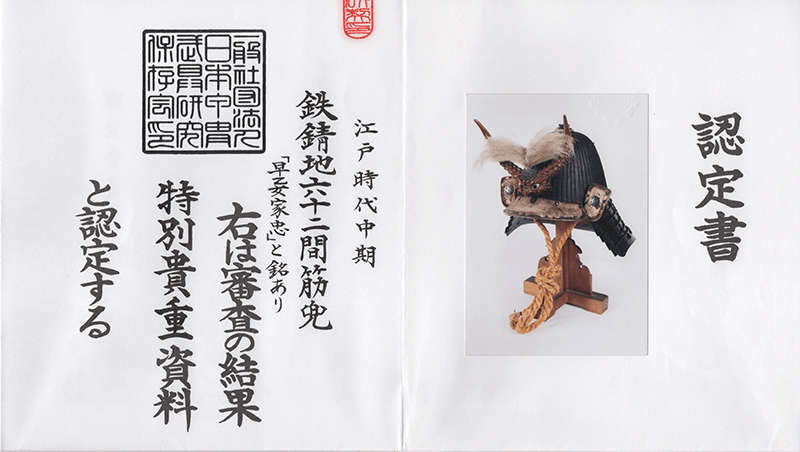
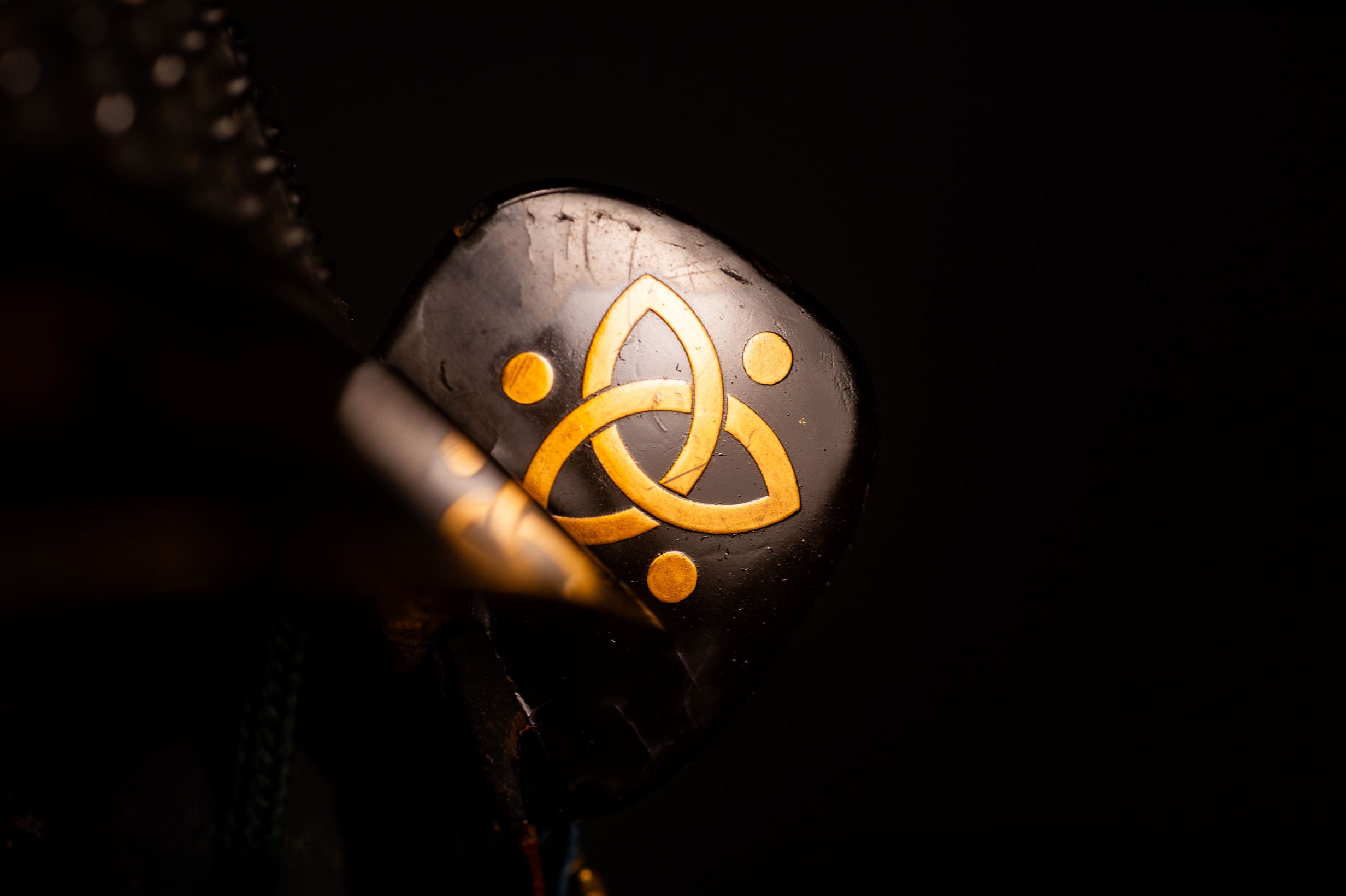
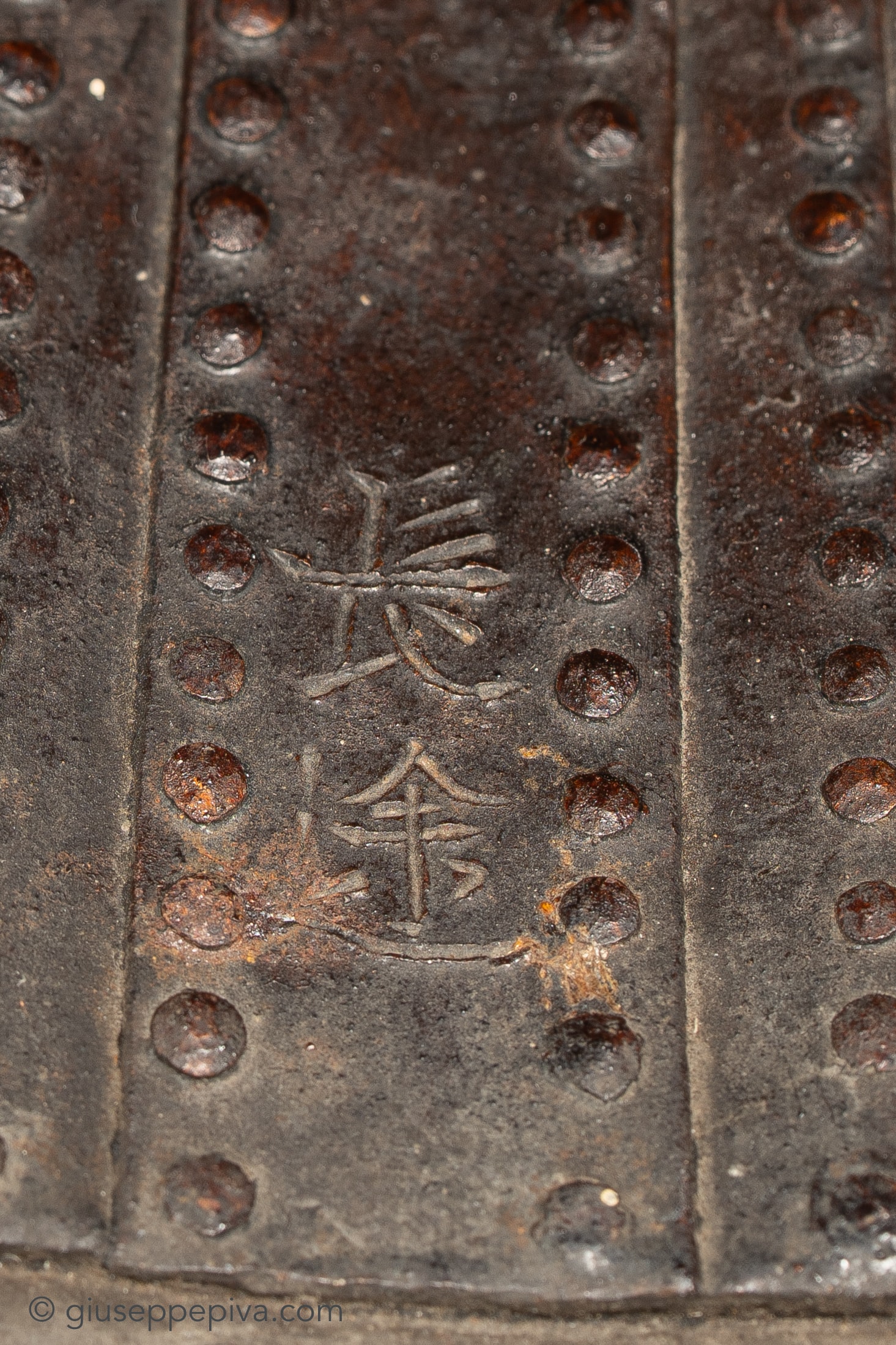
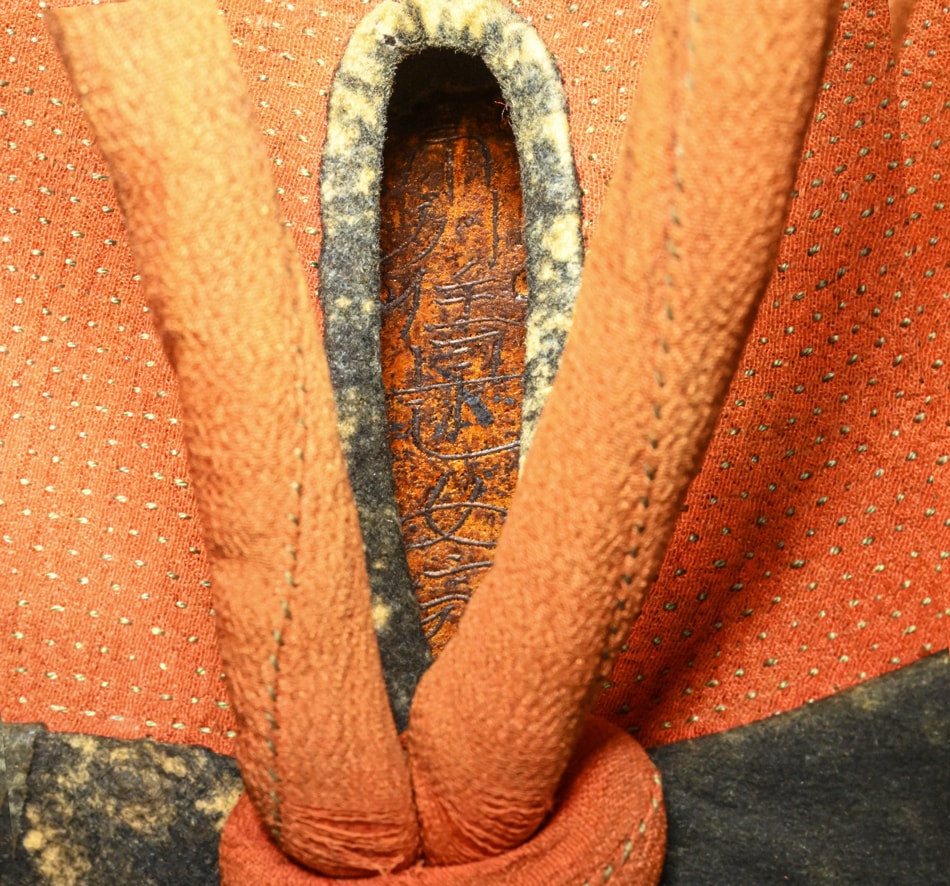
A russet iron (tetsu sabiji) sixty-two plate kabuto, each mounted with twenty-five small tapered standing rivets (ko–boshi) of decreasing size; the front plate, larger than the others, is fitted with two lines of rivets, while the rear one is left empty, for a total of 1.550 rivets. The typical “Saotome-byo” is visible under this lining, an extra rivet which is almost an additional signature of the Saotome armorers. The shikoro (neck guard) is three-plate, of a rare lobed shape. Ietada, of which existed few generations, is considered to be the founder of the Saotome school, which takes its name from the village in the Hitachi province where it originated. According to the Meiko Zukan, the most important antique manuscript about Japanese armor, it was in fact created by Saotome Chikara, a samurai at the service of the Tagaya clan who started this activity after he became a ronin. The Tagaya clan were stripped of their 60,000 koku holdings after the Sekigahara battle due to their defection to the Uesugi clan, so it is probably after 1600 that Ietada – the name that Chikara choose to sign his works – founded the Saotome school, even if it is unclear how he managed to learn such skill in manufacturing helmets.
NihontoWatchOffered by Giuseppe Piva
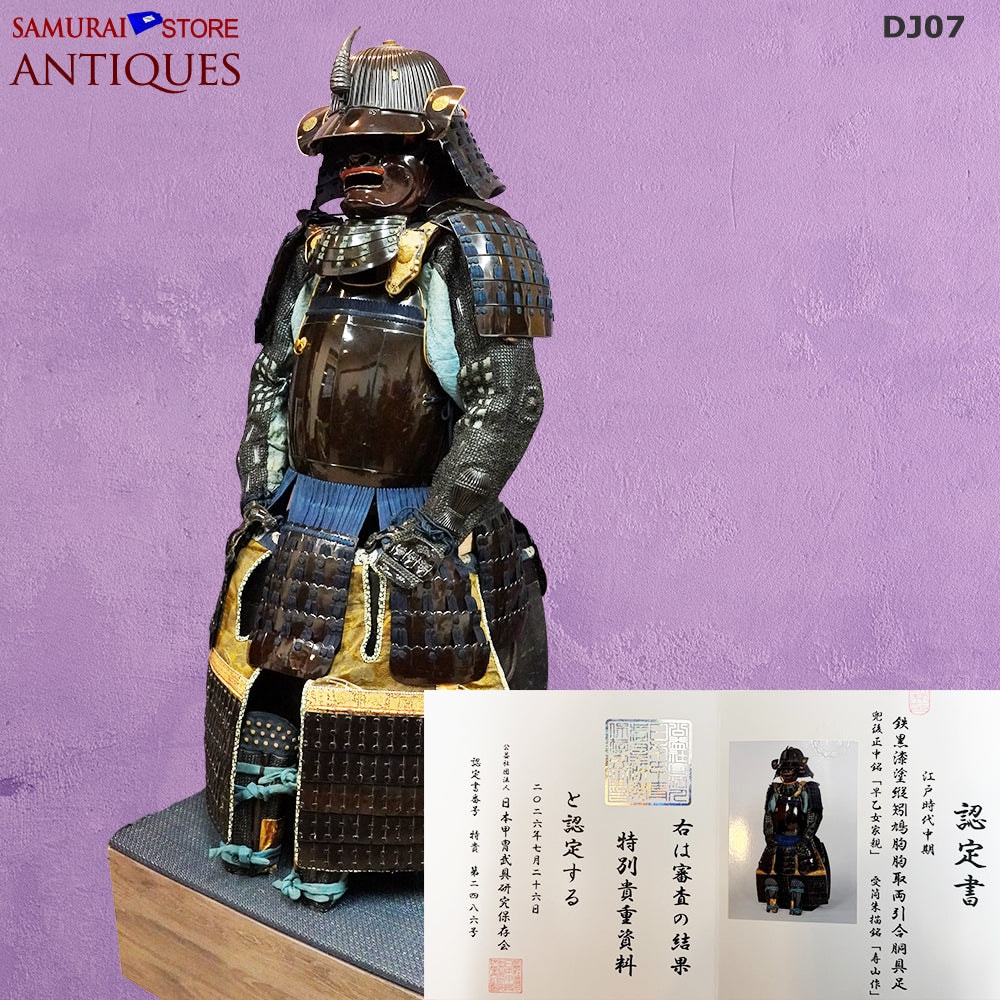
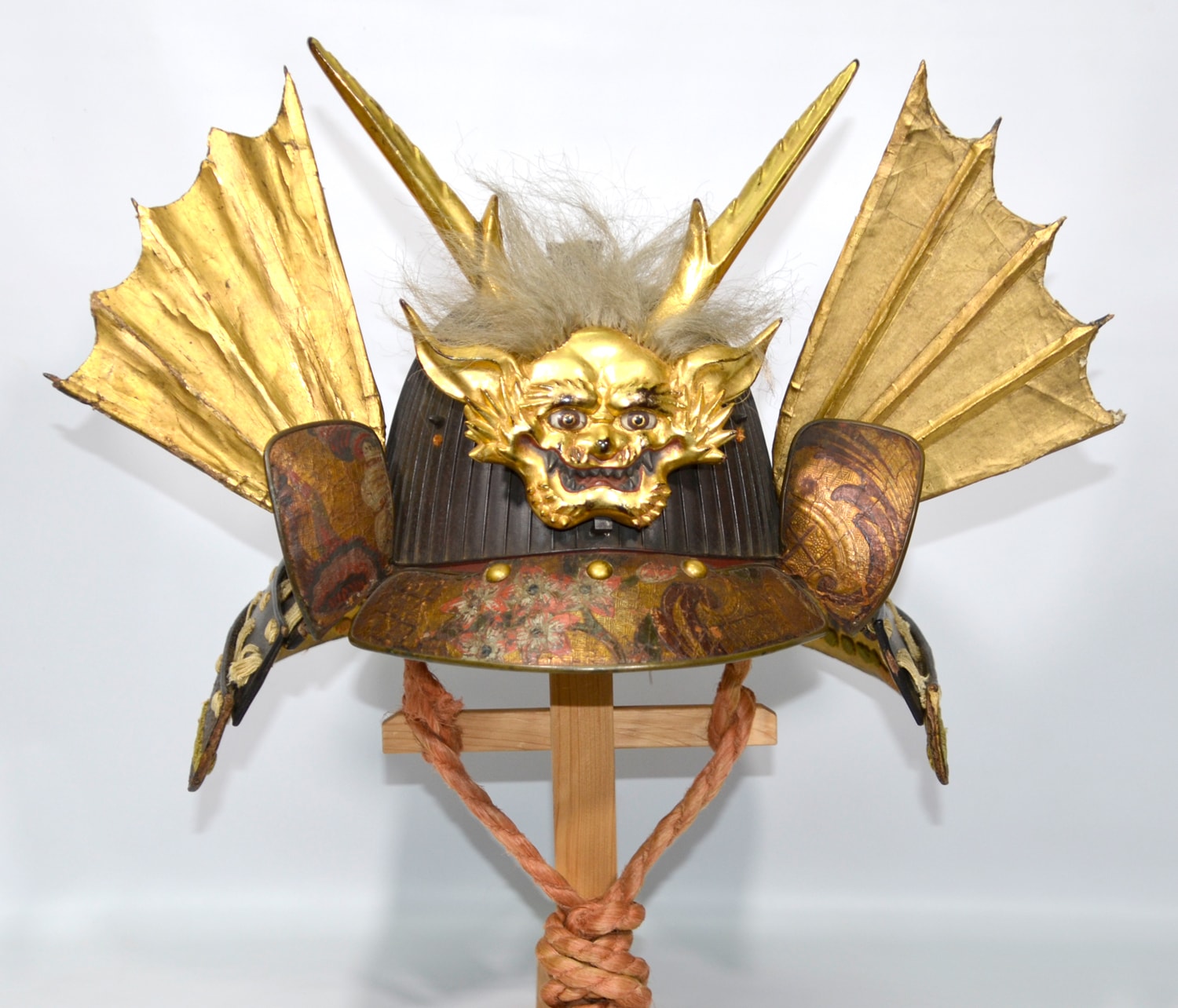
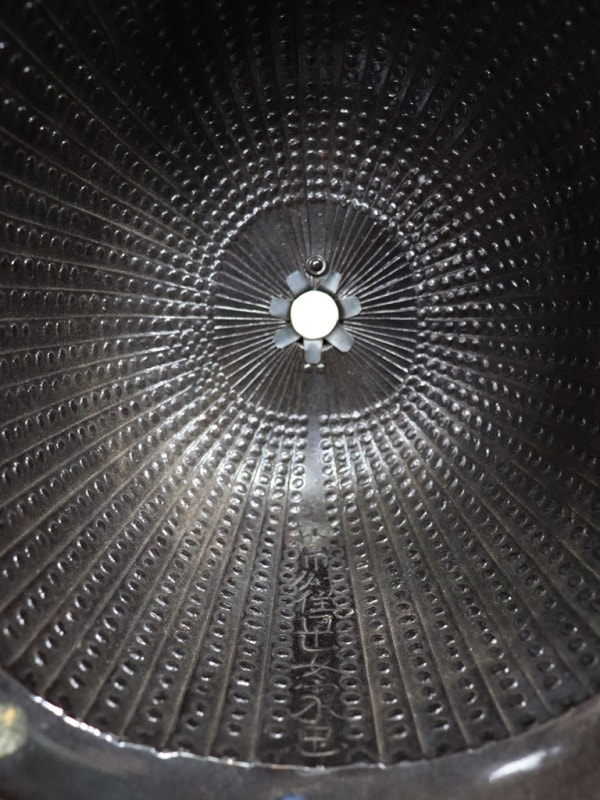
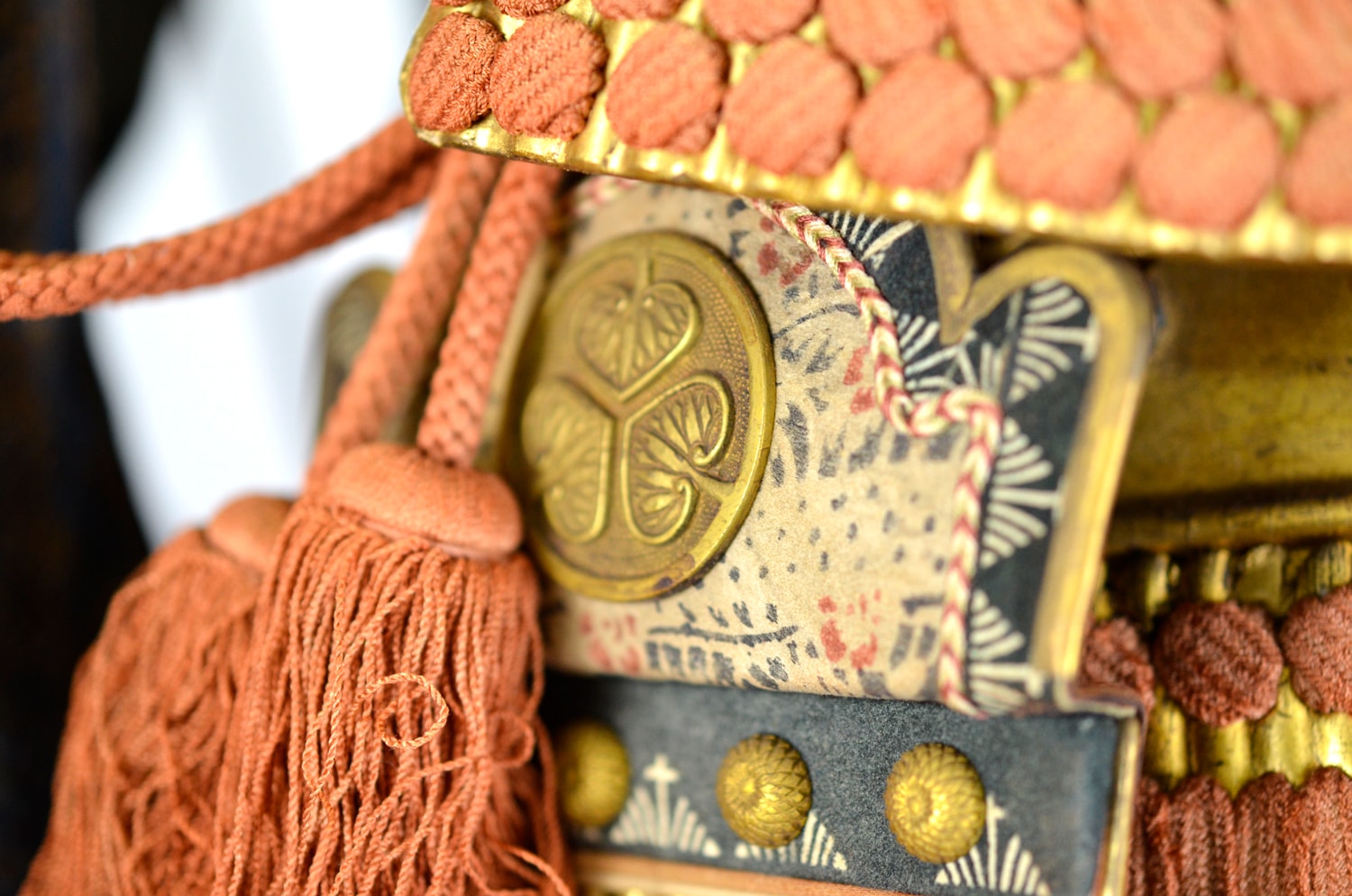


Kabuto only
62-plate · Hoshi-bachi
Saotome
Ietada
Signed · On the kabuto bowl
Edo
Tagaya
As written by the shop
We could not find an authenticity certificate on the seller’s listing. Japanese armour is normally certified by the Nihon Katchū Bugu Kenkyū Hozon Kai (the armour society). Without one, the attribution is the seller’s own assessment and has not been independently verified — treat it with caution and ask the dealer about certification before buying.
Price on request