 NihontoWatchNihontoWatch
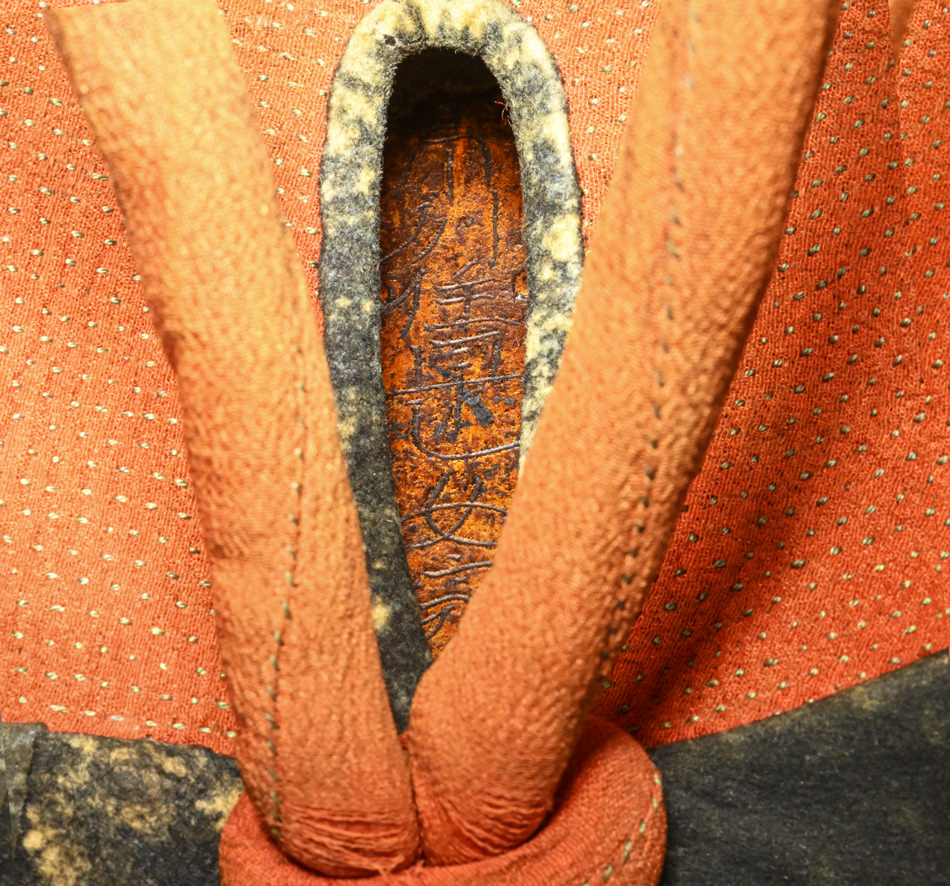
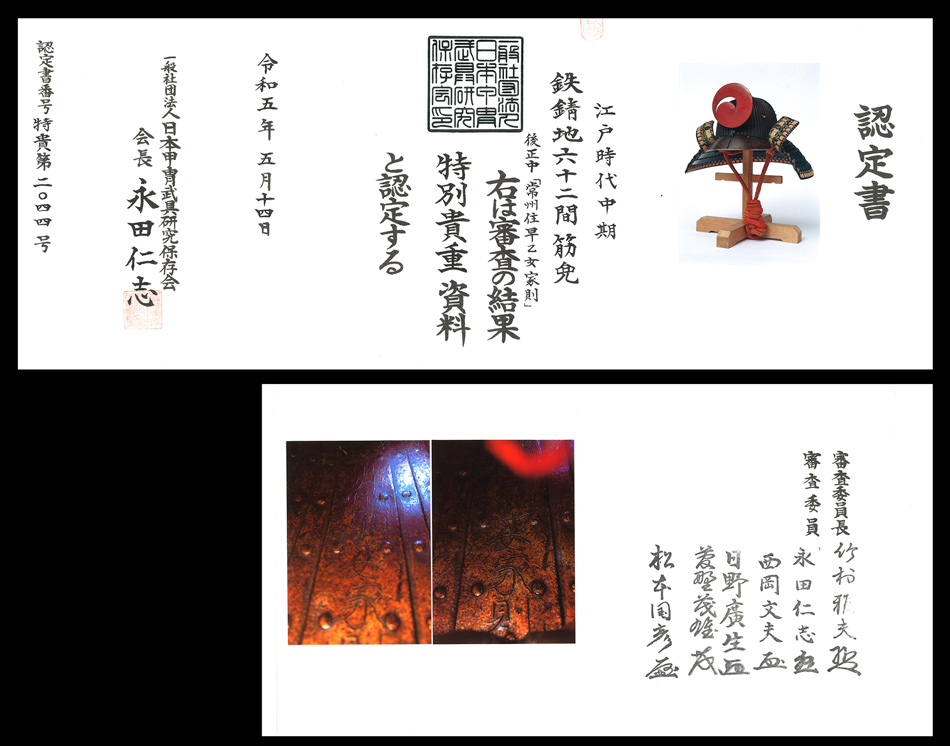
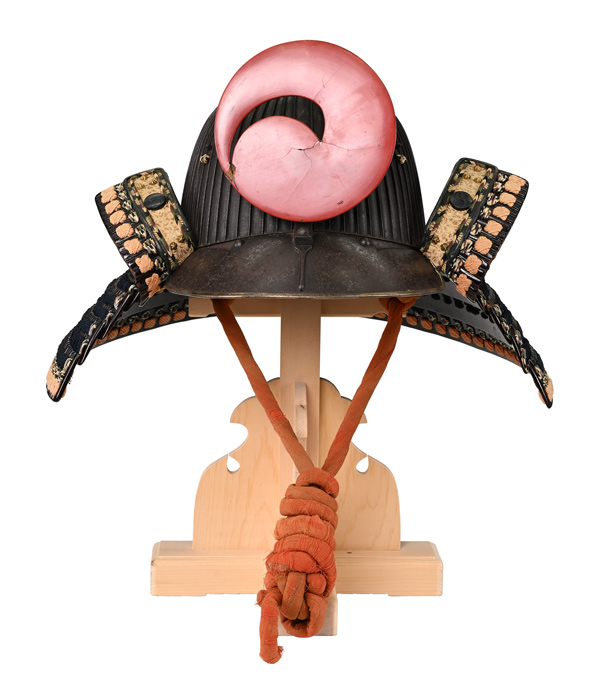
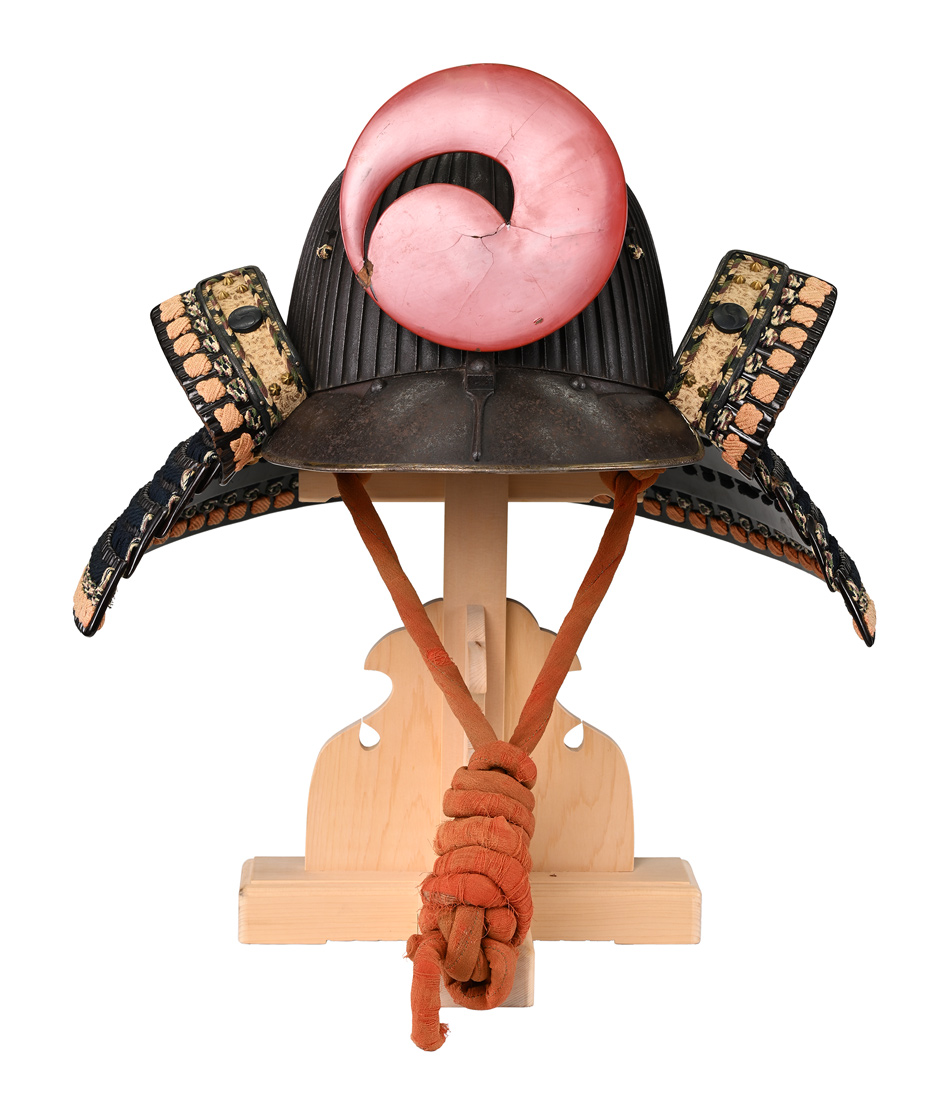
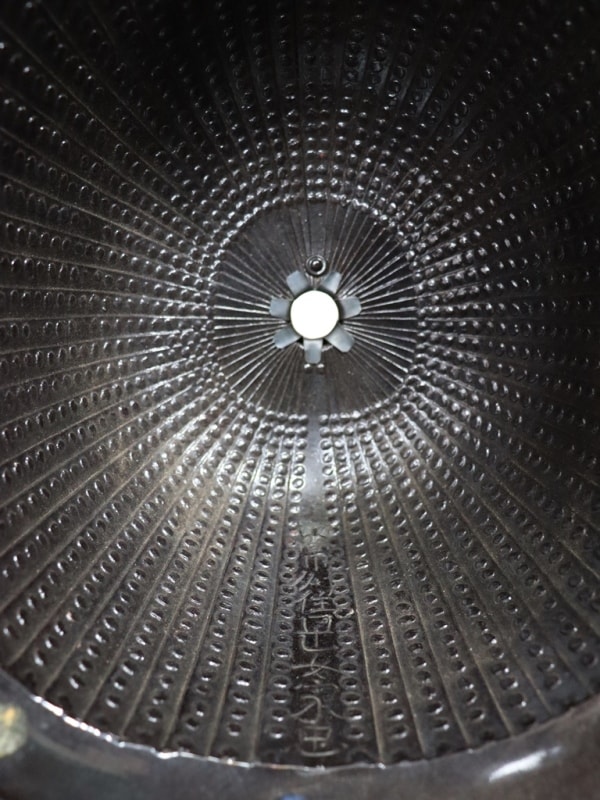
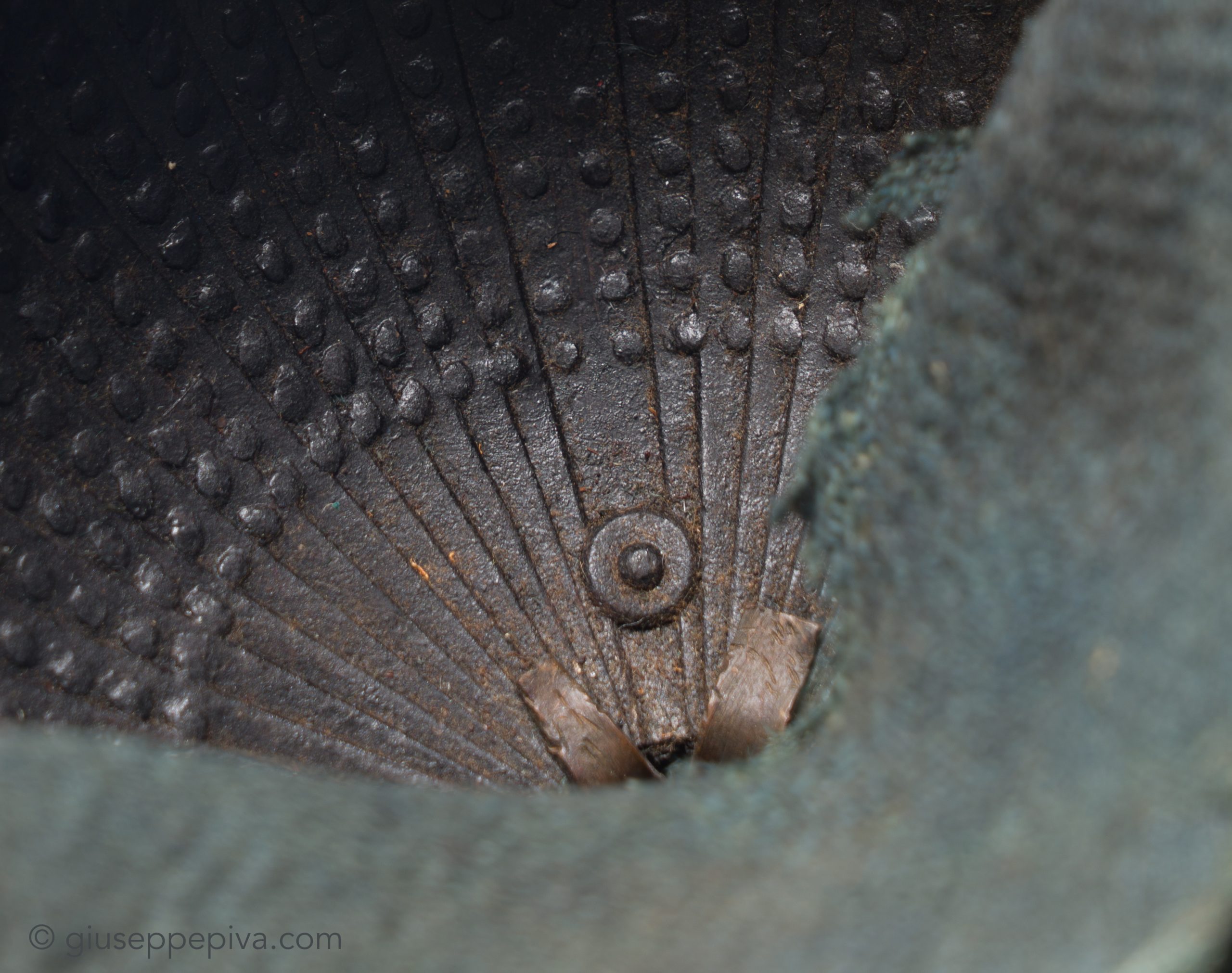
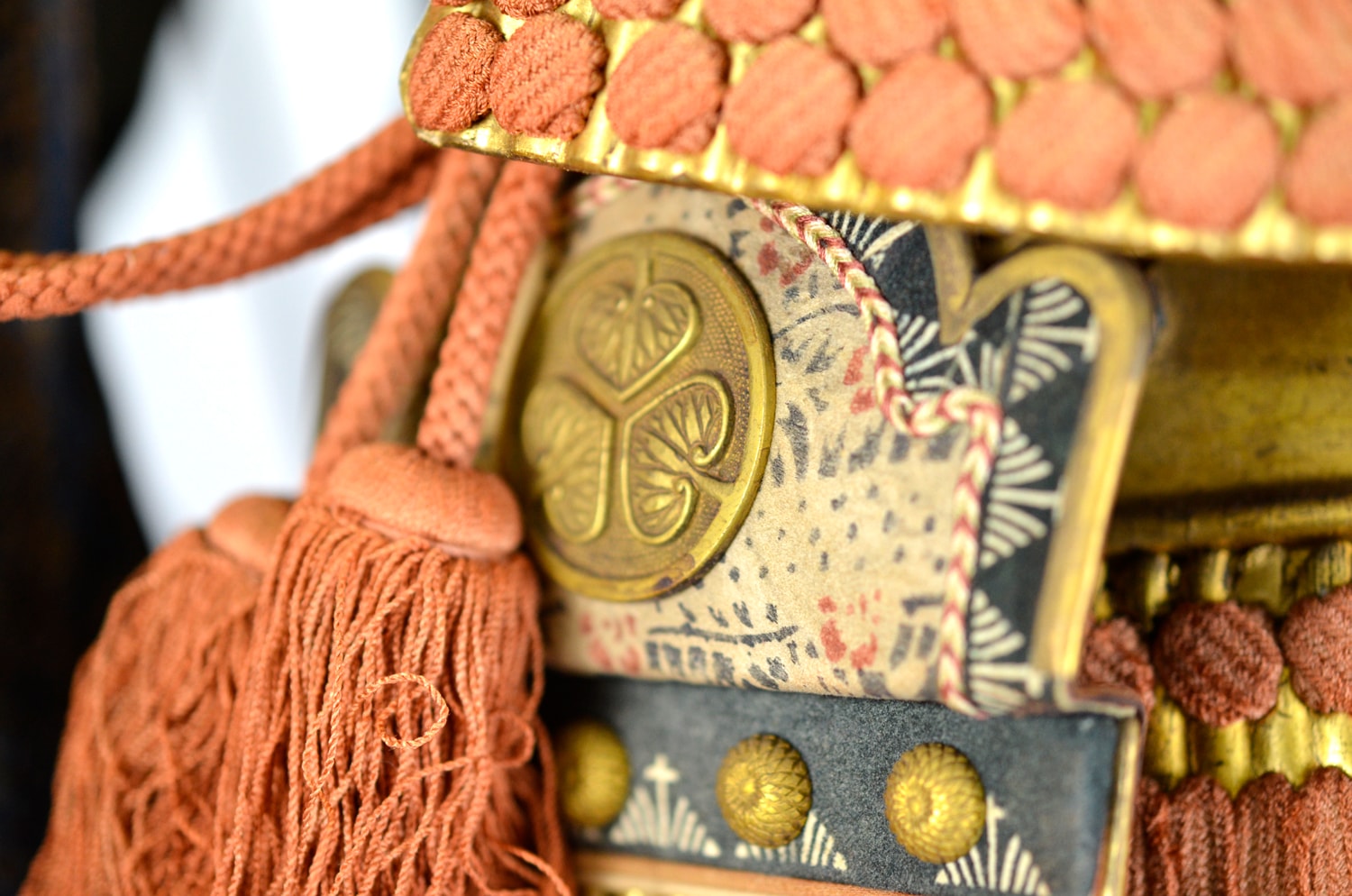
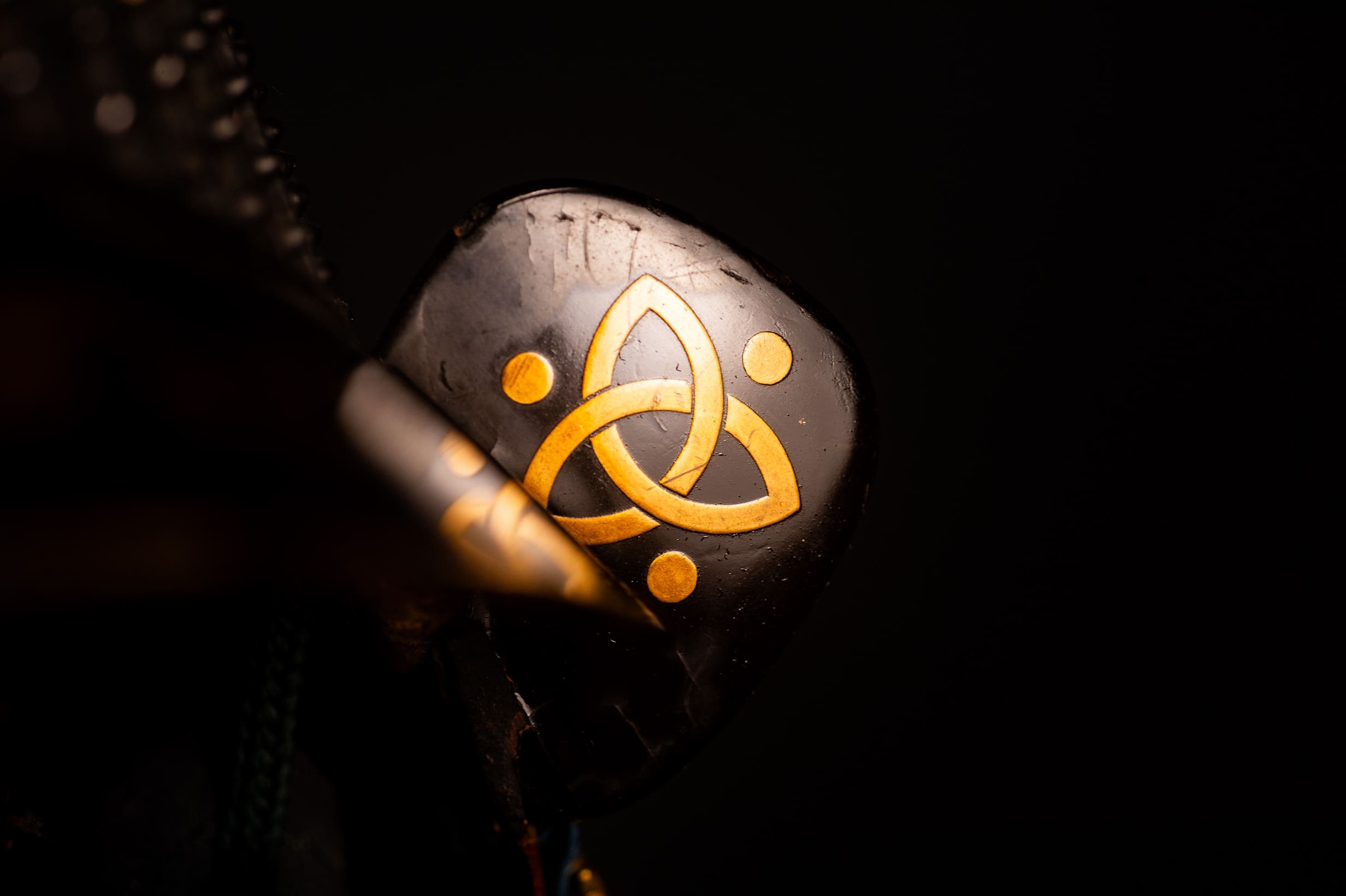
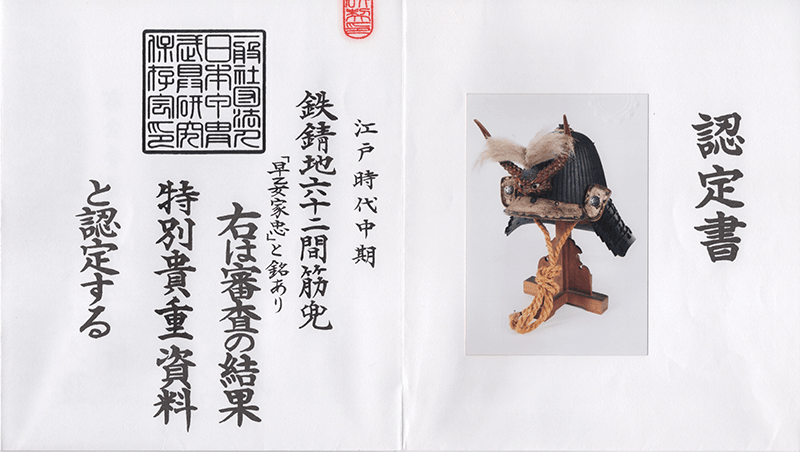
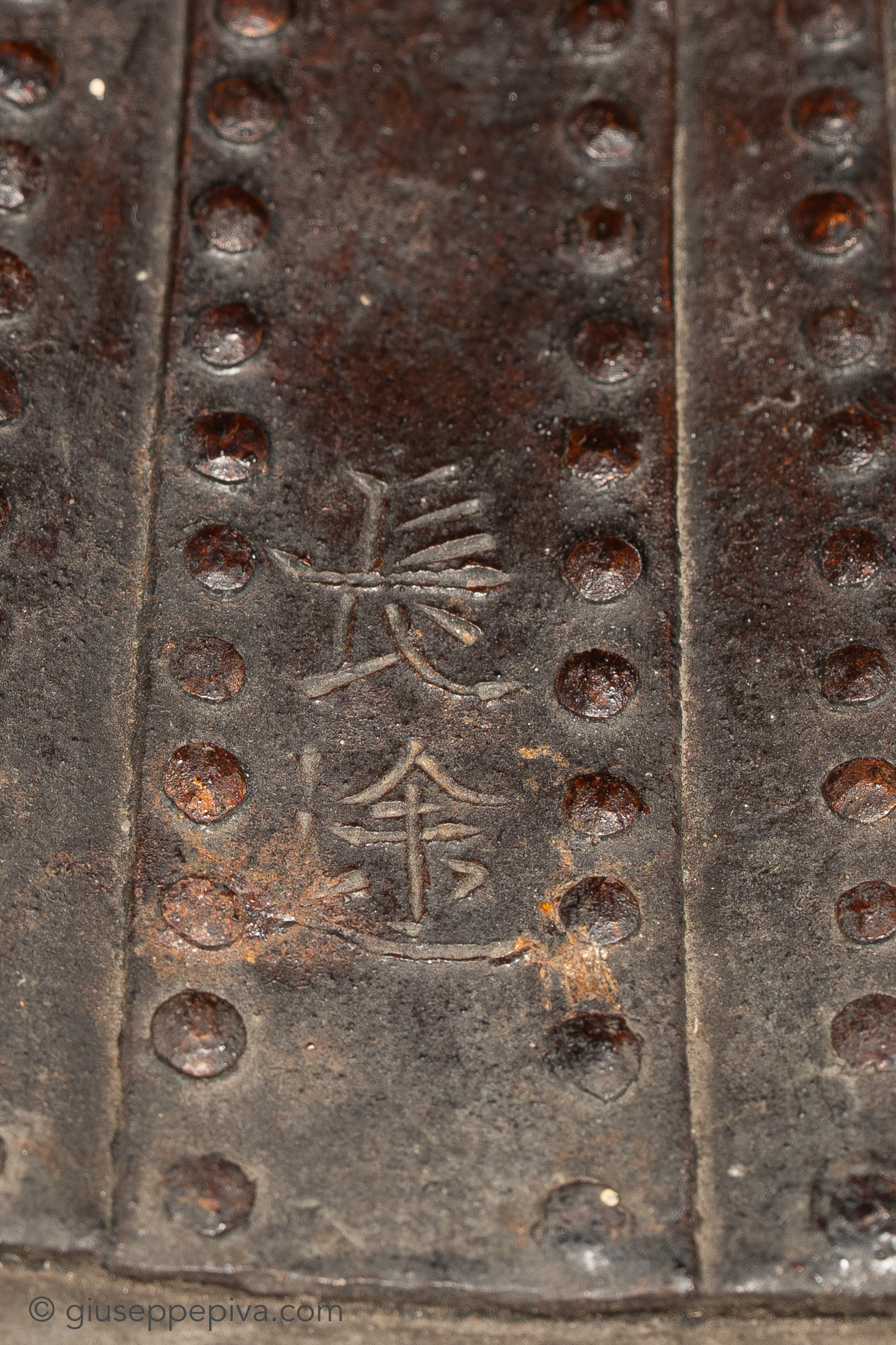
This is a kabuto (helmet) from the middle Edo period, featuring a 62-plate suji-bachi (ridged bowl) with an iron-patinated finish. It is signed by Saotome Ienori from Hitachi Province. The helmet comes with a Tokubetsu Kicho Shiryo certificate from the Association for the Research and Preservation of Japanese Helmets and Armor.
NihontoWatchOffered by World Seiyudo
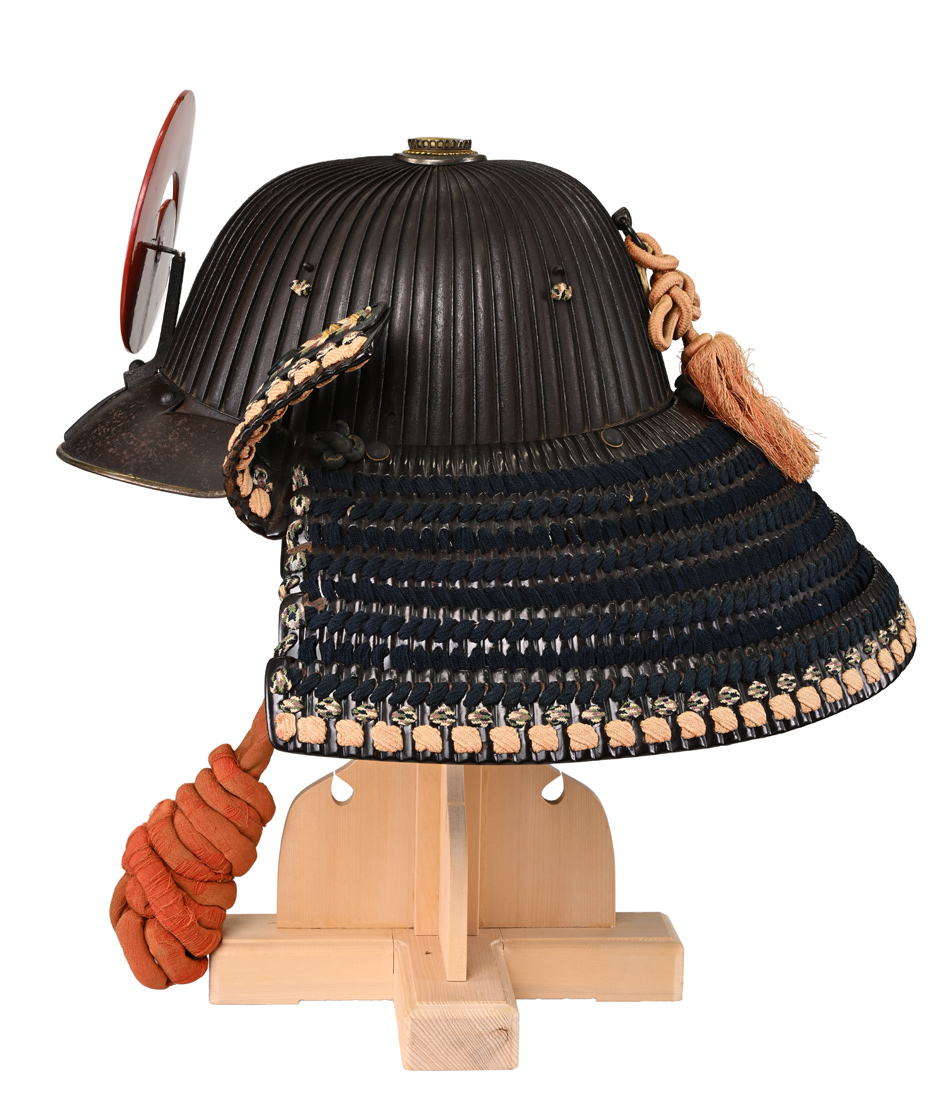
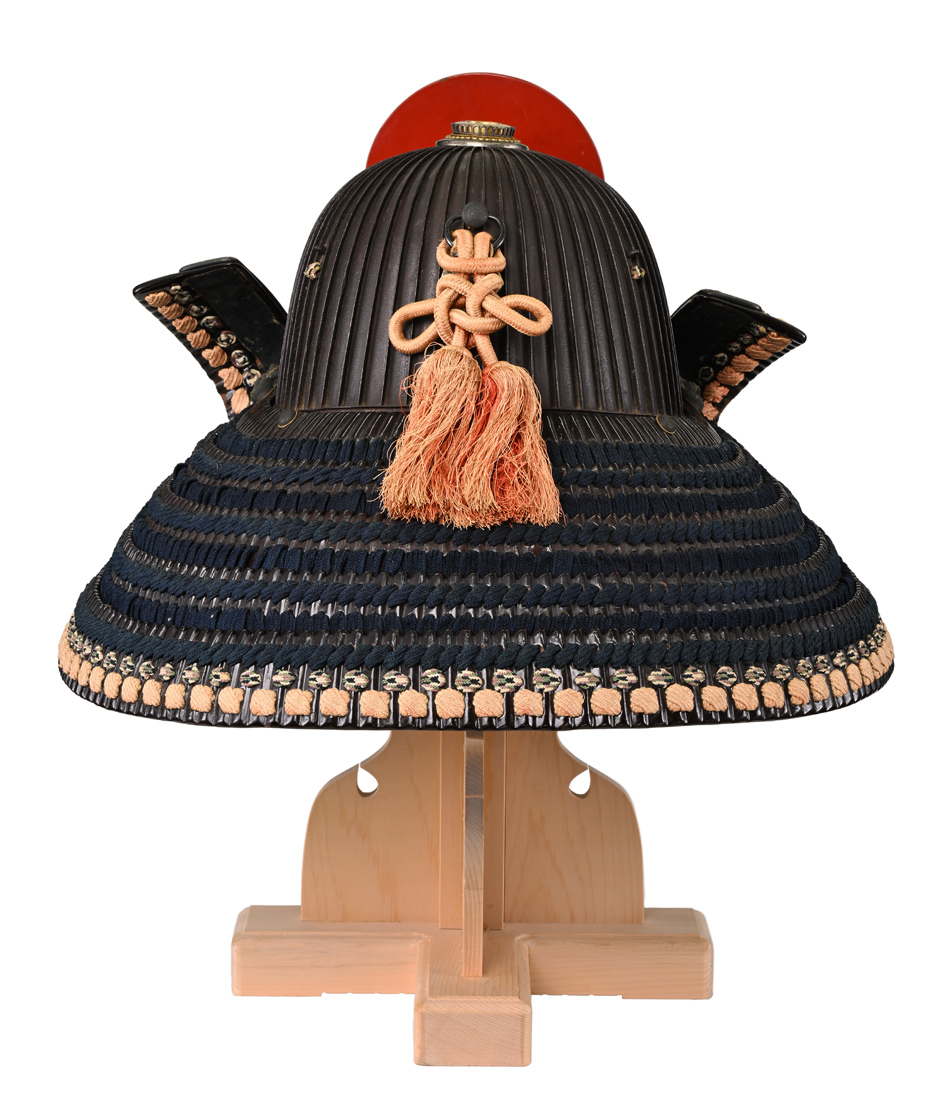
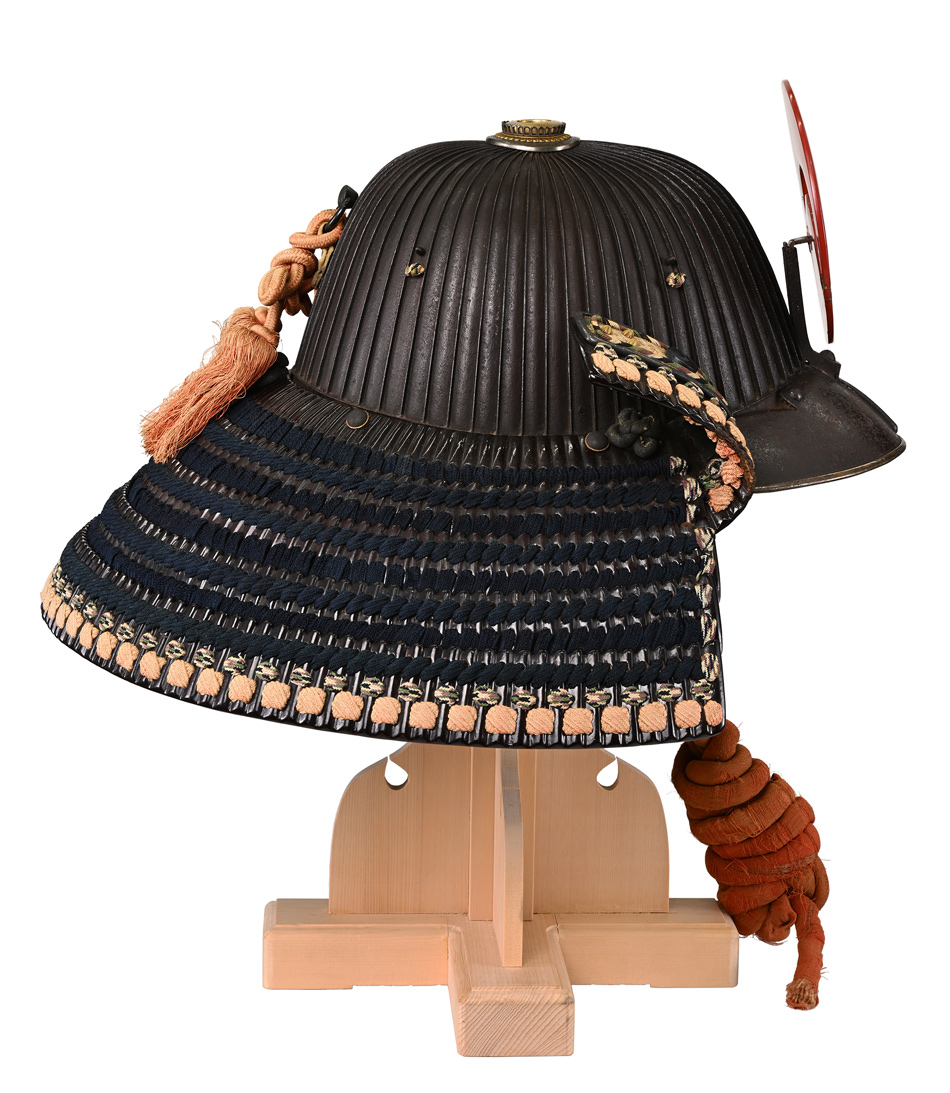
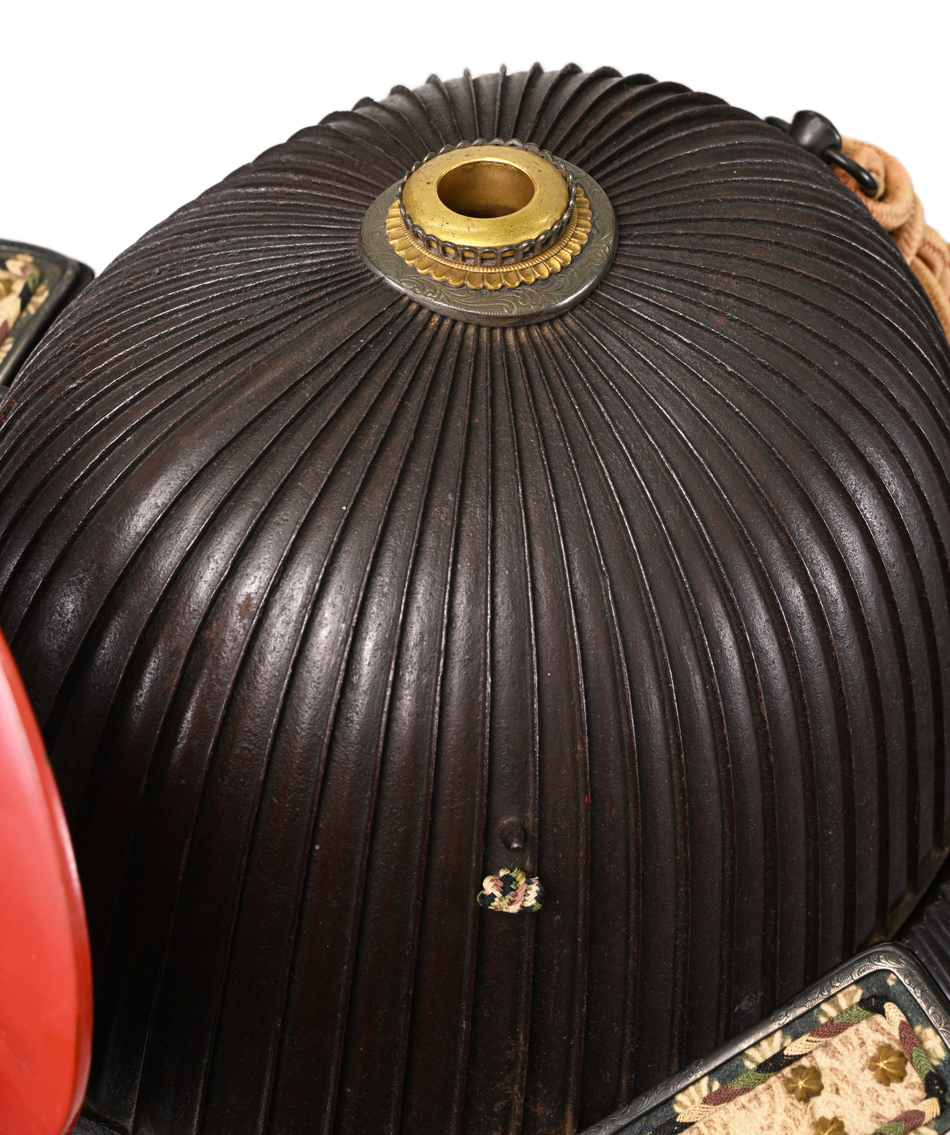
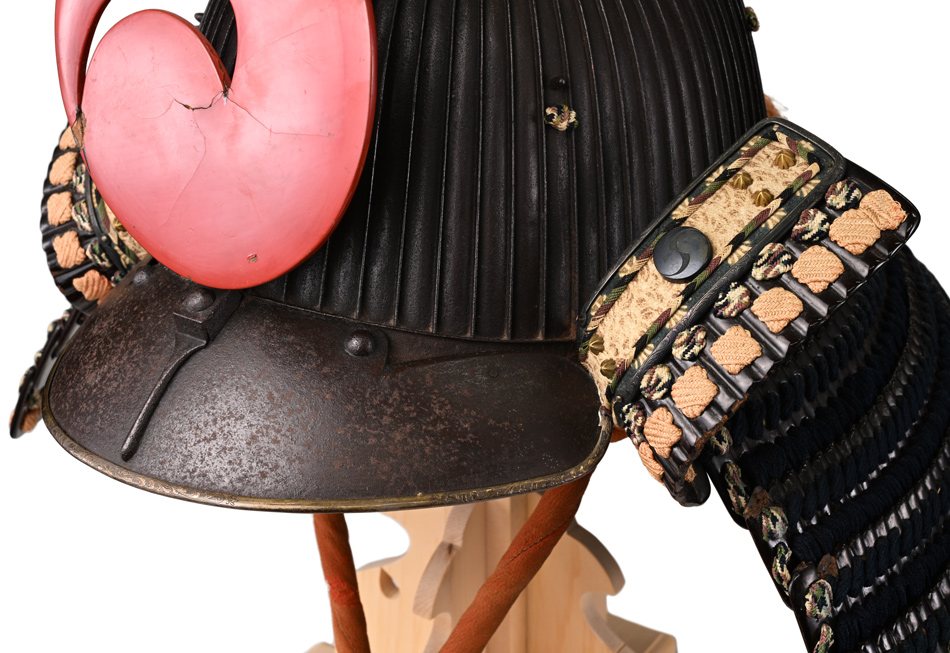
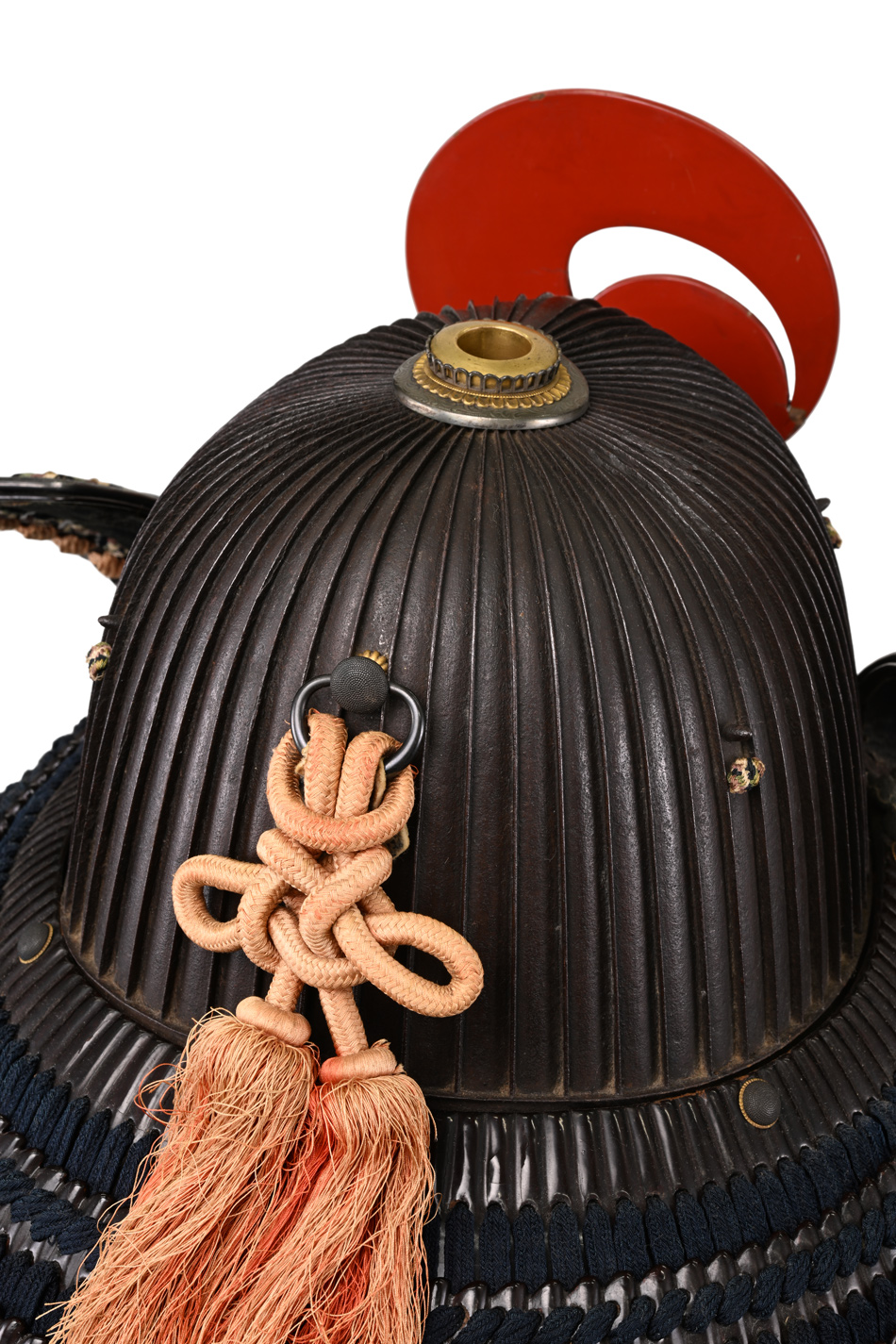
Kabuto only
62-plate · Suji-bachi
Saotome
Ienori
Signed · On the kabuto bowl
Edo
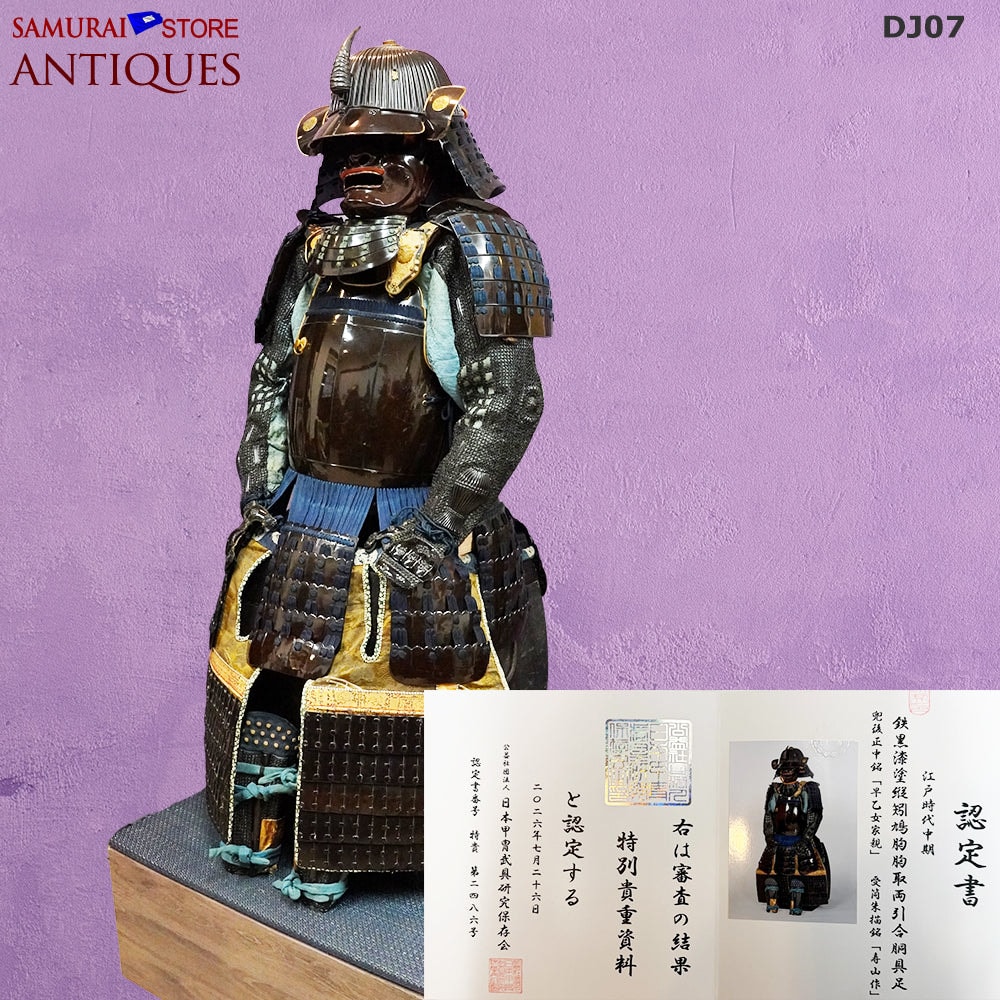
Tokubetsu Kichō Shiryō · Nihon Katchū Bugu Kenkyū Hozon Kai
Especially valuable armour of notably superior workmanship and condition, the third of the five ranks.
Japanese armour is not certified by the NBTHK. The Nihon Katchū Bugu Kenkyū Hozon Kai (the Association for the Research and Preservation of Japanese Helmets and Armour), founded in 1961, is the principal body for armour. Its shinsa grades a piece as 資料 (shiryō, "reference material") across five ascending ranks: Hozon, Kichō, Tokubetsu Kichō, Kōshū Tokubetsu Kichō, and the highest, Jūyō Bunka Shiryō. The 資料 framing reflects the society’s purpose of preserving armour as cultural and historical reference, distinct from the NBTHK’s sword paper tiers.
No cooling-off period or returns; refund only if the purchased sword is proven fake, capped at purchase price (excludes commission sales, accessories, auction items).
¥2,800,000