After the Ōnin War broke the Ashikaga order, a century of Sengoku warfare armed nearly every province in Japan. The era rewards a discriminating eye: routine work exists in quantity, and beside it stand custom blades of the first rank.
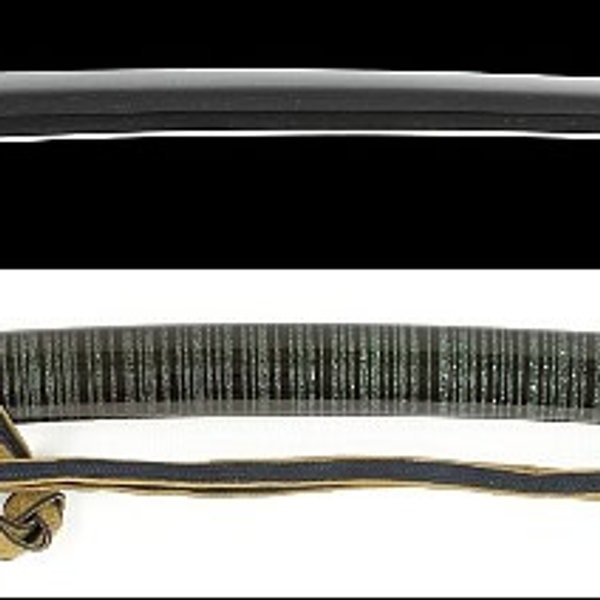
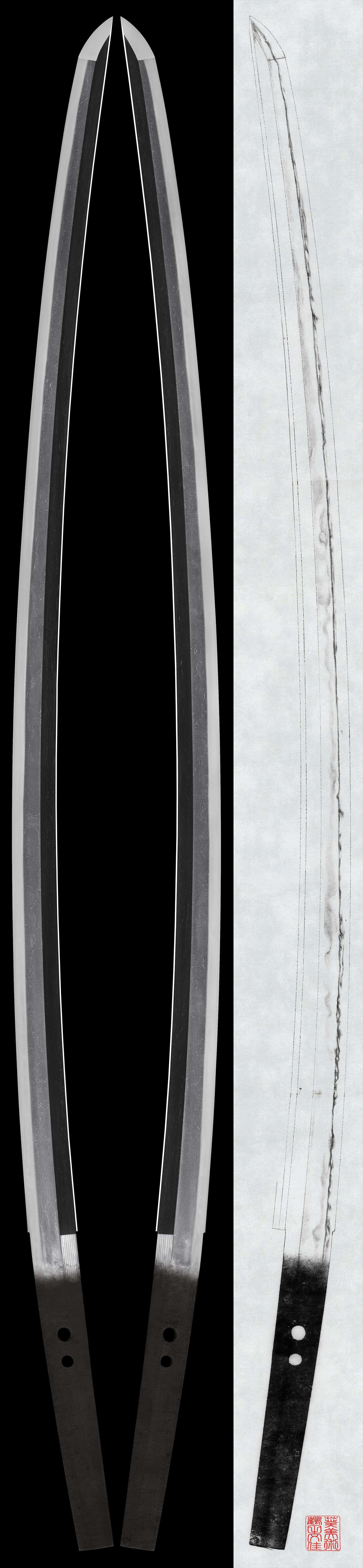
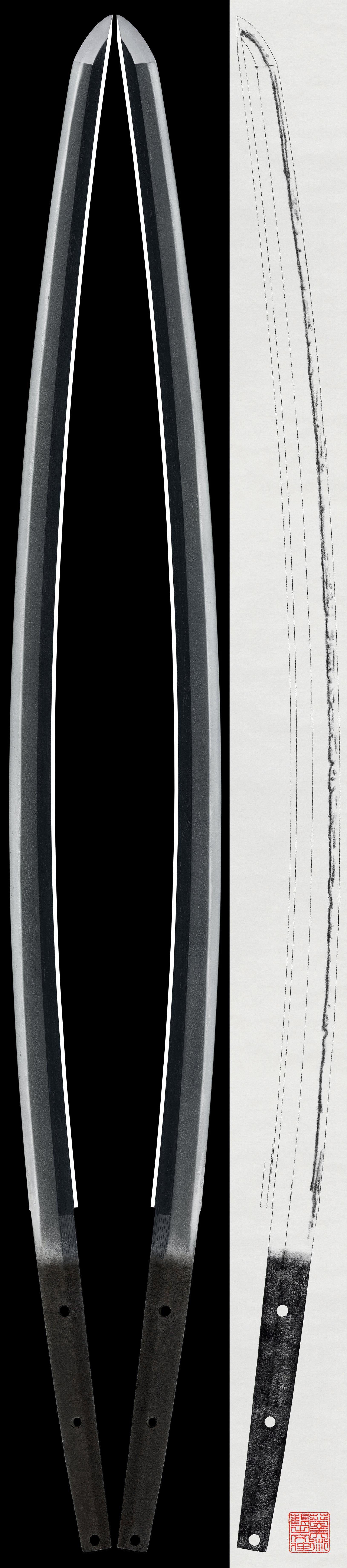
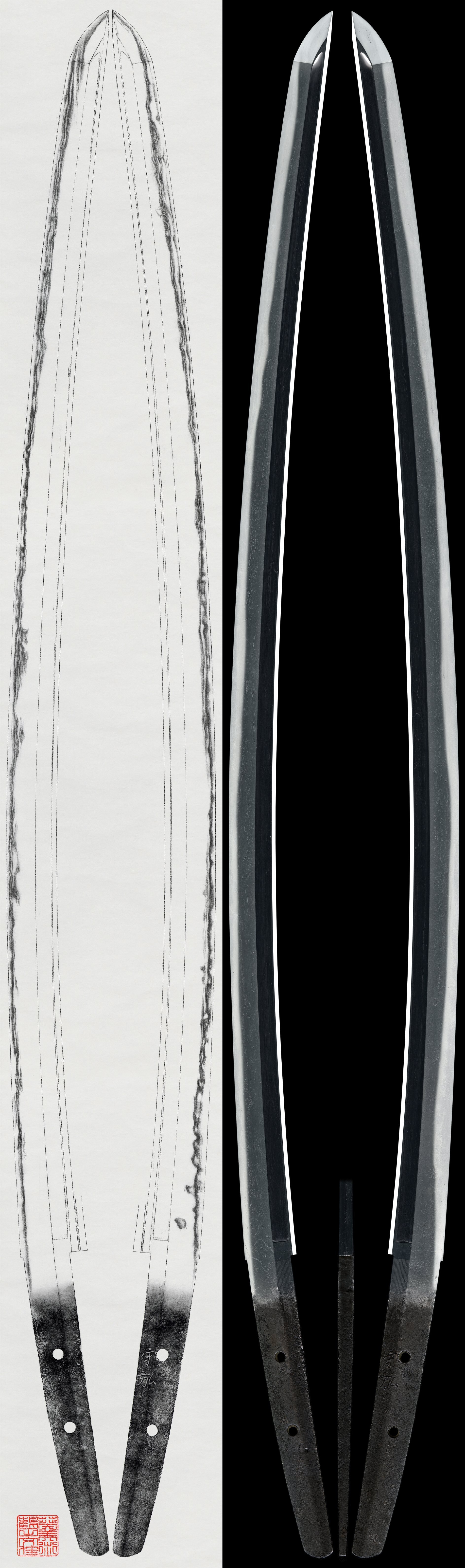
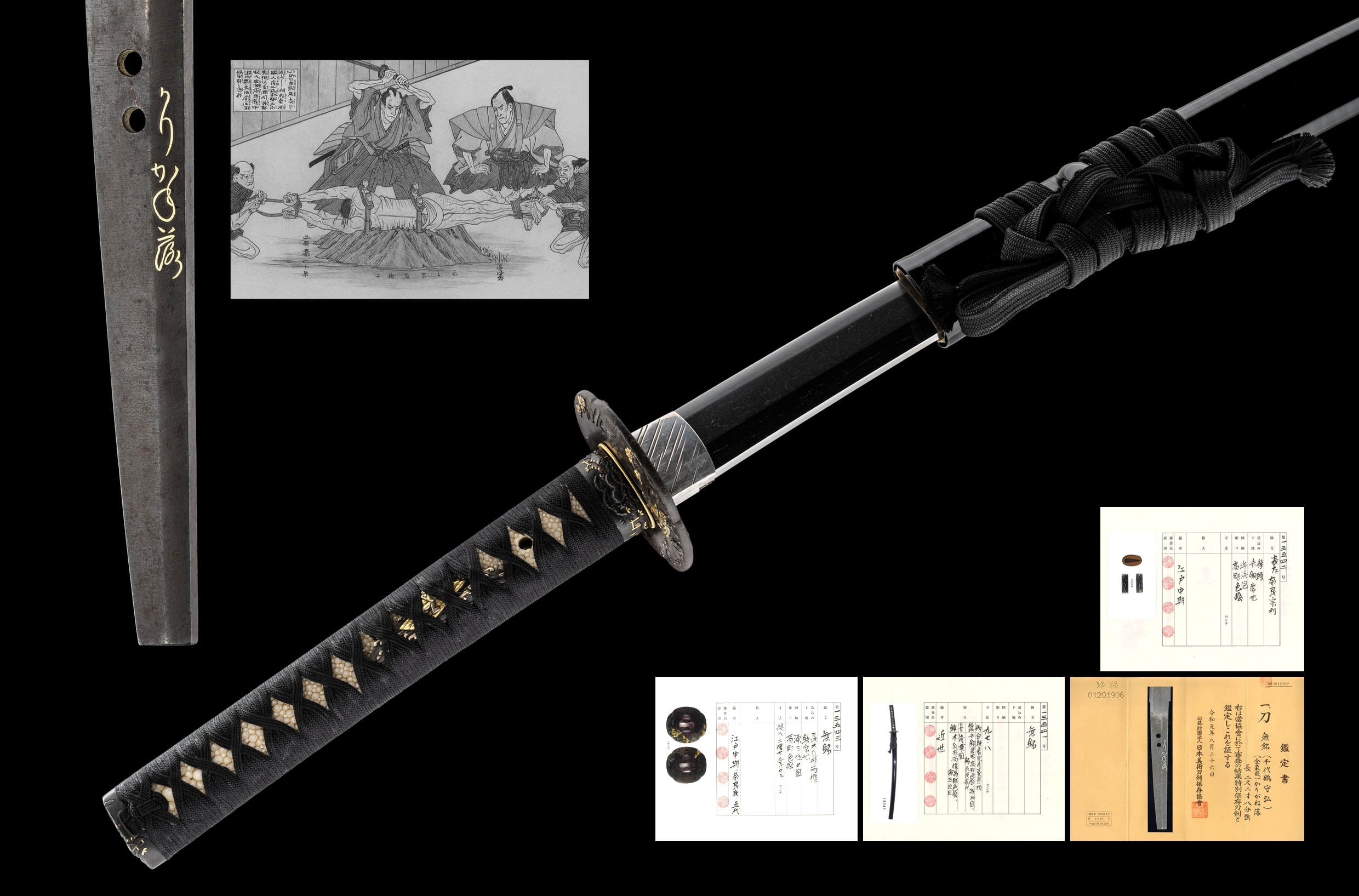
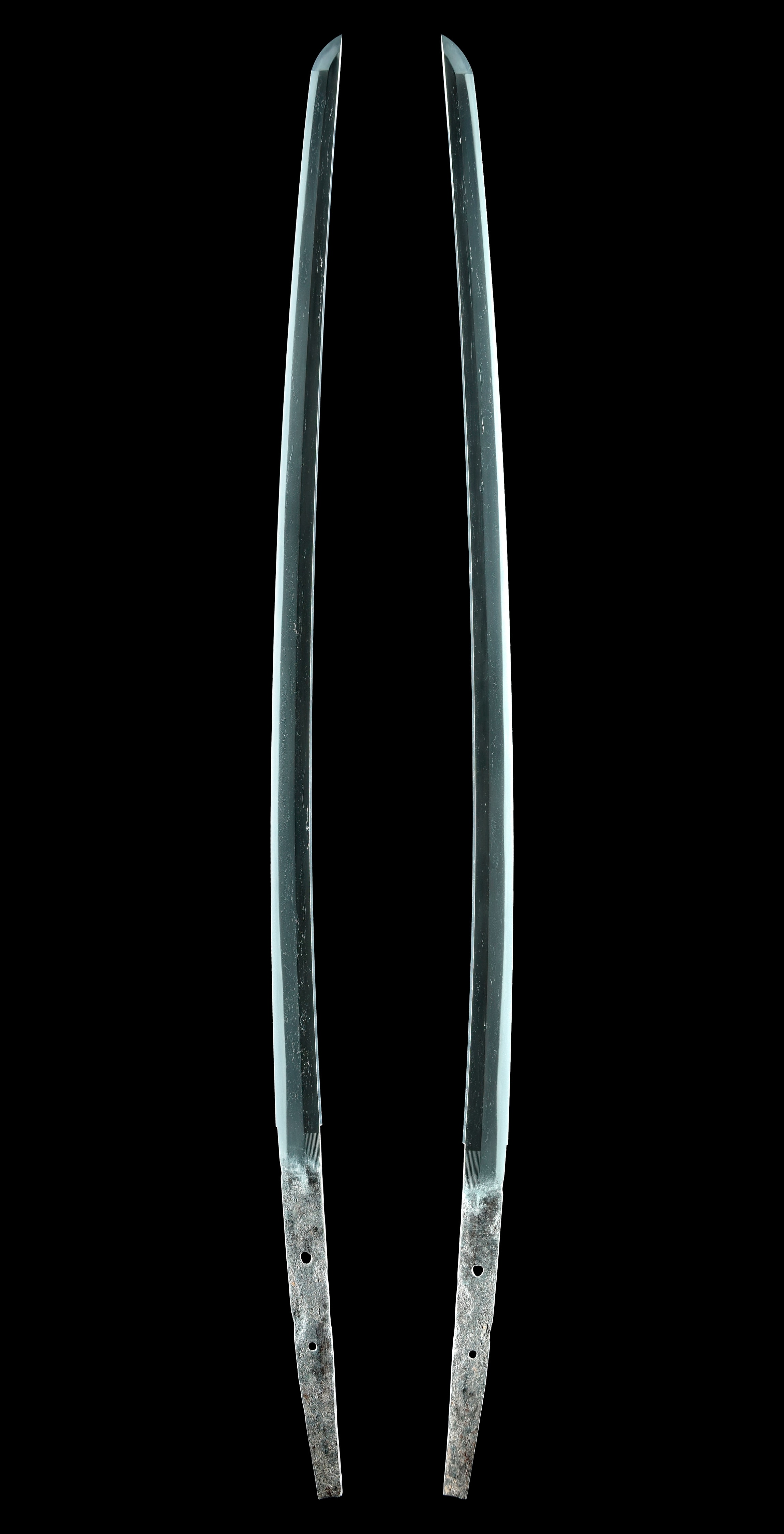
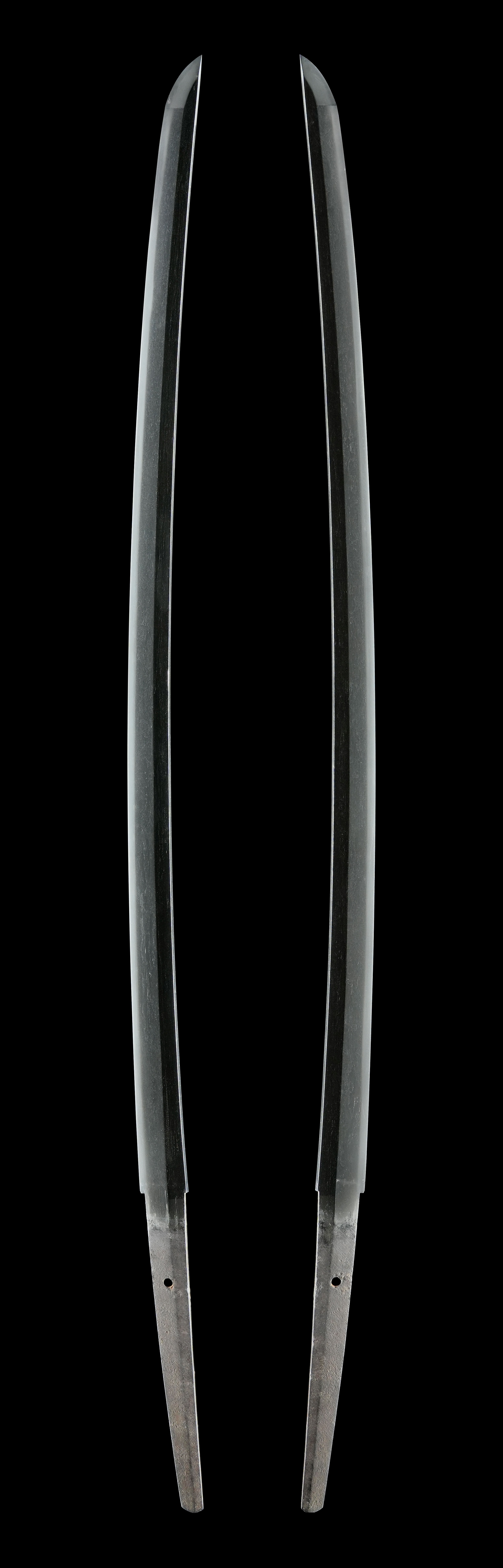
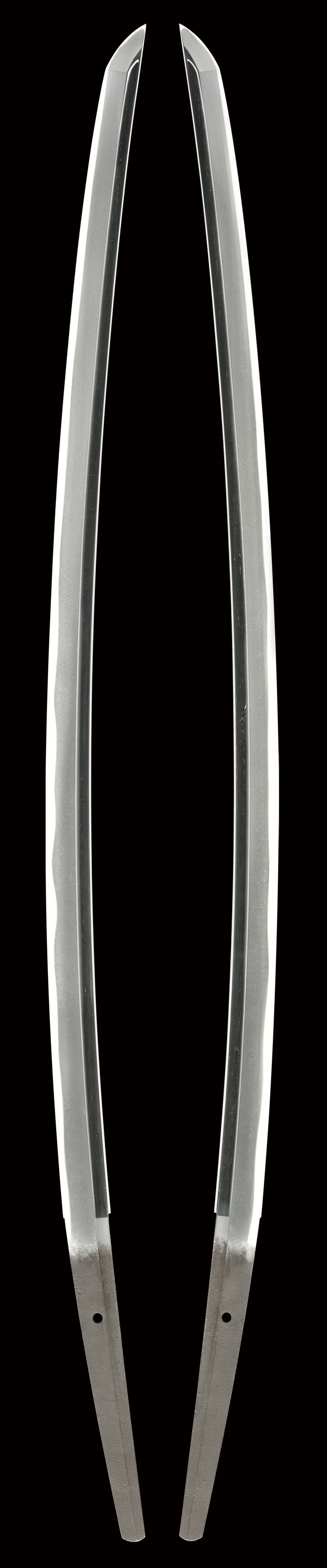
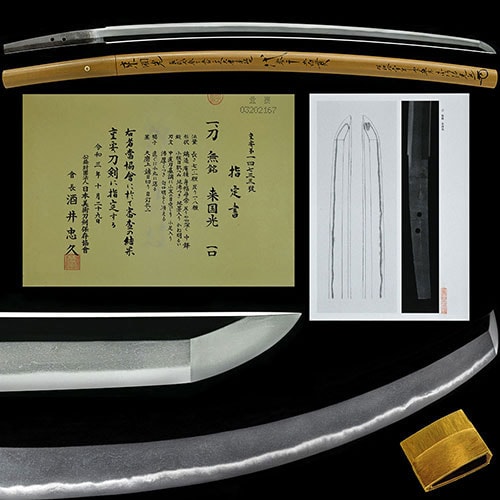
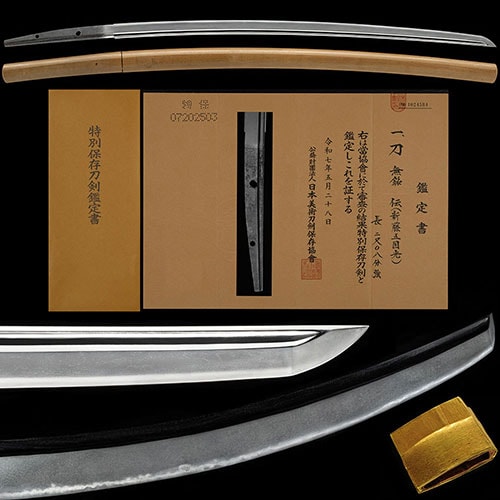
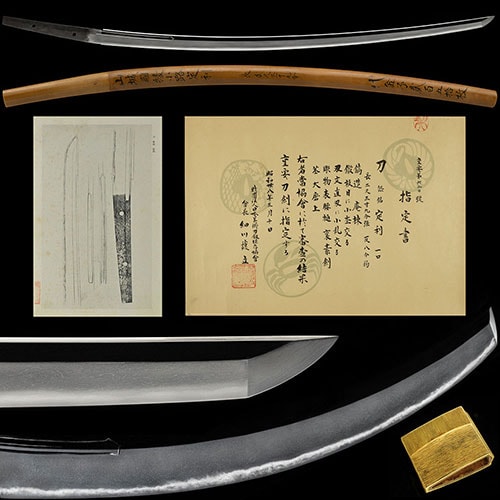
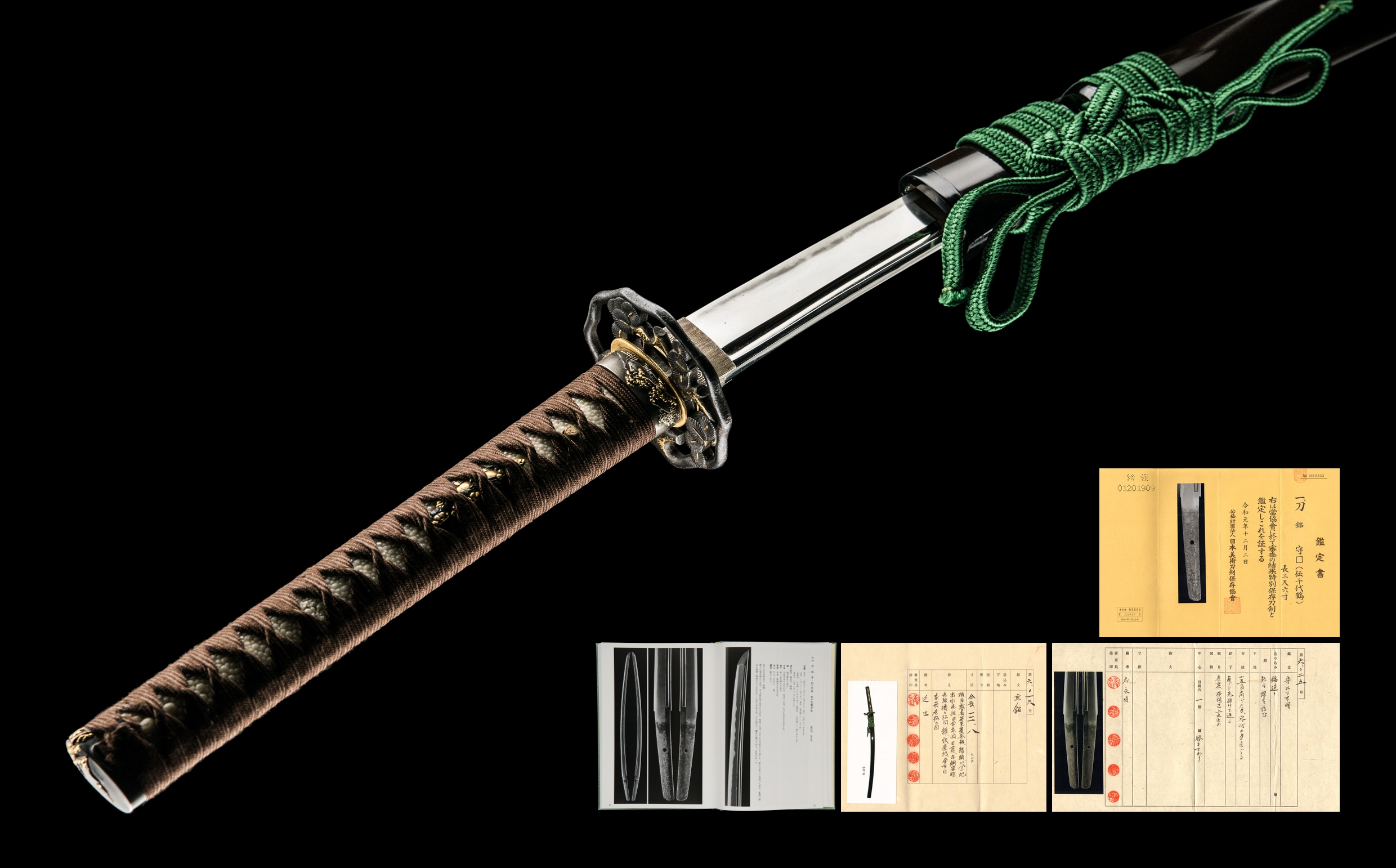
This is an extraordinary Chiyozuru Morihiro Katana from the Koto period, specifically the early Muromachi period (Oei era). Measuring 78.8cm, it retains its original ubu nakago, untouched for over 600 years. The blade features a lively ko-gunome-midare hamon and a rich nagare-hada jihada, certified Tokubetsu Hozon by the NBTHK and Yûshûsaku by the NTHK-NPO.
 NihontoWatch
mei · Chiyozuru (echizen Rai) · Kôtô – Early Muromachi Period (oei era: 1394-1427) · nagasa 78.8cm · sori 2.4cm
Yamashiro-den · Echizen · around 1394-1428
Tōken Taikan top 21%
2 pieces on the market now
Where Morihiro stands among comparable artisans: across all of nihontō, and within tradition, era, and period. The tiers (Foremost · Leading · Major · Notable) weigh official designations from the NBTHK and Japan's Agency for Cultural Affairs, together with historical honors of lasting repute such as the Sansaku and Meibutsu-chō.
Select a lens to see how it's measured.
Yamashiro-den · Echizen
11 pieces on the market now
The Chiyozuru lineage took root in Echizen Province during the Nanbokuchō period, and the setsumei consistently trace its origin to Rai Kuniyasu (来国安). He is said to have been born in Yamashiro Province, with one tradition holding him a grandson of Rai Kunisue; he later moved to Echizen, where the meikan place him around the Jōji and Sadaji eras (ca. 1362 to 1368). A parallel tradition, recorded on the signed tachi attributed to Morihiro, names Chiyozuru Kuniyasu[[c:1]] as a disciple of Rai Kuniyasu and the founder of the line. From this root descend the smiths the blades document: Morihiro (守弘), placed in the Kuniyasu line across two generations, the first set in the Ōei era (1394 to 1428) and the second in the Kakitsu (1441 to 1444) and Bun'an (1444 to 1449) eras; and Mitsuyuki of Tsuruga[[c:2]], recorded as a student of Echizen Kuniyuki and known from a rare Kakei-dated tantō. The Yamashiro inheritance runs through the whole group, even as the workmanship moves away from the Kyoto homeland into a provincial Hokuriku register. Two stylistic strands run through the corpus, and recognizing the hand means reading where a given blade falls between them. The Rai-derived work, seen in the katana attributed to Rai Kuniyasu, shows itame mixed with mokume and nagare-hada, the grain tending to stand (hada-dachi) with thick ji-nie and frequent chikei; the steel carries a whitish or, in places, slightly blackish cast that the setsumei read as a provincial inflection of Yamashiro.
The hamon on these is a chū-suguha mixed with ko-gunome, the edge breaking into hotsure, kuichigai-ba, and nijūba, with ashi, yō, kinsuji, and sunagashi running through and a bright nioiguchi; the bōshi enters midare-komi or shallow notare-komi, turning in ko-maru with hakikake, at times vigorous enough to give a flame-like (kaen) impression. The Morihiro strand turns toward a gunome-based midareba with a chōji tendency, tobiyaki, and muneyaki, the forging moving toward masame near the edge; the setsumei mark this gunome-toned, nie-laden manner as differing in character from the Rai style and proper to the later line. For kantei, the setsumei set the diagnostic problem plainly: a Chiyozuru blade can at first glance resemble the orthodox Yamashiro Rai work, particularly around Rai Kunimitsu, yet careful reading of the standing grain, the whitish or blackish jigane, and the rustic activity in the bōshi beyond what the Kyoto homeland shows directs the attribution to Echizen. The boldest Nanbokuchō pieces, wide in mihaba with ō-kissaki and muneyaki, invite comparison with Hokuriku contemporaries such as Etchū Tametsugu (越中為継), but the character of ji and ha keeps them within the Chiyozuru fold. Signed examples anchor the line: Morihiro tachi and a Kakitsu 1 (1441) dated wakizashi carrying his Tōzaemon no Jō name, and the Mitsuyuki tantō whose Kakei date makes it documentary material of high value, dated works of the group being extremely scarce. The Morihiro tachi of Jūyō-Bijutsuhin standing is recorded in the Kōzan Oshigata, Kokon Kajibikō, and Kantō Zuiroku. Across the corpus the line holds a distinct place among Nanbokuchō and early Muromachi Hokuriku smiths, carrying a Yamashiro pedigree into a workmanship the appraisers read as its own. Learn more →
| Smith | Era | Designated |
|---|---|---|
| Kuniyasu國安 | 1345-1350 | 4 |
| Ieyoshi家吉 | 1429-1441 | 0 |
| Iemasa家正 | 1492-1501 | 0 |
| Ieyoshi家善 | 1487-1489 | 0 |
| Morihiro守弘 | 1394-1428 | 4 |
The Muromachi period (1392 to 1573)
After the Ōnin War broke the Ashikaga order, a century of Sengoku warfare armed nearly every province in Japan. The era rewards a discriminating eye: routine work exists in quantity, and beside it stand custom blades of the first rank.
A Hozon-certified blade judged to show notably superior workmanship and a better state of preservation. The bar is higher: re-tempered blades and most unsigned Muromachi/Edo works are excluded.
The NBTHK (Nihon Bijutsu Tōken Hozon Kyōkai, the Society for the Preservation of Japanese Art Swords) is a public-interest incorporated foundation founded in 1948 and supervised by Japan’s Agency for Cultural Affairs (Bunkachō); it is based at the Japanese Sword Museum in Tokyo. Its expert panels physically examine each submitted work (shinsa) and issue a certificate (kanteishō) ranking it by artistic and historical merit. NBTHK papers are the most widely recognized standard of authentication for Japanese swords and fittings.
NBTHK official siteAll swords come with a three-day inspection period beginning from the date of delivery. If not satisfied, the sword may be returned within this period for a full refund of the purchase price. Outside of this period, all sales are final. Swords purchased on a layaway payment plan are not eligible for the three-day inspection period.
This is an extraordinary Chiyozuru Morihiro Katana from the Koto period, specifically the early Muromachi period (Oei era). Measuring 78.8cm, it retains its original ubu nakago, untouched for over 600 years. The blade features a lively ko-gunome-midare hamon and a rich nagare-hada jihada, certified Tokubetsu Hozon by the NBTHK and Yûshûsaku by the NTHK-NPO.
NihontoWatchmei · Chiyozuru (echizen Rai) · Kôtô – Early Muromachi Period (oei era: 1394-1427) · nagasa 78.8cm · sori 2.4cm
Yamashiro-den · Echizen · around 1394-1428
Tōken Taikan top 21%
2 pieces on the market now
Where Morihiro stands among comparable artisans: across all of nihontō, and within tradition, era, and period. The tiers (Foremost · Leading · Major · Notable) weigh official designations from the NBTHK and Japan's Agency for Cultural Affairs, together with historical honors of lasting repute such as the Sansaku and Meibutsu-chō.
Select a lens to see how it's measured.
Yamashiro-den · Echizen
11 pieces on the market now
The Chiyozuru lineage took root in Echizen Province during the Nanbokuchō period, and the setsumei consistently trace its origin to Rai Kuniyasu (来国安). He is said to have been born in Yamashiro Province, with one tradition holding him a grandson of Rai Kunisue; he later moved to Echizen, where the meikan place him around the Jōji and Sadaji eras (ca. 1362 to 1368). A parallel tradition, recorded on the signed tachi attributed to Morihiro, names Chiyozuru Kuniyasu[[c:1]] as a disciple of Rai Kuniyasu and the founder of the line. From this root descend the smiths the blades document: Morihiro (守弘), placed in the Kuniyasu line across two generations, the first set in the Ōei era (1394 to 1428) and the second in the Kakitsu (1441 to 1444) and Bun'an (1444 to 1449) eras; and Mitsuyuki of Tsuruga[[c:2]], recorded as a student of Echizen Kuniyuki and known from a rare Kakei-dated tantō. The Yamashiro inheritance runs through the whole group, even as the workmanship moves away from the Kyoto homeland into a provincial Hokuriku register. Two stylistic strands run through the corpus, and recognizing the hand means reading where a given blade falls between them. The Rai-derived work, seen in the katana attributed to Rai Kuniyasu, shows itame mixed with mokume and nagare-hada, the grain tending to stand (hada-dachi) with thick ji-nie and frequent chikei; the steel carries a whitish or, in places, slightly blackish cast that the setsumei read as a provincial inflection of Yamashiro.
The hamon on these is a chū-suguha mixed with ko-gunome, the edge breaking into hotsure, kuichigai-ba, and nijūba, with ashi, yō, kinsuji, and sunagashi running through and a bright nioiguchi; the bōshi enters midare-komi or shallow notare-komi, turning in ko-maru with hakikake, at times vigorous enough to give a flame-like (kaen) impression. The Morihiro strand turns toward a gunome-based midareba with a chōji tendency, tobiyaki, and muneyaki, the forging moving toward masame near the edge; the setsumei mark this gunome-toned, nie-laden manner as differing in character from the Rai style and proper to the later line. For kantei, the setsumei set the diagnostic problem plainly: a Chiyozuru blade can at first glance resemble the orthodox Yamashiro Rai work, particularly around Rai Kunimitsu, yet careful reading of the standing grain, the whitish or blackish jigane, and the rustic activity in the bōshi beyond what the Kyoto homeland shows directs the attribution to Echizen. The boldest Nanbokuchō pieces, wide in mihaba with ō-kissaki and muneyaki, invite comparison with Hokuriku contemporaries such as Etchū Tametsugu (越中為継), but the character of ji and ha keeps them within the Chiyozuru fold. Signed examples anchor the line: Morihiro tachi and a Kakitsu 1 (1441) dated wakizashi carrying his Tōzaemon no Jō name, and the Mitsuyuki tantō whose Kakei date makes it documentary material of high value, dated works of the group being extremely scarce. The Morihiro tachi of Jūyō-Bijutsuhin standing is recorded in the Kōzan Oshigata, Kokon Kajibikō, and Kantō Zuiroku. Across the corpus the line holds a distinct place among Nanbokuchō and early Muromachi Hokuriku smiths, carrying a Yamashiro pedigree into a workmanship the appraisers read as its own. Learn more →
| Smith | Era | Designated |
|---|---|---|
| Kuniyasu國安 | 1345-1350 | 4 |
| Ieyoshi家吉 | 1429-1441 | 0 |
| Iemasa家正 | 1492-1501 | 0 |
| Ieyoshi家善 | 1487-1489 | 0 |
| Morihiro守弘 | 1394-1428 | 4 |
The Muromachi period (1392 to 1573)
After the Ōnin War broke the Ashikaga order, a century of Sengoku warfare armed nearly every province in Japan. The era rewards a discriminating eye: routine work exists in quantity, and beside it stand custom blades of the first rank.
A Hozon-certified blade judged to show notably superior workmanship and a better state of preservation. The bar is higher: re-tempered blades and most unsigned Muromachi/Edo works are excluded.
The NBTHK (Nihon Bijutsu Tōken Hozon Kyōkai, the Society for the Preservation of Japanese Art Swords) is a public-interest incorporated foundation founded in 1948 and supervised by Japan’s Agency for Cultural Affairs (Bunkachō); it is based at the Japanese Sword Museum in Tokyo. Its expert panels physically examine each submitted work (shinsa) and issue a certificate (kanteishō) ranking it by artistic and historical merit. NBTHK papers are the most widely recognized standard of authentication for Japanese swords and fittings.
NBTHK official siteAll swords come with a three-day inspection period beginning from the date of delivery. If not satisfied, the sword may be returned within this period for a full refund of the purchase price. Outside of this period, all sales are final. Swords purchased on a layaway payment plan are not eligible for the three-day inspection period.