The Shintō era was largely invented in Kyōto: Umetada Myōju’s workshop trained the movement, Horikawa Kunihiro raised a generation, and the Hon’ami appraisers, who held no forge, governed the meaning of famous blades.
 NihontoWatchNihontoWatch
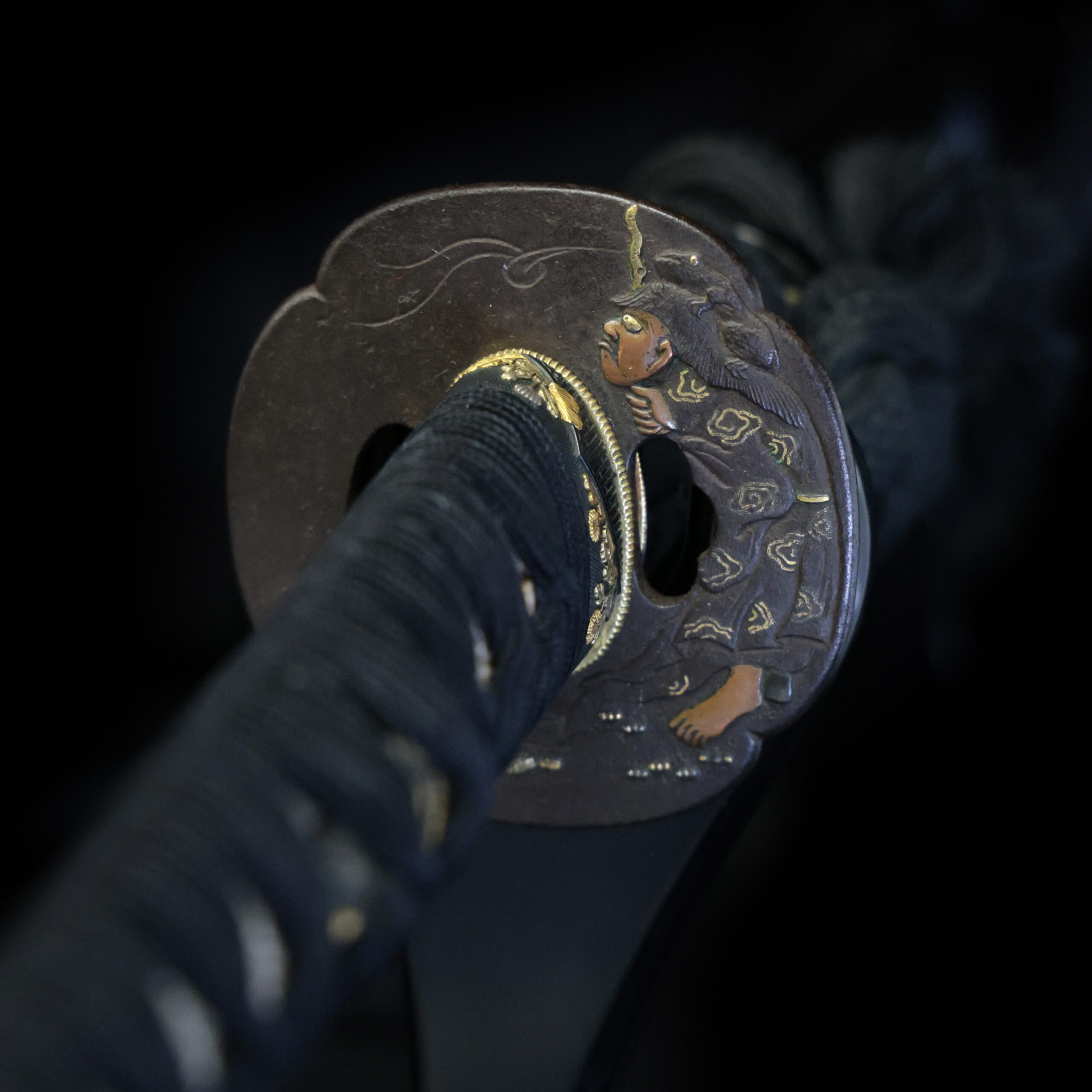
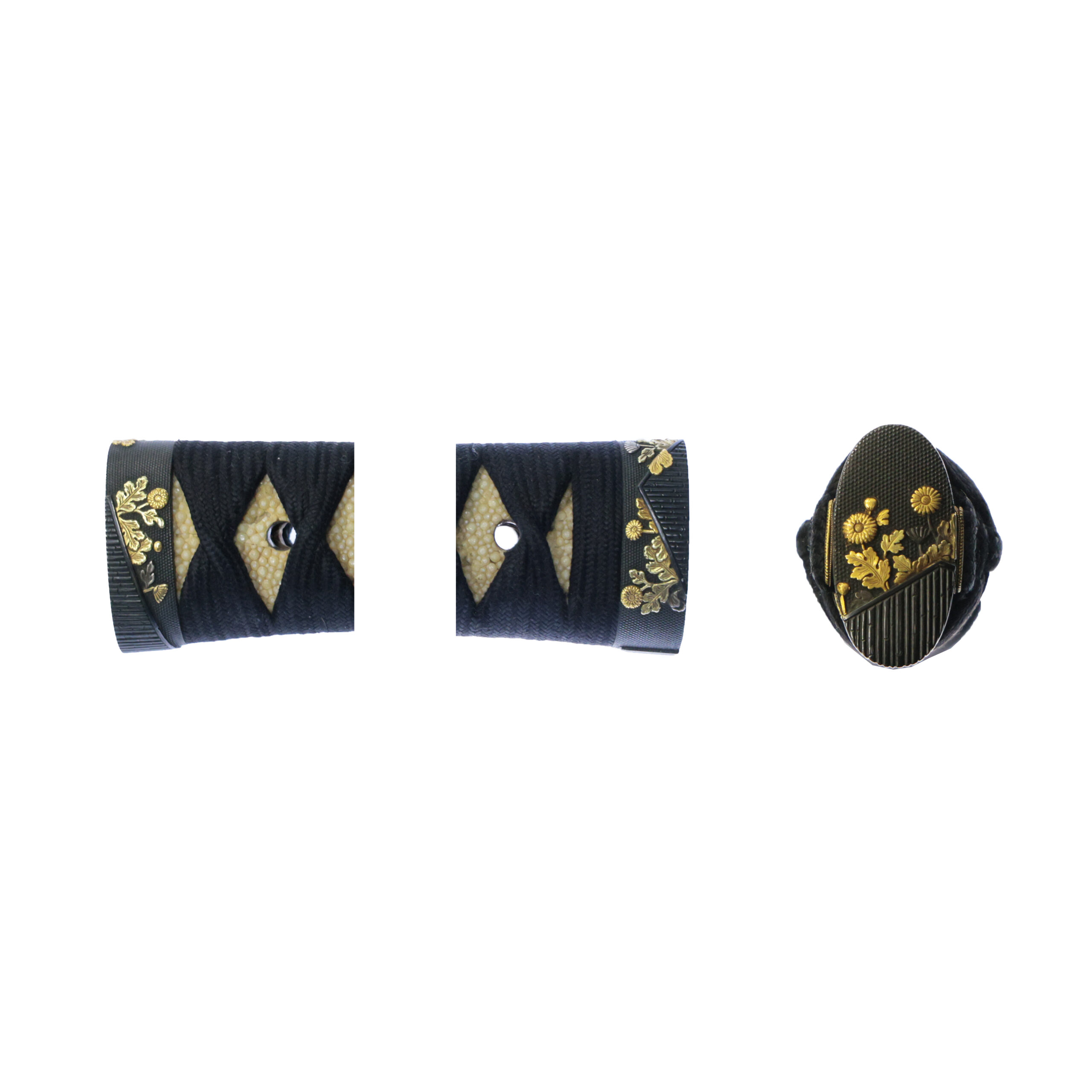
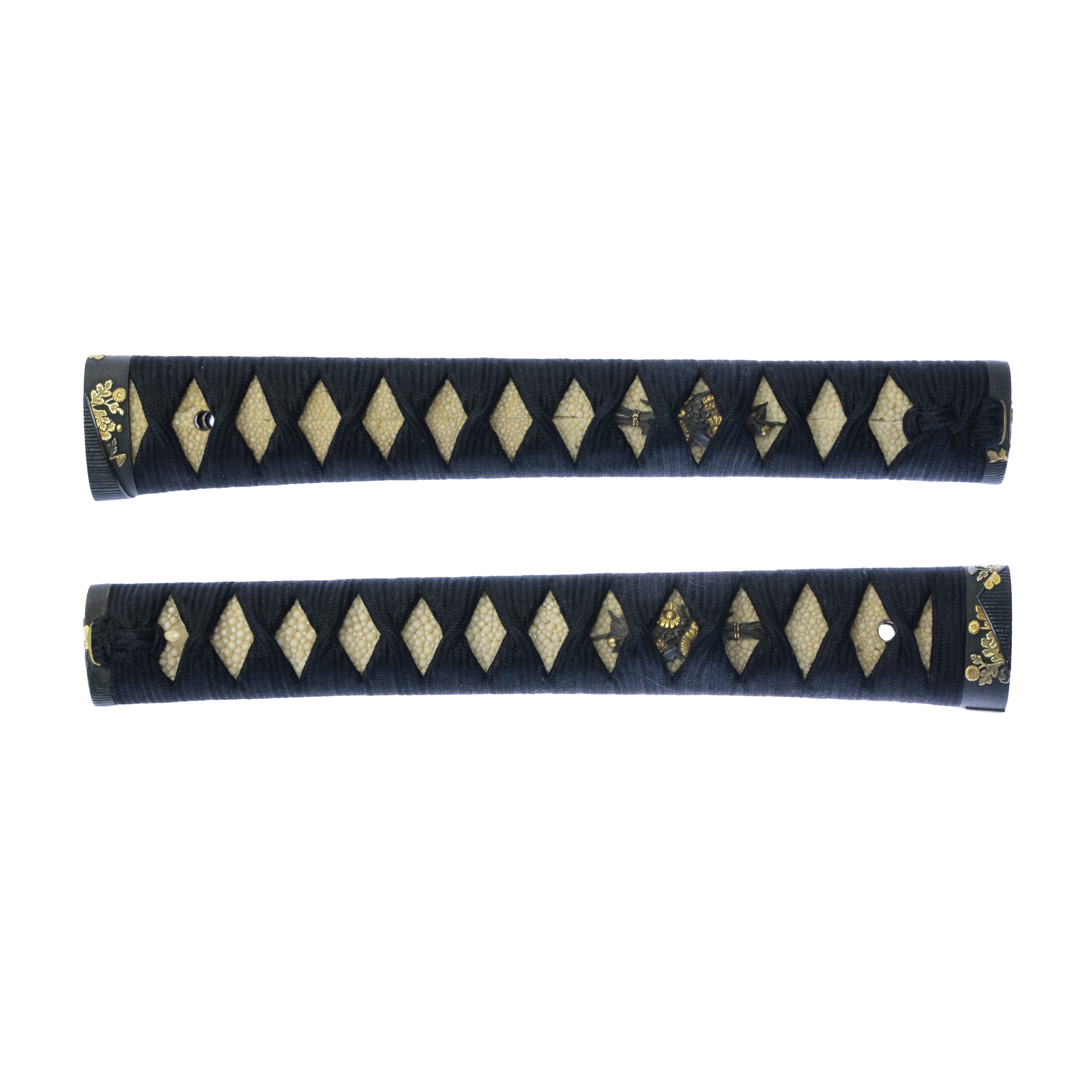
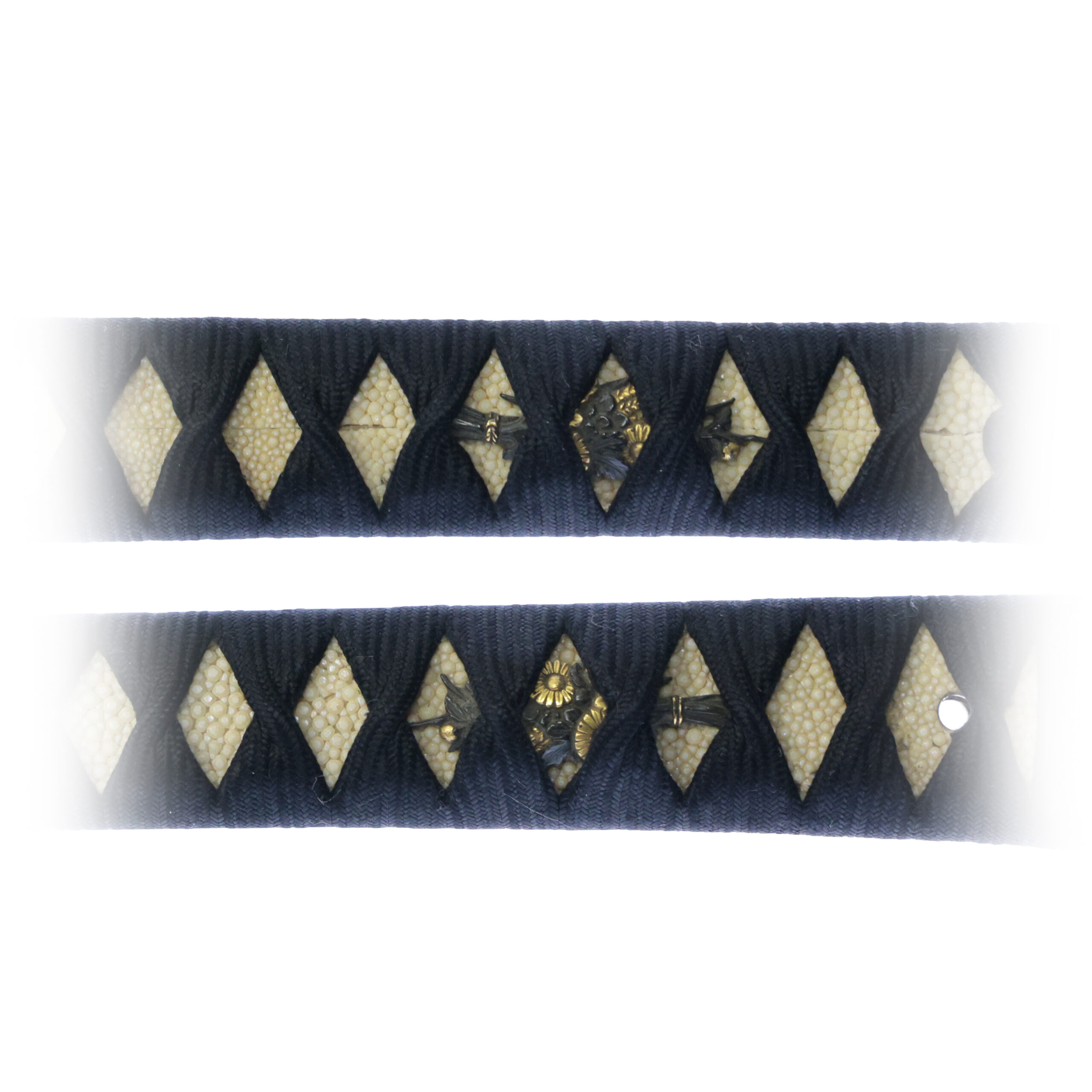
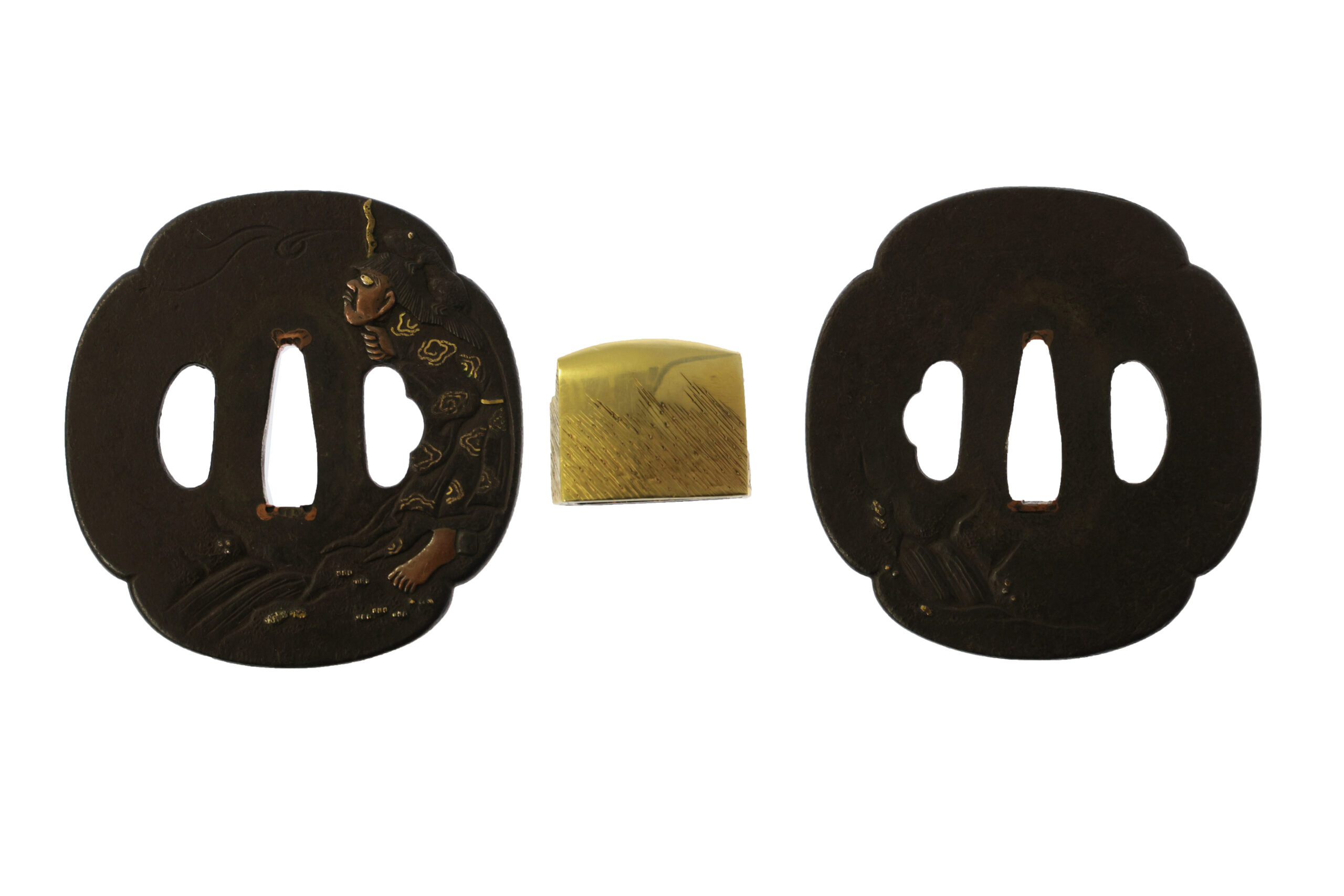
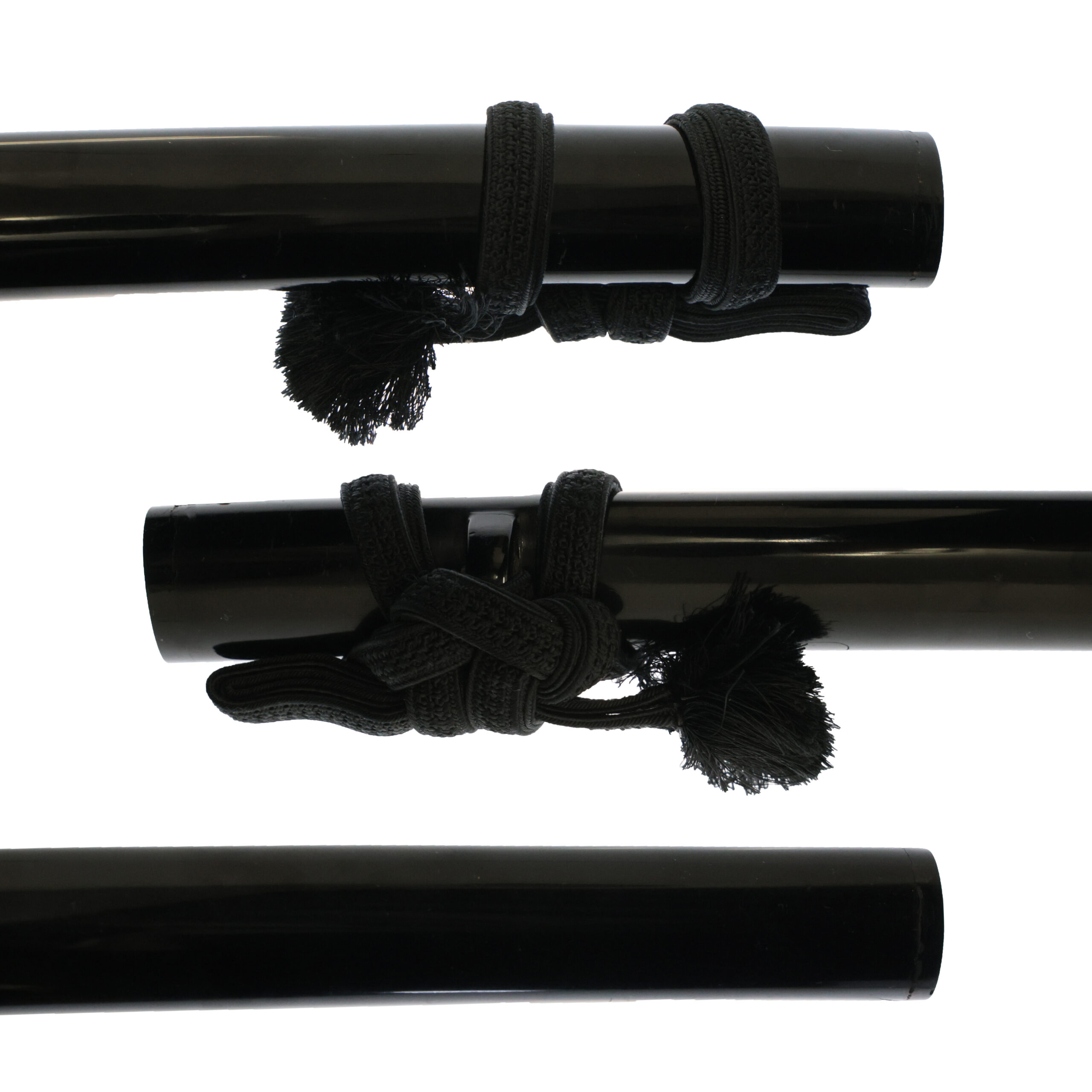
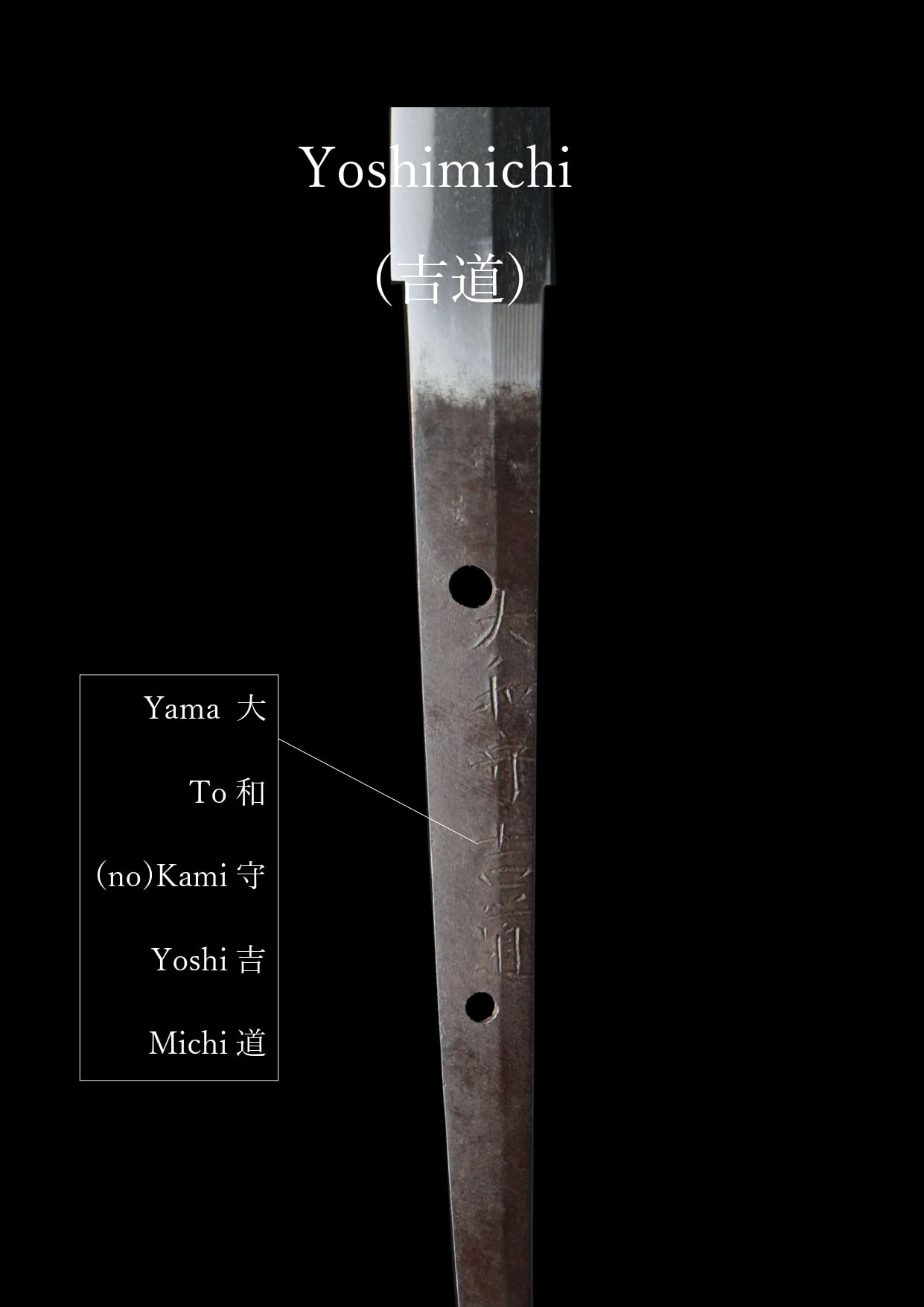
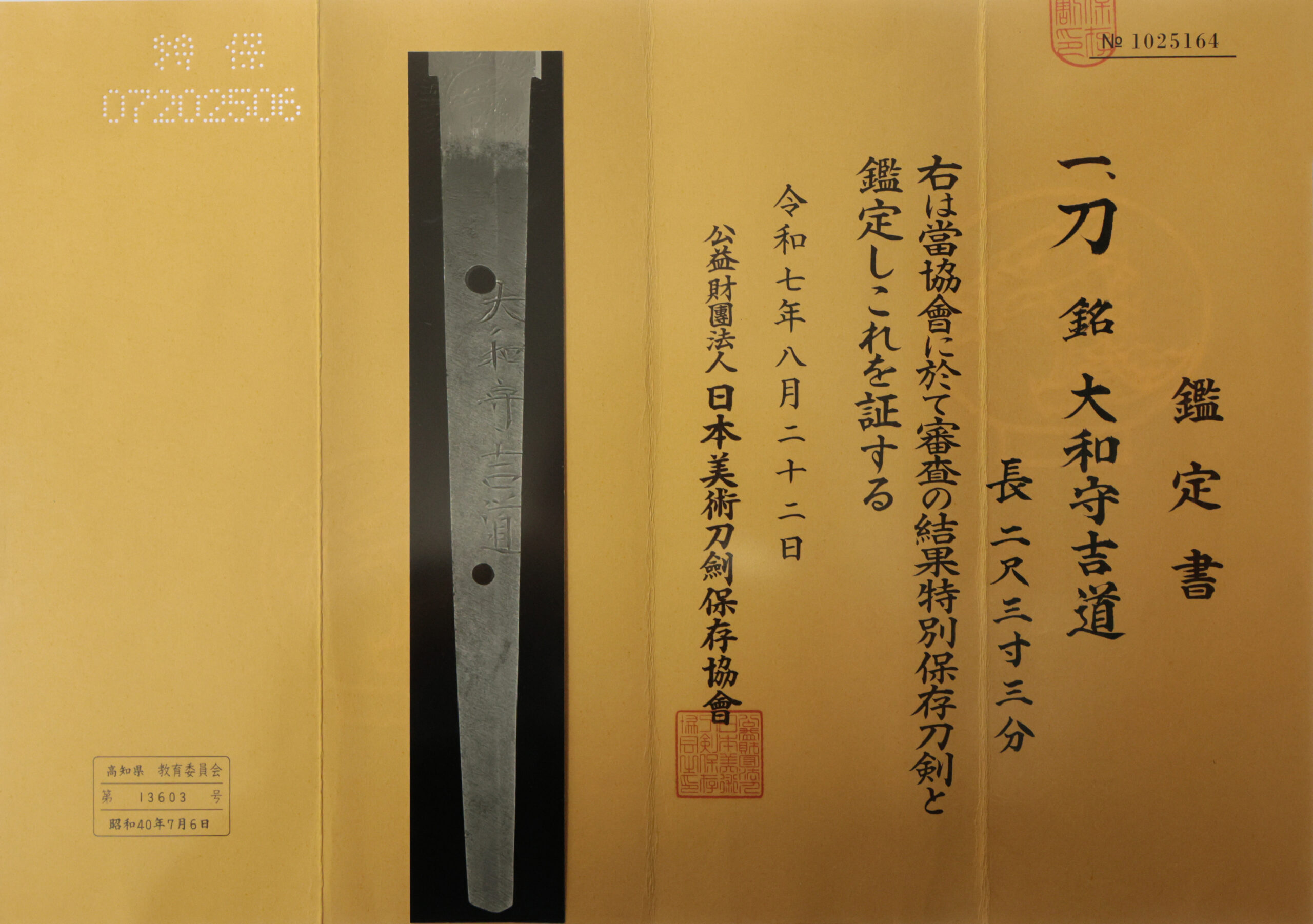
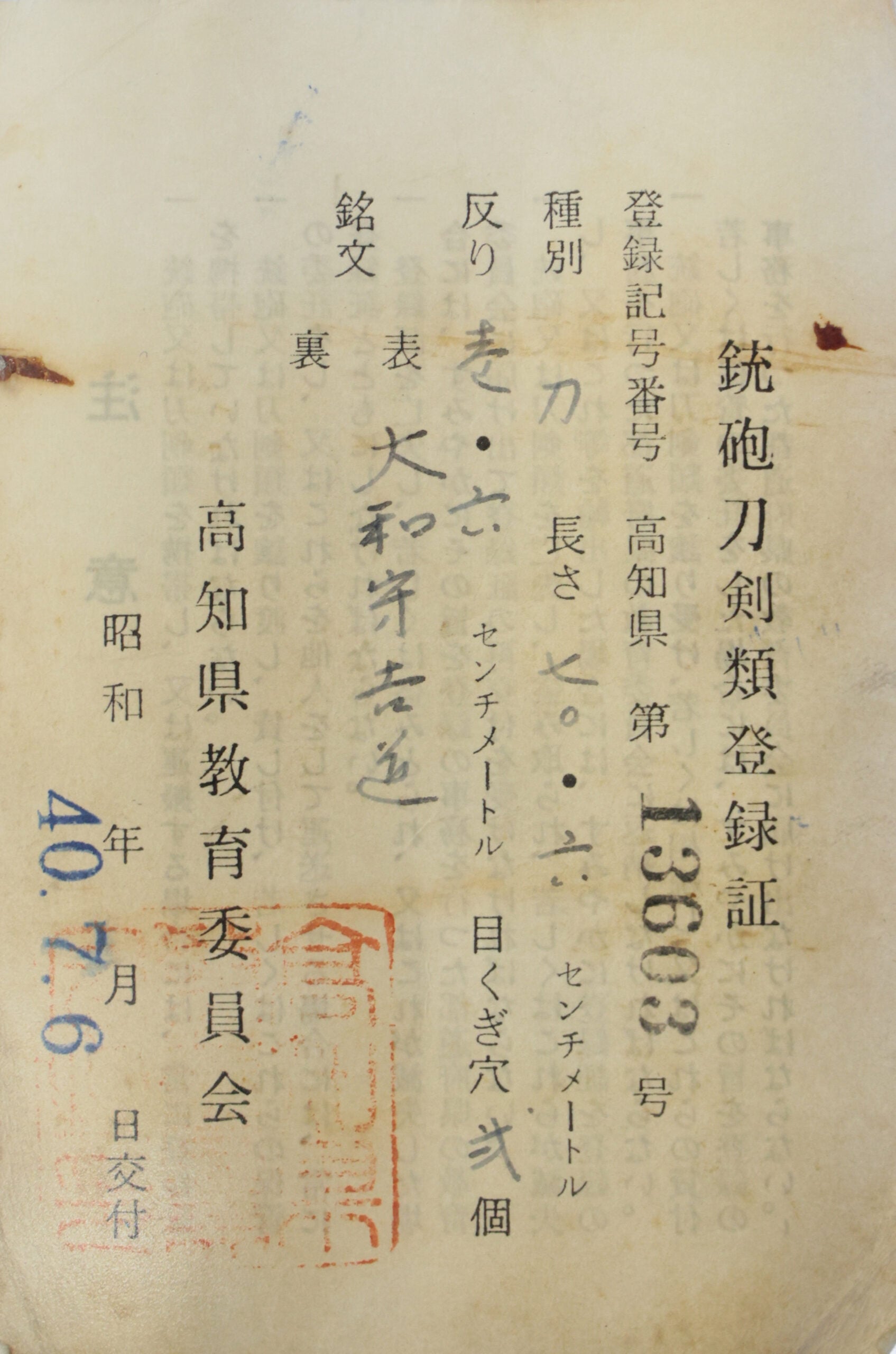
Summary This blade is signed by Yamato no Kami Yoshimichi(大和守吉道), whose real name was Mishina Uemon (三品宇右衛門). He was active in sword-forging during the early Edo period(1652-1675) in Osaka. He was the second son of the first-gen Osaka Tanba no Kami Yoshimichi(大阪丹波守吉道). Yamato no Kami Yoshimichi belonged to Osaka Mishina school, so as his father. Osaka Mishina School &His father Mishina school’s founder Kanemichi(兼道) was originally from Mino province, exclusively forging blades for Shingen Takeda, a famous feudal lord. Later on, he moved to Kyoto by bringing his four sons and founded his school named Mishina(三品) in Kyoto. Mishina school was one of the most prospered ones during the early Edo period. One of Kanemichi’s sons was Tanba no Kami Yoshimichi, the father of the first-gen Osaka Tanbo no Kami Yoshimichi. They were also known as very famous swordsmiths. Osaka Tanba no Kami Yoshimichi initially forged swords under his father’s school in Kyoto but moved to Osaka and founded Osaka Mishina school. Yamato no Kami Yoshimichi was his son and dedicated his career to gaining the fame of Osaka Mishina school with his father in Osaka during the early Edo period. And we assume this Wakizashi was originally made for a high-ranked Samurai officer. Yamato no Kami Yoshimichi There are quite a few types of tempering lines (Hamon) in Japanese swords. And one of the most popular designs is Choji Midare(Irregular wavy tempering line). Yamato no Kami Yoshimichi was very good at forging blades with this particular tempering line and known as a master of Choji Midare in the Osaka area. His workmanship was widely recognized, and he received the honorable title of Yamato no Kami by the emperor for his excellent craftsmanship. The blades forged by Yamato no Kami Yoshimichi are categorized as Osaka Shinto. Shinto is Japanese Sword terminology that refers to the swords forged during 1596-1781. The blades made in the Osaka area during this period are called Osaka Shinto. There are many famous swordsmiths in this Osaka Shinto era. After Hideyoshi Toyotomi built Osaka castle, Osaka city flourished as a castle town and became the business center. Many swordsmiths moved to Osaka to look for better opportunities. They not only forged swords for those Samurai who lived in Osaka but also for feudal lords nationwide. One of the most notable characteristics of Osaka Shinto is its beauty in Jigane. Jigane is a visible steel surface pattern created by folding and hammering during the forging process), which made it possible by the location of Osaka. Osaka had close access to the Tamahagane(special carbon steel to make Japanese swords) production sites. The swordsmiths residing in Osaka were able to get high-quality carbon steel from these sites. It is appraised as a Tokubetsu Hozon Token (特別保存刀剣) issued by NBTHK (Nihon Bijutsu Touken Hozon Kyokai: 日本美術刀剣保存協会). *Please keep in mind that there is a couple of kitae kizu on the tip of this blade. Fuchi-Kashira The theme of this fuchi-kashira is the chrysanthemum (菊, kiku). The chrysanthemum holds a particularly important place in Japanese culture and aesthetics. Long admired as a symbol of longevity, nobility, and autumn, it is also closely associated with the Imperial Family of Japan. Because chrysanthemums continue to bloom beautifully even as the seasons grow colder, they have traditionally been regarded as symbols of endurance, dignity, and vitality. The elegant chrysanthemum design seen on this sword fitting reflects the refined artistic sensibilities and appreciation for seasonal beauty that are central to traditional Japanese decorative arts. The background is decorated using a traditional metalworking technique known as nanako-ji (魚々子地), in which countless tiny raised dots are carefully punched into the surface. Resembling fish roe, this painstaking technique creates a richly textured background that enhances the beauty of the main design Tsuka and Menuki The menuki likewise features a chrysanthemum motif, echoing the design of the fuchi-kashira and contributing to the overall harmony and aesthetic unity of the sword mountings. Tsuba and Habaki This tsuba depicts a figure holding a staff-like object, with a small animal, believed to be a mouse, shown above the figure’s head. Based on these elements, the design is thought to represent Ōkuninushi-no-Ōkami (大国主大神), one of the most important deities in Japanese mythology. The staff-like object may represent a mitsue (御杖, sacred staff), which is associated with Ōkuninushi in ancient Japanese legends. According to texts such as the Nihon Shoki (日本書紀, Chronicles of Japan), these items symbolize his role in pacifying and governing the land. The mouse also has a close connection to Ōkuninushi. In Japanese mythology, including the famous tale of the White Hare of Inaba, a mouse is said to have guided and protected him from danger, becoming one of the animals closely associated with this deity. Japanese sword fittings often depict scenes from everyday life, natural landscapes, mythology, legends, historical events, and classical literature. This tsuba may likewise represent a well-known story or legendary figure that would have been familiar to people of the time. Saya This scabbard is covered with black lacquer. Due to its high waterproof effect, lacquer has been used since ancient times in Asia. The blade of a Japanese sword is made of iron, and moisture is the greatest enemy of iron. For the purpose of carrying the blade without degrading it, people devised a method of coating the scabbard with lacquer. To prevent not only moisture but also rain and snow from penetrating the inside of the scabbard, it was necessary to apply multiple layers of lacquer. The Nushi (塗師, lacquerers) was born precisely because advanced techniques were required to handle the complicated processes. Authentication Paper They authenticated the blade on August 22nd in the 7th year of Reiwa (2025). They appraised it as Tokubetsu Hozon Touken, the blade especially worth preserving for Japanese society.
Offered by Samurai Museum
5 on the market

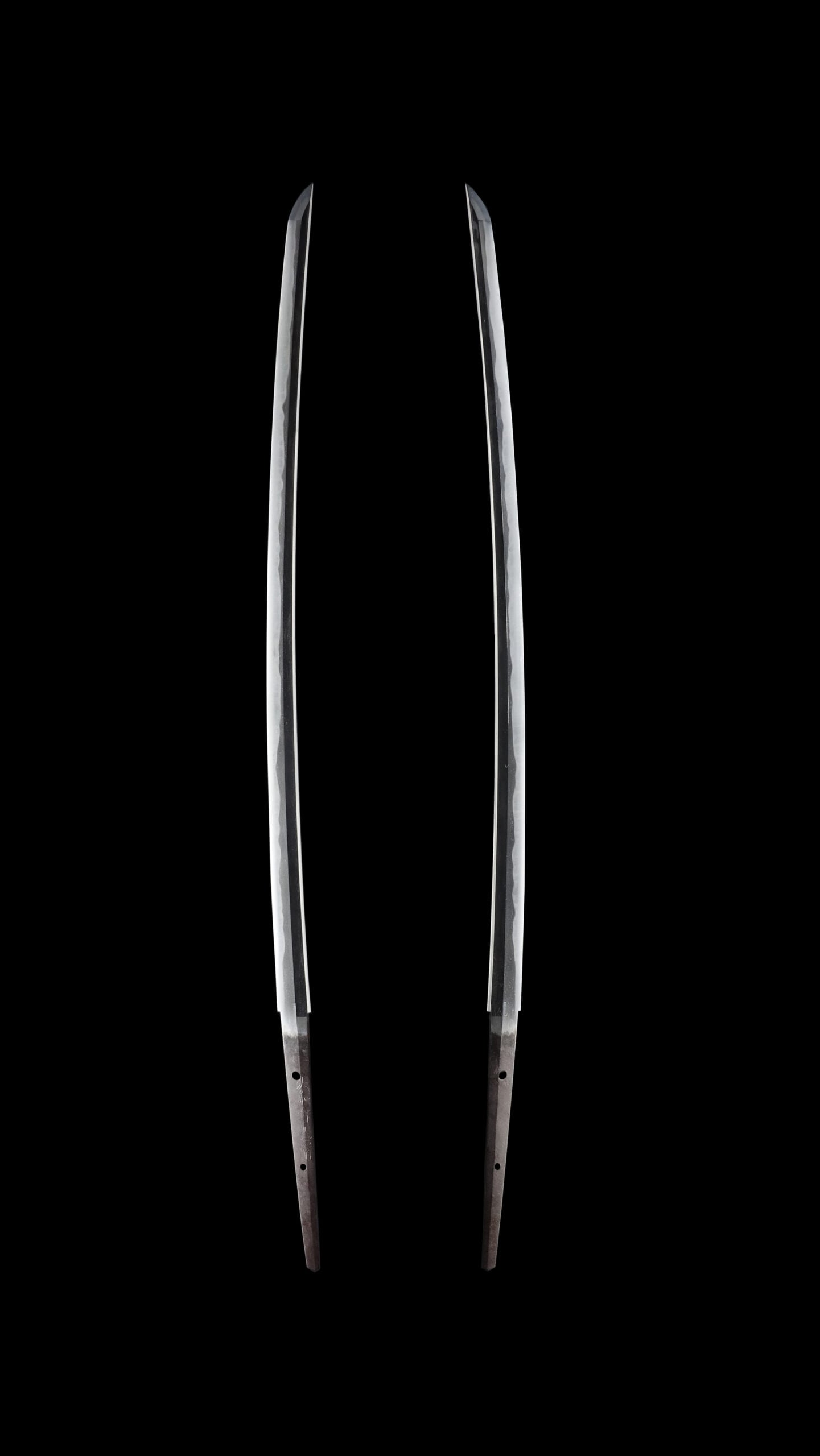
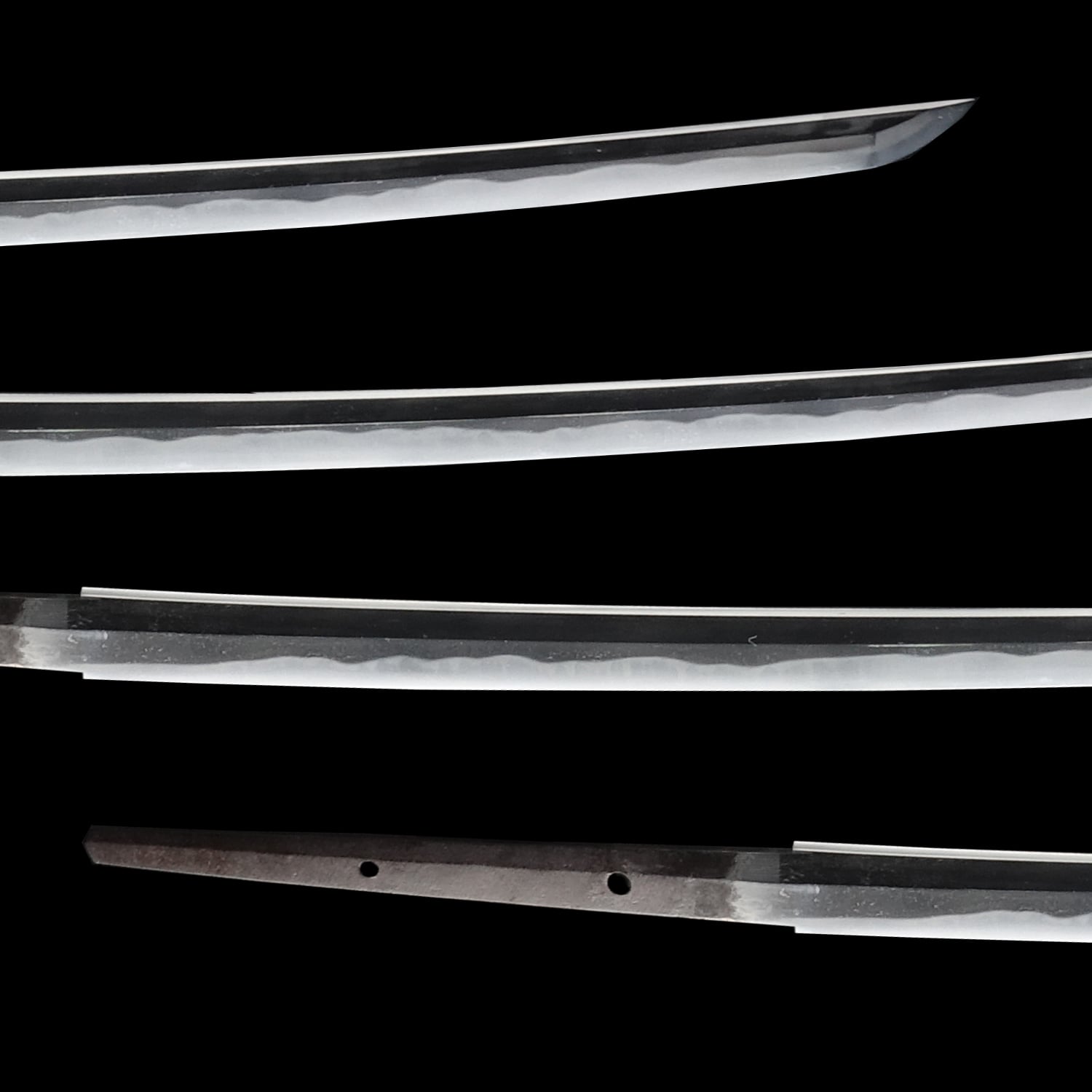
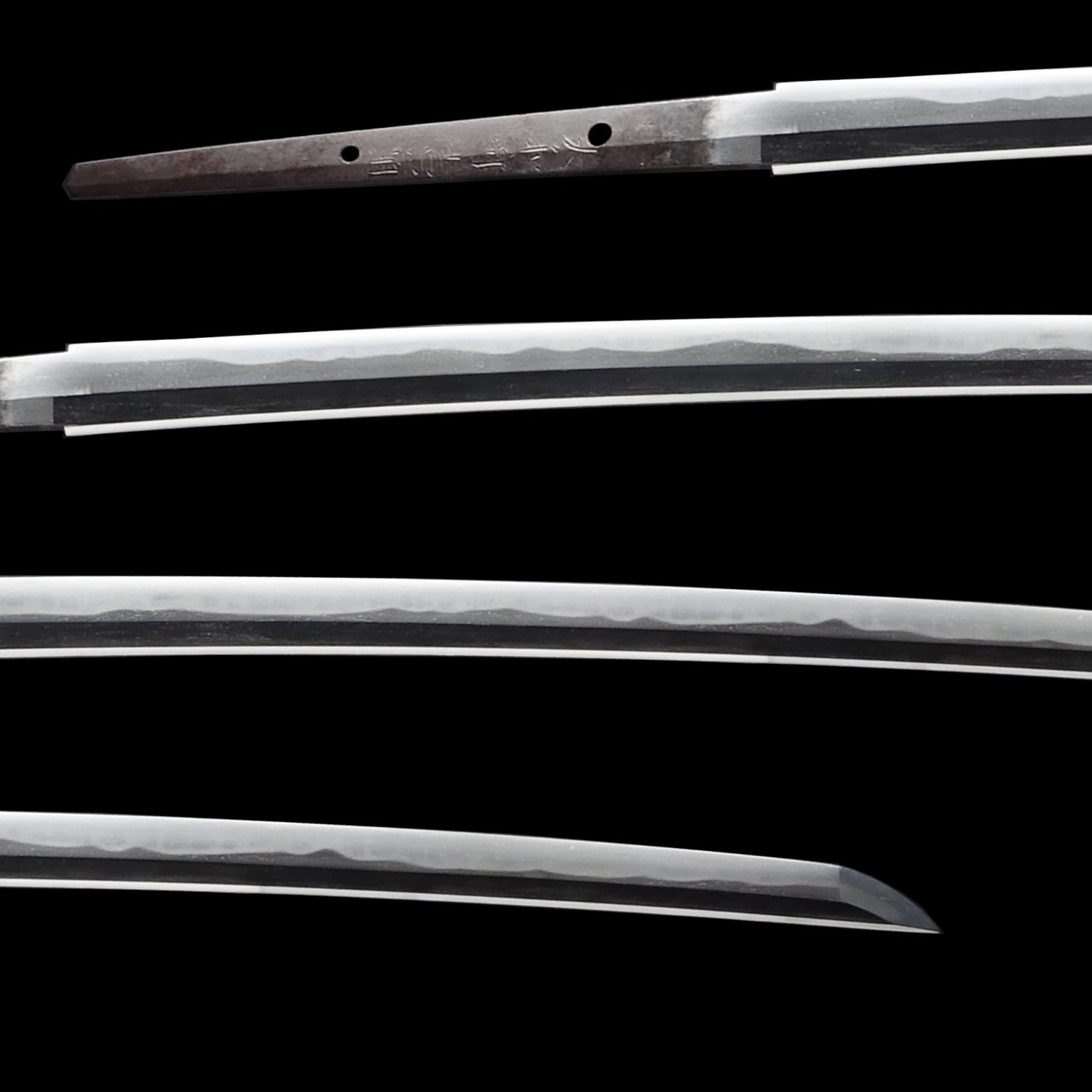
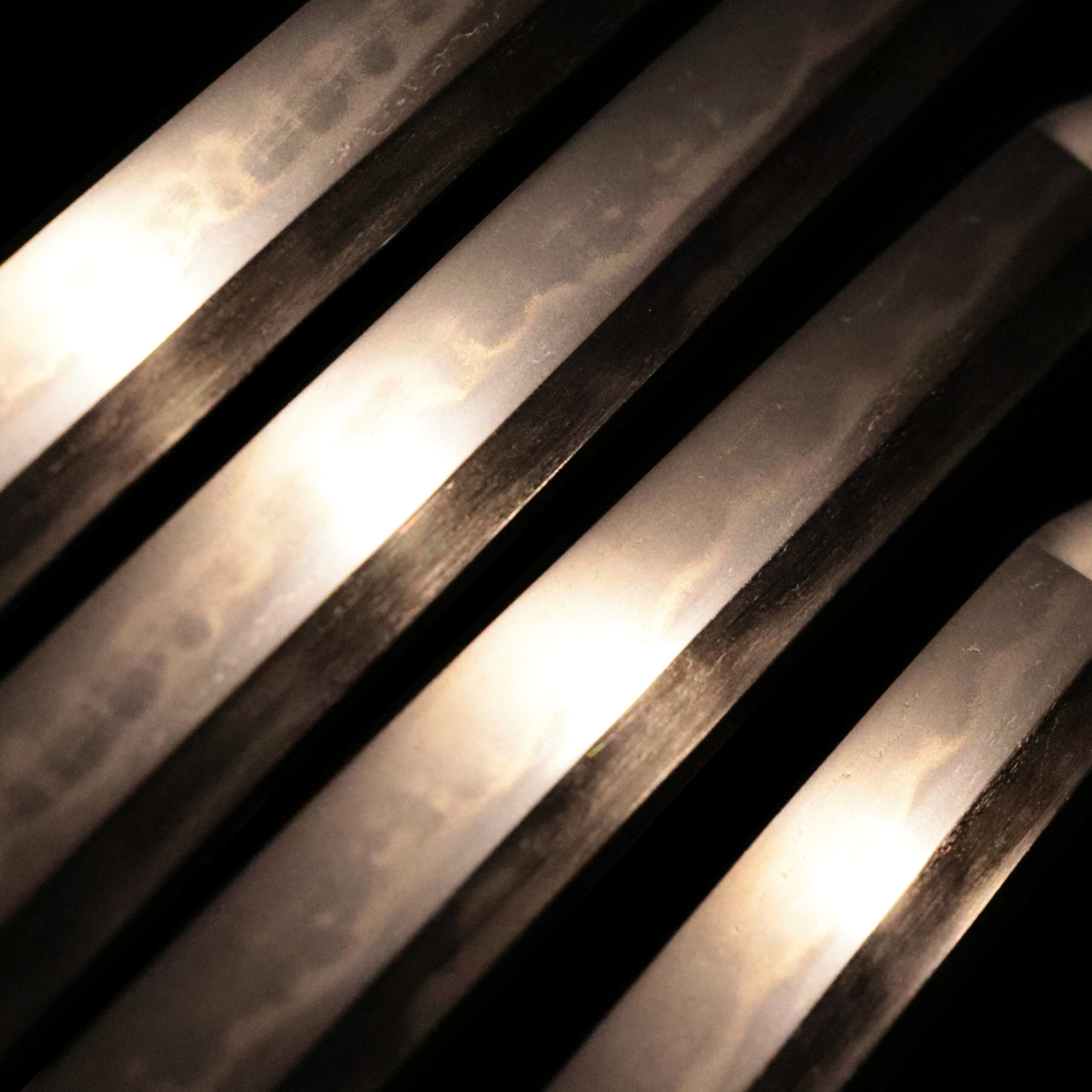
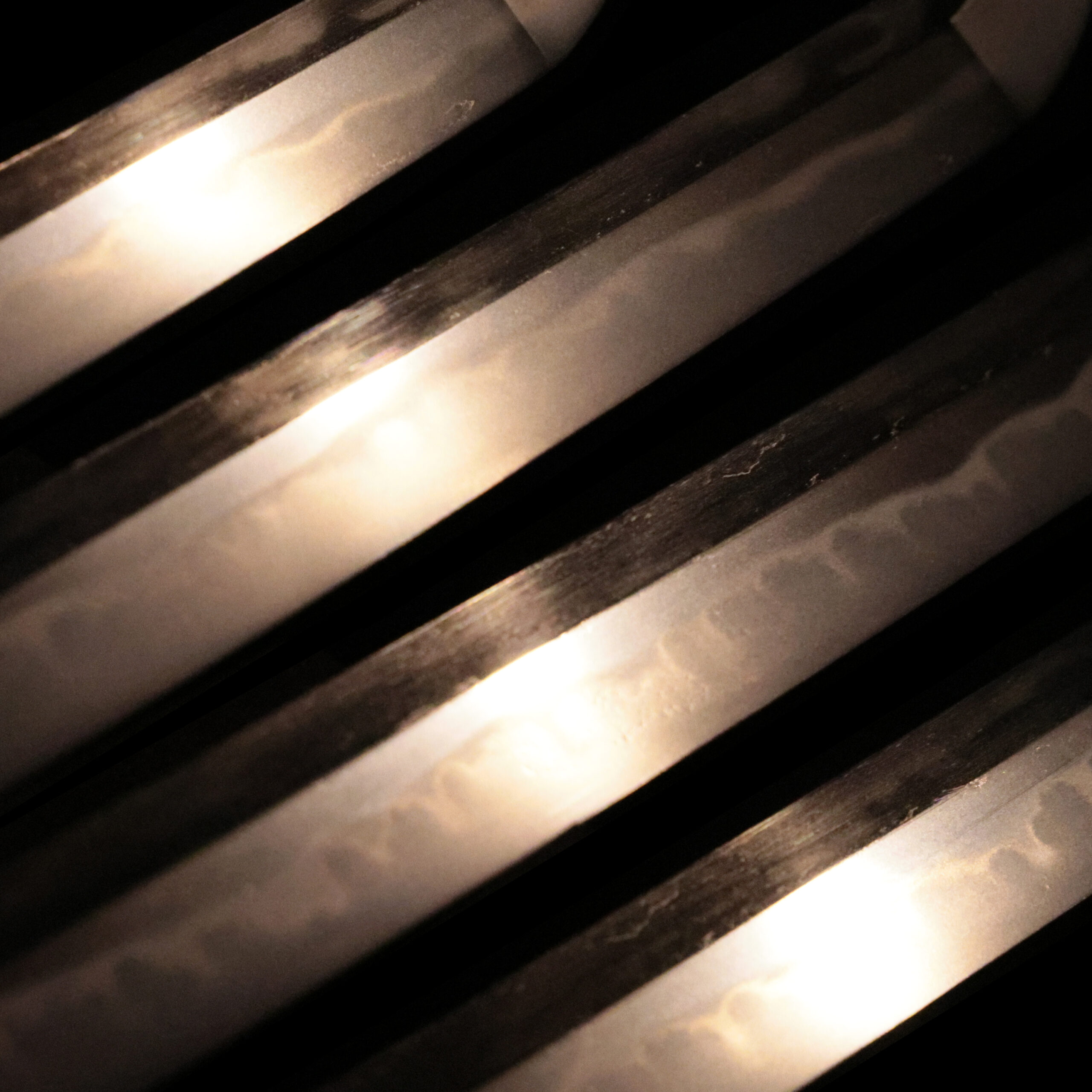
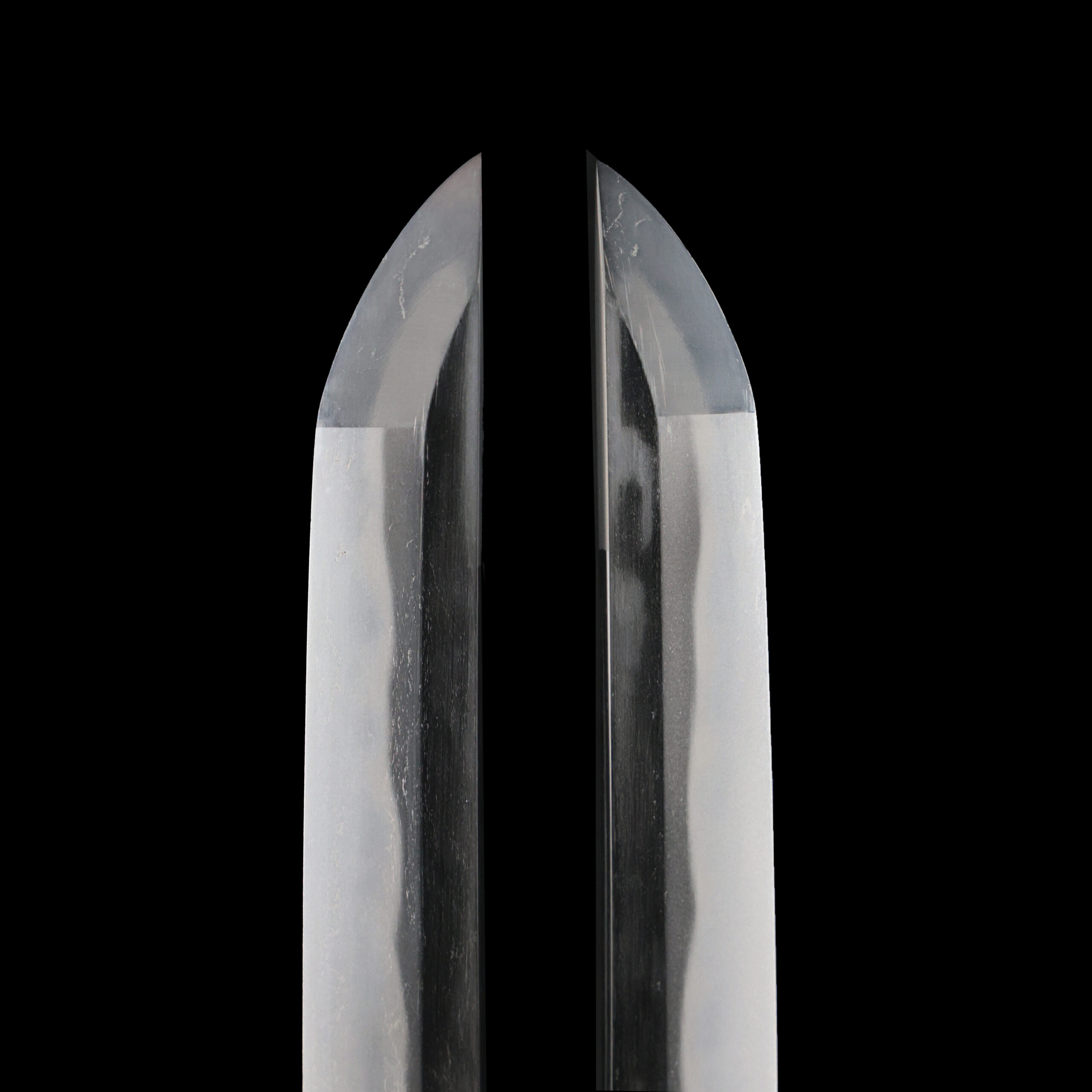
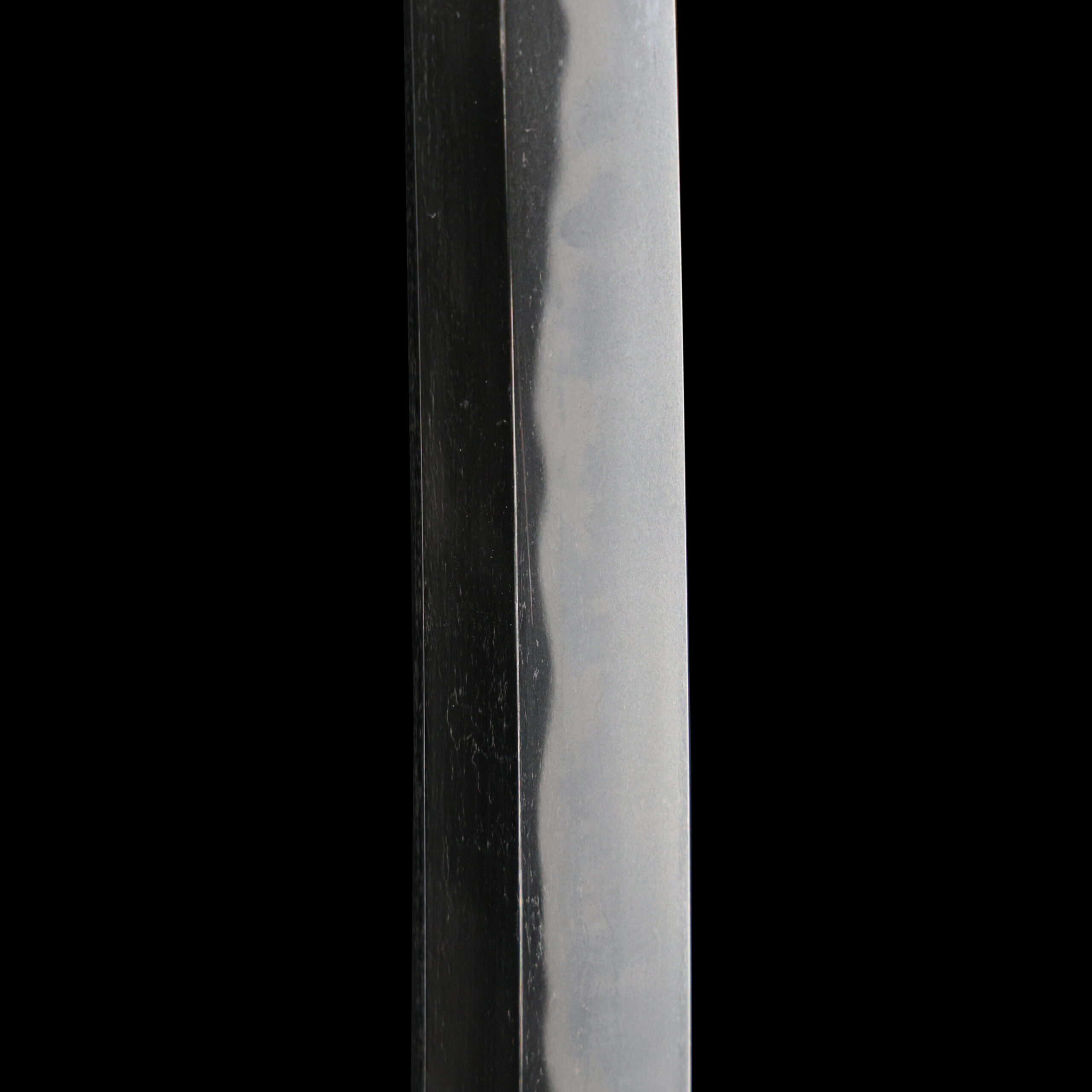
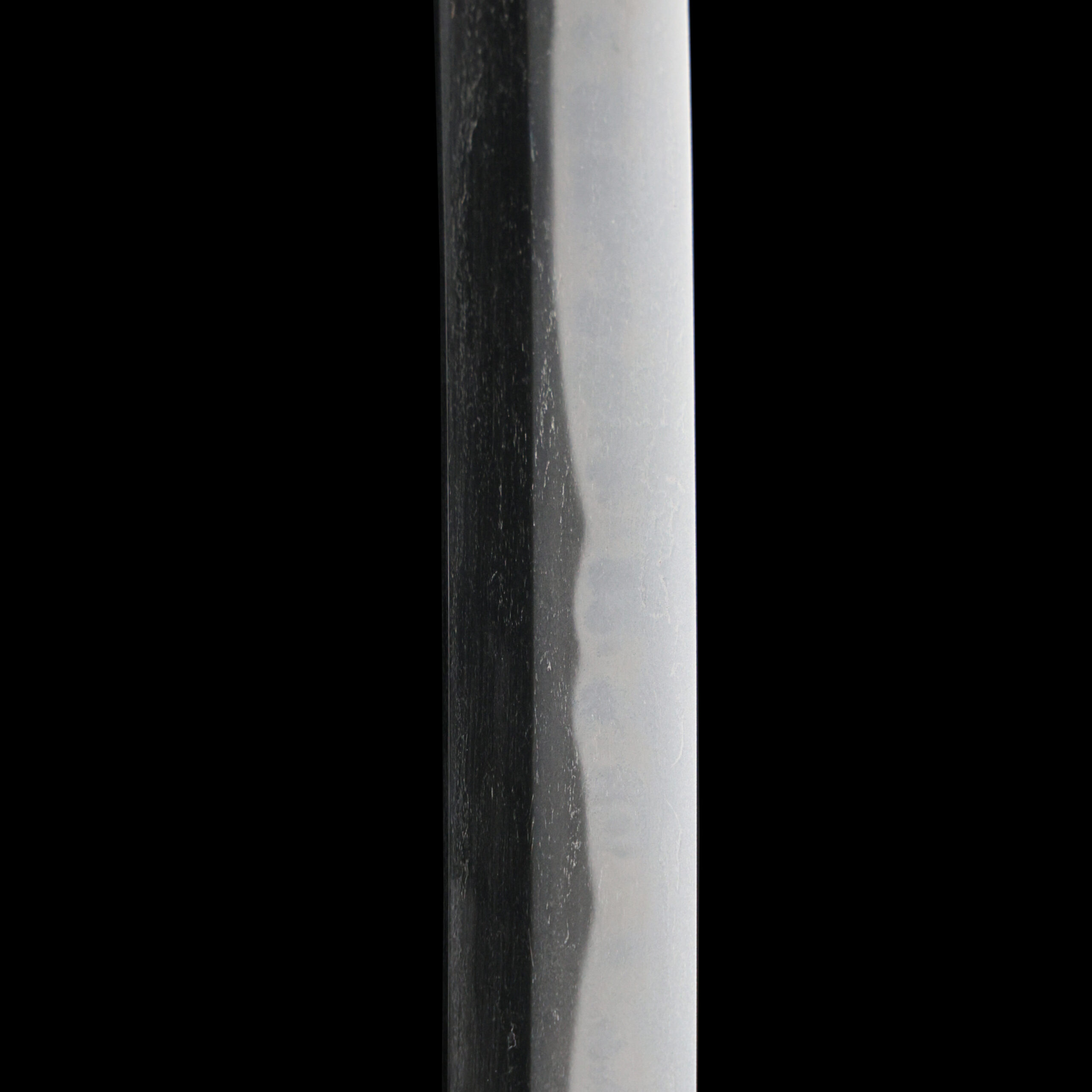
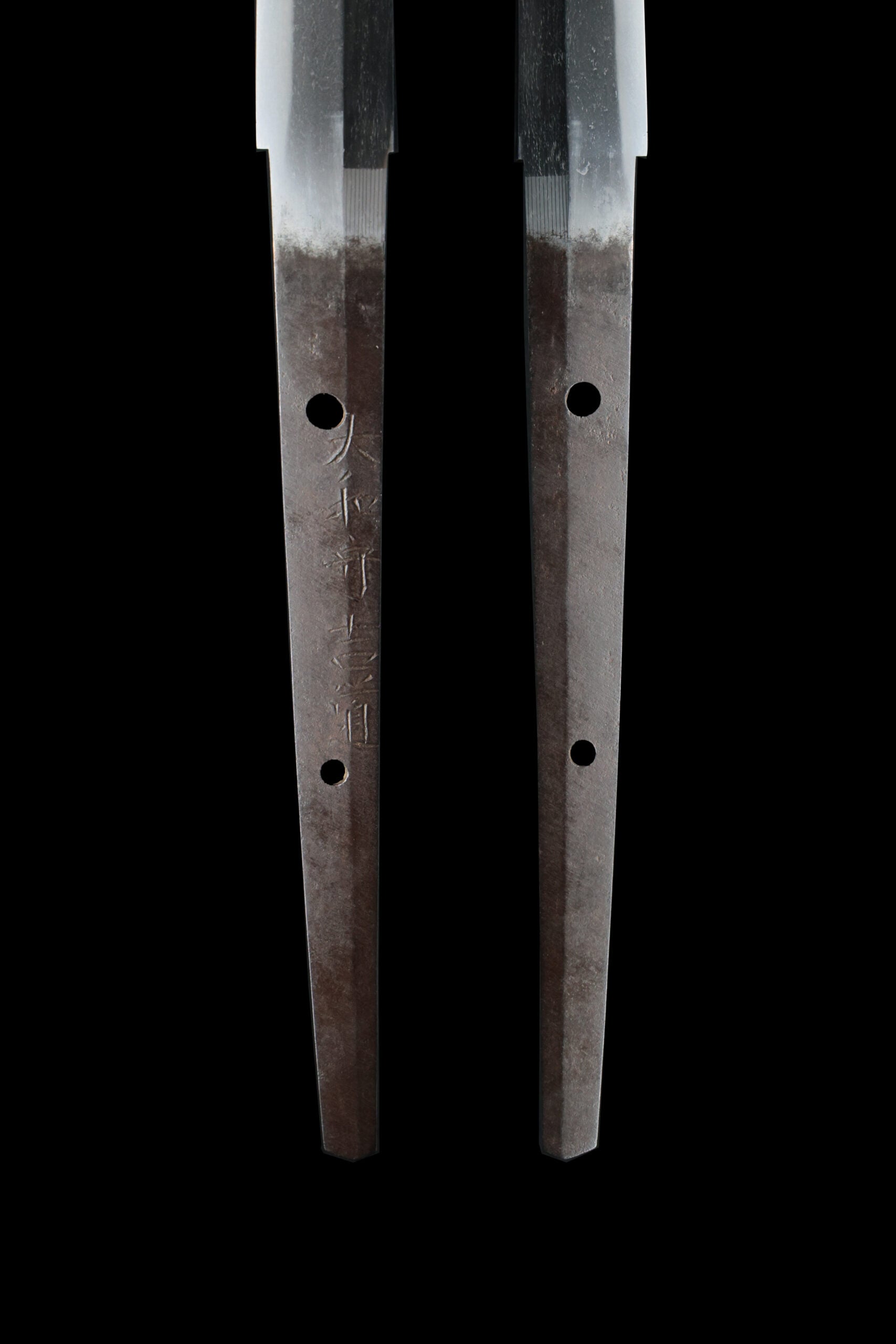
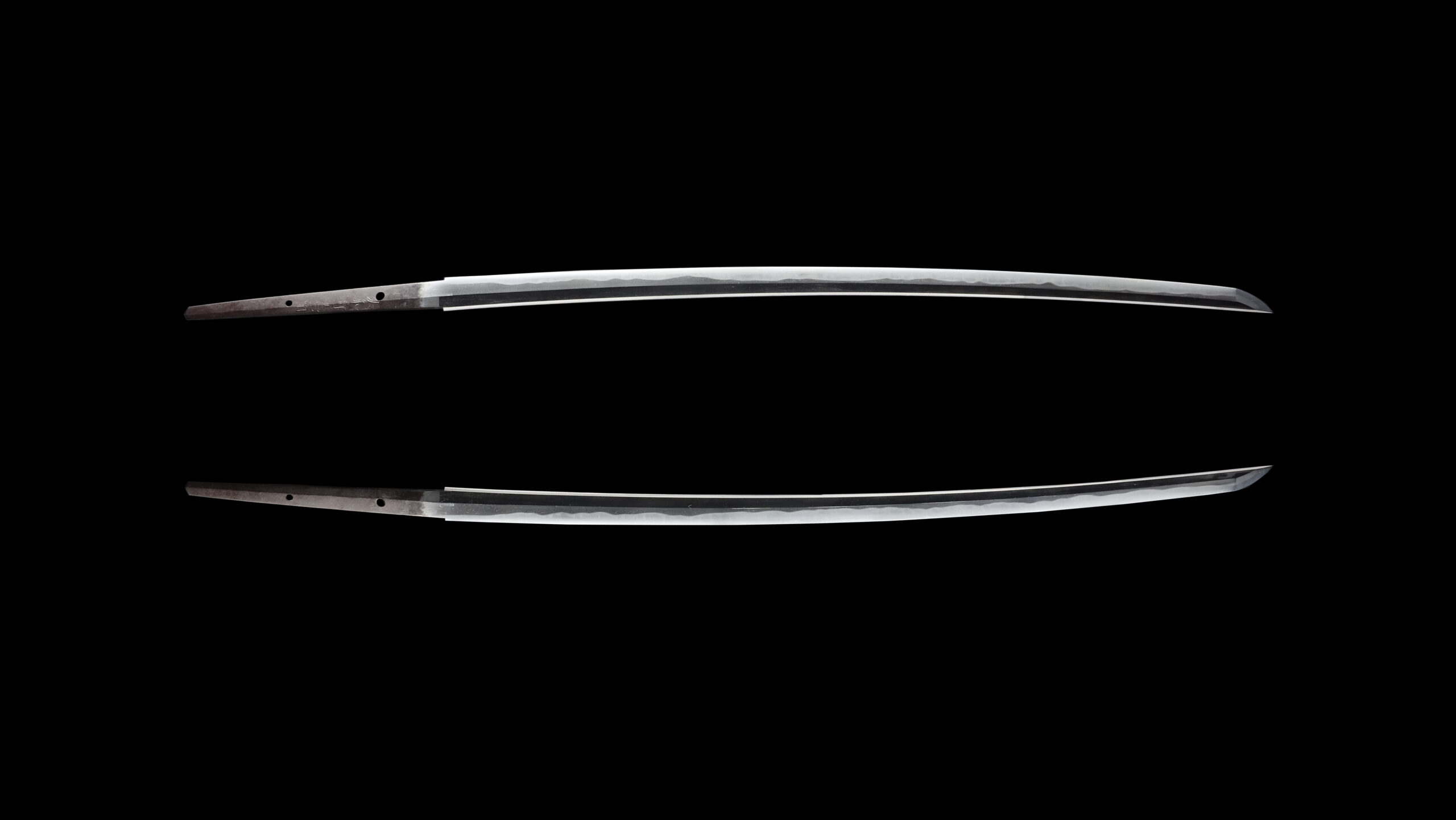
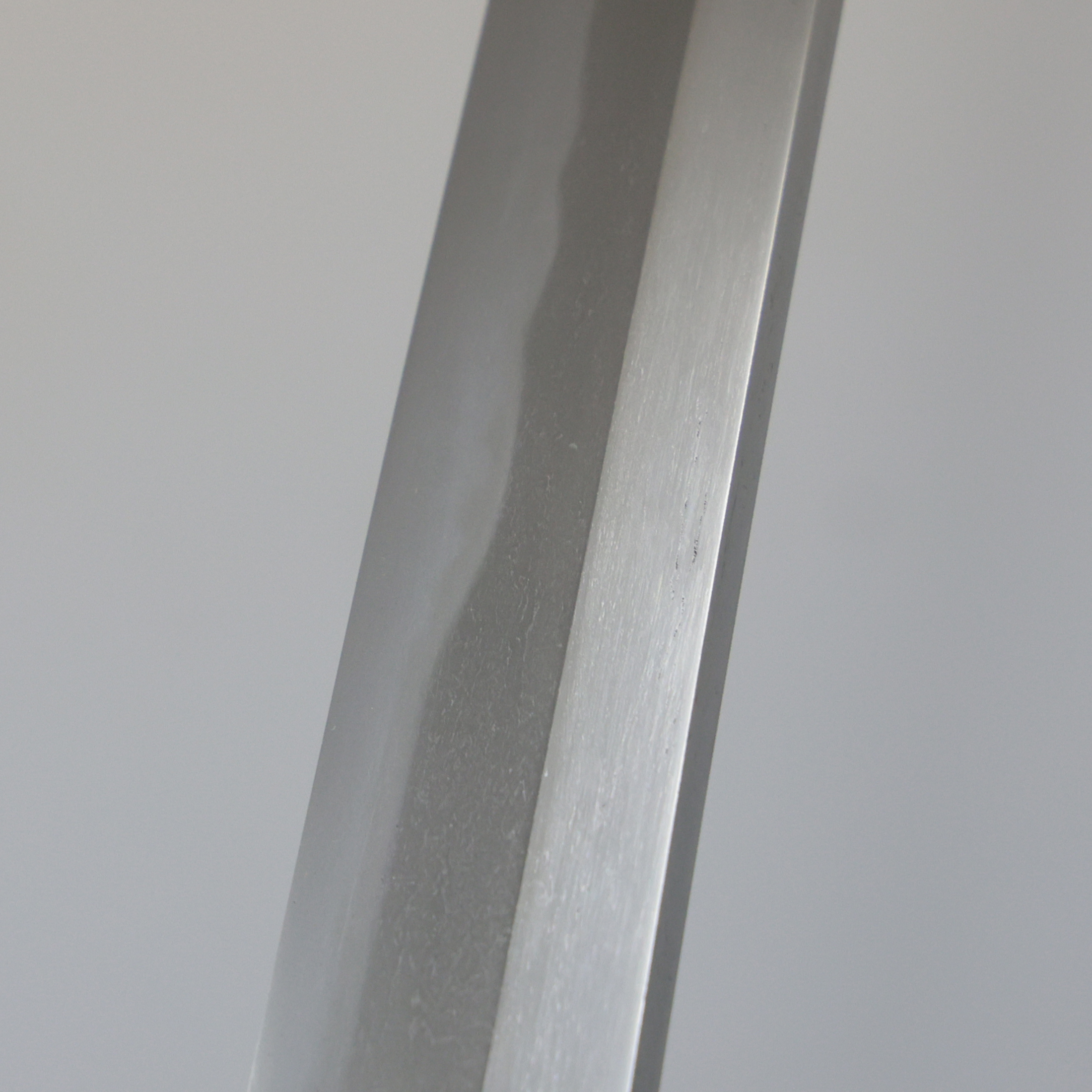
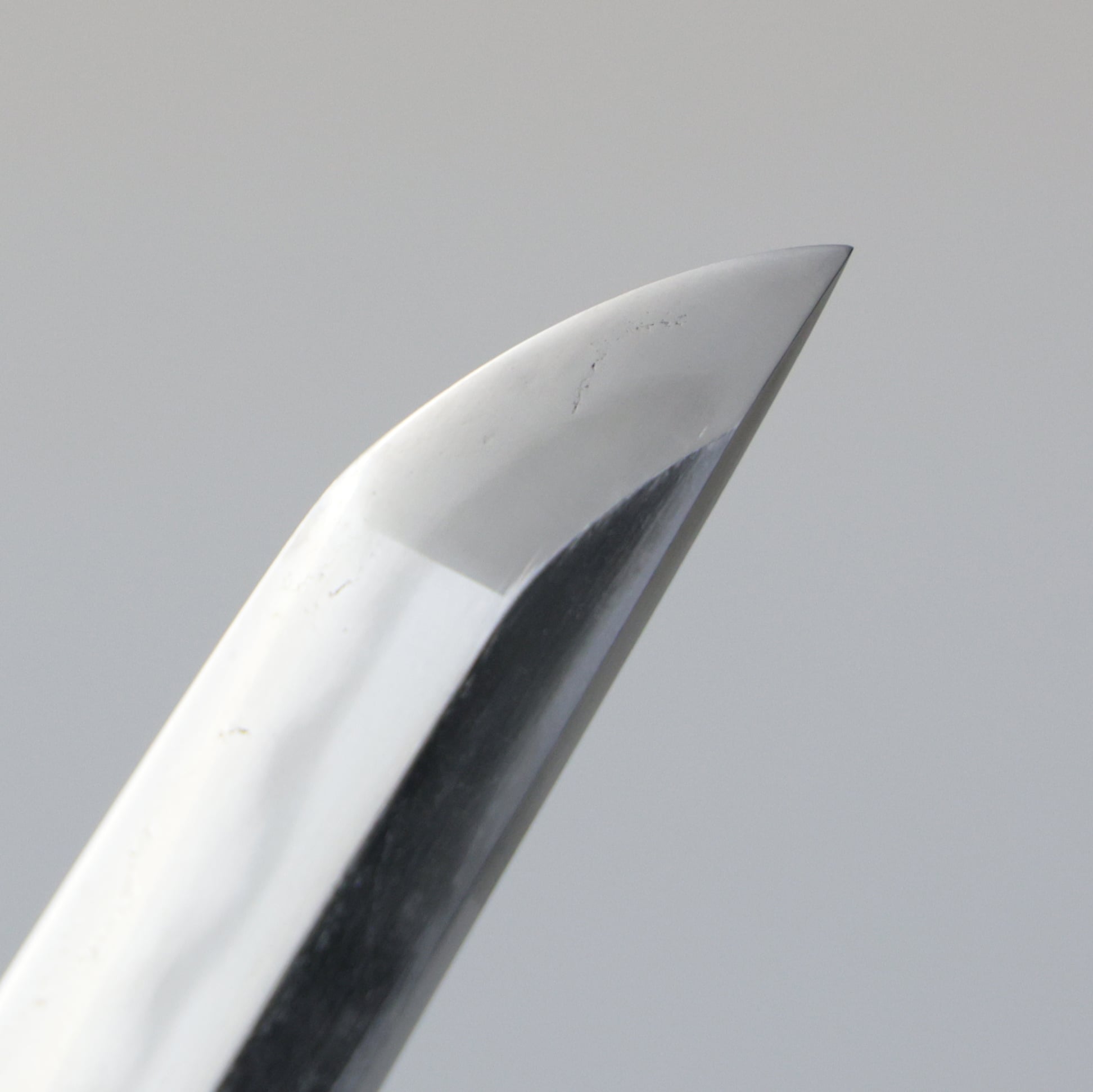
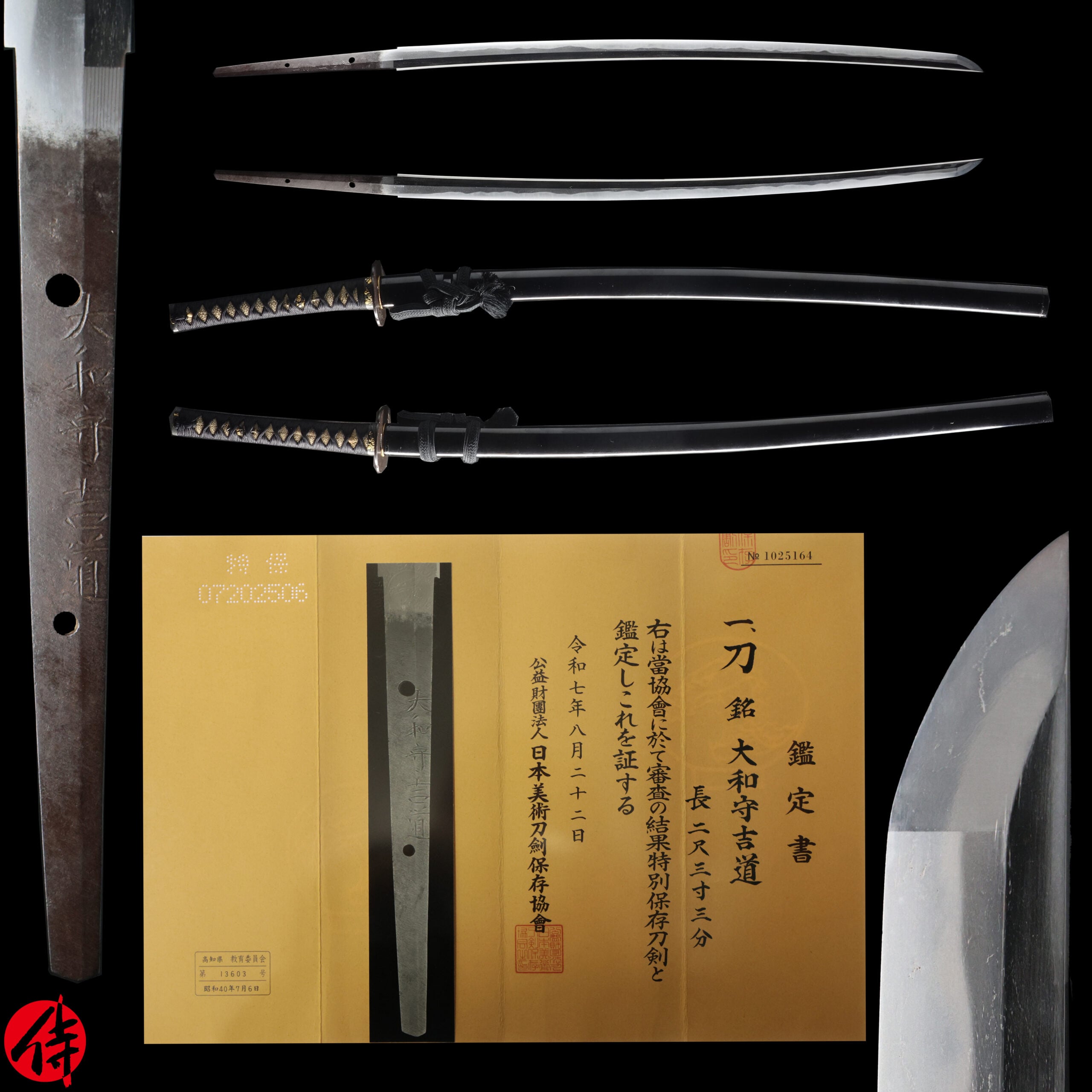
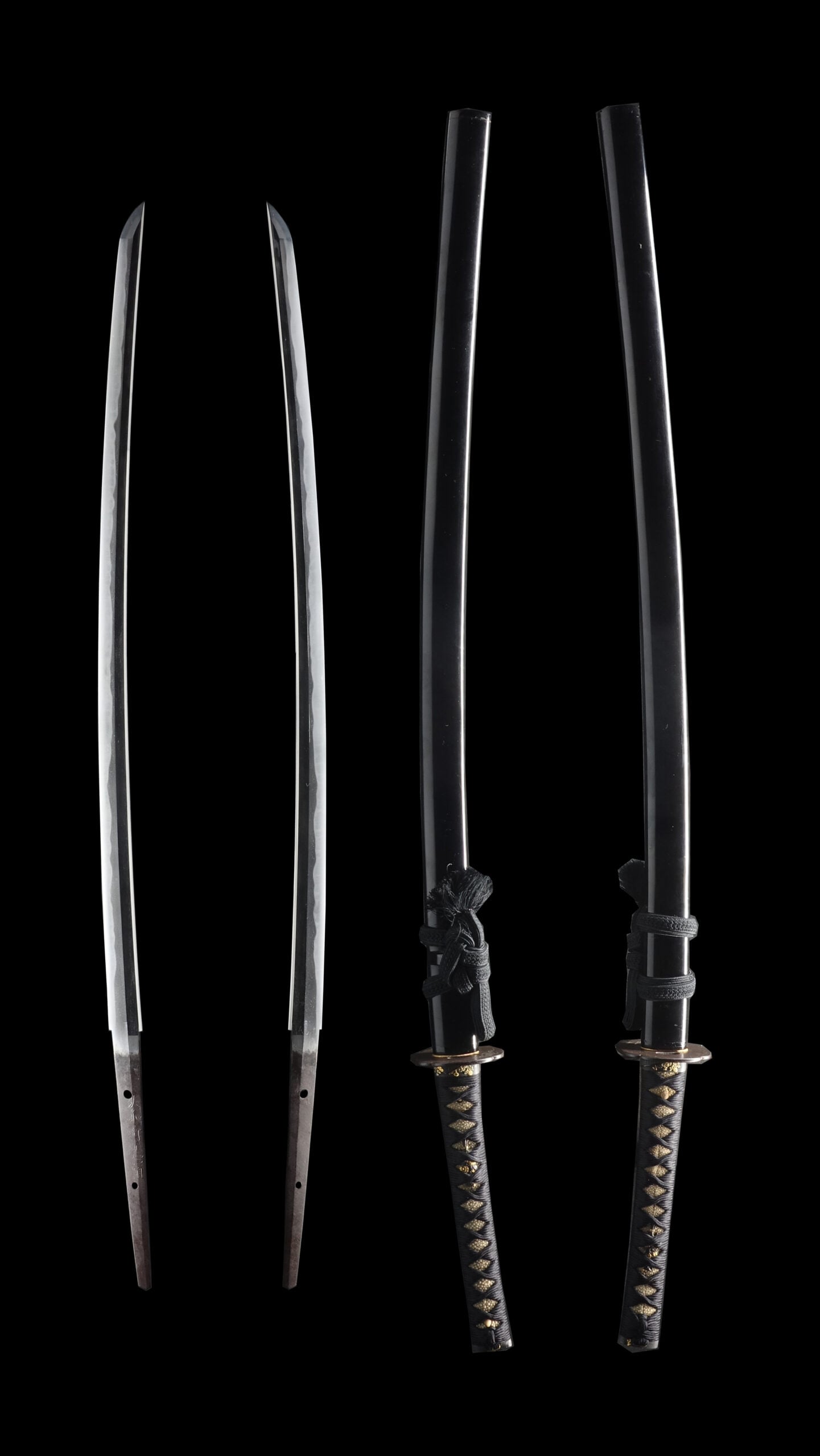
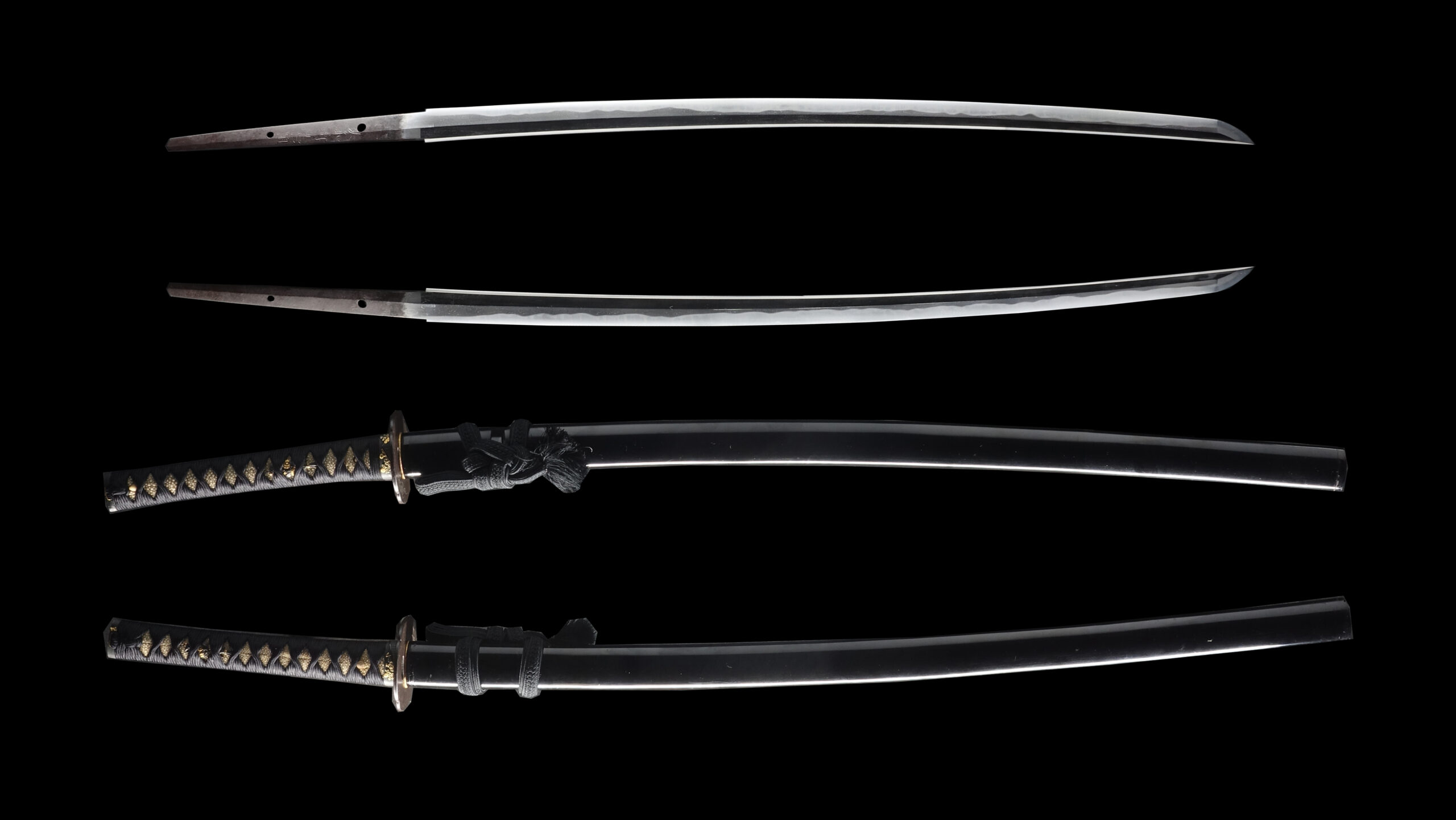
Settsu (Osaka), the Mishina school, the Tanba no Kami Yoshimichi name-line · Settsu · around 1661-1673
Fujishiro Jo saku · Tōken Taikan top 31%
5 pieces on the market now
Yoshimichi is the most celebrated name of the Mishina school, the Kyoto-rooted shinto line founded by a son of Kanemichi of Seki. The first-generation Tanba no Kami Yoshimichi and his brothers Iga no Kami Kinmichi and Etchu no Kami Masatoshi are named together in the published sources as masters of the Sanpin lineage, the three smiths who carried Mishina work to the front rank of the early Edo period. This record gathers the Osaka branch of that name. At its center stands the shodai Osaka Tanba no Kami Yoshimichi, born in Keicho 3 and styled Sanpin Kin'emon, the second son of the Kyoto shodai who moved to Osaka and became the founder of the Osaka-Tanba line. A katana the published record assigns to a second-generation Yoshimichi, whose paper opens on the Kyoto shodai's biography, is recorded under the Kyoto second generation. Where the elder Kinmichi and the younger Masatoshi worked diversely, Yoshimichi held to one signature manner, and it is that manner the school is remembered by.
That manner is the sudare-ba, the bamboo-blind temper. Layered sunagashi and kinsuji are drawn through a notare and gunome midare until the temper stripes into parallel bands like the slats of a hanging reed blind, and the published sources call it the school's hallmark, the Osaka-Tanba line handling it more often and more skilfully than any other style. On a wide, slightly elongated, thick-kasane hira-zukuri wakizashi of Keicho-shinto shape, the shodai opens the temper with a long straight yakidashi at the koshimoto and then widens the yakihaba above it, building over a ko-notare base mixed with gunome into a flamboyant large midare. Long, vigorous yubashiri run through it, the sunagashi layers in double and triple bands until it stripes into the sudare-ba, ashi enter, strong nie gathers and clumps unevenly, long kinsuji appear in places, and muneyaki and tobiyaki are added. The boshi rises shallow and pointed in a tsukiage, swept with frequent hakikake into a flame shape and run down long. The published sources read the whole as bolder and more flamboyant than usual, of his hallmark style yet with "something that calls to mind the Kyoto shodai Tanba no Kami Yoshimichi"[[c:1]].
The jigane carries the temper. On the shodai's wakizashi the kitae is a compact ko-itame mixed with mokume, the ji-nie adhering thickly and exceedingly fine, fine chikei entering well, the hada flowing and standing a little in places. The yakidashi itself is a study of its own. The published sources distinguish the shodai's straight sudare-ba yakidashi from the broadening Osaka yakidashi, noting that here the yakihaba keeps an even width as it rises rather than spreading toward the upper blade, a point of recognition within the Osaka-Tanba hand. The temper is the constant; the build and the strength of the nie vary.
The name is read by hand and by signature rather than by a single dated chronology. The Osaka Tanba shodai is the prime sudare-ba hand.
Within the school the line is best placed by its own signature. Of the sudare-ba the sources write that the line "excelled above all in the sudare-ba, the house specialty"[[c:2]], and the shodai's straight, even yakidashi and pointed, flame-swept boshi distinguish his hand from the broadening Osaka yakidashi of his neighbours. Against the Kyoto shodai he is most easily confused and most carefully separated: because the Osaka line cut no chrysanthemum crest while the Kyoto line did from the second generation on, the published sources give the character 守 of the signature as the decisive point, its 寸 element cut straight down on Osaka work and slanting on Kyoto work. The sources are honest about the line's later course, observing that "as the generations descended"[[c:3]] the manner grew more technical and more uniform, the temper settling toward a single pattern as the individuality of the founders thinned.
The Osaka shodai is rated Jō saku by Fujishiro, and two blades on this record stand in the Jūyō tier and two more in the Imperial collection, none in a higher grade. Provenance is sparse but includes the Imperial collection, the kind of patrimony that is preserved rather than traded. There are no National Treasures or Important Cultural Properties here, and the holdings are few, so a designated Osaka-Tanba Yoshimichi does not appear often. When one does, it is most often a Jūyō wakizashi of the hira-zukuri Keichō-shintō build, and it reaches a private collection only from time to time. For a name carried by several generations under one signature, each surviving designated work is a documented point on the line, and the sudare-ba on a sound blade remains the surest mark by which this Osaka branch of the Mishina school is known.
Where Yoshimichi stands among comparable artisans: across all of nihontō, and within tradition, era, and period. The tiers (Foremost · Leading · Major · Notable) weigh official designations from the NBTHK and Japan's Agency for Cultural Affairs, together with historical honors of lasting repute such as the Sansaku and Meibutsu-chō.
Select a lens to see how it's measured.
Shinto · Yamashiro
55 pieces on the market now
The Mishina school (三品), one of the two dominant smithing groups of early Edo Kyoto beside the Horikawa, grew from the late-Mino workshop of Kanemichi of Seki, whose dated blades run through the Tenbun, Eiroku, and Tenshō eras. During the closing decades of the sixteenth century Kanemichi came up to the capital with his four sons and settled at Nishinotōin Ebisugawa, where the eldest, Iga no Kami Kinmichi, is recorded as having greatly raised the name of the line. The brothers, Kinmichi together with Izumi no Kami Rai Kinmichi, Tanba no Kami Yoshimichi, and Etchū no Kami Masatoshi, became known collectively as the Sanpin (三品) makers, and the published sources count Kinmichi head of the Kyō go-kaji, the five Kyoto smiths. From the second generation the house held a hereditary right to recommend smiths to the court for their titles and added that by-line to its signatures. The name continued under the same appellation to the end of the Tokugawa period, throwing off branches that included the Tango no Kami line working at Ōsaka into the Genroku years, though the published record consistently holds the founding generation the most outstanding of the line. Beneath every branch lies a shared vocabulary carried up from Mino-Seki. The jigane is the constant: an itame mixed with mokume that flows into nagare-hada and tends toward masame near the mune, the grain standing, with thick fine ji-nie and frequent chikei. Over it the Mino-derived gunome and togariba are refined toward a Kyoto manner, the nie strong and at times coarse, gathering unevenly, kinsuji and vigorous striped sunagashi running throughout. Two tells bind the house. The first is the Mishina bōshi, a notare or midare run-in pointed at the tip and swept with vigorous hakikake, the form Masatoshi shows at its clearest, described as if drawn from a picture. The second is sudareba, the bamboo-blind temper in which layered sunagashi and yubashiri stripe into parallel bands; Tanba no Kami Yoshimichi devised it, and the first-generation hand keeps it a free, semi-cursive disorder where his heirs would regularize it into a fixed lattice.
The lines diverge from that common ground. Kinmichi and his younger brother Masatoshi both excelled in a Shizu manner, the large midare of Mino grafted onto Sōshū nie, with Masatoshi the most versatile, ranging across Shizu, Mino sanbon-sugi, Yamato suguha, and Sōshū hitatsura. The later Ōsaka Tanba branch held to the sudareba alone, opening from a straight yakidashi, while the second Tango no Kami Kanemichi cast off the family chōji for a flamboyant tōran-style large gunome in alternating two-joined and three-joined groups, and a deep-nioi suguha read in the manner of Inoue Shinkai. To kantei Mishina is to read these two house marks first. The pointed, hakikake-swept bōshi and the striped sudareba, set over a standing itame that flows to masame, place a blade within the line before any signature is weighed; the sunagashi, far heavier than on a Bizen ji, is the very material from which the temper is built. Within the house the founding generation sets the standard. Fujishiro grades Kinmichi and Masatoshi Jō-jō saku, the Ōsaka Tanba shodai Jō-saku, and the second Tango no Kami Chū-jō saku, the sources judging the later Kyoto and Ōsaka generations markedly inferior to the founders as the manner thinned toward a single uniform pattern. Provenance on record runs through samurai and collector hands rather than great museums: a Kinmichi katana among the cherished swords of Tani Tateki, a Yoshimichi katana made for Naitō Kuroemon and another now in the Kyoto National Museum, Masatoshi blades passing through Oda Urakusai and the Imperial household, and a second Tango no Kami katana descending from the Aoyama wardens of Ōsaka castle. The brothers' blades are signed and knowable, dated examples rare, so the manner of the mei joins the workmanship in placing them; for the Ōsaka and Kyoto branches the cut of the character 守 separates one hand from the next. Most designated work is held rather than traded, so a signed founding-generation Mishina blade comes to light only from time to time, and with it the temper in which one of the most recognizable hamon of the Shintō era was first being worked out. Learn more →
| Smith | Era | Designated |
|---|---|---|
| Kinmichi金道 | 1596-1615 | 25 |
| Yoshimichi吉道 | 1596-1615 | 36 |
| Masatoshi正俊 | 1596-1615 | 29 |
| Kanemichi兼道 | 1681-1704 | 5 |
| Eisen来栄泉 | 1673-1688 | 3 |
Kyōto: the revival workshop
The Shintō era was largely invented in Kyōto: Umetada Myōju’s workshop trained the movement, Horikawa Kunihiro raised a generation, and the Hon’ami appraisers, who held no forge, governed the meaning of famous blades.
A Hozon-certified blade judged to show notably superior workmanship and a better state of preservation. The bar is higher: re-tempered blades and most unsigned Muromachi/Edo works are excluded.
The NBTHK (Nihon Bijutsu Tōken Hozon Kyōkai, the Society for the Preservation of Japanese Art Swords) is a public-interest incorporated foundation founded in 1948 and supervised by Japan’s Agency for Cultural Affairs (Bunkachō); it is based at the Japanese Sword Museum in Tokyo. Its expert panels physically examine each submitted work (shinsa) and issue a certificate (kanteishō) ranking it by artistic and historical merit. NBTHK papers are the most widely recognized standard of authentication for Japanese swords and fittings.
NBTHK official siteReturns/exchanges limited to defects caused by shipping (except willful misconduct or gross negligence by the company); customers must contact within 72 hours of receiving the product.
¥2,100,000
Certificate reading — 銘 大和守吉道