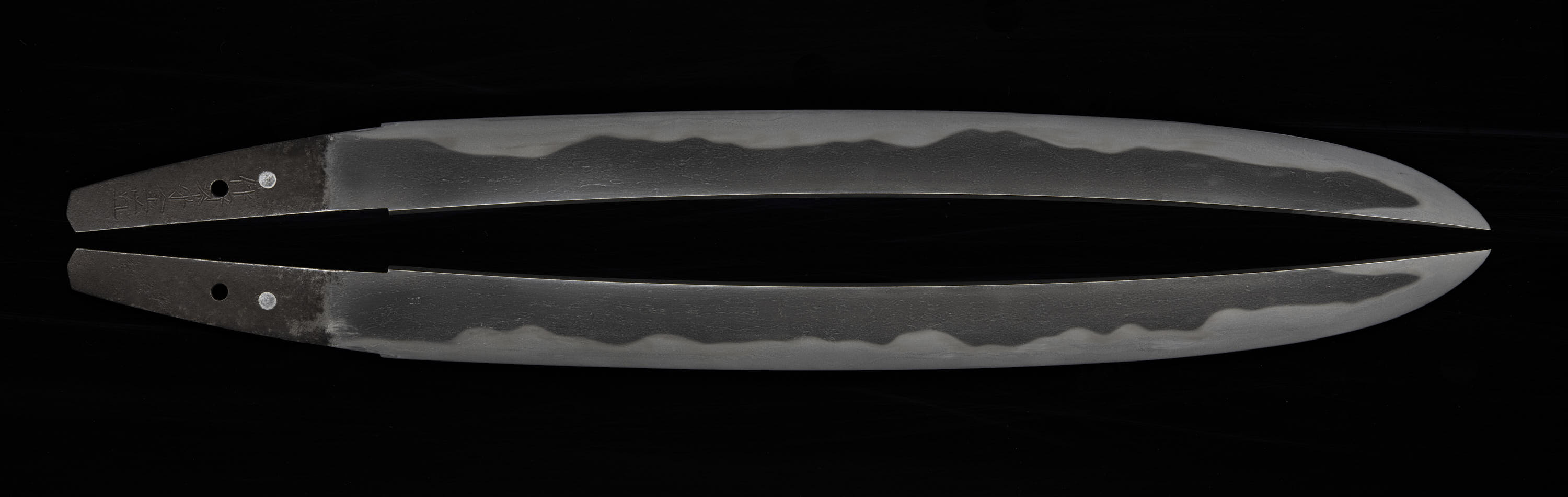



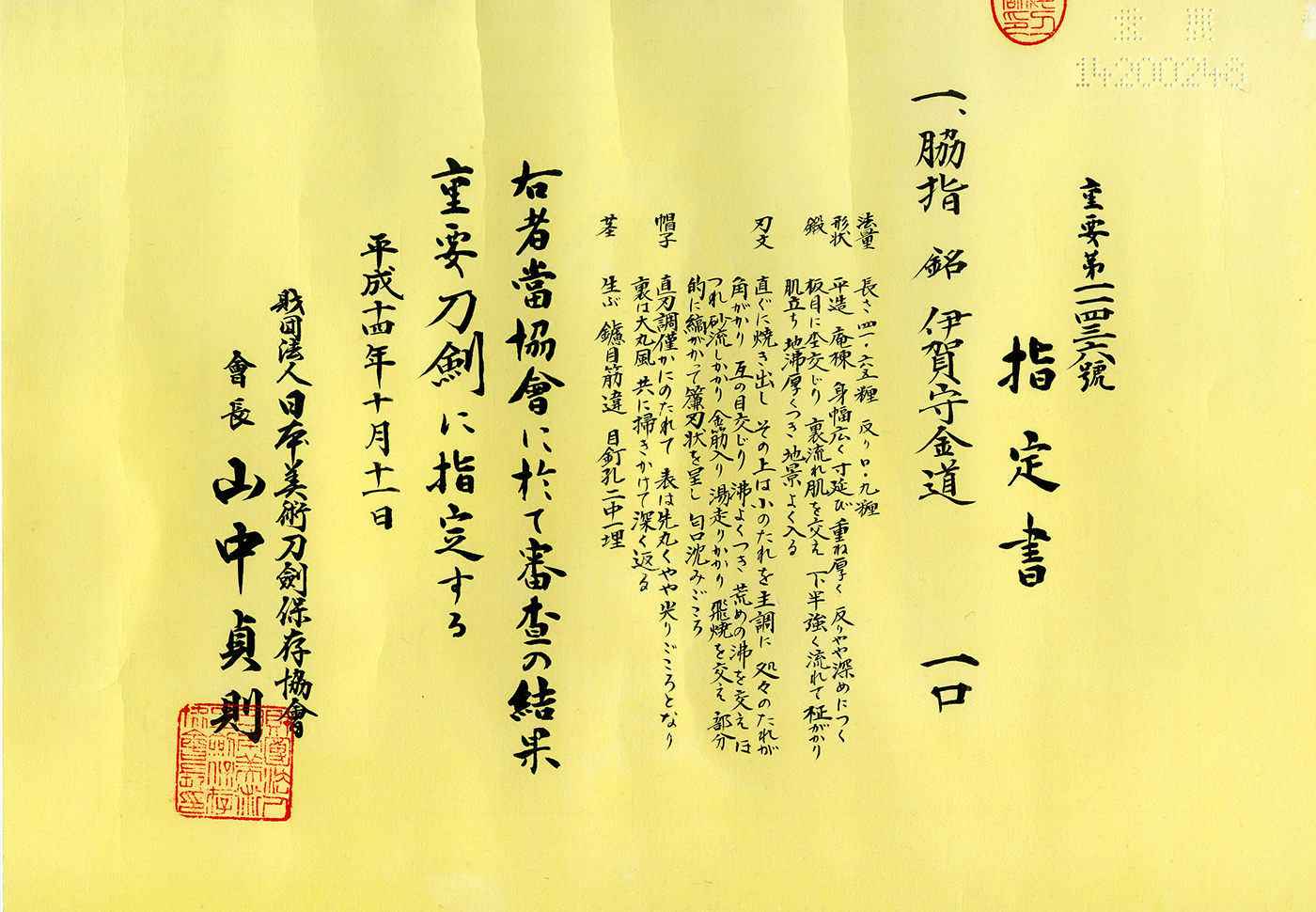
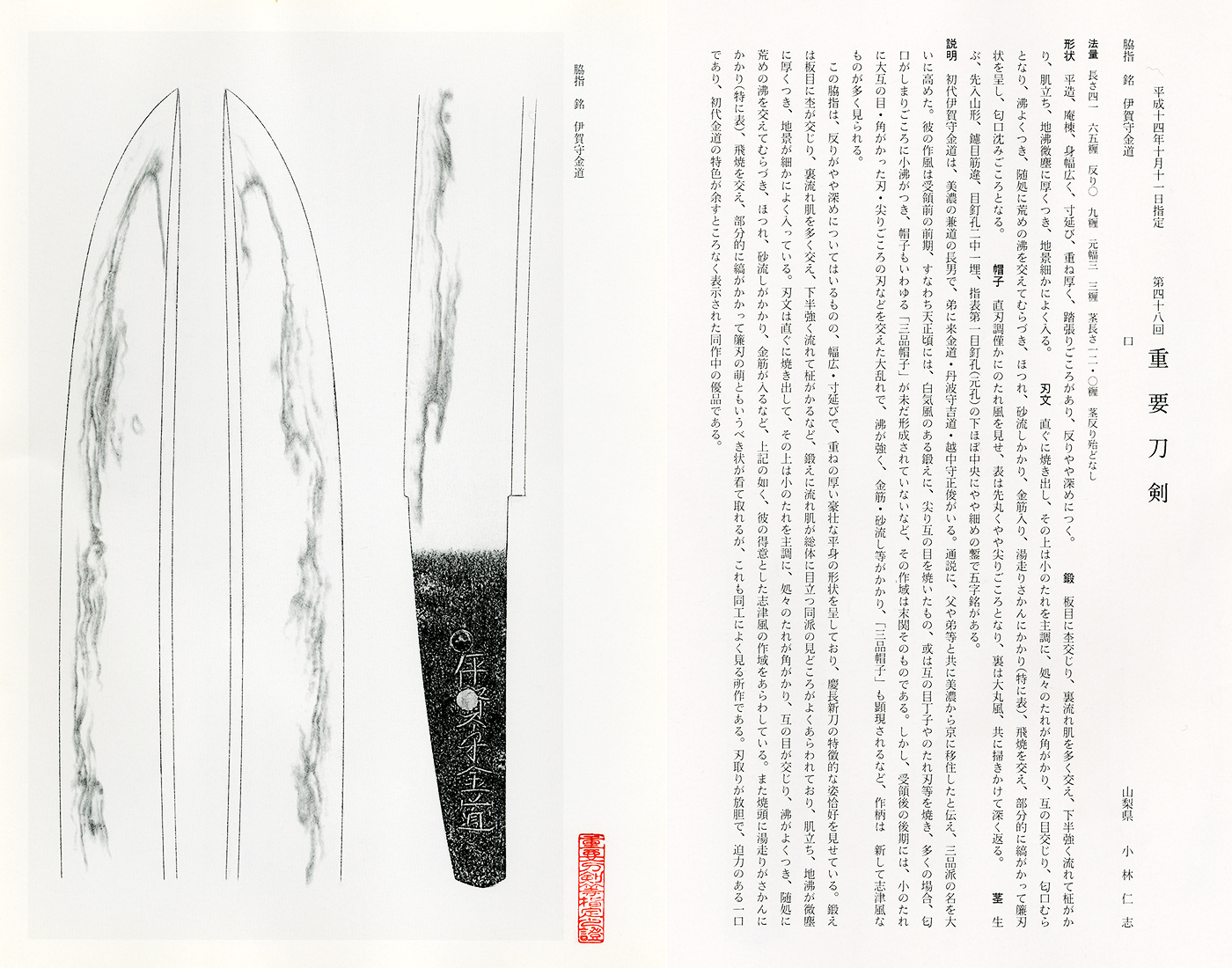
-, 48th Session — Designated October 11, 2002
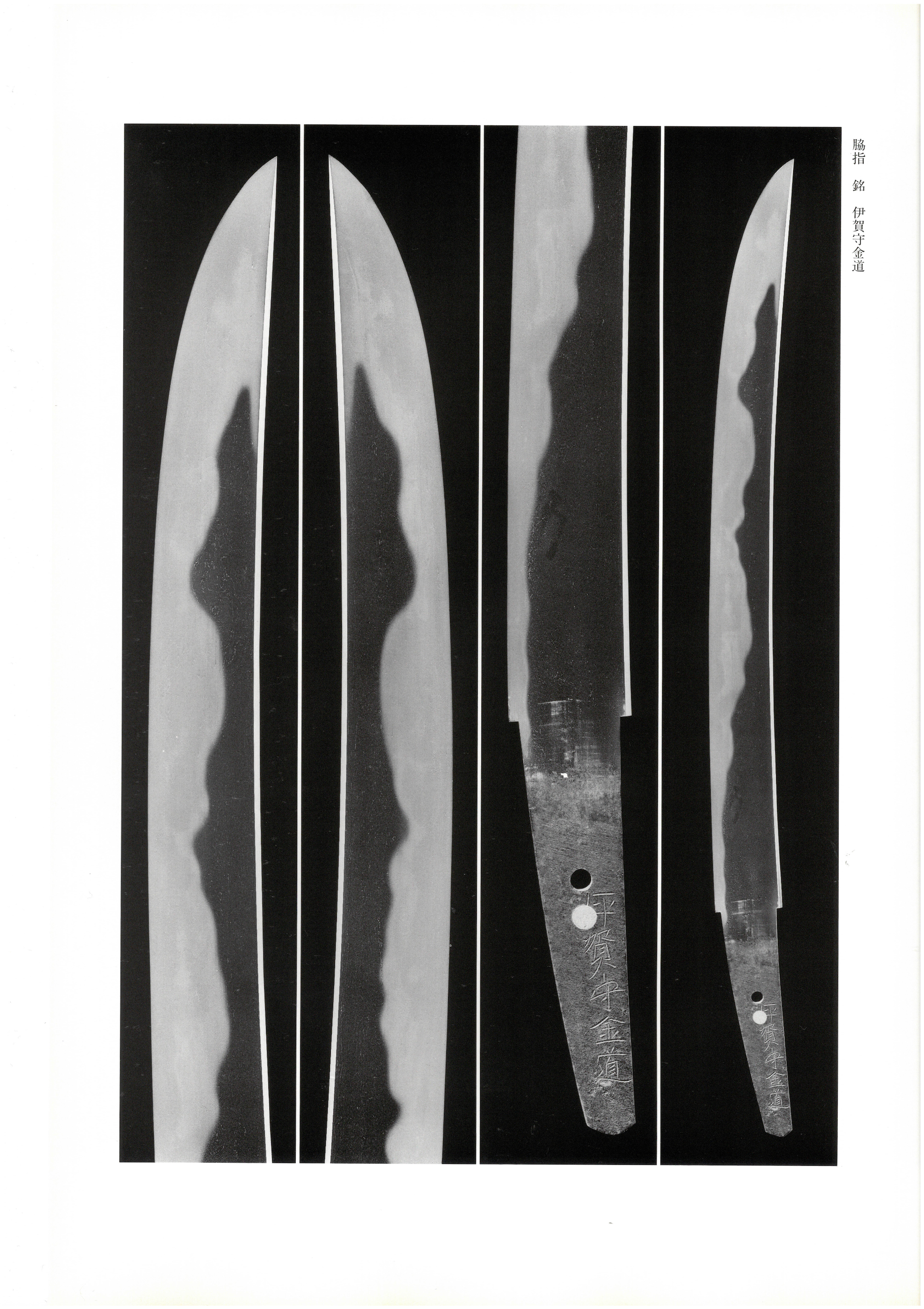
, : Iga no Kami Kanemichi (伊賀守金道)
Measurements 41.65 cm, 0.9 cm, 3.3 cm, 12.0 cm, almost none
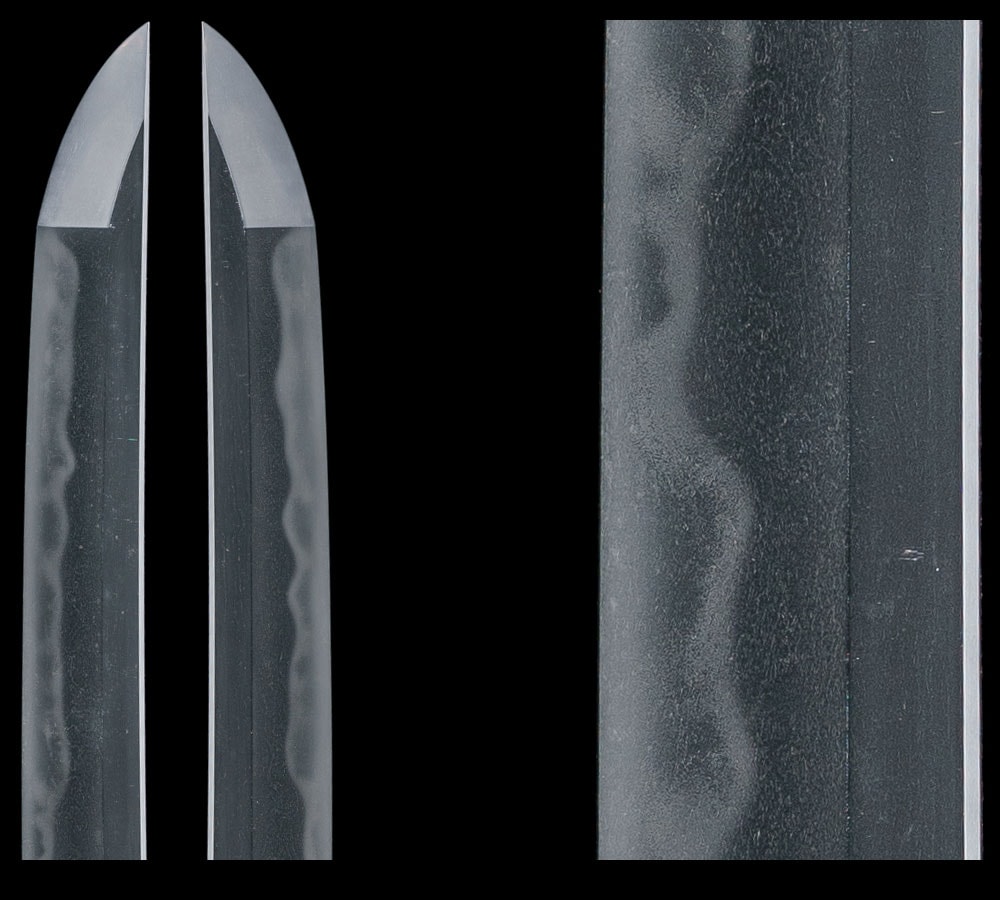
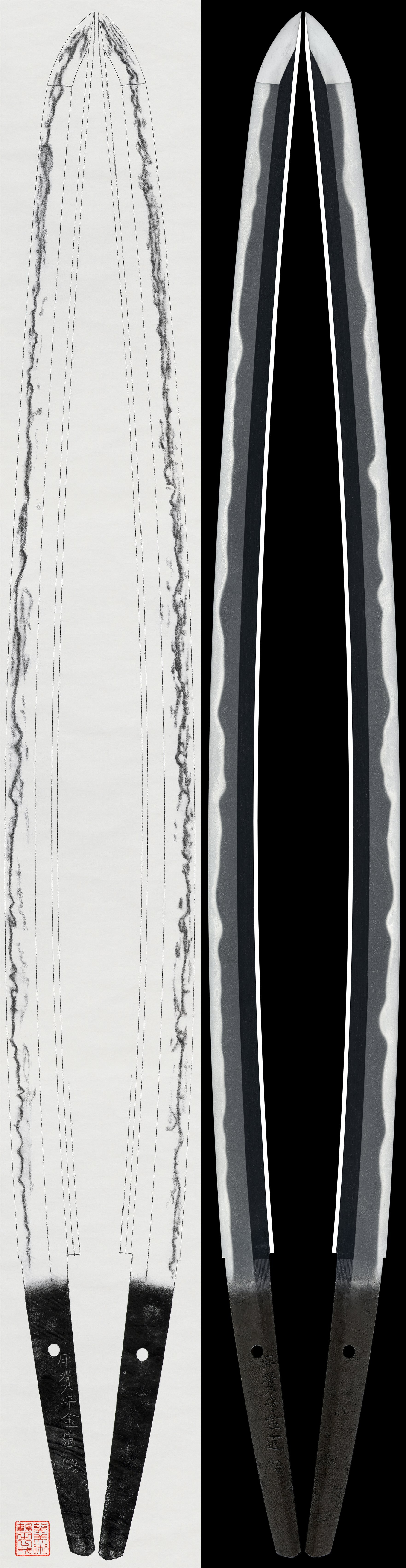
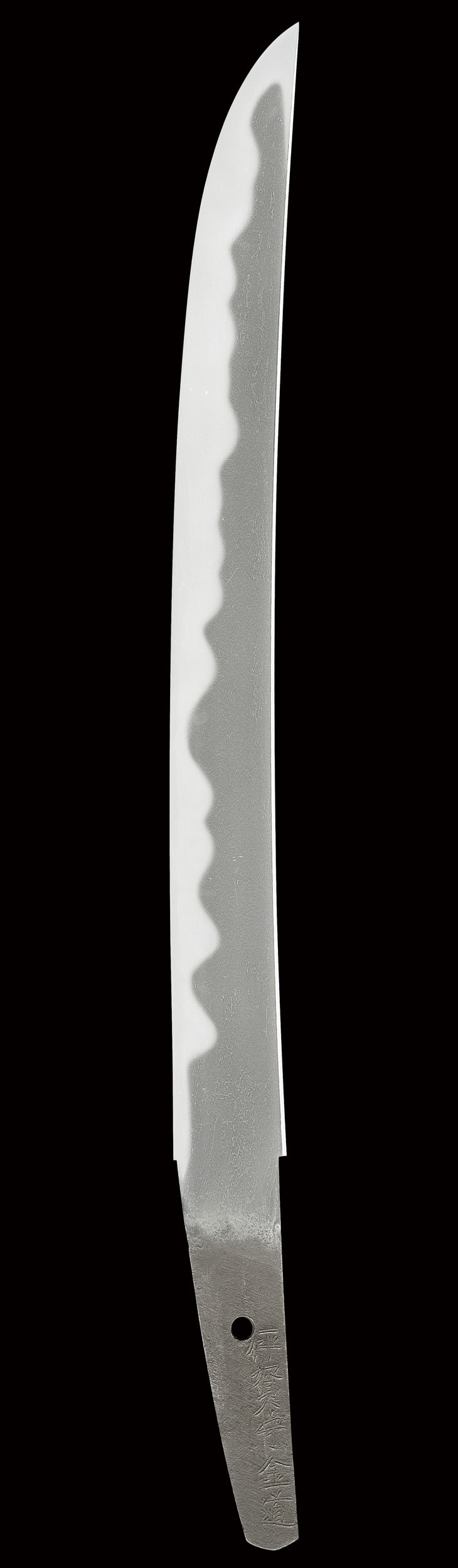
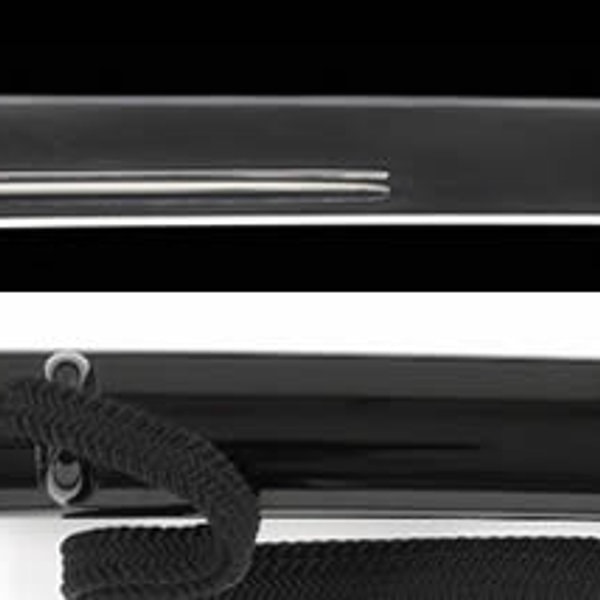
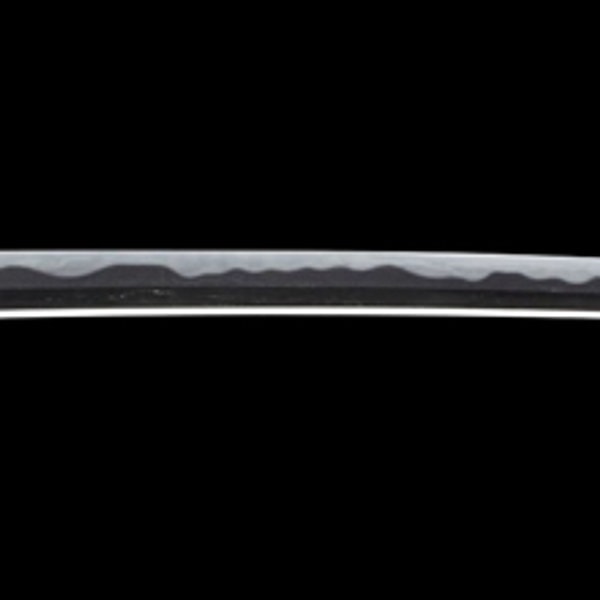
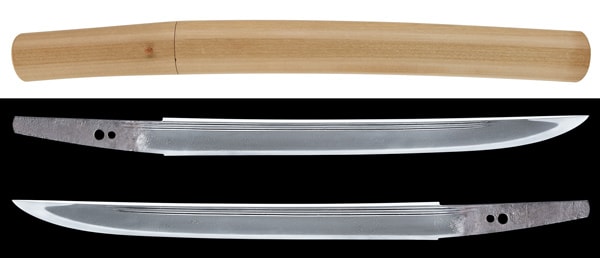
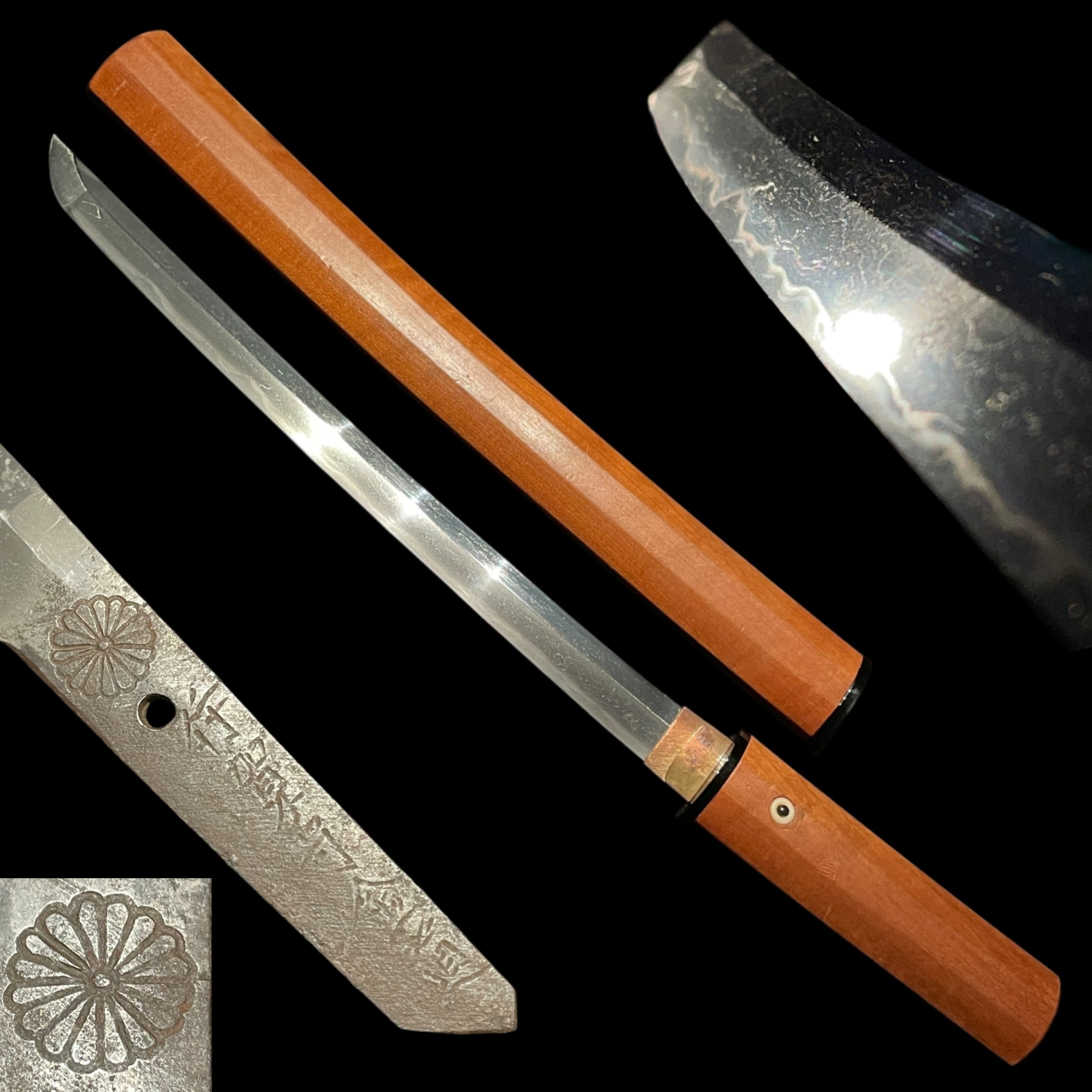
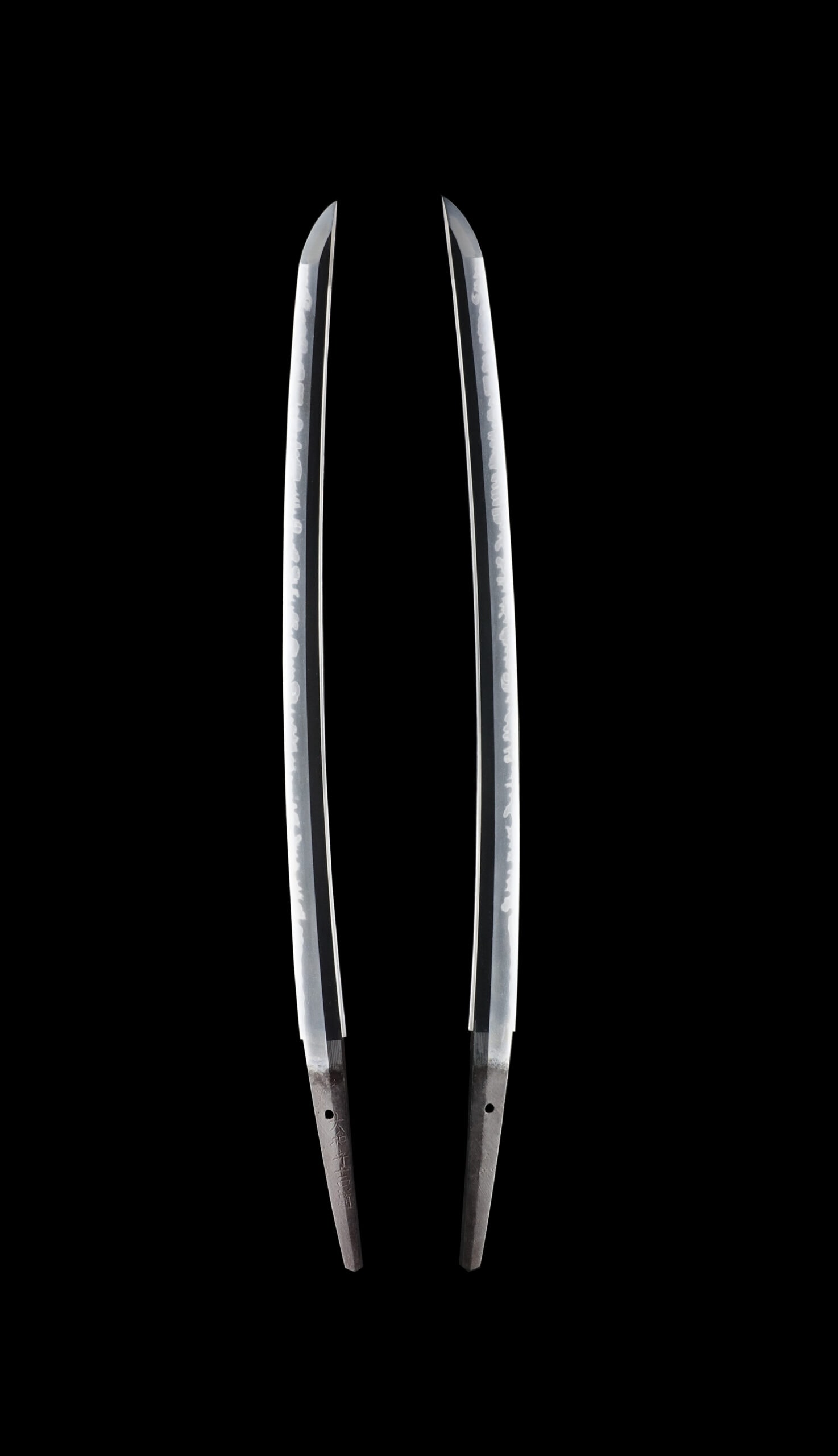
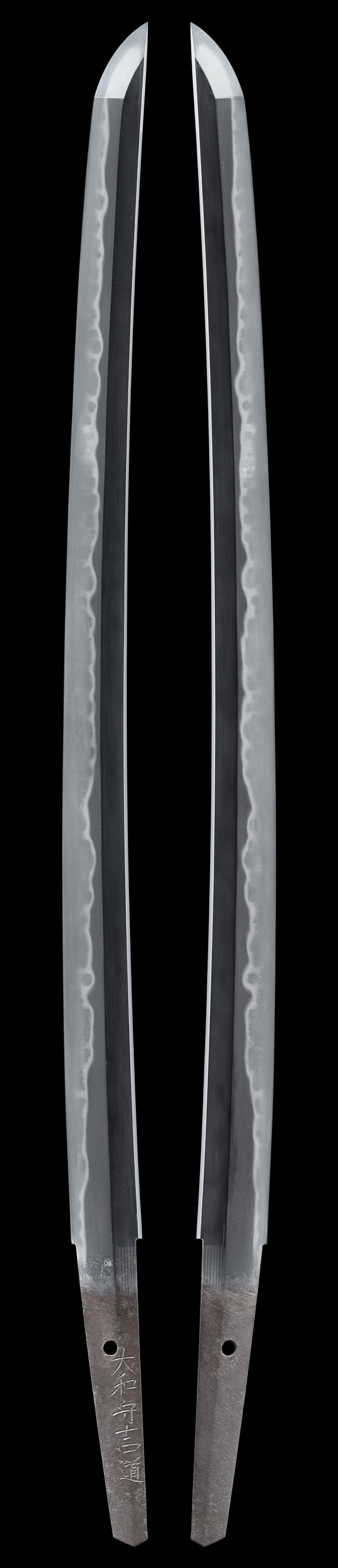
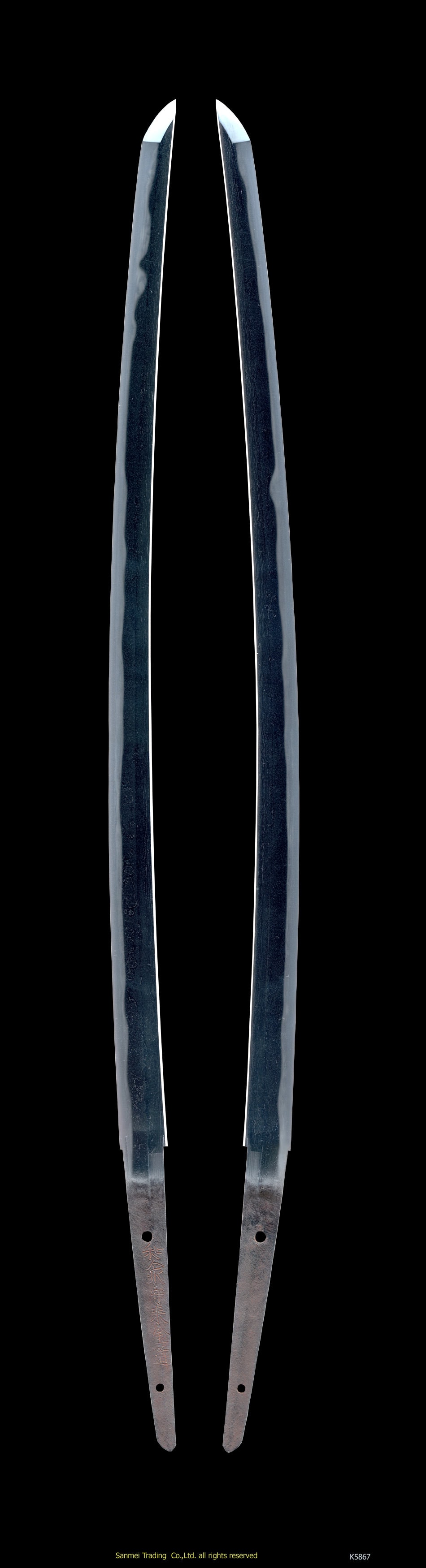
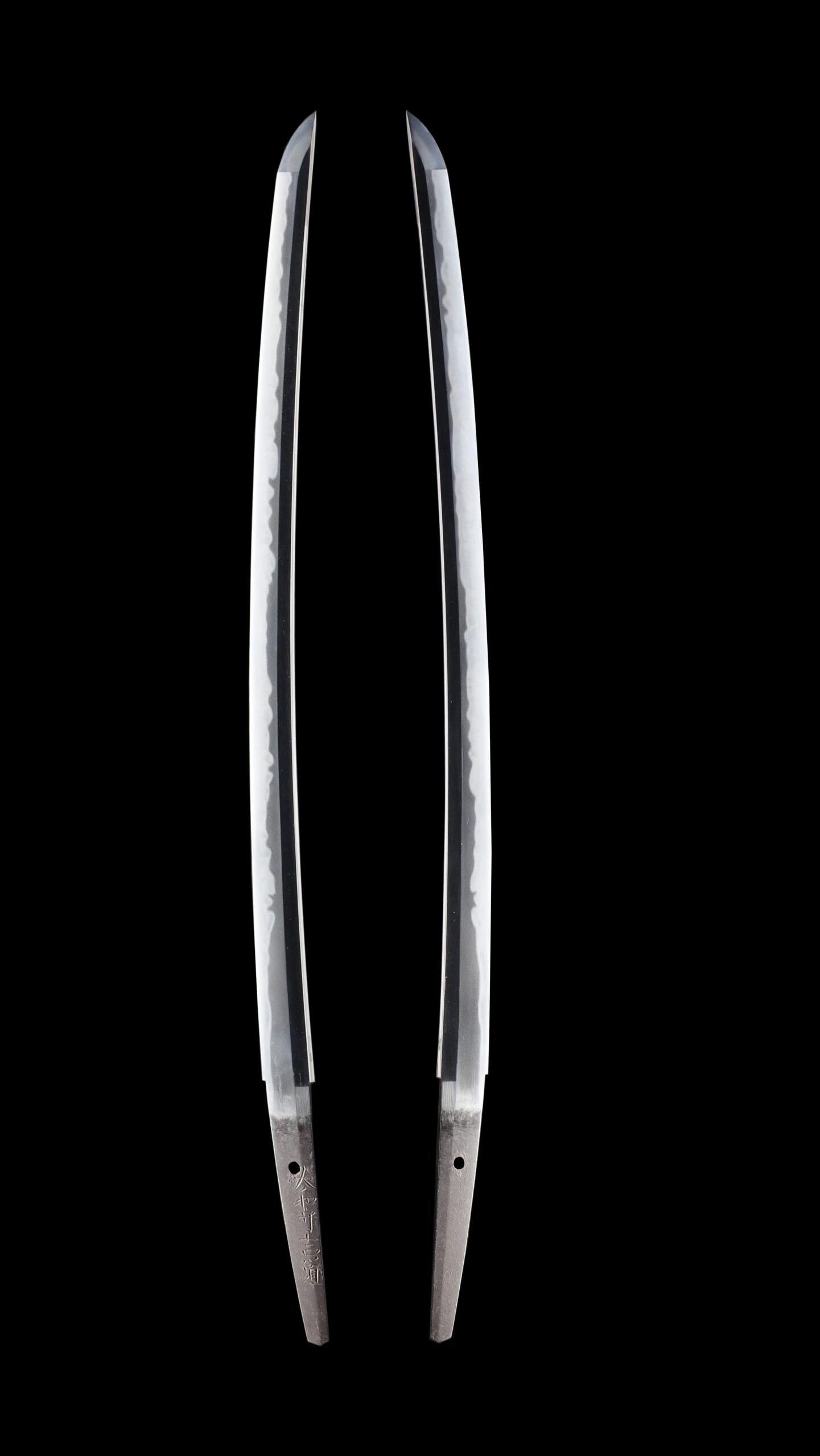
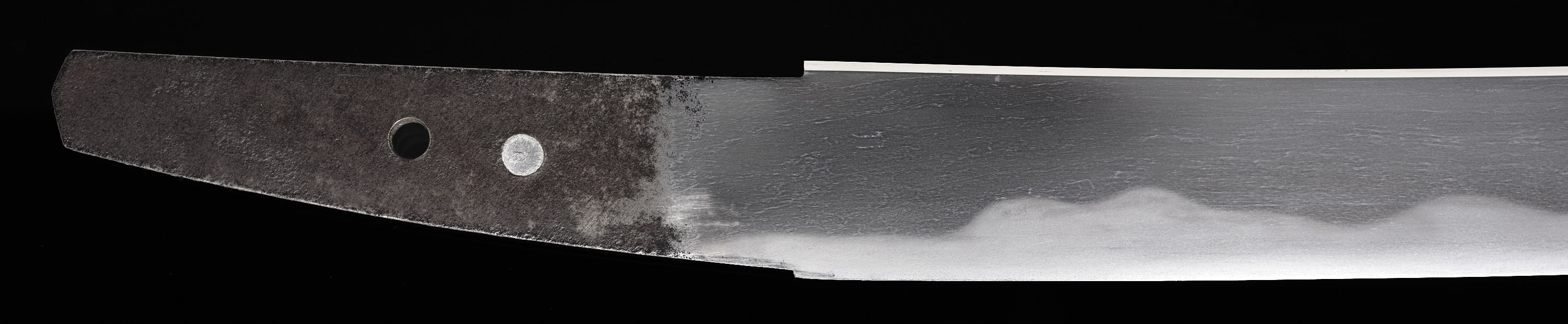
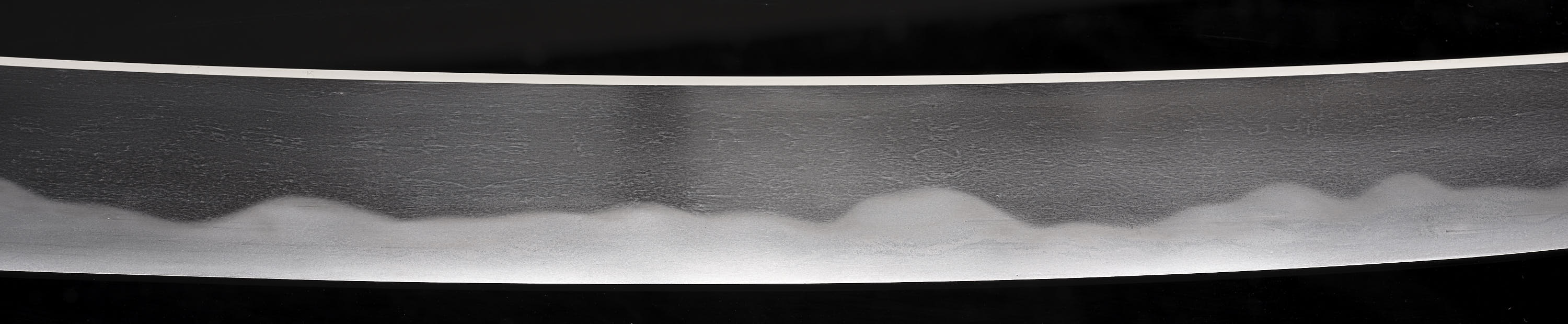
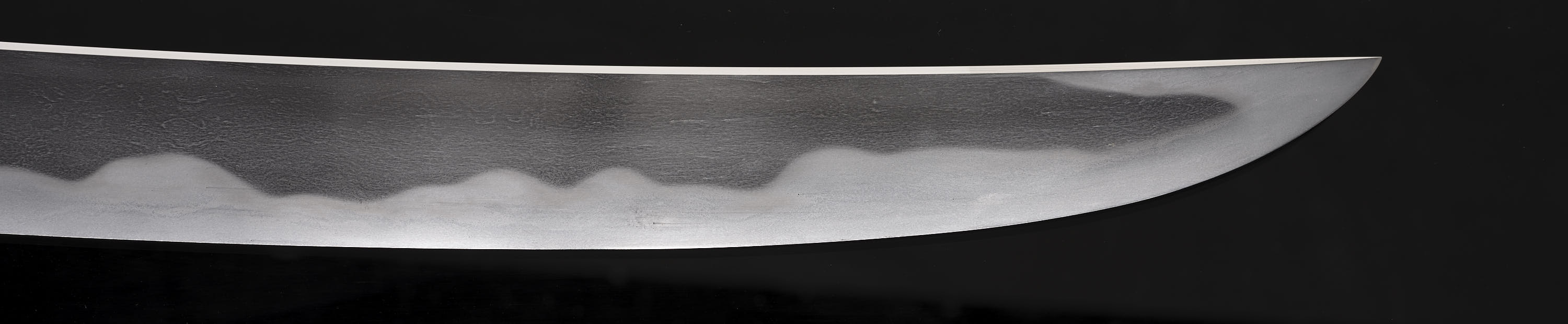
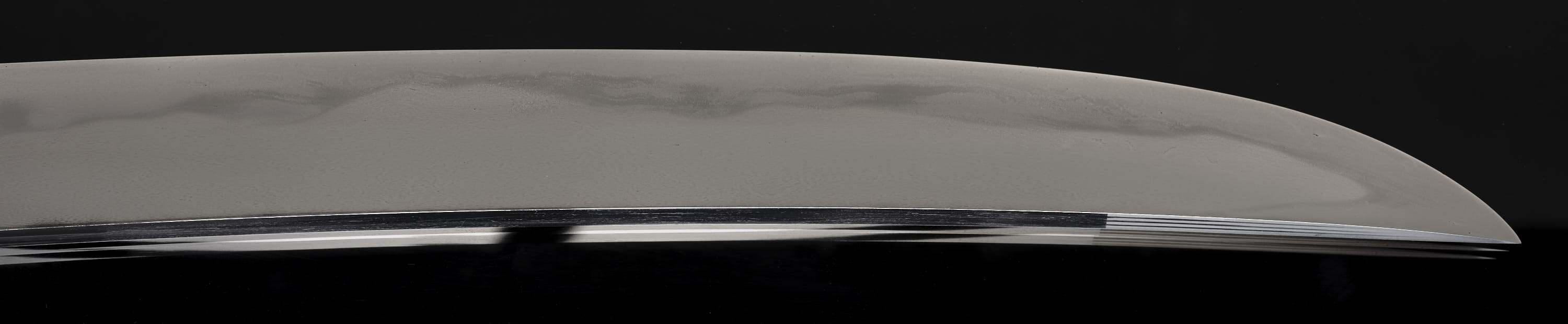
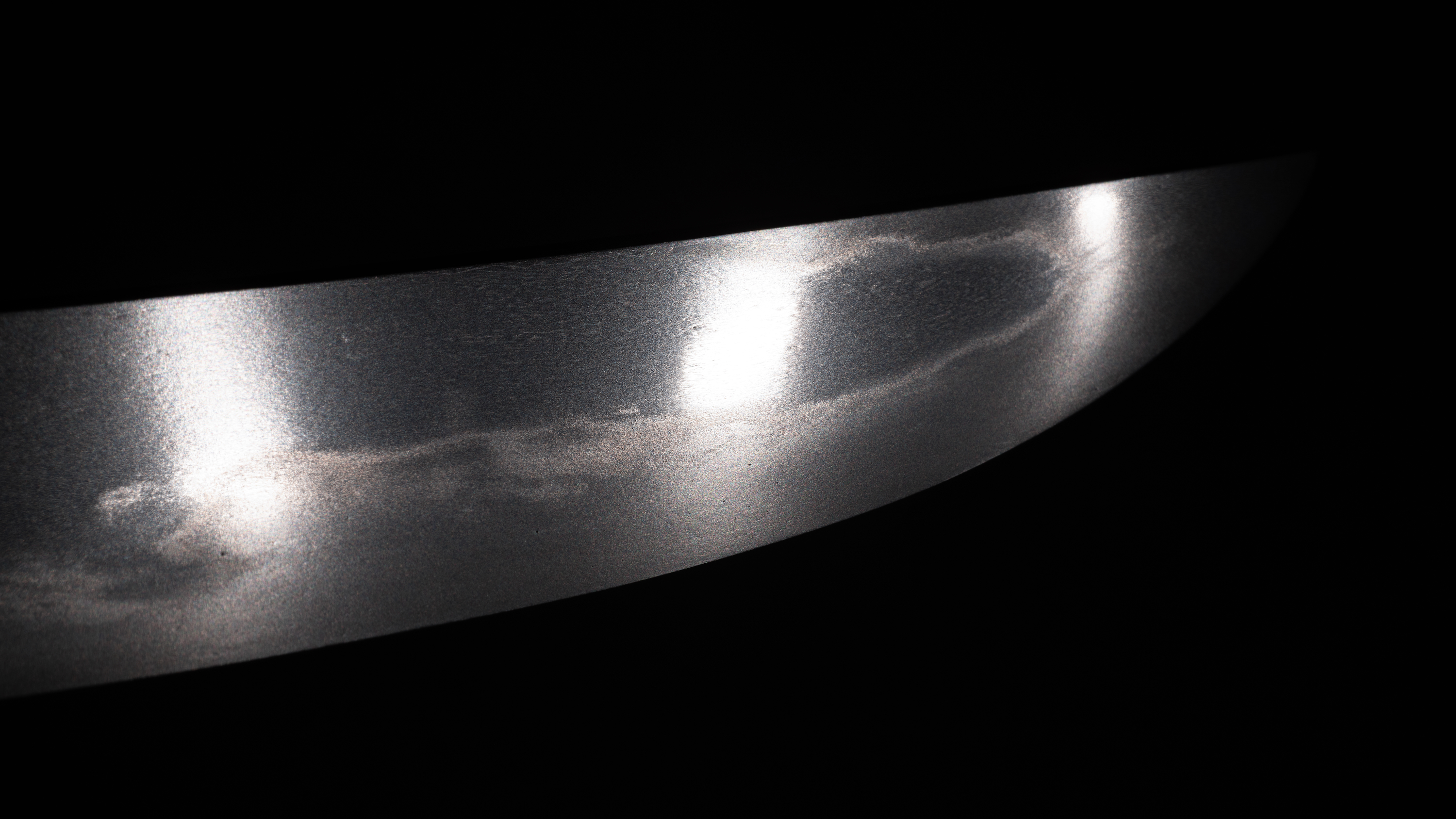
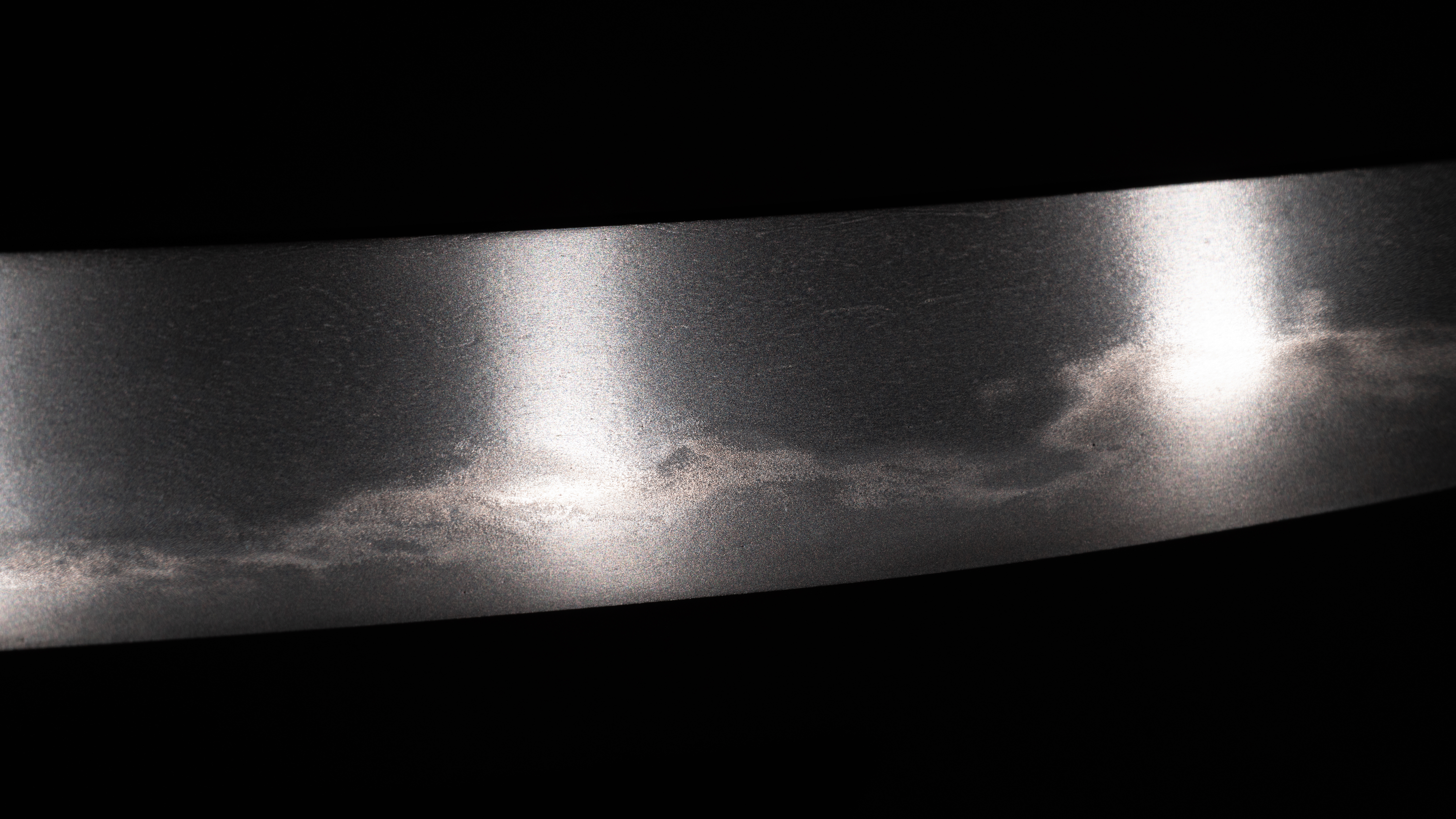
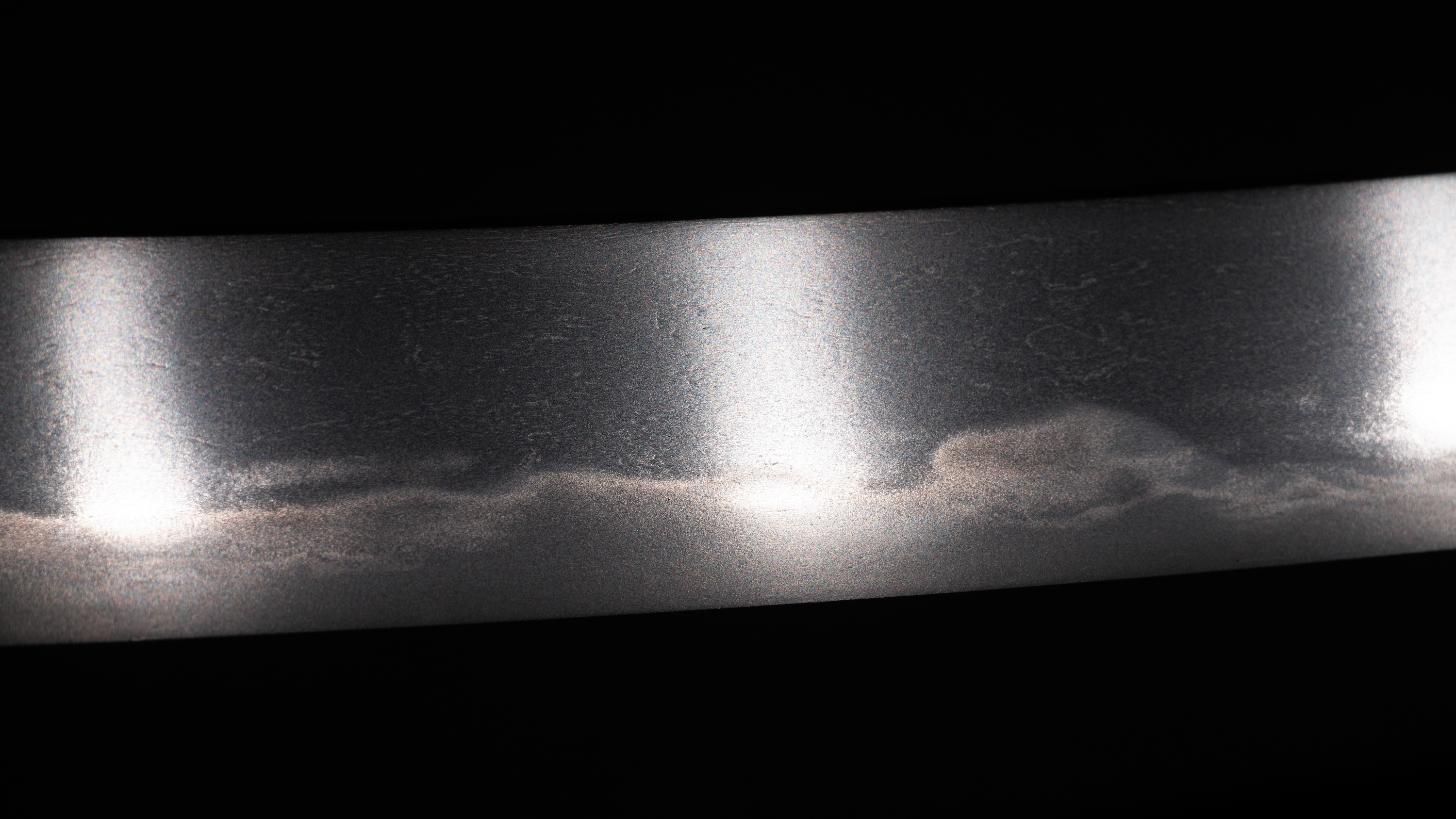
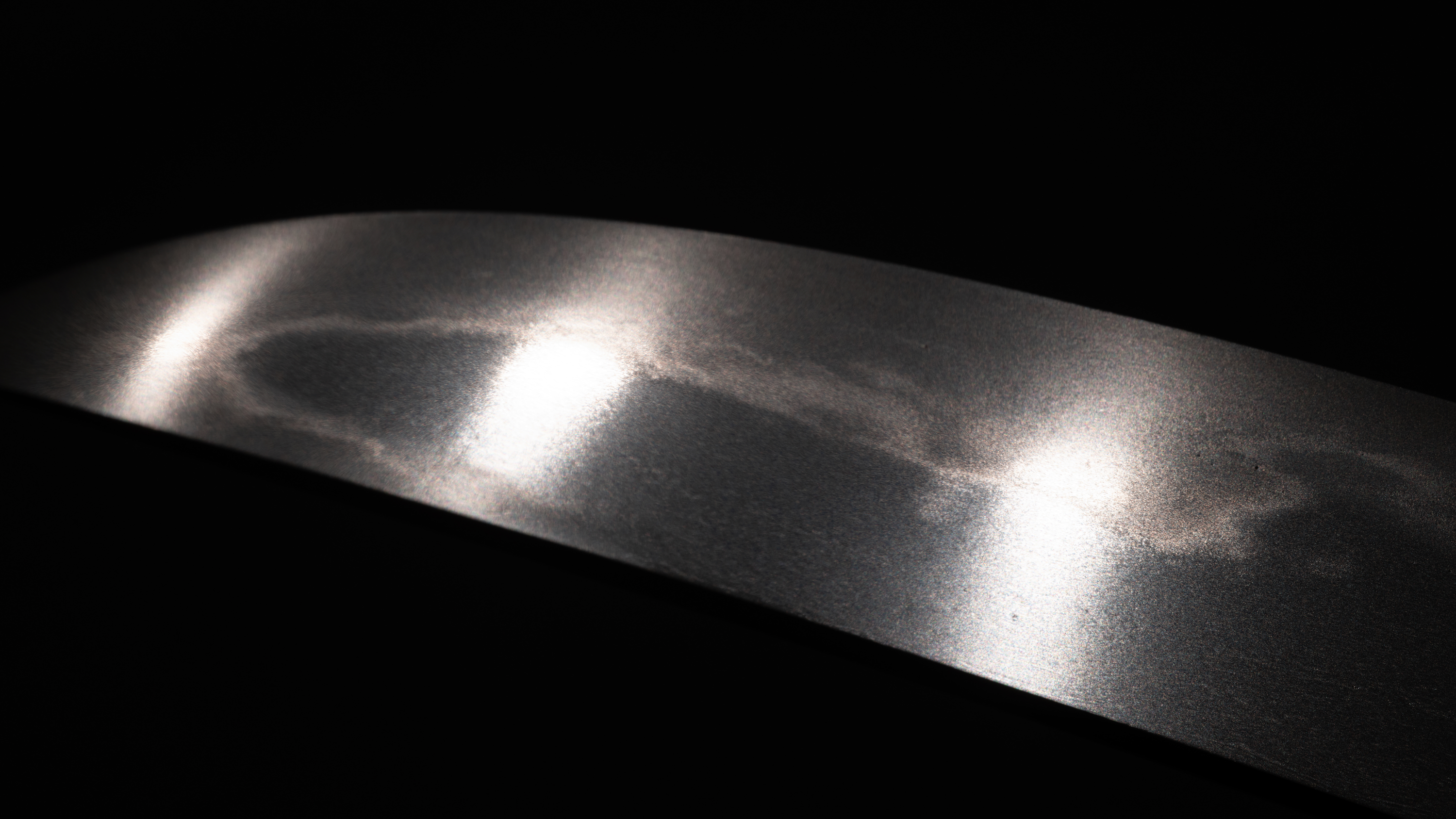
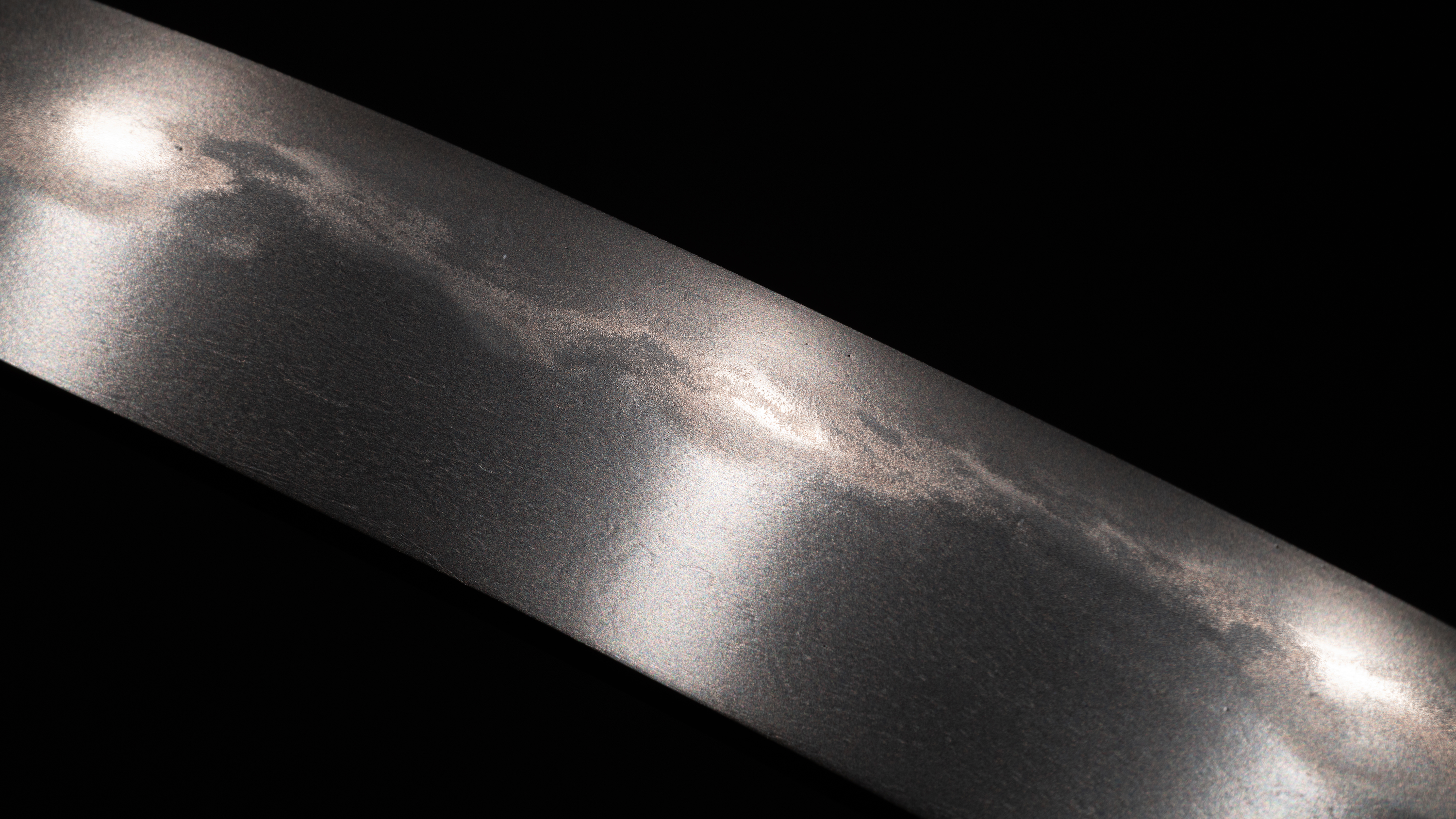
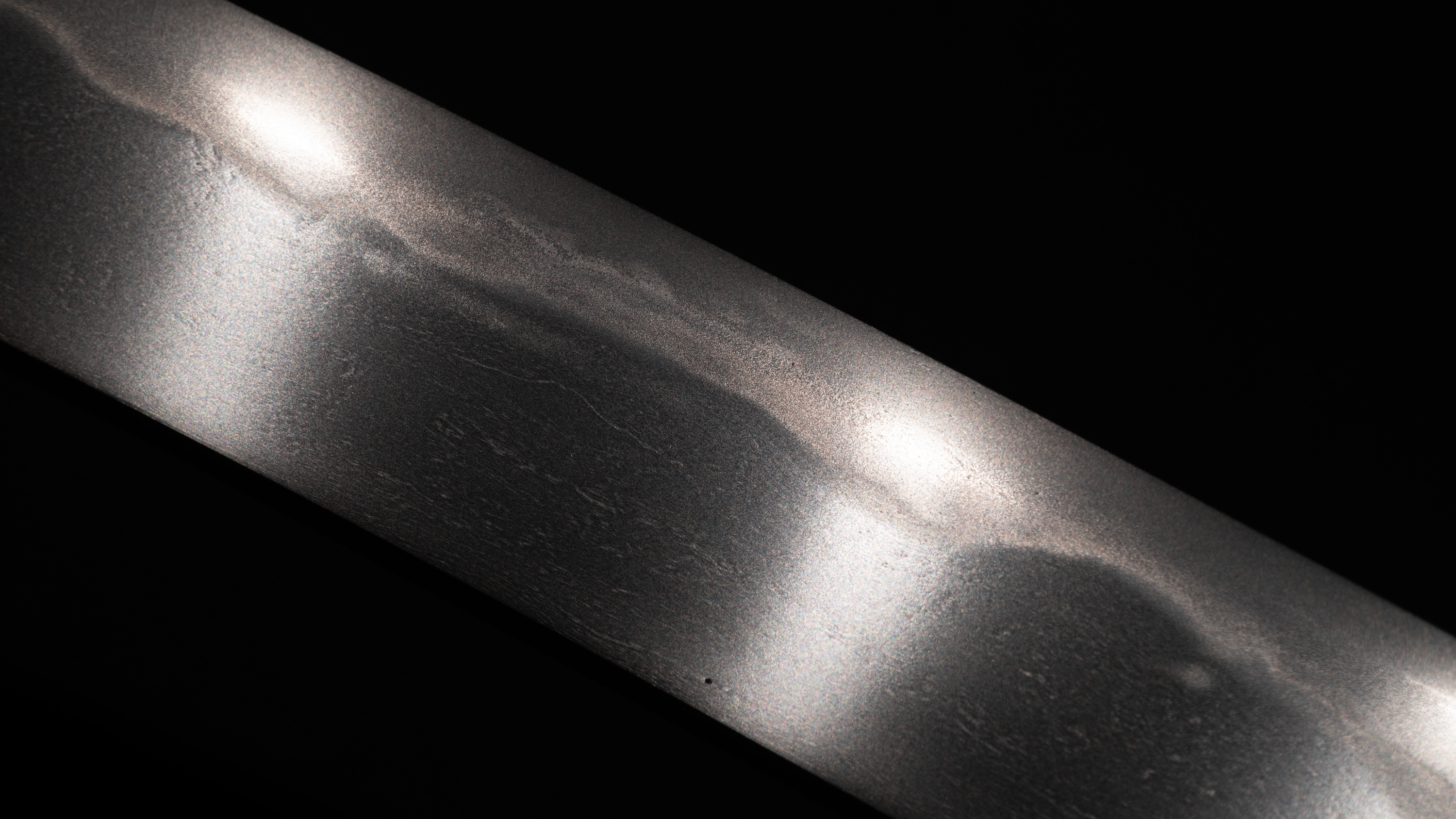
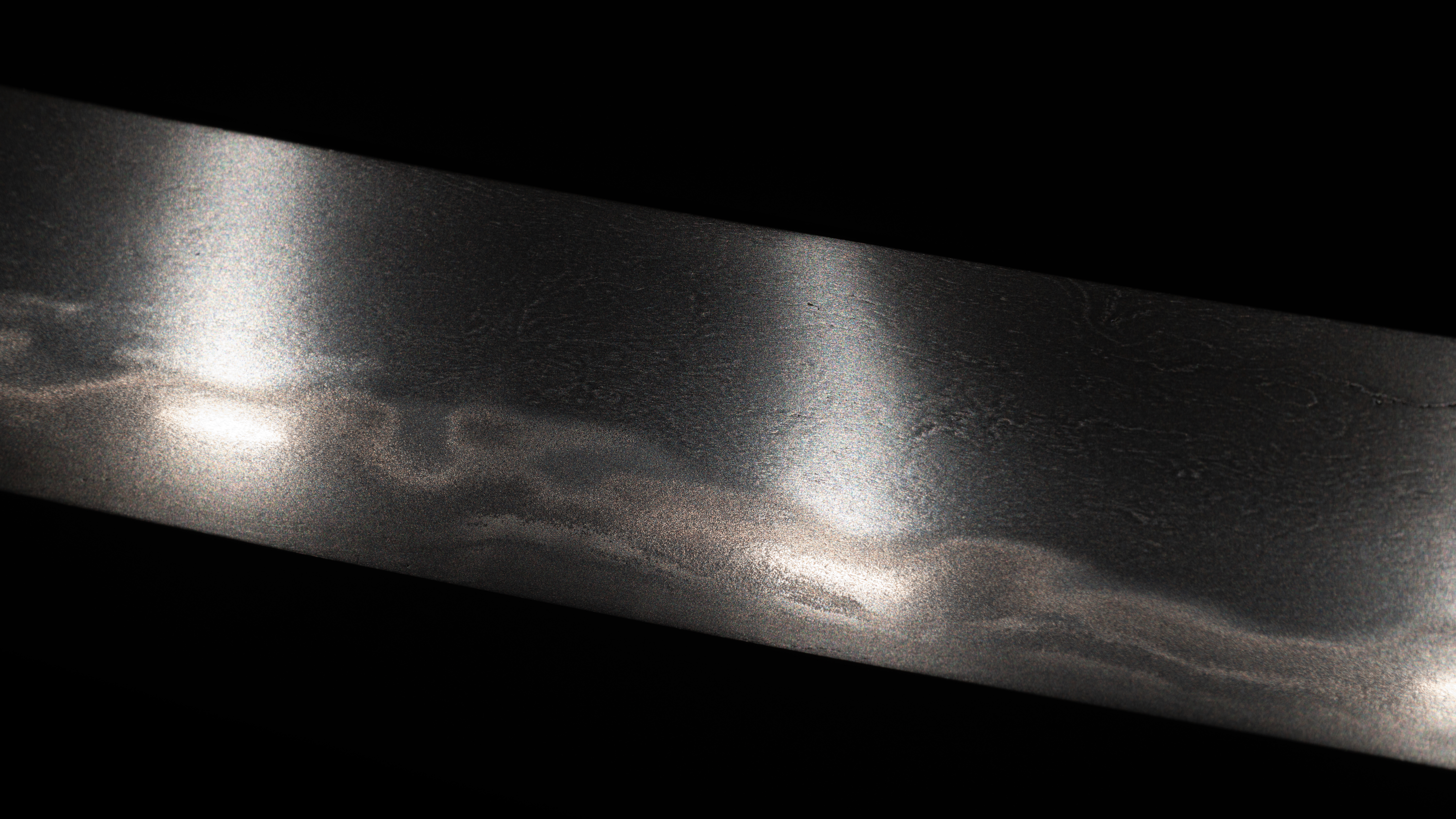
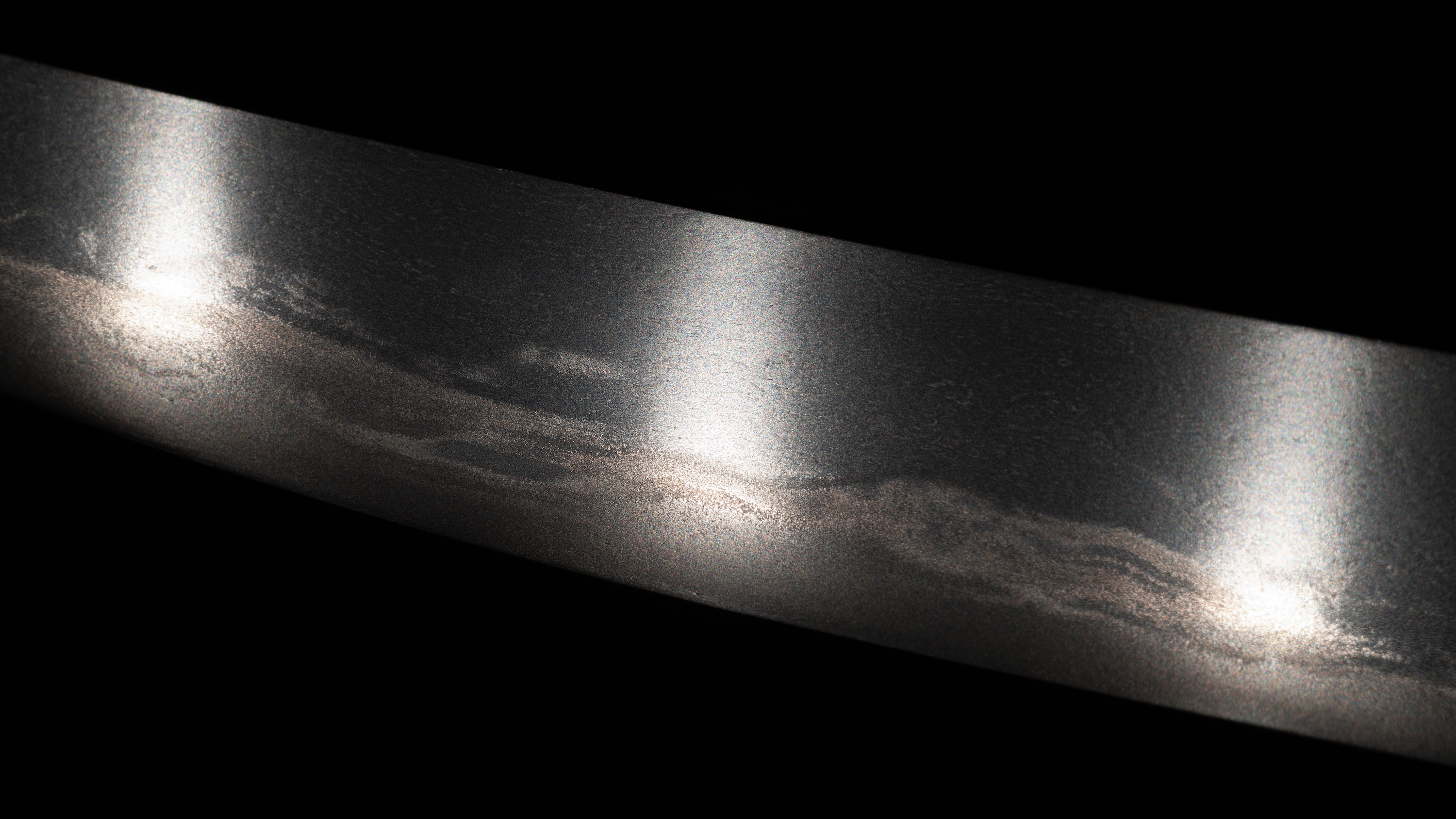
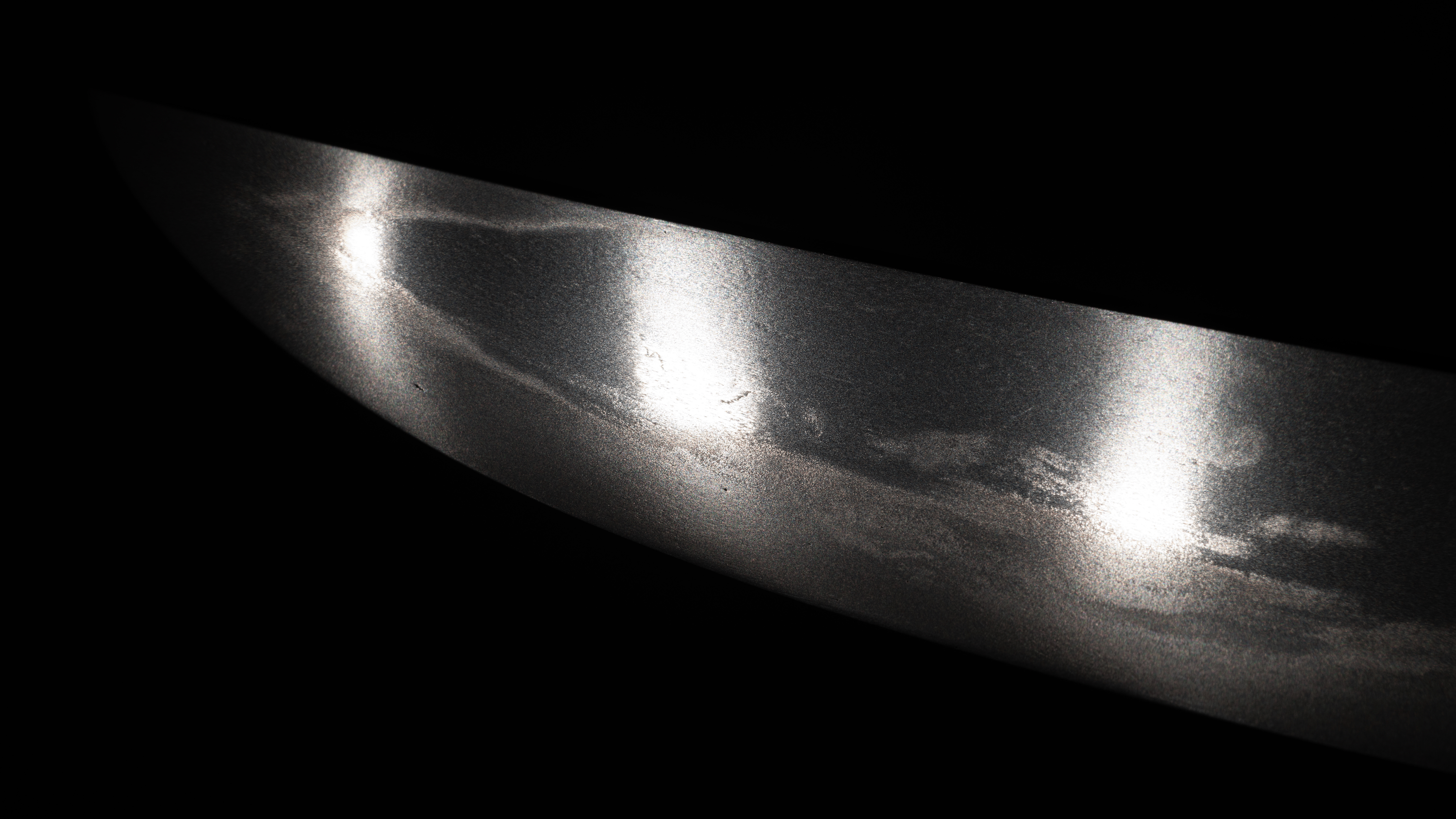
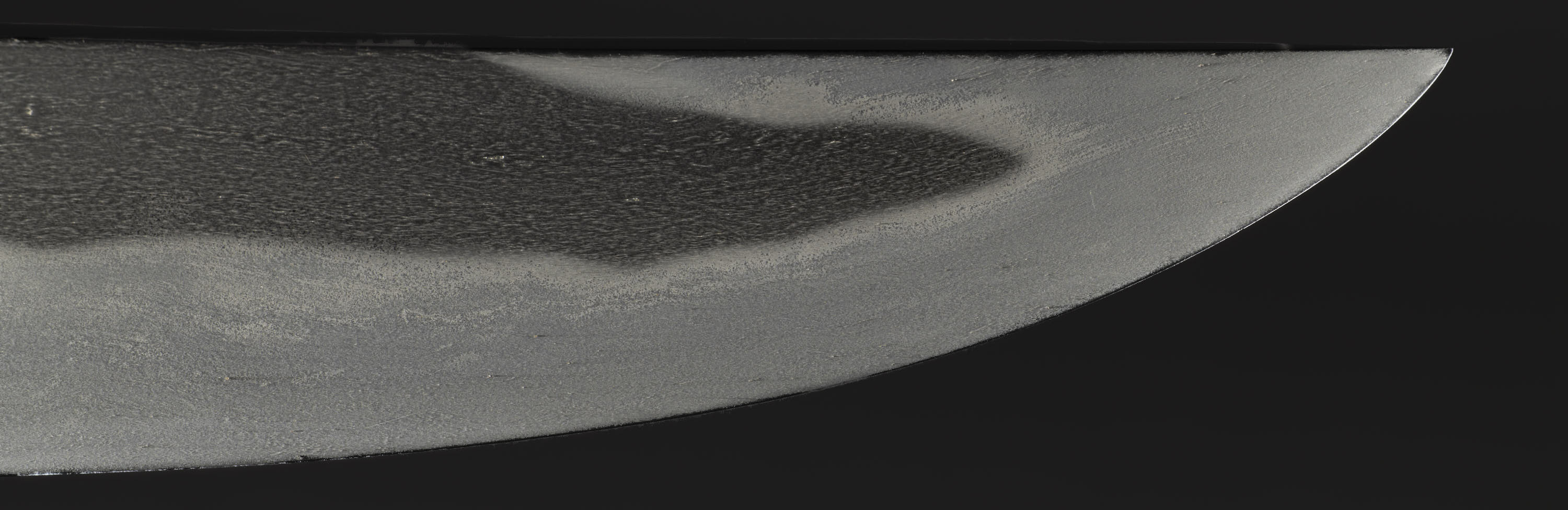
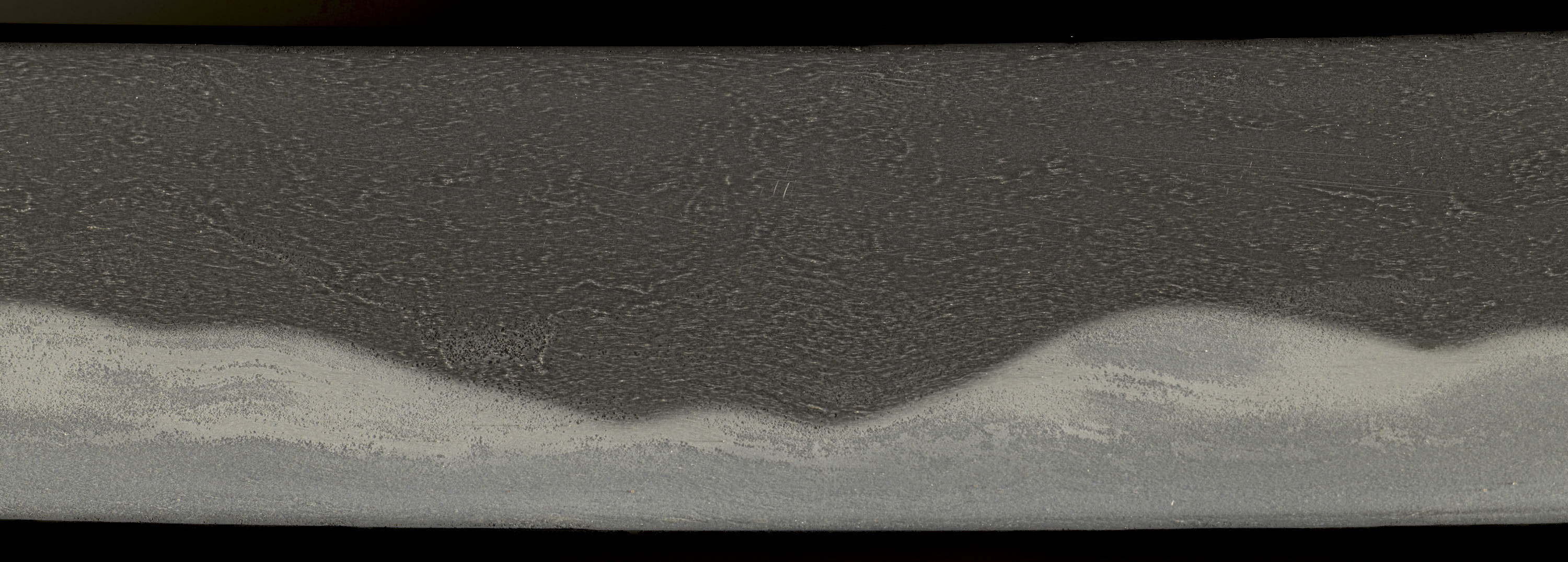
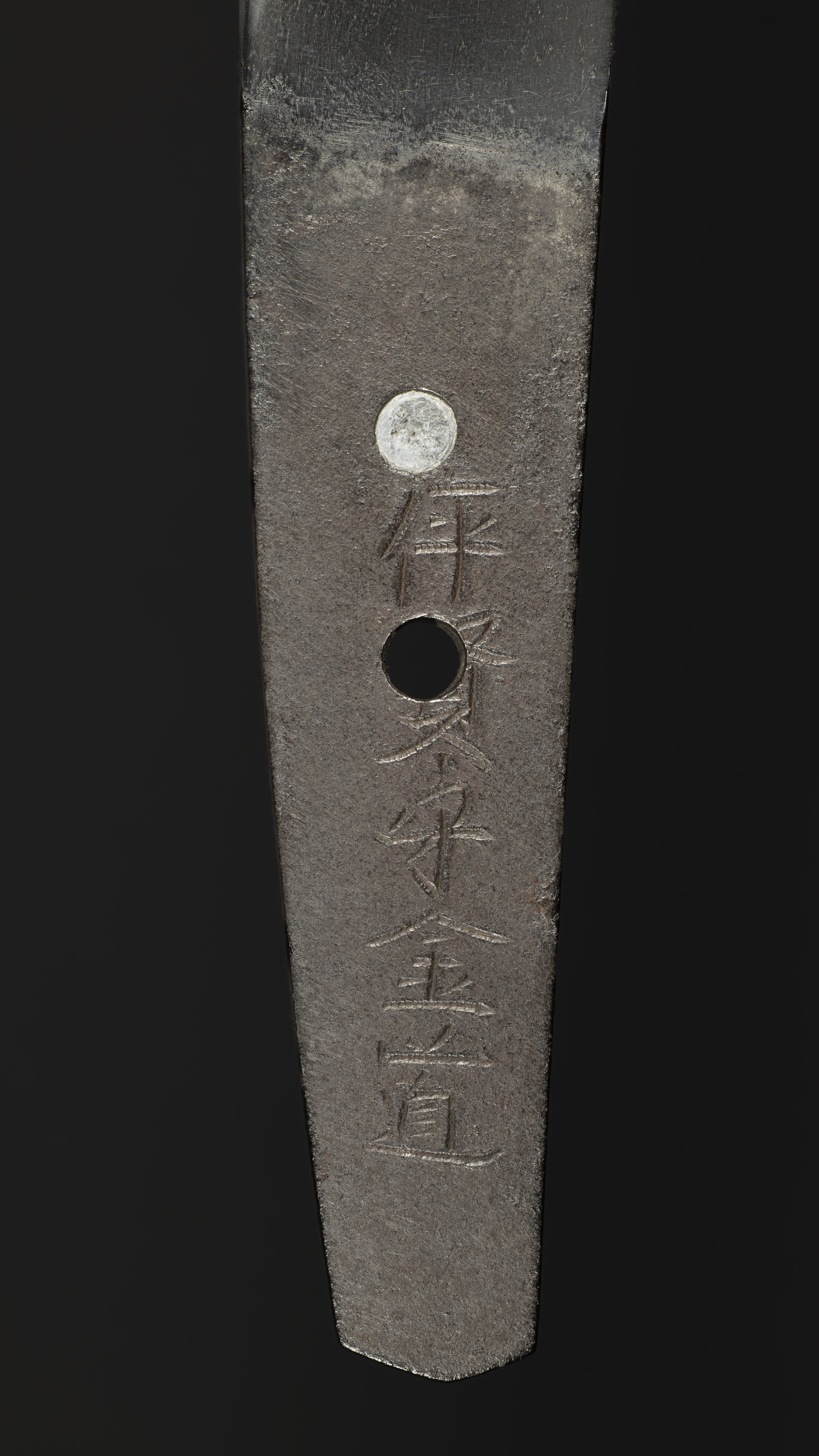
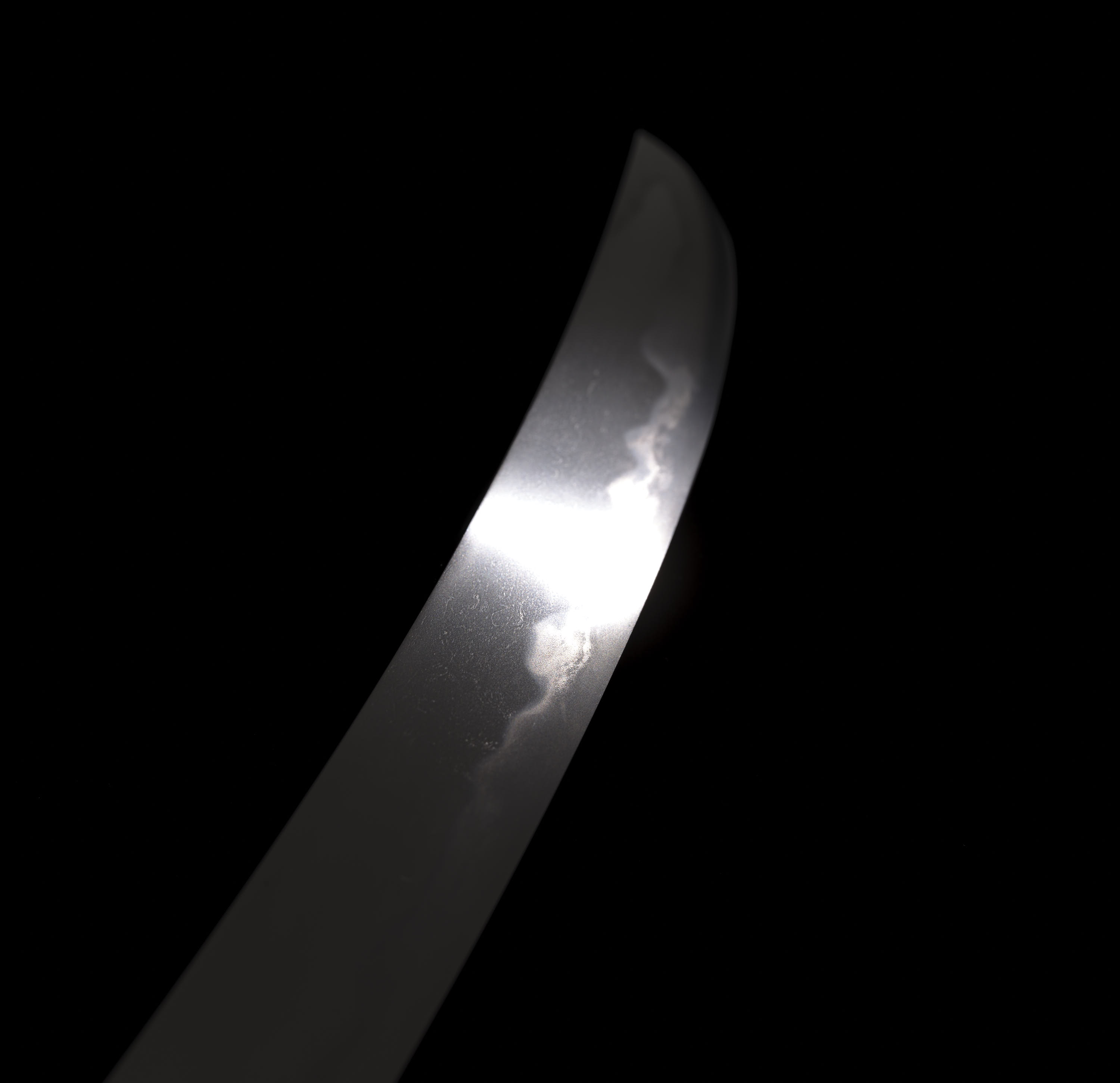
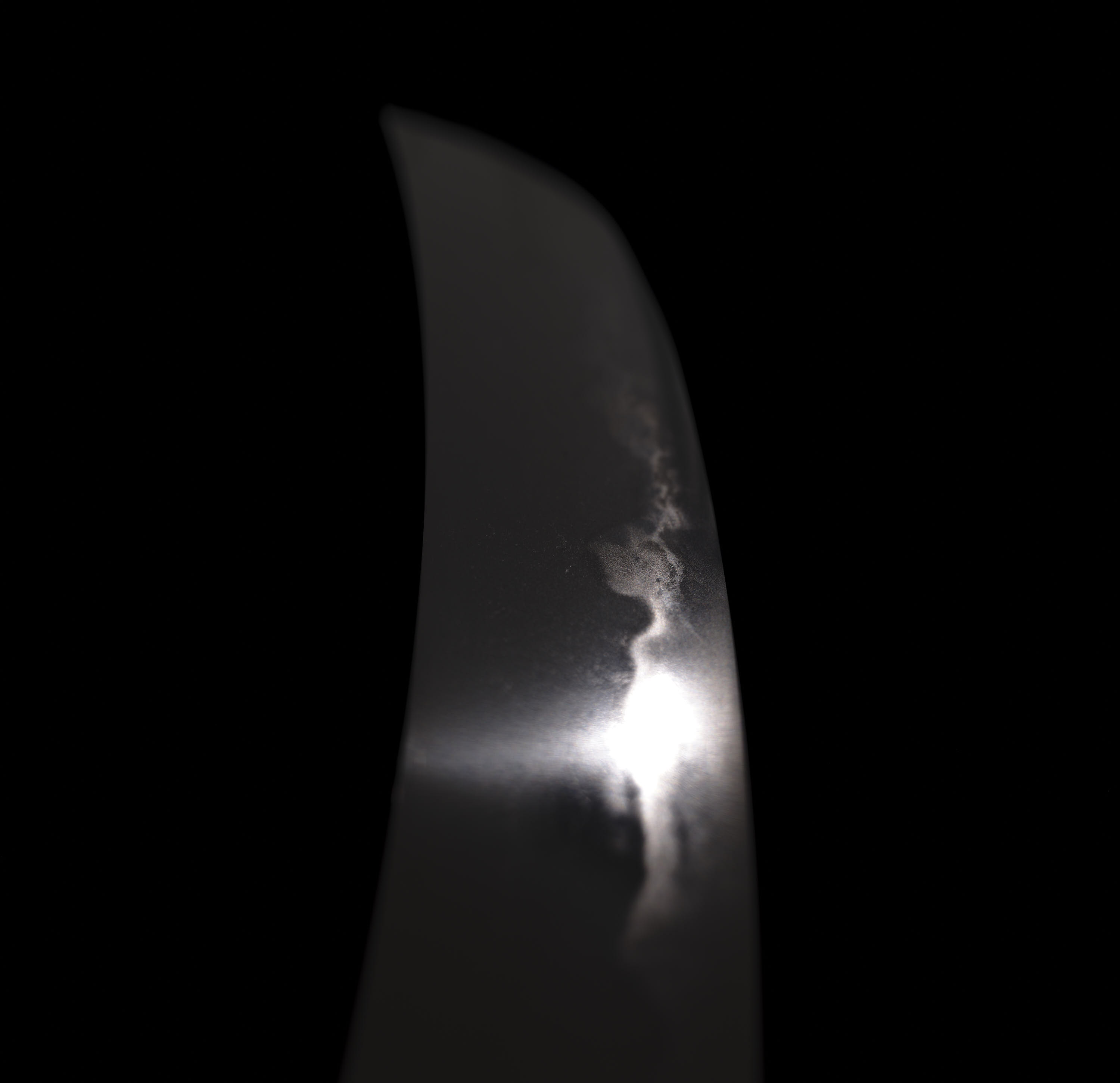
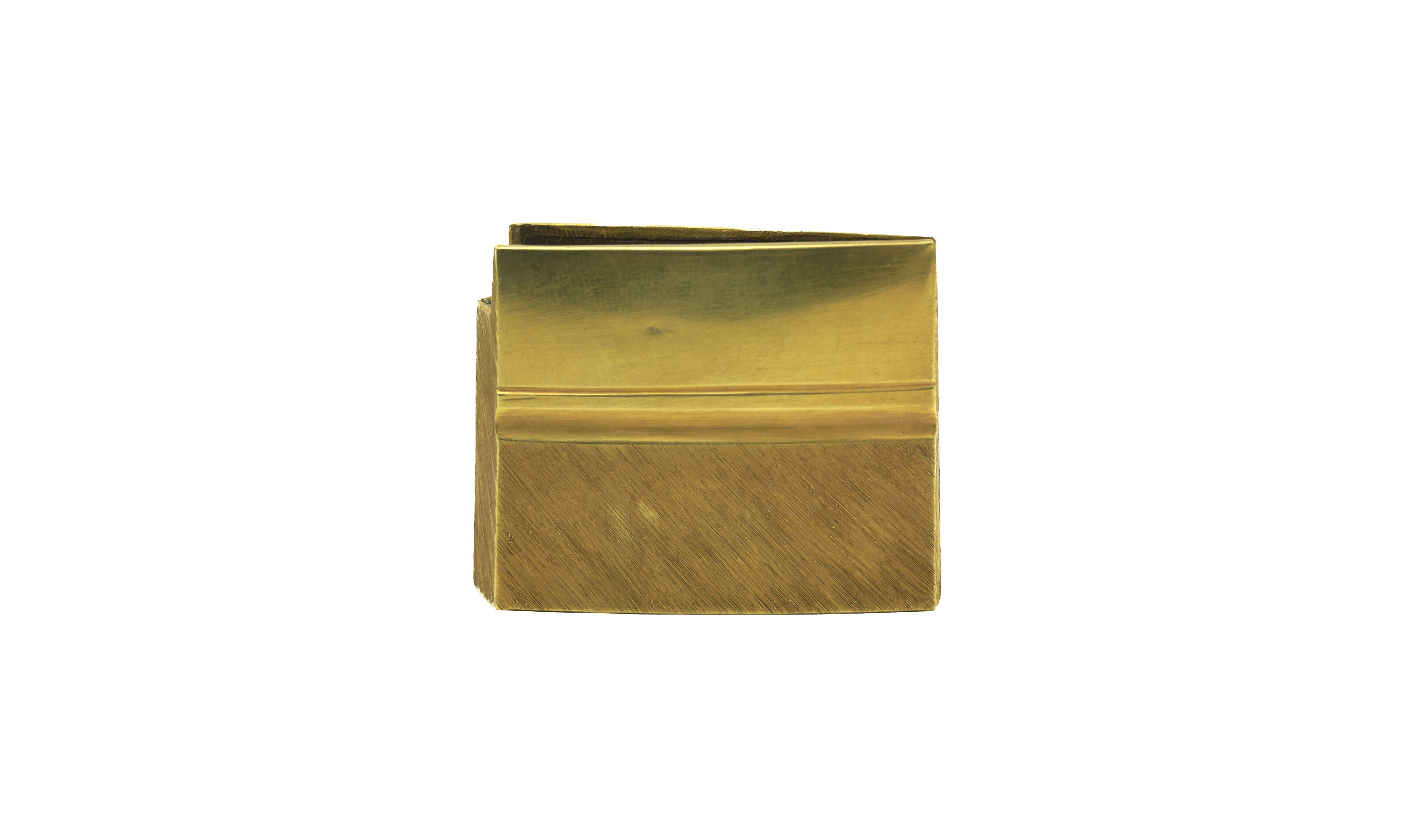
Description Keijō: , ; wide with slightly elongated proportions (), thick , showing a suggestion of ; the is somewhat deep. : mixed with , with much -; in the lower half the grain flows strongly and tends toward ; the stands out (); adheres thickly in fine particles, and fine enter well. : Begins with ; above this, a small predominates, with places where the becomes angular (-gakari), mixed with ; the is uneven; adheres well, and in places coarser is mixed in, producing uneven hardening; there are , with and ; vigorous occur (especially on the ), with mixed in; in parts it becomes banded () and takes on a -like appearance; the tends toward (subdued). : In a tone with a slight flavor; on the it turns in a rounded point with a slight pointed tendency, while on the it is in an manner; both show and return deeply. : None. : ; ; ; two (the central one filled); on the , below the first (the original hole) and almost at the center, there is a five-character signature cut with a somewhat slender chisel.
Artisan Iga no Kami Kanemichi (初代 伊賀守金道)
Era Early period, Keichō-era
Explanation The first-generation Iga no Kami Kanemichi was the eldest son of Kanemichi of , and had as younger brothers Kanemichi, Tanba no Kami Yoshimichi, and no Kami Masatoshi. According to the prevailing view, he is said to have moved together with his father and brothers from to Kyōto, thereby greatly enhancing the reputation of the group.
His workmanship is commonly divided into an early phase before receiving his court title and a later phase after it. In the early phase—namely around the Tenshō era—one finds forging with a whitish cast, together with tempering such as pointed , or gunome-chōji and . In many cases the shows a tightening tendency with small , and the tip tempering has not yet assumed what is known as the “ ”; in this respect, his workmanship falls squarely within the realm of . In the later phase after receiving his title, however, his style changes markedly: bold based on small and mixed with large , angular elements, and pointed tendencies; strong with and ; and the emergence of the “ .” Many works of this period display a -like character.
This , while having a somewhat deeper , presents a broad, slightly elongated, thick-built, imposing form, clearly showing the characteristic shape of Keichō-era . The forging shows with , containing much -, and with the lower half flowing strongly into a tendency toward ; thus, the conspicuous flowing grain that constitutes one of the highlights of this group is well manifested. The grain stands out, fine granular adheres thickly, and fine enter well. The temper begins with , above which a small predominates, with angular in places and mixed in; adheres well, with patches of somewhat coarse , together with , , and —all revealing, as described above, the -like domain in which he excelled. Moreover, vigorous appear in the hardened area (especially on the ), with mixed in; in places it becomes banded and shows a state that may be termed a nascent , which is also a frequently encountered mannerism of this smith. The is executed with boldness, producing a blade of compelling force; it is an excellent work among this smith’s productions, displaying without omission the distinctive characteristics of the first-generation Kanemichi.