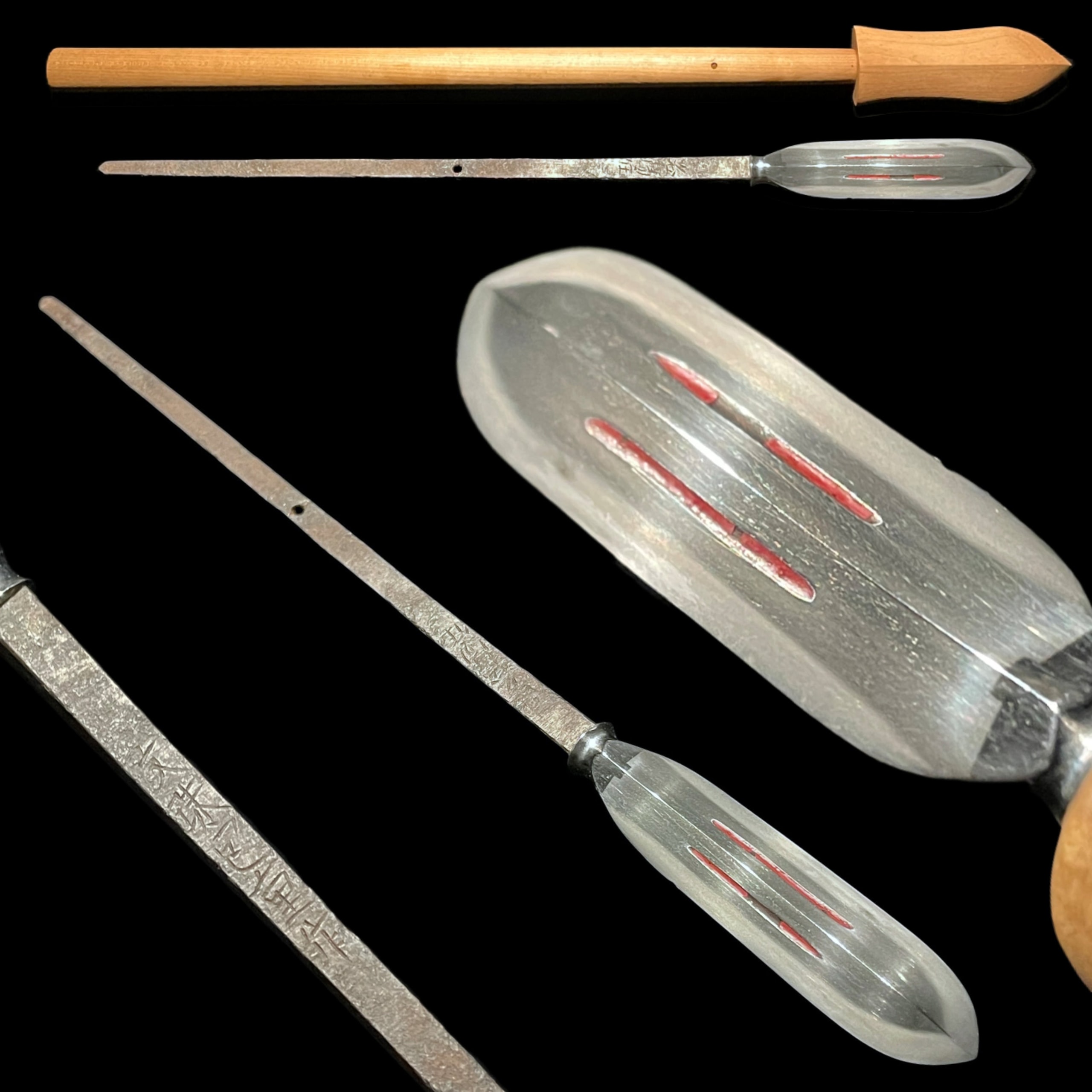
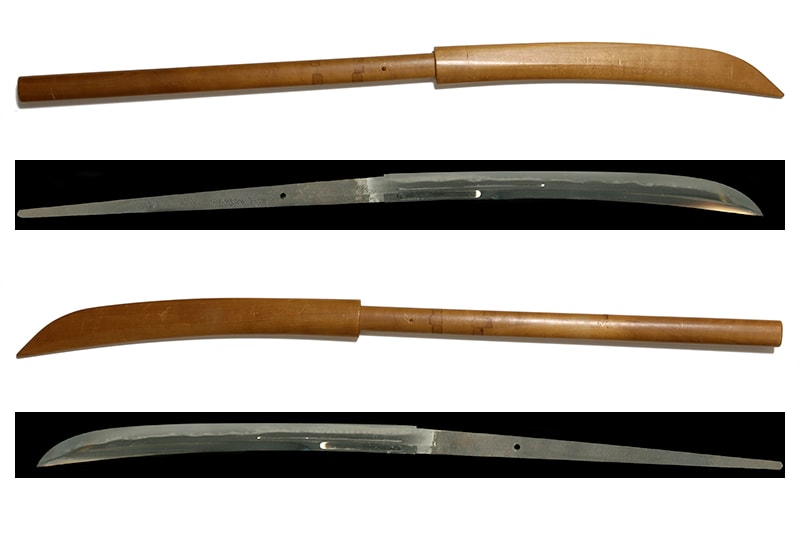
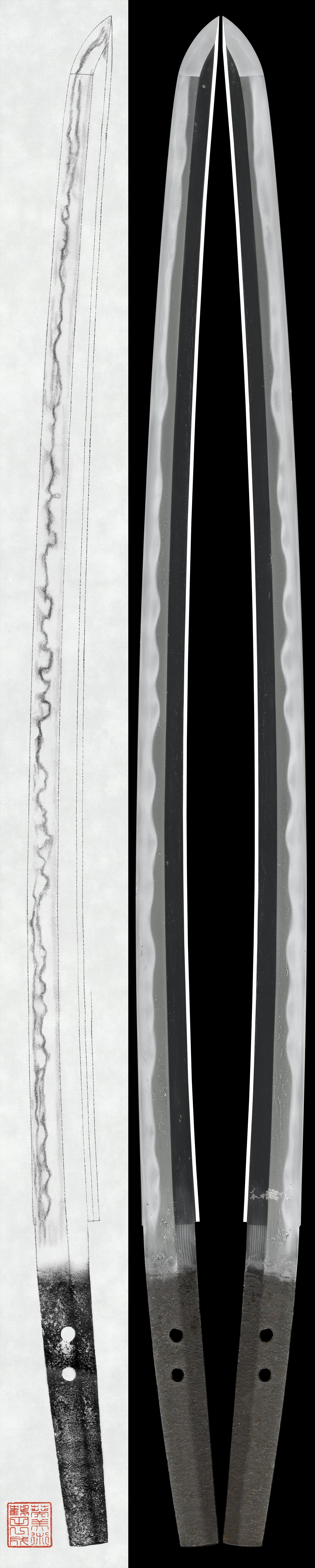
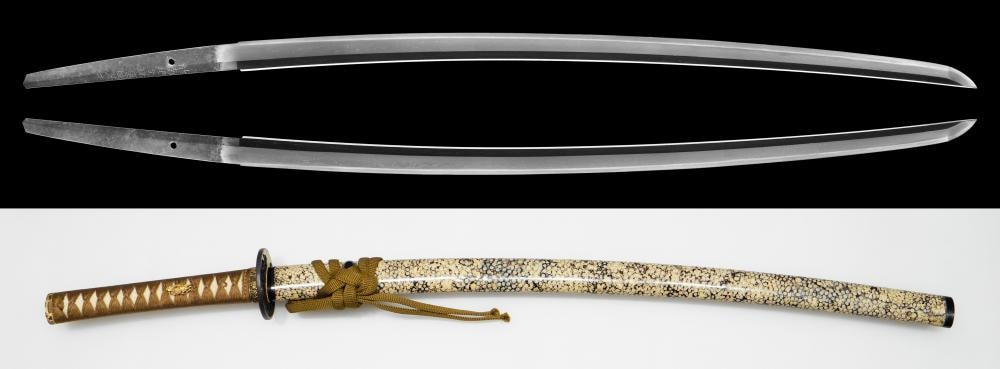
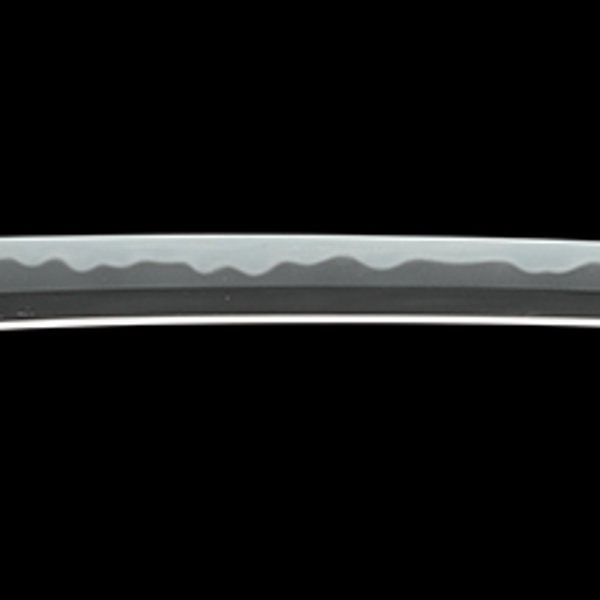
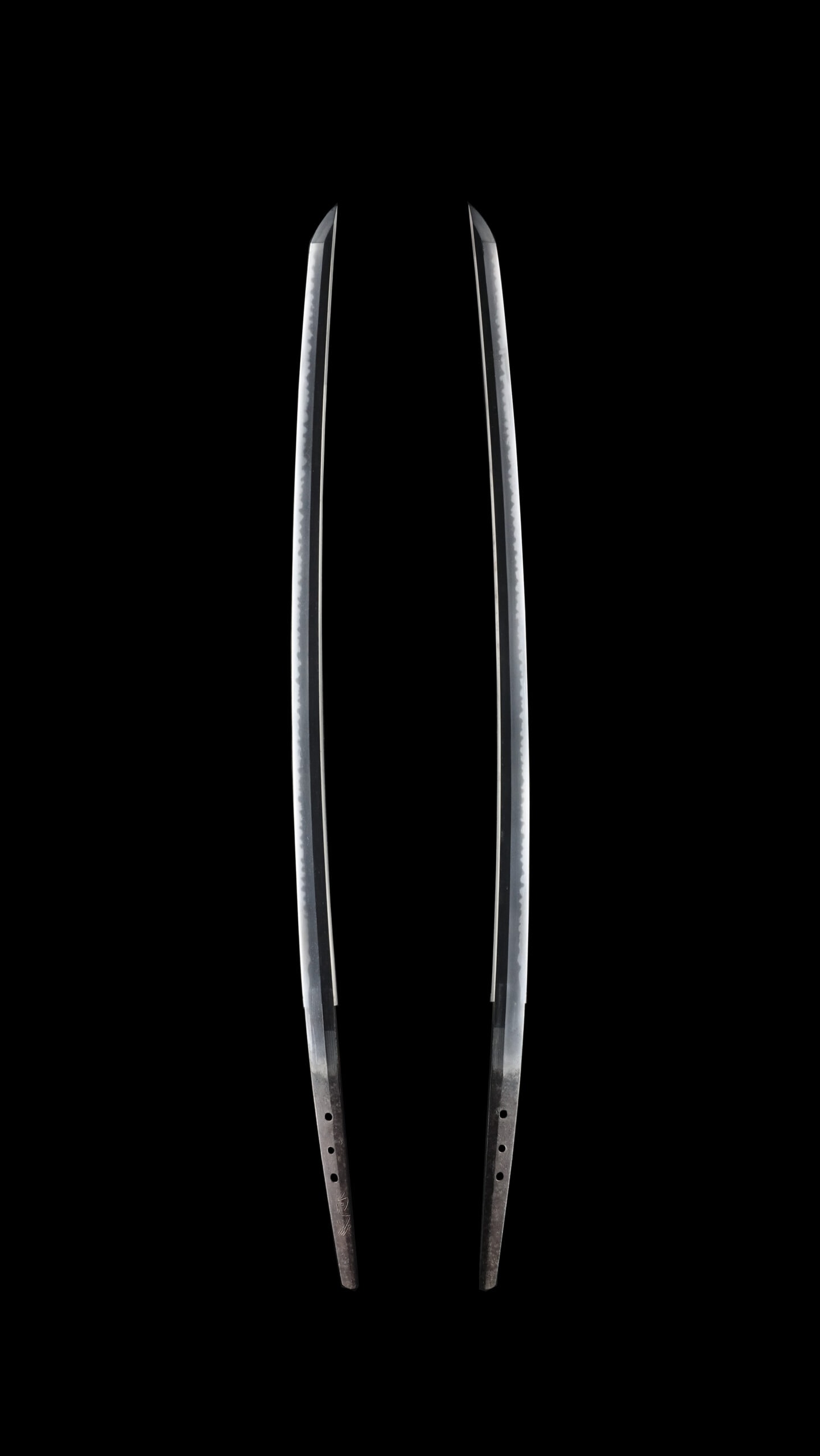
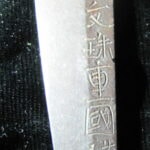
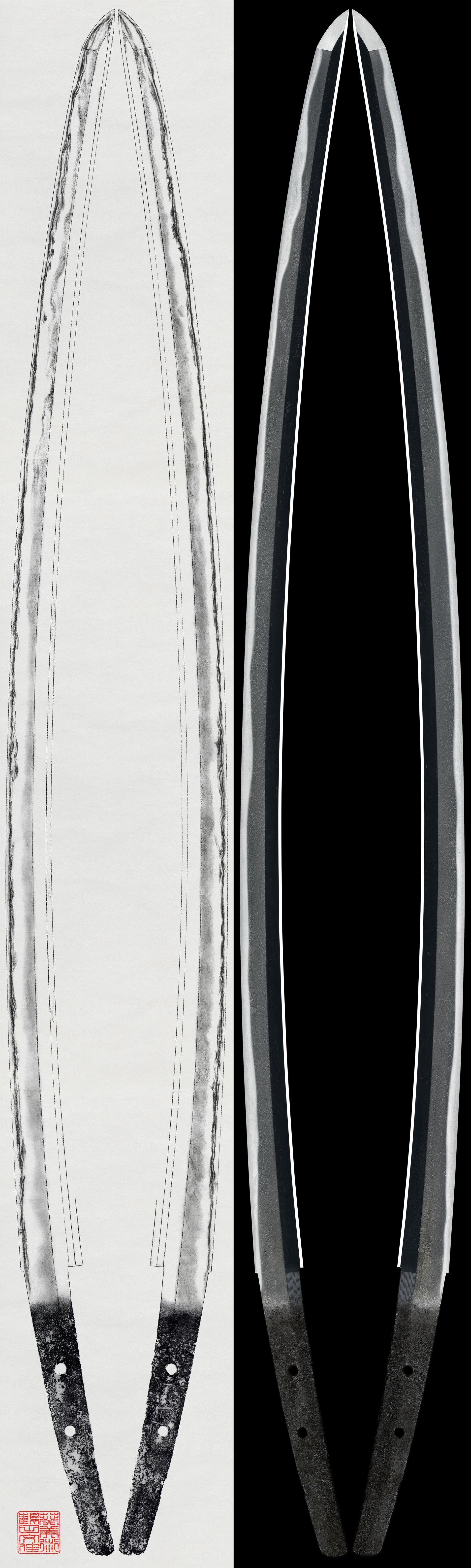
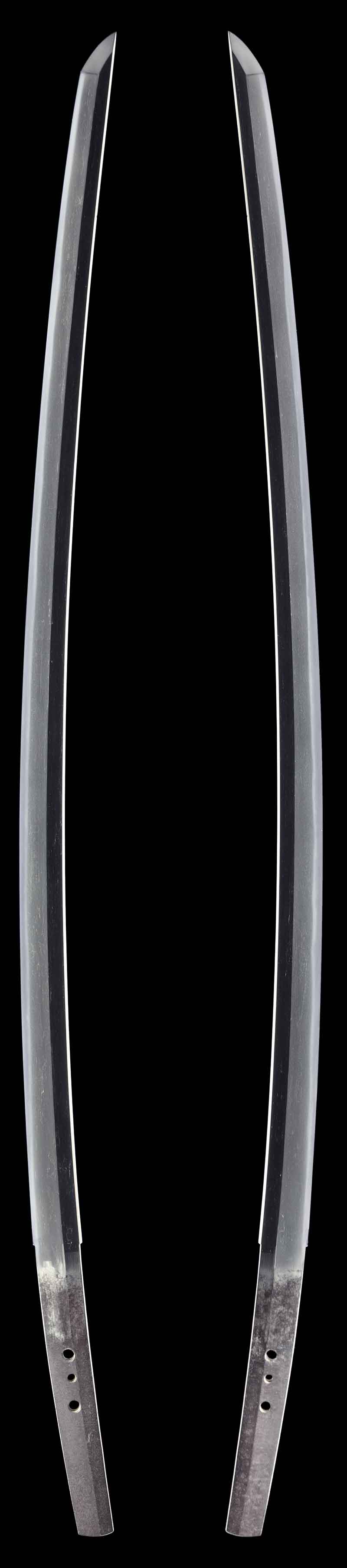
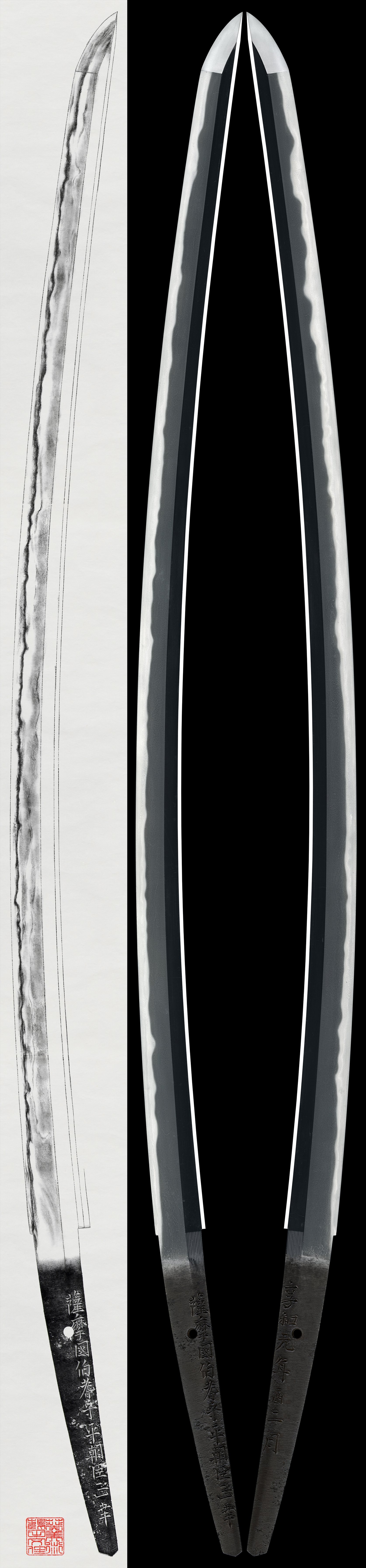
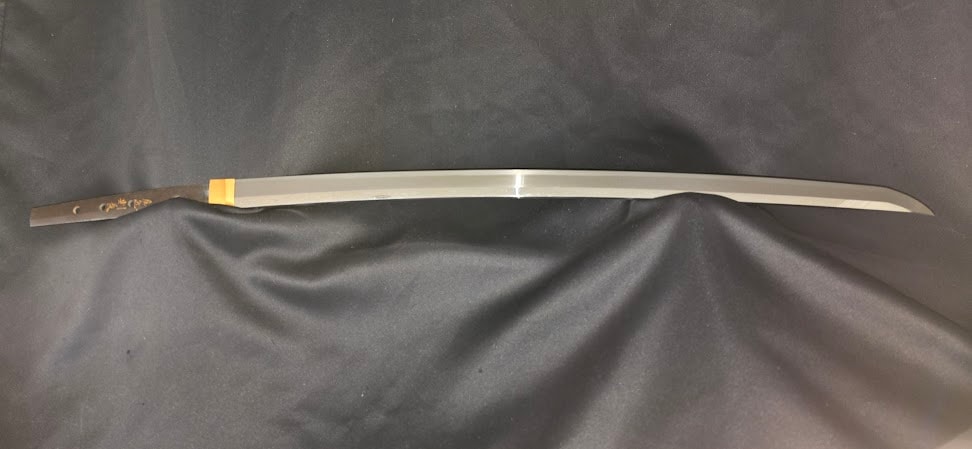
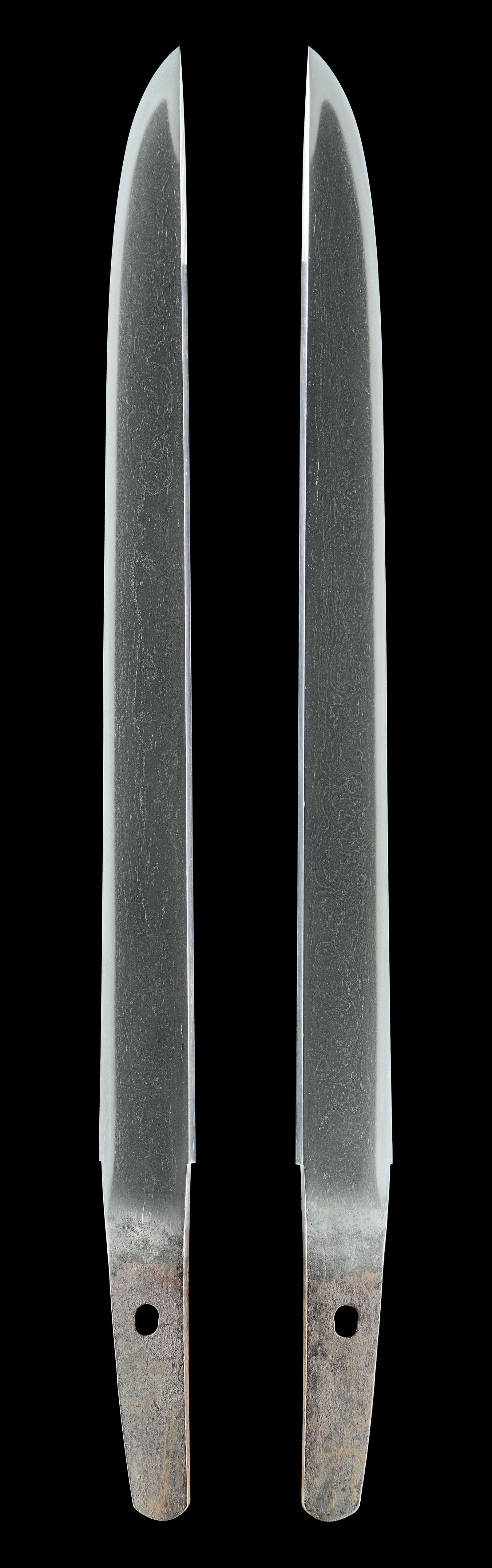
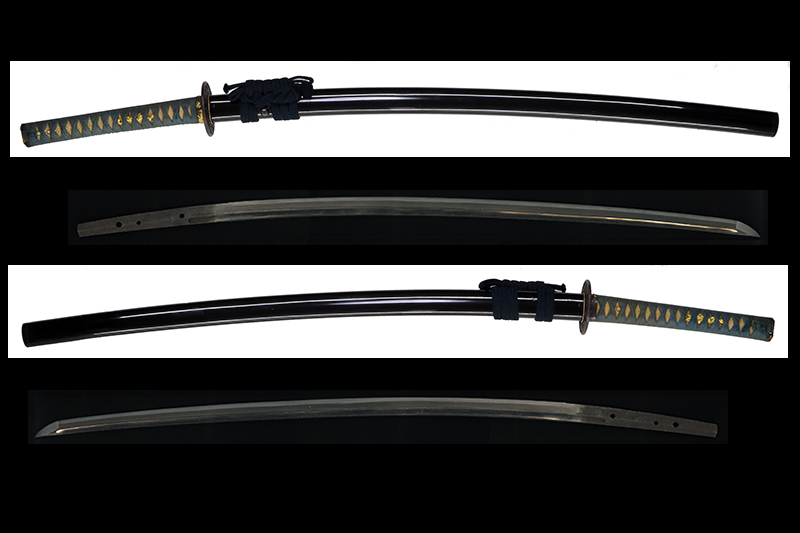
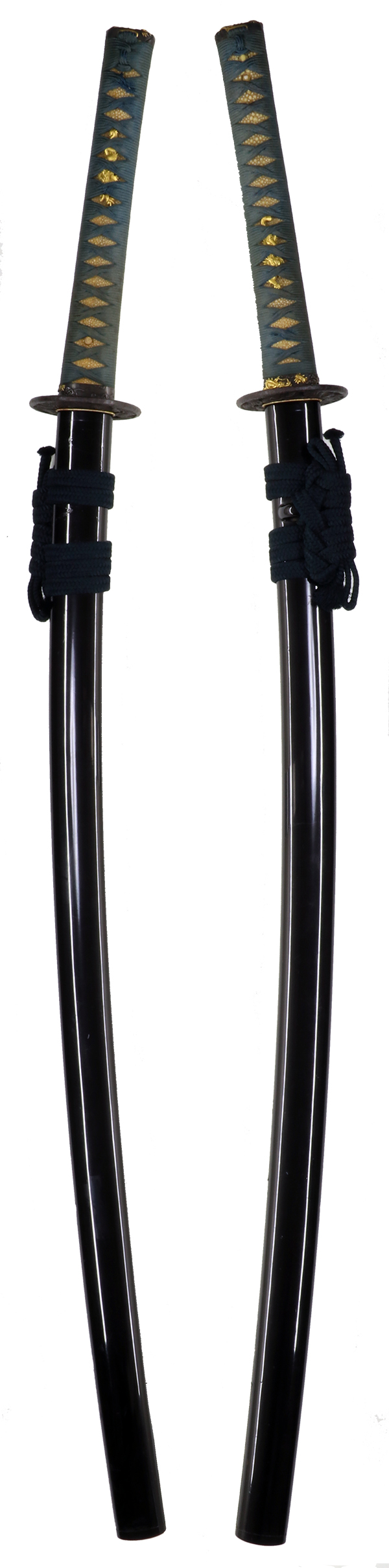
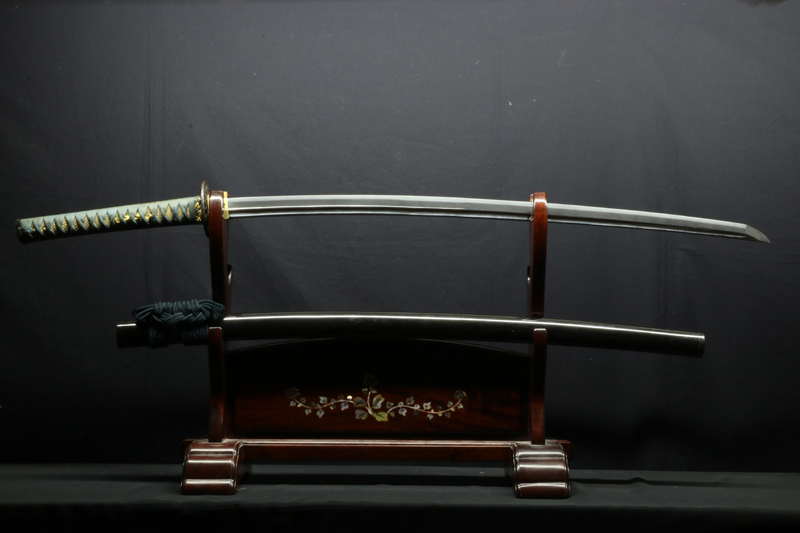
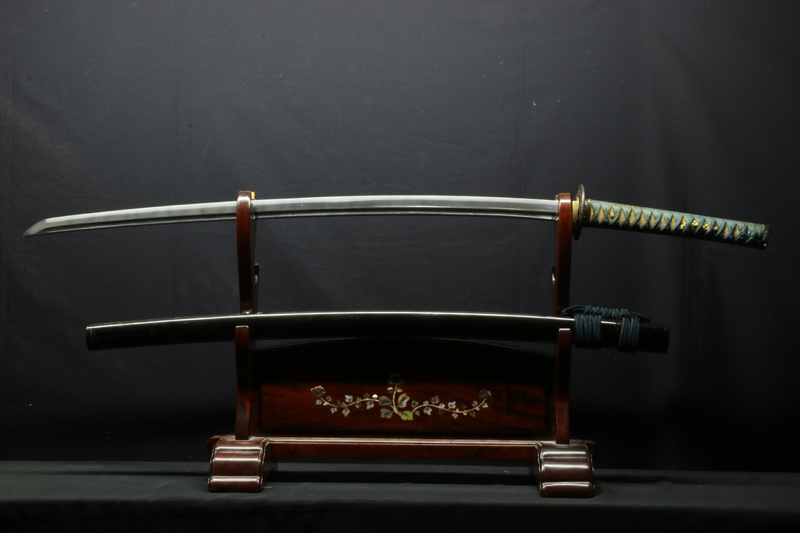
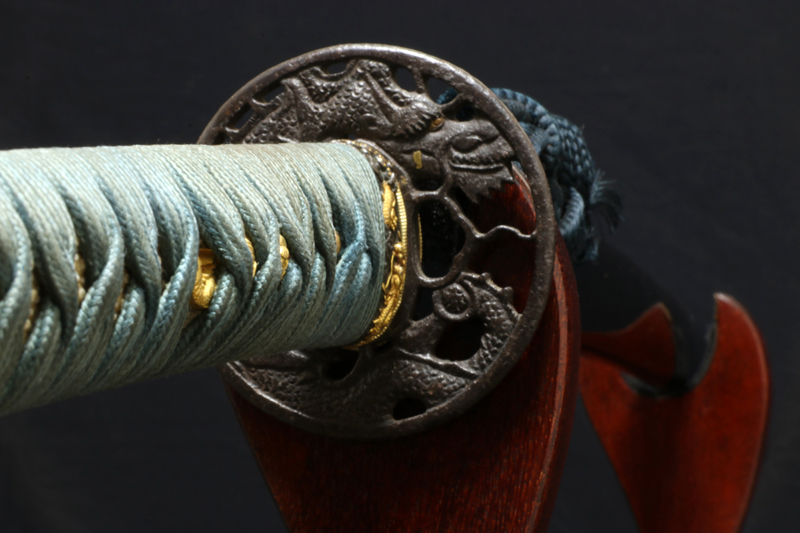
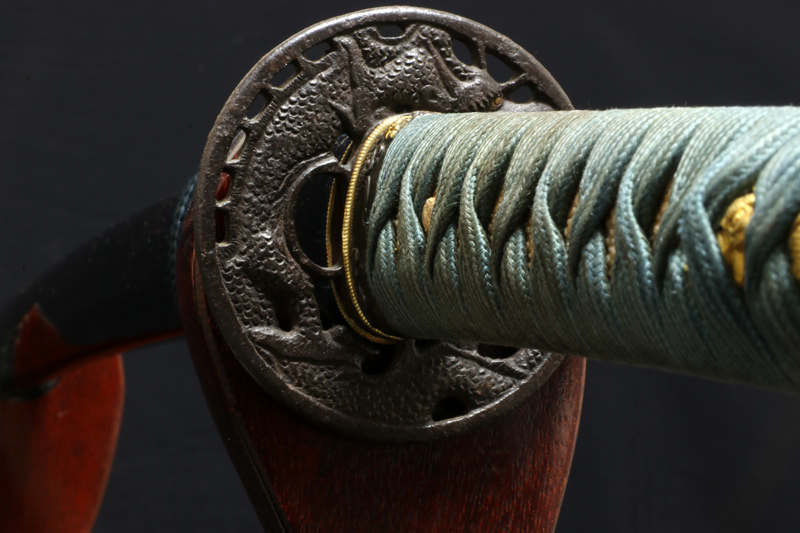
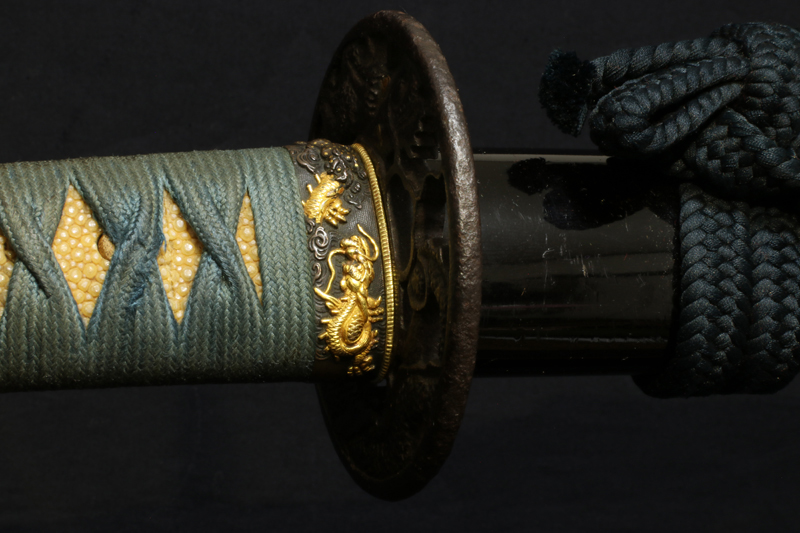
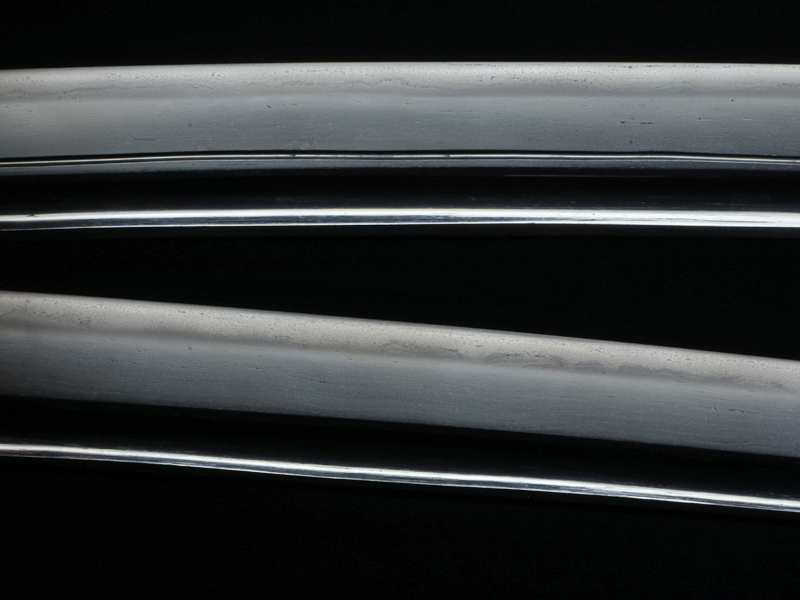
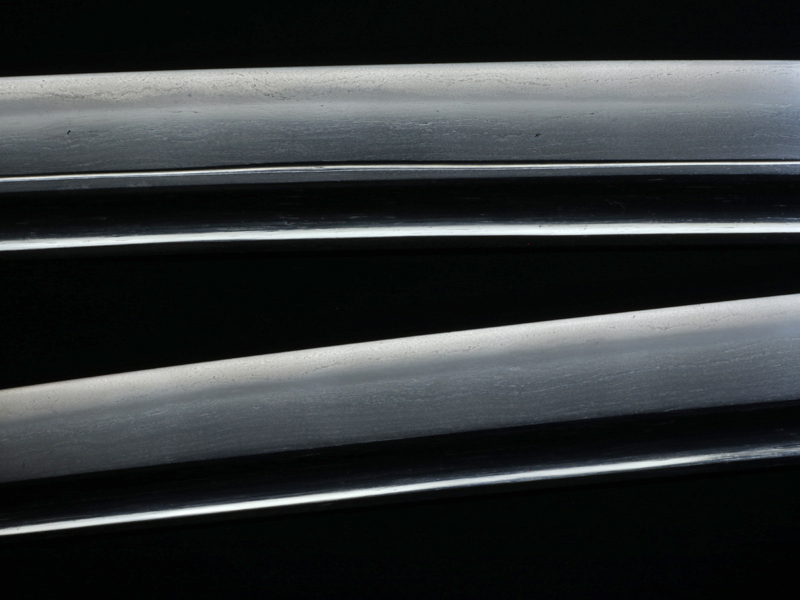
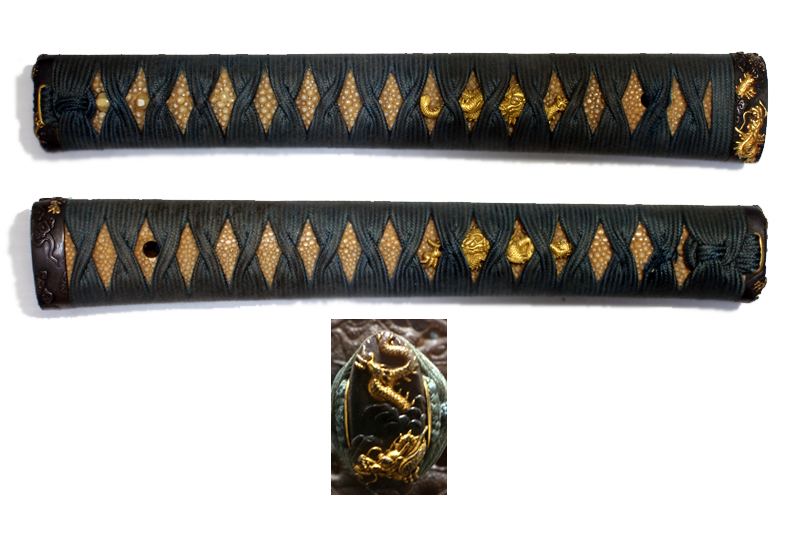
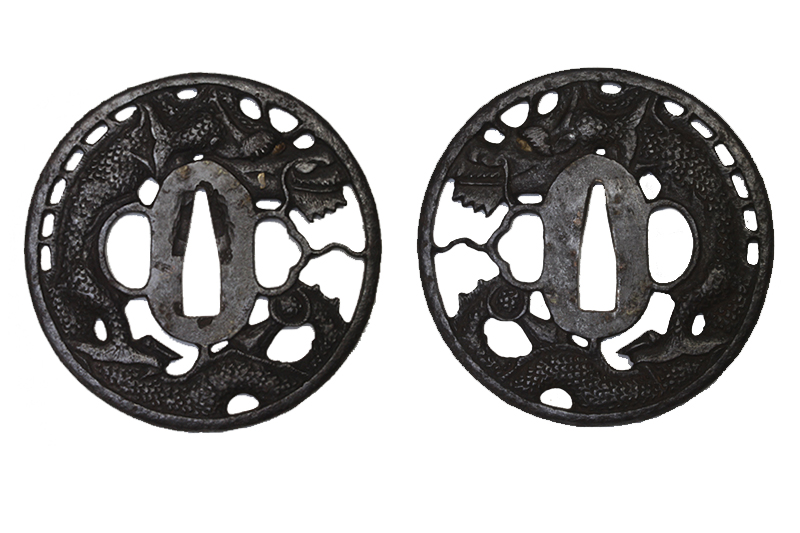
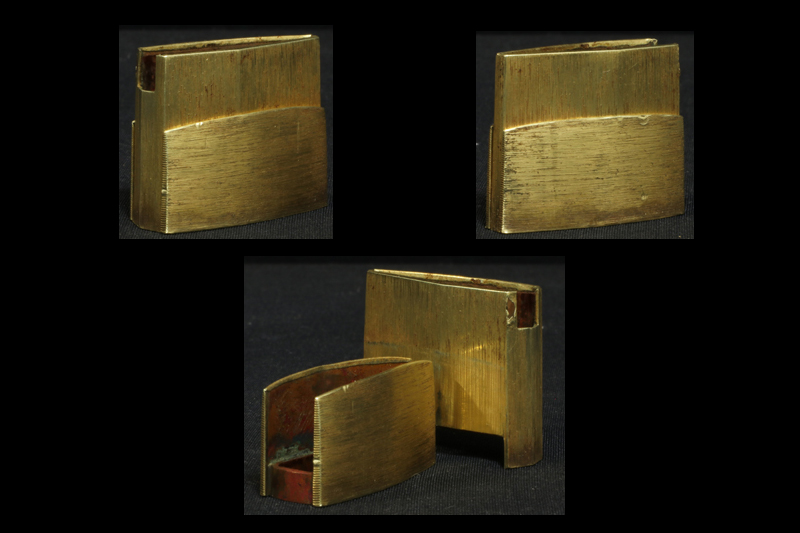
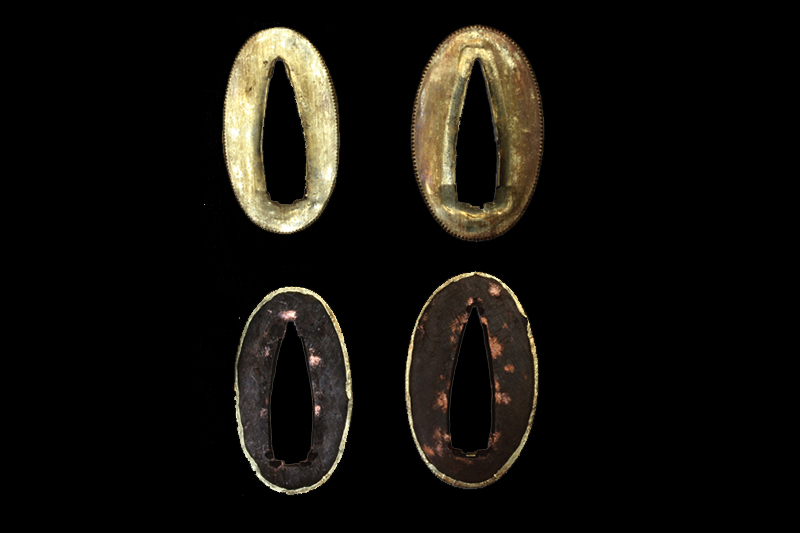
This is a Shinto period katana attributed to Shigekuni, though the listing expresses doubt about the signature's authenticity. The blade features an itame hada that flows into masame, with a straight-tempered (suguha) gunome midare hamon. The koshirae includes a shibuichi habaki, iron tsuba with dragon design, shakudo nanako fuchi-kashira with gold inlaid dragons, and a black lacquer saya.
 NihontoWatchBETA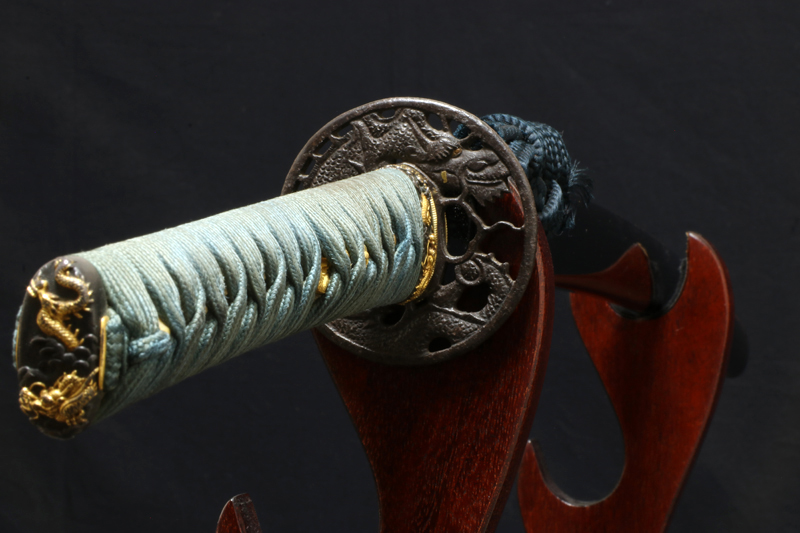

Yamato-den · Yamato
22 pieces on the market now
The setsumei of the Monju (文珠) line all gather around a single figure: Shigekuni (重国), the smith better known by the appellation Nanki Shigekuni (南紀重国). The records describe him as originally of Yamato Province and a late offshoot of the Tegai group (Tegai-ha)[[c:1]], whose common name was Kurōsaburō. Learn more →
| Smith | Era | Designated |
|---|---|---|
| Shigekuni重國 | 1596-1630 | 60 |
| Shigekuni重國 | 1655-1673 | 3 |
| Kanetsugu包次 | 1596-1615 | 0 |
| Kanekura包藏 | 1624-1644 | 0 |
| Kaneari包有 | 1681-1684 | 0 |
We could not find an authenticity certificate on the seller’s listing. Japanese swords and fittings are normally papered by the NBTHK (or the NTHK). Without one, the attribution is the seller’s own assessment and has not been independently verified — treat it with caution and ask the dealer about certification before buying.
Three-day cooling-off period from receipt for refund or exchange. Return shipping and transfer fees are customer responsibility. Items showing use or condition changes are non-returnable.
This is a Shinto period katana attributed to Shigekuni, though the listing expresses doubt about the signature's authenticity. The blade features an itame hada that flows into masame, with a straight-tempered (suguha) gunome midare hamon. The koshirae includes a shibuichi habaki, iron tsuba with dragon design, shakudo nanako fuchi-kashira with gold inlaid dragons, and a black lacquer saya.
NihontoWatchBETAYamato-den · Yamato
22 pieces on the market now
The setsumei of the Monju (文珠) line all gather around a single figure: Shigekuni (重国), the smith better known by the appellation Nanki Shigekuni (南紀重国). The records describe him as originally of Yamato Province and a late offshoot of the Tegai group (Tegai-ha)[[c:1]], whose common name was Kurōsaburō. Learn more →
| Smith | Era | Designated |
|---|---|---|
| Shigekuni重國 | 1596-1630 | 60 |
| Shigekuni重國 | 1655-1673 | 3 |
| Kanetsugu包次 | 1596-1615 | 0 |
| Kanekura包藏 | 1624-1644 | 0 |
| Kaneari包有 | 1681-1684 | 0 |
We could not find an authenticity certificate on the seller’s listing. Japanese swords and fittings are normally papered by the NBTHK (or the NTHK). Without one, the attribution is the seller’s own assessment and has not been independently verified — treat it with caution and ask the dealer about certification before buying.
Three-day cooling-off period from receipt for refund or exchange. Return shipping and transfer fees are customer responsibility. Items showing use or condition changes are non-returnable.