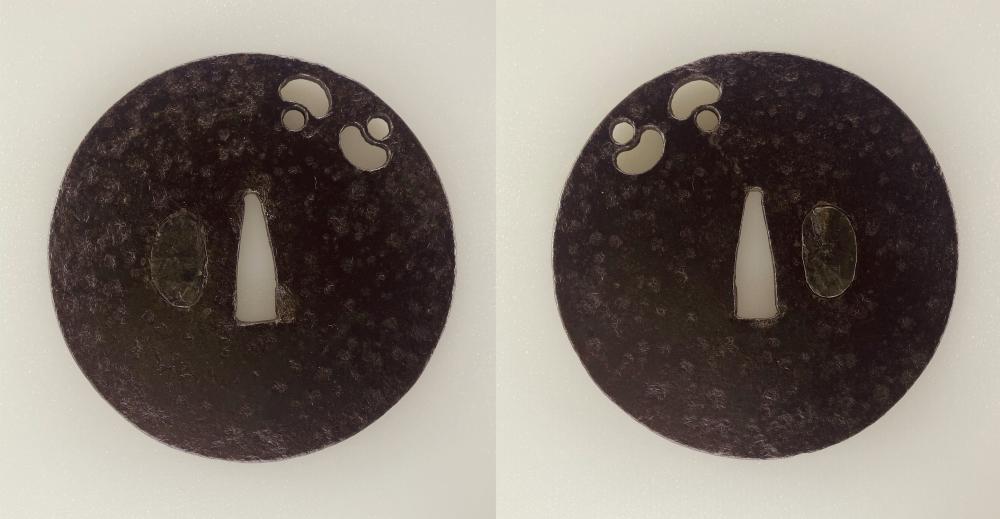
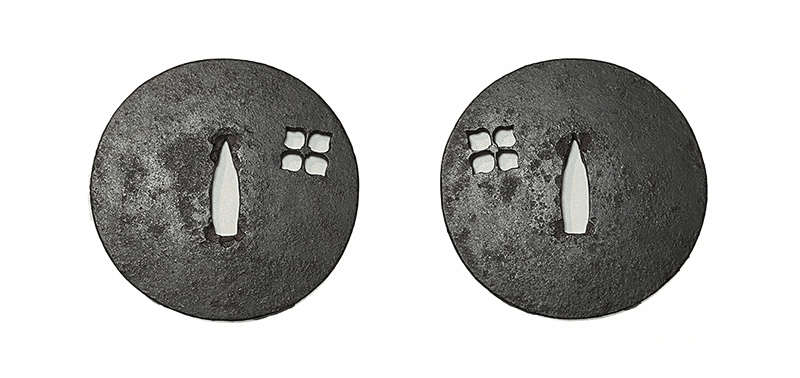
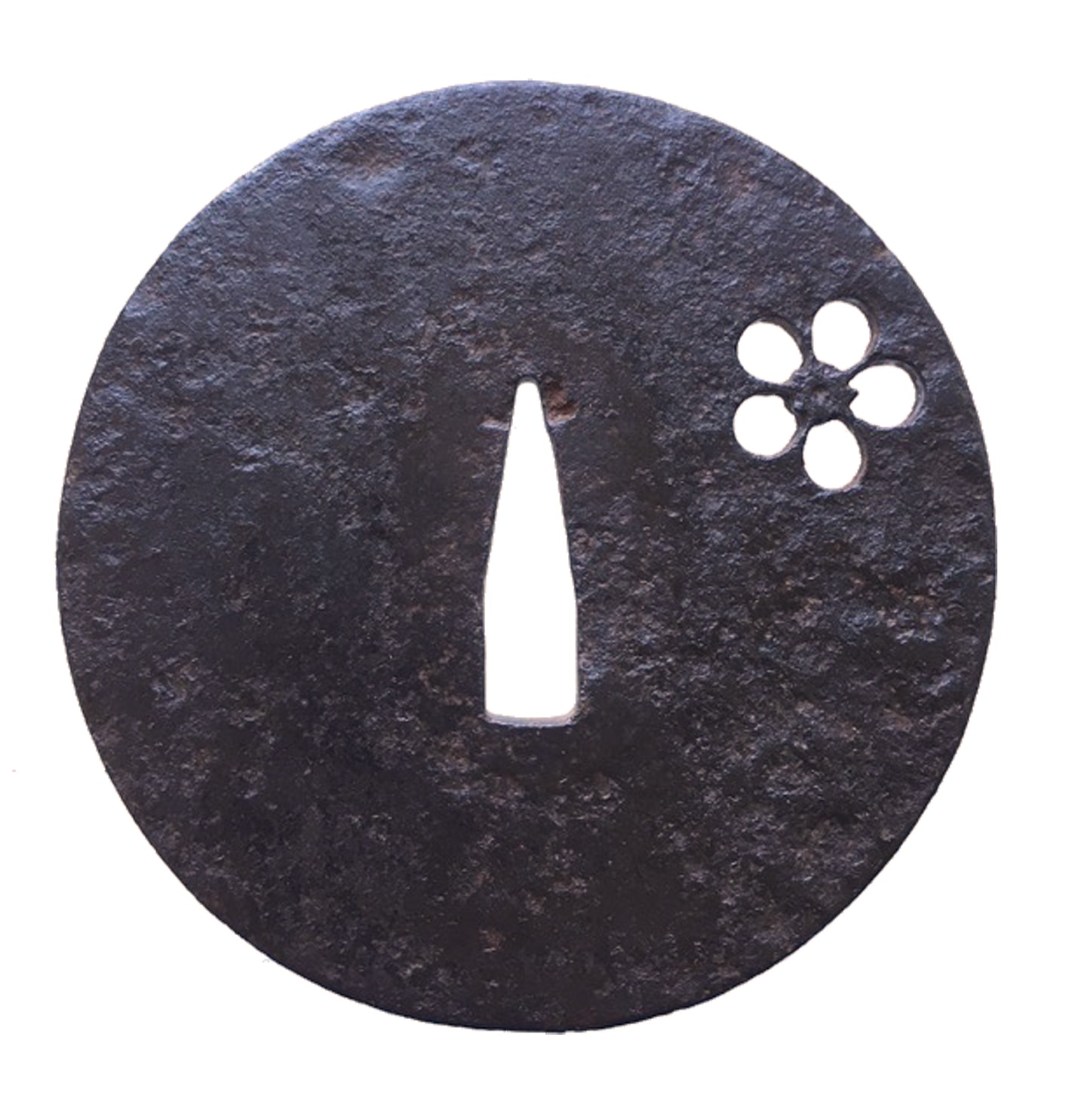
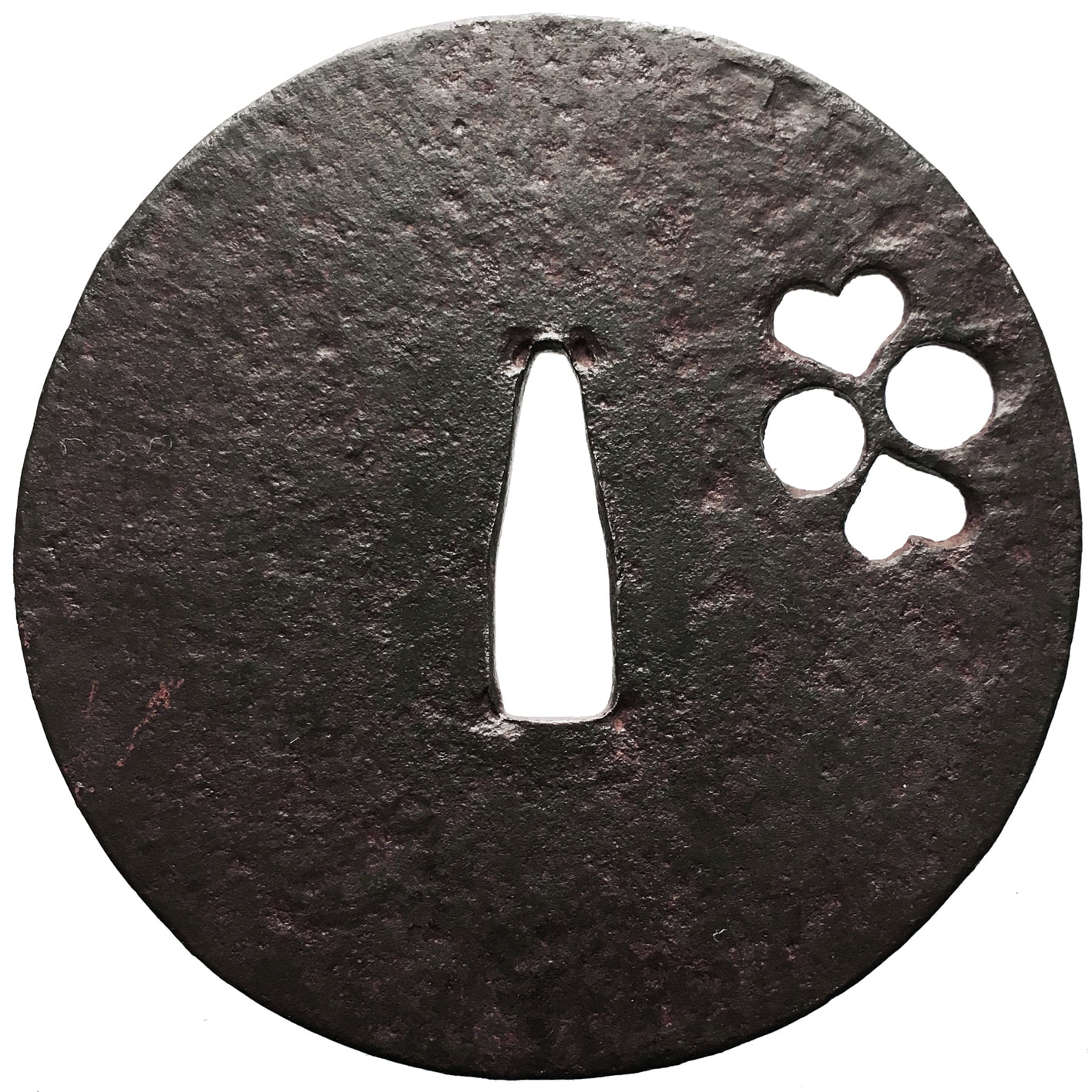
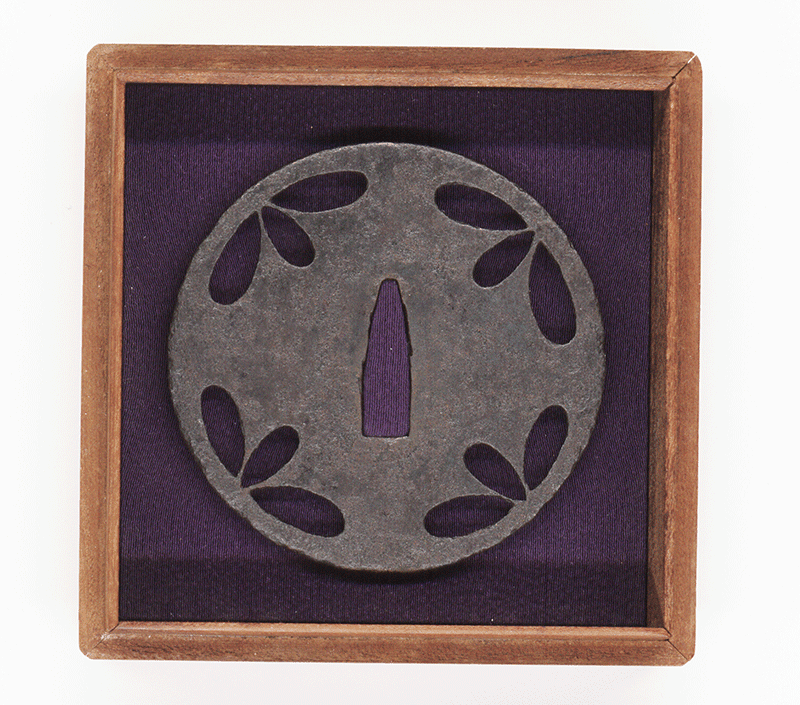
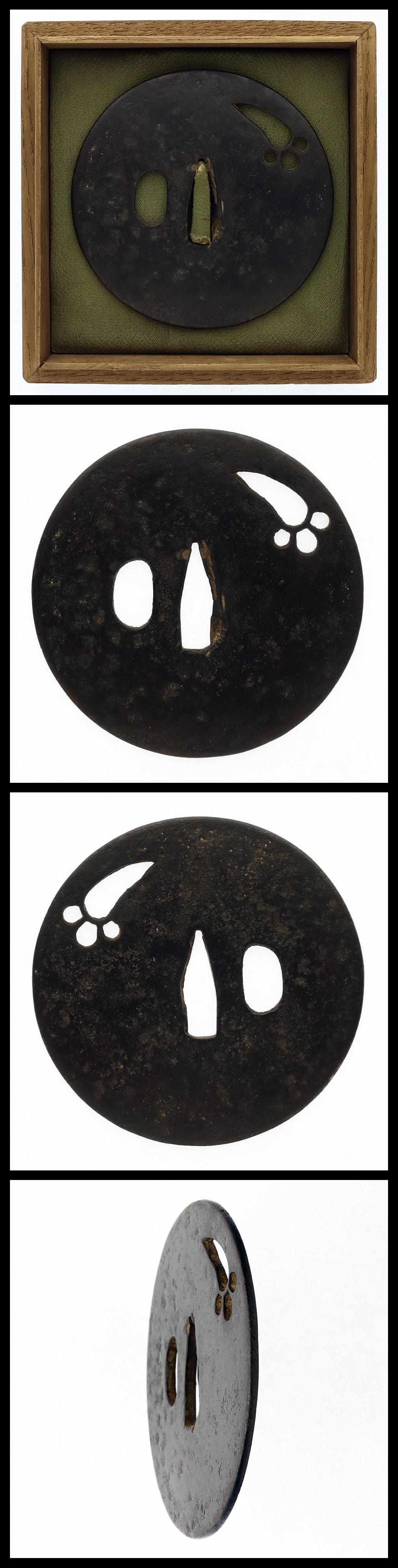
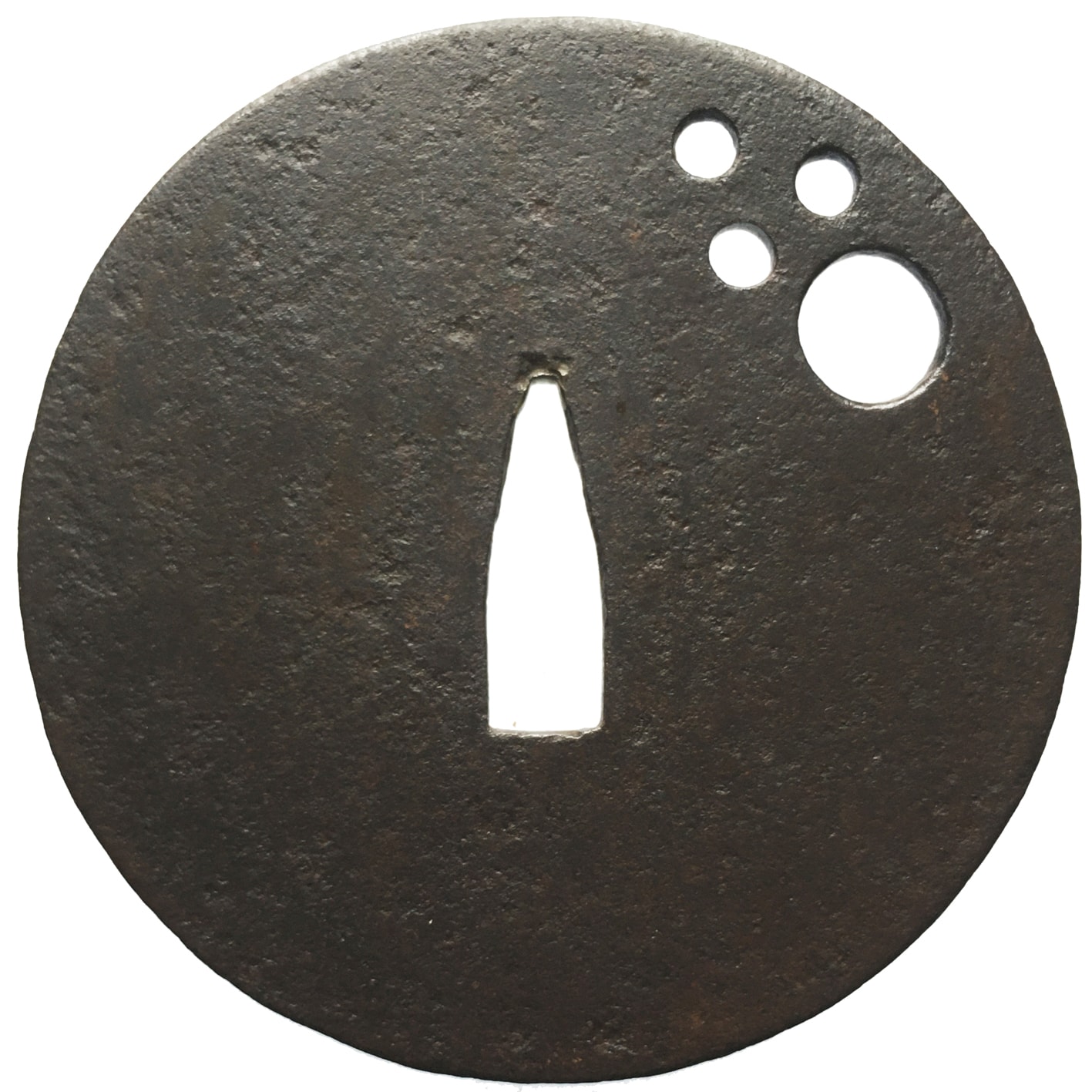
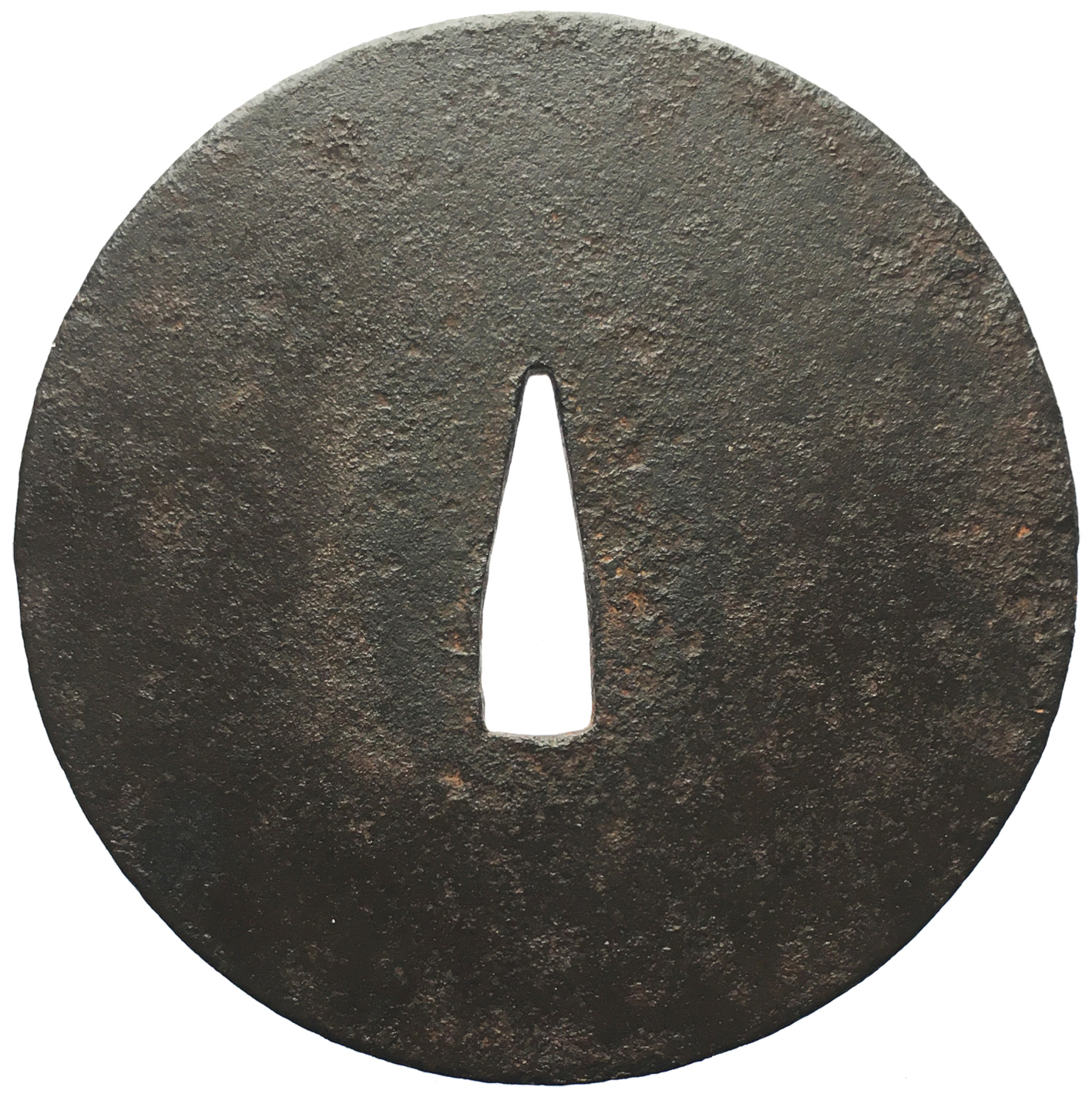
A Ko-Tosho tsuba in mumon (no design) style, dating from the Nambokucho or Muromachi period (1350-1550). It is in original ubu condition without hitsu-ana. This type of tsuba was commonly used on fighting sashizoe or katana, and retains much of its black lacquer, though some deeper rust areas are visible on the seppa-dai.
 NihontoWatch
Ko-Tosho School
Kotō
Unsigned
Tosho-Katchushi
We could not find an authenticity certificate on the seller’s listing. Japanese swords and fittings are normally papered by the NBTHK (or the NTHK). Without one, the attribution is the seller’s own assessment and has not been independently verified — treat it with caution and ask the dealer about certification before buying.
All sales are final and no refund will be issued. Individual refund conditions may be offered on request. For items with third-party certificates (e.g. NBTHK), a return is offered if the certificate is proven falsified and claimed within one year after shipment.
A Ko-Tosho tsuba in mumon (no design) style, dating from the Nambokucho or Muromachi period (1350-1550). It is in original ubu condition without hitsu-ana. This type of tsuba was commonly used on fighting sashizoe or katana, and retains much of its black lacquer, though some deeper rust areas are visible on the seppa-dai.
NihontoWatchKo-Tosho School
Kotō
Unsigned
Tosho-Katchushi
We could not find an authenticity certificate on the seller’s listing. Japanese swords and fittings are normally papered by the NBTHK (or the NTHK). Without one, the attribution is the seller’s own assessment and has not been independently verified — treat it with caution and ask the dealer about certification before buying.
All sales are final and no refund will be issued. Individual refund conditions may be offered on request. For items with third-party certificates (e.g. NBTHK), a return is offered if the certificate is proven falsified and claimed within one year after shipment.