 NihontoWatchNihontoWatch
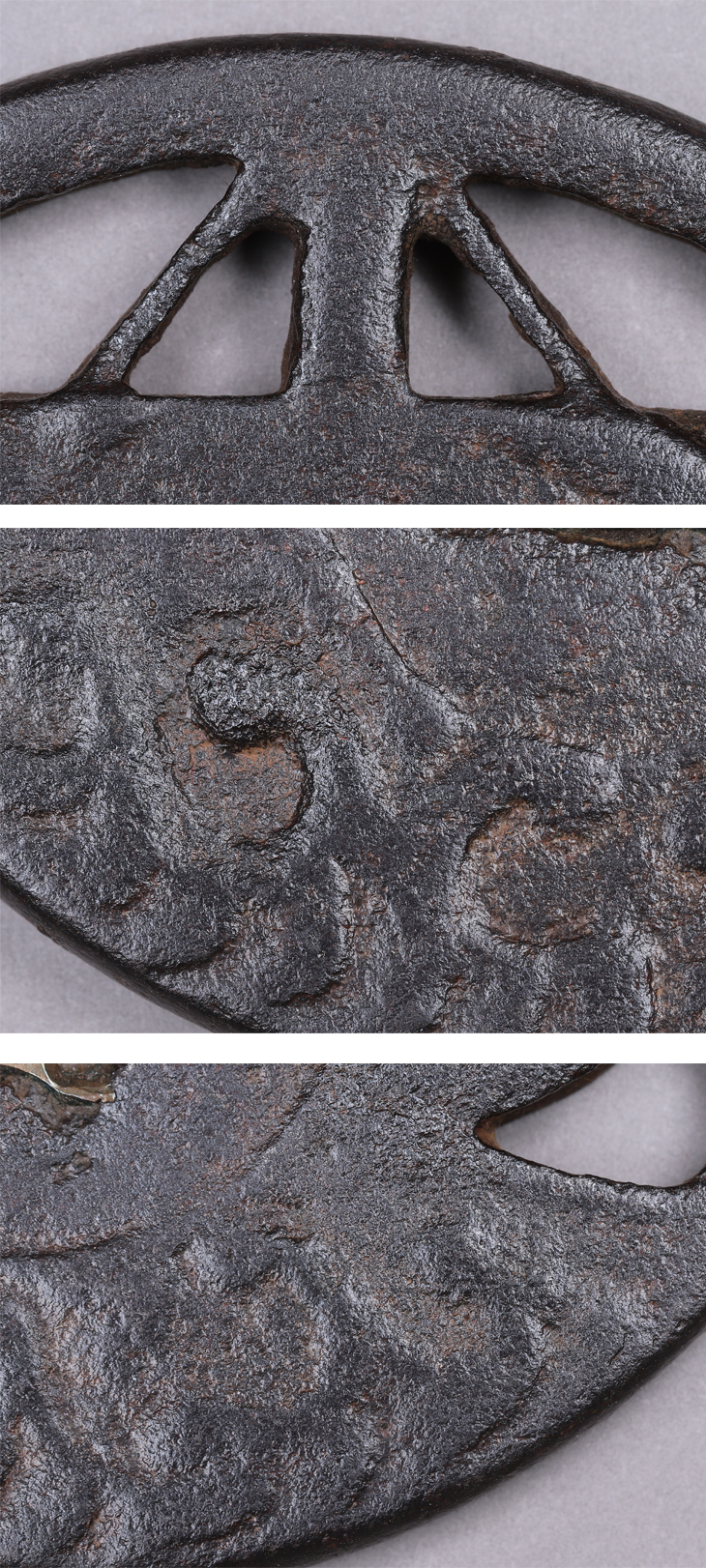
Tetsu-ji maru-gata nikubori jisukashi kaku-mimi kogai-ana shakudo-ume A large sail catching the wind in rough waves is called a "fuho," and this work is said to be the true essence of Yagyu tsuba, depicting the secret techniques of strategy by likening the momentum of the sail to martial arts. Yagyu tsuba, said to have been commissioned by the fourth generation of the Owari Yagyu, Yagyu Renyasai, are said to have been born from foundations made by Owari tsuba-ko such as Yamakichibei, which Renyasai himself then rusted and finished with yakite-shiage. The design is said to be the work of Kano Tsunenobu, and it remains recorded in the "Yagyu Renya Shikomi Tsuba Zufu." In a dedicated kokutan tsuba box
Certificate reading — 無銘(柳生)
NihontoWatchOffered by Samurai Nippon
This piece has sold
Get an email when new Yagyu School work hits the market.




Machine translation from the shop's Japanese · may contain errors ·
Iron-tsuba · Owari
A Hozon-certified fitting of notably superior craftsmanship and condition, often with signature or workmanship of high reference value.
The NBTHK (Nihon Bijutsu Tōken Hozon Kyōkai, the Society for the Preservation of Japanese Art Swords) is a public-interest incorporated foundation founded in 1948 and supervised by Japan’s Agency for Cultural Affairs (Bunkachō); it is based at the Japanese Sword Museum in Tokyo. Its expert panels physically examine each submitted work (shinsa) and issue a certificate (kanteishō) ranking it by artistic and historical merit. NBTHK papers are the most widely recognized standard of authentication for Japanese swords and fittings.
NBTHK official siteFor one-of-a-kind items such as swords, sword fittings and antiques, other customers may be waiting for the item, so please contact us about a return within 3 days of its arrival and ship it back within 8 days. Refunds are made on the day the returned item arrives.