Two courts, sixty years of war, and the most dramatic silhouettes in the sword’s history: broad blades, extended points, true ōdachi later cut down into the majestic katana collectors prize. The Sōshū manner was the style of the age.
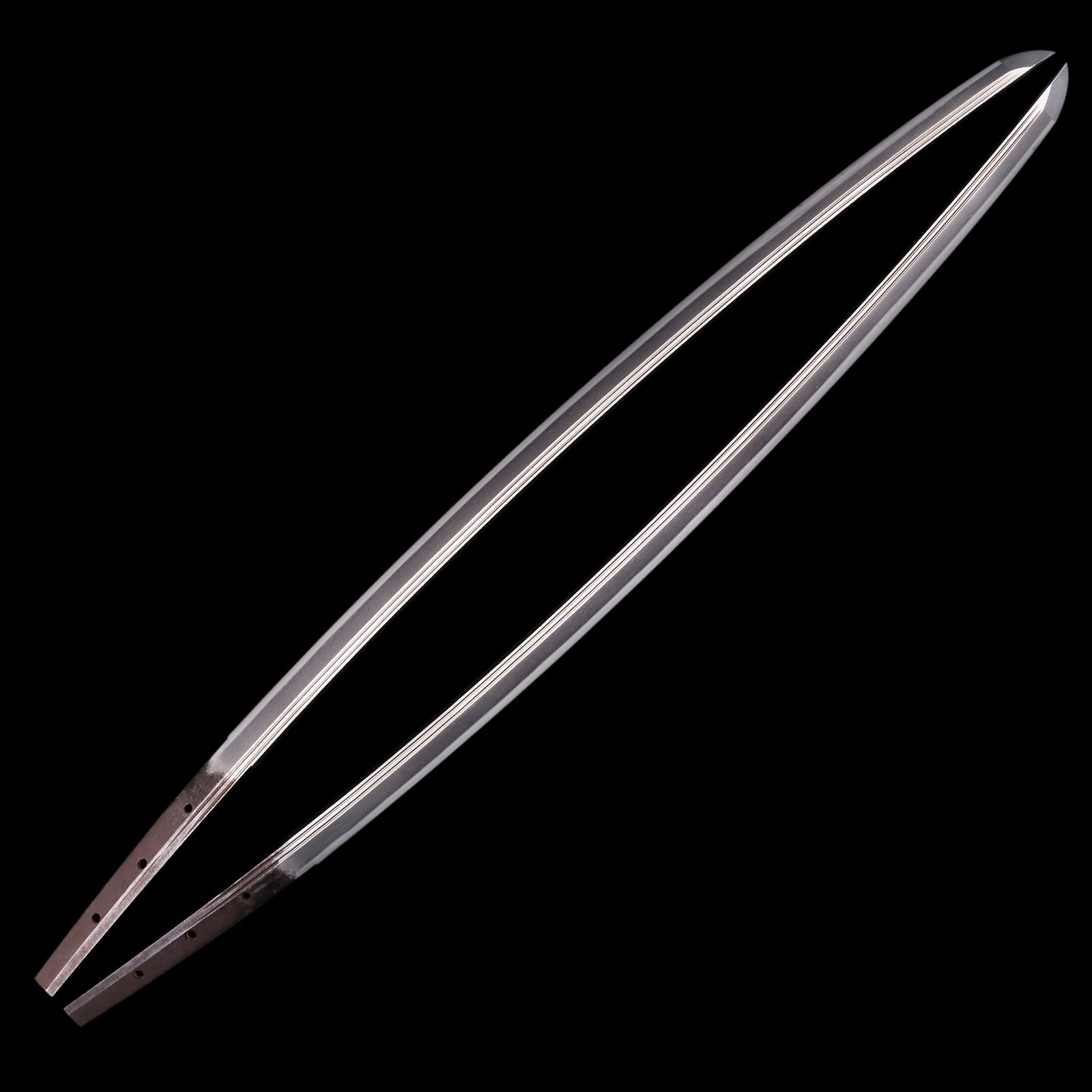
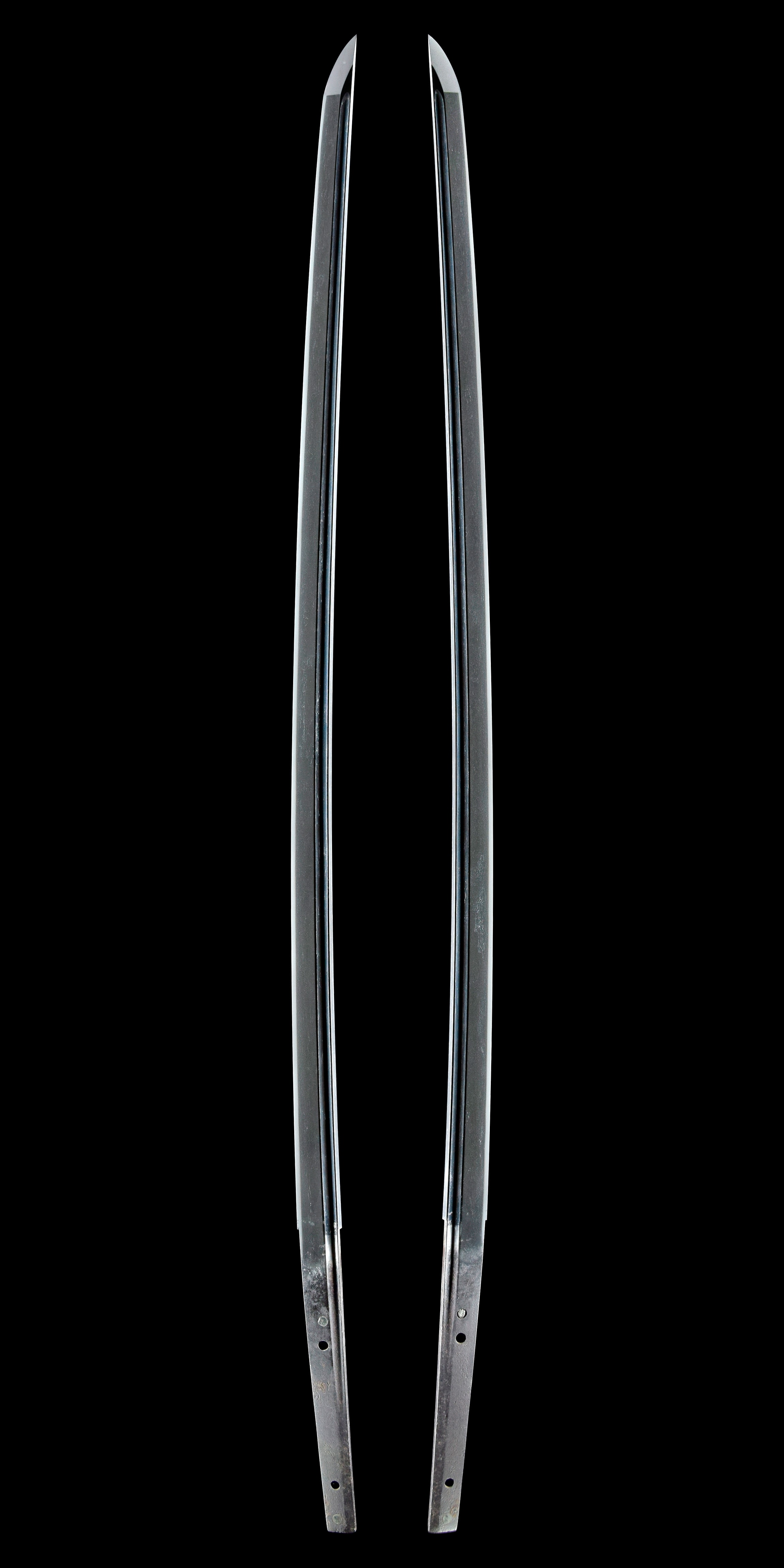
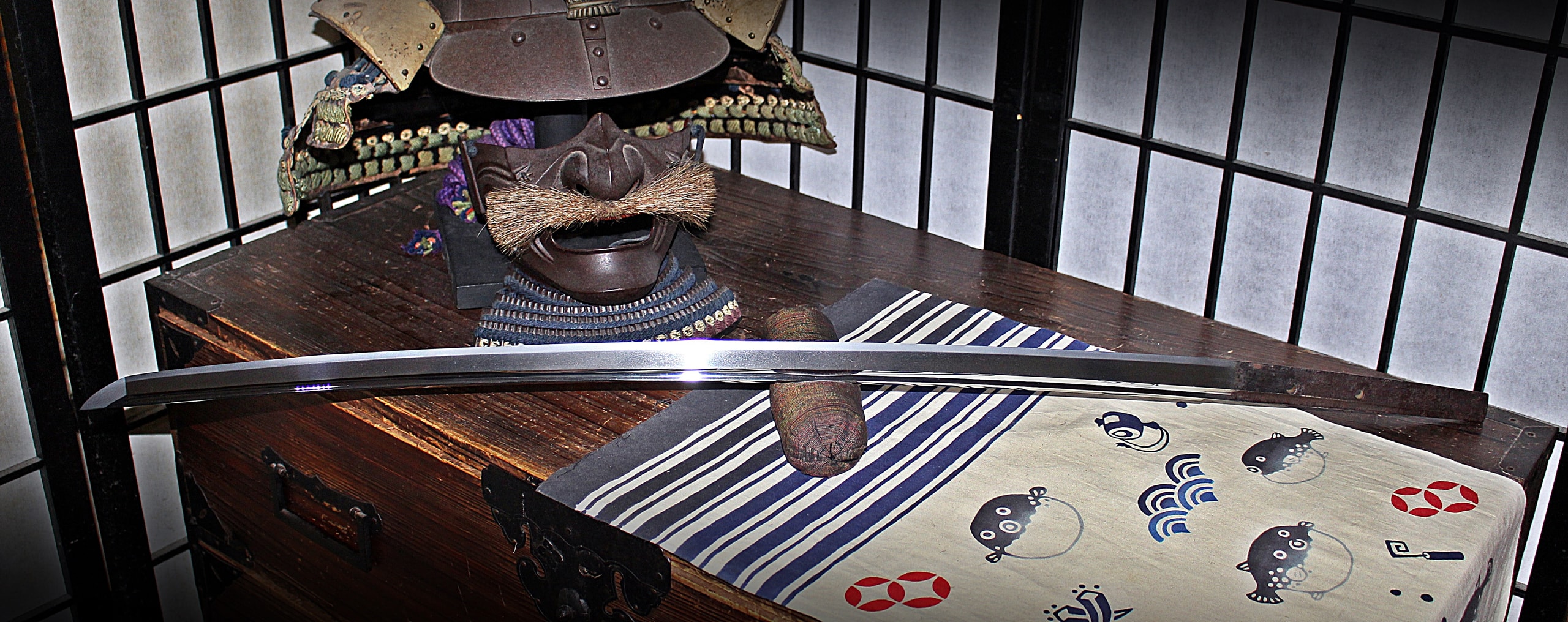
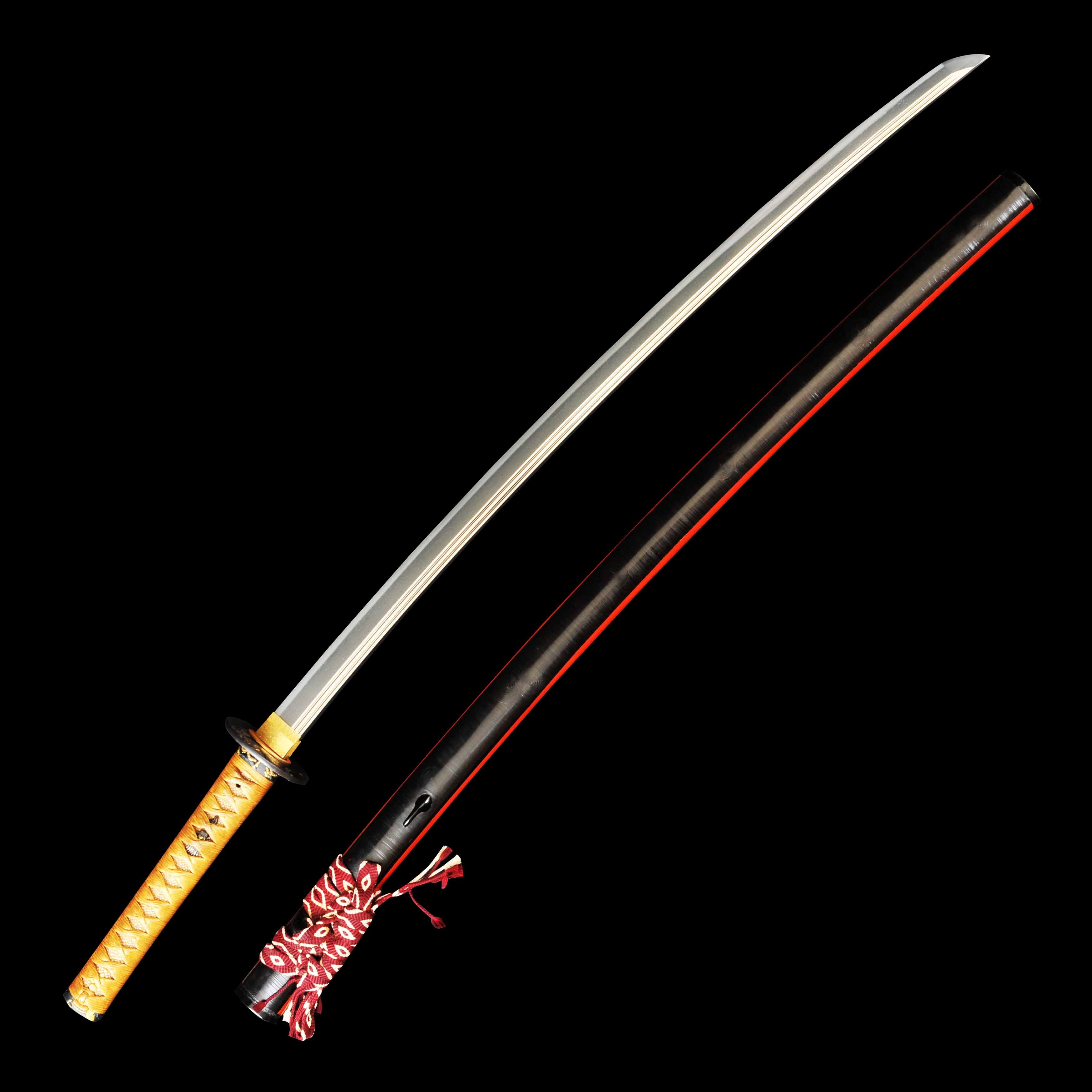
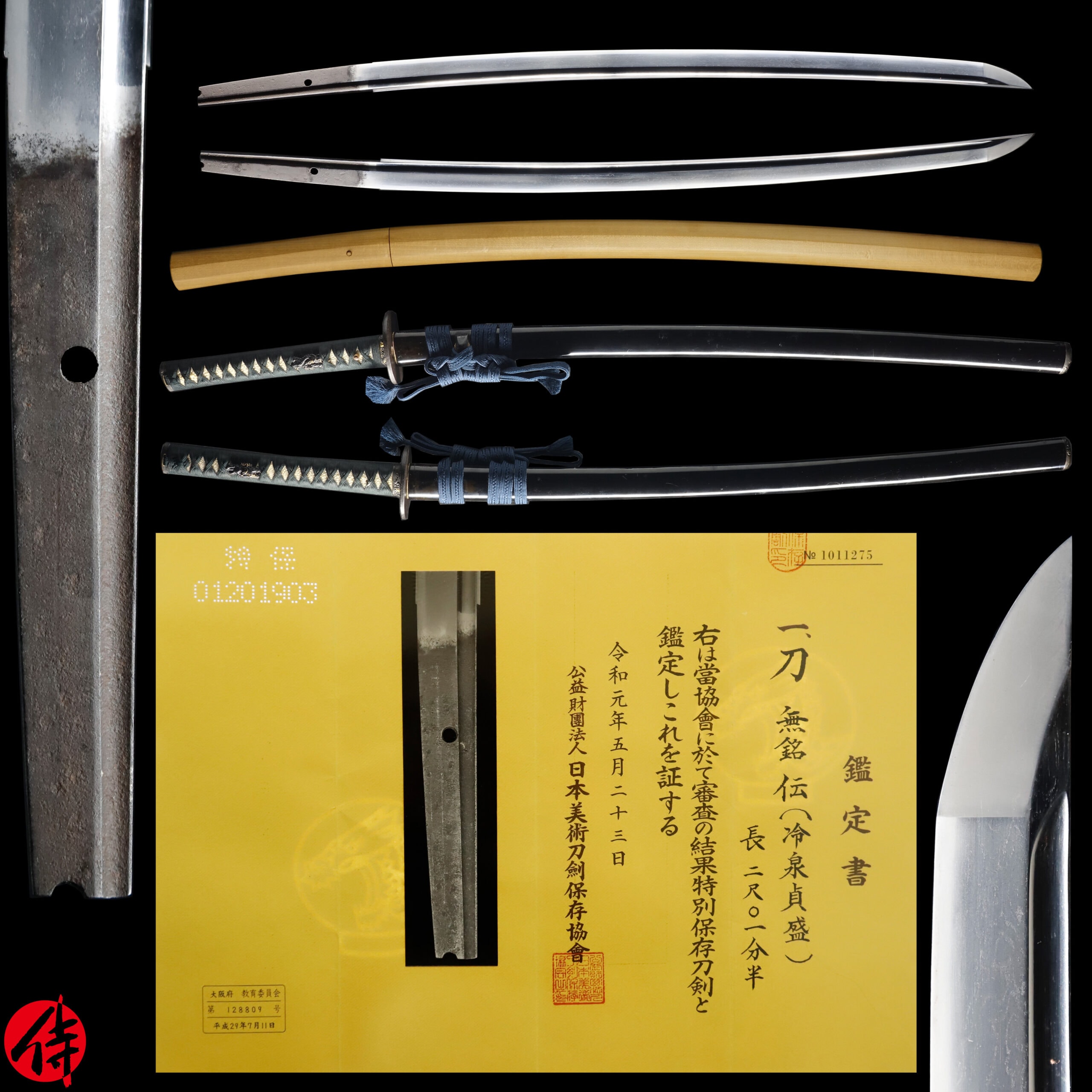
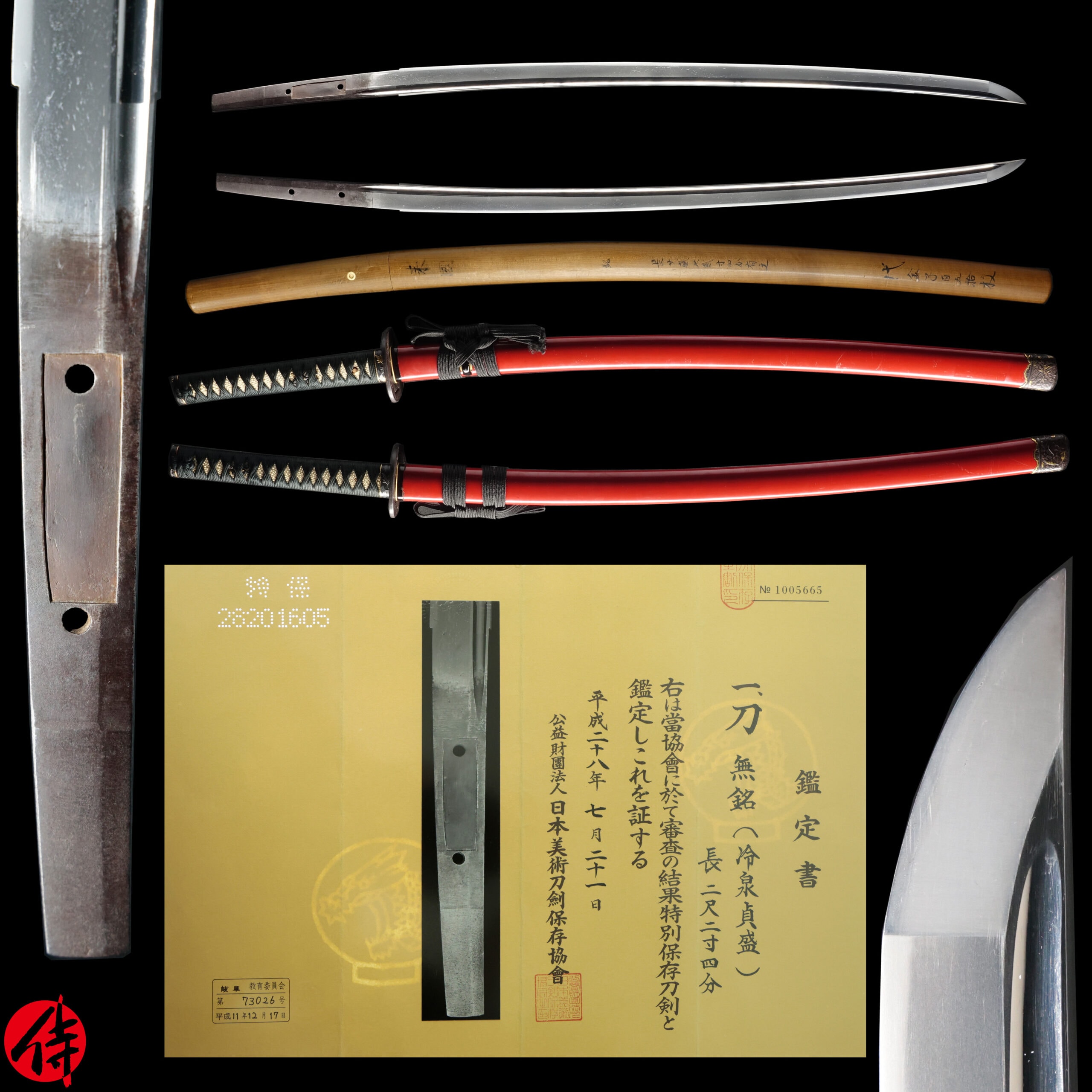
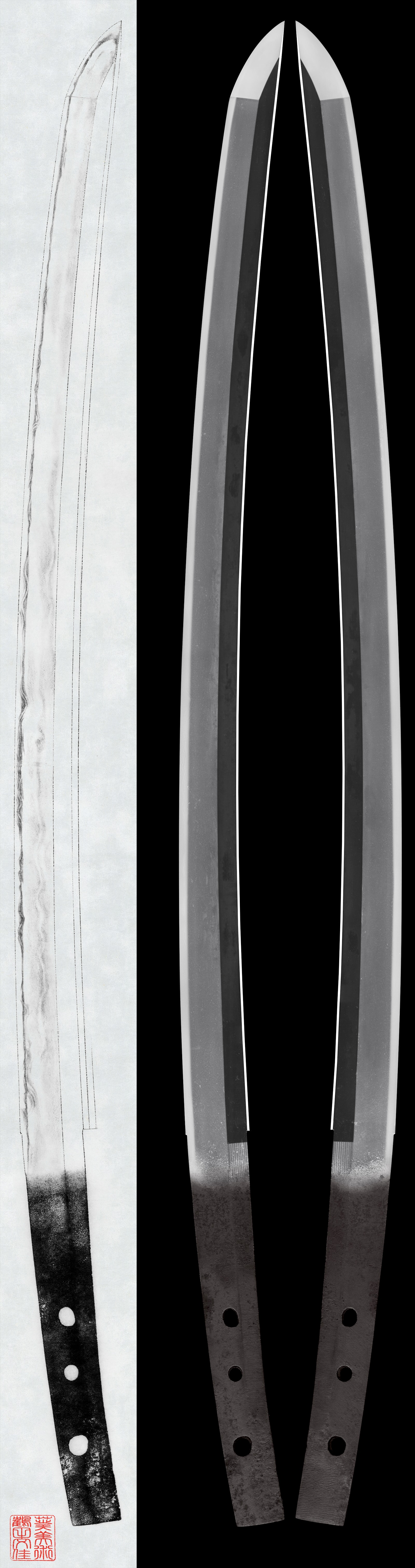
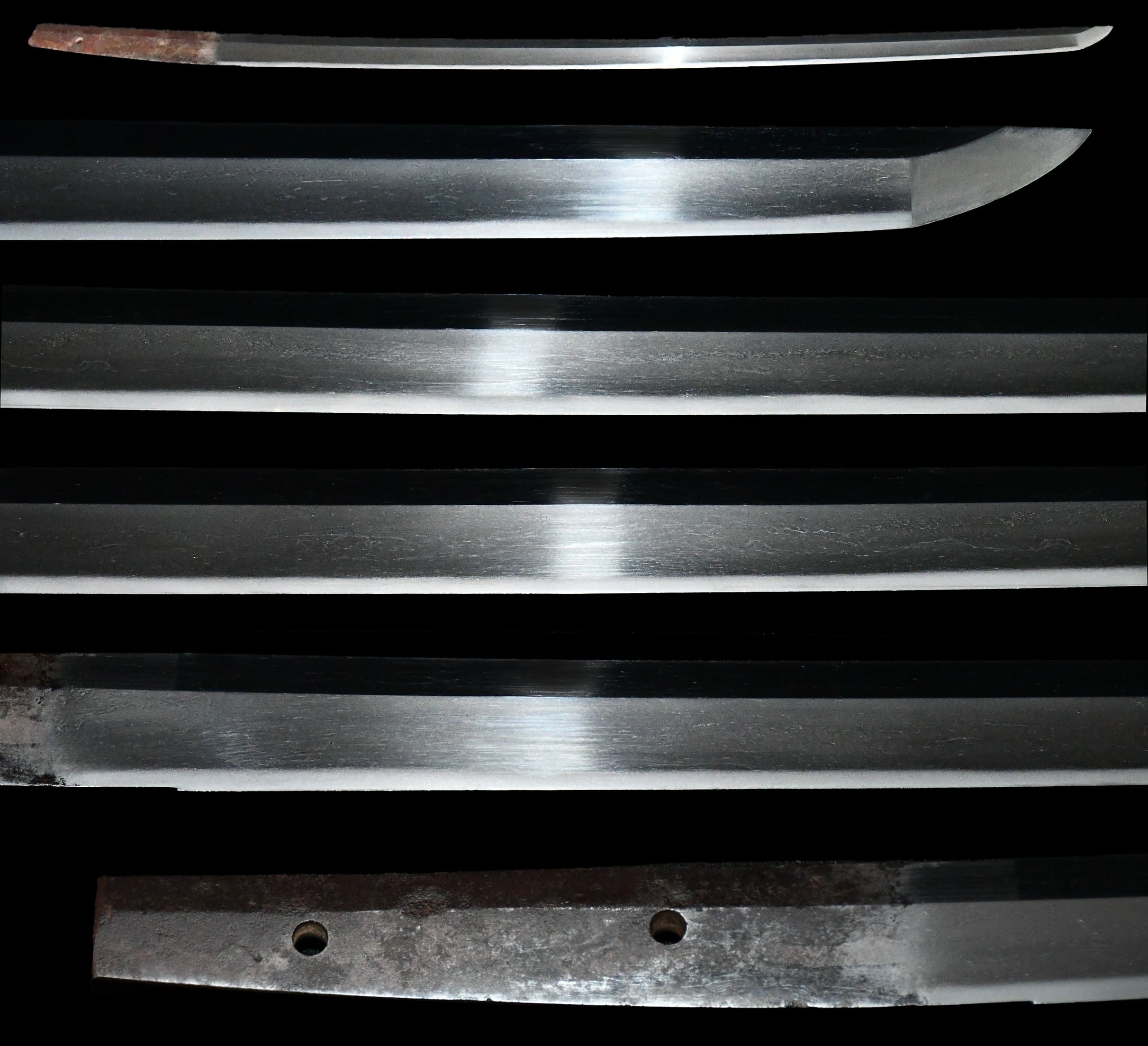
This is a mumei katana attributed to Reizen Sadamori from the Nanbokucho period. It features a nagasa of 69.0 cm and comes with an NBTHK Tokubetsu Hozon certificate. The blade exhibits characteristics typical of the Chikuzen province.
Certificate reading — 無銘(冷泉貞盛)
 NihontoWatch
mumei · Teiwa (1345-1350) ND · nagasa 69cm · sori 0.8cm
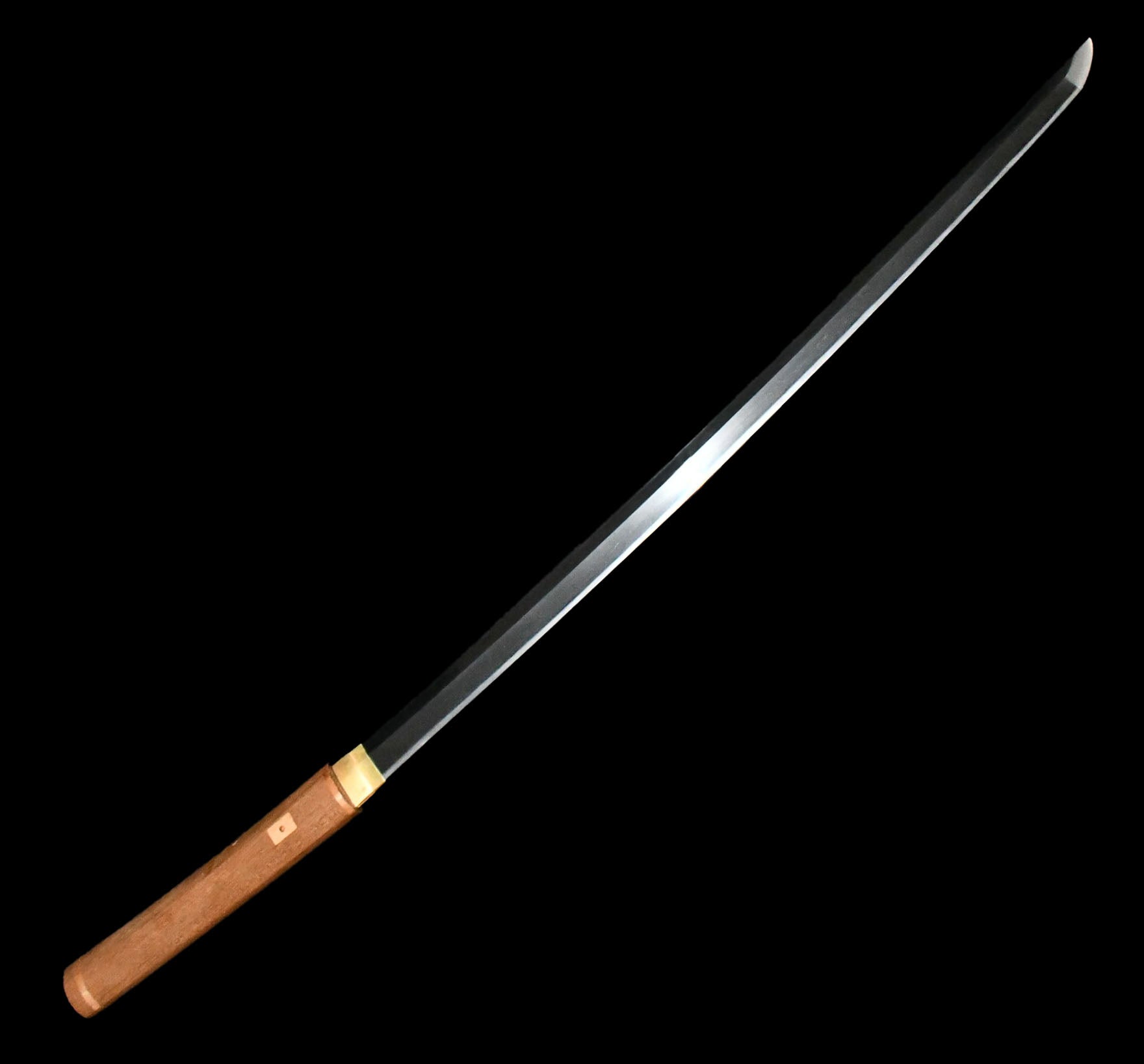
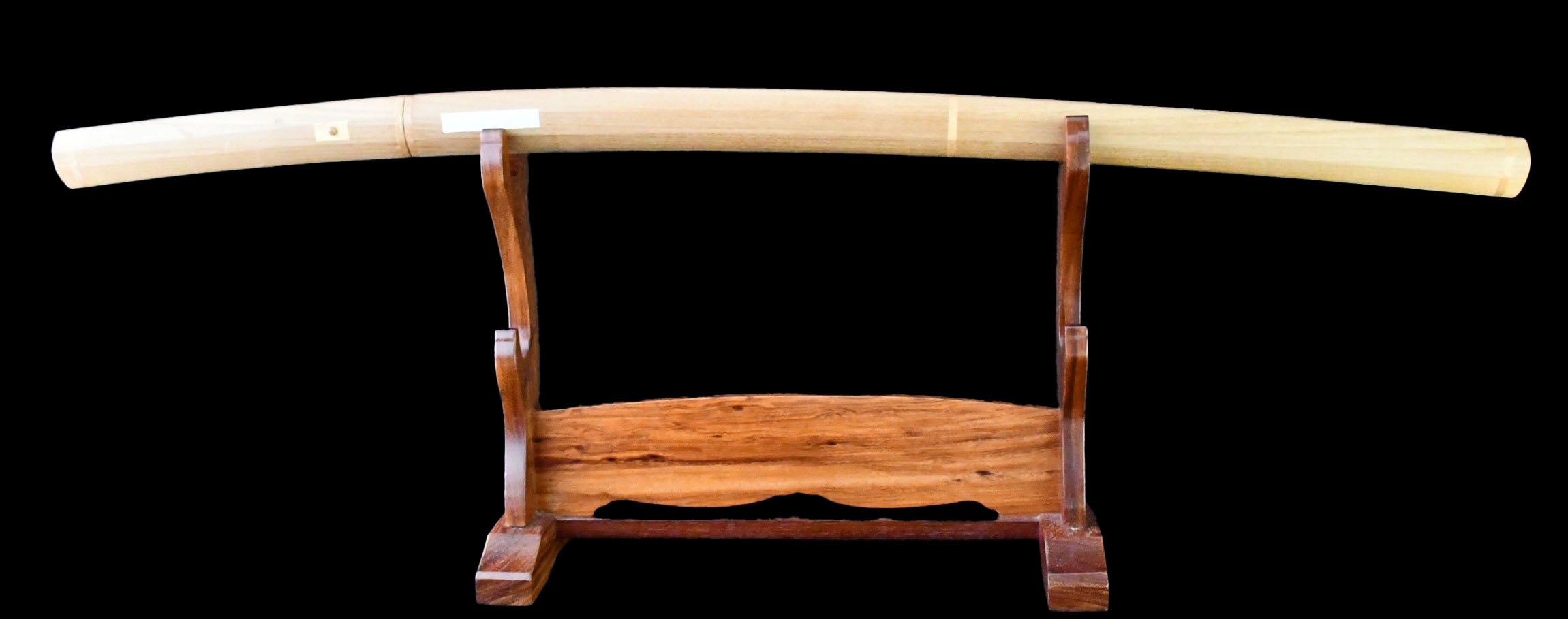
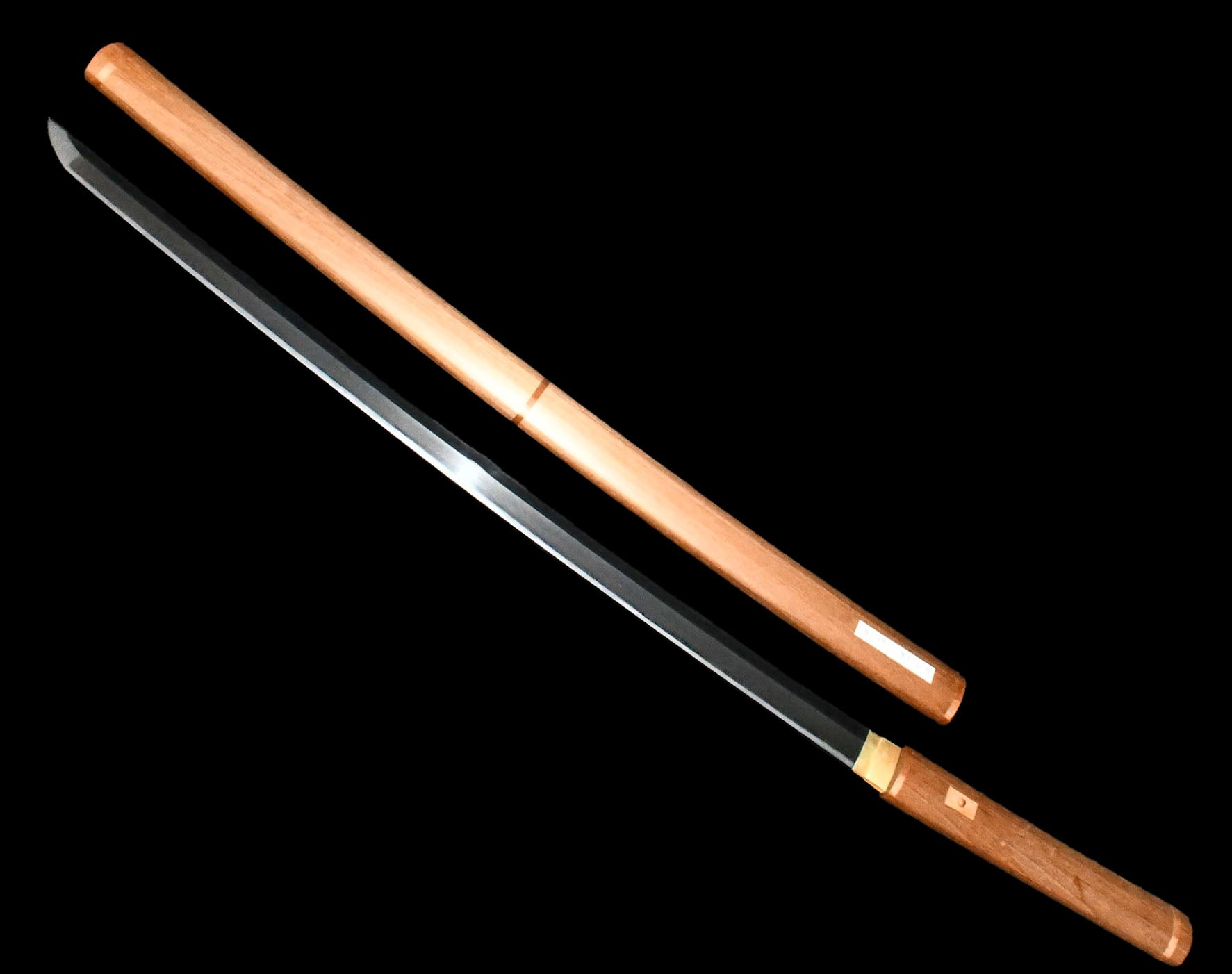
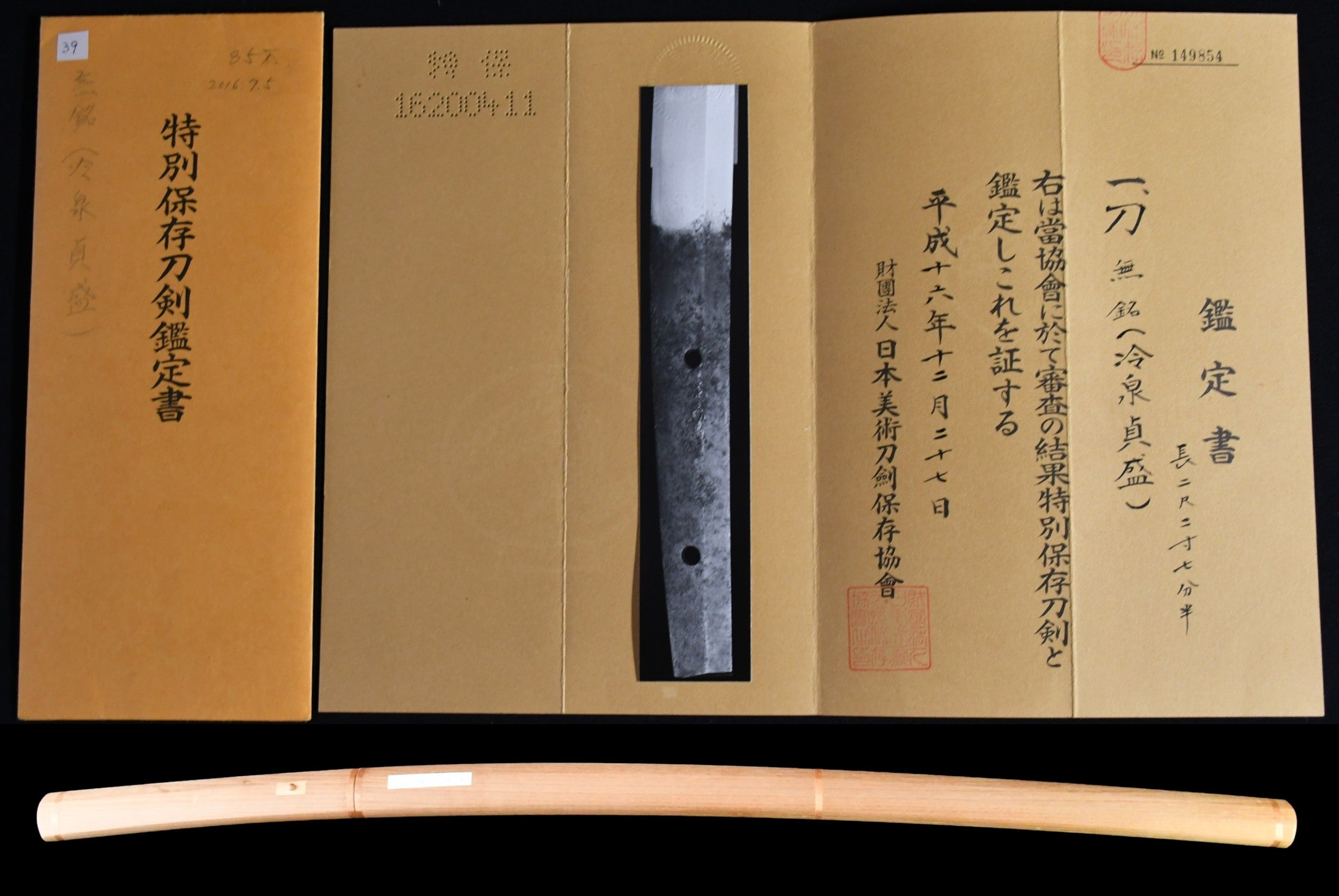
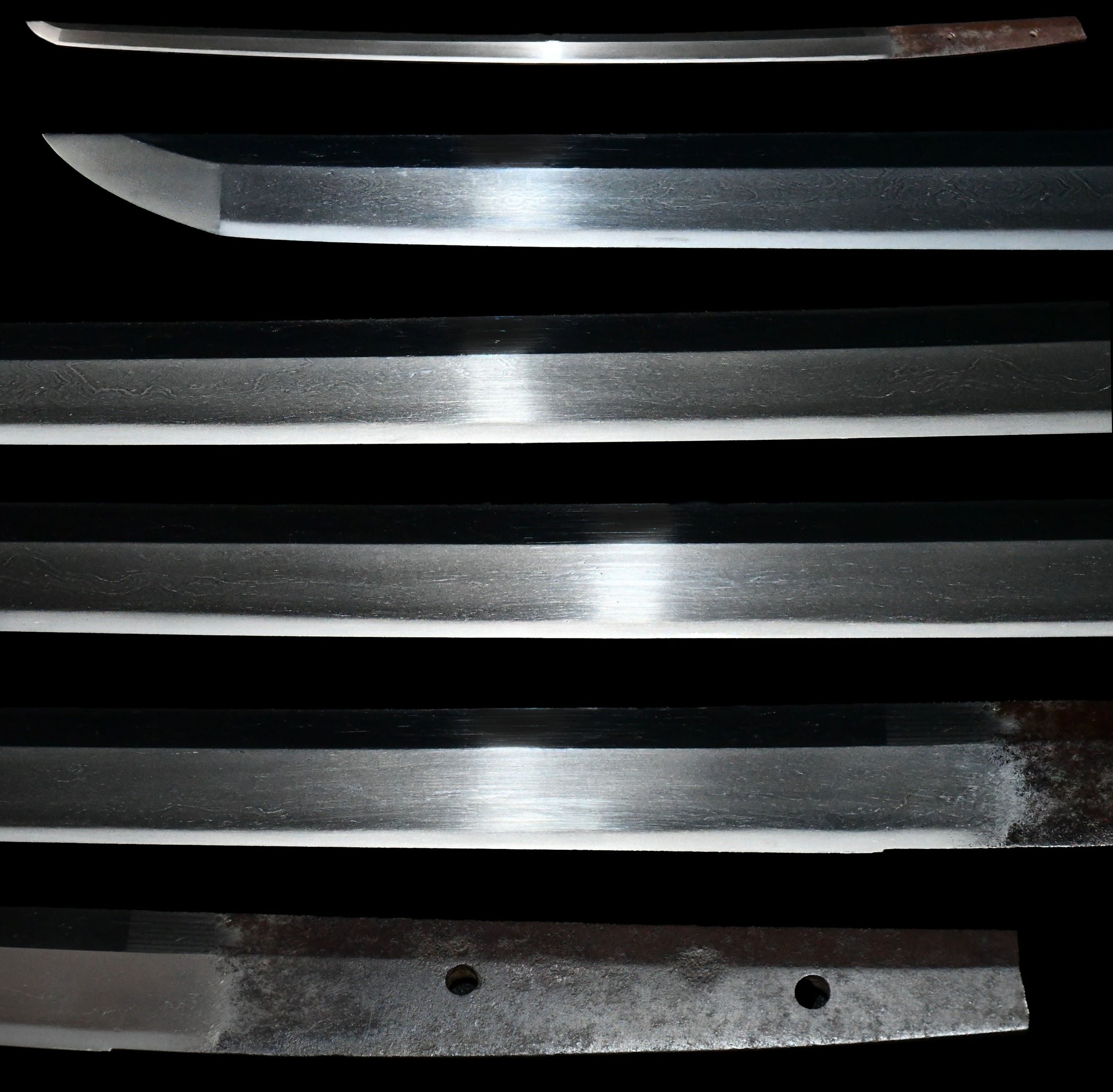
Kongo-Hyoe / Reizei (Chikuzen) · Chikuzen · around 1345-1350
Tōken Taikan top 26%
4 pieces on the market now
Reizei Sadamori worked in Chikuzen during the Nanbokucho period, and the firmest anchor for his name is a single small tanto, signed and dated on the tang "Chikushu Reizei Sadamori, a day in the first month of Shohei 25"[[c:1]], that is, the year 1370. The published sources return to this one blade in nearly every entry on the smith, because signed work by him is so rare that the dated tanto has become the touchstone against which every other attribution is measured. They place him within the Kongobyoe line, traced back to the first-generation Kongobyoe Moritaka, and set him beside the Samonji school as the second of the two groups then forging in the province. What separates his line from the more famous Sa school, the published sources say, is temperament: his is read as a Yamato hand carried into Kyushu steel.
The greater part of his record is not signed at all. It consists of o-suriage mumei katana, broad of body, thin in the kasane, with an extended chu-kissaki, the shape of a long Nanbokucho blade cut down and judged to his hand. Over these the jigane is an itame that flows and leans toward masame, especially toward the edge, the grain standing, with ji-nie adhering thickly and chikei entering frequently; the steel takes a clouded, blackish kanairo, and a faint whitish utsuri stands in the surface. Over that jigane he tempers a low, narrow suguha, the nioiguchi tight, with ko-nie, fine hotsure, uchinoke and a tendency to nijuba near the monouchi, sunagashi and kinsuji running thinly within. The boshi goes straight to a small ko-maru with hakikake at the point, at times finishing in yakizume. This restrained, austere manner, not flamboyance, is the published sources' named point of interest in his work.
The jigane is the constant of the attribution. The flowing, masame-inclined steel, the standing grain, the dark kanairo and the whitish utsuri recur on blade after blade, and it is from these that the judges read his Yamato temperament. The published commentary calls the Kyushu coloration strongly present in his work, describing one Juyo katana as a richly flavored piece "in which the coloration characteristic of Kyushu swords is strongly expressed"[[c:2]]. The same sources are candid about the difficulty of the reading: on one shortened blade they note that such Yamato features also appear in works like Mihara, yet conclude that "from the standing texture of the jigane, the appraisal to Reizei Sadamori is the superior one"[[c:3]]. The narrow suguha and the dark, standing jigane together carry the name where no signature remains.
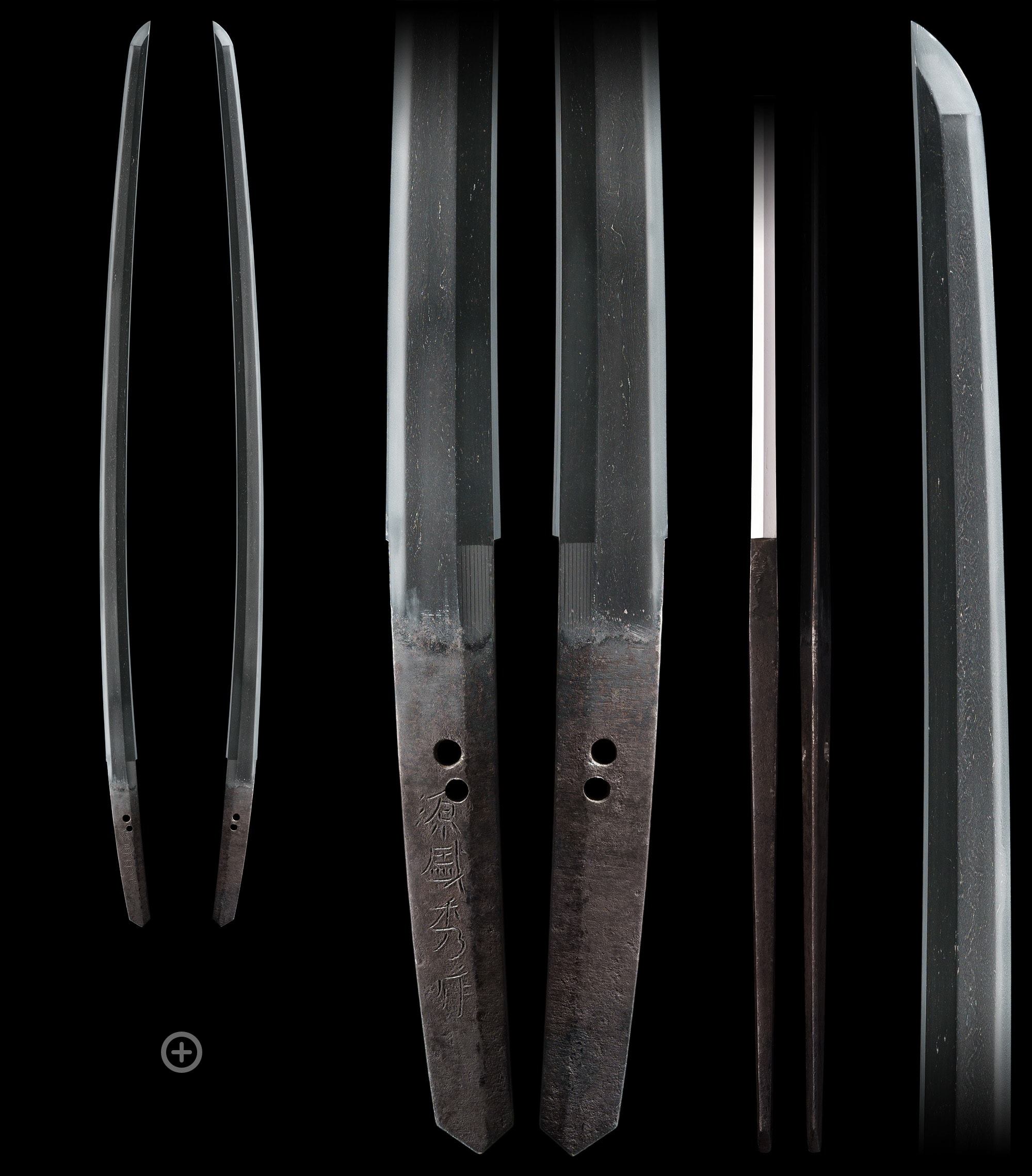
Against this quiet standard stand his few signed blades, which break the pattern. The Tokubetsu Juyo wakizashi signed "Reizei Sadamori, resident of Chikushu" and the Juyo tanto signed simply "Sadamori" abandon the narrow suguha for a notare mixed with ko-gunome and gunome, wider in the temper, with ashi and yo entering, nie-deki, abundant sunagashi and kinsuji, and a midare-komi boshi with strong hakikake. The published sources draw the distinction within his own work explicitly: of the signed tanto they observe that, "unlike the style of the Shohei 25 dated piece"[[c:4]], it shows a wider temper combining gunome into a broader notare, a richly varied workmanship. The smith thus worked in more than one manner, and the signed examples, precisely because they depart from the mumei standard, are prized for the study of his range.
What sets him apart is therefore named by the judges themselves rather than borrowed from a neighbor. He is read against the Samonji school by lineage and against the wider Yamato tradition by province: his bright, dark, masame-inclined jigane, his tight low suguha, and the Kyushu cast of his steel are the features the published sources name as his own, and the dated tanto is the document that holds them together. Within the Kongobyoe and Reizei line his is the name the school's shortened, unsigned katana most often carry, judged to him from that one dated standard, from the era, and from the manner of the group, the commentary cautioning on some blades that there is no decisive proof the hand must be his while still affirming the appraisal from the Yamato-toned jigane and the narrow edge.
For the collector he is a thinly recorded but genuine Nanbokucho name, valued for documentary weight as much as for display. He has no National Treasures and no Important Cultural Properties; his record runs instead through one Tokubetsu Juyo and a score of Juyo blades, with the Shohei 25 dated tanto and a tachi recognized in the prewar Juyo Bijutsuhin. Provenance is sparsely recorded, held in private hands rather than institutions, the dated tanto once in the Koizumi collection and the early Sadamori tachi with Morotomi Yoshio of Fukuoka. Most of his blades are the o-suriage mumei katana of the Juyo tier, and these come to light only from time to time; a signed Reizei Sadamori is rarer still, and one of the published sources calls the signed Tokubetsu Juyo wakizashi a precious work "by which the range of the seldom-signed Reizei Sadamori may be apprehended." A privately held example, signed or mumei, is a document of how a Yamato hand worked in Nanbokucho Chikuzen, and a thing a collector encounters seldom.
Where Sadamori stands among comparable artisans: across all of nihontō, and within tradition, era, and period. The tiers (Foremost · Leading · Major · Notable) weigh official designations from the NBTHK and Japan's Agency for Cultural Affairs, together with historical honors of lasting repute such as the Sansaku and Meibutsu-chō.
Select a lens to see how it's measured.
Wakimono · Chikuzen
Phase: Ko-Kongobyoe古金剛兵衛· 1200–1393
10 pieces on the market now
During the Nanbokuchō period two groups of smiths worked in Chikuzen Province: the Samonji line and the Kongōbyōe line, named for the temple-associated smiths from whom the lineage descends. The setsumei trace the line to the shodai Kongōbyōe Moritaka (初代金剛兵衛盛高) and frame this early chapter, Ko-Kongōbyōe, as the Nanbokuchō founding generations rather than the Muromachi continuation. The smiths who anchor this phase in surviving work are Moritaka himself, present in a mumei katana attributed to Kongō Hyōe Moritaka, and Reizei Sadamori (冷泉貞盛), called a smith of the Kongōbyōe line and traditionally traced back to Moritaka. The repeated documentary touchstone is Sadamori's signed tantō inscribed "Chikushū Reizei Sadamori, Shōhei 25, first month, day," dated 1370, which fixes the active period of the early line and serves as the reference against which other works are appraised. One Moritaka attribution notes an example dated Shōhei 4 (1349), while the bulk of work bearing his name belongs to the Muromachi period and later, which separates the early Nanbokuchō chapter described here from what follows. What the setsumei describe again and again is a Yamato temperament read in both ji and ha. The forging is itame mixed with mokume, often flowing toward masame near the edge, with the grain standing out (hada-dachi); ji-nie adheres and chikei enter as a relied-upon feature. The steel takes a somewhat dark, blackish kanairo with slight cloudiness, and a whitish utsuri or shirake-utsuri appears, conspicuously so in several of the wider katana.
The temper is characteristically a narrow suguha or hoso-suguha, low in height, with a nioiguchi that tends toward tightness and ko-nie; along the habuchi come hotsure, uchi-noke, and a nijūba-like aspect, while kinsuji and sunagashi run modestly through ji and ha. The bōshi runs sugu to ko-maru with hakikake at the point, and grooves such as bō-hi or futasuji-hi are carved kaki-nagashi. A distinct sub-current within Sadamori's own work widens this manner: certain signed hira-zukuri pieces show notare mixed with gunome, abundant ashi, and kuichigai-hi in a naginata-hi arrangement, contrasted explicitly in one setsumei against the narrow-suguha dated standard. This early restraint, dark steel, shirake ground, and tight low suguha is what the records use to set Ko-Kongōbyōe apart from the later Sue-Kongōbyōe production carried into the Muromachi period. For kantei, the setsumei converge on a recognizable cluster: flowing itame leaning to masame, well-entered chikei, blackish and whitish-cast steel showing the coloration the records tie to Kyūshū work, and a narrow suguha whose nioiguchi tends to shizumi with hotsure and uchi-noke along the edge. Many surviving blades are ō-suriage mumei katana in Nanbokuchō taihai, broad with shallow sori and extended chū- to ō-kissaki, while the signed evidence sits in tantō and hira-zukuri wakizashi. Named smiths attached to this phase are Moritaka and Reizei Sadamori, the latter also written Reizen Sadamori in earlier records. On provenance, the tantō certified Jūyō Bijutsuhin in 1939 was held by Koizumi Shinji of Kanagawa, and the line is documented in references including Imamura Oshigata and Nihontō Taikan, with later attributions to Sadamori grounded on the Shōhei 25 standard. Learn more →
| Smith | Era | Designated |
|---|---|---|
| Sadamori貞盛 | 1345-1350 | 24 |
| Morimitsu盛光 | 1558-1570 | 0 |
| Moriyasu盛安 | 1532-1555 | 0 |
| Moriyoshi盛吉 | 1532-1555 | 0 |
| Morihisa盛久 | 1521-1528 | 0 |
The Nanbokuchō period (1333 to 1392)
Two courts, sixty years of war, and the most dramatic silhouettes in the sword’s history: broad blades, extended points, true ōdachi later cut down into the majestic katana collectors prize. The Sōshū manner was the style of the age.
A Hozon-certified blade judged to show notably superior workmanship and a better state of preservation. The bar is higher: re-tempered blades and most unsigned Muromachi/Edo works are excluded.
The NBTHK (Nihon Bijutsu Tōken Hozon Kyōkai, the Society for the Preservation of Japanese Art Swords) is a public-interest incorporated foundation founded in 1948 and supervised by Japan’s Agency for Cultural Affairs (Bunkachō); it is based at the Japanese Sword Museum in Tokyo. Its expert panels physically examine each submitted work (shinsa) and issue a certificate (kanteishō) ranking it by artistic and historical merit. NBTHK papers are the most widely recognized standard of authentication for Japanese swords and fittings.
NBTHK official siteContact within 3 days of receipt; returns not accepted for modified items or when trade-in goods are involved.
¥1,100,000