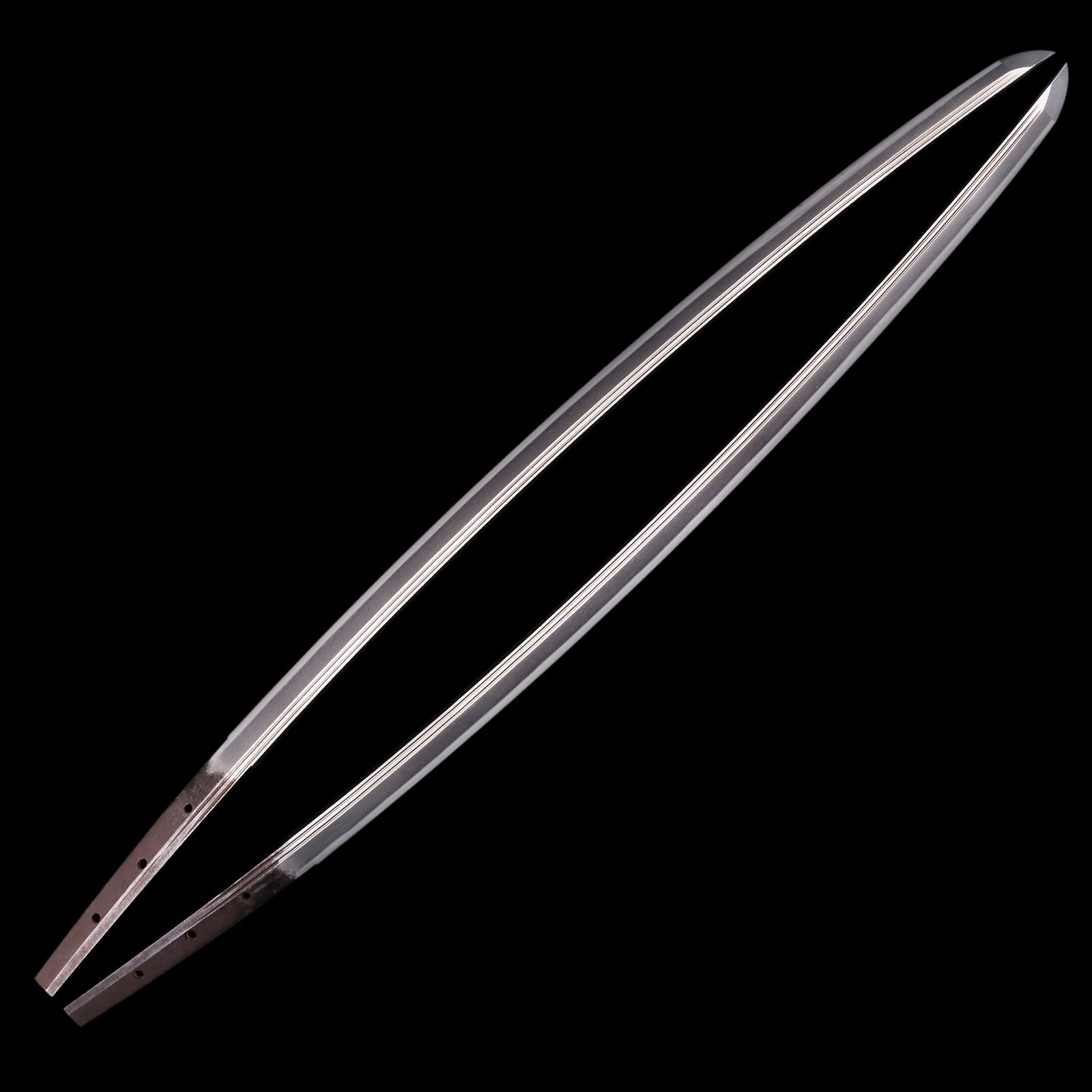
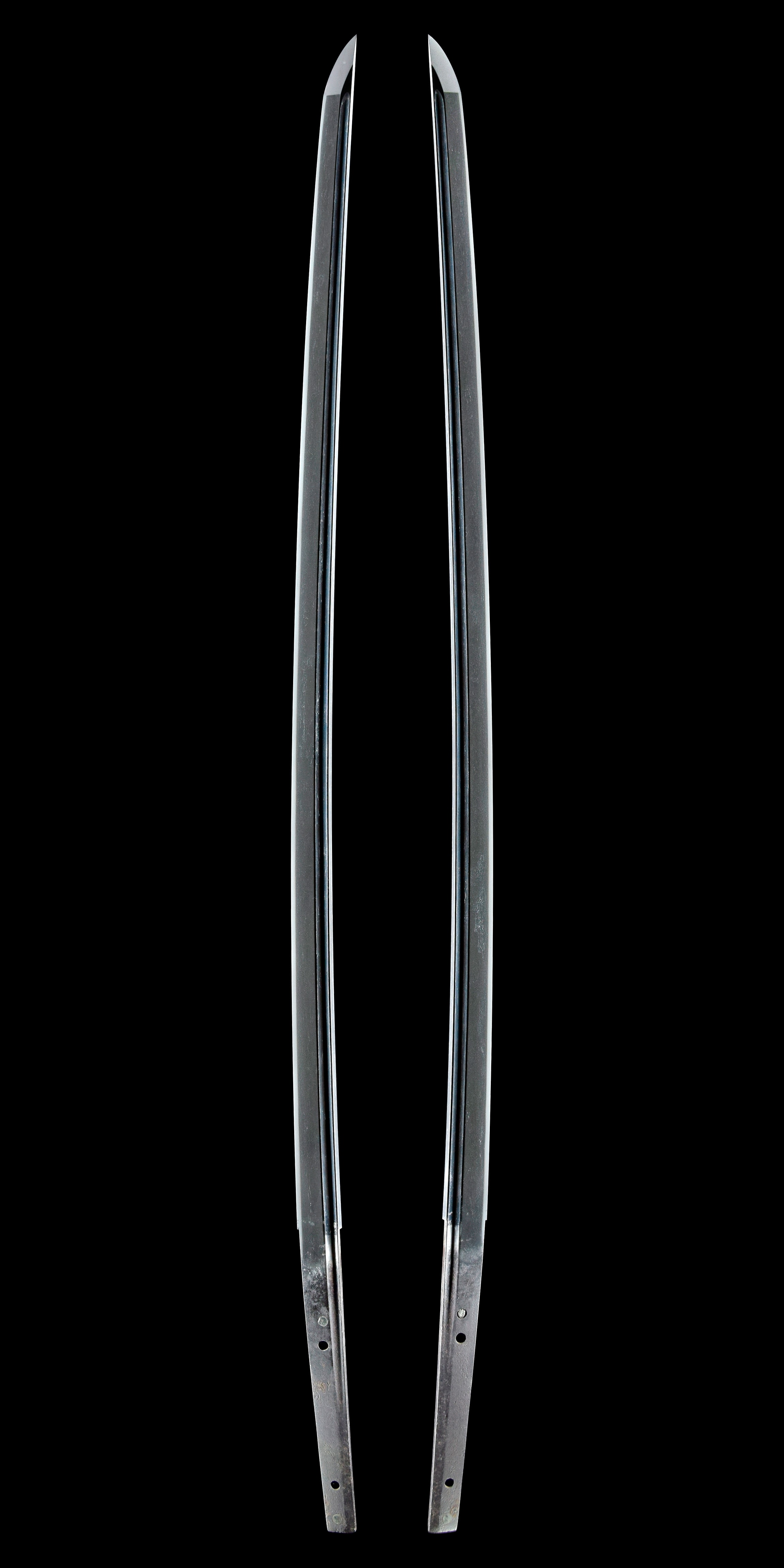
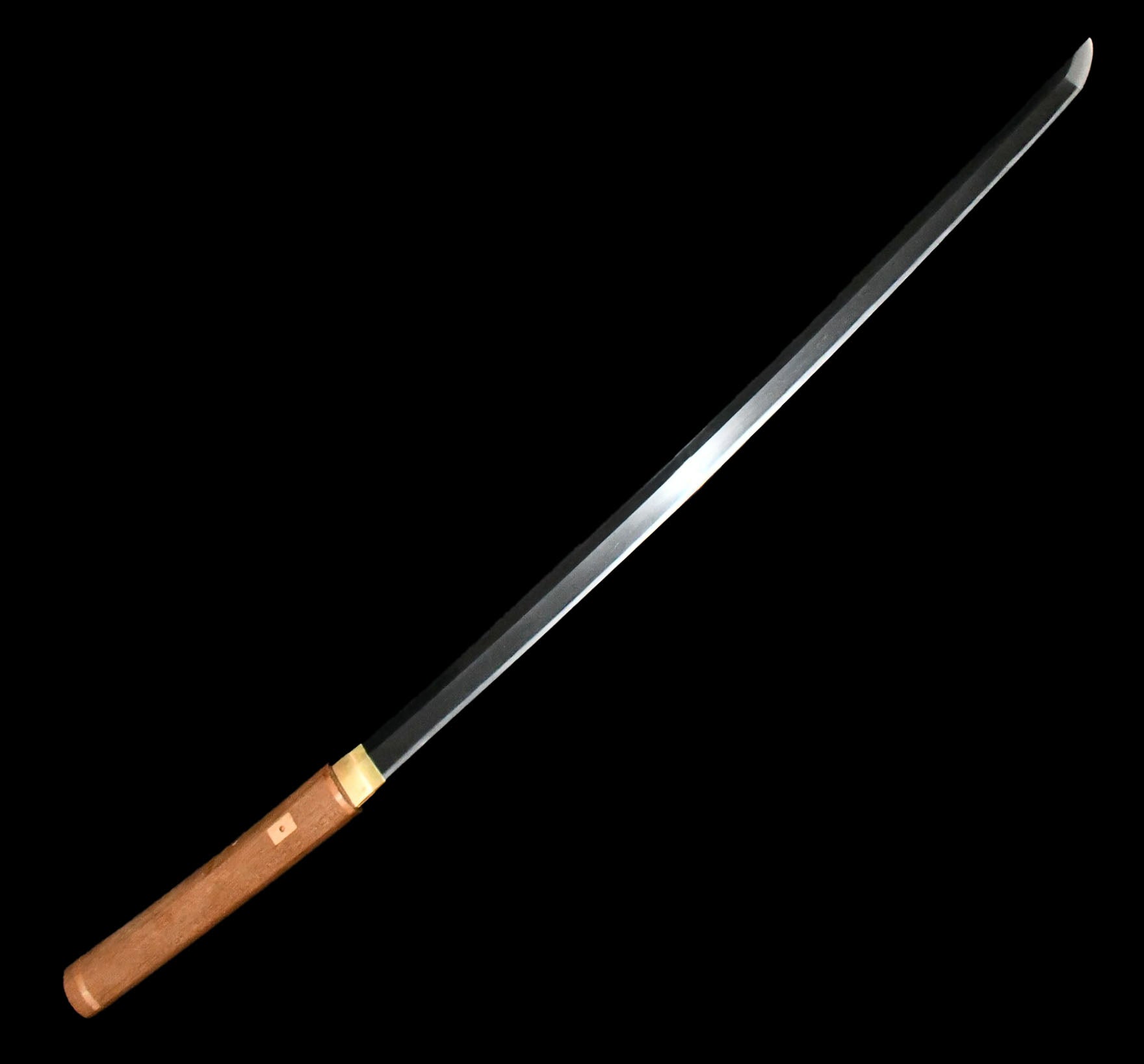
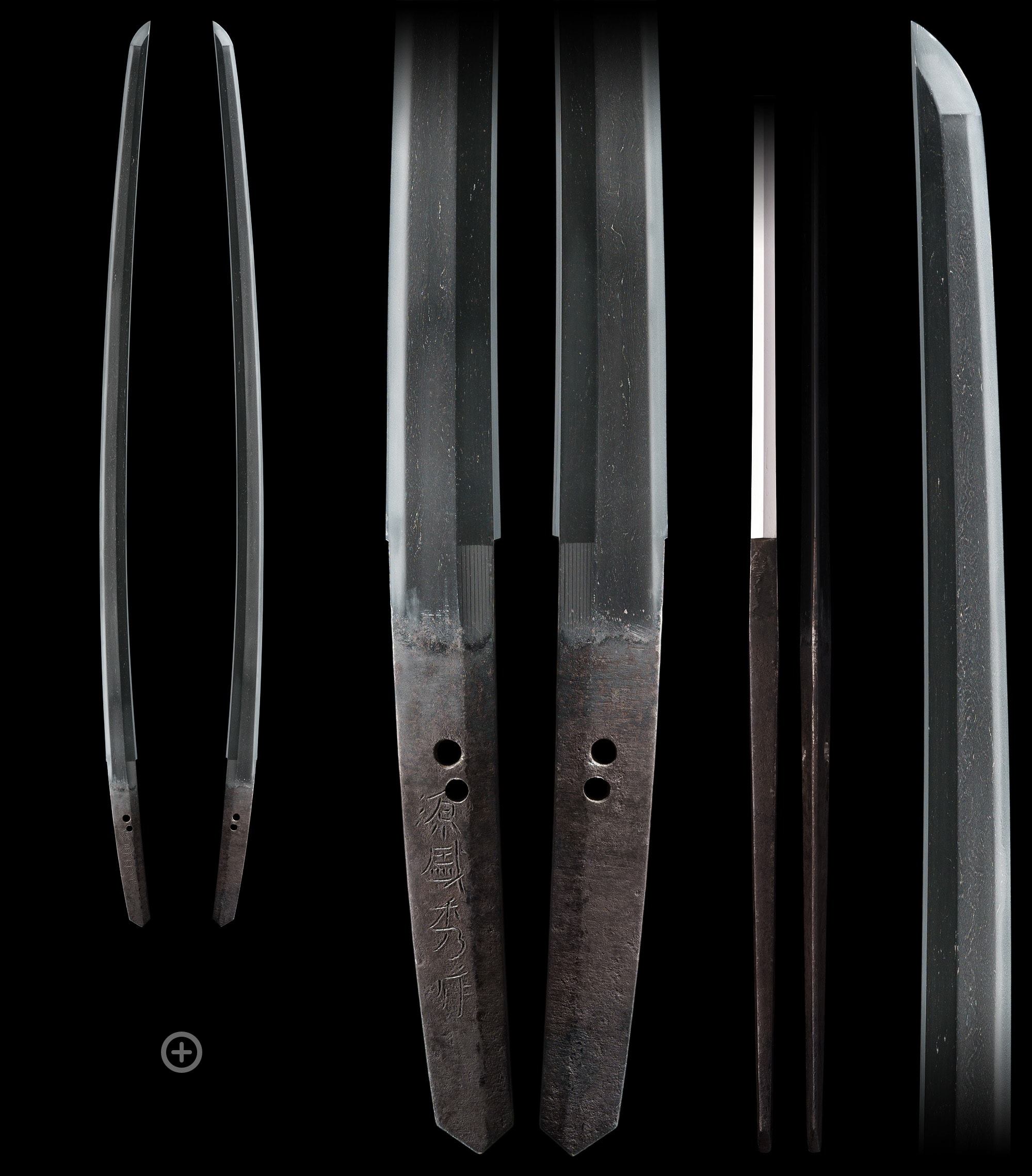
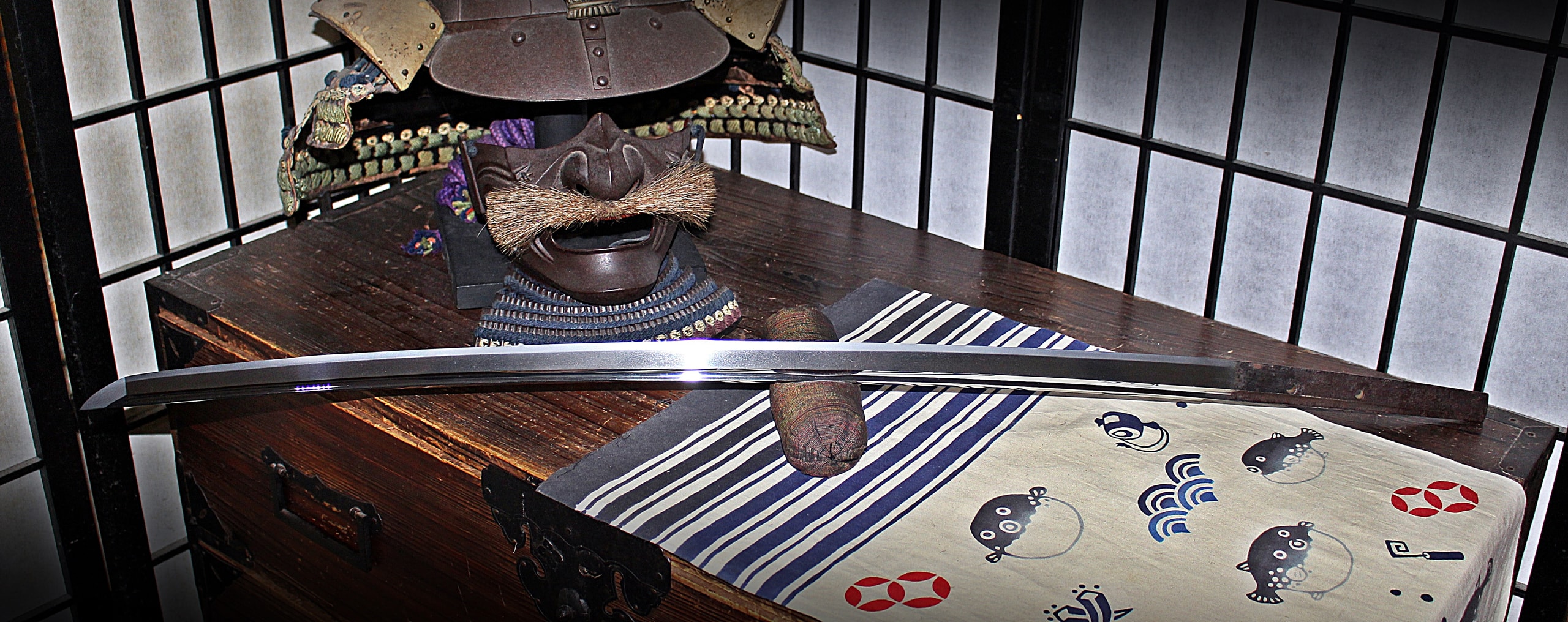
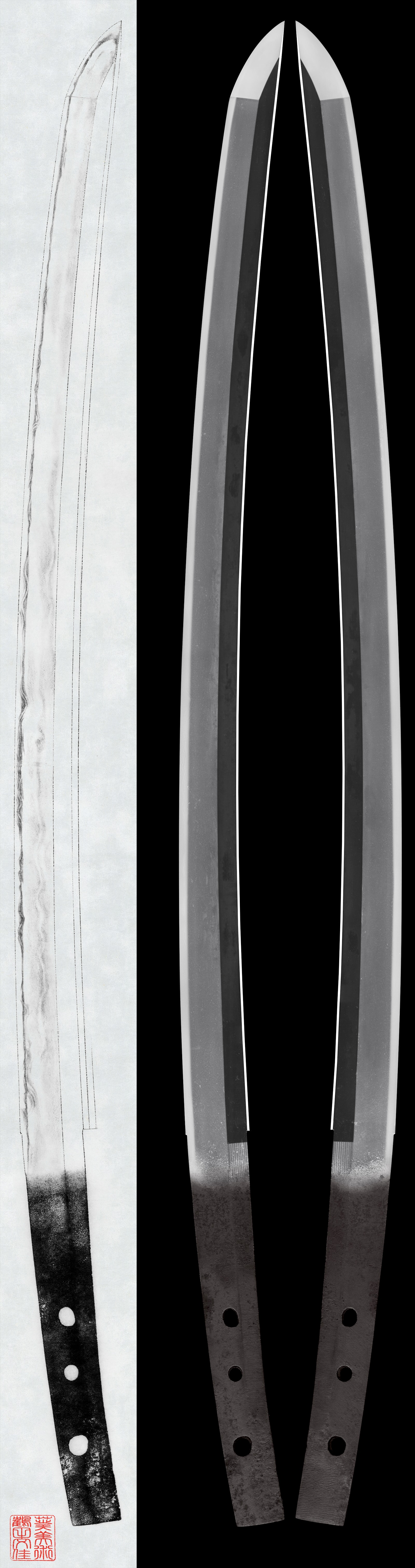
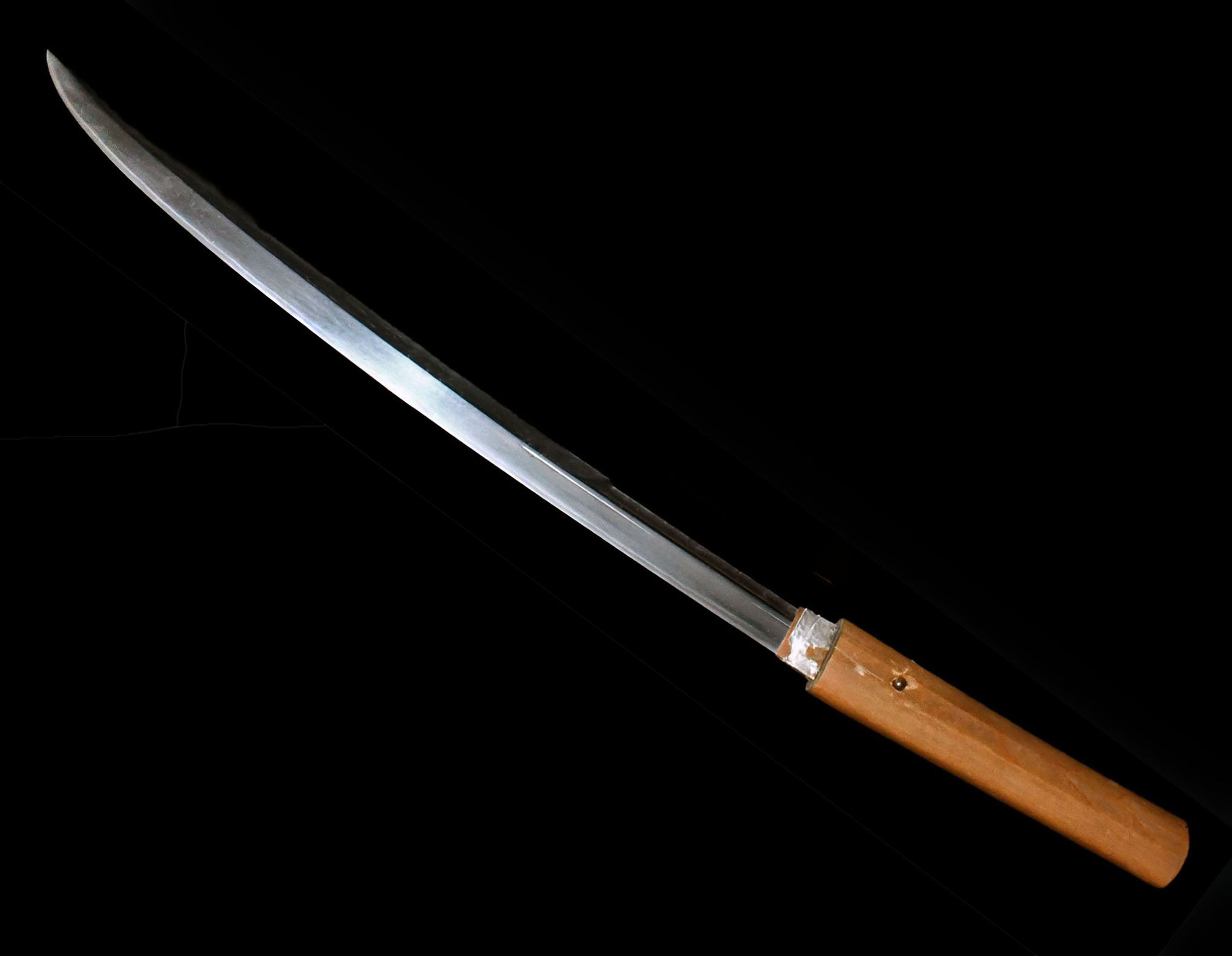
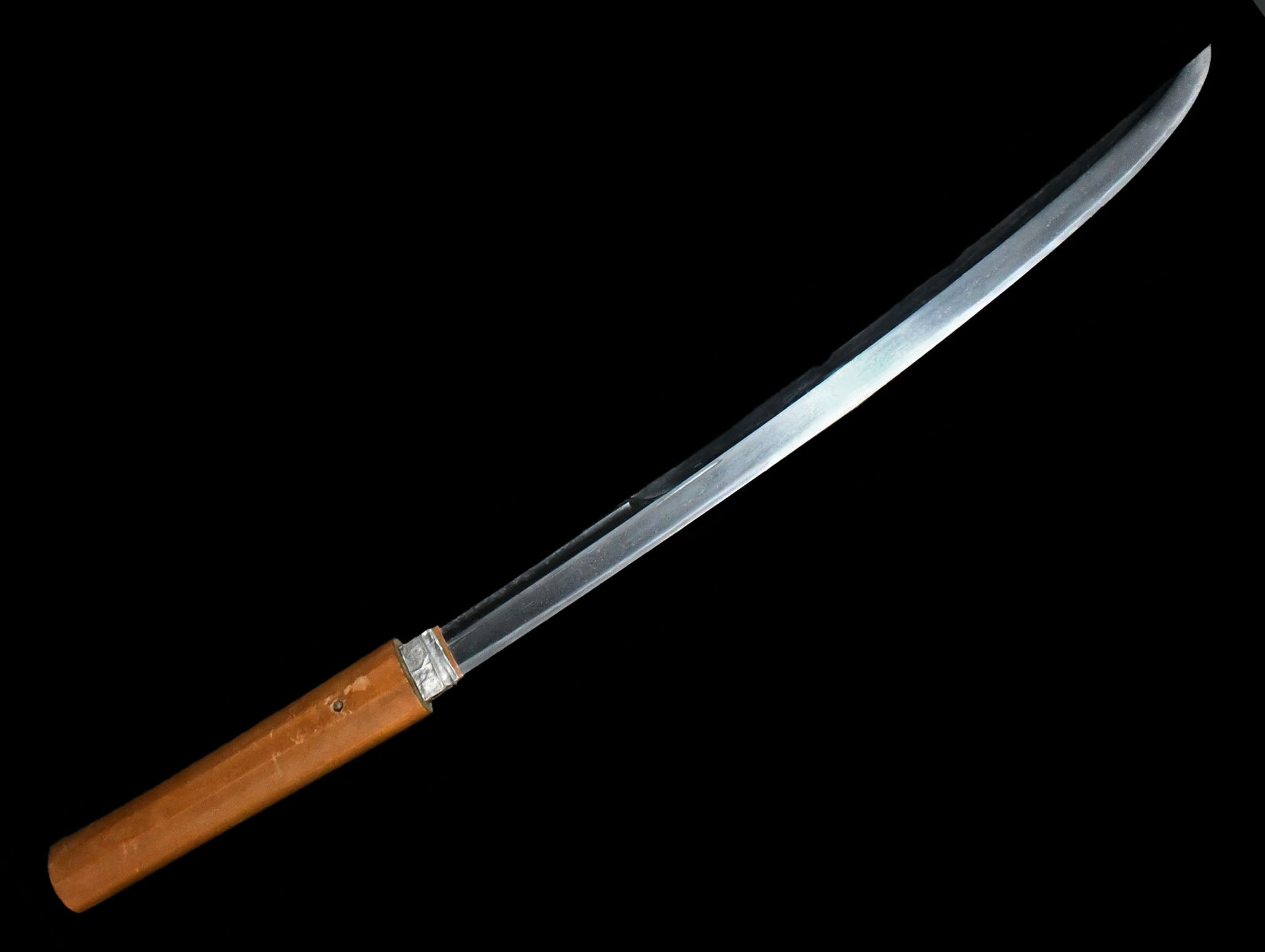
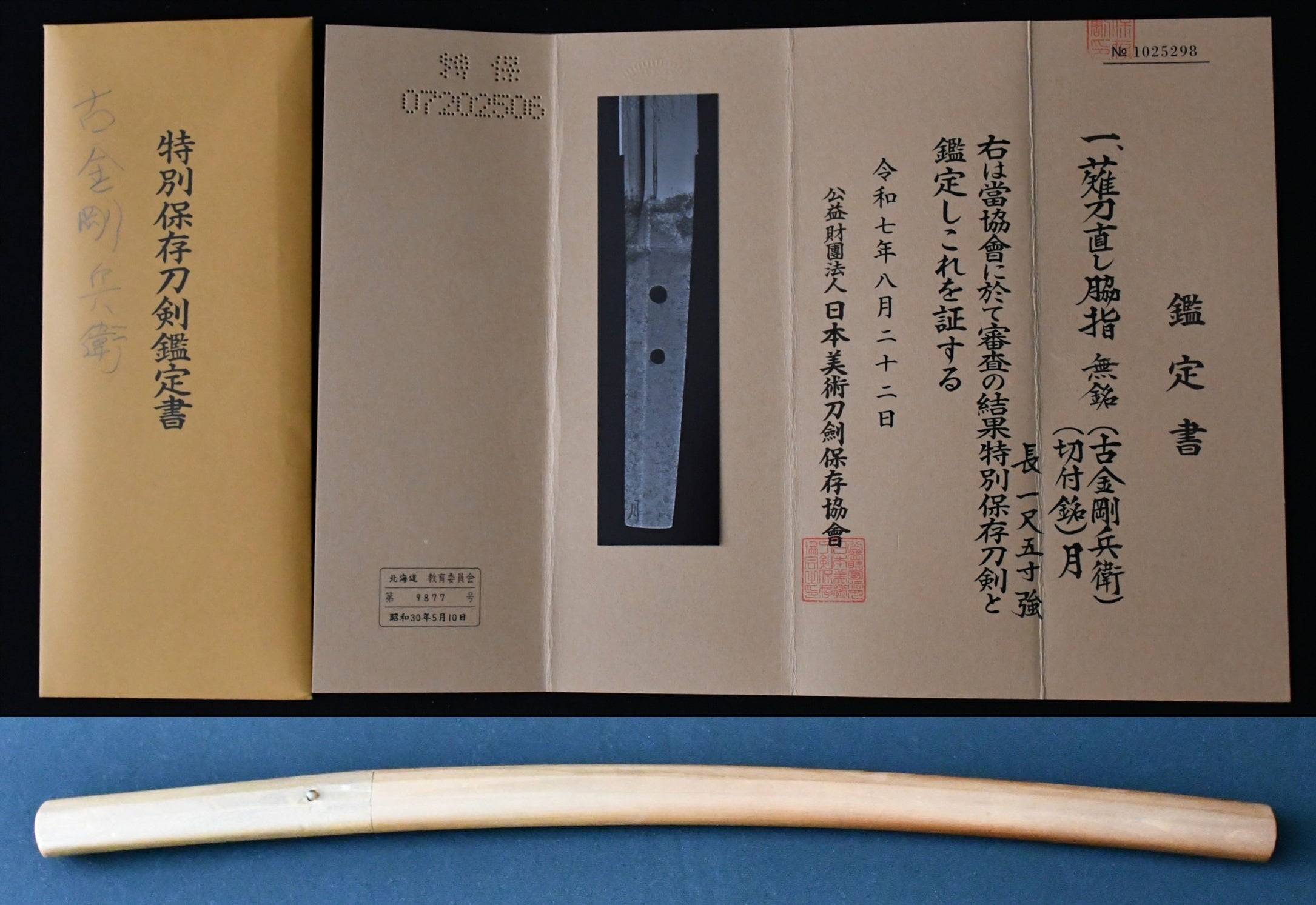
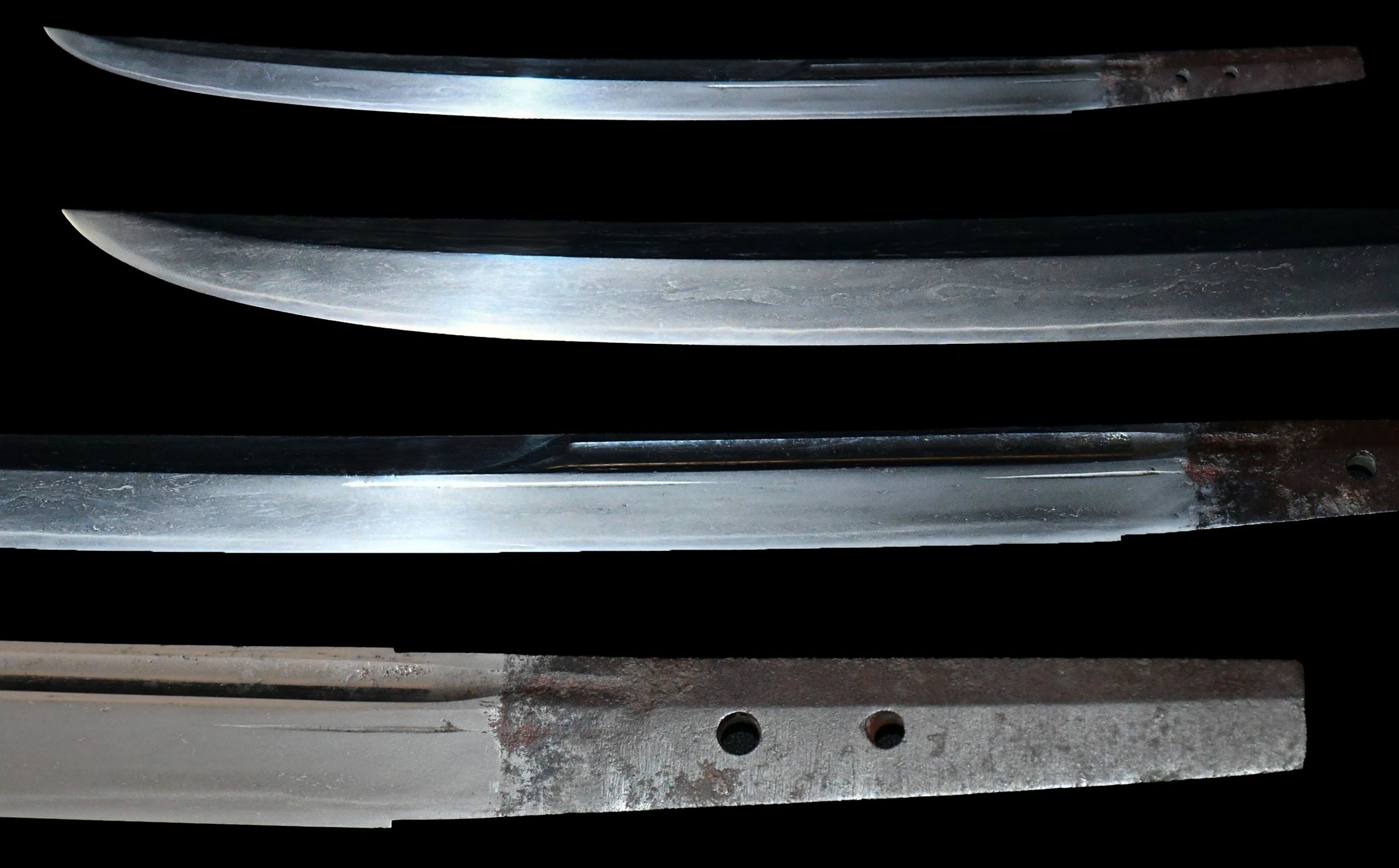
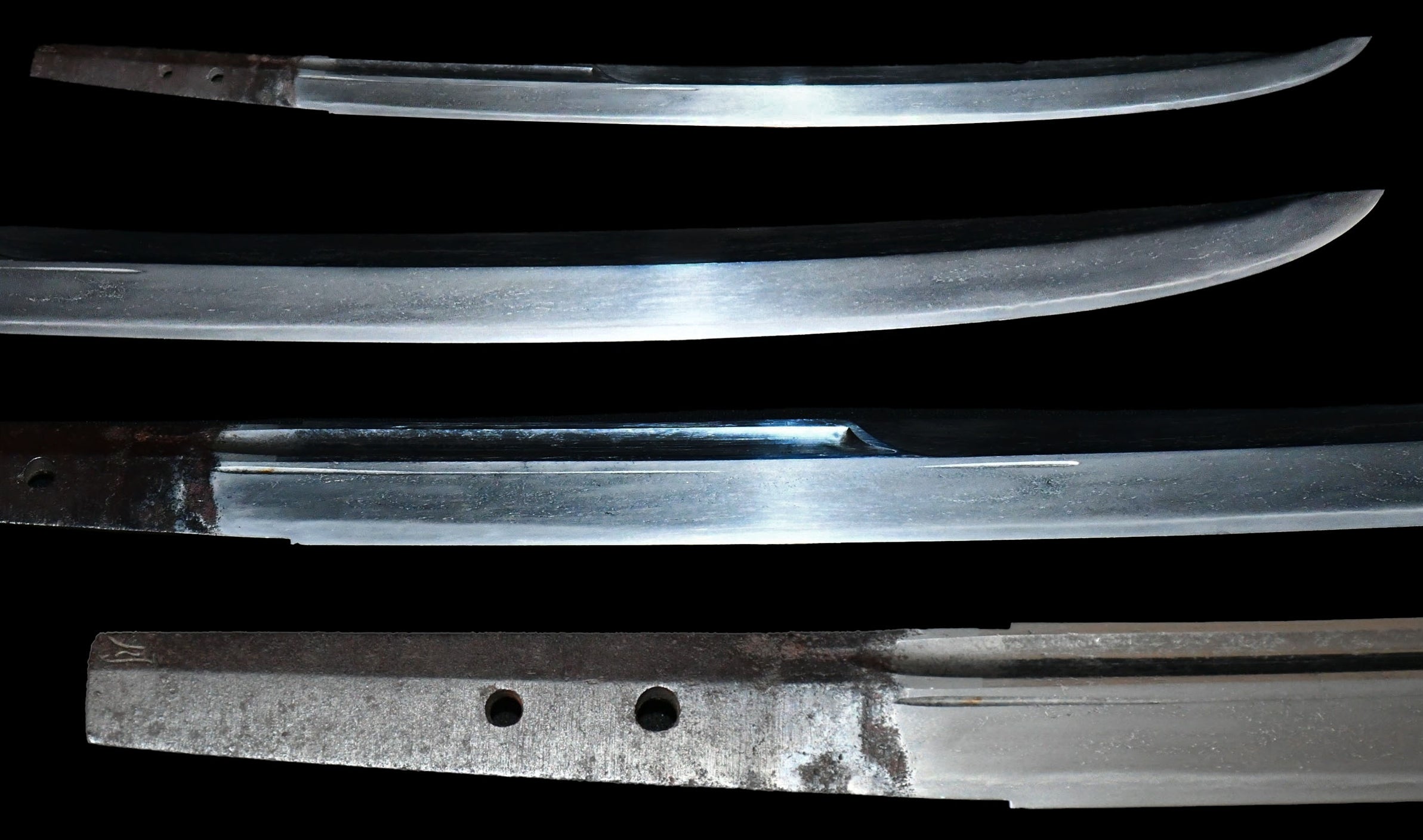
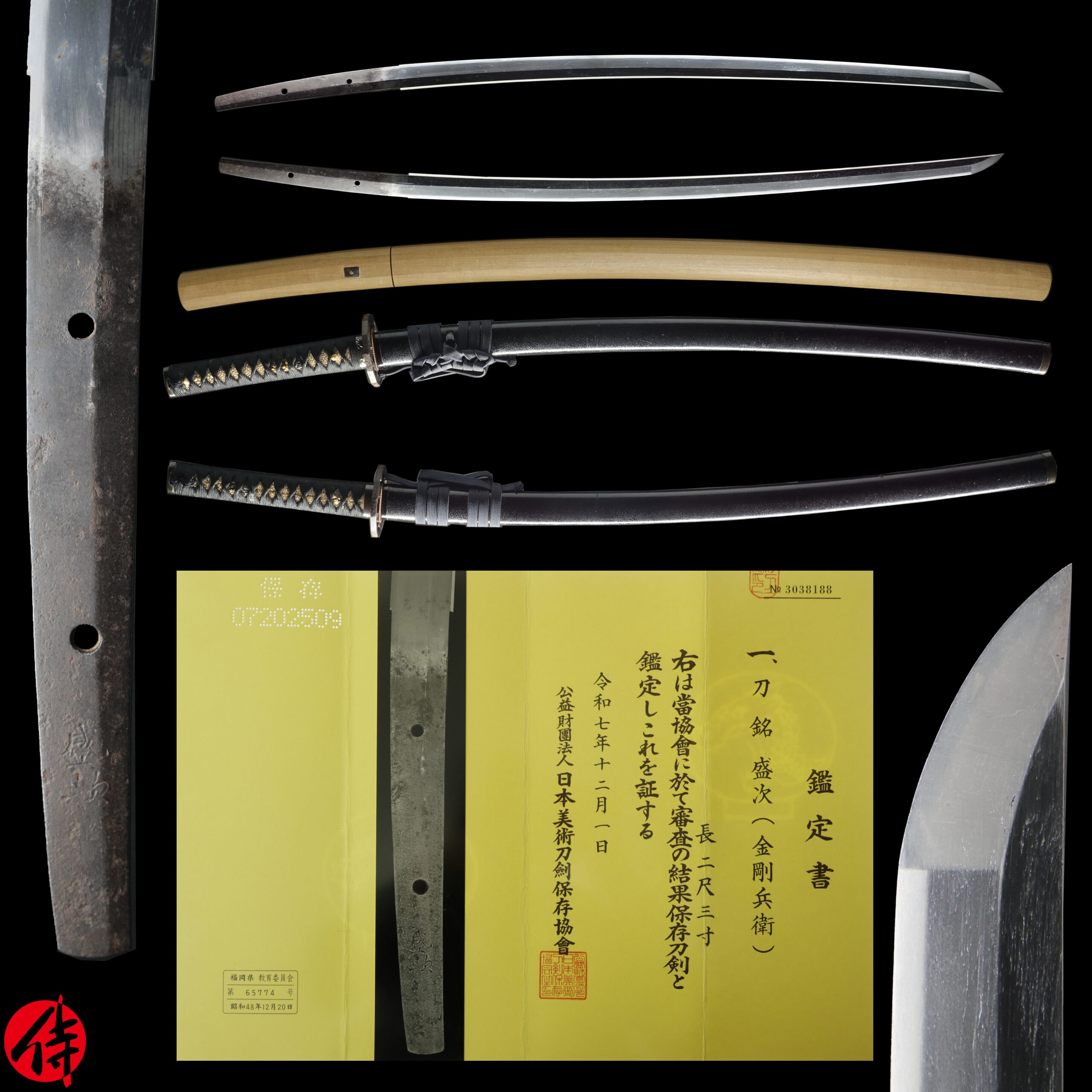
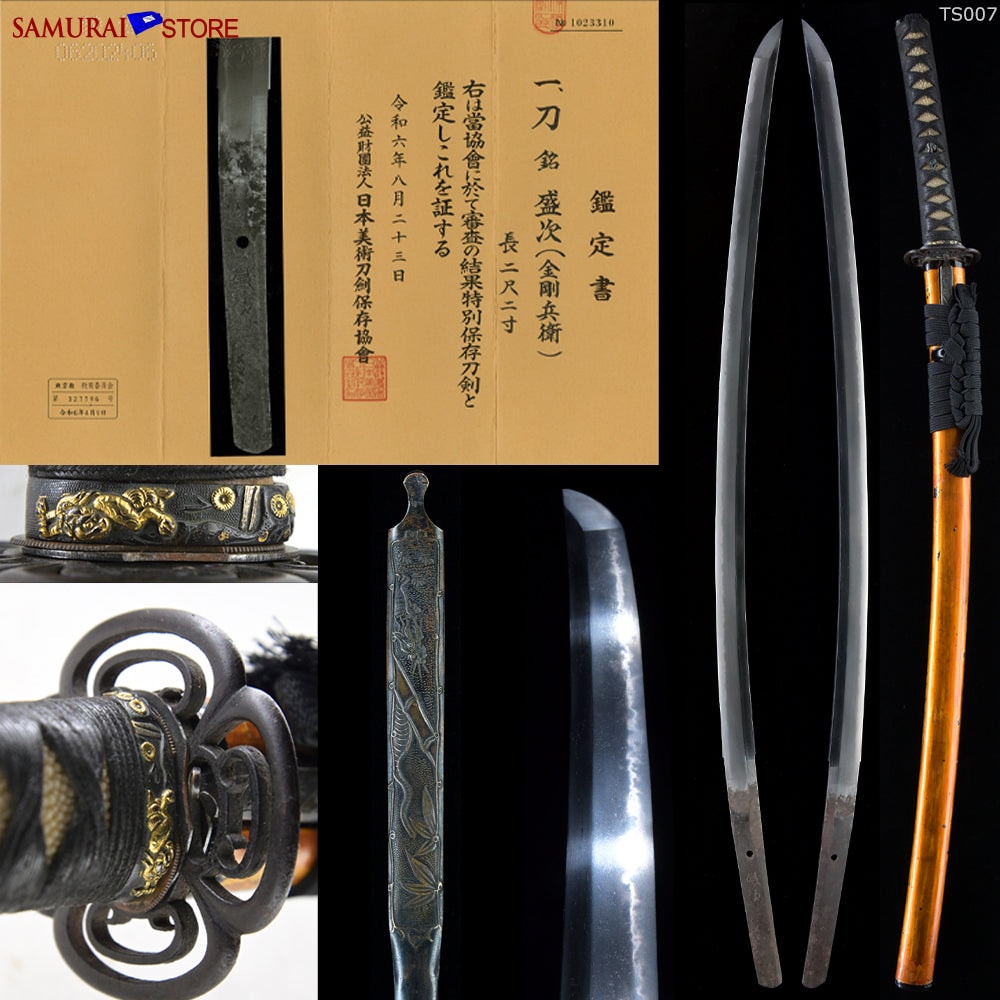
The Kongōbyōe school (Kongōbyōe-ha) flourished in Chikuzen Province during the Nanbokuchō period alongside the more celebrated Samonji lineage. Based in the Reizen district, the school takes its name from the artisan Kongōbyōe, though signed examples are exceedingly rare, with the earliest documented work being a tantō by Sadamori dated Shōhei 25 (1370) and designated an Important Art Object. This blade's signature—"Chikushū Reizen Sadamori"[[c:1]]—confirms the school's geographic center and provides a stylistic benchmark for attributions within the tradition. Kongōbyōe blades exhibit a distinctive Yamato temperament (Yamato kishitsu) in both jigane and hamon, setting them apart from typical Kyūshū productions. The forging characteristically combines large itame with nagare-hada and prominent mokume-hada, creating surface texture that stands out conspicuously. The jigane tends toward a dark, slightly blackish tone with frequent chikei interwoven throughout.
The hamon is invariably a narrow suguha or hoso-suguha, occasionally tinged with shallow notare or small gunome inflections. The nioiguchi displays a characteristic tight feeling (shimari-gokoro) with well-adhering ko-nie, while modest kinsuji and sunagashi create refined scenery spanning ji and ha. Near the cutting edge, nagare-hada often transitions to masame, and hotsure appears along the habuchi. The school's output demonstrates what period connoisseurs termed "metal flavor" (kanamono), reflecting Kyūshū forging traditions while maintaining the refined sensibility of Yamato technique. Extant works attributed to Ko-Kongōbyōe typically survive as greatly shortened (ō-suriage) blades with Nanbokuchō proportions—wide mihaba, shallow sori, and ō-kissaki—presenting dignified, powerful forms despite their modified state. The combination of dark-toned jigane densely filled with fine chikei, tight nioiguchi, and restrained nie activity creates a sober yet engaging aesthetic that distinguishes the school within the broader Chikuzen tradition. Learn more →





![Wakizashi - Hozon - by Kongobyoe School - [Hozon Token] Kamakura Period Wakizashi: "Mumei Ko-Kongo Hyoe" 48.2cm, For Appreciation!!!](/_next/image?url=https%3A%2F%2Fitbhfhyptogxcjbjfzwx.supabase.co%2Fstorage%2Fv1%2Fobject%2Fpublic%2Flisting-images%2Fikeda-art%2FL442133%2F00.jpg&w=2560&q=90)