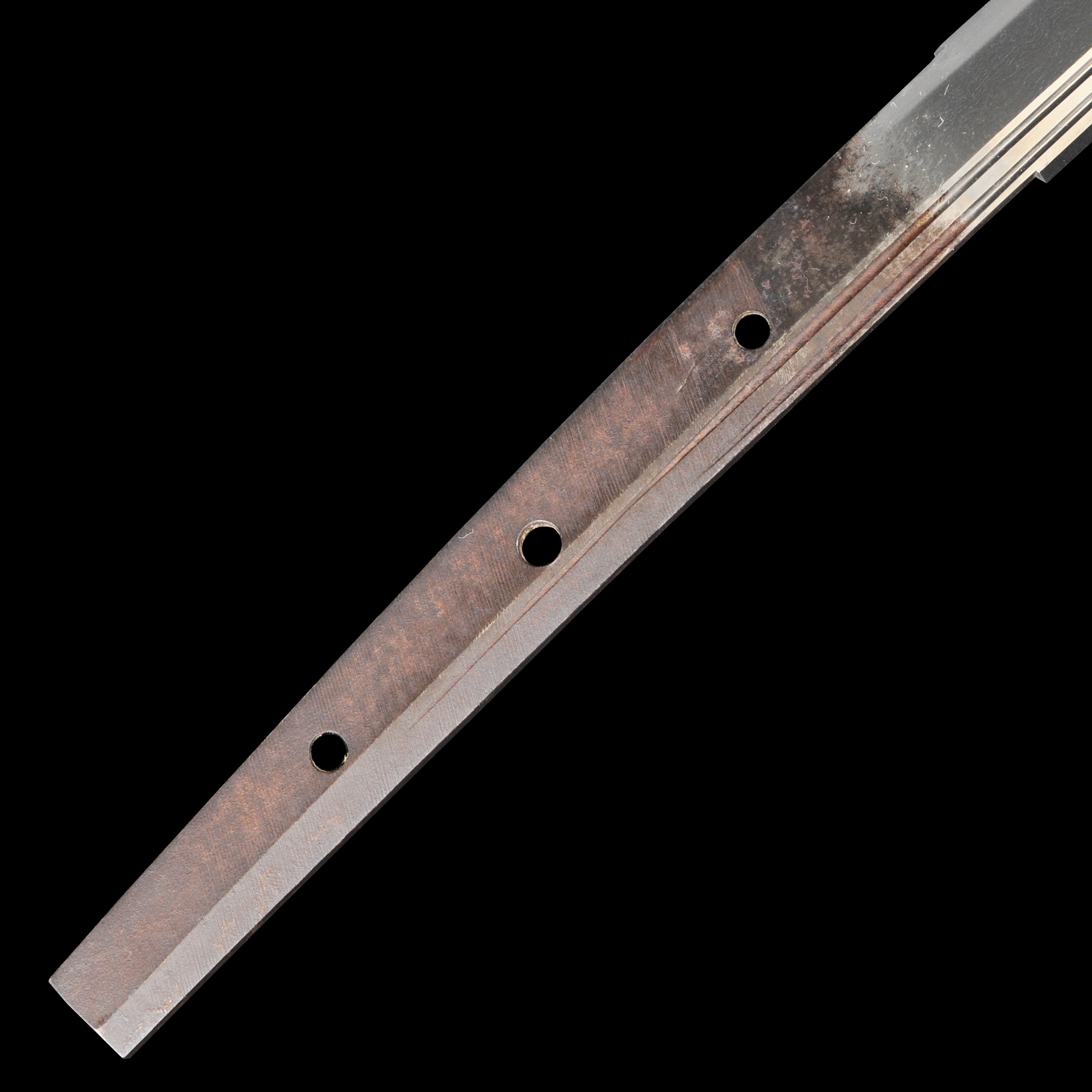
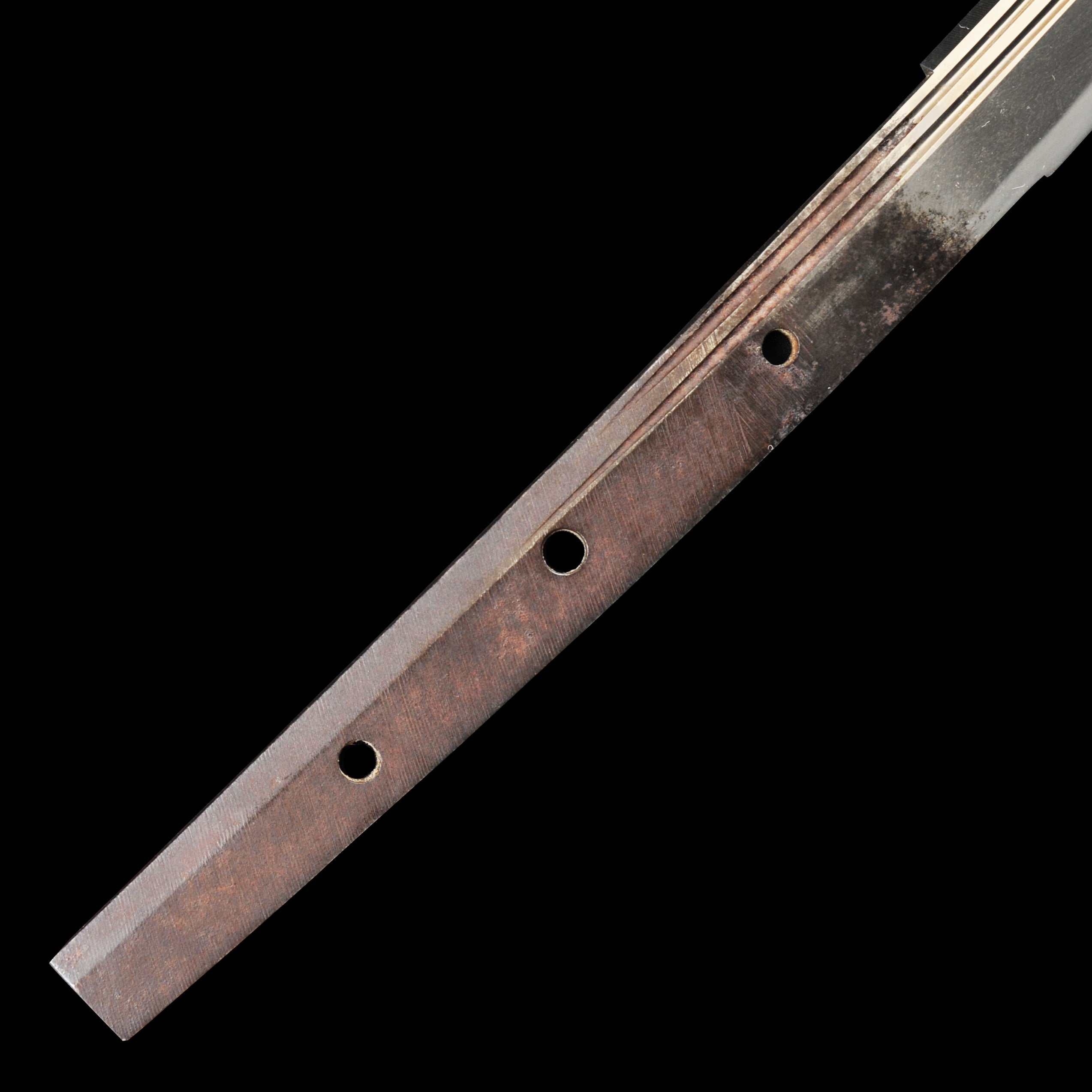
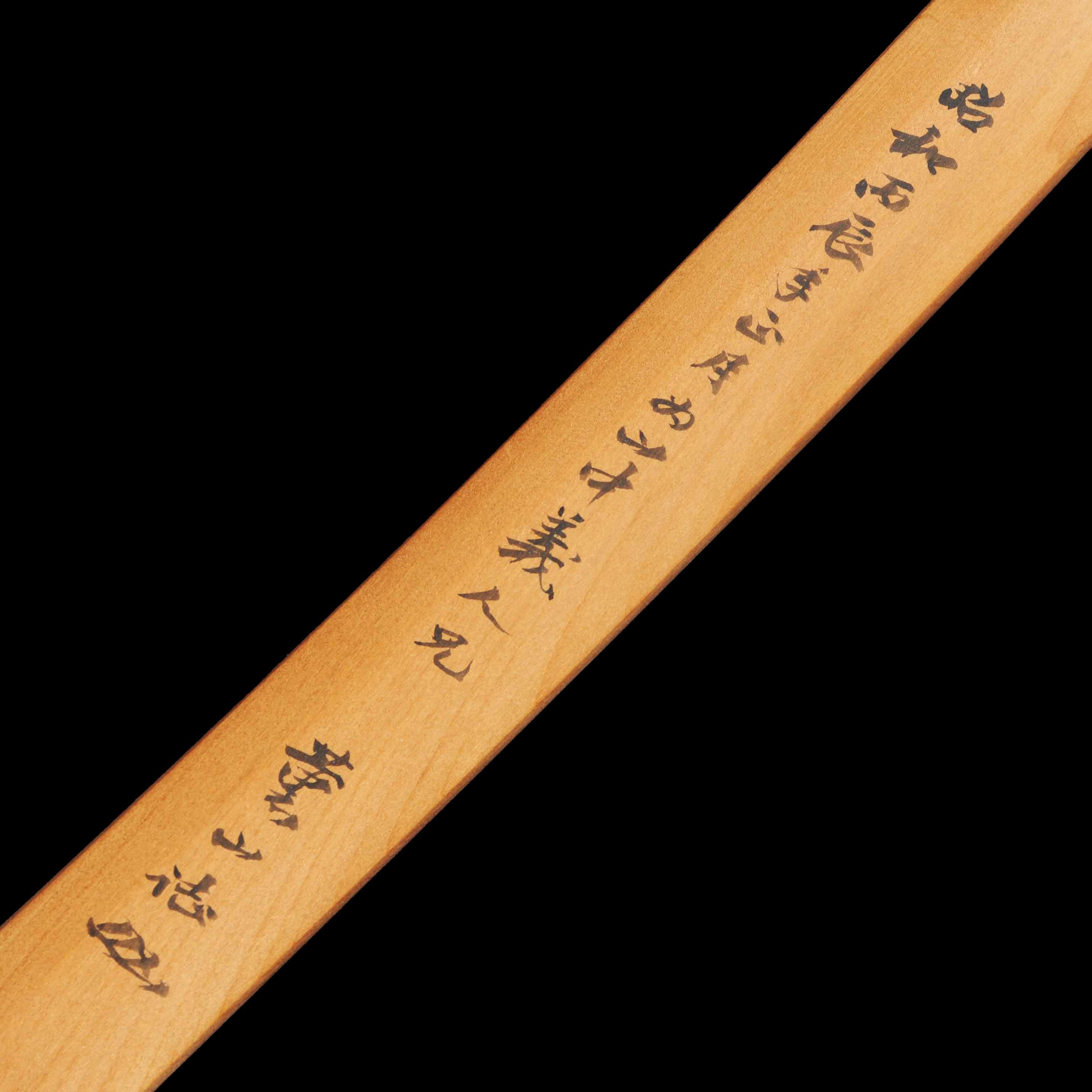
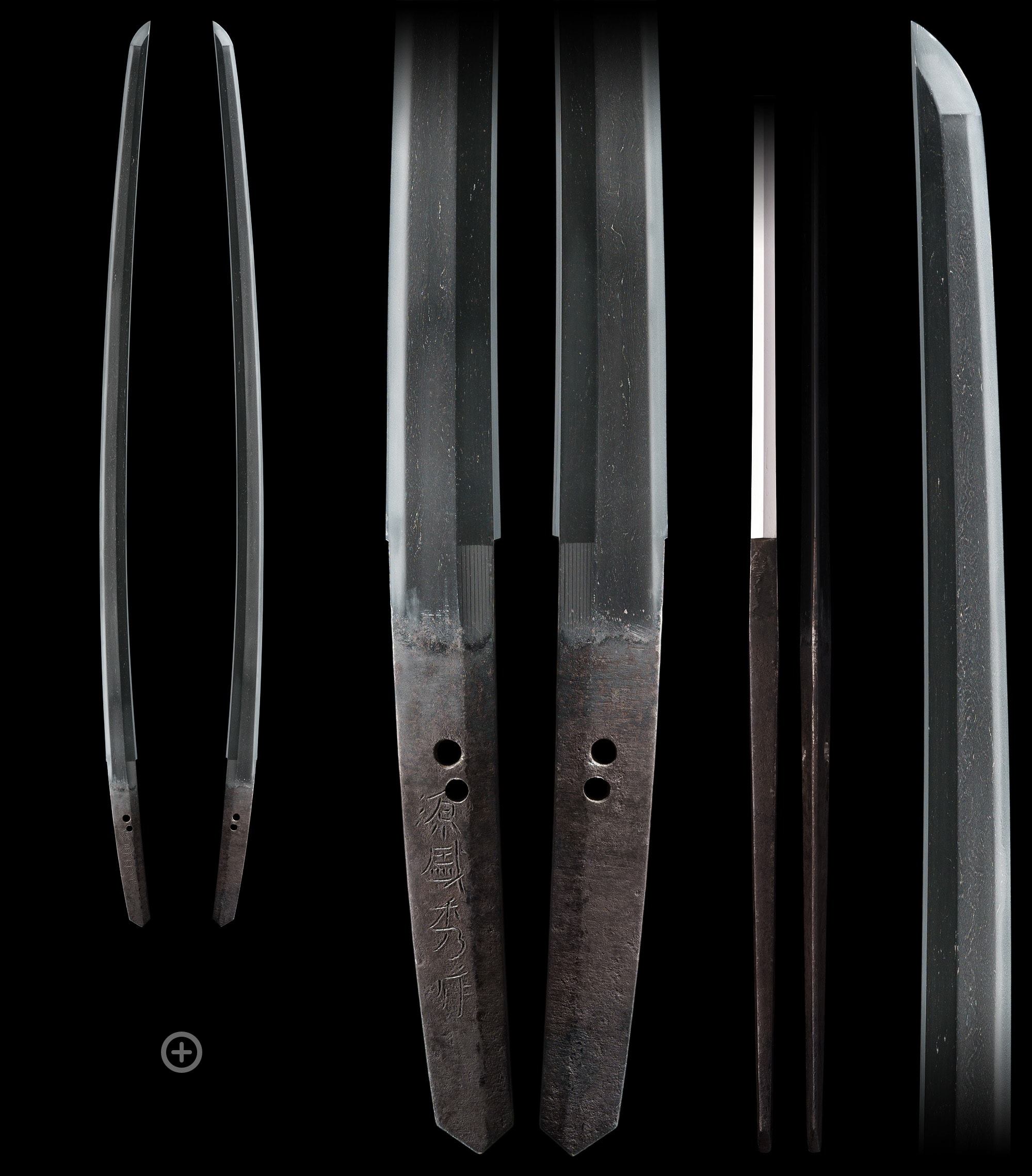
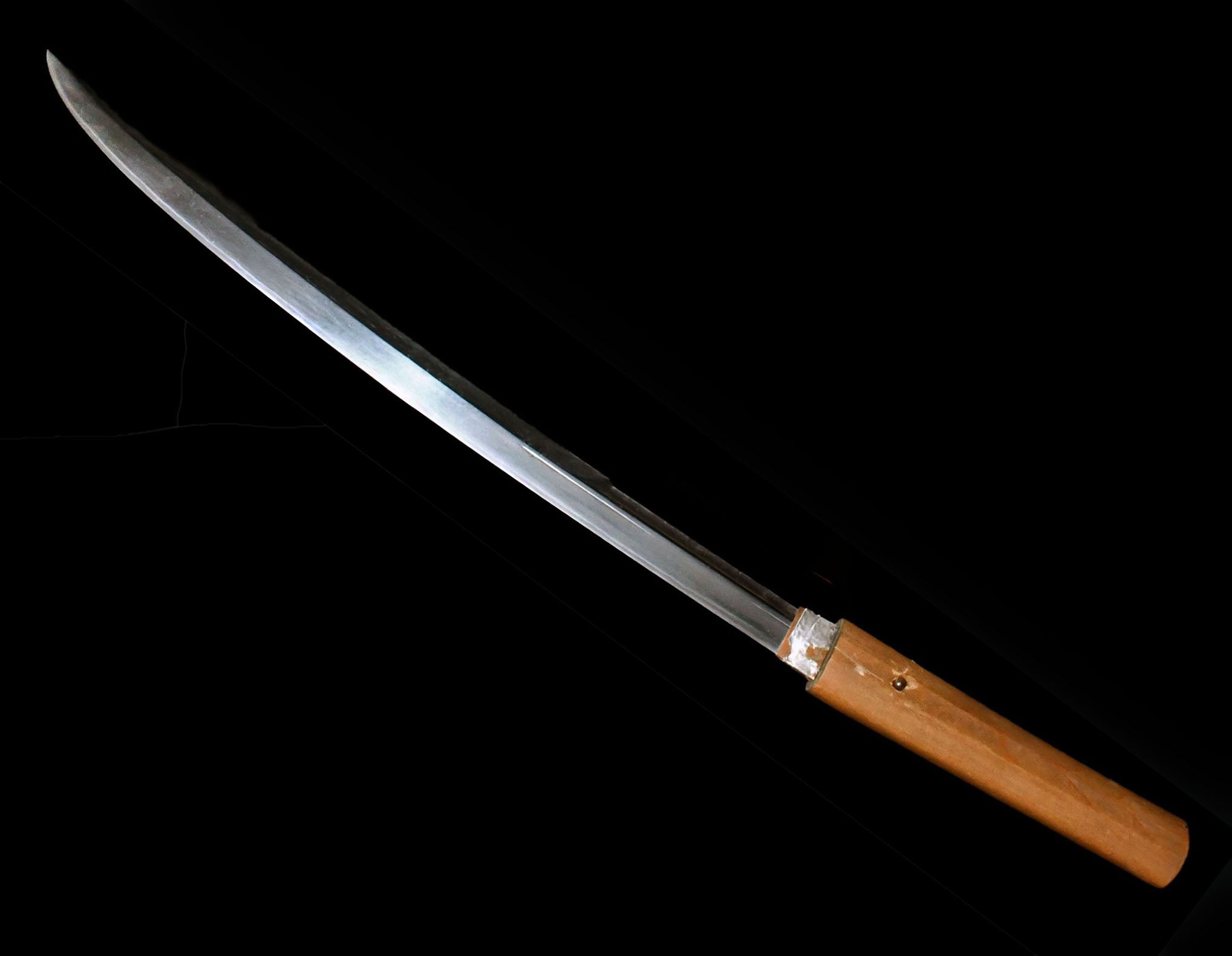
Reizei Sadamori worked in Chikuzen during the Nanbokucho period, and the firmest anchor for his name is a single small tanto, signed and dated on the tang "Chikushu Reizei Sadamori, a day in the first month of Shohei 25"[[c:1]], that is, the year 1370. The published sources return to this one blade in nearly every entry on the smith, because signed work by him is so rare that the dated tanto has become the touchstone against which every other attribution is measured. They place him within the Kongobyoe line, traced back to the first-generation Kongobyoe Moritaka, and set him beside the Samonji school as the second of the two groups then forging in the province. What separates his line from the more famous Sa school, the published sources say, is temperament: his is read as a Yamato hand carried into Kyushu steel.
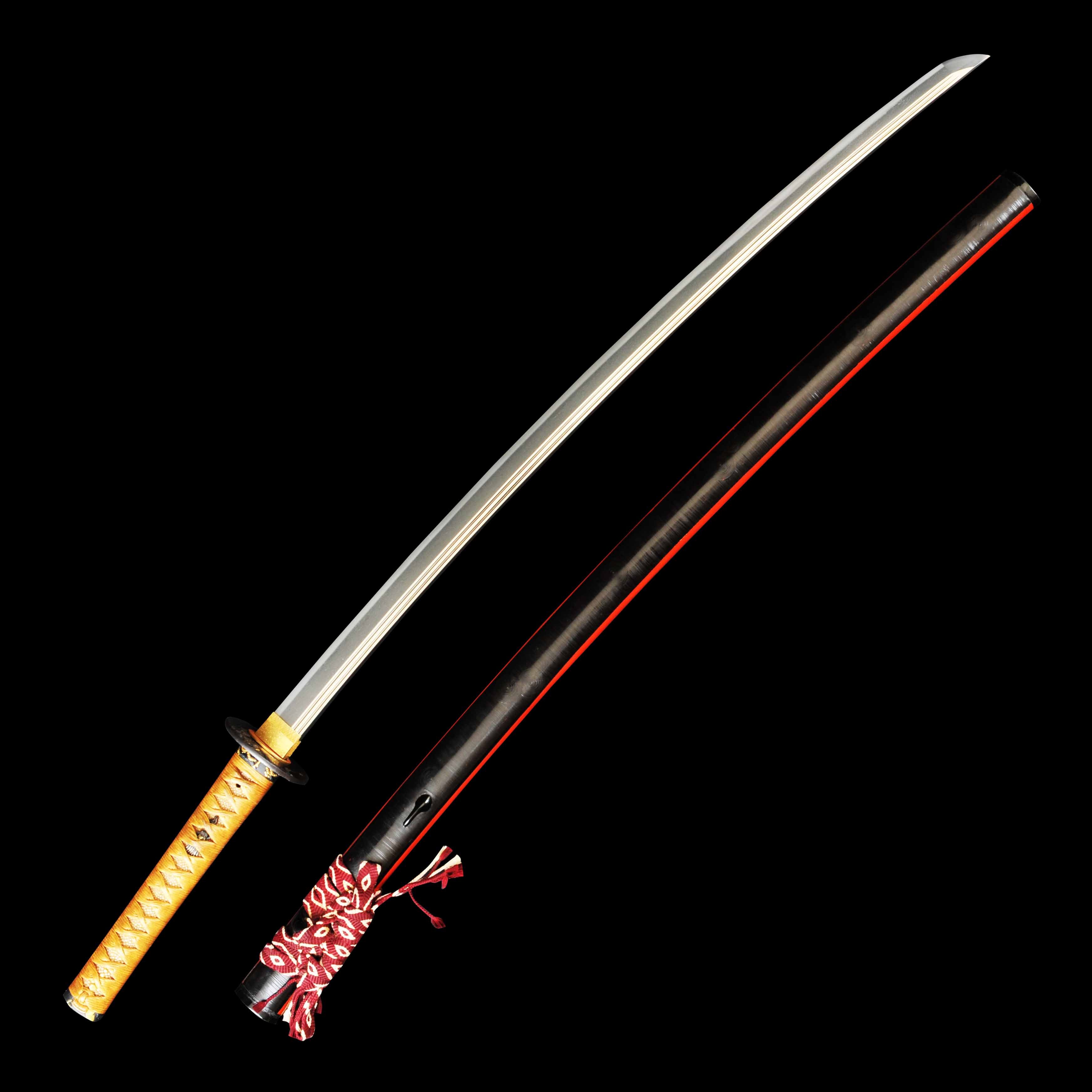
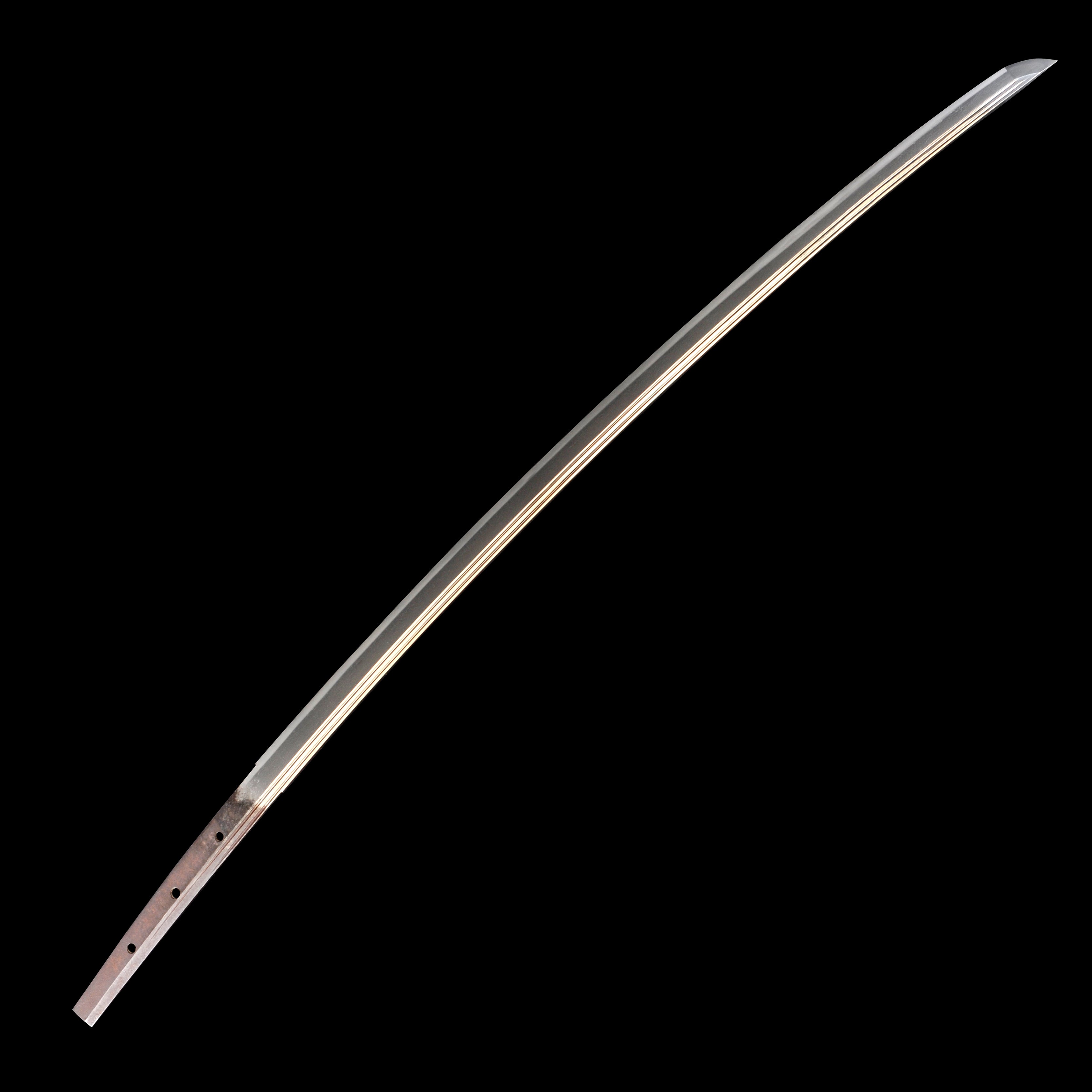
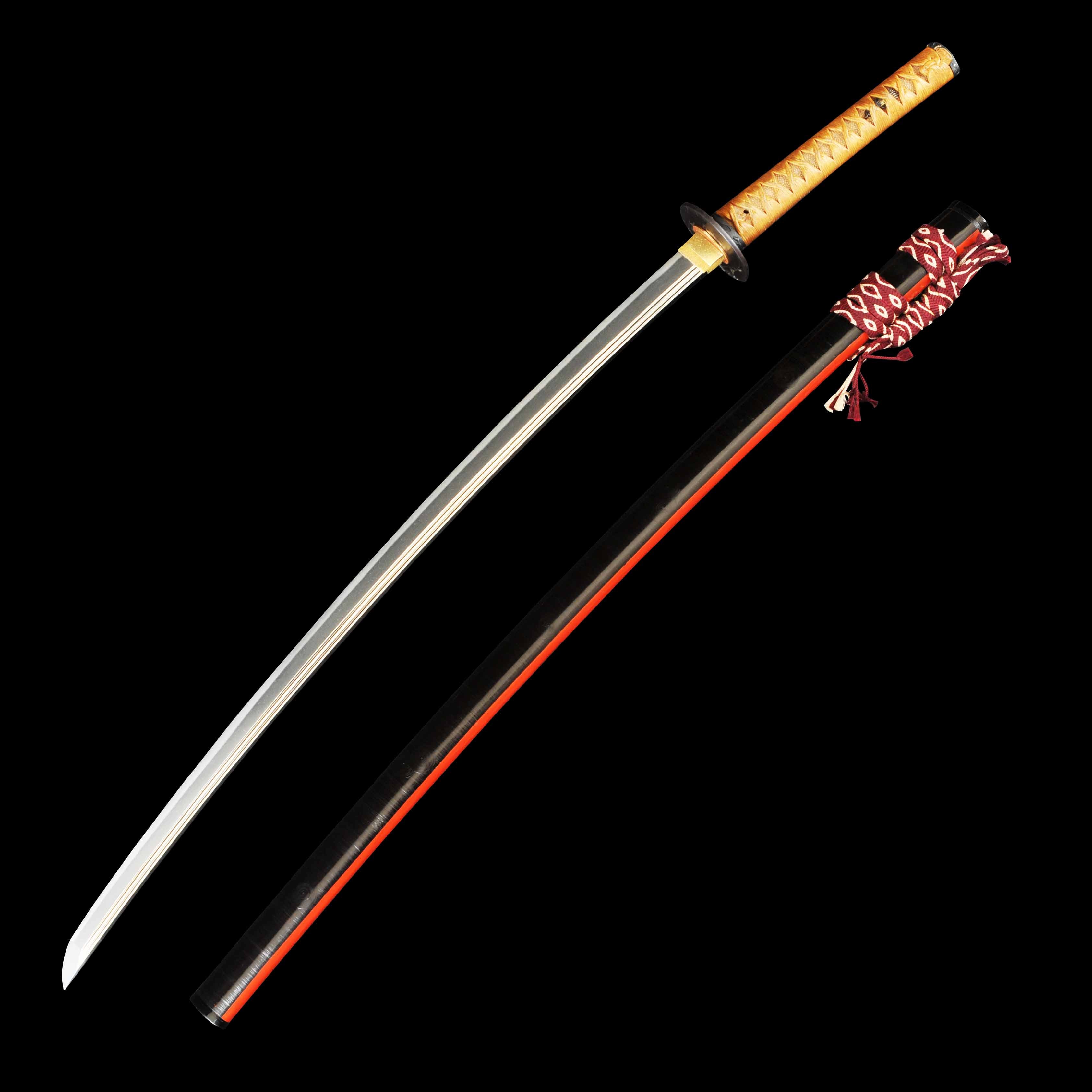
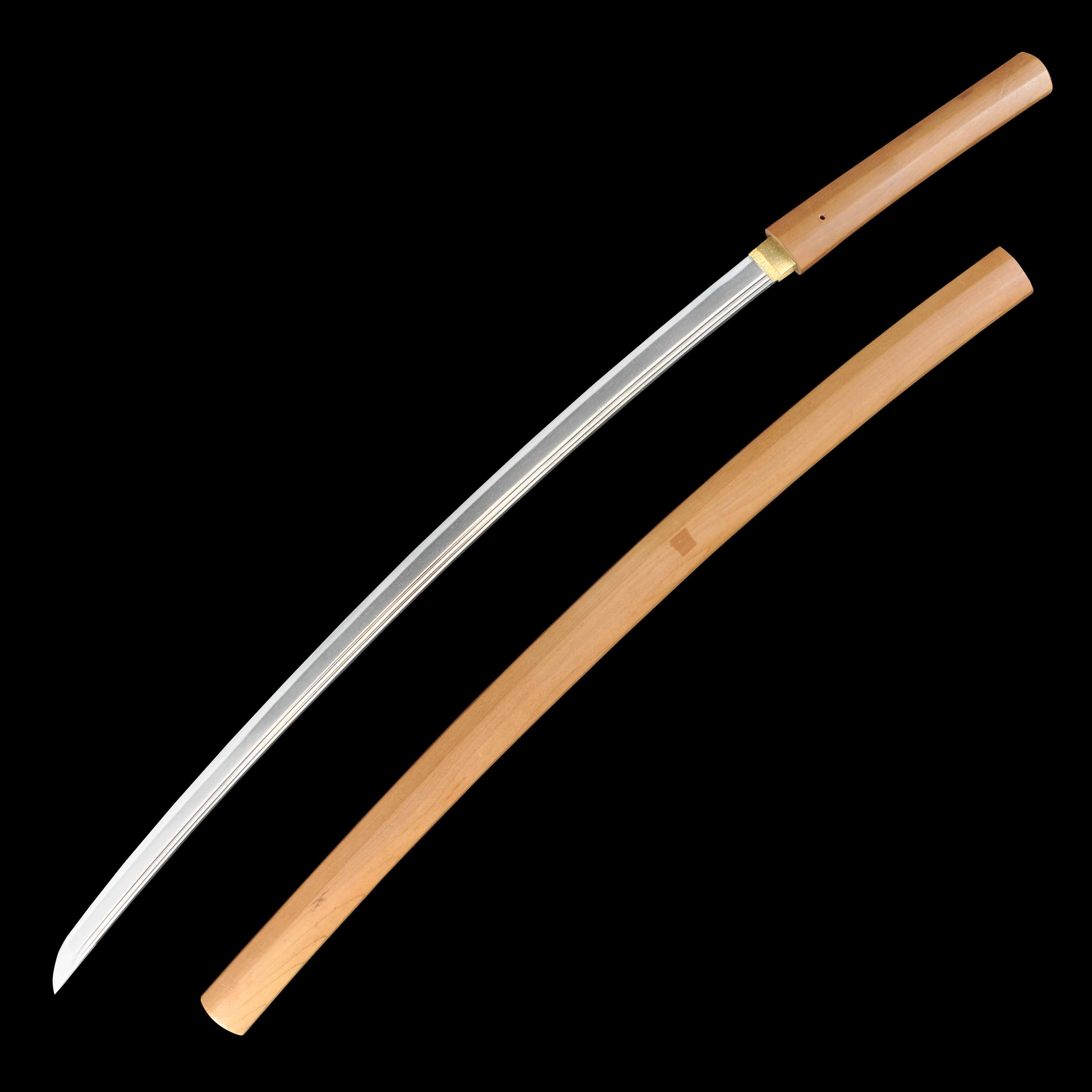
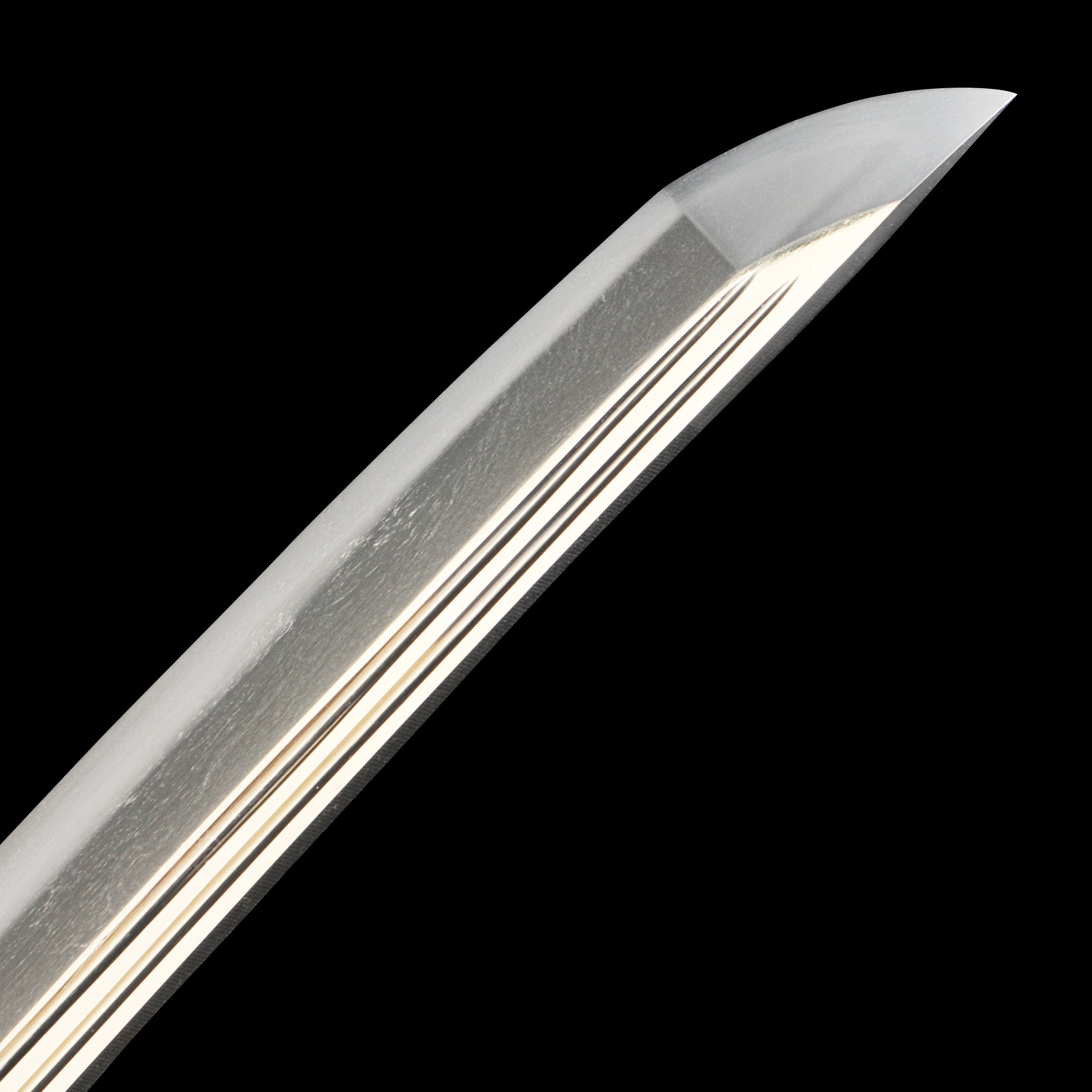
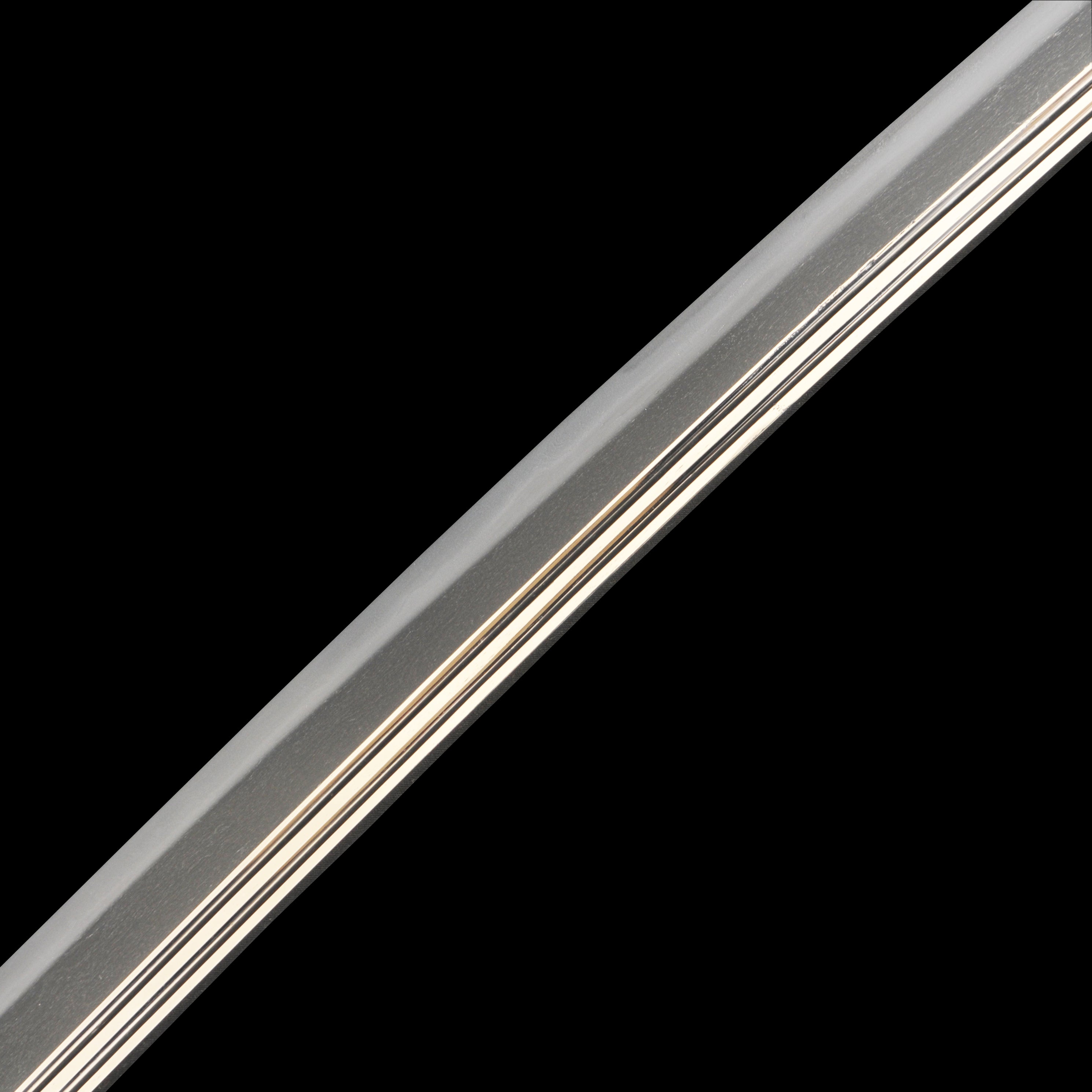
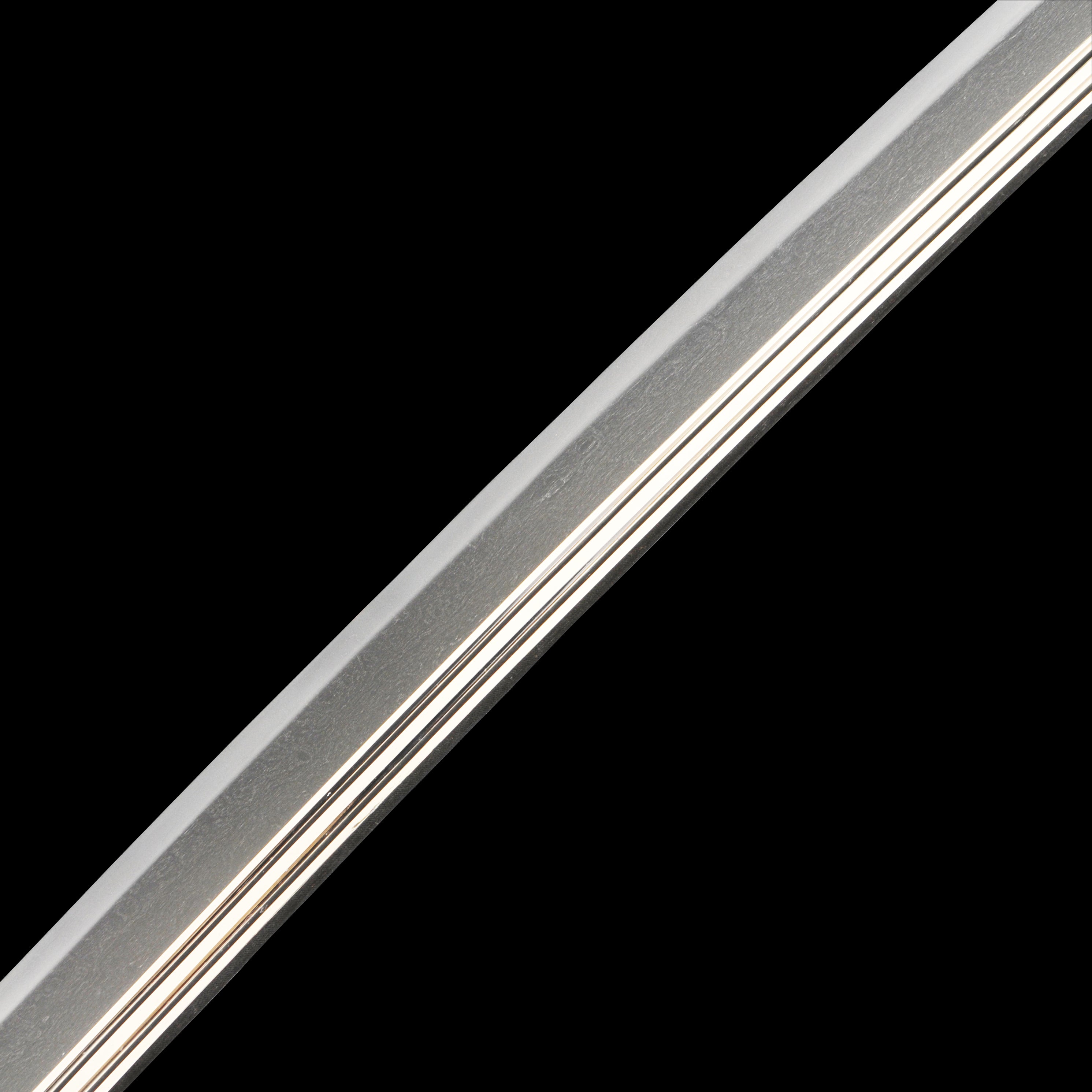
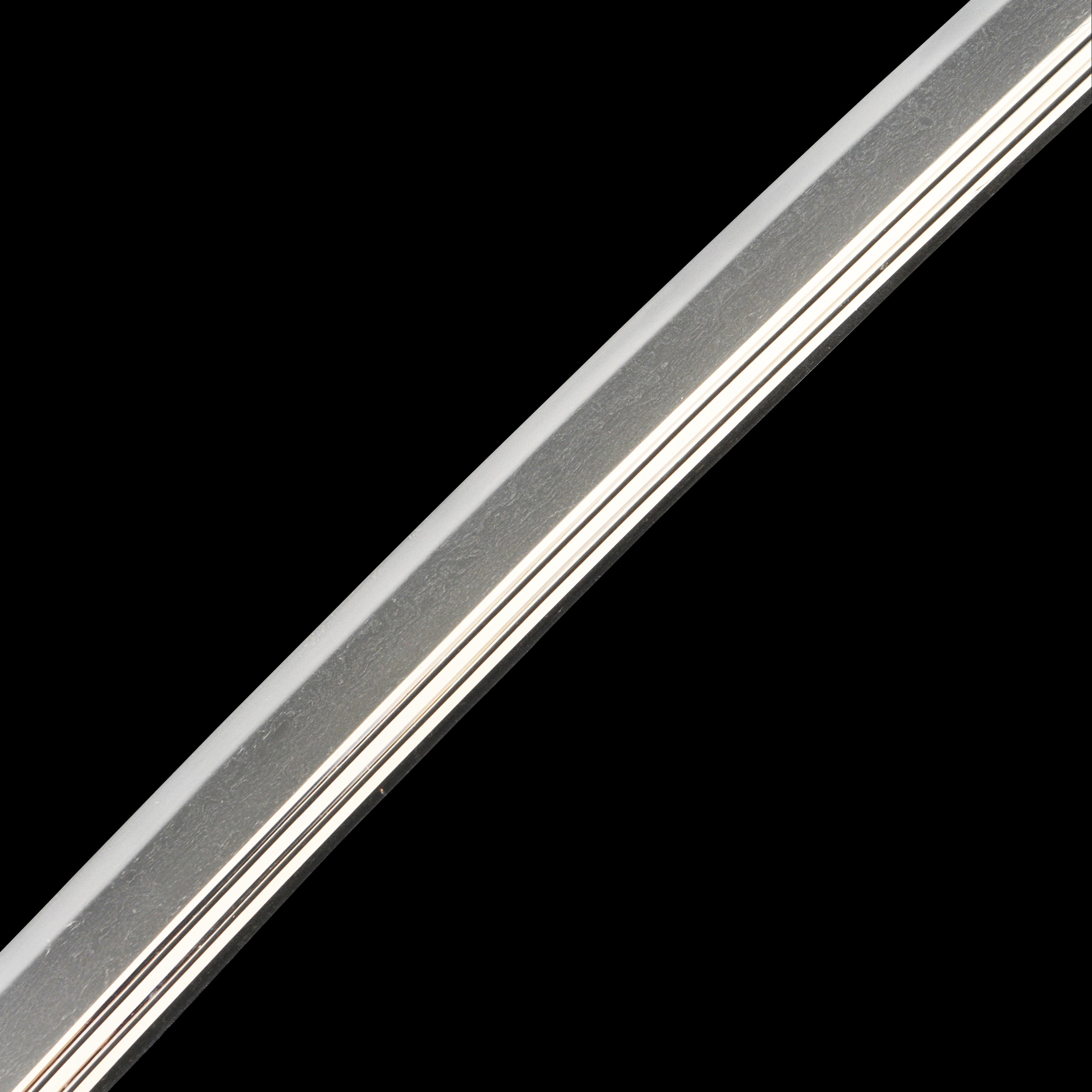
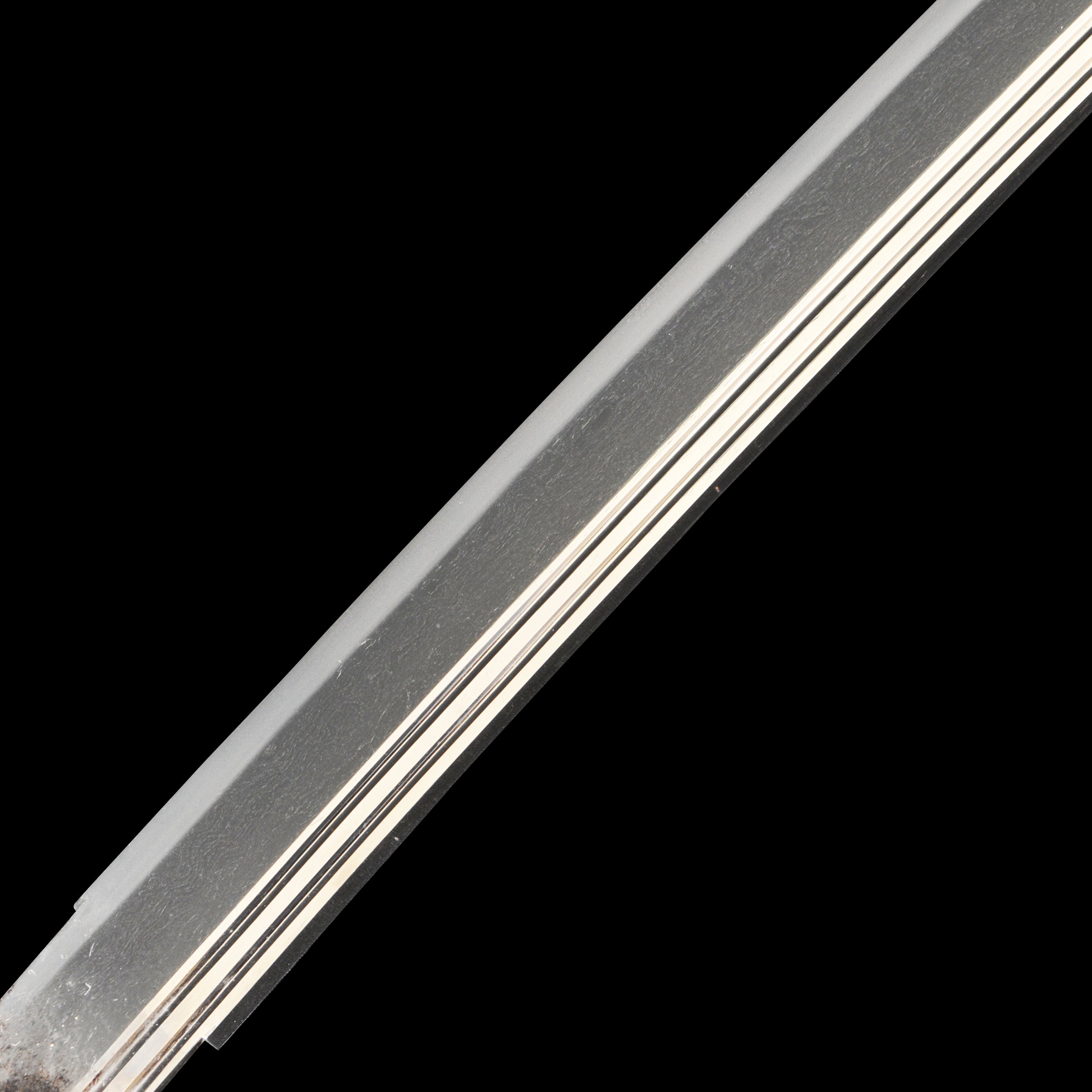
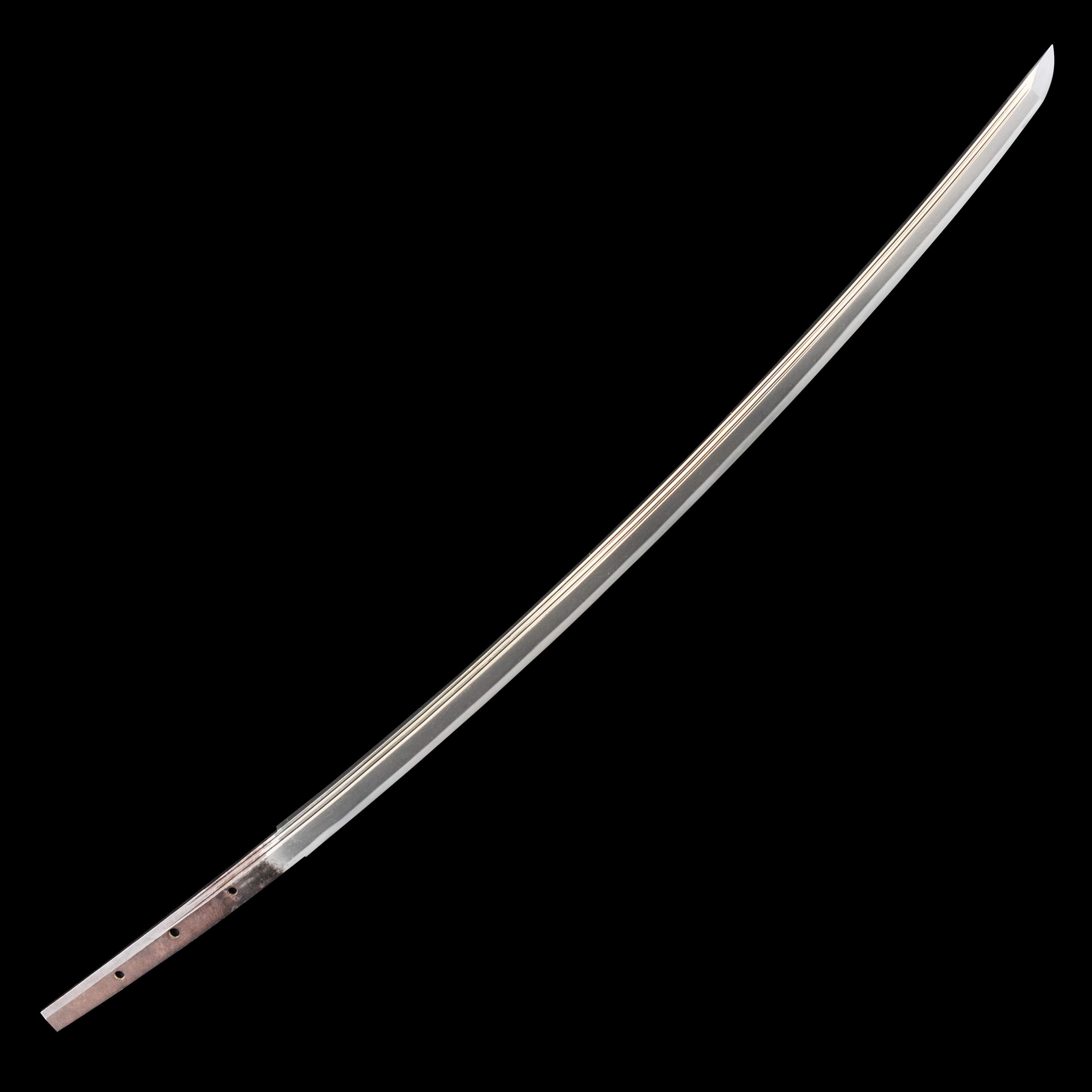
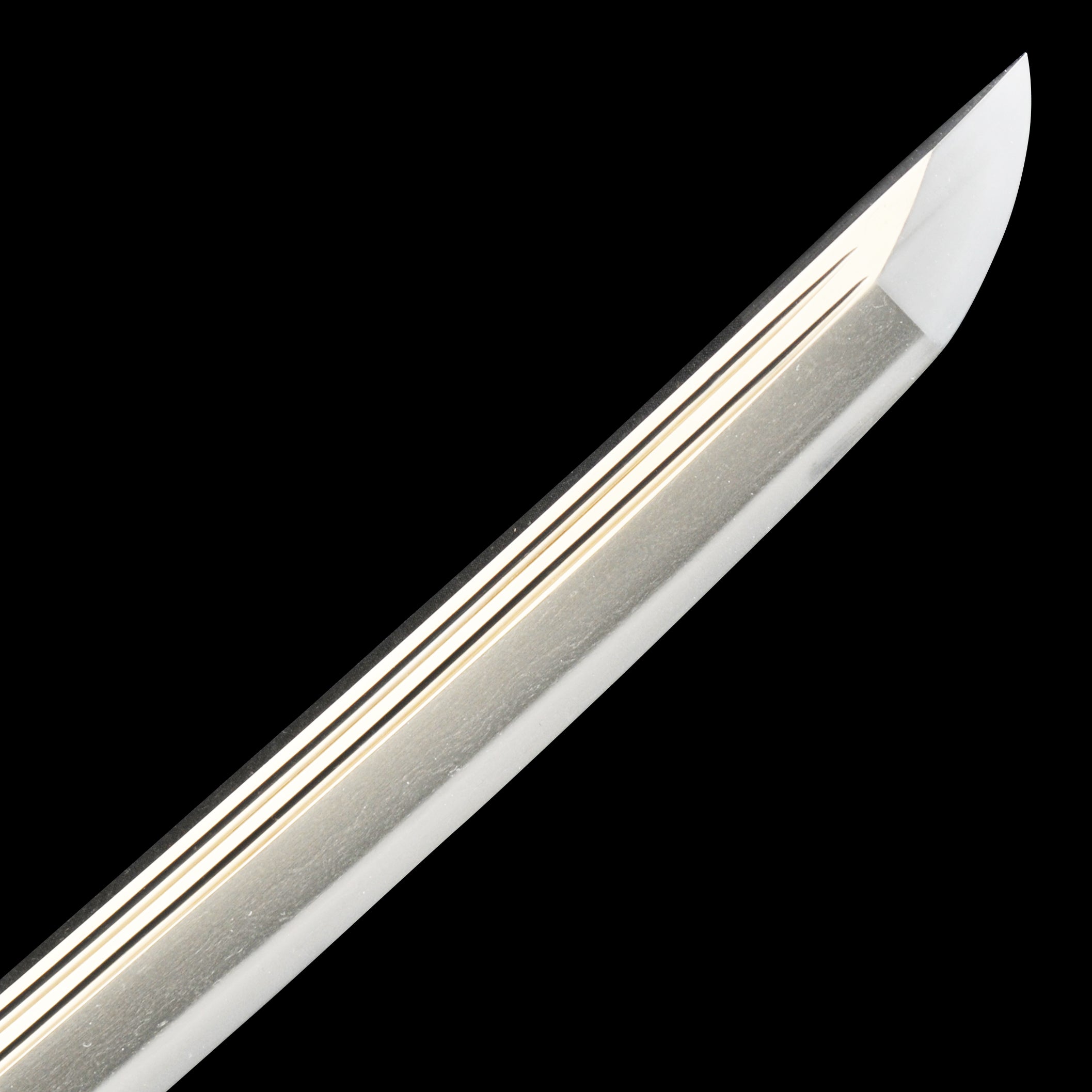
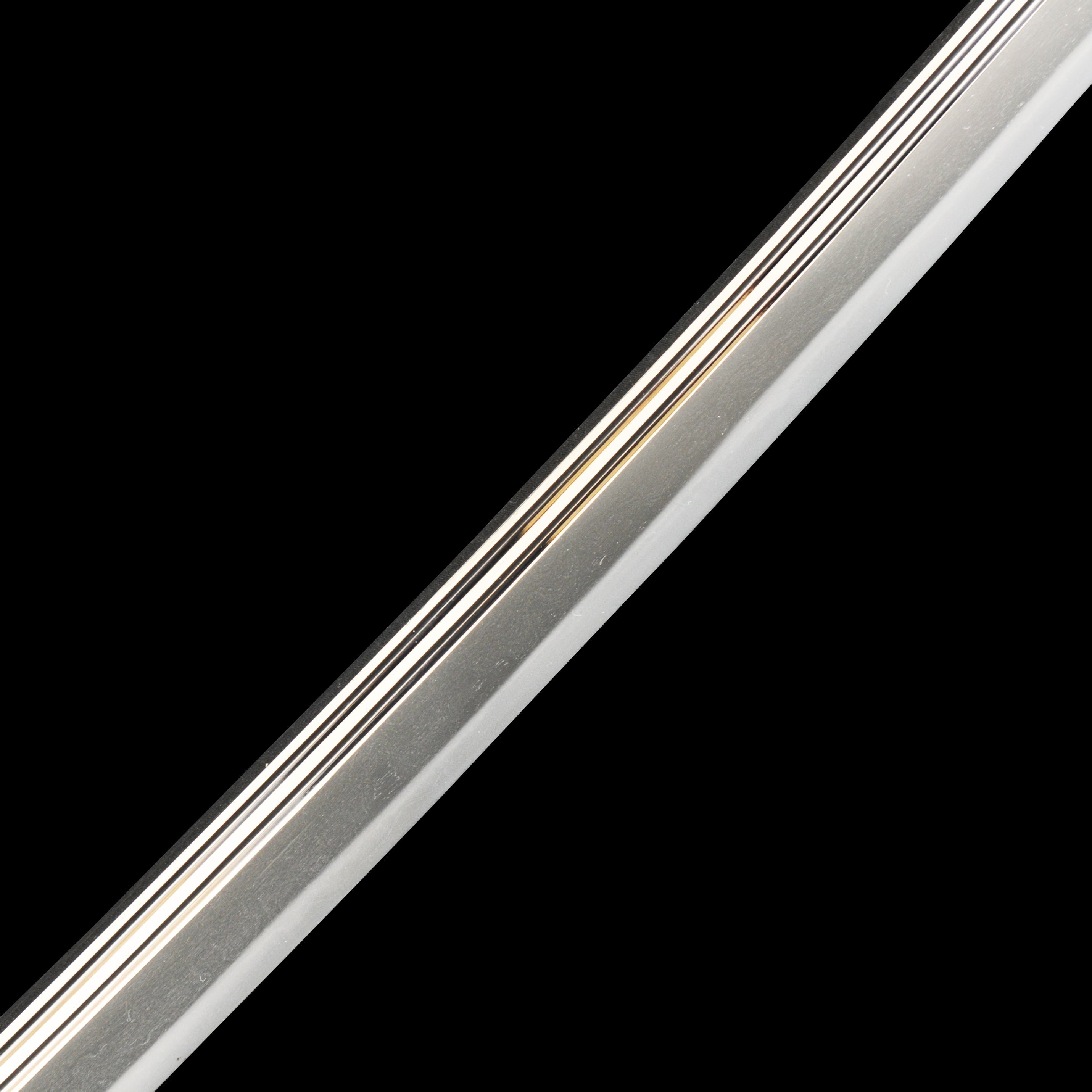
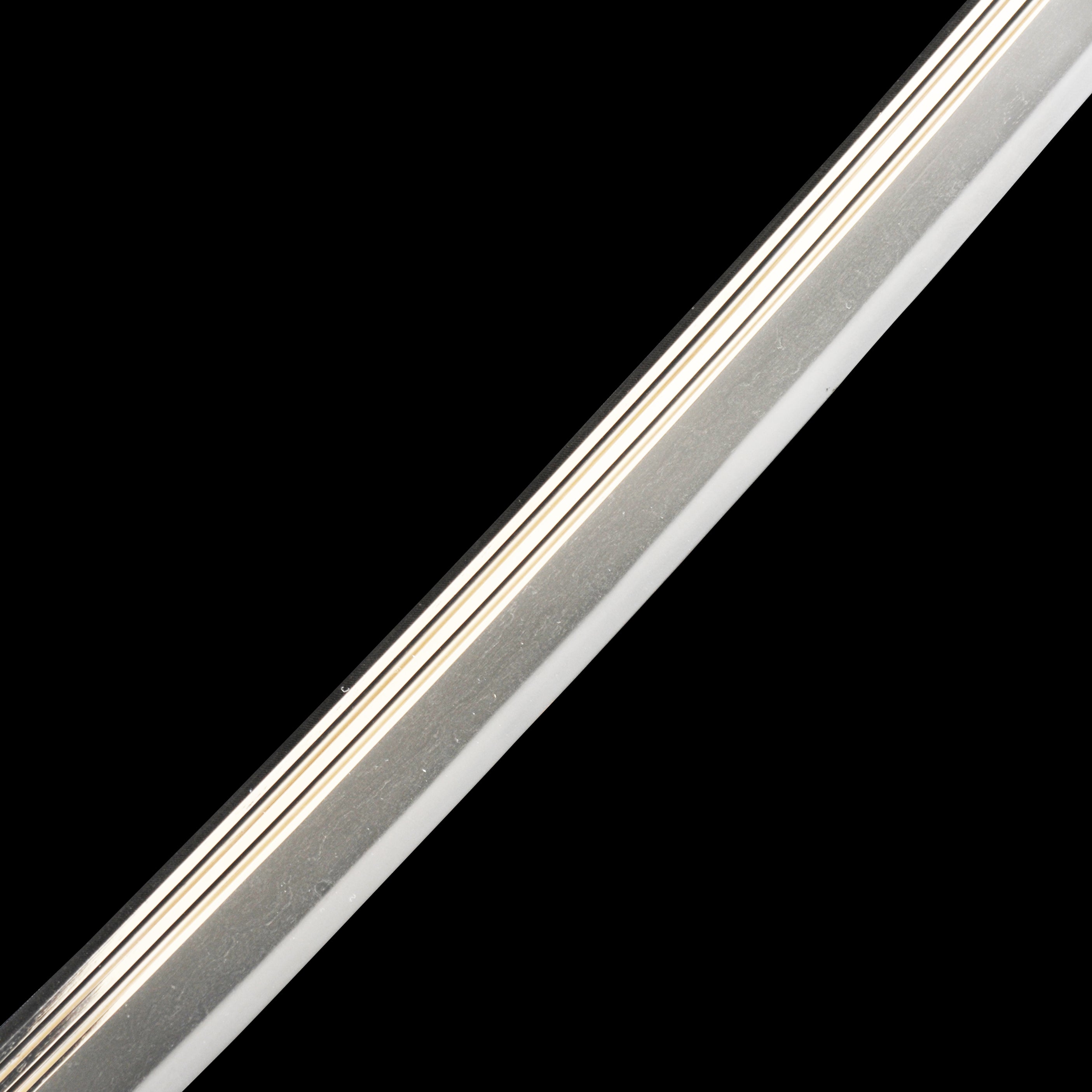
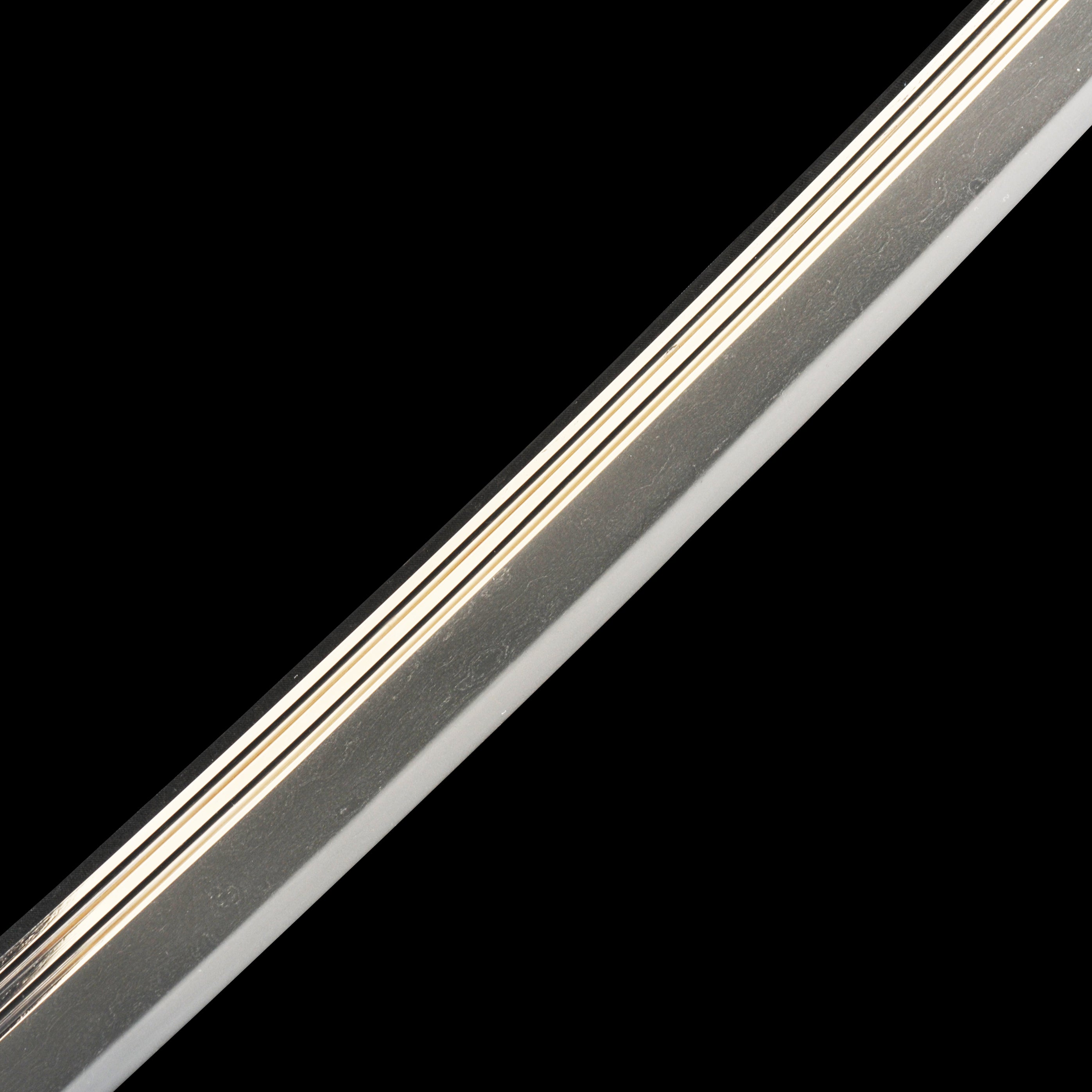
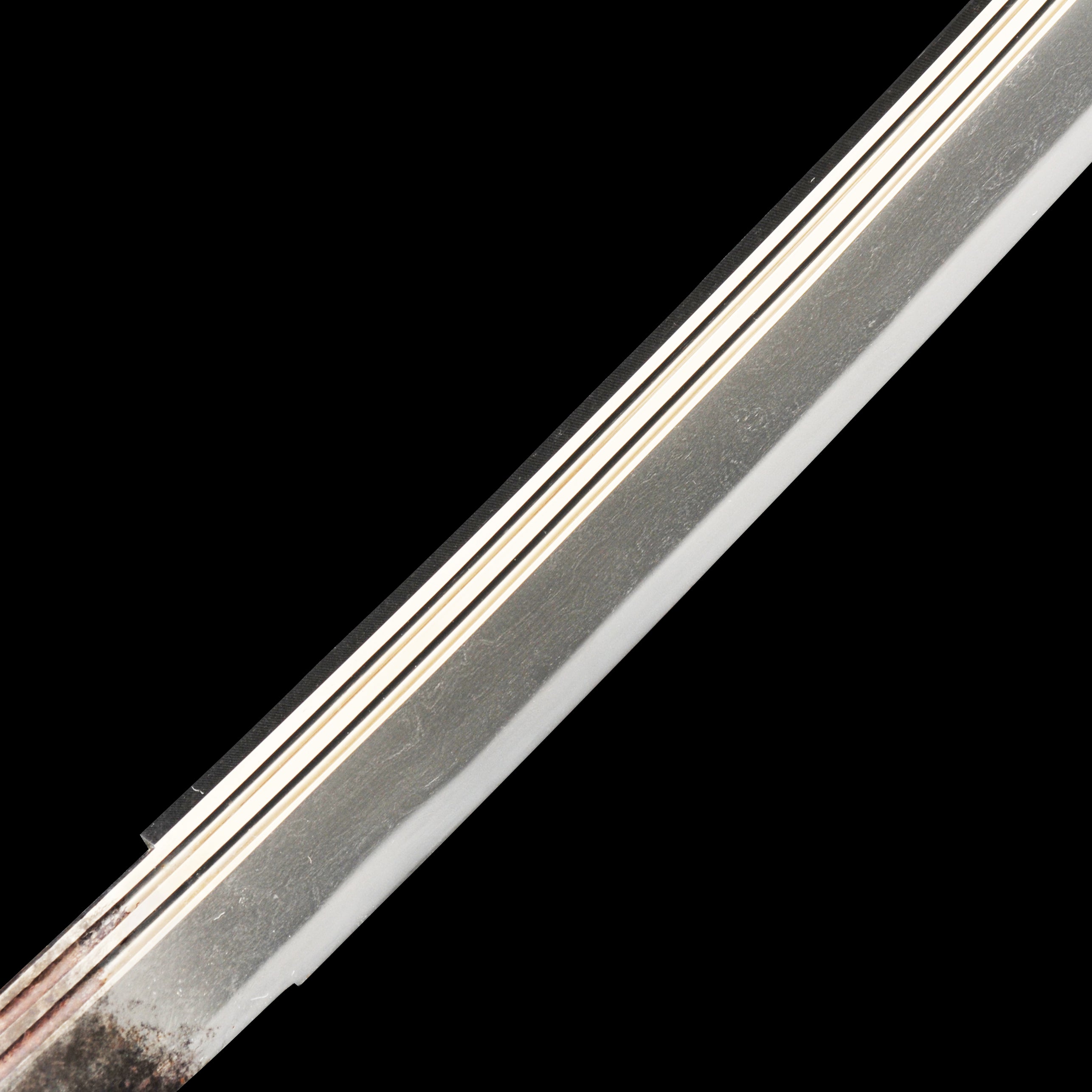
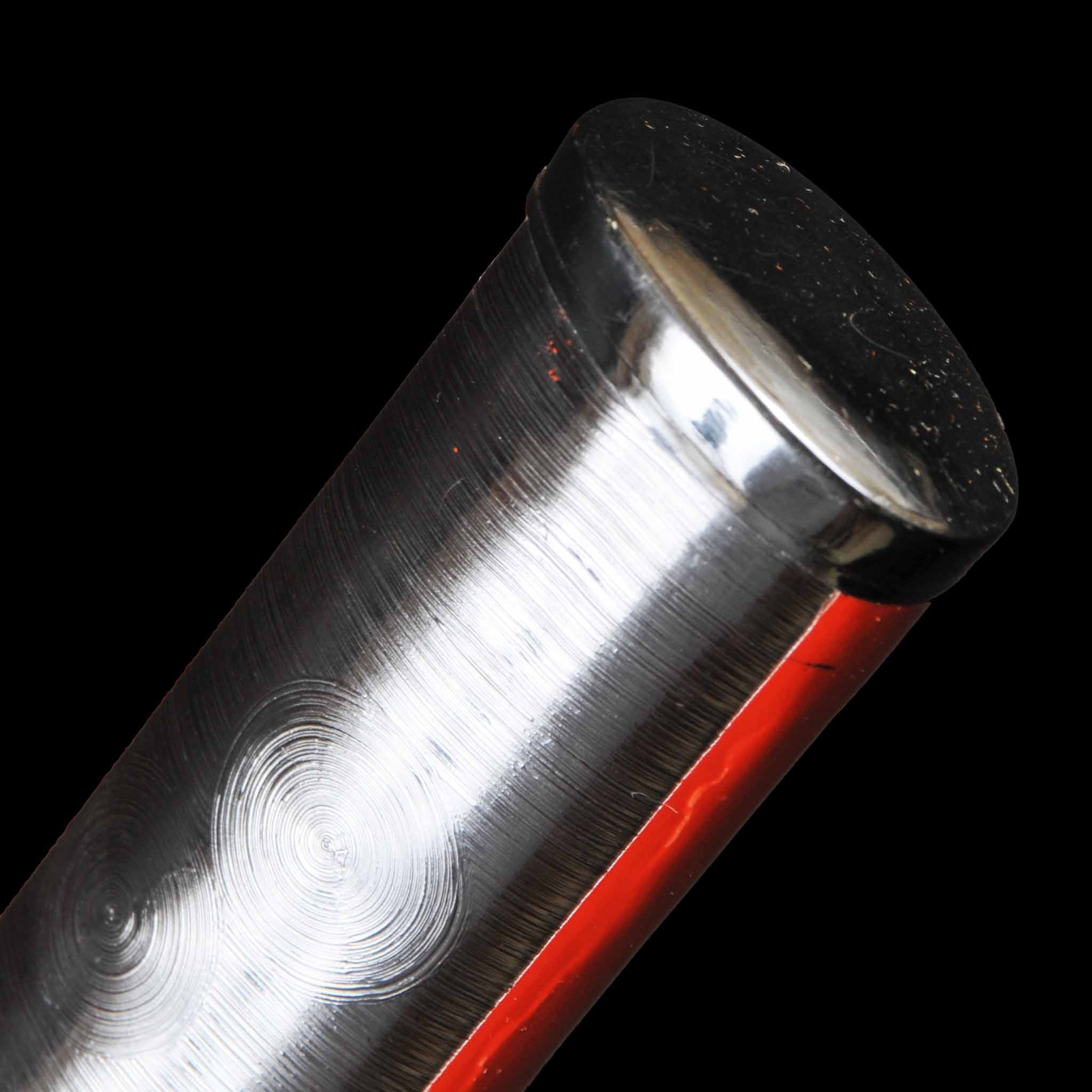
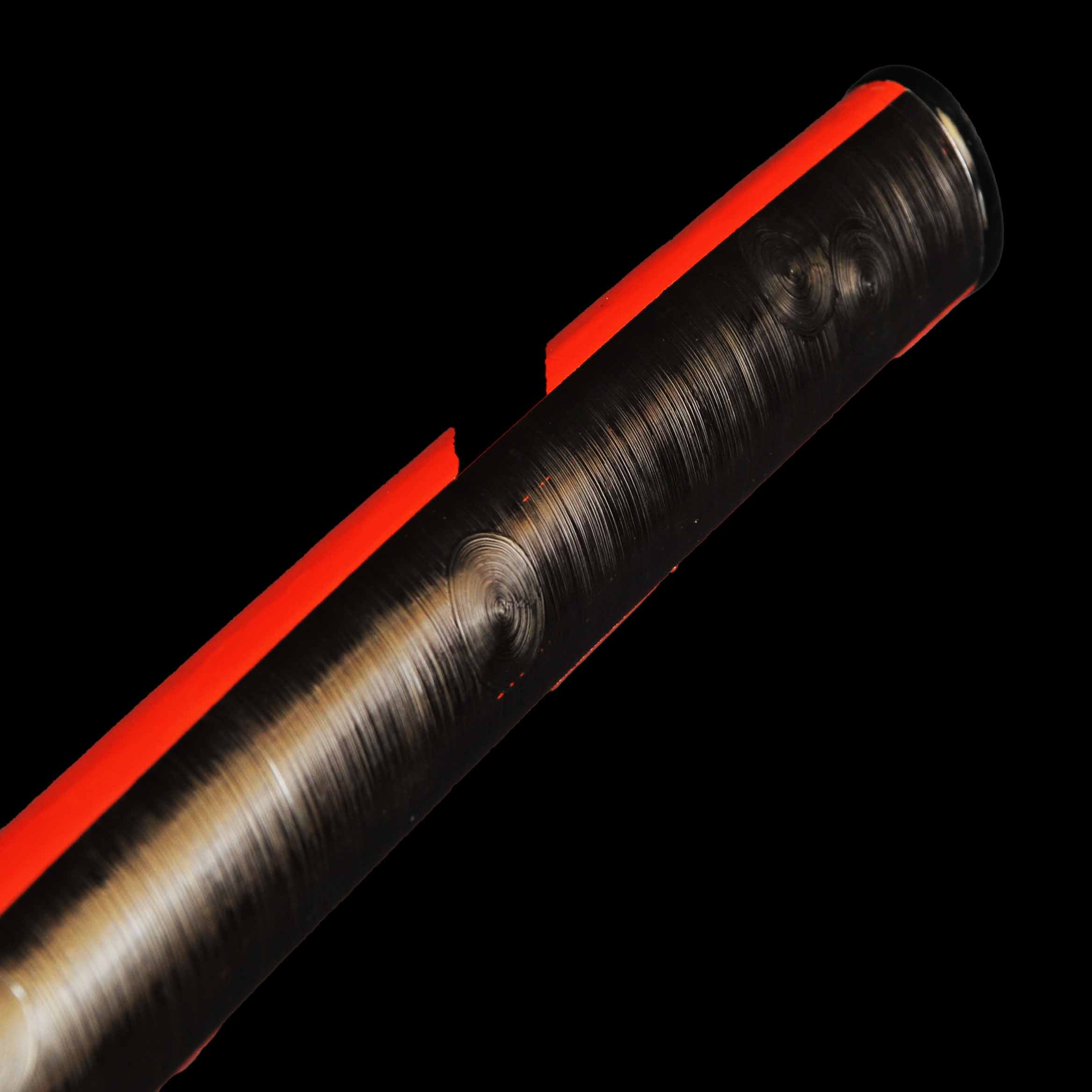
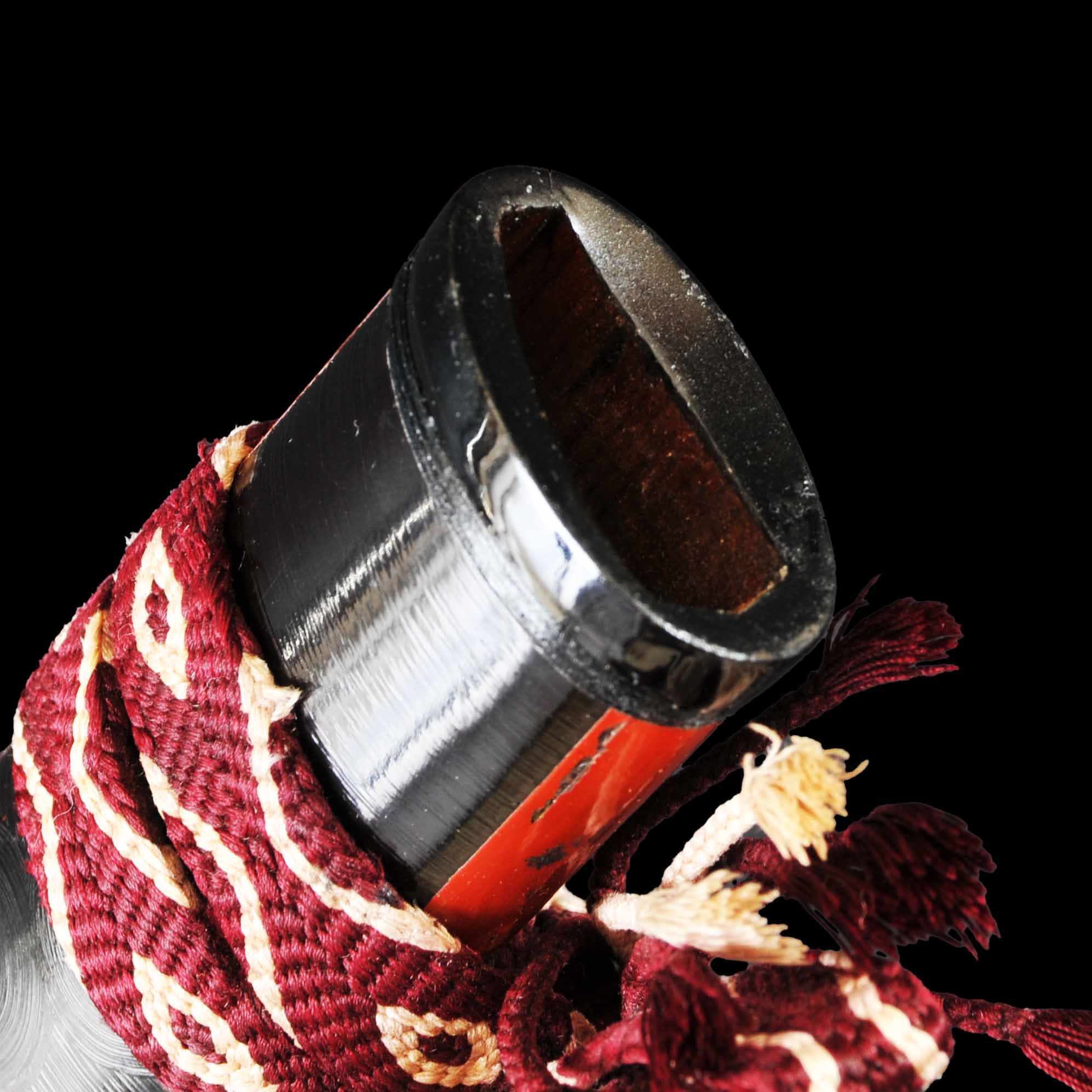
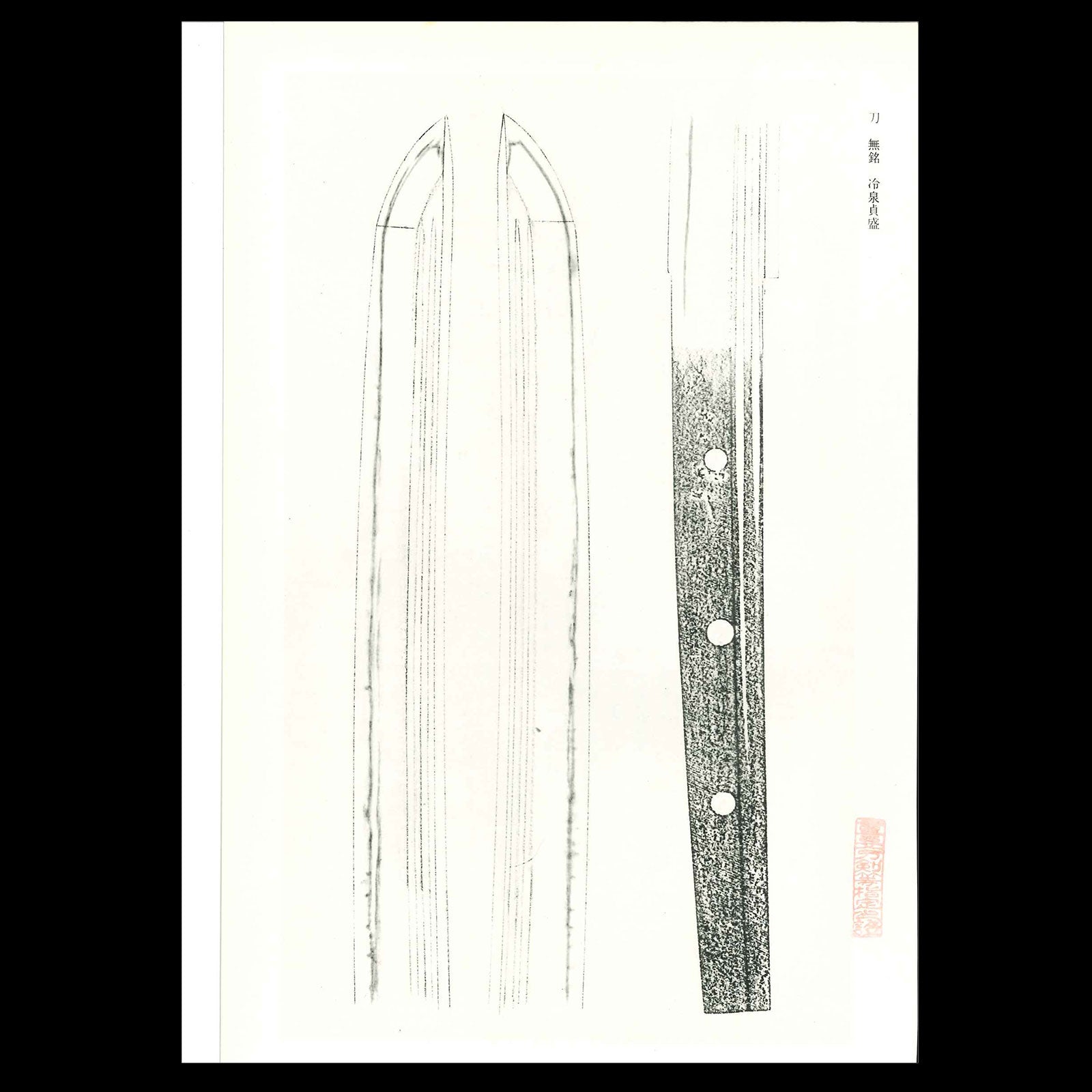
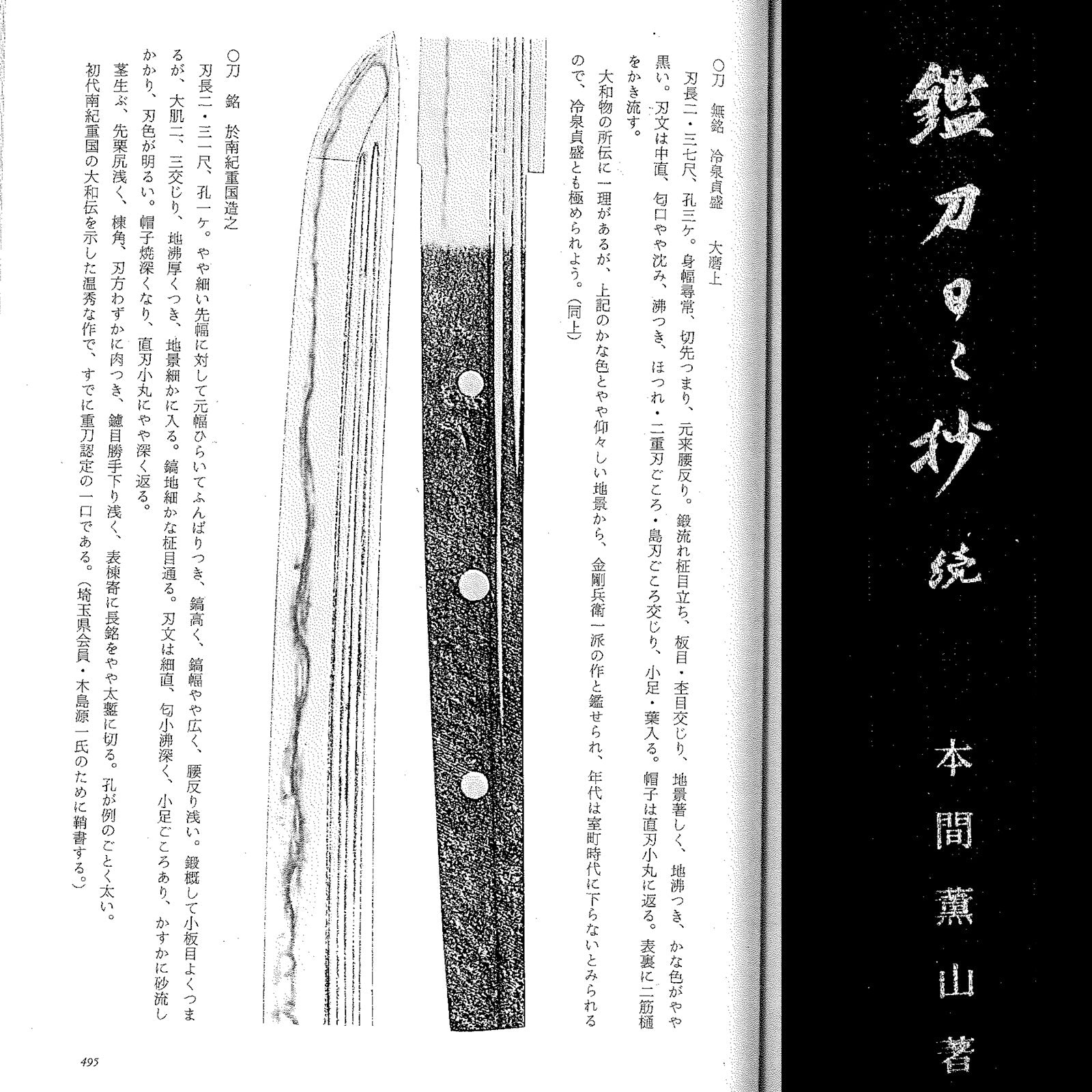
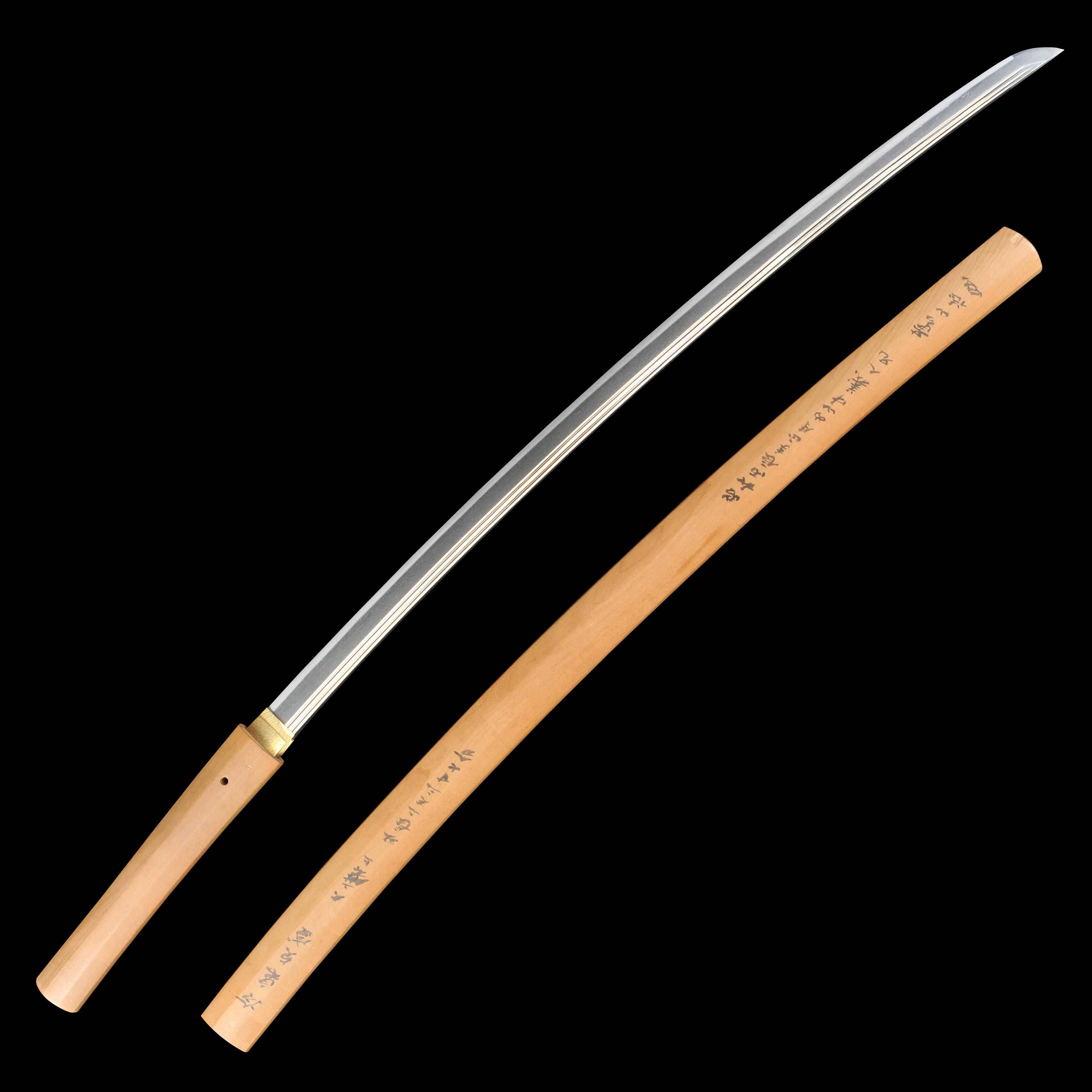
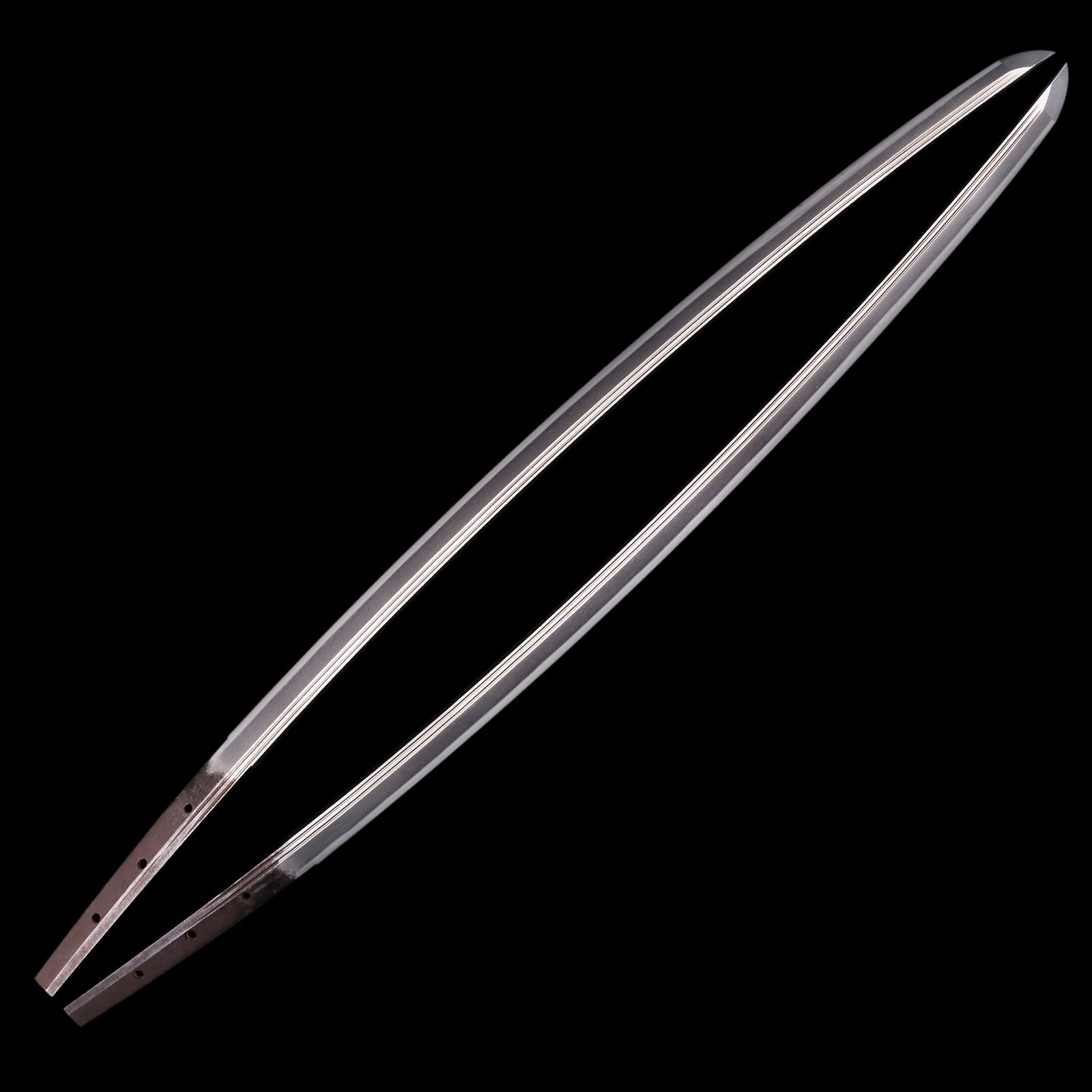
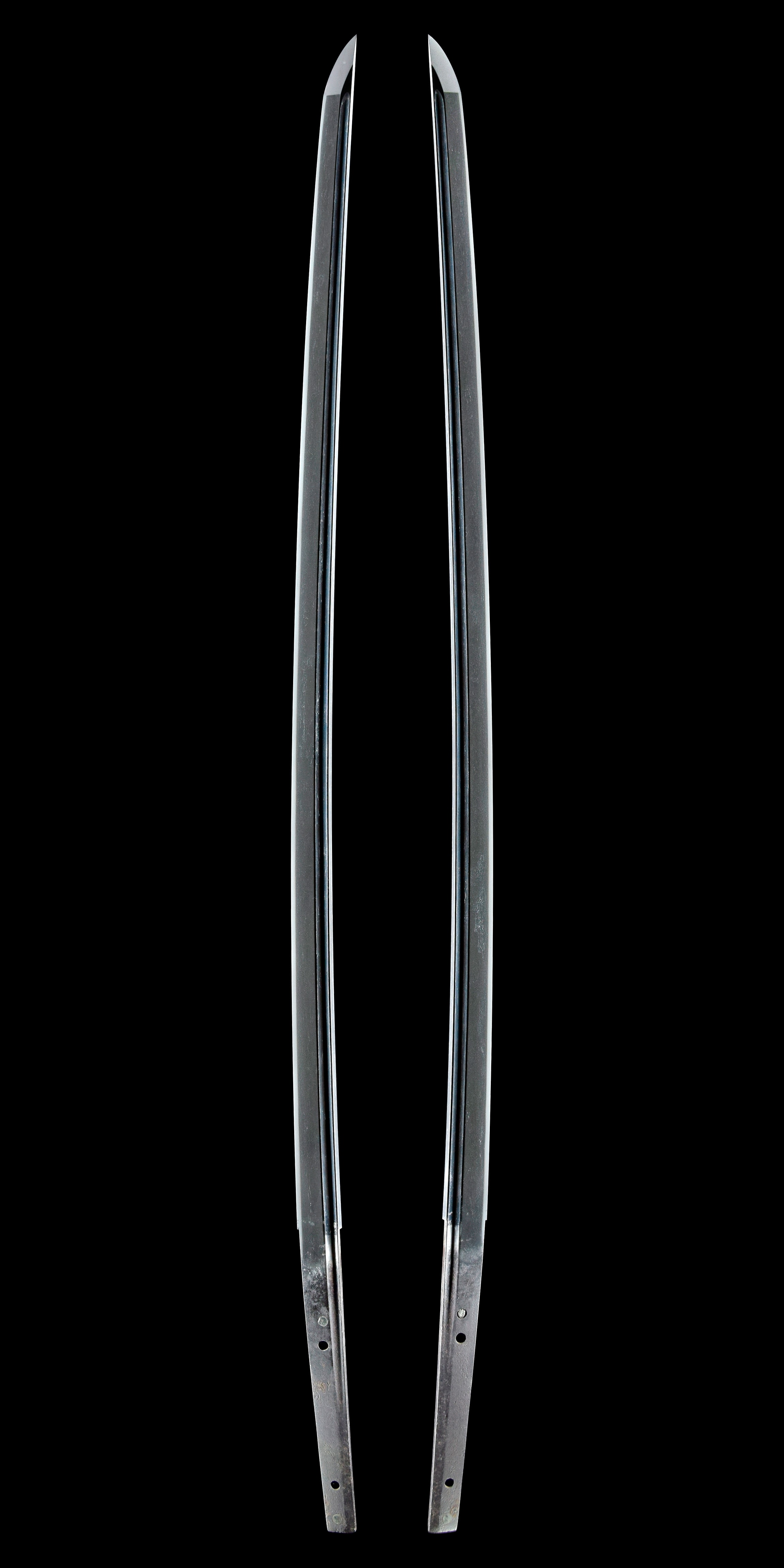
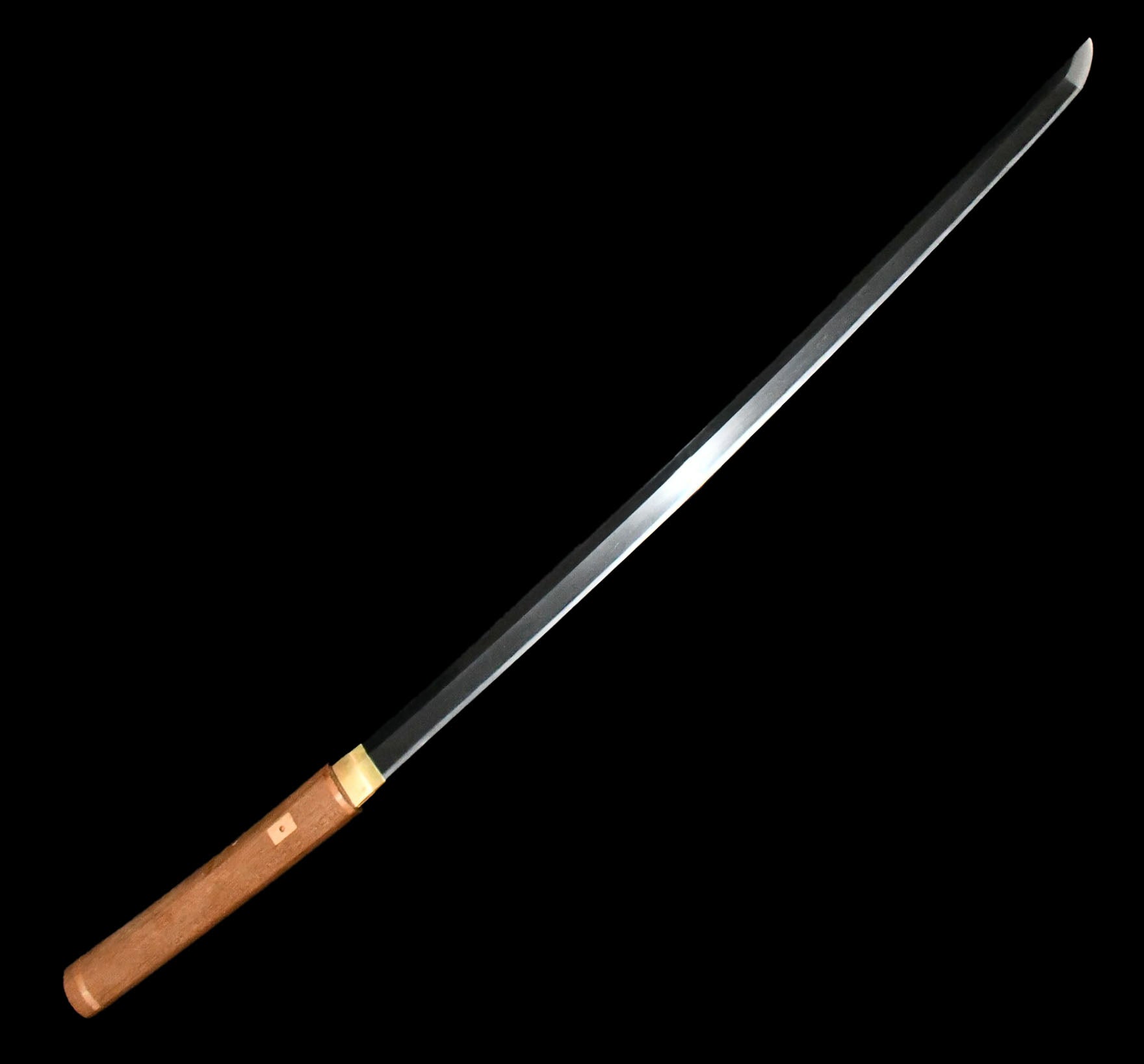
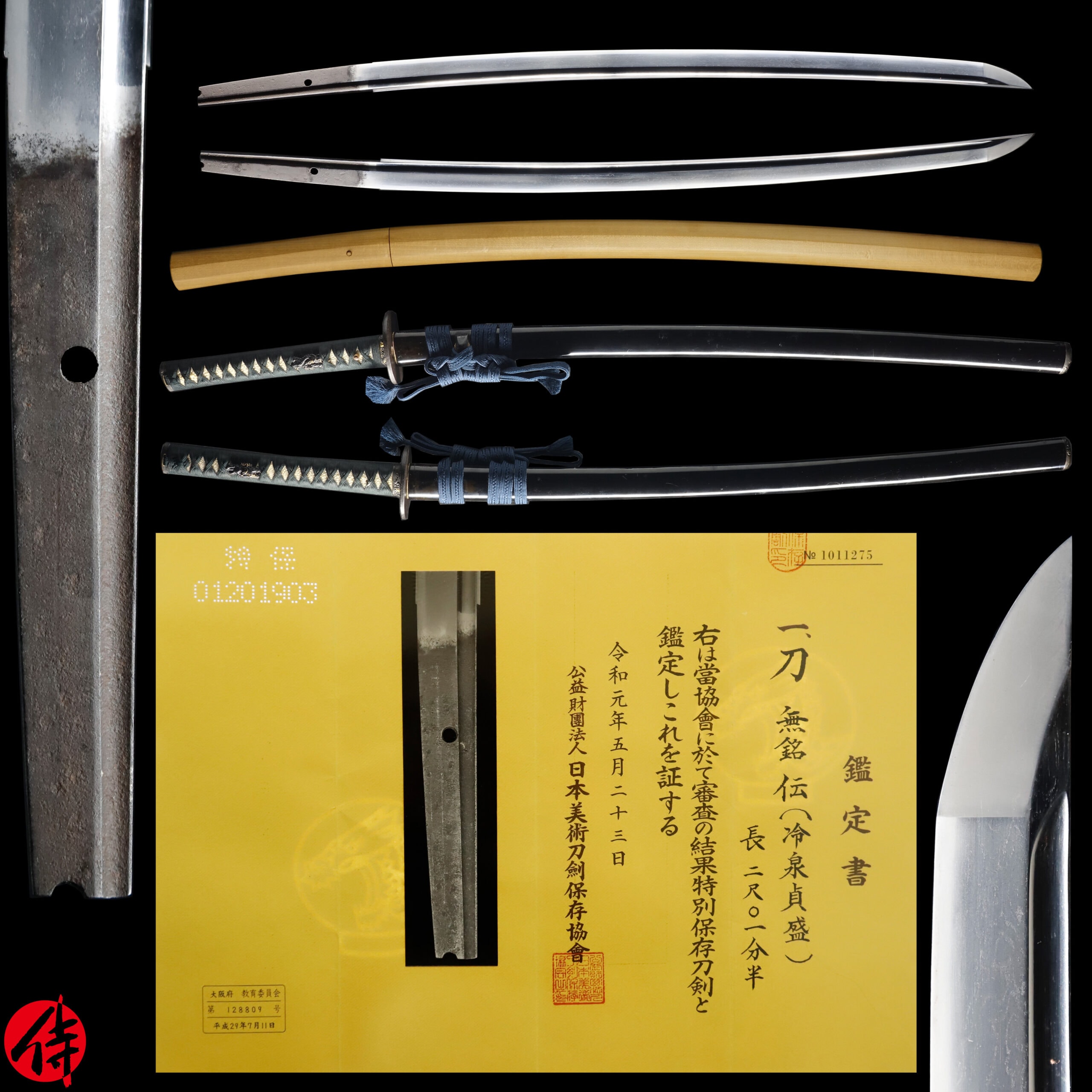
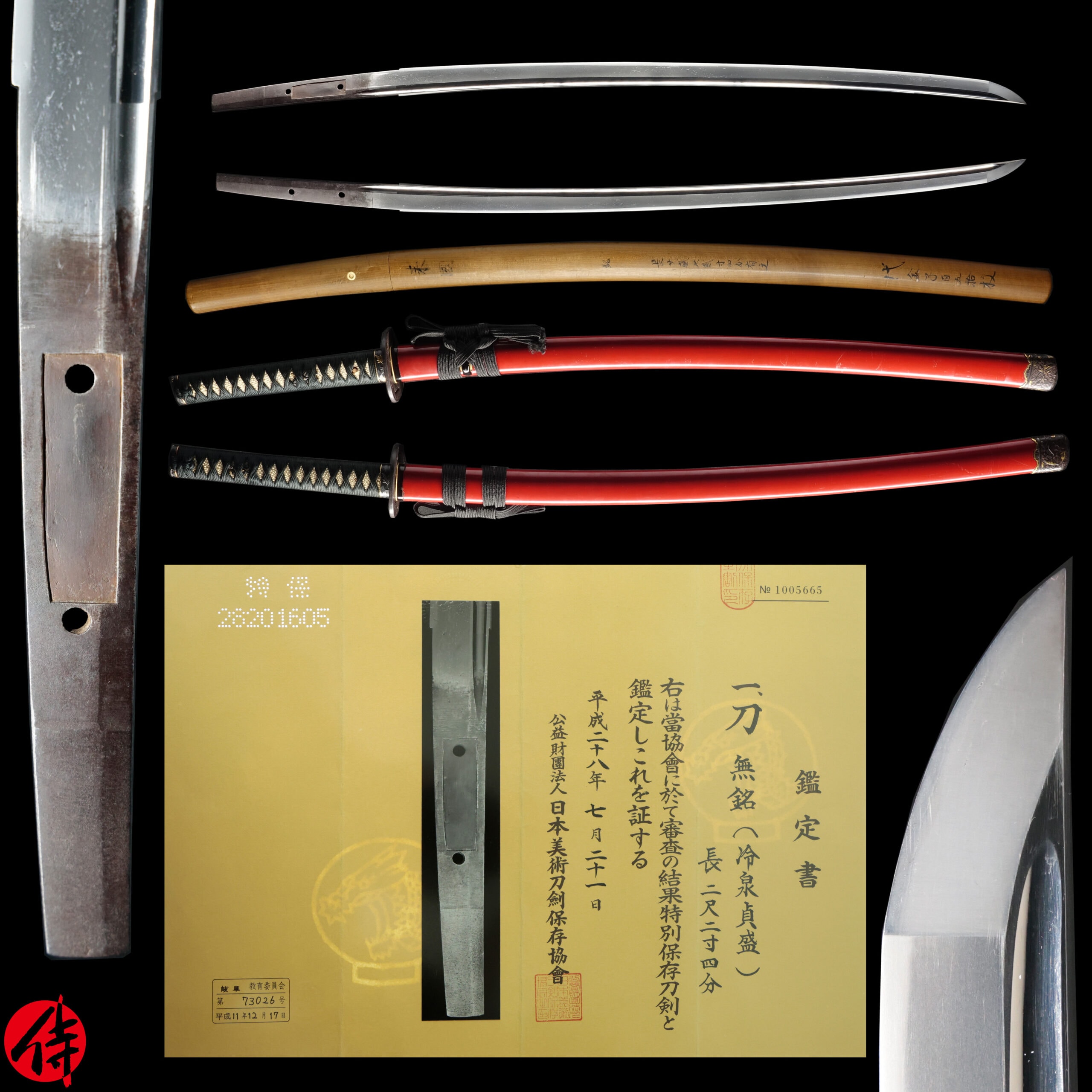
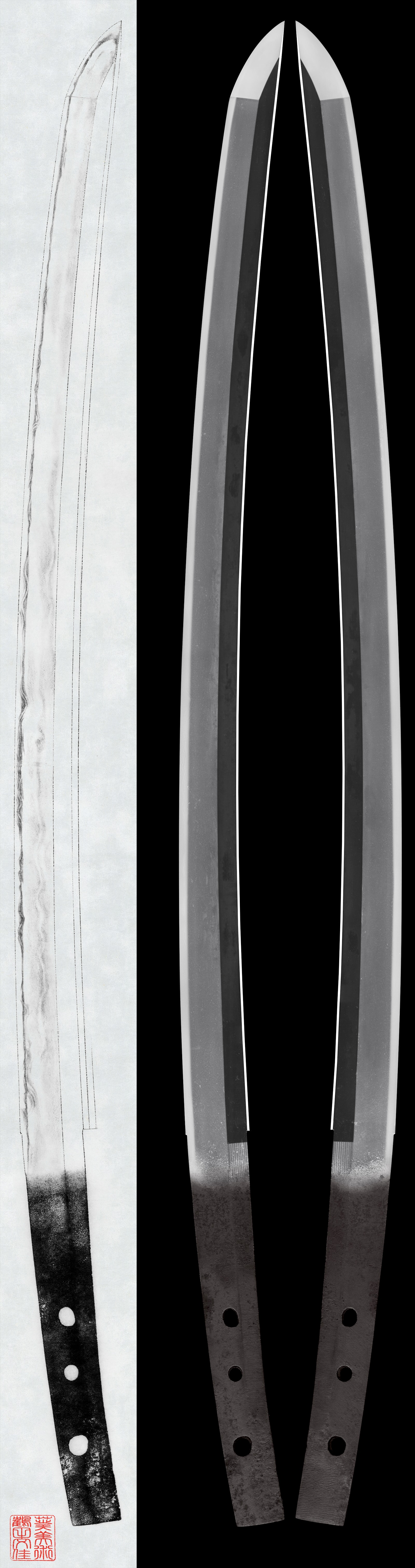
The greater part of his record is not signed at all. It consists of o-suriage mumei katana, broad of body, thin in the kasane, with an extended chu-kissaki, the shape of a long Nanbokucho blade cut down and judged to his hand. Over these the jigane is an itame that flows and leans toward masame, especially toward the edge, the grain standing, with ji-nie adhering thickly and chikei entering frequently; the steel takes a clouded, blackish kanairo, and a faint whitish utsuri stands in the surface. Over that jigane he tempers a low, narrow suguha, the nioiguchi tight, with ko-nie, fine hotsure, uchinoke and a tendency to nijuba near the monouchi, sunagashi and kinsuji running thinly within. The boshi goes straight to a small ko-maru with hakikake at the point, at times finishing in yakizume. This restrained, austere manner, not flamboyance, is the published sources' named point of interest in his work.
The jigane is the constant of the attribution. The flowing, masame-inclined steel, the standing grain, the dark kanairo and the whitish utsuri recur on blade after blade, and it is from these that the judges read his Yamato temperament. The published commentary calls the Kyushu coloration strongly present in his work, describing one Juyo katana as a richly flavored piece "in which the coloration characteristic of Kyushu swords is strongly expressed"[[c:2]]. The same sources are candid about the difficulty of the reading: on one shortened blade they note that such Yamato features also appear in works like Mihara, yet conclude that "from the standing texture of the jigane, the appraisal to Reizei Sadamori is the superior one"[[c:3]]. The narrow suguha and the dark, standing jigane together carry the name where no signature remains.
Against this quiet standard stand his few signed blades, which break the pattern. The Tokubetsu Juyo wakizashi signed "Reizei Sadamori, resident of Chikushu" and the Juyo tanto signed simply "Sadamori" abandon the narrow suguha for a notare mixed with ko-gunome and gunome, wider in the temper, with ashi and yo entering, nie-deki, abundant sunagashi and kinsuji, and a midare-komi boshi with strong hakikake. The published sources draw the distinction within his own work explicitly: of the signed tanto they observe that, "unlike the style of the Shohei 25 dated piece"[[c:4]], it shows a wider temper combining gunome into a broader notare, a richly varied workmanship. The smith thus worked in more than one manner, and the signed examples, precisely because they depart from the mumei standard, are prized for the study of his range.
What sets him apart is therefore named by the judges themselves rather than borrowed from a neighbor. He is read against the Samonji school by lineage and against the wider Yamato tradition by province: his bright, dark, masame-inclined jigane, his tight low suguha, and the Kyushu cast of his steel are the features the published sources name as his own, and the dated tanto is the document that holds them together. Within the Kongobyoe and Reizei line his is the name the school's shortened, unsigned katana most often carry, judged to him from that one dated standard, from the era, and from the manner of the group, the commentary cautioning on some blades that there is no decisive proof the hand must be his while still affirming the appraisal from the Yamato-toned jigane and the narrow edge.
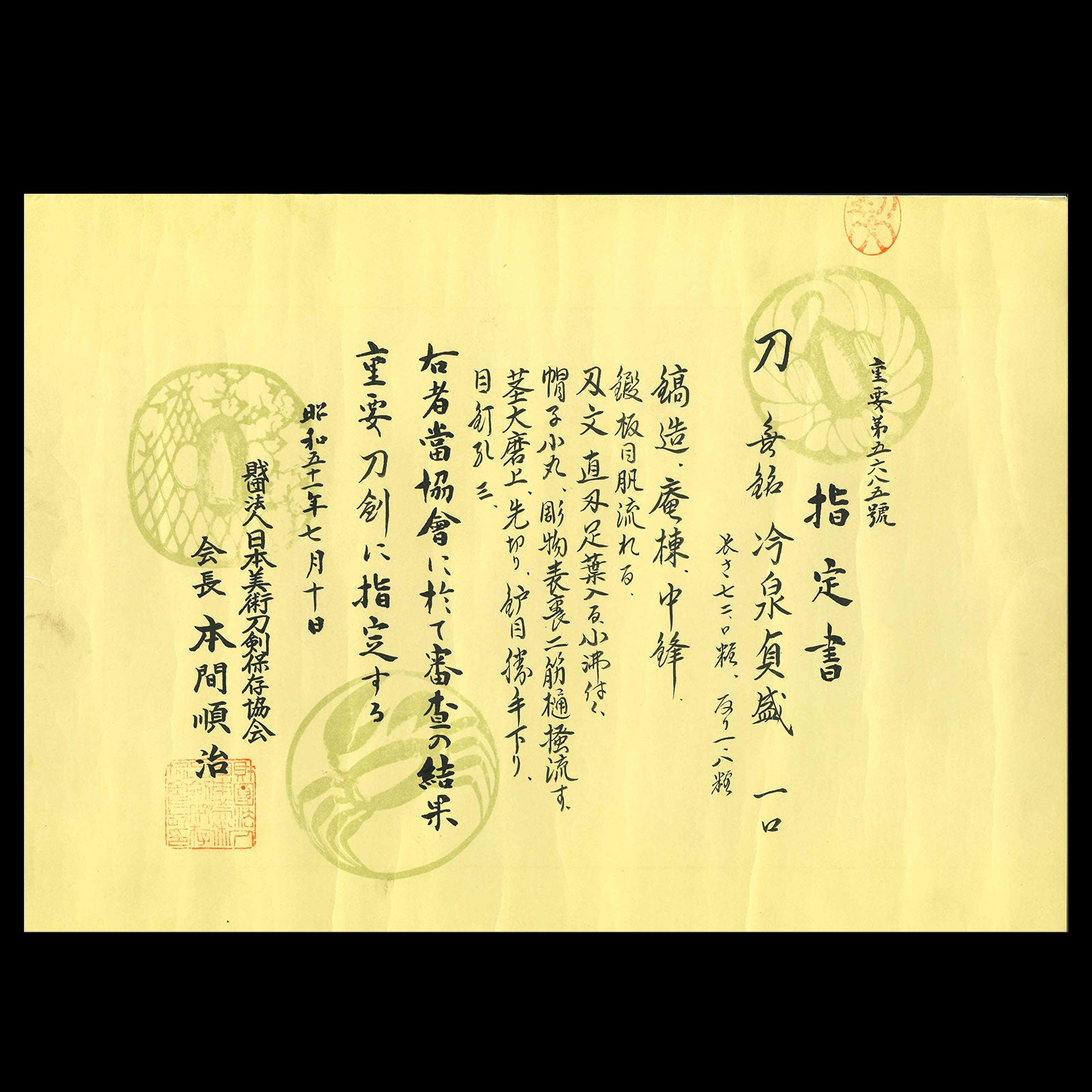
For the collector he is a thinly recorded but genuine Nanbokucho name, valued for documentary weight as much as for display. He has no National Treasures and no Important Cultural Properties; his record runs instead through one Tokubetsu Juyo and a score of Juyo blades, with the Shohei 25 dated tanto and a tachi recognized in the prewar Juyo Bijutsuhin. Provenance is sparsely recorded, held in private hands rather than institutions, the dated tanto once in the Koizumi collection and the early Sadamori tachi with Morotomi Yoshio of Fukuoka. Most of his blades are the o-suriage mumei katana of the Juyo tier, and these come to light only from time to time; a signed Reizei Sadamori is rarer still, and one of the published sources calls the signed Tokubetsu Juyo wakizashi a precious work "by which the range of the seldom-signed Reizei Sadamori may be apprehended." A privately held example, signed or mumei, is a document of how a Yamato hand worked in Nanbokucho Chikuzen, and a thing a collector encounters seldom.