After the Ōnin War broke the Ashikaga order, a century of Sengoku warfare armed nearly every province in Japan. The era rewards a discriminating eye: routine work exists in quantity, and beside it stand custom blades of the first rank.
 NihontoWatchNihontoWatch
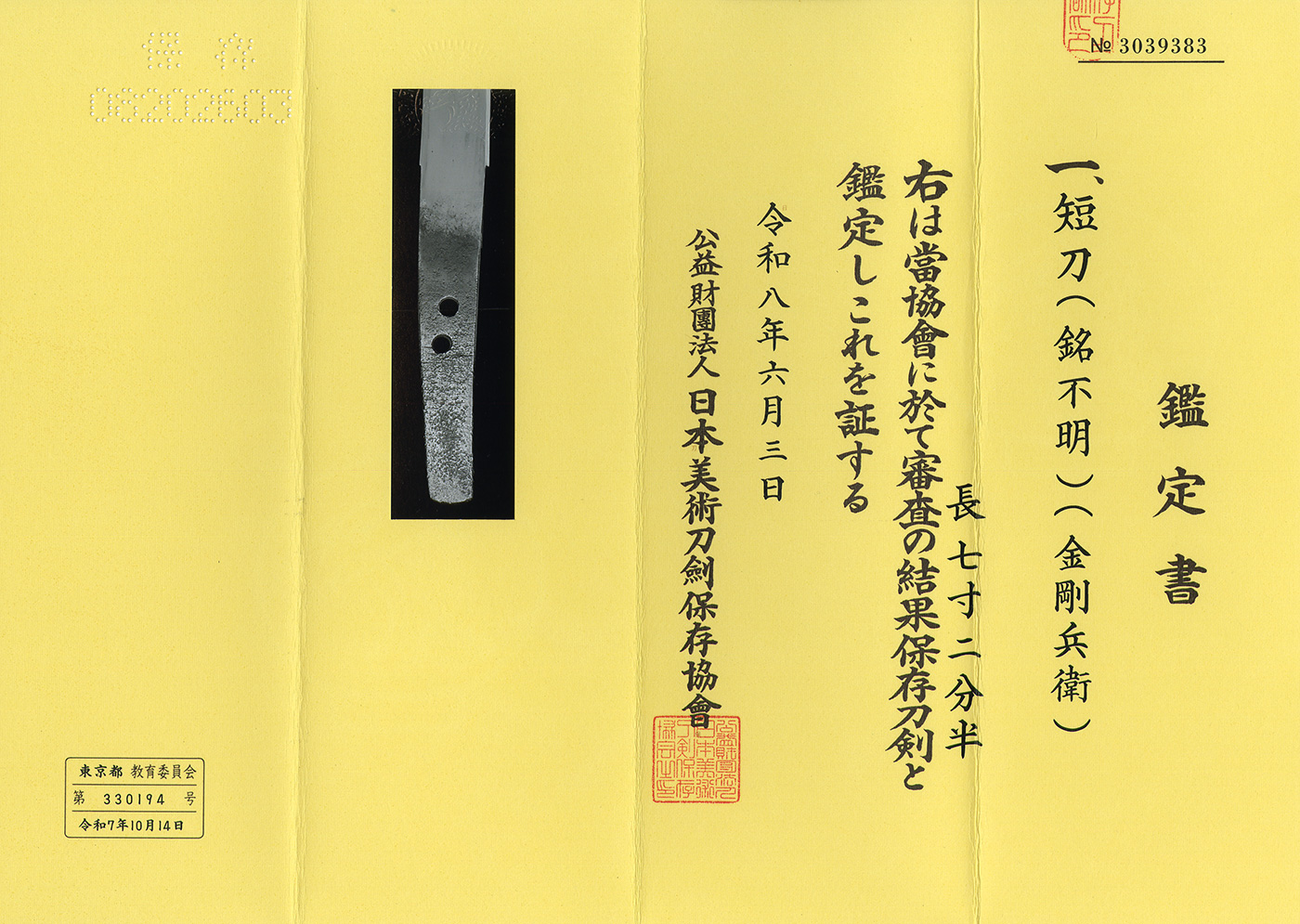
Tanto in Shirasaya (NBTHK Hozon Token)(Consignment sale) We divide works in to Saijo Saku, Jyojyo Saku, Jyo Saku,and Regular Saku. This piece is ranked as Jyojyo Saku for Mumei(Kongobyoe). Shape: a slender and thin tanto Jigane: Itamehada with jinie and intense chikei making strong jigane patterns. Hamon: Ko-nie base thin suguha Features: Features: The Kongobyoe school was a group of swordsmiths active in Chikuzen Province from the late Kamakura period through the Muromachi period. This blade exhibits fine jigane with prominent grain patterns and visible chikei. NBTHK Hozon Certificate Aoi-Art estimation Paper whole Oshigata
NihontoWatchOffered by Aoi Art

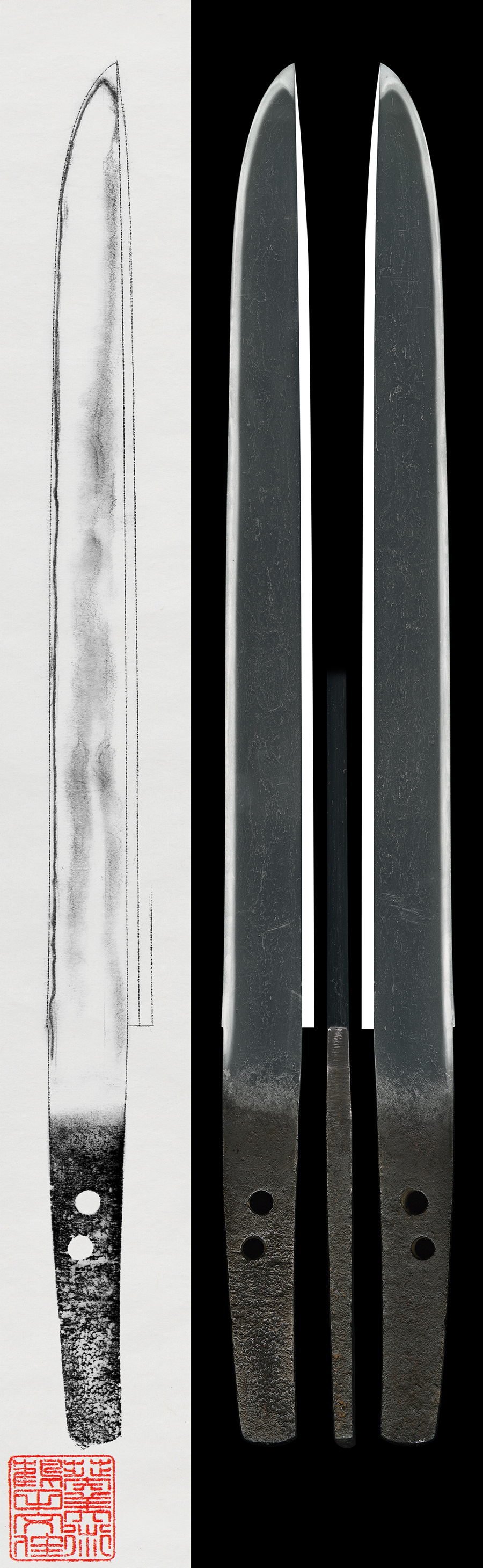
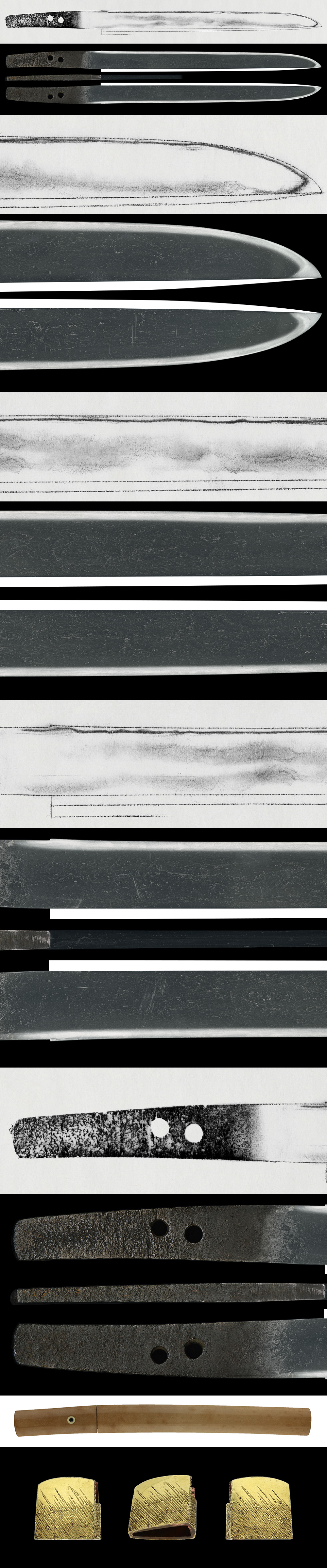
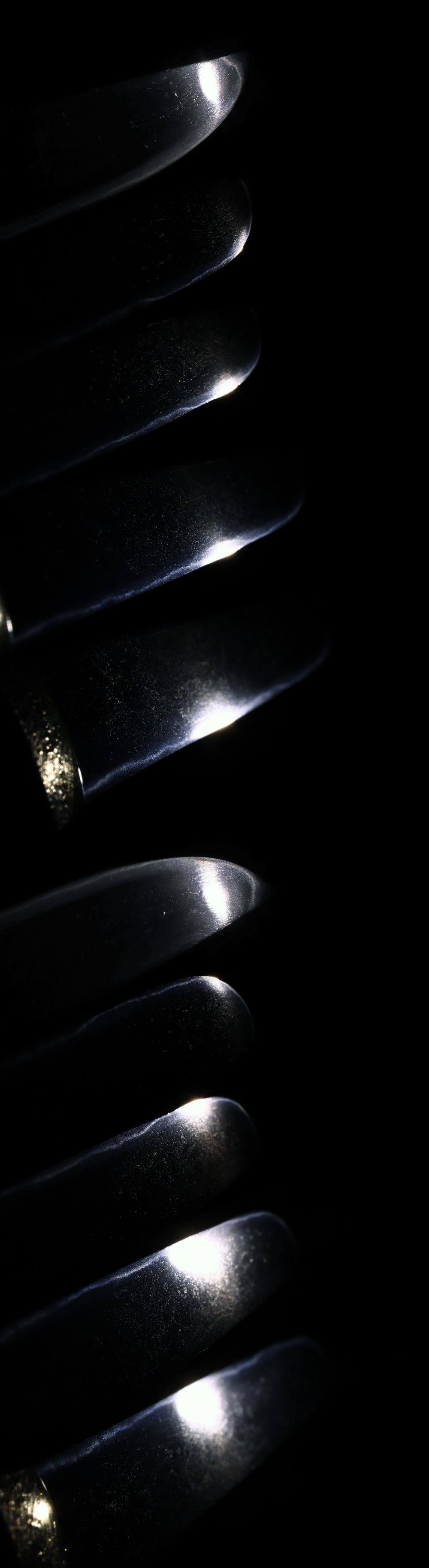
Machine translation of the shop's Japanese ·
Wakimono · Chikuzen
11 pieces on the market now
The Kongōbyōe school (Kongōbyōe-ha) flourished in Chikuzen Province during the Nanbokuchō period alongside the more celebrated Samonji lineage. Based in the Reizen district, the school takes its name from the artisan Kongōbyōe, though signed examples are exceedingly rare, with the earliest documented work being a tantō by Sadamori dated Shōhei 25 (1370) and designated an Important Art Object. This blade's signature—"Chikushū Reizen Sadamori"[[c:1]]—confirms the school's geographic center and provides a stylistic benchmark for attributions within the tradition. Kongōbyōe blades exhibit a distinctive Yamato temperament (Yamato kishitsu) in both jigane and hamon, setting them apart from typical Kyūshū productions. The forging characteristically combines large itame with nagare-hada and prominent mokume-hada, creating surface texture that stands out conspicuously. The jigane tends toward a dark, slightly blackish tone with frequent chikei interwoven throughout.
The hamon is invariably a narrow suguha or hoso-suguha, occasionally tinged with shallow notare or small gunome inflections. The nioiguchi displays a characteristic tight feeling (shimari-gokoro) with well-adhering ko-nie, while modest kinsuji and sunagashi create refined scenery spanning ji and ha. Near the cutting edge, nagare-hada often transitions to masame, and hotsure appears along the habuchi. The school's output demonstrates what period connoisseurs termed "metal flavor" (kanamono), reflecting Kyūshū forging traditions while maintaining the refined sensibility of Yamato technique. Extant works attributed to Ko-Kongōbyōe typically survive as greatly shortened (ō-suriage) blades with Nanbokuchō proportions—wide mihaba, shallow sori, and ō-kissaki—presenting dignified, powerful forms despite their modified state. The combination of dark-toned jigane densely filled with fine chikei, tight nioiguchi, and restrained nie activity creates a sober yet engaging aesthetic that distinguishes the school within the broader Chikuzen tradition. Learn more →
| Smith | Era | Designated |
|---|---|---|
| Sadamori貞盛 | 1345-1350 | 23 |
| Morimitsu盛光 | 1558-1570 | 0 |
| Moriyasu盛安 | 1532-1555 | 0 |
| Moriyoshi盛吉 | 1532-1555 | 0 |
| Morihisa盛久 | 1521-1528 | 0 |
The Muromachi period (1392 to 1573)
After the Ōnin War broke the Ashikaga order, a century of Sengoku warfare armed nearly every province in Japan. The era rewards a discriminating eye: routine work exists in quantity, and beside it stand custom blades of the first rank.
Certifies a genuine blade worth preserving: a signature confirmed correct, or, if unsigned, an era, province, and school that the NBTHK can reliably identify.
The NBTHK (Nihon Bijutsu Tōken Hozon Kyōkai, the Society for the Preservation of Japanese Art Swords) is a public-interest incorporated foundation founded in 1948 and supervised by Japan’s Agency for Cultural Affairs (Bunkachō); it is based at the Japanese Sword Museum in Tokyo. Its expert panels physically examine each submitted work (shinsa) and issue a certificate (kanteishō) ranking it by artistic and historical merit. NBTHK papers are the most widely recognized standard of authentication for Japanese swords and fittings.
NBTHK official siteIf you wish to return an item, please notify us within 3 days of receipt. After this period we cannot accept cancellations. Please ship the return to us within 5 business days. Cancellation is conditional on the item being kept in the same condition as at the time of sale, so please handle it with care.
¥250,000