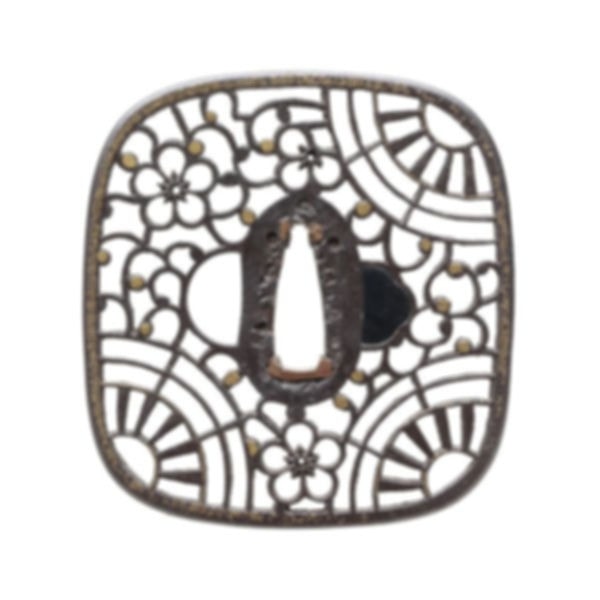
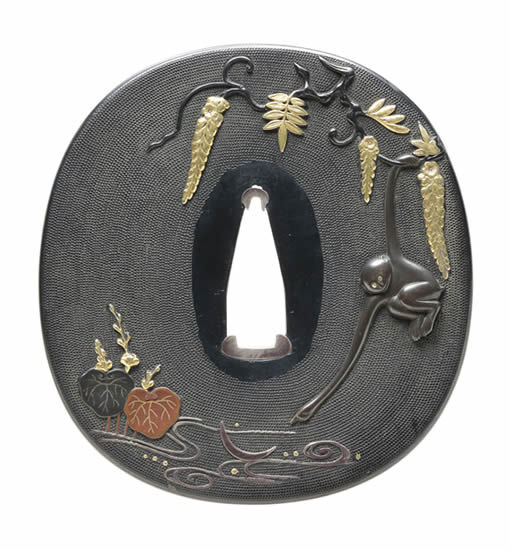
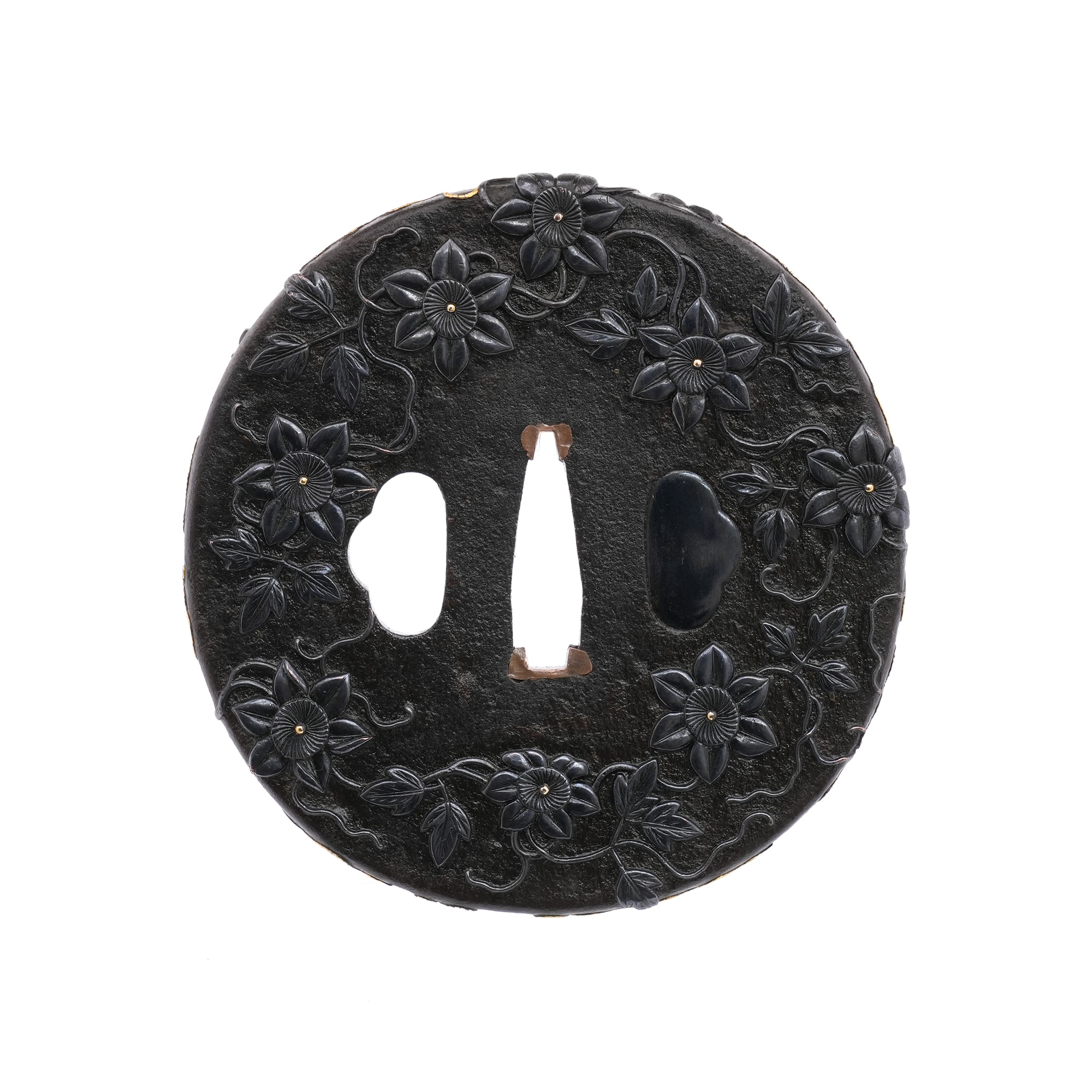
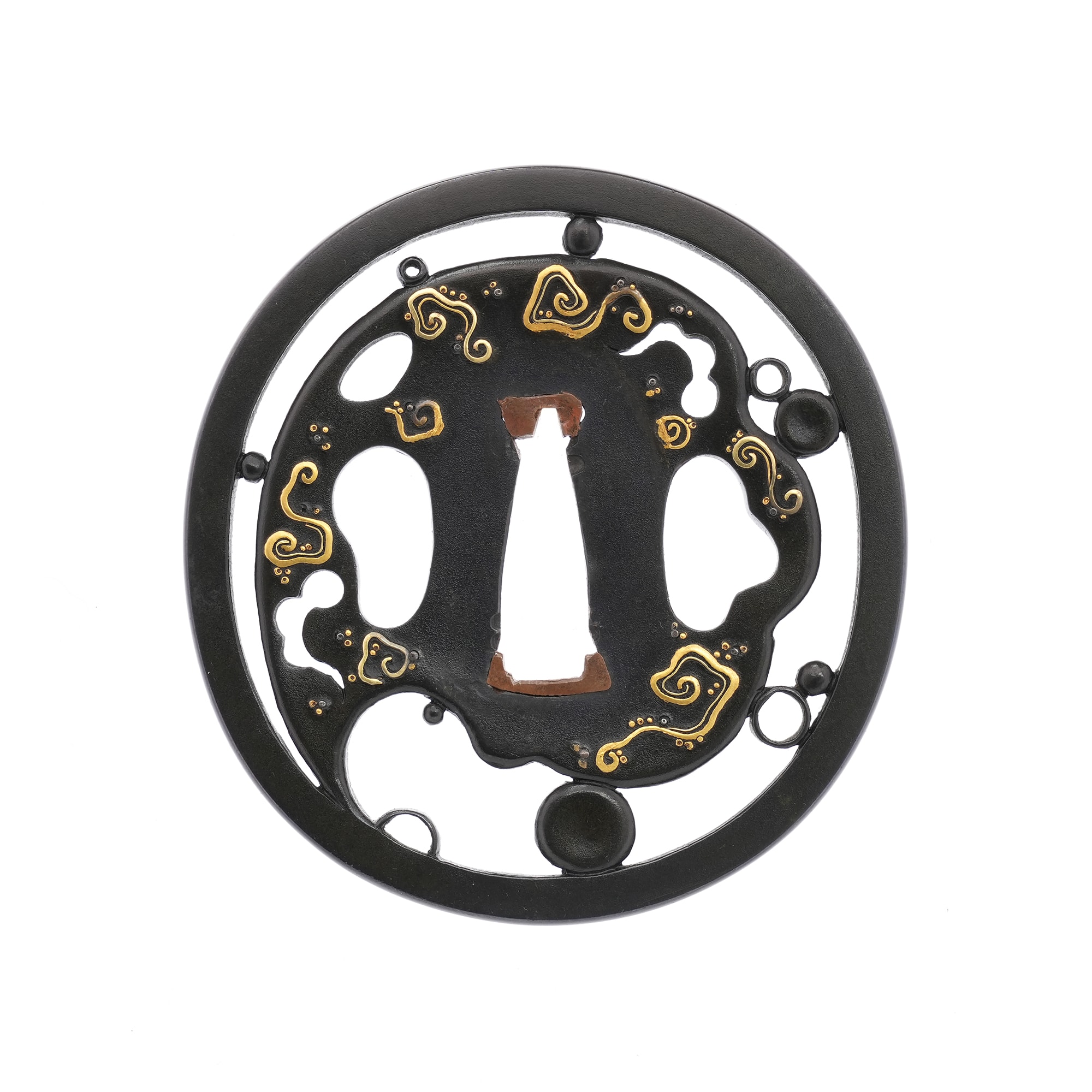
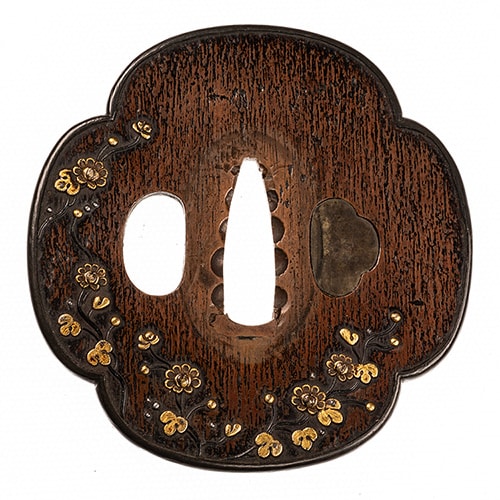
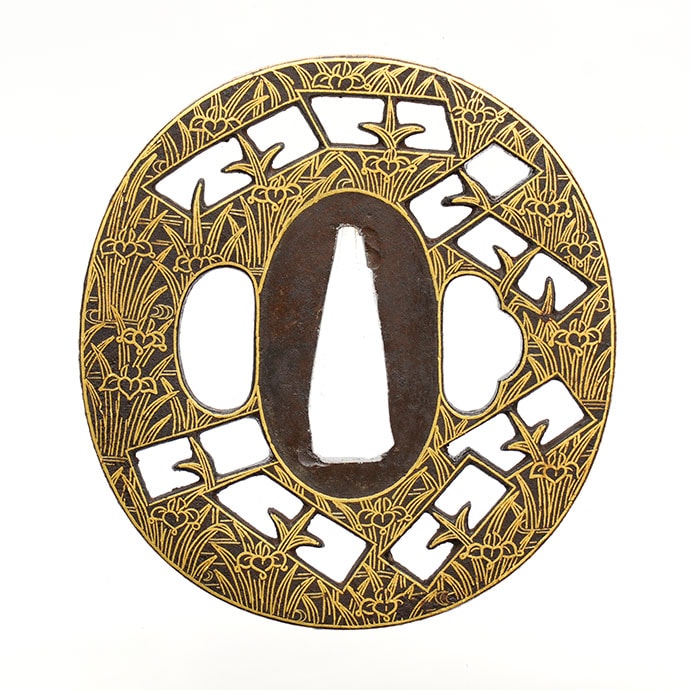
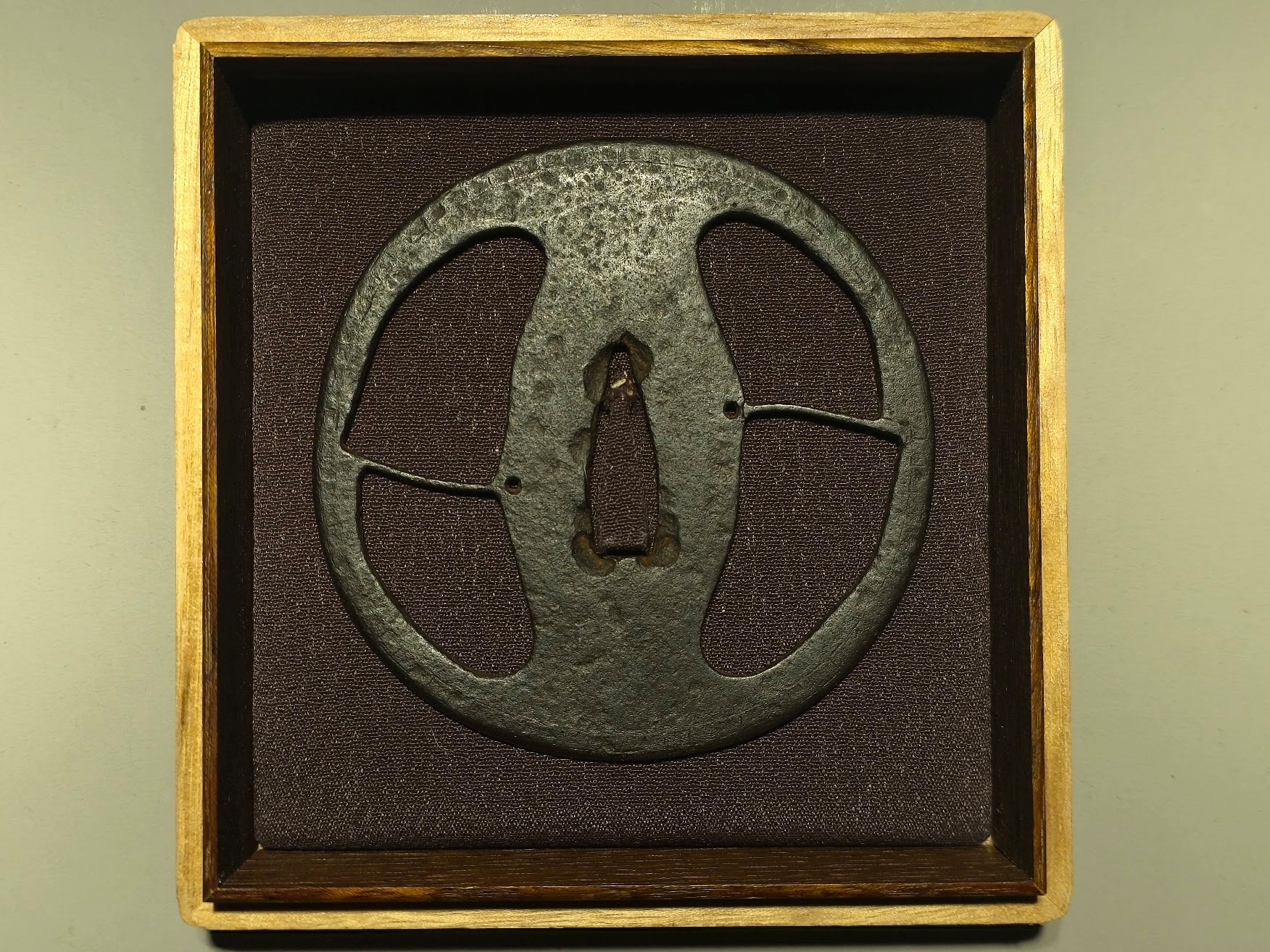
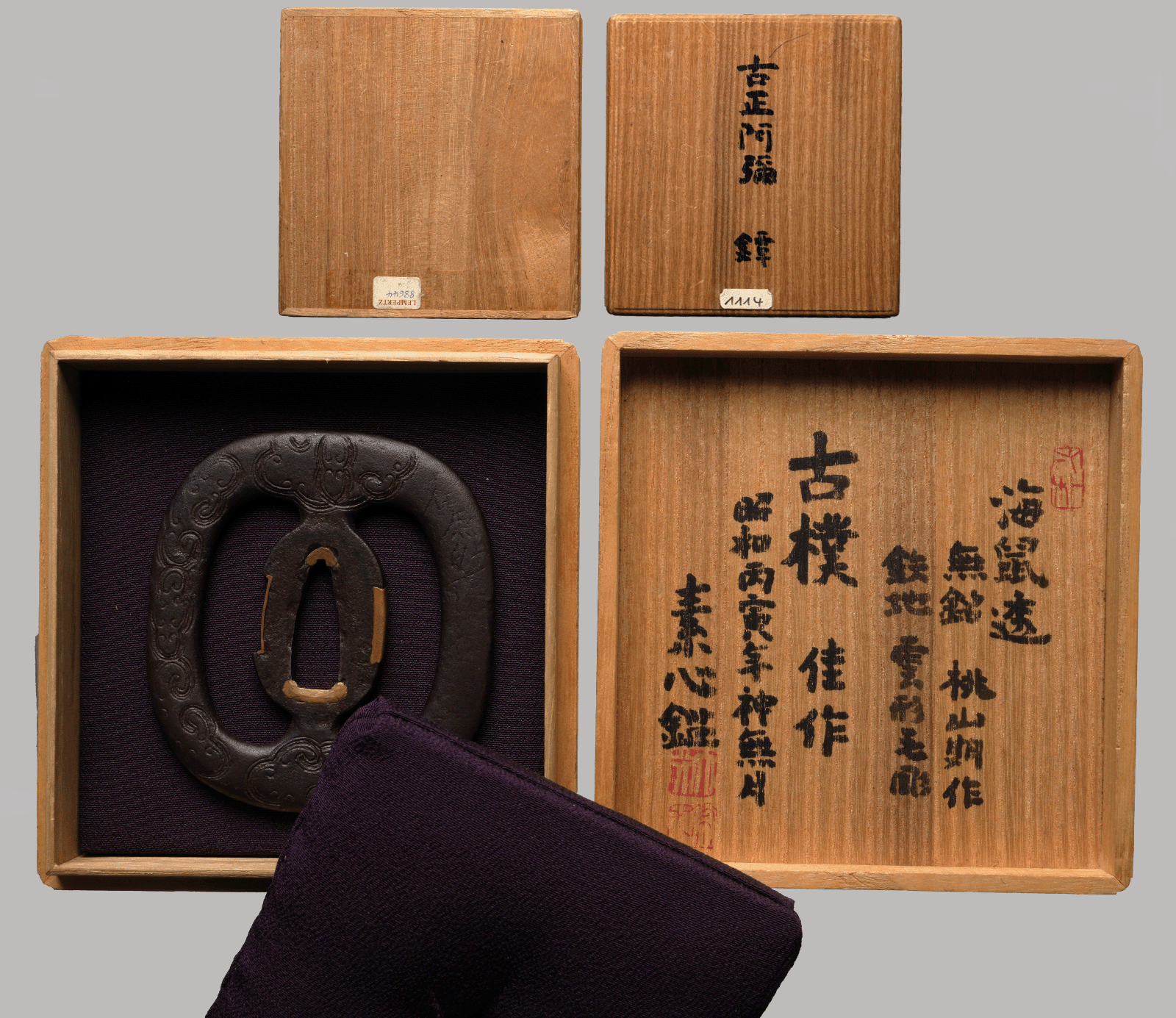
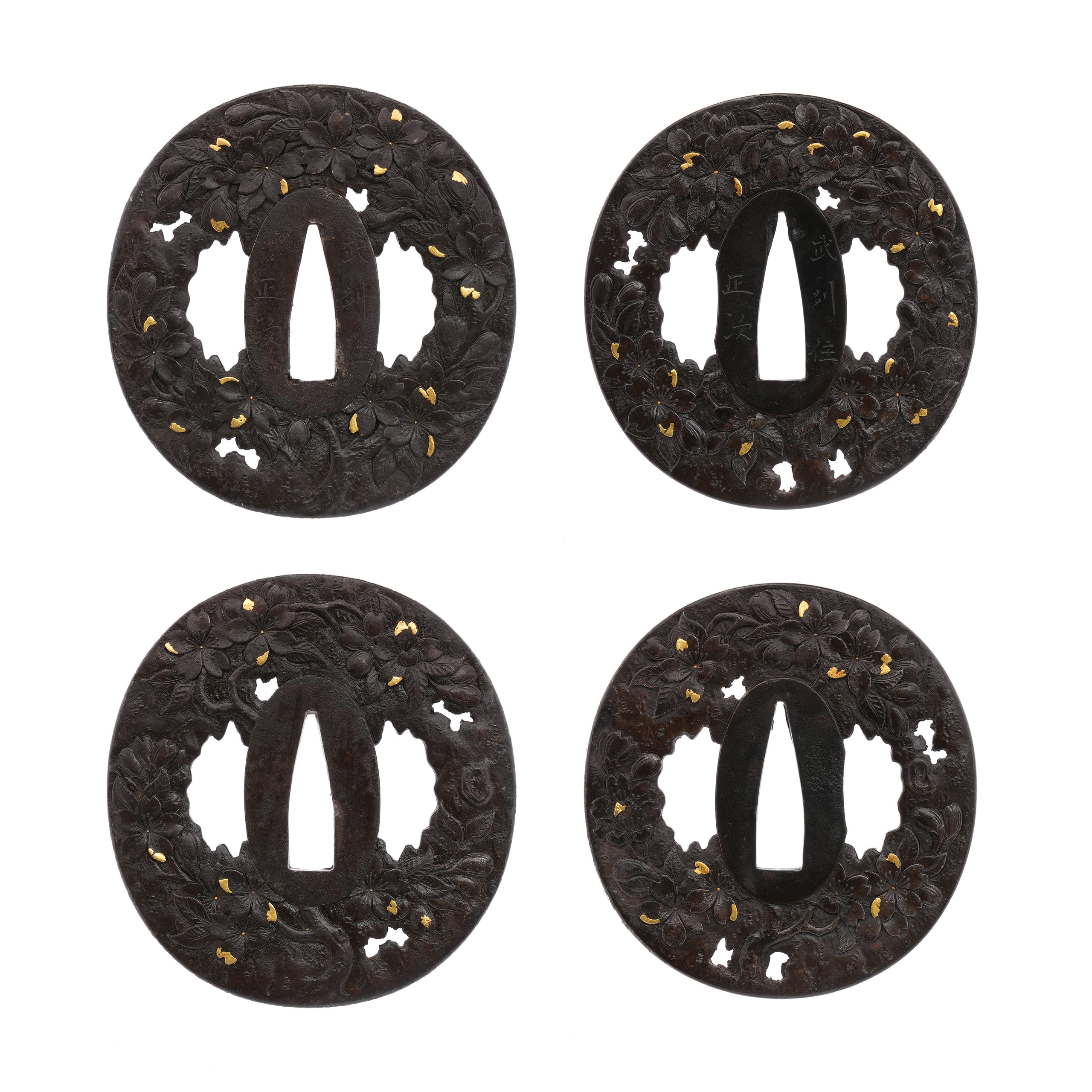
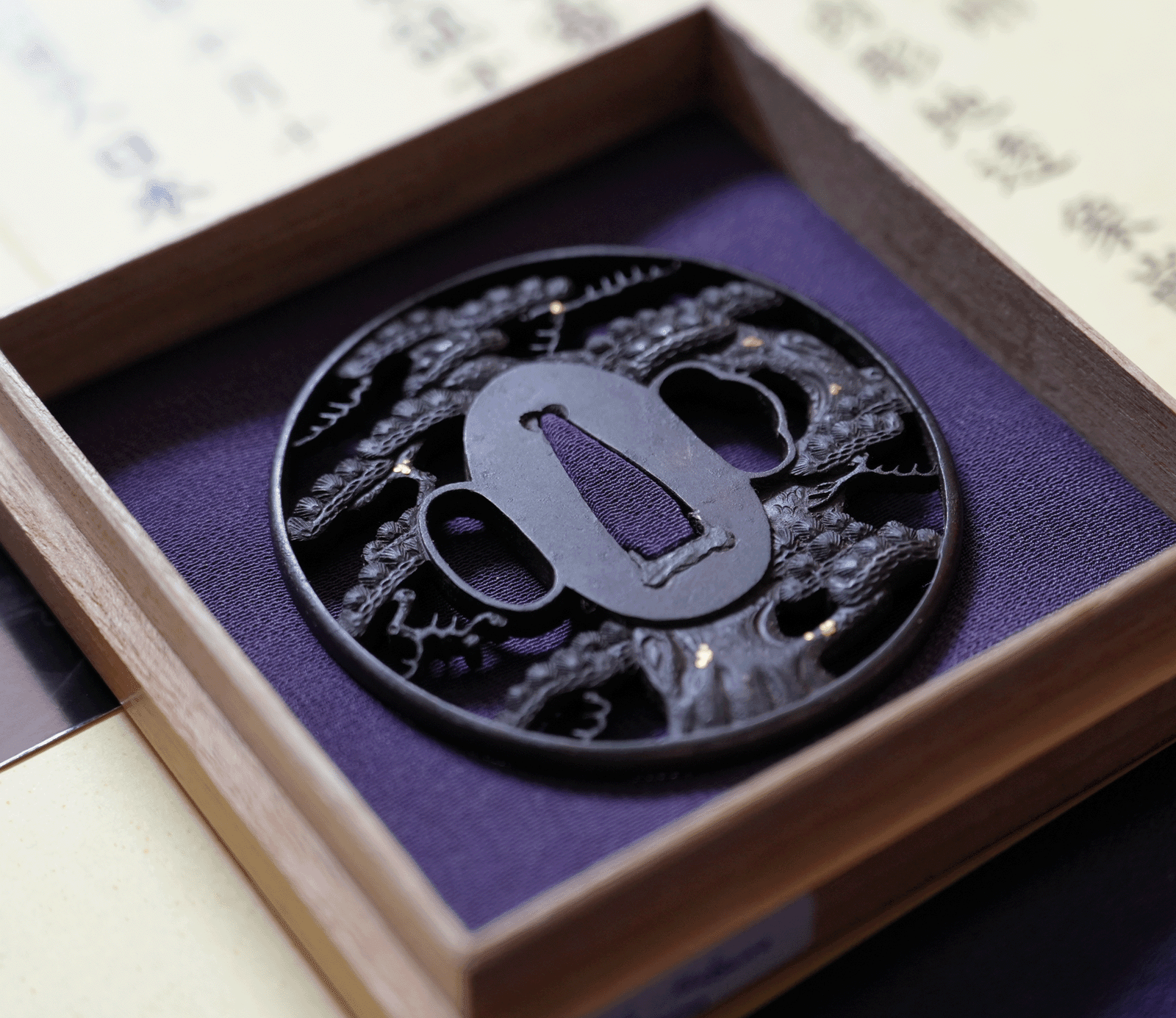
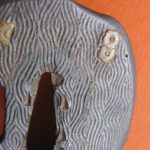
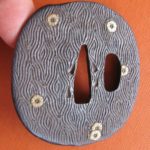
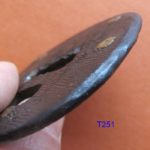
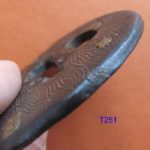
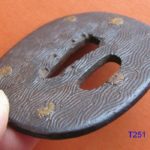
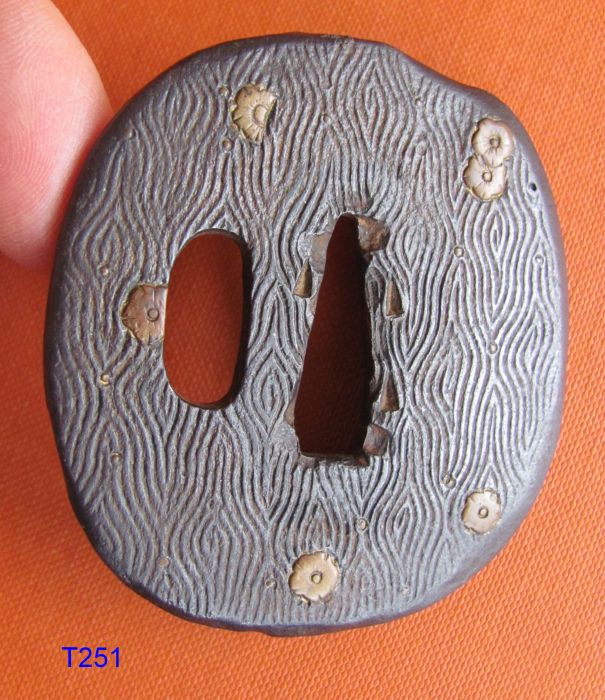
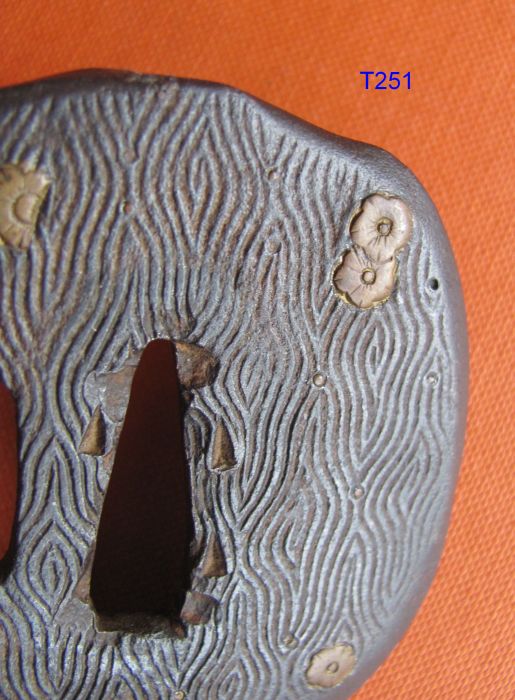
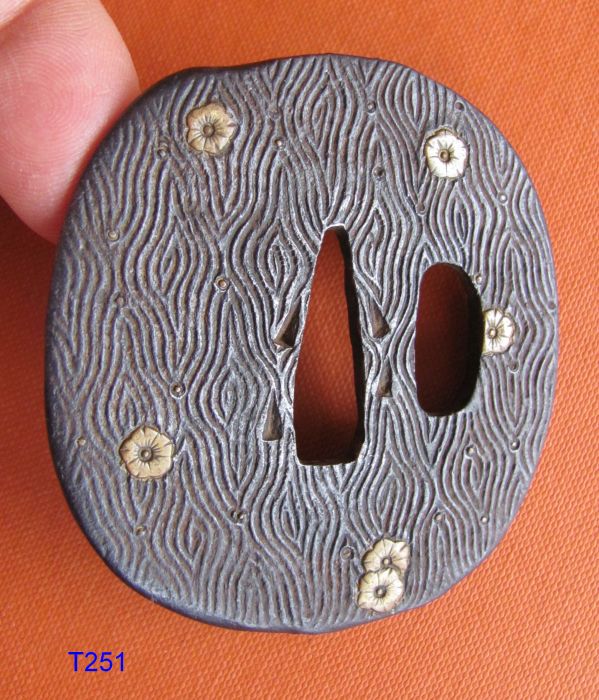
Iron tsuba with kebori carving of a stream with flowers worked in yamagane. The iron appears to be very well worked with long and prominent lineal tekkotsu on the rim. Each of the copper flowers is placed on a raised spot on the plate and between the flowers are interspersed tiny dots (ten zogan) also in copper.
 NihontoWatchBETA
Shoami School
Momoyama
Den (attributed)
Iron-tsuba · Kyoto
189 pieces on the market now
The Shoami (正阿弥) school arose in Kyoto as one of the principal lineages among the specialist tsuba makers who came to the fore from the middle through the late Muromachi period. Its roots lie in the capital's communities of ami-shū, who served as dōbōshū (attendant artisans) and within whose circles Shōami lineages existed; the prevailing view today is that these artisans originally worked as makers of tōsōgu in general and later became specialized tsuba craftsmen. Learn more →
| Smith | Era | Designated |
|---|---|---|
| Denbei傳兵衛 | — | 13 |
| Shoami Katsuyoshi正阿弥勝義 | — | 7 |
| Matashichi又七 | — | 0 |
| Yoshikazu吉一 | — | 0 |
| Jihachiro治八郎 | — | 0 |
We could not find an authenticity certificate on the seller’s listing. Japanese swords and fittings are normally papered by the NBTHK (or the NTHK). Without one, the attribution is the seller’s own assessment and has not been independently verified — treat it with caution and ask the dealer about certification before buying.
3-day return window from receipt.
Iron tsuba with kebori carving of a stream with flowers worked in yamagane. The iron appears to be very well worked with long and prominent lineal tekkotsu on the rim. Each of the copper flowers is placed on a raised spot on the plate and between the flowers are interspersed tiny dots (ten zogan) also in copper.
NihontoWatchBETAShoami School
Momoyama
Den (attributed)
Iron-tsuba · Kyoto
189 pieces on the market now
The Shoami (正阿弥) school arose in Kyoto as one of the principal lineages among the specialist tsuba makers who came to the fore from the middle through the late Muromachi period. Its roots lie in the capital's communities of ami-shū, who served as dōbōshū (attendant artisans) and within whose circles Shōami lineages existed; the prevailing view today is that these artisans originally worked as makers of tōsōgu in general and later became specialized tsuba craftsmen. Learn more →
| Smith | Era | Designated |
|---|---|---|
| Denbei傳兵衛 | — | 13 |
| Shoami Katsuyoshi正阿弥勝義 | — | 7 |
| Matashichi又七 | — | 0 |
| Yoshikazu吉一 | — | 0 |
| Jihachiro治八郎 | — | 0 |
We could not find an authenticity certificate on the seller’s listing. Japanese swords and fittings are normally papered by the NBTHK (or the NTHK). Without one, the attribution is the seller’s own assessment and has not been independently verified — treat it with caution and ask the dealer about certification before buying.
3-day return window from receipt.