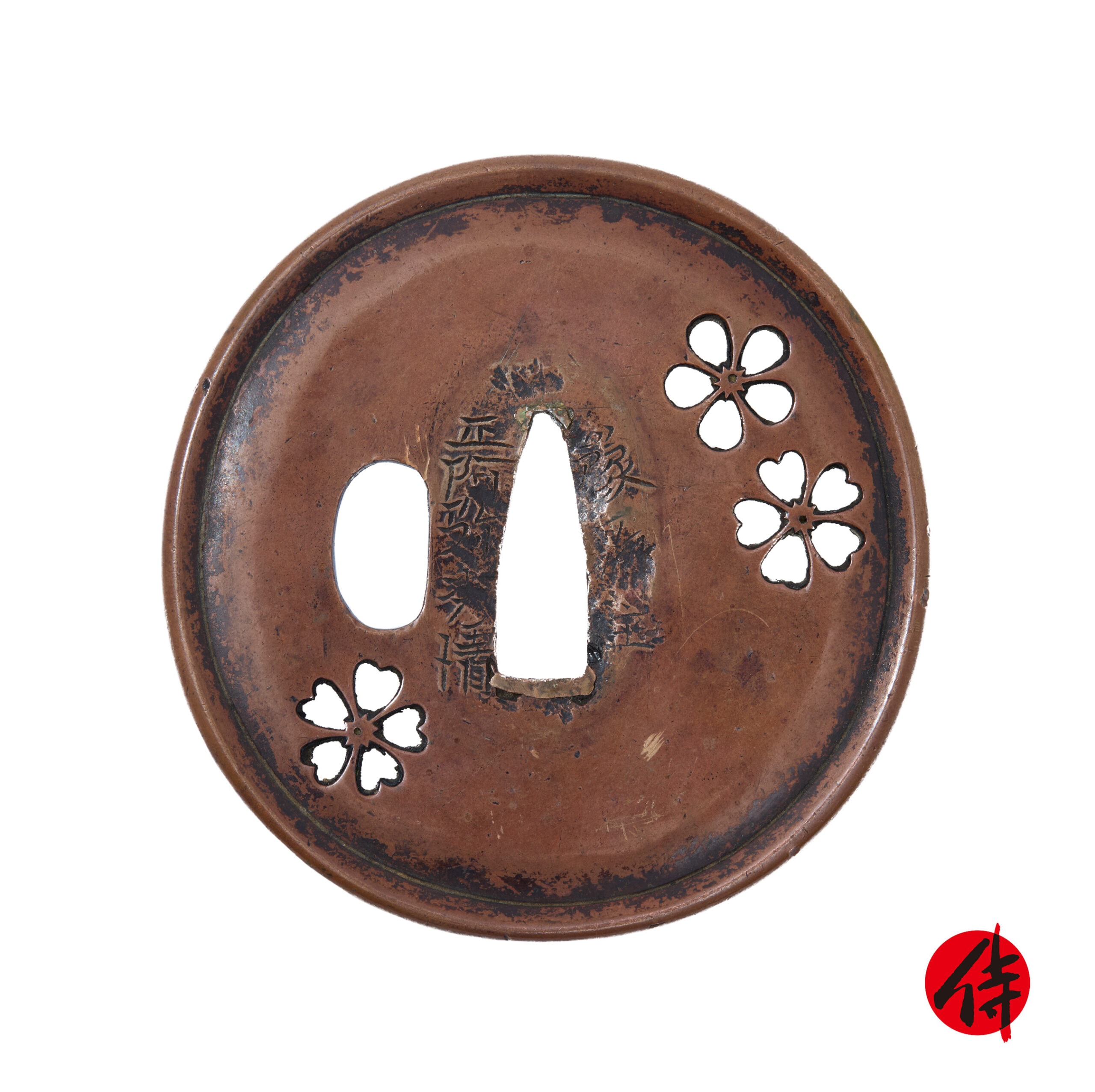
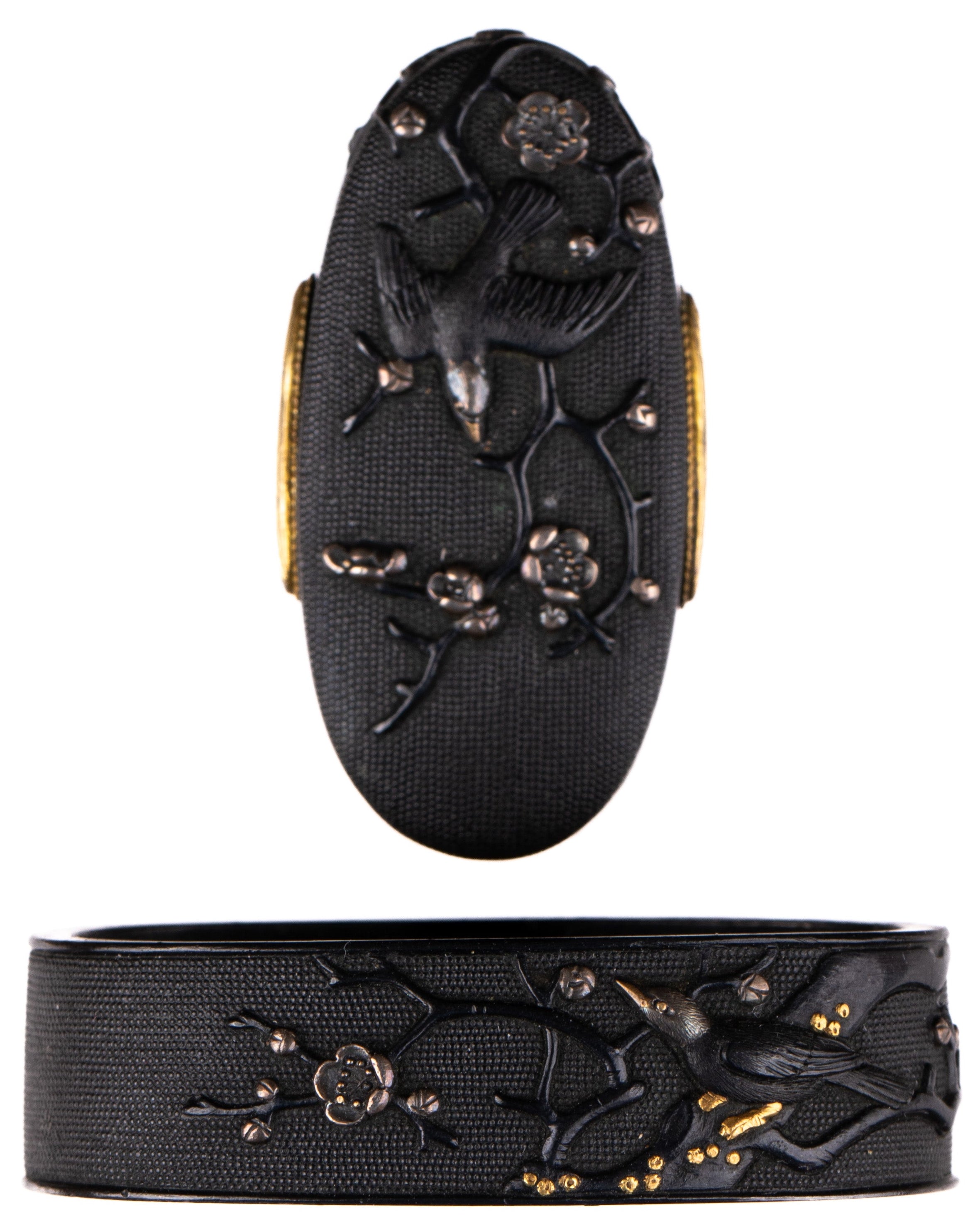
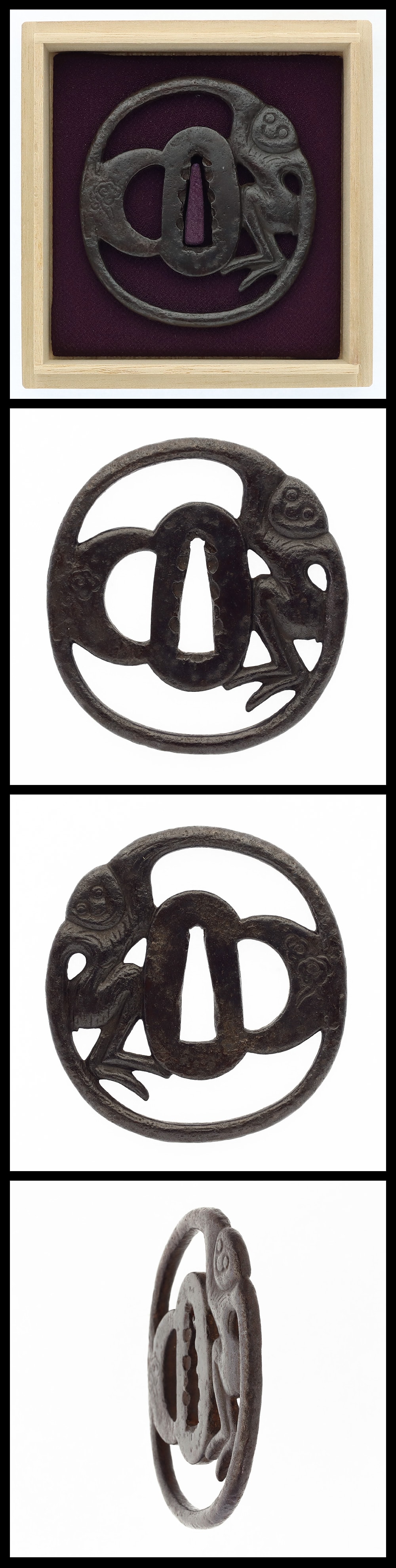
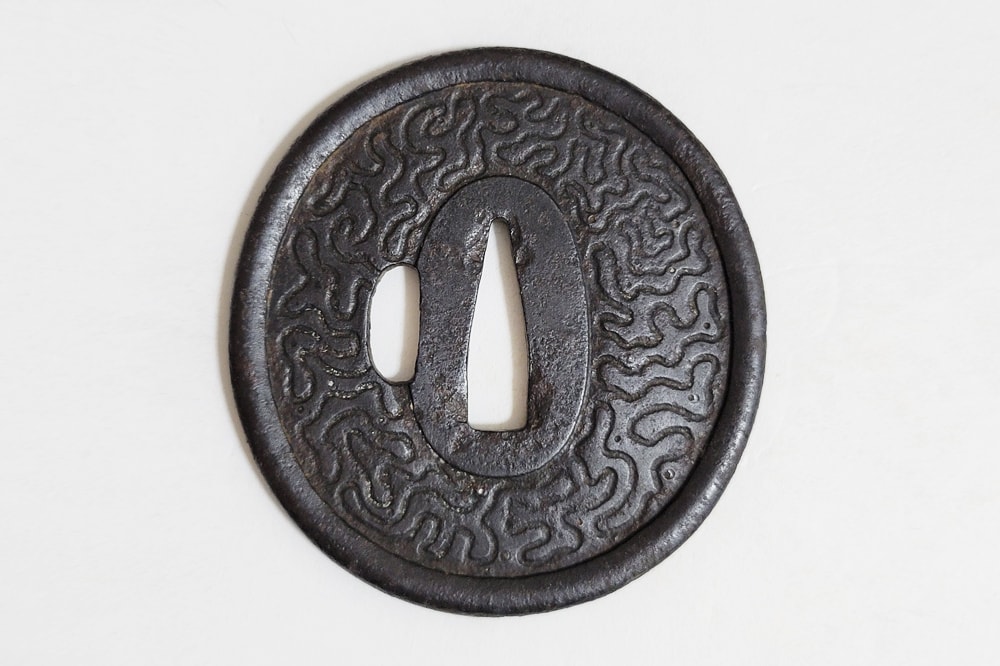
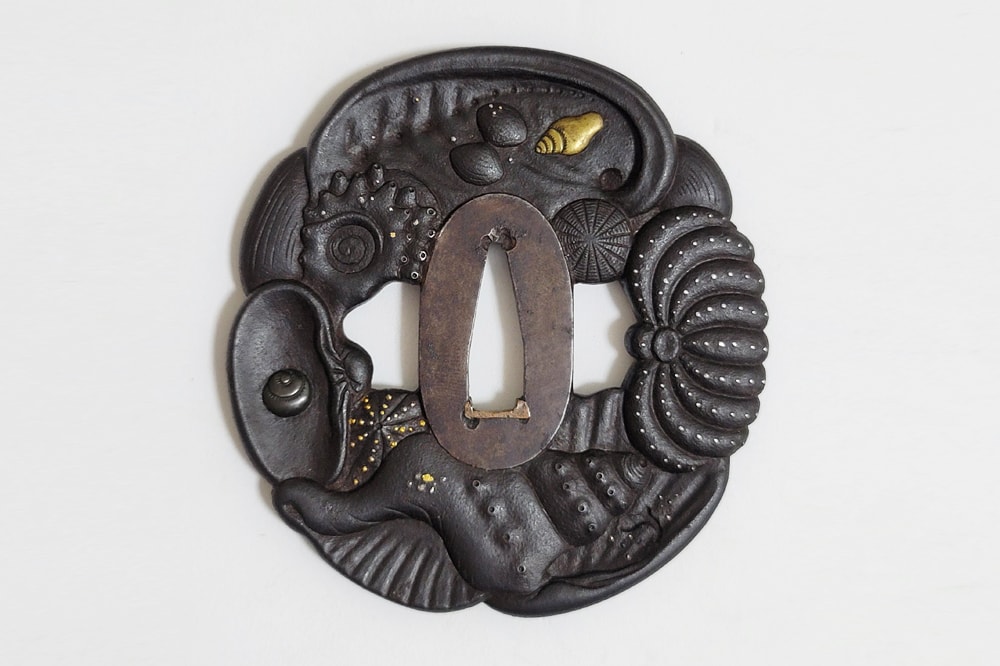
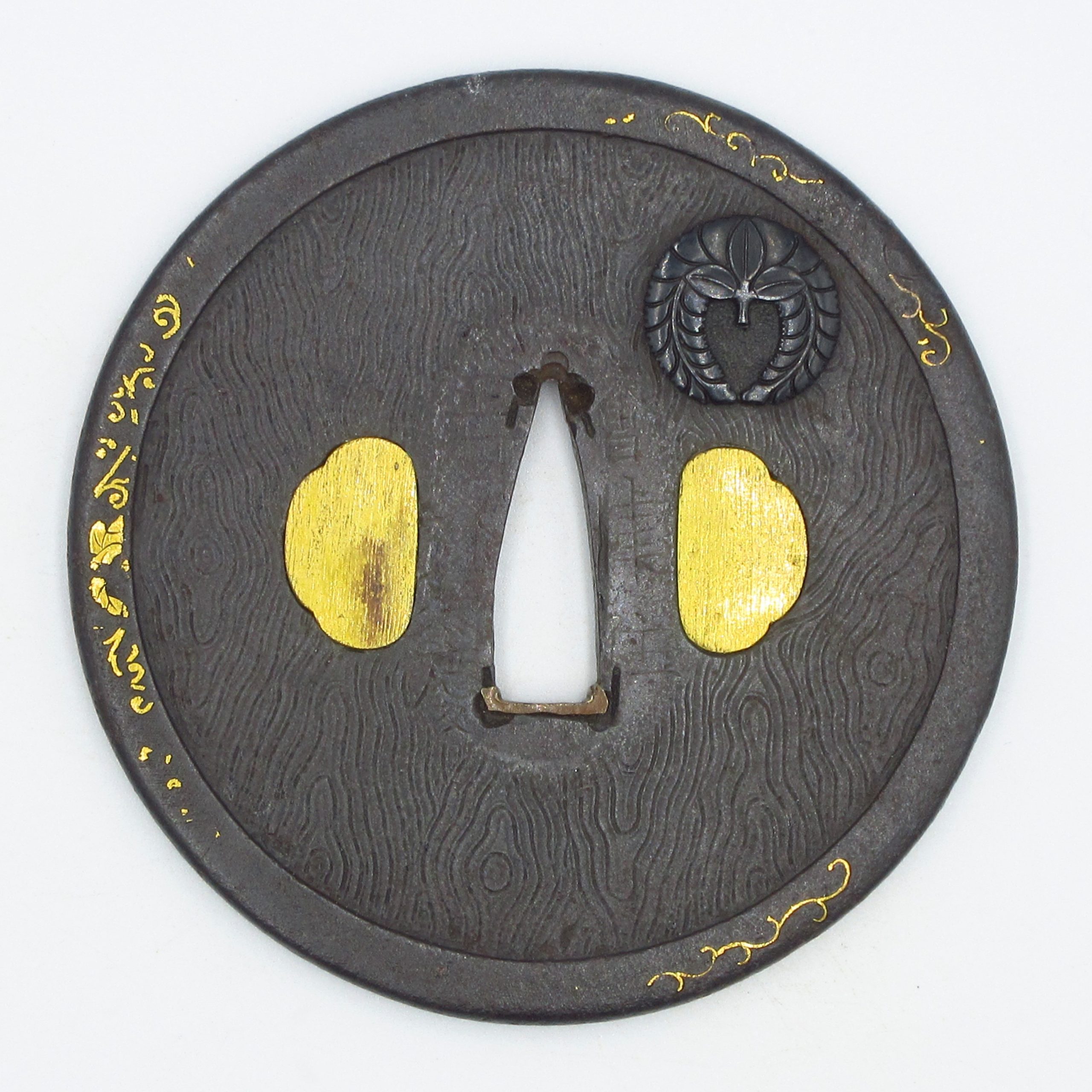
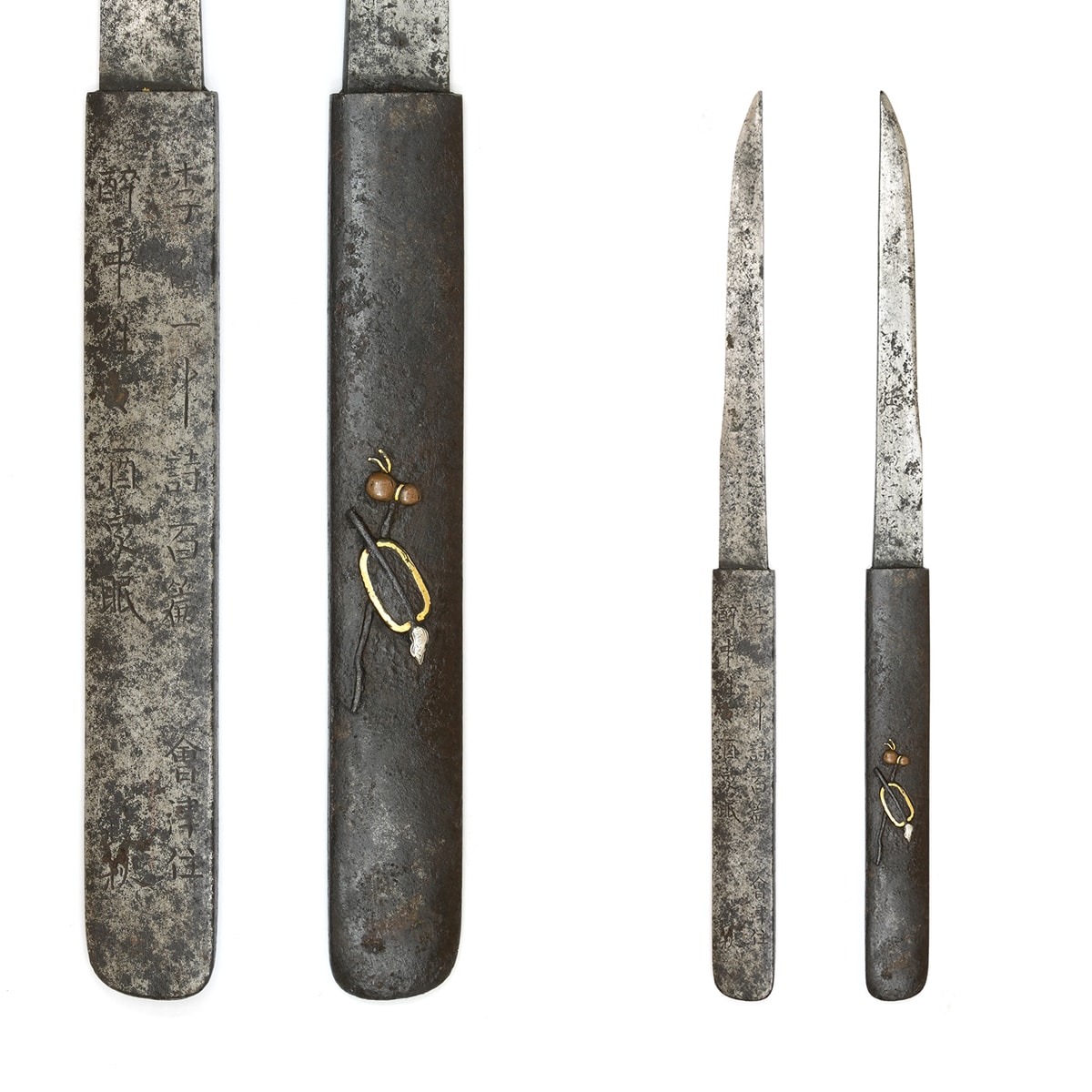
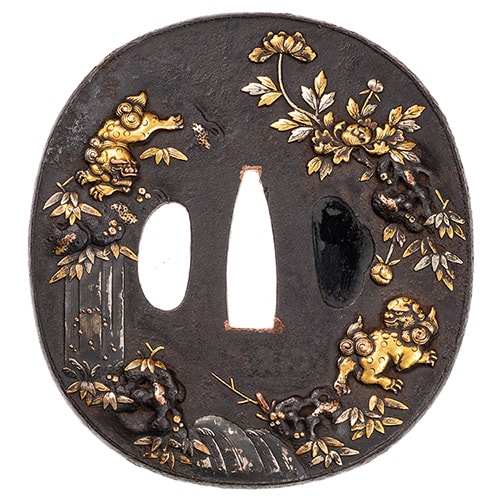
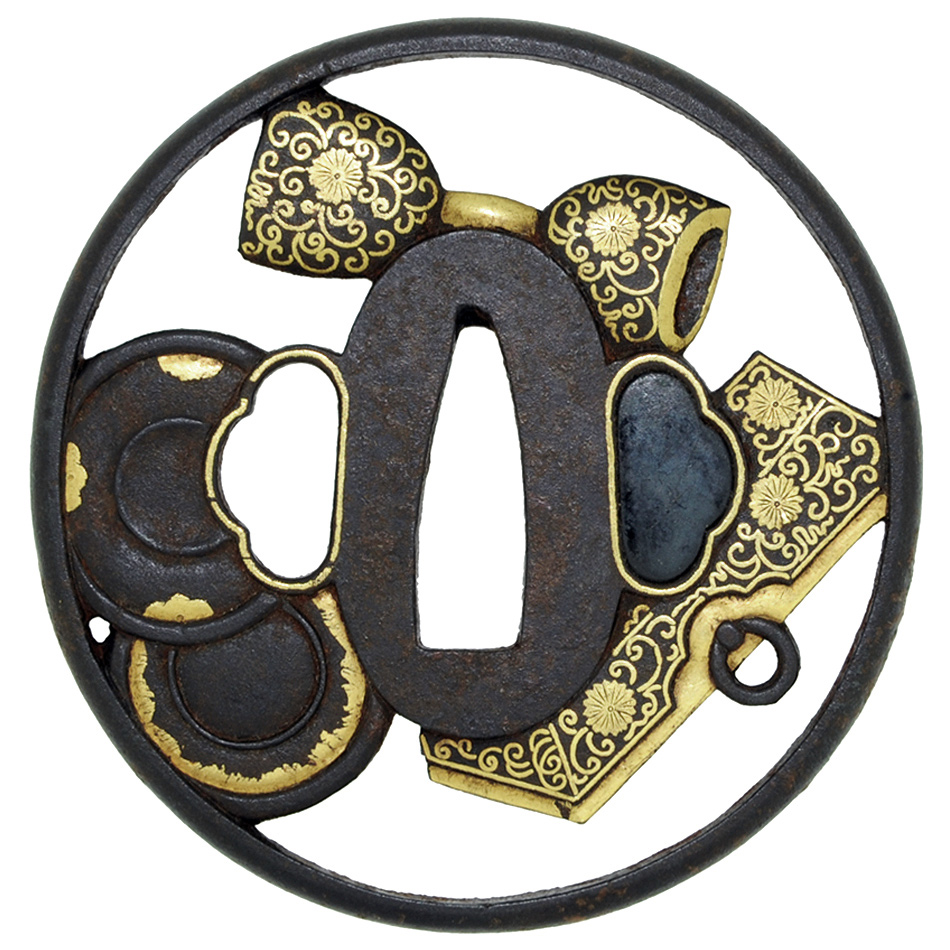
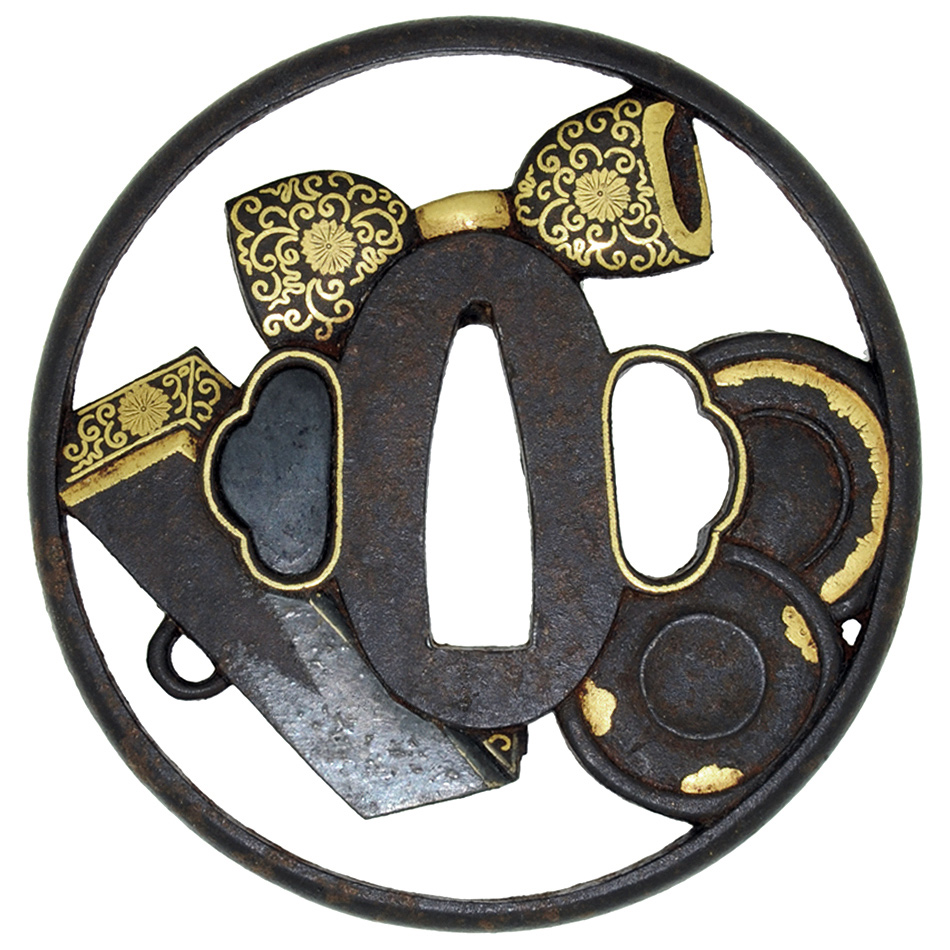
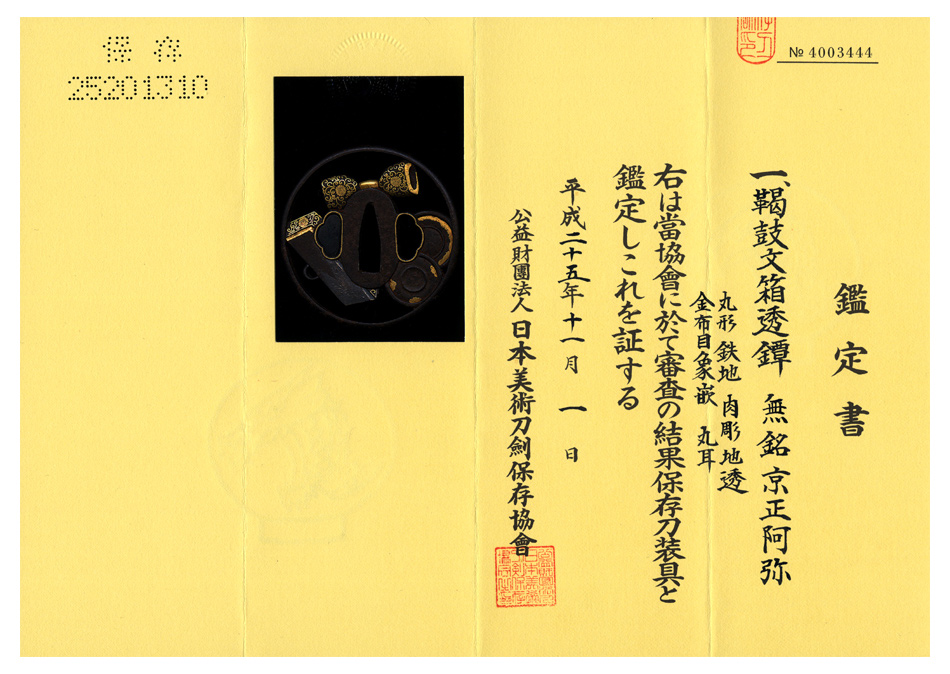
This is an Edo period tsuba from the Shoami school, featuring a round iron plate with sukashi (openwork) depicting a kakko drum and fubako (letter box) design, accented with gold nunome-zogan. The Shoami school was one of the two major tsuba lineages, flourishing from the Muromachi to late Edo period. This piece is attributed to the Kyoto Shoami branch from the mid-Edo period and comes with an NBTHK Hozon Tosogu certificate.
 NihontoWatch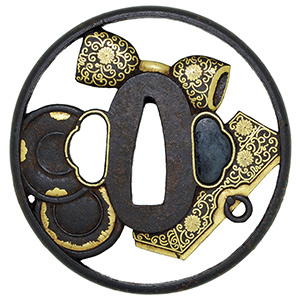
Iron-tsuba · Kyoto
192 pieces on the market now
The Shoami (正阿弥) school arose in Kyoto as one of the principal lineages among the specialist tsuba makers who came to the fore from the middle through the late Muromachi period. Its roots lie in the capital's communities of ami-shū, who served as dōbōshū (attendant artisans) and within whose circles Shōami lineages existed; the prevailing view today is that these artisans originally worked as makers of tōsōgu in general and later became specialized tsuba craftsmen. Works of this early Kyoto phase are customarily referred to as Ko-Shōami ("Old Shōami") — a corpus without widely celebrated signed masterpieces, yet one that defines the school's foundation. In the Momoyama period the group prospered in Kyoto: the maker Hikojūrō, whose tachi tsuba and ō-seppa bear the date Keichō 8 (1603), belonged to this flourishing. Entering the Edo period, the school's craftsmen migrated and formed flourishing offshoots in many regions — chief among them, in the setsumei, the Akita Shōami, founded in effect by Denbei Shigeyoshi, an officially retained artisan of the Satake lords from Enpō 3 (1675) whose main line continued through Dennai Shigetaka, Denshichi Shigetsune, and Kakitsu Shigeō, and the Okayama Shōami, whose Tōshirō (Fujishirō) house served the Ikeda domain into the nineteenth century. Surveying the style of works termed Ko-Shōami, the usual practice is to pierce the iron plate with openwork carving and then apply nunome-zōgan (textile-pattern inlay) in gold, silver, and other metals. Characteristic are thin, well-forged plates of polished ground (migaki-ji) with daring large openwork — paired square seals, namako apertures, four-petaled flowers, diamond clouds with warabite — enlivened by hizashi-yasuri ("sun-ray" file marks) with shakudō inlay, rope-pattern silver inlay on the rim, or linked thunder-pattern (raimon-tsunagi) gold nunome-zōgan. The school equally commanded the formal soft-metal idiom: tachi fittings and itomaki tachi koshirae suites associated with Hikojūrō, Chōemon, and the Akita master Rokumi are executed in shakudō nanako-ji with family crests scattered in gold iroe.
The regional branches developed distinct vocabularies. Shōami Denbei — born in Shōnai in Keian 4 (1651), trained in Edo under Shōami Yoshinaga, and Akita's foremost metalworker — rendered local subjects such as Akita's famed butterbur (fuki) and cloud-and-dragon themes in nikubori ji-sukashi with inlay, produced guri-bori achieving effects reminiscent of lacquer tsuishu, and deployed line inlay, nunome-zōgan, and gold cloisonné inlay entirely identical to the methods of the main Hirata lineage. In Okayama, Shōami Katsuyoshi united weighty takabori with painstakingly meticulous inlay in gold, silver, shakudō, suaka, and shibuichi, absorbing aspects of Gotō Ichijō's manner through his elder brother Katsuzane. The setsumei attest the school's standing at the highest levels of warrior culture: Ko-Shōami guards grace mountings transmitted in the Higo Hosokawa family and the "Great Tokugawa" house, a Higo koshirae modeled on the "Nobunaga koshirae," and the personal mounting of Terao Nobuyuki, senior disciple of Miyamoto Musashi. Dated works — Hikojūrō's Keichō 8 set, judged of exceptionally high documentary value for the advancement of Shōami studies, and Rokumi's guard of Tenmei 2 (1782) — anchor the school's chronology. Denbei's work is praised as conveying the well-practiced hand of traditions inherited from the Shōami forebears, adding elegance to the ideal of practical beauty, while the narrative guards of Denshichi and Shigeteru sustained the Akita line's assured composition and carving under Satake patronage. The tradition closed with Katsuyoshi, ninth head of the Okayama Shōami, who ceased making sword fittings upon the Haitōrei of Meiji 9 (1876); masterpieces such as his Jikokuten guard and the Naniwa-gata uta-e tsuba carved in his seventy-third year stand among the summits of late metalwork, securing this widespread network — to which perhaps a tenth of all surviving tsuba is attributed — an enduring place in the tosogu canon. Learn more →
| Smith | Era | Designated |
|---|---|---|
| Denbei傳兵衛 | — | 13 |
| Shoami Katsuyoshi正阿弥勝義 | — | 7 |
| Matashichi又七 | — | 0 |
| Yoshikazu吉一 | — | 0 |
| Jihachiro治八郎 | — | 0 |
Certifies a genuine fitting worth preserving: a correct signature, or, if unsigned, an identifiable era and school, with recognized artistic and craft value.
The NBTHK (Nihon Bijutsu Tōken Hozon Kyōkai, the Society for the Preservation of Japanese Art Swords) is a public-interest incorporated foundation founded in 1948 and supervised by Japan’s Agency for Cultural Affairs (Bunkachō); it is based at the Japanese Sword Museum in Tokyo. Its expert panels physically examine each submitted work (shinsa) and issue a certificate (kanteishō) ranking it by artistic and historical merit. NBTHK papers are the most widely recognized standard of authentication for Japanese swords and fittings.
NBTHK official siteNo cooling-off period or returns; refund only if the purchased sword is proven fake, capped at purchase price (excludes commission sales, accessories, auction items).