Modern Japan made the sword an exile, then an artwork: the 1876 Haitōrei ended sword wearing, the postwar ban nearly ended the craft, and the revival built on the NBTHK’s founding in 1948 remade it as a licensed art.
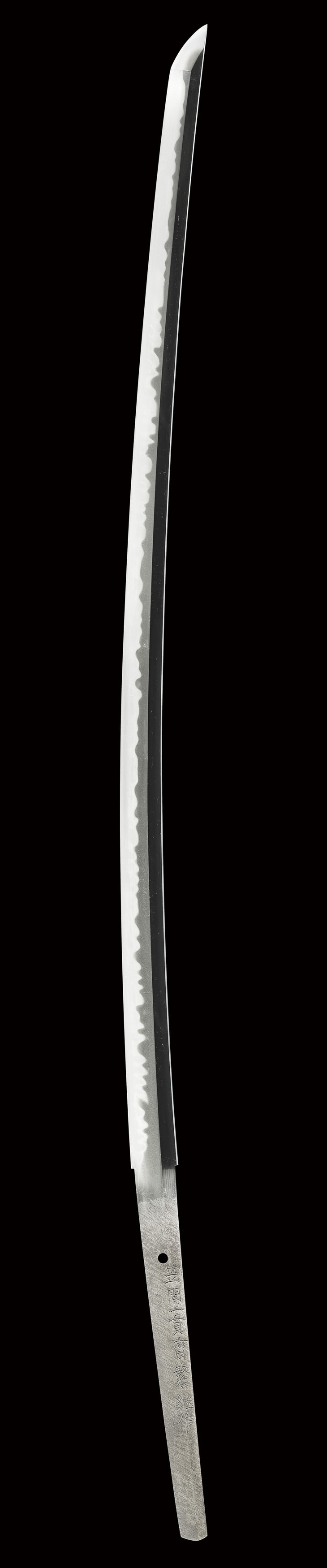
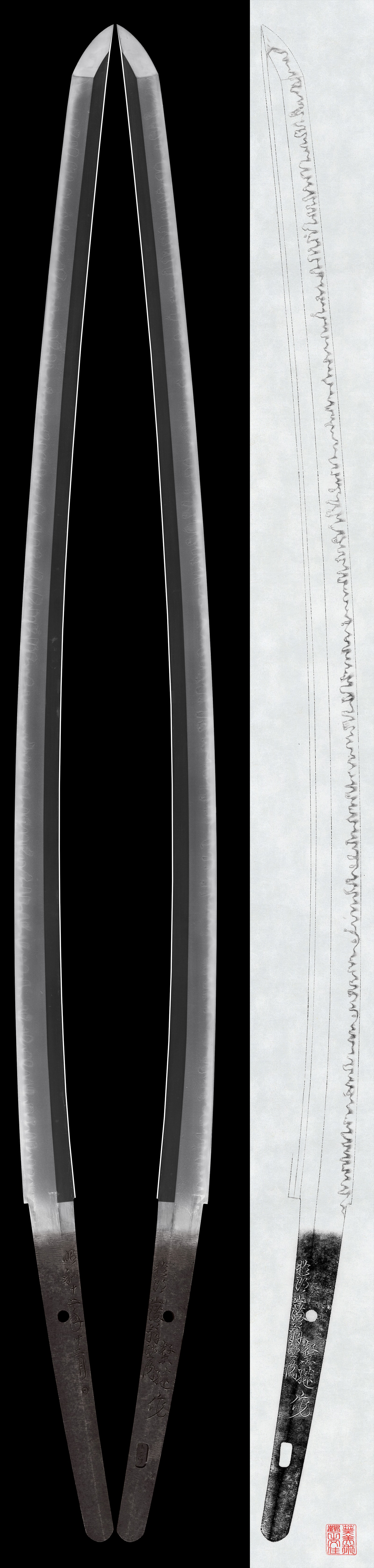
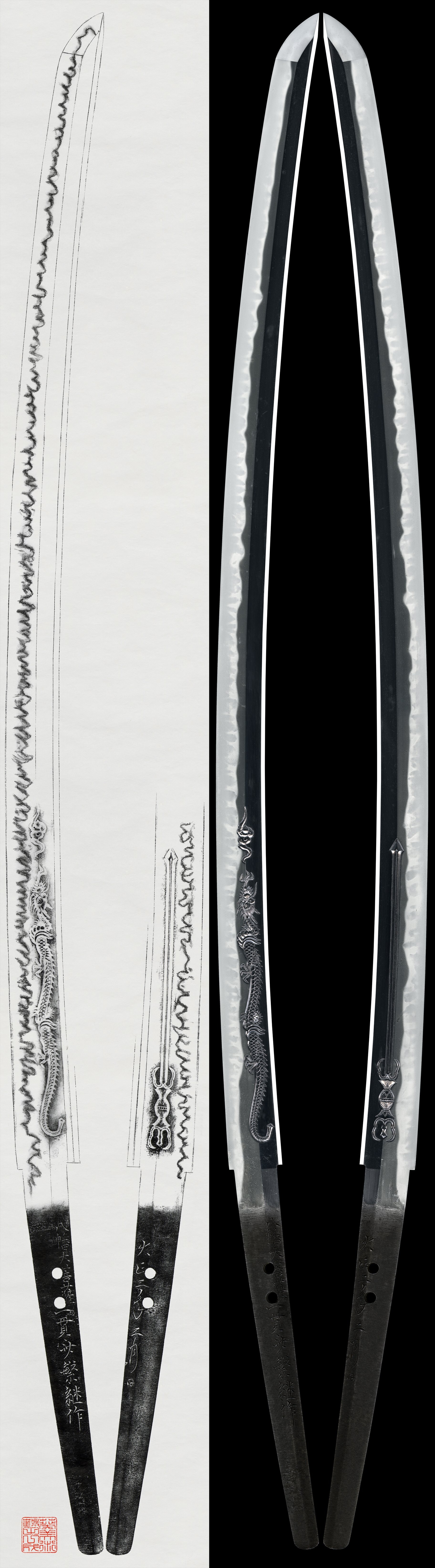
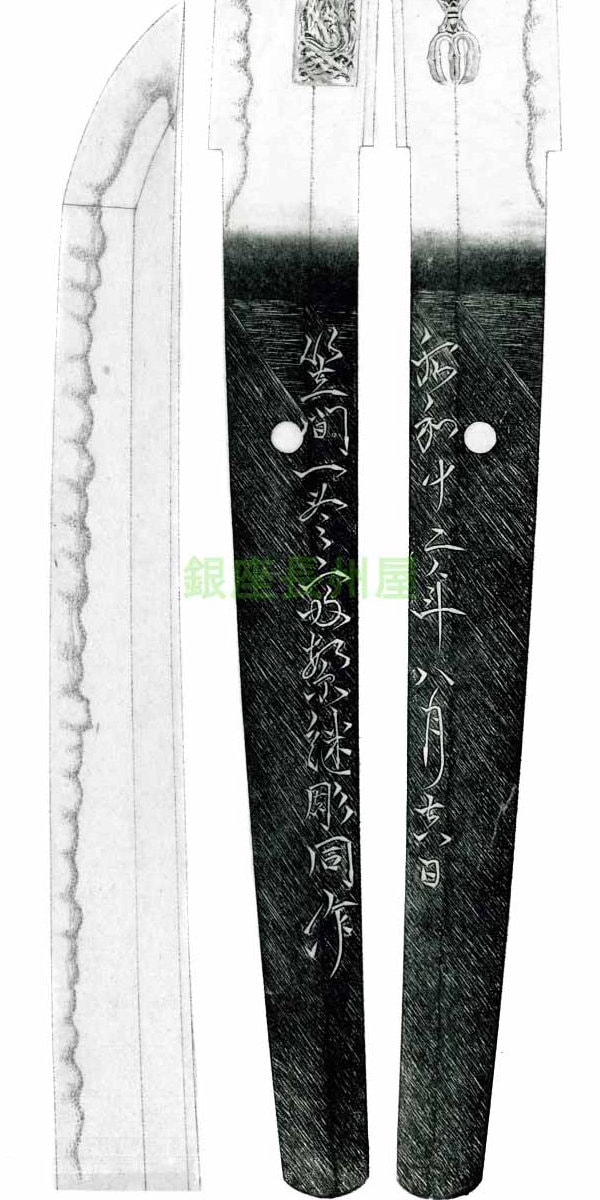
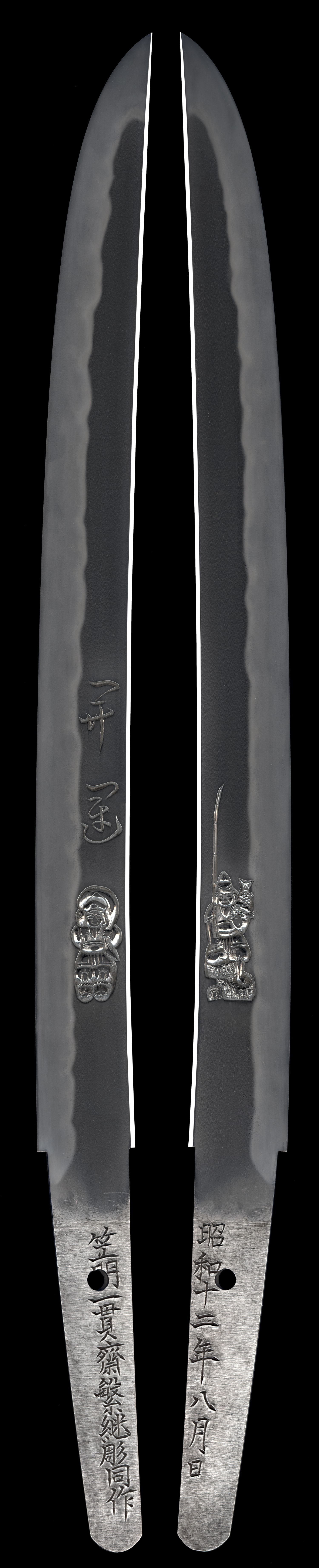
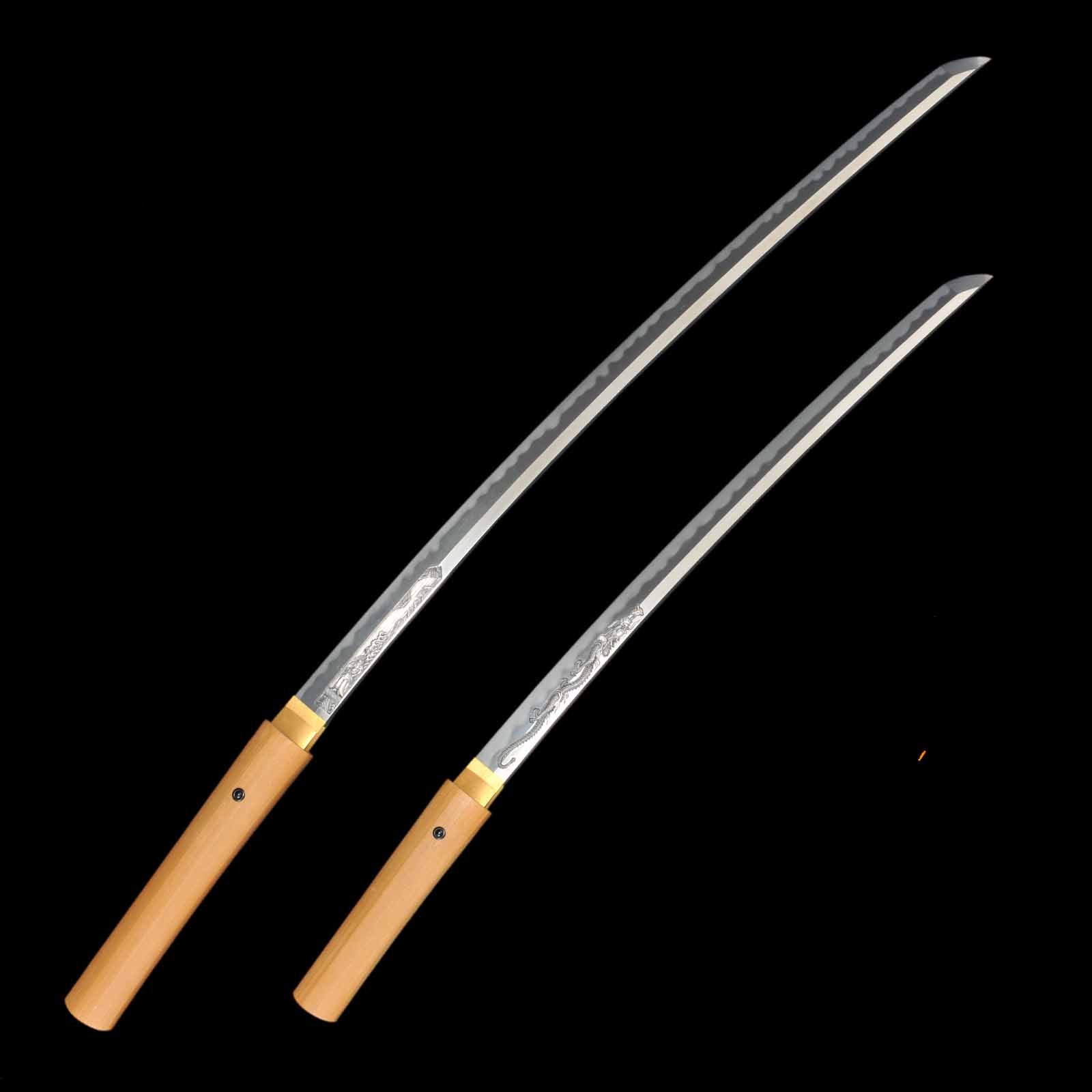
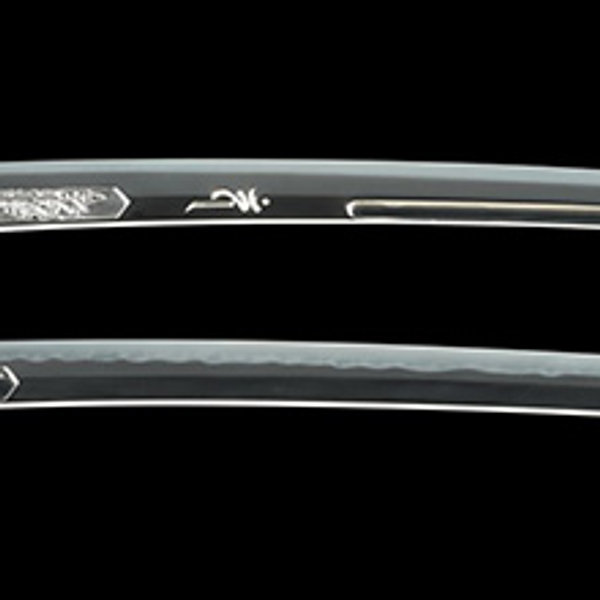
This listing features a daisho set by Kasama Ikkan-sai Shigetsugu, a renowned modern swordsmith. He was trained by his cousin Miyaguchi Ikkan-sai Shigekazu and later by Morioka Masakichi of the Gassan school, excelling in both forging and sword carving. Shigetsugu was highly regarded as a master of modern swordsmiths, particularly for his exceptional carving skills.
 NihontoWatch
mei · Taisho (1912-1926)
Tokyo · around 1912-1926
Tōken Taikan top 63%
7 pieces on the market now
The modern era (1868 to today)
Modern Japan made the sword an exile, then an artwork: the 1876 Haitōrei ended sword wearing, the postwar ban nearly ended the craft, and the revival built on the NBTHK’s founding in 1948 remade it as a licensed art.
We could not find an authenticity certificate on the seller’s listing. Japanese swords and fittings are normally papered by the NBTHK (or the NTHK). Without one, the attribution is the seller’s own assessment and has not been independently verified — treat it with caution and ask the dealer about certification before buying.
If, due to our fault, the item differs significantly from its proper condition, the item may be returned. Cooling-off is within one week of the item's arrival.
¥3,000,000