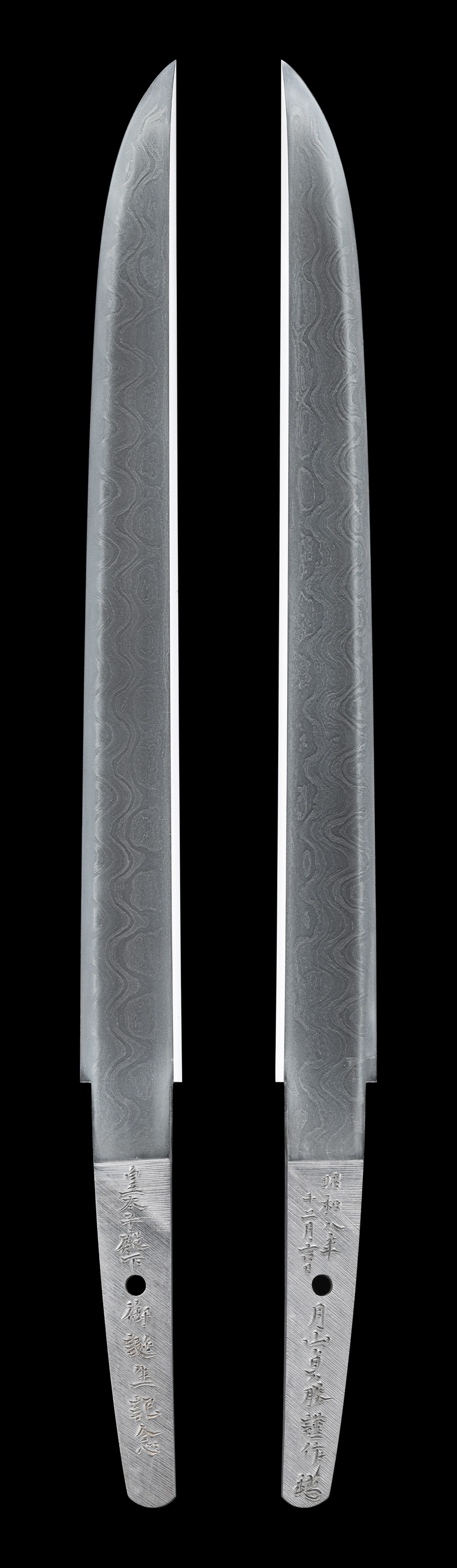
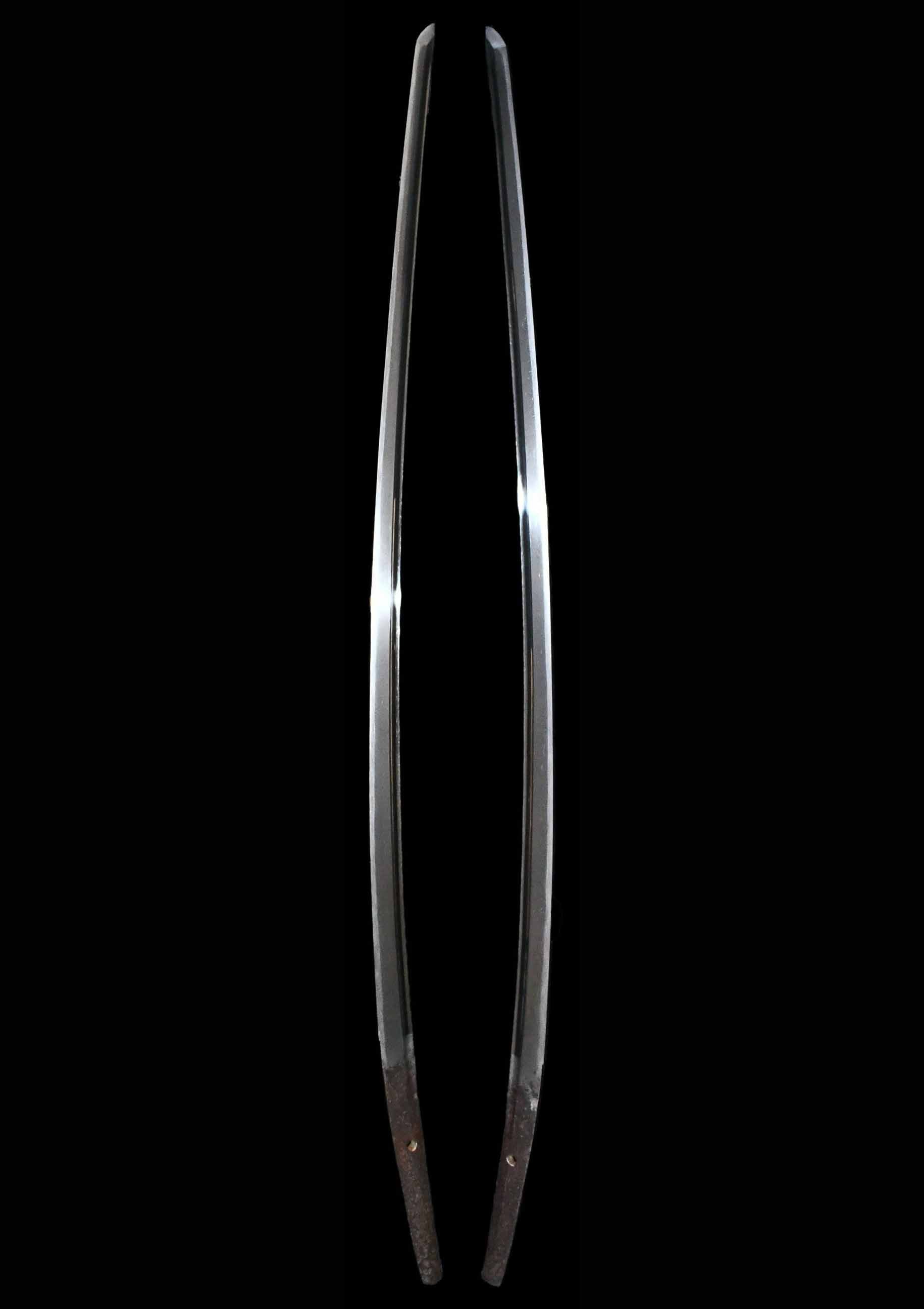
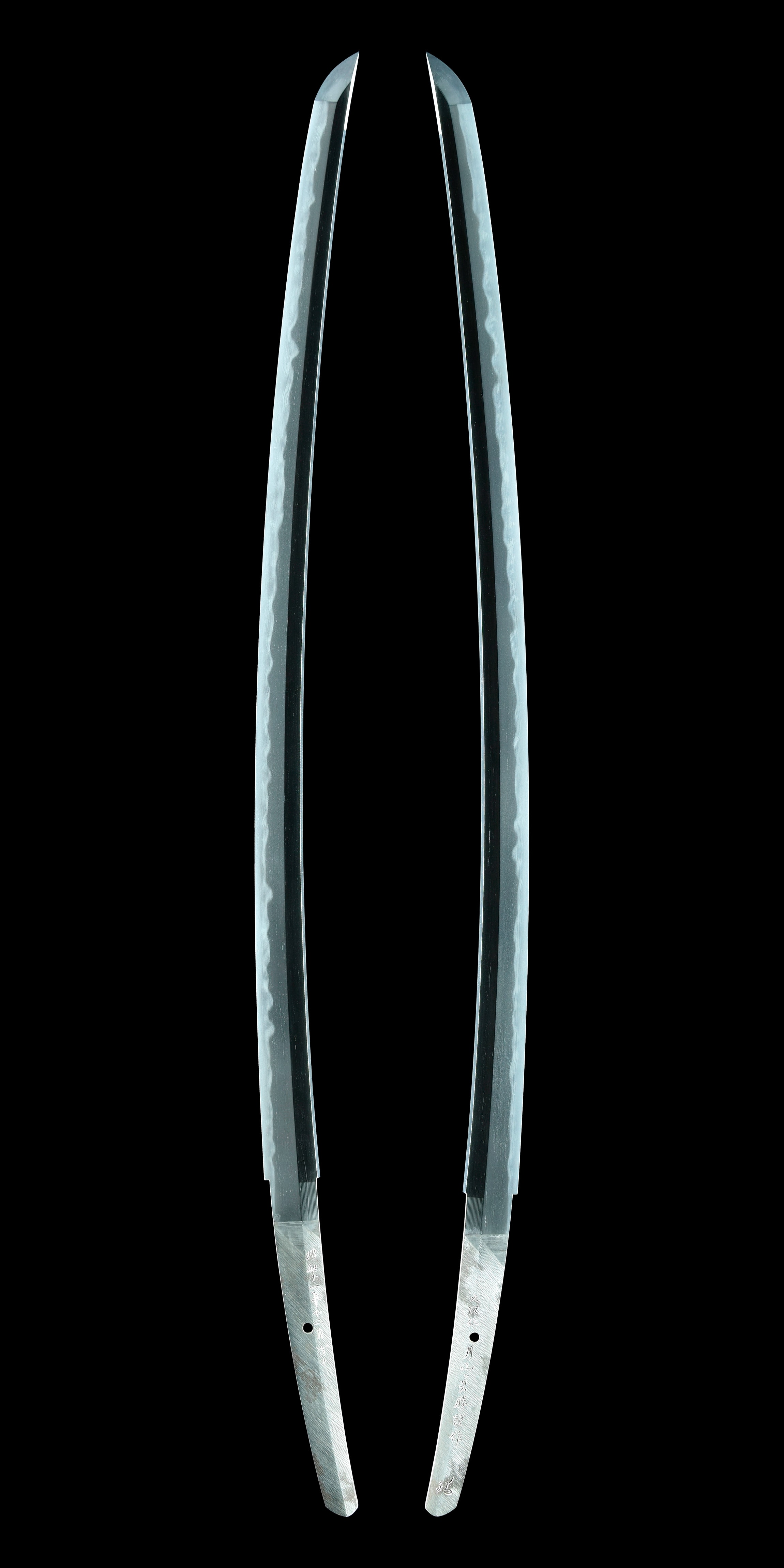
The Haitōrei edict of 1876 ended sword wearing and nearly ended the craft itself. Military demand and imperial patronage kept a remnant alive, and in 1906 Gassan Sadakazu and Miyamoto Kanenori were named Artists to the Imperial Household.
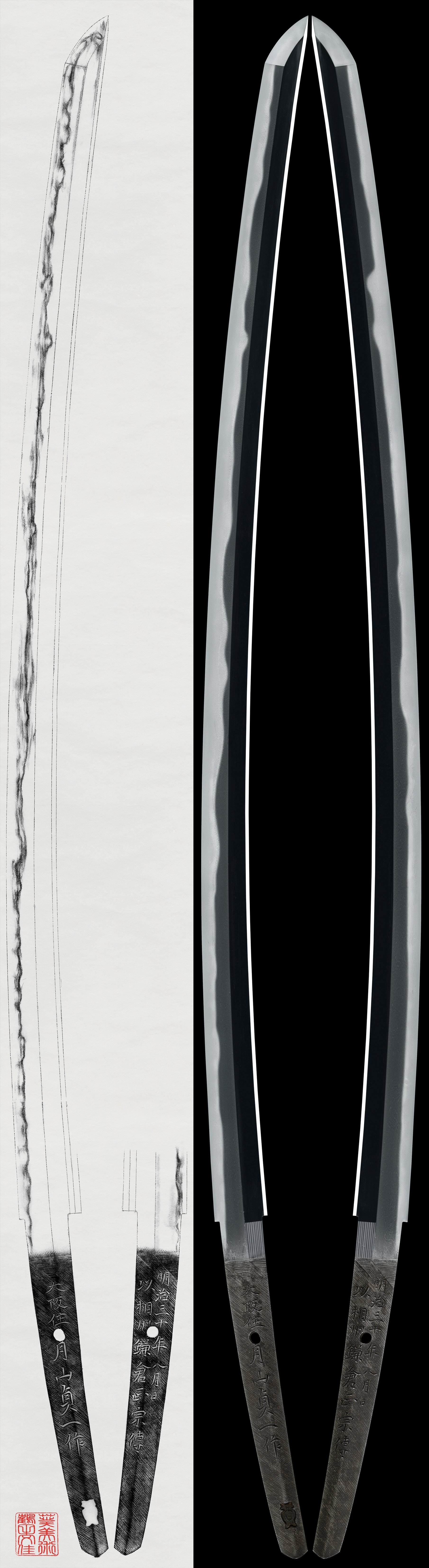
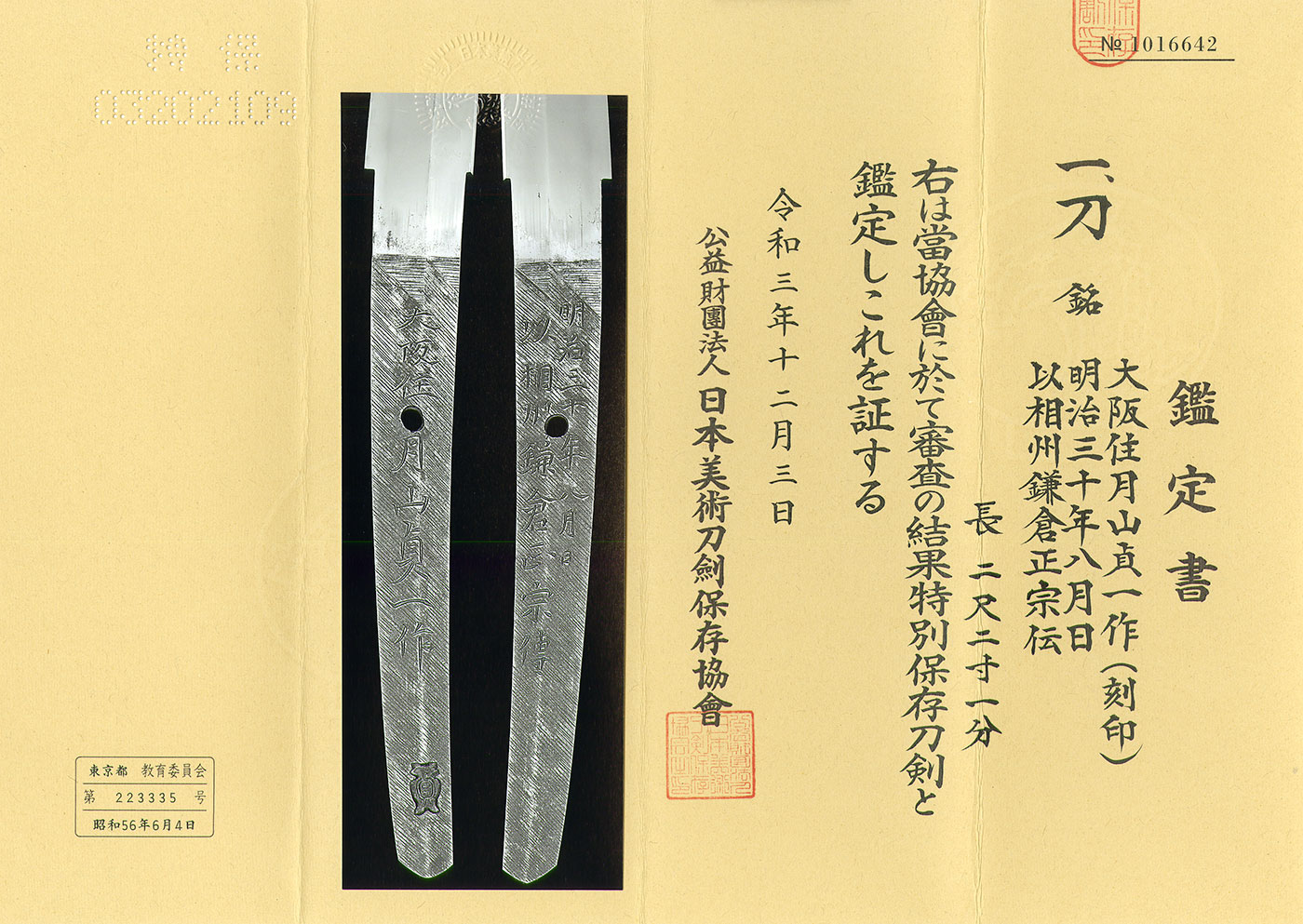
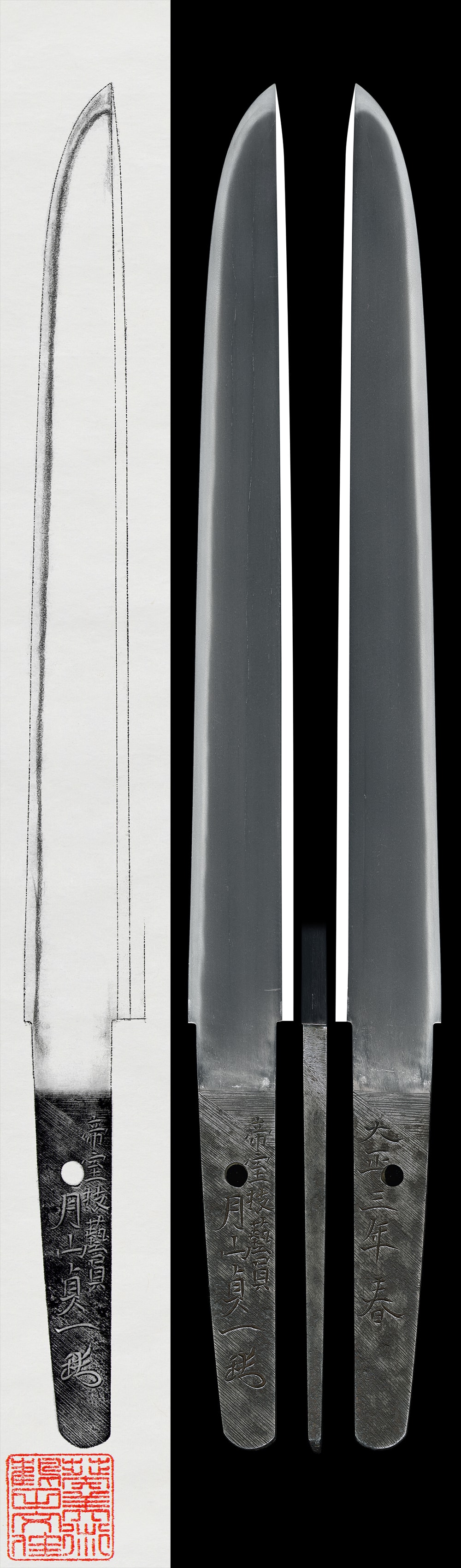
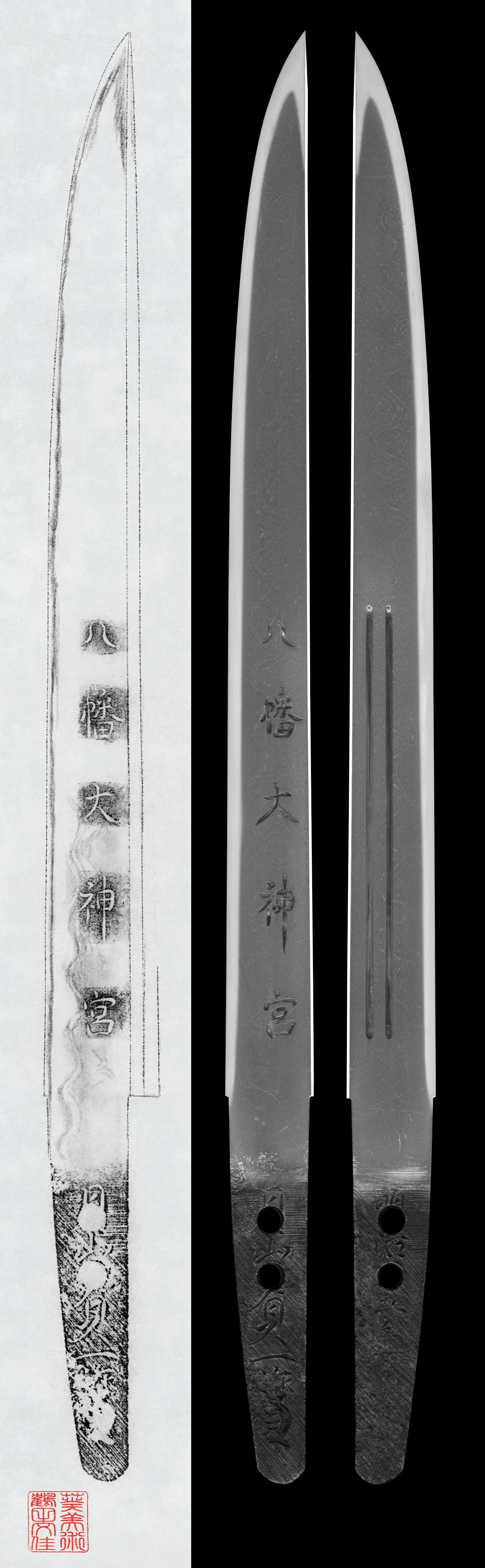
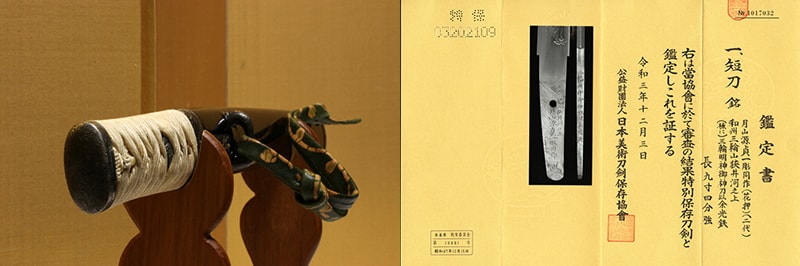
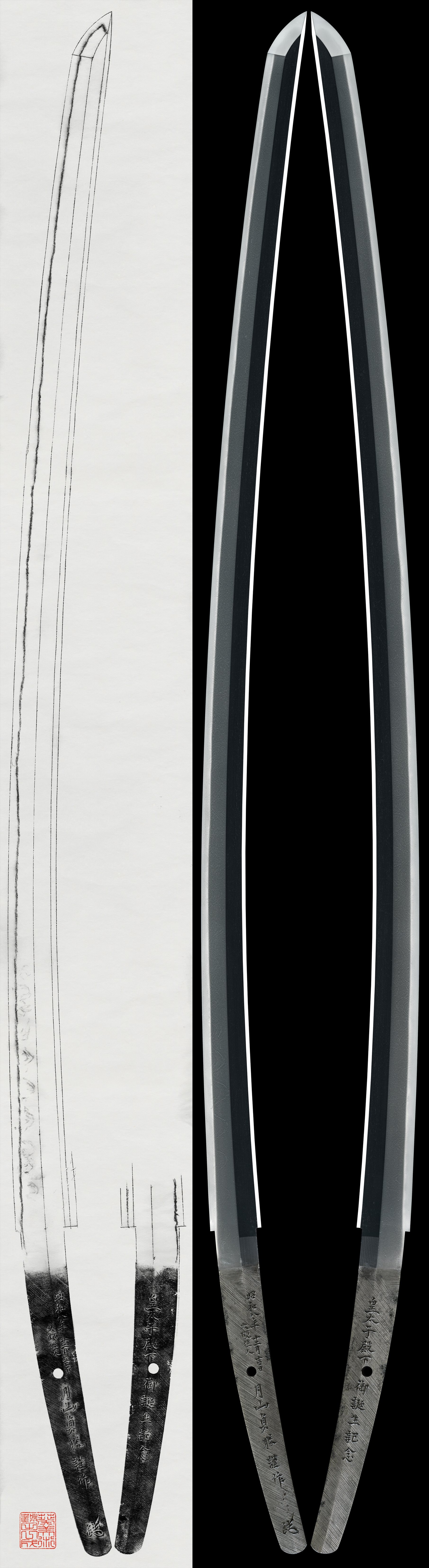
This Katana was made by Osaka Gassan Sadakazu in August, Meiji 30, and is attributed to the Soushu Kamakura Masamune tradition. It features a broad blade with a long Kissaki and deep Sori, showcasing a beautiful shape. The sword is accompanied by an NBTHK Tokubetsu Hozon Token certificate.
Certificate reading — 銘 大阪住月山貞一作(刻印) 明治三十年八月日 以相州鎌倉正宗伝
 NihontoWatch
mei · Gassan · Meiji · nagasa 67cm · sori 2cm


Yamato · around 1907-1995
Tōken Taikan top 49%
5 pieces on the market now
Meiji: survival after the edict
The Haitōrei edict of 1876 ended sword wearing and nearly ended the craft itself. Military demand and imperial patronage kept a remnant alive, and in 1906 Gassan Sadakazu and Miyamoto Kanenori were named Artists to the Imperial Household.
A Hozon-certified blade judged to show notably superior workmanship and a better state of preservation. The bar is higher: re-tempered blades and most unsigned Muromachi/Edo works are excluded.
The NBTHK (Nihon Bijutsu Tōken Hozon Kyōkai, the Society for the Preservation of Japanese Art Swords) is a public-interest incorporated foundation founded in 1948 and supervised by Japan’s Agency for Cultural Affairs (Bunkachō); it is based at the Japanese Sword Museum in Tokyo. Its expert panels physically examine each submitted work (shinsa) and issue a certificate (kanteishō) ranking it by artistic and historical merit. NBTHK papers are the most widely recognized standard of authentication for Japanese swords and fittings.
NBTHK official siteIf you wish to return an item, please notify us within 3 days of receipt. After this period we cannot accept cancellations. Please ship the return to us within 5 business days. Cancellation is conditional on the item being kept in the same condition as at the time of sale, so please handle it with care.
¥2,500,000
This Katana was made by Osaka Gassan Sadakazu in August, Meiji 30, and is attributed to the Soushu Kamakura Masamune tradition. It features a broad blade with a long Kissaki and deep Sori, showcasing a beautiful shape. The sword is accompanied by an NBTHK Tokubetsu Hozon Token certificate.
Certificate reading — 銘 大阪住月山貞一作(刻印) 明治三十年八月日 以相州鎌倉正宗伝
NihontoWatchmei · Gassan · Meiji · nagasa 67cm · sori 2cm
Yamato · around 1907-1995
Tōken Taikan top 49%
5 pieces on the market now
Meiji: survival after the edict
The Haitōrei edict of 1876 ended sword wearing and nearly ended the craft itself. Military demand and imperial patronage kept a remnant alive, and in 1906 Gassan Sadakazu and Miyamoto Kanenori were named Artists to the Imperial Household.
A Hozon-certified blade judged to show notably superior workmanship and a better state of preservation. The bar is higher: re-tempered blades and most unsigned Muromachi/Edo works are excluded.
The NBTHK (Nihon Bijutsu Tōken Hozon Kyōkai, the Society for the Preservation of Japanese Art Swords) is a public-interest incorporated foundation founded in 1948 and supervised by Japan’s Agency for Cultural Affairs (Bunkachō); it is based at the Japanese Sword Museum in Tokyo. Its expert panels physically examine each submitted work (shinsa) and issue a certificate (kanteishō) ranking it by artistic and historical merit. NBTHK papers are the most widely recognized standard of authentication for Japanese swords and fittings.
NBTHK official siteIf you wish to return an item, please notify us within 3 days of receipt. After this period we cannot accept cancellations. Please ship the return to us within 5 business days. Cancellation is conditional on the item being kept in the same condition as at the time of sale, so please handle it with care.
¥2,500,000







![Katana - Tokuho - by Gassan Sadakazu - Signed Naniwa ju Gassan Unryushi Sadakazu tsukuru [Seal] Keio gannen 11 gatsujitsu](/_next/image?url=https%3A%2F%2Fitbhfhyptogxcjbjfzwx.supabase.co%2Fstorage%2Fv1%2Fobject%2Fpublic%2Flisting-images%2Fchoshuya%2FL805711%2F00.jpg&w=2560&q=90)