The Haitōrei edict of 1876 ended sword wearing and nearly ended the craft itself. Military demand and imperial patronage kept a remnant alive, and in 1906 Gassan Sadakazu and Miyamoto Kanenori were named Artists to the Imperial Household.
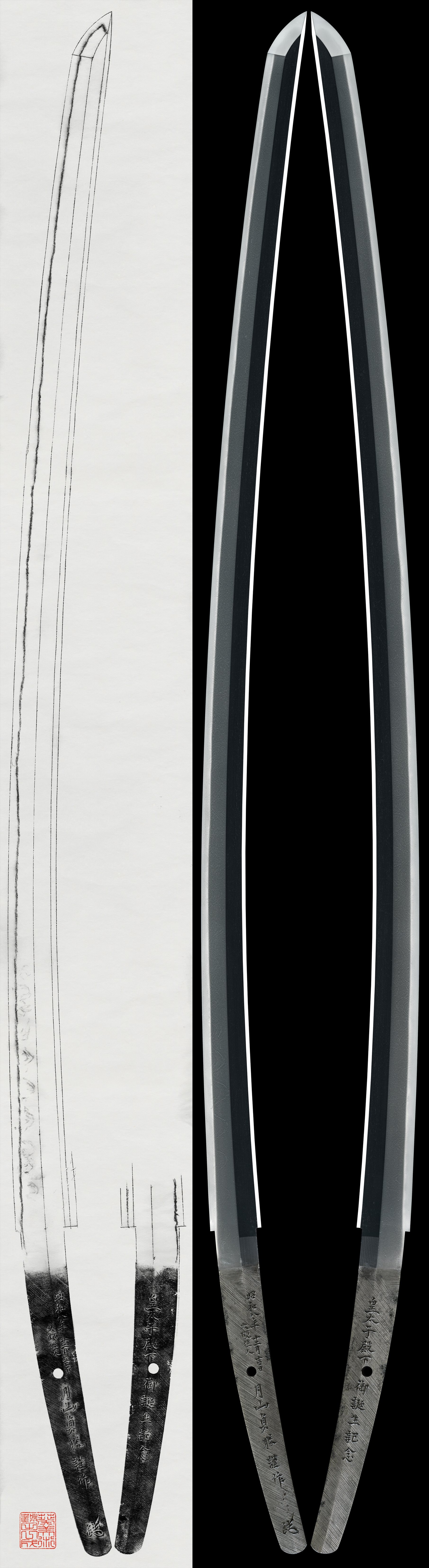
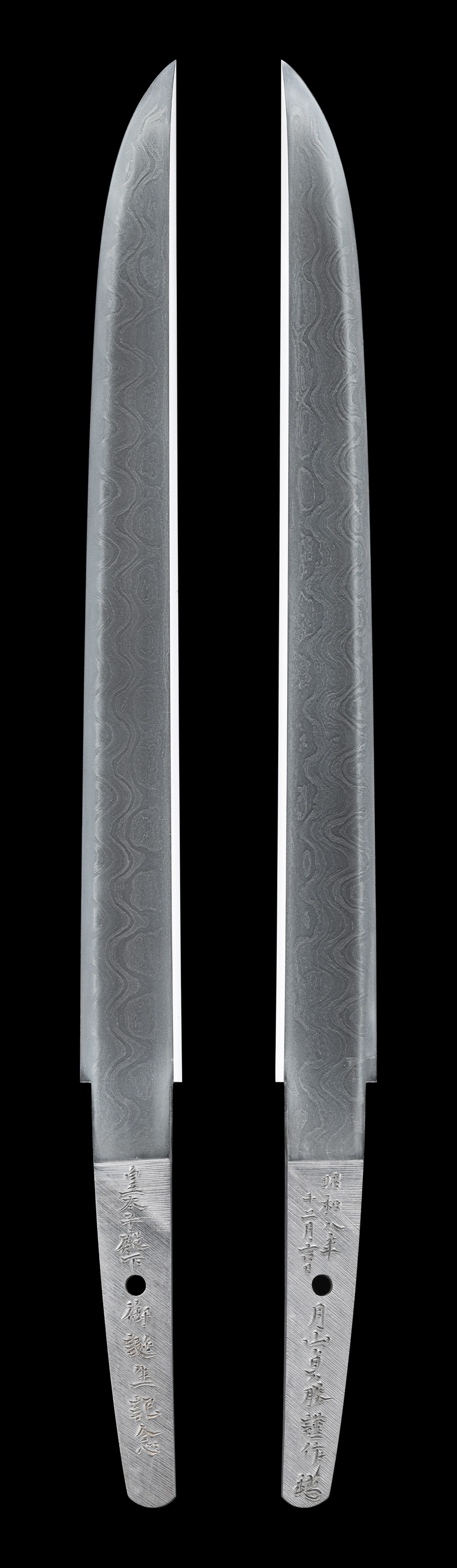
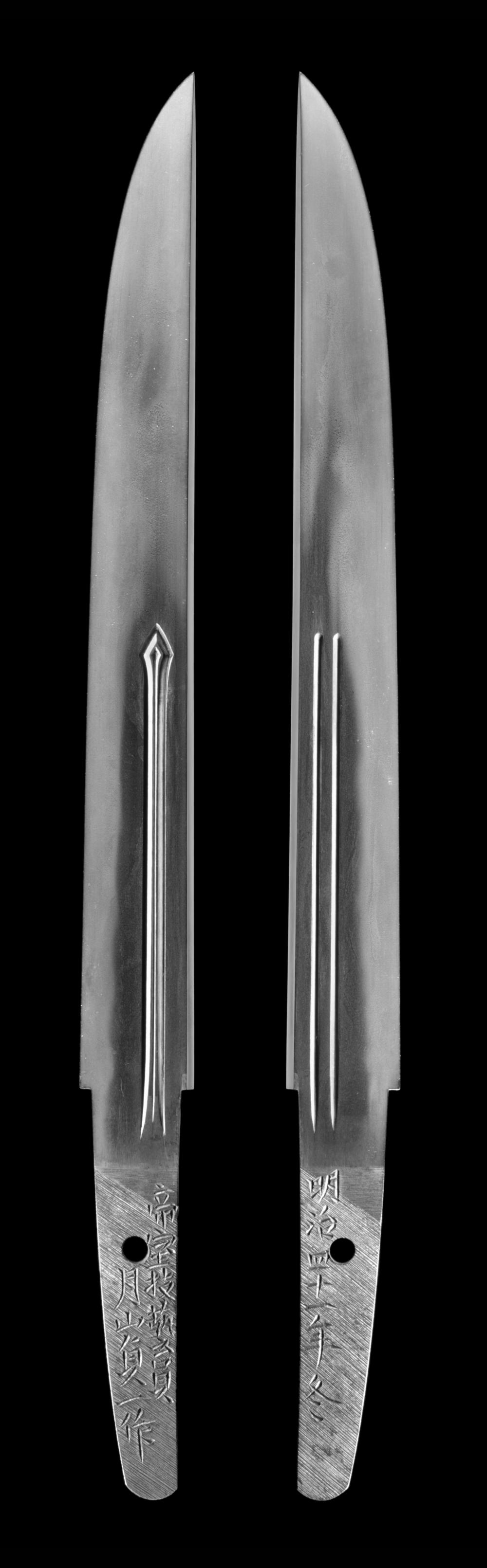
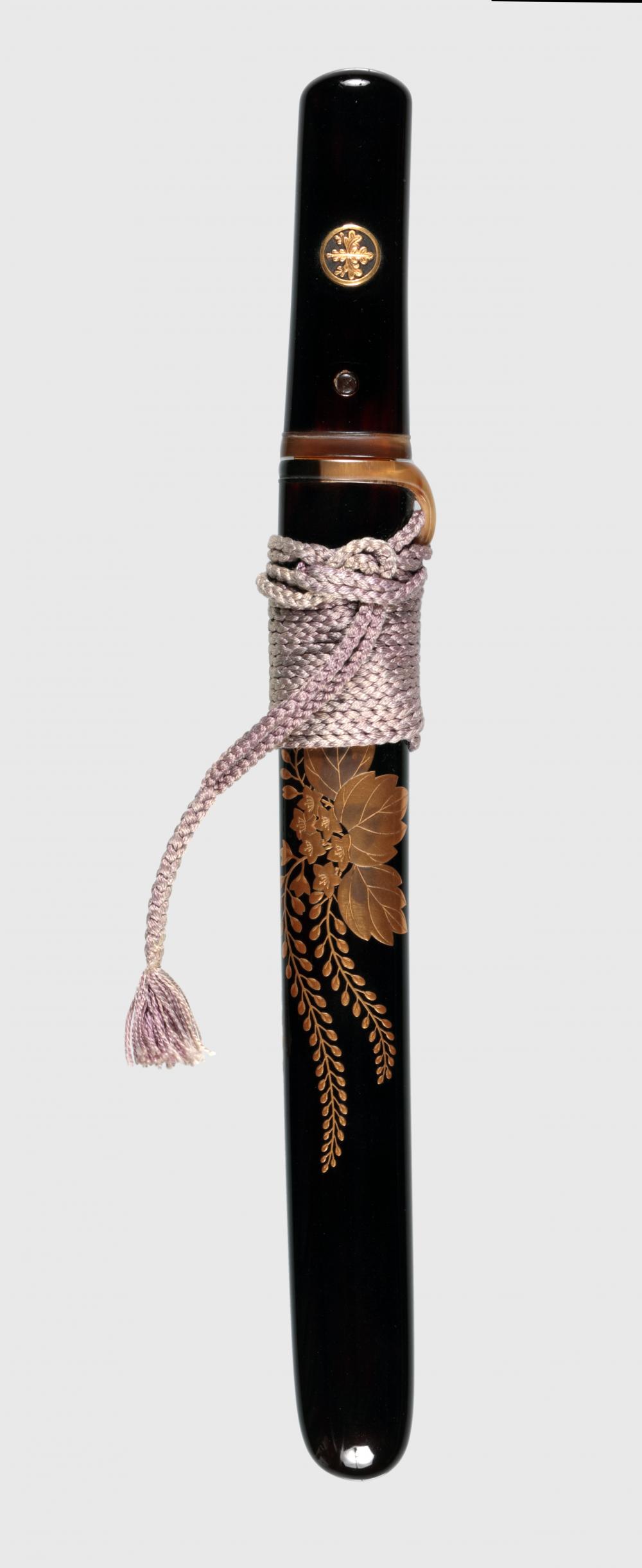
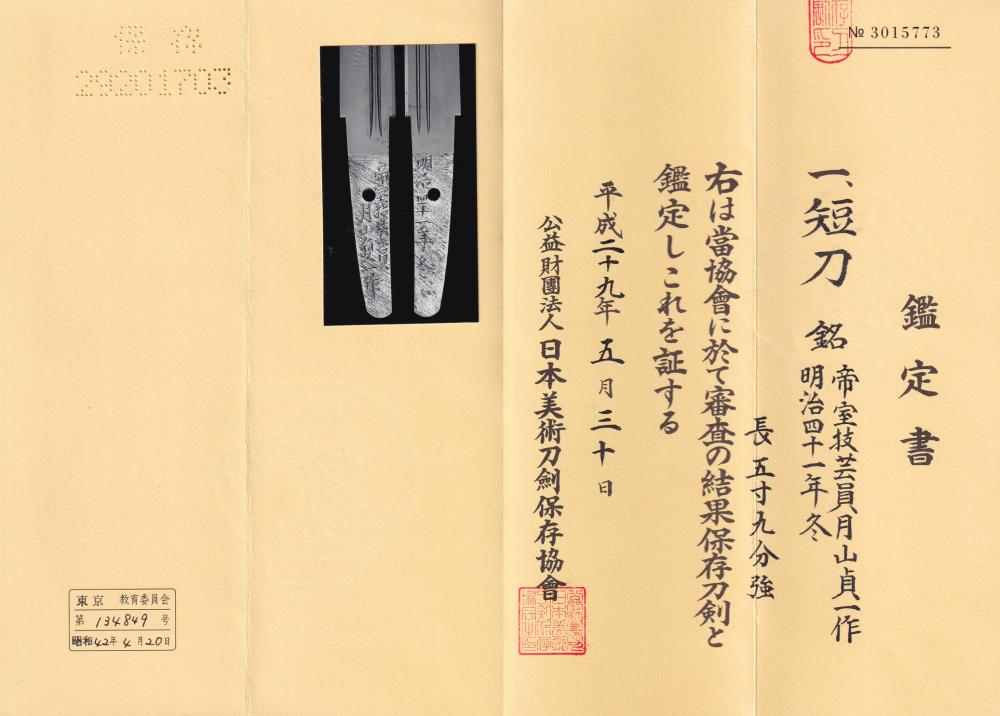
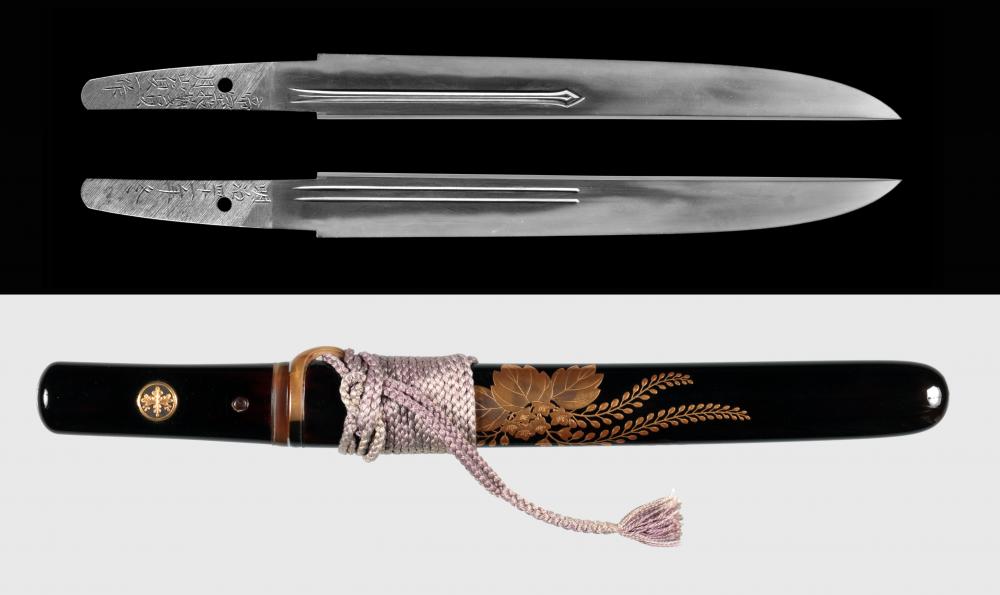
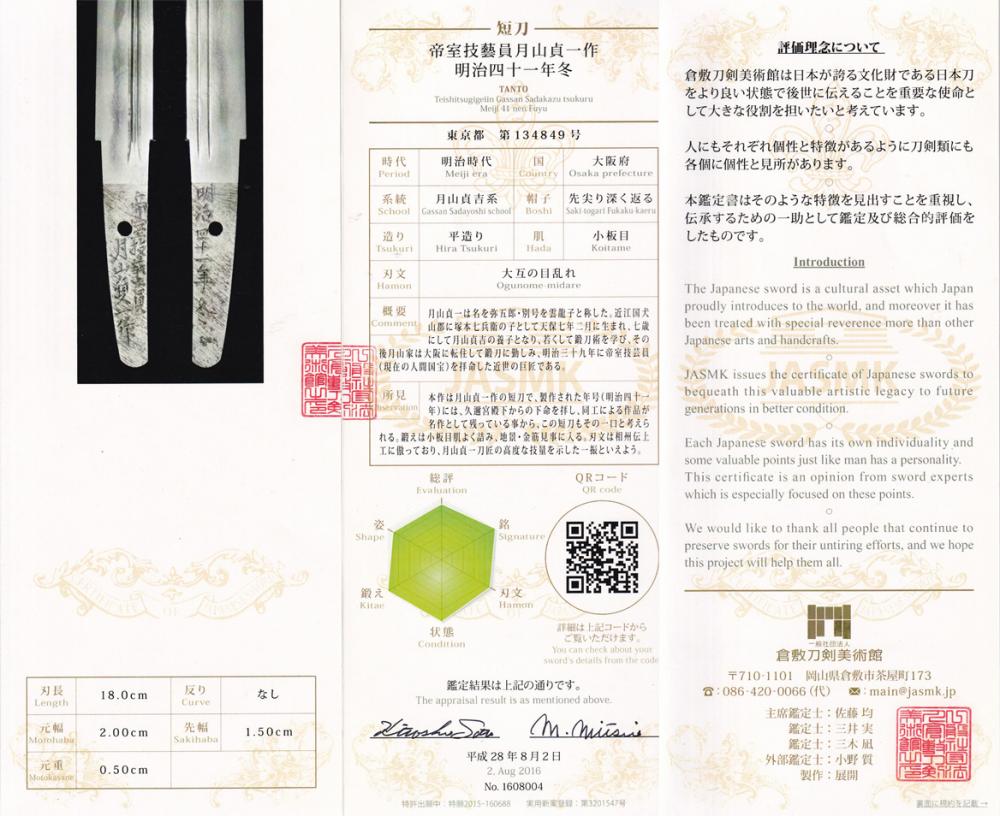
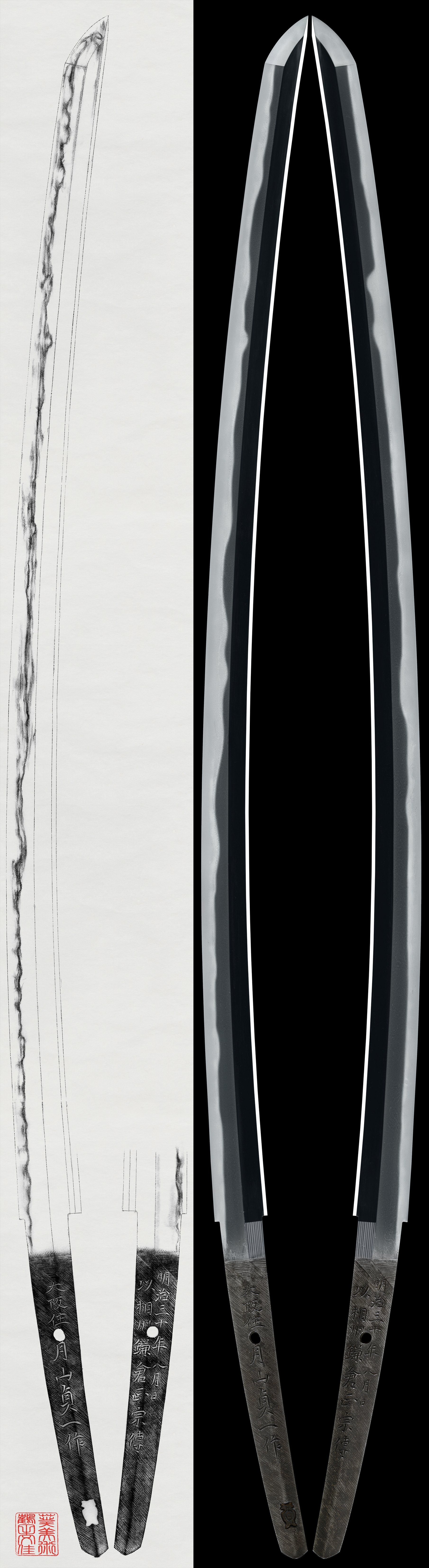
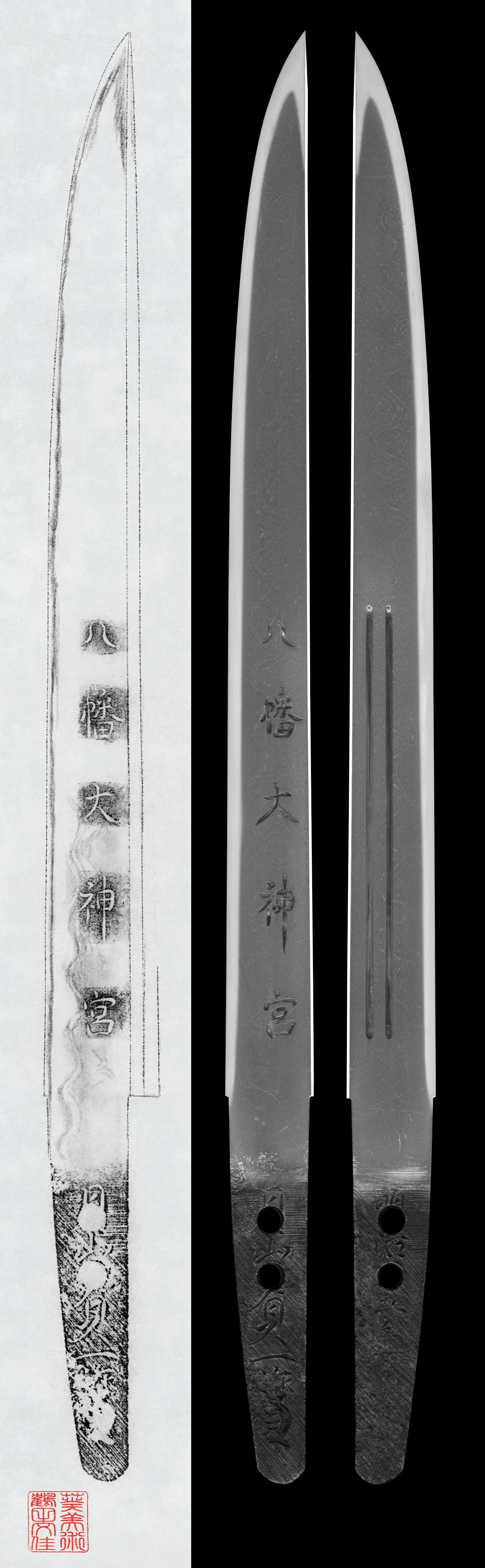
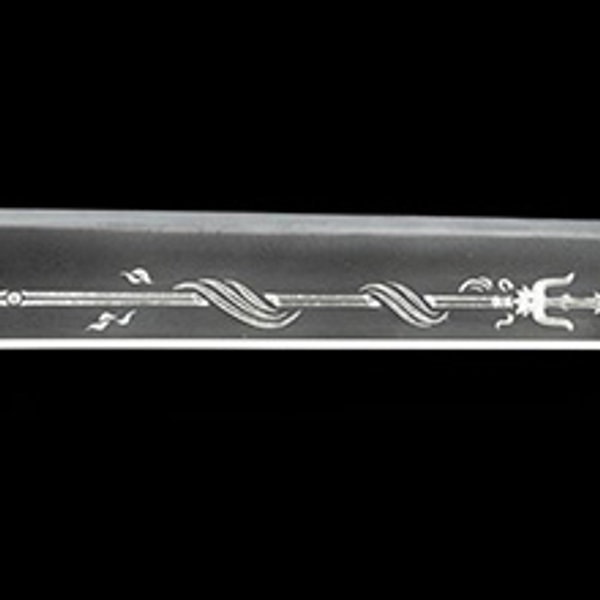
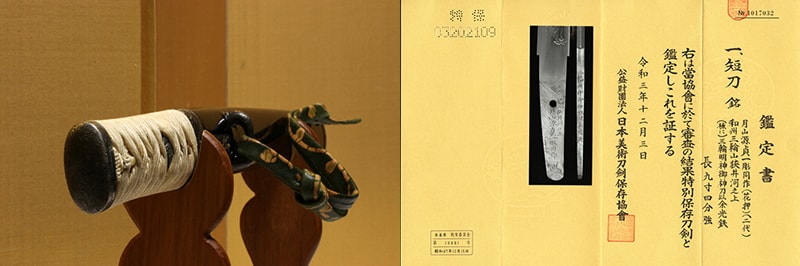
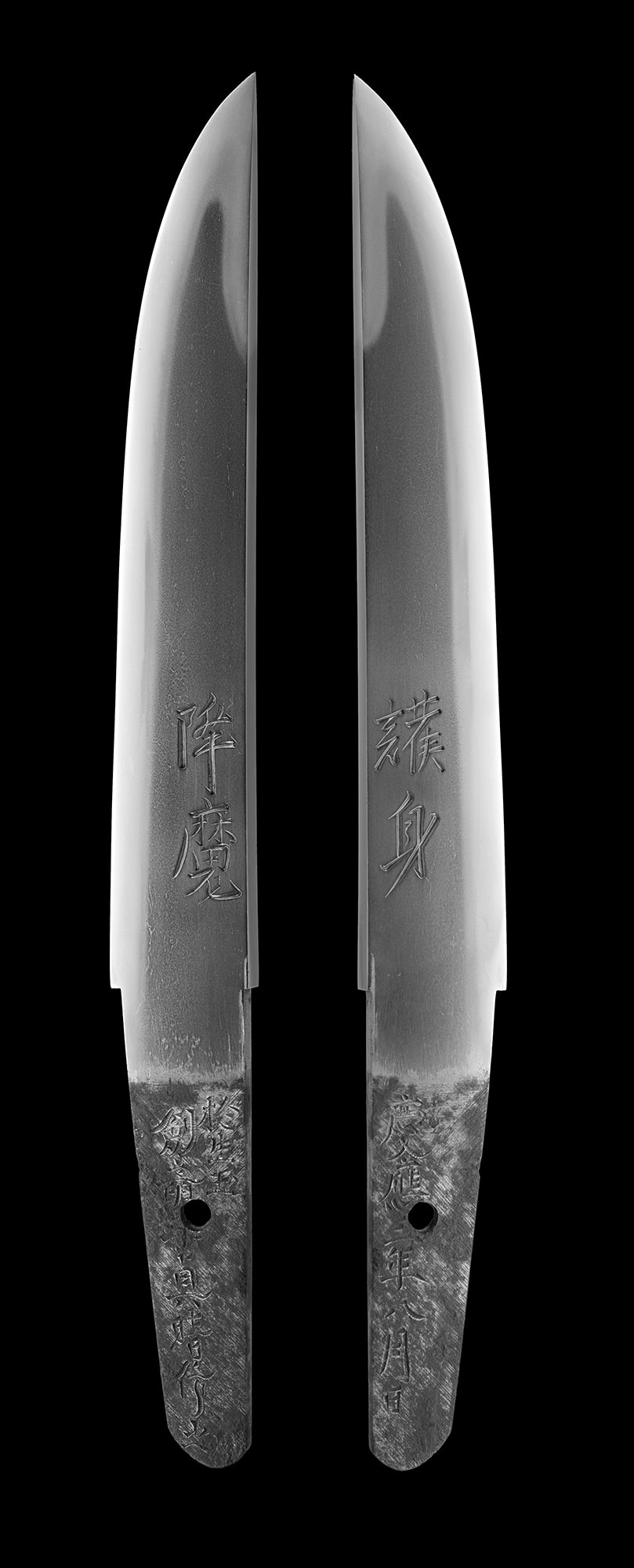
This tanto was made by Gassan Sadakazu, an Imperial Household Artist, in the winter of 1908. It features a hirazukuri, mitsumune form with a suken carving on the omote and gomabashi on the ura. The blade has a vibrant hamon with a mix of suguha and gunome, showing active nie and nioi, and comes with koshirae featuring a paulownia makie saya and mon.
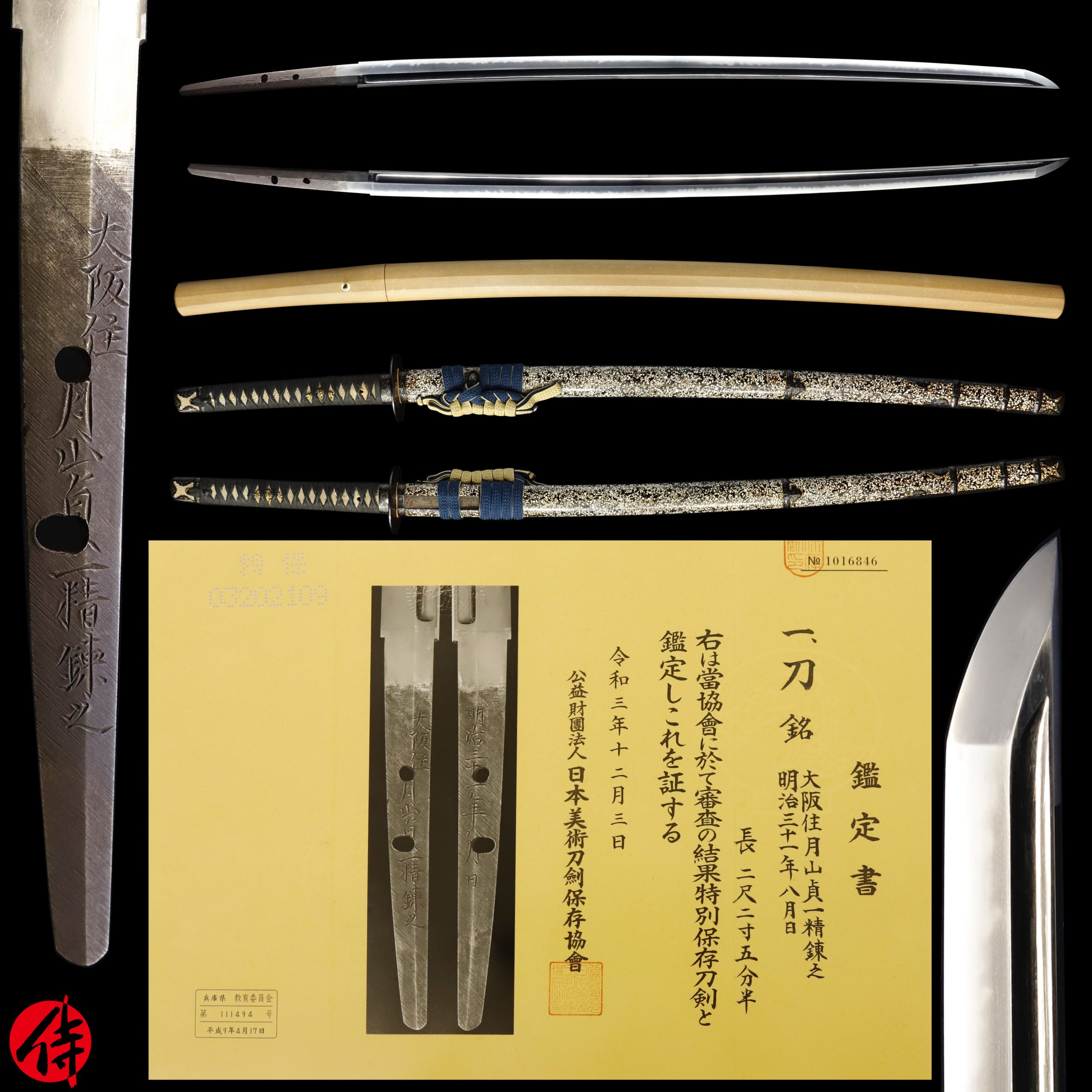
Certificate reading — 銘 帝室技芸員月山貞一作 明治四十一年冬
 NihontoWatch
mei · Gassan · Meiji · nagasa 18cm
Yamato · around 1907-1995
Tōken Taikan top 49%
5 pieces on the market now
Meiji: survival after the edict
The Haitōrei edict of 1876 ended sword wearing and nearly ended the craft itself. Military demand and imperial patronage kept a remnant alive, and in 1906 Gassan Sadakazu and Miyamoto Kanenori were named Artists to the Imperial Household.
Certifies a genuine blade worth preserving: a signature confirmed correct, or, if unsigned, an era, province, and school that the NBTHK can reliably identify.
The NBTHK (Nihon Bijutsu Tōken Hozon Kyōkai, the Society for the Preservation of Japanese Art Swords) is a public-interest incorporated foundation founded in 1948 and supervised by Japan’s Agency for Cultural Affairs (Bunkachō); it is based at the Japanese Sword Museum in Tokyo. Its expert panels physically examine each submitted work (shinsa) and issue a certificate (kanteishō) ranking it by artistic and historical merit. NBTHK papers are the most widely recognized standard of authentication for Japanese swords and fittings.
NBTHK official sitePlease contact us by phone within 3 days of the item's arrival and ship it back the next day. The postage and security service fees are the customer's responsibility.
¥1,000,000
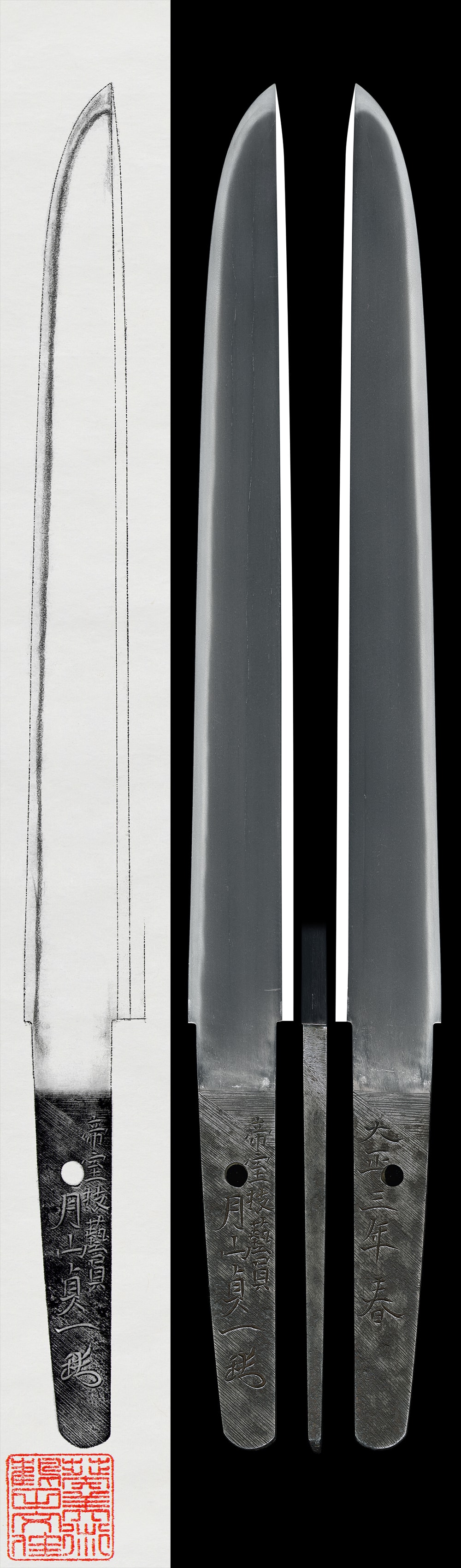






![Katana - Tokuho - by Gassan Sadakazu - Signed Naniwa ju Gassan Unryushi Sadakazu tsukuru [Seal] Keio gannen 11 gatsujitsu](/_next/image?url=https%3A%2F%2Fitbhfhyptogxcjbjfzwx.supabase.co%2Fstorage%2Fv1%2Fobject%2Fpublic%2Flisting-images%2Fchoshuya%2FL805711%2F00.jpg&w=2560&q=90)