In the Sengoku era the school served a second warrior court: the Later Hōjō at Odawara, whose patronage kept the Tsunahiro line forging hitatsura for the uchigatana age until the castle fell to Hideyoshi in 1590.
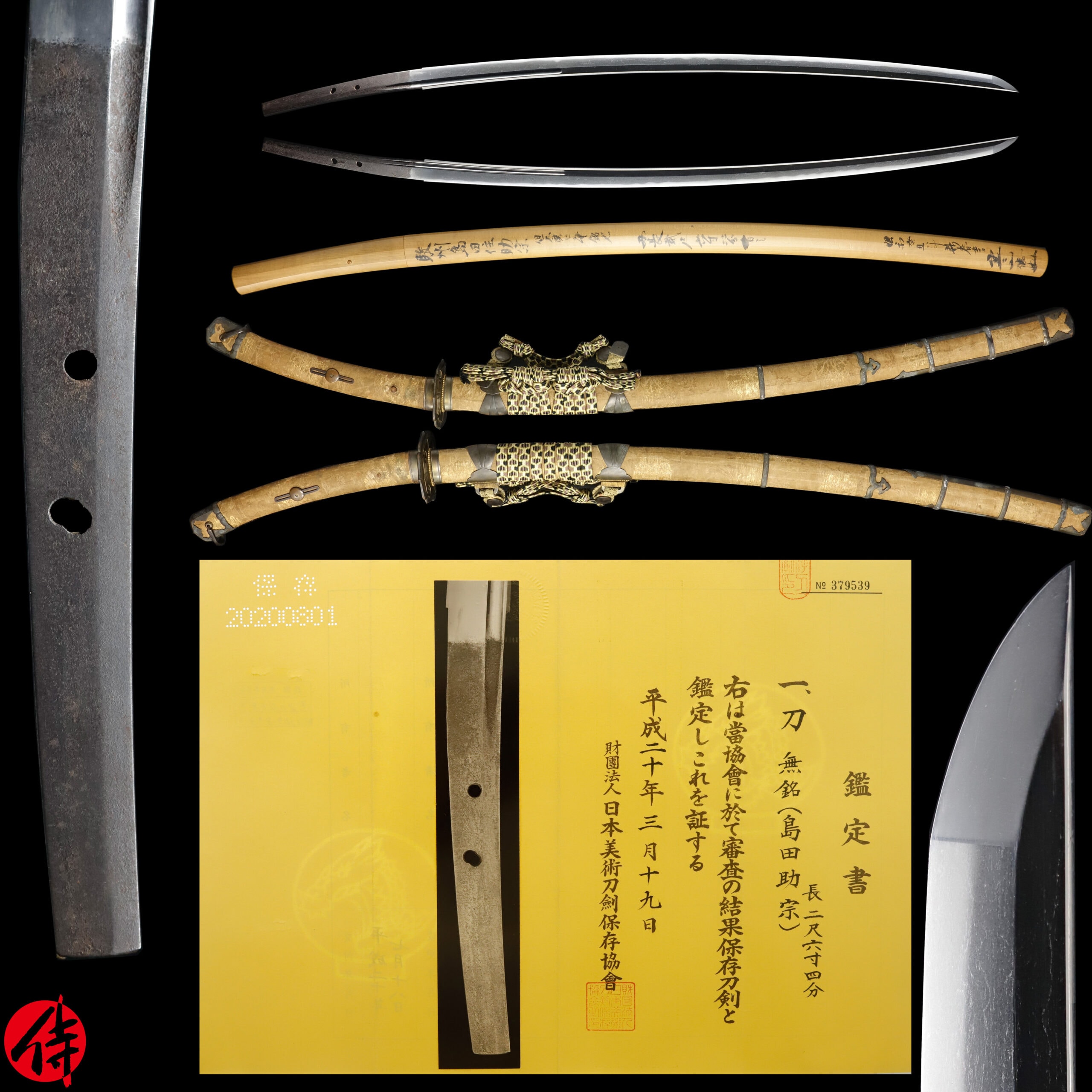
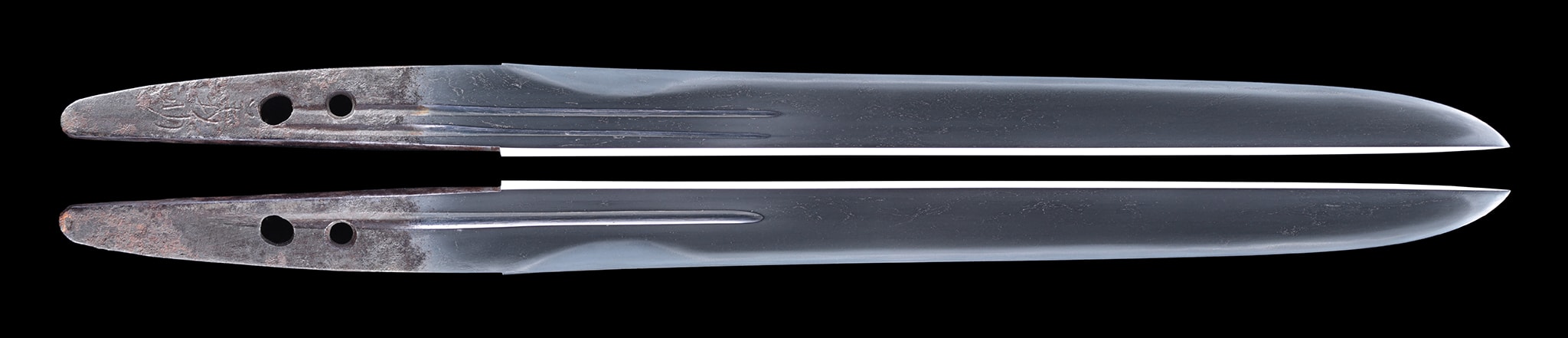
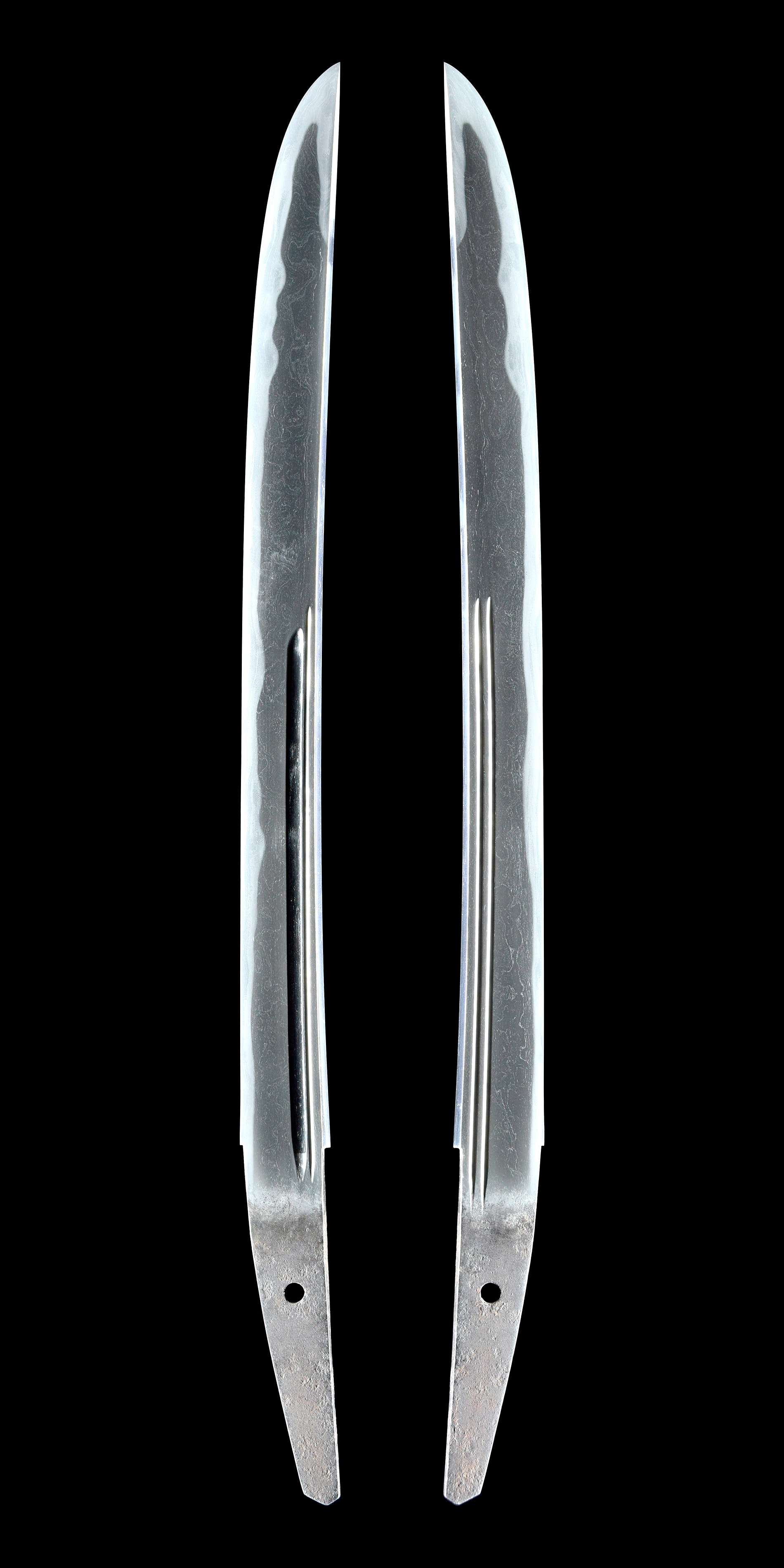
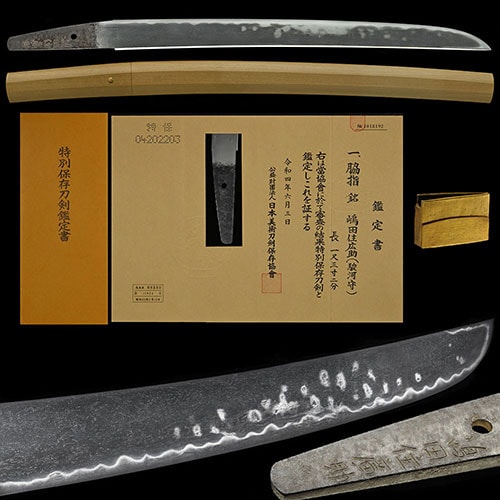
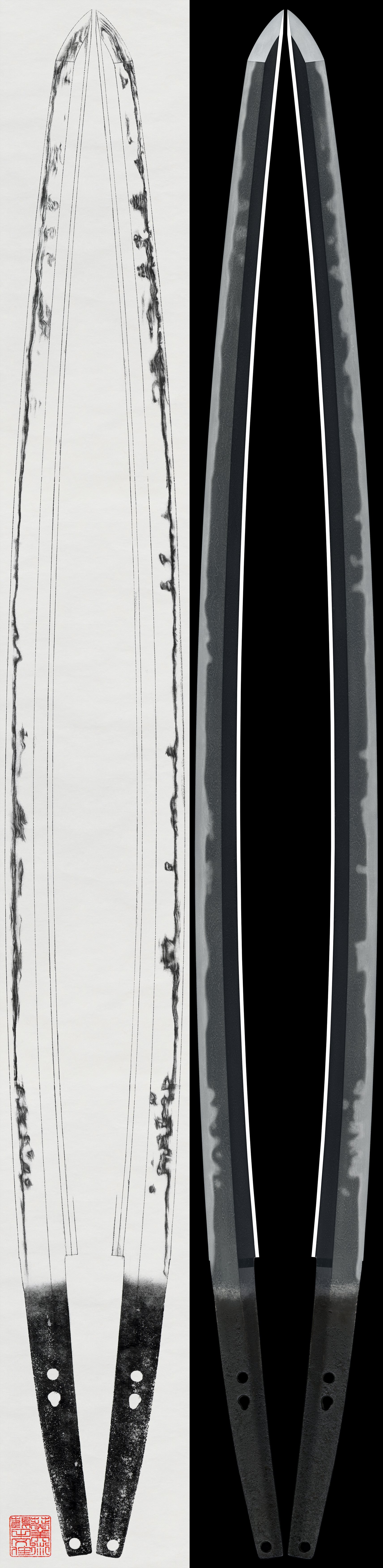
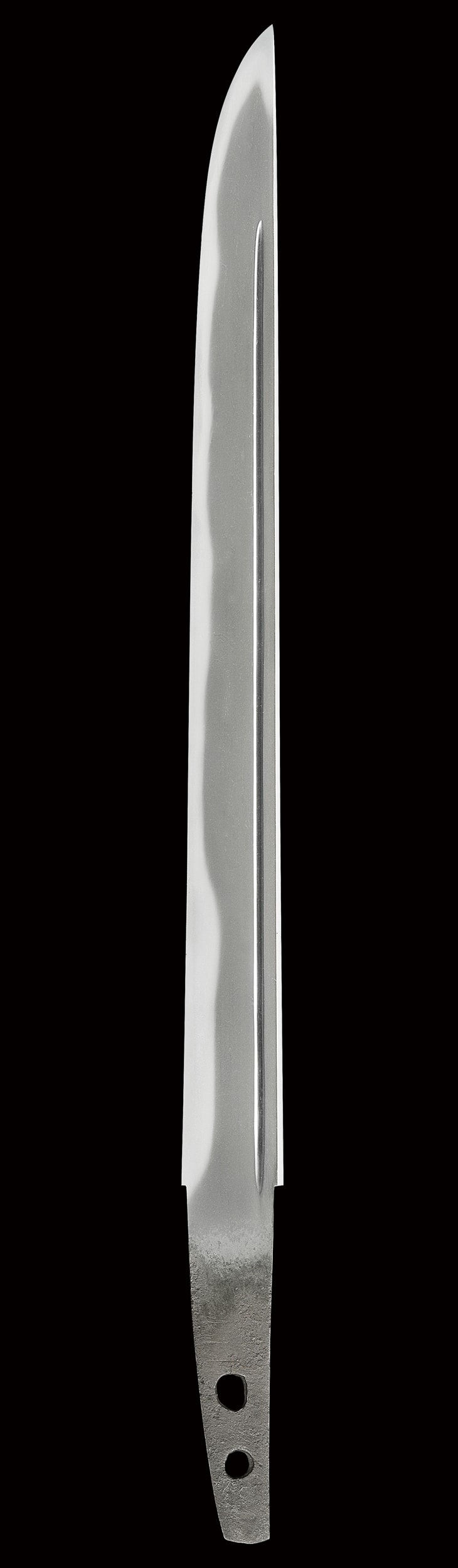
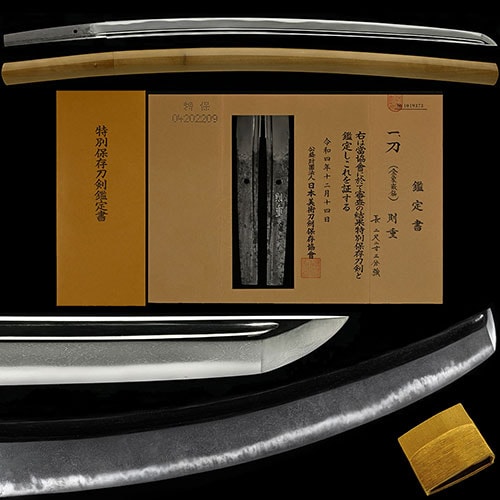
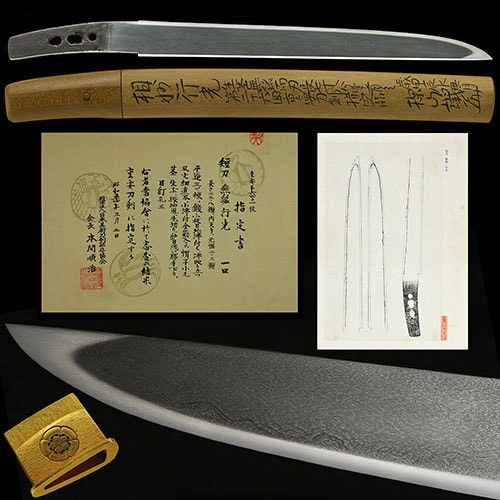
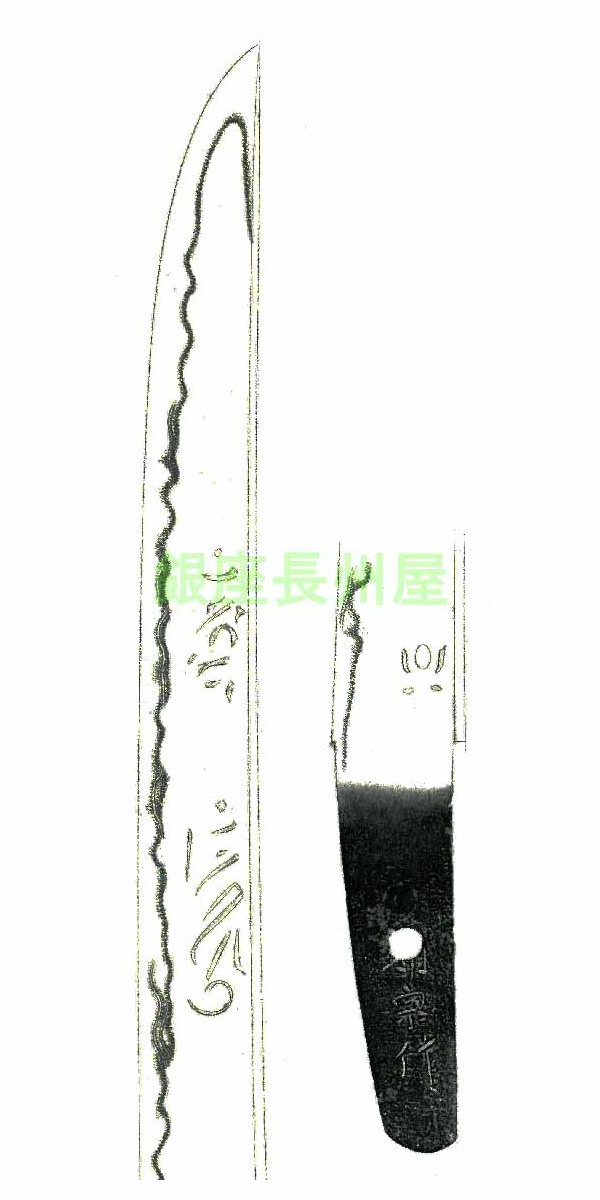
This listing from Ginza Choshuya features a tanto by Sukemune, active in Suruga Province during the late Muromachi period, around the Tenmon era. Sukemune was a prominent smith of the Shimada school, considered one of its three masters alongside Yoshisuke and Hirosuke. He is known for forging a tanto said to have been owned by Takeda Shingen.
 NihontoWatch
Shimada · Muromachi
Shimada (Suruga) · Suruga · around 1444-1449
Tōken Taikan top 31%
A katana now in Osaka, designated at the fourteenth Jūyō session in 1966, is judged in its commentary to be "sound in both ji and ha and thought to represent Sukemune's finest work"[[c:1]], and it gives the measure of the man. Sukemune is, with the mainstream Yoshisuke, one of the two principal names of the Shimada school of Suruga Province, a Muromachi workshop on the Tōkaidō between Mino and the late Sōshū hearths. The published sources place him as the younger brother of the founder Yoshisuke in the mid-Muromachi period, and the name carried that standing through several generations down into the shintō era. The reference works arrange those hands across a long run, citing Sukemune work as early as the Bun'an and Bunki eras and then a Sukemune of the Tenbun era, so the name spans the whole Muromachi century. Because the signature style does not separate the generations either, a signed Sukemune is read for its workmanship rather than assigned a number, and the date inscriptions, where they survive, do the work the mei cannot.
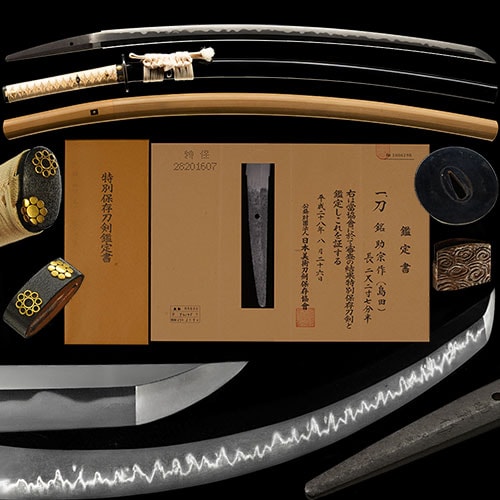
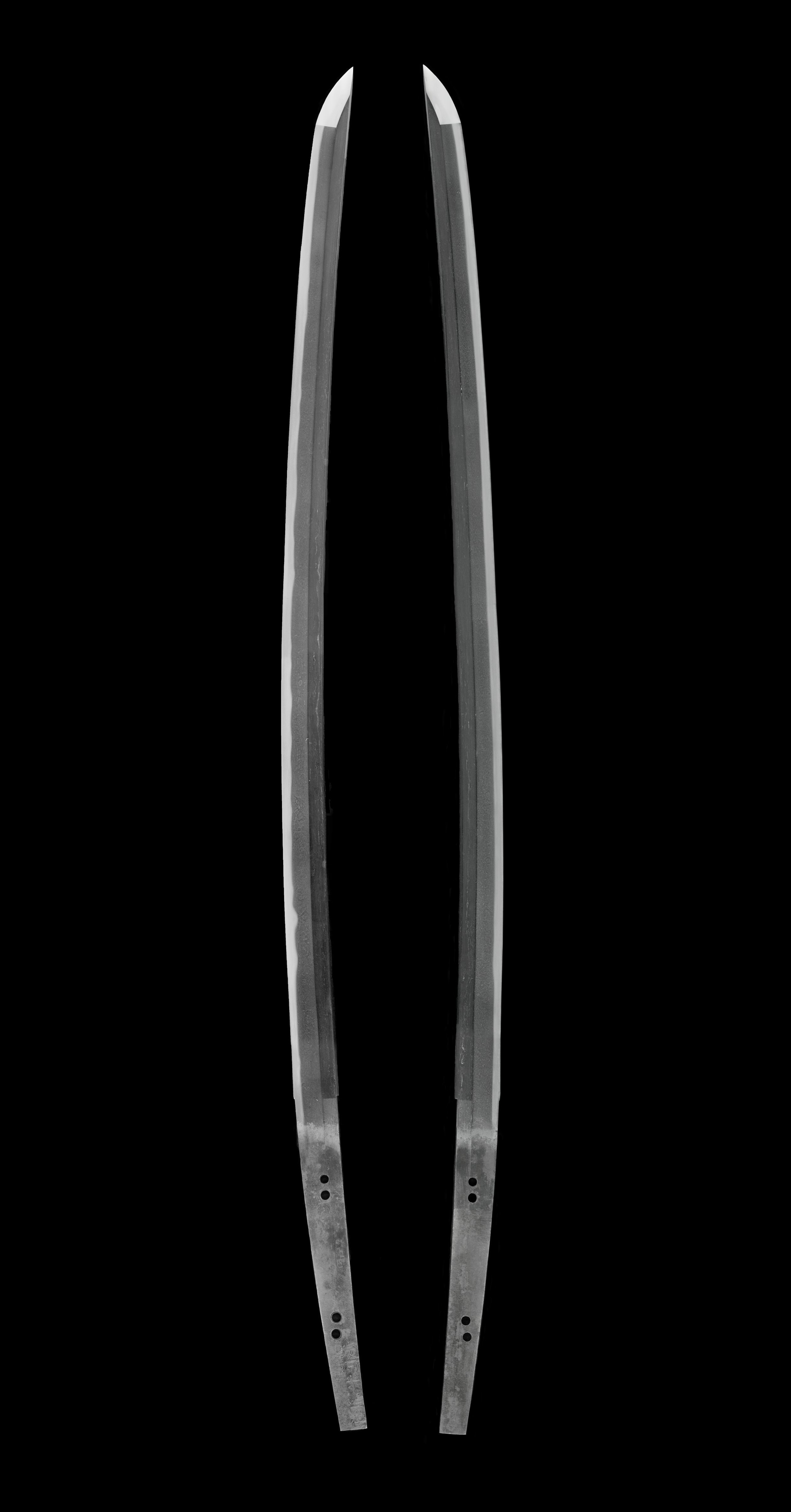
His characteristic hand is the connected gunome that the published sources name the school's own. Over the itame the temper is a gunome run together in series, crossed with gunome-chōji and pointed togariba, at times rising into a box-shaped notare about the koshi, abundant nie lying through it with tobiyaki, kinsuji and sunagashi, the nioiguchi bright. Of the long katana designated in 2020 the NBTHK writes that "the hamon features the Shimada school's hallmark of connected gunome"[[c:2]] and reads its bright nioiguchi, kinsuji and sunagashi as "features that strongly express the characteristic manner of Sukemune"[[c:3]]. The boshi follows the midare, running midare-komi to a ko-maru with hakikake, on the largest blade strongly covered in nie and tending toward nie-kuzure. This is the manner the published record ties to the late Sōshū smiths, to late Seki and to the Senju group, and reads as close to the work of Mino and Ise.
The jigane is the steady foundation beneath the ha. The forging is an itame, well knit and at times dense, that overall flows and leans toward masame, ji-nie lying through it and chikei entering, with a tendency toward hada-dachi where the grain stands open. On the 2020 katana that jigane is described as a tightly forged itame, partly flowing and tending toward masame, the ji-nie finely granular yet densely applied and the chikei clearly visible, a Suruga reading of the Sōshū surface rather than a tight Bizen jigane. It is on this flowing, slightly standing steel that the nie activity of the edge is laid, and the finest of his blades are praised for the clarity that results, the bright nioiguchi and the streaming kinsuji and sunagashi together.
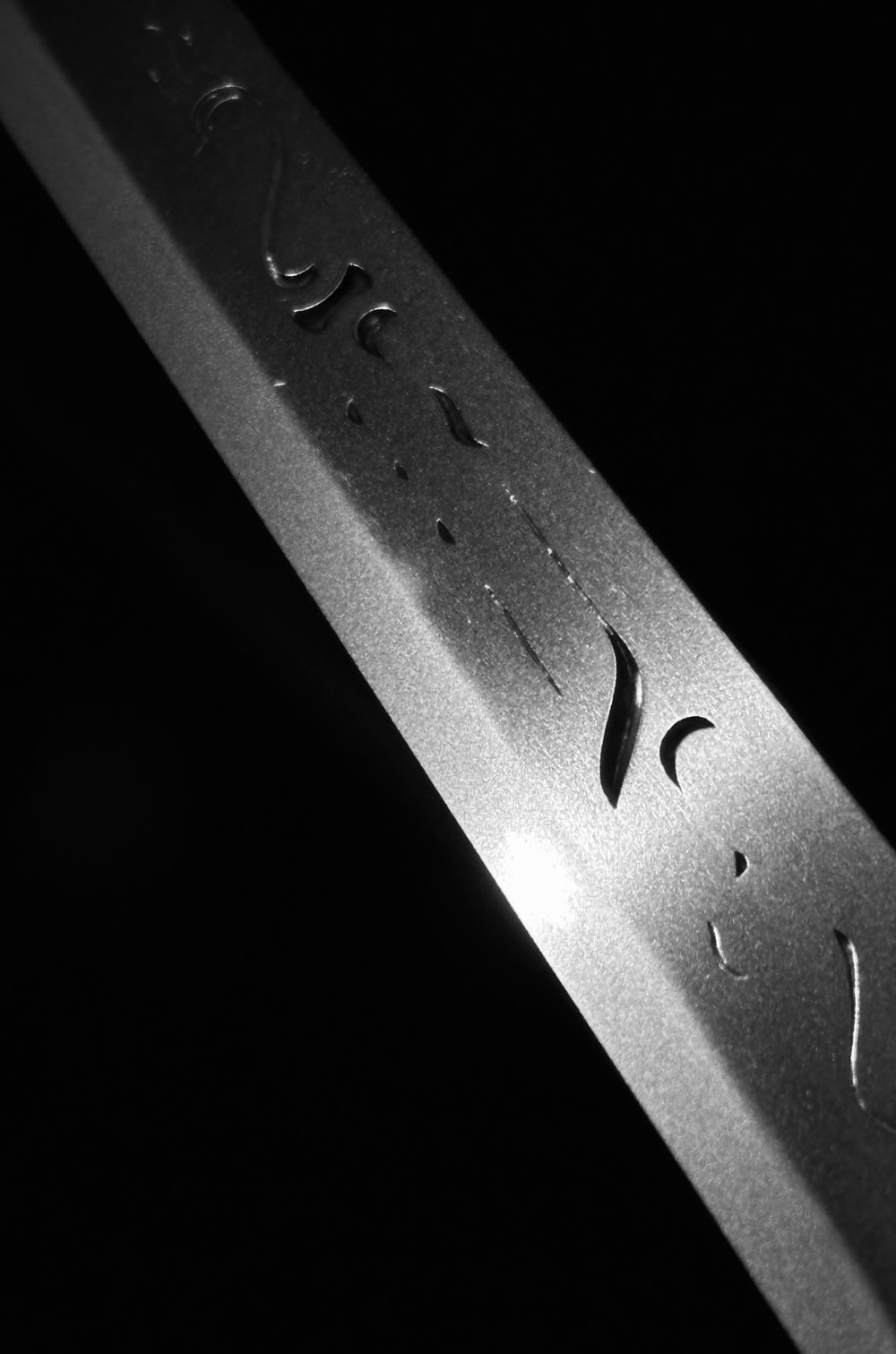
The designations show the Shimada shop's range of form. Four of the five with commentary are shinogi-zukuri katana, several with strong sakizori or a tachi-like koshizori, one of them an eighty-centimetre blade of robust, tachi-like make rich in hataraki; the fifth is a hira-zukuri tantō of orthodox, curvature-less form. On that tantō the manner shifts to the school's other register, a suguha mixed with small gunome over a flowing itame, sunagashi and kinsuji appearing, which the published sources read as work "made with an eye toward the manner of Shizu"[[c:4]], appraising the piece as older than the Tenbun Sukemune of the meikan. His horimono are a school feature carried with skill, bonji, a grass-script kurikara, a clawed ken, futasuji-hi closed with maru-dome and gomabashi, which the commentary ties to Muromachi carving in general and to the work of the Shimohara smiths.
What distinguishes Sukemune is best drawn from his own grounded traits. His is the connected gunome in abundant nie, with kinsuji and sunagashi over a flowing, masame-leaning itame, a provincial Suruga reading of the late Sōshū idiom that the published sources set beside Mino and Ise work; the Shizu-leaning suguha of the tantō is the deliberate exception, and the prominent horimono is the mark of the broader Shimada shop, shared with Yoshisuke and Hirosuke. Where a generational verdict is impossible the commentary turns to the blade, calling the Osaka katana the finest work of the name and reading the Eiroku-dated katana as a superior piece whose inscription, the published sources note, "is of particular value as documentary reference material" (永禄年紀は資料的に貴重である) for fixing one hand within the long run. The last of his katana drew the further observation that, though signed on the sashi-ura in the manner of a tachi, it should be understood as an uchigatana, a reading the NBTHK reaches from the position of the mekugi-ana and the overall sugata.
Sukemune's designated record is modest in scale and entirely signed, five of his blades holding the Jūyō rank with his record reaching no higher tier, so his work is encountered as Jūyō and lower-ranked pieces rather than as patrimony held permanently out of reach. He carries a Tōkō Taikan value of 450 monme, a solid provincial standing rather than a first rank, in keeping with a respected one-province name. One blade of his is recorded in Imperial provenance, the kind of holding from which a Shimada work rarely returns to circulation. The number of designated works on record is small, and across the run of generations under one undivided name a securely fine example, of the soundness in ji and ha that the published sources praise in his Osaka katana, is the thing worth waiting for. Such a blade comes to market only from time to time, and when one does it is a good representative of a provincial school whose hand sits close to the late Sōshū tradition.
Where Sukemune stands among comparable artisans: across all of nihontō, and within tradition, era, and period. The tiers (Foremost · Leading · Major · Notable) weigh official designations from the NBTHK and Japan's Agency for Cultural Affairs, together with historical honors of lasting repute such as the Sansaku and Meibutsu-chō.
Select a lens to see how it's measured.
Soshu-den · Suruga
11 pieces on the market now
The Shimada school (島田) took its name from its base in Suruga Province, where it worked from the mid-Muromachi period along the Tōkaidō between the Mino hearths and the late Sōshū smiths of neighboring Sagami. The published sources place its founding generation in the Kōshō (or Kyōshō) era and trace its principal names without interruption down into the shintō period, with the same names continuing as late as the shinshintō era. Three smiths stand as the school's central hands: Yoshisuke (義助), held to be the principal mainstream name at the head of all Shimada work; Sukemune (助宗), recorded as the younger brother of the founder; and Hirosuke (廣助), placed as the son of the second-generation Yoshisuke. The oldest extant dated example, an Eishō 2 (1505) tantō by Yoshisuke, fixes the early corpus, and because the signature style does not separate the hands, a signed Shimada blade is read for its workmanship rather than assigned a generation. The Shimada smiths produced the working blades of the Muromachi century; one Hirosuke katana, a Kōshū-uchi work dated Eiroku 2 (1559), was held by Hara Mino Nyūdō Toratane of the Twenty-Four Generals of the Takeda, and the cut struck into the mune at the monouchi of a Yoshisuke katana drew a NBTHK remark that it speaks to martial use. Across the members the school reads in a single Soshu-den idiom inflected by Mino and Ise. The jigane the smiths describe is an itame, well knit and at times dense, that flows and leans toward masame, standing somewhat open in hada-dachi, with fine ji-nie lying through it, chikei entering, and a tonality the commentaries repeatedly call whitish; this flowing, slightly standing steel, rather than a tight Bizen surface, is what marks the Shimada hand for the eye. Upon it the smiths set a notare crossed with gunome, with ko-chōji and pointed togariba entering, ko-ashi, abundant nie, and sunagashi and kinsuji running through, the bōshi commonly midare-komi turning back rounded, at times with hakikake; tobiyaki and slight muneyaki appear, and on the larger blades the activity rises toward hitatsura in nie.
Sukemune's particular register is the connected gunome the NBTHK names the school's hallmark, while Hirosuke shows the most robust make, favoring a wide mihaba with sakizori and an extended kissaki. Against this typical midare every hand keeps a quieter exception: a hoso-suguha the commentary calls comparatively uncommon for Yoshisuke, and a suguha mixed with small gunome on a Sukemune tantō read as made with an eye toward the manner of Shizu. The carving tradition is shared throughout, bonji, suken, gomabashi, relief kurikara, and the figures of Marishiten and Fudō Myōō, with openwork sukashi-bori noted by examiners as an uncommon thing to find; the school also produced comparatively many yari, Yoshisuke's ōmi-yari among them. To kantei a Shimada blade is to read the late Sōshū idiom in a provincial Suruga register: the whitish, standing itame beneath a nie-laden notare-gunome with sunagashi, kinsuji, and frequent tobiyaki, set apart from a tight Bizen jigane and tied by the published sources to Sue-Sōshū, late Seki, the Senju group, and the work of Mino and Ise. Form sorts the manner: the broad Sōshū-leaning katana on one side, the school's tantō and wakizashi (often hira-zukuri with mitsu-mune, thick kasane, and a withered fukura kare) on the other. Among the members Yoshisuke is the name the sources reach for in describing the group, his finest katana and tantō praised for a jihada and hamon of clear, bright result; Sukemune's Osaka katana is judged his finest work; and Hirosuke's best pieces, one called hakubi, the best among its kind, with a suggestion he privately emulated Bizen Chōgi, number among the finest of the whole lineage. Dated and fully signed works such as those inscribed Shimada Hirosuke are particularly valued, the tangs anchoring the chronology of the later generations, and a rare collaborative blade between Hirosuke and Gensuke attests to the collegial working of the shop. Provenance reaches to the Imperial Family, which has held works by Yoshisuke, Sukemune, and Hirosuke; with the Takeda general's blade and the documentary dated pieces, these holdings mark the standing of a respected one-province school whose hand sits close to the late Sōshū tradition. Learn more →
| Smith | Era | Designated |
|---|---|---|
| Yoshisuke義助 | 1492-1504 | 7 |
| Sukemune助宗 | 1444-1449 | 5 |
| Yoshisuke義助 | 1455-1526 | 4 |
| Yoshisuke義助 | 1573-1592 | 3 |
| Hirosuke廣助 | 1504-1521 | 9 |
Sōshū in the Muromachi period
In the Sengoku era the school served a second warrior court: the Later Hōjō at Odawara, whose patronage kept the Tsunahiro line forging hitatsura for the uchigatana age until the castle fell to Hideyoshi in 1590.
We could not find an authenticity certificate on the seller’s listing. Japanese swords and fittings are normally papered by the NBTHK (or the NTHK). Without one, the attribution is the seller’s own assessment and has not been independently verified — treat it with caution and ask the dealer about certification before buying.
If, due to our fault, the item differs significantly from its proper condition, the item may be returned. Cooling-off is within one week of the item's arrival.
This listing from Ginza Choshuya features a tanto by Sukemune, active in Suruga Province during the late Muromachi period, around the Tenmon era. Sukemune was a prominent smith of the Shimada school, considered one of its three masters alongside Yoshisuke and Hirosuke. He is known for forging a tanto said to have been owned by Takeda Shingen.
NihontoWatchShimada · Muromachi
Shimada (Suruga) · Suruga · around 1444-1449
Tōken Taikan top 31%
A katana now in Osaka, designated at the fourteenth Jūyō session in 1966, is judged in its commentary to be "sound in both ji and ha and thought to represent Sukemune's finest work"[[c:1]], and it gives the measure of the man. Sukemune is, with the mainstream Yoshisuke, one of the two principal names of the Shimada school of Suruga Province, a Muromachi workshop on the Tōkaidō between Mino and the late Sōshū hearths. The published sources place him as the younger brother of the founder Yoshisuke in the mid-Muromachi period, and the name carried that standing through several generations down into the shintō era. The reference works arrange those hands across a long run, citing Sukemune work as early as the Bun'an and Bunki eras and then a Sukemune of the Tenbun era, so the name spans the whole Muromachi century. Because the signature style does not separate the generations either, a signed Sukemune is read for its workmanship rather than assigned a number, and the date inscriptions, where they survive, do the work the mei cannot.
His characteristic hand is the connected gunome that the published sources name the school's own. Over the itame the temper is a gunome run together in series, crossed with gunome-chōji and pointed togariba, at times rising into a box-shaped notare about the koshi, abundant nie lying through it with tobiyaki, kinsuji and sunagashi, the nioiguchi bright. Of the long katana designated in 2020 the NBTHK writes that "the hamon features the Shimada school's hallmark of connected gunome"[[c:2]] and reads its bright nioiguchi, kinsuji and sunagashi as "features that strongly express the characteristic manner of Sukemune"[[c:3]]. The boshi follows the midare, running midare-komi to a ko-maru with hakikake, on the largest blade strongly covered in nie and tending toward nie-kuzure. This is the manner the published record ties to the late Sōshū smiths, to late Seki and to the Senju group, and reads as close to the work of Mino and Ise.
The jigane is the steady foundation beneath the ha. The forging is an itame, well knit and at times dense, that overall flows and leans toward masame, ji-nie lying through it and chikei entering, with a tendency toward hada-dachi where the grain stands open. On the 2020 katana that jigane is described as a tightly forged itame, partly flowing and tending toward masame, the ji-nie finely granular yet densely applied and the chikei clearly visible, a Suruga reading of the Sōshū surface rather than a tight Bizen jigane. It is on this flowing, slightly standing steel that the nie activity of the edge is laid, and the finest of his blades are praised for the clarity that results, the bright nioiguchi and the streaming kinsuji and sunagashi together.
The designations show the Shimada shop's range of form. Four of the five with commentary are shinogi-zukuri katana, several with strong sakizori or a tachi-like koshizori, one of them an eighty-centimetre blade of robust, tachi-like make rich in hataraki; the fifth is a hira-zukuri tantō of orthodox, curvature-less form. On that tantō the manner shifts to the school's other register, a suguha mixed with small gunome over a flowing itame, sunagashi and kinsuji appearing, which the published sources read as work "made with an eye toward the manner of Shizu"[[c:4]], appraising the piece as older than the Tenbun Sukemune of the meikan. His horimono are a school feature carried with skill, bonji, a grass-script kurikara, a clawed ken, futasuji-hi closed with maru-dome and gomabashi, which the commentary ties to Muromachi carving in general and to the work of the Shimohara smiths.
What distinguishes Sukemune is best drawn from his own grounded traits. His is the connected gunome in abundant nie, with kinsuji and sunagashi over a flowing, masame-leaning itame, a provincial Suruga reading of the late Sōshū idiom that the published sources set beside Mino and Ise work; the Shizu-leaning suguha of the tantō is the deliberate exception, and the prominent horimono is the mark of the broader Shimada shop, shared with Yoshisuke and Hirosuke. Where a generational verdict is impossible the commentary turns to the blade, calling the Osaka katana the finest work of the name and reading the Eiroku-dated katana as a superior piece whose inscription, the published sources note, "is of particular value as documentary reference material" (永禄年紀は資料的に貴重である) for fixing one hand within the long run. The last of his katana drew the further observation that, though signed on the sashi-ura in the manner of a tachi, it should be understood as an uchigatana, a reading the NBTHK reaches from the position of the mekugi-ana and the overall sugata.
Sukemune's designated record is modest in scale and entirely signed, five of his blades holding the Jūyō rank with his record reaching no higher tier, so his work is encountered as Jūyō and lower-ranked pieces rather than as patrimony held permanently out of reach. He carries a Tōkō Taikan value of 450 monme, a solid provincial standing rather than a first rank, in keeping with a respected one-province name. One blade of his is recorded in Imperial provenance, the kind of holding from which a Shimada work rarely returns to circulation. The number of designated works on record is small, and across the run of generations under one undivided name a securely fine example, of the soundness in ji and ha that the published sources praise in his Osaka katana, is the thing worth waiting for. Such a blade comes to market only from time to time, and when one does it is a good representative of a provincial school whose hand sits close to the late Sōshū tradition.
Where Sukemune stands among comparable artisans: across all of nihontō, and within tradition, era, and period. The tiers (Foremost · Leading · Major · Notable) weigh official designations from the NBTHK and Japan's Agency for Cultural Affairs, together with historical honors of lasting repute such as the Sansaku and Meibutsu-chō.
Select a lens to see how it's measured.
Soshu-den · Suruga
11 pieces on the market now
The Shimada school (島田) took its name from its base in Suruga Province, where it worked from the mid-Muromachi period along the Tōkaidō between the Mino hearths and the late Sōshū smiths of neighboring Sagami. The published sources place its founding generation in the Kōshō (or Kyōshō) era and trace its principal names without interruption down into the shintō period, with the same names continuing as late as the shinshintō era. Three smiths stand as the school's central hands: Yoshisuke (義助), held to be the principal mainstream name at the head of all Shimada work; Sukemune (助宗), recorded as the younger brother of the founder; and Hirosuke (廣助), placed as the son of the second-generation Yoshisuke. The oldest extant dated example, an Eishō 2 (1505) tantō by Yoshisuke, fixes the early corpus, and because the signature style does not separate the hands, a signed Shimada blade is read for its workmanship rather than assigned a generation. The Shimada smiths produced the working blades of the Muromachi century; one Hirosuke katana, a Kōshū-uchi work dated Eiroku 2 (1559), was held by Hara Mino Nyūdō Toratane of the Twenty-Four Generals of the Takeda, and the cut struck into the mune at the monouchi of a Yoshisuke katana drew a NBTHK remark that it speaks to martial use. Across the members the school reads in a single Soshu-den idiom inflected by Mino and Ise. The jigane the smiths describe is an itame, well knit and at times dense, that flows and leans toward masame, standing somewhat open in hada-dachi, with fine ji-nie lying through it, chikei entering, and a tonality the commentaries repeatedly call whitish; this flowing, slightly standing steel, rather than a tight Bizen surface, is what marks the Shimada hand for the eye. Upon it the smiths set a notare crossed with gunome, with ko-chōji and pointed togariba entering, ko-ashi, abundant nie, and sunagashi and kinsuji running through, the bōshi commonly midare-komi turning back rounded, at times with hakikake; tobiyaki and slight muneyaki appear, and on the larger blades the activity rises toward hitatsura in nie.
Sukemune's particular register is the connected gunome the NBTHK names the school's hallmark, while Hirosuke shows the most robust make, favoring a wide mihaba with sakizori and an extended kissaki. Against this typical midare every hand keeps a quieter exception: a hoso-suguha the commentary calls comparatively uncommon for Yoshisuke, and a suguha mixed with small gunome on a Sukemune tantō read as made with an eye toward the manner of Shizu. The carving tradition is shared throughout, bonji, suken, gomabashi, relief kurikara, and the figures of Marishiten and Fudō Myōō, with openwork sukashi-bori noted by examiners as an uncommon thing to find; the school also produced comparatively many yari, Yoshisuke's ōmi-yari among them. To kantei a Shimada blade is to read the late Sōshū idiom in a provincial Suruga register: the whitish, standing itame beneath a nie-laden notare-gunome with sunagashi, kinsuji, and frequent tobiyaki, set apart from a tight Bizen jigane and tied by the published sources to Sue-Sōshū, late Seki, the Senju group, and the work of Mino and Ise. Form sorts the manner: the broad Sōshū-leaning katana on one side, the school's tantō and wakizashi (often hira-zukuri with mitsu-mune, thick kasane, and a withered fukura kare) on the other. Among the members Yoshisuke is the name the sources reach for in describing the group, his finest katana and tantō praised for a jihada and hamon of clear, bright result; Sukemune's Osaka katana is judged his finest work; and Hirosuke's best pieces, one called hakubi, the best among its kind, with a suggestion he privately emulated Bizen Chōgi, number among the finest of the whole lineage. Dated and fully signed works such as those inscribed Shimada Hirosuke are particularly valued, the tangs anchoring the chronology of the later generations, and a rare collaborative blade between Hirosuke and Gensuke attests to the collegial working of the shop. Provenance reaches to the Imperial Family, which has held works by Yoshisuke, Sukemune, and Hirosuke; with the Takeda general's blade and the documentary dated pieces, these holdings mark the standing of a respected one-province school whose hand sits close to the late Sōshū tradition. Learn more →
| Smith | Era | Designated |
|---|---|---|
| Yoshisuke義助 | 1492-1504 | 7 |
| Sukemune助宗 | 1444-1449 | 5 |
| Yoshisuke義助 | 1455-1526 | 4 |
| Yoshisuke義助 | 1573-1592 | 3 |
| Hirosuke廣助 | 1504-1521 | 9 |
Sōshū in the Muromachi period
In the Sengoku era the school served a second warrior court: the Later Hōjō at Odawara, whose patronage kept the Tsunahiro line forging hitatsura for the uchigatana age until the castle fell to Hideyoshi in 1590.
We could not find an authenticity certificate on the seller’s listing. Japanese swords and fittings are normally papered by the NBTHK (or the NTHK). Without one, the attribution is the seller’s own assessment and has not been independently verified — treat it with caution and ask the dealer about certification before buying.
If, due to our fault, the item differs significantly from its proper condition, the item may be returned. Cooling-off is within one week of the item's arrival.