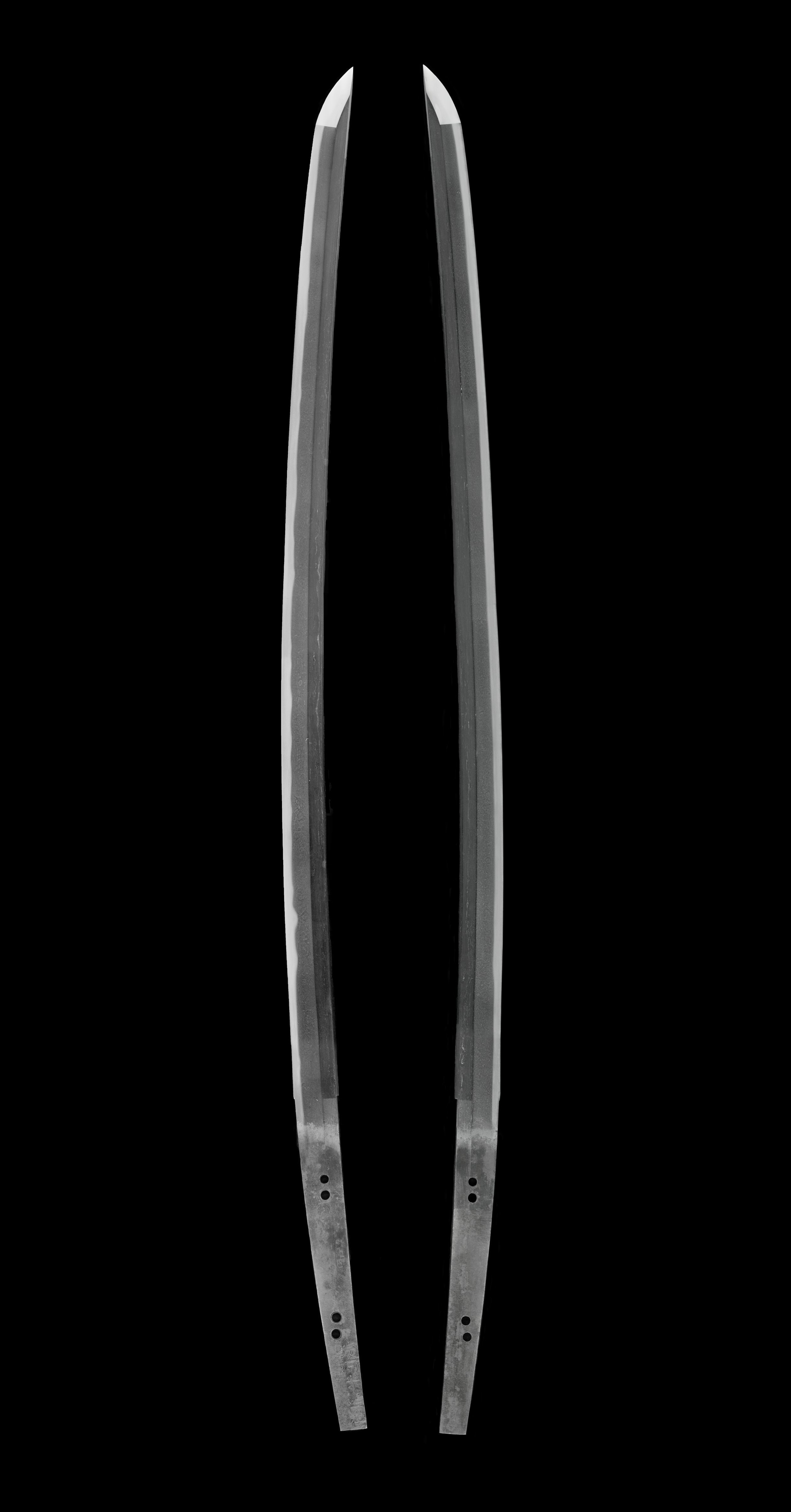
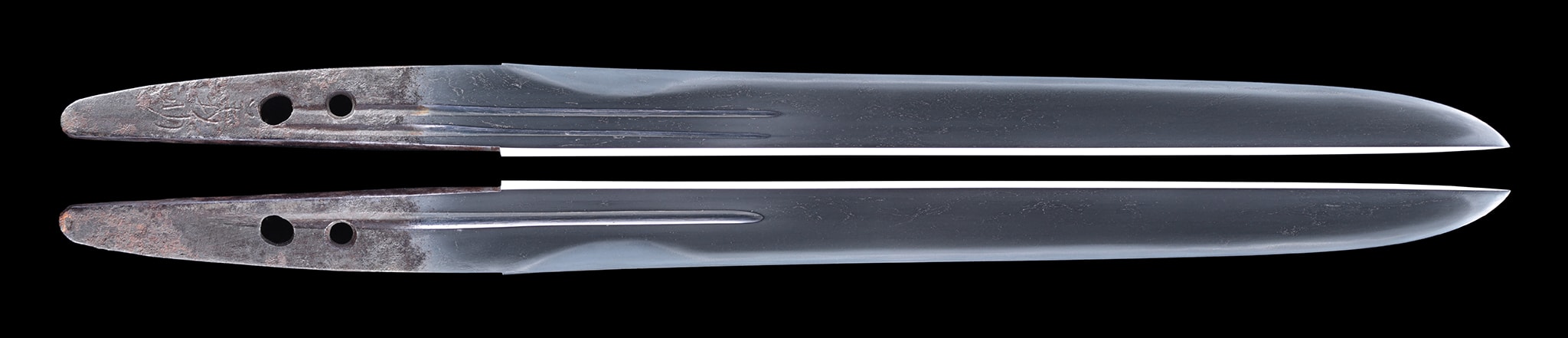
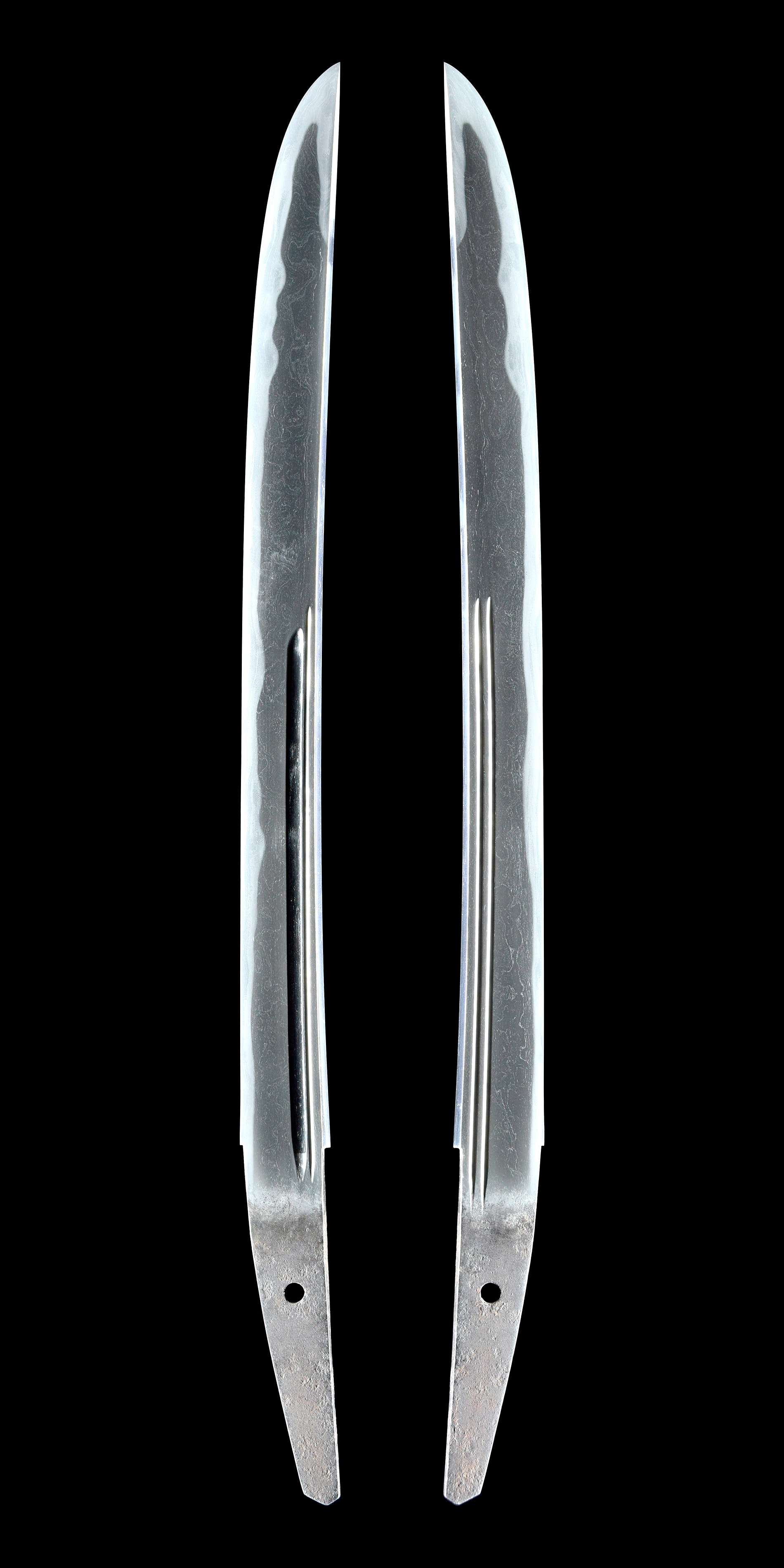
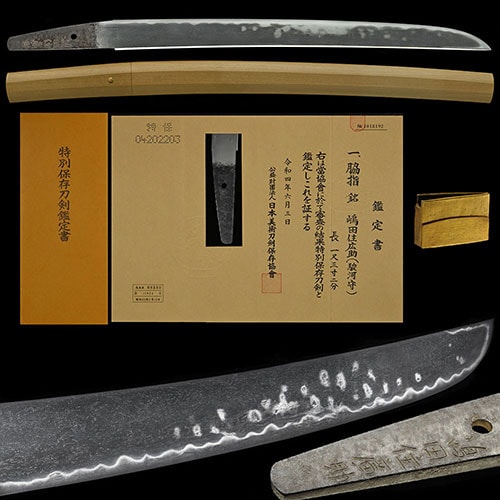
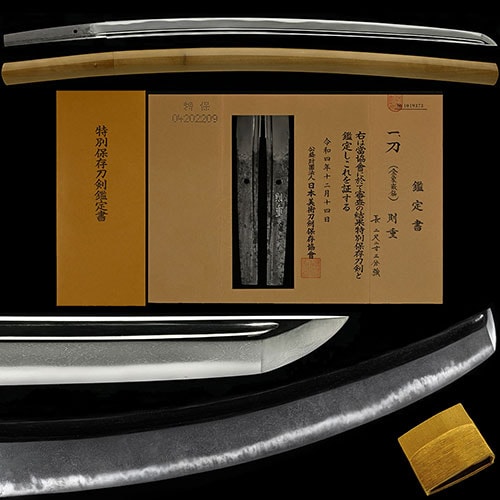
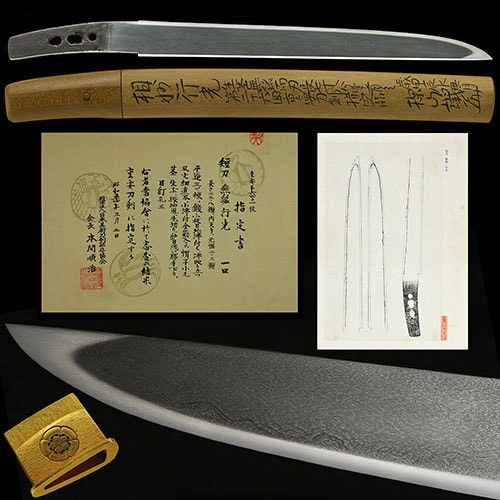
A now in Osaka, designated at the fourteenth session in 1966, is judged in its commentary to be "sound in both and and thought to represent Sukemune's finest work", and it gives the measure of the man. Sukemune is, with the mainstream Yoshisuke, one of the two principal names of the Shimada school of Suruga Province, a workshop on the Tōkaidō between and the late hearths. The published sources place him as the younger brother of the founder Yoshisuke in the mid- period, and the name carried that standing through several generations down into the era. The reference works arrange those hands across a long run, citing Sukemune work as early as the Bun'an and Bunki eras and then a Sukemune of the Tenbun era, so the name spans the whole century. Because the signature style does not separate the generations either, a signed Sukemune is read for its workmanship rather than assigned a number, and the date inscriptions, where they survive, do the work the cannot.
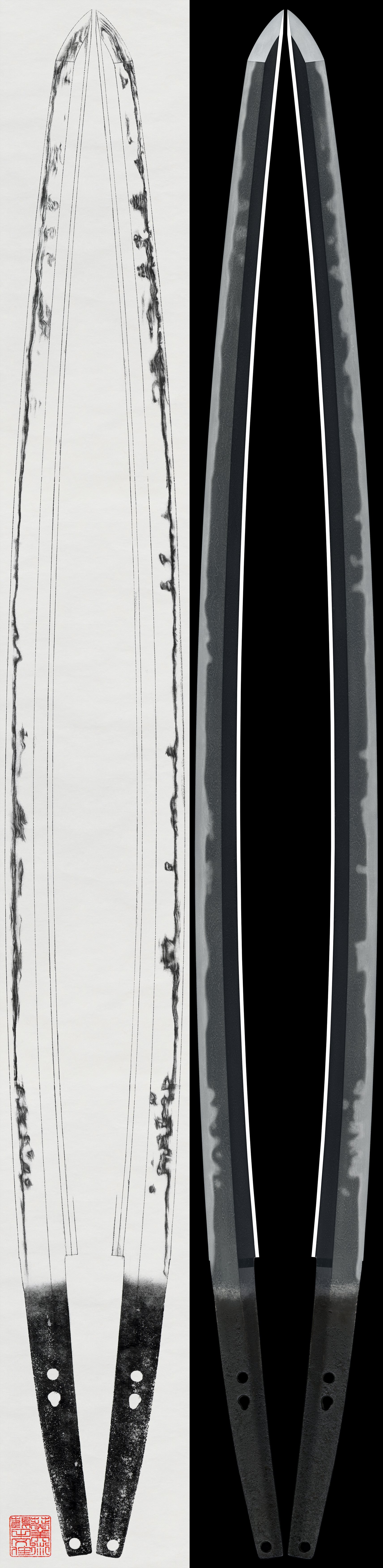
His characteristic hand is the connected that the published sources name the school's own. Over the the temper is a run together in series, crossed with gunome-chōji and pointed , at times rising into a box-shaped about the , abundant lying through it with , and , the bright. Of the long designated in 2020 the writes that "the features the Shimada school's hallmark of connected " and reads its bright , and as "features that strongly express the characteristic manner of Sukemune". The follows the , running to a with , on the largest blade strongly covered in and tending toward . This is the manner the published record ties to the late smiths, to late Seki and to the Senju group, and reads as close to the work of and .
The is the steady foundation beneath the . The forging is an , well knit and at times dense, that overall flows and leans toward , lying through it and entering, with a tendency toward where the grain stands open. On the 2020 that is described as a tightly forged , partly flowing and tending toward , the finely granular yet densely applied and the clearly visible, a Suruga reading of the surface rather than a tight . It is on this flowing, slightly standing steel that the activity of the edge is laid, and the finest of his blades are praised for the clarity that results, the bright and the streaming and together.
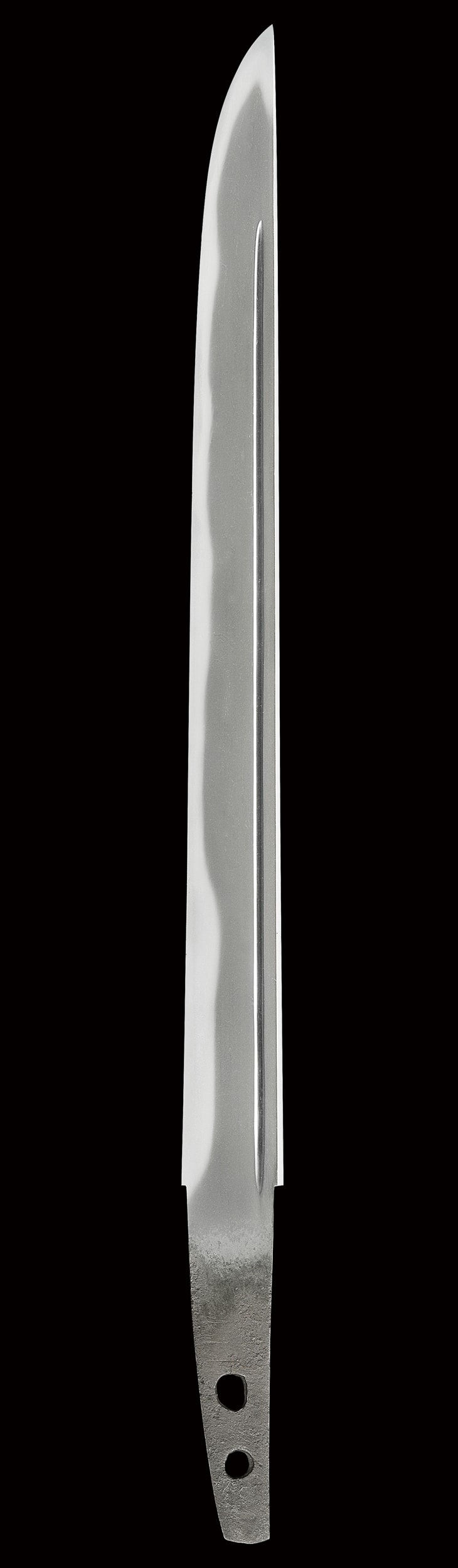
The designations show the Shimada shop's range of form. Four of the five with commentary are , several with strong or a -like , one of them an eighty-centimetre blade of robust, -like make rich in ; the fifth is a of orthodox, curvature-less form. On that the manner shifts to the school's other register, a mixed with small over a flowing , and appearing, which the published sources read as work "made with an eye toward the manner of ", appraising the piece as older than the Tenbun Sukemune of the . His are a school feature carried with skill, , a grass-script , a clawed , closed with and , which the commentary ties to carving in general and to the work of the Shimohara smiths.
What distinguishes Sukemune is best drawn from his own grounded traits. His is the connected in abundant , with and over a flowing, -leaning , a provincial Suruga reading of the late idiom that the published sources set beside and work; the -leaning of the is the deliberate exception, and the prominent is the mark of the broader Shimada shop, shared with Yoshisuke and Hirosuke. Where a generational verdict is impossible the commentary turns to the blade, calling the Osaka the finest work of the name and reading the Eiroku-dated as a superior piece whose inscription, the published sources note, "is of particular value as documentary reference material" (永禄年紀は資料的に貴重である) for fixing one hand within the long run. The last of his drew the further observation that, though signed on the in the manner of a , it should be understood as an , a reading the reaches from the position of the and the overall .
Sukemune's designated record is modest in scale and entirely signed, five of his blades holding the rank with his record reaching no higher tier, so his work is encountered as and lower-ranked pieces rather than as patrimony held permanently out of reach. He carries a Tōkō Taikan value of 450 monme, a solid provincial standing rather than a first rank, in keeping with a respected one-province name. One blade of his is recorded in Imperial provenance, the kind of holding from which a Shimada work rarely returns to circulation. The number of designated works on record is small, and across the run of generations under one undivided name a securely fine example, of the soundness in and that the published sources praise in his Osaka , is the thing worth waiting for. Such a blade comes to market only from time to time, and when one does it is a good representative of a provincial school whose hand sits close to the late tradition.