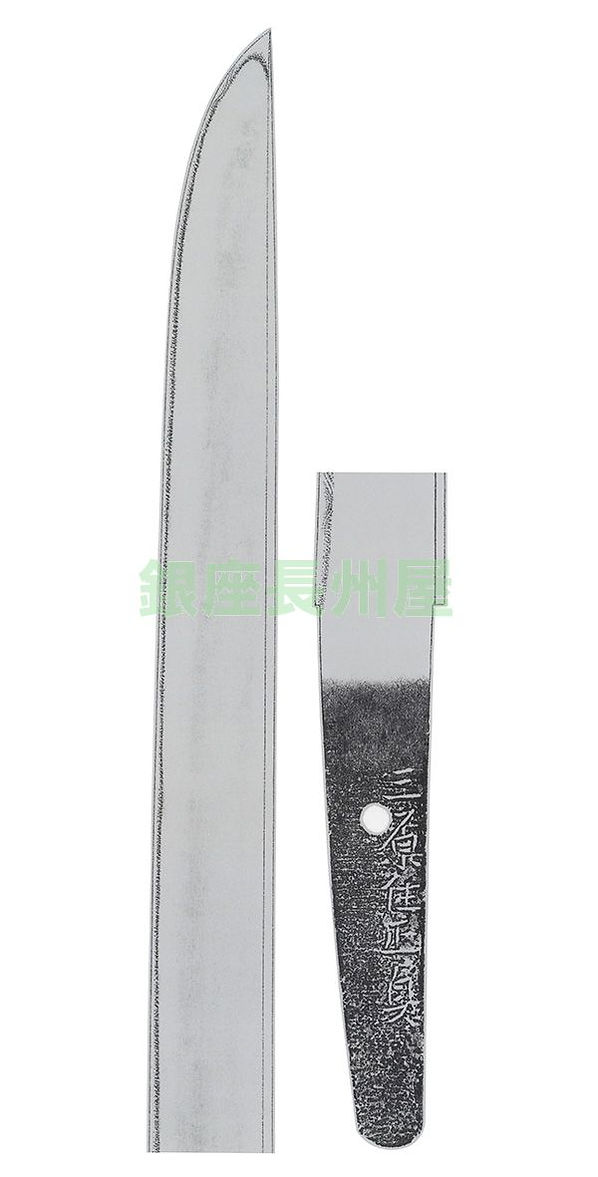
The Mihara school arose in Bingo Province during the late Kamakura period and maintained continuous production through the end of the Muromachi period. The region's ancient reputation as a center for iron goods—documented as early as Engi 14 (914) in the Seiji Yōryaku—provided the technical foundation for this sustained tradition. Because Bingo contained numerous landed estates (shōen) belonging to major Kinai temples and shrines such as Tōji and Rengeō-in (Sanjūsangendō), the smiths working at Mihara engaged in regular interchange with the central provinces. This geographical and economic relationship accounts for the pronounced Yamato temperament observable throughout the school's output. The term "Ko-Mihara" (Early Mihara) designates works produced from the late Kamakura through the Nanbokuchō period, with Masaie and Masahiro recognized as the lineage's most accomplished masters. Ko-Mihara workmanship reveals a distinctive fusion of Yamato influence and regional character. The forging typically exhibits itame-hada mixed with conspicuous mokume and flowing grain (nagare), often with a tendency for the texture to stand (hada-dachi). Fine ji-nie adheres throughout the steel surface, and a characteristic whitish cast (shirake-utsuri) appears prominently—a feature repeatedly cited in appraisals as diagnostic of the school. The tempering follows Yamato convention in emphasizing suguha, but the nioiguchi tends toward tightness (shimarigokoro) with well-adhering ko-nie rather than the more vigorous nie activity seen in Yamato proper.
Along the hardened edge, smiths frequently introduced hotsure, uchi-noke, and subtle kuichigai-ba effects, while the nioiguchi often exhibits a subdued (shizumi) quality. The bōshi typically runs straight and turns back gently in ko-maru or rounded (maru) form, concluding with fine hakikake at the tip—a restrained finish characteristic of the school. Nanbokuchō-period examples display the era's monumental aesthetic: wide mihaba with minimal taper from base to tip, shallow curvature, high shinogi, and extended chū-kissaki or ō-kissaki, creating a dignified and powerfully robust form. The school's output demonstrates how peripheral traditions absorbed and transformed influences from established centers while maintaining regional identity. Ko-Mihara blades occupy a position intermediate between the vigorous nie-work of Yamato proper and the more subdued aesthetic preferences of western Japan. This balance—robust construction paired with restrained tempering, standing grain texture combined with tight nioiguchi, and Yamato-derived suguha inflected with local characteristics—defines the school's technical achievement. The whitish forging, conspicuous mokume, and gentle bōshi became recognized signatures that distinguished Mihara work from its Yamato models. Through four centuries of continuous production, the smiths of Mihara maintained technical standards sufficient to supply both local demand and broader military markets, their works preserving a coherent school identity across generational transmission. Learn more →
 NihontoWatch