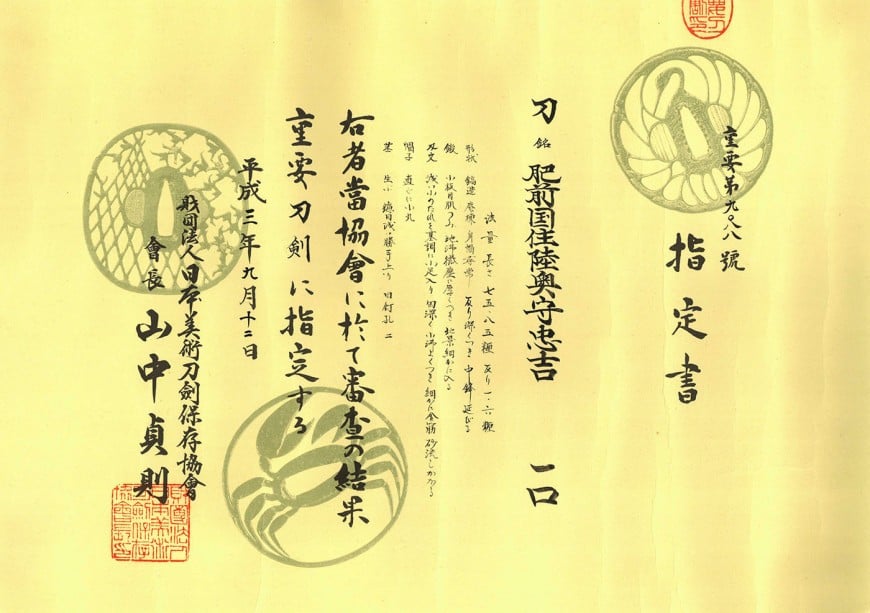

-, 60th Session — Designated October 16, 2014
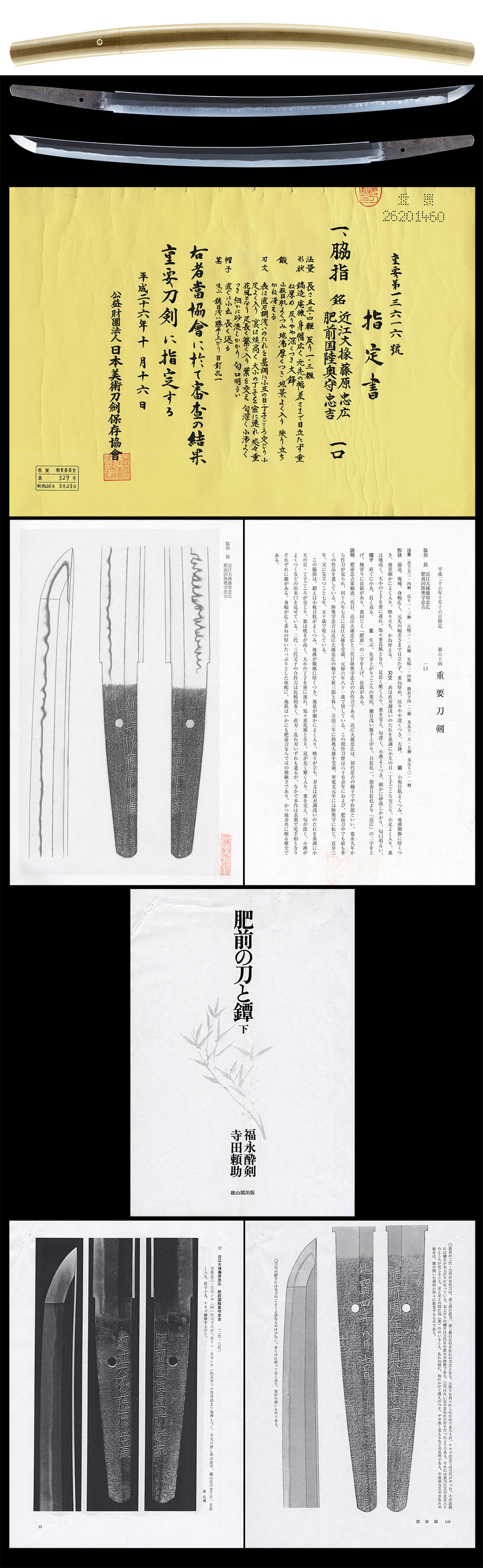
, : Omi Daijō Fujiwara Tadahiro and no Mutsu no Kami (近江大掾藤原忠広/肥前国陸奥守忠吉)
Measurements 53.4 cm, 1.3 cm, 3.15 cm, 2.0 cm, 1.5 cm, 15.7 cm
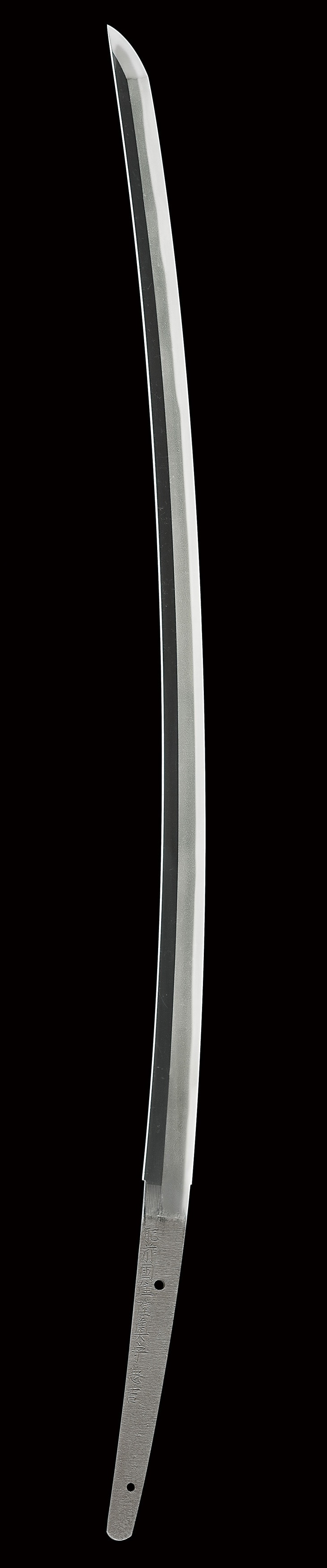
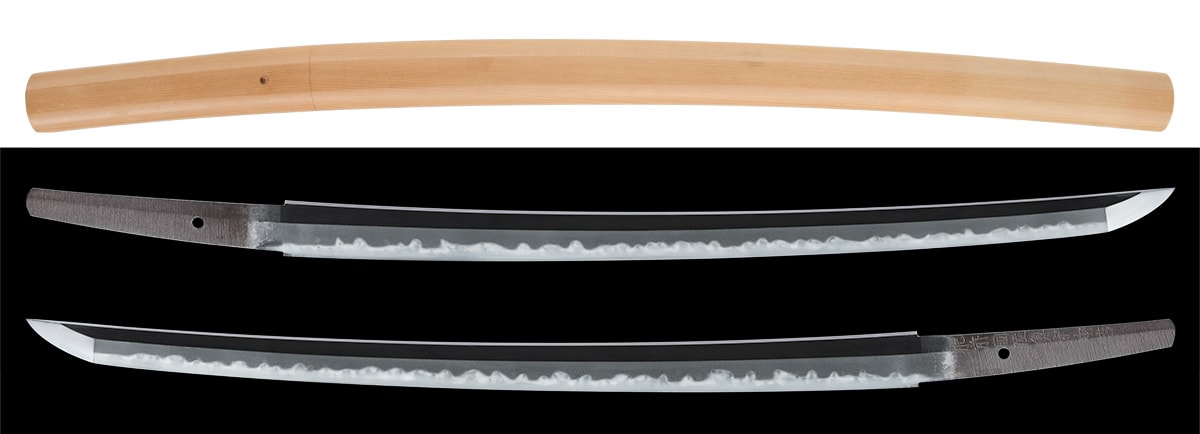
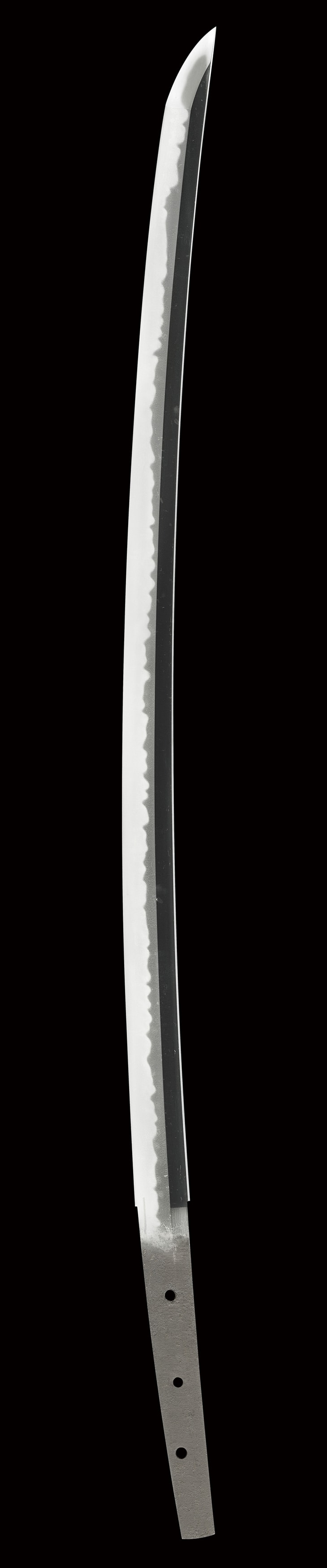
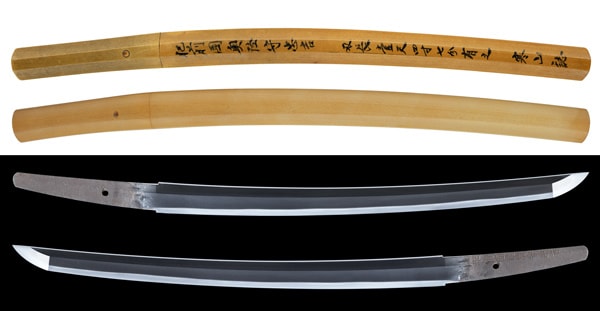
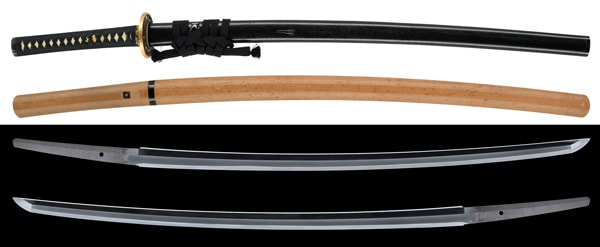
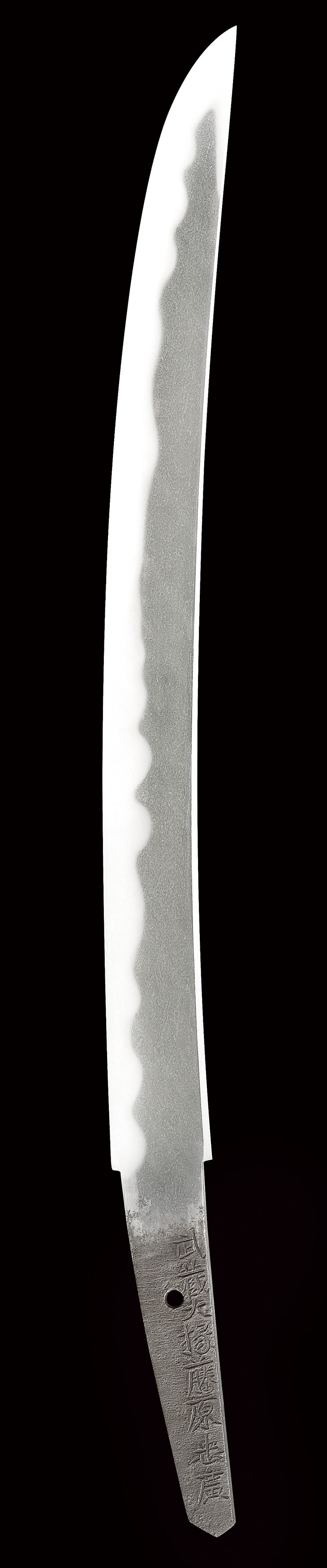
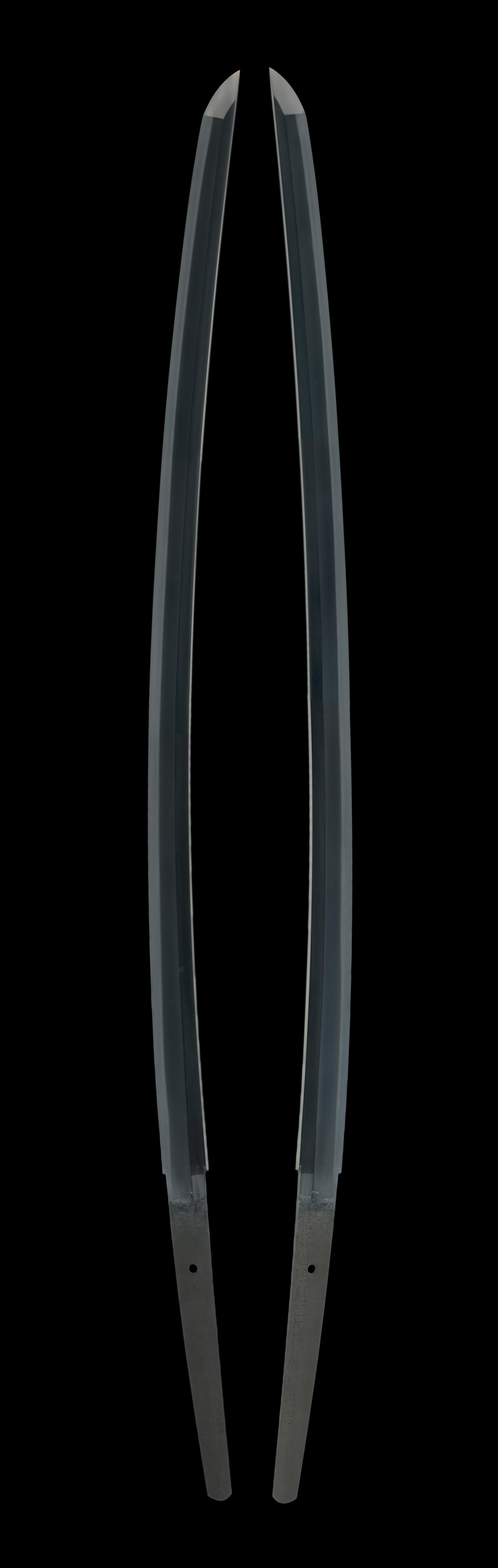
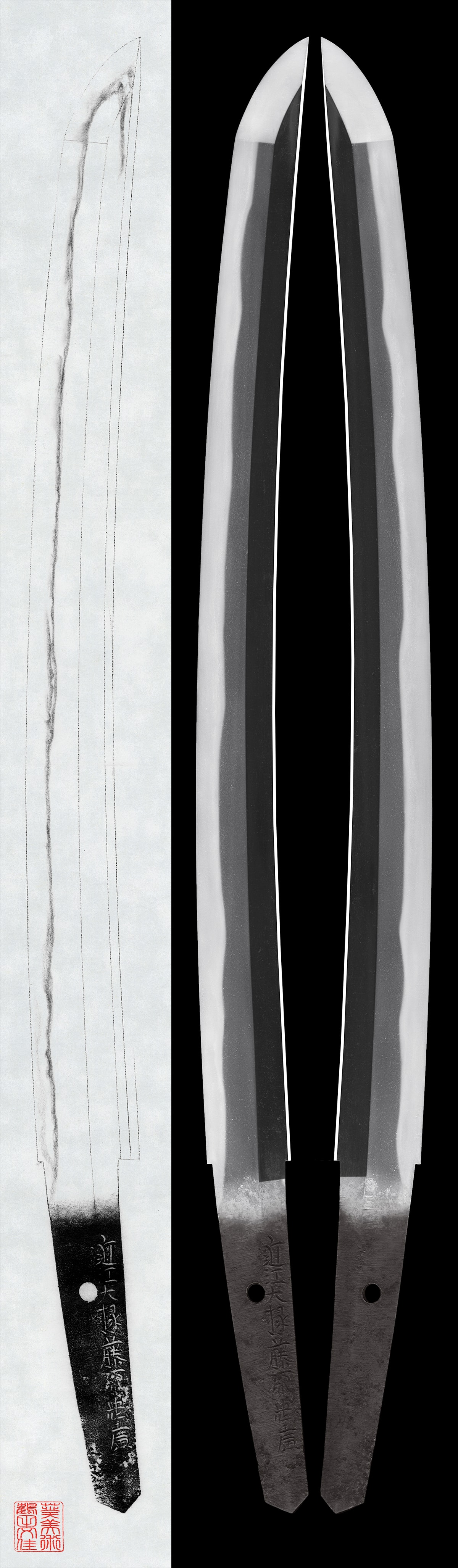
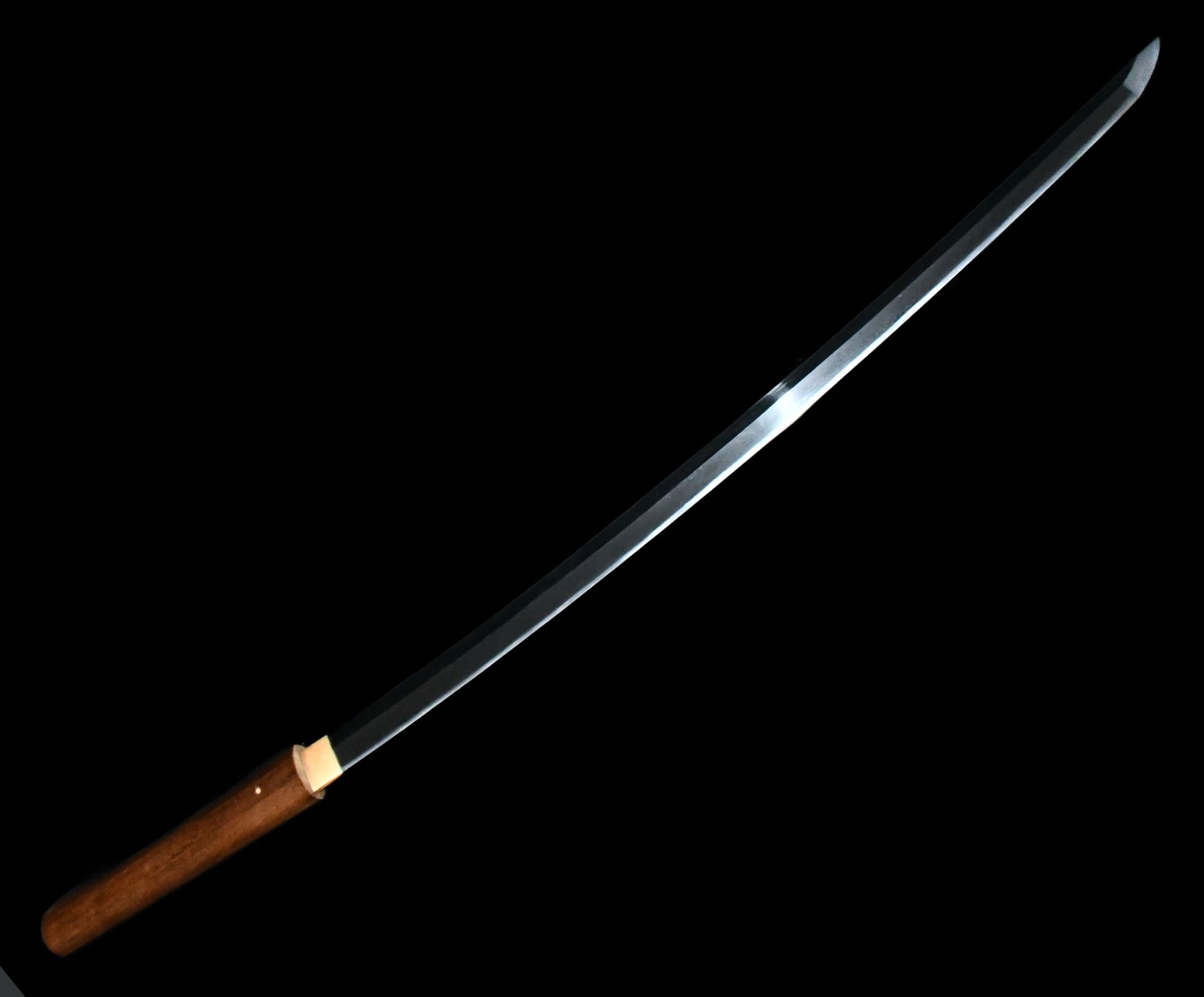
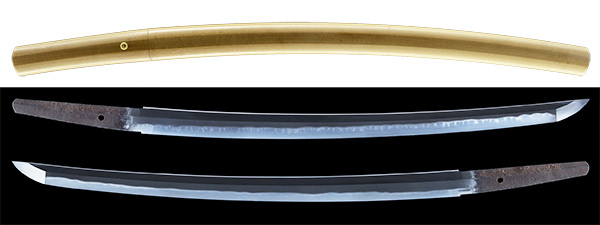
Description Keijo: , ; wide with little difference between and width; somewhat thick ; is set rather deeply; . : well-forged; forms thickly in fine particles; enter well and finely; appears; the steel is clear (). : Based on a -tone shallow , mixed with with -flavor; on the the tempering is higher, with large and small closely in succession and places showing a double-flower-like effect; enter long and deeply, with intermingled; the is deep and adheres well; fine are applied; the is bright. : Straight, forming a small , with a long . : None. : ; with a tendency toward -agari; are shallow ; one ; on the above the is a long signature “Omi Daijō Fujiwara Tadahiro,” and on the likewise a long signature “ no Mutsu no Kami .”
Artisan A collaborative work () by the second-generation head of the lineage, Omi Daijō Tadahiro, and his son, the third-generation head, Mutsu no Kami .
Era Early period (17th century)
Explanation This is a collaborative work () by Omi Daijō Tadahiro, the second-generation mainline successor of the family, and by the third-generation, Mutsu no Kami . Omi Daijō Tadahiro was the legitimate son of the first-generation ; his personal name was Heisaku. Examples of his swordmaking are seen from around ’ei 9 (1632). In ’ei 18 (1641), seventh month, he received the title of Omi Daijō, and he died at the age of eighty-one in Genroku 6 (1693), eighth month. Over the course of more than sixty years of production, he left the largest number of works among smiths. Mutsu no Kami was the legitimate son of Omi Daijō Tadahiro; he called himself Shinzaburō. In Manji 3 (1660) he received the title of Mutsu Daijō, and in the following year, 1 (1661), he was promoted to Mutsu no Kami. He died at age fifty in Jōkyō 3 (1686), seven years before his father.
In this , the forging shows a closely-knit with thickly applied fine , finely entering , and standing , and the steel has the distinct clarity characteristic of work. The temper is based on a -tone shallow mixed with with -flavor; on the the temper rises higher, large and small run closely together, and in places it takes on a double-flower-like effect, with long and , deep , and well-adhering .
Collaborative father-and-son works by the second and third generations are comparatively numerous, and examples remain in both and styles; however, this work is particularly interesting in that the feeling differs between and , each offering points of appreciation. With its ample configuration—wide and thick —and with steel that is unmistakably in its clarity, it further shows (sound and well-preserved) condition in both and , and displays superior workmanship.