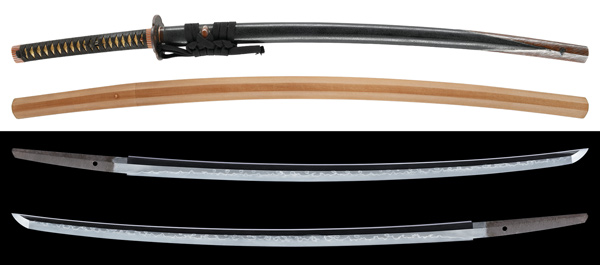
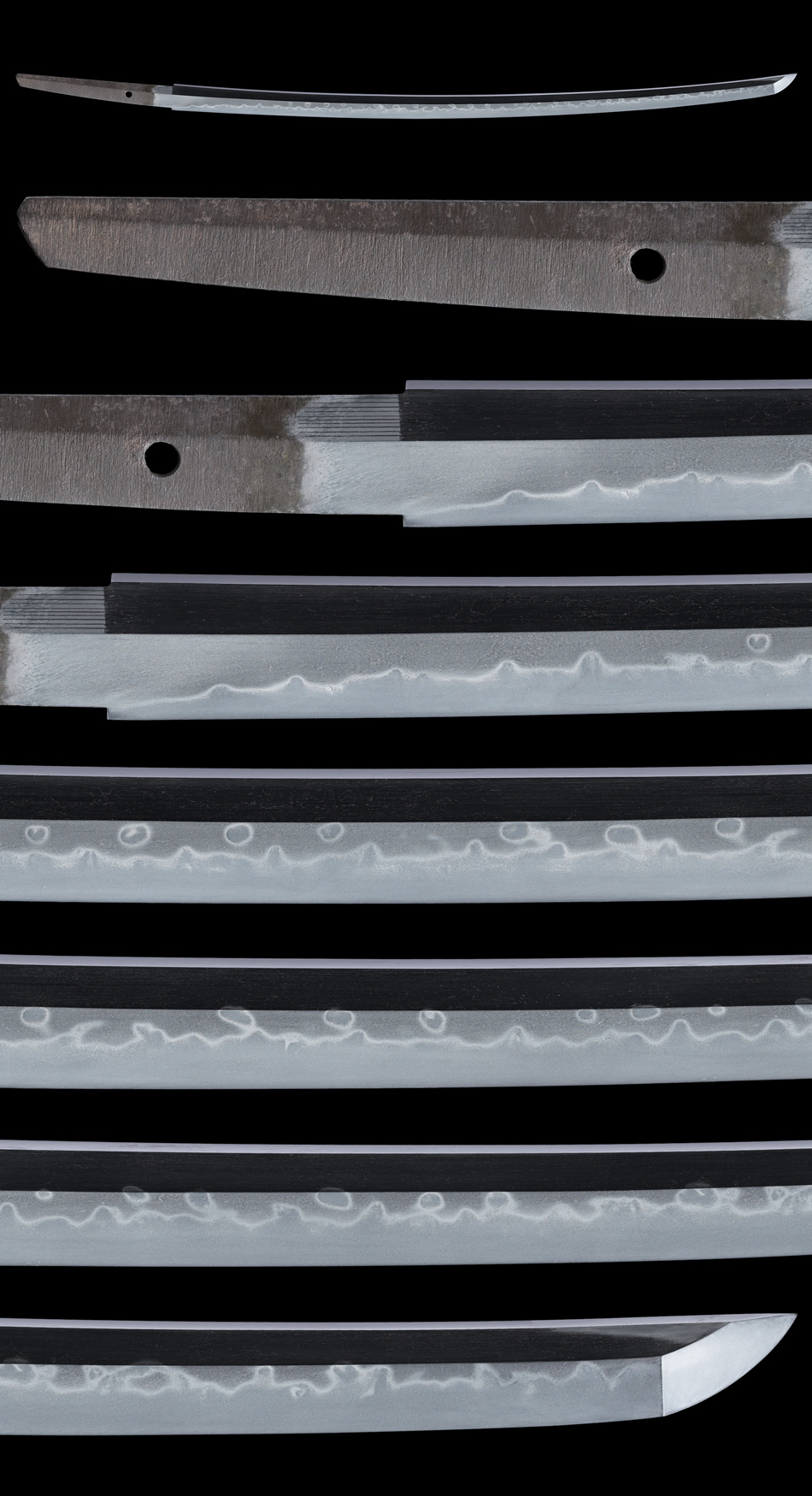
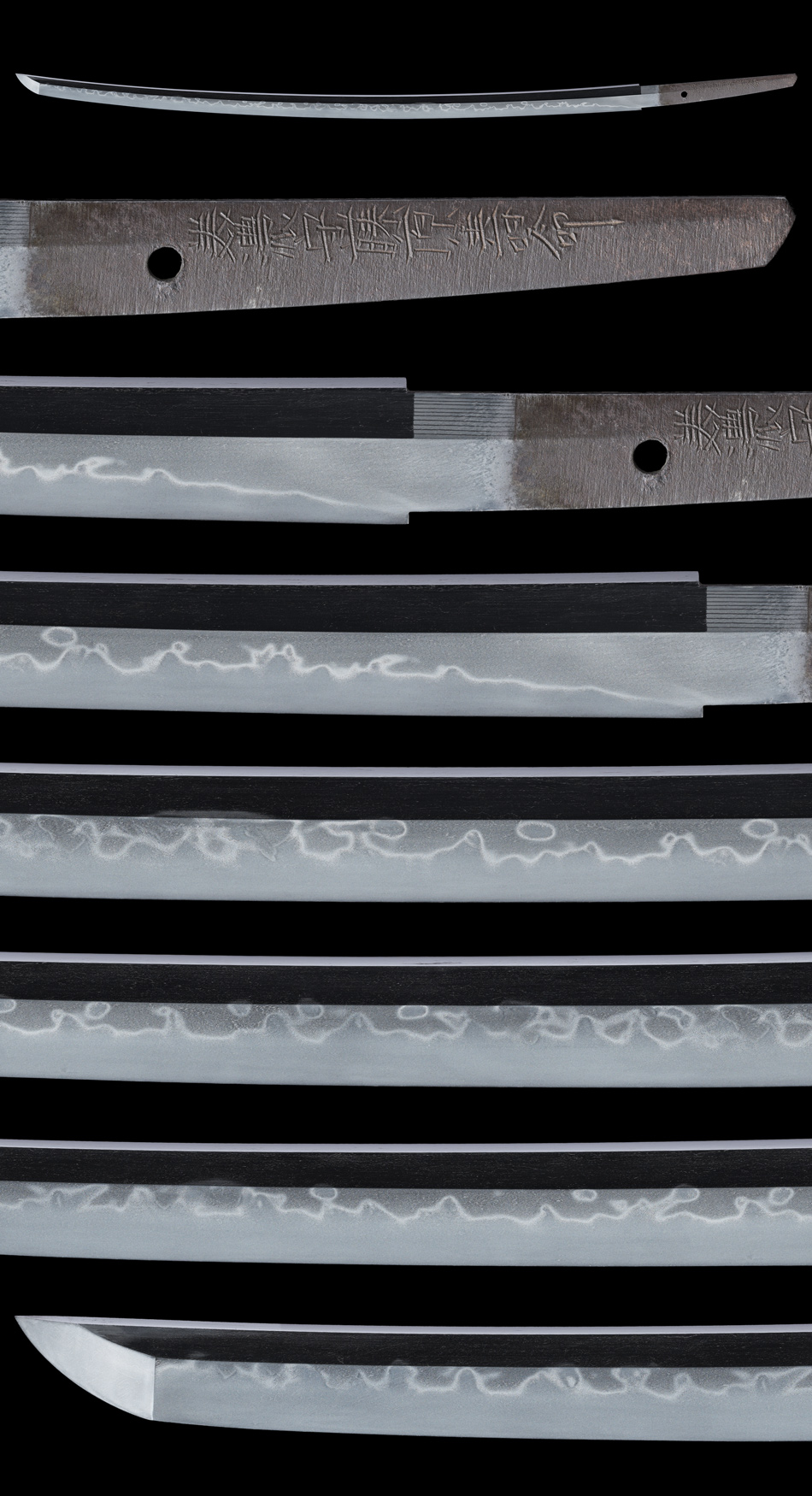
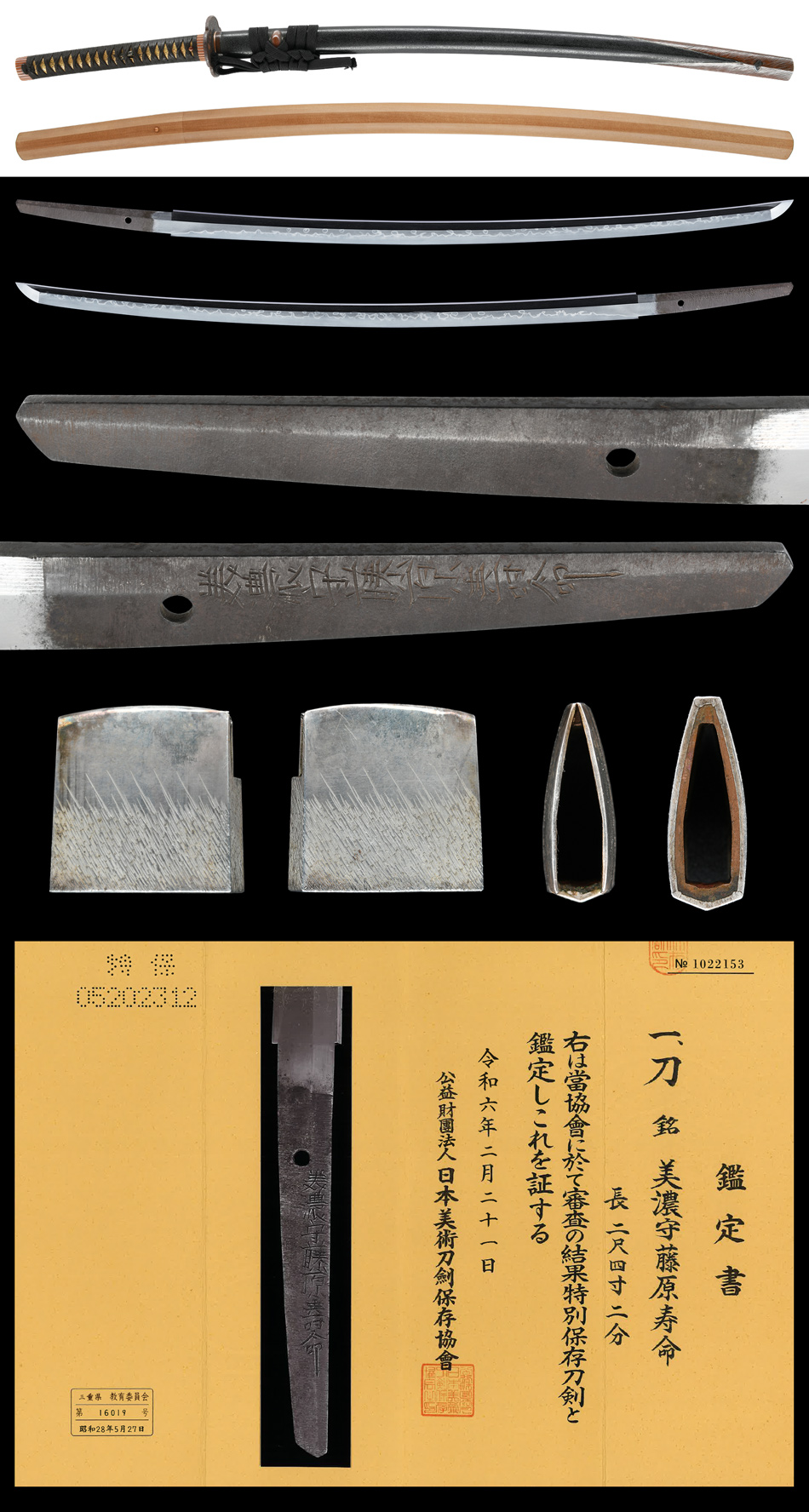
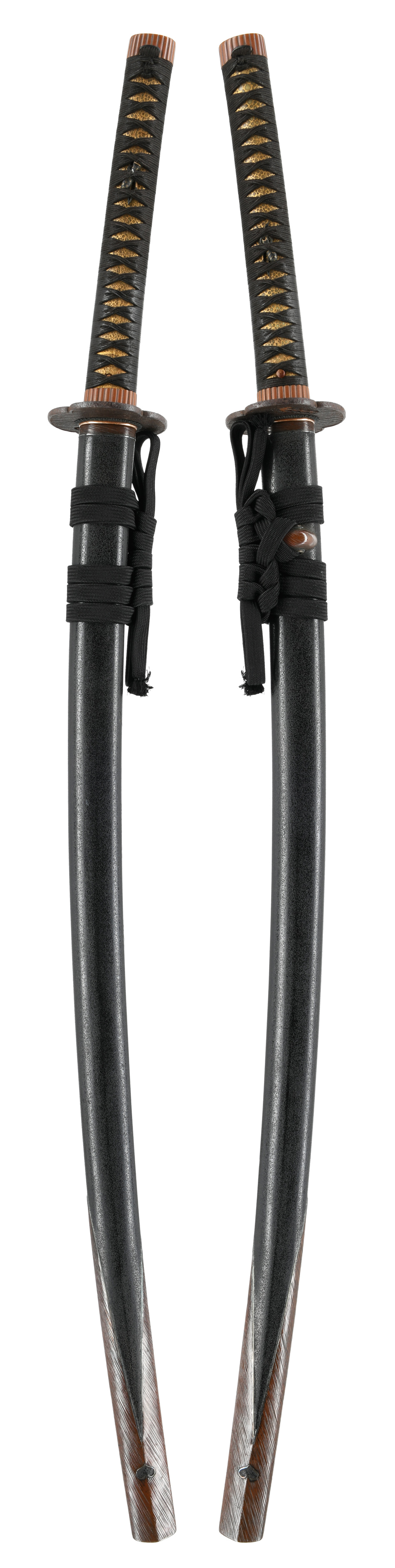
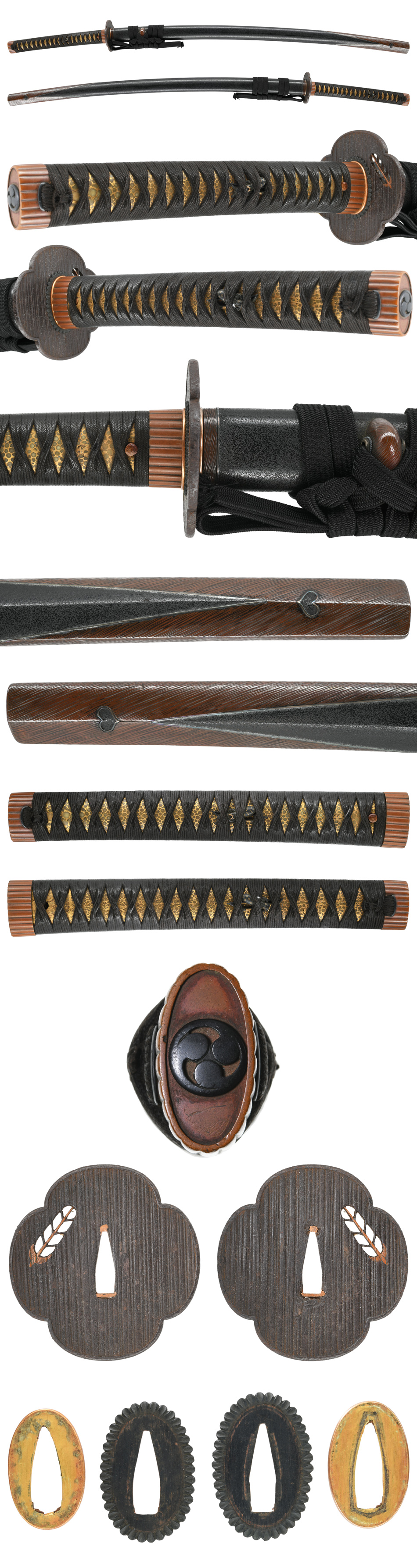
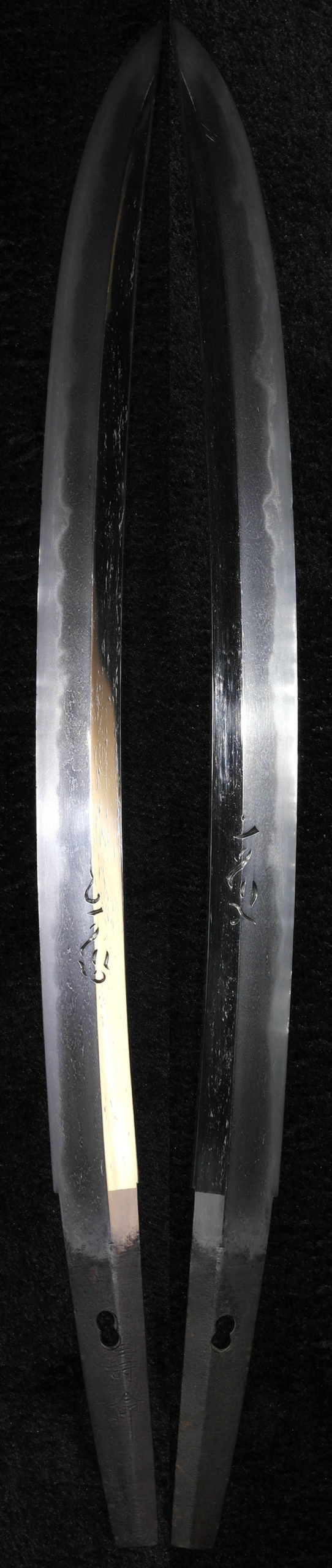
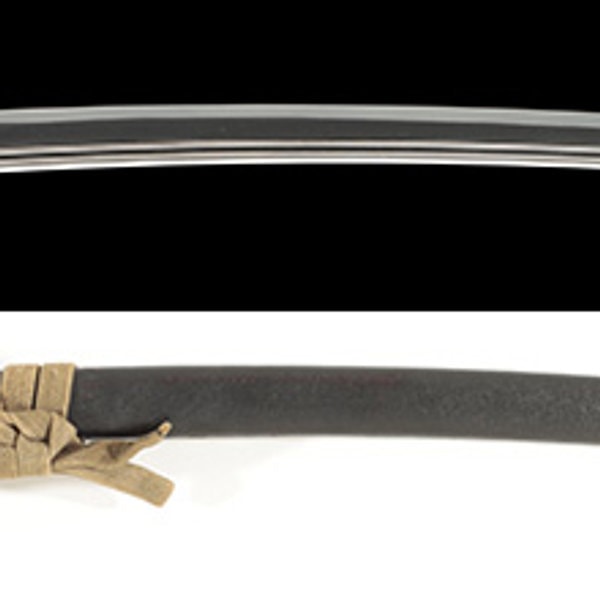
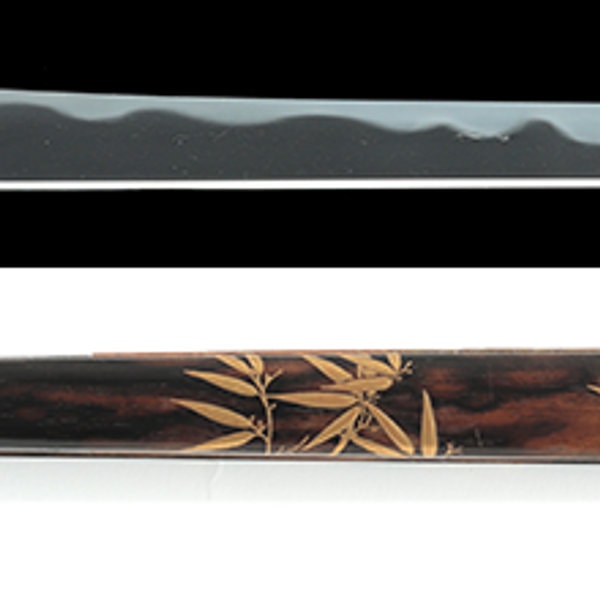
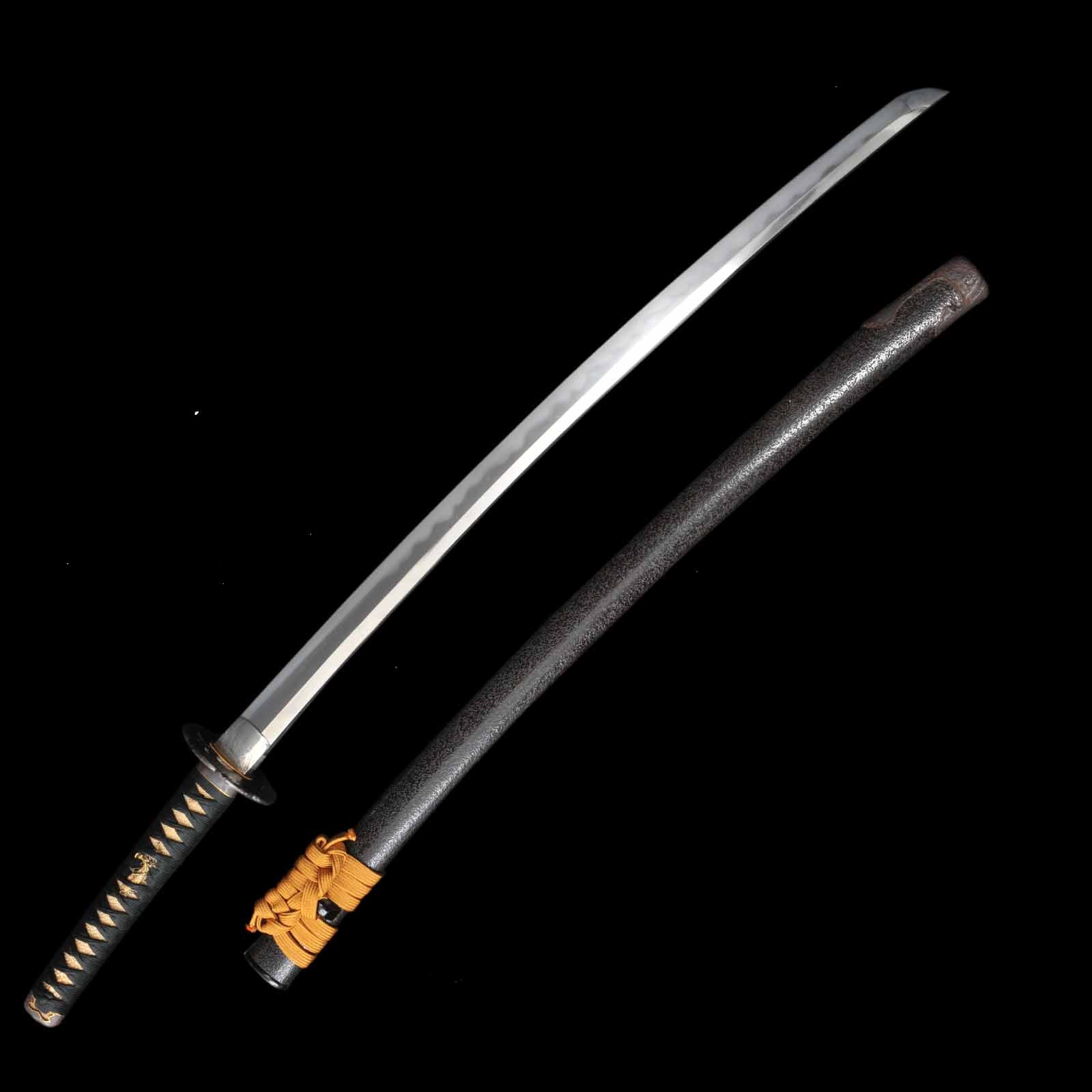
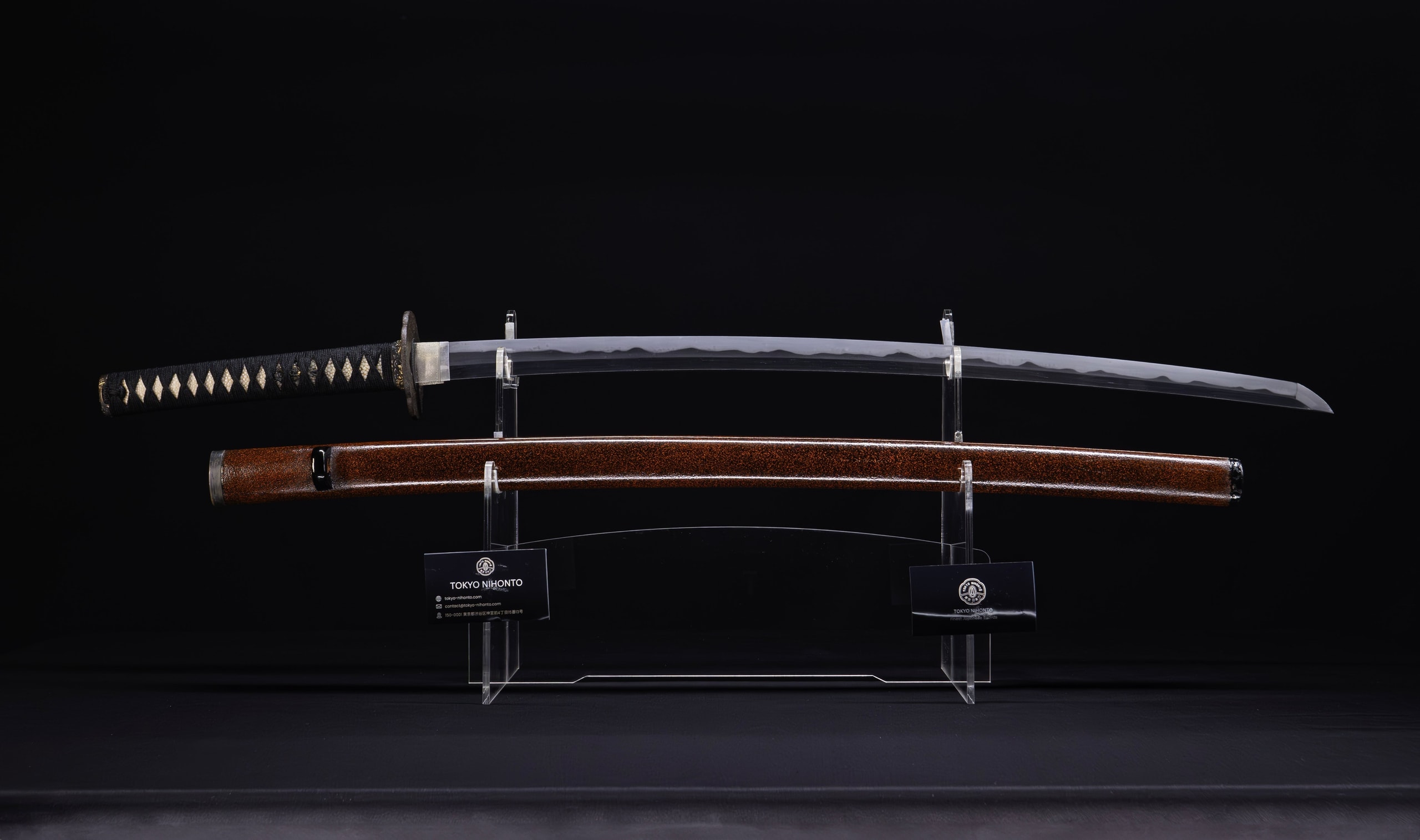
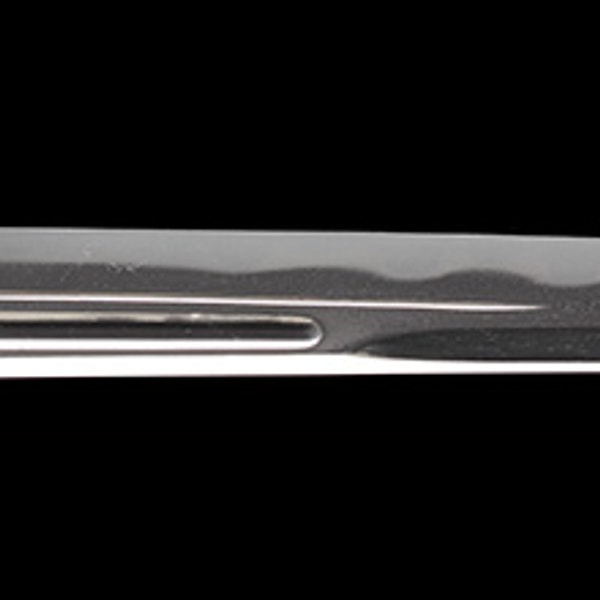
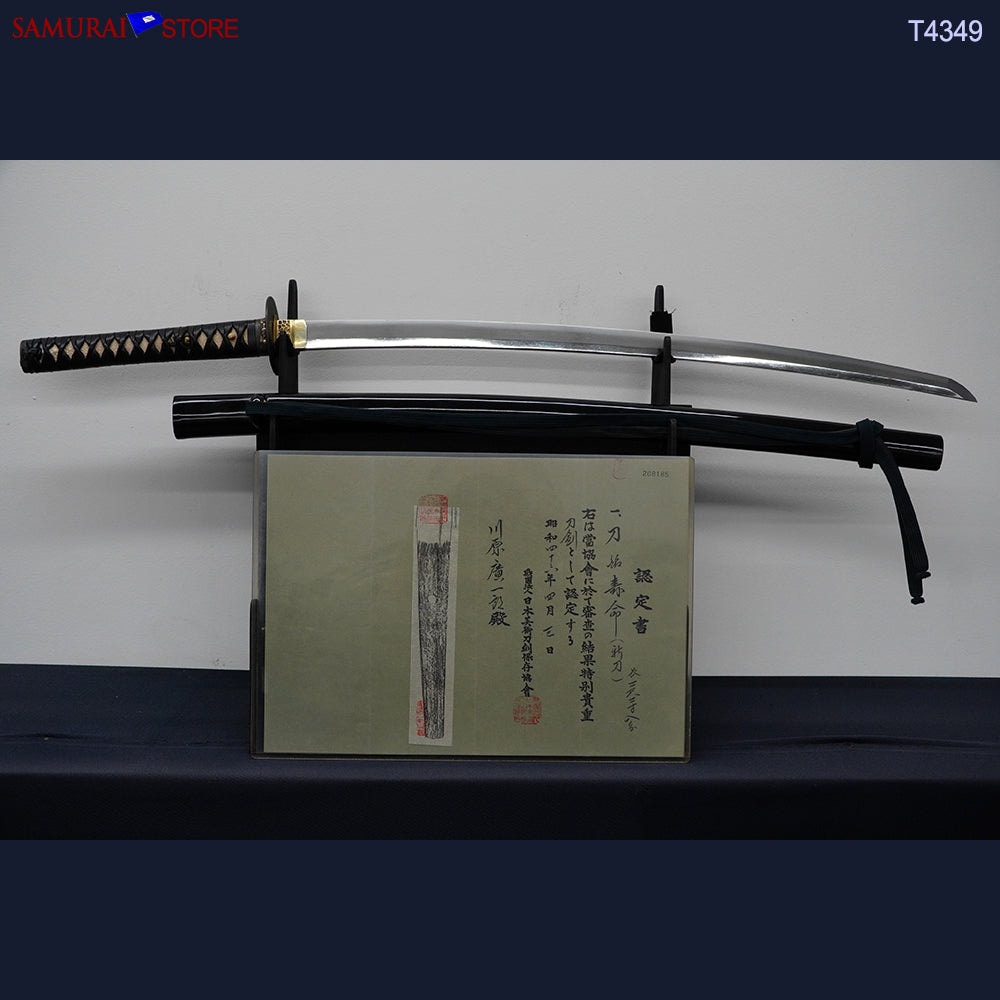
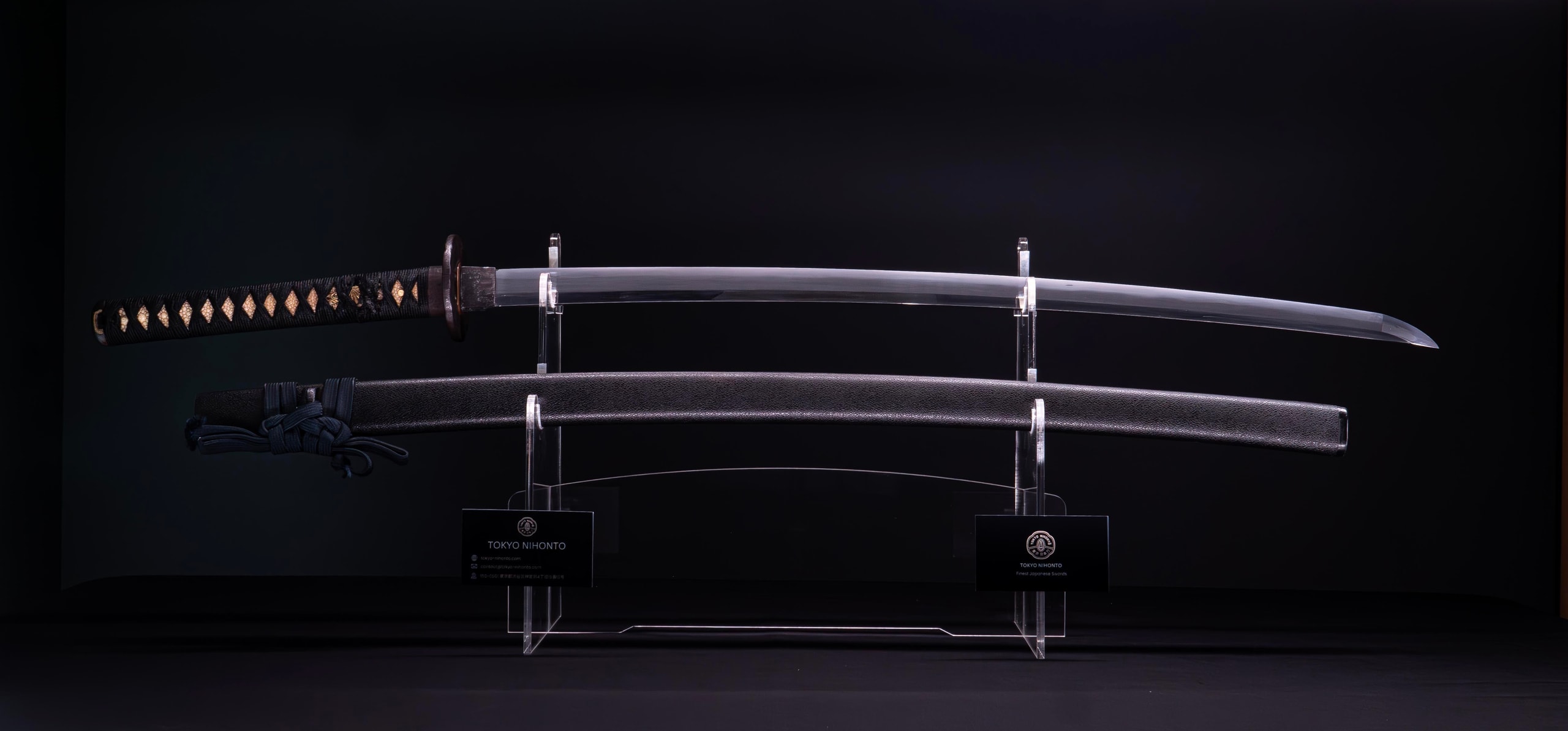
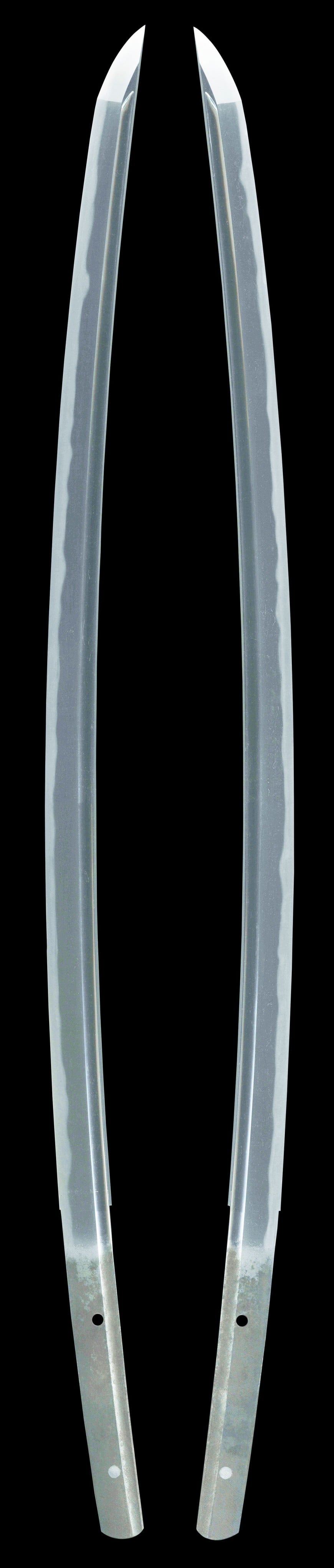
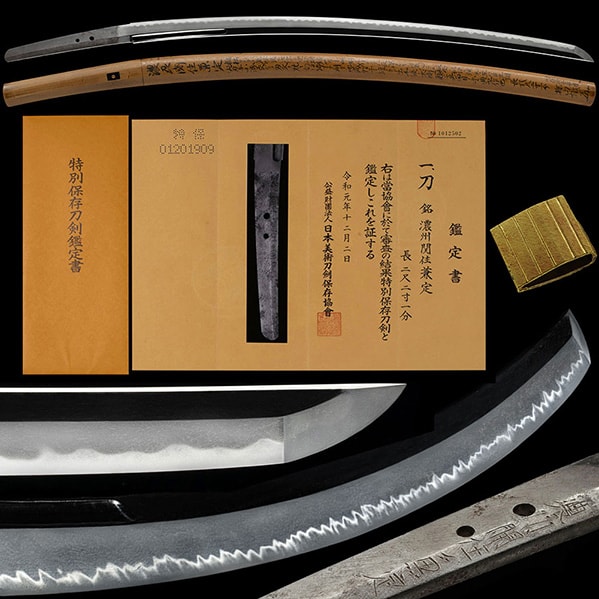
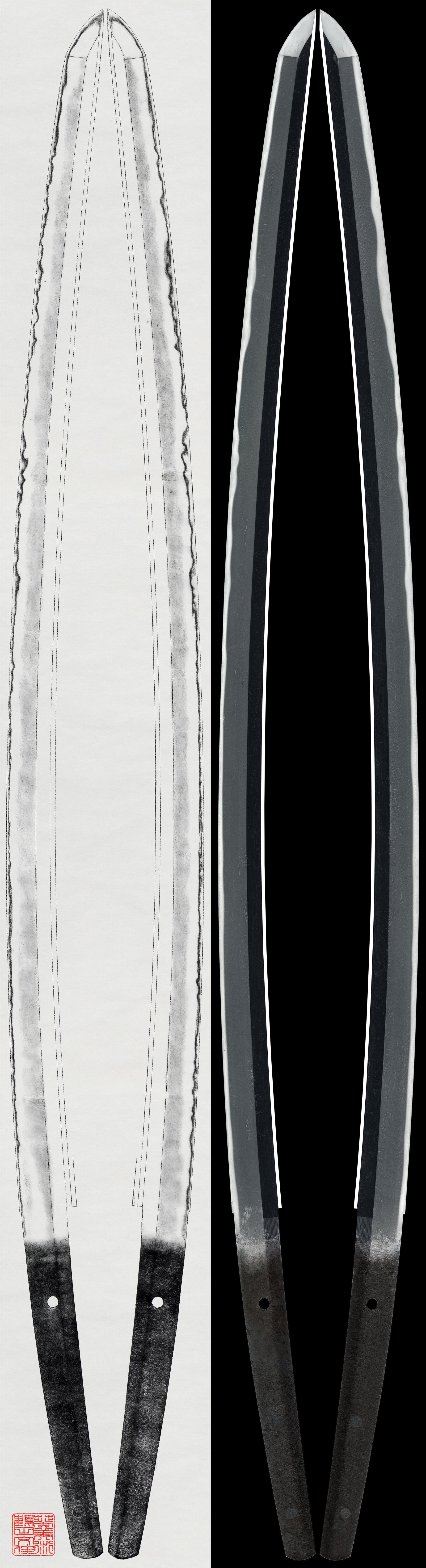
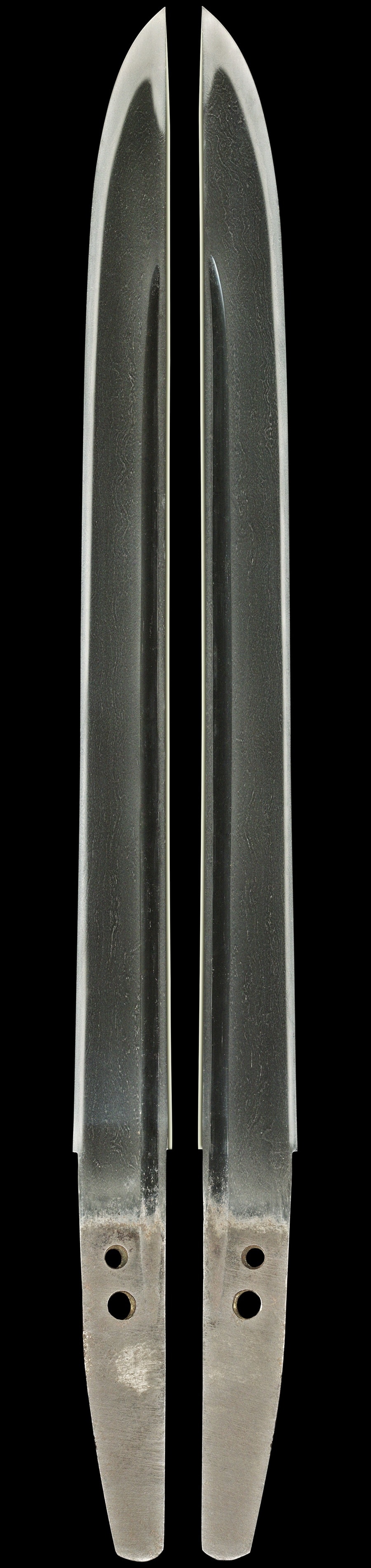
This is a katana made by Mino-no-kami Fujiwara Toshinaga (Jumyo) during the middle Edo period (about 1661~). It has a blade length of 73.4cm and is certified as Tokubetsu Hozon Token by NBTHK. The sword is mounted with a silver habaki and has an unaltered tang with Kiriyasuri file pattern.
mei · Shinto · nagasa 73.4cm · sori 1.9cm


Mino-den · Mino · around 1661-1673
Fujishiro Chu saku · Tōken Taikan top 95%
7 pieces on the market now
Mino-den · Mino
15 pieces on the market now
A Hozon-certified blade judged to show notably superior workmanship and a better state of preservation. The bar is higher: re-tempered blades and most unsigned Muromachi/Edo works are excluded.
The NBTHK (Nihon Bijutsu Tōken Hozon Kyōkai, the Society for the Preservation of Japanese Art Swords) is a public-interest incorporated foundation founded in 1948 and supervised by Japan’s Agency for Cultural Affairs (Bunkachō); it is based at the Japanese Sword Museum in Tokyo. Its expert panels physically examine each submitted work (shinsa) and issue a certificate (kanteishō) ranking it by artistic and historical merit. NBTHK papers are the most widely recognized standard of authentication for Japanese swords and fittings.
NBTHK official siteNo cooling-off period or returns; refund only if the purchased sword is proven fake, capped at purchase price (excludes commission sales, accessories, auction items).
This is a katana made by Mino-no-kami Fujiwara Toshinaga (Jumyo) during the middle Edo period (about 1661~). It has a blade length of 73.4cm and is certified as Tokubetsu Hozon Token by NBTHK. The sword is mounted with a silver habaki and has an unaltered tang with Kiriyasuri file pattern.
mei · Shinto · nagasa 73.4cm · sori 1.9cm


Mino-den · Mino · around 1661-1673
Fujishiro Chu saku · Tōken Taikan top 95%
7 pieces on the market now
Mino-den · Mino
15 pieces on the market now
A Hozon-certified blade judged to show notably superior workmanship and a better state of preservation. The bar is higher: re-tempered blades and most unsigned Muromachi/Edo works are excluded.
The NBTHK (Nihon Bijutsu Tōken Hozon Kyōkai, the Society for the Preservation of Japanese Art Swords) is a public-interest incorporated foundation founded in 1948 and supervised by Japan’s Agency for Cultural Affairs (Bunkachō); it is based at the Japanese Sword Museum in Tokyo. Its expert panels physically examine each submitted work (shinsa) and issue a certificate (kanteishō) ranking it by artistic and historical merit. NBTHK papers are the most widely recognized standard of authentication for Japanese swords and fittings.
NBTHK official siteNo cooling-off period or returns; refund only if the purchased sword is proven fake, capped at purchase price (excludes commission sales, accessories, auction items).