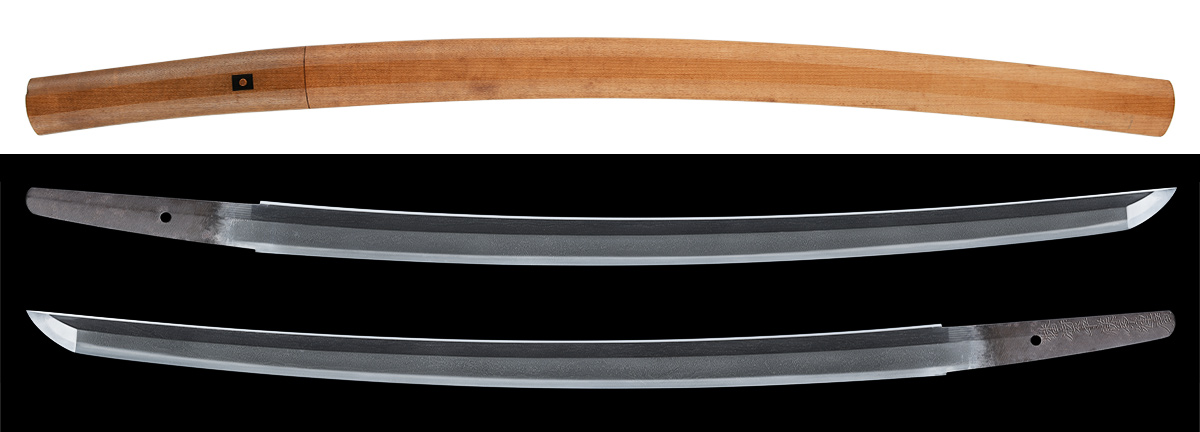
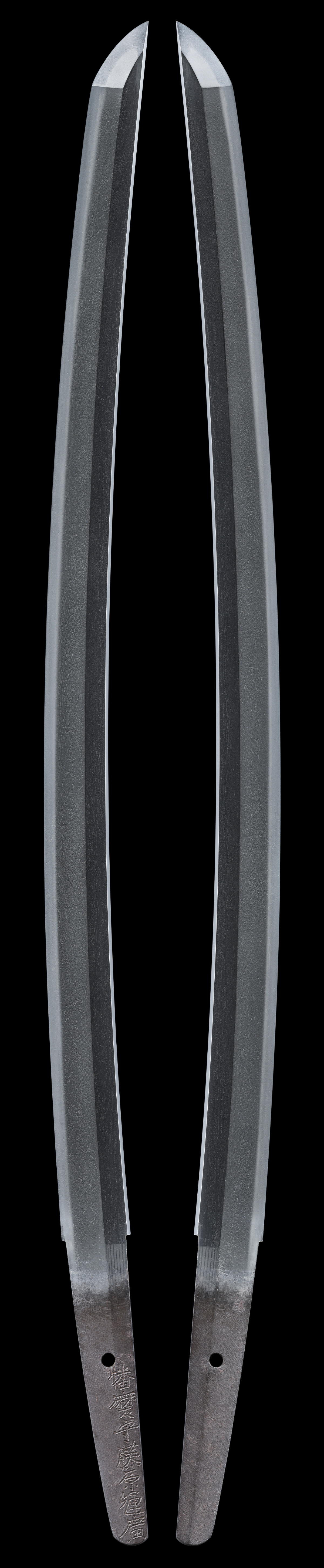
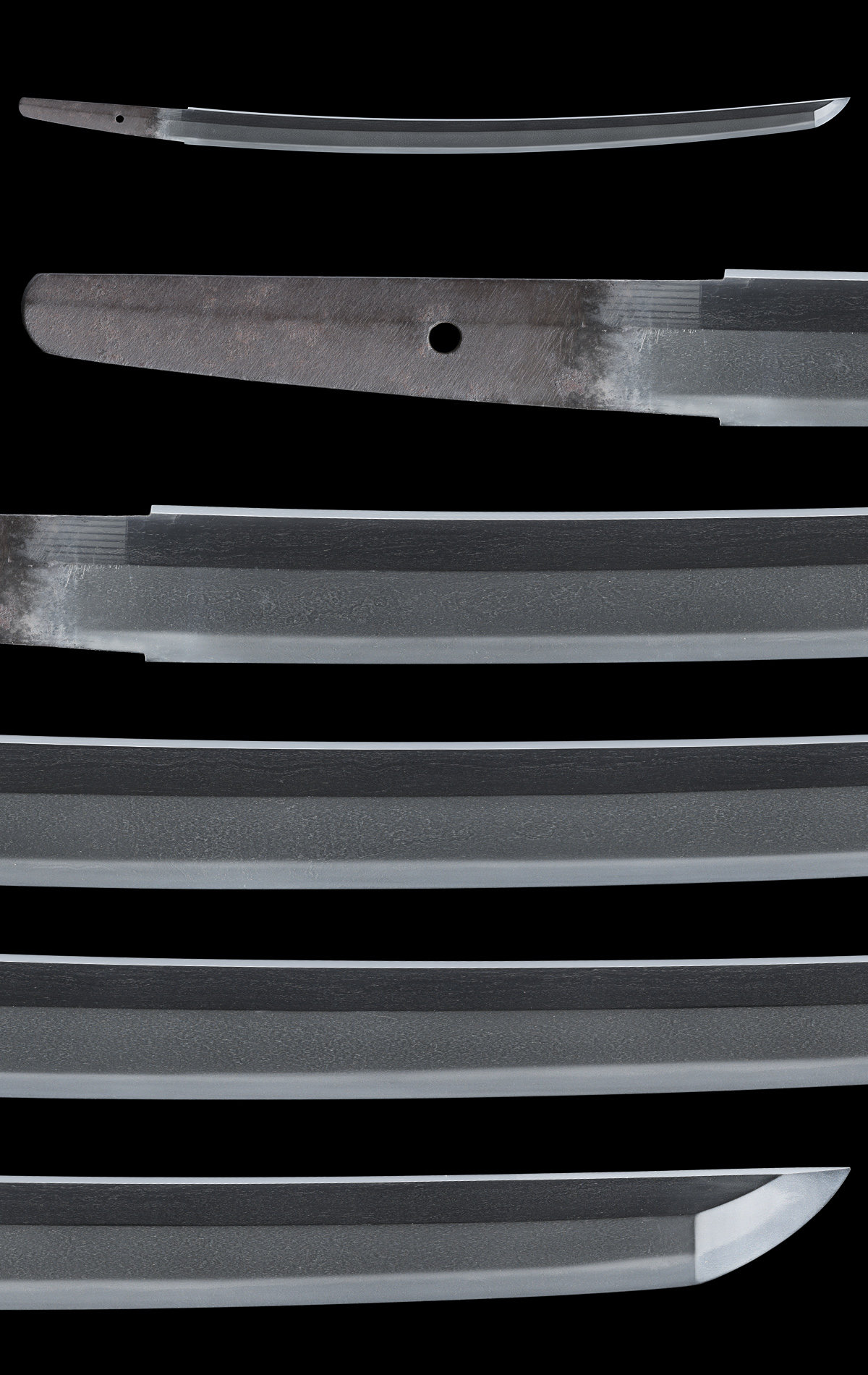
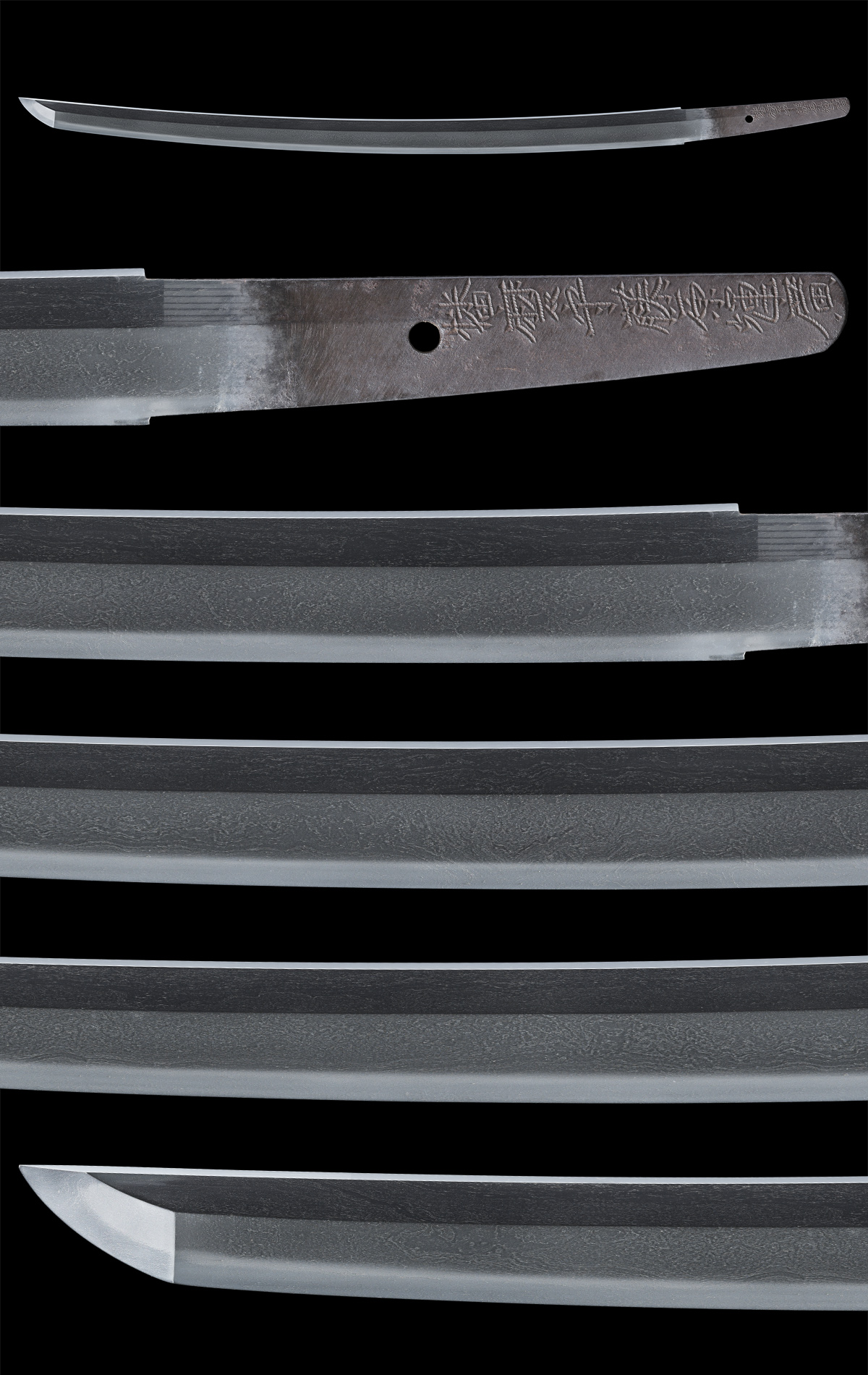
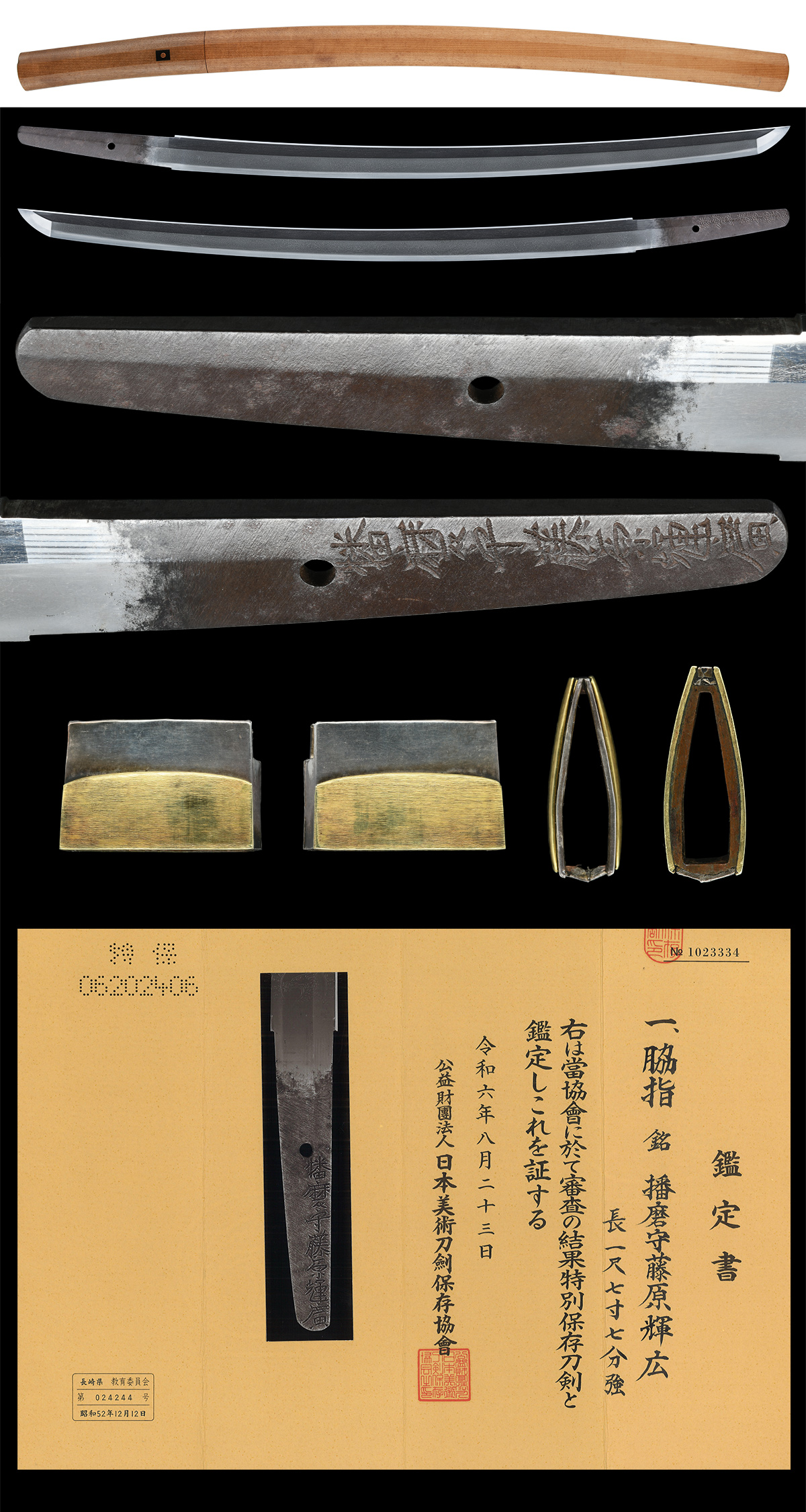
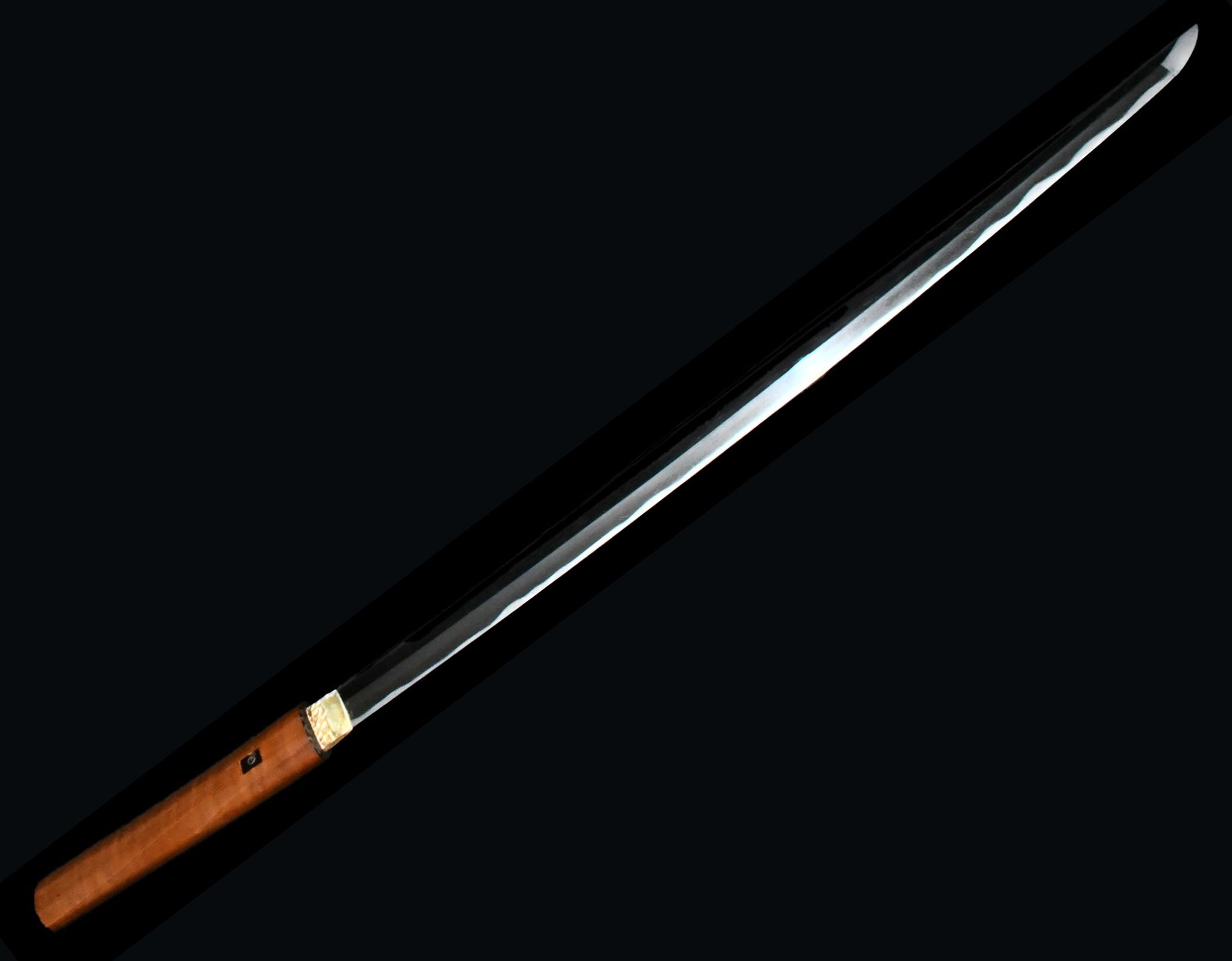
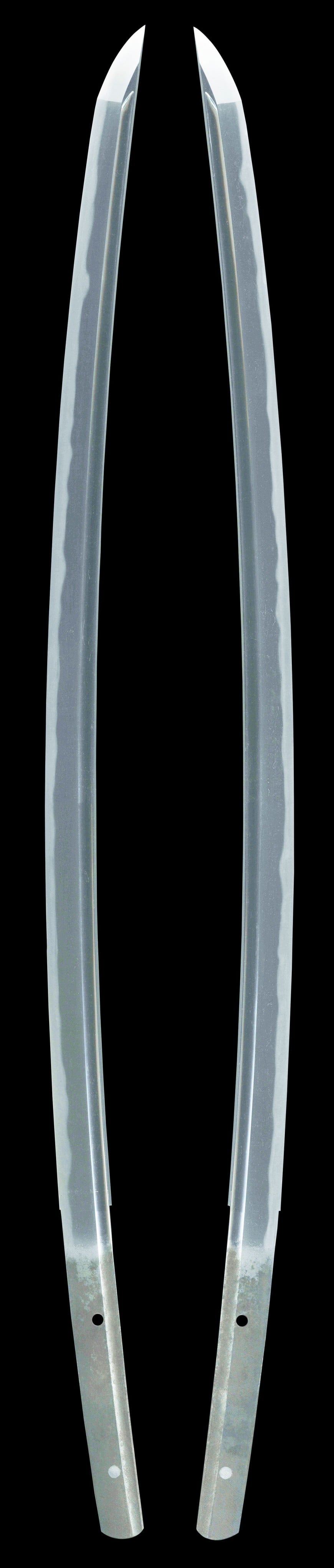
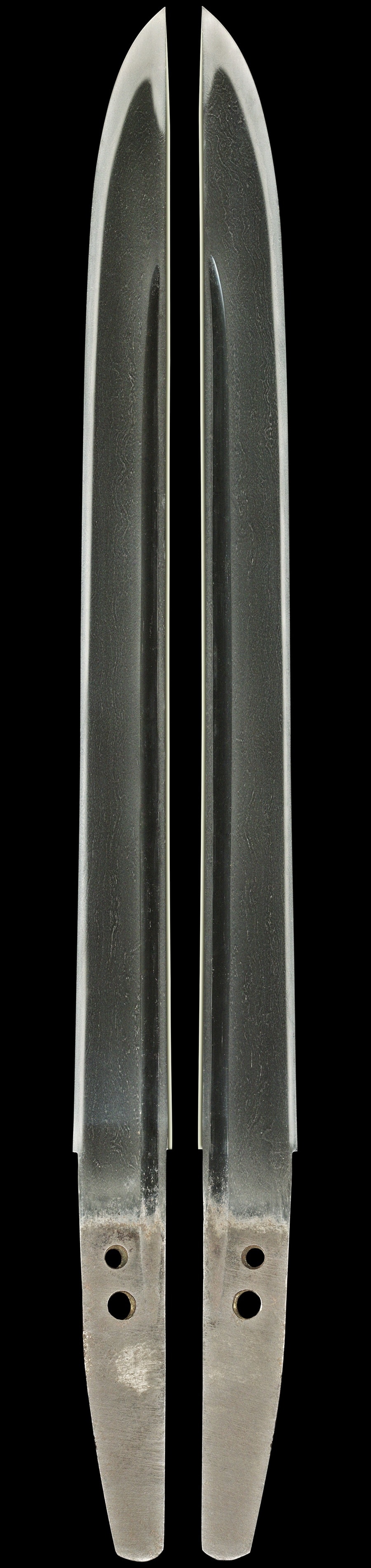
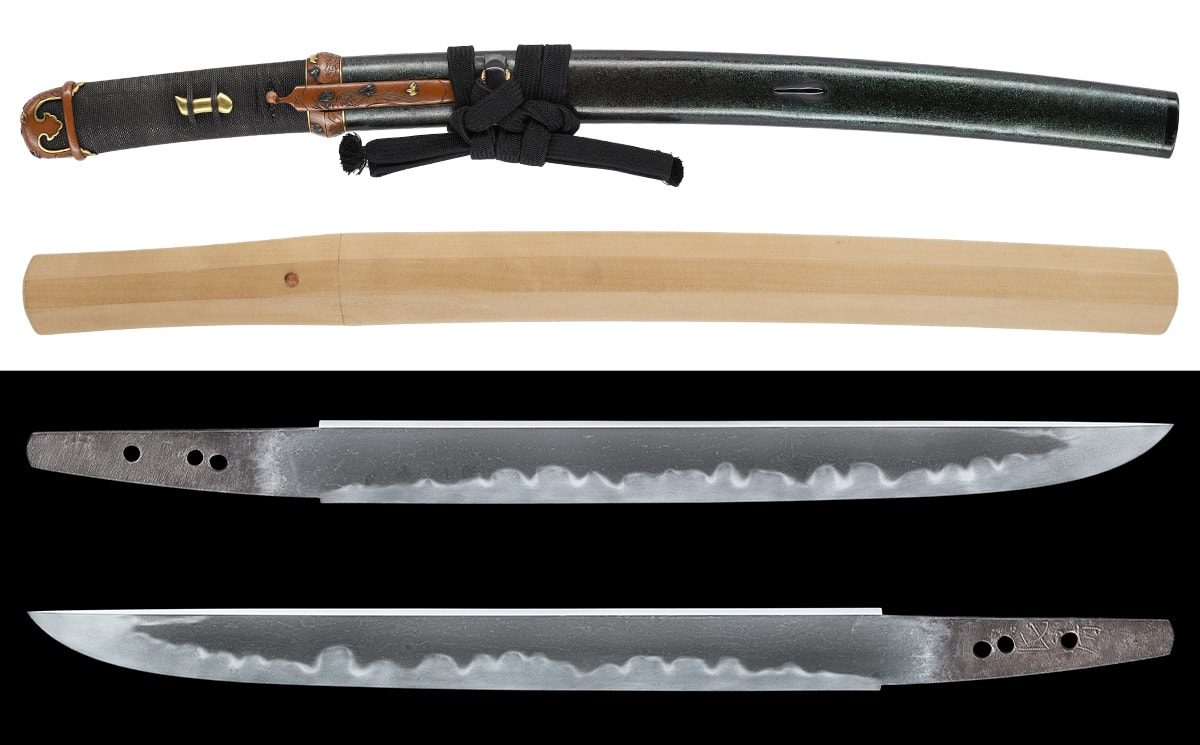
The Teruhiro line takes its place in Hiroshima, in Aki province, where its swords were forged from the close of the Momoyama period into early Edo. The first generation (shodai) is recorded in the setsumei as a native of Mino, a later descendant of Kanetsune of Seki, who signed at first as Kanetomo (兼友 or 兼伴) before studying under Umetada Myōju, taking the name Teruhiro, and receiving the court title Higo no Kami. A katana dated Tenshō 17 (1589) and inscribed Nōshū Seki-jū Teruhiro saku[[c:1]] shows, as the registers note, that he already used the Teruhiro name while resident in Mino and had reached full stature before entering Myōju's circle, a point the NBTHK records leave open for further study. He followed Fukushima Masanori to Kiyosu in Owari and, in Keichō 5 (1600), relocated to Hiroshima. The second generation, Harima no Kami Teruhiro, came from Owari; the setsumei give his surname as Kanie, his common name Jinpachi, and his earliest signature Kanehisa (兼久). He studied under the shodai, was valued enough to become his son-in-law, served the Fukushima house, and, after that family's forfeiture, entered the service of the Asano. A wakizashi dated Keichō 15 (1610) places his active years close to those of the first generation, with further dated works cited from Kan'ei 5 (1628) and Kan'ei 9 (1632). Across the line the kitae is itame mixed with mokume and flowing nagare-hada, the grain tending to stand (hada-dachi) and turning toward masame near the edge, with ji-nie and chikei throughout and steel that the registers repeatedly call clear (saeru).
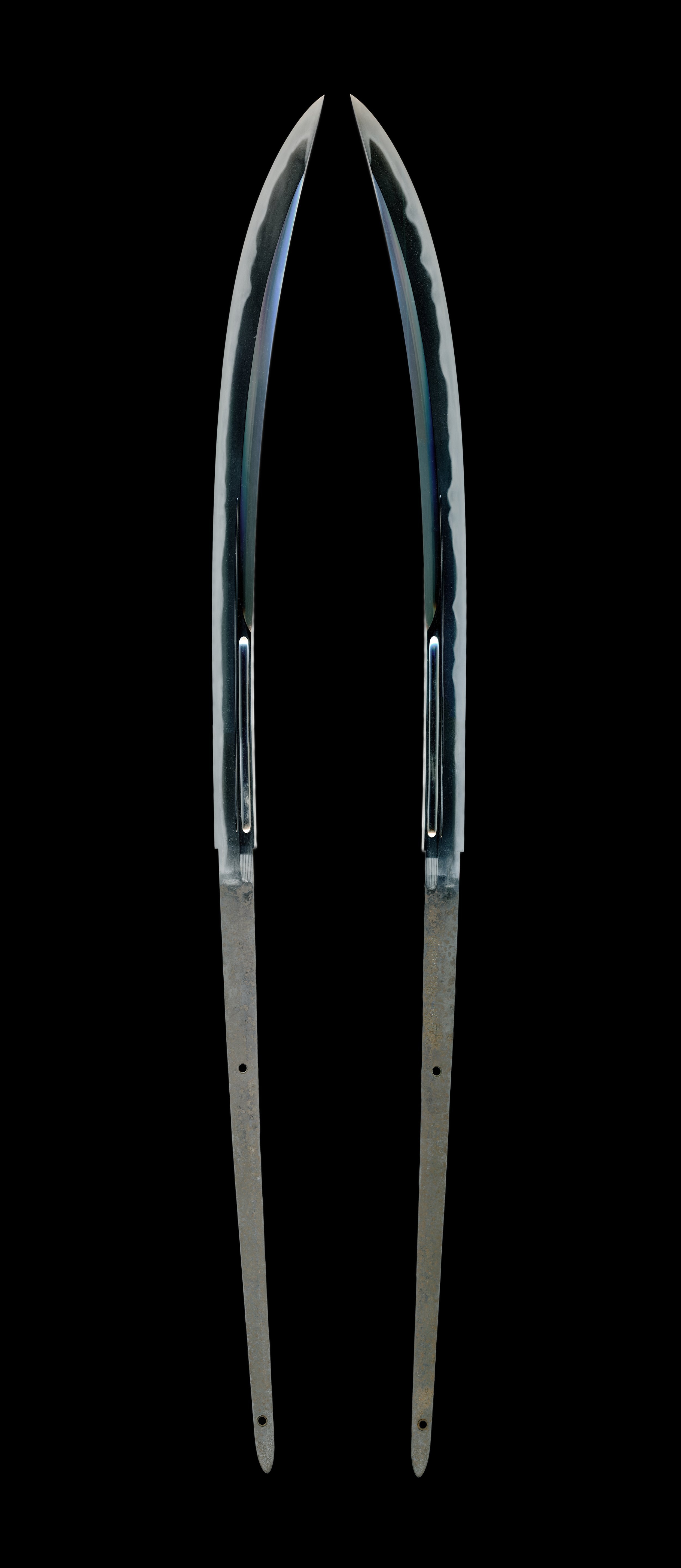
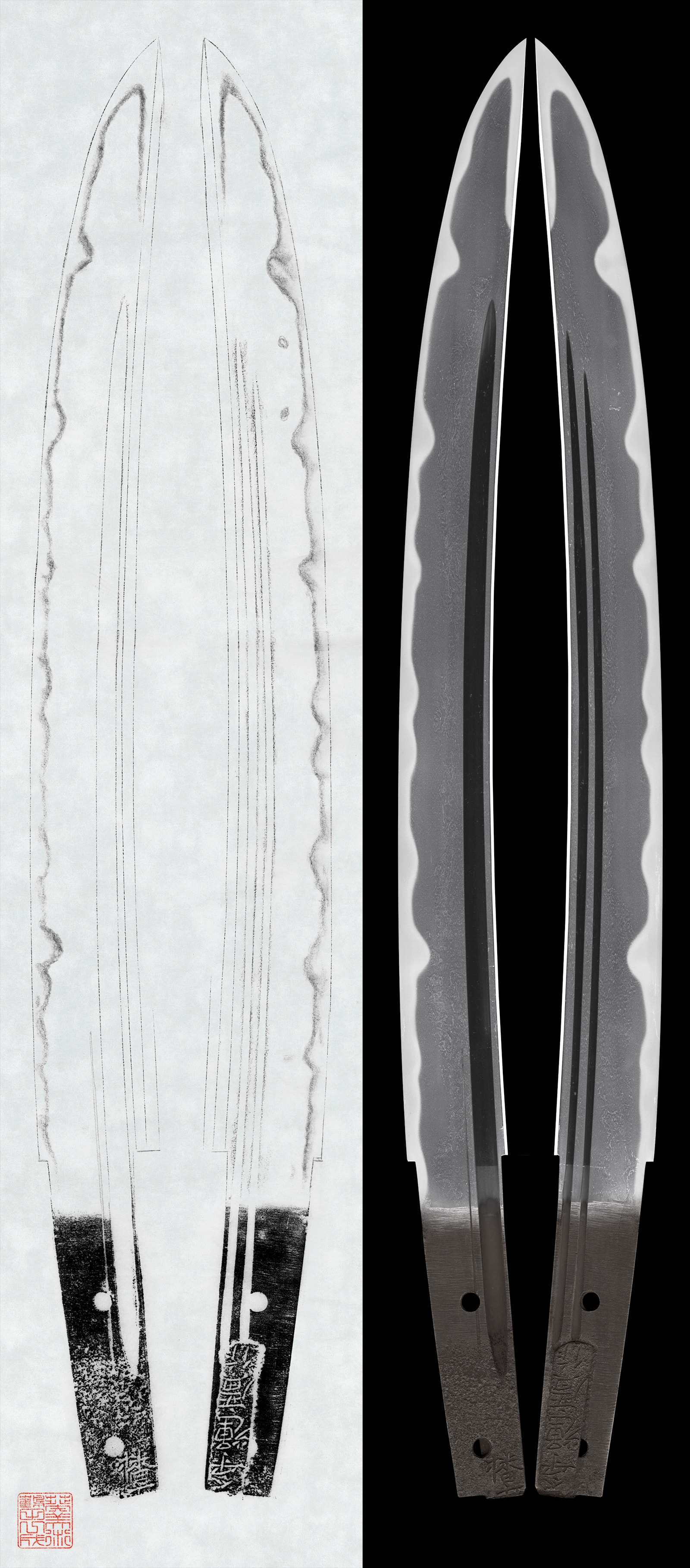
The signature temper is a notare base, often ko-notare, mixed with gunome and pointed (togari-gokoro) elements, carrying deep nioi, thick nie, kinsuji, sunagashi, and scattered tobiyaki; the first generation's Tenshō and Keichō katana broaden this into large, hako-leaning undulations with muneyaki, while the second generation favors deep-nioi ko-notare held at a high level. The bōshi commonly runs notare-komi into ko-maru, at times deeply yaki-sage into muneyaki or showing hakikake. To tell the hands apart, the setsumei observe that the nidai's gunome stands out more strongly than the shodai's, and that nagare-hada in the forging, togari blades in the ha, and a bōshi of Sanbon-sugi or sanpin flavor mark his Mino descent; both generations also worked suguha-toned and masame yari and naginata in a quieter key. The setsumei treat the line as a Mino-rooted hand carrying a strong Sōshū current, and several blades are read as deliberate evocations of older models. The second generation's tantō and wakizashi are described as aiming at Sadamune, "whom Teruhiro most admired," with one kanmuri-otoshi wakizashi bearing naginata-hi read as a study of old Yamato, particularly Taima; a wide notare katana with hardened koshi-ba is likened to Kanemoto and Muramasa. The named registered works span the formats: the shodai's Nōshū Seki-jū katana and Higo no Kami yari and naginata, and the nidai's Harima no Kami katana, wakizashi, naginata, and tantō, several signed Fujiwara Teruhiro. The records stress that surviving pieces are few, numbering fewer than twenty across swords, tantō, yari, and naginata, which lends the ōmi-yari and the carved examples particular documentary value; one note holds that the nidai equals or surpasses the shodai. Kantei rests on the notare core with deep nioi and thick nie, the standing itame with nagare and chikei, the recurrent tobiyaki, and the long thick-chisel signatures on ubu tangs that fix this Aki workshop and its place under Fukushima and Asano patronage. Learn more →