Sengoku Seki was an industry: smiths organized under their tutelary Kasuga shrine, arming the war bands of central Japan. Magoroku Kanemoto’s sanbonsugi and the finest Kanesada work prove quality survived inside mass production.
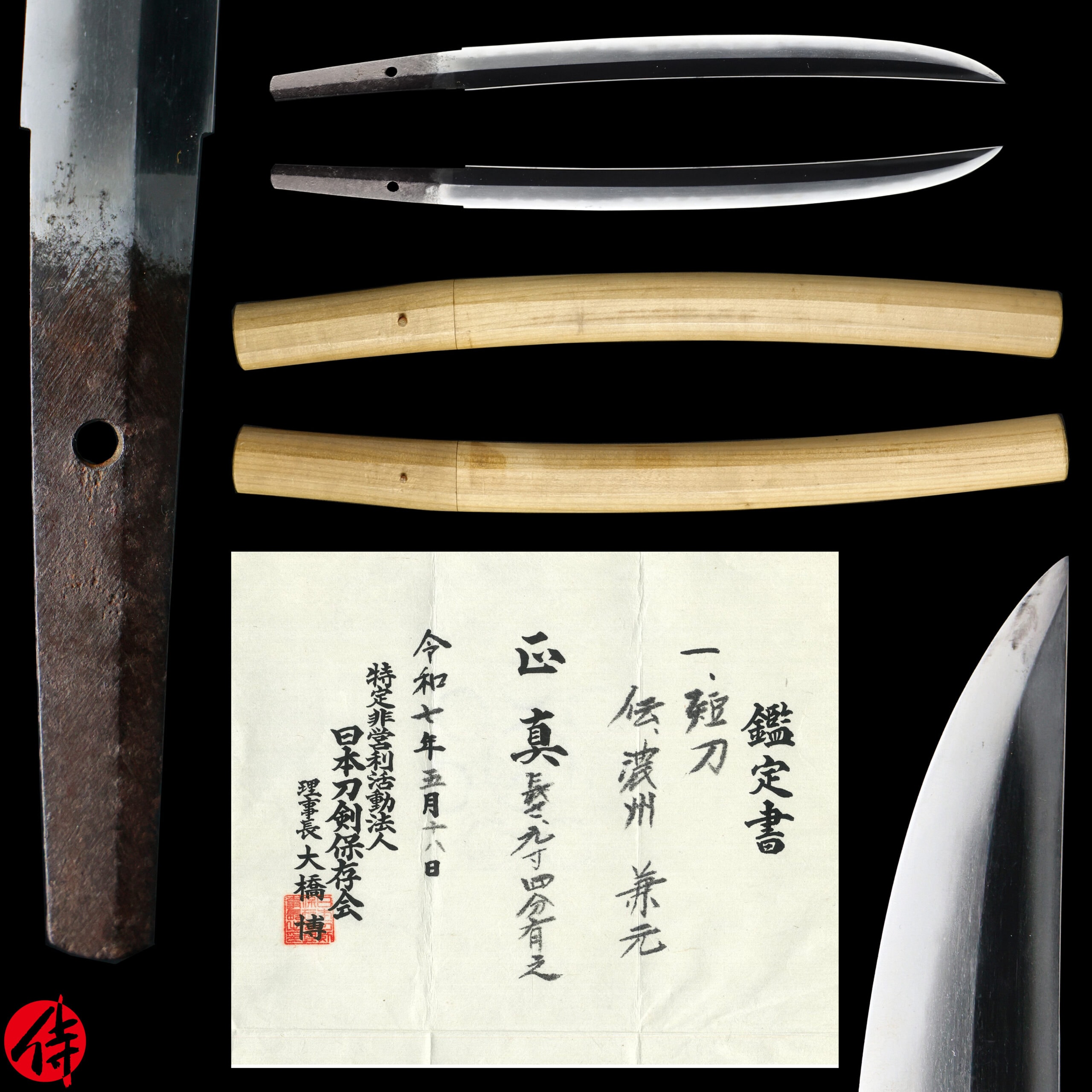
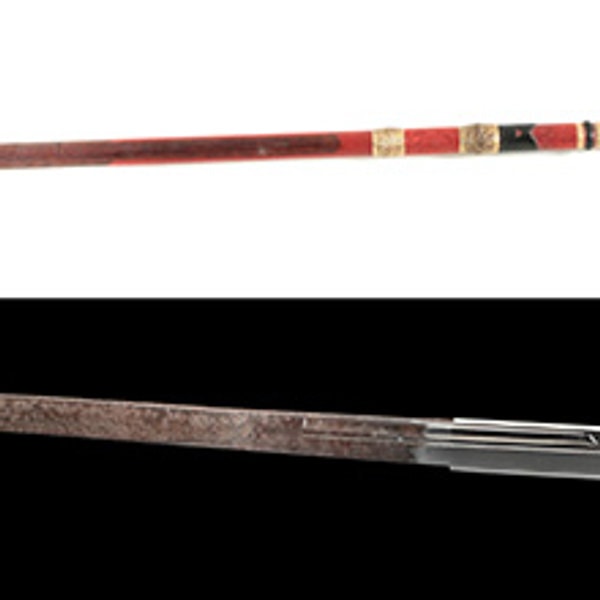
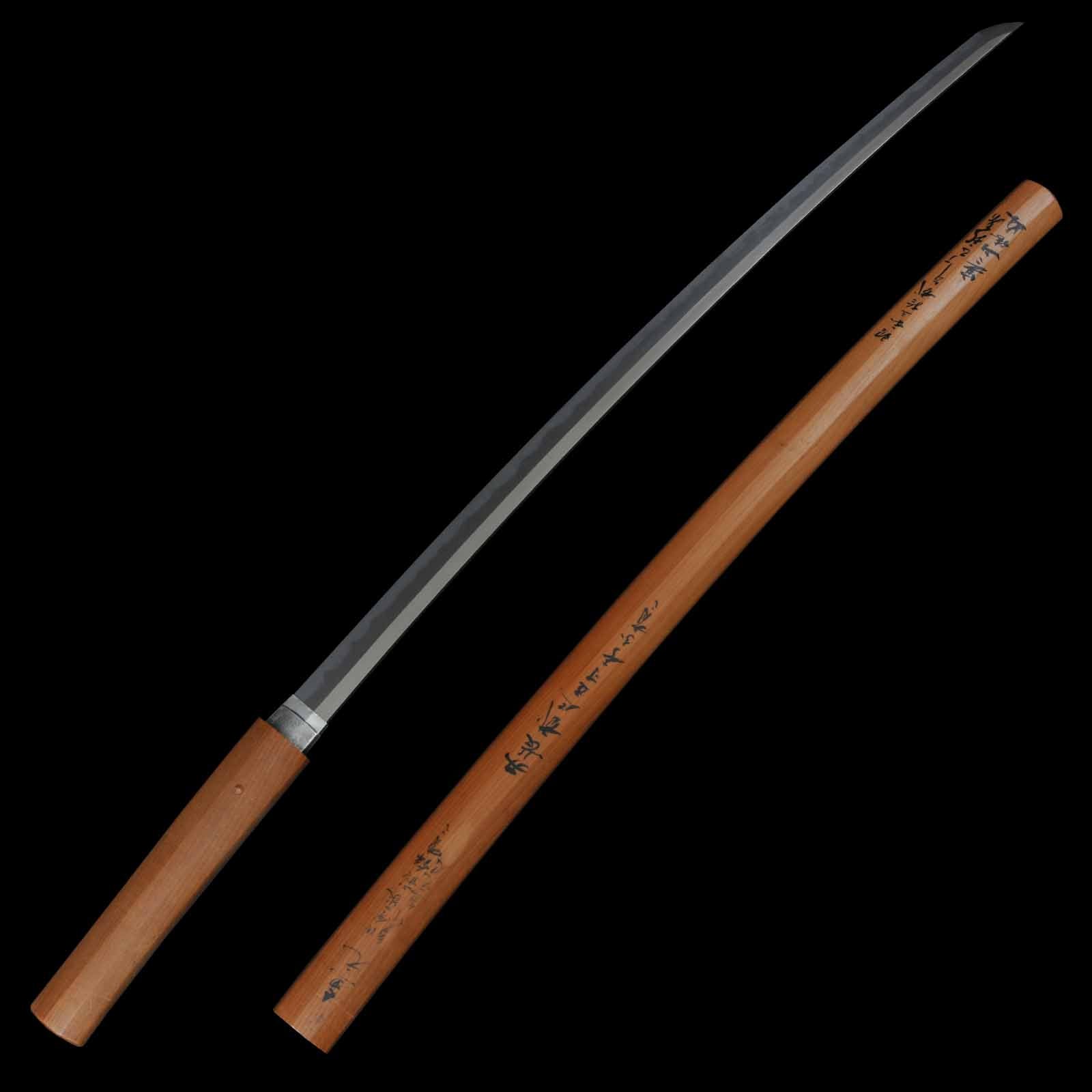
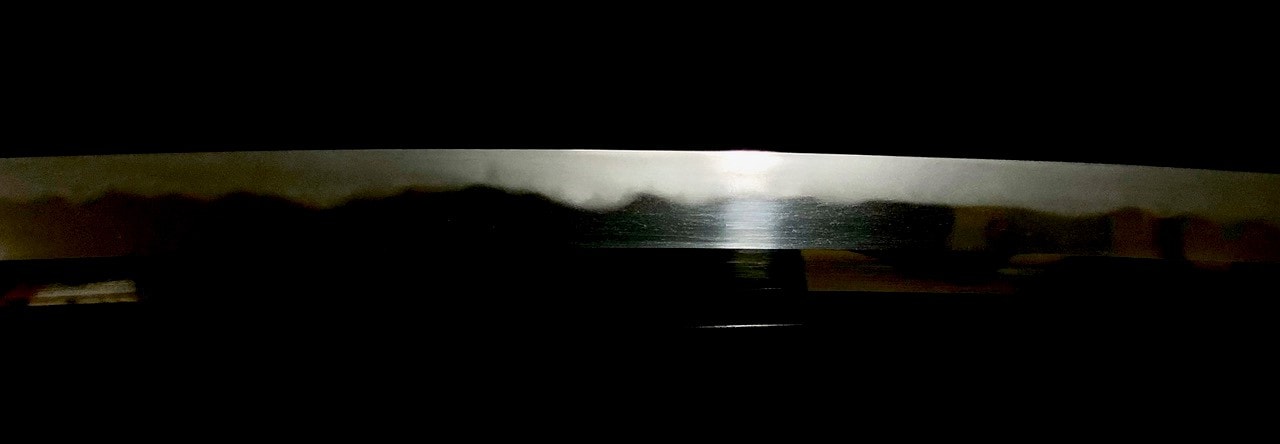
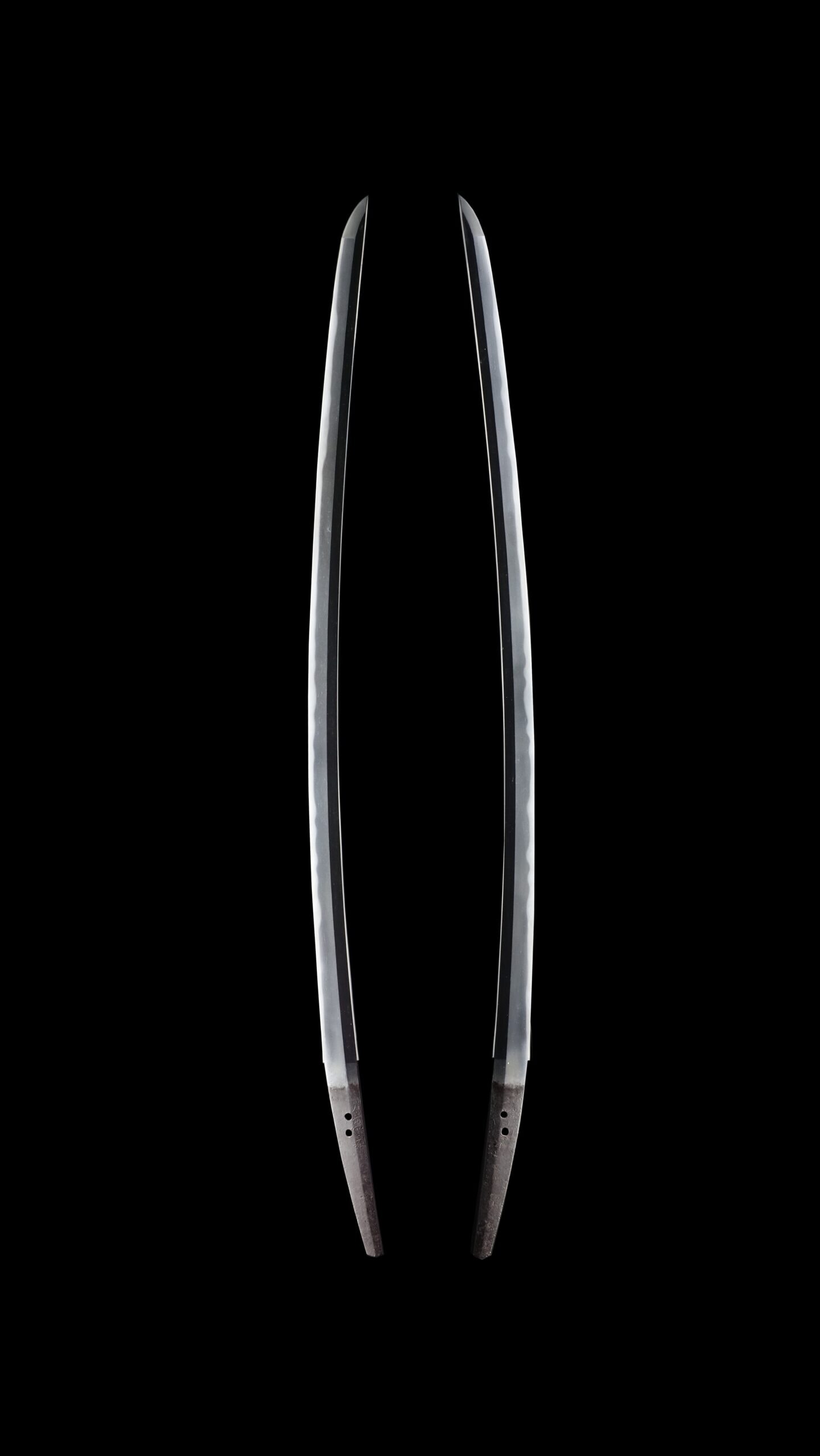
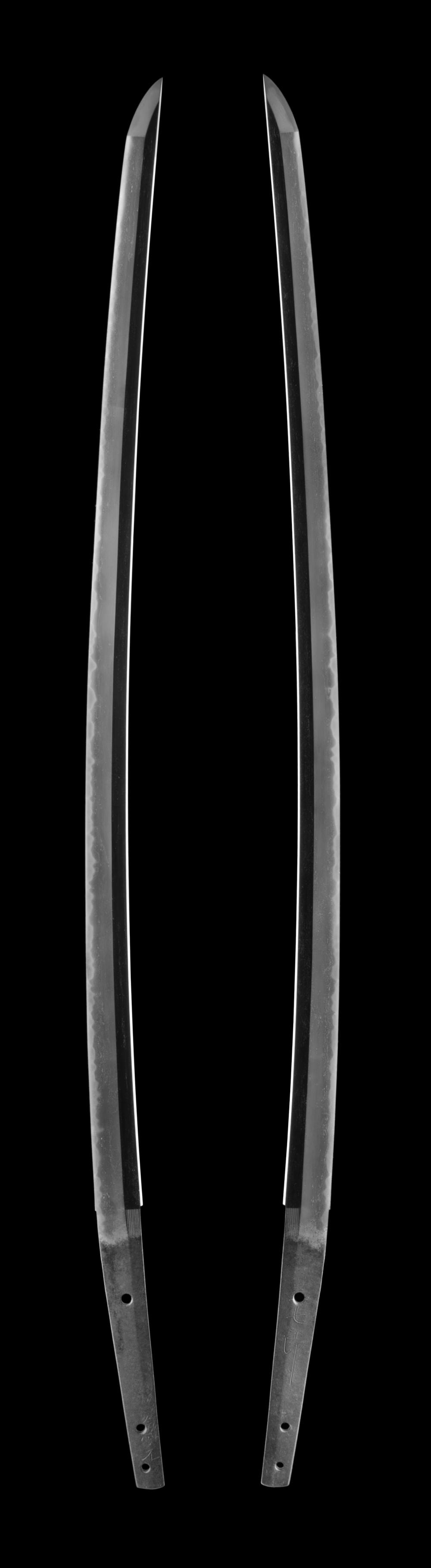
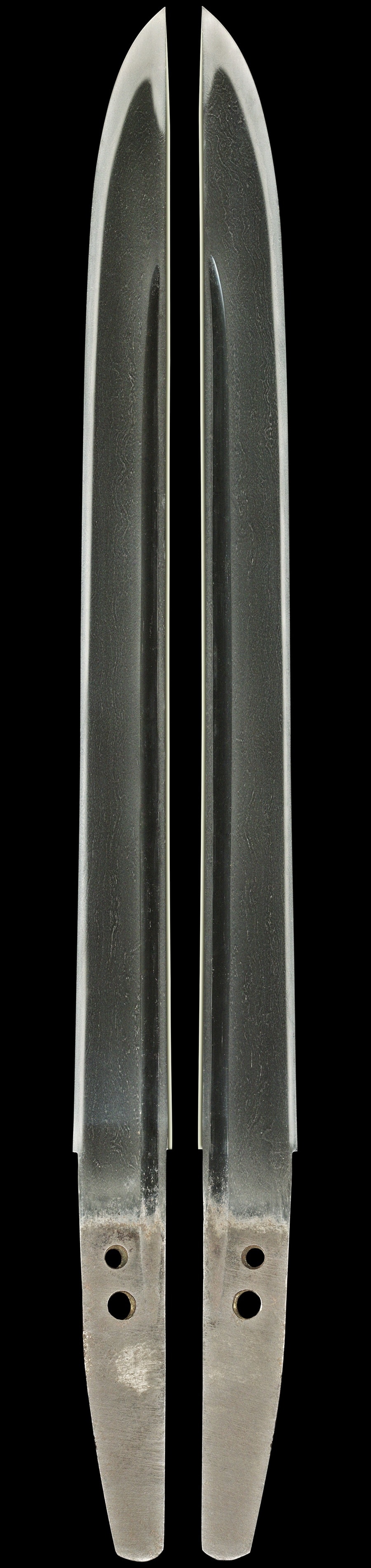
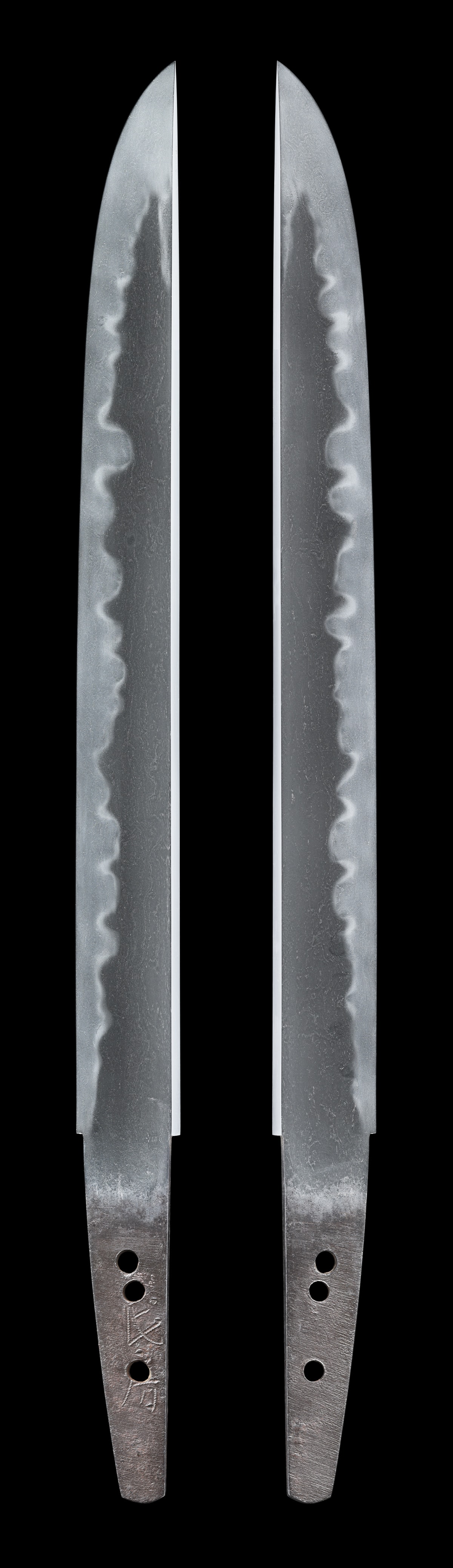
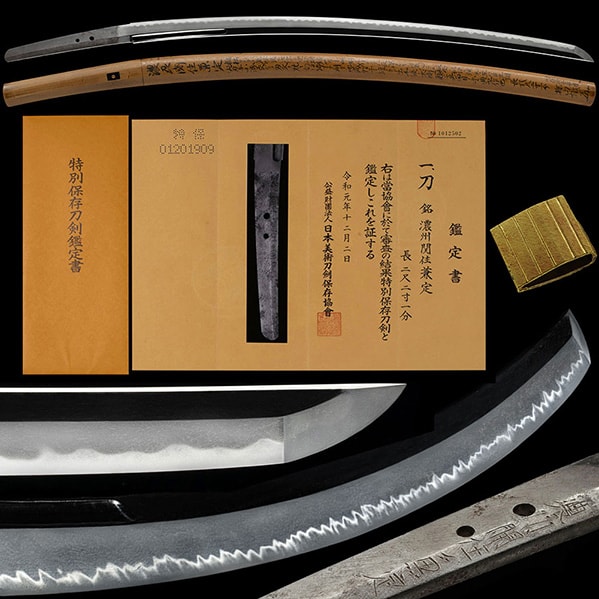
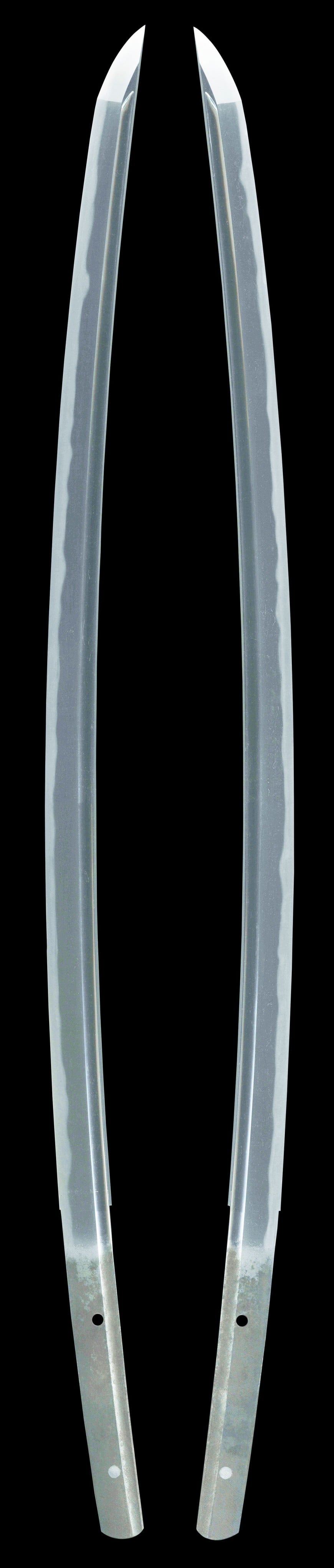
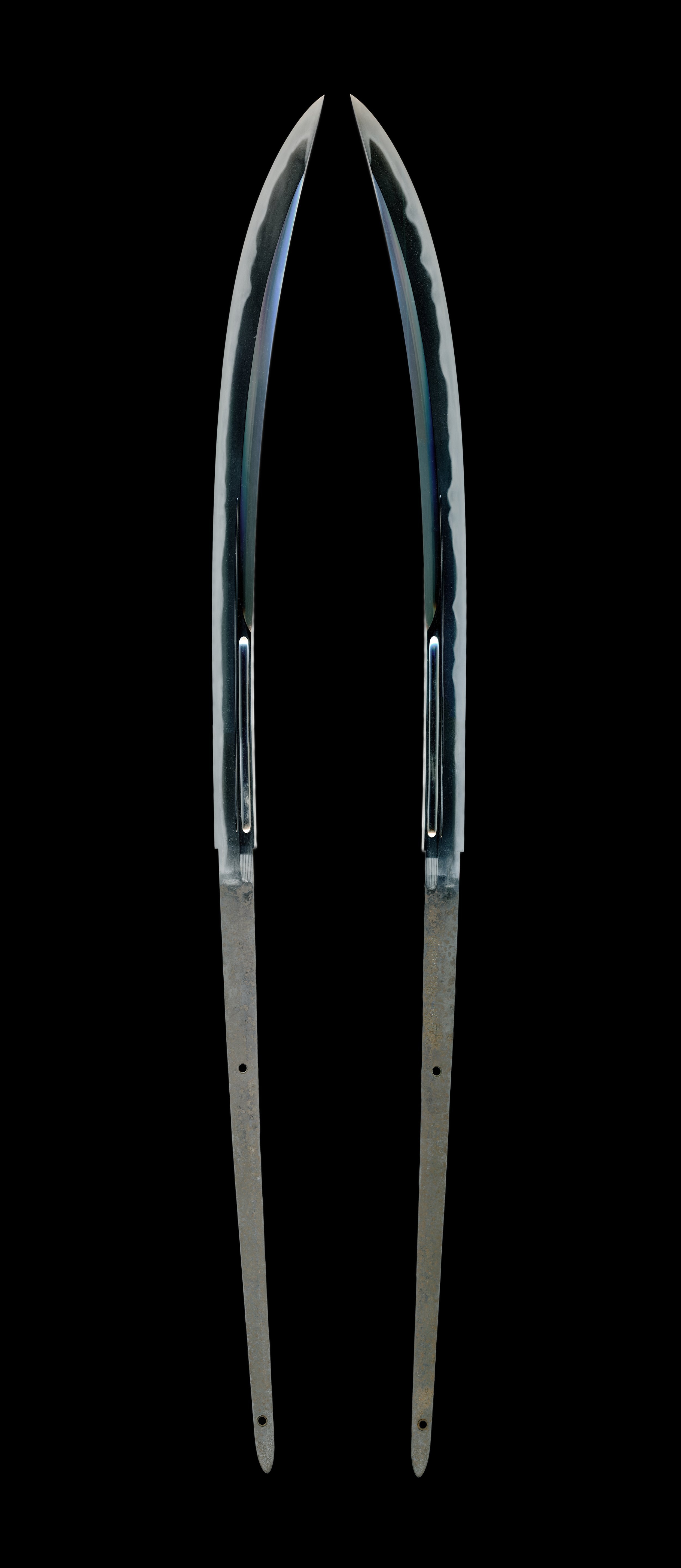
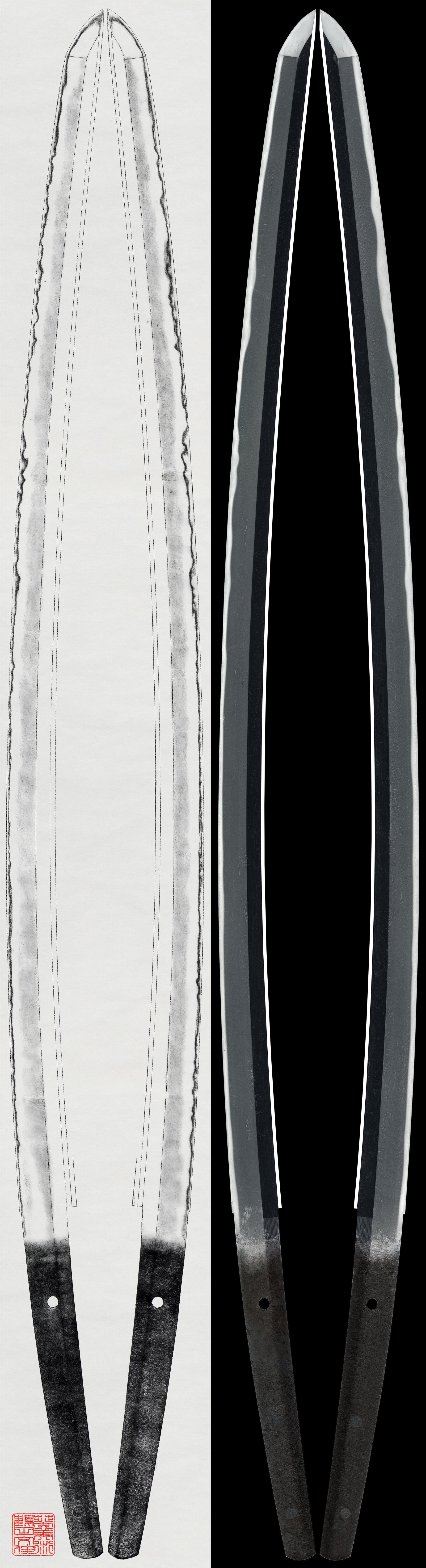
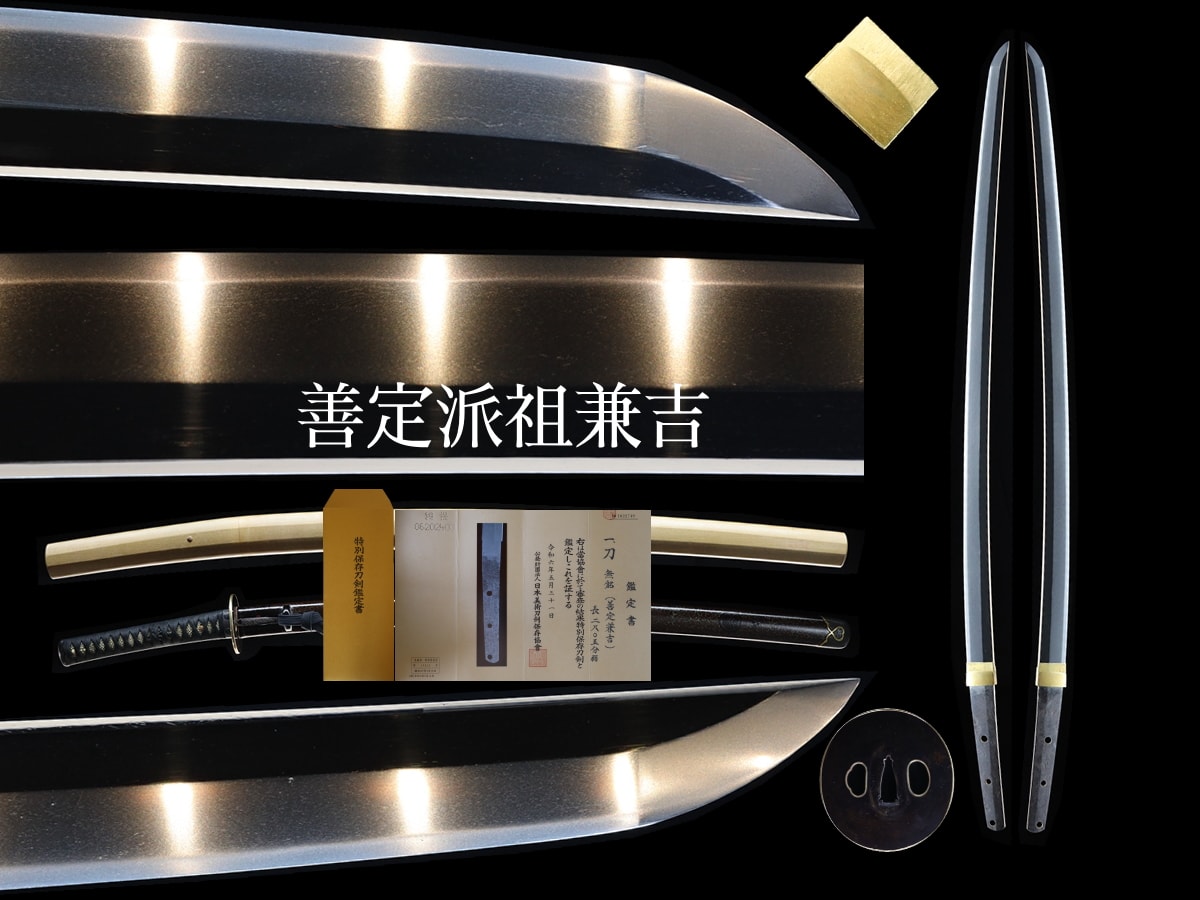
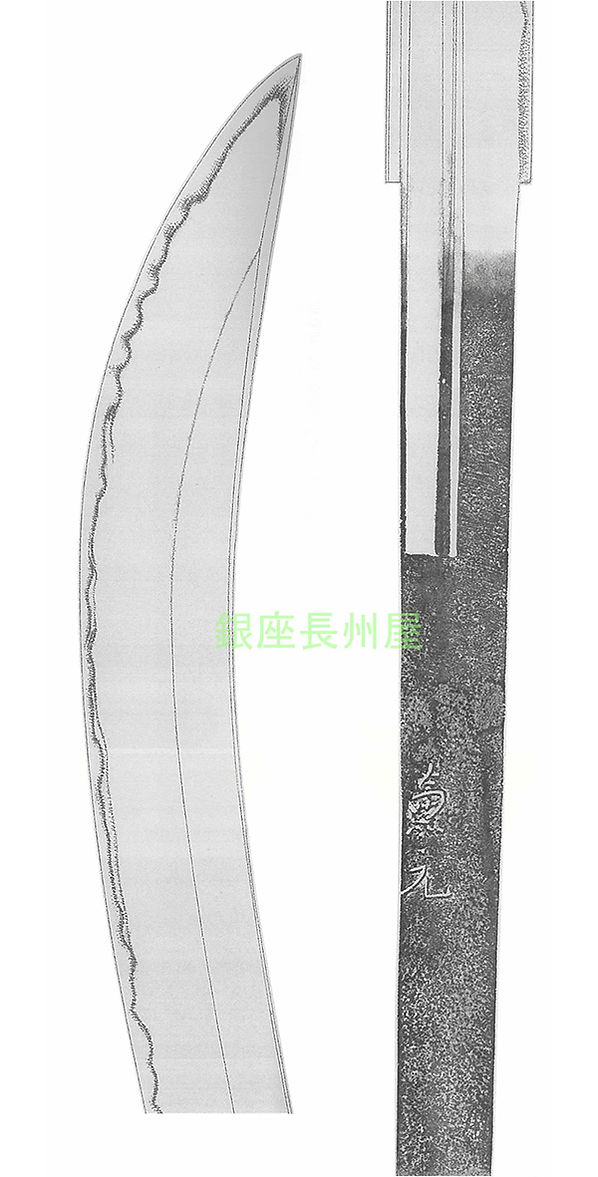
This is a naginata made by Kanemoto in Mino province during the late Muromachi period (around Tenbun era). Kanemoto is known for producing sharp blades that were highly valued by military commanders during the Sengoku period. The smiths of the Kanemoto school extensively researched and refined their techniques, eventually achieving the level of Saijo O-Wazamono.
 NihontoWatch
Mino-den · Mino
29 pieces on the market now
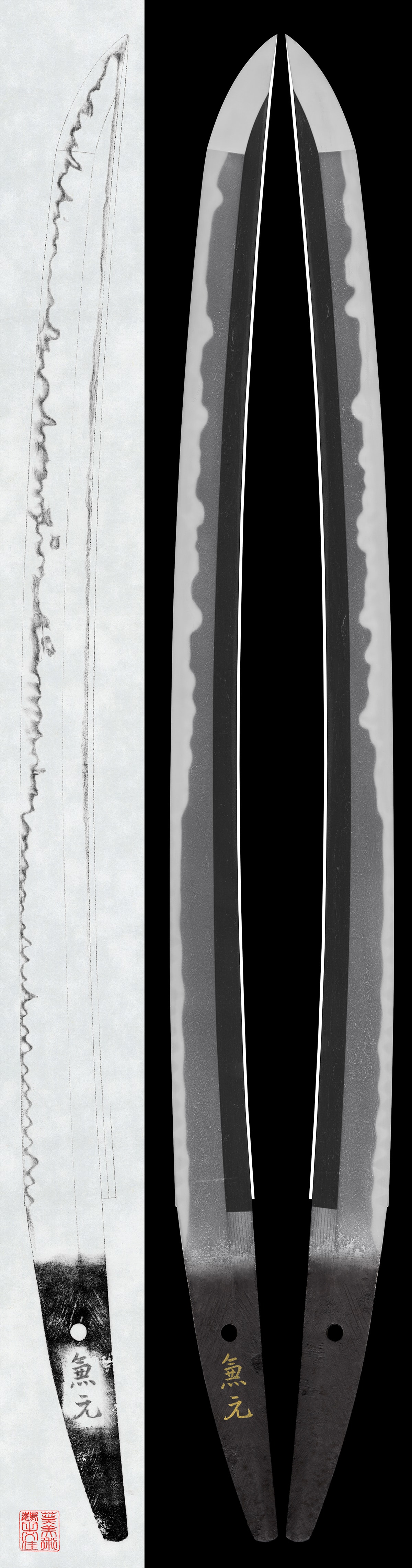
Kanemoto (兼元) worked at Akasaka in Mino Province, and the line takes its place among the smiths of the late Muromachi period whom the NBTHK registers under the Mino-den tradition centered on Seki. The setsumei place the family within the Sue-Seki (Sue-Mino) milieu, naming Kanemoto alongside Kanesada as the two leading figures of the province in this era; one tantō note instead pairs the name with Kaneshiba, and another with Izumi no Kami Kaneshige, marking the company the line kept. The name passed through successive generations, and the records repeatedly state that distinguishing each generation has not been definitively settled. Dated long signatures reading "Nōshū Akasaka-jū Kanemoto" survive from the Meiō, Bunki, Daiei, Kyōroku, and Eishō eras, while two-character signatures bear no date. The first generation is documented through pieces dated Meiō 6, 8, 9, and 10, all giving the Akasaka residence; the most accomplished hand, and the one the world singles out under the sobriquet "Magoroku Kanemoto," is the second generation. The shared vocabulary of the line is the sanbonsugi (three-cedar) gunome, a sequence of linked pointed crests that rise and fall in groups. The ground is Mino-den through and through: itame-hada mixed with mokume and flowing masame, tending toward standing grain (hada-dachi), with fine ji-nie, chikei, and a whitish shirake-utsuri that the setsumei call out again and again. The temper mixes togariba (pointed elements) and gunome, is nioi-dominant with ko-nie, and runs sunagashi, kinsuji, and occasional tobiyaki; the bōshi is typically midare-komi turning in ko-maru, often described as Jizō-like with hakikake or a falling kaeri. The chief means of separating the second generation from the later line is regularity: as the generations descend, the pointed crests grow sharply angular and standardized, whereas Magoroku's sanbonsugi is deliberately uneven, the gunome heads rounded in places, and the pattern shifts freely into nihonsugi, yonsugi, and gosugi groupings of two, four, and five. The records describe this as a gyōsō (cursive, free) manner.
The first generation, by contrast, does not emphasize sanbonsugi at all, favoring gunome mixed with gunome-chōji and at times yubashiri and tobiyaki; both generations also made suguha, and one tantō is an uncommon Rai-utsushi in elegant straight temper that evokes Kaneyuki. For kantei, the line is read through the standing Mino grain, the shirake-utsuri, and above all the irregular sanbonsugi, with the leaning bōshi a noted point: the records observe that the honka model and these blades share a bōshi that falls over. Named and documented works recur across the register. A naginata dated Kyōroku 1 (1528) carries the full Akasaka signature and is valued as documentary source material, dated two-character pieces being scarce. A katana bearing a kinzōgan inscription on the reverse is known as "Sasatsuyu Kanemoto" and is recorded in the hands of Makishima Kenmotsu Akishige, of the same clan as Furuta Kosukezaemon. The "Aoki Kanemoto," a second-generation work, is said to be the sword with which Aoki Ichishige, a retainer of Tokugawa Ieyasu, killed Magara Masataka of the Asakura side at the Battle of Anegawa in Genki 1 (1570). A further katana carries a Genna 1 (1615) kinzōgan cutting-test inscription by Nakagawa Saheita reading "two bodies," and one suguha katana descended in the Echizen Matsudaira family. Two katana signed Kanemoto sit in the Imperial Collection (Gyobutsu). Across these works the line is registered as the cutting-edged representative of Sue-Seki, its hand recognized wherever the three-cedar temper runs uneven over standing Mino steel. Learn more →
| Smith | Era | Designated |
|---|---|---|
| Kanemoto兼元 | 1521-1528 | 30 |
| Kanemoto兼元 | 1532-1555 | 0 |
| Kanemoto兼元 | 1573-1592 | 0 |
| Kanemoto兼元 | 1592-1596 | 0 |
| Kanemoto兼元 | 1818-1830 | 0 |
Mino in the Muromachi period
Sengoku Seki was an industry: smiths organized under their tutelary Kasuga shrine, arming the war bands of central Japan. Magoroku Kanemoto’s sanbonsugi and the finest Kanesada work prove quality survived inside mass production.
We could not find an authenticity certificate on the seller’s listing. Japanese swords and fittings are normally papered by the NBTHK (or the NTHK). Without one, the attribution is the seller’s own assessment and has not been independently verified — treat it with caution and ask the dealer about certification before buying.
If, due to our fault, the item differs significantly from its proper condition, the item may be returned. Cooling-off is within one week of the item's arrival.
This is a naginata made by Kanemoto in Mino province during the late Muromachi period (around Tenbun era). Kanemoto is known for producing sharp blades that were highly valued by military commanders during the Sengoku period. The smiths of the Kanemoto school extensively researched and refined their techniques, eventually achieving the level of Saijo O-Wazamono.
NihontoWatchMino-den · Mino
29 pieces on the market now
Kanemoto (兼元) worked at Akasaka in Mino Province, and the line takes its place among the smiths of the late Muromachi period whom the NBTHK registers under the Mino-den tradition centered on Seki. The setsumei place the family within the Sue-Seki (Sue-Mino) milieu, naming Kanemoto alongside Kanesada as the two leading figures of the province in this era; one tantō note instead pairs the name with Kaneshiba, and another with Izumi no Kami Kaneshige, marking the company the line kept. The name passed through successive generations, and the records repeatedly state that distinguishing each generation has not been definitively settled. Dated long signatures reading "Nōshū Akasaka-jū Kanemoto" survive from the Meiō, Bunki, Daiei, Kyōroku, and Eishō eras, while two-character signatures bear no date. The first generation is documented through pieces dated Meiō 6, 8, 9, and 10, all giving the Akasaka residence; the most accomplished hand, and the one the world singles out under the sobriquet "Magoroku Kanemoto," is the second generation. The shared vocabulary of the line is the sanbonsugi (three-cedar) gunome, a sequence of linked pointed crests that rise and fall in groups. The ground is Mino-den through and through: itame-hada mixed with mokume and flowing masame, tending toward standing grain (hada-dachi), with fine ji-nie, chikei, and a whitish shirake-utsuri that the setsumei call out again and again. The temper mixes togariba (pointed elements) and gunome, is nioi-dominant with ko-nie, and runs sunagashi, kinsuji, and occasional tobiyaki; the bōshi is typically midare-komi turning in ko-maru, often described as Jizō-like with hakikake or a falling kaeri. The chief means of separating the second generation from the later line is regularity: as the generations descend, the pointed crests grow sharply angular and standardized, whereas Magoroku's sanbonsugi is deliberately uneven, the gunome heads rounded in places, and the pattern shifts freely into nihonsugi, yonsugi, and gosugi groupings of two, four, and five. The records describe this as a gyōsō (cursive, free) manner.
The first generation, by contrast, does not emphasize sanbonsugi at all, favoring gunome mixed with gunome-chōji and at times yubashiri and tobiyaki; both generations also made suguha, and one tantō is an uncommon Rai-utsushi in elegant straight temper that evokes Kaneyuki. For kantei, the line is read through the standing Mino grain, the shirake-utsuri, and above all the irregular sanbonsugi, with the leaning bōshi a noted point: the records observe that the honka model and these blades share a bōshi that falls over. Named and documented works recur across the register. A naginata dated Kyōroku 1 (1528) carries the full Akasaka signature and is valued as documentary source material, dated two-character pieces being scarce. A katana bearing a kinzōgan inscription on the reverse is known as "Sasatsuyu Kanemoto" and is recorded in the hands of Makishima Kenmotsu Akishige, of the same clan as Furuta Kosukezaemon. The "Aoki Kanemoto," a second-generation work, is said to be the sword with which Aoki Ichishige, a retainer of Tokugawa Ieyasu, killed Magara Masataka of the Asakura side at the Battle of Anegawa in Genki 1 (1570). A further katana carries a Genna 1 (1615) kinzōgan cutting-test inscription by Nakagawa Saheita reading "two bodies," and one suguha katana descended in the Echizen Matsudaira family. Two katana signed Kanemoto sit in the Imperial Collection (Gyobutsu). Across these works the line is registered as the cutting-edged representative of Sue-Seki, its hand recognized wherever the three-cedar temper runs uneven over standing Mino steel. Learn more →
| Smith | Era | Designated |
|---|---|---|
| Kanemoto兼元 | 1521-1528 | 30 |
| Kanemoto兼元 | 1532-1555 | 0 |
| Kanemoto兼元 | 1573-1592 | 0 |
| Kanemoto兼元 | 1592-1596 | 0 |
| Kanemoto兼元 | 1818-1830 | 0 |
Mino in the Muromachi period
Sengoku Seki was an industry: smiths organized under their tutelary Kasuga shrine, arming the war bands of central Japan. Magoroku Kanemoto’s sanbonsugi and the finest Kanesada work prove quality survived inside mass production.
We could not find an authenticity certificate on the seller’s listing. Japanese swords and fittings are normally papered by the NBTHK (or the NTHK). Without one, the attribution is the seller’s own assessment and has not been independently verified — treat it with caution and ask the dealer about certification before buying.
If, due to our fault, the item differs significantly from its proper condition, the item may be returned. Cooling-off is within one week of the item's arrival.