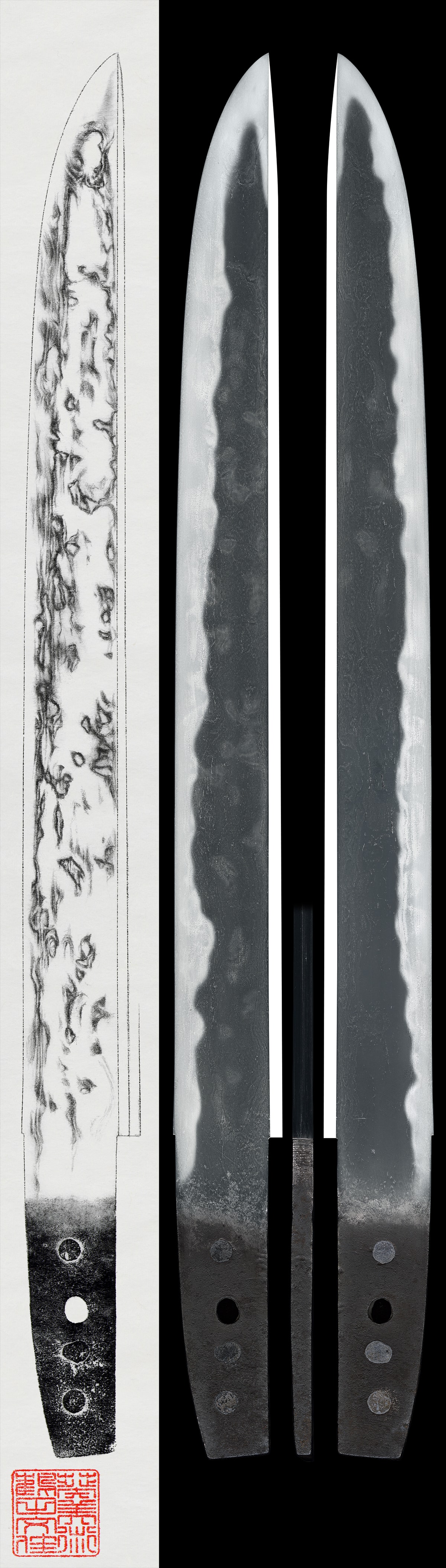
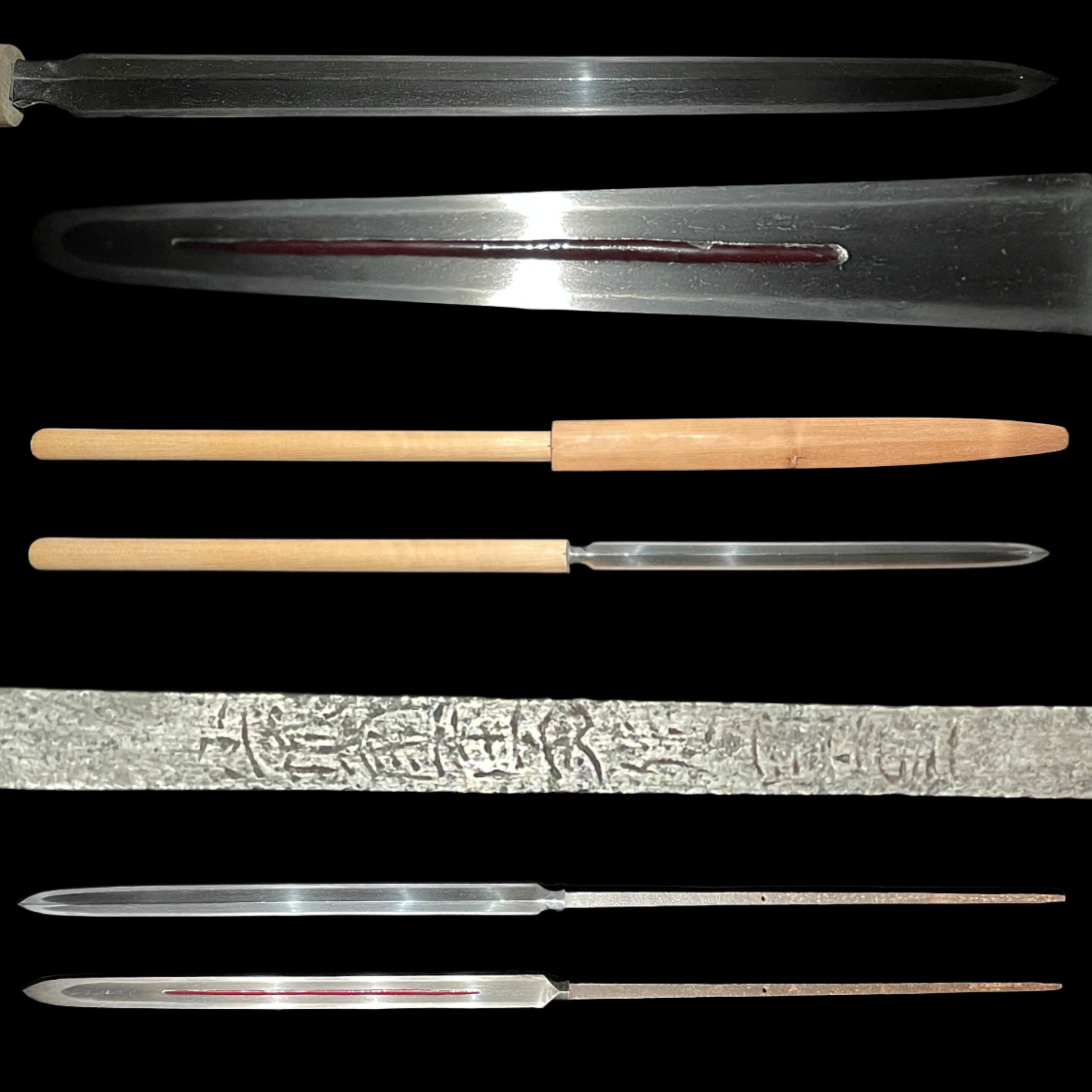
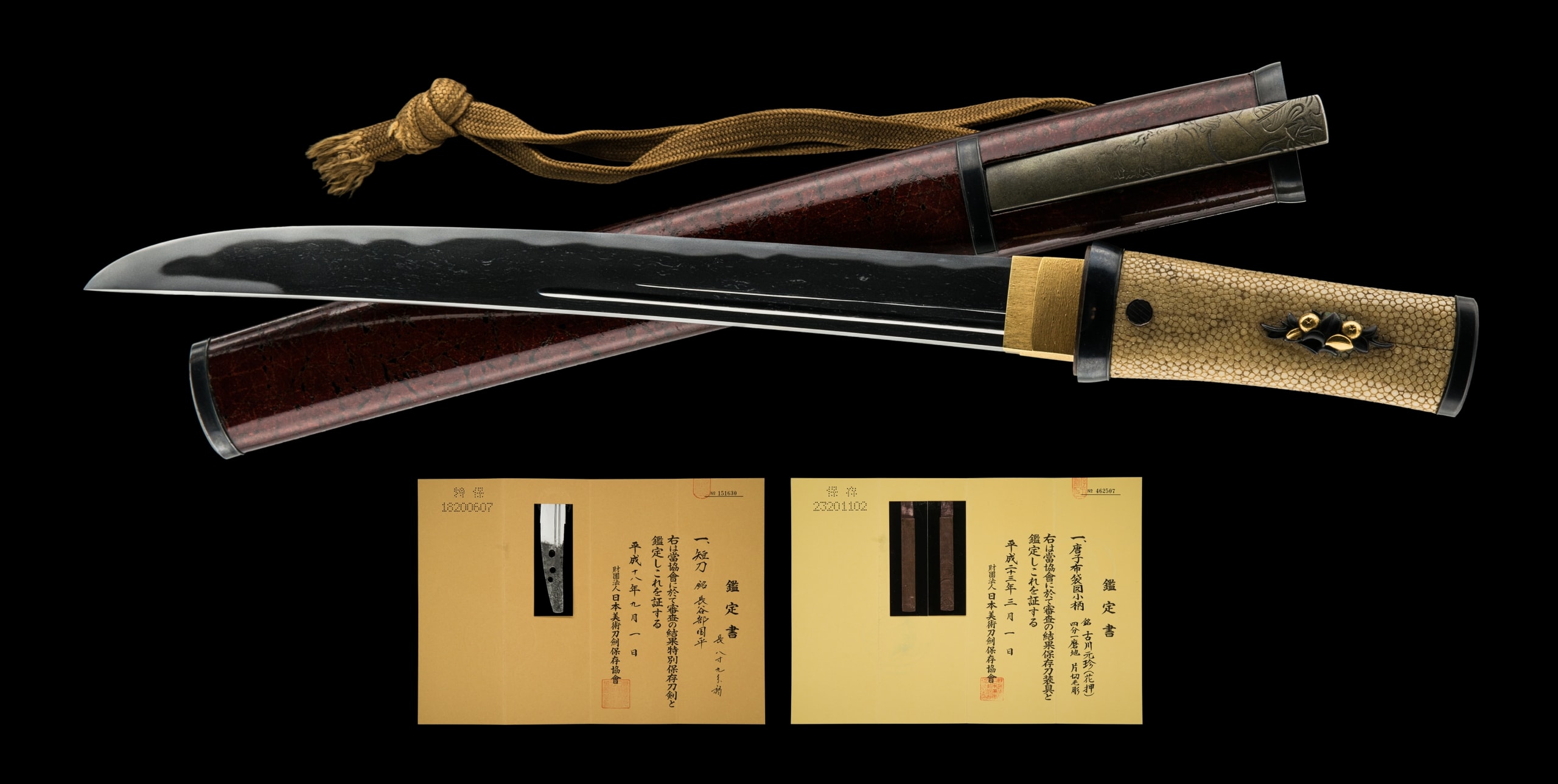
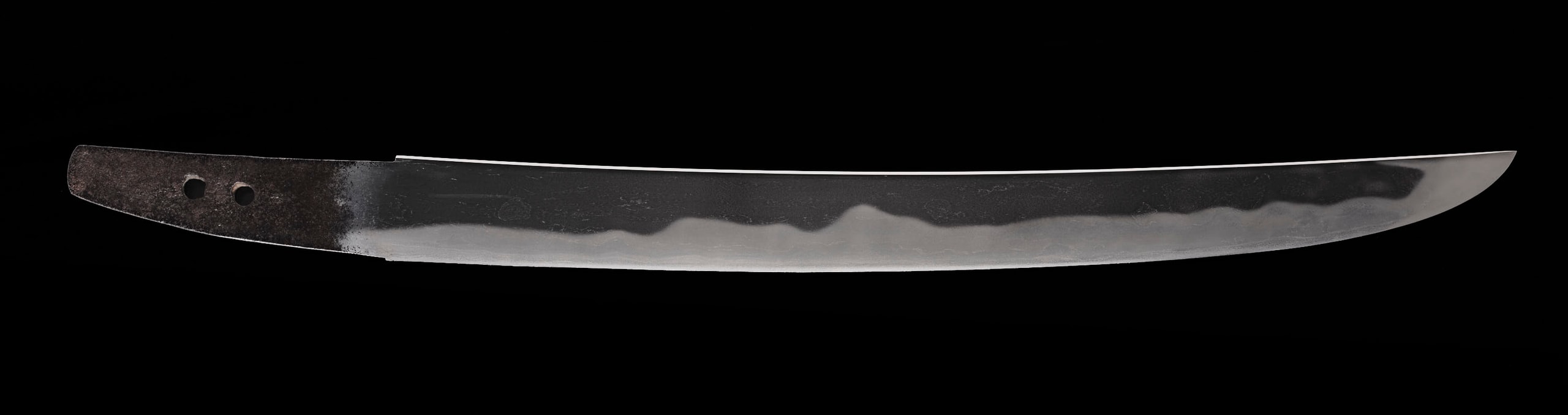
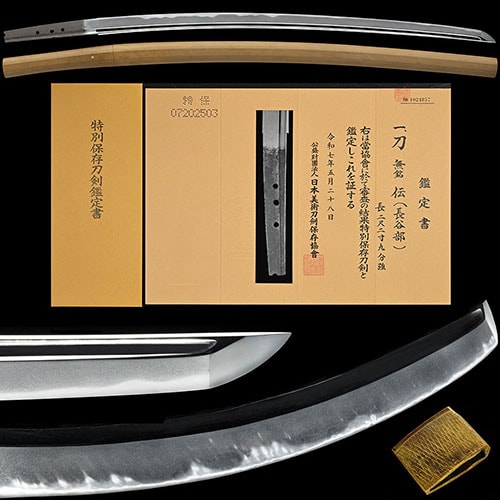
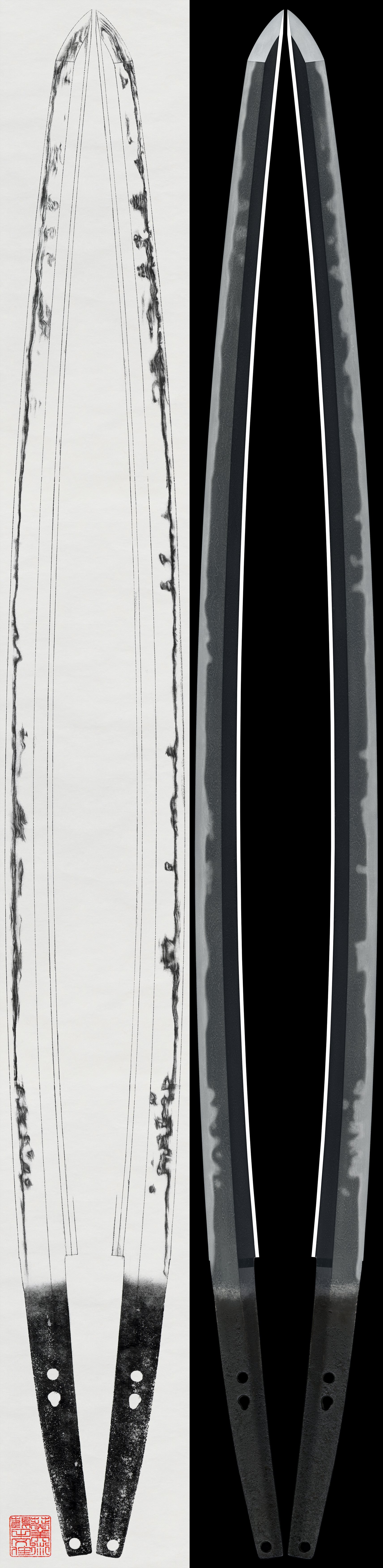
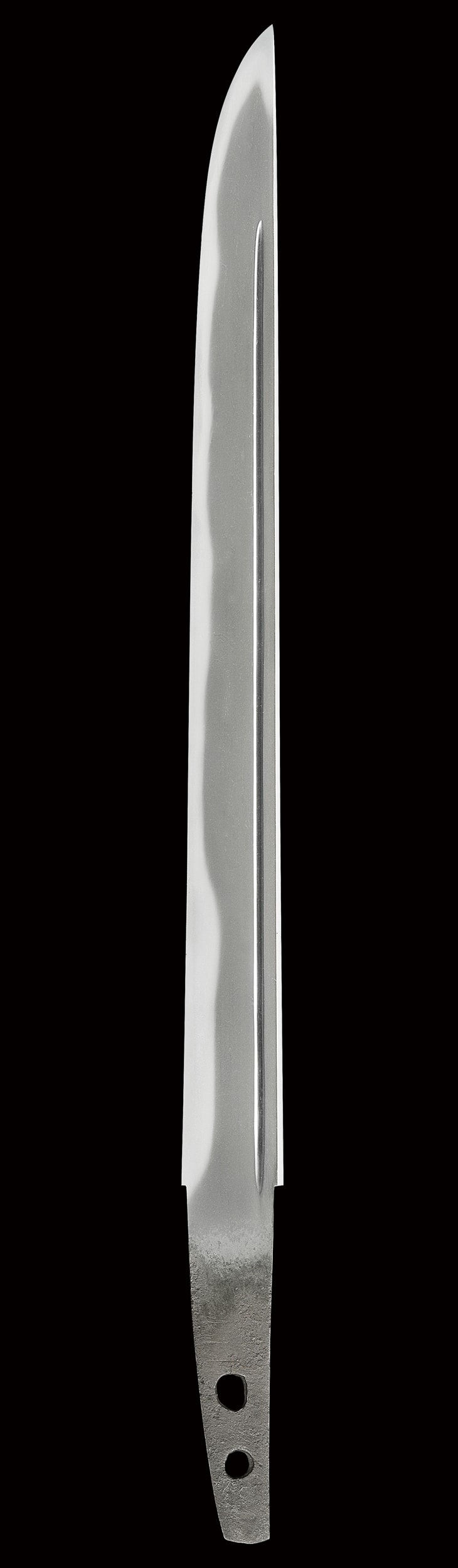
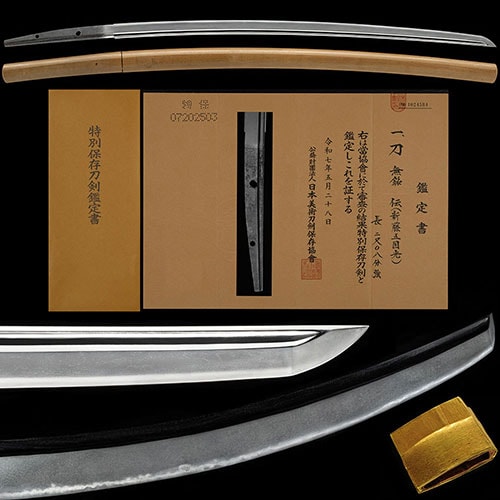
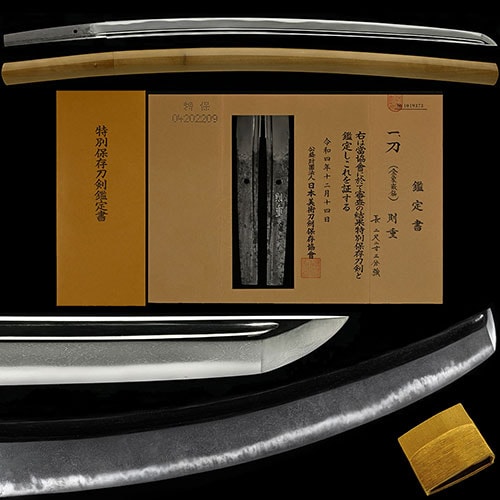
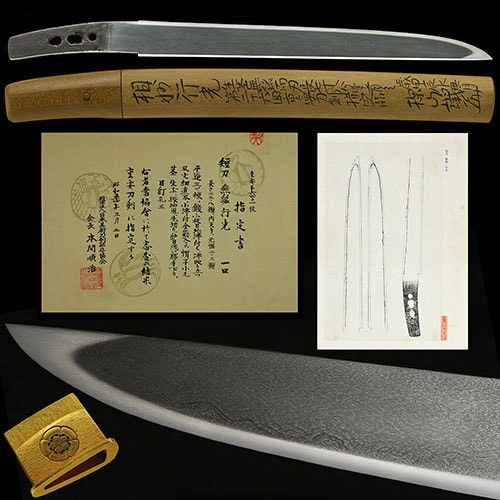
The Hasebe school (長谷部) took its base in Kyoto, at Gojo-bomon Inokuma in Yamashiro, where it settled during the Nanbokucho period after a longer migration that the published sources now read as a movement out of Yamato, through maturation in Sagami, and at last into the capital. Its founder, Hasebe Kunishige, carried the Soshu-den learned in the orbit of Masamune, counted in the old reckoning among the Masamune-juttetsu, and his Yamato substrate shows through the Soshu manner in his steel. With the Nobukuni school, the Hasebe smiths are named as the pair that represent the Yamashiro workshops of the mid-Nanbokucho, and within the line itself Kunishige and his close successor Kuninobu (transmitted variously as younger brother or pupil) stand as the two principal hands, beside whom Kunihira, Munenobu and Shigenobu survive in a small body of signed work. The collective manner is set, blade after blade, against the Sagami smiths Hiromitsu and Akihiro, who worked the same flamboyant hitatsura in the same years. The forging is itame with the grain standing across the surface, tending toward nagare and masame toward both the edge side and the ridge side, with thick ji-nie and chikei entering, and on the broadest pieces a jifu-like tone; the masame strain near the ha-yori and mune-yori, uncommon in Sagami work, is the surest hallmark the school owns, the Yamato grain surfacing where the Soshu pair show none. Over this the temper builds from notare mixed with gunome rather than the Soshu base of choji and gunome, the nioiguchi deep, ko-nie thick, kinsuji and sunagashi running frequently and long, until tobiyaki, yubashiri and muneyaki worked over ji and mune carry the whole into full hitatsura. The boshi runs large and round, the return burned far down the mune as yakisage until it joins the muneyaki, a separation from the pointed, thrusting boshi of the Sagami pair. An extremely thin kasane is a habitual trait of the construction, and the carvings (bonji, suken, kurikara, gomabashi and grooves near the mune) recur throughout.
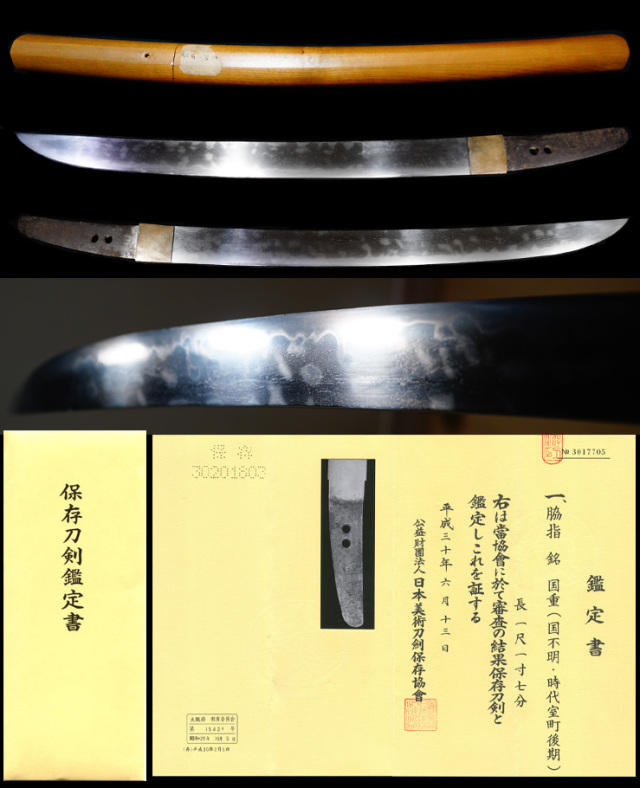
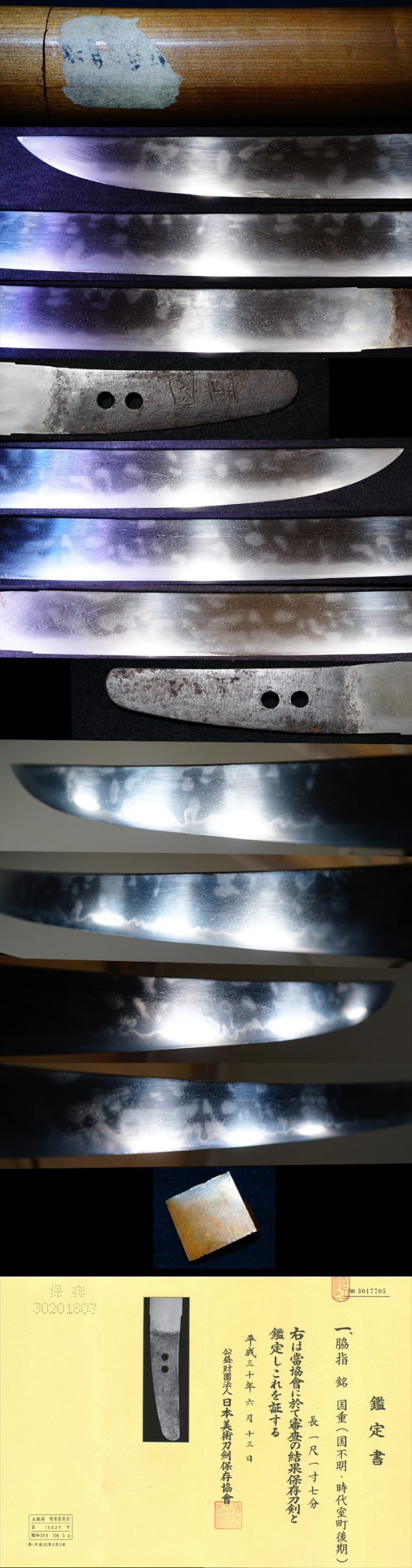
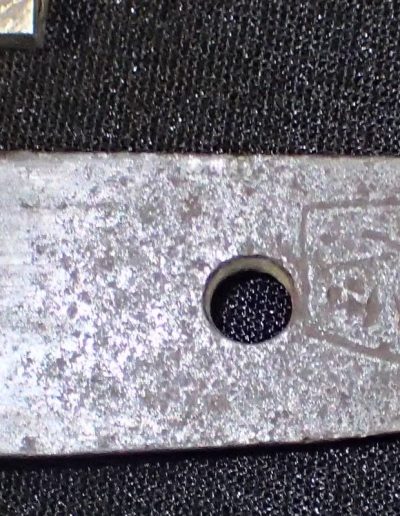
The recurring divergences are individual: Kunishige holds to the grounded mainstream and a quieter, rarer pole of suguha or shallow notare, while Kuninobu turns his gunome angular toward an arrow-nock (yahazu) shape and carries the richest carving in the group. To kantei a Hasebe blade, one reads first the form, which is the period itself: hira-zukuri with mitsu-mune, wide in mihaba, thin in kasane, sun-nobi with a shallow sori, the build of a Nanbokucho hira-zukuri wakizashi or tanto carrying the full hitatsura over notare-gunome, the round long-returning boshi, and the diagnostic masame at edge and back. Tachi-length work is scarce across the line and survives largely as o-suriage mumei katana, the attribution carried by build or by kinzogan-mei; reliably signed tachi are the rarest of all, and signed Hasebe Kunishige in five characters near the centre of the nakago, the kuni-gamae at times enclosing gyoku or o, marks the bulk of the founder's surviving pieces. Kunishige is graded Jo-jo saku by Fujishiro and stands at the head of the tradition, his National Treasure the meibutsu Heshikiri Hasebe, an o-suriage wakizashi whose original signature survives as a gaku-mei, long held by the Kuroda of Chikuzen and cited again and again as the work whose quality confirms the Masamune connection. Other named works anchor the school: the Atsuta Kuninobu at Atsuta Jingu, the signed Karakashi tachi that descended in the Uesugi house among the swords selected by Uesugi Kagekatsu, and the o-suriage kinzogan katana of the Tokugawa shogunal house. The denrai roll runs through the daimyo families (Honda, Naruse, Owari Tokugawa, Ikeda), several pieces carry Hon'ami origami, and the kinzogan attributions are read as the brush of Hon'ami Mitsutsune. The patrimonial National Treasure and Important Cultural Properties are held by shrine and museum and do not trade; what a private collector may realistically encounter is one of the signed wakizashi or tanto of the tradeable tier, and even those appear only from time to time, a secure Hasebe a landmark when one does. Learn more →