Hizen swords were a domain enterprise: the Nabeshima sent Tadayoshi to study under Umetada Myōju around 1596, then built a licensed school around him. Nine generations carried its famously consistent konuka-hada work into the Meiji era.
 NihontoWatchNihontoWatch
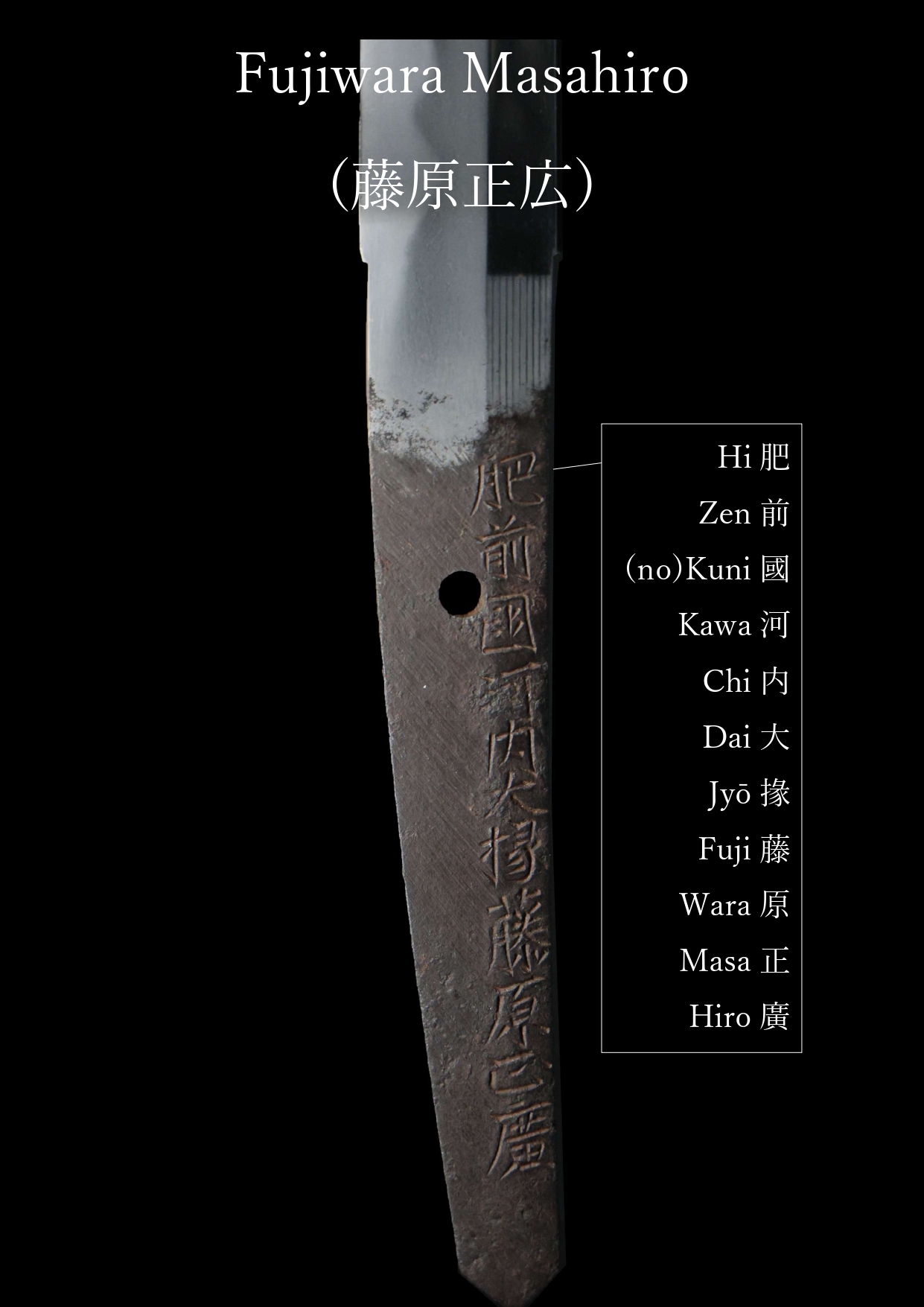
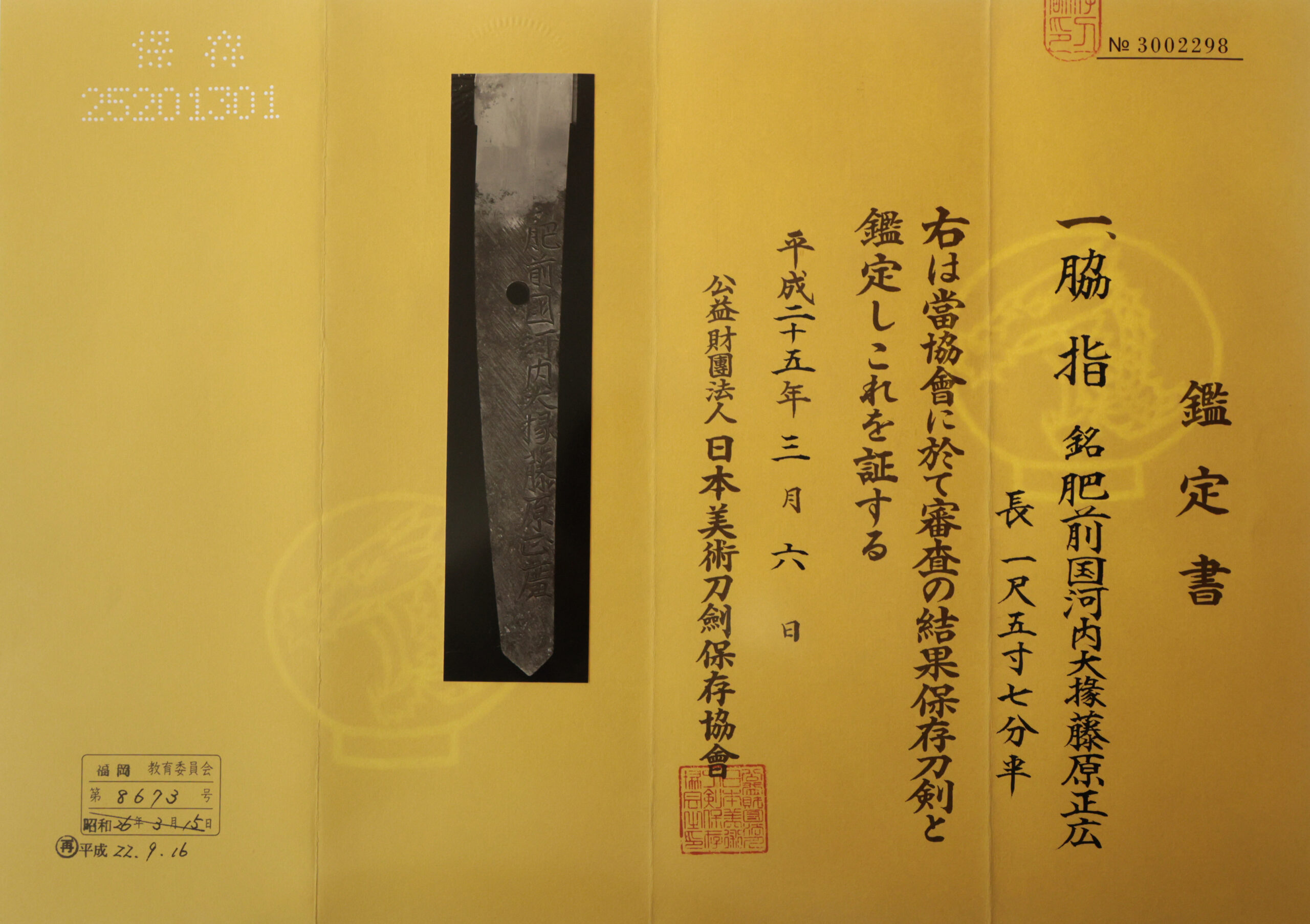
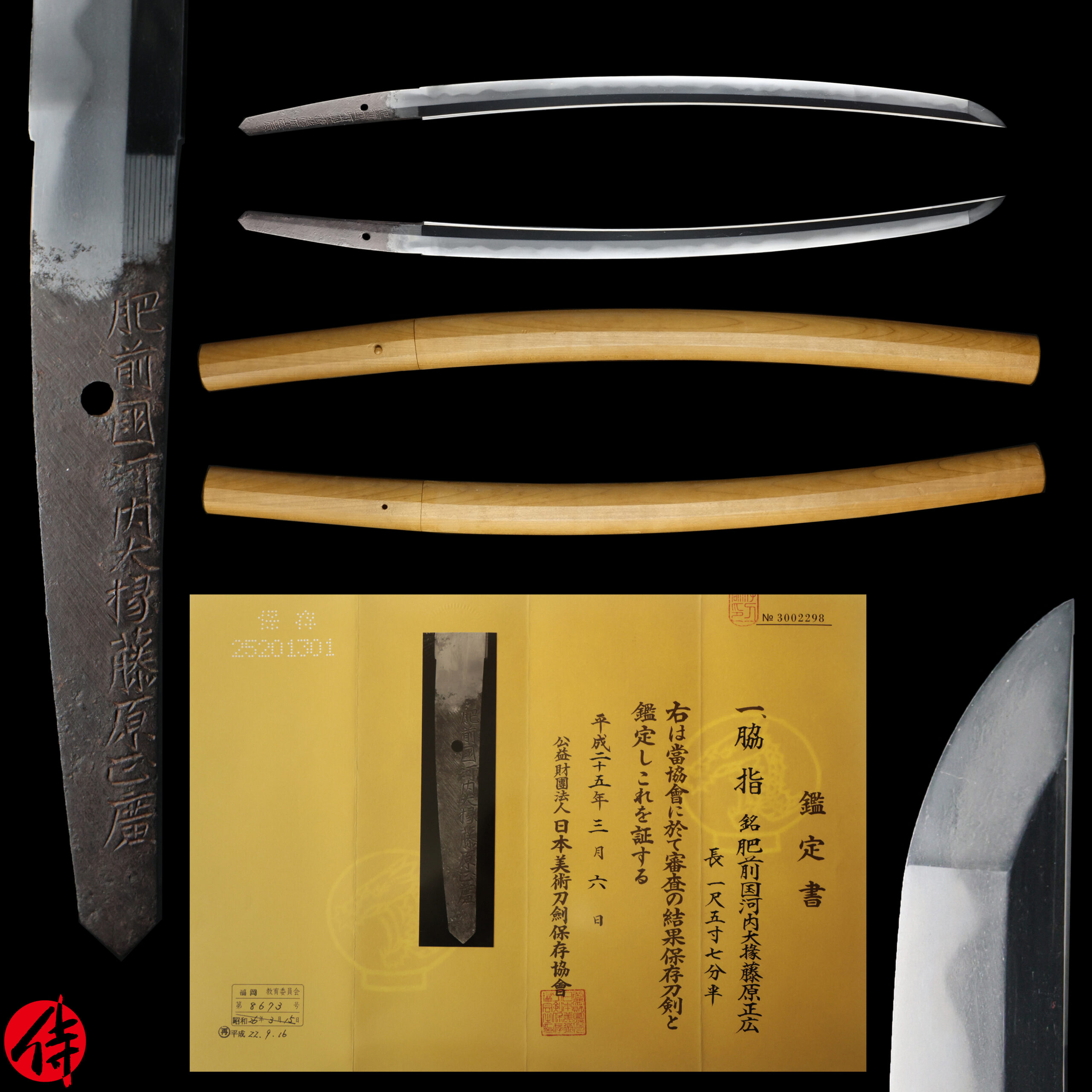
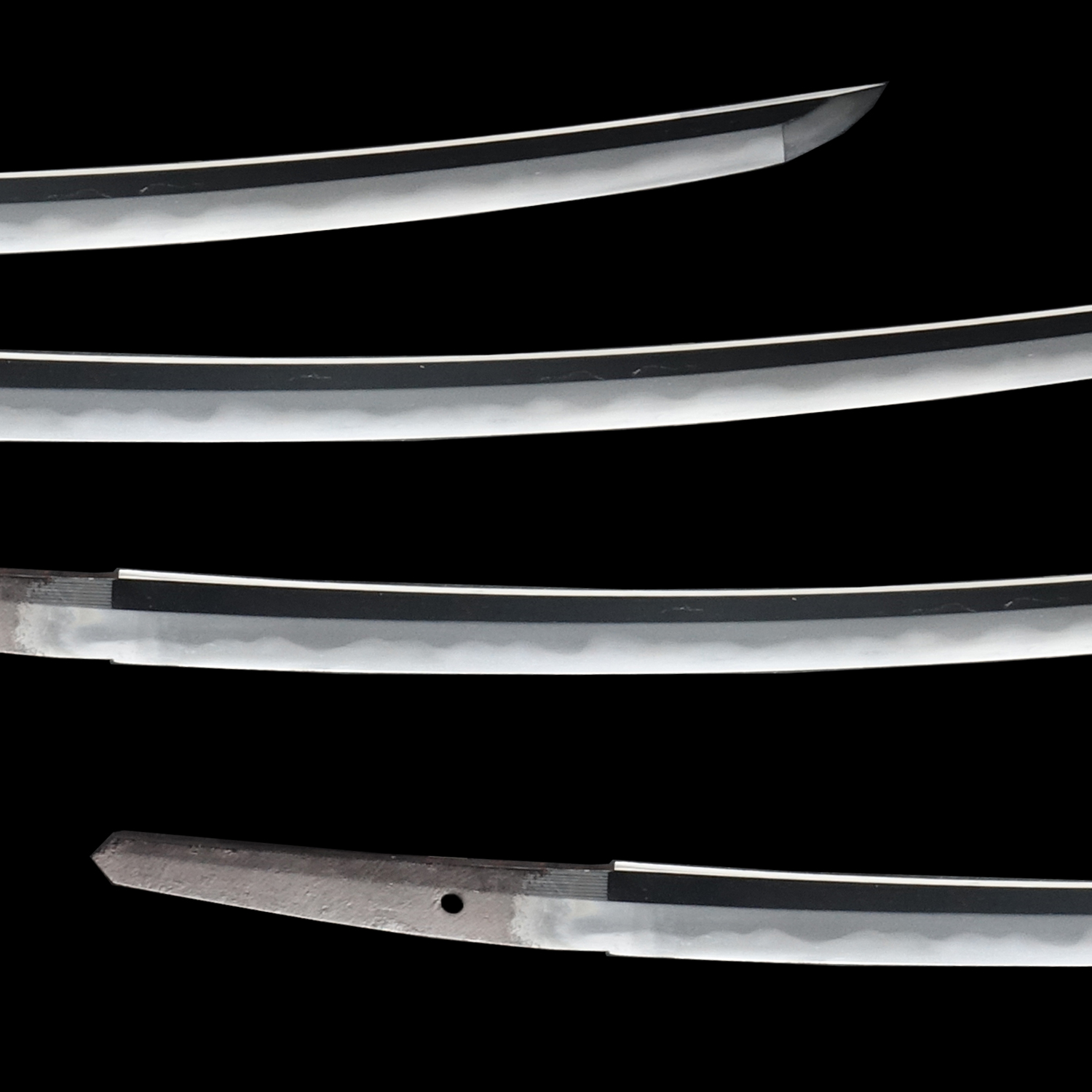
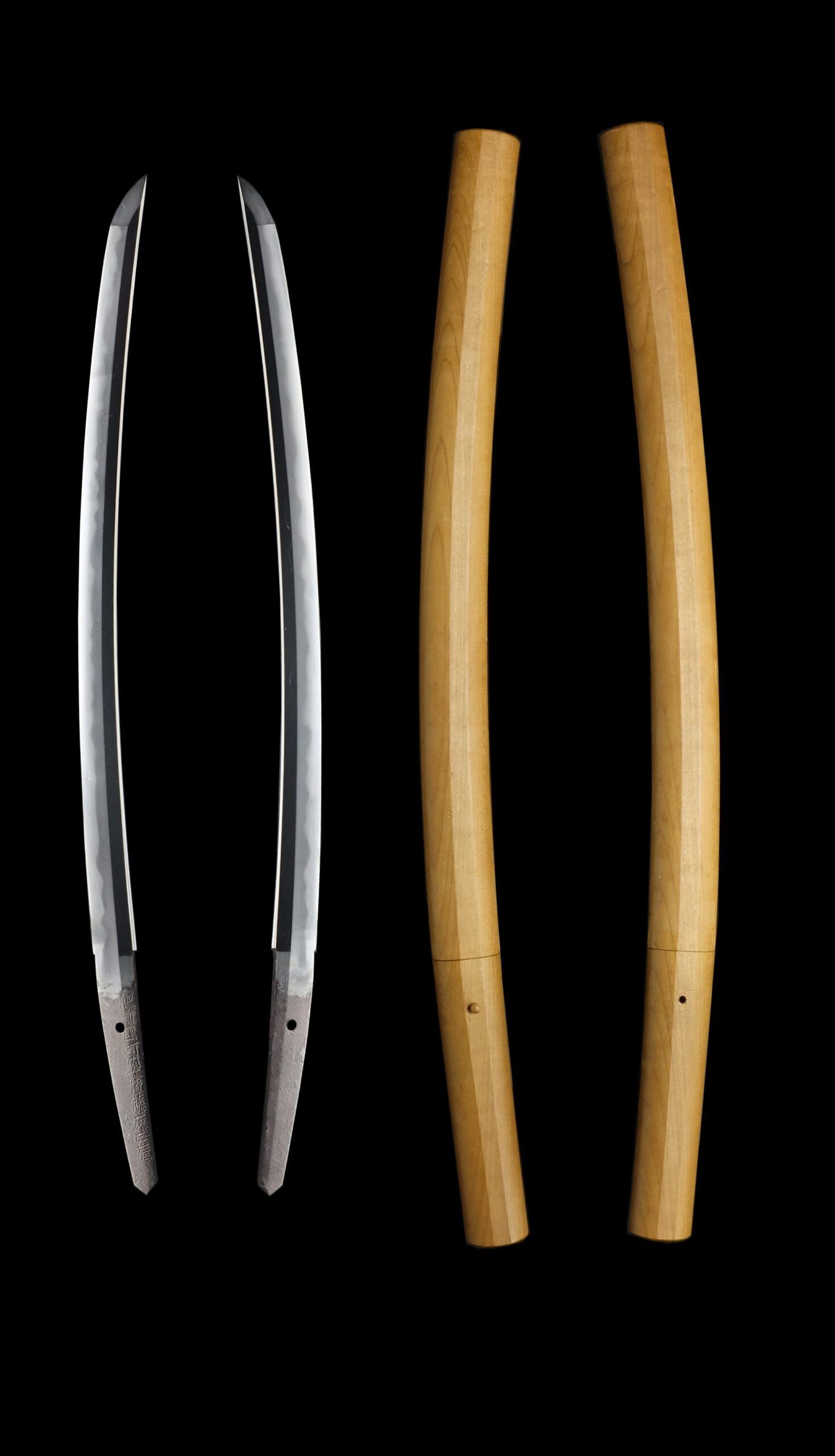
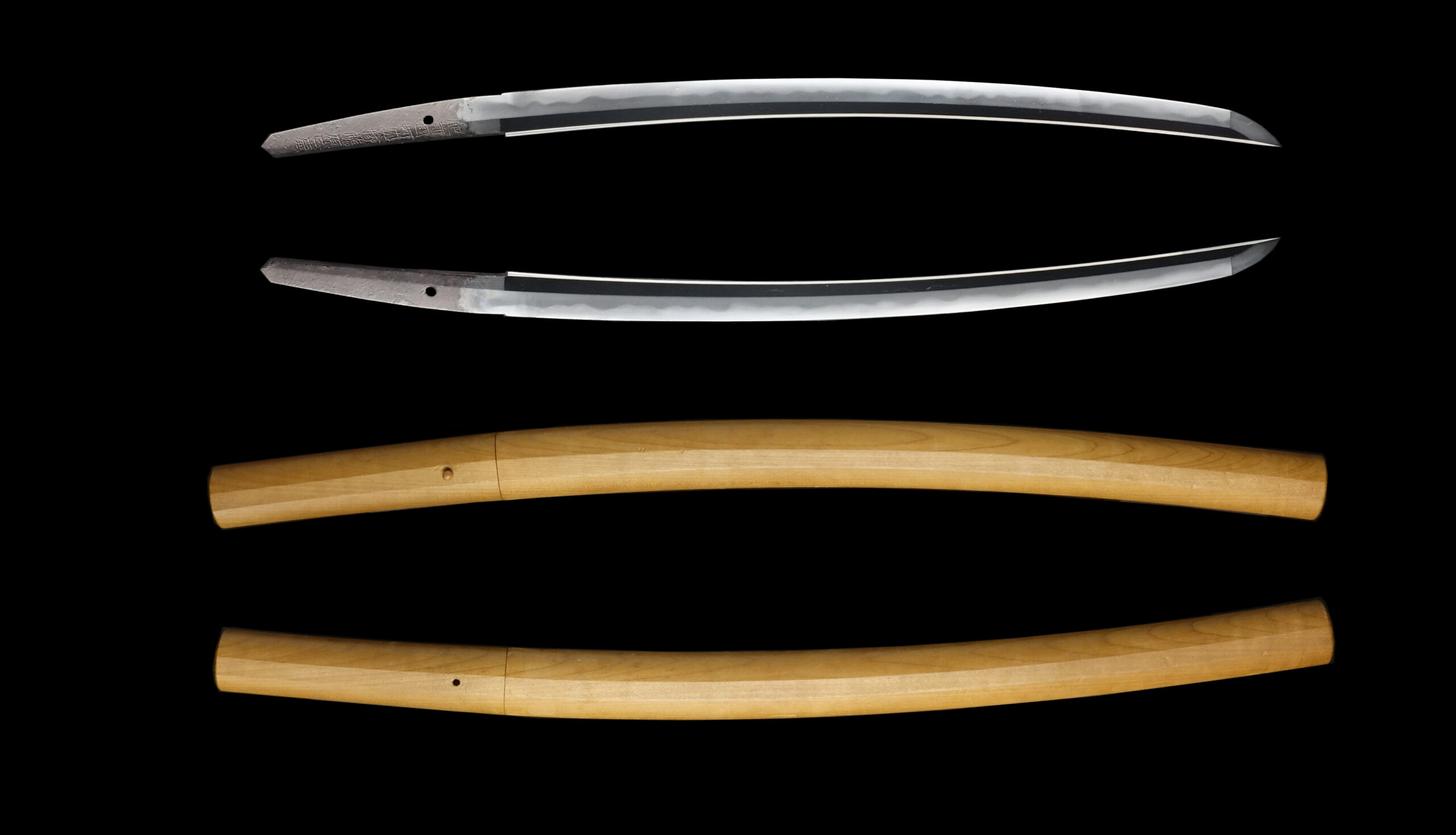
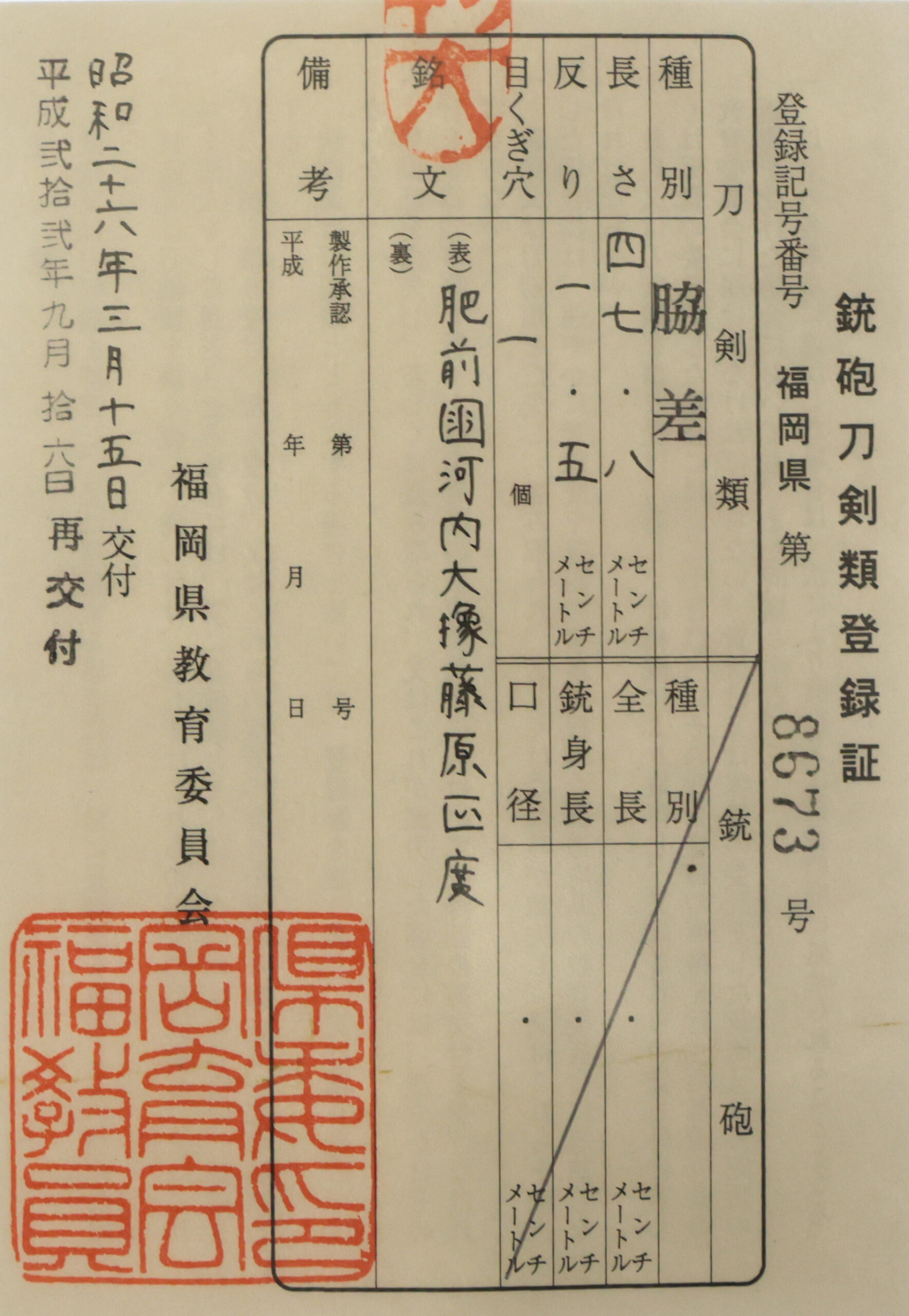
Summary This blade was signed by Hizen no Kuni Kawachi Daijyo Fujiwara Masahiro (肥前国河内大掾藤原正広). Hizen Koku, located in Saga prefecture, is the place where Masahiro forged this blade. Kawachi Daijyo is an honorable official title given to a recognized swordsmith. Fujiwara Masahiro is his maker’s name. This maker’s name lasted a few generations during the early-late Edo period. And we believe this blade was forged by the first generation, who was especially active during the Kanei-Manji era (1624-1661). His lineage dates back to the beginning of the Edo period, when Tadayoshi, his grandfather, founded the school.Tadayoshi is one of the greatest swordsmiths in the early Edo period in Japanese sword history. The first-gen Mahiro was also a renowned swordsmith. The first-gen Masahiro started to serve Nabeshima Katsushige when he was 17. Nabeshima Katsushige became the head of Saga Domain in Hizen in 1607. The first-gen Masahiro was selected as Okakae Kaji for the Nabeshima clan, meaning he exclusively forged swords for the feudal family. Nabeshima clan ruled Hizenkoku during the Edo period, which indicates that Masahiro served a powerful feudal lord. It was quite honorable for any swordsmith to be an Okakae Kaji. It is said that Masahiro’s forging technique was so great that he sometimes forged swords on behalf of Tadayoshi. Hizenkoku had been flourishing through international trading. The swordsmiths in the Hizen province worked under the auspices of the Nabeshima clan like the first-gen Masahiro. They were able to produce beautiful Jigane-patterned blades, also known as Hizen To, using and mixing carbon steel made in western countries. The geographic location of this domain made it possible to have easy access to western carbon steel. The first-gen Tadayoshi (His father) The first-gen Tadayoshi was born and raised in the Saga domain. In 1596, under the domain’s order, he went to Kyoto to learn the sword-forging technique from Umetada Myojyu(埋忠明寿), one of the greatest swordsmiths in the early Edo period. He improved his craftsmanship and returned to the Saga domain two years later (1598). The first head of the Nabeshima clan, Nabeshima Katsushige, appreciated the work of the first-gen Tadayoshi very much. Then, Katsushige appointed him as his Okakaekaji, a swordsmith who exclusively forged swords for a specific domain or clan. And Tadayoshi started to stay near Saga castle, which is the headquarter of the Nabeshima clan. And, he founded Hizen Tadayoshi school, which trained more than 100 swordsmiths during the Edo period. Masahiro is one of them. It is appraised as a Hozon Token (保存刀剣) issued by NBTHK (Nihon Bijutsu Touken Hozon Kyokai: 日本美術刀剣保存協会). *Please keep in mind that there are a couple of Kitae Kizu and black rust on this blade. Authentication Paper They authenticated the blade on March 6th in the 25th year of Heisei (2013). They appraised it as Hozon Touken, the blade especially worth preserving for Japanese society. Registration Number It is called Jyu Ho Token Rui Torokusho (銃砲刀剣類登録証).
Hizen School肥前派
Offered by Samurai Museum

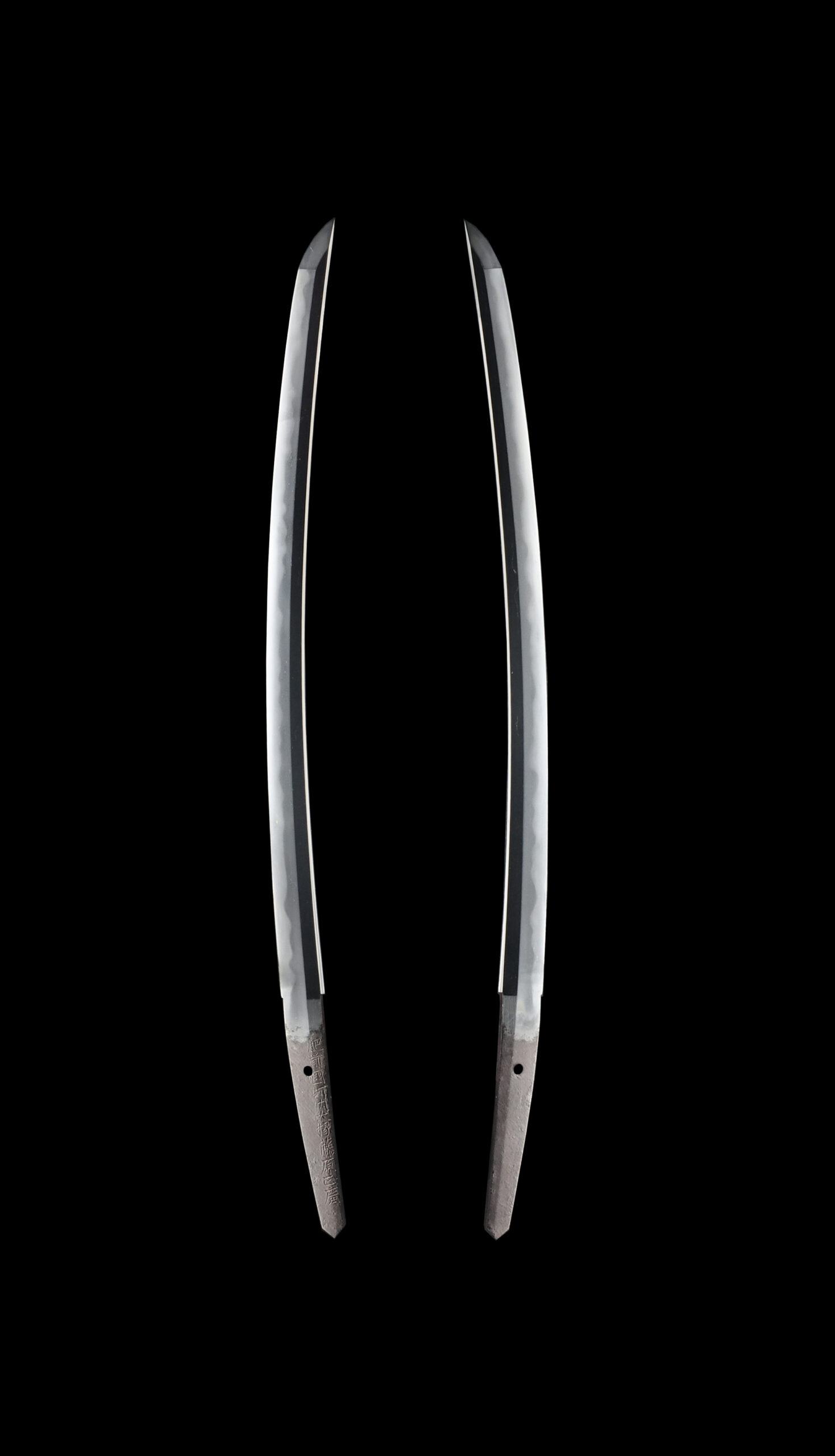
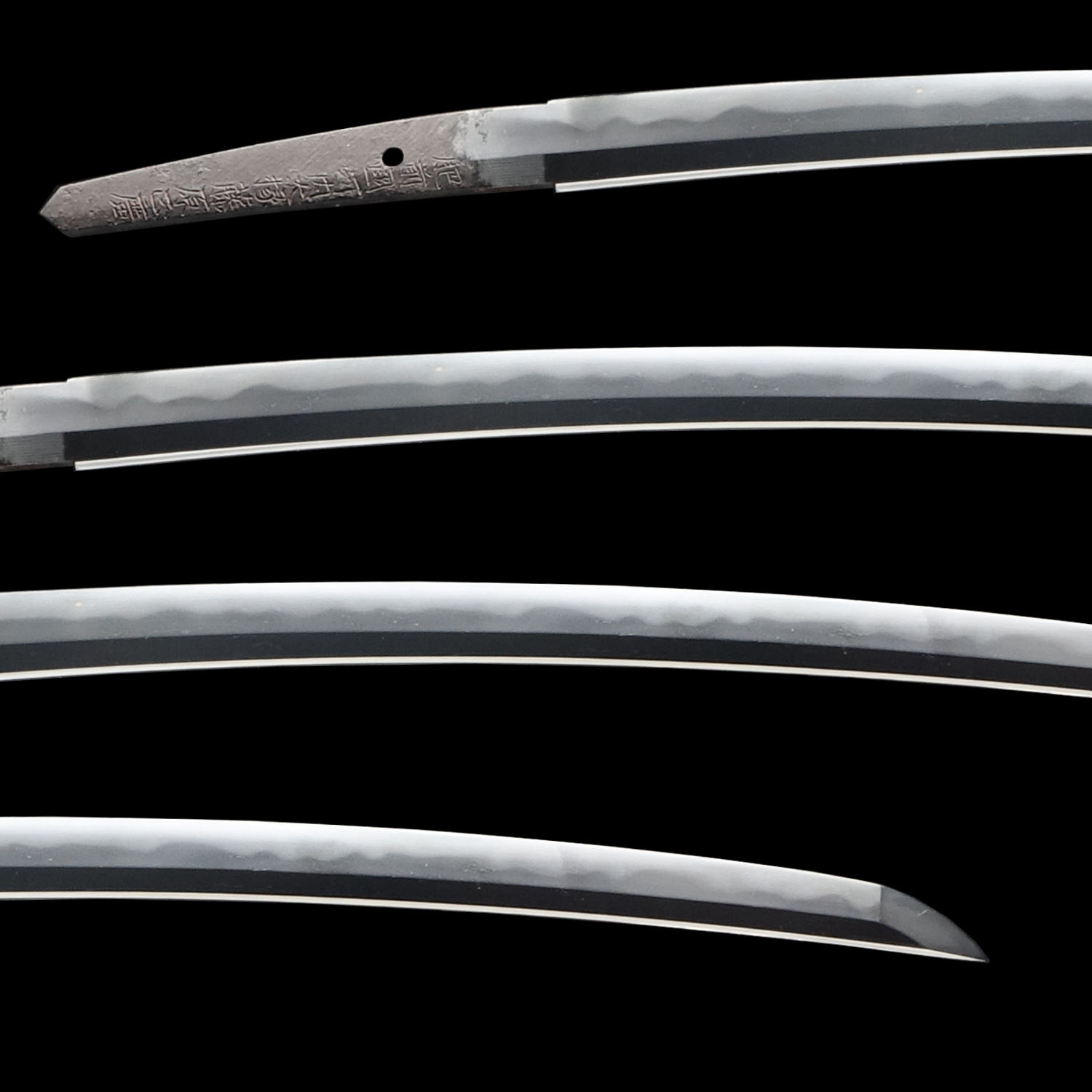
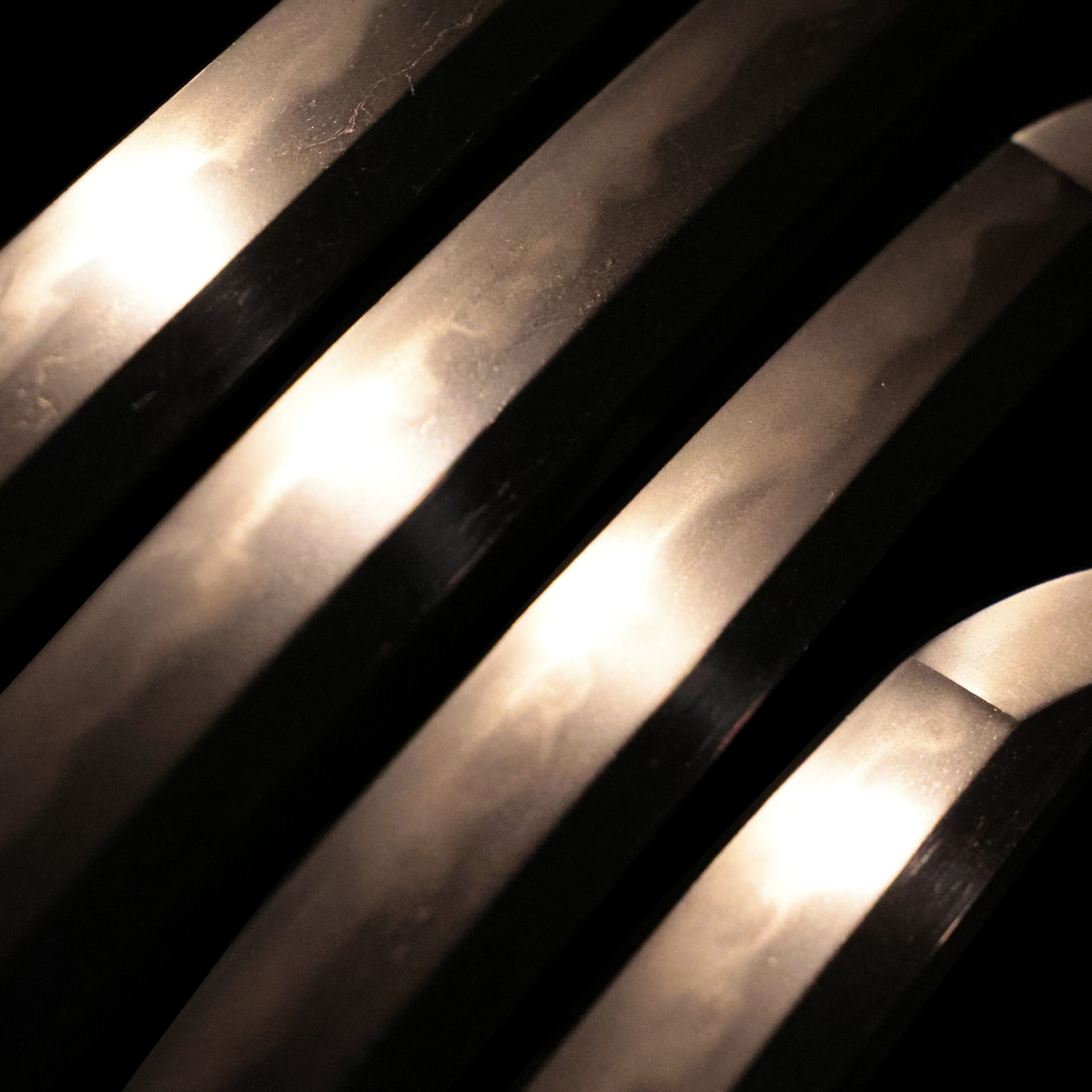
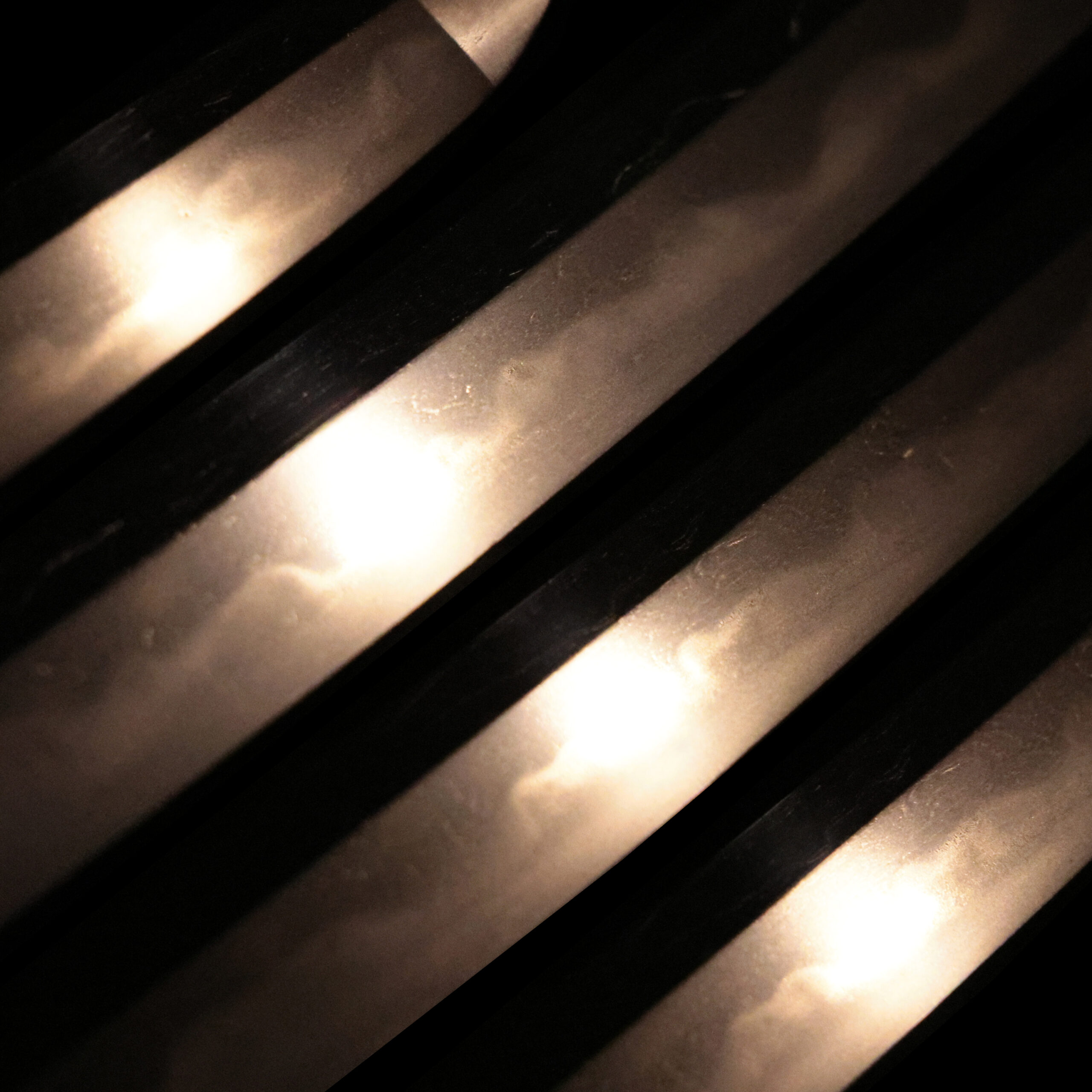
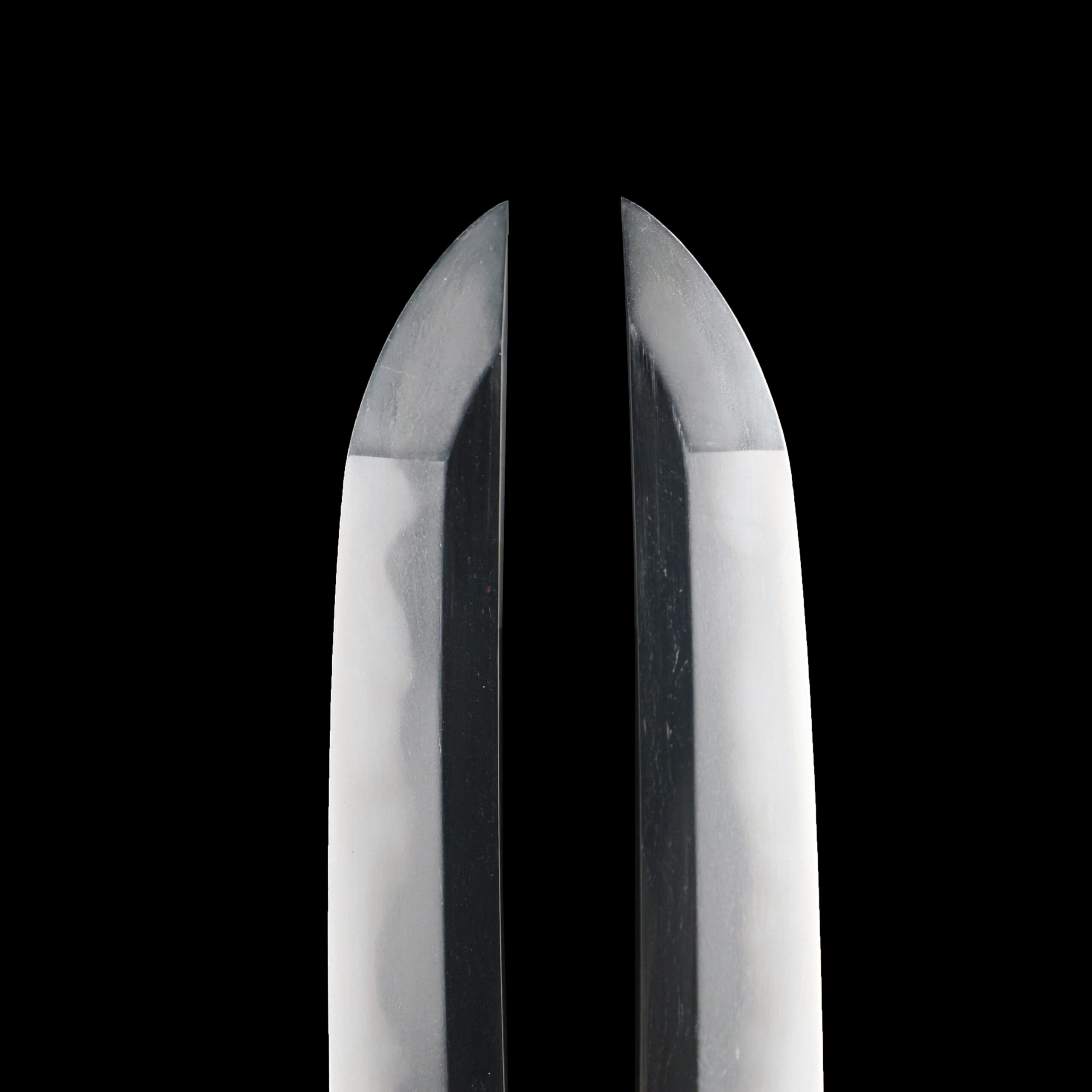
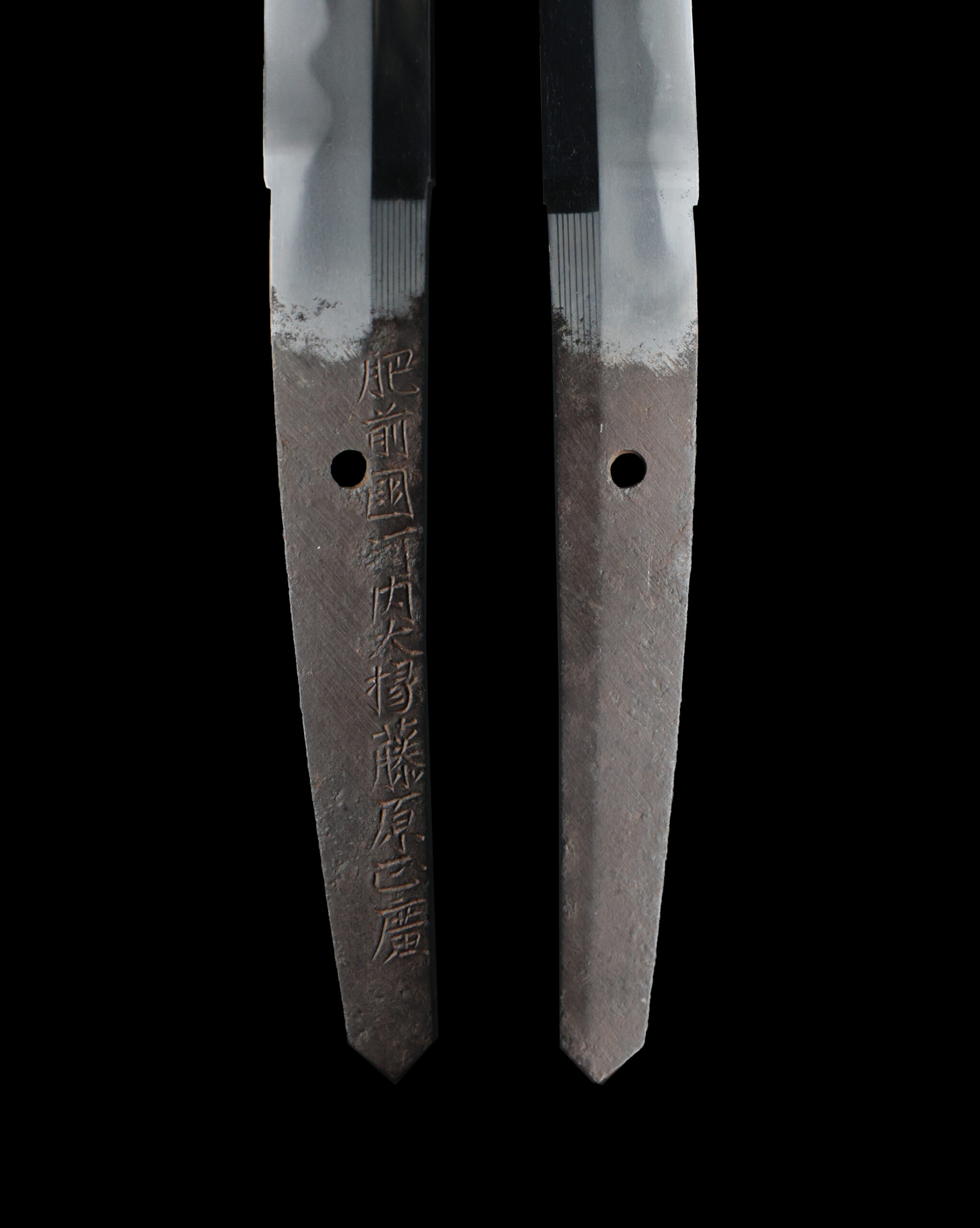
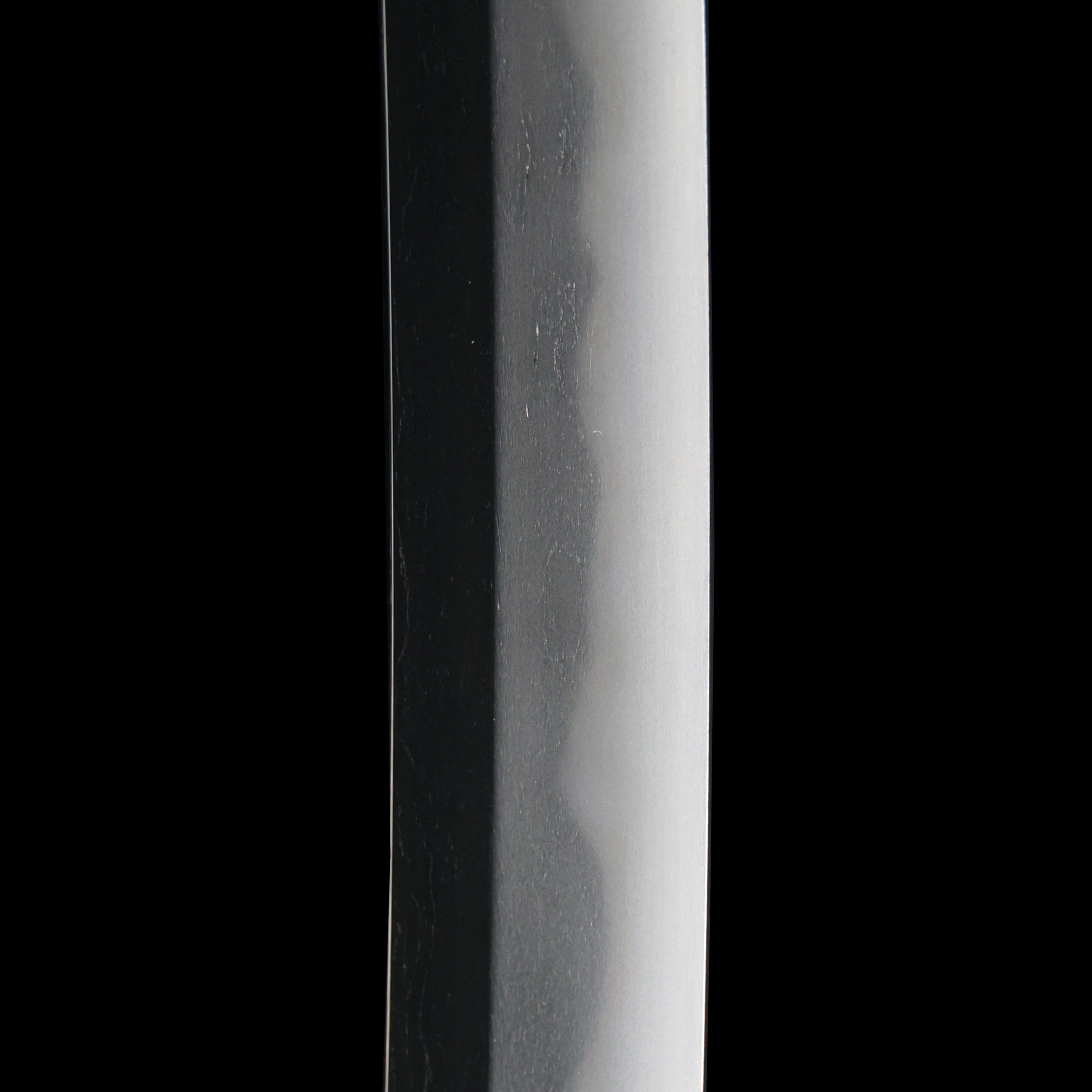
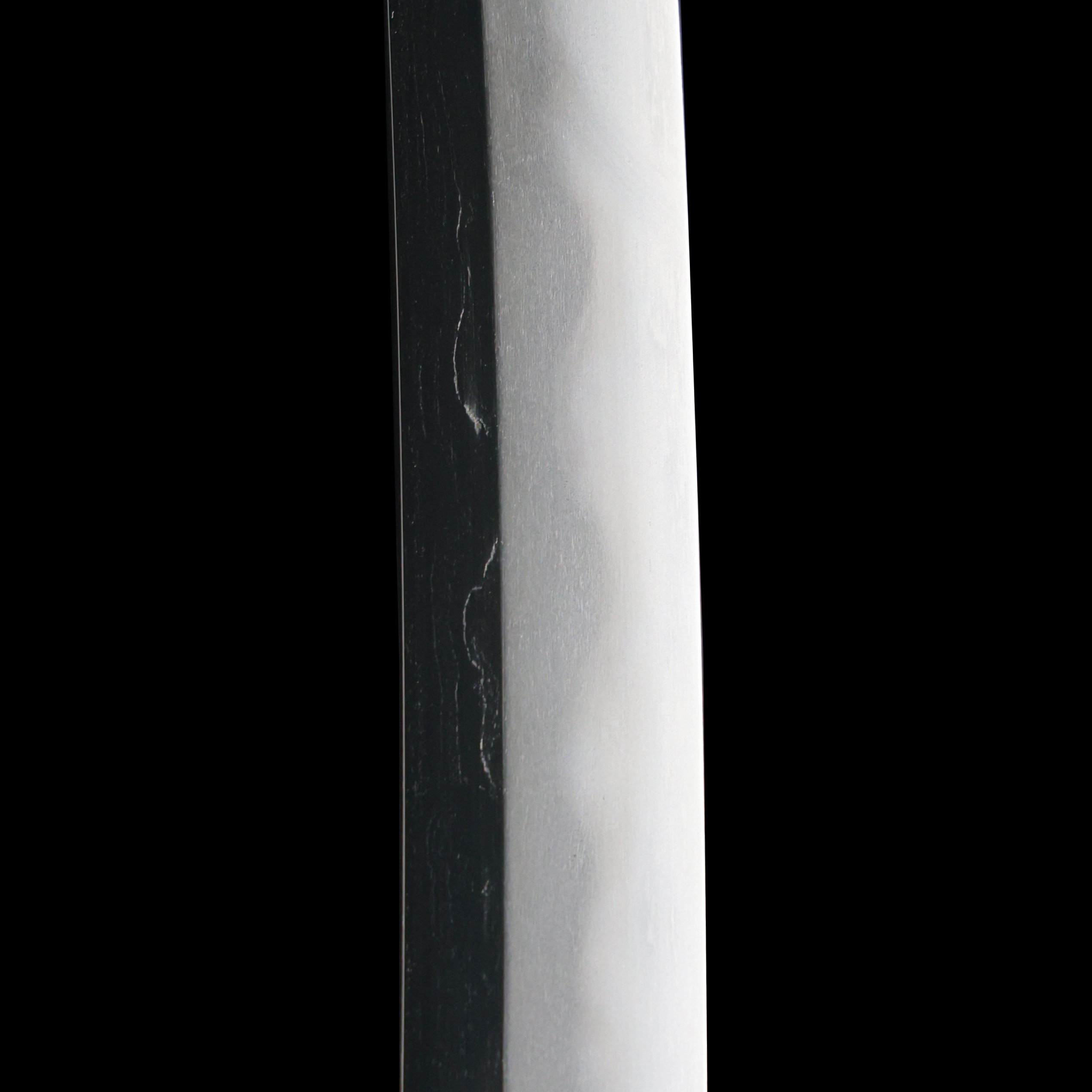
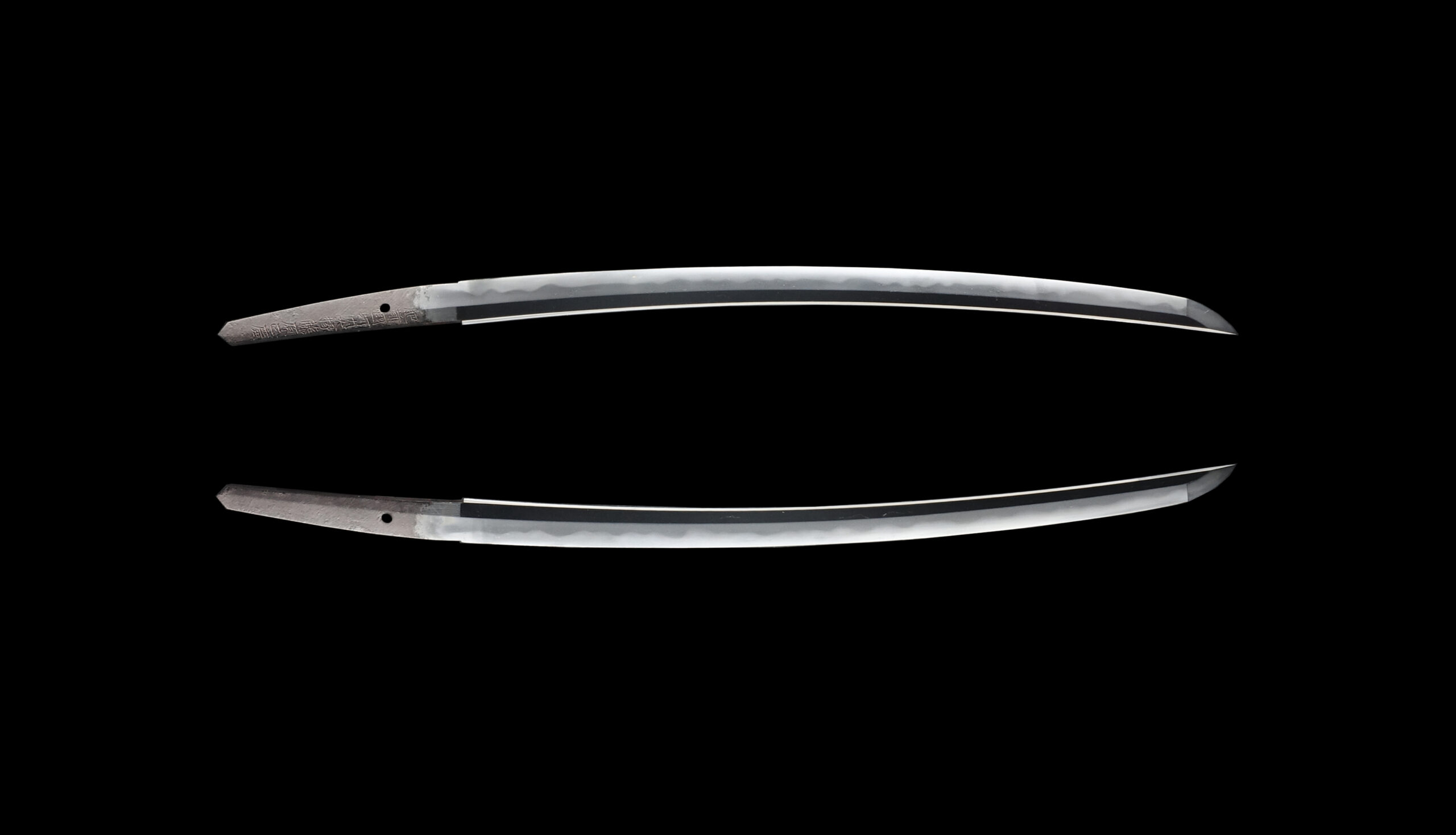
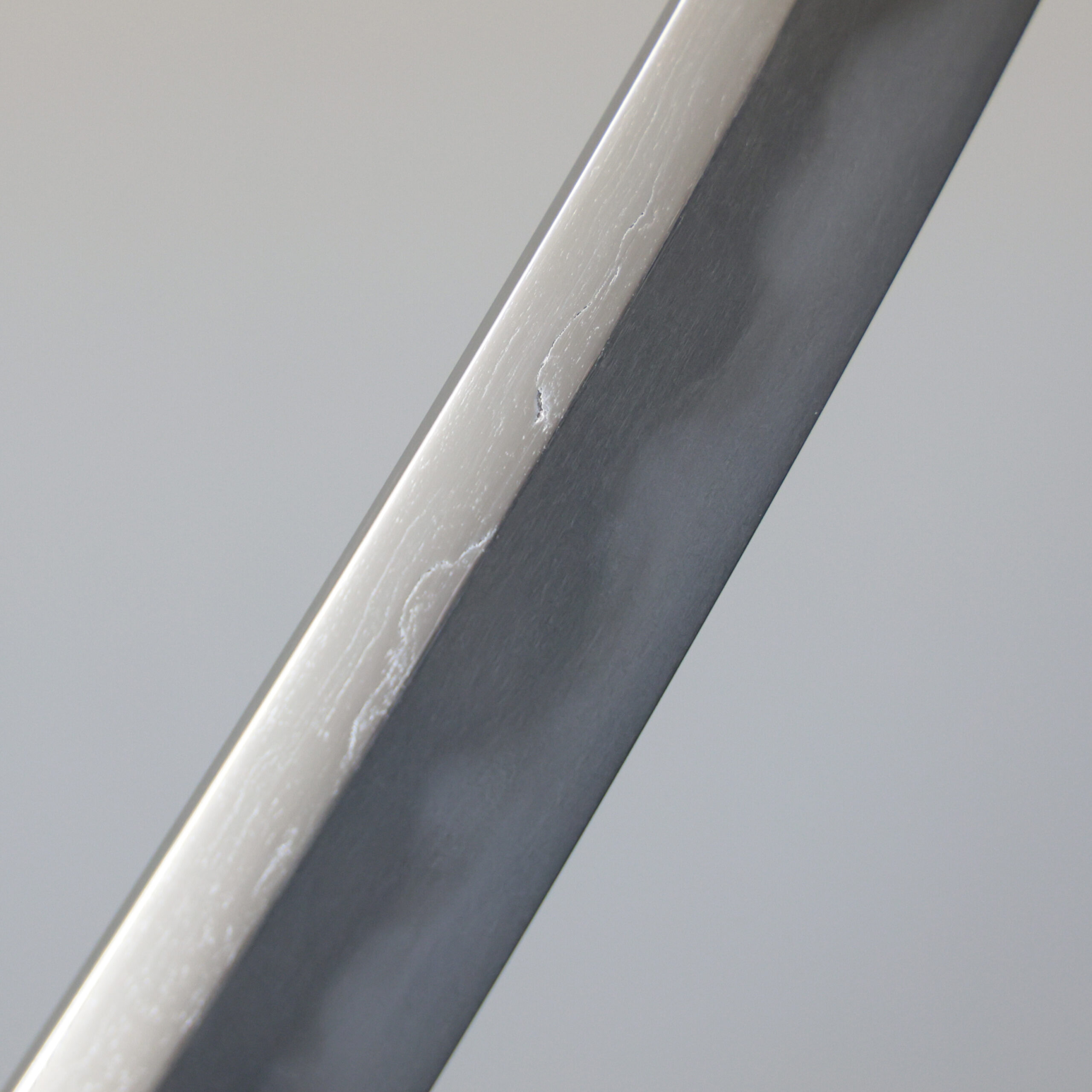
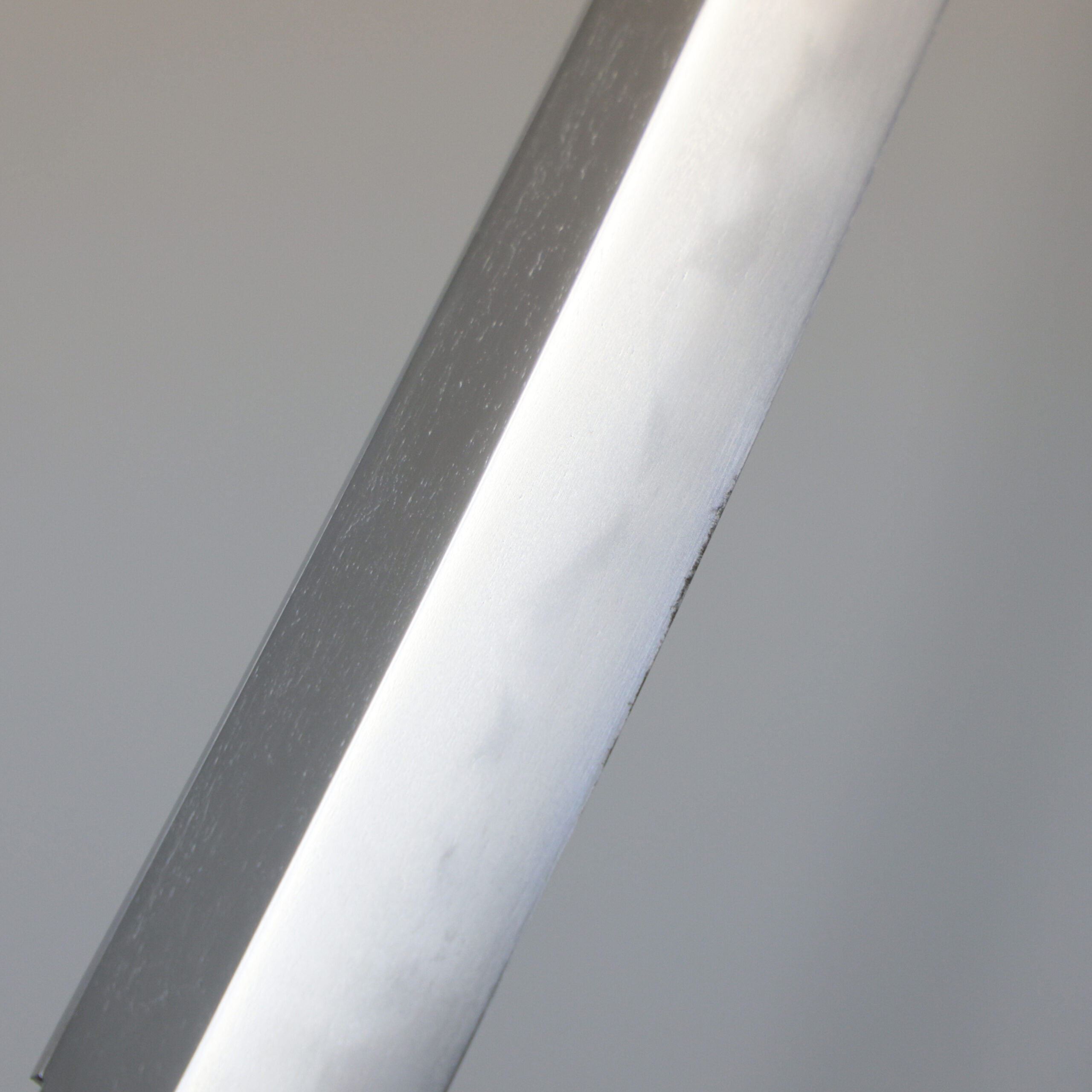
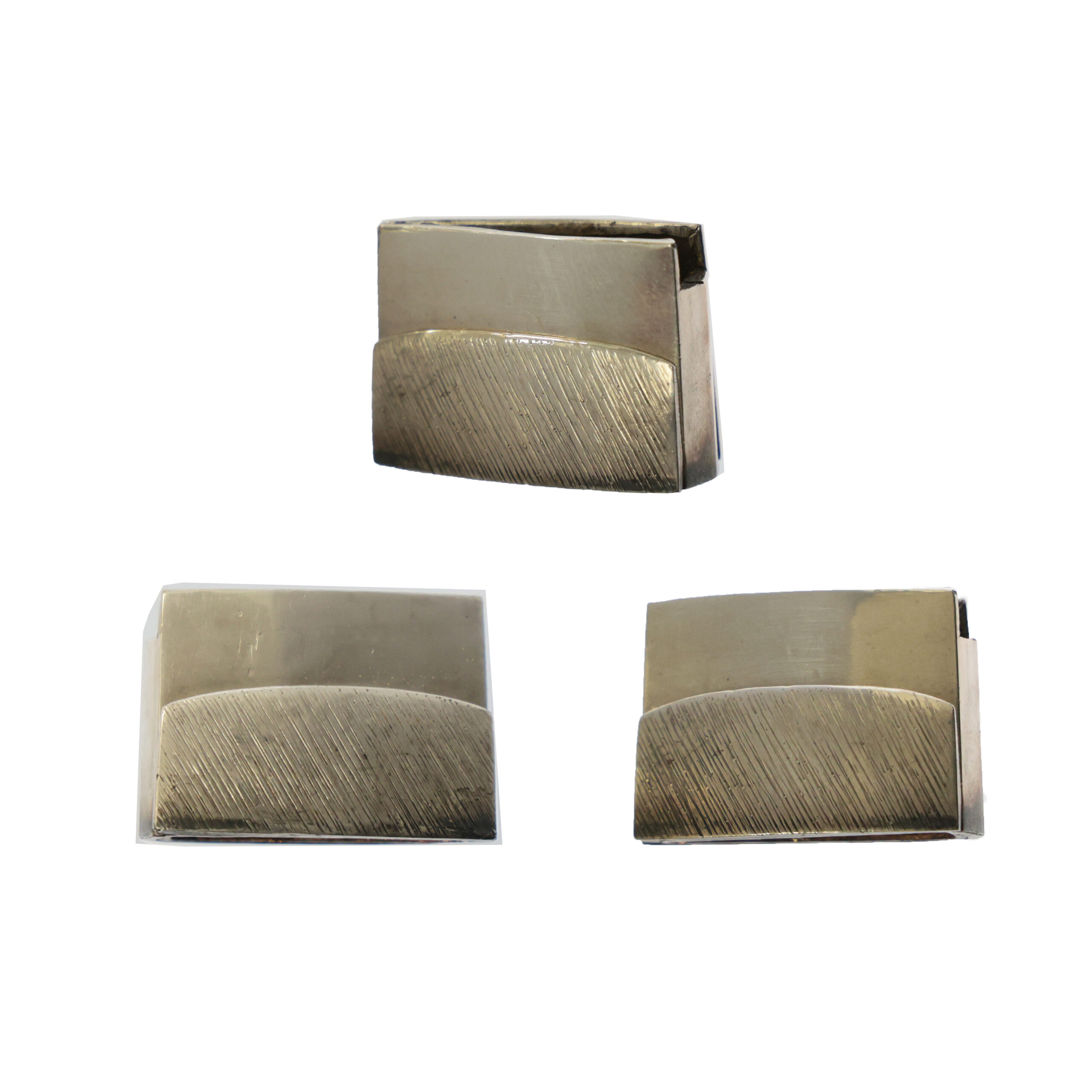
Shinto · Hizen
109 pieces on the market now
The Hizen school began with a single domain commission. In Keicho 1 (1596) the Nabeshima of Hizen ordered Hashimoto Shinzaemon, the smith who would sign Tadayoshi, up to Kyoto with the carver Munenaga; there he entered the gate of Umetada Myoju and studied forging while Munenaga learned the chisel. The two returned to the province in Keicho 3 (1598), and Tadayoshi settled in the castle town below Saga, where under the domain's patronage the line grew into the dominant sword-making house of Kyushu. His own work runs from Keicho 5 (1600) to his death in Kan'ei 9 (1632); in Genna 10 (1624) he received the court title Musashi Daijo, changed his name to Tadahiro, and shifted his clan name from Minamoto to Fujiwara, so that the late Musashi Daijo blades are the founder under a second name. From him the house became a true generational institution: his son the second-generation Omi Daijo Tadahiro carried it forward as its most prolific hand, the third-generation Mutsu no Kami Tadayoshi returned its highest finish, and a Tosa no Kami branch took the founder's signature when he set it aside. Around this main line grew a circle of disciples and collateral hands, the waki-Hizen or Soba-Hizen smiths, several of them, like Yoshiie and Hironori, working as daisaku substitute makers whose own signed pieces are therefore scarce. The school's signature is its steel. Over a ko-itame forged so tightly it shows no slackness, fine ji-nie gathers in minute particles until the surface takes on the rice-bran konuka-hada (also written komenuka-hada) that no other school produces, fine chikei entering throughout and the ji notably clear and bright.
The orthodox temper laid upon it is a chu-suguha or hiro-suguha, sometimes tinged with a shallow notare and ko-gunome, the nioiguchi deep with finely clustered ko-nie and tightened to a bright clarity, the boshi running straight to a quiet ko-maru. The founder aimed this suguha toward the Rai school yet departed from it, his nioiguchi tighter and his forging carrying more vigor; the third generation refined it to what the published sources call the strongest and most precise hand of the first three generations. Against that calm register the house also worked a showier one, the Hizen choji-midare mixing gunome, long ashi, kinsuji and sunagashi, a manner the published sources already find more often in the founder's late Musashi Daijo work than in his Tadayoshi years, and one the second generation made his own. The branches pushed further from the suguha standard: Tadakuni of the Ogi domain ran sunagashi more conspicuously than any other Hizen hand and reached toward old Ichimonji in his o-choji; Masahiro and Yukihiro favored a flamboyant long-ashi choji over the calm main line; and the Iyo no Jo Munetsugu line worked apart in the Soshu-den, building a midareba on notare with a pointed togariba and a jihada that tends to stand and tone slightly blackish. A collector seeks Hizen-to first for that steel, and reads it the same way the appraiser does: a bright suguha lying over a clear, tight konuka-hada identifies the school before the signature is consulted, and the quiet ko-maru boshi on the ura-signed tang confirms the main-line practice. Generation and branch are then told within that frame, the third generation's powerful sugata recalling not his father but his grandfather, the waki-Hizen hands set apart by their irregular temper, their sujikai file marks and a sashi-ura signature, the Munetsugu line by its Soshu togari. The main line, made in real numbers across so long a span, reaches the market more readily than any Kamakura master, so a papered example is within reach of a patient collector, while the founder's own work and the finest konuka-suguha of the third generation come to open hands only from time to time. Provenance runs back through the house the school served, blades recorded to Nabeshima Katsushige and Nabeshima Naomoto and passing onward to the Owari Tokugawa, the Satake and the Imperial families; documentary inscriptions sharpen the picture further, a Myoju soemei attesting the founder's discipleship, Umetada carving adding flowers to brocade on his late blades, and the gold-inlaid cutting tests of Yamano Kanjuro and Yamano Ka'emon, rare on Hizen work, naming the edge as well as the hand. Learn more →
| Smith | Era | Designated |
|---|---|---|
| Tadayoshi忠吉 | 1596-1632 | 155 |
| Tadayoshi忠吉 | 1660-1686 | 61 |
| Tadahiro忠廣 | 1633-1693 | 133 |
| Masahiro正廣 | 1624-1655 | 30 |
| Tadakuni忠國 | 1648-1652 | 32 |
Hizen: a domain enterprise
Hizen swords were a domain enterprise: the Nabeshima sent Tadayoshi to study under Umetada Myōju around 1596, then built a licensed school around him. Nine generations carried its famously consistent konuka-hada work into the Meiji era.
Certifies a genuine blade worth preserving: a signature confirmed correct, or, if unsigned, an era, province, and school that the NBTHK can reliably identify.
The NBTHK (Nihon Bijutsu Tōken Hozon Kyōkai, the Society for the Preservation of Japanese Art Swords) is a public-interest incorporated foundation founded in 1948 and supervised by Japan’s Agency for Cultural Affairs (Bunkachō); it is based at the Japanese Sword Museum in Tokyo. Its expert panels physically examine each submitted work (shinsa) and issue a certificate (kanteishō) ranking it by artistic and historical merit. NBTHK papers are the most widely recognized standard of authentication for Japanese swords and fittings.
NBTHK official siteReturns/exchanges limited to defects caused by shipping (except willful misconduct or gross negligence by the company); customers must contact within 72 hours of receiving the product.
¥480,000