




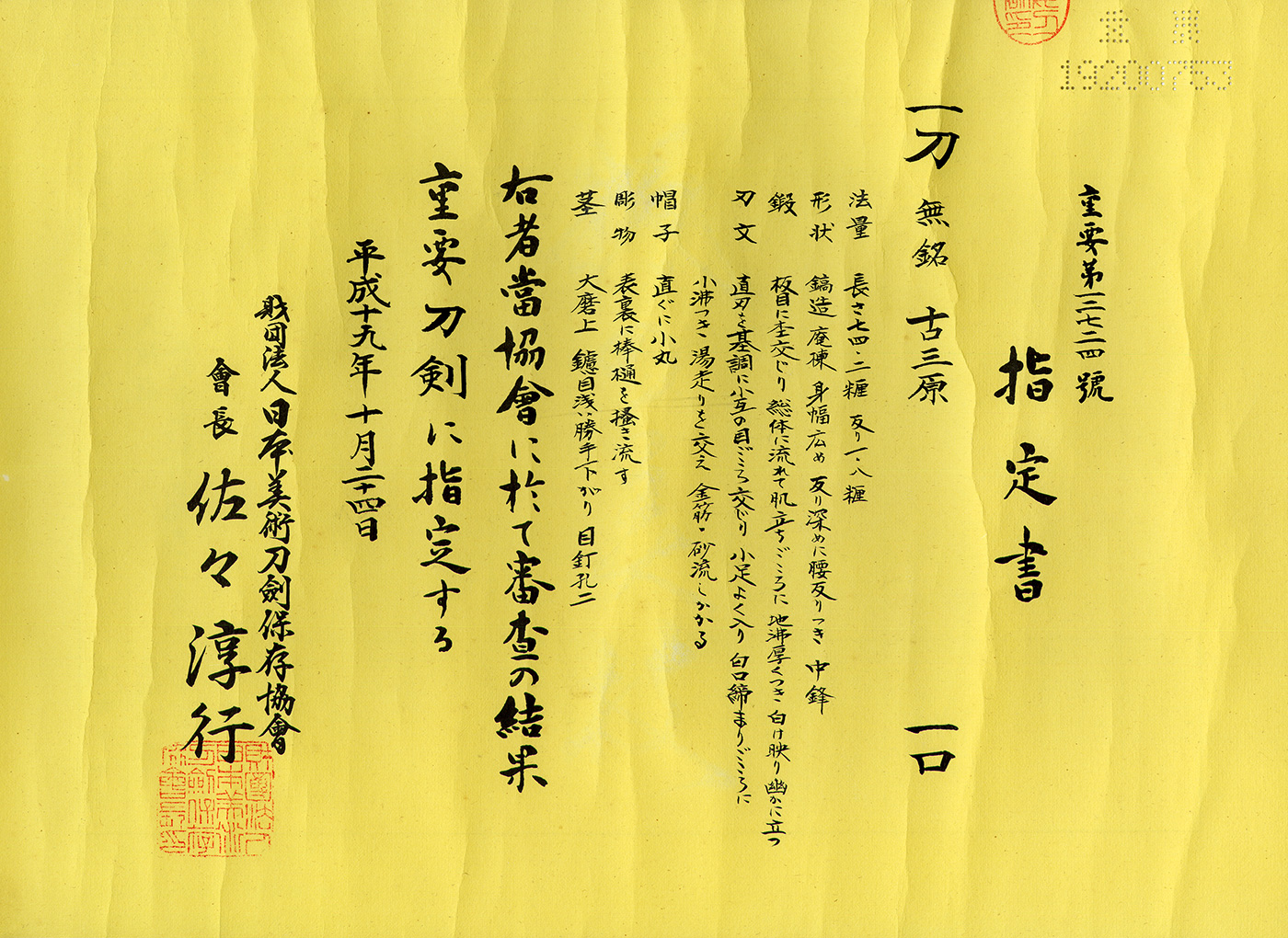
-, 53rd Session — Designated October 24, 2007
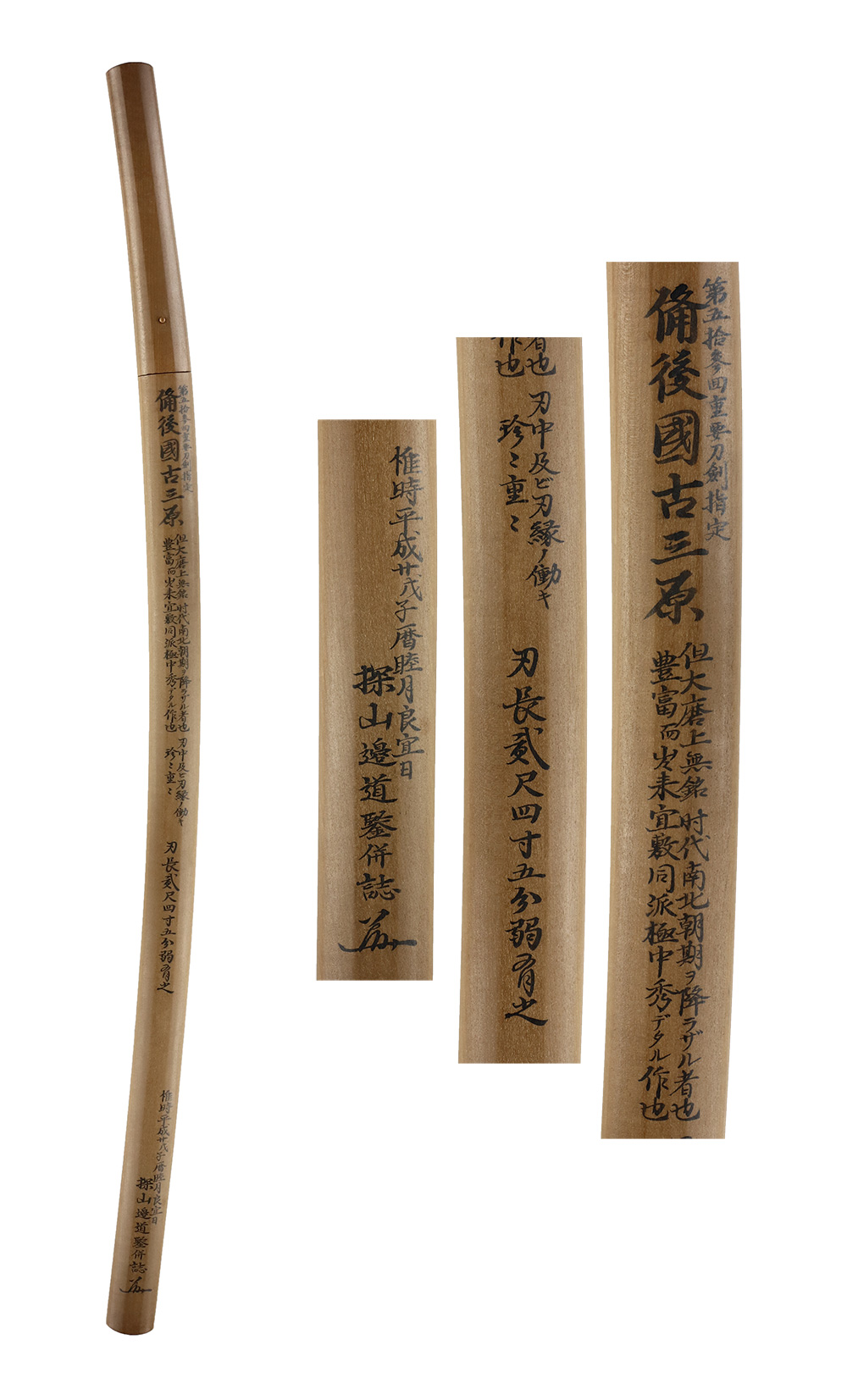
, : Ko- school (古三原)
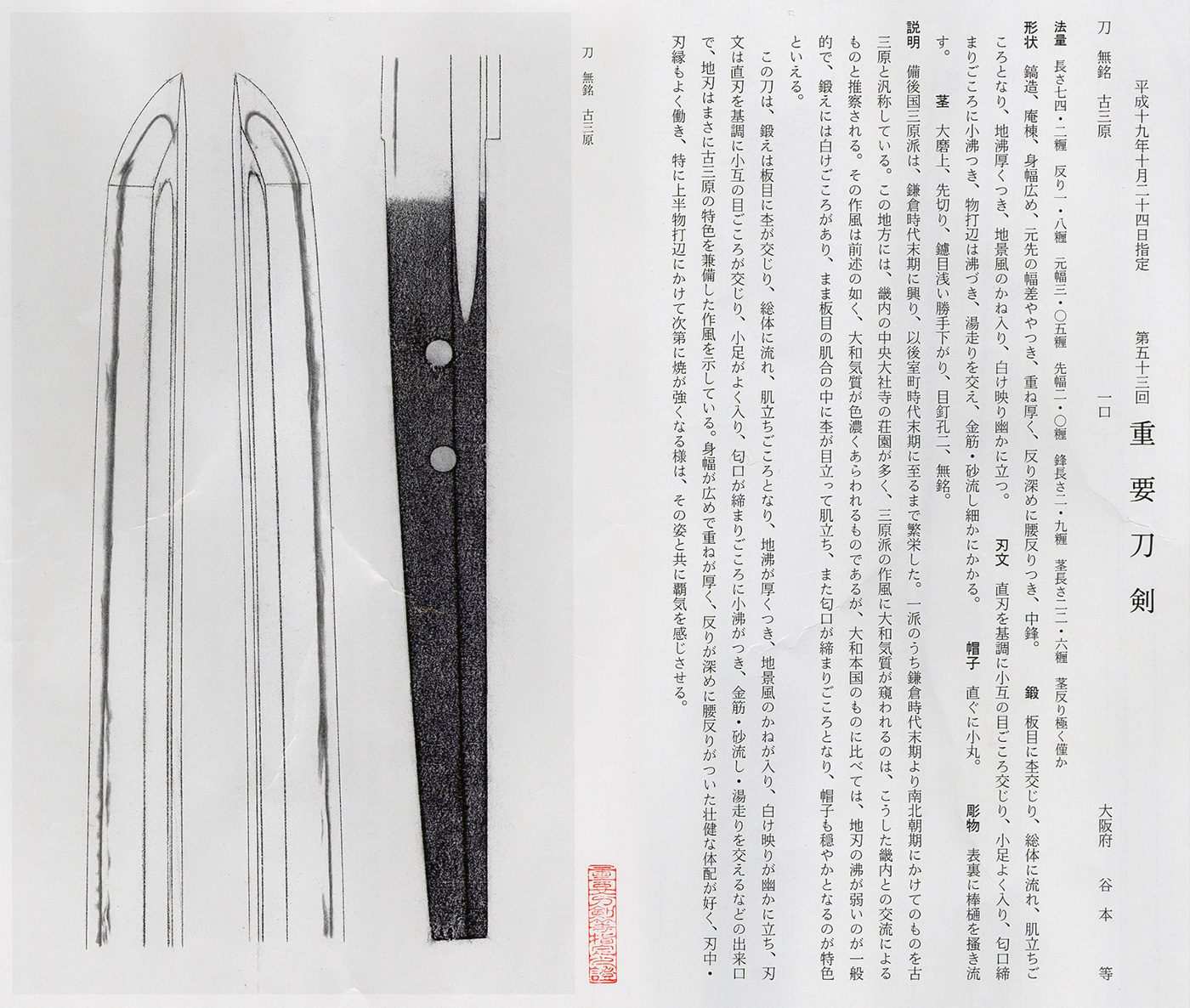
Measurements 74.2 cm, 1.8 cm, 3.05 cm, 2.0 cm, 2.9 cm, 22.6 cm, extremely slight
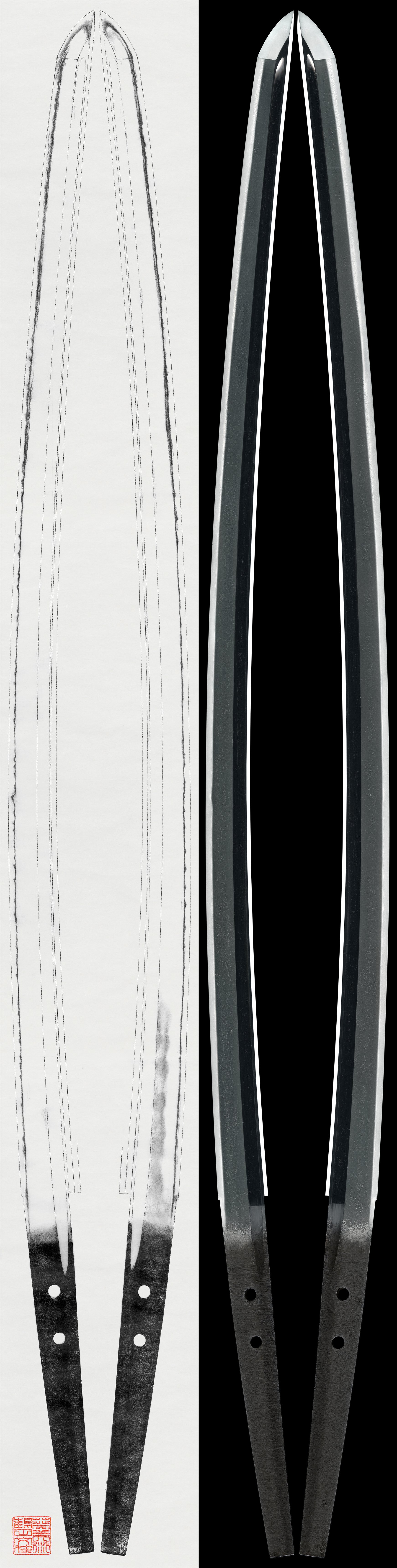
Description : , ; somewhat wide with a slightly increased difference between and ; thick ; comparatively deep with ; . : mixed with ; overall showing a flowing tendency; with a somewhat standing-grain appearance; thickly covered with ; -like dark lines appear; faint arises. : based on , mixed with a -like tendency; enter well; the has a tight tendency and is accompanied by ; around the the hardening becomes -laden, mixing , with fine and running through. : with . : on both sides, carved kaki-nagashi. : ; ; shallow ; two ; unsigned.
Artisan Ko- school
Era Late to period
Explanation The group of Bingo Province arose in the late period and thereafter flourished down to the end of the period. Within this lineage, works dating from the late through the period are broadly referred to as Ko-.
This region contained many estates () belonging to major shrines and temples of the Kinai (the capital region). It is inferred that the Yamato character discernible in workmanship reflects such exchanges with the Kinai. As noted above, the Ko- style strongly manifests a Yamato disposition; however, when compared with works made in Yamato proper, it is generally the case that the in the is less intense. Their forging often shows a whitish tendency, and within the structure the may at times stand out, producing a somewhat standing grain; the tends toward a tight appearance, and the is also calm—these may be cited as characteristic features.
In this , the forging is mixed with , overall flowing and with a standing-grain tendency; thick adheres, with -like dark lines, and faint appears. The , based on and mixed with a tendency, is well supplied with ; the is tight with , and toward the the hardening gradually becomes stronger and more -laden, mixing , , and . In short, both and display a manner that fully combines the distinctive traits of Ko-.
Moreover, the blade’s rather wide , thick , and comparatively deep with pronounced create an admirable, robust overall bearing. The internal and marginal activities within the are also lively, and the manner in which the temper grows progressively stronger from the upper half into the , together with the powerful form, conveys an imposing spirit.