Perry’s arrival in 1853 unraveled the Tokugawa peace and created the first mass demand for working swords in two centuries. Kiyomaro, called the Masamune of Yotsuya, died on its eve; Munetsugu and Yukihide carried the boom to the end.
 NihontoWatchNihontoWatch
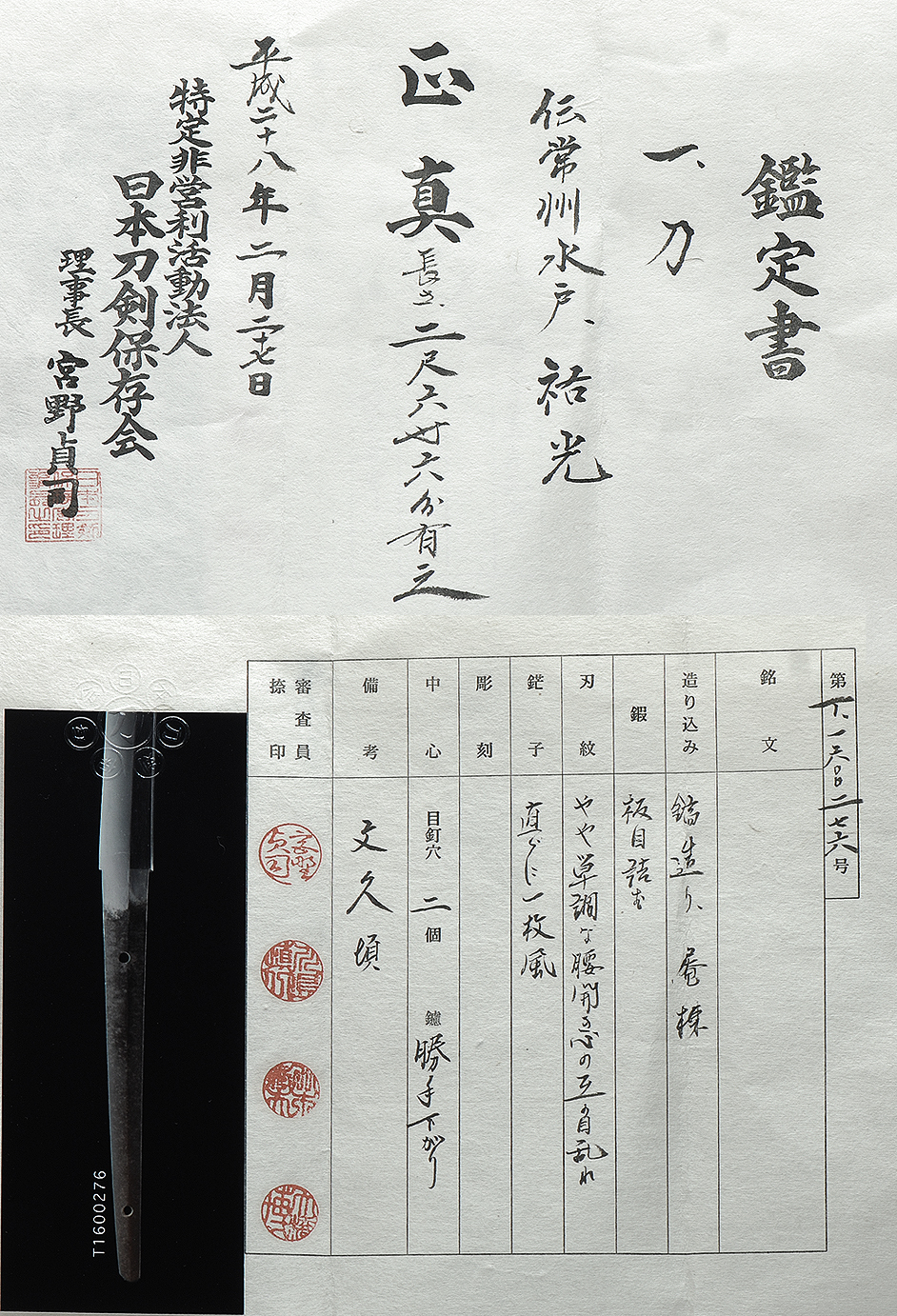
A beautiful katana in the tradition of the Bizen school this sword exemplifies the late Bizen school of the Shinshinto era. As you can see in our new High Resolution photographs the hamon is an active mixture of large midare/gunome with an overall elegant shape. There is ara-nie in abundance and hotsure. The boshi is a sugu that tends to ichimai on one side. A very nice feature to study. The hada is a ko-itame with mokume mix and ji-nie appears, a beautiful tight hada to accentuate this glowing hamon. The sword has a wonderful curvature and the overall sugata suggests a time forgotten. A long sword at 31+” katana like this one is not always easily found in flawless condition. The swordsmith: SUKEMITSU (祐光), Ansei (安政, 1854-1860), Hitachi – “Suifu ni oite Yokoyama Sukemitsu saku” (於水府横山祐光作), “Mito-jū Sukemitsu kore o tsukuru” (水戸住祐光造之), “Suifu-jū Yokoyama Fujiwara Sukemitsu saku” (水府住横山藤原祐光作), real name Yokoyama Kajūrō (横山嘉十郎, the first name can also read Yoshijūrō), he is also listed with the first name Kijūrō (喜十郎), he was born in the third year of Bunsei (文政, 1820) as third son of a certain Taguchi Gon´emon (田口権右衛門) in Edo, there he studied under a not further specified Yokoya smith and was allowed the use the family name Yokoyama (横山), in the second year of Kaei (嘉永, 1849) he was employed by the Mito fief (水戸藩) by recommendation of Norikatsu (徳勝) and received a stipend for the support of seven persons, he died on the 13th day of the seventh month Meiji six (明治, 1873) in his house in Mito´s Hachiman (八幡) at the age of 54, suguha, gunome-midare, chūjō-sakuThe koshirae is clean and fundamental with menuki of crayfish against a beautiful pattern of Same. The tsuba is iron and very strong. An incredible full lacquered saya of crushed Abalone shell to finish the mounts in true samurai style. The blade is in full polish. The koshirae: These are clean solid mounts with copper menuki of Ebi/lobster against a beautiful pattern of Same. The tsuba is a clean design of bamboo leaves. The fuchi and kashira are also copper in a bamboo motif. An incredible full lacquered saya of crushed Abalone shell to finish the mounts in true samurai style. The blade is in full polish and is fully restored adding to its overall value. The Sageo is in blue to match the tsuka ito. The habaki, seppa and shitidome are all finished in a gold patina to match. This sword is on consignment. kantei-sho (鑑定書) – Appraisal katana (刀) Den Jôshû Mito, Sukemitsu (伝常州水戸、祐光) shôshin (正真) – Authentic nagasa 2 shaku 6 sun 6 bu kore ari (長さ二尺六寸六分有之) – Blade length ~80.6 cm Heisei 28 nen 2 gatsu 27 nichi (平成二十八年二月二十七日) – February 27th 2016 Non Profit Organization (特定非営利活動法人) Nihon Tôken Hozon Kai (日本刀剣保存会) – NTHK Board Chairman (理事長): Miyano Teiji (宮野貞司) No T-1600276 meibun (銘文) – Signature: Mumei tsukurikomi (造り込み) – Shape: shinogi-zukuri, iori-mune kitae (鍛) – Forging: dense itame hamon (刃紋) – Hardening: gunome-midare that tends to koshi no hiraita bôshi (鋩子) – Hardening in tip: sugu that tends to ichimai chôkoku (彫刻) – Engravings: nakago (中心) – Tang: mekugi-ana (目釘穴) 2, yasurime (鑢): katte-sagari bikô (備考) – Remarks: around Bunkyû (文久, 1861-1864) shinsa’in natsu’in (審査員捺印) – Seals of Judges: 4 seals [et_bloom_inline optin_id=”optin_1″]
Offered by Nihonto Antiques
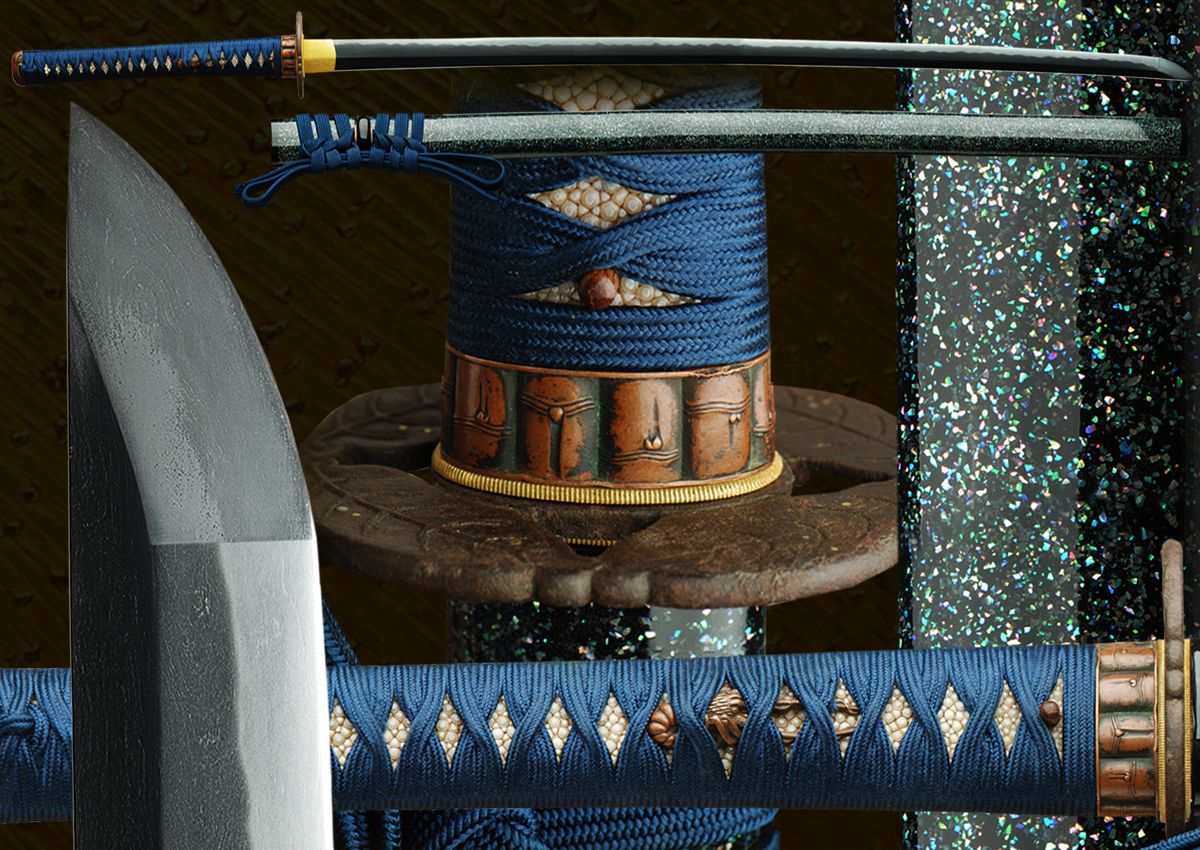

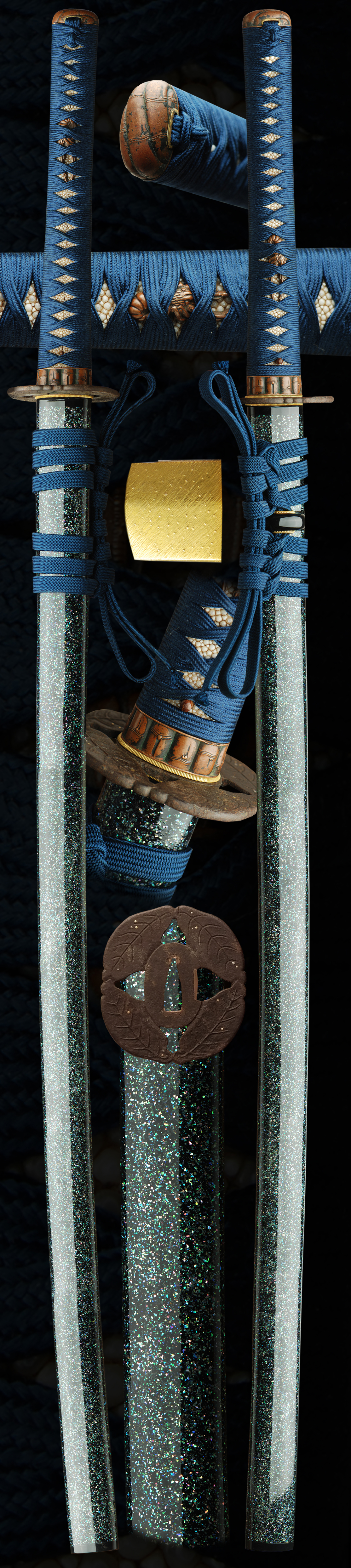
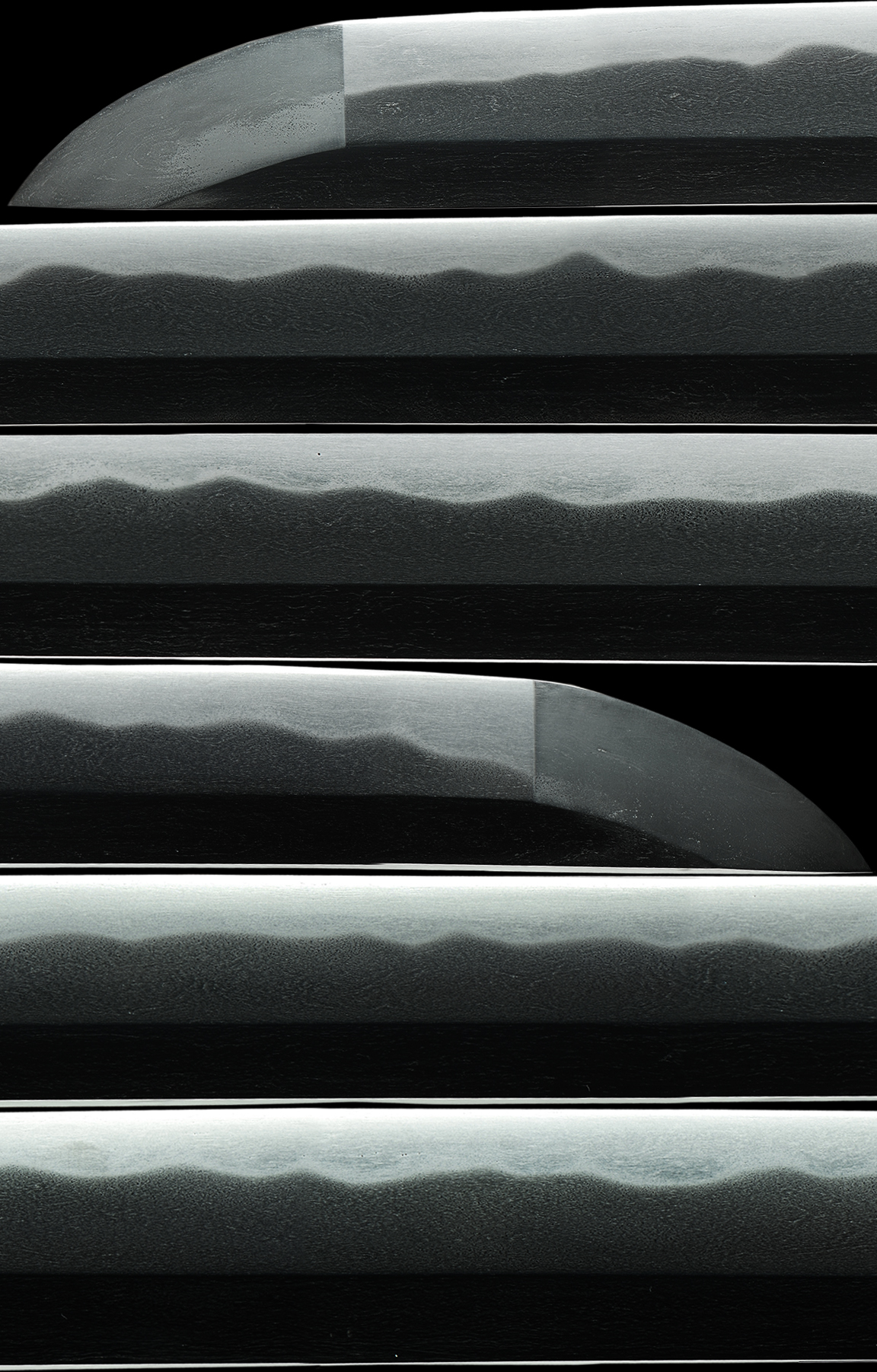
As written by the shop
Hitachi · around 1854-1860
Fujishiro Chu saku · Tōken Taikan top 95%
2 pieces on the market now
Bakumatsu: the last war market
Perry’s arrival in 1853 unraveled the Tokugawa peace and created the first mass demand for working swords in two centuries. Kiyomaro, called the Masamune of Yotsuya, died on its eve; Munetsugu and Yukihide carried the boom to the end.
The NTHK’s principal certificate, issued for a blade of considerable quality. It confirms a genuine signature, or, for an unsigned (mumei) work, records the judges’ attribution to a smith or school. The paper carries a detailed worksheet with a numerical point score.
The NTHK (Nihon Tōken Hozon Kai, the Society for the Preservation of the Japanese Sword) is the oldest of Japan’s sword-appraisal bodies, founded in 1910, decades before the NBTHK. After the death of its long-serving head it divided into two successor societies, the NTHK and the NTHK-NPO, both of which continue to hold shinsa. NTHK blade certificates are known for a detailed worksheet that records a numerical point score alongside the judges’ written opinion (fitting papers carry the judges’ opinion without a point score), and the society is especially respected for its attribution of unsigned (mumei) work.
We offer a 48 hour inspection period for all Antique items shipped within the United States only. If the item is not to your satisfaction, we will gladly refund your money less any shipping and handling fees. All sales are final after the 48 hour inspection period. Please note that all discounted items are a final sale and not returnable.