The twentieth century nearly killed the craft twice: wartime distortion, then the occupation ban. The NBTHK’s founding in 1948 and licensed forging from 1953 rebuilt the sword as an art, crowned by Living National Treasures and the mukansa rank.
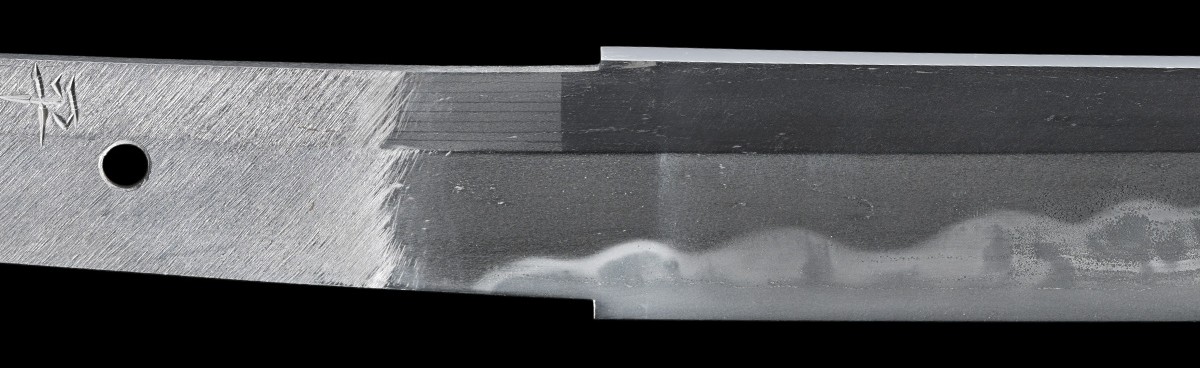
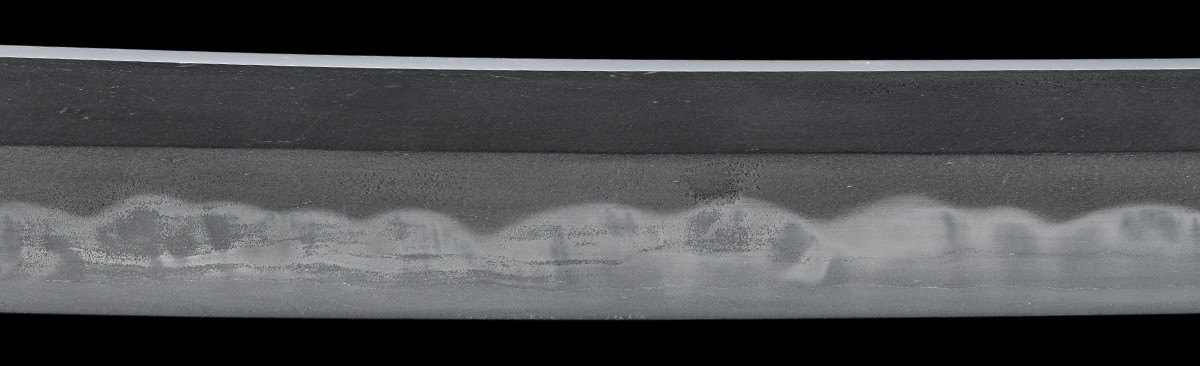
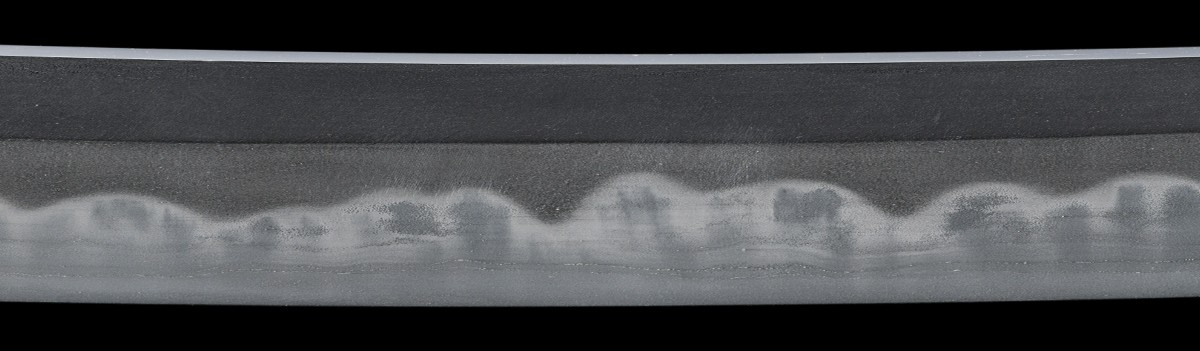
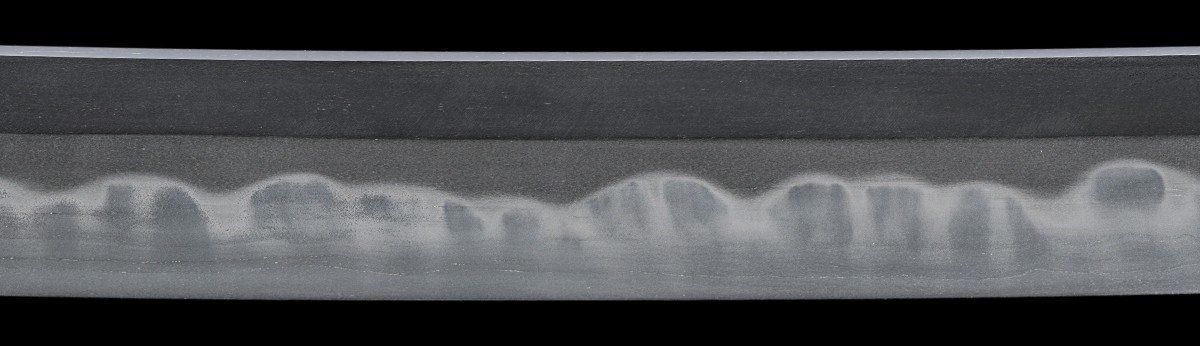
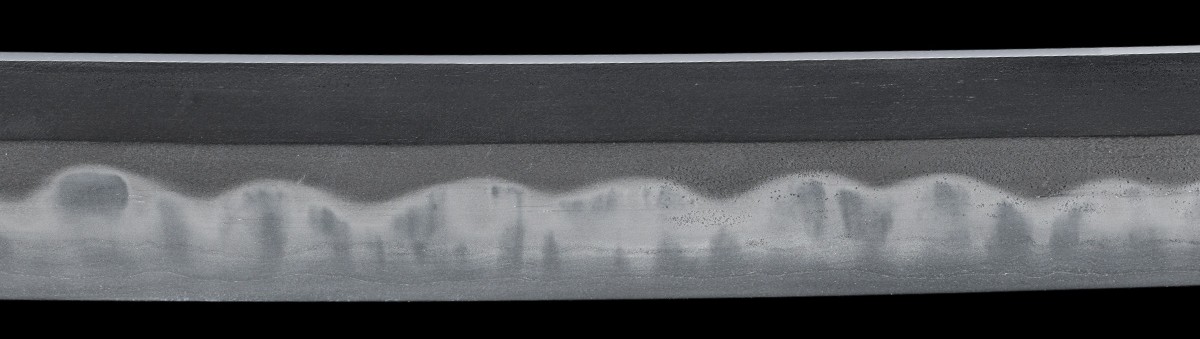
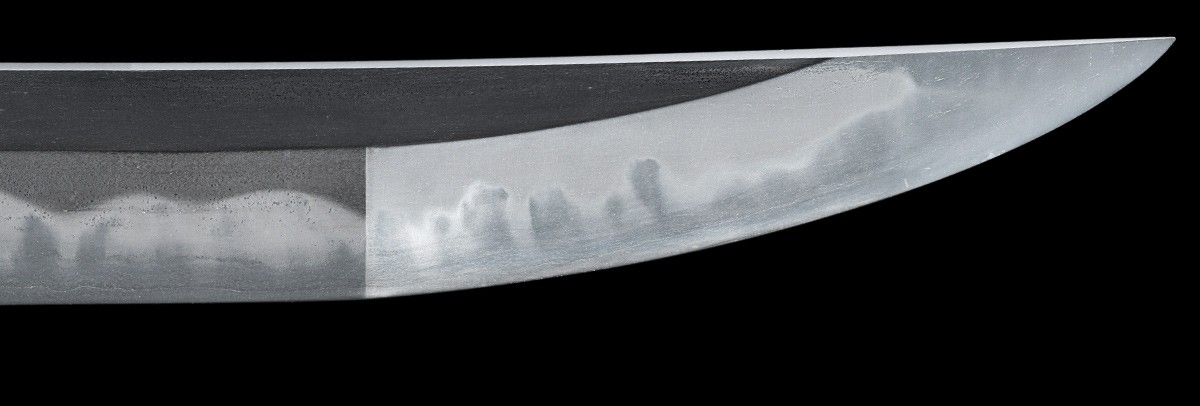
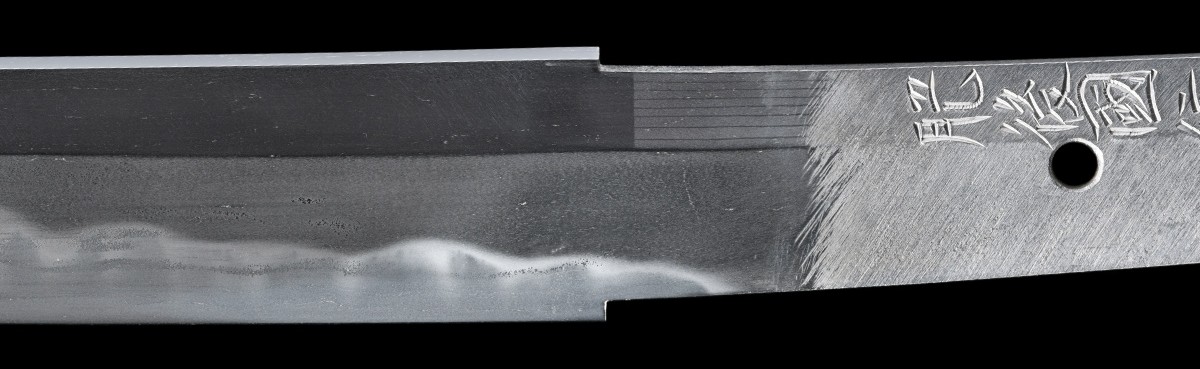
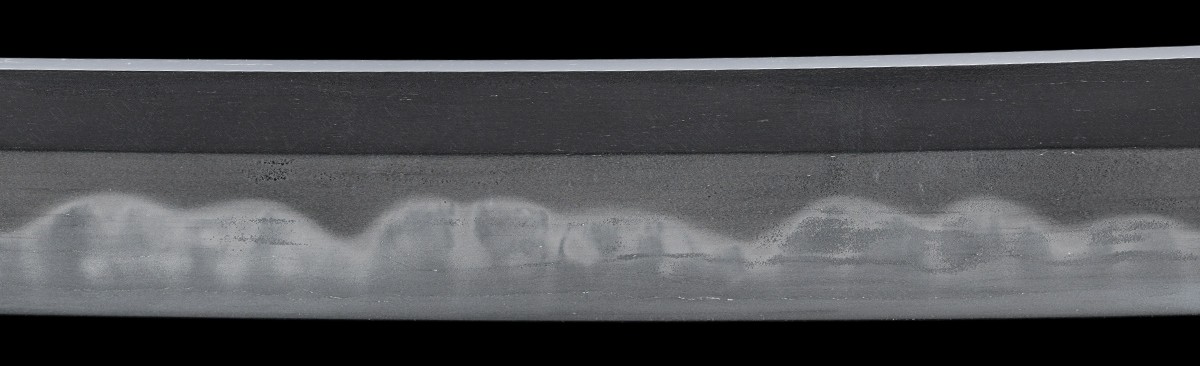
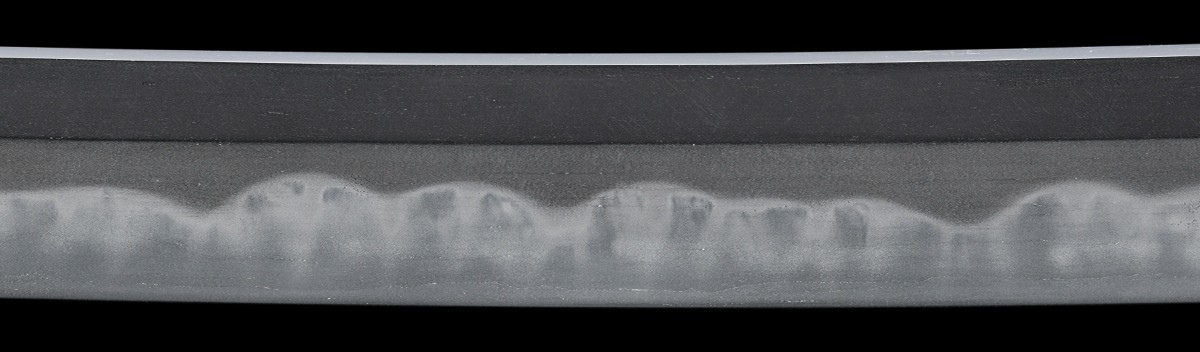
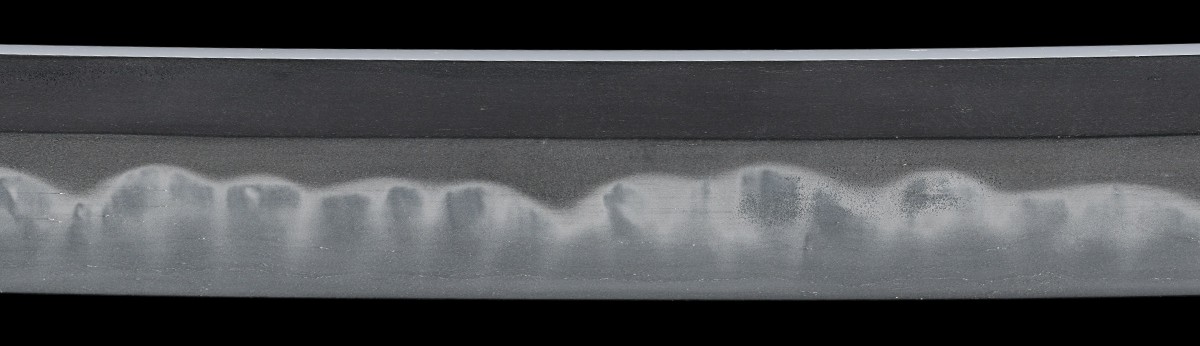
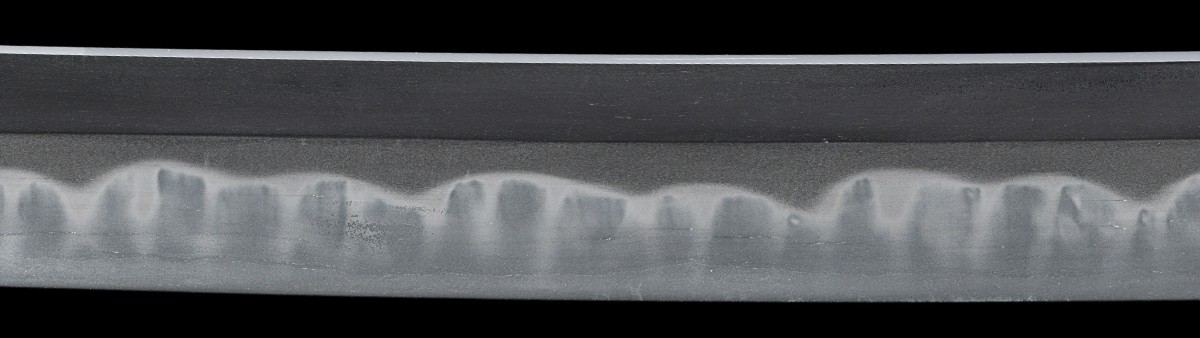
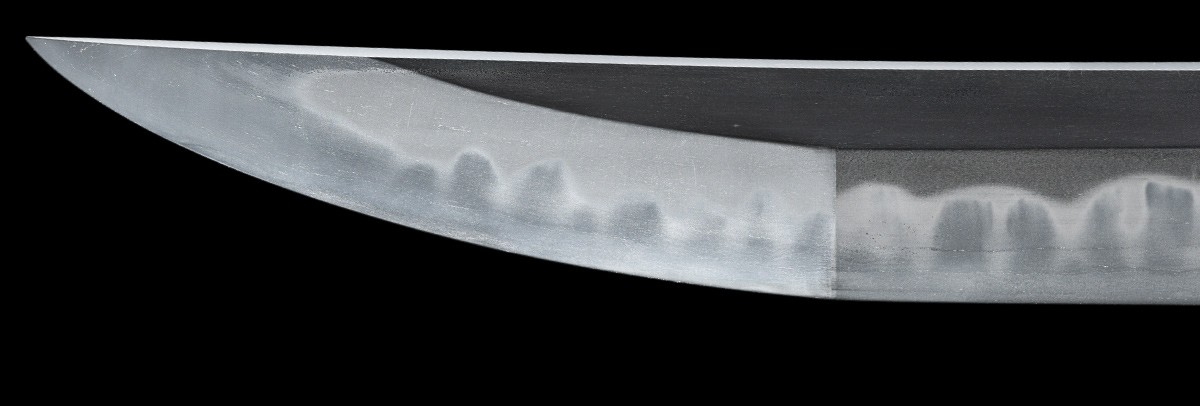
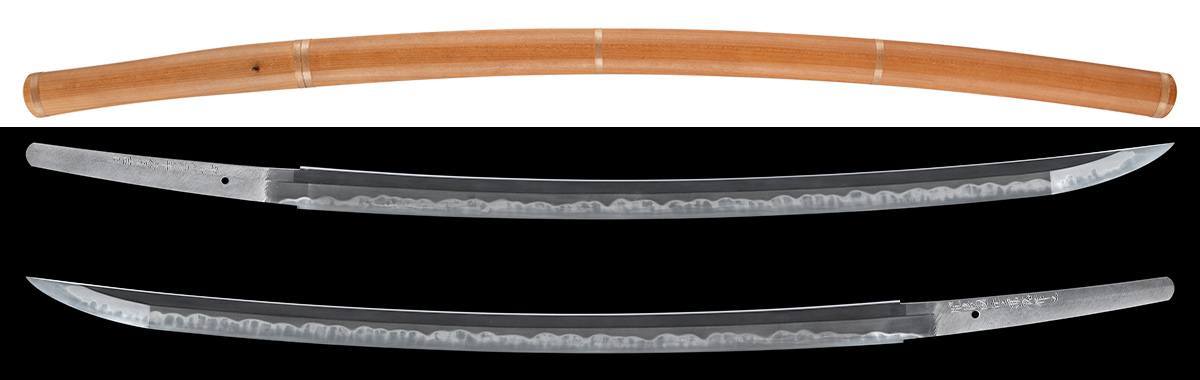
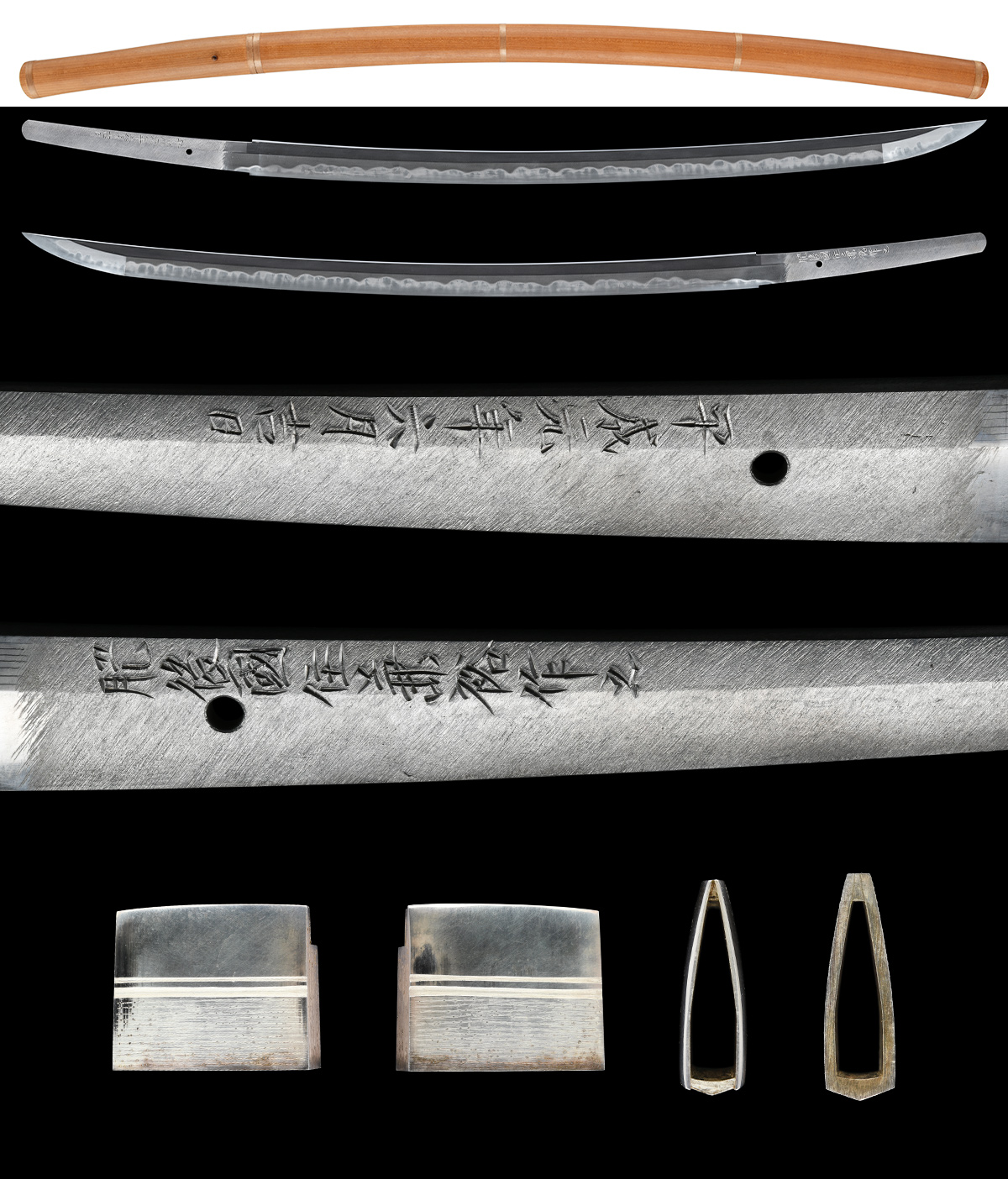
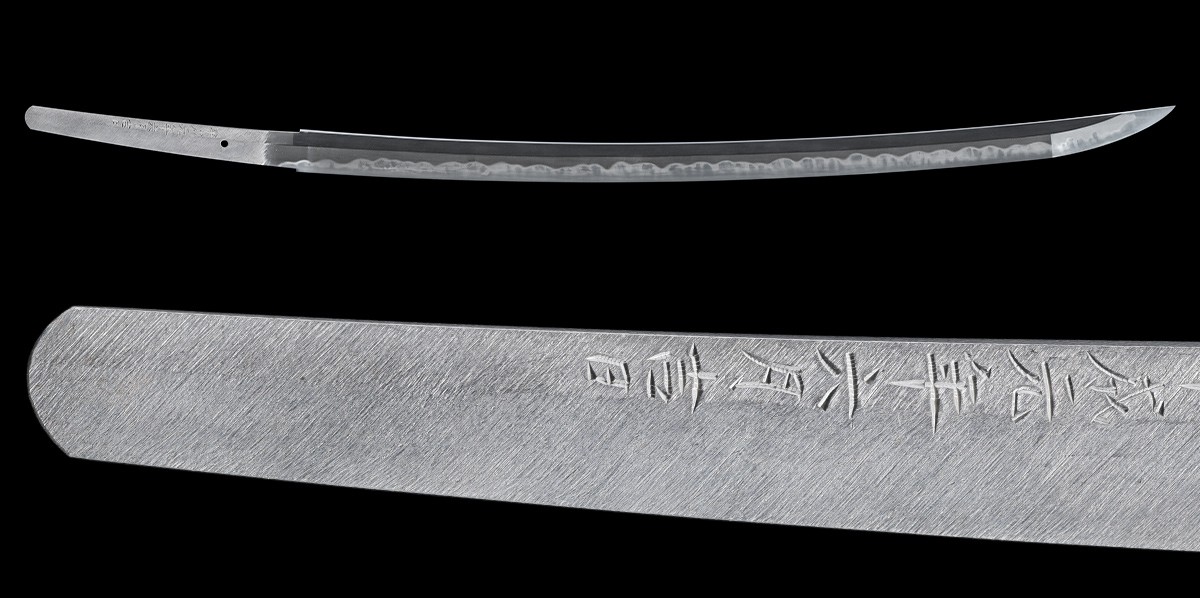
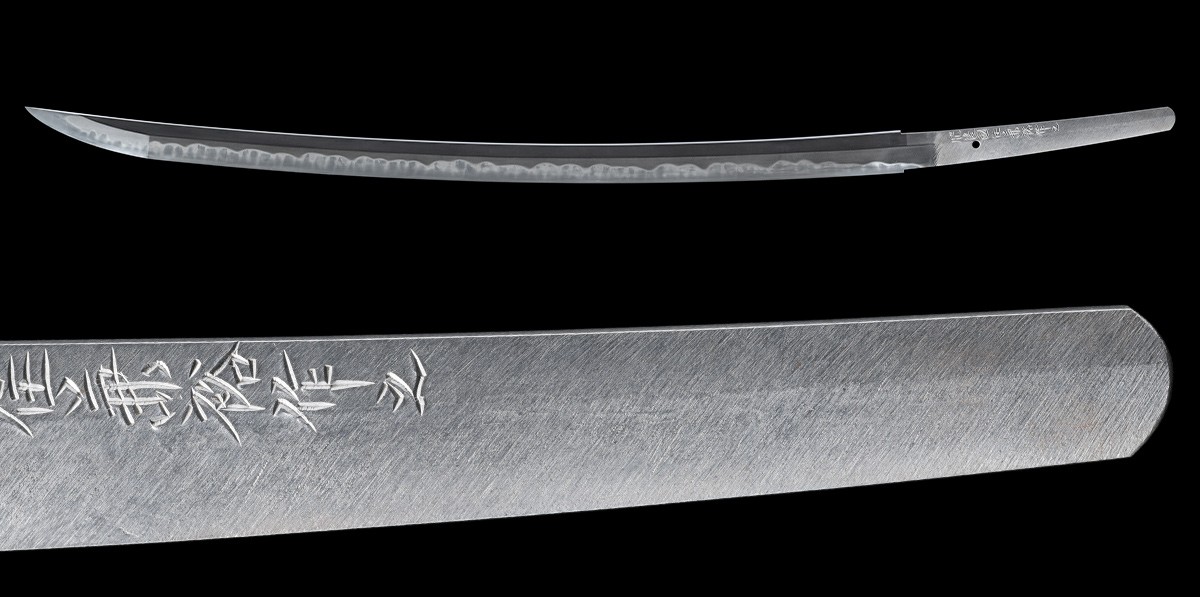
The prestigious Kimura family of Yatsushiro City, Kumamoto Prefecture, is a lineage of swordsmiths originating from the retained smiths of the Sagara family of the Hitoyoshi Domain in Higo Province. This lineage uses the name "Akamatsu Taro" in their mei and is known for robust and flamboyant swords, including copies of Kiyomaro, boasting high skill and popularity. In addition to the sword-making itself, they are particular about the steel they use; the swordsmiths of the lineage personally collect iron sand and use unique steel produced through their own private smelting to create one-of-a-kind swords. The swordsmith Akamatsu Taro Kanehiro was born in Showa 36 (1961), and his real name is Kimura Kaoru. He is one of the most talented swordsmiths within this lineage. The taihai of this work has a nagasa of 2 shaku 4 sun 1 bun, with a wide mihaba at the moto and saki, a standard kasane, a well-defined sori, and a grand sugata ending in an o-kissaki. The kitae is a well-tightened itame hada with fine ji-nie, resulting in a powerful jihada mixed with patches of coarse nie. The yakiba is primarily choji mixed with gunome, with many ashi entering the hachū, and active workings such as kinsuji and sunagashi. The boshi continues as midare-komi and returns in ko-maru. This piece is a single sword made by the swordsmith Akamatsu Taro Kanehiro in Heisei 1 (1989). It is an excellent work with a magnificent sugata and a flamboyant blade tempered primarily in choji. Shirasaya, solid silver single habaki.
Offered by World Seiyudo
7 on the market


Machine translation from the shop's Japanese · may contain errors ·
Higo (Yatsushiro) · Heisei-Reiwa
7 pieces on the market now
Shōwa to the present: destruction and revival
The twentieth century nearly killed the craft twice: wartime distortion, then the occupation ban. The NBTHK’s founding in 1948 and licensed forging from 1953 rebuilt the sword as an art, crowned by Living National Treasures and the mukansa rank.
We could not find an authenticity certificate on the seller’s listing. Japanese swords and fittings are normally papered by the NBTHK (or the NTHK). Without one, the attribution is the seller’s own assessment and has not been independently verified — treat it with caution and ask the dealer about certification before buying.
No cooling-off period or returns; refund only if the purchased sword is proven fake, capped at purchase price (excludes commission sales, accessories, auction items).
¥1,200,000