The curved, ridged tachi took its classic form in the Heian provinces while the court refined its culture in the capital. Its patrons were the military nobility whose feuds ended in the Genpei War, and whose blades became heirlooms almost at once.
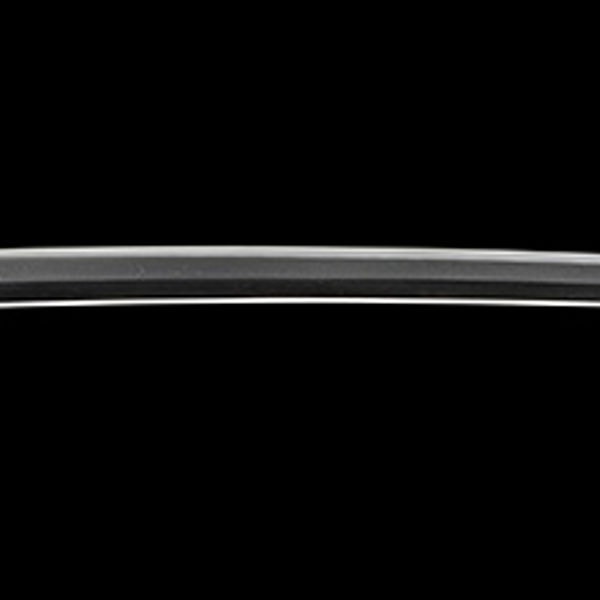
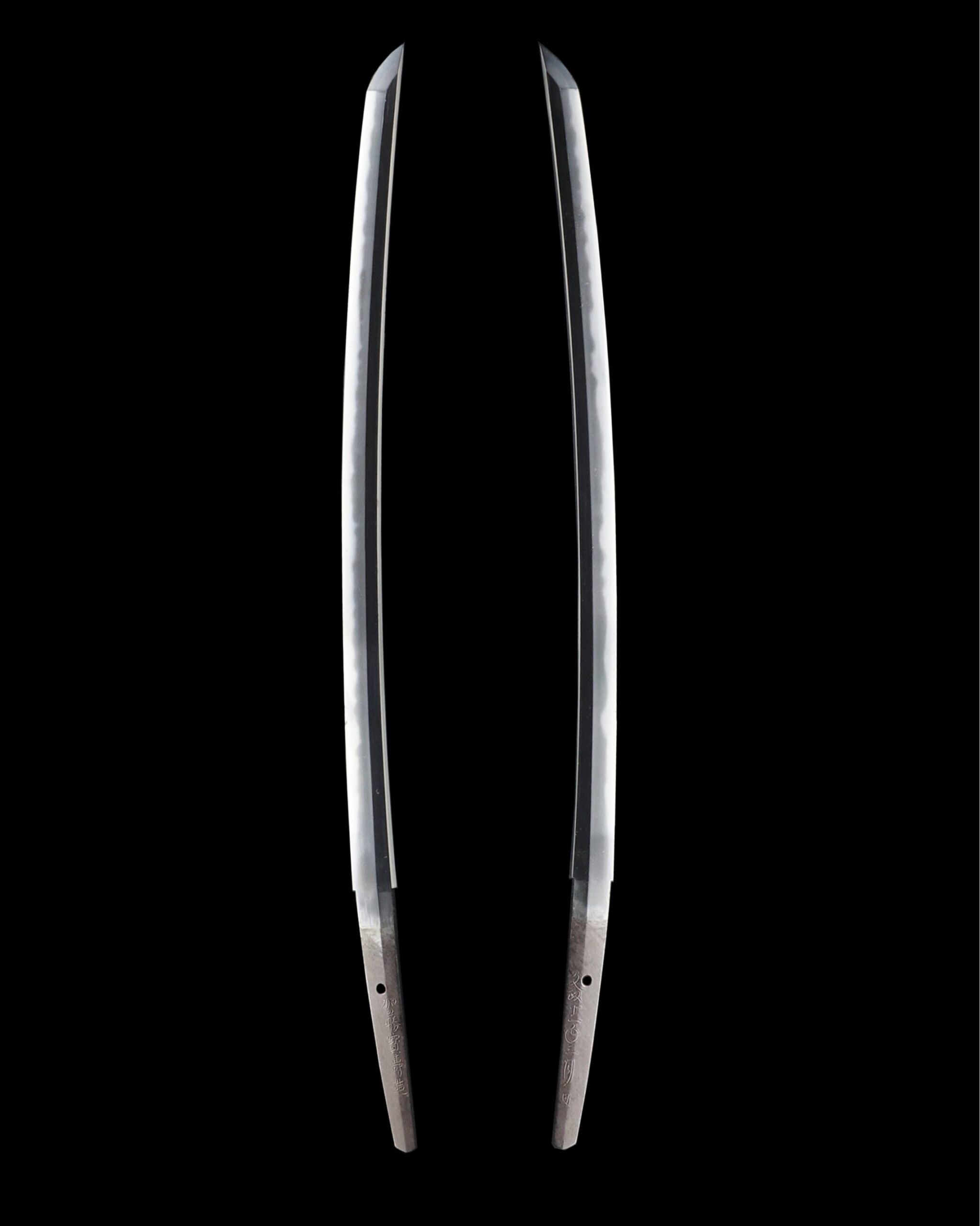
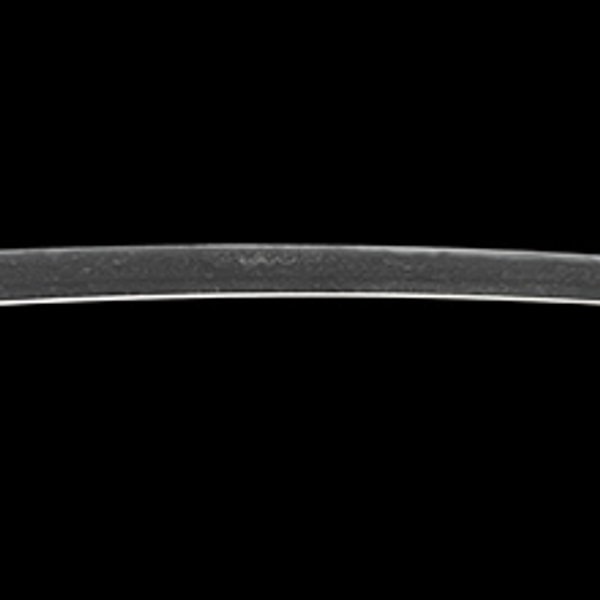
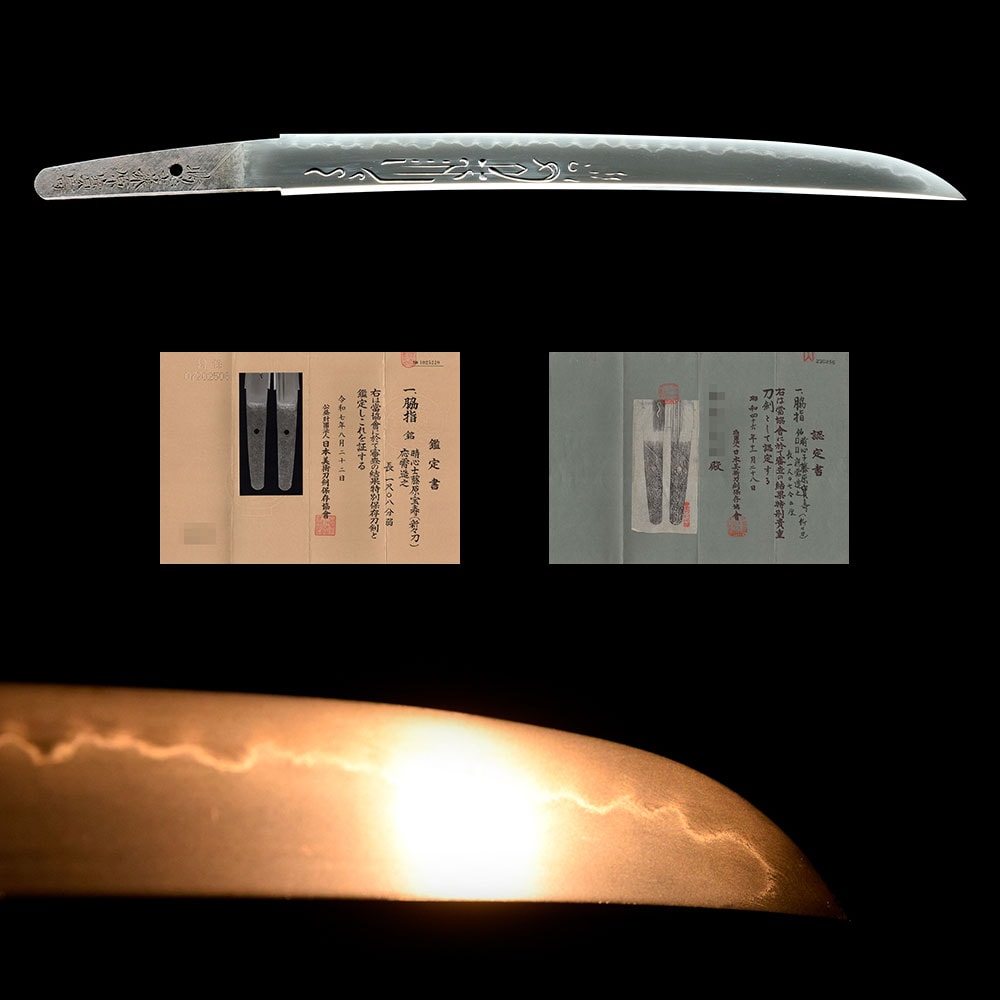
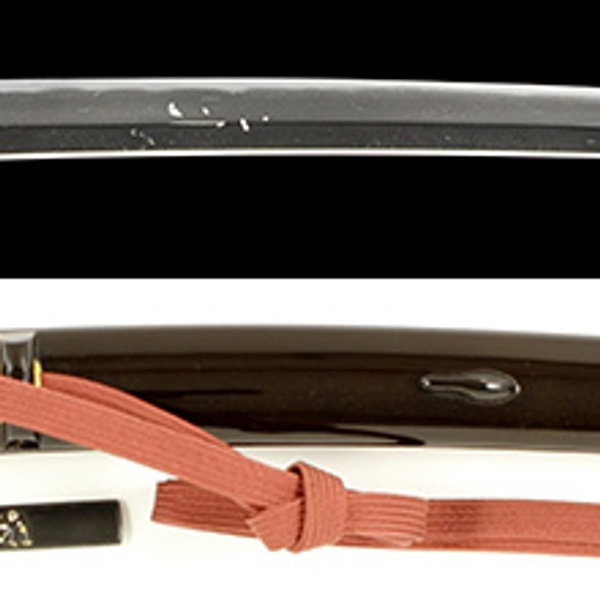
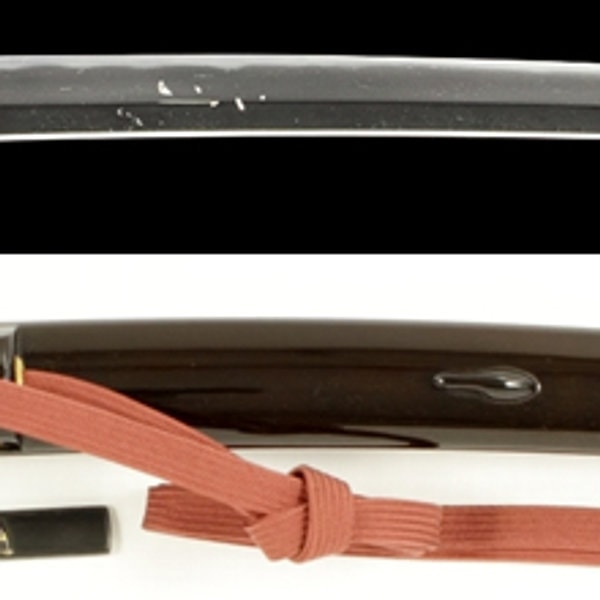
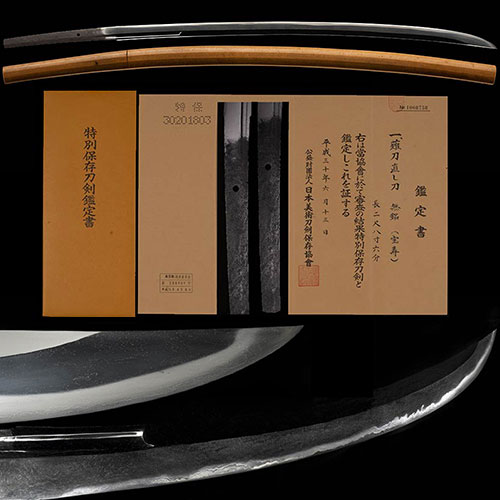
This is a Nagamaki-Naoshi Katana by Houju, a representative smith of the Mogusa school from the late Heian period. It is a magnificent and powerful masterpiece with a wide mihaba of 3.4cm and a weight of 1.15kg. The blade features a distinctive hada with itamehada mixed with mokume, fine jinie, and chikei, while the hamon is a suguha-style with shallow notare, gunome, yubashiri, and kinsuji, resulting in a bright and clear nioiguchi.
 NihontoWatch
mei · Mogusa · Heian · nagasa 86.7cm · sori 2.2cm

Mutsu · around 1306-1308
2 pieces on the market now
The Heian period (794 to 1185)
The curved, ridged tachi took its classic form in the Heian provinces while the court refined its culture in the capital. Its patrons were the military nobility whose feuds ended in the Genpei War, and whose blades became heirlooms almost at once.
A Hozon-certified blade judged to show notably superior workmanship and a better state of preservation. The bar is higher: re-tempered blades and most unsigned Muromachi/Edo works are excluded.
The NBTHK (Nihon Bijutsu Tōken Hozon Kyōkai, the Society for the Preservation of Japanese Art Swords) is a public-interest incorporated foundation founded in 1948 and supervised by Japan’s Agency for Cultural Affairs (Bunkachō); it is based at the Japanese Sword Museum in Tokyo. Its expert panels physically examine each submitted work (shinsa) and issue a certificate (kanteishō) ranking it by artistic and historical merit. NBTHK papers are the most widely recognized standard of authentication for Japanese swords and fittings.
NBTHK official siteReturns/exchanges/cancellations not accepted after shipment except for significant defects; if defective, return/exchange possible within 3 days of arrival (return shipping paid by customer).
This is a Nagamaki-Naoshi Katana by Houju, a representative smith of the Mogusa school from the late Heian period. It is a magnificent and powerful masterpiece with a wide mihaba of 3.4cm and a weight of 1.15kg. The blade features a distinctive hada with itamehada mixed with mokume, fine jinie, and chikei, while the hamon is a suguha-style with shallow notare, gunome, yubashiri, and kinsuji, resulting in a bright and clear nioiguchi.
NihontoWatchmei · Mogusa · Heian · nagasa 86.7cm · sori 2.2cm
Mutsu · around 1306-1308
2 pieces on the market now
The Heian period (794 to 1185)
The curved, ridged tachi took its classic form in the Heian provinces while the court refined its culture in the capital. Its patrons were the military nobility whose feuds ended in the Genpei War, and whose blades became heirlooms almost at once.
A Hozon-certified blade judged to show notably superior workmanship and a better state of preservation. The bar is higher: re-tempered blades and most unsigned Muromachi/Edo works are excluded.
The NBTHK (Nihon Bijutsu Tōken Hozon Kyōkai, the Society for the Preservation of Japanese Art Swords) is a public-interest incorporated foundation founded in 1948 and supervised by Japan’s Agency for Cultural Affairs (Bunkachō); it is based at the Japanese Sword Museum in Tokyo. Its expert panels physically examine each submitted work (shinsa) and issue a certificate (kanteishō) ranking it by artistic and historical merit. NBTHK papers are the most widely recognized standard of authentication for Japanese swords and fittings.
NBTHK official siteReturns/exchanges/cancellations not accepted after shipment except for significant defects; if defective, return/exchange possible within 3 days of arrival (return shipping paid by customer).