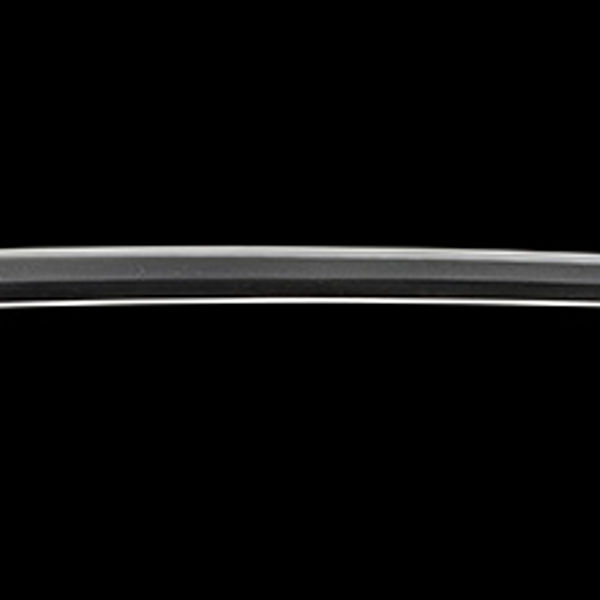
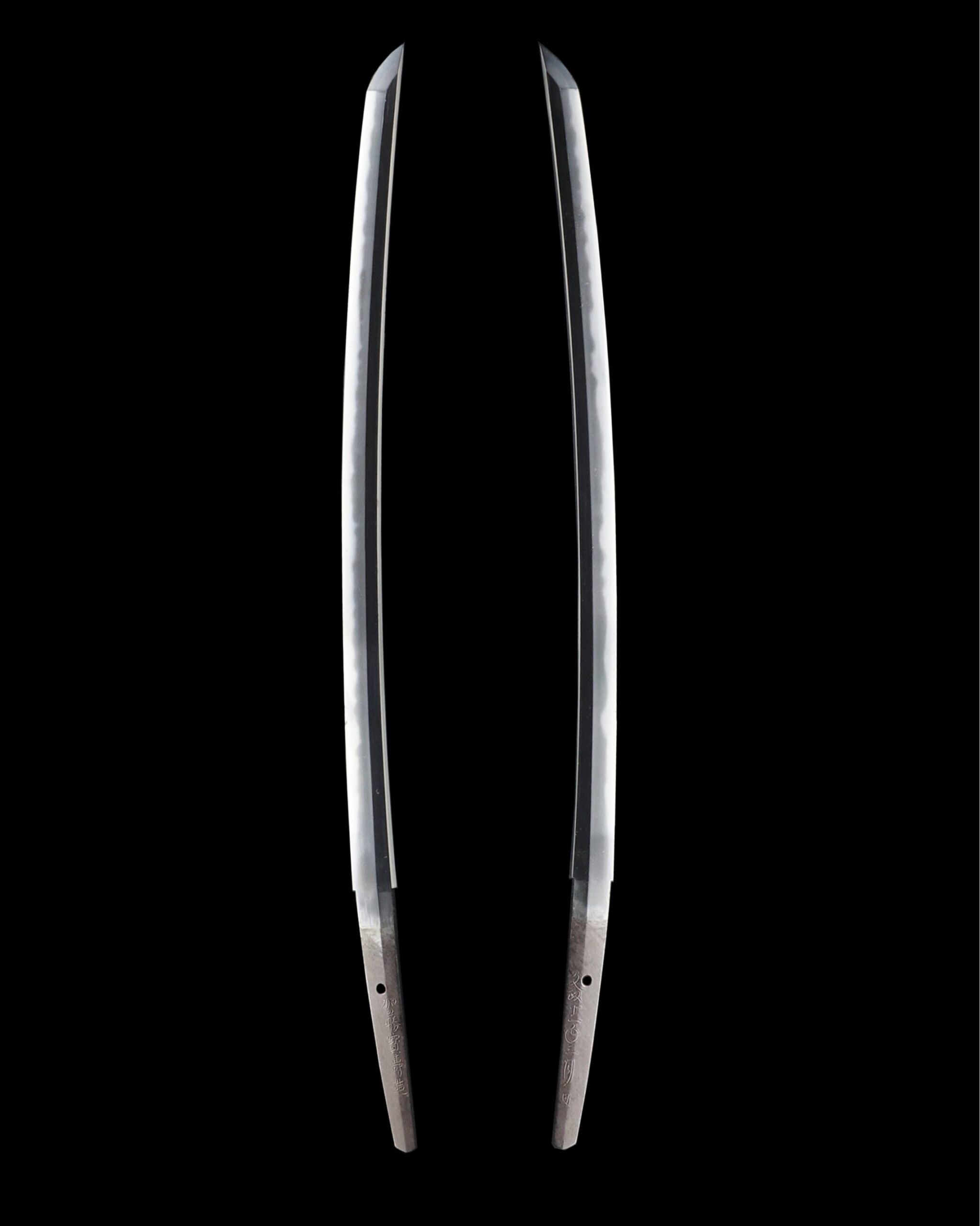
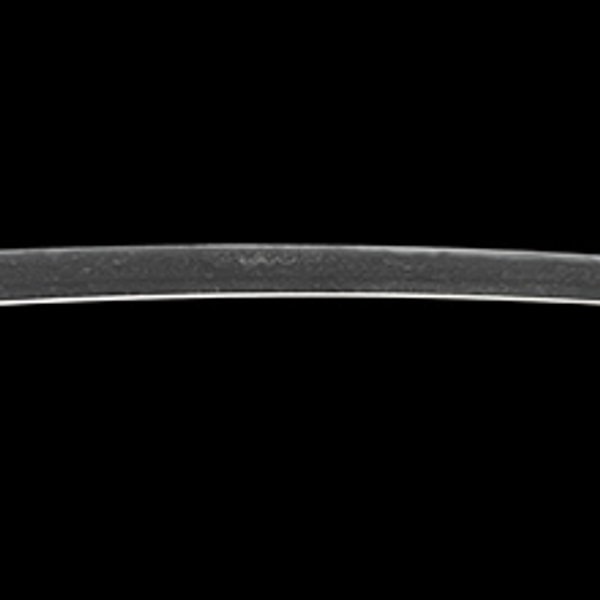
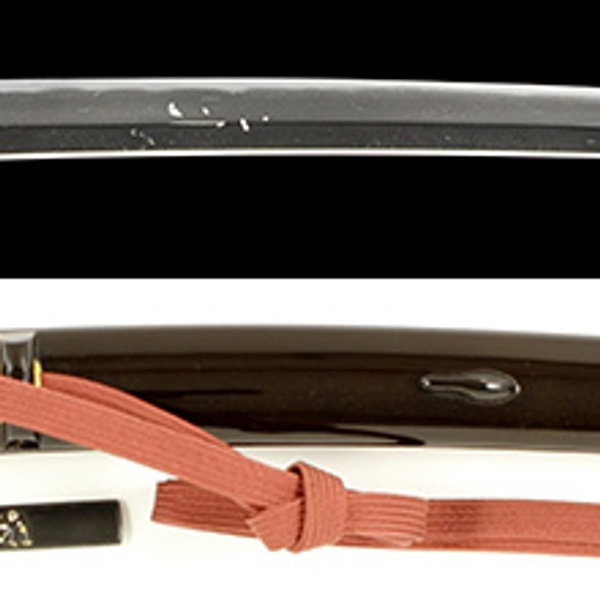
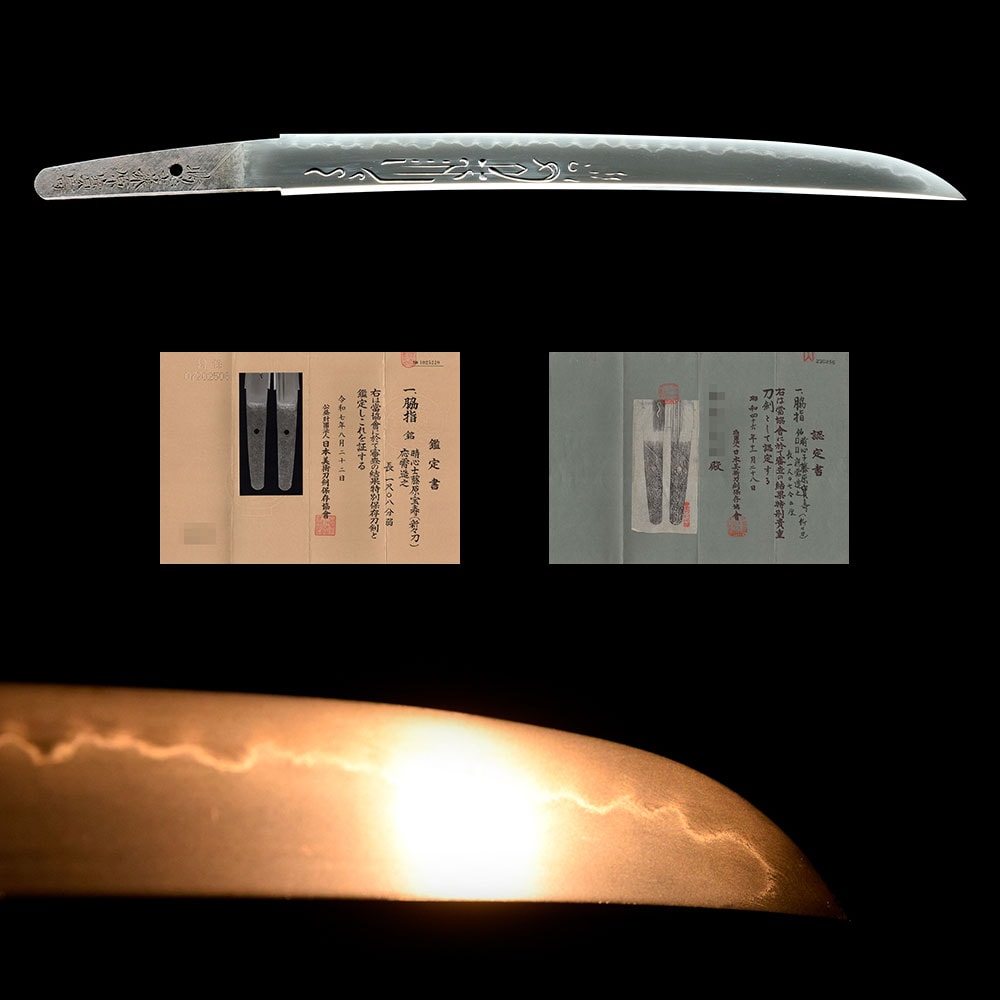
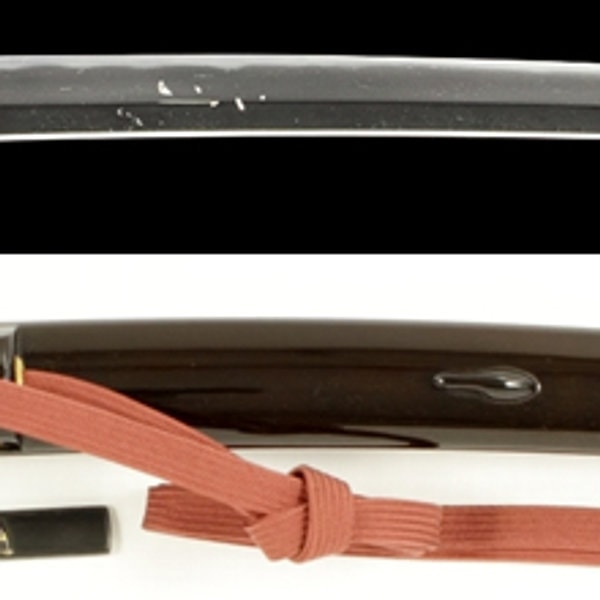
This is a katana attributed to Hoju, a smith from Mutsu Province active during the Nanbokucho period. Originally a long tachi, it has been greatly shortened (o-suriage mumei) but retains a strong shinogi-suji and ample niku, giving it a heavy and dignified feel. The blade has received a Juyo Token certification from the NBTHK at the 44th shinsa.

Rikuchu · around 1306-1308
Tōken Taikan top 14%
1 piece on the market now
Hoju is a name that appears in documentary sources from as early as the Heian period and is regarded as a representative smith among the swordmakers of Oshu (Mutsu province). The lineage belongs to a branch of the Maikusa smiths, a group that continued from the early Kamakura period through the Nanbokucho and into the Muromachi period. Old traditional records transmit that many swordsmiths were active in Oshu from the Nara period onward; however, among works that survive today, only those of Hoju are extant. Signed examples bearing date inscriptions from the Shochu and Kenmu eras establish a working period spanning the mid- to late Kamakura era. Of particular significance is a tachi signed "Yamato-kuni-ju Tomoto Hoju" with a date of Enkyo 4 (1311), which raises the question of whether there was migration between Oshu and Yamato, possibly through connections with Shugendo (mountain asceticism), though the matter remains unresolved.
The forging of Hoju's works characteristically shows itame-hada mixed with mokume and nagare-hada, with the grain tending to stand prominently; the jihada often appears whitish overall, and the steel surface frequently lacks pronounced sae (clarity). The tempering is founded upon suguha, at times incorporating ko-midare and gunome, with ko-nie adhering along a nioiguchi that tends toward shizumi (a subdued quality). Sunagashi may be observed, and at the machi the boundary of the hardened zone is occasionally finished with a small yaki-otoshi. The boshi is typically straight, turning back in ko-maru, though certain works display midare-komi with hakikake. Carved blade ornamentation (horimono) is common, including bo-hi, suken, and katana-hi with tsure-men.
In both ji and ha, Hoju's works clearly exhibit the distinctive characteristics of this tradition, and the NBTHK has noted that many examples give an overall quiet impression. Among his surviving oeuvre, quality varies appreciably; certain tachi are recognized as possessing particularly splendid workmanship and superior quality compared to the more subdued examples. One such work, held within the Imperial Household collection, is described as ranking among the finest examples of this smith's output. The preservation of signed and dated blades from the Shochu era renders them especially valuable for research on the Hoju lineage and its place among the swordmaking traditions of Oshu.
We could not find an authenticity certificate on the seller’s listing. Japanese swords and fittings are normally papered by the NBTHK (or the NTHK). Without one, the attribution is the seller’s own assessment and has not been independently verified — treat it with caution and ask the dealer about certification before buying.
If, due to our fault, the item differs significantly from its proper condition, the item may be returned. Cooling-off is within one week of the item's arrival.
This is a katana attributed to Hoju, a smith from Mutsu Province active during the Nanbokucho period. Originally a long tachi, it has been greatly shortened (o-suriage mumei) but retains a strong shinogi-suji and ample niku, giving it a heavy and dignified feel. The blade has received a Juyo Token certification from the NBTHK at the 44th shinsa.

Rikuchu · around 1306-1308
Tōken Taikan top 14%
1 piece on the market now
Hoju is a name that appears in documentary sources from as early as the Heian period and is regarded as a representative smith among the swordmakers of Oshu (Mutsu province). The lineage belongs to a branch of the Maikusa smiths, a group that continued from the early Kamakura period through the Nanbokucho and into the Muromachi period. Old traditional records transmit that many swordsmiths were active in Oshu from the Nara period onward; however, among works that survive today, only those of Hoju are extant. Signed examples bearing date inscriptions from the Shochu and Kenmu eras establish a working period spanning the mid- to late Kamakura era. Of particular significance is a tachi signed "Yamato-kuni-ju Tomoto Hoju" with a date of Enkyo 4 (1311), which raises the question of whether there was migration between Oshu and Yamato, possibly through connections with Shugendo (mountain asceticism), though the matter remains unresolved.
The forging of Hoju's works characteristically shows itame-hada mixed with mokume and nagare-hada, with the grain tending to stand prominently; the jihada often appears whitish overall, and the steel surface frequently lacks pronounced sae (clarity). The tempering is founded upon suguha, at times incorporating ko-midare and gunome, with ko-nie adhering along a nioiguchi that tends toward shizumi (a subdued quality). Sunagashi may be observed, and at the machi the boundary of the hardened zone is occasionally finished with a small yaki-otoshi. The boshi is typically straight, turning back in ko-maru, though certain works display midare-komi with hakikake. Carved blade ornamentation (horimono) is common, including bo-hi, suken, and katana-hi with tsure-men.
In both ji and ha, Hoju's works clearly exhibit the distinctive characteristics of this tradition, and the NBTHK has noted that many examples give an overall quiet impression. Among his surviving oeuvre, quality varies appreciably; certain tachi are recognized as possessing particularly splendid workmanship and superior quality compared to the more subdued examples. One such work, held within the Imperial Household collection, is described as ranking among the finest examples of this smith's output. The preservation of signed and dated blades from the Shochu era renders them especially valuable for research on the Hoju lineage and its place among the swordmaking traditions of Oshu.
We could not find an authenticity certificate on the seller’s listing. Japanese swords and fittings are normally papered by the NBTHK (or the NTHK). Without one, the attribution is the seller’s own assessment and has not been independently verified — treat it with caution and ask the dealer about certification before buying.
If, due to our fault, the item differs significantly from its proper condition, the item may be returned. Cooling-off is within one week of the item's arrival.