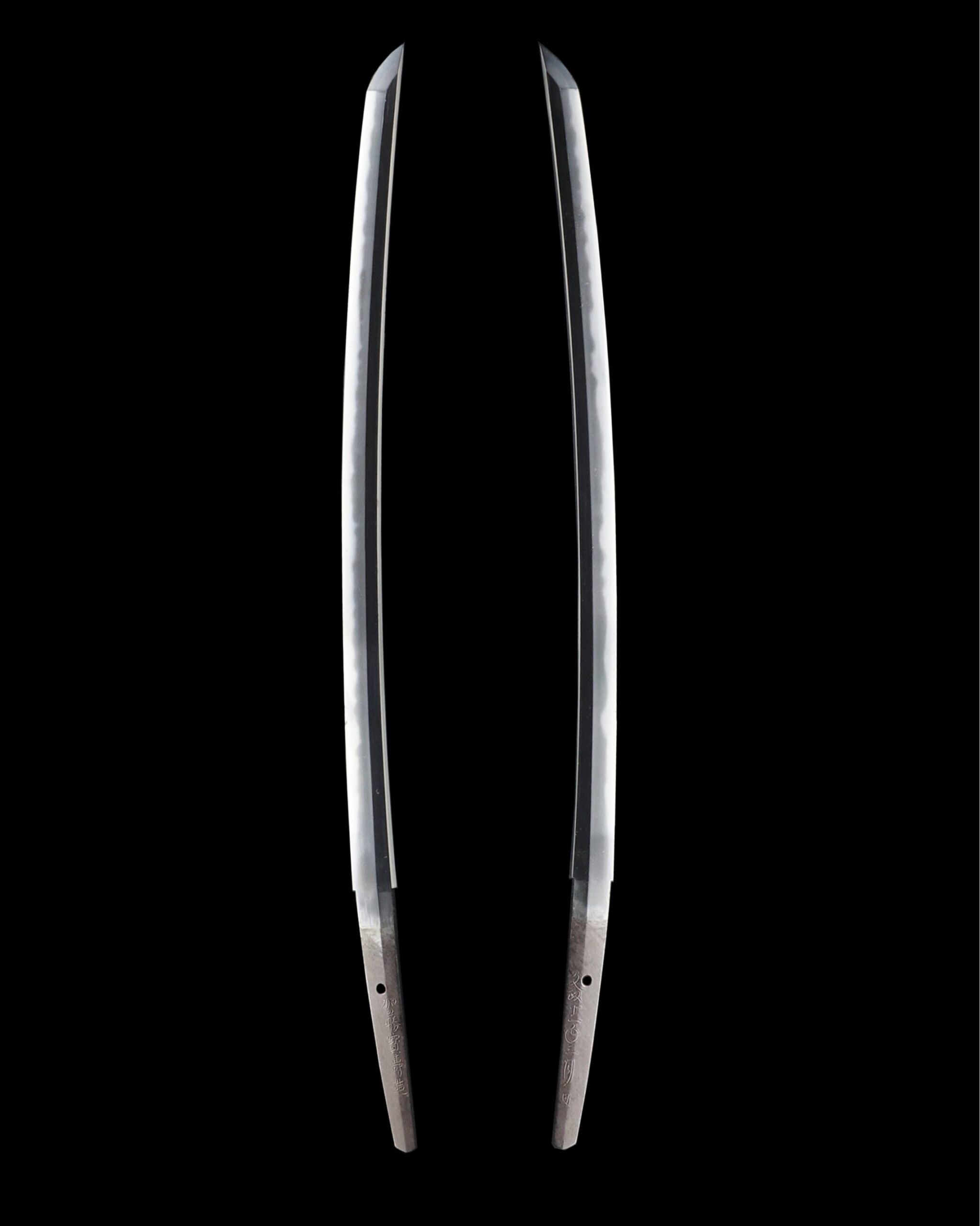
The curved, ridged tachi took its classic form in the Heian provinces while the court refined its culture in the capital. Its patrons were the military nobility whose feuds ended in the Genpei War, and whose blades became heirlooms almost at once.
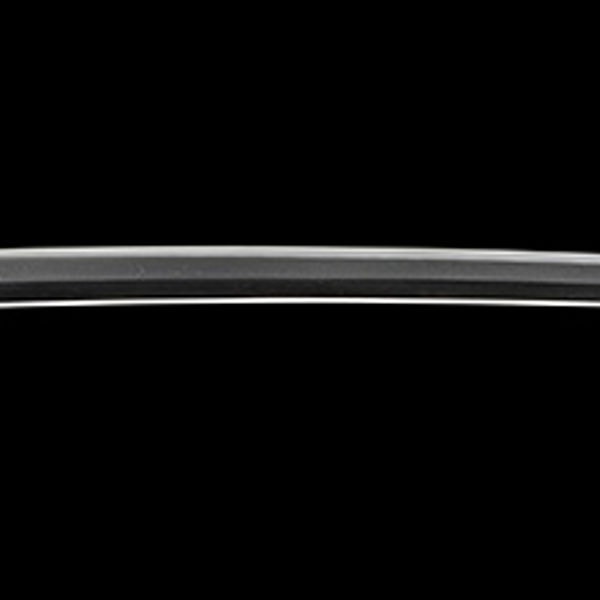
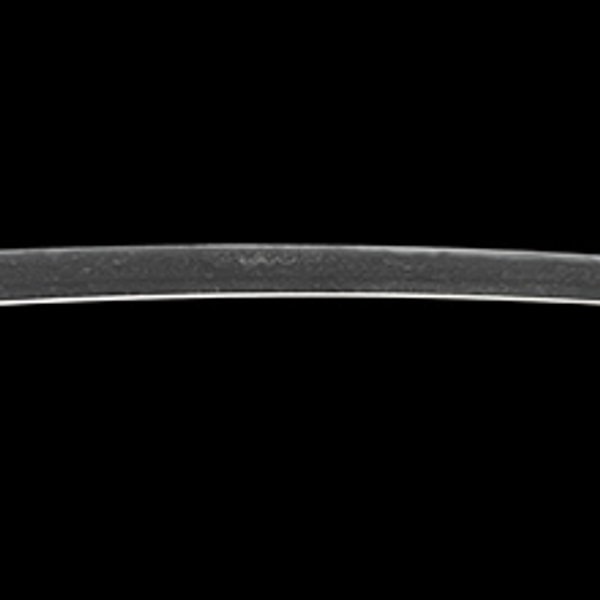
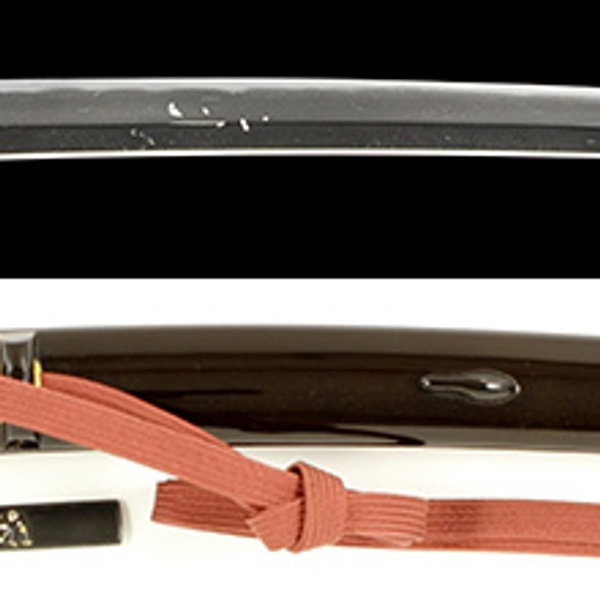
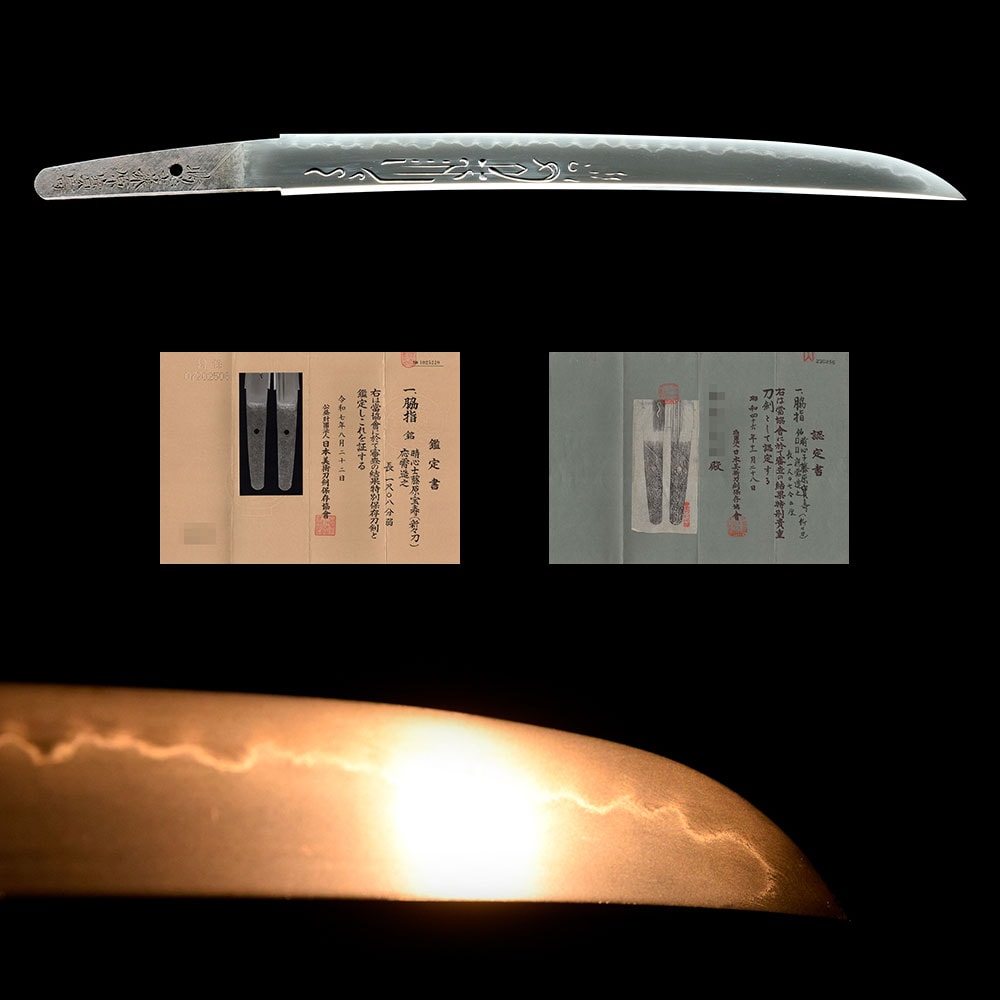
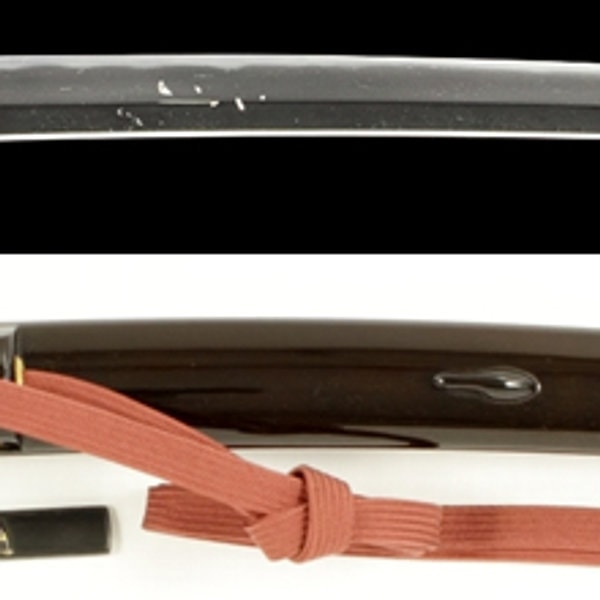
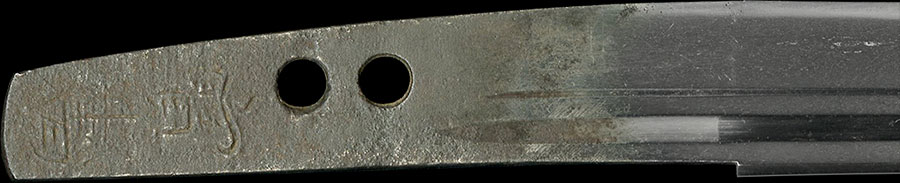
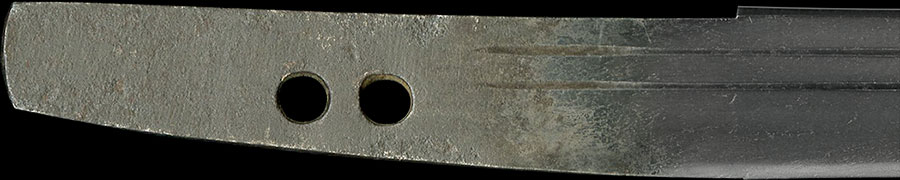
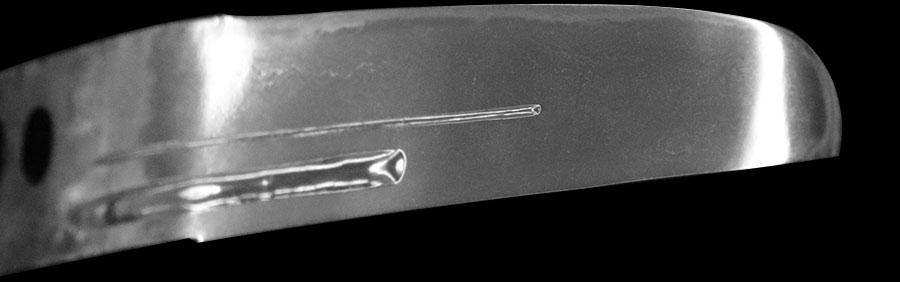
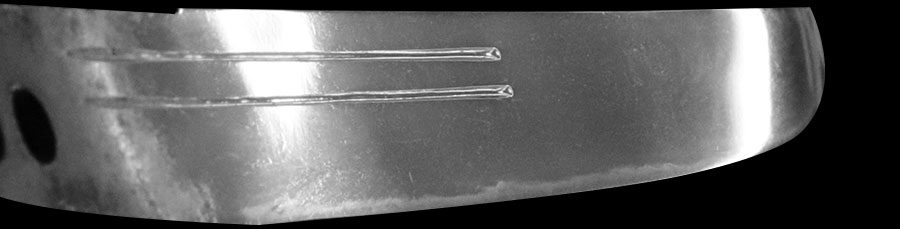
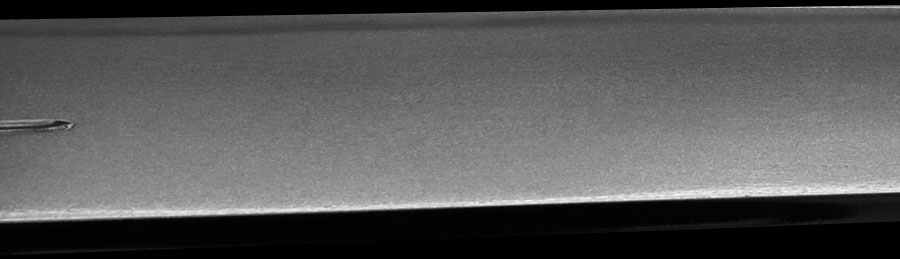
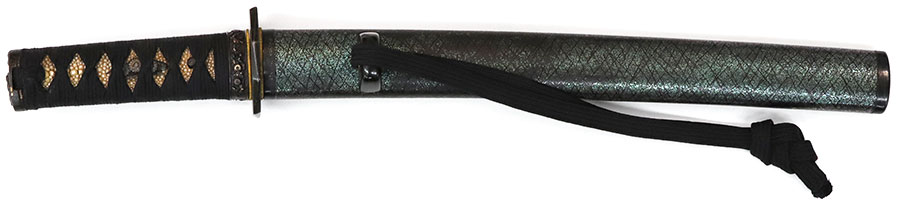
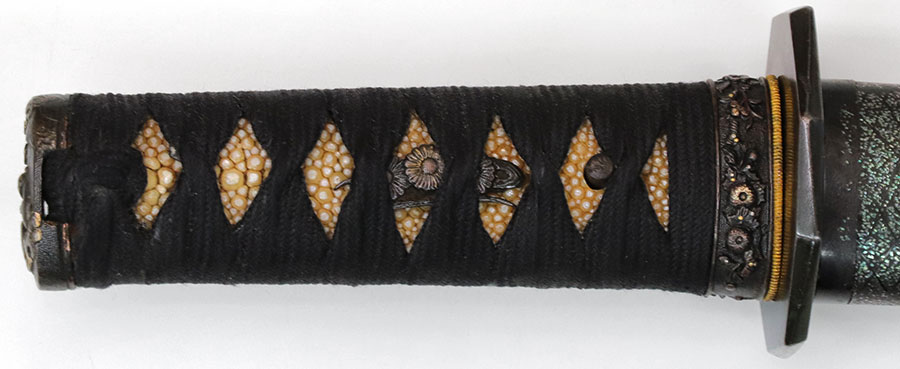
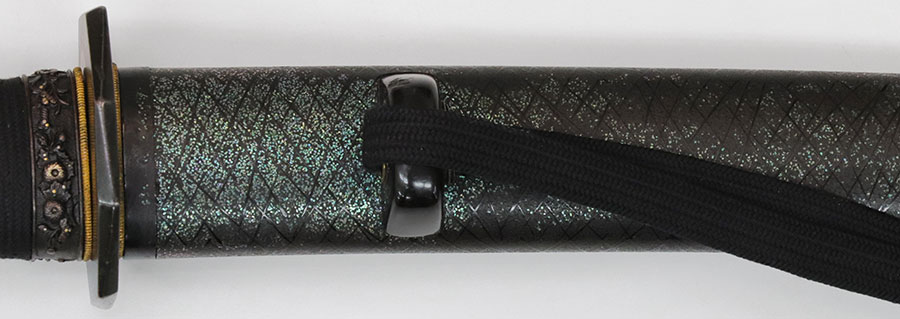
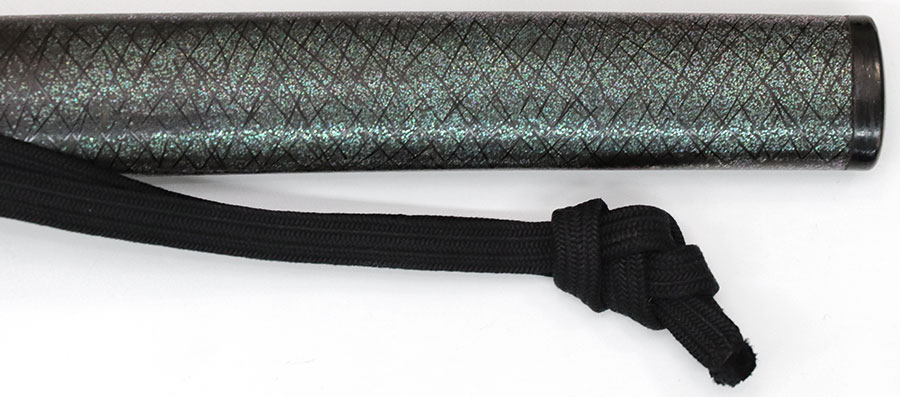
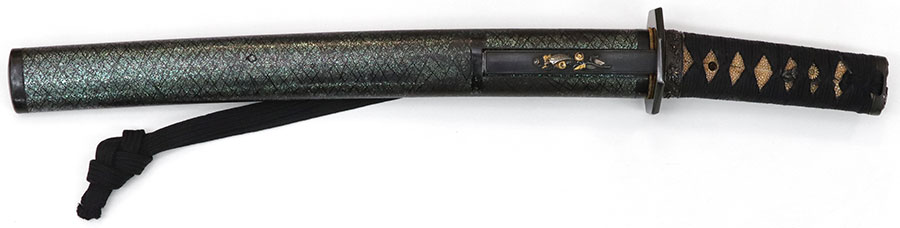
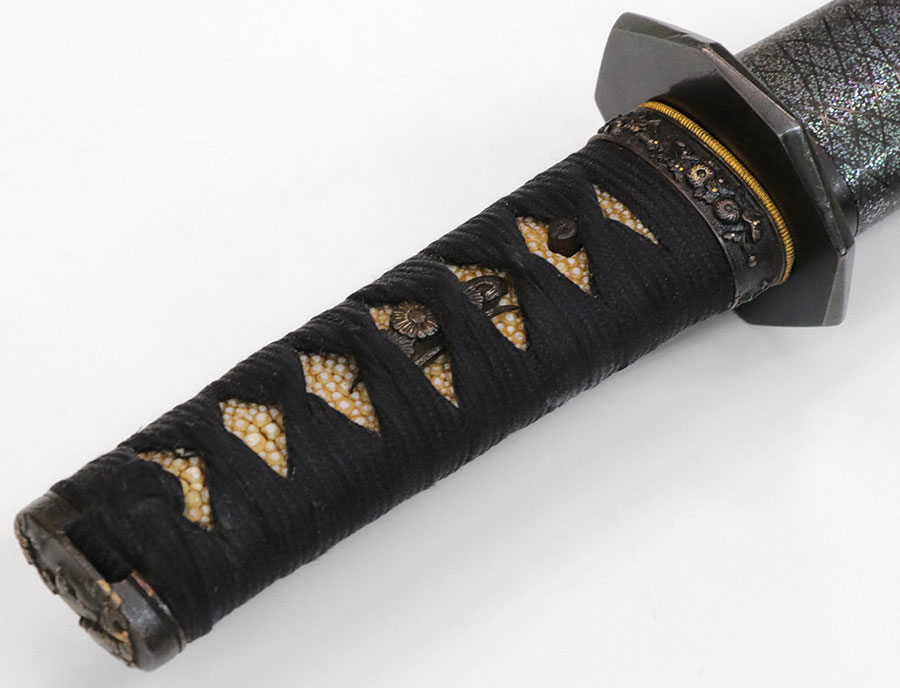
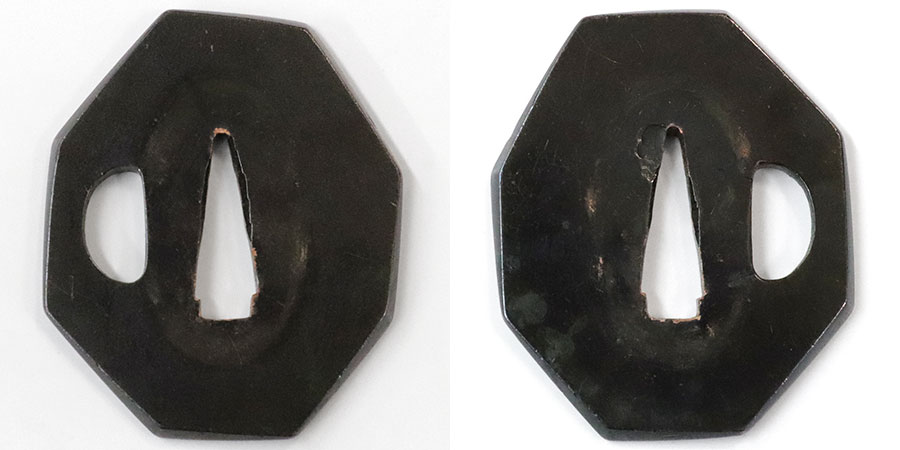
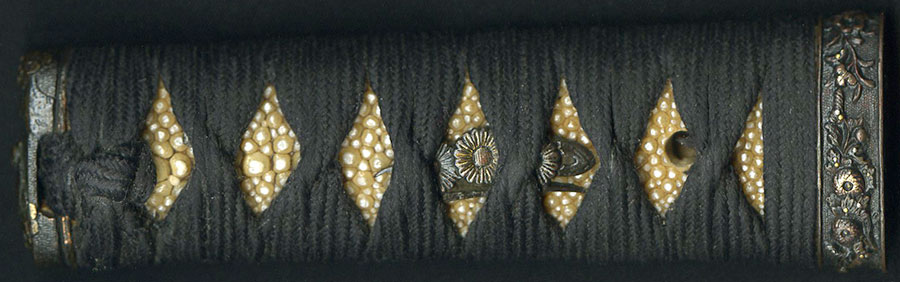
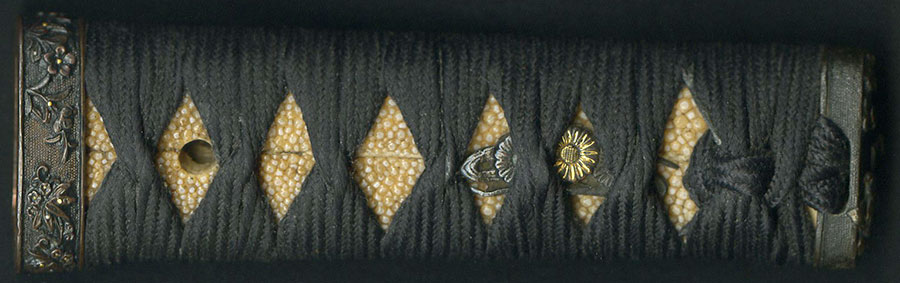
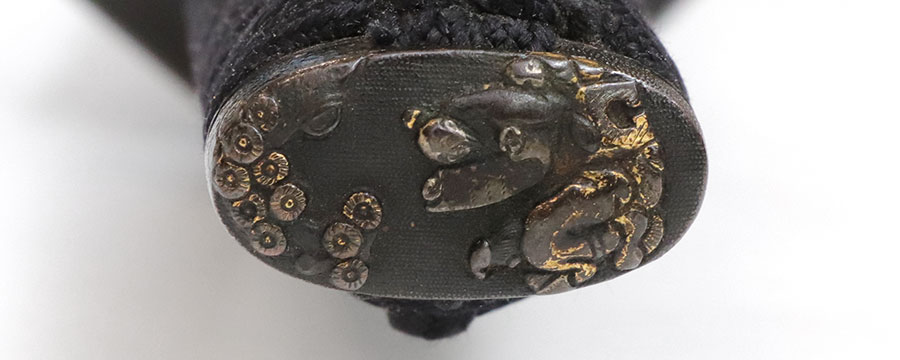
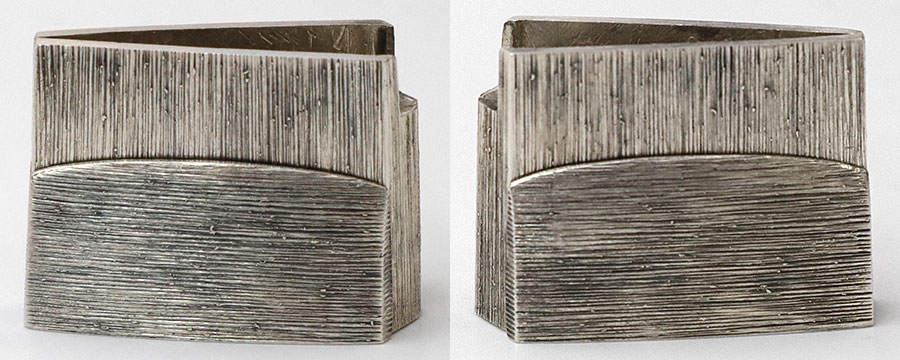
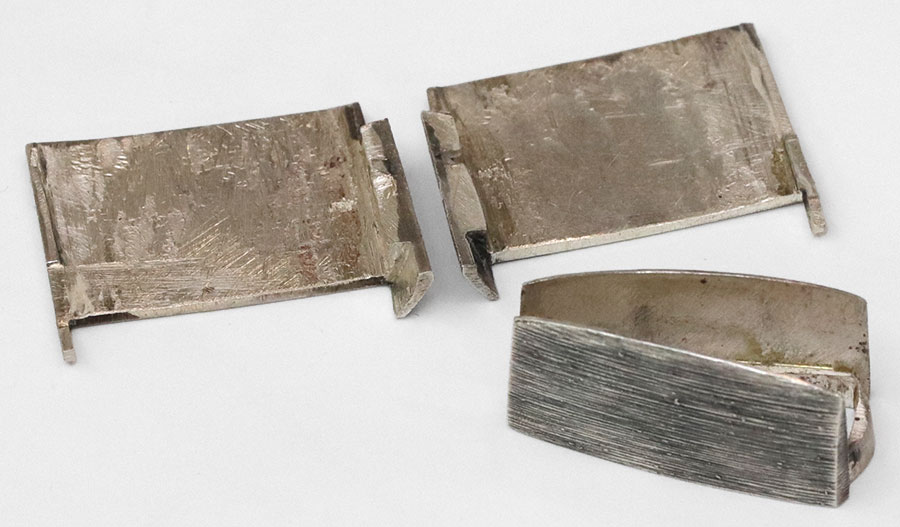
During the Heian period, the dawn of the Japanese sword, the Mokusa school existed in Mutsu Province (Aomori, Yamagata, Morioka, Miyagi), but almost no works remain. From the early Kamakura period to the early Muromachi Oei era, considered to be the descendants of this lineage, the Hoju school existed in Oshū Hiraizumi; while extremely rare, there are Hoju works such as this tanto. This tanto is a precious Hoju with a mei, remaining in its original form from around the Muromachi period Oei era (1394) (627 years ago). Most Hoju are mumei with attributions (kiwame), and tanto with a Hoju mei like this one are virtually non-existent, making a perfectly preserved Hoju tanto extremely valuable. The sugata is elegant, without sori, resembling a Kamakura period Rai Kunitoshi tanto from Yamashiro Kyo. The jigane is forged in ko-itame hada. The horimono is skillfully done, with a koshi-hi and tsure-hi on the omote, and gomabashi on the ura. A faint midare-utsuri appears on the ji, which is a characteristic of Hoju. The hamon is in nioi-deki with nie, a suguha style mixed with notare, manifesting kinsuji within the ha, showing an antique and magnificent style. The koshirae, a tanto koshirae with an aogai nashiji-nuri saya, adds further splendor to this precious Hoju with a mei. On this occasion, having received this from an old connoisseur with the request to pass it on to the next generation at a low price, we are offering it at a special bargain. Please enjoy this charming tanto with the auspicious mei of Hoju.
 NihontoWatch







Mutsu · around 1306-1308
2 pieces on the market now
The Heian period (794 to 1185)
The curved, ridged tachi took its classic form in the Heian provinces while the court refined its culture in the capital. Its patrons were the military nobility whose feuds ended in the Genpei War, and whose blades became heirlooms almost at once.
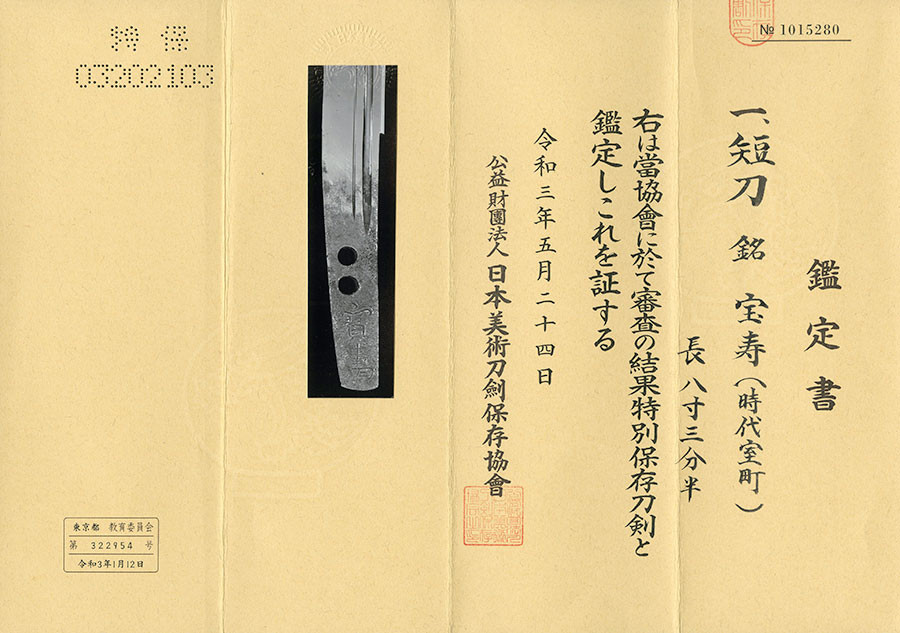
A Hozon-certified blade judged to show notably superior workmanship and a better state of preservation. The bar is higher: re-tempered blades and most unsigned Muromachi/Edo works are excluded.
The NBTHK (Nihon Bijutsu Tōken Hozon Kyōkai, the Society for the Preservation of Japanese Art Swords) is a public-interest incorporated foundation founded in 1948 and supervised by Japan’s Agency for Cultural Affairs (Bunkachō); it is based at the Japanese Sword Museum in Tokyo. Its expert panels physically examine each submitted work (shinsa) and issue a certificate (kanteishō) ranking it by artistic and historical merit. NBTHK papers are the most widely recognized standard of authentication for Japanese swords and fittings.
NBTHK official siteFor returns due to customer circumstances, the cost is the customer's responsibility. For returns due to our mis-shipment or a defective item, we bear the cost.
During the Heian period, the dawn of the Japanese sword, the Mokusa school existed in Mutsu Province (Aomori, Yamagata, Morioka, Miyagi), but almost no works remain. From the early Kamakura period to the early Muromachi Oei era, considered to be the descendants of this lineage, the Hoju school existed in Oshū Hiraizumi; while extremely rare, there are Hoju works such as this tanto. This tanto is a precious Hoju with a mei, remaining in its original form from around the Muromachi period Oei era (1394) (627 years ago). Most Hoju are mumei with attributions (kiwame), and tanto with a Hoju mei like this one are virtually non-existent, making a perfectly preserved Hoju tanto extremely valuable. The sugata is elegant, without sori, resembling a Kamakura period Rai Kunitoshi tanto from Yamashiro Kyo. The jigane is forged in ko-itame hada. The horimono is skillfully done, with a koshi-hi and tsure-hi on the omote, and gomabashi on the ura. A faint midare-utsuri appears on the ji, which is a characteristic of Hoju. The hamon is in nioi-deki with nie, a suguha style mixed with notare, manifesting kinsuji within the ha, showing an antique and magnificent style. The koshirae, a tanto koshirae with an aogai nashiji-nuri saya, adds further splendor to this precious Hoju with a mei. On this occasion, having received this from an old connoisseur with the request to pass it on to the next generation at a low price, we are offering it at a special bargain. Please enjoy this charming tanto with the auspicious mei of Hoju.
NihontoWatchMutsu · around 1306-1308
2 pieces on the market now
The Heian period (794 to 1185)
The curved, ridged tachi took its classic form in the Heian provinces while the court refined its culture in the capital. Its patrons were the military nobility whose feuds ended in the Genpei War, and whose blades became heirlooms almost at once.
A Hozon-certified blade judged to show notably superior workmanship and a better state of preservation. The bar is higher: re-tempered blades and most unsigned Muromachi/Edo works are excluded.
The NBTHK (Nihon Bijutsu Tōken Hozon Kyōkai, the Society for the Preservation of Japanese Art Swords) is a public-interest incorporated foundation founded in 1948 and supervised by Japan’s Agency for Cultural Affairs (Bunkachō); it is based at the Japanese Sword Museum in Tokyo. Its expert panels physically examine each submitted work (shinsa) and issue a certificate (kanteishō) ranking it by artistic and historical merit. NBTHK papers are the most widely recognized standard of authentication for Japanese swords and fittings.
NBTHK official siteFor returns due to customer circumstances, the cost is the customer's responsibility. For returns due to our mis-shipment or a defective item, we bear the cost.