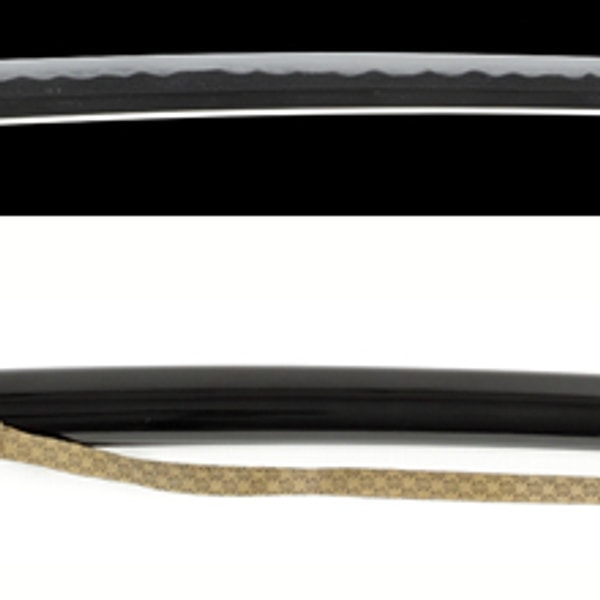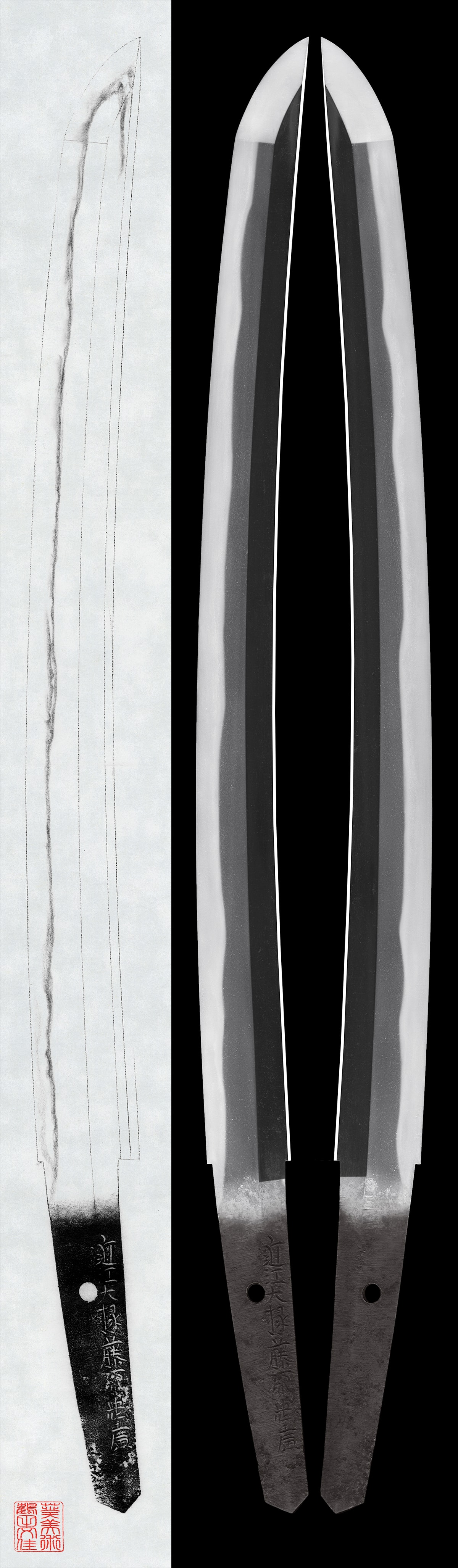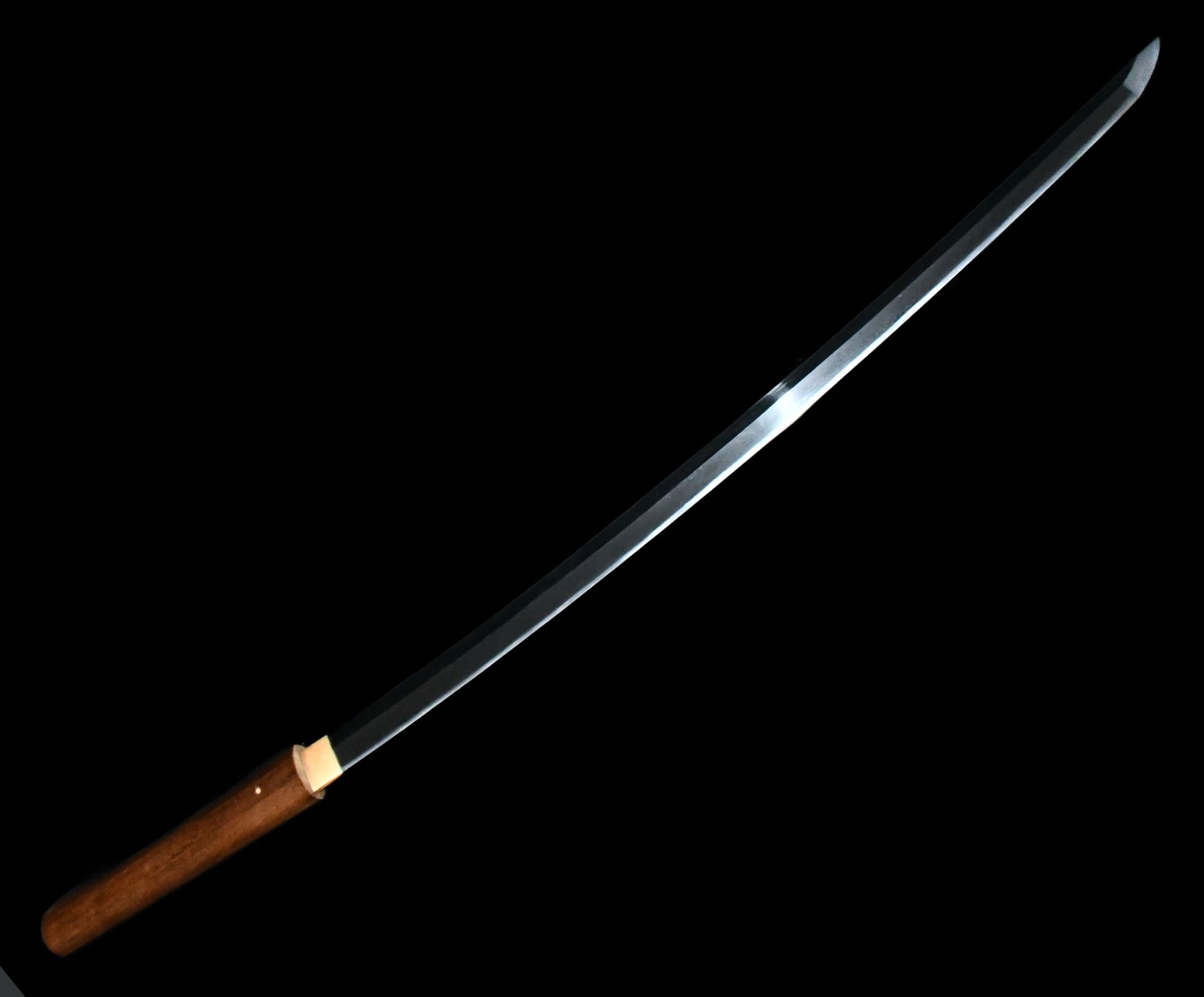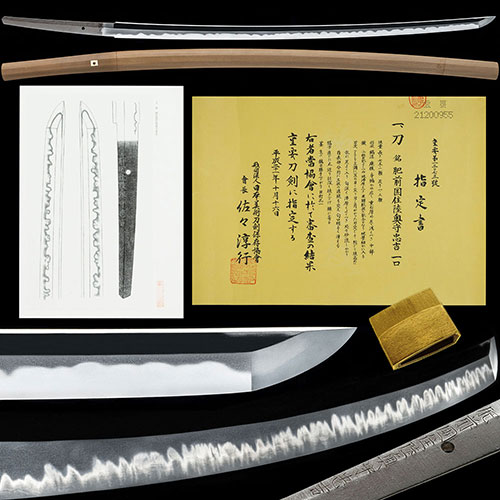

-, 55th Session — Designated October 16, 2009
, : Mutsu no Kami (陸奥守忠吉)
by Kodama Toshiaki (児玉利明)
Measurements 75.1 cm, 1.3 cm, 3.0 cm, 2.0 cm, 2.4 cm, 13.5 cm, 0.15 cm
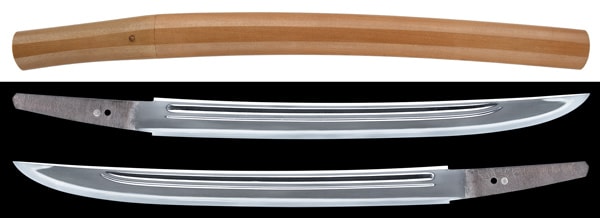
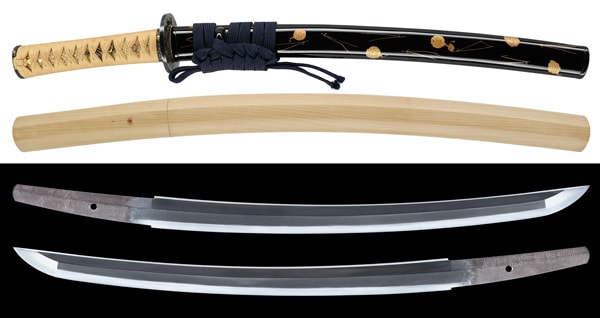
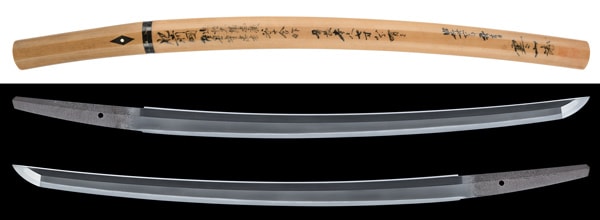
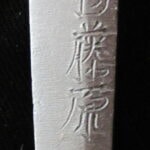
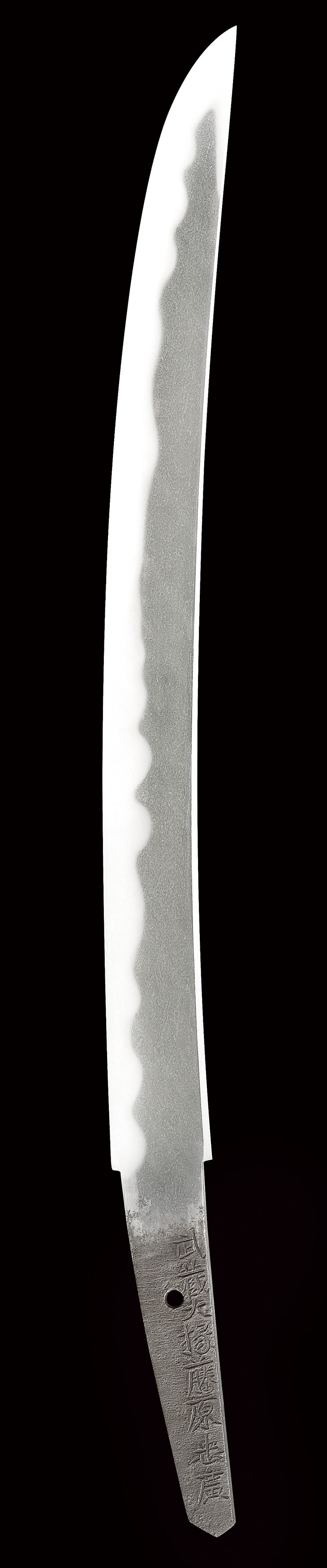
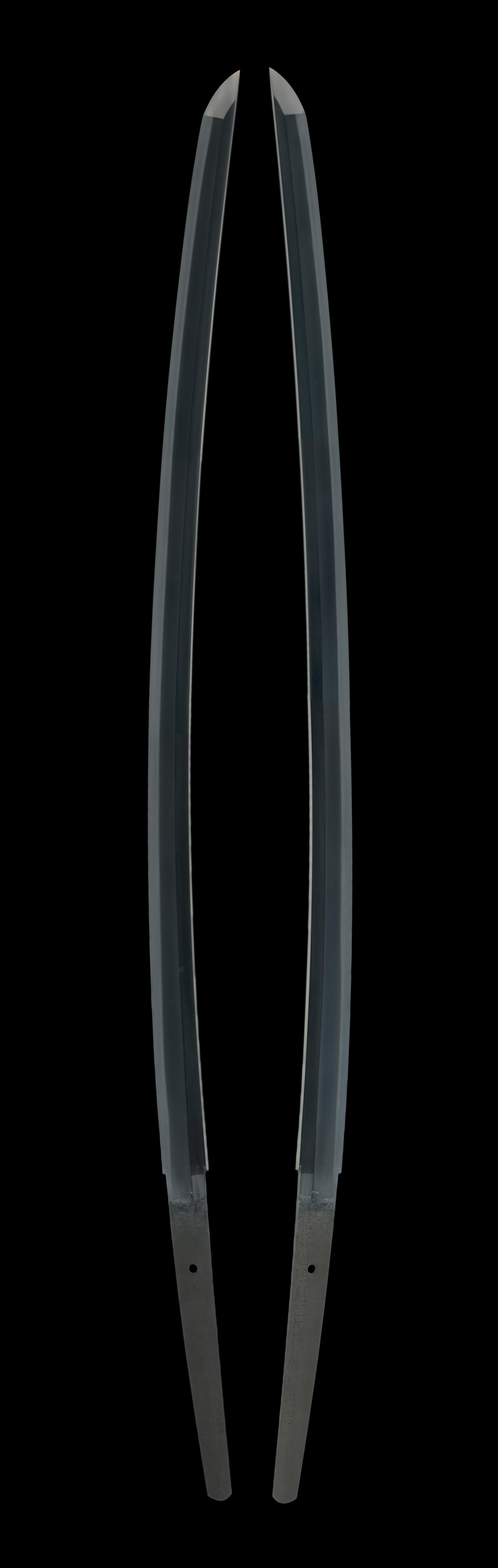
Description Keijo: with ; slightly wide with little difference between base and tip; somewhat thick ; shallow ; . : Tightly forged with very fine, thickly applied ; the grain shows a rice-grain (kome-)-like texture, with fine appearing throughout. : A -based temper mixed with , slightly pointed () and somewhat angular elements; overall a rather high, flamboyant with well-entering ; the is deep, and somewhat coarse adheres thickly; appears here and there; on the , in places, bead-like (-shaped) is interspersed; the is bright and clear (). : Straight () with a rounded turnback; the is deep, with , drawing close to the . : None. : ; tip ; one ; above the the three characters “ no ” are placed higher, and a long signature is cut toward the koshigata.
Artisan , third generation ( ),
Era Early period (mid-17th century; considered an early work within the smith’s career)
Explanation Mutsu no Kami was the legitimate son of Ōmi no Daijō Tadahiro and succeeded to the third generation of the line. After Tosa no Kami ’s death, the Tosa no Kami family returned the right to use the name “” to the main line, which is why he bore the name. In Manji 3 (1660) he received the court title Mutsu no Daijō, and in the following year, 1 (1661), he was promoted to Mutsu no Kami. He died in Jōkyō 3 (1686), seven years before Nidai Tadahiro, at the age of fifty. That his extant works are comparatively few is likely due both to his relatively short working career and to the fact that he was engaged in producing works on behalf of his father.
In style, his work is closer not so much to his father as to his grandfather, . He was particularly adept at , and he was also highly skilled at , in which he fully displays his exceptional technique.
This shows a well-tightened with extremely fine, thick , together with fine —a forging texture that takes on a rice-grain (kome-)-like appearance. The is principally , executed as a high-tempered, brilliant, and decorative , with appearing. The manifests a strong iron character, and the has a deep turnback with that draws close to the —features characteristic of .
Moreover, the conspicuous and unusually pronounced undulations and changes within the —not often seen in this smith—together with the deep , thickly adhering , and , and the bright, clear () appearance of both and , demonstrate an excellent result. Furthermore, the being and the manner of the signature indicate that this is to be regarded as a comparatively early work by the smith. It is a blade from which one may perceive that, even in his early period, he already possessed outstanding technical ability, and it is also valuable as an example of one aspect of ’s manner.