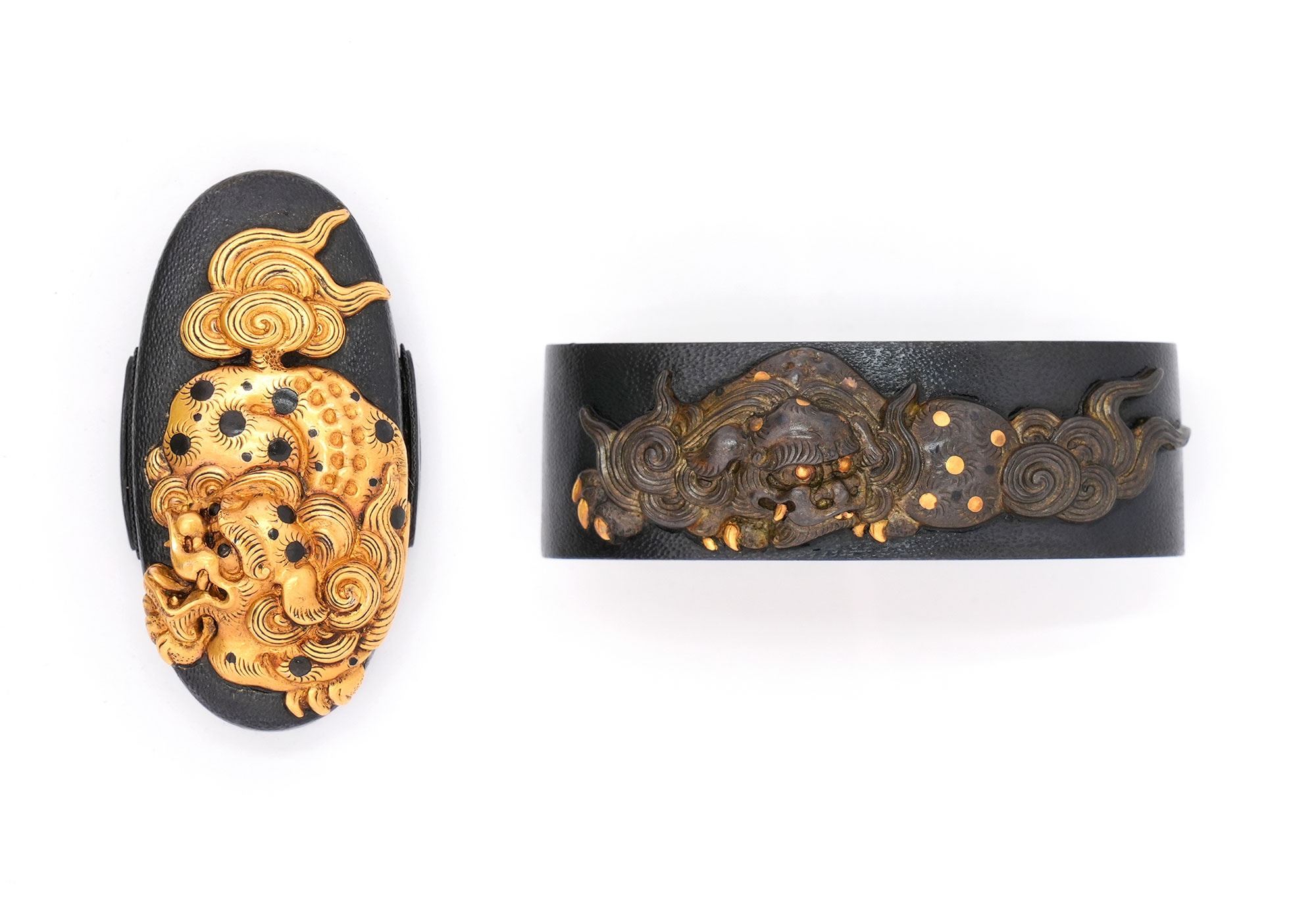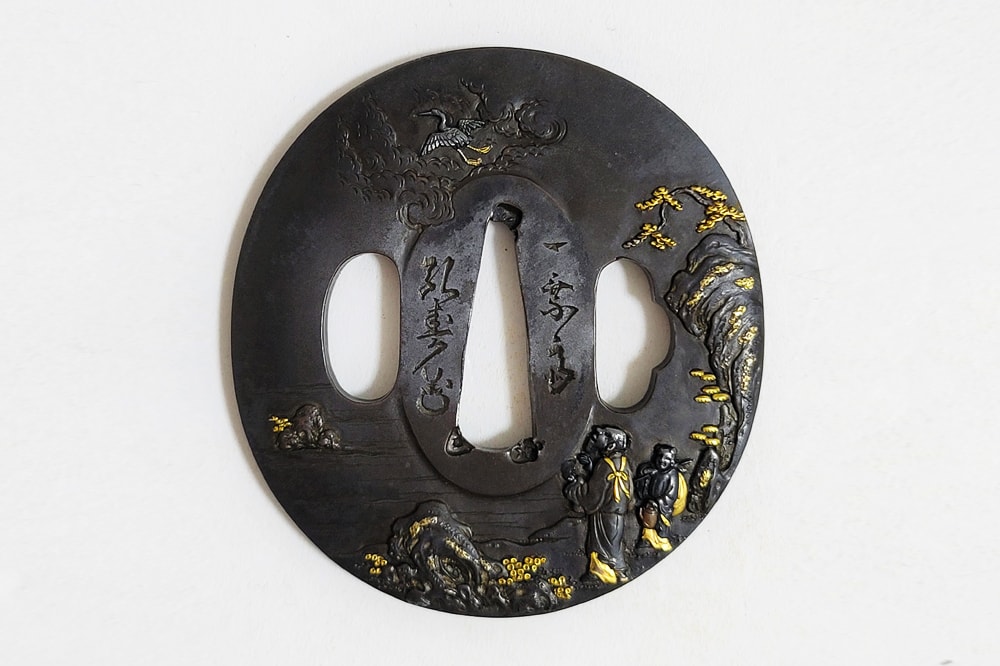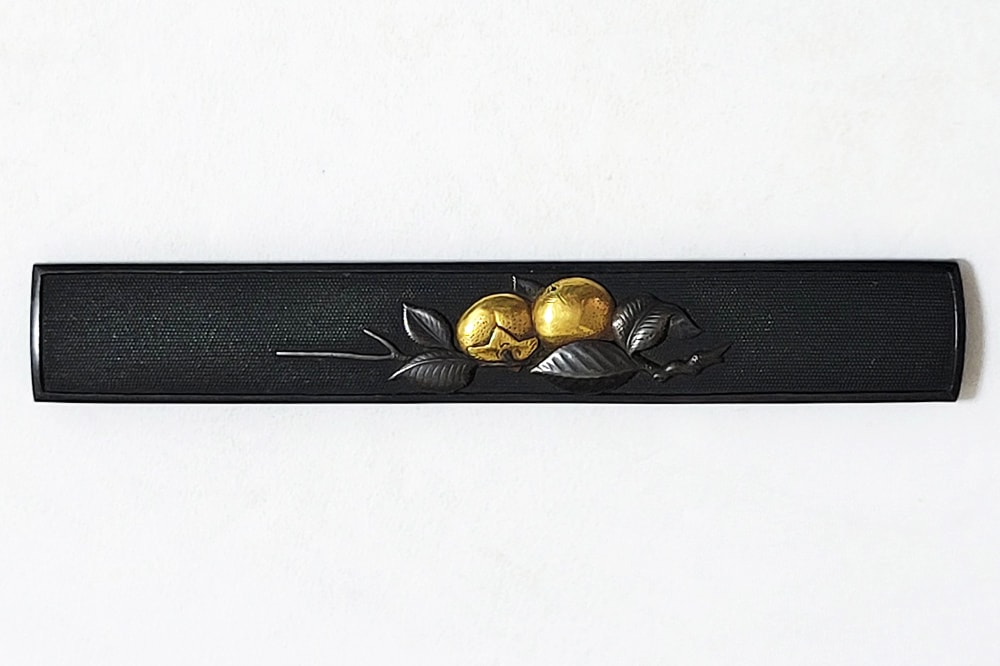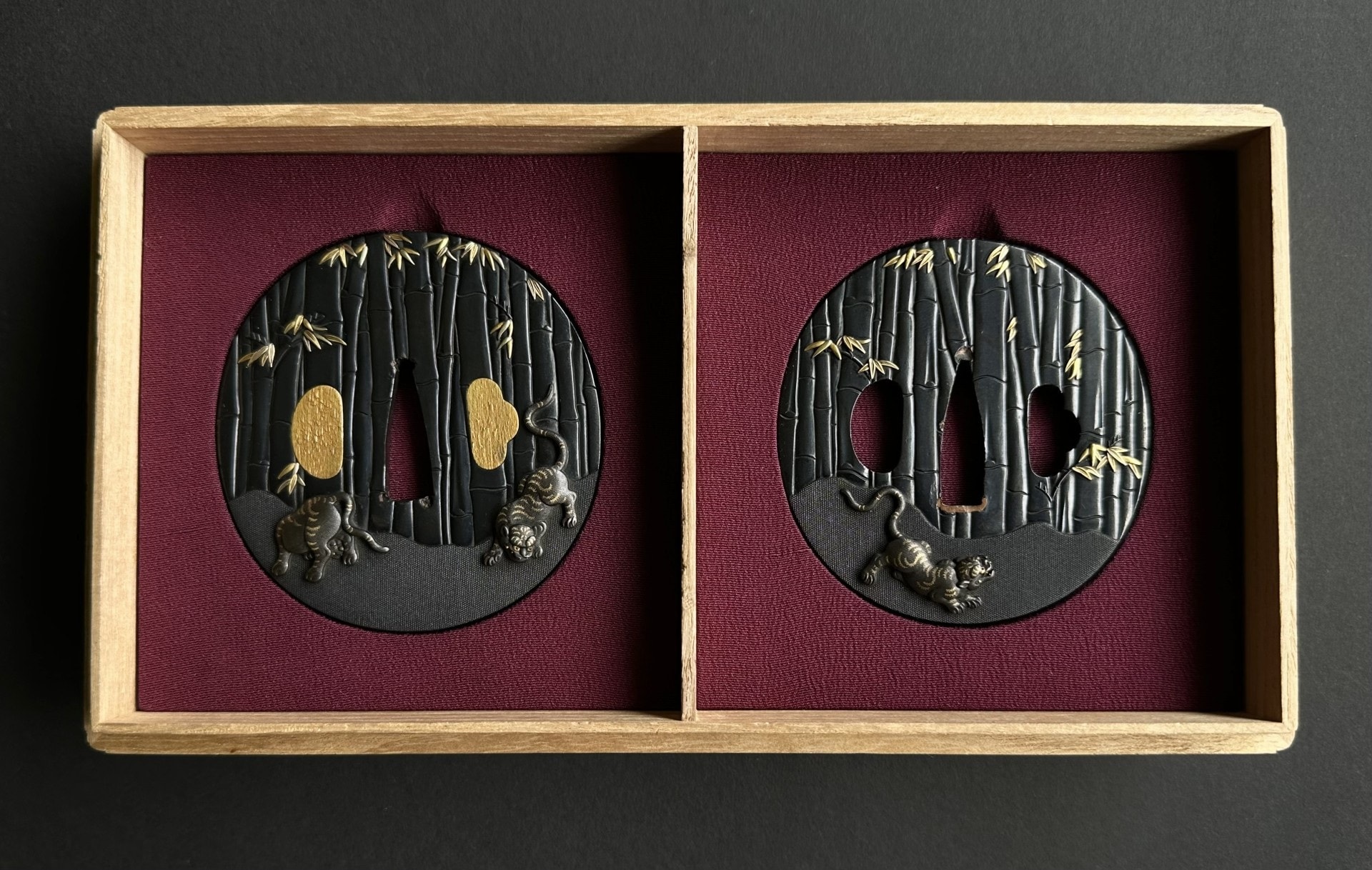
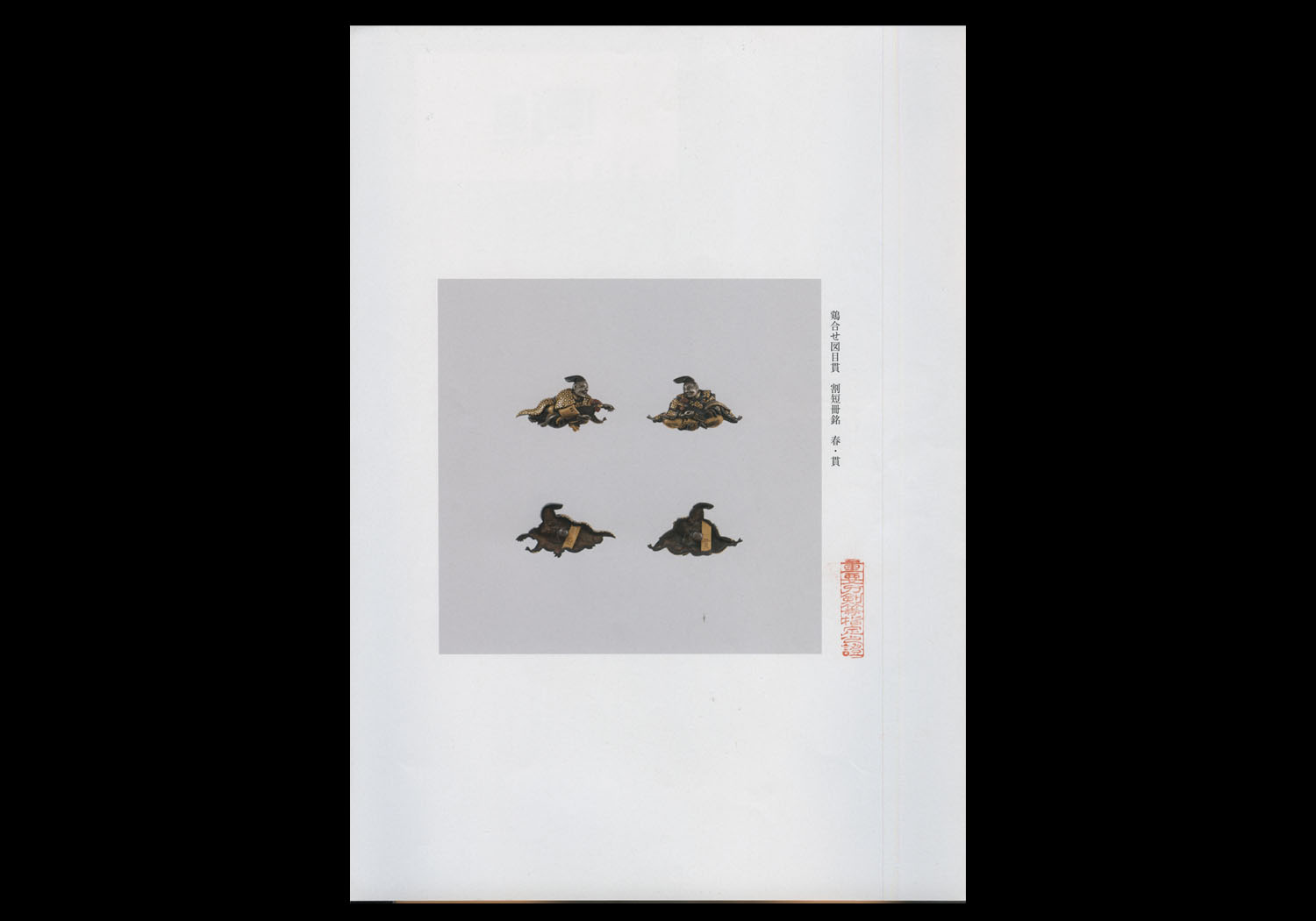
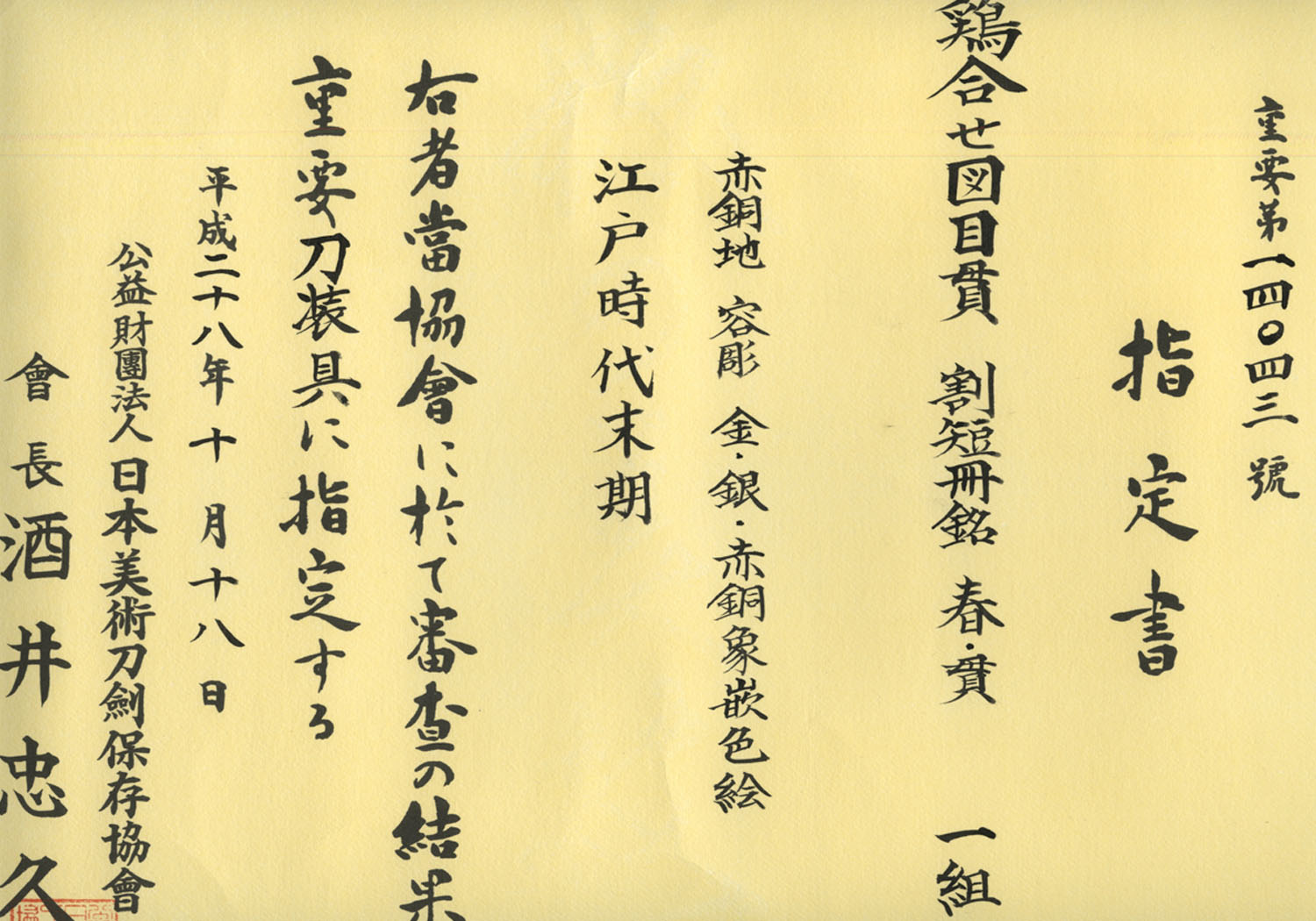
-Tōsōgu, 62nd Session — Designated October 18, 2016
Category: ** Tōsōgu 15
, : Aoki Harutsura (青木春貫)
Piece count: 1 pair (issō)
Measurements: ** Not recorded in the source.
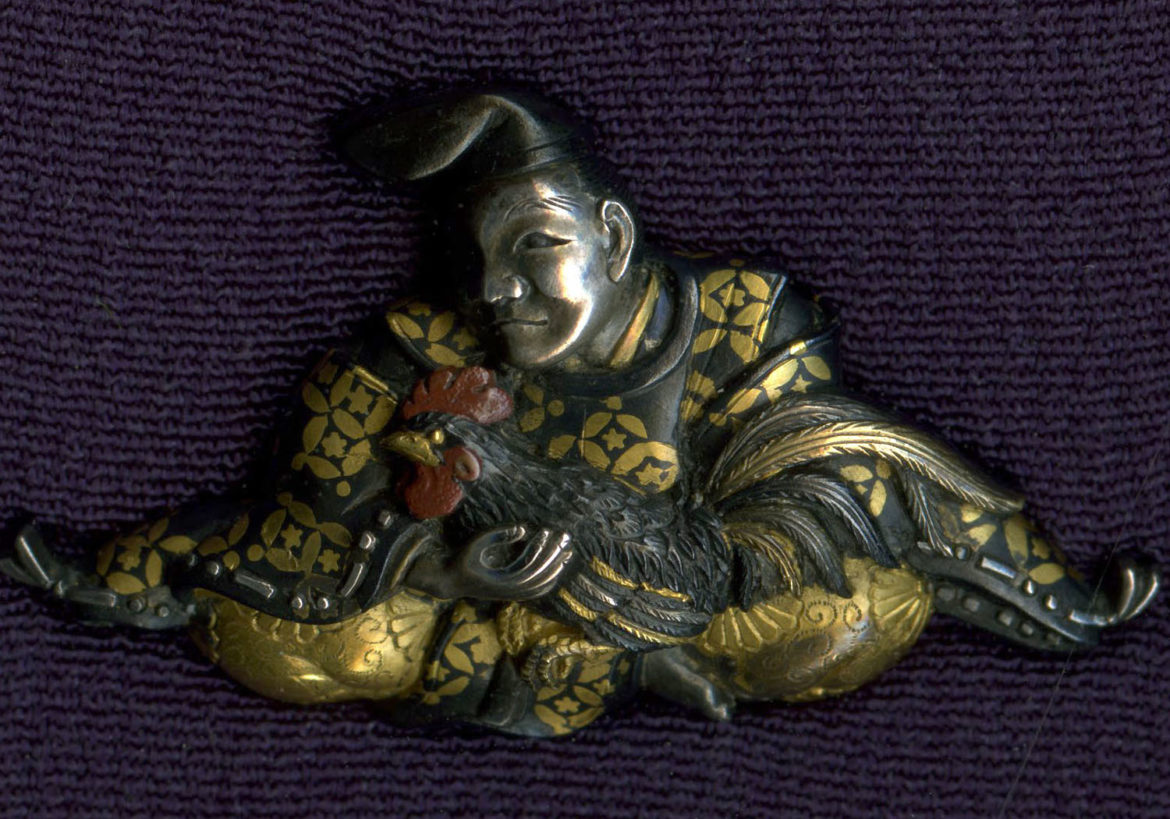
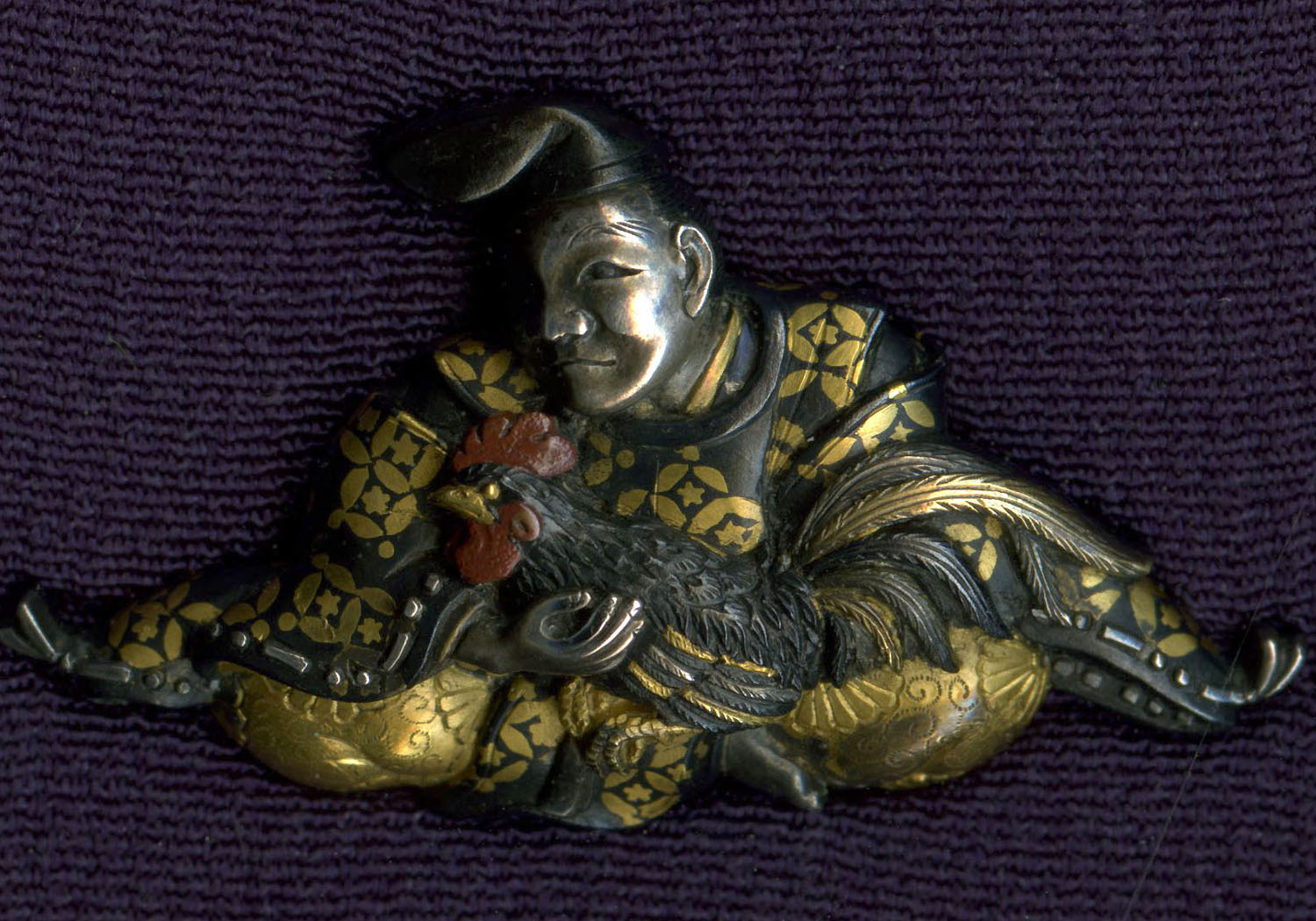
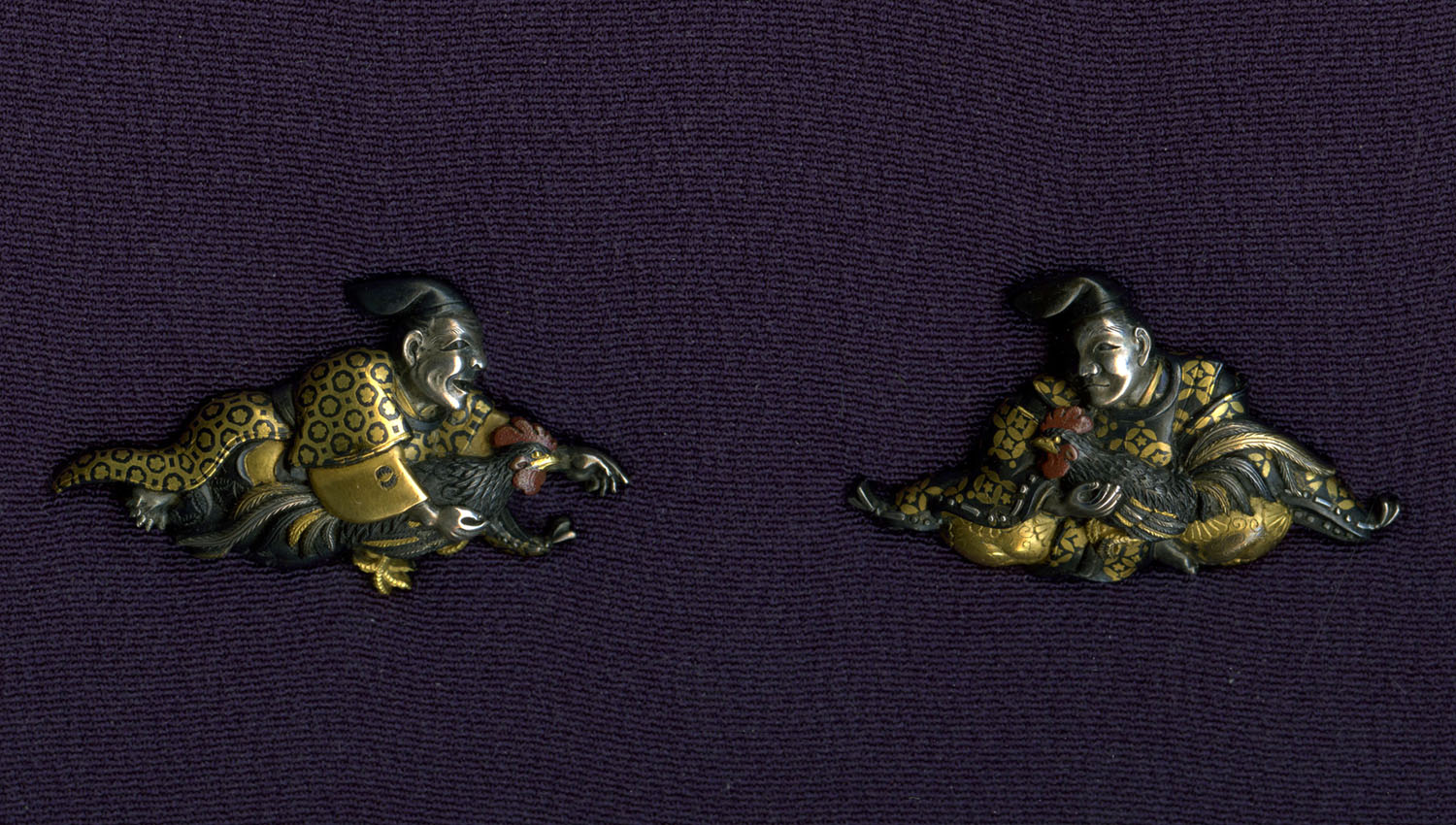
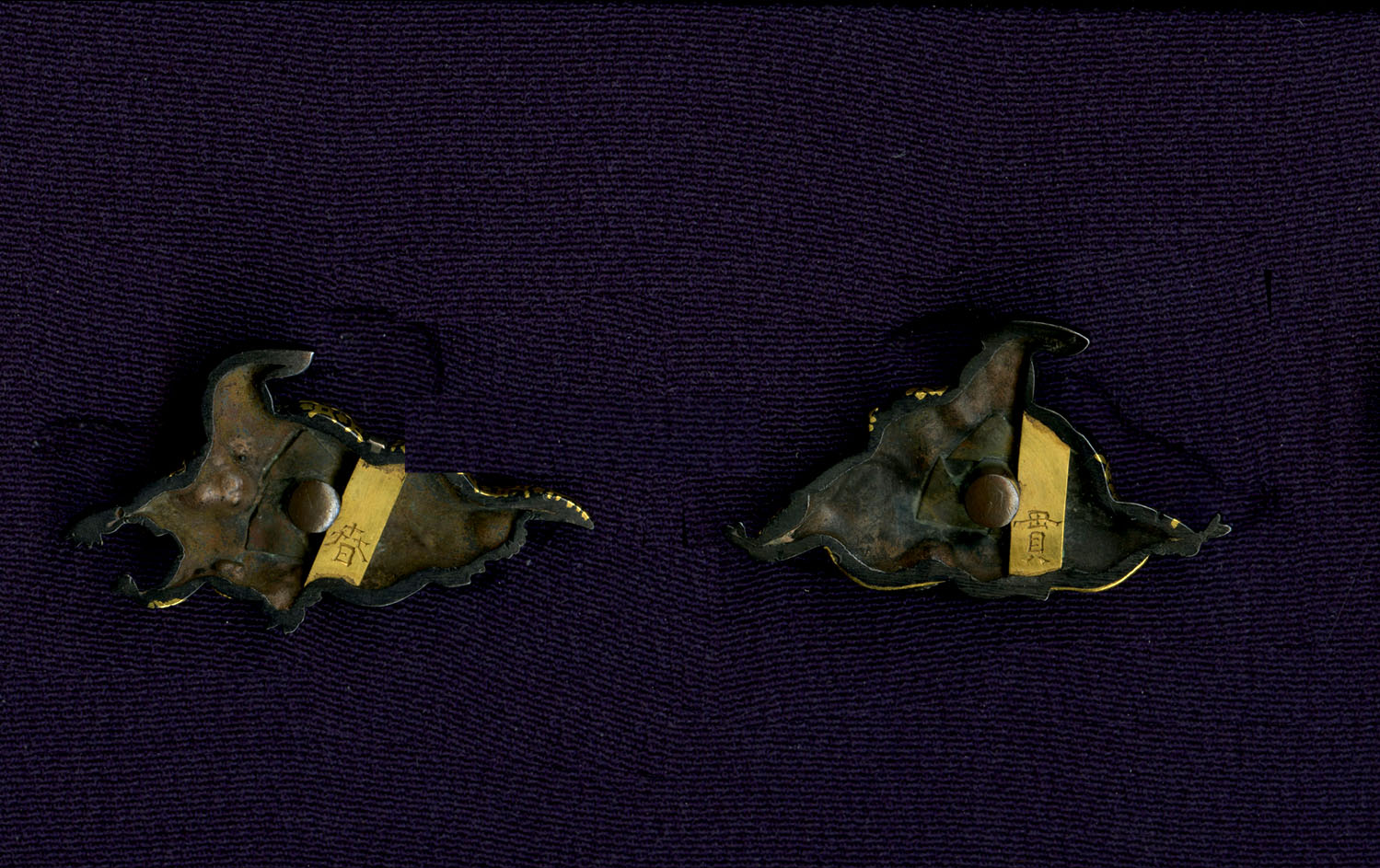
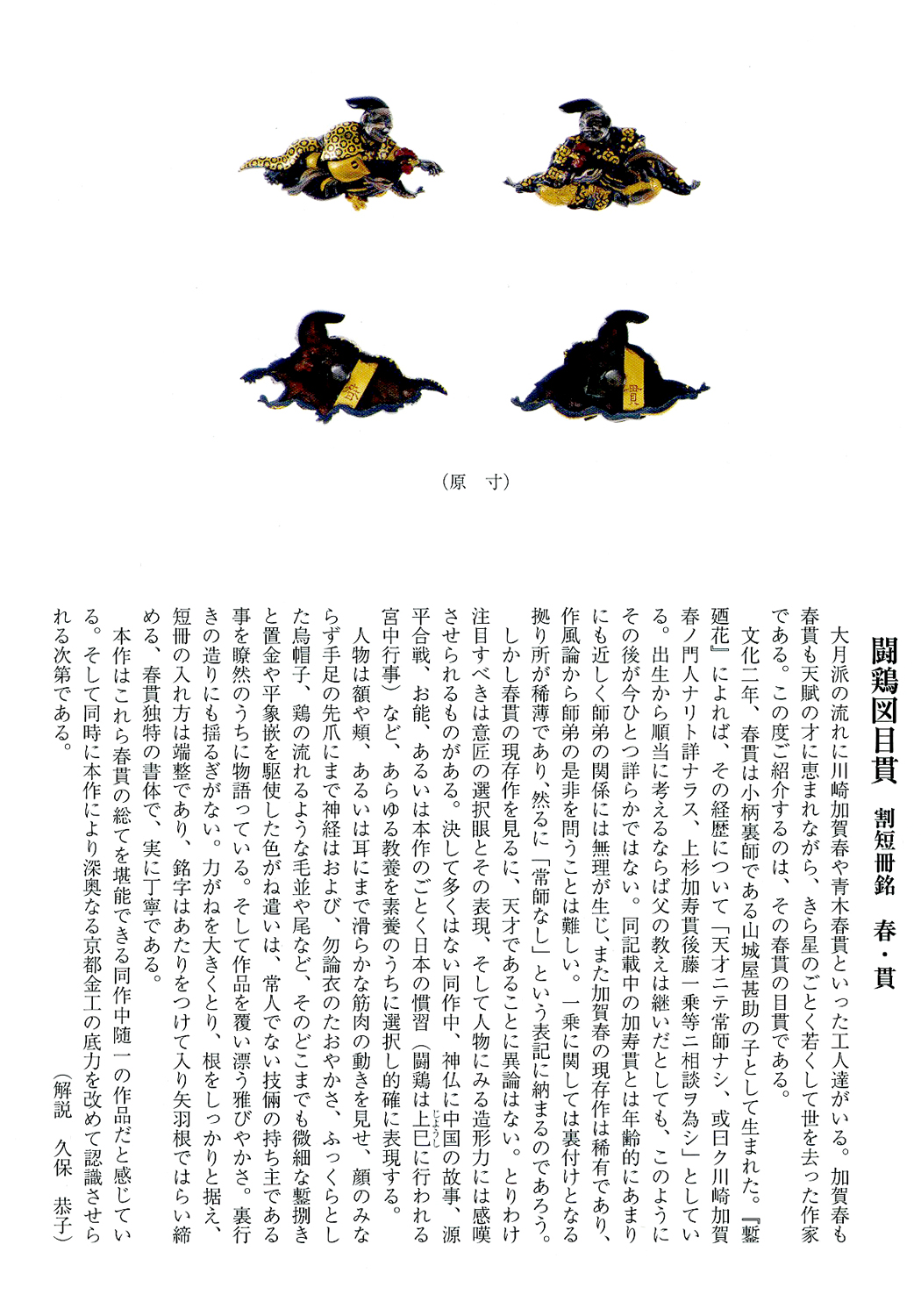
Description Form: Pair of Material: ground Construction: Carved in high relief () Design: Cockfighting scene (niwatori-awase): a rooster poised to spring, and a courtly figure (kugyō / palace personage) restraining it Decoration: /gin/ inlay with polychrome metal effects (zōgan iroe) Rim: N/A : N/A Signature: Split signature (wari-): “春・貫” (Haru / nuki) on the two pieces
Artisan Aoki Harutsura (青木春貫)
Era Late period
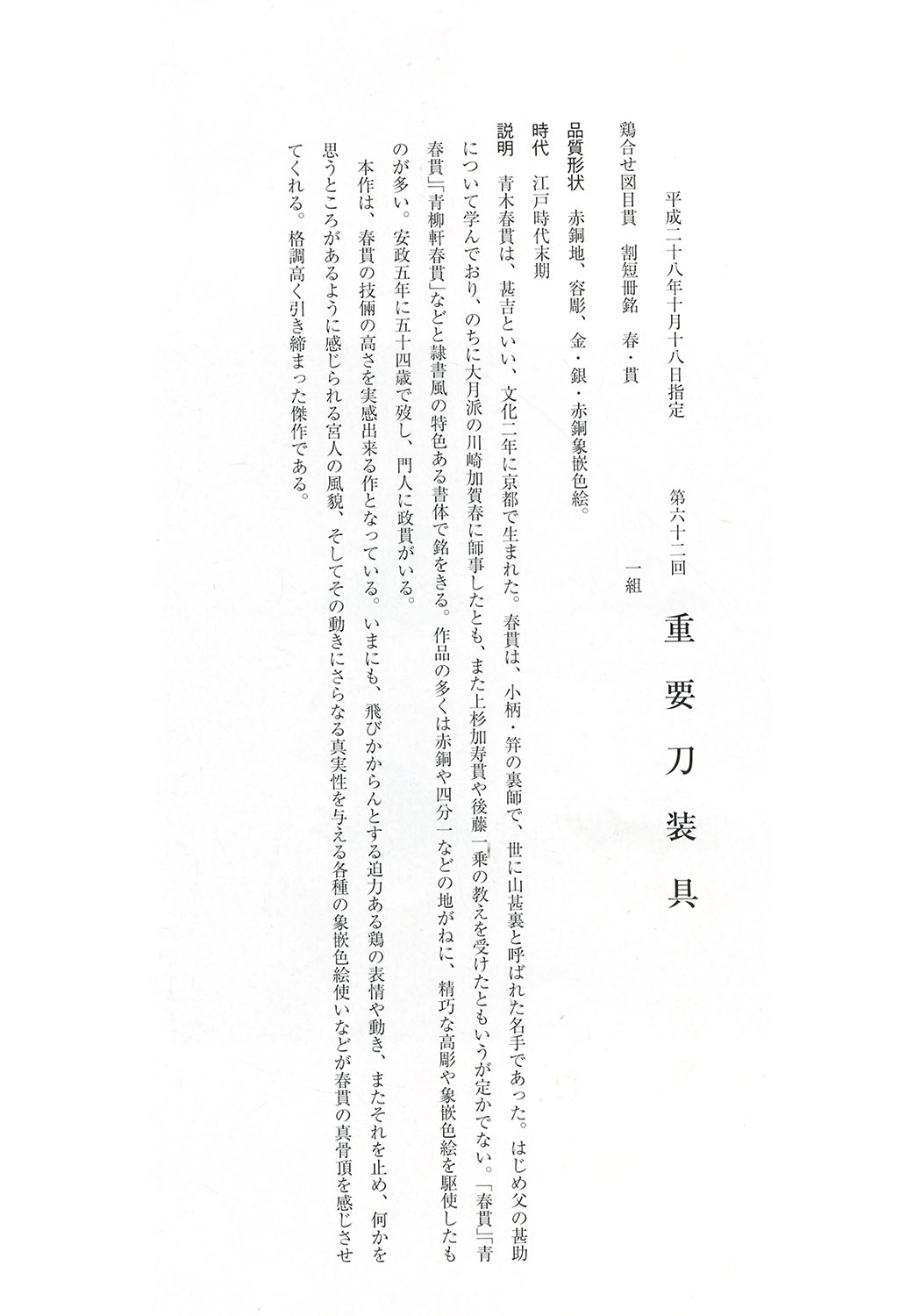
Explanation Aoki Harutsura—personal name Jinkichi—was born in Kyoto in Bunka 2 (1805). Shunkan was a specialist urashi (back-engraver) for and , and was renowned in his day as a master known as “Yamajin-urashi” (Yamajin urashi). He initially studied under his father Jinsuke; later traditions variously state that he apprenticed to Kawasaki Kagaharu of the Ōtsuki school, or that he received instruction from Uesugi Kazunuki and from Gotō Ichijō, though none of these accounts is definitively established. He signed in a distinctive clerical-script-like hand (reisho style), using such signatures as “Shunkan” (春貫), “Aoshunkan” (青春貫), and “Seiryūken Shunkan” (青柳軒春貫). Many of his works employ grounds of or , making extensive use of exquisitely precise high relief carving and zōgan iroe. He died at fifty-four in Ansei 5 (1858); among his pupils was Masanuki.
This pair fully conveys Shunkan’s high level of technical accomplishment. The rooster’s expression and movement—so forceful that it seems about to leap—are rendered with great power, while the figure restraining it has an appearance suggesting inner reflection. Moreover, the varied use of inlaid colored-metal effects (zōgan iroe) heightens the sense of realism in the movement and brings out what is most characteristic of Shunkan’s art. It is a tightly composed masterwork of elevated tone and dignity.