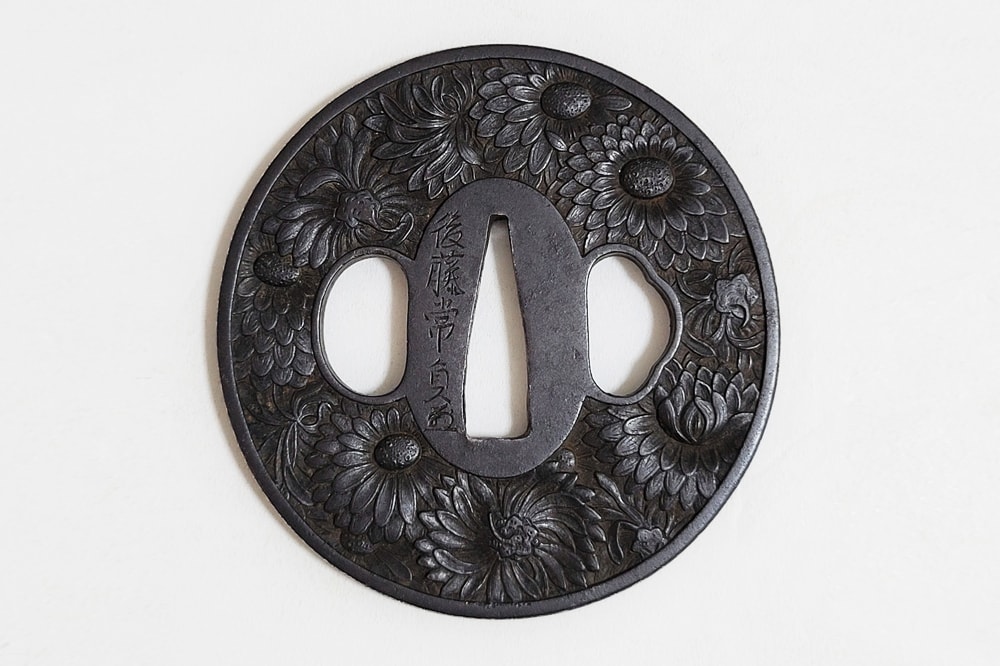
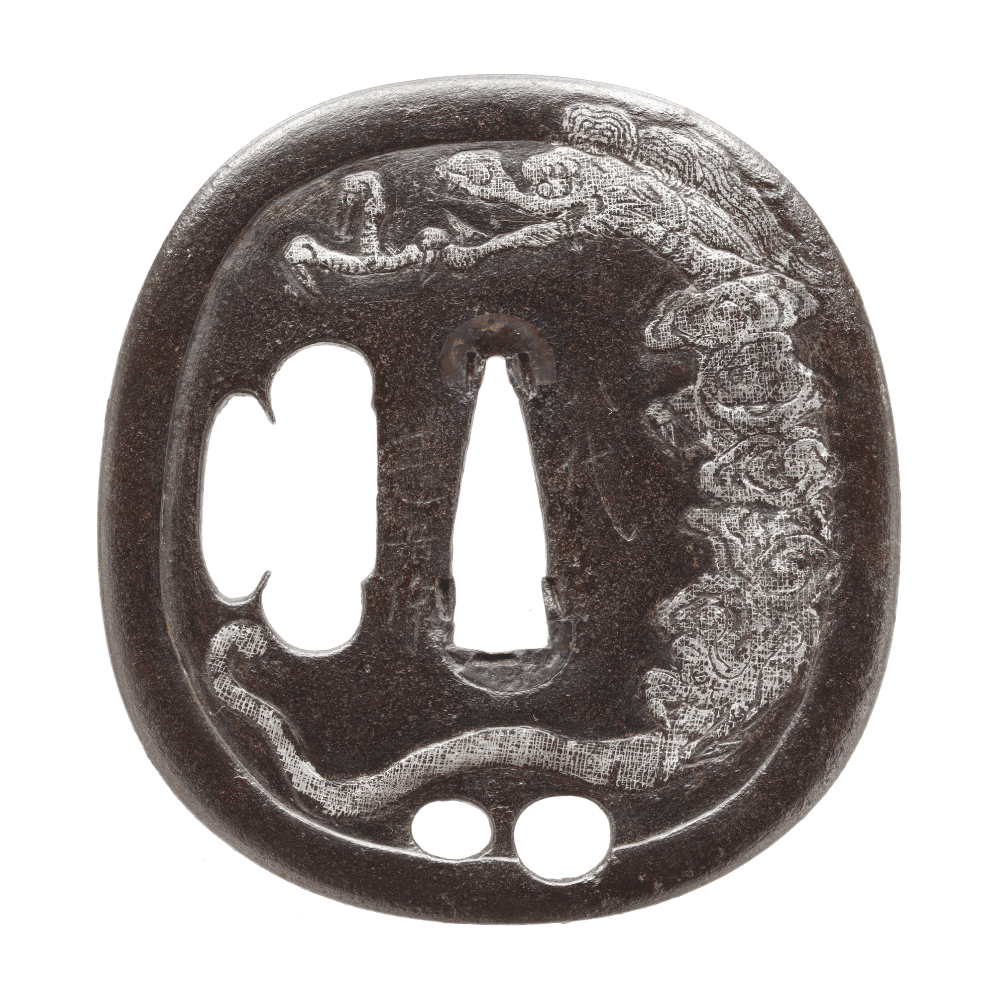
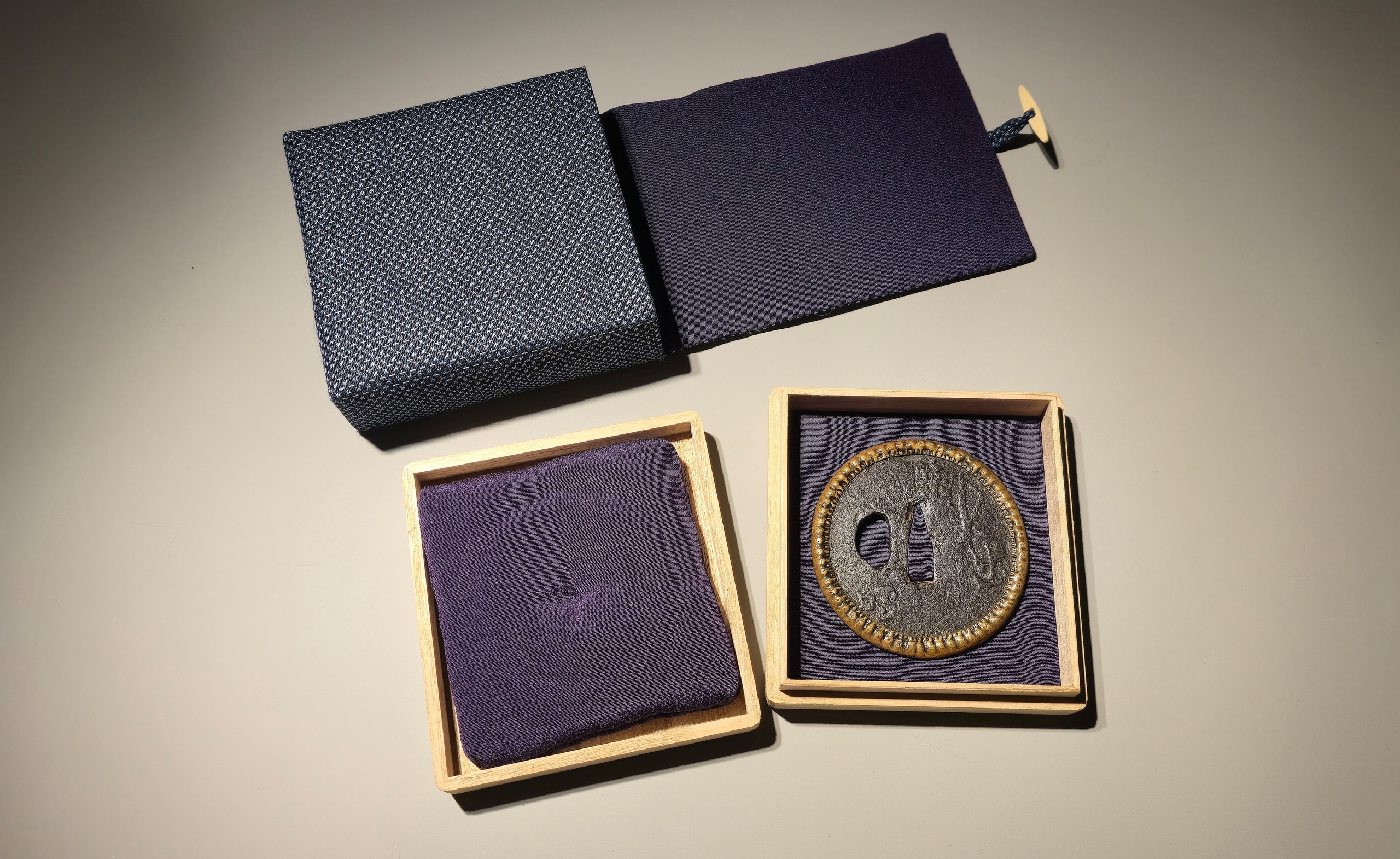
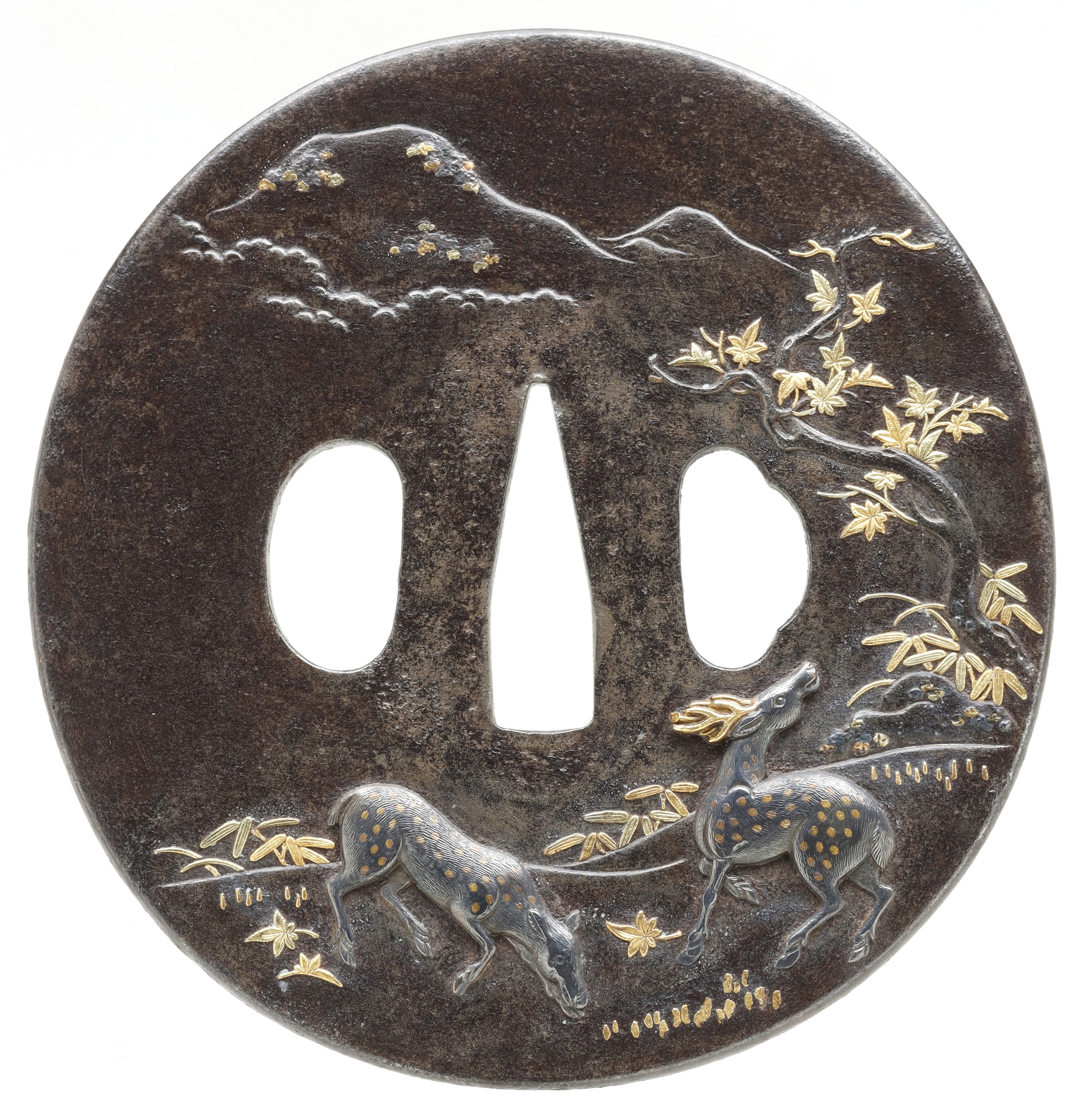
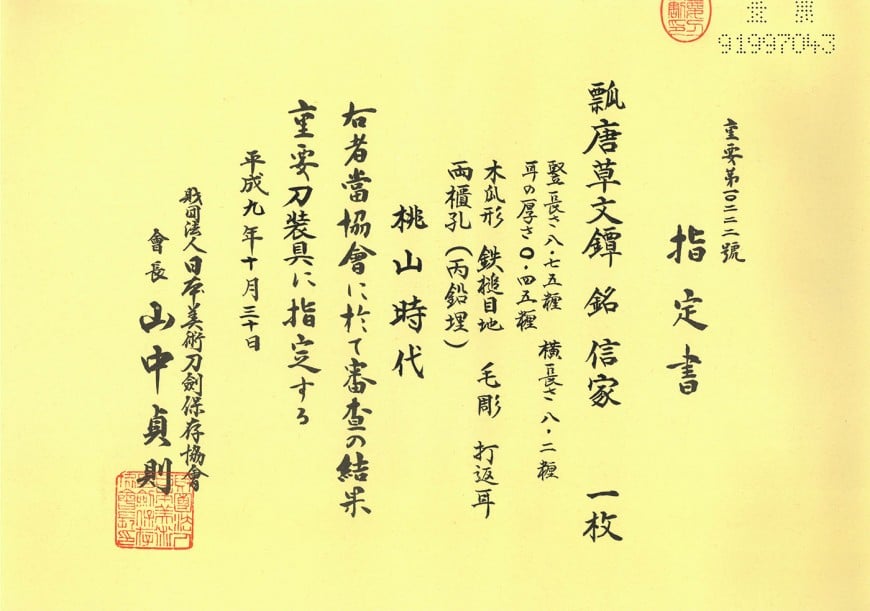
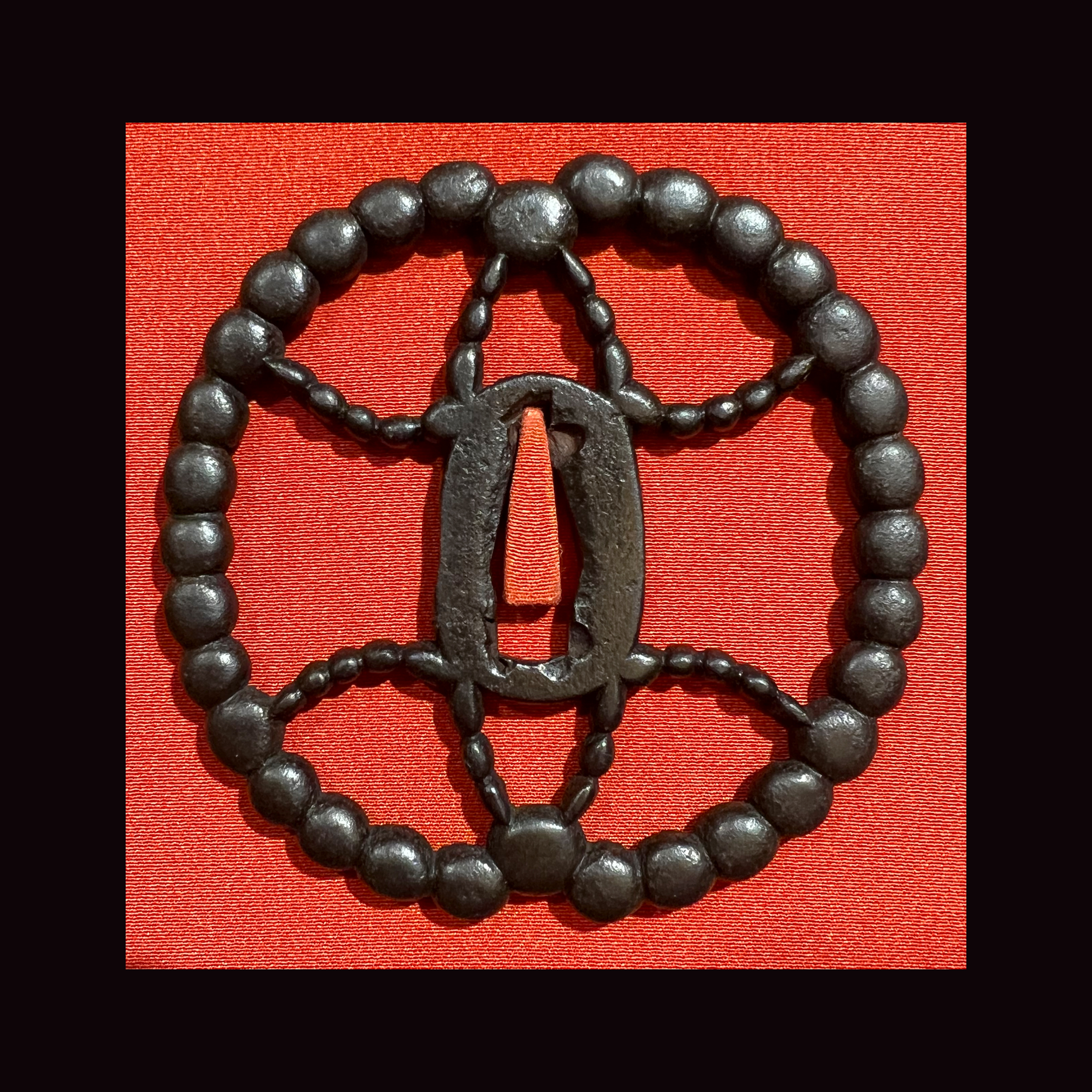
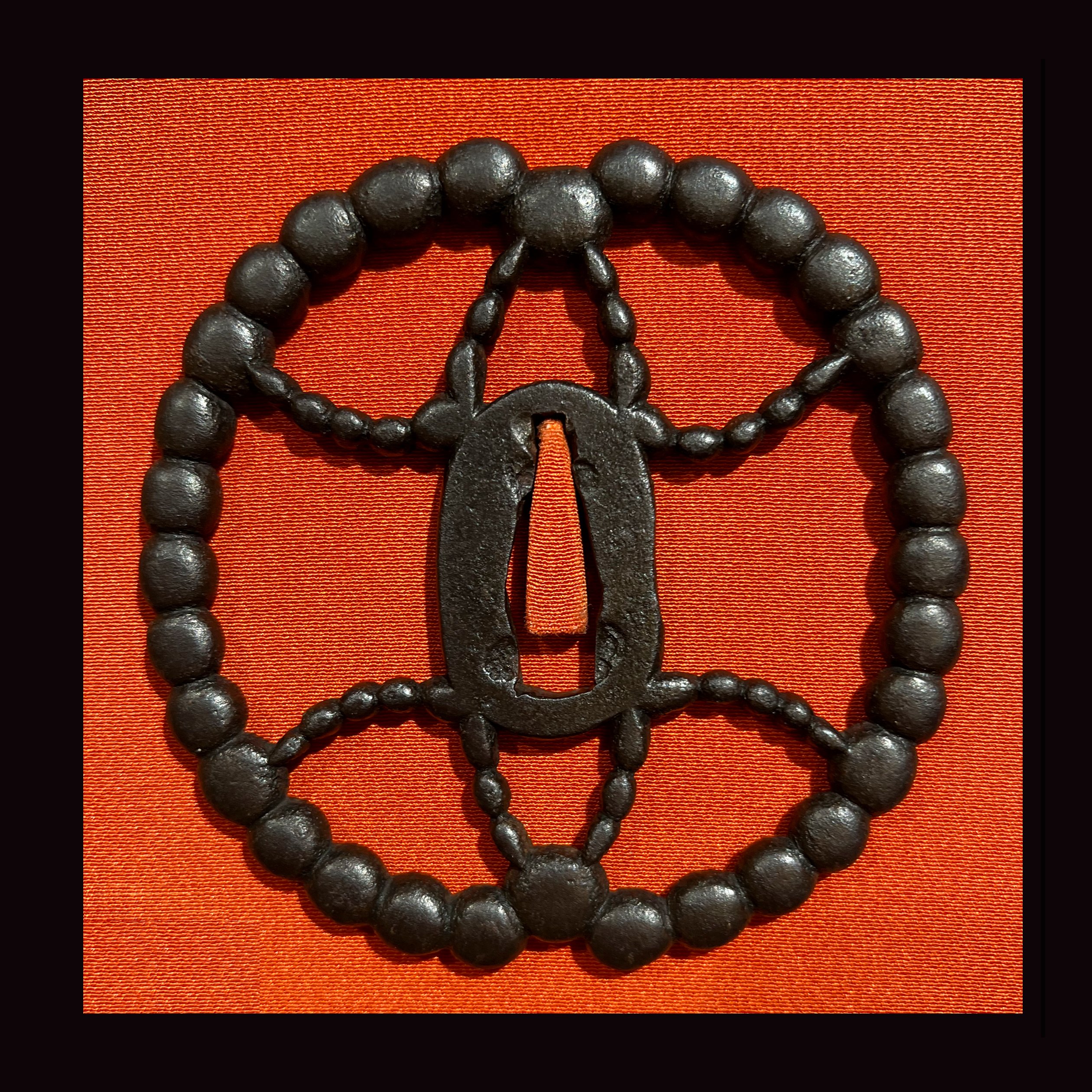
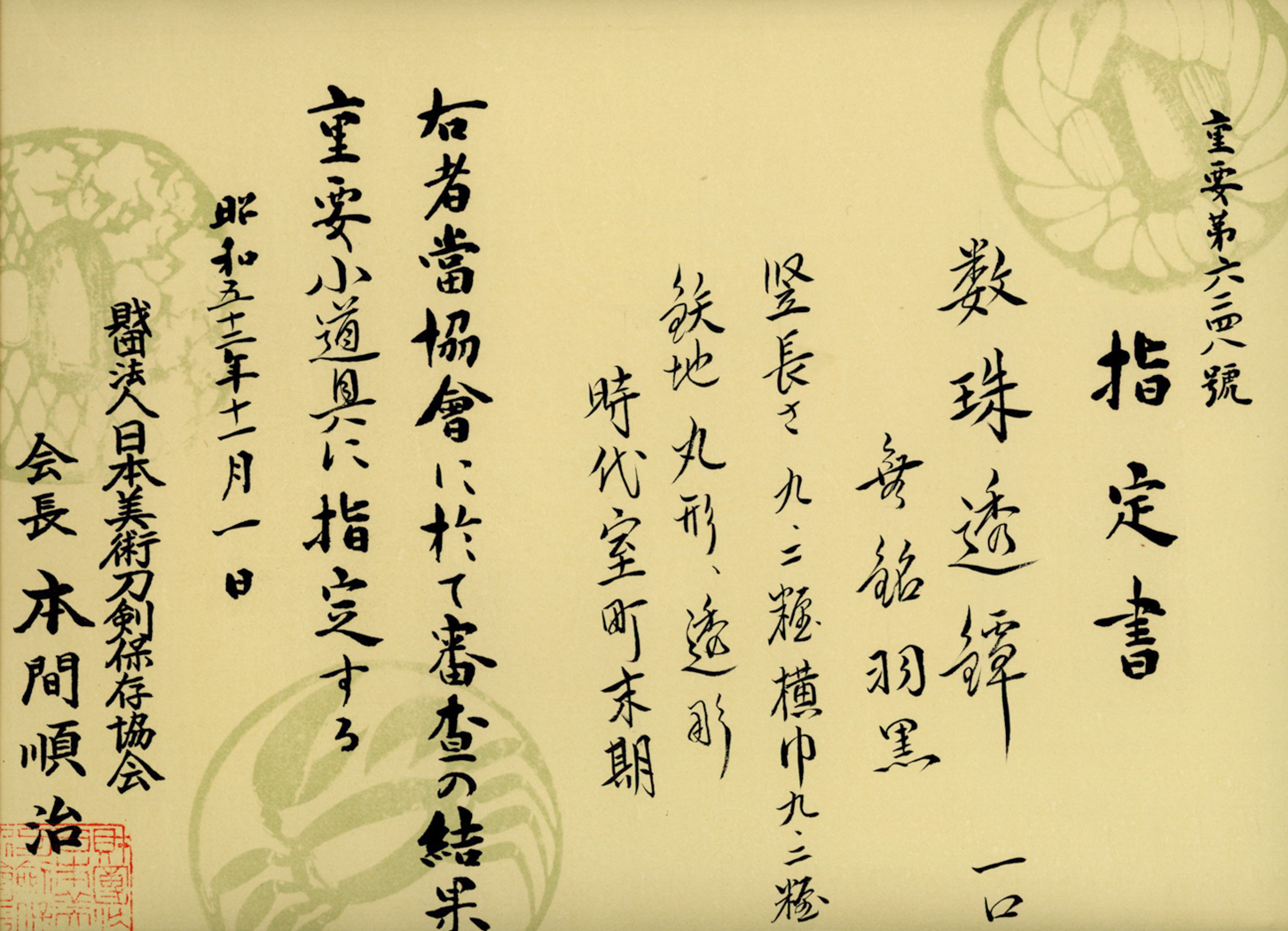
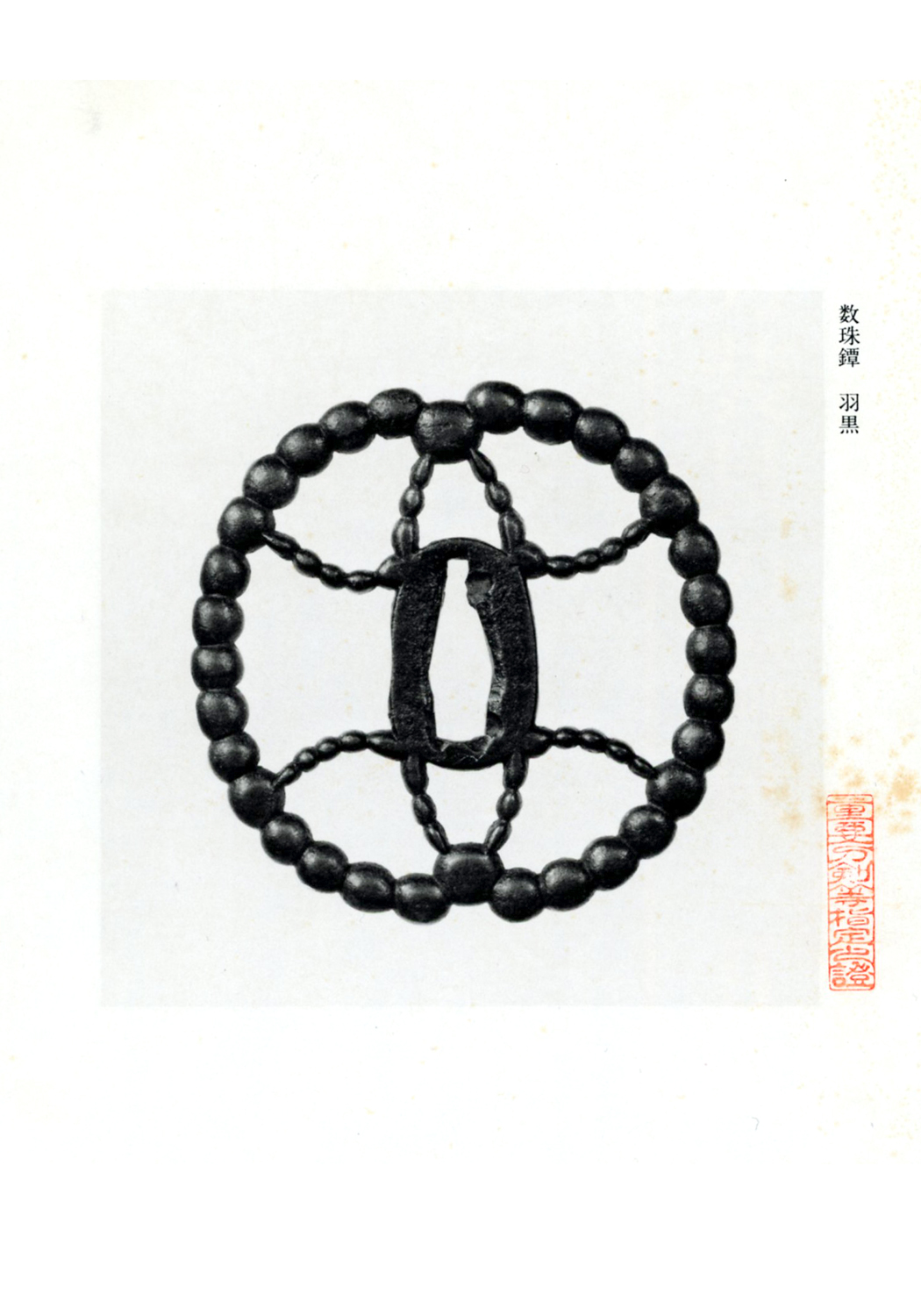
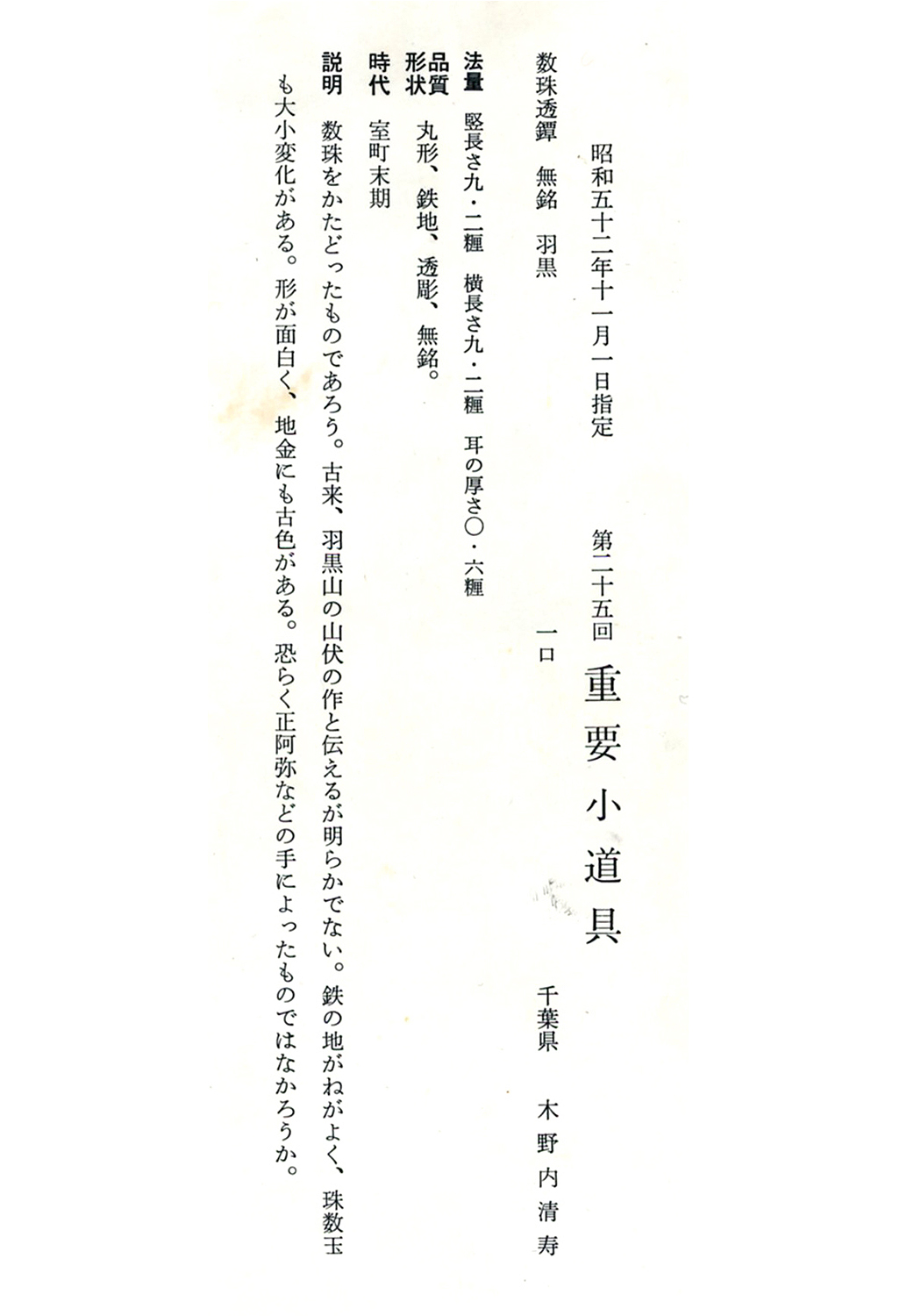
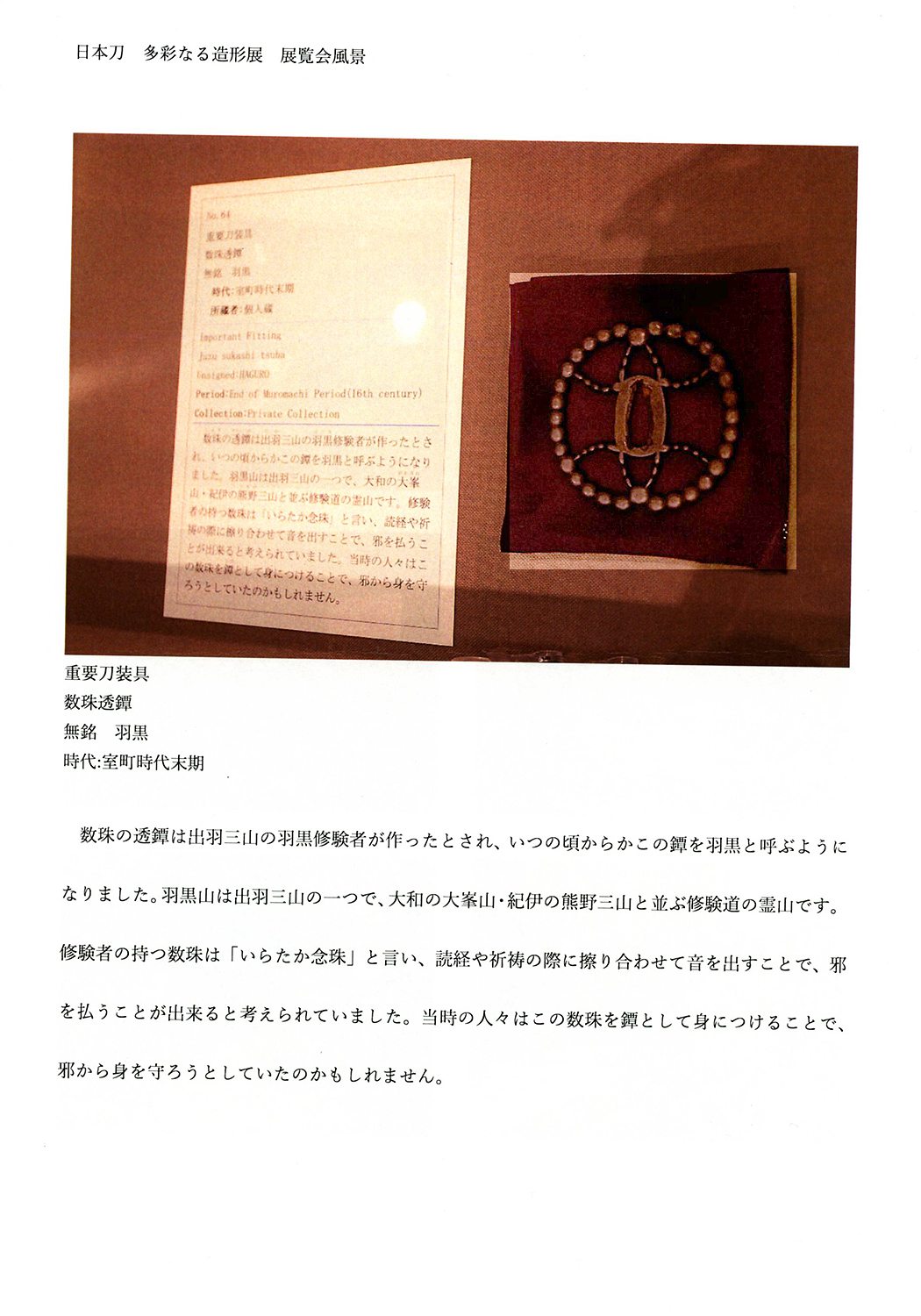
This is a large iron tsuba featuring a three-dimensional openwork design of a Buddhist rosary (juzu). It was made by mountain priests (Yamabushi) from Haguro during the late Muromachi period. This tsuba was awarded Jûyô Kodôgu status at the 25th Jûyô Shinsa in November 1977, making it one of only a few from this school to achieve such recognition.
 NihontoWatch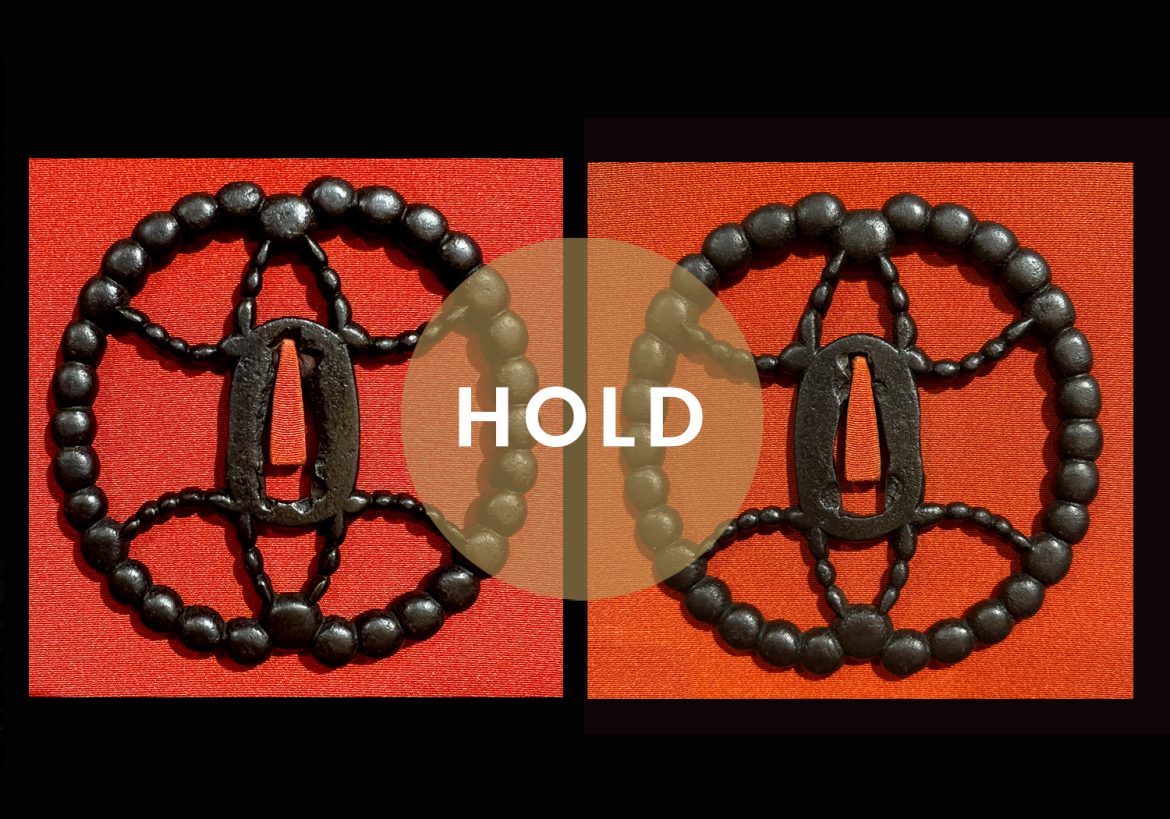
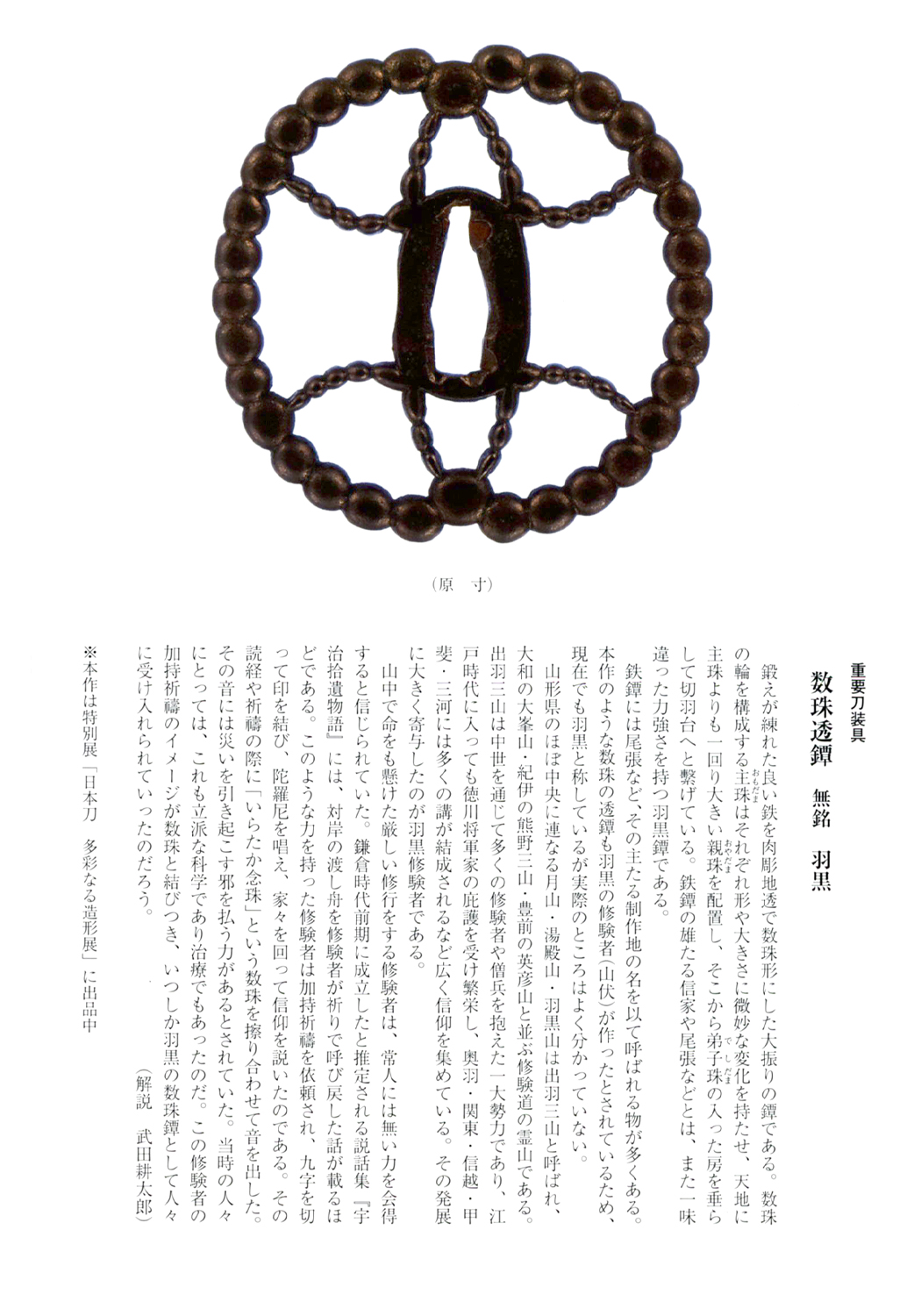
Iron-tsuba
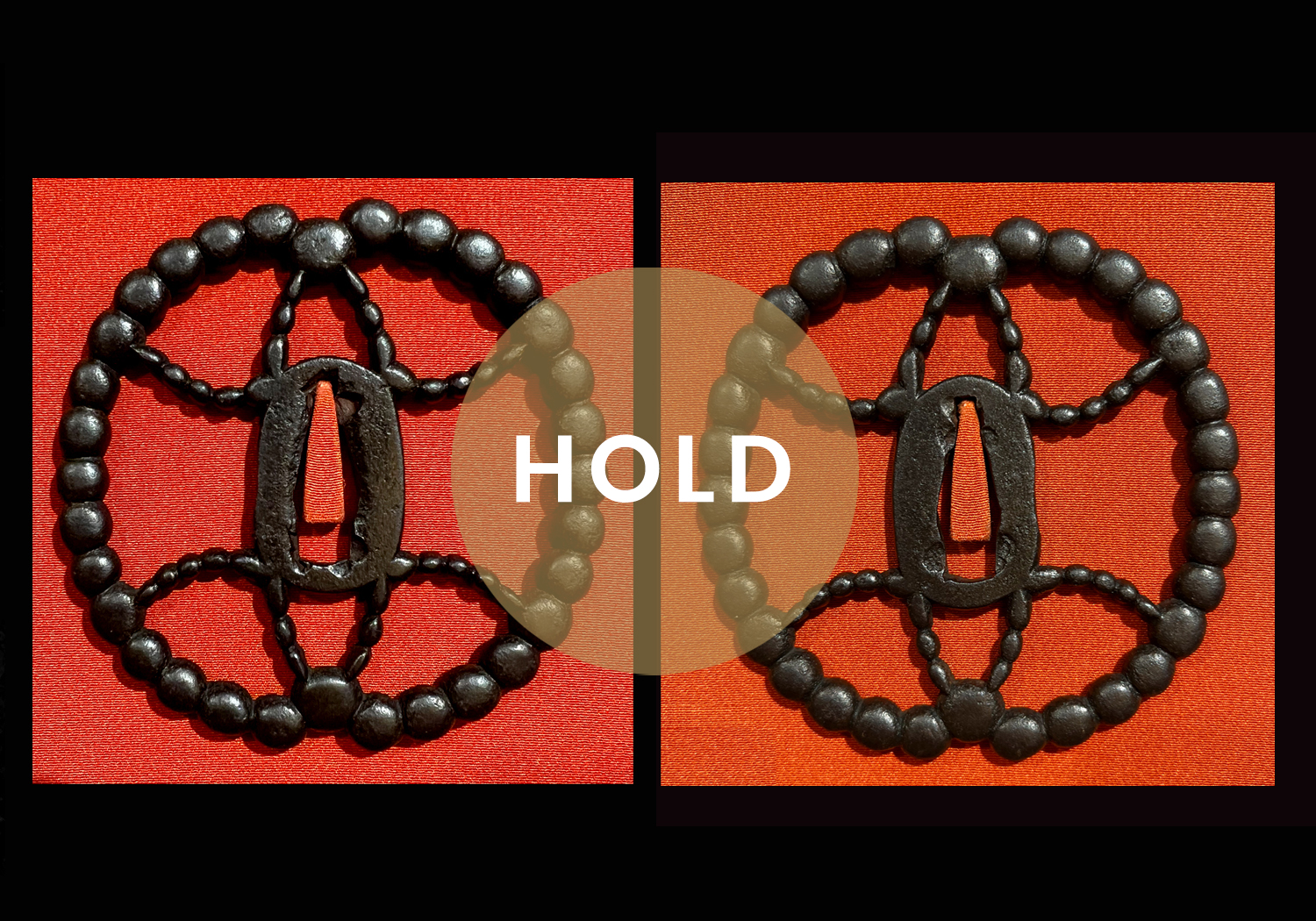
The designation Haguro tsuba refers to a class of iron sword guards traditionally said to have been made by yamabushi (mountain ascetics) of Mt. Haguro in Dewa Province. The NBTHK setsumei consistently note this attribution as an old transmission -- "from ancient times, there are iron tsuba ... traditionally said to have been made by yamabushi of Mt. Haguro"[[c:1]] -- while acknowledging that the historical basis remains unestablished. "[[c:2]] The setsumei suggest that the actual makers of at least some examples may have been professional metalworkers such as the Shoami lineage. Chronologically, the earliest works are those mounted on uchigatana koshirae of the late Muromachi period, placing the tradition's origins squarely in the fifteenth to sixteenth centuries. The defining motif of the Haguro tsuba is the juzu (Buddhist rosary), rendered in ji-sukashi (ground openwork) on an iron plate.
In older-period examples the beads are formed through nikubori ji-sukashi -- openwork with raised carving -- creating a linked chain of prayer beads that alternate between larger and smaller elements. The forging of the iron is consistently described as "well refined" (kitae ga nere), yielding iron of excellent character and good quality ground metal (tetsu no jigane ga yoku)[[c:3]]. Forms are round or variant round (maru-gata, kawari maru-gata, tate-maru-gata), and the ground metal of the finest pieces exhibits an aged coloration. The NBTHK distinguishes these original works from the later elaborations that appeared with the start of the Edo period, when professional tsuba artisans produced pieces with more complex designs -- culminating in examples such as those by Akasaka Tadatoshi (eighth generation) of the late Edo period, in which the rosary is shown with tassels in increasingly realistic renderings. The significance of the Haguro tradition, as attested in the setsumei, resides not in verified provenance but in the distinctive aesthetic character of the original works. "[[c:4]] These pieces are described as possessing a forcefulness truly worth noting[[c:5]] -- entirely different from examples thought to have been imitated by Shoami and other groups of metalworkers. The combination of refined iron, bold openwork, and an unadorned severity that suggests religious rather than decorative intent gives the finest Haguro tsuba a dignified presence and deep flavor that the later, more elaborate imitations do not replicate. Learn more →
Exceptional craft of very high artistic value, judged to rank with a nationally recognized Important Art Object (Jūyō Bijutsuhin).
The NBTHK (Nihon Bijutsu Tōken Hozon Kyōkai, the Society for the Preservation of Japanese Art Swords) is a public-interest incorporated foundation founded in 1948 and supervised by Japan’s Agency for Cultural Affairs (Bunkachō); it is based at the Japanese Sword Museum in Tokyo. Its expert panels physically examine each submitted work (shinsa) and issue a certificate (kanteishō) ranking it by artistic and historical merit. NBTHK papers are the most widely recognized standard of authentication for Japanese swords and fittings.
NBTHK official siteThree-day inspection period and seven-day return period; buyer notifies by email within three days of receipt, no reason needed; full refund once item returned undamaged and unaltered.
This is a large iron tsuba featuring a three-dimensional openwork design of a Buddhist rosary (juzu). It was made by mountain priests (Yamabushi) from Haguro during the late Muromachi period. This tsuba was awarded Jûyô Kodôgu status at the 25th Jûyô Shinsa in November 1977, making it one of only a few from this school to achieve such recognition.
NihontoWatchIron-tsuba
The designation Haguro tsuba refers to a class of iron sword guards traditionally said to have been made by yamabushi (mountain ascetics) of Mt. Haguro in Dewa Province. The NBTHK setsumei consistently note this attribution as an old transmission -- "from ancient times, there are iron tsuba ... traditionally said to have been made by yamabushi of Mt. Haguro"[[c:1]] -- while acknowledging that the historical basis remains unestablished. "[[c:2]] The setsumei suggest that the actual makers of at least some examples may have been professional metalworkers such as the Shoami lineage. Chronologically, the earliest works are those mounted on uchigatana koshirae of the late Muromachi period, placing the tradition's origins squarely in the fifteenth to sixteenth centuries. The defining motif of the Haguro tsuba is the juzu (Buddhist rosary), rendered in ji-sukashi (ground openwork) on an iron plate.
In older-period examples the beads are formed through nikubori ji-sukashi -- openwork with raised carving -- creating a linked chain of prayer beads that alternate between larger and smaller elements. The forging of the iron is consistently described as "well refined" (kitae ga nere), yielding iron of excellent character and good quality ground metal (tetsu no jigane ga yoku)[[c:3]]. Forms are round or variant round (maru-gata, kawari maru-gata, tate-maru-gata), and the ground metal of the finest pieces exhibits an aged coloration. The NBTHK distinguishes these original works from the later elaborations that appeared with the start of the Edo period, when professional tsuba artisans produced pieces with more complex designs -- culminating in examples such as those by Akasaka Tadatoshi (eighth generation) of the late Edo period, in which the rosary is shown with tassels in increasingly realistic renderings. The significance of the Haguro tradition, as attested in the setsumei, resides not in verified provenance but in the distinctive aesthetic character of the original works. "[[c:4]] These pieces are described as possessing a forcefulness truly worth noting[[c:5]] -- entirely different from examples thought to have been imitated by Shoami and other groups of metalworkers. The combination of refined iron, bold openwork, and an unadorned severity that suggests religious rather than decorative intent gives the finest Haguro tsuba a dignified presence and deep flavor that the later, more elaborate imitations do not replicate. Learn more →
Exceptional craft of very high artistic value, judged to rank with a nationally recognized Important Art Object (Jūyō Bijutsuhin).
The NBTHK (Nihon Bijutsu Tōken Hozon Kyōkai, the Society for the Preservation of Japanese Art Swords) is a public-interest incorporated foundation founded in 1948 and supervised by Japan’s Agency for Cultural Affairs (Bunkachō); it is based at the Japanese Sword Museum in Tokyo. Its expert panels physically examine each submitted work (shinsa) and issue a certificate (kanteishō) ranking it by artistic and historical merit. NBTHK papers are the most widely recognized standard of authentication for Japanese swords and fittings.
NBTHK official siteThree-day inspection period and seven-day return period; buyer notifies by email within three days of receipt, no reason needed; full refund once item returned undamaged and unaltered.