 NihontoWatchNihontoWatch
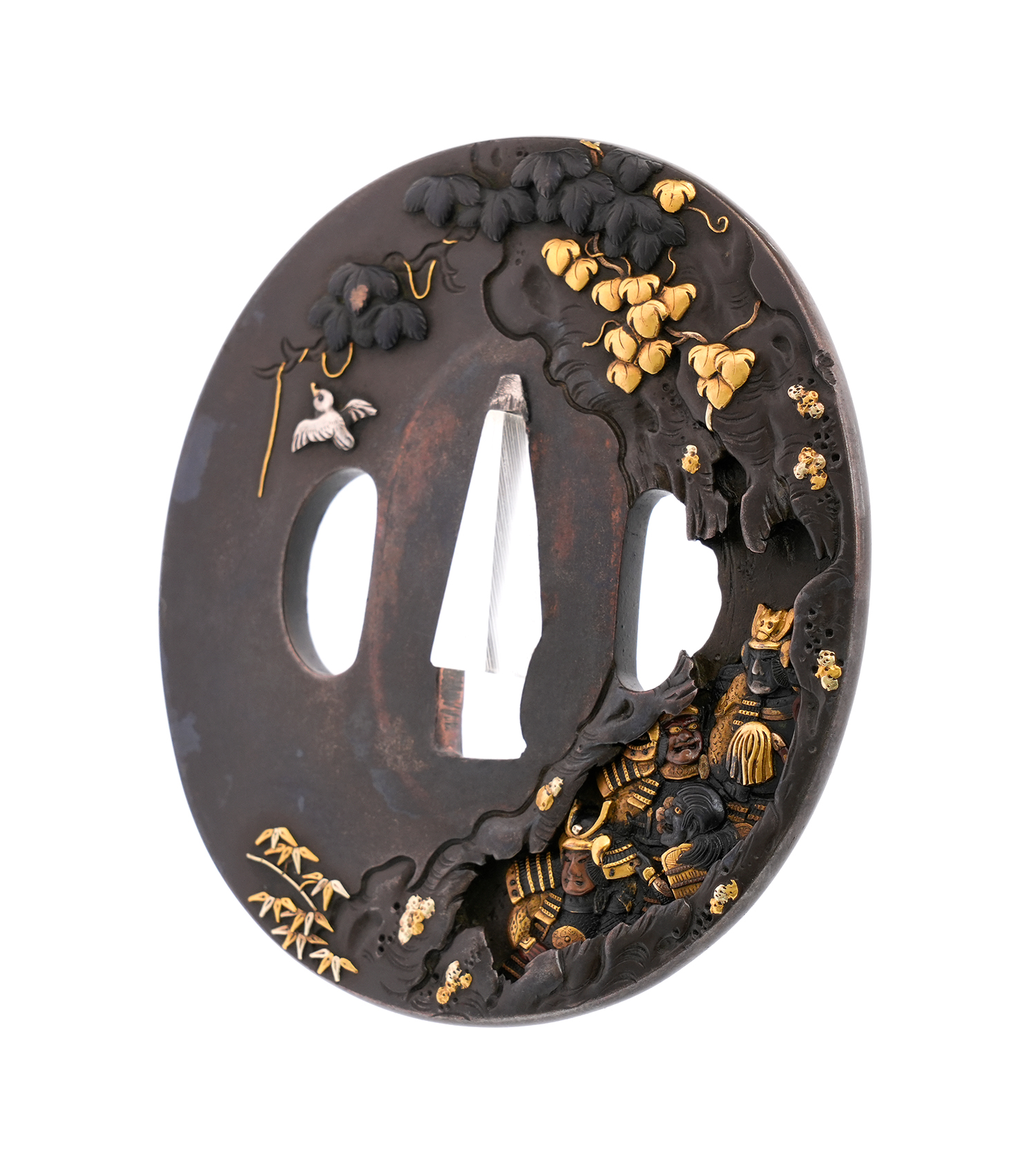
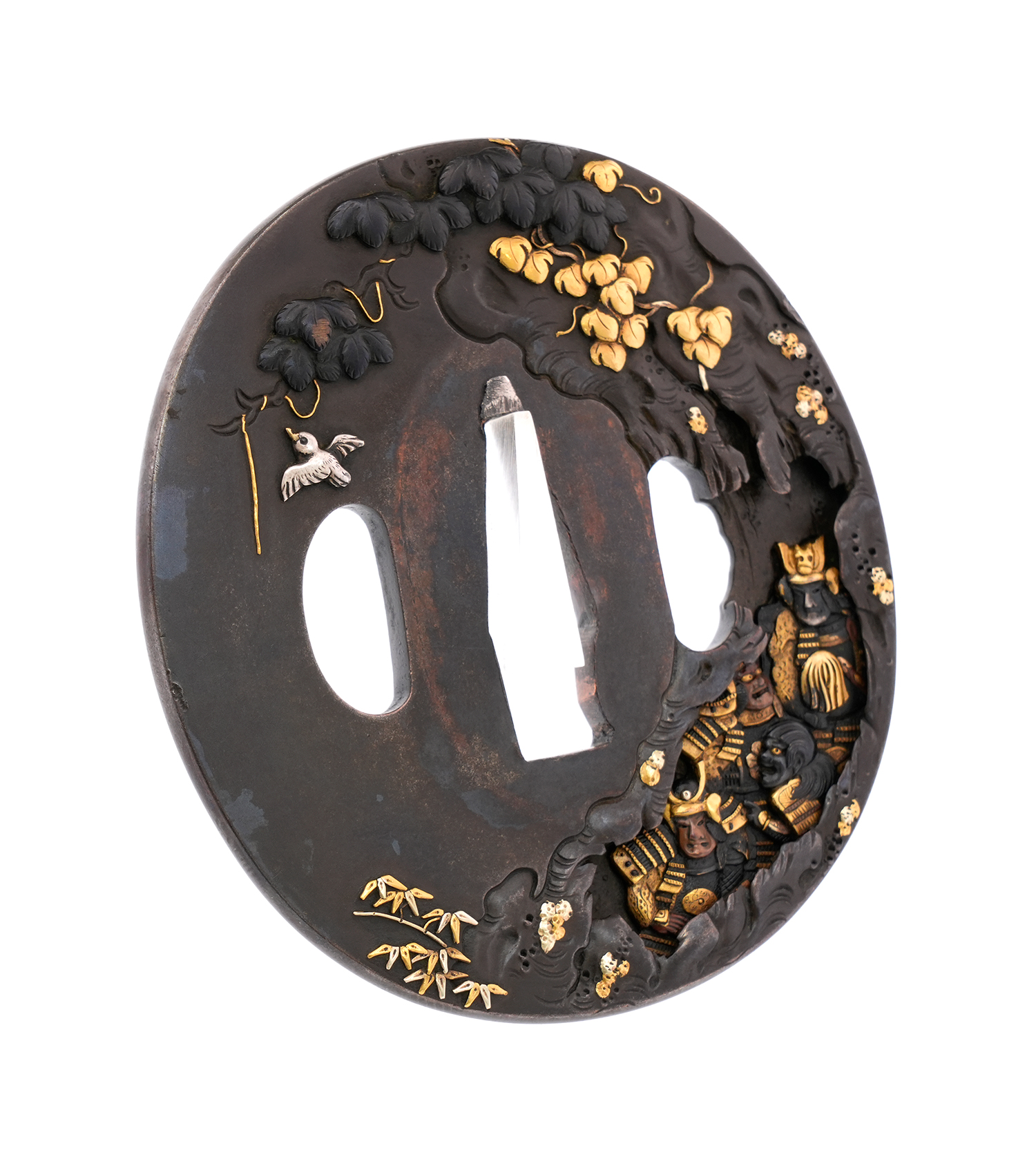
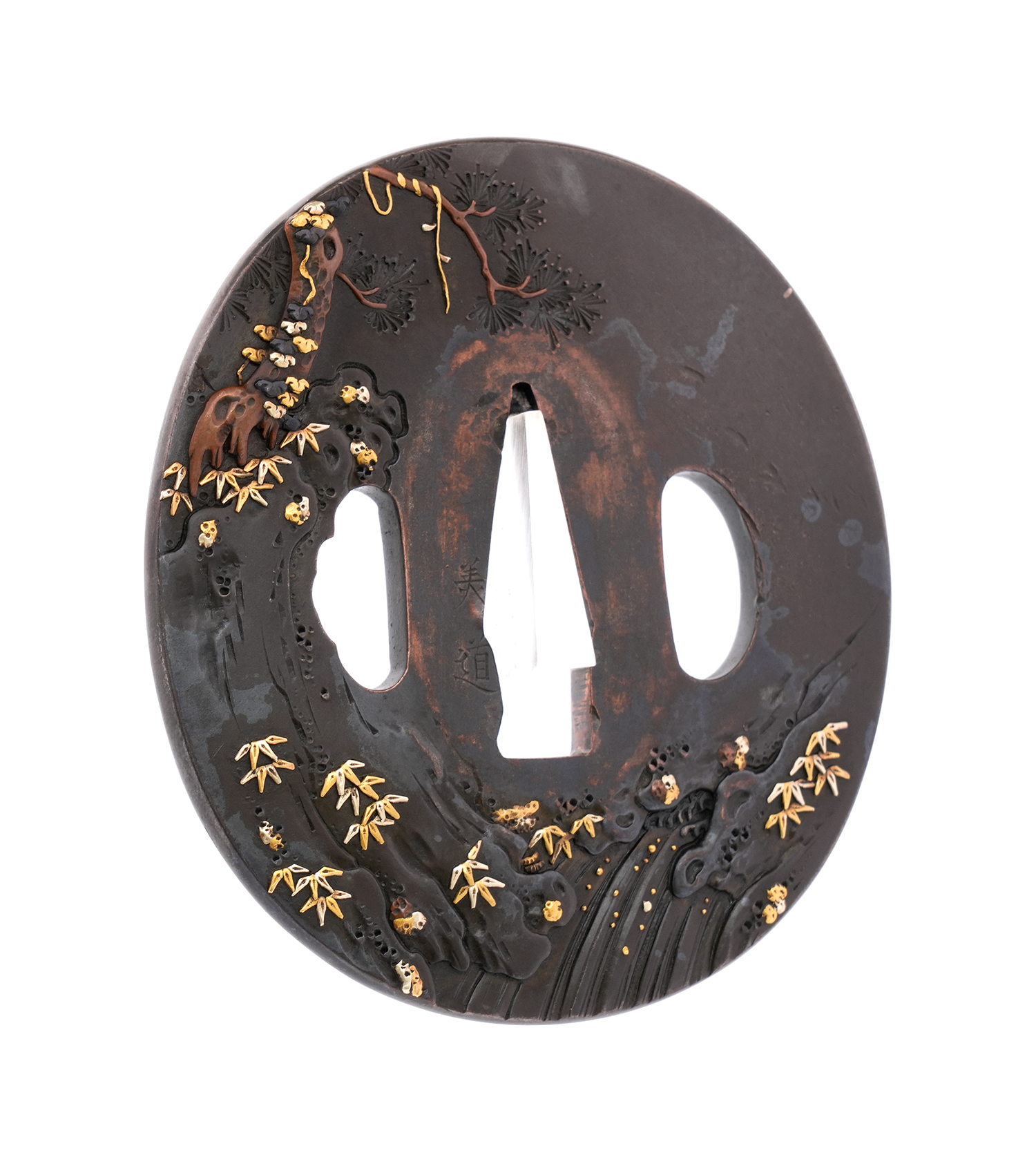
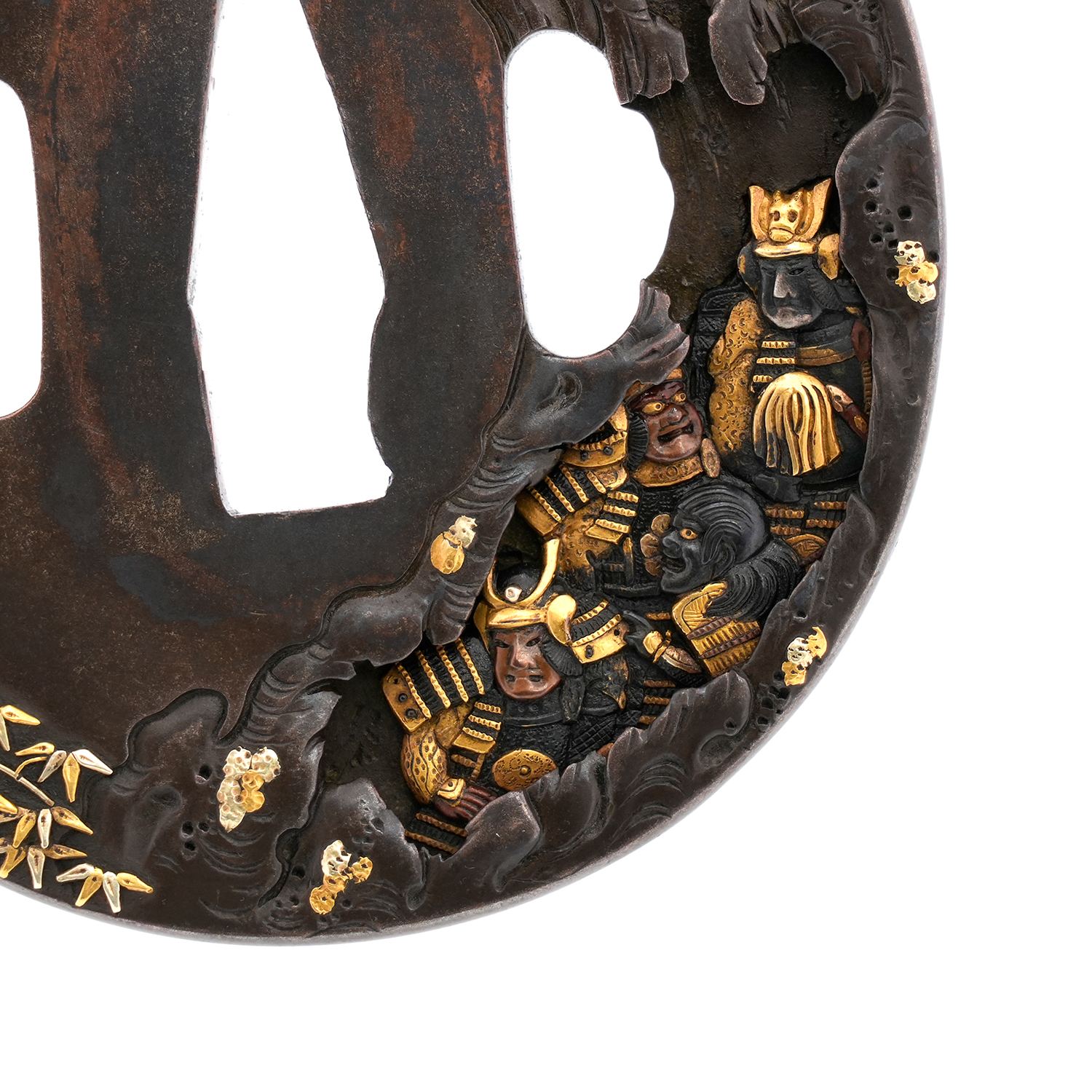
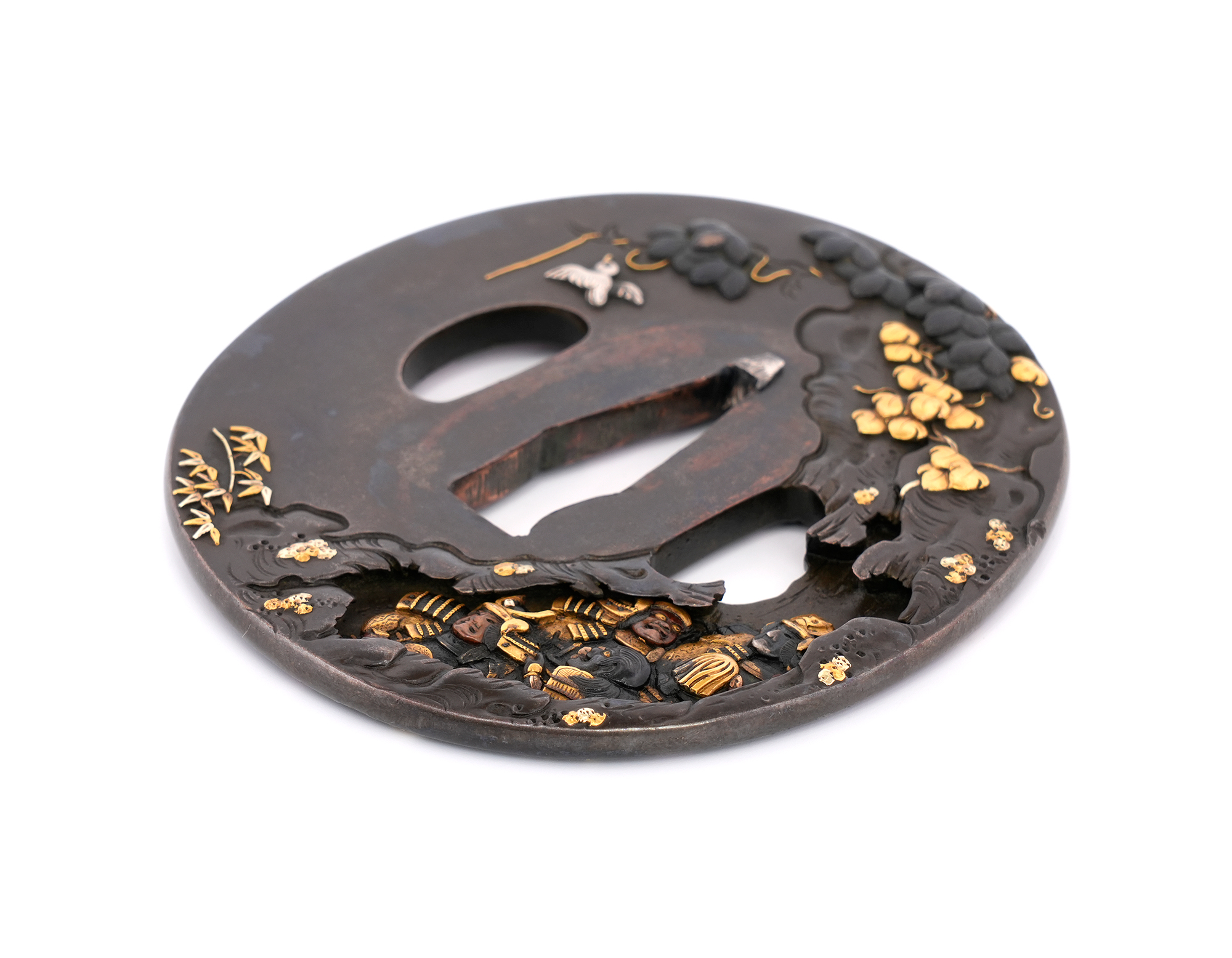
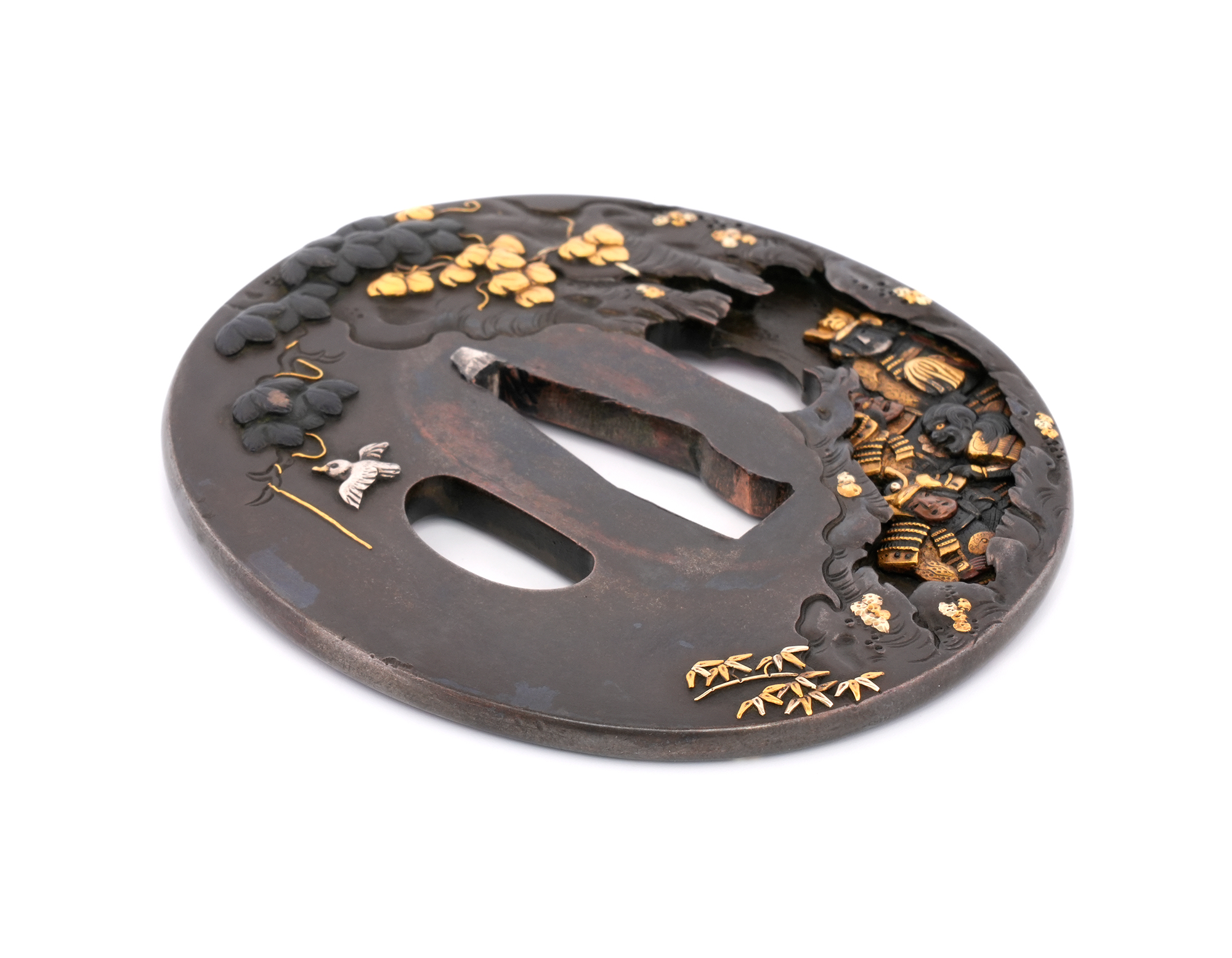
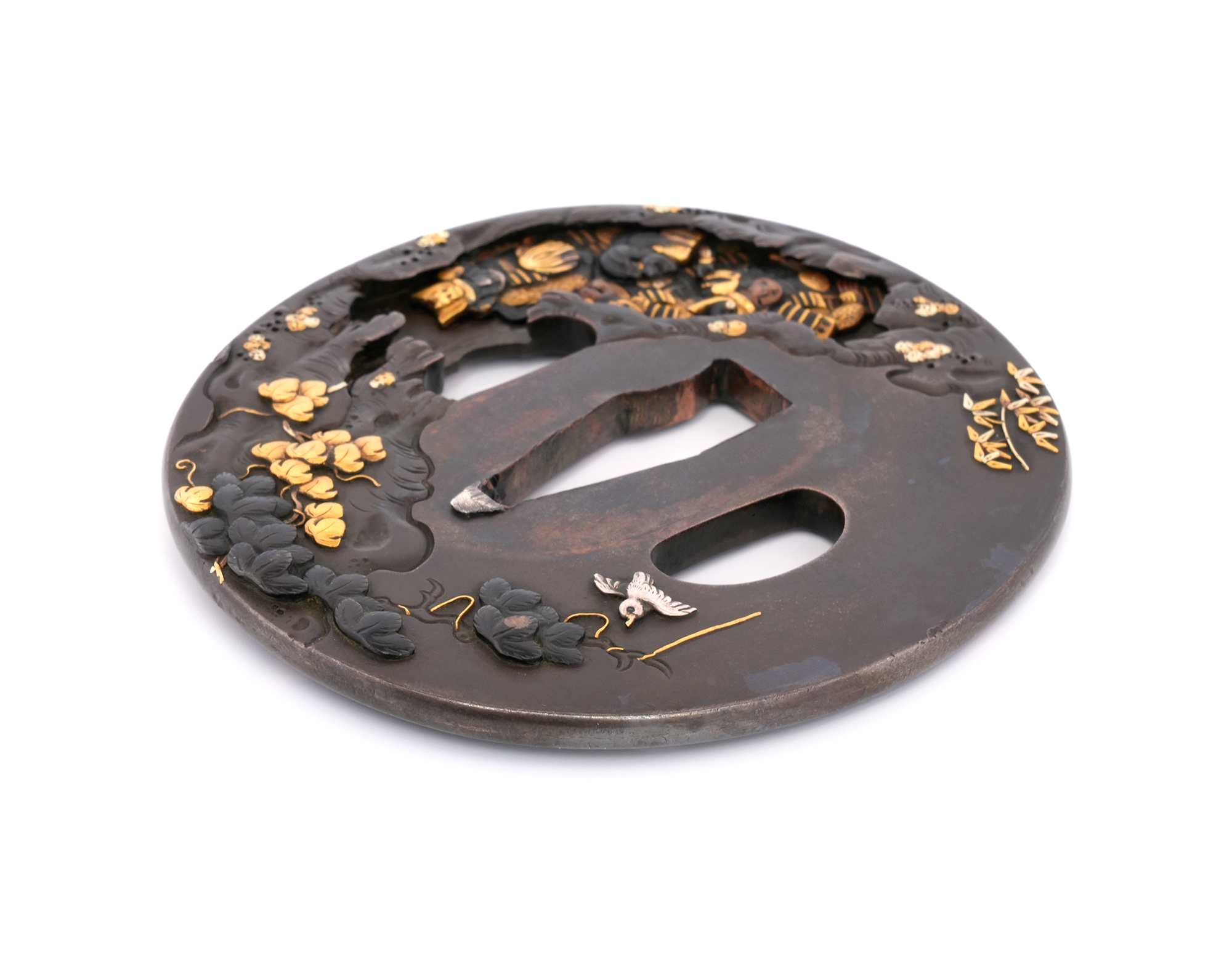
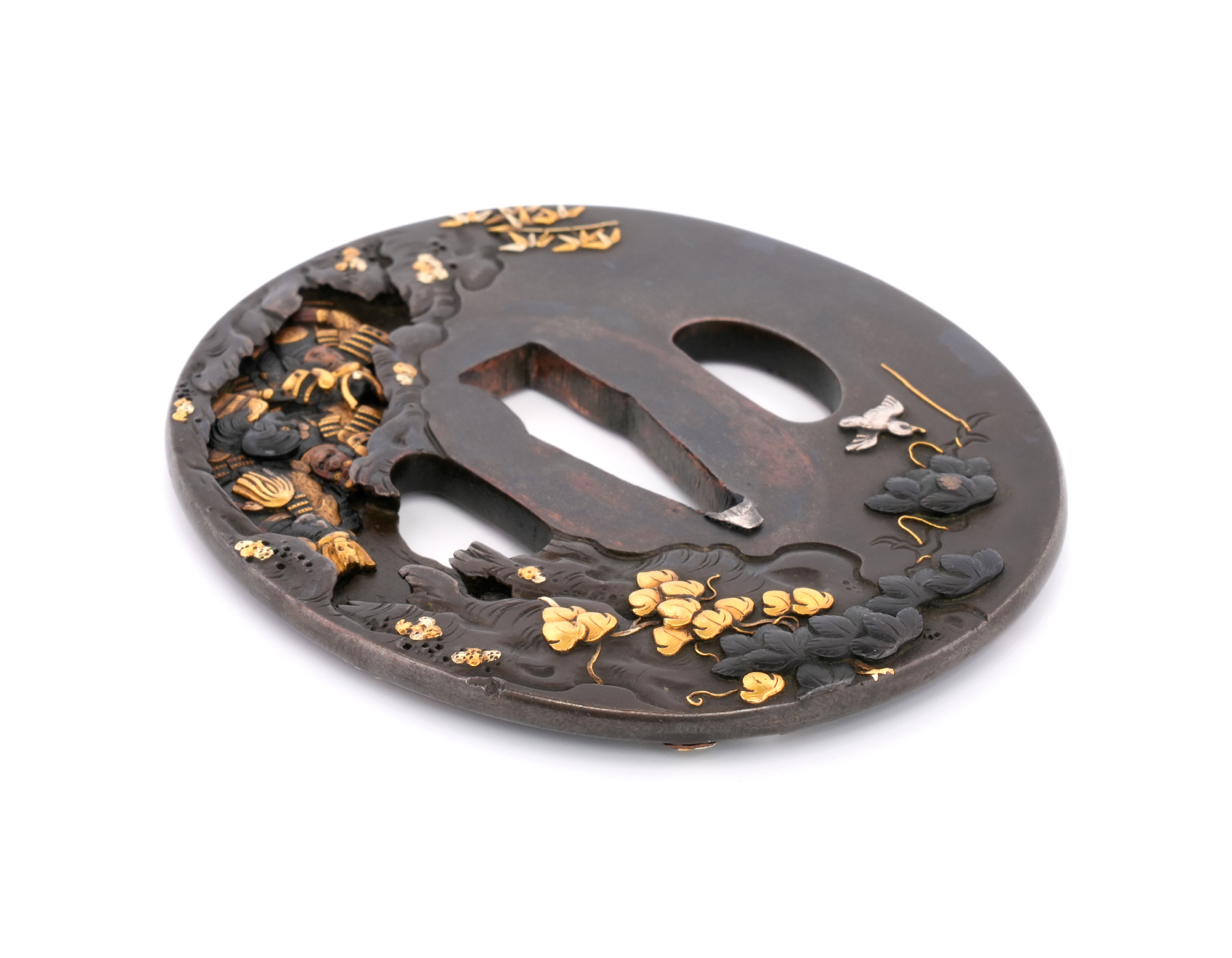
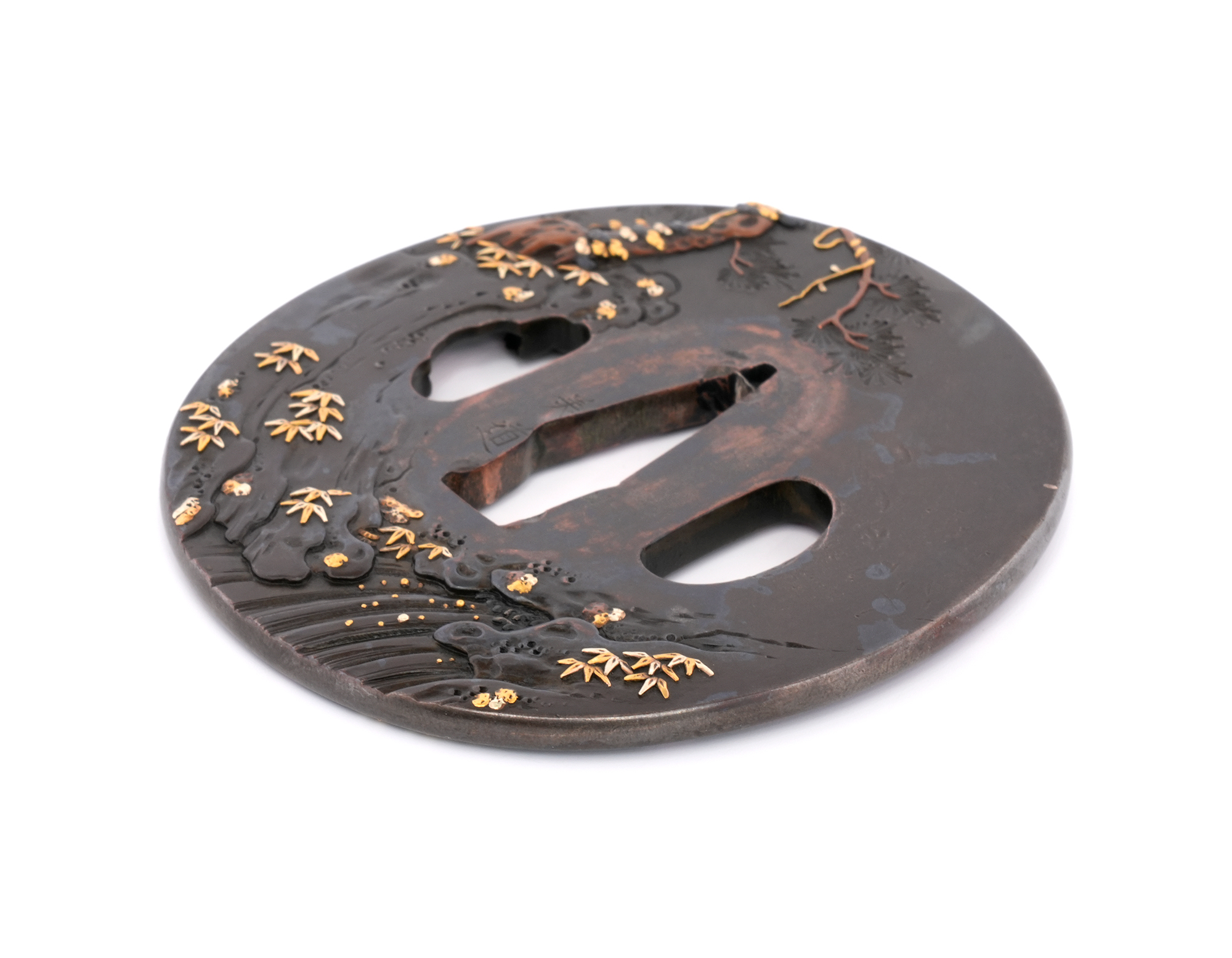
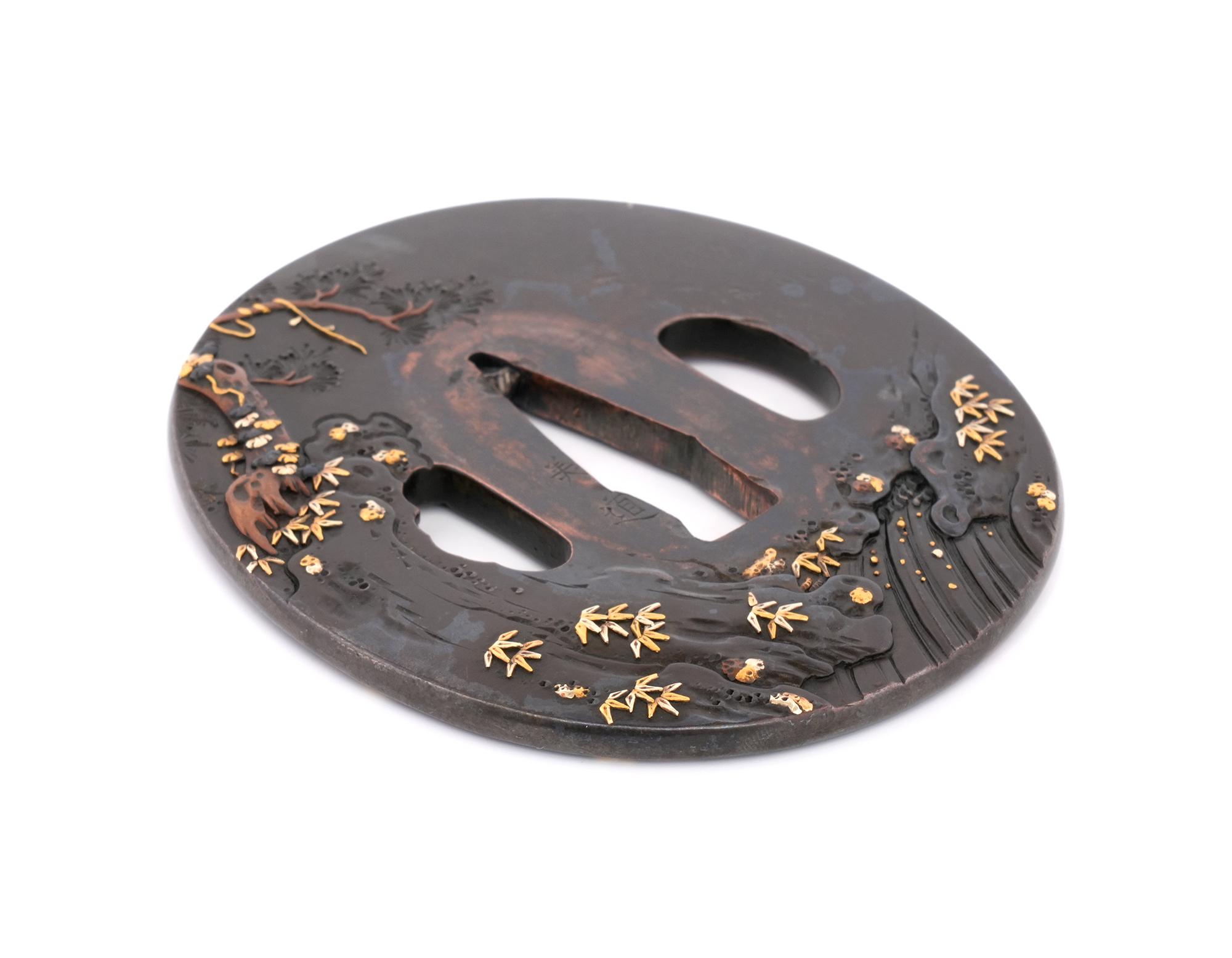
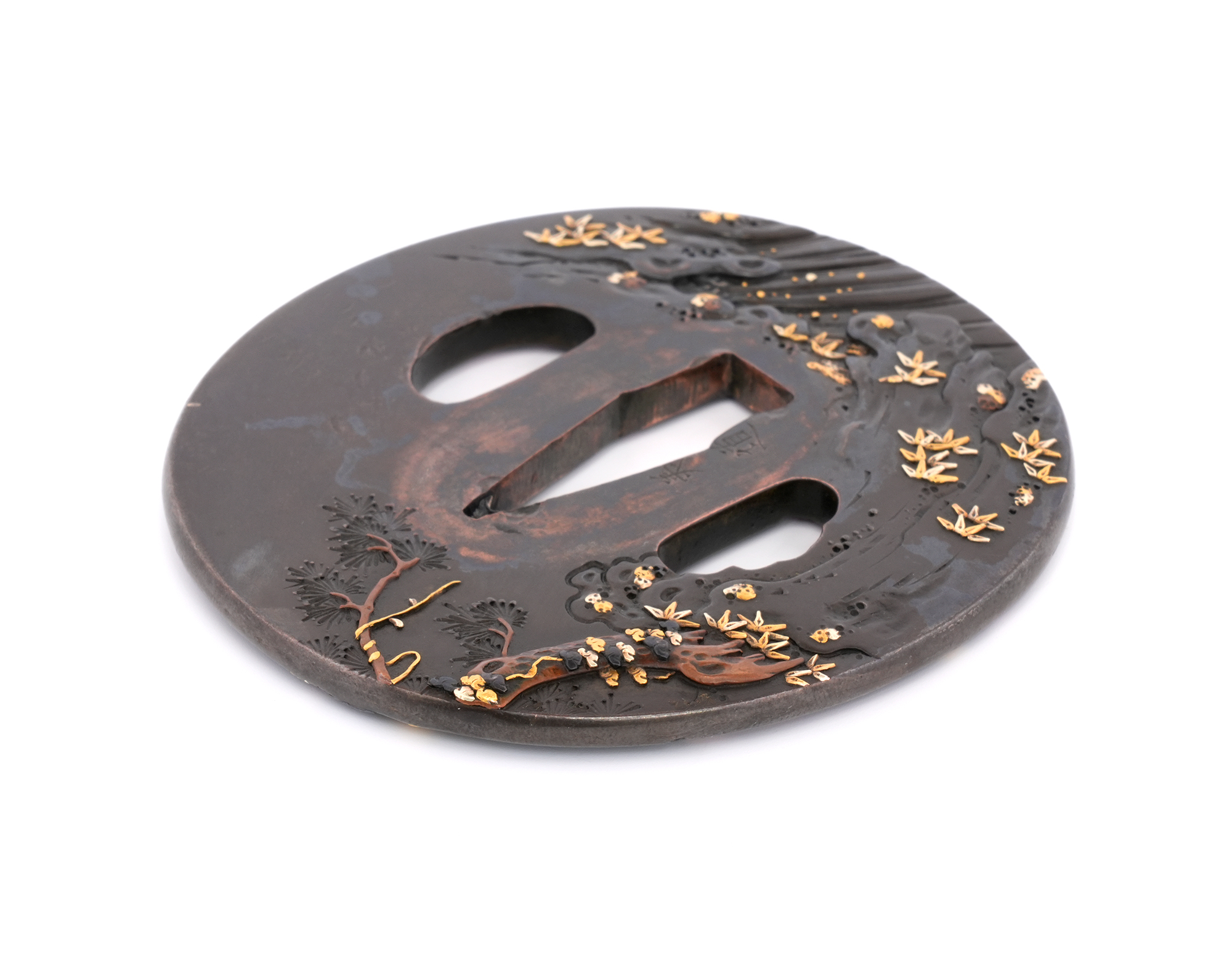
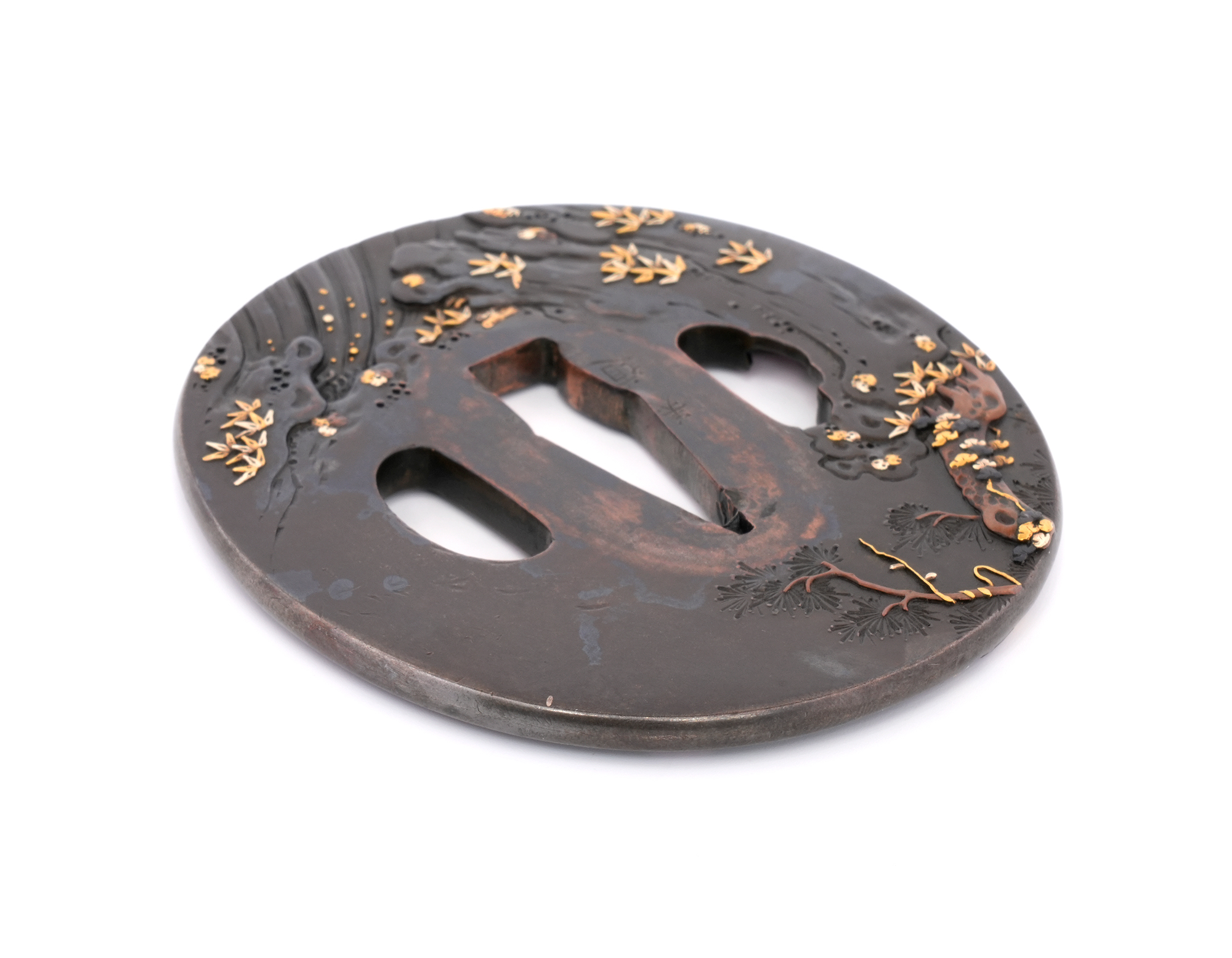
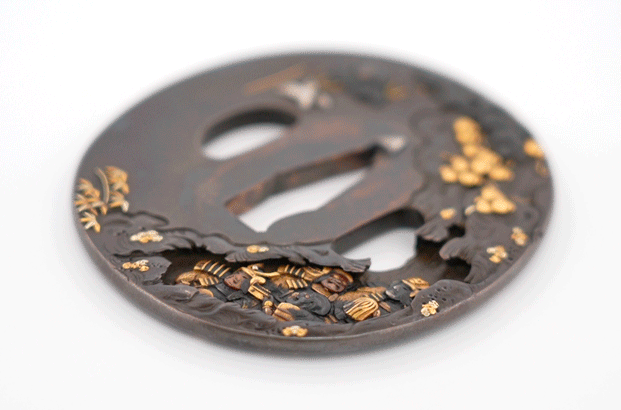
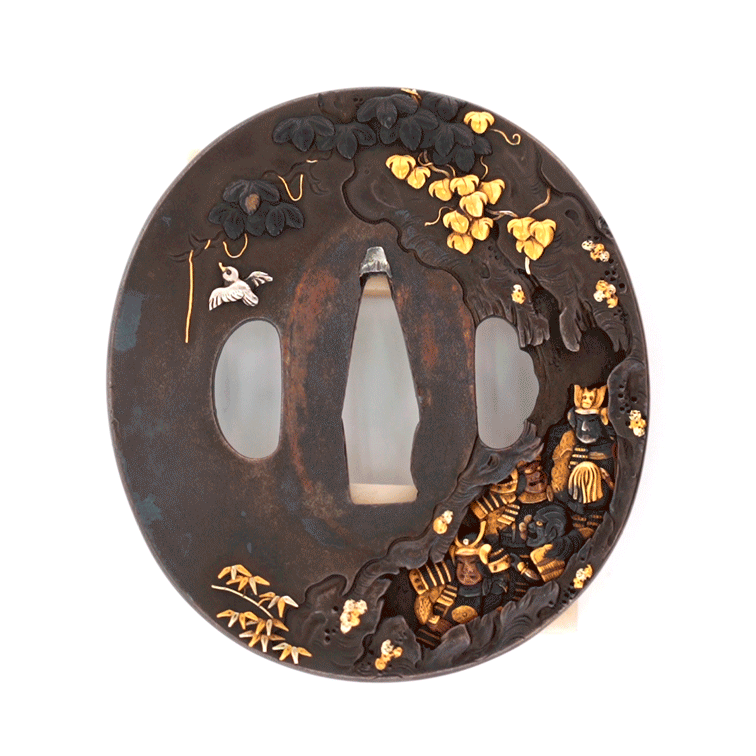
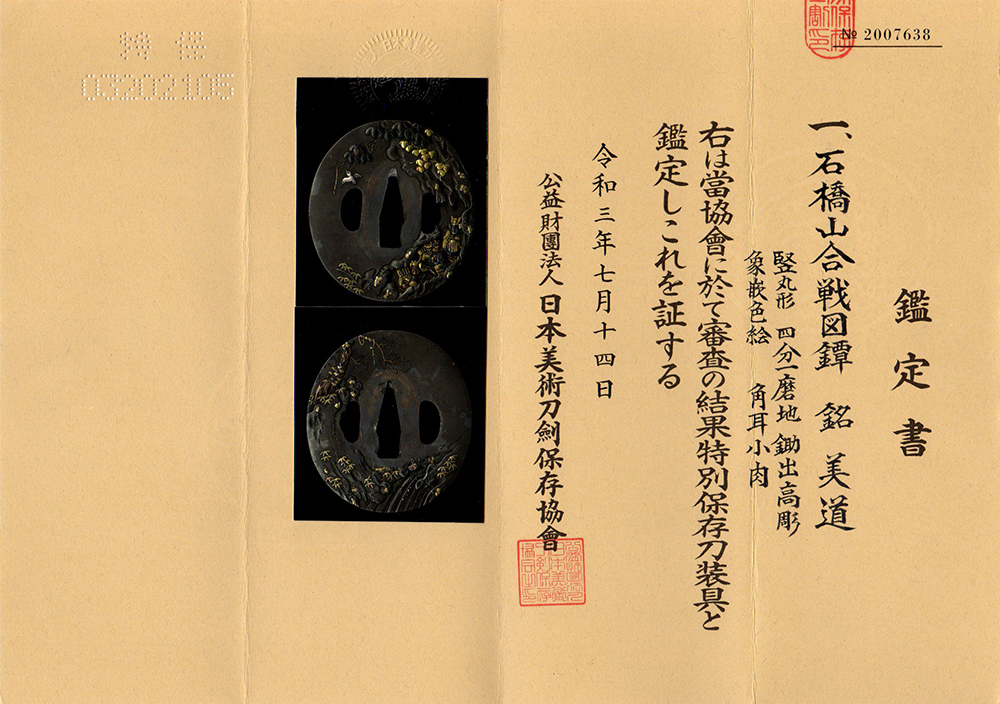
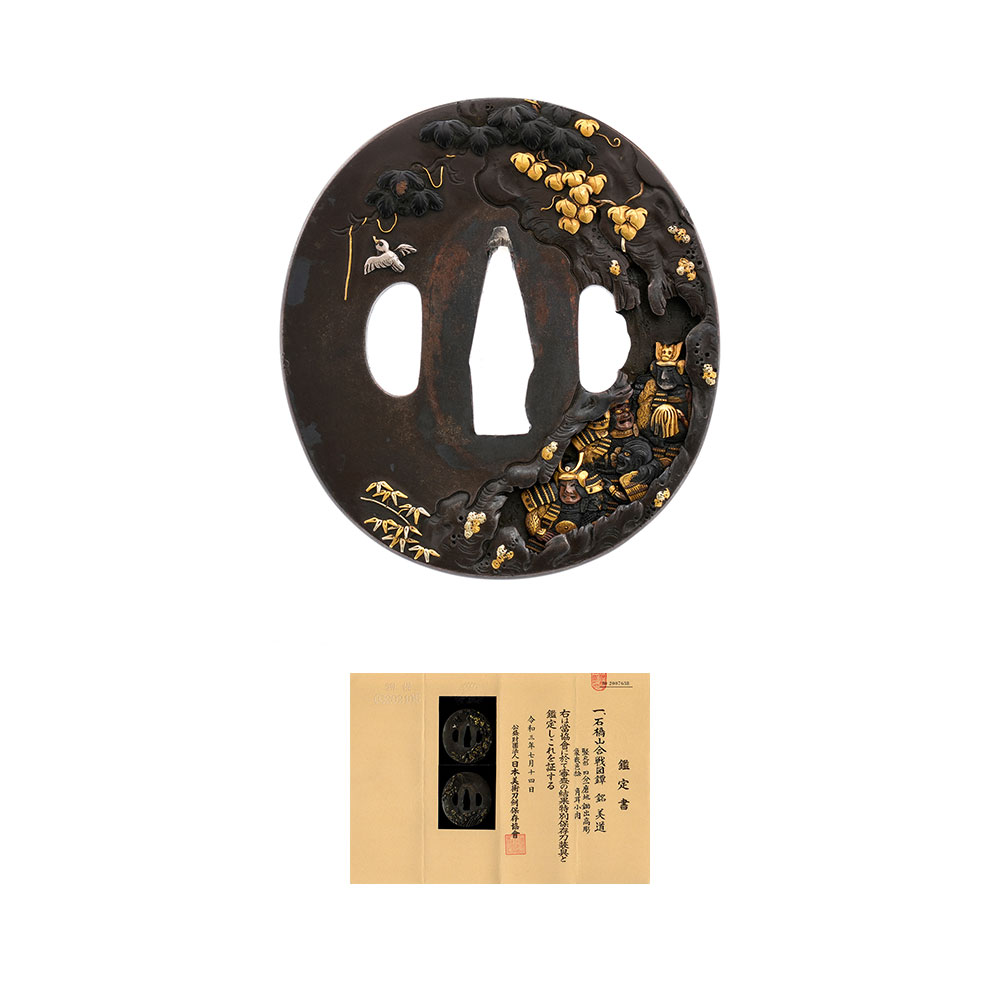
Yoshimichi used the family name Tobita and was a kinko artist of the late Edo period who lived in Mito, Hitachi Province; his clan includes Motoyuki. Leaving behind mei such as "Tobita Yoshimichi, at the age of 69" and "Josuiken Yoshimichi (kao)", he is known for masterworks of tsuba and fuchi-kashira in takabori iroe with themes of Japanese and Chinese figures or historical anecdotes. He specialized in condensing a single scene of a story into a small space by minutely carving the expressions and clothing of figures and skillfully combining different irogane; this piece also fully demonstrates the realism characteristic of Mito kinko, brilliant colors, and rich creativity that delights the viewer. The theme is the anecdote of Minamoto no Yoritomo, who, after being defeated at the Battle of Ishibashiyama in Jisho 4 (1180), fled from the Heike pursuers along with Doi Sanehira and others to hide in a rocky cave in Doi-go. It is told that Kajiwara Kagetoki, who was among the pursuers, sensed Yoritomo's hiding place but deliberately overlooked him, and this event is said to have been the catalyst for Kagetoki later serving Yoritomo. This was a scene where Yoritomo survived one of the greatest crises of his life before the establishment of the Kamakura Bakufu, and it has been taken up in paintings and tosogu as a dramatic story that decided the fate of the future ruler. Set on a tatemaru-gata shibuichi migaki-ji, the Yoritomo party huddling in the darkness of the cave is crowded into the lower right of the omote side with thick sukidashi takabori, with everything from the kabuto, yoroi, sode, and limbs to the expressions of each individual minutely carved. Centered on the kin-iroe applied to the armor, the zogan iroe with irogane of shakudo, suaka, and silver placed in key areas stands out vividly against the quiet grayish-brown of the shibuichi-ji, richly conveying the sense of pressure in the cave so narrow that the figures push against each other, and the tension of holding one's breath to let the pursuers pass. A tree with a thick, undulating trunk and vines with fruit are added above, a flying bird to the left, and bamboo grass below; despite being a historical subject, the entire composition is permeated with the vitality of nature and the seasonal atmosphere. Particularly rare is the mechanism that allows the figures inside the cave to actually be moved. When the tsuba is moved, Yoritomo and his men, huddled together, sway as if trembling at the presence of the pursuers, creating a flow of time and narrativity that cannot be expressed by static takabori alone. This design, which layers playfulness onto a moment of historical tension, does not end in mere eccentricity; it speaks to the design ability to incorporate multiple figures into a narrow space while making them operate smoothly, and the high level of skill of Yoshimichi in completing it as a single scene without making the viewer conscious of the mechanism from the surface. Every time one confirms the mechanism in hand, there is an interest as if the very breathing of Yoritomo's party is conveyed, and it possesses outstanding appreciation value even among similar figure takabori tsuba. The ura side features no figures, depicting the mountains where the story on the omote side unfolds from a different perspective, with pines, rock surfaces, bamboo grass, undulating terrain, and falling water. The shakudo trunks, deep-toned pine needles, and kin-iroe applied to grass leaves and moss add quiet color to the shibuichi-ji, and as the flowing water, rendered with a combination of sujibori and takabori, weaves between the rocks below, the tension of the crowded figures on the omote forms a beautiful contrast with the silence spreading on the ura. The composition, which allows one to enjoy both the story and the setting by turning it over, is deliberate, and the refined kaku-mimi koniku rim neatly tightens the dense carving. The nakago-ana appears asymmetrical at first glance, but this was tailored to match the construction of a hi carved on one side of the blade it was mounted on. These traces of adjustment, considering the details of the blade shape, convey its provenance as a piece of tosogu custom-made for a specific sword rather than a mere object for appreciation, showing that thorough work extends not only to the design but also to practical aspects. A Tokubetsu Hozon Tosogu certificate from the Nihon Bijutsu Token Hozon Kyokai is included, and the certificate describes it as "Ishibashiyama Kassen-zu Tsuba", "Mei: Yoshimichi", "Shibuichi migaki-ji, sukidashi takabori, zogan iroe, kaku-mimi koniku". In addition to being a signed work by a master craftsman, the content—featuring a famous historical scene leading to the establishment of the Kamakura Bakufu, high-density figure carving, abundant irogane, a landscape completed on both sides, and even a movable mechanism—is extremely substantial; it is a representative masterpiece-class tsuba by Yoshimichi that combines historical importance, artistic quality, and the joy that can only be understood by holding it. Please be sure to view the posted video to see the exquisite mechanism where stillness and motion, tension and wit coexist.
Offered by Toushin

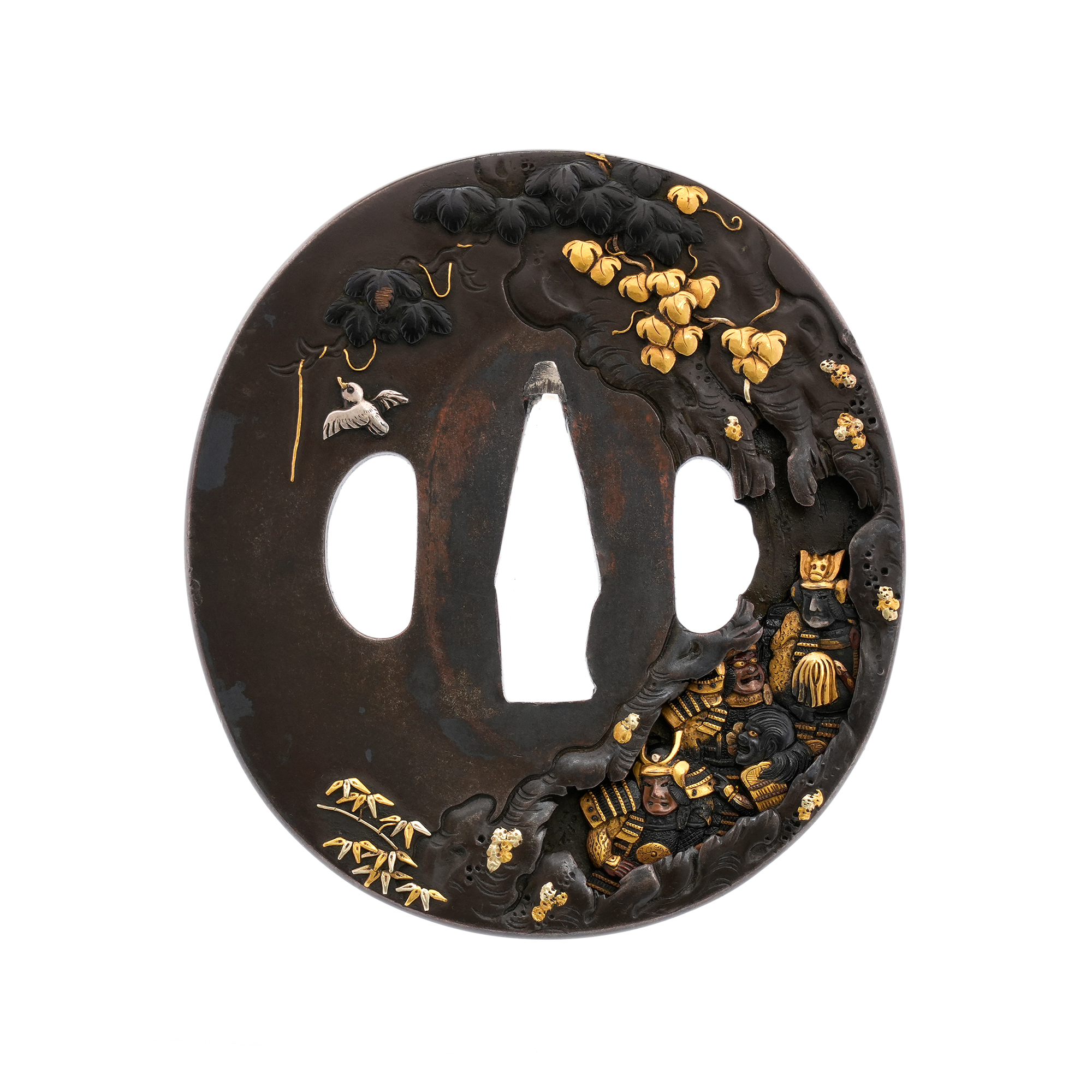
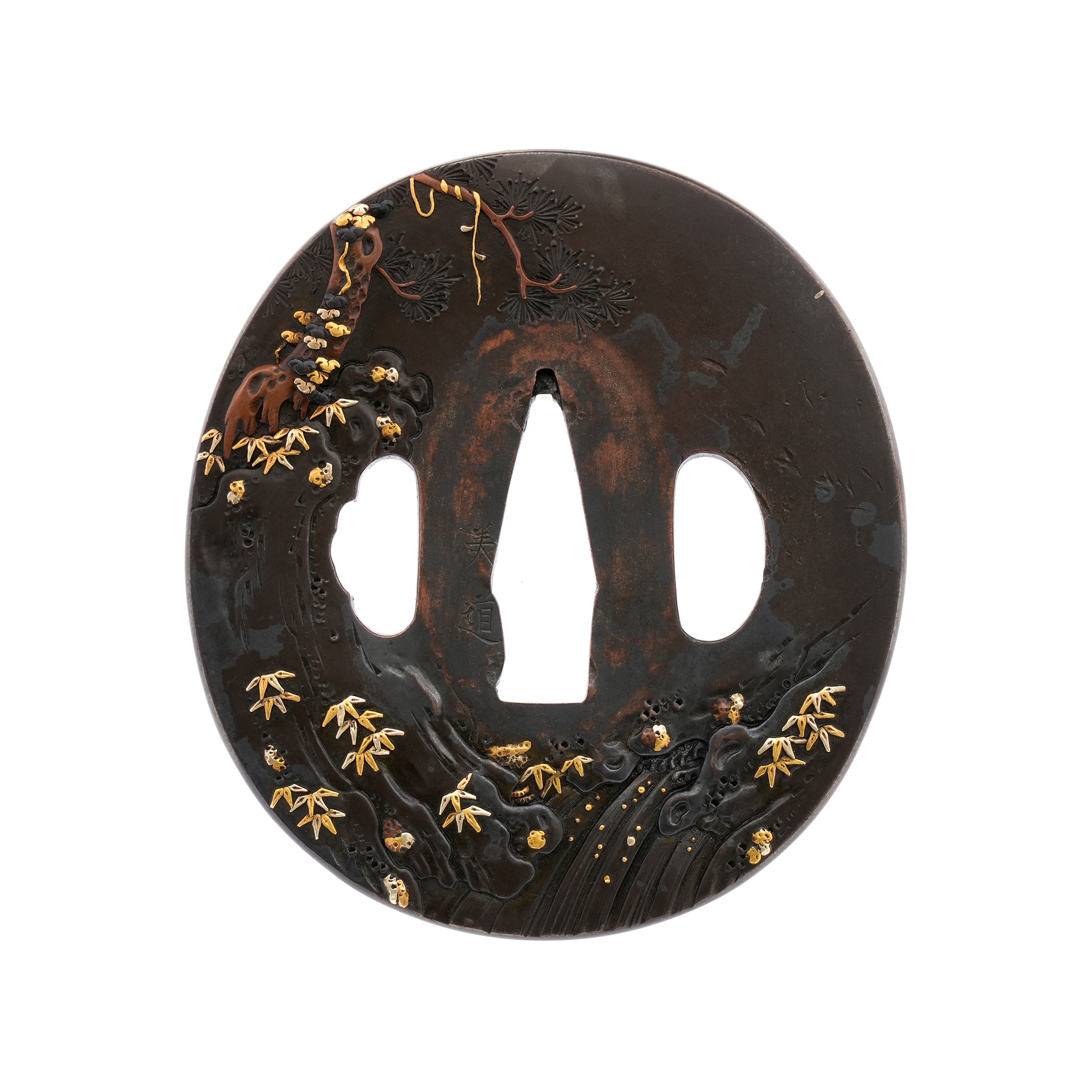
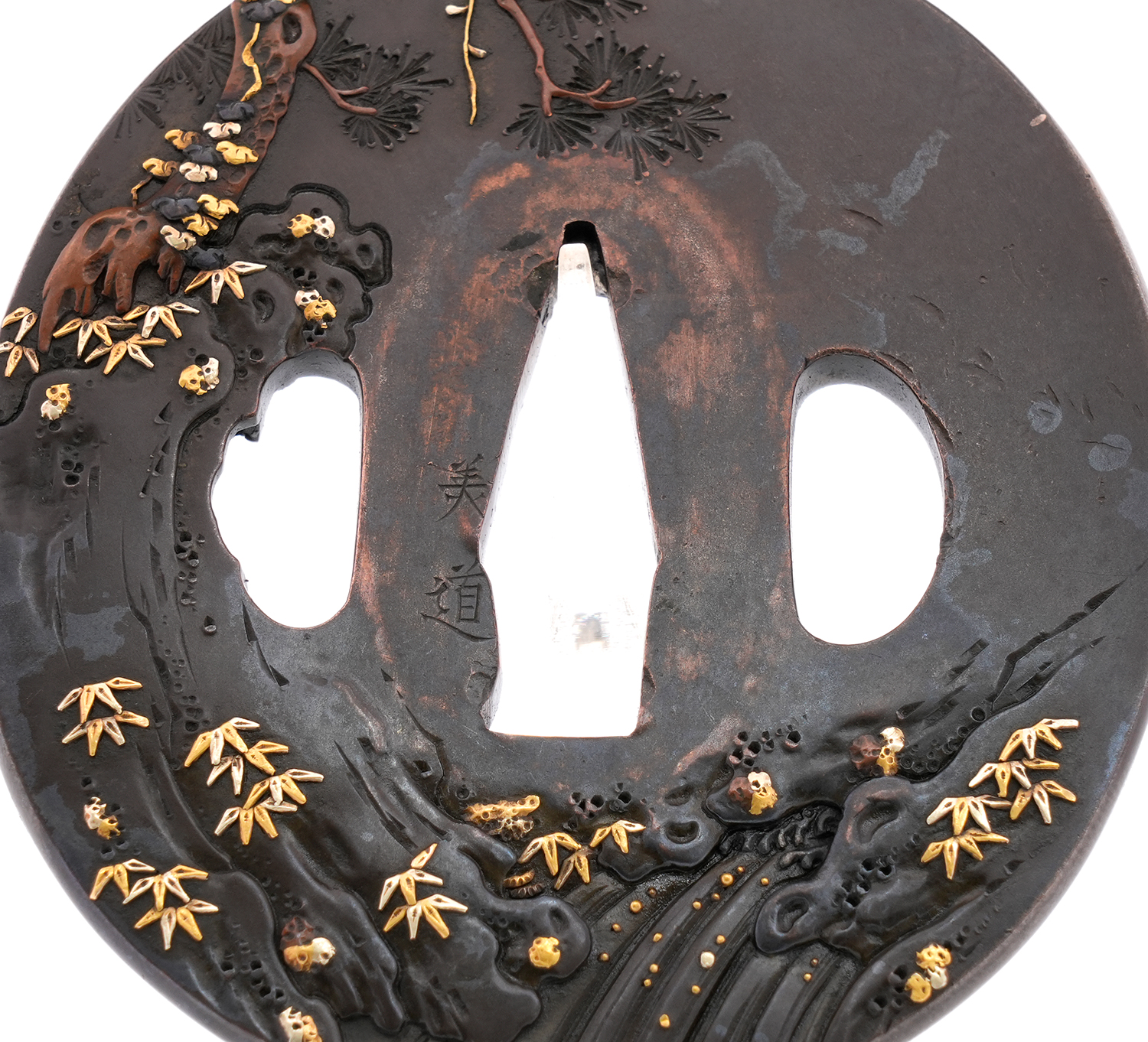
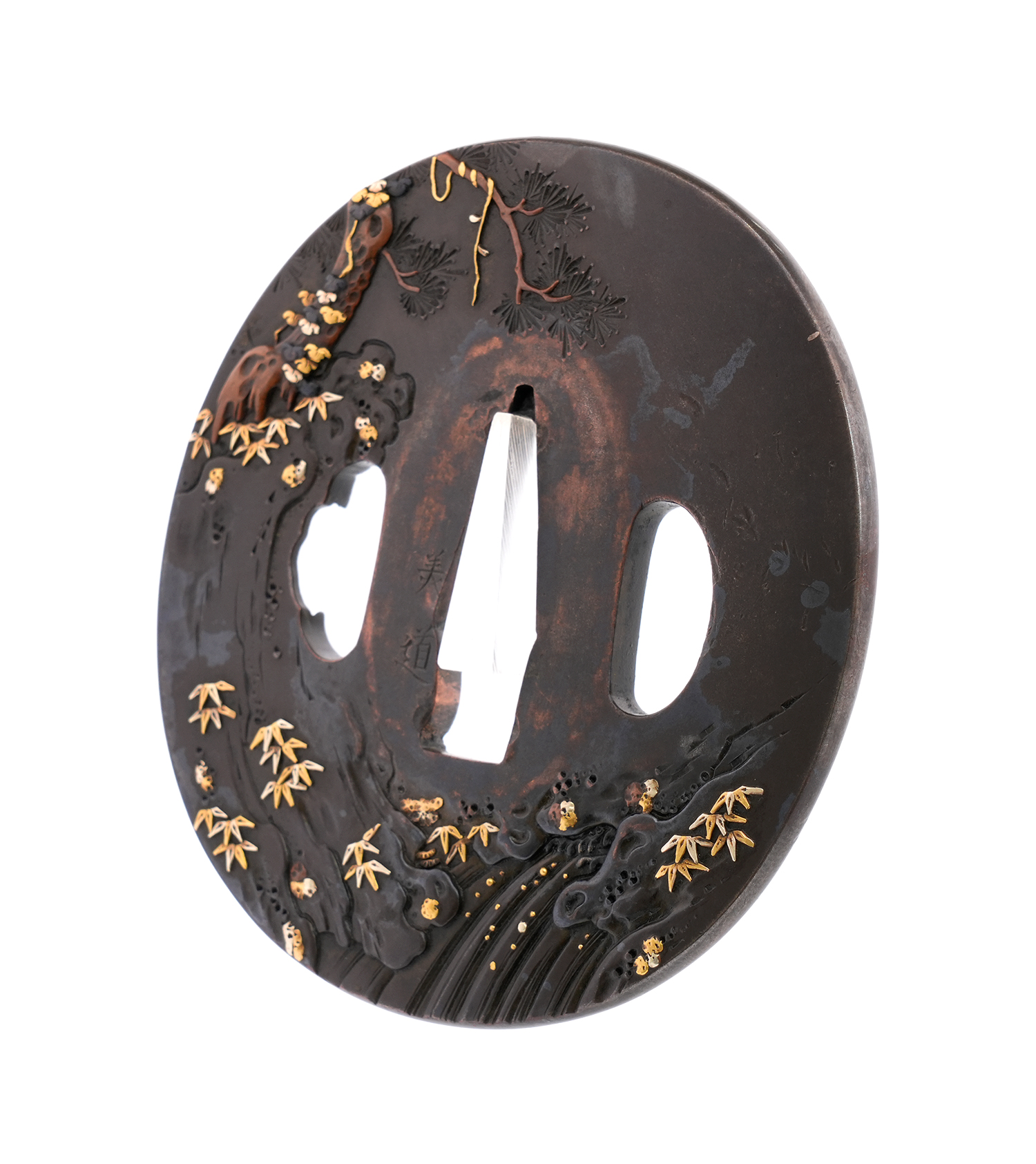
As written by the shop
Machine translation from the shop's Japanese · may contain errors ·
A Hozon-certified fitting of notably superior craftsmanship and condition, often with signature or workmanship of high reference value.
The NBTHK (Nihon Bijutsu Tōken Hozon Kyōkai, the Society for the Preservation of Japanese Art Swords) is a public-interest incorporated foundation founded in 1948 and supervised by Japan’s Agency for Cultural Affairs (Bunkachō); it is based at the Japanese Sword Museum in Tokyo. Its expert panels physically examine each submitted work (shinsa) and issue a certificate (kanteishō) ranking it by artistic and historical merit. NBTHK papers are the most widely recognized standard of authentication for Japanese swords and fittings.
NBTHK official siteAs a rule we do not accept returns, except when we have sent a different item from the one ordered or when there is a significant discrepancy between the description and the item. If you wish to return an item, please contact us within 3 days of its arrival and then send it back.
¥704,000