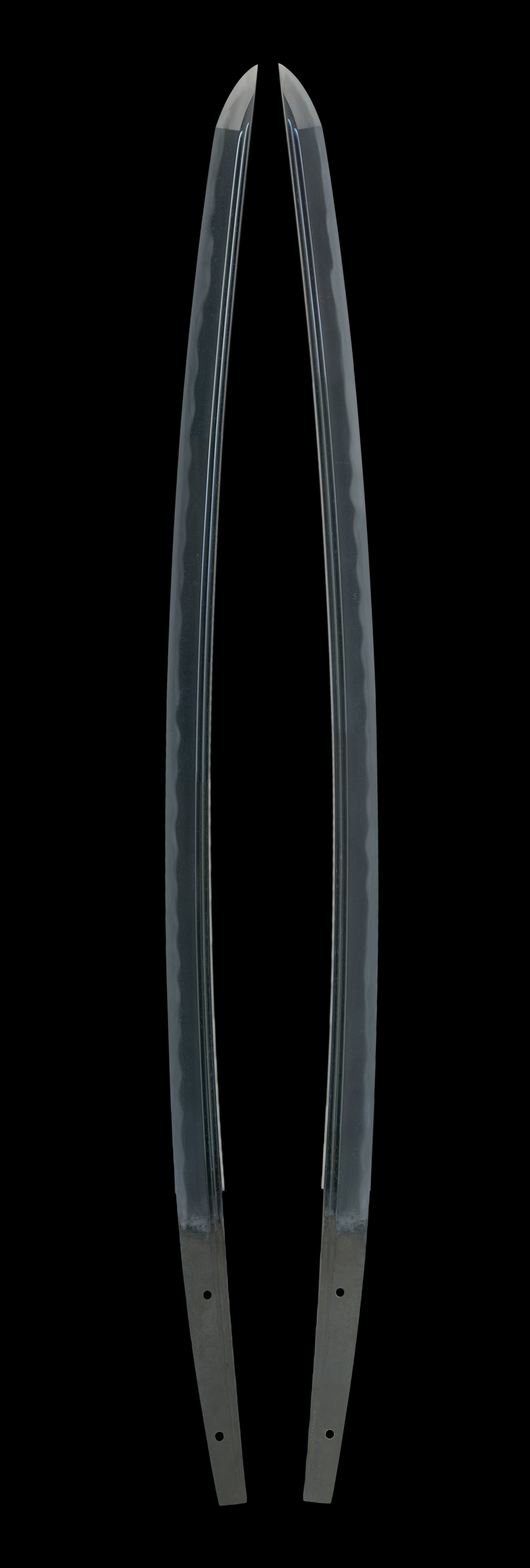
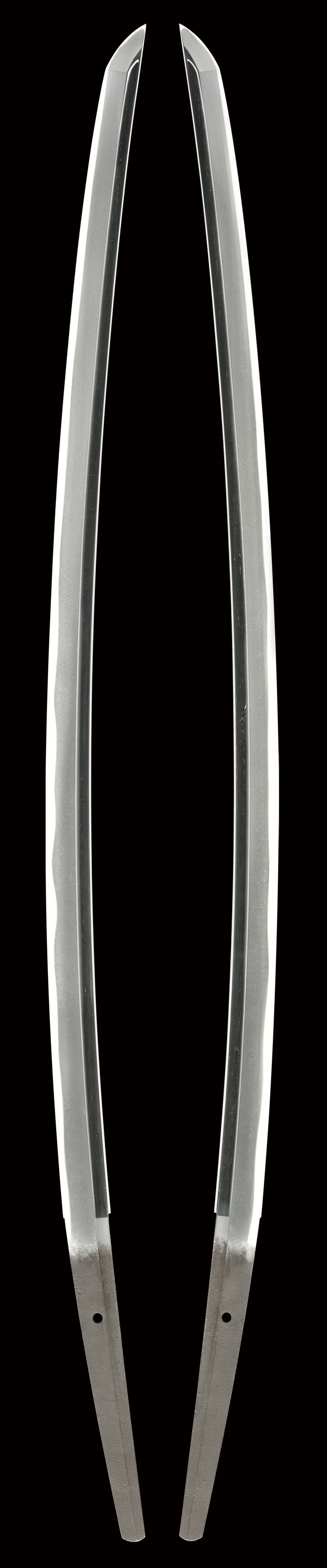
Around 1800 Suishinshi Masahide argued in his writings that the craft must return to the old masters’ methods: the fukkotō revival. His greatest successor Naotane worked convincingly in Bizen and Sōshū manners that had been dead for centuries.
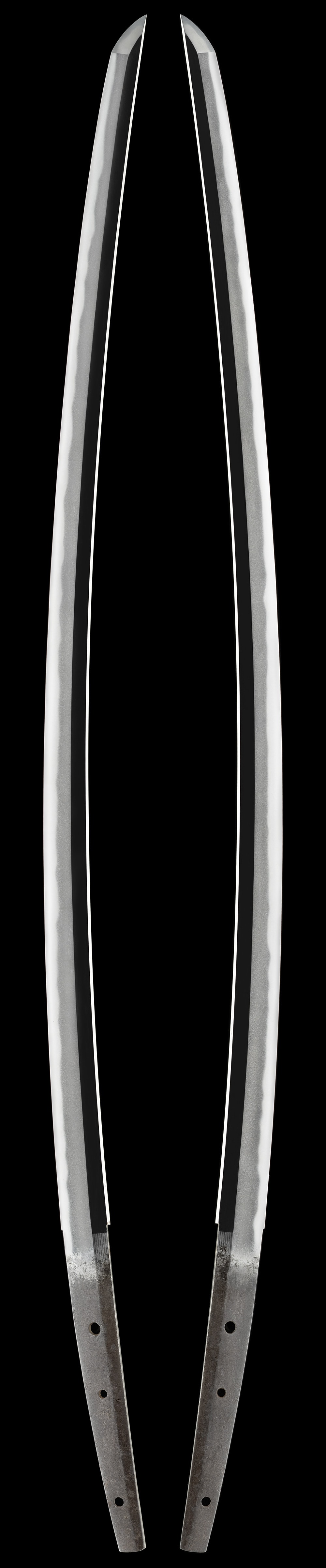
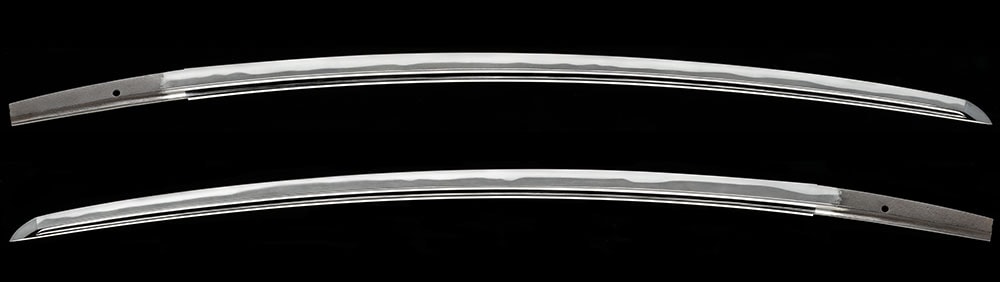
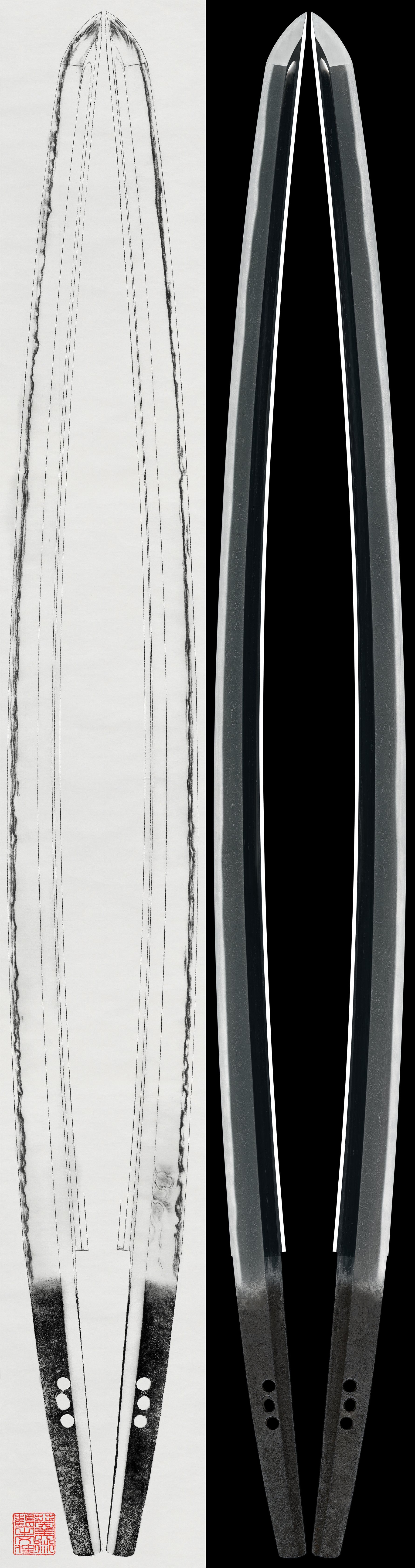
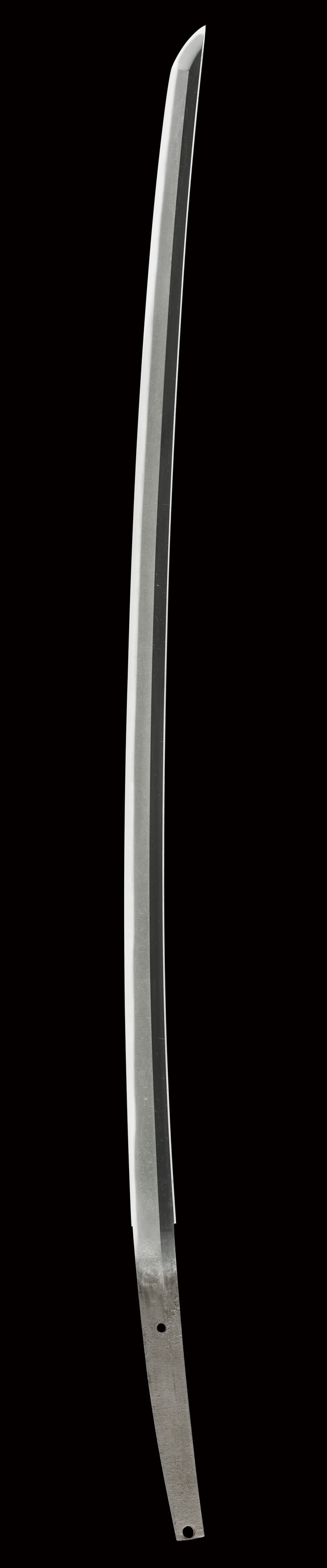
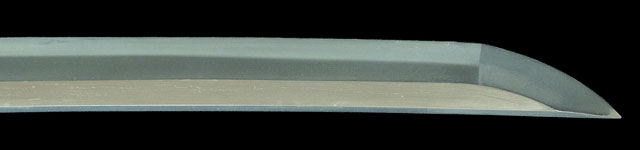
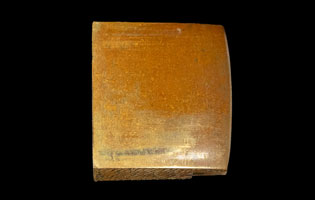
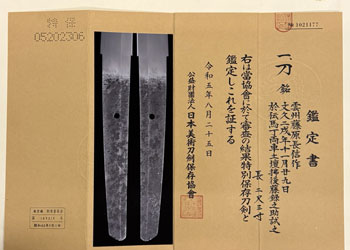
Katana Mei: Unsyu Fujiwara Naganobu Bunkyu 2, Year of the Dog, November 29th. At Tenmacho, Kuruma Dodan-barai, Goto鍛之四 (Tan-no-shi) tested this. Product Number 31-2573 Katana Unsyu Fujiwara Naganobu Province / Era Unsyu, Bakumatsu In Shirasaya Nagasa 69.4cm (2 shaku 3 sun 2 bu) Sori 1.8cm (6 bu) Motohaba 3.25cm Sakihaba 2.56cm Motokasane 6.3mm Sakikasane 5.3mm Toshin weight 830g Weight without saya - g Nakago Ubu Mekugi-ana 1 Hamon Suguha Price Undecided (Price including tax) A disciple of the 5th generation Izumo Fuyuhiro. By order of the Matsue Clan, he went to Edo and became a monjin of Chounsai Tsunatoshi. He returned to Matsue in Kaei 5. There is a tameshigiri-mei by Goto Rokunosuke. "Ryoguruma" refers to cutting through both lower limbs aligned together; since it is noted as "Dodan-barai," the cut likely continued all the way through into the sand mound below. The hamon is suguha in konie-deki, and the jigane is a well-tightened komoku-hada. It is a grand katana with a wide mihaba.
 NihontoWatch
signed · Shin-Shinto · nagasa 69.4cm · sori 1.8cm





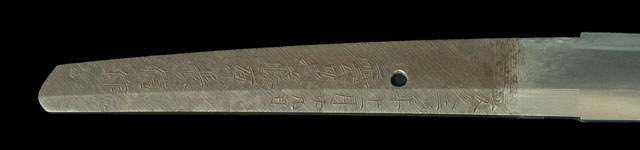
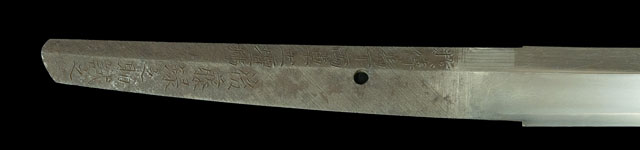
The Shinshintō revival
Around 1800 Suishinshi Masahide argued in his writings that the craft must return to the old masters’ methods: the fukkotō revival. His greatest successor Naotane worked convincingly in Bizen and Sōshū manners that had been dead for centuries.
A Hozon-certified blade judged to show notably superior workmanship and a better state of preservation. The bar is higher: re-tempered blades and most unsigned Muromachi/Edo works are excluded.
The NBTHK (Nihon Bijutsu Tōken Hozon Kyōkai, the Society for the Preservation of Japanese Art Swords) is a public-interest incorporated foundation founded in 1948 and supervised by Japan’s Agency for Cultural Affairs (Bunkachō); it is based at the Japanese Sword Museum in Tokyo. Its expert panels physically examine each submitted work (shinsa) and issue a certificate (kanteishō) ranking it by artistic and historical merit. NBTHK papers are the most widely recognized standard of authentication for Japanese swords and fittings.
NBTHK official sitePlease request cooling-off within 8 days of the item's arrival. Items that have been altered cannot be handled. Return shipping is the customer's responsibility. If the destination is overseas, returns and refunds are not available.
Price on request