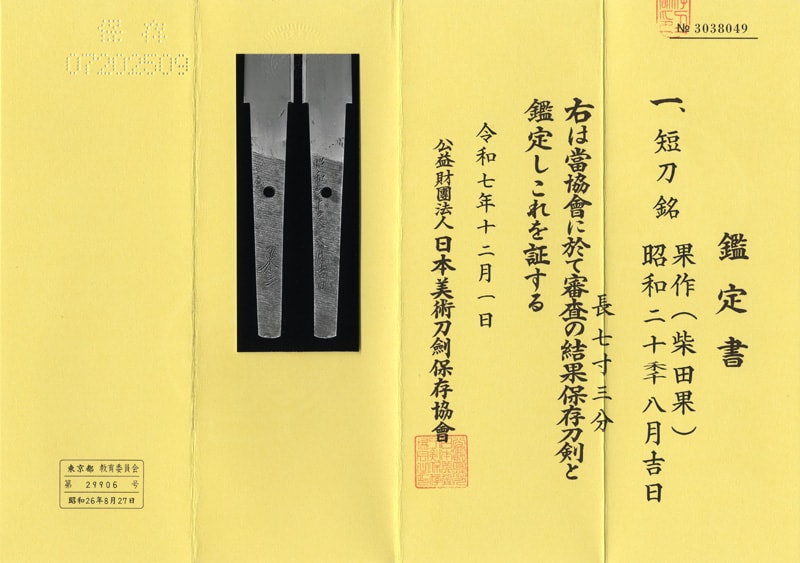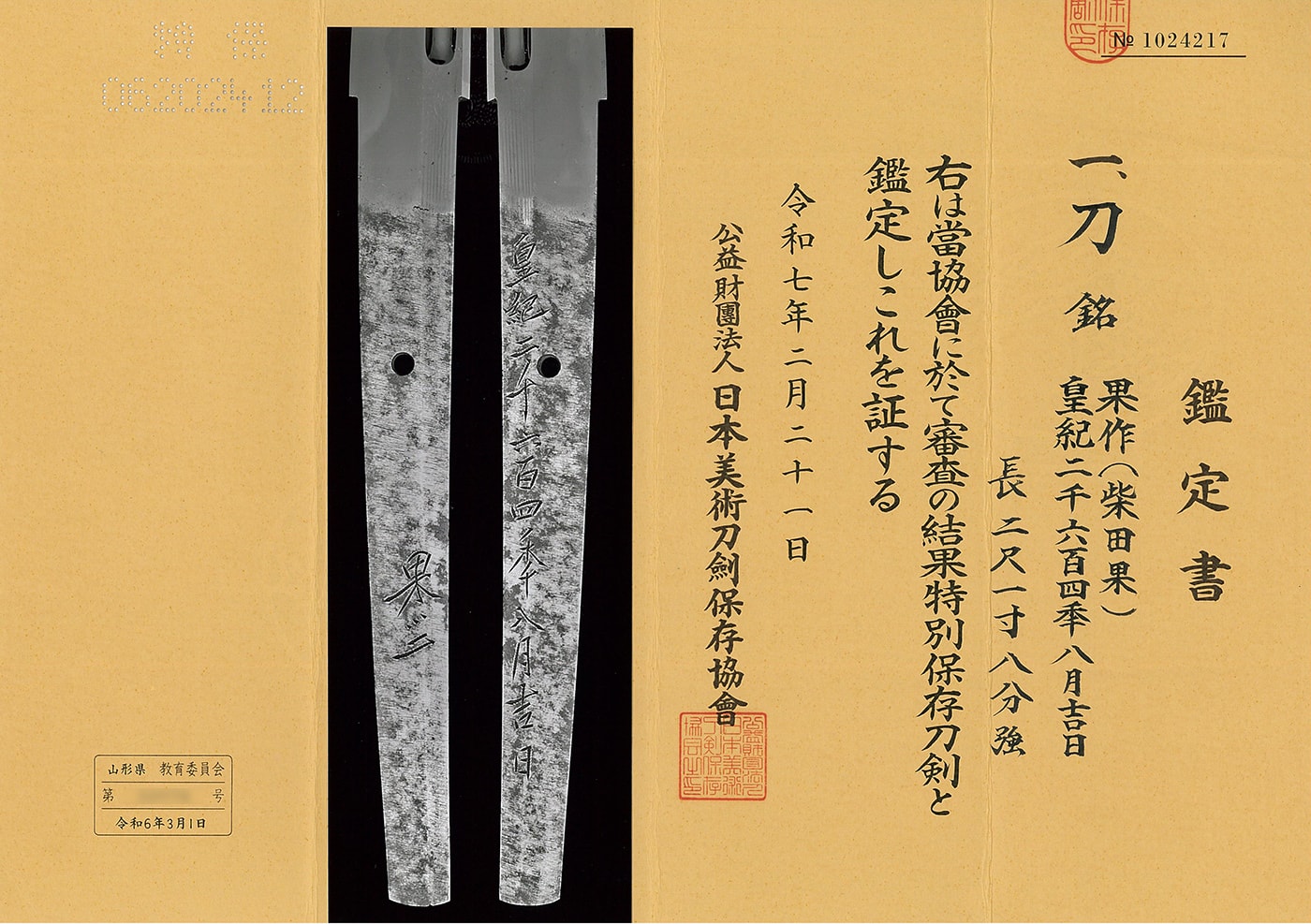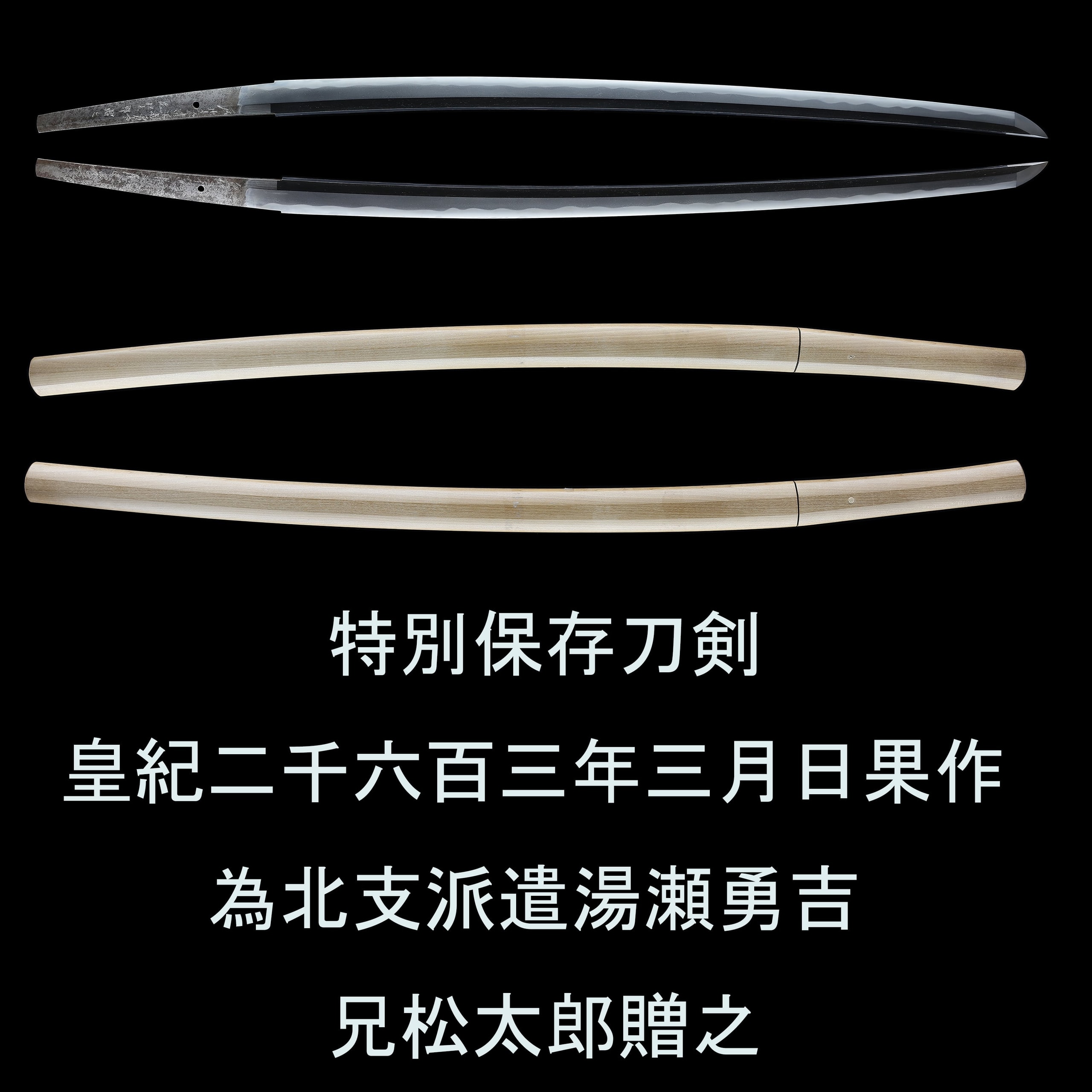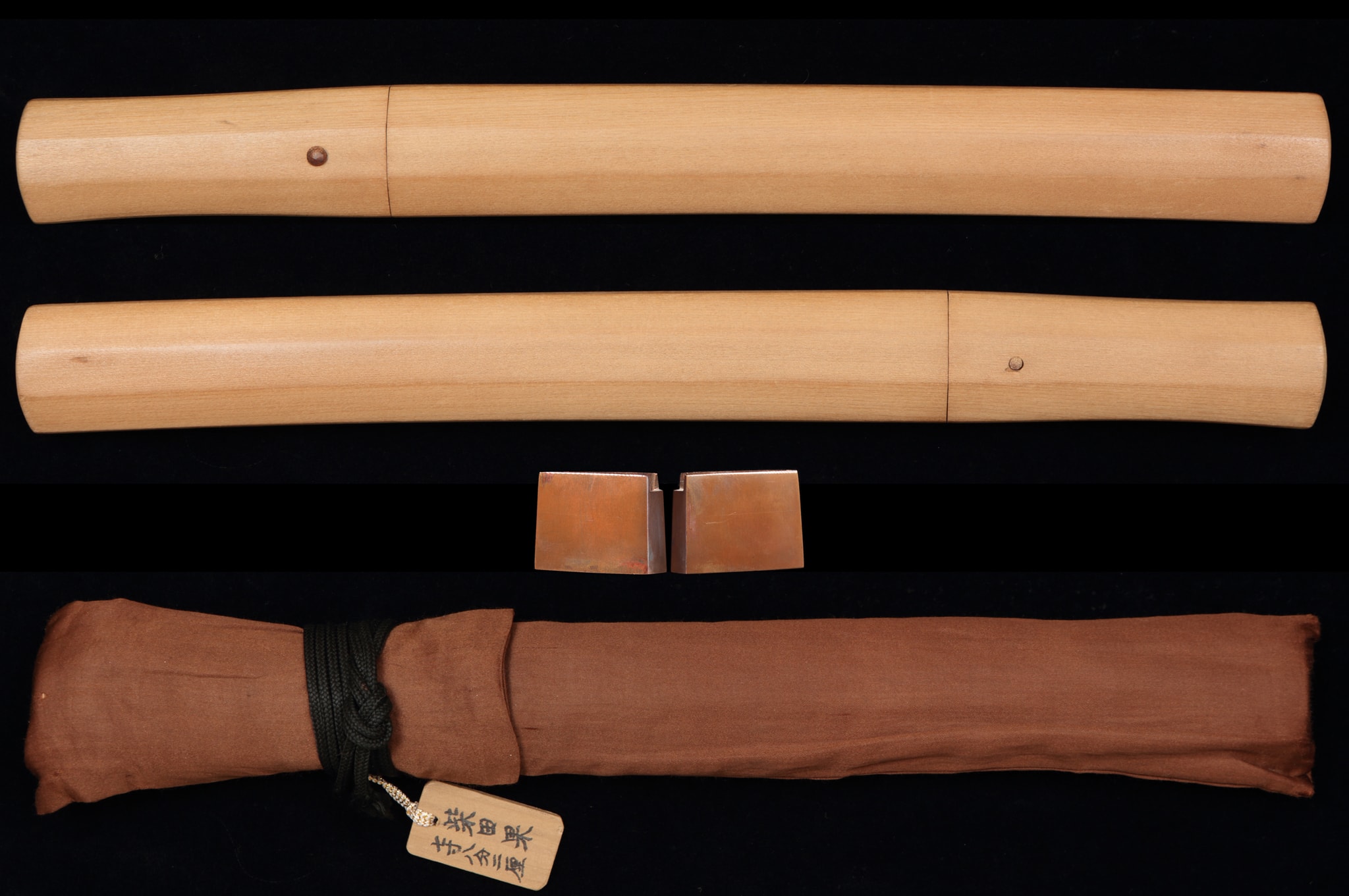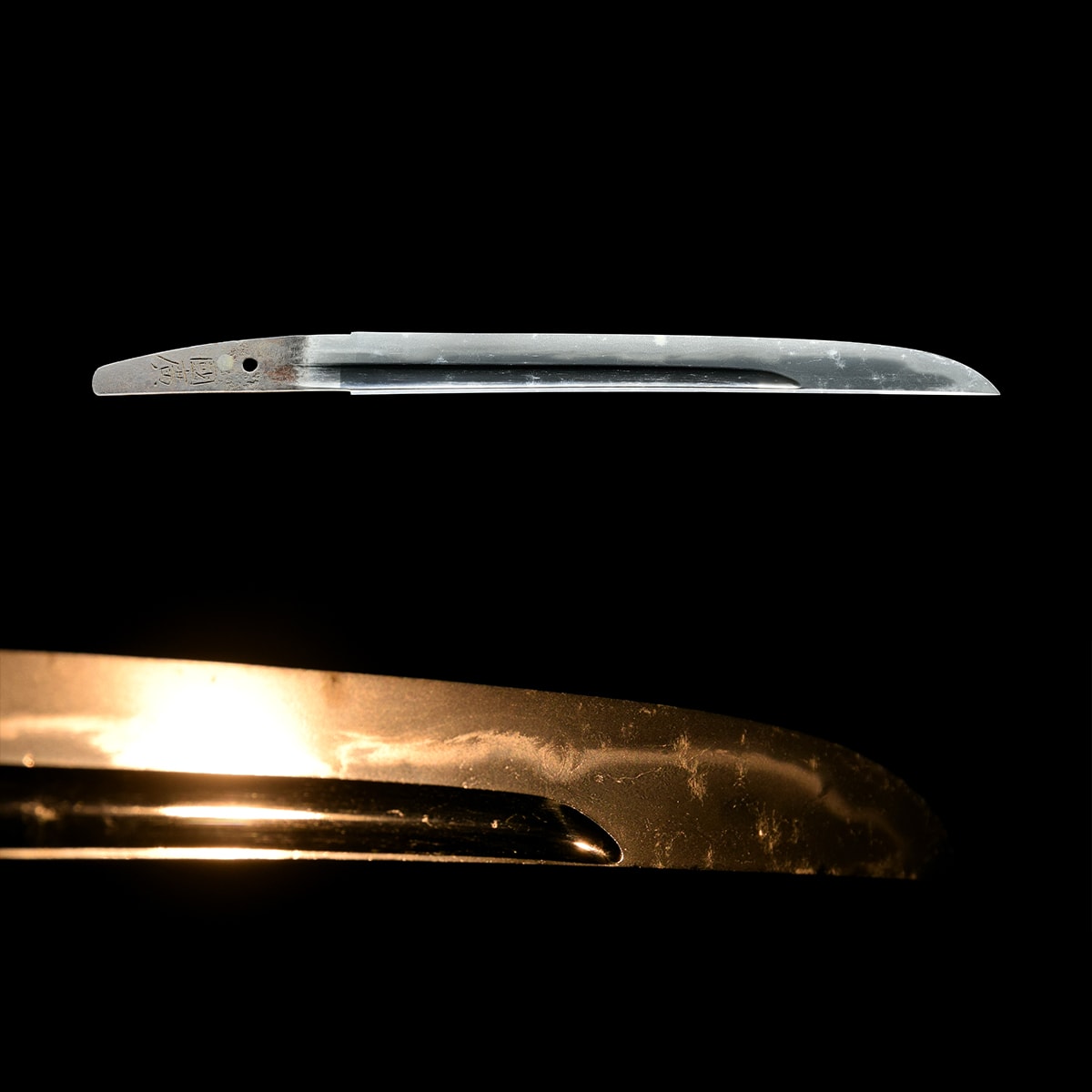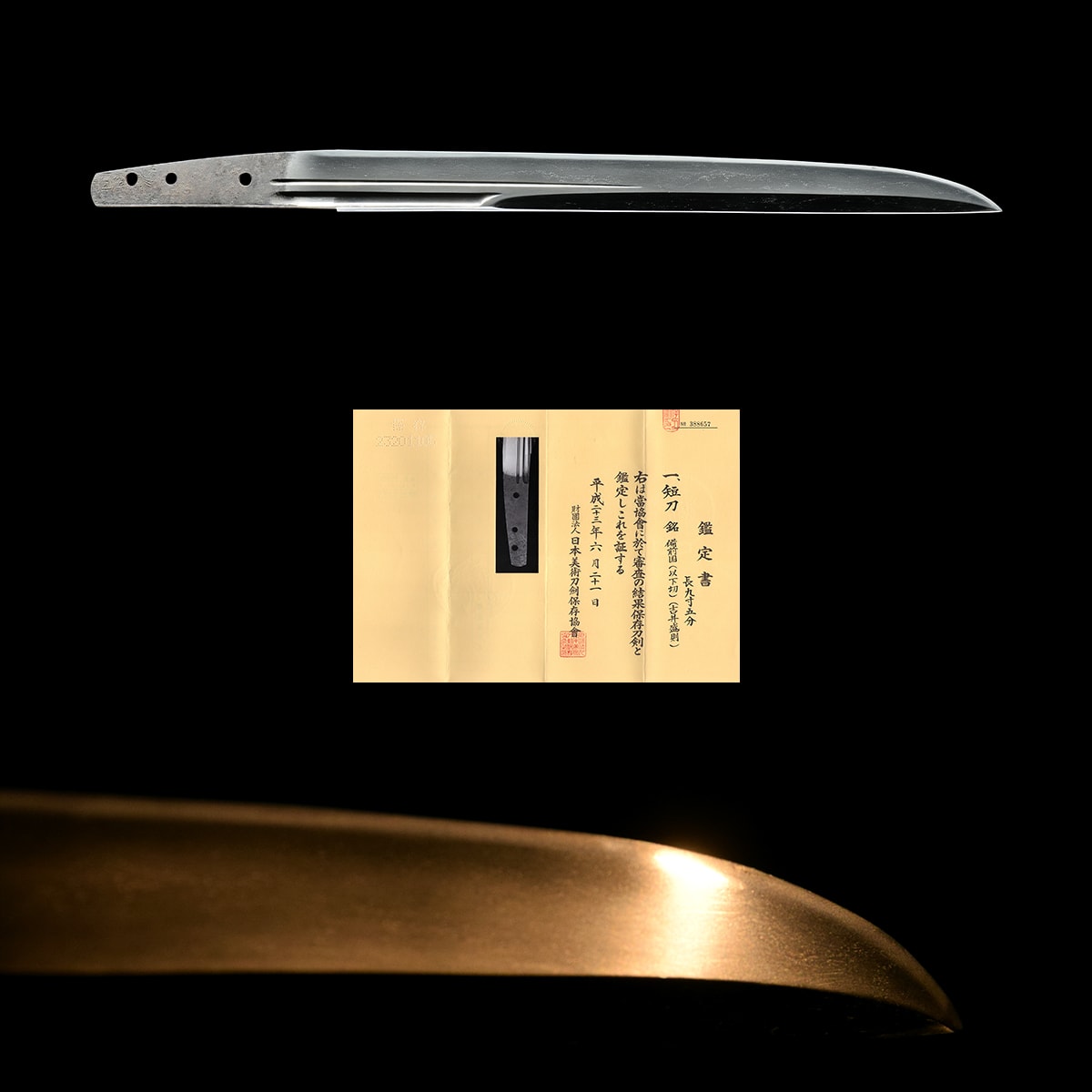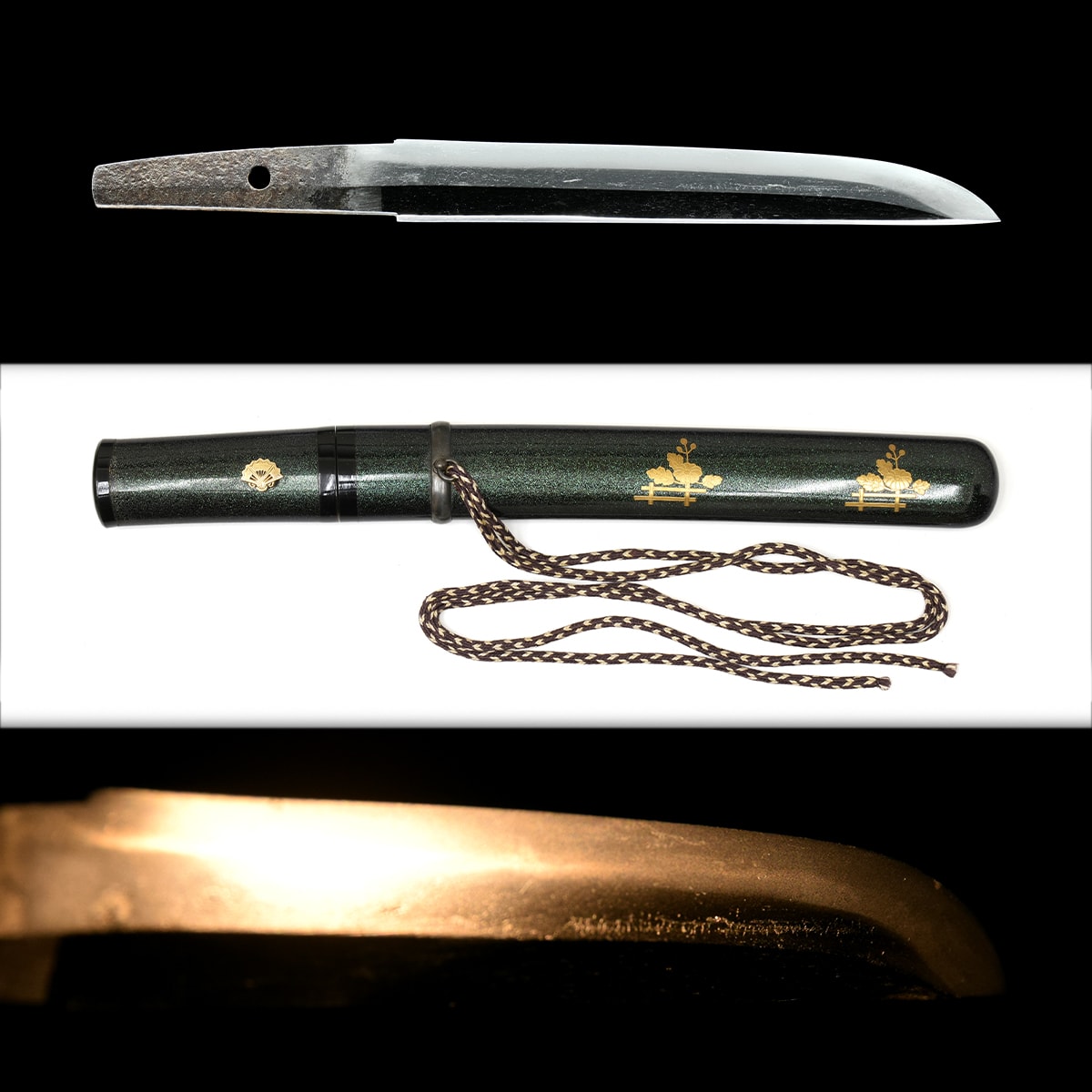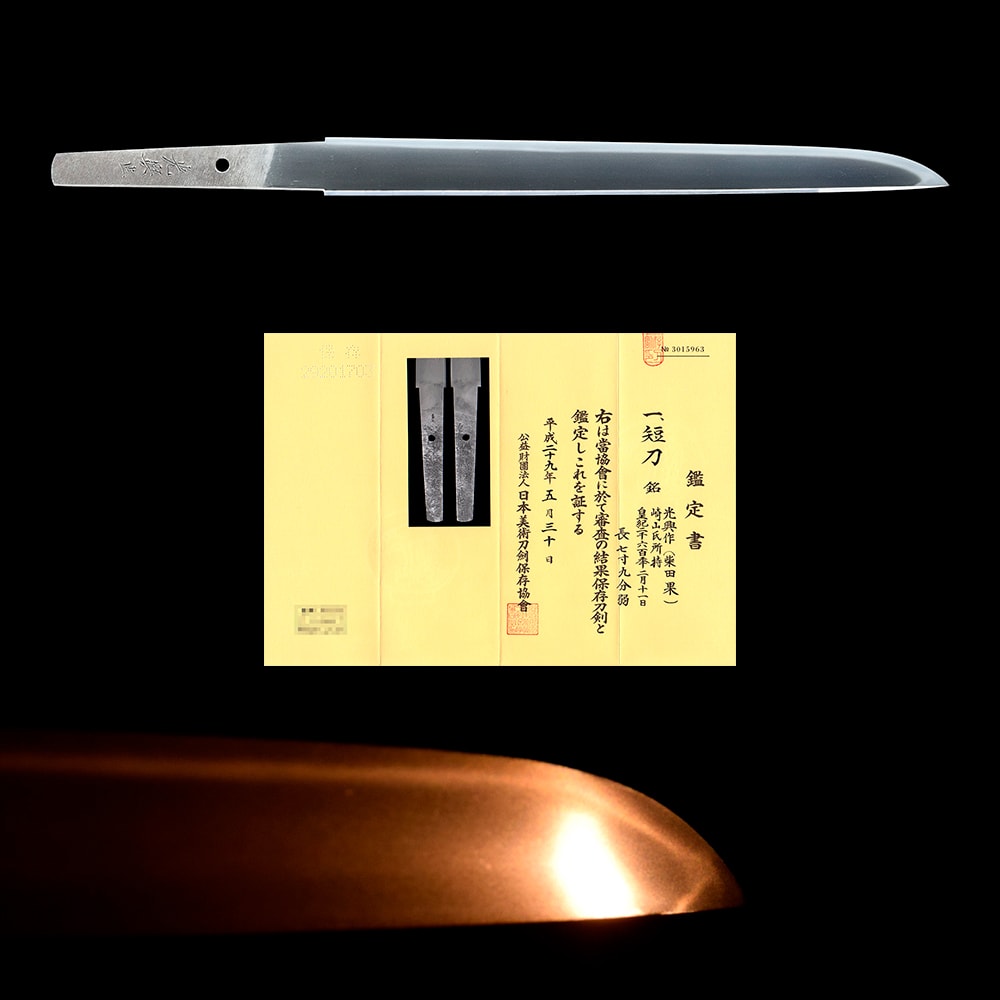
光興作 崎山氏所持 皇紀二千六百年二月十六日 (柴田果) - Mitsuoki(Shibata Ka) - 4-261
¥880,000
世界81社の刀剣商を横断追跡 · 価格履歴 · 売却アーカイブ
Showa (1926-1989)
仕様
23.8 cm
2.25 cm
1.9 cm
作者について
Shibata Ka柴田果
Shibata Ka (柴田果, 1884–1953) was an independent gendaitō swordsmith of late Meiji through early Shōwa, whose real name was Shibata Masatarō (柴田政太郎). Born in Nishimonai (西馬音内) of Ogachi District in present-day Akita Prefecture — historically part of Dewa (Ugo) Province — he came from a wealthy merchant family and pursued swordmaking as a serious avocation alongside careers in seal-carving (篆刻), haiku poetry, and local politics. Inspired by his grandfather Shibata Tasuke's sword collection, he first received instruction from Satō Shigenori, who taught him the oroshi-gane iron-smelting method and the fundamentals of forging, and subsequently became the principal disciple of Miyaguchi Ikkansai Toshihiro (later Miyaguchi Yasuhiro of the Yasukuni Shrine swordsmiths). He worked from his Akita home as a civilian smith outside the institutional schools of his era, and trained a son who also signed swords and a recorded disciple, Suzuki Kuniyoshi (鈴木邦芳). His output centers on tantō, which survive in comparatively greater number; full-length katana and tachi by his hand are scarce and correspondingly prized. He is particularly noted for utsushimono — careful copies of classical schools — including Ichimonji-style works, and during the wartime years he produced military-grade gunto as well. He signed primarily 果作 ("Ka saku") and 柴田果 ("Shibata Ka"), often with dedicatory inscriptions for named patrons, and an unusual alternate signature 光起 (Mitsuoki) has been recorded on at least one Ichimonji-utsushi, the reason for which remains unsettled in the literature. Within the gendaitō circle Shibata Ka attained the highest contemporary recognition. He took 2nd place at the 1934 Imperial Exhibition (帝展), won the Special Grand Prize at the 1935 New Japanese Sword Exhibition (top of 500 entries), and in 1937 was awarded the rank of Kokkō (国工) — the supreme title bestowed by the Greater Japan Sword Craftsmen Association — together with the related Gon-Daisōshō (権大宗匠) standing. He served as a judge of the New Japanese Sword Exhibition and was listed among the "Twelve Shinpin" (神品の列), the era's tier of "divine-quality" master smiths. His blades have been judged at NBTHK Hozon level and continue to be valued both as accomplished gendaitō workmanship and as material evidence of the pre-war Akita scholarly-amateur tradition that produced one of its most respected modern smiths.