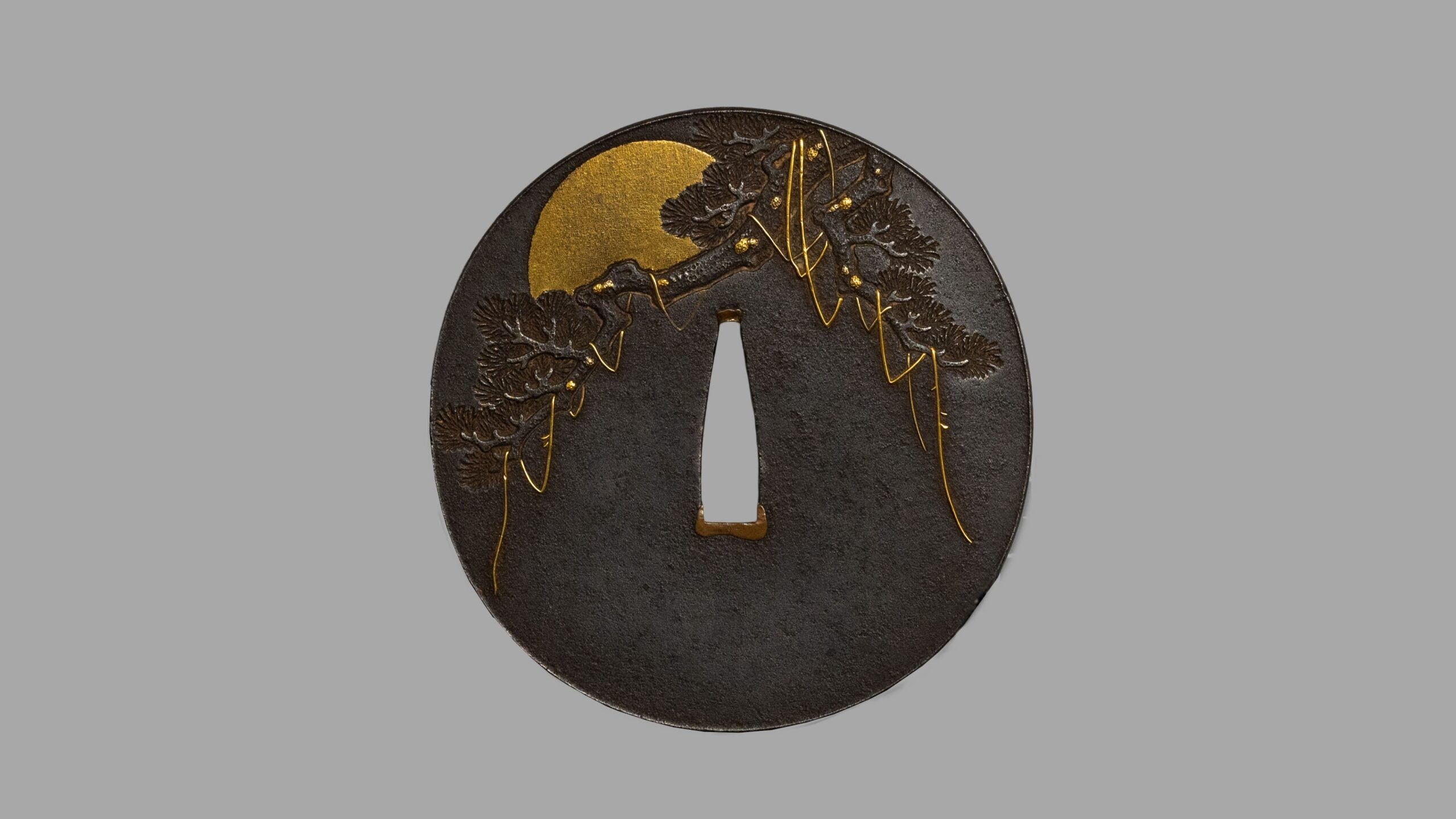
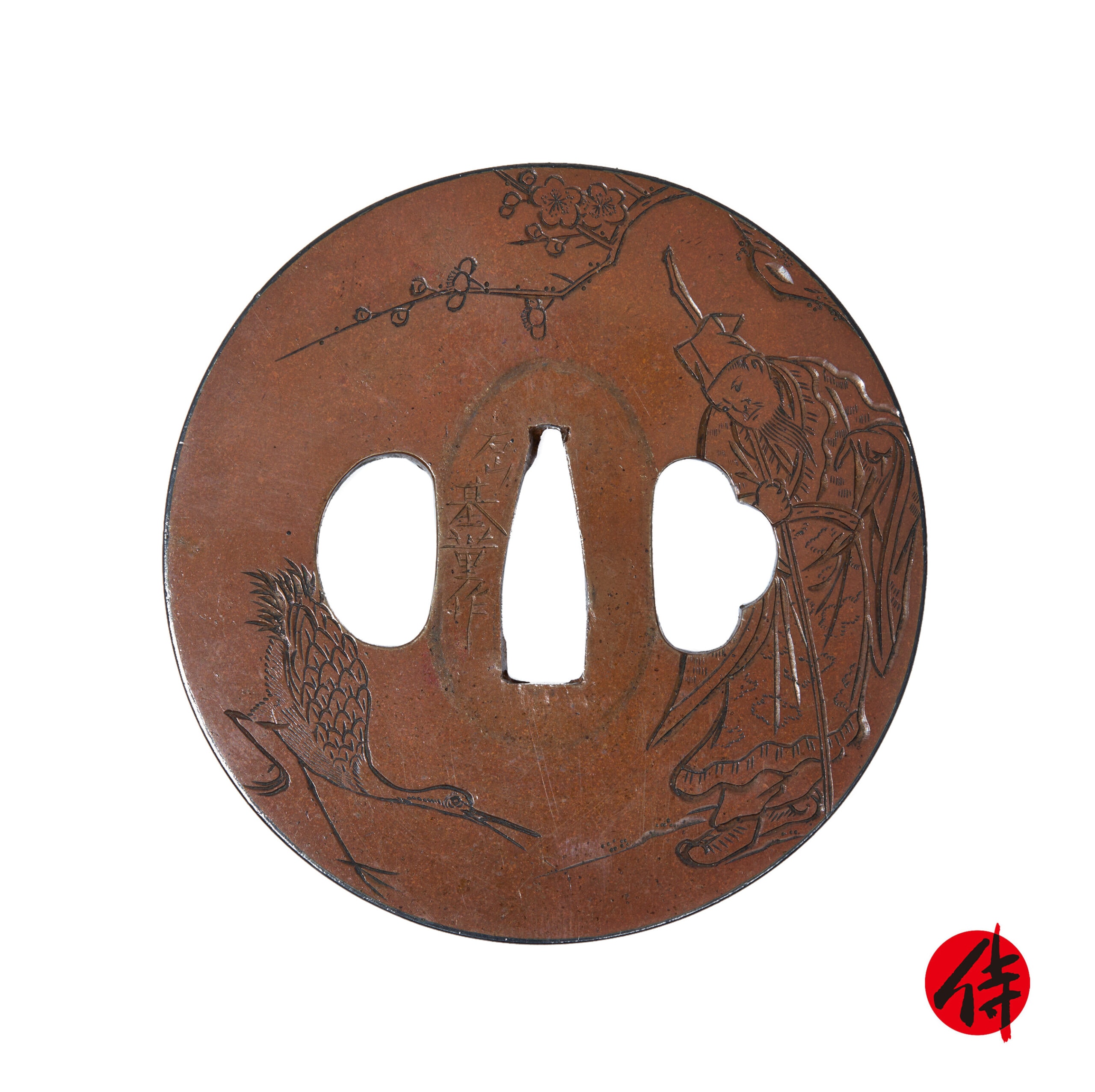
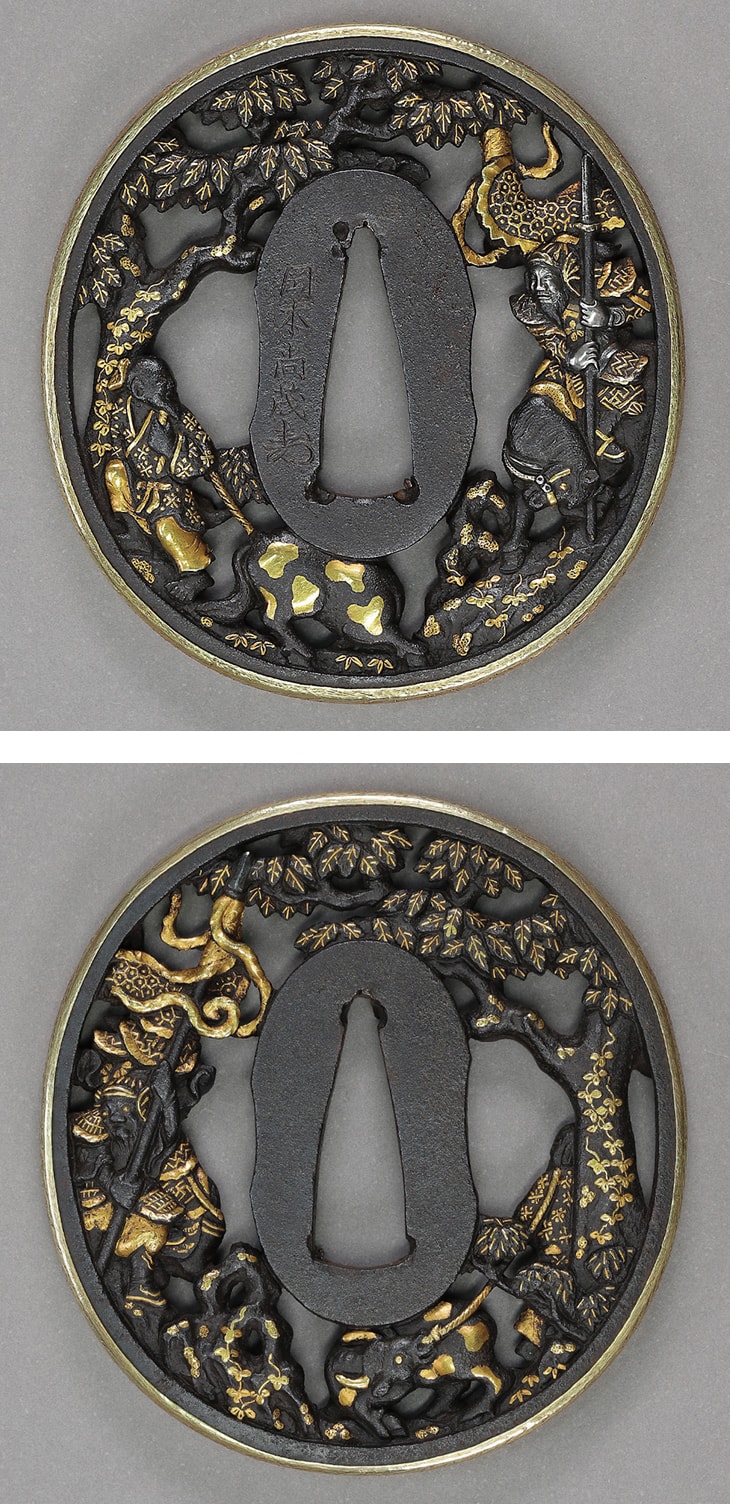
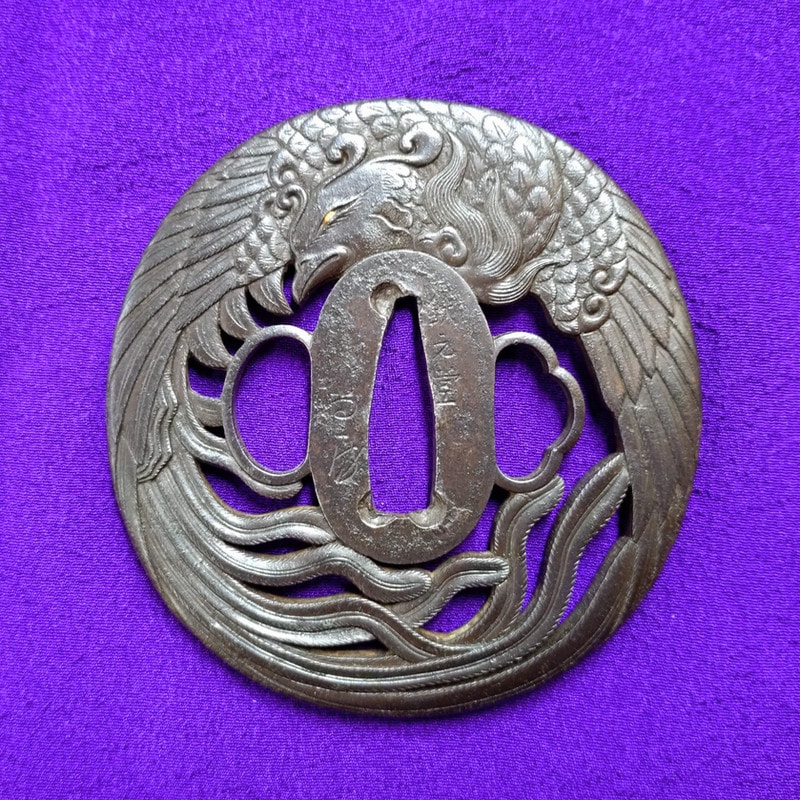
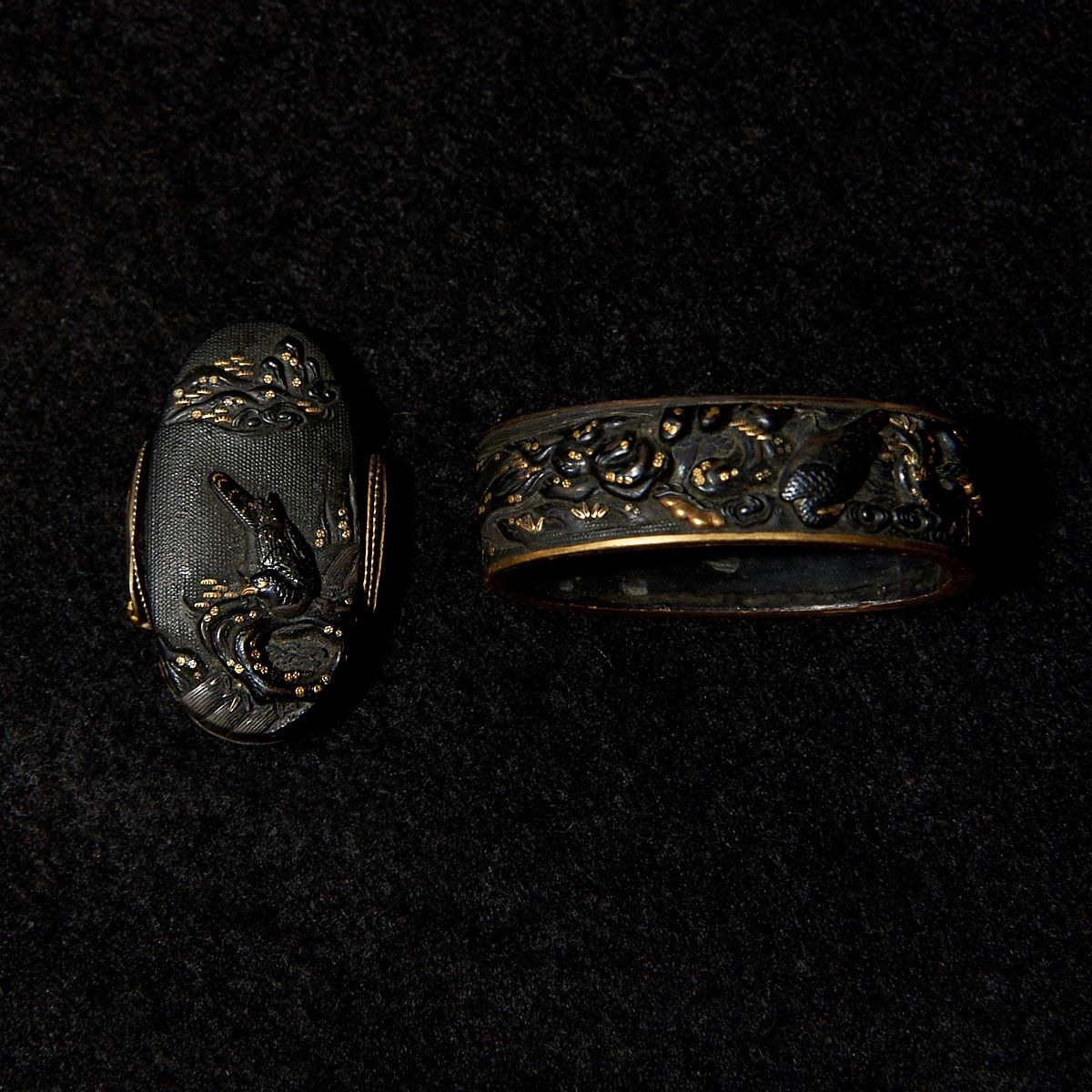
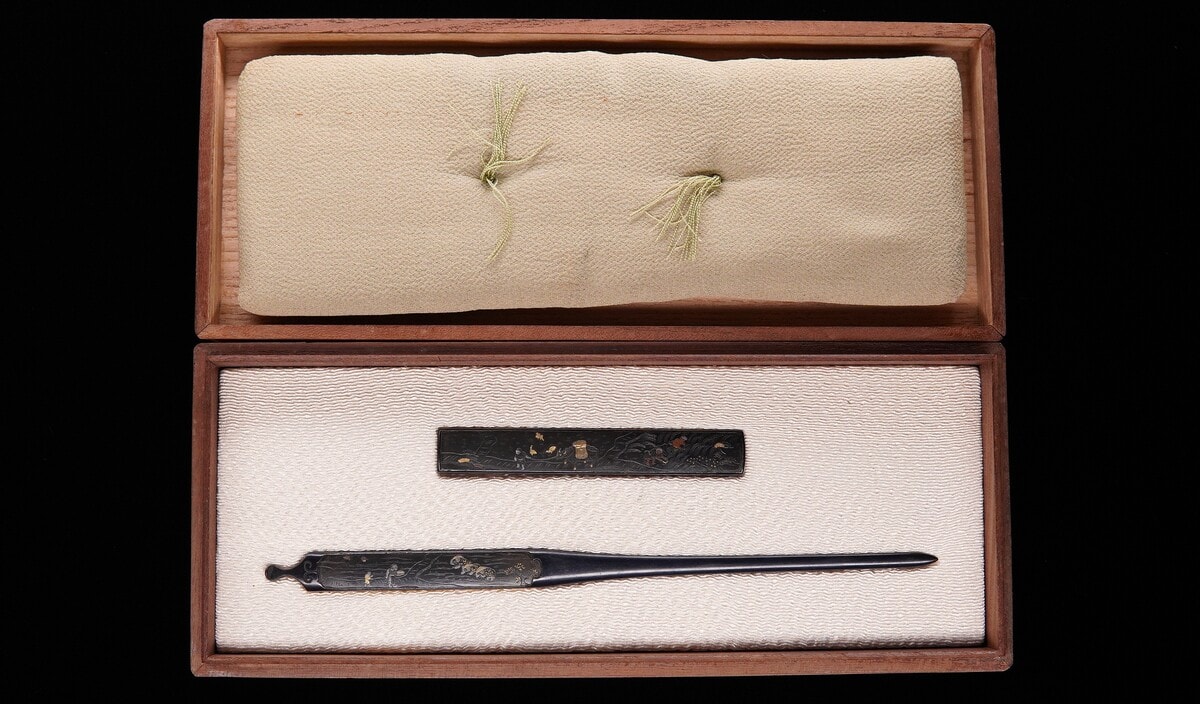
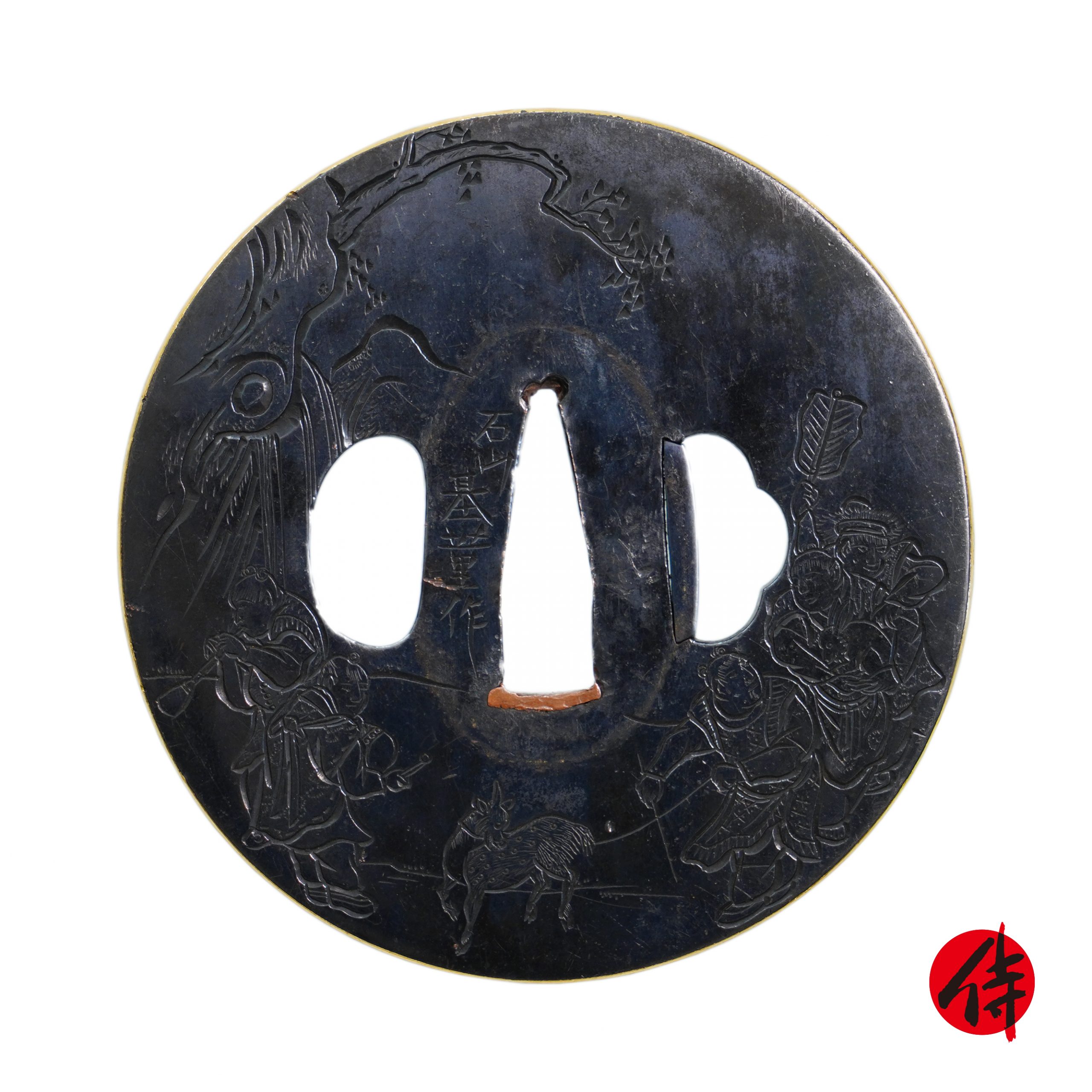
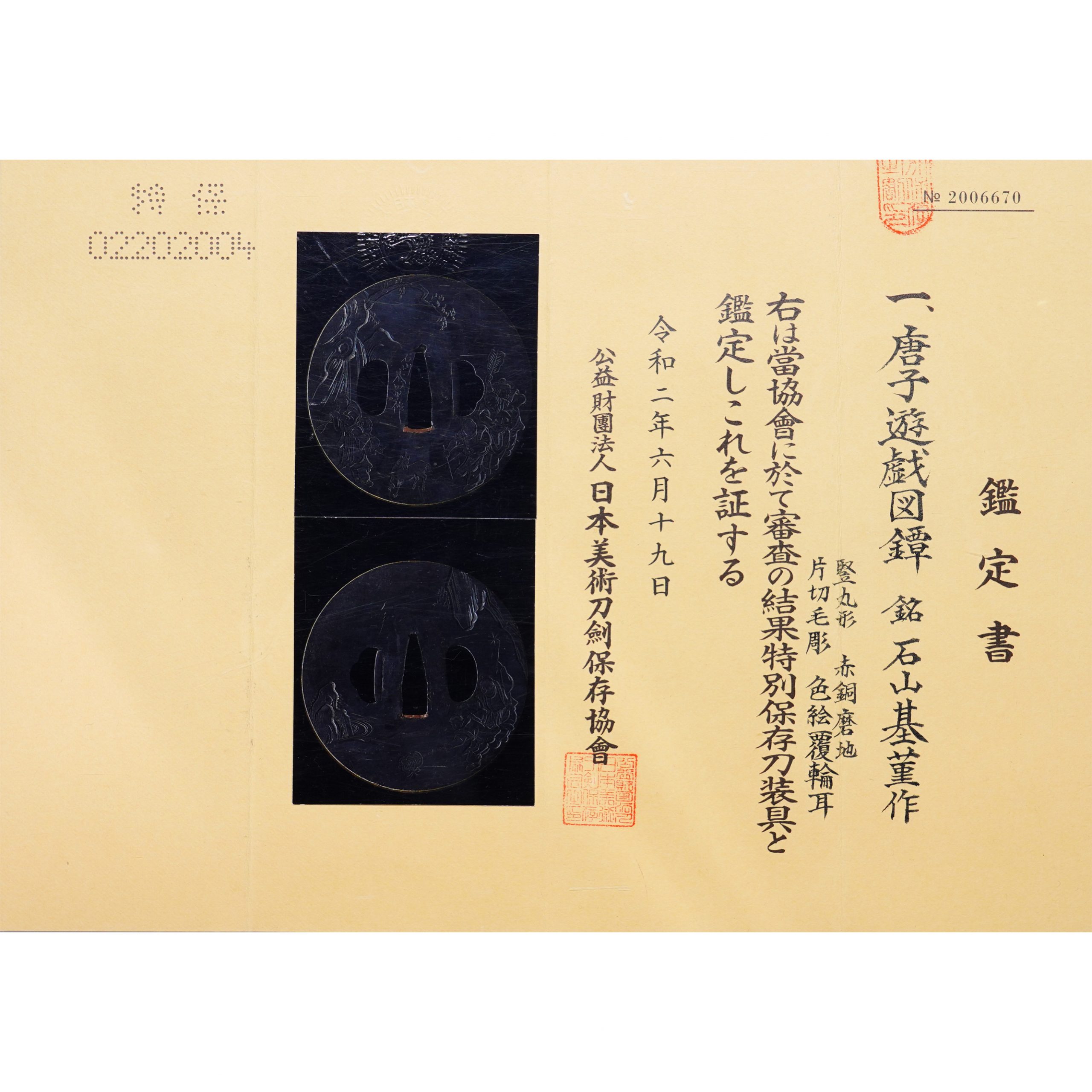
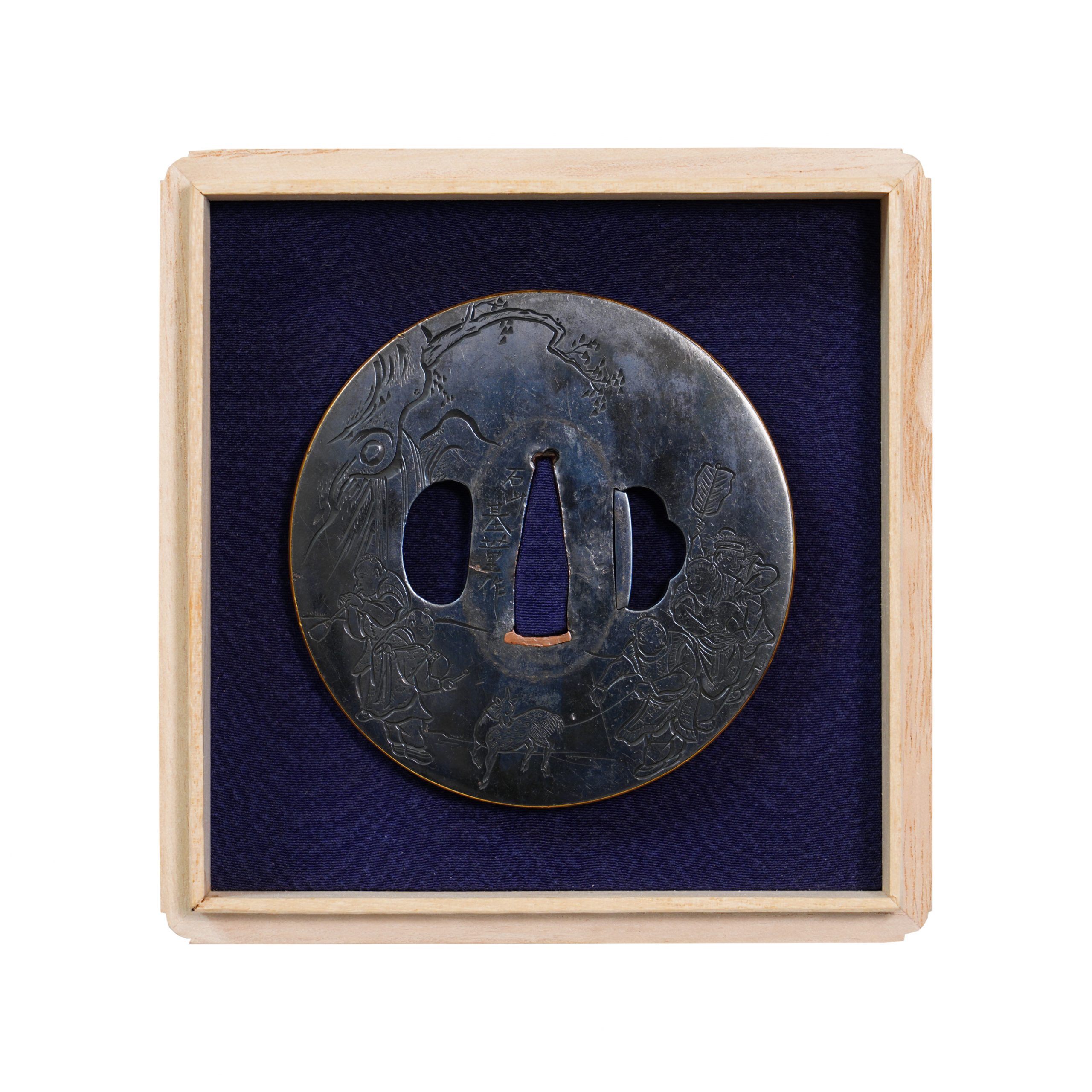
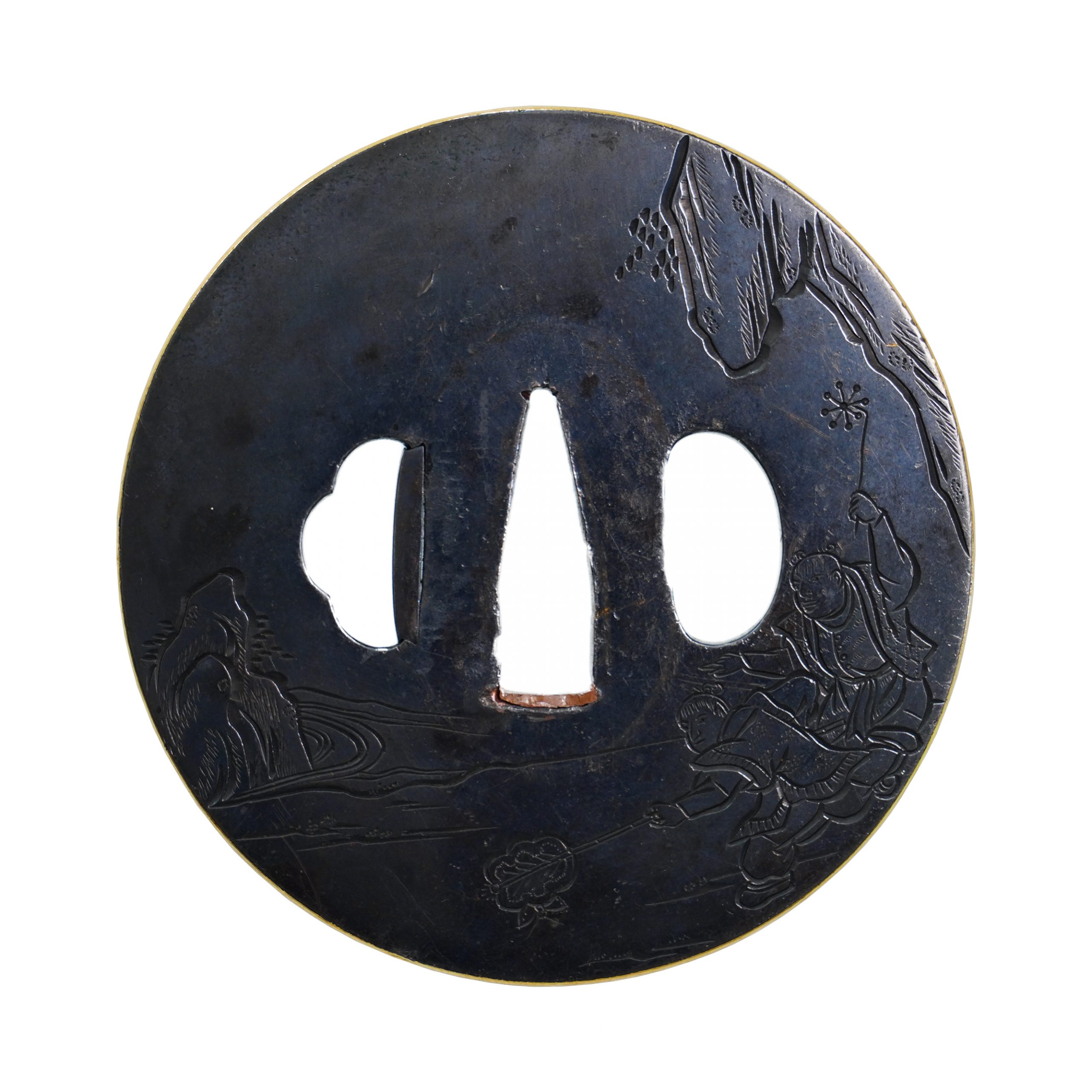
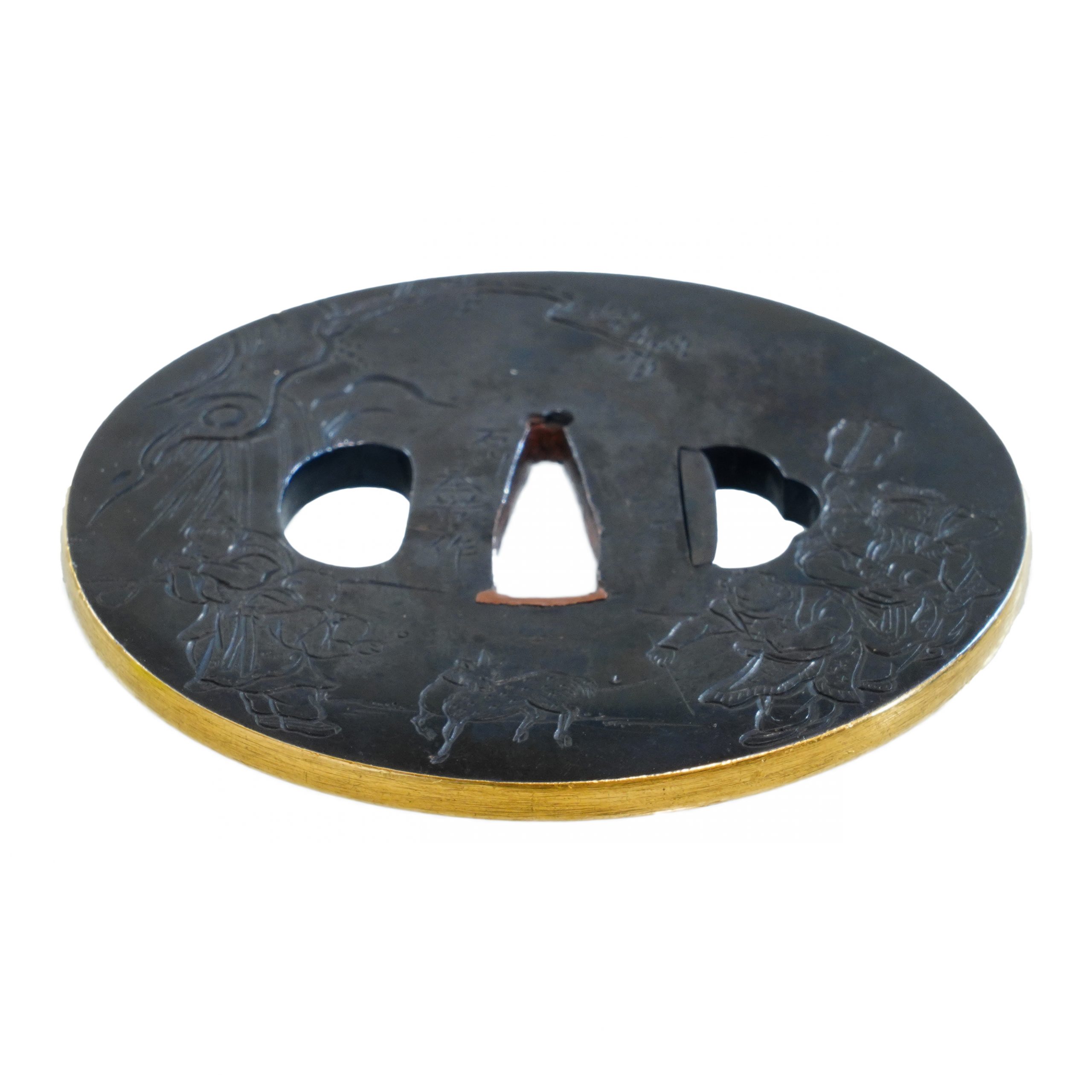
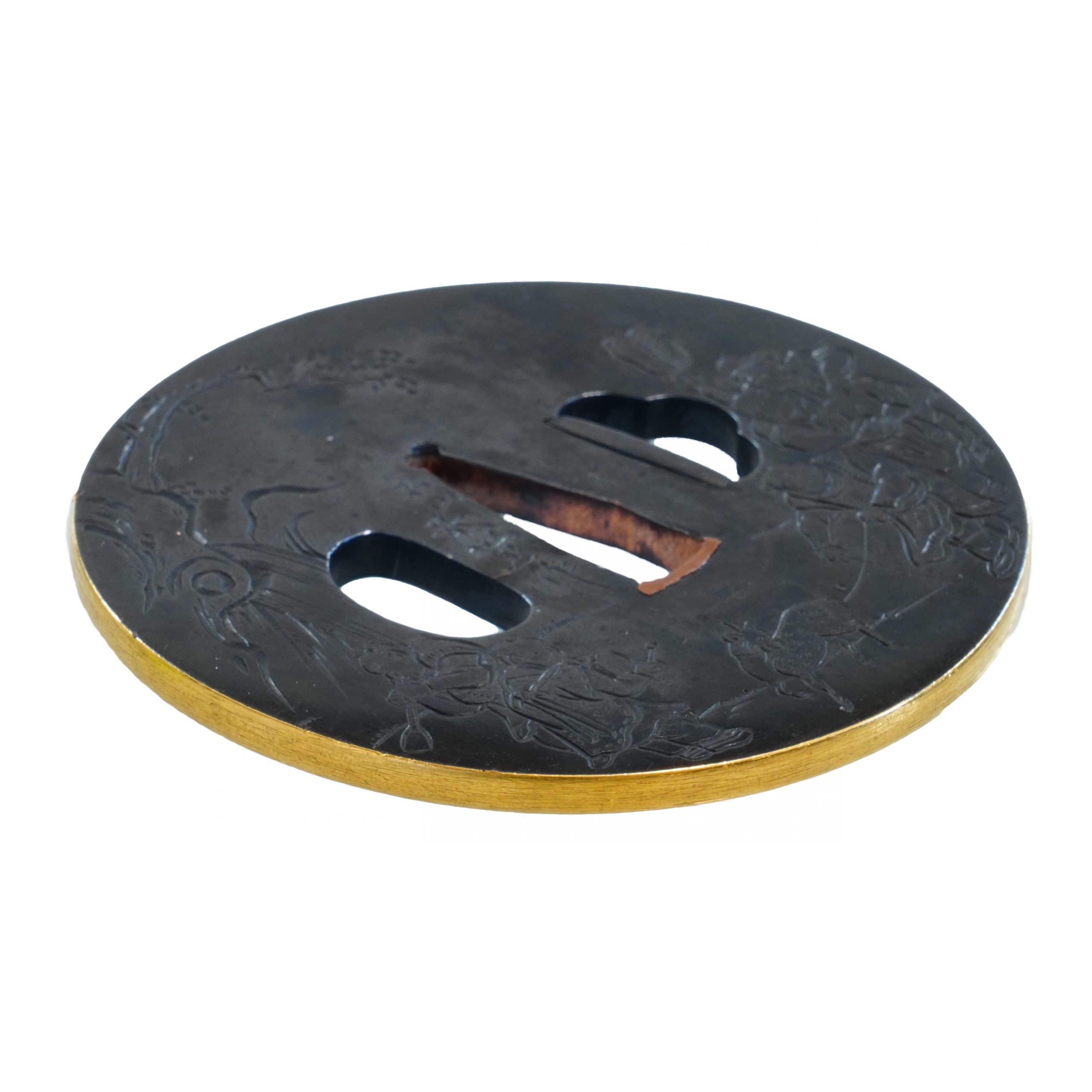
Title: Karako Yugi Zu Description Oval-shaped Tsuba made from Shakudou (赤銅). It is an alloy of copper and gold. Due to the characteristics of the material (easiness of processing), adhesiveness, ease of plating, and the beauty of black coloring. As Shakudou is made from copper and a small quantity of Shirome (しろめ, an alloy of tin and lead), and gold, Shakudou Tsuba has an elegant black color. That is why this material is also called Karasu (烏銅, Shakudou’s black color is likened to crow. Crow is called Karasu in Japanese). This Tsuba’s Mimi (耳, edge of Tsuba) is covered with gold-colored metal. This decorative covering technique is called Fukurin (覆輪). It gives a gorgeous look to this work. Furthermore, it has a practical use, such as preventing the wear of the edge part. Also, it prevents the wear and tear of the Kimono if the edge damages it by touching the cloth. The theme of this Tsuba is Karako Yugi Zu (唐子遊戯図). Karako means a child who has a Chinese hairstyle or fashion. Alternatively, it represents the baby’s hairstyle in the Edo period: leaves a little hair on the left and right of the head and shaves the others. In this Tsuba, the former meaning applies. Some children are running around with an animal, and others enjoy playing musical instruments such as flute and drum. The maker’s high-quality carving technique brilliantly expresses the vivid appearance of children who are playing around in nature. This Tsuba is recognized by The Society for Preservation of Japanese Art Swords, which is known as NBTHK. According to its certificate, this Tsuba’s maker is Ishiyama Mototada (石山 基菫). He lived in Kyoto prefecture. A theory says Mototada did well in the almost same era as Hosono Masamori (細野 政守), who was also working as a metalworker in Kyoto. Masamori was good at portraying the scenery of the city of Kyoto with detailed sculptural techniques. Mototada was good at depicting landscapes that seems suburb of Kyoto with the combination of Hira-Zougan (平象嵌, a type of inlay technique) and Kebori (毛彫, a type of linear carving expression). Therefore, it is considered that Masamori inspired the style of Mototada. *As this item is an antique, please check each photo and ensure its condition. What is Tsuba? Tsuba is the hand-guard of the Japanese sword. High-class Samurai wore his katana sword with its beautiful sword mountings such as Tsuba. Tsuba’s front design tends to be more decorative as this part was often seen by other Samurais when he was walking on the streets. Why is it that the sword mounting was important for Samurai? The sword mountings of the Japanese sword have many kinds of decorations such as handguards (Tsuba), sword hilt (Menuki), pommel (Fuchi Kashira). The Japanese sword worked as a weapon and as an object to show who he was. For example, it shows their personalities and beliefs. You could say that it is like decorations for smartphones today. We recommend you zoom in on the pictures of the sword fittings. When you do so, you can see the skill of Japanese metal engraving techniques. They are mainly made of iron and copper with inlays of gold, silver, and bronze. When it comes to handguard (Tsuba), each one has a different outline and weight. These sword fittings that have lived with Japanese swords of the same age might be worth as much as the Japanese swords. They are inconspicuous parts of the Japanese sword. Nevertheless, if you are knowledgeable or particular about it, you will become a connoisseur of the Samurai. Authentication Paper : NBTHK Tokubetsu Hozon Certificate NBTHK , also known as Nihon Bijutsu Touken Hozon Kyokai (the Society for the Preservation of the Japan Art Sword), is one of the oldest Japanese sword appraising organizations in modern-day Japan. They authenticated the Tsuba on Jun 19th in the second year of Reiwa (2020). They appraised it as Tokubetsu Hozon Tousougu, the Tsuba worth preserving for Japanese society. The purchaser will receive this original certificate as well. We can also tran
 NihontoWatch
在銘 · 江戸
町彫 · 山城
現在1点販売中
町彫 · 山城
現在25点販売中
鉄元堂は京都に拠点を置いた町彫金工の一派であり、江戸時代中期に岡本源兵衛敏行によって創始された。初代は鉄屋伝兵衛国治に師事し、工名を尚茂と称した。後年入道剃髪して正楽の号を用いた。安永九年(一七八〇)に没。一宮長常・大月光興と共に「京都金工の三傑」に数えられる高名な金工である。正楽には初・二代があり、宝暦から寛政にかけて活躍したとされ、二代は尚房の名で作品を遺している。この京都金工の圏域には、二条に住した細野惣左衛門政守——元禄三年や享保三年の年紀作が遺る——や、後藤就乗門下の山崎一賀(仁左衛門、同名数代あり)も含まれ、それぞれ独自の作風を展開した。 鉄元堂の作風を最も特徴づけるのは、鉄の圧倒的な掌握力である。説示に繰り返し「主として鉄を用い、鉄を巧みにこなす作者として定評が高い」[[c:2]]「鉄を自由にこなす」[[c:3]]「鉄を扱わせれば追随を許さない」[[c:4]]と記されるように、鉄地の扱いにおいて比類なき名声を得た。正楽は鉄磨地あるいは石目地を基調とし、鋤出から高彫に連繋する彫法によって作品に深みと量感を与える。要所には金・銀・赤銅・四分一・素銅・真鍮といった色金の象嵌色絵を丹念に施し、「難儀といわれる鉄への色金象嵌」[[c:5]]を綿密な出来映えに仕上げる技は「鉄元堂にして成し得る」[[c:6]]と称される独壇場であった。題材は写生に基づく人物図を最も得意とし、夕立人物図は「最も得意とした画題」[[c:7]]として同図の作品が数多く知られる。韃靼人と洋犬の異国情緒ある図、南蛮人図、帰樵図、還城楽図、風神大仏図など、力強い鏨力と豊かな動勢をもって描出されている。一方、細野政守は四分一や赤銅の地金に毛彫・片切彫と各種色金の平象嵌を駆使し、京の町の賑やかさや農作業の風景を画面一杯に展開する独自の細密画世界を築いた。山崎一賀は後藤家の作風を踏襲しつつも彫・色絵に濃やかさを加え、赤銅魚子地に高彫色絵の格調高い作品を制作した。 鉄元堂は京都町彫金工のなかでも鉄物の上手として独自の地位を占める。初代正楽の鐔は「地鉄もしっとりとした潤いを見せ」[[c:8]]「流石に鉄元堂にして成しえる出来映え」[[c:9]]と評され、鉄地の質感から象嵌に至るまで一貫して卓抜した技量を示す。夕立図では大小の鐔と縁頭に種々の場景を配して物語的な展開を見せ、韃靼人図では天明二年の年紀を有する作品が初・二代の研究において「資料的にも価値が高い」[[c:10]]と注記される。草摺曳図目貫に見られる金と赤銅の芋継地という古風な造込みは、後藤祐乗を意識した古雅な作風をも正楽が自在にこなしたことを示す。鐔が初代、小柄が二代という大小揃の存在は、「鉄物の上手、象嵌技術にも秀れると定評通りの作風」[[c:11]]が世代を超えて継承されたことの証左である。細野政守の農作業図鐔は「画面からは諸々の作業音とともに人々の会話が聞きとれそうである」[[c:12]]と讃えられる代表作であり、山崎一賀の淀城水車図揃金具は金の色絵を多用した「豪華絢爛な作風」を示す。こうした多彩な個性を擁する京都金工の一群として、鉄元堂の系譜は刀装具史において独自の位置を占めている。 詳しく見る →
保存刀装具のうち、出来・保存状態が一層優れ、銘文や作風に資料的価値の高いものと認められたものです。
日本美術刀剣保存協会(NBTHK)は、1948年に設立され、文化庁の監督を受ける公益財団法人で、東京・刀剣博物館に本部を置きます。専門の審査員が出品作を直接審査し、美術的・歴史的価値に応じた鑑定書を発行します。NBTHKの鑑定書は、日本刀および刀装具の真正性を示す最も広く認知された基準です。
NBTHK公式サイトReturns/exchanges limited to defects caused by shipping (except willful misconduct or gross negligence by the company); customers must contact within 72 hours of receiving the product.
Title: Karako Yugi Zu Description Oval-shaped Tsuba made from Shakudou (赤銅). It is an alloy of copper and gold. Due to the characteristics of the material (easiness of processing), adhesiveness, ease of plating, and the beauty of black coloring. As Shakudou is made from copper and a small quantity of Shirome (しろめ, an alloy of tin and lead), and gold, Shakudou Tsuba has an elegant black color. That is why this material is also called Karasu (烏銅, Shakudou’s black color is likened to crow. Crow is called Karasu in Japanese). This Tsuba’s Mimi (耳, edge of Tsuba) is covered with gold-colored metal. This decorative covering technique is called Fukurin (覆輪). It gives a gorgeous look to this work. Furthermore, it has a practical use, such as preventing the wear of the edge part. Also, it prevents the wear and tear of the Kimono if the edge damages it by touching the cloth. The theme of this Tsuba is Karako Yugi Zu (唐子遊戯図). Karako means a child who has a Chinese hairstyle or fashion. Alternatively, it represents the baby’s hairstyle in the Edo period: leaves a little hair on the left and right of the head and shaves the others. In this Tsuba, the former meaning applies. Some children are running around with an animal, and others enjoy playing musical instruments such as flute and drum. The maker’s high-quality carving technique brilliantly expresses the vivid appearance of children who are playing around in nature. This Tsuba is recognized by The Society for Preservation of Japanese Art Swords, which is known as NBTHK. According to its certificate, this Tsuba’s maker is Ishiyama Mototada (石山 基菫). He lived in Kyoto prefecture. A theory says Mototada did well in the almost same era as Hosono Masamori (細野 政守), who was also working as a metalworker in Kyoto. Masamori was good at portraying the scenery of the city of Kyoto with detailed sculptural techniques. Mototada was good at depicting landscapes that seems suburb of Kyoto with the combination of Hira-Zougan (平象嵌, a type of inlay technique) and Kebori (毛彫, a type of linear carving expression). Therefore, it is considered that Masamori inspired the style of Mototada. *As this item is an antique, please check each photo and ensure its condition. What is Tsuba? Tsuba is the hand-guard of the Japanese sword. High-class Samurai wore his katana sword with its beautiful sword mountings such as Tsuba. Tsuba’s front design tends to be more decorative as this part was often seen by other Samurais when he was walking on the streets. Why is it that the sword mounting was important for Samurai? The sword mountings of the Japanese sword have many kinds of decorations such as handguards (Tsuba), sword hilt (Menuki), pommel (Fuchi Kashira). The Japanese sword worked as a weapon and as an object to show who he was. For example, it shows their personalities and beliefs. You could say that it is like decorations for smartphones today. We recommend you zoom in on the pictures of the sword fittings. When you do so, you can see the skill of Japanese metal engraving techniques. They are mainly made of iron and copper with inlays of gold, silver, and bronze. When it comes to handguard (Tsuba), each one has a different outline and weight. These sword fittings that have lived with Japanese swords of the same age might be worth as much as the Japanese swords. They are inconspicuous parts of the Japanese sword. Nevertheless, if you are knowledgeable or particular about it, you will become a connoisseur of the Samurai. Authentication Paper : NBTHK Tokubetsu Hozon Certificate NBTHK , also known as Nihon Bijutsu Touken Hozon Kyokai (the Society for the Preservation of the Japan Art Sword), is one of the oldest Japanese sword appraising organizations in modern-day Japan. They authenticated the Tsuba on Jun 19th in the second year of Reiwa (2020). They appraised it as Tokubetsu Hozon Tousougu, the Tsuba worth preserving for Japanese society. The purchaser will receive this original certificate as well. We can also tran
NihontoWatch在銘 · 江戸
町彫 · 山城
現在1点販売中
町彫 · 山城
現在25点販売中
鉄元堂は京都に拠点を置いた町彫金工の一派であり、江戸時代中期に岡本源兵衛敏行によって創始された。初代は鉄屋伝兵衛国治に師事し、工名を尚茂と称した。後年入道剃髪して正楽の号を用いた。安永九年(一七八〇)に没。一宮長常・大月光興と共に「京都金工の三傑」に数えられる高名な金工である。正楽には初・二代があり、宝暦から寛政にかけて活躍したとされ、二代は尚房の名で作品を遺している。この京都金工の圏域には、二条に住した細野惣左衛門政守——元禄三年や享保三年の年紀作が遺る——や、後藤就乗門下の山崎一賀(仁左衛門、同名数代あり)も含まれ、それぞれ独自の作風を展開した。 鉄元堂の作風を最も特徴づけるのは、鉄の圧倒的な掌握力である。説示に繰り返し「主として鉄を用い、鉄を巧みにこなす作者として定評が高い」[[c:2]]「鉄を自由にこなす」[[c:3]]「鉄を扱わせれば追随を許さない」[[c:4]]と記されるように、鉄地の扱いにおいて比類なき名声を得た。正楽は鉄磨地あるいは石目地を基調とし、鋤出から高彫に連繋する彫法によって作品に深みと量感を与える。要所には金・銀・赤銅・四分一・素銅・真鍮といった色金の象嵌色絵を丹念に施し、「難儀といわれる鉄への色金象嵌」[[c:5]]を綿密な出来映えに仕上げる技は「鉄元堂にして成し得る」[[c:6]]と称される独壇場であった。題材は写生に基づく人物図を最も得意とし、夕立人物図は「最も得意とした画題」[[c:7]]として同図の作品が数多く知られる。韃靼人と洋犬の異国情緒ある図、南蛮人図、帰樵図、還城楽図、風神大仏図など、力強い鏨力と豊かな動勢をもって描出されている。一方、細野政守は四分一や赤銅の地金に毛彫・片切彫と各種色金の平象嵌を駆使し、京の町の賑やかさや農作業の風景を画面一杯に展開する独自の細密画世界を築いた。山崎一賀は後藤家の作風を踏襲しつつも彫・色絵に濃やかさを加え、赤銅魚子地に高彫色絵の格調高い作品を制作した。 鉄元堂は京都町彫金工のなかでも鉄物の上手として独自の地位を占める。初代正楽の鐔は「地鉄もしっとりとした潤いを見せ」[[c:8]]「流石に鉄元堂にして成しえる出来映え」[[c:9]]と評され、鉄地の質感から象嵌に至るまで一貫して卓抜した技量を示す。夕立図では大小の鐔と縁頭に種々の場景を配して物語的な展開を見せ、韃靼人図では天明二年の年紀を有する作品が初・二代の研究において「資料的にも価値が高い」[[c:10]]と注記される。草摺曳図目貫に見られる金と赤銅の芋継地という古風な造込みは、後藤祐乗を意識した古雅な作風をも正楽が自在にこなしたことを示す。鐔が初代、小柄が二代という大小揃の存在は、「鉄物の上手、象嵌技術にも秀れると定評通りの作風」[[c:11]]が世代を超えて継承されたことの証左である。細野政守の農作業図鐔は「画面からは諸々の作業音とともに人々の会話が聞きとれそうである」[[c:12]]と讃えられる代表作であり、山崎一賀の淀城水車図揃金具は金の色絵を多用した「豪華絢爛な作風」を示す。こうした多彩な個性を擁する京都金工の一群として、鉄元堂の系譜は刀装具史において独自の位置を占めている。 詳しく見る →
保存刀装具のうち、出来・保存状態が一層優れ、銘文や作風に資料的価値の高いものと認められたものです。
日本美術刀剣保存協会(NBTHK)は、1948年に設立され、文化庁の監督を受ける公益財団法人で、東京・刀剣博物館に本部を置きます。専門の審査員が出品作を直接審査し、美術的・歴史的価値に応じた鑑定書を発行します。NBTHKの鑑定書は、日本刀および刀装具の真正性を示す最も広く認知された基準です。
NBTHK公式サイトReturns/exchanges limited to defects caused by shipping (except willful misconduct or gross negligence by the company); customers must contact within 72 hours of receiving the product.