NihontoWatch MonNihontoWatch
マーケット
事典
鑑定
NihontoWatch MonNihontoWatch
マーケット
事典
鑑定

説明

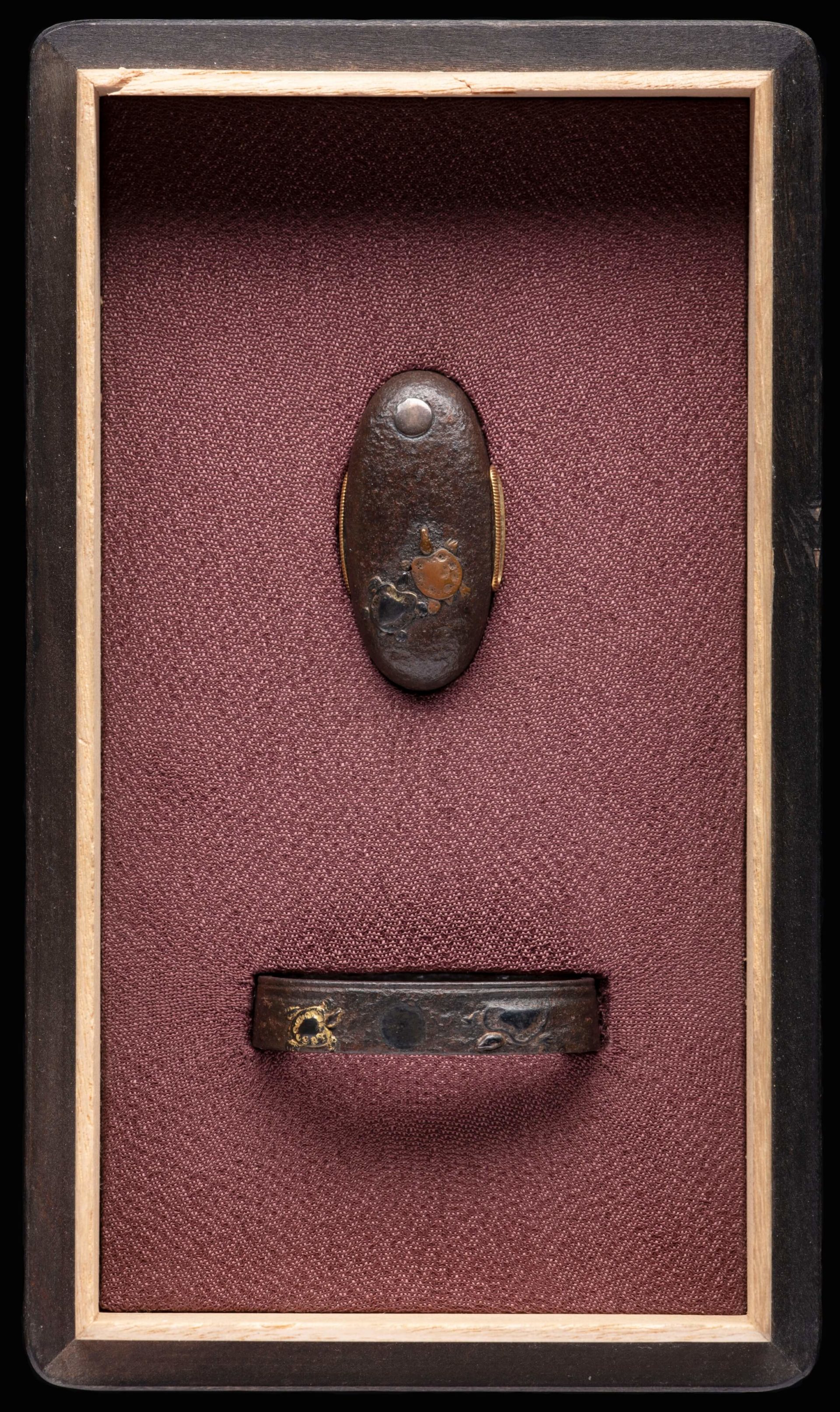
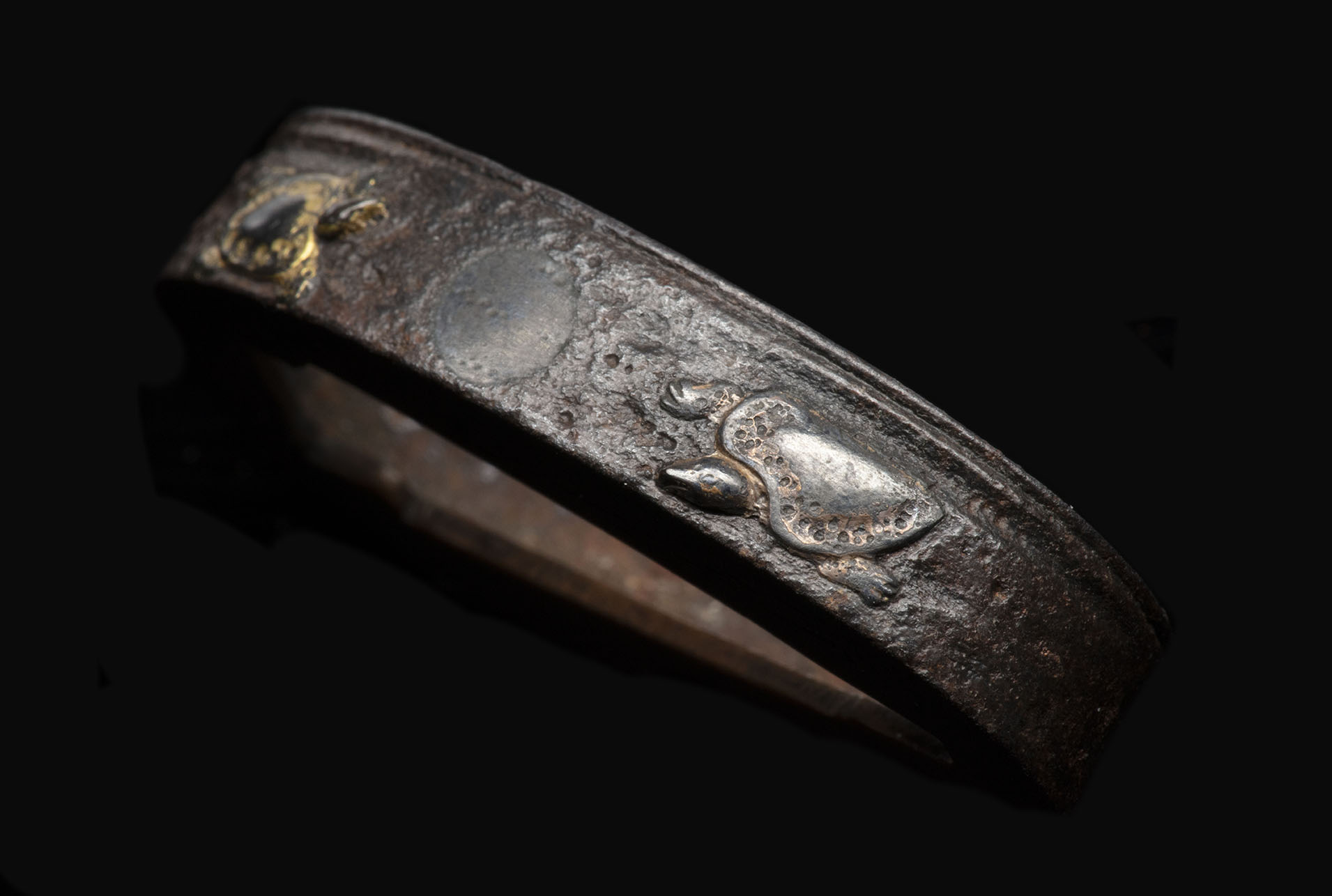
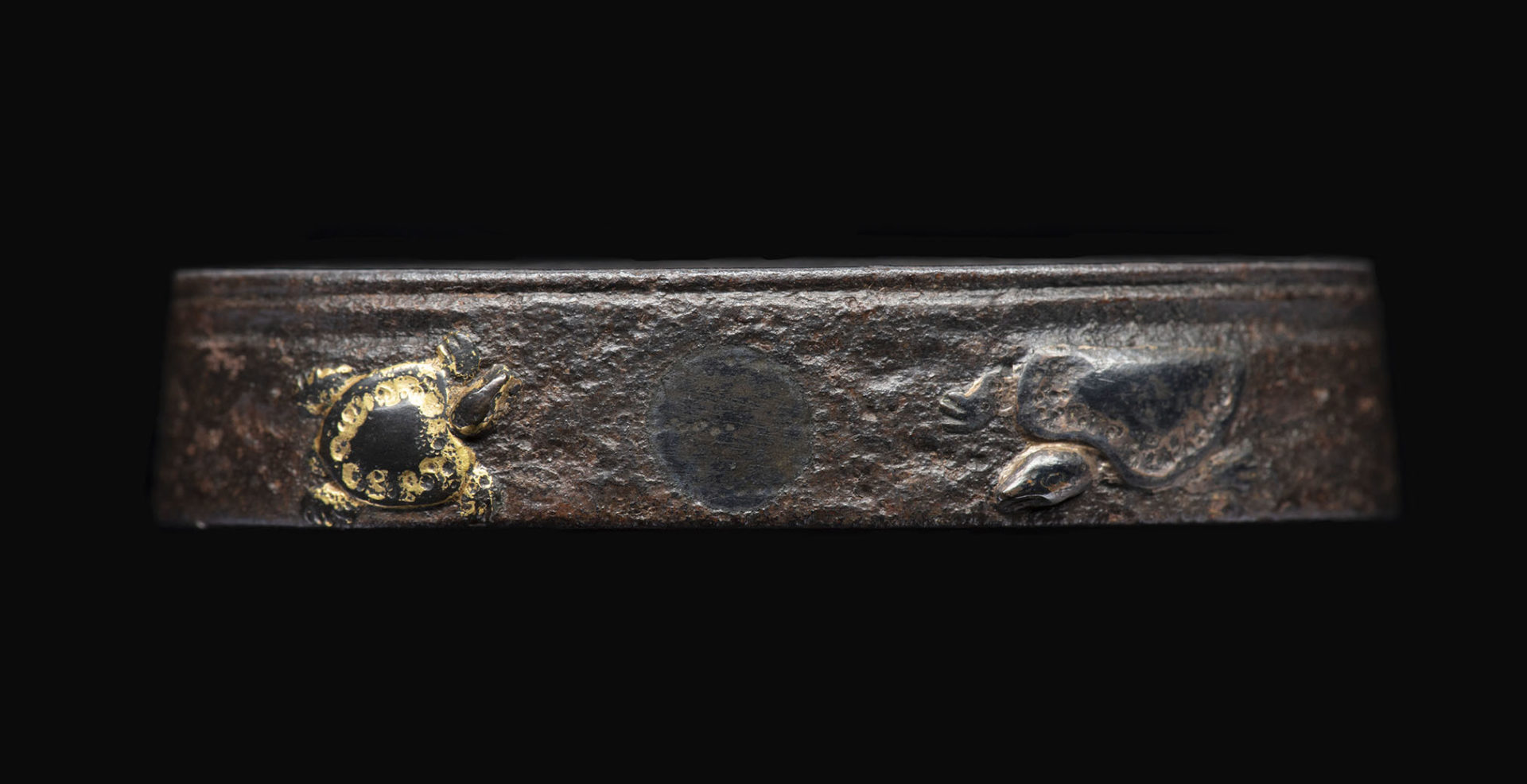
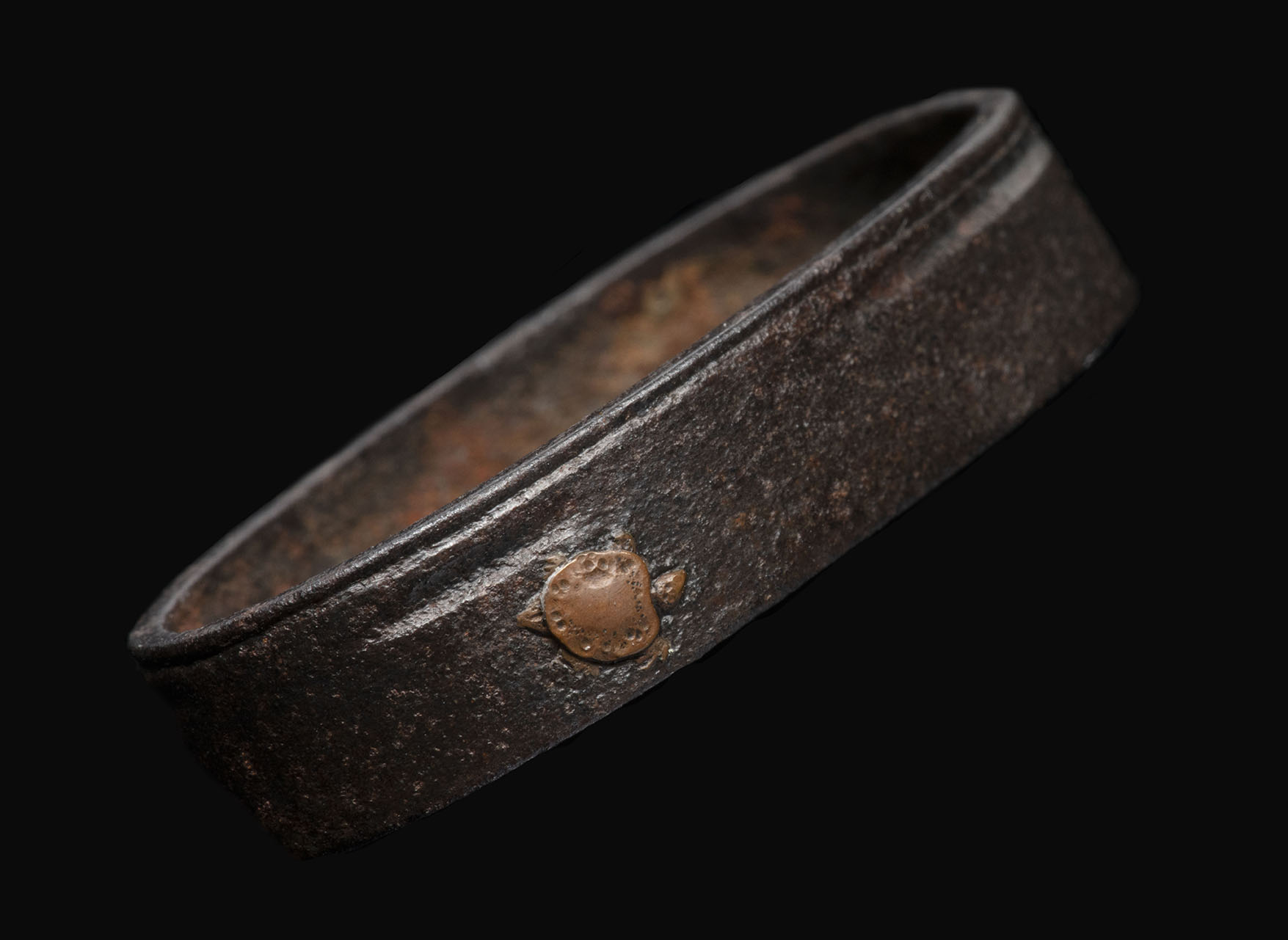
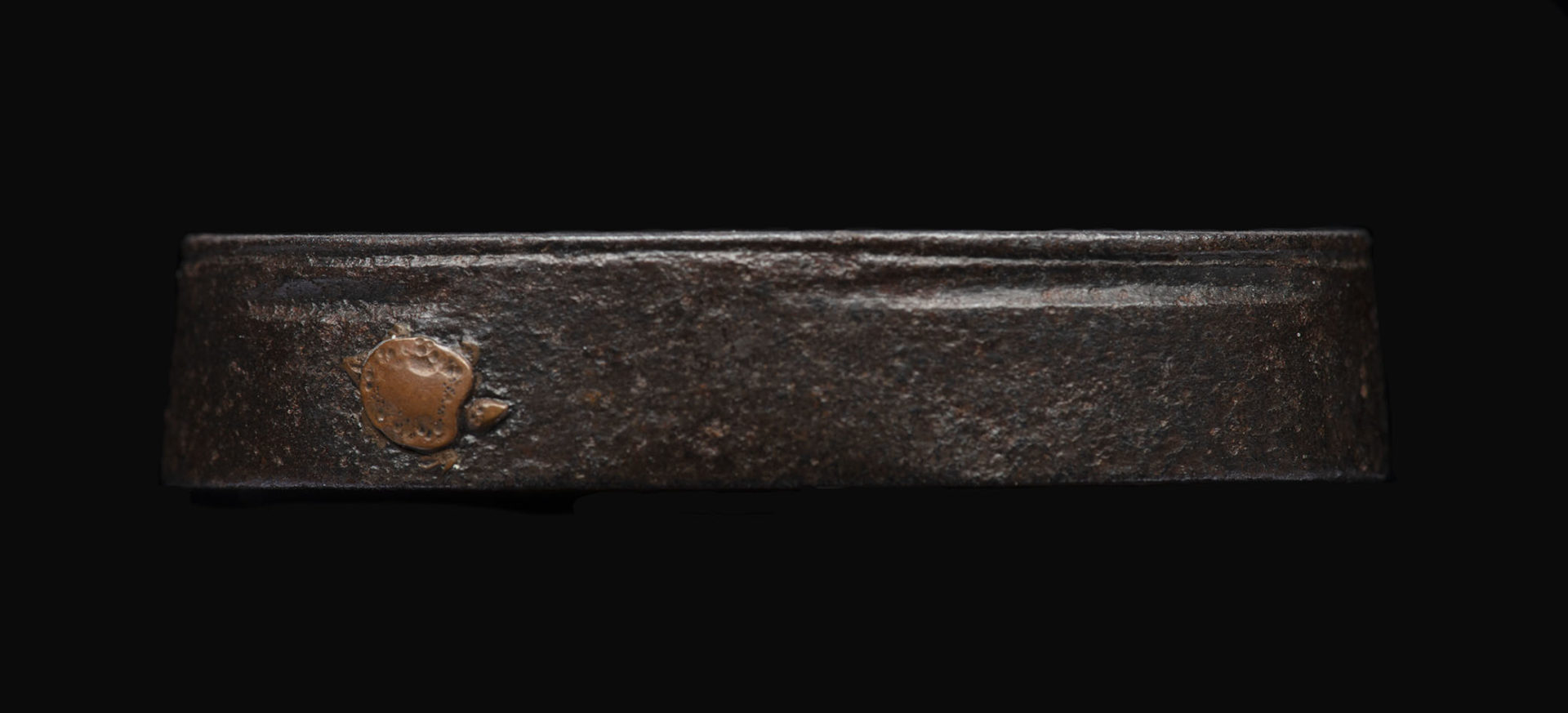
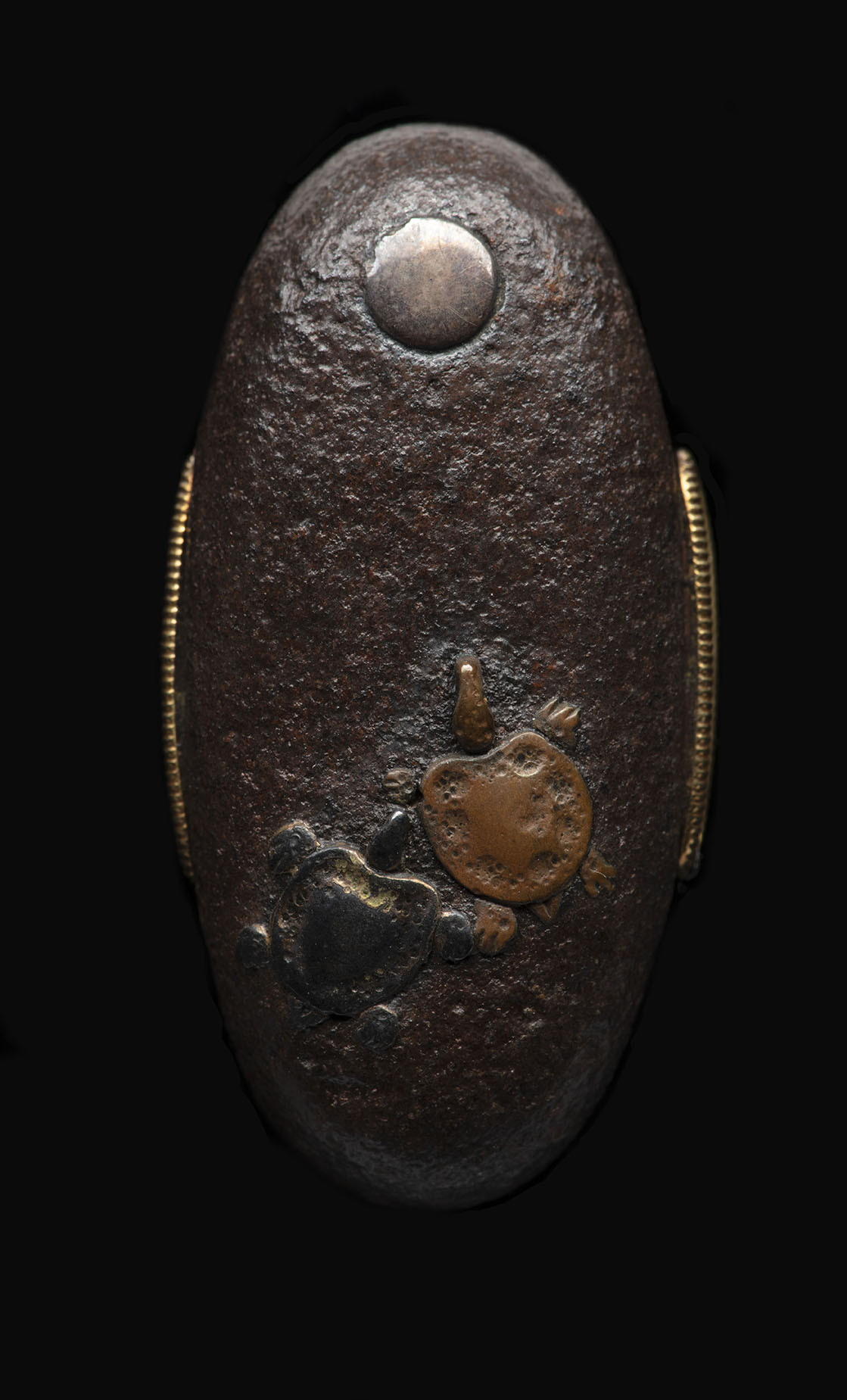
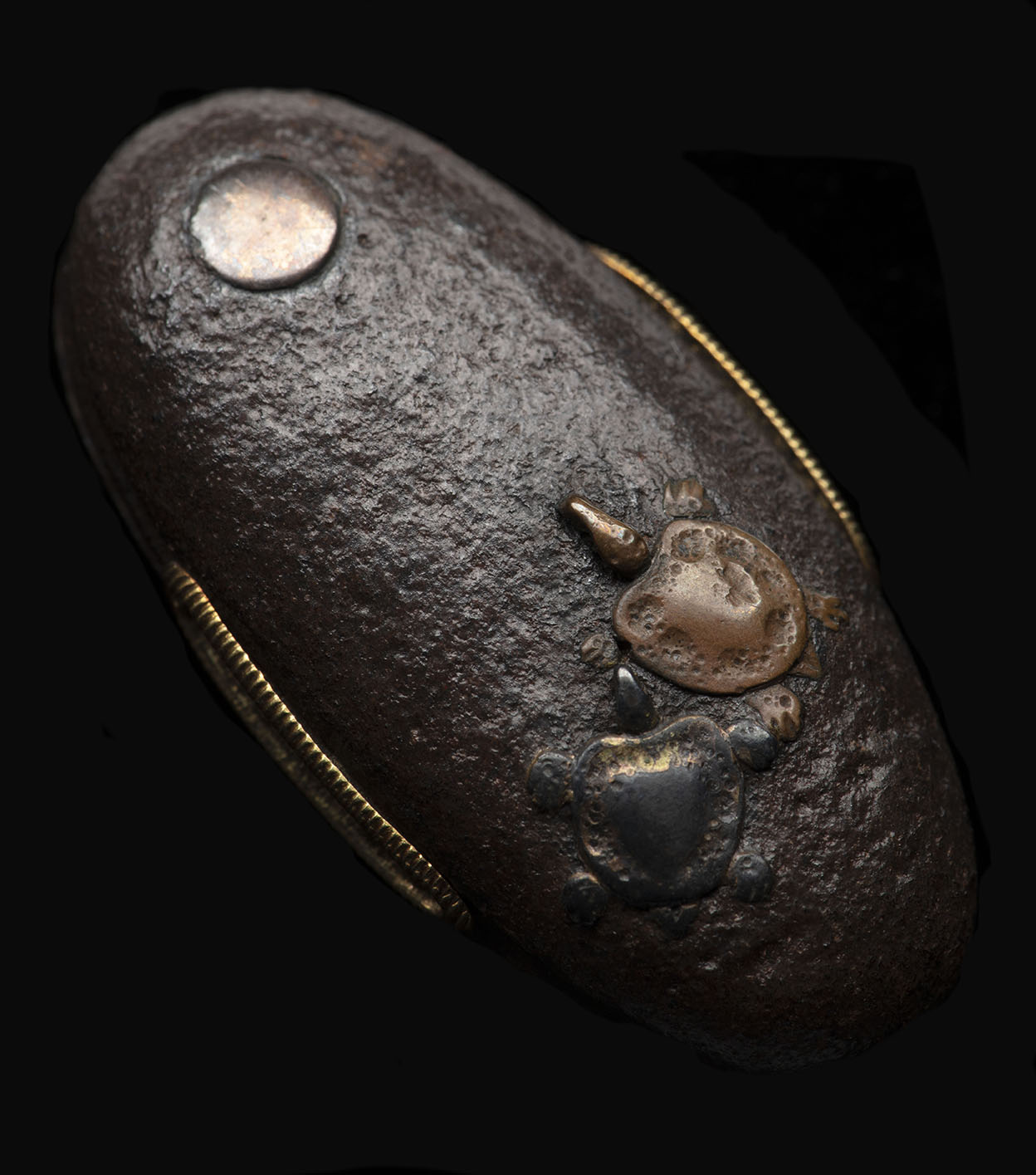
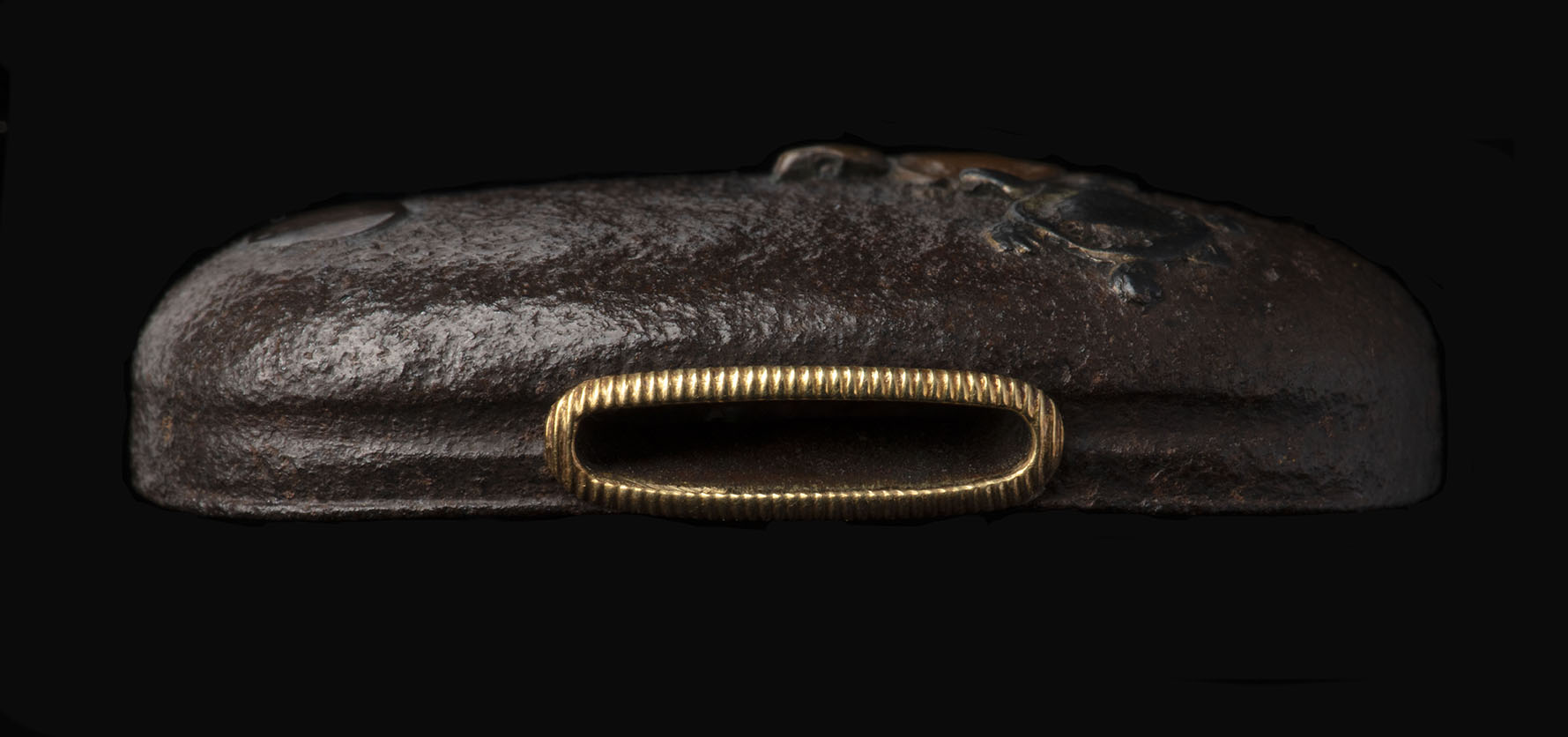
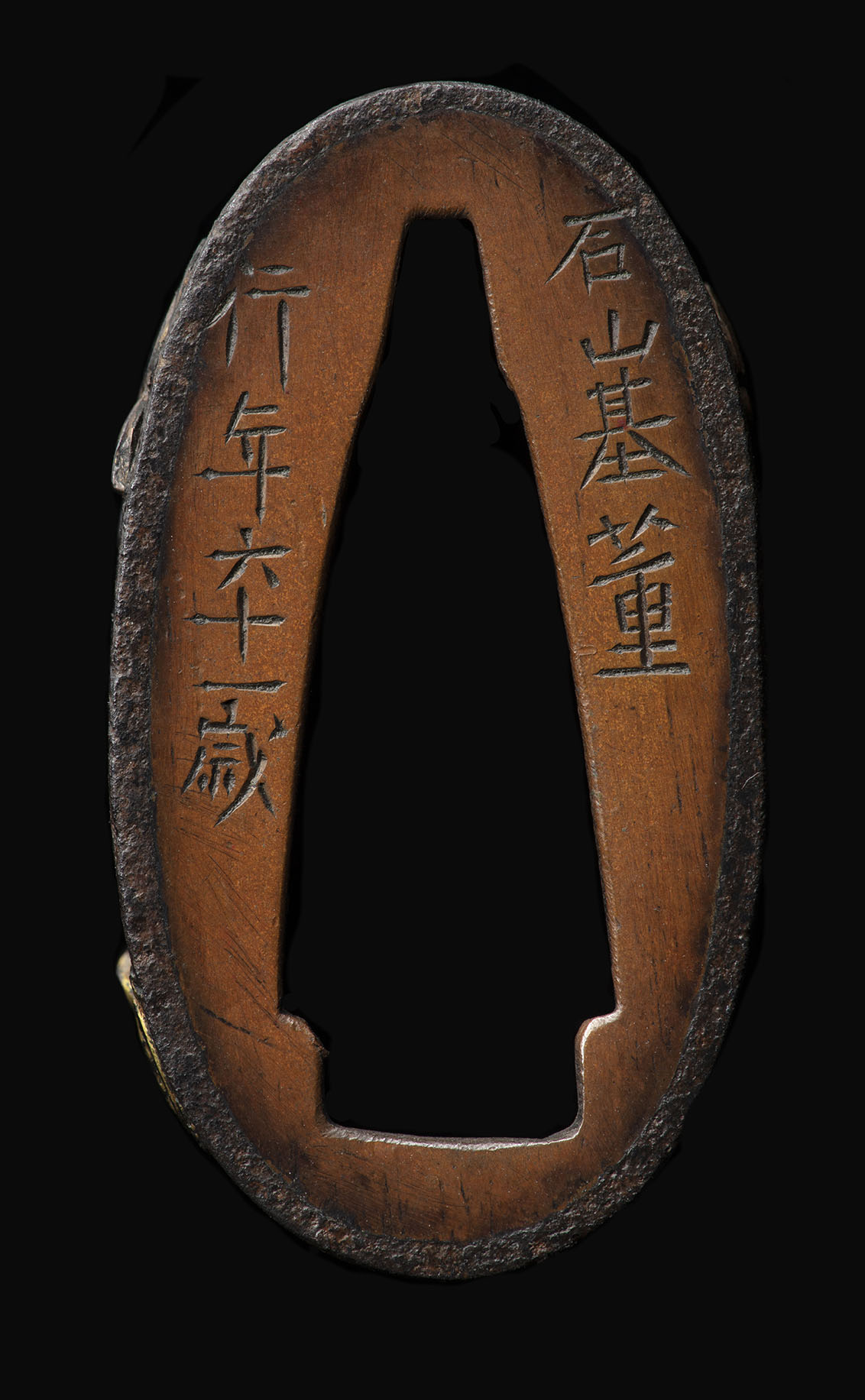
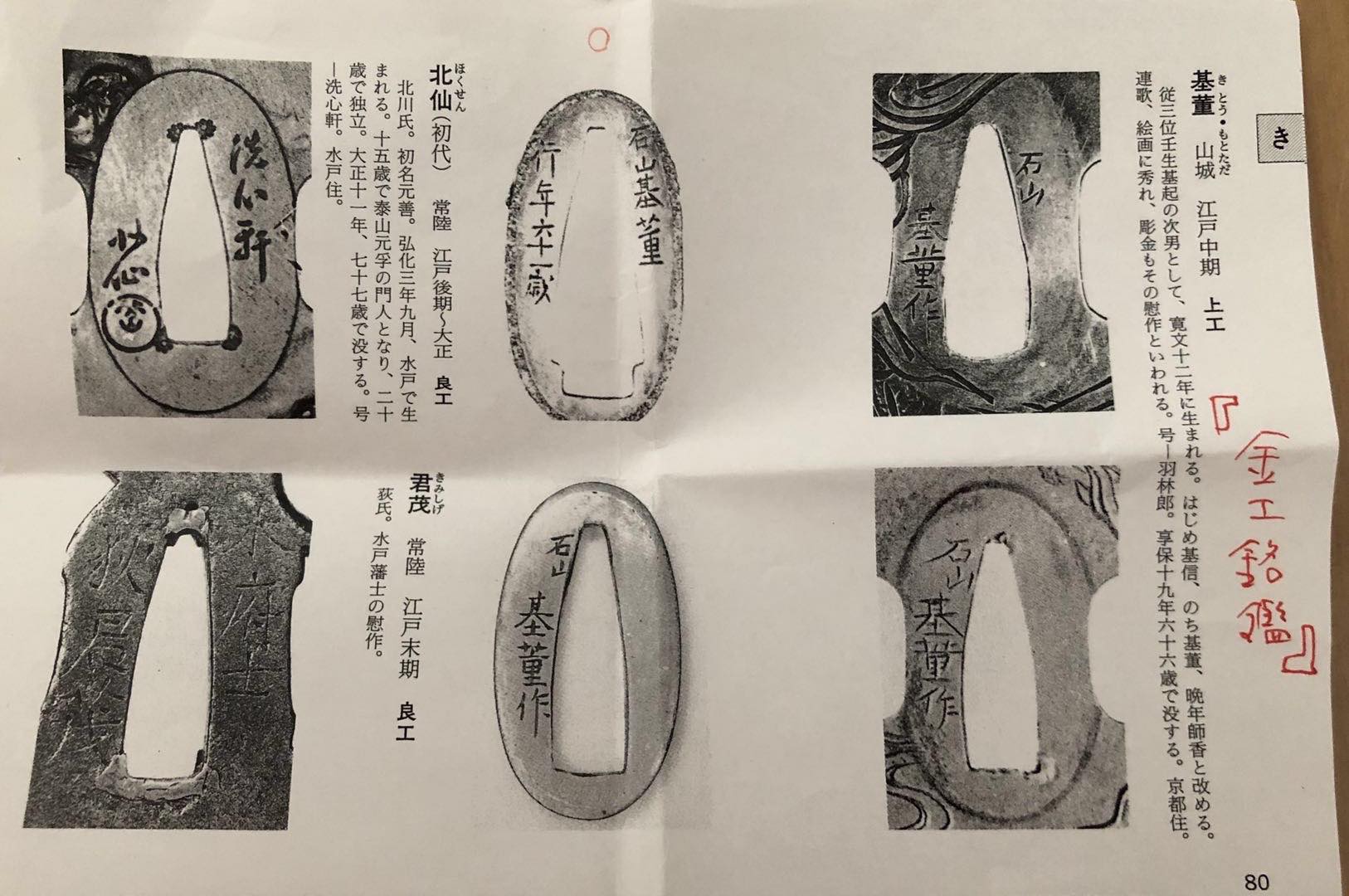
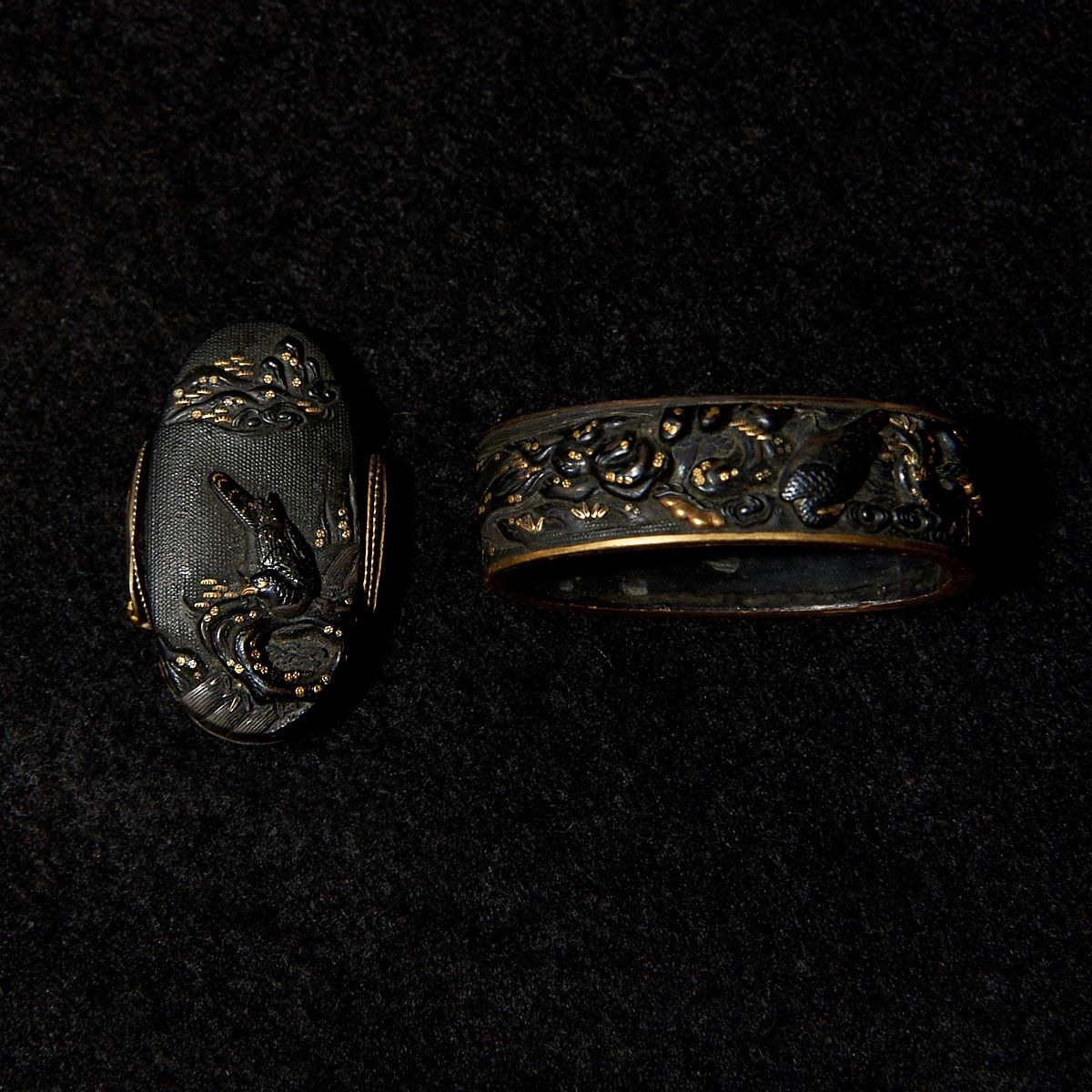
Fuchi Kashira Set by Ishiyama Mototada Ishiyama Mototada was born into the noble Mibu family in 1669. The Mibu family held a family court name of Urin. His father was Mibu Motooki whom held a third court rank. Mototada’s given name was Moroka, and he was listed as holding a second court rank. Mototada was also the founder of the Ishiyama branch, a painter, lacquer artist, calligrapher, and poet. His training in fittings craft was likely within the Goto family. He died in 1734 at the age of 66. Extant works by Mototada vary in materials, themes, and techniques, which would seem natural as a person of varied interests and talents. There are tsuba in copper and shakudo carved with floral and insect motifs, and other fuchigashira in shakudo and gold with nanako that point strongly to Goto influences. The design and composition of this set would seem a departure from his other extant works, and moving toward the wabi sabi aesthetic that was popular in Mototada’s time and would have been ubiquitous in the surrounding arts he took part in. Of particular interest is the incorporation of the turtles. Turtles are relatively common in Japanese arts as they were firmly embraced from Chinese mythology as representatives of longevity, fortune, protection, the direction of North, unification of heavy and earth, and more. However the tortoise (or turtle) most often seen in Japanese arts is the “Minogame” which is a hardshell turtle old enough that the moss has collected on the back and trailing edge of its shell so that it fans out and streams behind it while swimming. However, a close look at the tortoises on this set of fuchigashira clearly shows that they are soft shell turtles (Trionychidae) having elongated snouts, flatter and smoother shells with a dished rim, and three clawed toes on each foot. I have never seen another set of fittings with this type of turtle chosen for the subject. They are shown looking and moving toward a full moon, on both the fuchi and the kashira, and

NihontoWatch MonNihontoWatch
MarketEncyclopediaKantei
刀装具›鉄元堂›元董›Fuchi Kashira Set by Ishiyama Mototada
縁頭
元董

Fuchi Kashira Set by Ishiyama Mototada

在銘 · Goto · 江戸

売却済
元董 · Goto · 江戸販売中 1点 →
縁頭
刀身だけで刀工を見抜けますか? 本日の鑑定 →
元董 — 1 of 10
元董 — 2 of 10
元董 — 3 of 10
元董 — 4 of 10
元董 — 5 of 10
元董 — 6 of 10
元董 — 7 of 10
元董 — 8 of 10
元董 — 9 of 10
元董 — 10 of 10
1 / 10
1 / 10
元董 — 1 of 10元董 — 2 of 10元董 — 3 of 10元董 — 4 of 10元董 — 5 of 10元董 — 6 of 10元董 — 7 of 10元董 — 8 of 10元董 — 9 of 10元董 — 10 of 10
元董 · Goto · 江戸販売中 1点 →
縁頭
刀身だけで刀工を見抜けますか? 本日の鑑定 →
法量・詳細
刀工

後藤

時代

江戸

銘

在銘

説明

Fuchi Kashira Set by Ishiyama Mototada Ishiyama Mototada was born into the noble Mibu family in 1669. The Mibu family held a family court name of Urin. His father was Mibu Motooki whom held a third court rank. Mototada’s given name was Moroka, and he was listed as holding a second court rank. Mototada was also the founder of the Ishiyama branch, a painter, lacquer artist, calligrapher, and poet. His training in fittings craft was likely within the Goto family. He died in 1734 at the age of 66. Extant works by Mototada vary in materials, themes, and techniques, which would seem natural as a person of varied interests and talents. There are tsuba in copper and shakudo carved with floral and insect motifs, and other fuchigashira in shakudo and gold with nanako that point strongly to Goto influences. The design and composition of this set would seem a departure from his other extant works, and moving toward the wabi sabi aesthetic that was popular in Mototada’s time and would have been ubiquitous in the surrounding arts he took part in. Of particular interest is the incorporation of the turtles. Turtles are relatively common in Japanese arts as they were firmly embraced from Chinese mythology as representatives of longevity, fortune, protection, the direction of North, unification of heavy and earth, and more. However the tortoise (or turtle) most often seen in Japanese arts is the “Minogame” which is a hardshell turtle old enough that the moss has collected on the back and trailing edge of its shell so that it fans out and streams behind it while swimming. However, a close look at the tortoises on this set of fuchigashira clearly shows that they are soft shell turtles (Trionychidae) having elongated snouts, flatter and smoother shells with a dished rim, and three clawed toes on each foot. I have never seen another set of fittings with this type of turtle chosen for the subject. They are shown looking and moving toward a full moon, on both the fuchi and the kashira, and

作者について

元董

町彫 · 山城

現在1点販売中

›
元董の作 1点が現在販売中→
元董 — 詳細町彫派

この作者について学ぶ →

流派について

鉄元堂

町彫 · 山城

現在25点販売中

›

鉄元堂は京都に拠点を置いた町彫金工の一派であり、江戸時代中期に岡本源兵衛敏行によって創始された。初代は鉄屋伝兵衛国治に師事し、工名を尚茂と称した。後年入道剃髪して正楽の号を用いた。安永九年(一七八〇)に没。一宮長常・大月光興と共に「京都金工の三傑」に数えられる高名な金工である。正楽には初・二代があり、宝暦から寛政にかけて活躍したとされ、二代は尚房の名で作品を遺している。この京都金工の圏域には、二条に住した細野惣左衛門政守——元禄三年や享保三年の年紀作が遺る——や、後藤就乗門下の山崎一賀(仁左衛門、同名数代あり)も含まれ、それぞれ独自の作風を展開した。 鉄元堂の作風を最も特徴づけるのは、鉄の圧倒的な掌握力である。説示に繰り返し「主として鉄を用い、鉄を巧みにこなす作者として定評が高い」[[c:2]]「鉄を自由にこなす」[[c:3]]「鉄を扱わせれば追随を許さない」[[c:4]]と記されるように、鉄地の扱いにおいて比類なき名声を得た。正楽は鉄磨地あるいは石目地を基調とし、鋤出から高彫に連繋する彫法によって作品に深みと量感を与える。要所には金・銀・赤銅・四分一・素銅・真鍮といった色金の象嵌色絵を丹念に施し、「難儀といわれる鉄への色金象嵌」[[c:5]]を綿密な出来映えに仕上げる技は「鉄元堂にして成し得る」[[c:6]]と称される独壇場であった。題材は写生に基づく人物図を最も得意とし、夕立人物図は「最も得意とした画題」[[c:7]]として同図の作品が数多く知られる。韃靼人と洋犬の異国情緒ある図、南蛮人図、帰樵図、還城楽図、風神大仏図など、力強い鏨力と豊かな動勢をもって描出されている。一方、細野政守は四分一や赤銅の地金に毛彫・片切彫と各種色金の平象嵌を駆使し、京の町の賑やかさや農作業の風景を画面一杯に展開する独自の細密画世界を築いた。山崎一賀は後藤家の作風を踏襲しつつも彫・色絵に濃やかさを加え、赤銅魚子地に高彫色絵の格調高い作品を制作した。 鉄元堂は京都町彫金工のなかでも鉄物の上手として独自の地位を占める。初代正楽の鐔は「地鉄もしっとりとした潤いを見せ」[[c:8]]「流石に鉄元堂にして成しえる出来映え」[[c:9]]と評され、鉄地の質感から象嵌に至るまで一貫して卓抜した技量を示す。夕立図では大小の鐔と縁頭に種々の場景を配して物語的な展開を見せ、韃靼人図では天明二年の年紀を有する作品が初・二代の研究において「資料的にも価値が高い」[[c:10]]と注記される。草摺曳図目貫に見られる金と赤銅の芋継地という古風な造込みは、後藤祐乗を意識した古雅な作風をも正楽が自在にこなしたことを示す。鐔が初代、小柄が二代という大小揃の存在は、「鉄物の上手、象嵌技術にも秀れると定評通りの作風」[[c:11]]が世代を超えて継承されたことの証左である。細野政守の農作業図鐔は「画面からは諸々の作業音とともに人々の会話が聞きとれそうである」[[c:12]]と讃えられる代表作であり、山崎一賀の淀城水車図揃金具は金の色絵を多用した「豪華絢爛な作風」を示す。こうした多彩な個性を擁する京都金工の一群として、鉄元堂の系譜は刀装具史において独自の位置を占めている。 詳しく見る →

4名の刀工指定20口
主要刀工
刀工時代指定
正楽—13
山﨑一賀—3
栄寿—0
尚房江戸2
武禅—0
鉄元堂流派を見る →
ご注意 — 鑑定書が見つかりません

販売店の出品ページで鑑定書を確認できませんでした。日本刀および刀装具は通常、NBTHK(または NTHK)の鑑定を受けます。鑑定書がない場合、極めは販売店の見解にとどまり、第三者による確認は行われていません。ご購入前に販売店へ鑑定書の有無をお問い合わせのうえ、慎重にご判断ください。
販売店
L
Legacy Swords
創業 1996年 · 業歴30年
🇺🇸アメリカから発送
›
✓認証販売店legacyswords.com
Legacy Swordsの出品一覧を見る→販売店サイトでこの商品を見る→

元董の他の作

すべて見る →
銀座盛光堂
特別保存
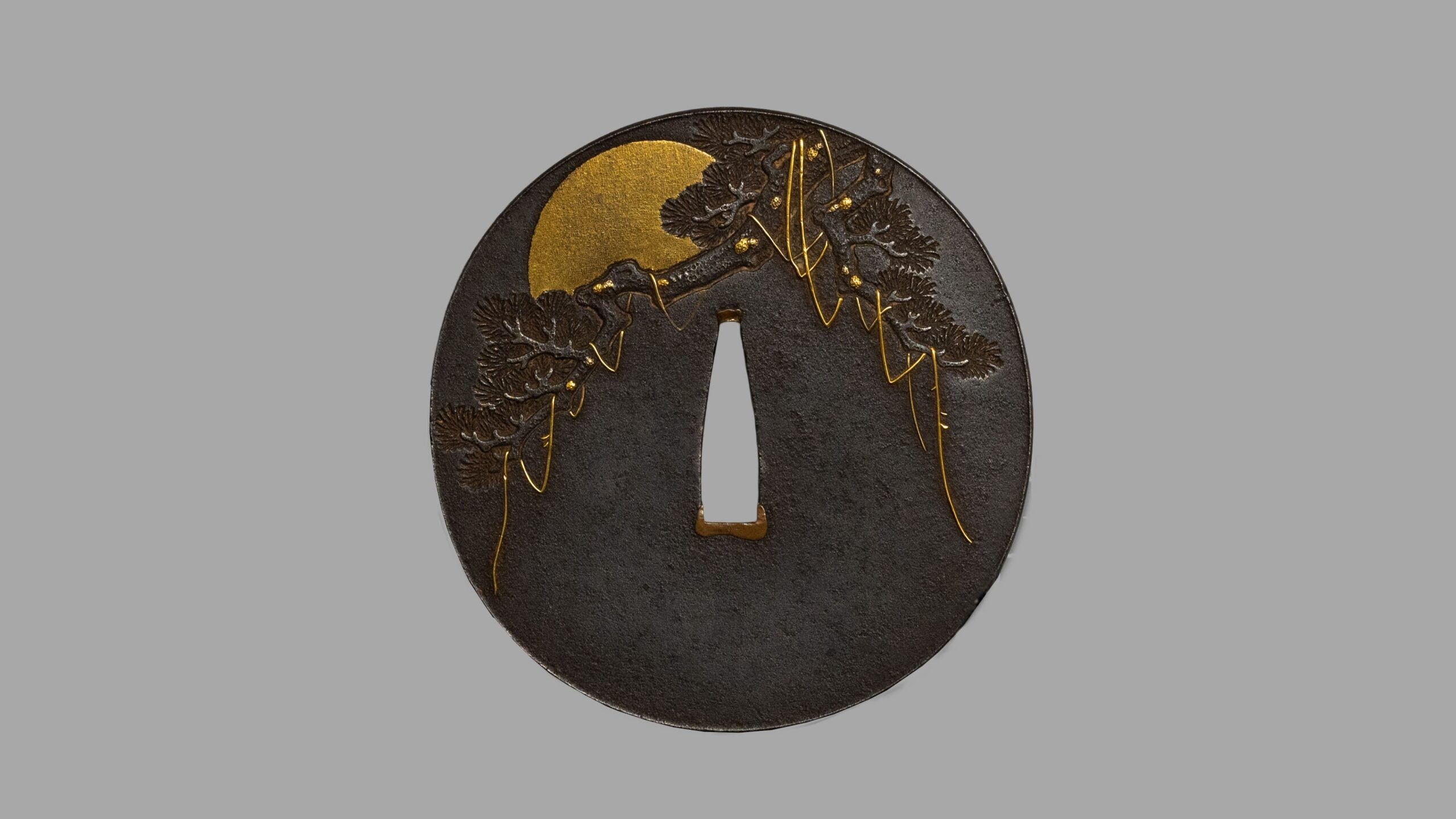
Tsuba - Tokuho - by Tetsugendo Mototada - 赤城軒泰山元忠(印) 松に旭日図Tsuba - Tokuho - by Tetsugendo Mototada - 赤城軒泰山元忠(印) 松に旭日図

鍔

作元董
江戸
¥600,000

元董の売約済み

すべて見る →
サムライミュージアム
保存
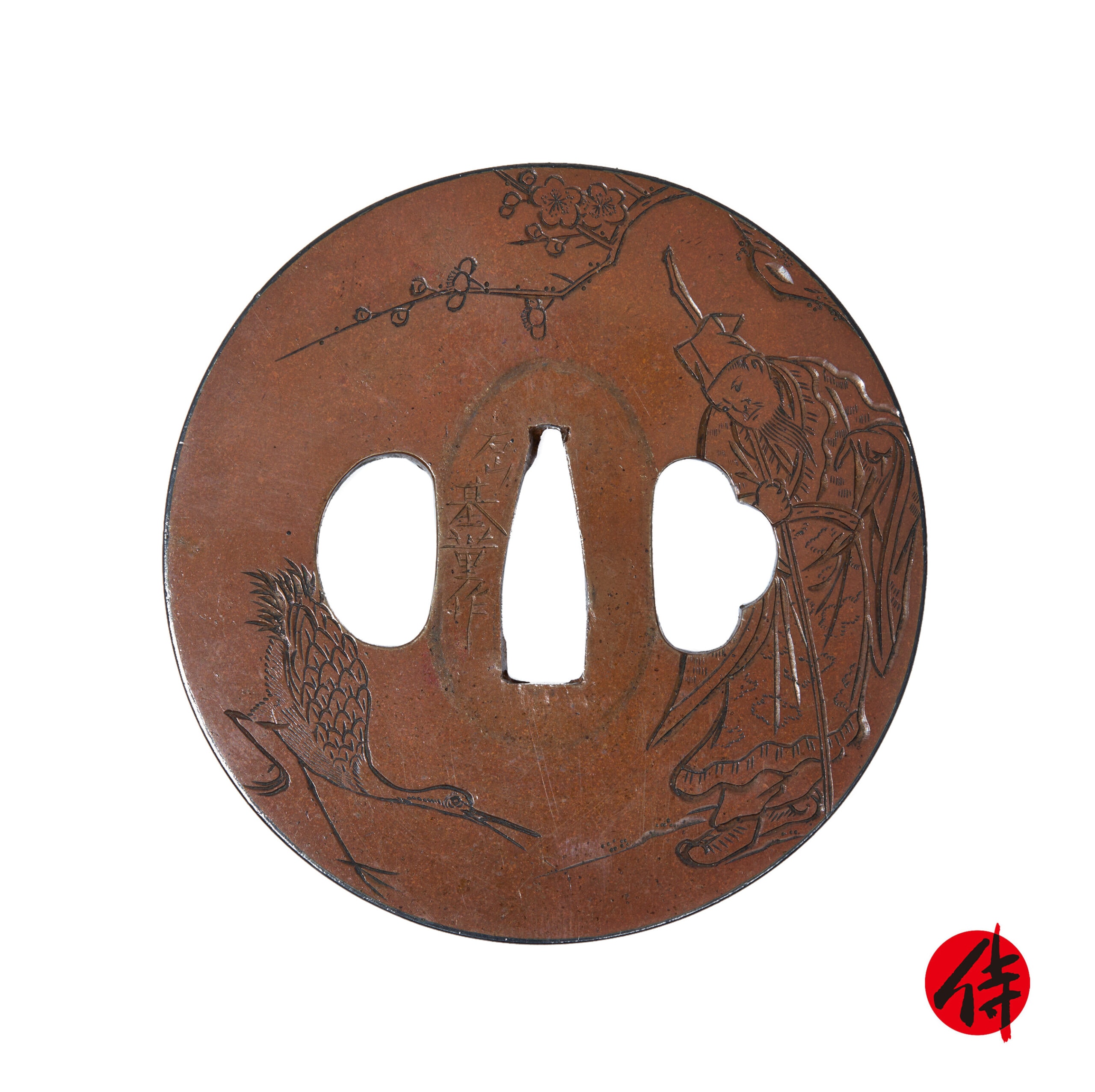
Tsuba - Hozon - by Tetsugendo Mototada - Edo period antique Tsuba for Samurai Sword with NBTHK Hozon Certificate (T-828)Tsuba - Hozon - by Tetsugendo Mototada - Edo period antique Tsuba for Samurai Sword with NBTHK Hozon Certificate (T-828)
売切れ

鍔

作元董
江戸
売却済
サムライミュージアム
特別保存
Tsuba - Tokuho - by Tetsugendo Mototada - Edo period antique Tsuba for Samurai Sword with NBTHK Tokubetsu Hozon Certificate (T-351)Tsuba - Tokuho - by Tetsugendo Mototada - Edo period antique Tsuba for Samurai Sword with NBTHK Tokubetsu Hozon Certificate (T-351)
売切れ

鍔

作元董
江戸
売却済

鉄元堂派の作

すべて見る →
刀心
特別保存
Fuchi-Kashira - Tokuho - by Tetsugendo School - 獅子図大小縁頭 無銘(鉄元堂派)Mumei(Tetsugendo ha) 14-136Fuchi-Kashira - Tokuho - by Tetsugendo School - 獅子図大小縁頭 無銘(鉄元堂派)Mumei(Tetsugendo ha) 14-136

縁頭

作鉄元堂派
江戸
¥880,000
刀心
特別保存
Fuchi-Kashira - Tokuho - by Tetsugendo Eiju - 龍図縁頭 成龍軒栄壽(金印・成栄)Seiryu ken Eiju 14-178Fuchi-Kashira - Tokuho - by Tetsugendo Eiju - 龍図縁頭 成龍軒栄壽(金印・成栄)Seiryu ken Eiju 14-178

縁頭

作栄寿
江戸
¥396,000
コレクション情報
特別保存
Tsuba - Tokuho - by Tetsugendo Shoraku - 鍔:三国志図 Tsuba:Sangokushi ZuTsuba - Tokuho - by Tetsugendo Shoraku - 鍔:三国志図 Tsuba:Sangokushi Zu

鍔

作正楽
江戸
¥750,000
杉江美術店
特別保存
Tsuba - Tokuho - by Tetsugendo Naofusa - (銘)鉄元堂尚房 鳳凰透鐔Tsuba - Tokuho - by Tetsugendo Naofusa - (銘)鉄元堂尚房 鳳凰透鐔

鍔

作尚房
江戸
¥890,000
勇進堂
特別保存
Fuchi-Kashira - Tokuho - by Tetsugendo Ayanokoji Nagamine - 05-045 綾小路永峯 猛禽図 縁頭 赤銅魚子地Fuchi-Kashira - Tokuho - by Tetsugendo Ayanokoji Nagamine - 05-045 綾小路永峯 猛禽図 縁頭 赤銅魚子地

縁頭

作綾小路永峯
江戸
¥200,000
Katana Yamadaiya
Kozuka - by Tetsugendo Hosono Masamori - 特別貴重小道具 田植図 二所物 (小柄)細野惣左衛門政守(花押) (笄)無銘(細野政守)Kozuka - by Tetsugendo Hosono Masamori - 特別貴重小道具 田植図 二所物 (小柄)細野惣左衛門政守(花押) (笄)無銘(細野政守)

小柄

作細野政守
Genroku (c.1656-1726)
¥195,000
刀心
保存
Tsuba - Hozon - by Tetsugendo Eiju - 龍図鐔 成龍軒栄寿(印) -Seiryuken Eiju- 12-1675Tsuba - Hozon - by Tetsugendo Eiju - 龍図鐔 成龍軒栄寿(印) -Seiryuken Eiju- 12-1675

鍔

作栄寿
江戸
¥385,000
Soryu
Tsuba - by Tetsugendo Eiju - 七宝文様図鉄地鍔 銘「青龍軒永寿」Tsuba - by Tetsugendo Eiju - 七宝文様図鉄地鍔 銘「青龍軒永寿」

鍔

作栄寿
江戸
¥300

刀剣

  • 刀
  • 脇差
  • 短刀
  • 太刀
  • 薙刀
  • 槍
  • 日本刀の販売
  • サムライソード

刀装具

  • 鍔
  • 縁頭
  • 小柄
  • 目貫
  • 鍔(ソードガード)

甲冑武具

  • 兜
  • 甲冑
  • 甲冑・武具一覧

鑑定別

  • 特重
  • 重要
  • 特別保存
  • 保存

リソース

  • 刀剣商一覧
  • 刀工一覧
  • 誌上鑑定
  • すべて見る
Nihontowatch© 2026
利用規約プライバシーCookie運営者情報
売切れ

説明

Fuchi Kashira Set by Ishiyama Mototada Ishiyama Mototada was born into the noble Mibu family in 1669. The Mibu family held a family court name of Urin. His father was Mibu Motooki whom held a third court rank. Mototada’s given name was Moroka, and he was listed as holding a second court rank. Mototada was also the founder of the Ishiyama branch, a painter, lacquer artist, calligrapher, and poet. His training in fittings craft was likely within the Goto family. He died in 1734 at the age of 66. Extant works by Mototada vary in materials, themes, and techniques, which would seem natural as a person of varied interests and talents. There are tsuba in copper and shakudo carved with floral and insect motifs, and other fuchigashira in shakudo and gold with nanako that point strongly to Goto influences. The design and composition of this set would seem a departure from his other extant works, and moving toward the wabi sabi aesthetic that was popular in Mototada’s time and would have been ubiquitous in the surrounding arts he took part in. Of particular interest is the incorporation of the turtles. Turtles are relatively common in Japanese arts as they were firmly embraced from Chinese mythology as representatives of longevity, fortune, protection, the direction of North, unification of heavy and earth, and more. However the tortoise (or turtle) most often seen in Japanese arts is the “Minogame” which is a hardshell turtle old enough that the moss has collected on the back and trailing edge of its shell so that it fans out and streams behind it while swimming. However, a close look at the tortoises on this set of fuchigashira clearly shows that they are soft shell turtles (Trionychidae) having elongated snouts, flatter and smoother shells with a dished rim, and three clawed toes on each foot. I have never seen another set of fittings with this type of turtle chosen for the subject. They are shown looking and moving toward a full moon, on both the fuchi and the kashira, and

NihontoWatch MonNihontoWatch
MarketEncyclopediaKantei
刀装具›鉄元堂›元董›Fuchi Kashira Set by Ishiyama Mototada
縁頭
元董

Fuchi Kashira Set by Ishiyama Mototada

在銘 · Goto · 江戸

売却済
元董 · Goto · 江戸販売中 1点 →
縁頭
刀身だけで刀工を見抜けますか? 本日の鑑定 →
元董 — 1 of 10
元董 — 2 of 10
元董 — 3 of 10
元董 — 4 of 10
元董 — 5 of 10
元董 — 6 of 10
元董 — 7 of 10
元董 — 8 of 10
元董 — 9 of 10
元董 — 10 of 10
1 / 10
1 / 10
元董 — 1 of 10元董 — 2 of 10元董 — 3 of 10元董 — 4 of 10元董 — 5 of 10元董 — 6 of 10元董 — 7 of 10元董 — 8 of 10元董 — 9 of 10元董 — 10 of 10
元董 · Goto · 江戸販売中 1点 →
縁頭
刀身だけで刀工を見抜けますか? 本日の鑑定 →
法量・詳細
刀工

後藤

時代

江戸

銘

在銘

説明

Fuchi Kashira Set by Ishiyama Mototada Ishiyama Mototada was born into the noble Mibu family in 1669. The Mibu family held a family court name of Urin. His father was Mibu Motooki whom held a third court rank. Mototada’s given name was Moroka, and he was listed as holding a second court rank. Mototada was also the founder of the Ishiyama branch, a painter, lacquer artist, calligrapher, and poet. His training in fittings craft was likely within the Goto family. He died in 1734 at the age of 66. Extant works by Mototada vary in materials, themes, and techniques, which would seem natural as a person of varied interests and talents. There are tsuba in copper and shakudo carved with floral and insect motifs, and other fuchigashira in shakudo and gold with nanako that point strongly to Goto influences. The design and composition of this set would seem a departure from his other extant works, and moving toward the wabi sabi aesthetic that was popular in Mototada’s time and would have been ubiquitous in the surrounding arts he took part in. Of particular interest is the incorporation of the turtles. Turtles are relatively common in Japanese arts as they were firmly embraced from Chinese mythology as representatives of longevity, fortune, protection, the direction of North, unification of heavy and earth, and more. However the tortoise (or turtle) most often seen in Japanese arts is the “Minogame” which is a hardshell turtle old enough that the moss has collected on the back and trailing edge of its shell so that it fans out and streams behind it while swimming. However, a close look at the tortoises on this set of fuchigashira clearly shows that they are soft shell turtles (Trionychidae) having elongated snouts, flatter and smoother shells with a dished rim, and three clawed toes on each foot. I have never seen another set of fittings with this type of turtle chosen for the subject. They are shown looking and moving toward a full moon, on both the fuchi and the kashira, and

作者について

元董

町彫 · 山城

現在1点販売中

›
元董の作 1点が現在販売中→
元董 — 詳細町彫派

この作者について学ぶ →

流派について

鉄元堂

町彫 · 山城

現在25点販売中

›

鉄元堂は京都に拠点を置いた町彫金工の一派であり、江戸時代中期に岡本源兵衛敏行によって創始された。初代は鉄屋伝兵衛国治に師事し、工名を尚茂と称した。後年入道剃髪して正楽の号を用いた。安永九年(一七八〇)に没。一宮長常・大月光興と共に「京都金工の三傑」に数えられる高名な金工である。正楽には初・二代があり、宝暦から寛政にかけて活躍したとされ、二代は尚房の名で作品を遺している。この京都金工の圏域には、二条に住した細野惣左衛門政守——元禄三年や享保三年の年紀作が遺る——や、後藤就乗門下の山崎一賀(仁左衛門、同名数代あり)も含まれ、それぞれ独自の作風を展開した。 鉄元堂の作風を最も特徴づけるのは、鉄の圧倒的な掌握力である。説示に繰り返し「主として鉄を用い、鉄を巧みにこなす作者として定評が高い」[[c:2]]「鉄を自由にこなす」[[c:3]]「鉄を扱わせれば追随を許さない」[[c:4]]と記されるように、鉄地の扱いにおいて比類なき名声を得た。正楽は鉄磨地あるいは石目地を基調とし、鋤出から高彫に連繋する彫法によって作品に深みと量感を与える。要所には金・銀・赤銅・四分一・素銅・真鍮といった色金の象嵌色絵を丹念に施し、「難儀といわれる鉄への色金象嵌」[[c:5]]を綿密な出来映えに仕上げる技は「鉄元堂にして成し得る」[[c:6]]と称される独壇場であった。題材は写生に基づく人物図を最も得意とし、夕立人物図は「最も得意とした画題」[[c:7]]として同図の作品が数多く知られる。韃靼人と洋犬の異国情緒ある図、南蛮人図、帰樵図、還城楽図、風神大仏図など、力強い鏨力と豊かな動勢をもって描出されている。一方、細野政守は四分一や赤銅の地金に毛彫・片切彫と各種色金の平象嵌を駆使し、京の町の賑やかさや農作業の風景を画面一杯に展開する独自の細密画世界を築いた。山崎一賀は後藤家の作風を踏襲しつつも彫・色絵に濃やかさを加え、赤銅魚子地に高彫色絵の格調高い作品を制作した。 鉄元堂は京都町彫金工のなかでも鉄物の上手として独自の地位を占める。初代正楽の鐔は「地鉄もしっとりとした潤いを見せ」[[c:8]]「流石に鉄元堂にして成しえる出来映え」[[c:9]]と評され、鉄地の質感から象嵌に至るまで一貫して卓抜した技量を示す。夕立図では大小の鐔と縁頭に種々の場景を配して物語的な展開を見せ、韃靼人図では天明二年の年紀を有する作品が初・二代の研究において「資料的にも価値が高い」[[c:10]]と注記される。草摺曳図目貫に見られる金と赤銅の芋継地という古風な造込みは、後藤祐乗を意識した古雅な作風をも正楽が自在にこなしたことを示す。鐔が初代、小柄が二代という大小揃の存在は、「鉄物の上手、象嵌技術にも秀れると定評通りの作風」[[c:11]]が世代を超えて継承されたことの証左である。細野政守の農作業図鐔は「画面からは諸々の作業音とともに人々の会話が聞きとれそうである」[[c:12]]と讃えられる代表作であり、山崎一賀の淀城水車図揃金具は金の色絵を多用した「豪華絢爛な作風」を示す。こうした多彩な個性を擁する京都金工の一群として、鉄元堂の系譜は刀装具史において独自の位置を占めている。 詳しく見る →

4名の刀工指定20口
主要刀工
刀工時代指定
正楽—13
山﨑一賀—3
栄寿—0
尚房江戸2
武禅—0
鉄元堂流派を見る →
ご注意 — 鑑定書が見つかりません

販売店の出品ページで鑑定書を確認できませんでした。日本刀および刀装具は通常、NBTHK(または NTHK)の鑑定を受けます。鑑定書がない場合、極めは販売店の見解にとどまり、第三者による確認は行われていません。ご購入前に販売店へ鑑定書の有無をお問い合わせのうえ、慎重にご判断ください。

販売店
L
Legacy Swords
創業 1996年 · 業歴30年
🇺🇸アメリカから発送
›
✓認証販売店legacyswords.com
Legacy Swordsの出品一覧を見る→販売店サイトでこの商品を見る→

元董の他の作

すべて見る →
銀座盛光堂
特別保存
Tsuba - Tokuho - by Tetsugendo Mototada - 赤城軒泰山元忠(印) 松に旭日図Tsuba - Tokuho - by Tetsugendo Mototada - 赤城軒泰山元忠(印) 松に旭日図

鍔

作元董
江戸
¥600,000

元董の売約済み

すべて見る →
サムライミュージアム
保存
Tsuba - Hozon - by Tetsugendo Mototada - Edo period antique Tsuba for Samurai Sword with NBTHK Hozon Certificate (T-828)Tsuba - Hozon - by Tetsugendo Mototada - Edo period antique Tsuba for Samurai Sword with NBTHK Hozon Certificate (T-828)
売切れ

鍔

作元董
江戸
売却済
サムライミュージアム
特別保存
Tsuba - Tokuho - by Tetsugendo Mototada - Edo period antique Tsuba for Samurai Sword with NBTHK Tokubetsu Hozon Certificate (T-351)Tsuba - Tokuho - by Tetsugendo Mototada - Edo period antique Tsuba for Samurai Sword with NBTHK Tokubetsu Hozon Certificate (T-351)
売切れ

鍔

作元董
江戸
売却済

鉄元堂派の作

すべて見る →
刀心
特別保存
Fuchi-Kashira - Tokuho - by Tetsugendo School - 獅子図大小縁頭 無銘(鉄元堂派)Mumei(Tetsugendo ha) 14-136Fuchi-Kashira - Tokuho - by Tetsugendo School - 獅子図大小縁頭 無銘(鉄元堂派)Mumei(Tetsugendo ha) 14-136

縁頭

作鉄元堂派
江戸
¥880,000
刀心
特別保存
Fuchi-Kashira - Tokuho - by Tetsugendo Eiju - 龍図縁頭 成龍軒栄壽(金印・成栄)Seiryu ken Eiju 14-178Fuchi-Kashira - Tokuho - by Tetsugendo Eiju - 龍図縁頭 成龍軒栄壽(金印・成栄)Seiryu ken Eiju 14-178

縁頭

作栄寿
江戸
¥396,000
コレクション情報
特別保存
Tsuba - Tokuho - by Tetsugendo Shoraku - 鍔:三国志図 Tsuba:Sangokushi ZuTsuba - Tokuho - by Tetsugendo Shoraku - 鍔:三国志図 Tsuba:Sangokushi Zu

鍔

作正楽
江戸
¥750,000
杉江美術店
特別保存
Tsuba - Tokuho - by Tetsugendo Naofusa - (銘)鉄元堂尚房 鳳凰透鐔Tsuba - Tokuho - by Tetsugendo Naofusa - (銘)鉄元堂尚房 鳳凰透鐔

鍔

作尚房
江戸
¥890,000
勇進堂
特別保存
Fuchi-Kashira - Tokuho - by Tetsugendo Ayanokoji Nagamine - 05-045 綾小路永峯 猛禽図 縁頭 赤銅魚子地Fuchi-Kashira - Tokuho - by Tetsugendo Ayanokoji Nagamine - 05-045 綾小路永峯 猛禽図 縁頭 赤銅魚子地

縁頭

作綾小路永峯
江戸
¥200,000
Katana Yamadaiya
Kozuka - by Tetsugendo Hosono Masamori - 特別貴重小道具 田植図 二所物 (小柄)細野惣左衛門政守(花押) (笄)無銘(細野政守)Kozuka - by Tetsugendo Hosono Masamori - 特別貴重小道具 田植図 二所物 (小柄)細野惣左衛門政守(花押) (笄)無銘(細野政守)

小柄

作細野政守
Genroku (c.1656-1726)
¥195,000
刀心
保存
Tsuba - Hozon - by Tetsugendo Eiju - 龍図鐔 成龍軒栄寿(印) -Seiryuken Eiju- 12-1675Tsuba - Hozon - by Tetsugendo Eiju - 龍図鐔 成龍軒栄寿(印) -Seiryuken Eiju- 12-1675

鍔

作栄寿
江戸
¥385,000
Soryu
Tsuba - by Tetsugendo Eiju - 七宝文様図鉄地鍔 銘「青龍軒永寿」Tsuba - by Tetsugendo Eiju - 七宝文様図鉄地鍔 銘「青龍軒永寿」

鍔

作栄寿
江戸
¥300

刀剣

  • 刀
  • 脇差
  • 短刀
  • 太刀
  • 薙刀
  • 槍
  • 日本刀の販売
  • サムライソード

刀装具

  • 鍔
  • 縁頭
  • 小柄
  • 目貫
  • 鍔(ソードガード)

甲冑武具

  • 兜
  • 甲冑
  • 甲冑・武具一覧

鑑定別

  • 特重
  • 重要
  • 特別保存
  • 保存

リソース

  • 刀剣商一覧
  • 刀工一覧
  • 誌上鑑定
  • すべて見る
Nihontowatch© 2026
利用規約プライバシーCookie運営者情報
売切れ
NihontoWatch MonNihontoWatch
マーケット
事典
鑑定
NihontoWatch MonNihontoWatch
マーケット
事典
鑑定