 NihontoWatchNihontoWatch
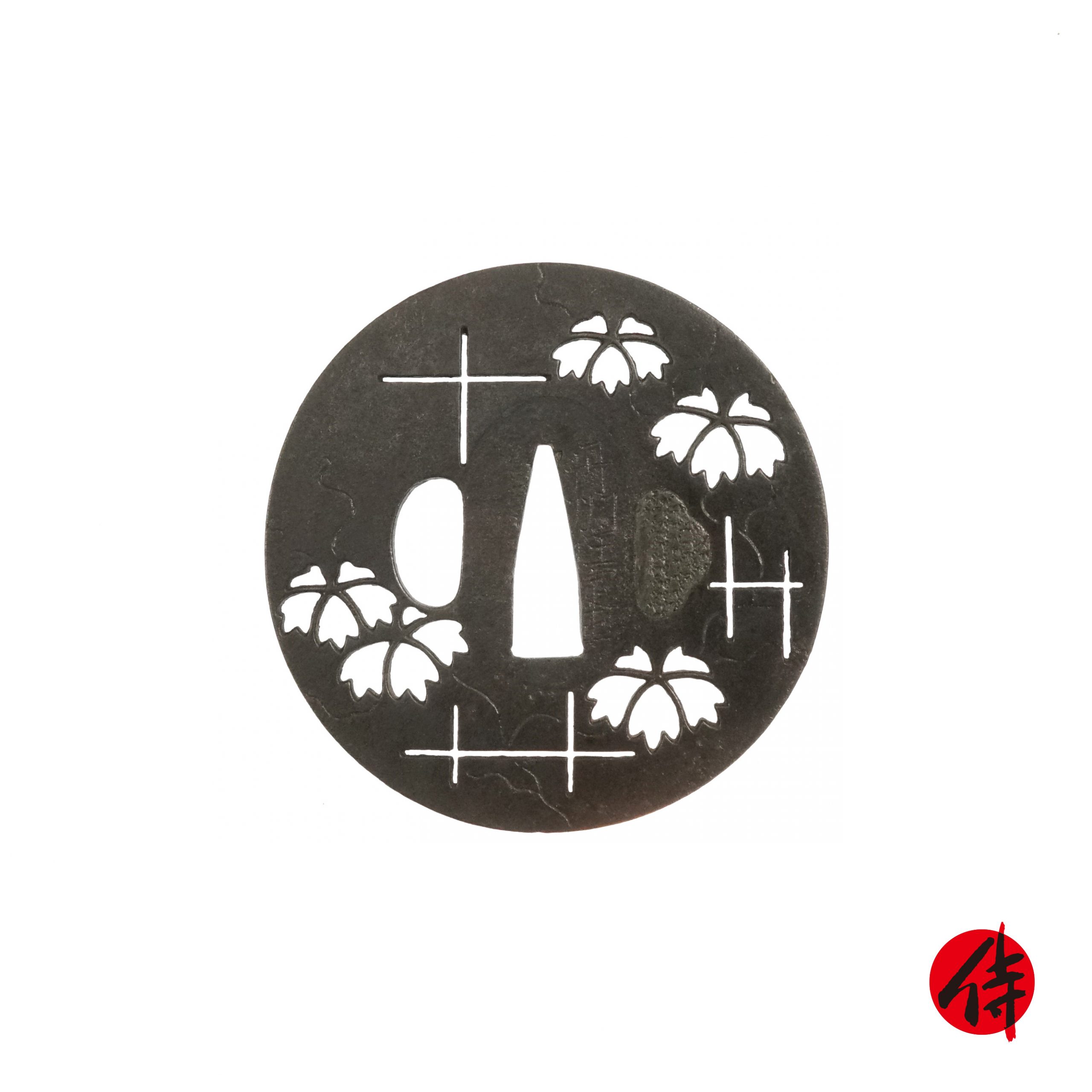
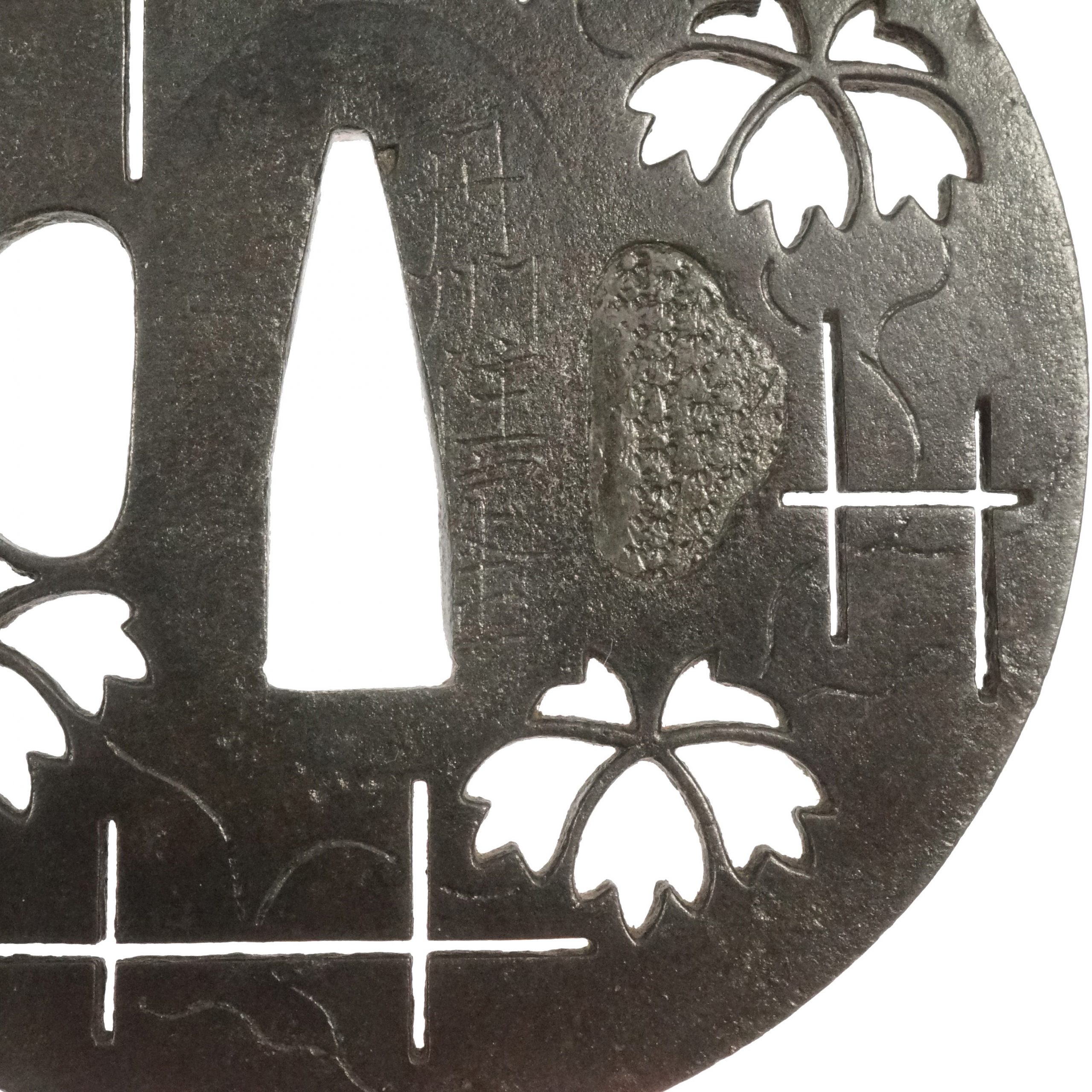
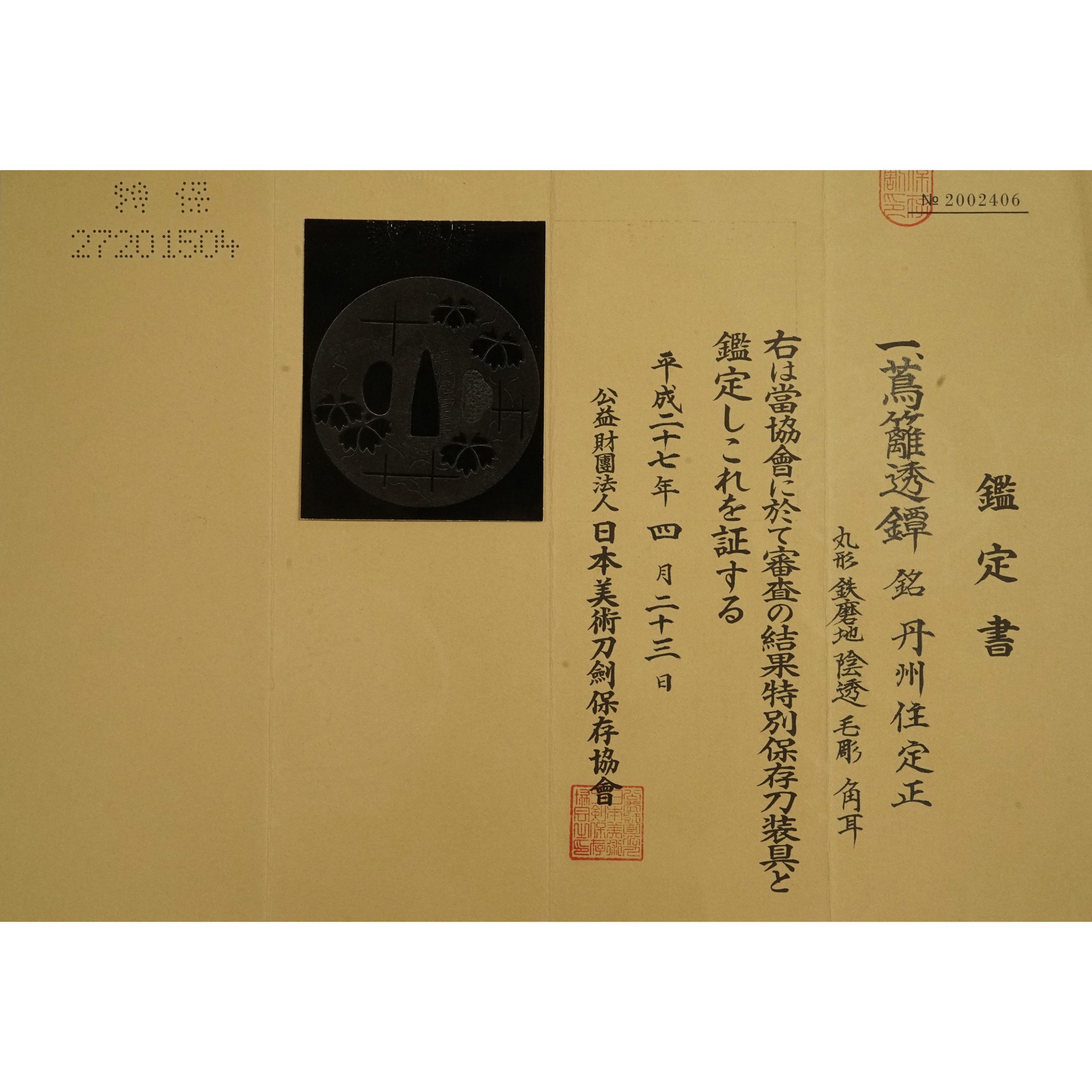
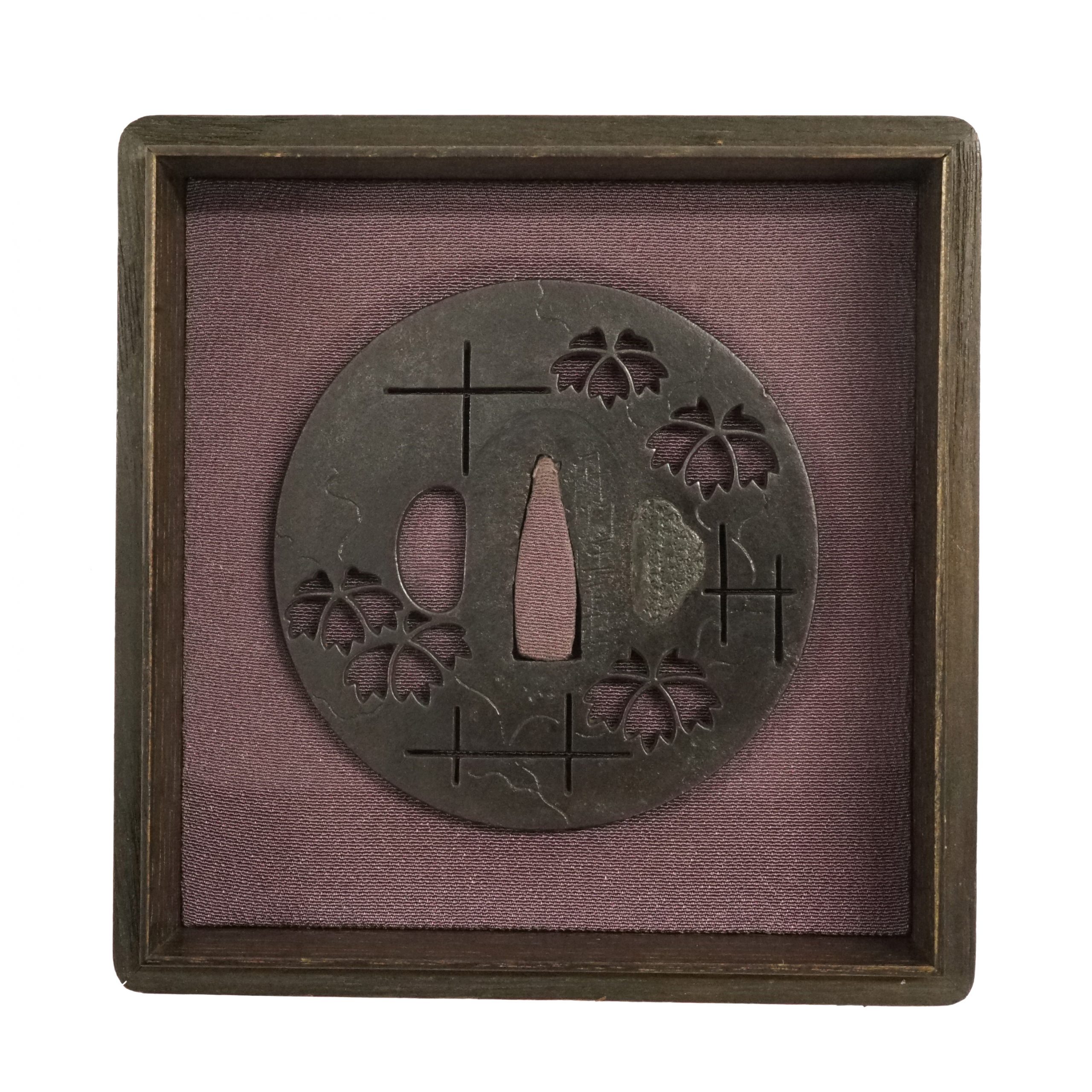
Circle-shaped Tsuba made from iron. Tsuta (蔦, ivy) and Magaki (籬, a fence made of bamboo or brushwood) are engraved. The large plant design with openwork makes a gorgeous appearance to this work. Ivy has vitality, and it thrives strongly; therefore, this plant pattern represents prosperity and longevity. The combination of Magaki and flowers such as chrysanthemum, Japanese apricot blossom, or autumn plants are popular motifs. Sadamasa school trained lots of disciples. The first and the second, both of them cut the same signature “丹州住定正,” as you can see between Nakago-Hitsu and Kougai-Hitsu. They were good at making circle-shaped iron Tsuba with Kaku-Mimi (角耳, the edge is cut a right angle), with Sukashi-Bori (openwork) designs. This Tsuba is recognized by The Society for Preservation of Japanese Art Swords, which is known as NBTHK. Authentication Paper They authenticated the Tsuba on Apr 23th in the 27th year of Heisei (2015). They appraised it as Tokubetsu Hozon Tousougu, the Tsuba worth preserving for Japanese society.
NihontoWatch取扱店 サムライミュージアム

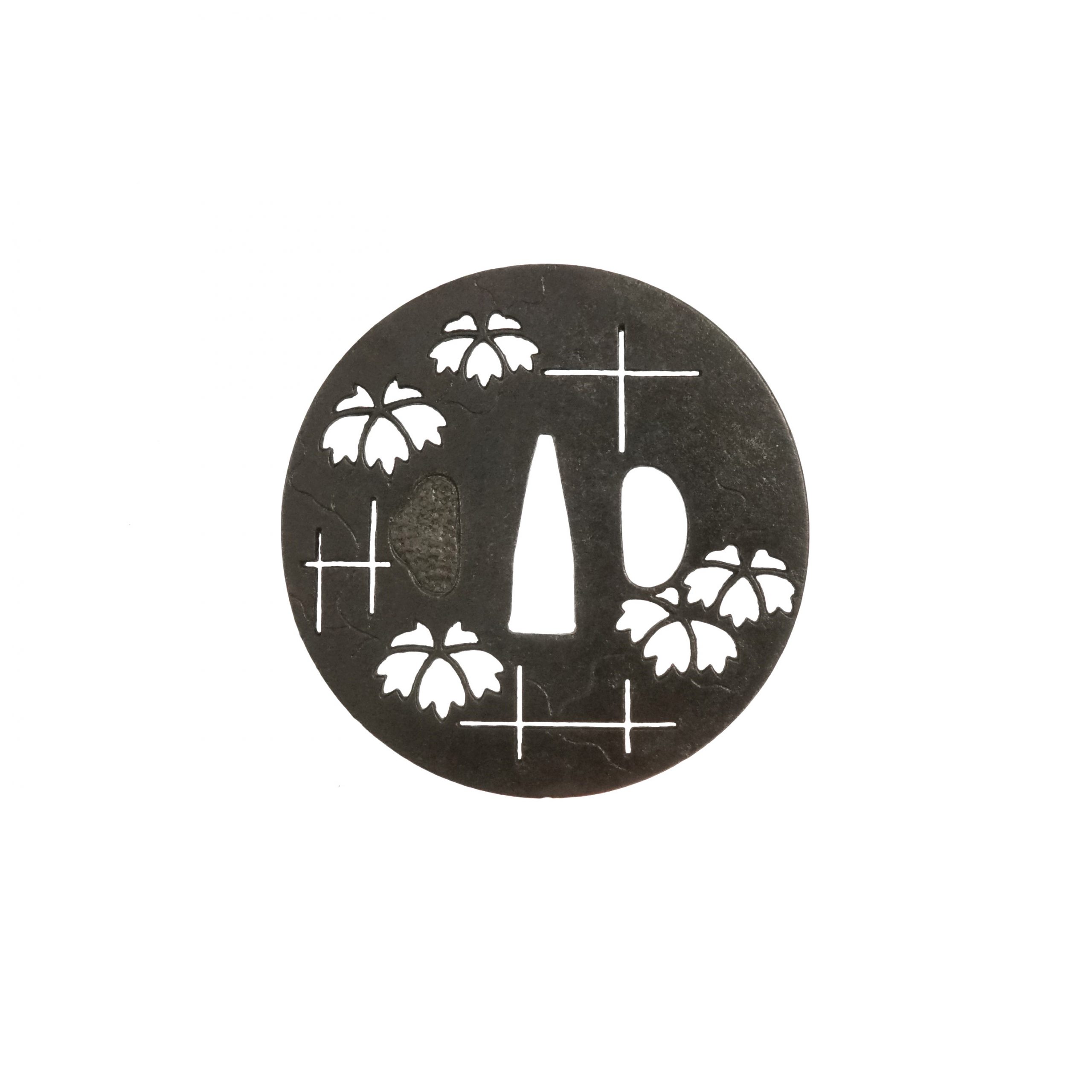
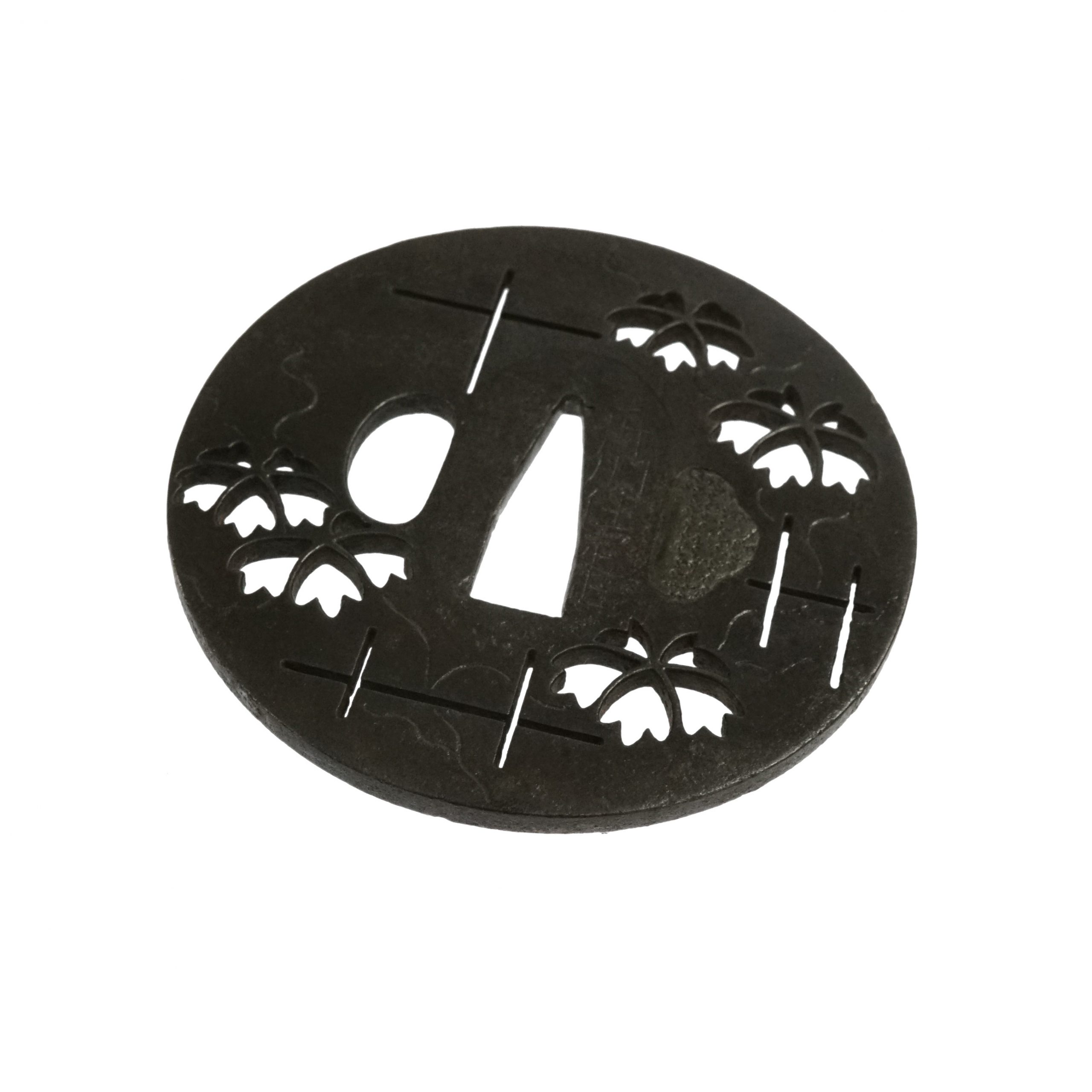
販売店の記載のまま
丹波
現在4点販売中
保存刀装具のうち、出来・保存状態が一層優れ、銘文や作風に資料的価値の高いものと認められたものです。
日本美術刀剣保存協会(日刀保)は、1948年に設立され、文化庁の監督を受ける公益財団法人で、東京・刀剣博物館に本部を置きます。専門の審査員が出品作を直接審査し、美術的・歴史的価値に応じた鑑定書を発行します。日刀保の鑑定書は、日本刀および刀装具の真正性を示す最も広く認知された基準です。
日刀保公式サイトReturns/exchanges limited to defects caused by shipping (except willful misconduct or gross negligence by the company); customers must contact within 72 hours of receiving the product.