説明
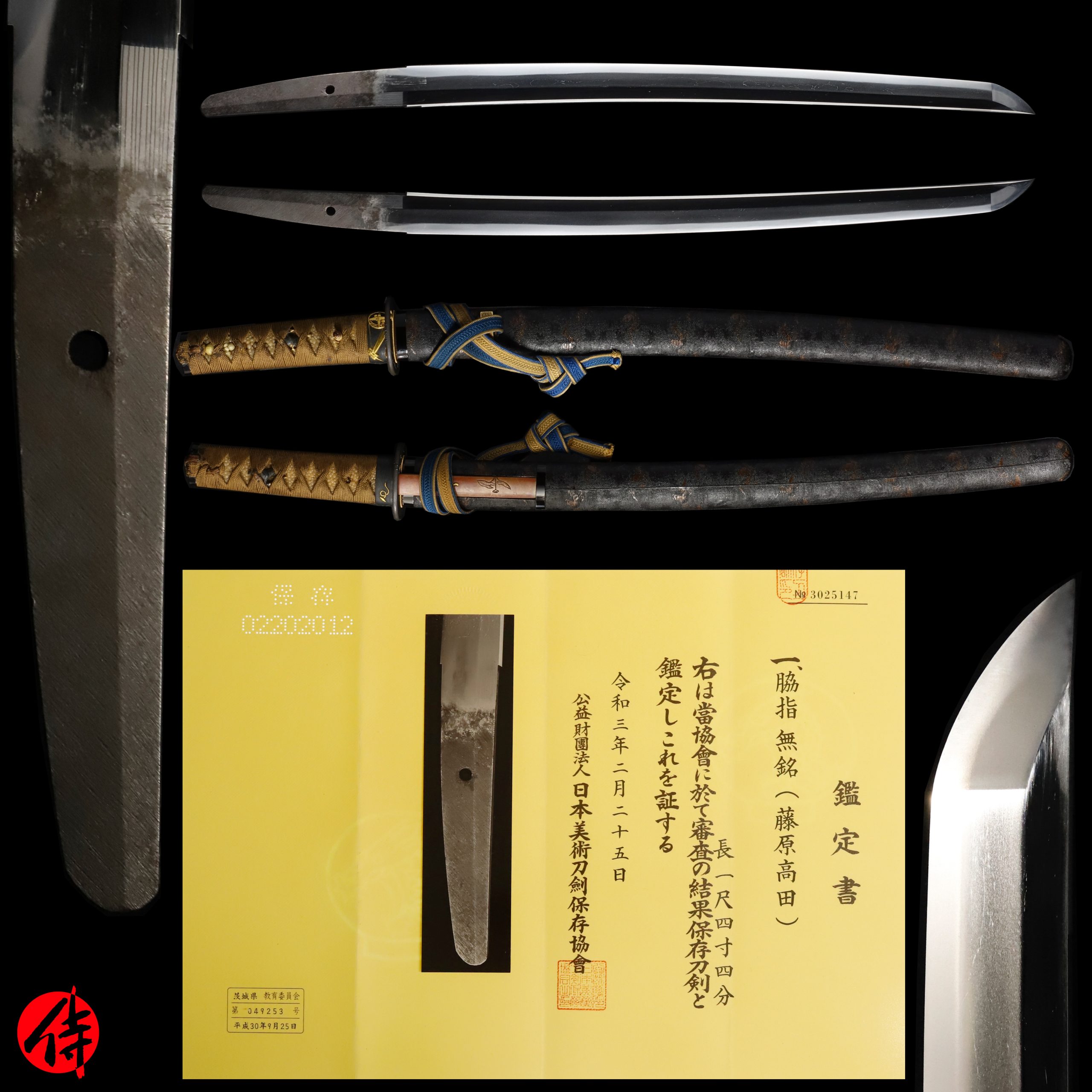
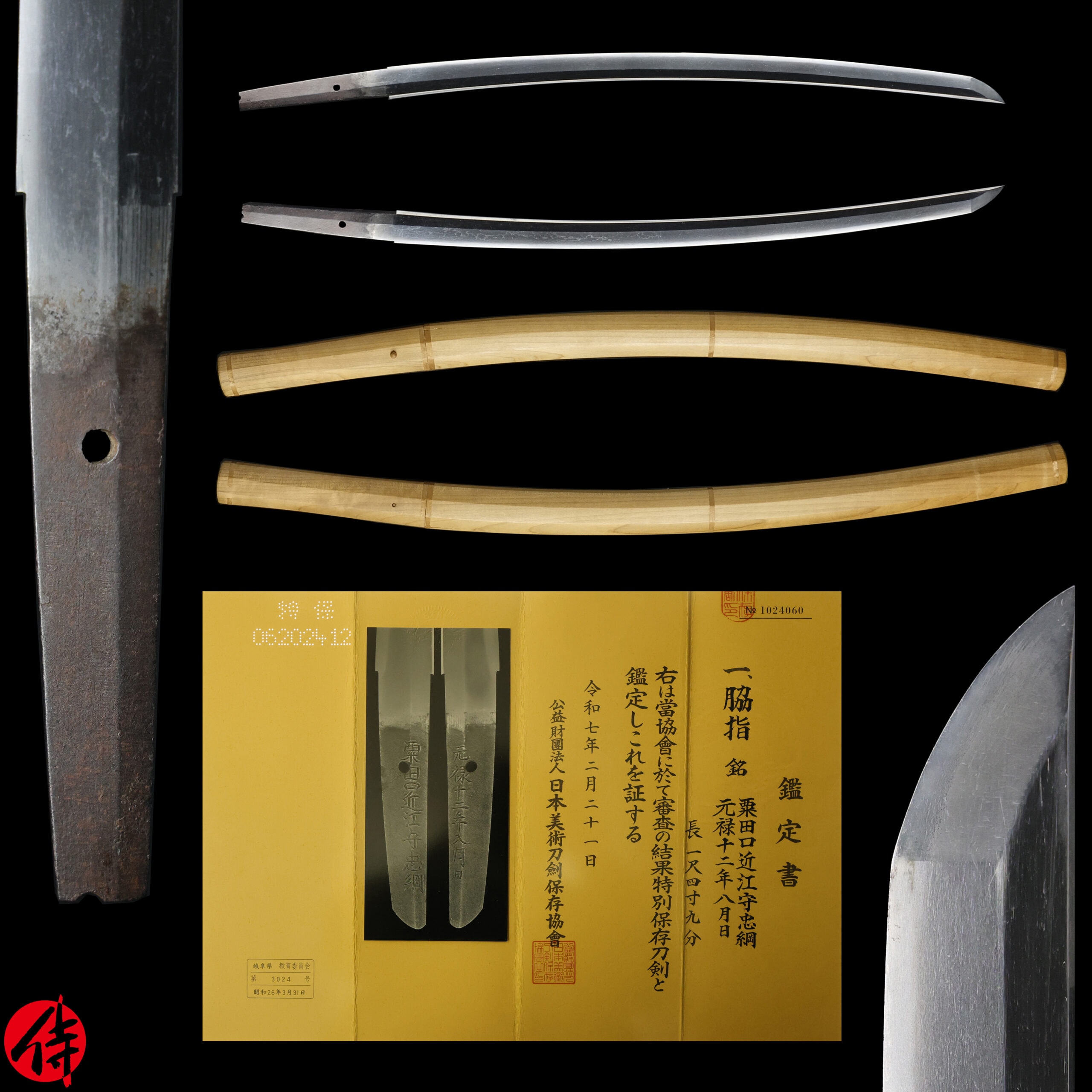
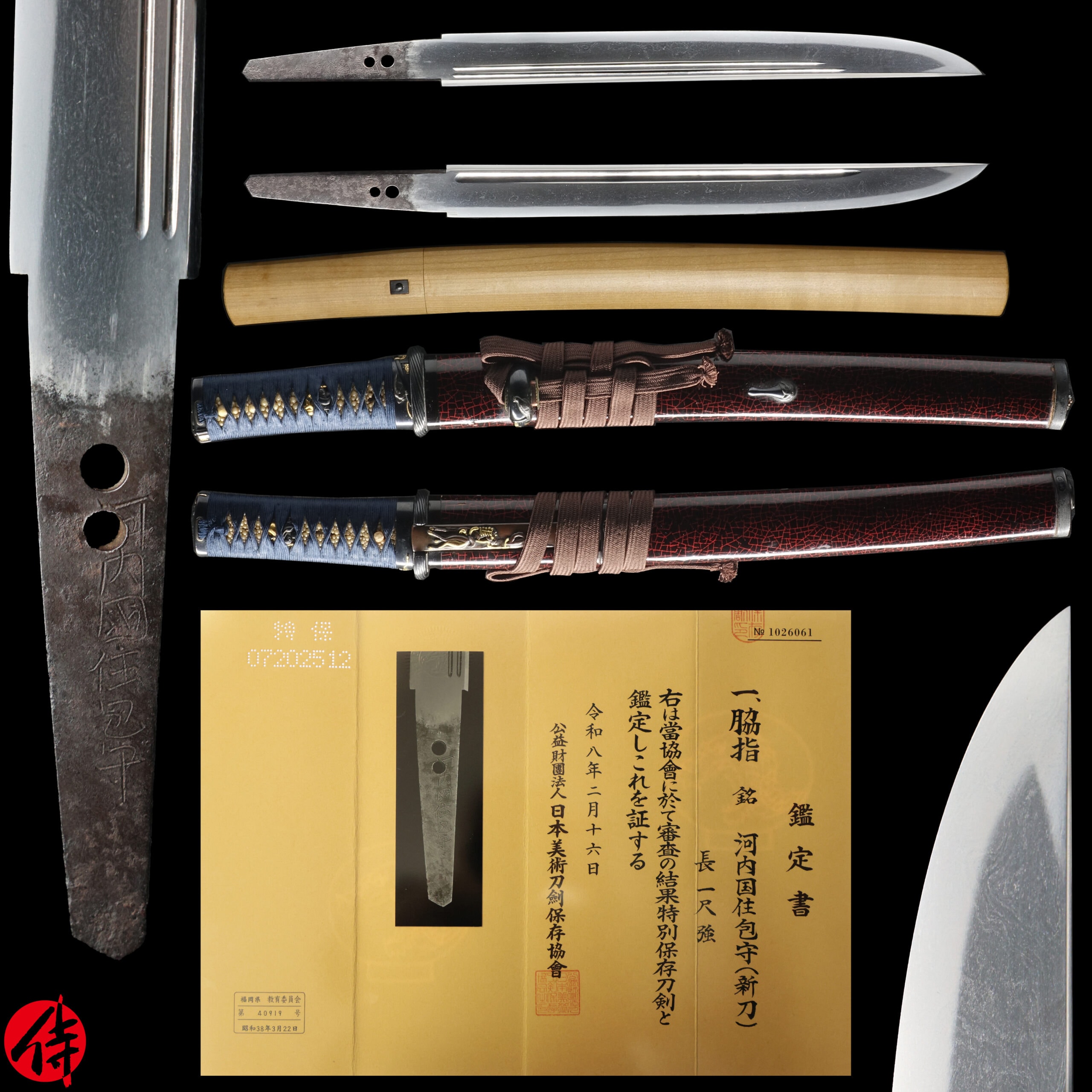
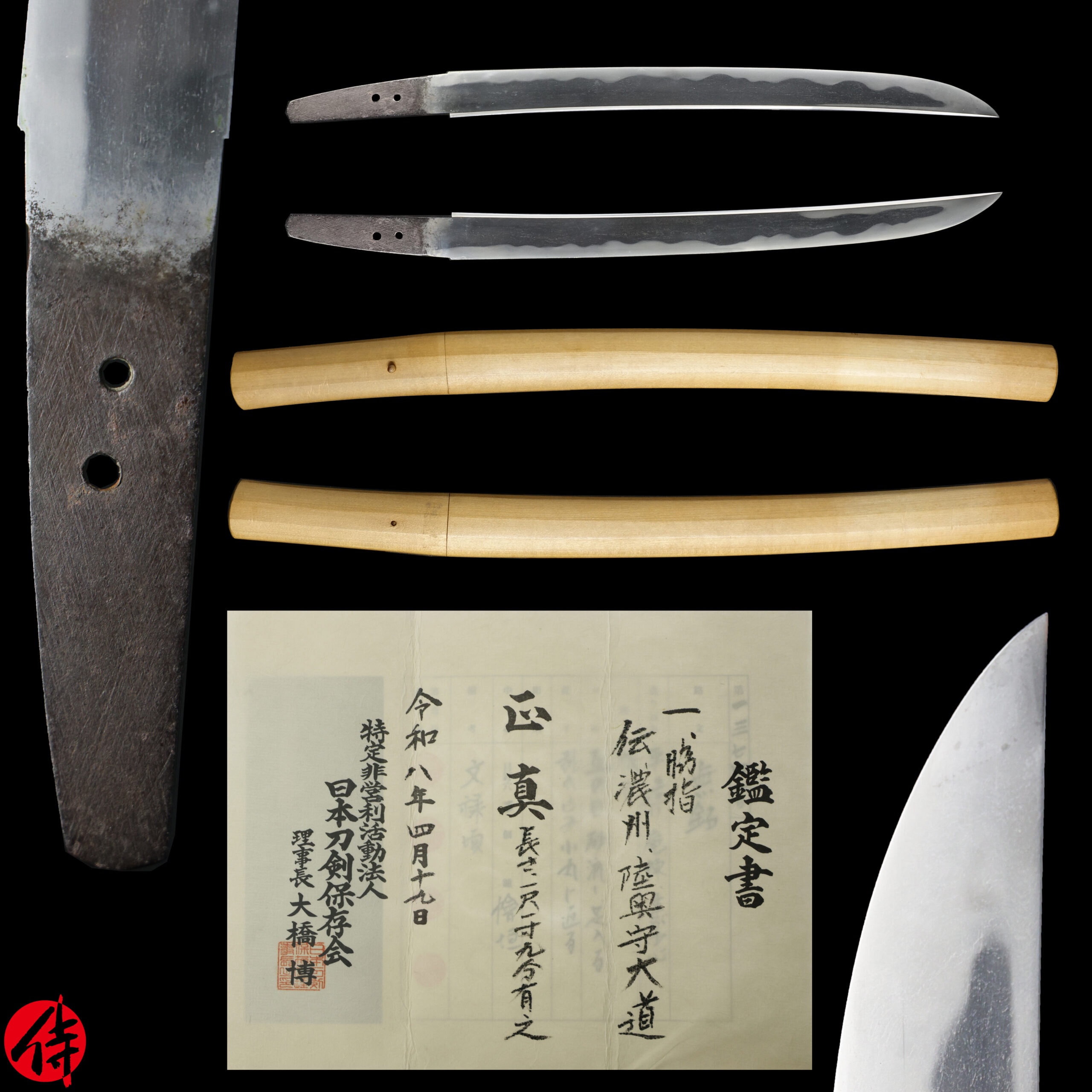
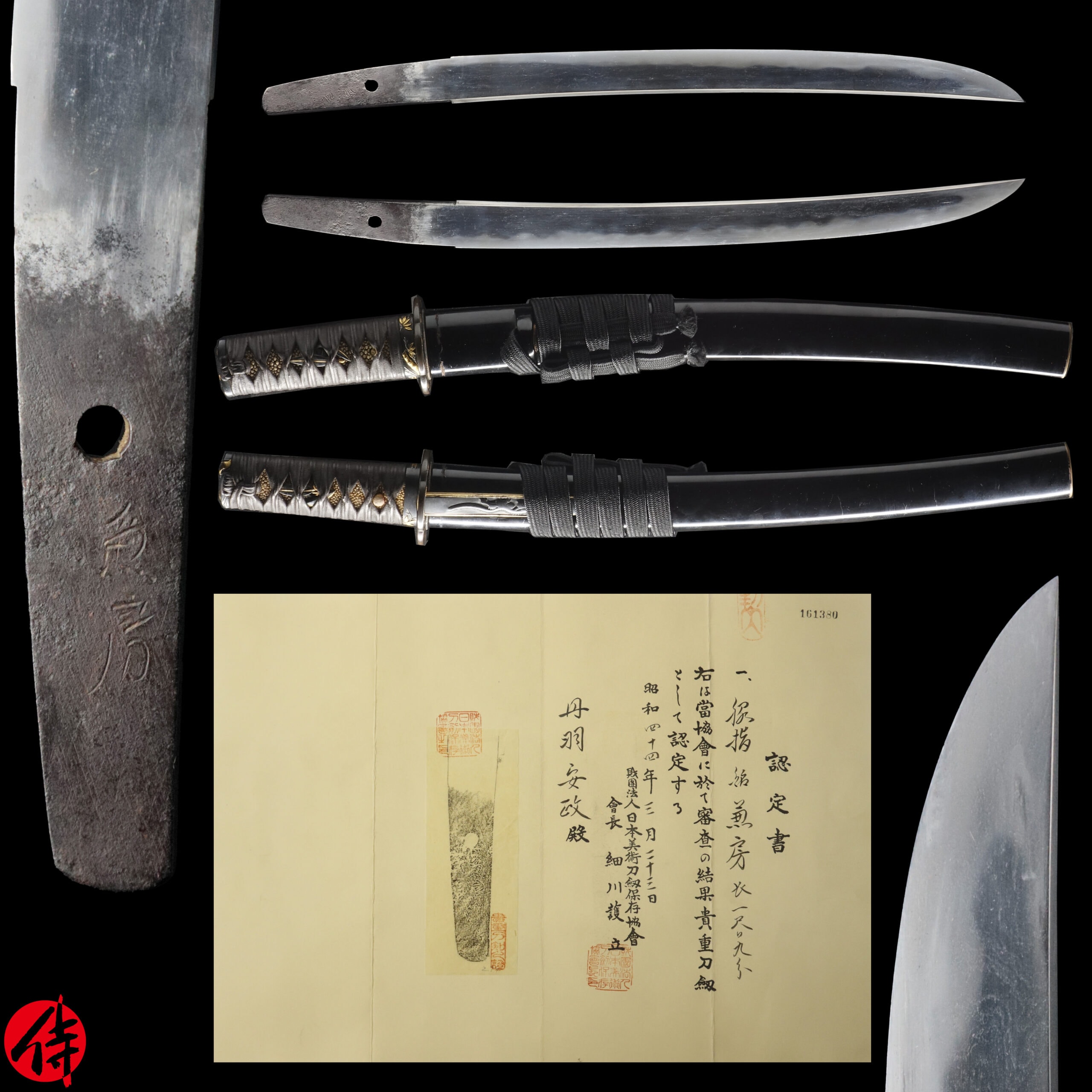
Antique Japanese Sword Wakizashi Attributed to Fujiwara Takada with NBTHK
Hozon
Certificate
【Description】
This blade is attributed to a work of a swordsmith of Takada school in the early Edo period.
Takada school was founded by Takada Tomoyuki in Takada village, Ohita prefecture, during the Nanbokucho period. (1334-1338 A.D). Tomoyuki went to Bizen province(today’s Okayama prefecture) to master the sword-forging techniques of BIZEN and came back to the village and trained his apprentices. That is how Takada school started.
Those who forged swords in Takada village before the Edo period are called Taira Takada and Fujiwara Takada during the Edo period. Based on the NBTHK certificate, this blade is categorized as Fujiwara Takada.
During Sengoku Period(the warring state period: from late 15 C to late 16 C), the Takada school forged many swords for feudal lords in Kyushu island. It is said that the reputation of the blades forged by Takada school was close to MINO or BIZEN swords, two of which are the most famous sword forging places. This highly skilled sword forging technique was passed down to later generations in the Edo period.
Generally speaking, Kyushu island was prosperous in sword-making because of the long history of trading with Asian countries. To gain an advantage in trading, many feudal lords on this island fought against each other. Takada school was able to receive many orders as the demand increased among those lords.
The material of Japanese swords(high-quality iron sand and charcoal) was abundant in the mount Sobo Katamuki, located near Takada village. We believe Takada school prospered because of its geographic location and natural resources.
This blade has a Hozon certificate issued by NBTHK. This authentication paper was only given to Japanese swords, worth preserving by Nihon Bijutsu Touken Hozon Kyokai(the Society for the Preservation of the Japan Art Sword).
This blade comes with beautiful sword mountings.
【 Blade】
Cutting Edge Length(Nagasa)
:
44.0 cm (17.3
inches)
Curvature(Sori)
:
0.7
cm(0.275 inches)
Hamon:
The crystalline structure which forms along the cutting edge of a blade as a result of the hardening process
Jimon(Jihada):
visible steel surface pattern created by folding and hammering during forging process
Nakago
:
Nakago is the tang of the Japanese sword.
Japanese swordsmiths left the black rust on the tang on purpose to prevent red rust while the tang is in its handle. And the discoloration of the tang was created over time, which is a great indicator for a Japanese sword specialist to estimate when the sword was forged.
Koshirae:
Koshirae is the mounting of the Japanese sword. There are several parts that consist of Koshirae such as Saya(Scabbard), Tsuka( Handle), Tsuba(Handguard).
Fuchi-Kashira
:
A pair of matching sword fittings that cover the upper and bottom parts of its sword hilt.
The Ito-Guruma (糸車, spinning wheel) is the motif of this Fuchi Kashira. Itomaki (糸巻, bobbin) is also designed on the Fuchi (Please check the picture in the category of Tsuka and Menuki). The golden metal is applied to these motifs and makes a beautiful color contrast of gold and metal color of this Fuchi Kashira’s material (probably copper). There are various types of Itomaki patterns in Japan. According to a theory, the long extension of the thread from the bobbin has the meaning of longevity. Based on this meaning, Samurai might have wished for the profit of Itomaki design to play an active role on the battlefield for a long time.
Tsuka and Menuki
:
Tsuka is the handle of the Japanese sword and Menuki is its decoration.
A pair of birds are the motifs of this Menuki. Their eyes, bills, and legs are applied with gold-colored metal. Since various birds have been designed for sword mountings, it is a little challenging to judge what these birds are. However, by seeing their appearances, we would like to guess they might be a kind of waterfowl, such as duck or wild goose. The wild goose is a migratory bird that r