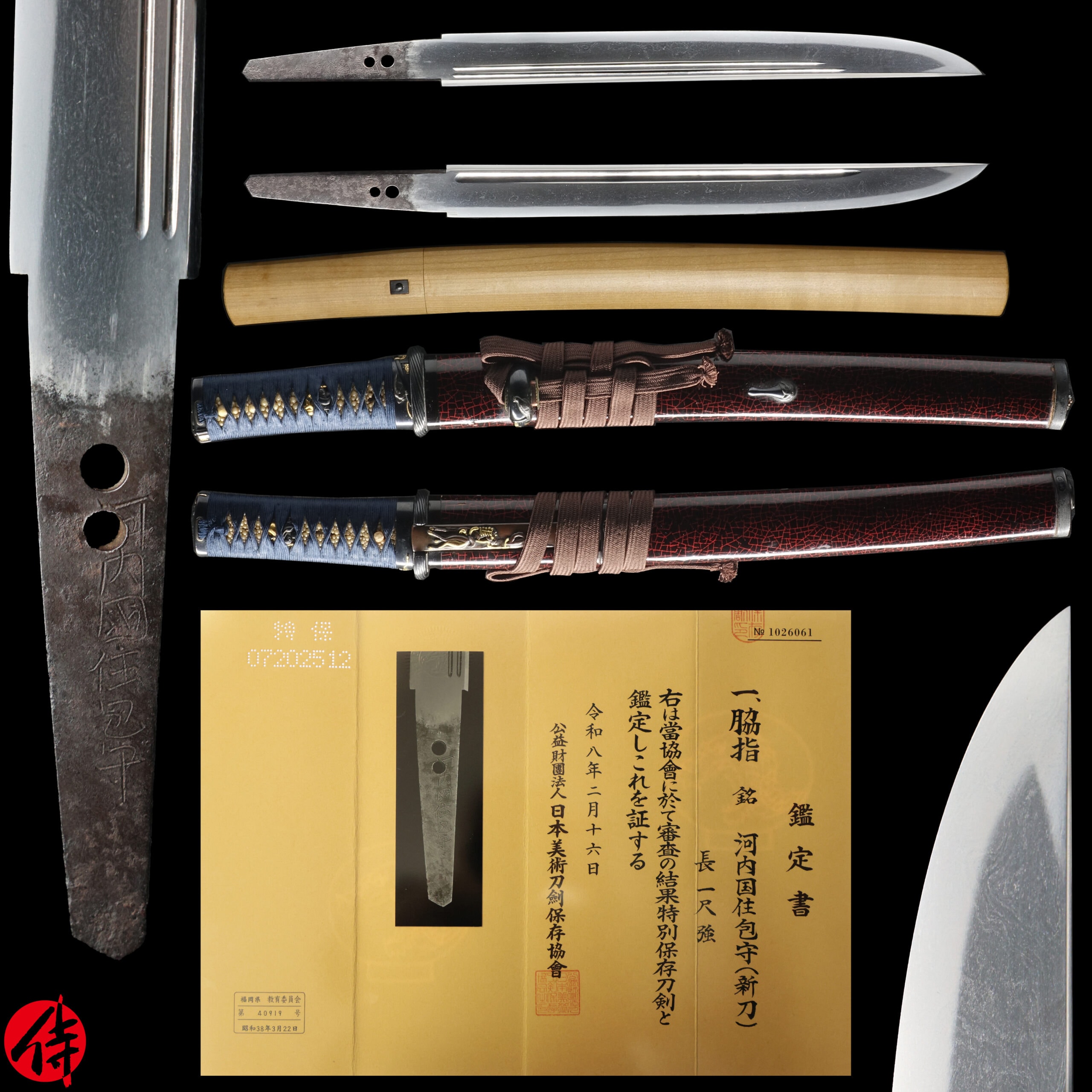
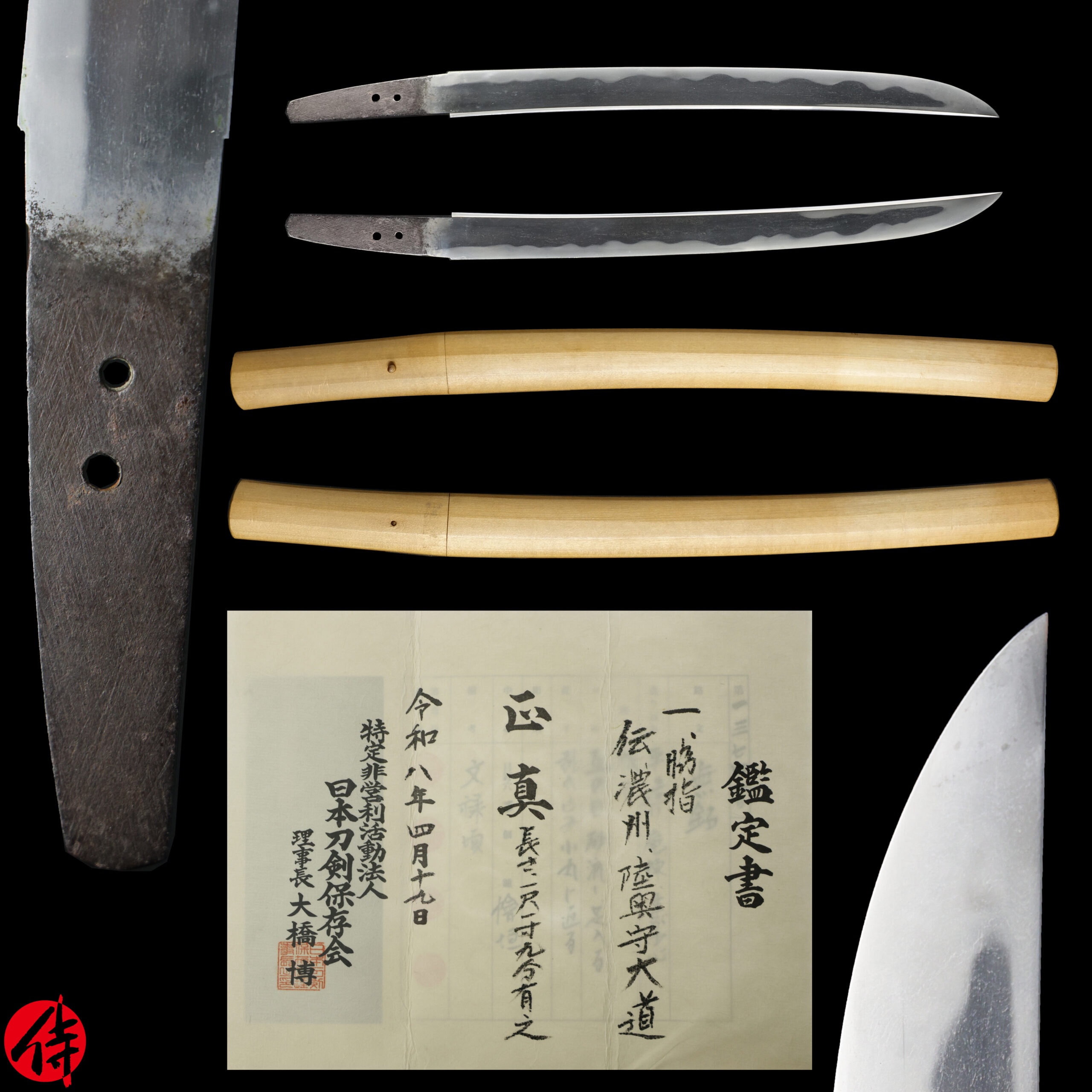
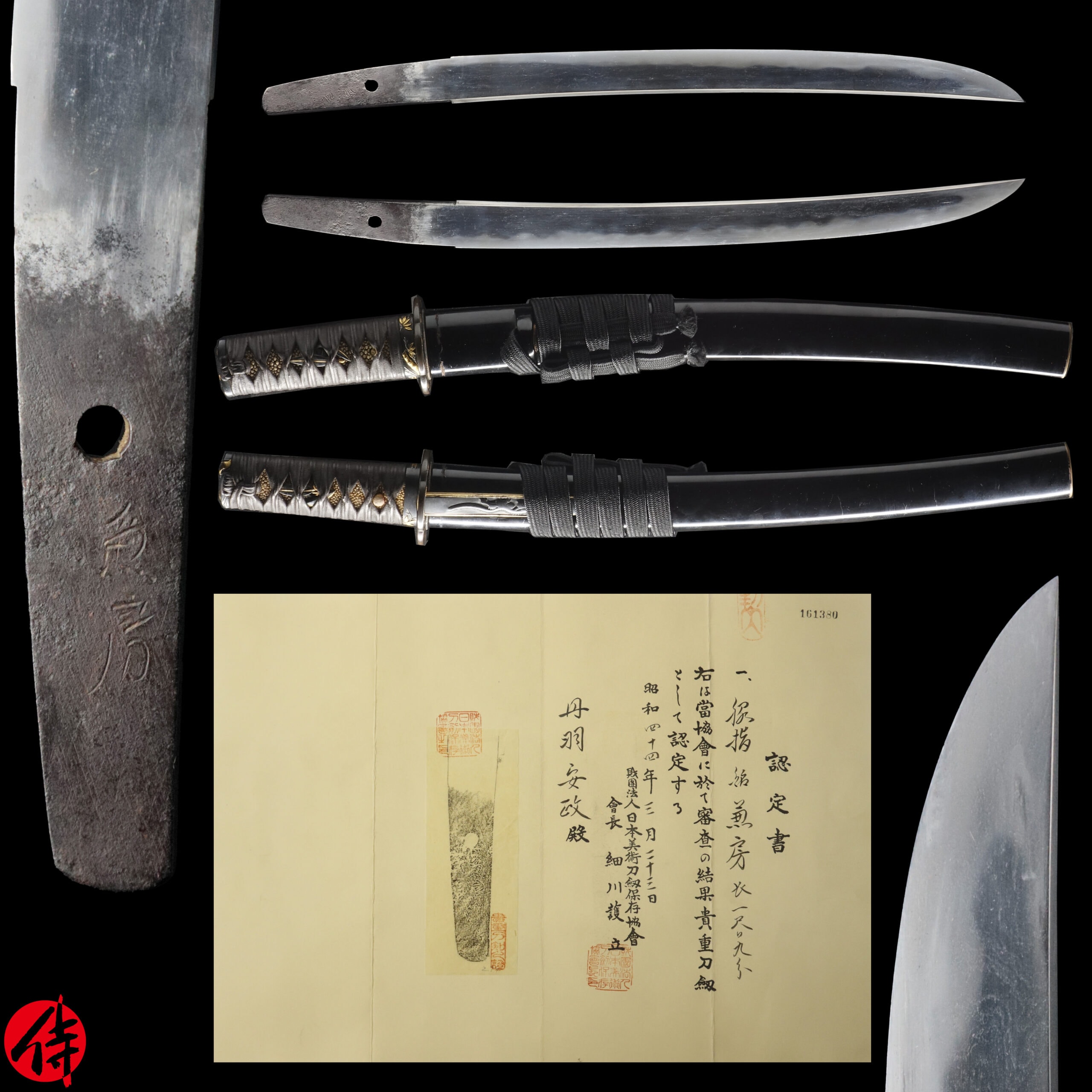
説明
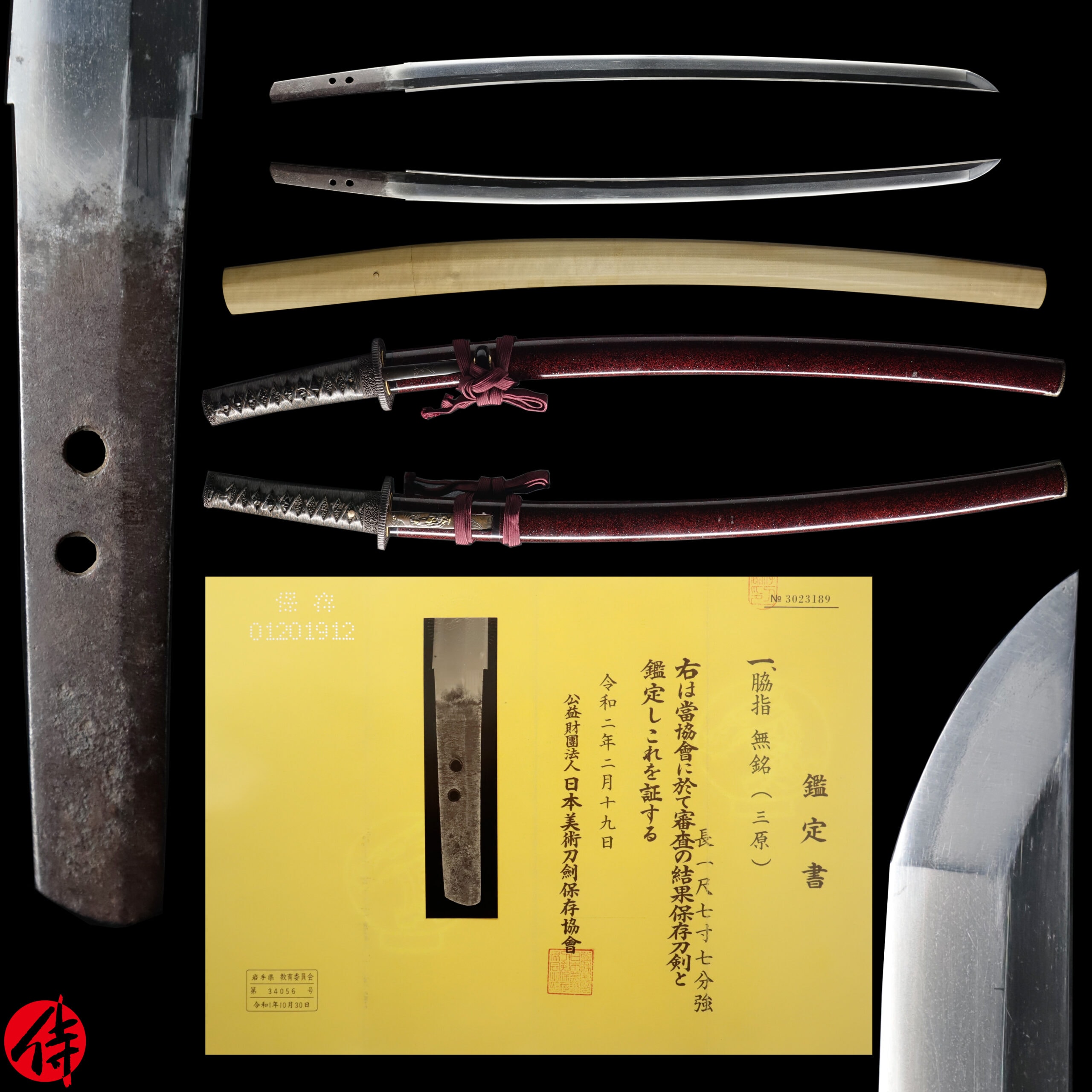
Antique Japanese Sword Wakizashi attributed to Mihara with NBTHK
Hozon
Certificate
【Description】
(ON HOLD)
This blade is attributed to Mihara, a prestigious school in Bingo province (Today’s Hiroshima prefecture). According to recent studies, it is general knowledge that Mihara school was founded by Kokubunji Sukekuni (国分寺助国) in the late Kamakura period (Late13th century-Early 14th century). Two of the most prominent figures in this school are Mihara Masaie (三原正家) and his son, Masahiro (正広).
Mihara school is divided into three categories in Japanese sword terminology depending on the period. When the blade is older than the Nanbokucho era(the 1300s), it is called Ko-Mihara (Old Mihara). And it is called Mihara for those who forged in the early-Mid Muromachi period. Finally, Sue-Mihara(Late Mihara) is used for the late Muromachi period. Based on the NBTHK appraisal of this blade, it was approximately forged during the late early-mid Muromachi period (Late 14th- Early 15th century).
In Bingo province, many lands were owned by politically powerful temples of the Yamato region (today’s Nara prefecture) from ancient times. And many Samurai formed military groups to protect those lands, being hired by temples. And quite a few swordsmiths moved from the Yamato region to the Bingo region to forge blades for those Samurai.
It is said that the swordsmiths in Yamato region strongly influenced how swords were forged in the Bingo province because of the history above. The blades forged by Mihara school had distinctive characteristics of Yamato DEN, one of the five Japanese sword traditions (Gokaden).
Bingo is located near the Chugoku Mountains, where iron sands, one of the essential materials for making Japanese swords, were abundant. This geological location contributed to the Mihara swordsmiths forging high-quality refined blades. We presume Bingo was quite active in sword-forging from ancient times.
The swords forged in Yamato DEN tradition are famous for their beautiful Jigane, steel surface, and straight tempering line(Suguha). This blade has a beautiful Jigane with a Suguha tempering line, which shows an outstanding characteristic of the Yamato DEN sword.
This blade is appraised as a
Hozon Token(保存刀剣)
issued by NBTHK(Nihon Bijutsu Touken Hozon Kyokai:日本美術刀剣保存協会). This authentication paper was only given to authentic Japanese swords, well preserved with artistic value.
【 Blade】
Cutting Edge Length(Nagasa)
:
53.8
cm ( 21.2 inches)
Curvature(Sori)
:
1.2
cm (0.47 inches)
Hamon:
The crystalline structure which forms along the cutting edge of a blade as a result of the hardening process
Jimon(Jihada):
visible steel surface pattern created by folding and hammering during forging process
Kissaki
:
Kissaki is the tip of the Japanese sword.
Nakago
:
Nakago is the tang of the Japanese sword.
Japanese swordsmiths left the black rust on the tang on purpose to prevent red rust while the tang is in its handle. And the discoloration of the tang was created over time, which is a great indicator for a Japanese sword specialist to estimate when the sword was forged.
Koshirae:
Koshirae is the mounting of the Japanese sword. There are several parts that consist of Koshirae such as Saya(Scabbard), Tsuka( Handle), Tsuba(Handguard).
Fuchi-Kashira
:
A pair of matching sword fittings that cover the upper and bottom parts of its sword hilt.
Tsuka and Menuki
:
Tsuka is the handle of the Japanese sword and Menuki is its decoration.
The Ume (梅, Japanese apricot blossom) flowers would be the theme of this Menuki. Japanese apricot blossoms begin to bloom in winter when snow still covers trees. Therefore, Japanese people thought this flower tells the arrival of spring. The same as cherry blossom, it has been appreciated for a long time in Japan. People enjoy its adorable petal shape and scent, gracefully branched trees, and compose many poems. Since it comes out in the cold season, it symbolizes the power of perseverance and vitality.
The Ume pattern profoundly rela