説明
Antique Japanese Sword Wakizashi Kinpun Mei
with NBTHK
Tokubestsu
Hozon
Certificate
【Description】
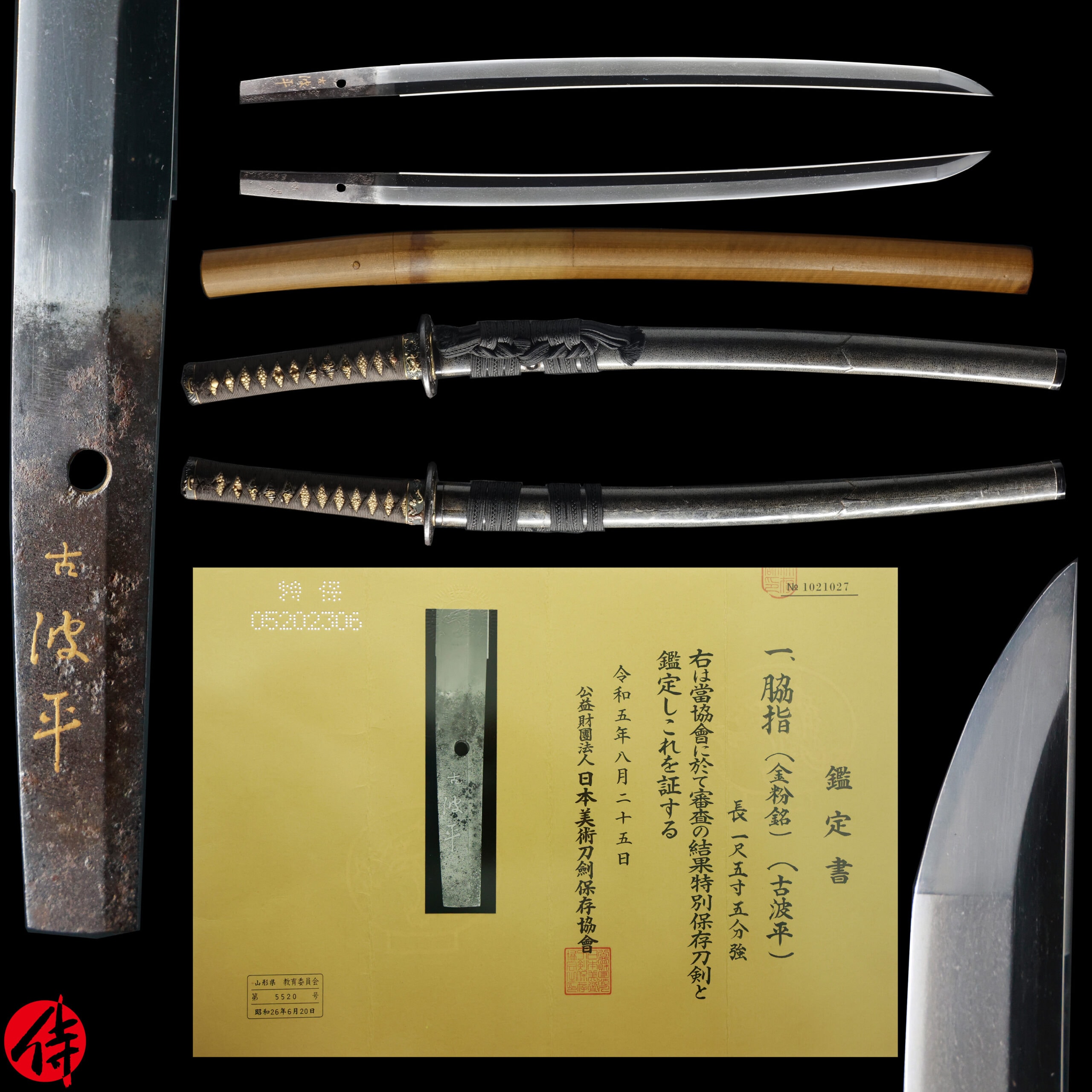
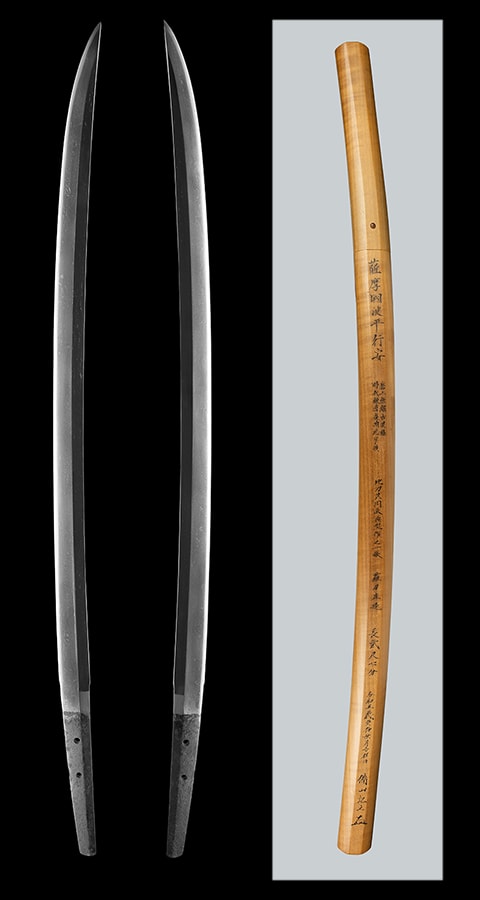
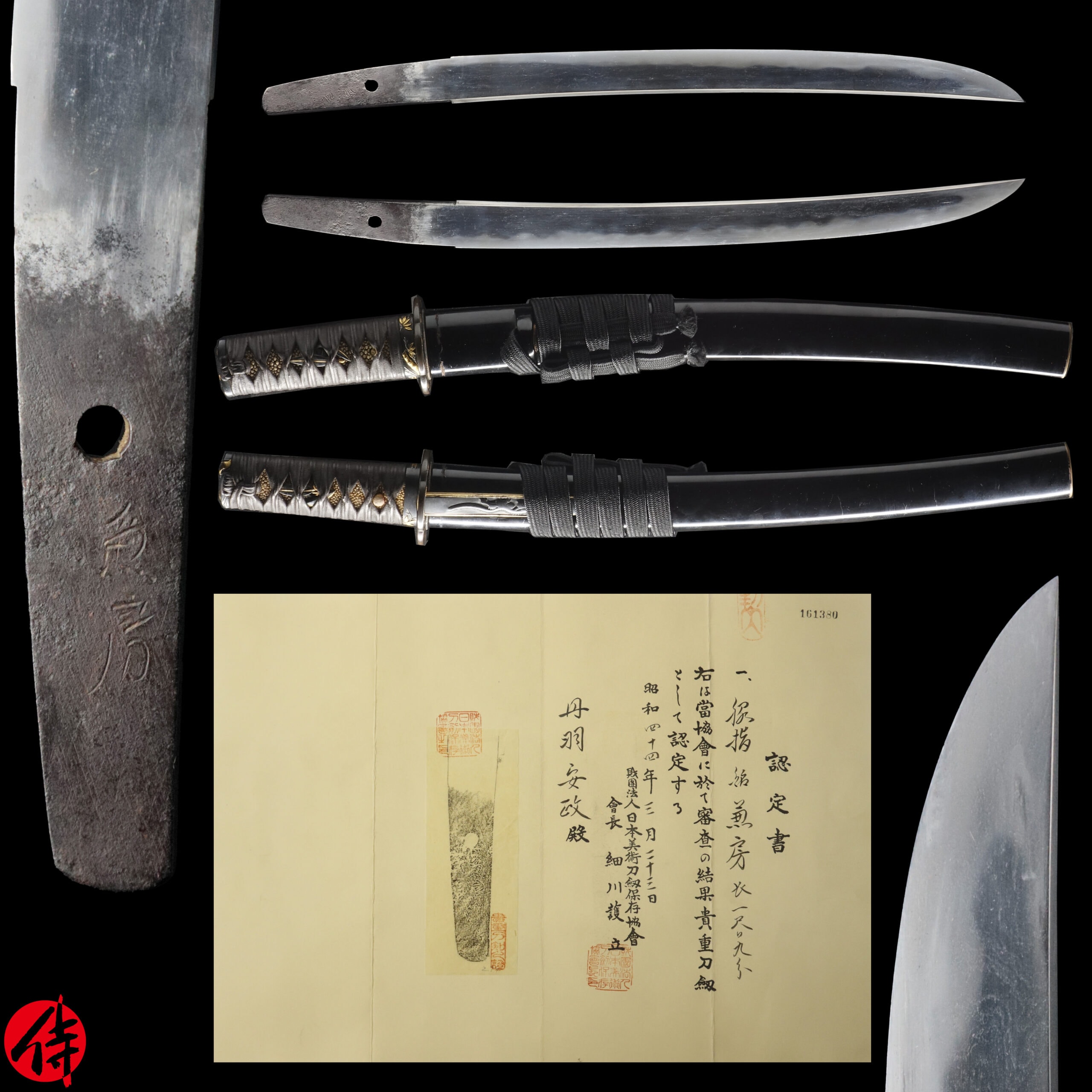
This blade has Kinpun Mei (金粉銘) of Ko Naminohira (古波平). This Kinpun Mei technique involves applying powdered gold to inscribe text, often used when the original signature on the tang has been worn down or cut. Kinpun Mei is typically seen on important or high-quality blades, as it allows for the re-inscription of lost information while maintaining aesthetic and historical value. In this case, the attribution was given to Ko-Naminohira while there is no remaining signature on the tang.
Naminohira (波平) was one of the most influential schools in the Satsuma domain, founded by a YAMATO-DEN swordsmith, Masakuni (正國), during the late-Heian period (Late 12th century). They were known for having their smith name with one of these letters, 行 (Yuki) or 安 (Yasu). The Naminohira swords were cherished among Samurais in the marine army, mainly because the name Naminohira (波平) means “Tides are quiet” in Japanese. Blades forged by members of the Naminohira school have strong characteristics of YAMATO-DEN (大和伝), one of the five Japanese sword-forging traditions.
The origin of the name Naminohira dates back to the school’s foundation. It is said that the founder, Masakuni, was able to calm the waves by dedicating his sword to the sea when his school from Yamato sailed to live in the Satsuma domain. Since then, he began to use the title “Naminohira Yukiyasu (波平行安)” – “Tides are quiet, ’tis an easy way.” From the late Heian period until the end of Samurai times (Late 19th century), the Naminohira school maintained mastership for a thousand years. Ko Naminohira refers to works from the late Kamakura to the early Nanbokucho period (Early 14th century) of the Naminohira school. The swords forged in the YAMATO-DEN tradition are famous for their beautiful Jigane, steel surface, and straight tempering line (Suguha).
This blade is appraised as a
Tokubetsu Hozon Token
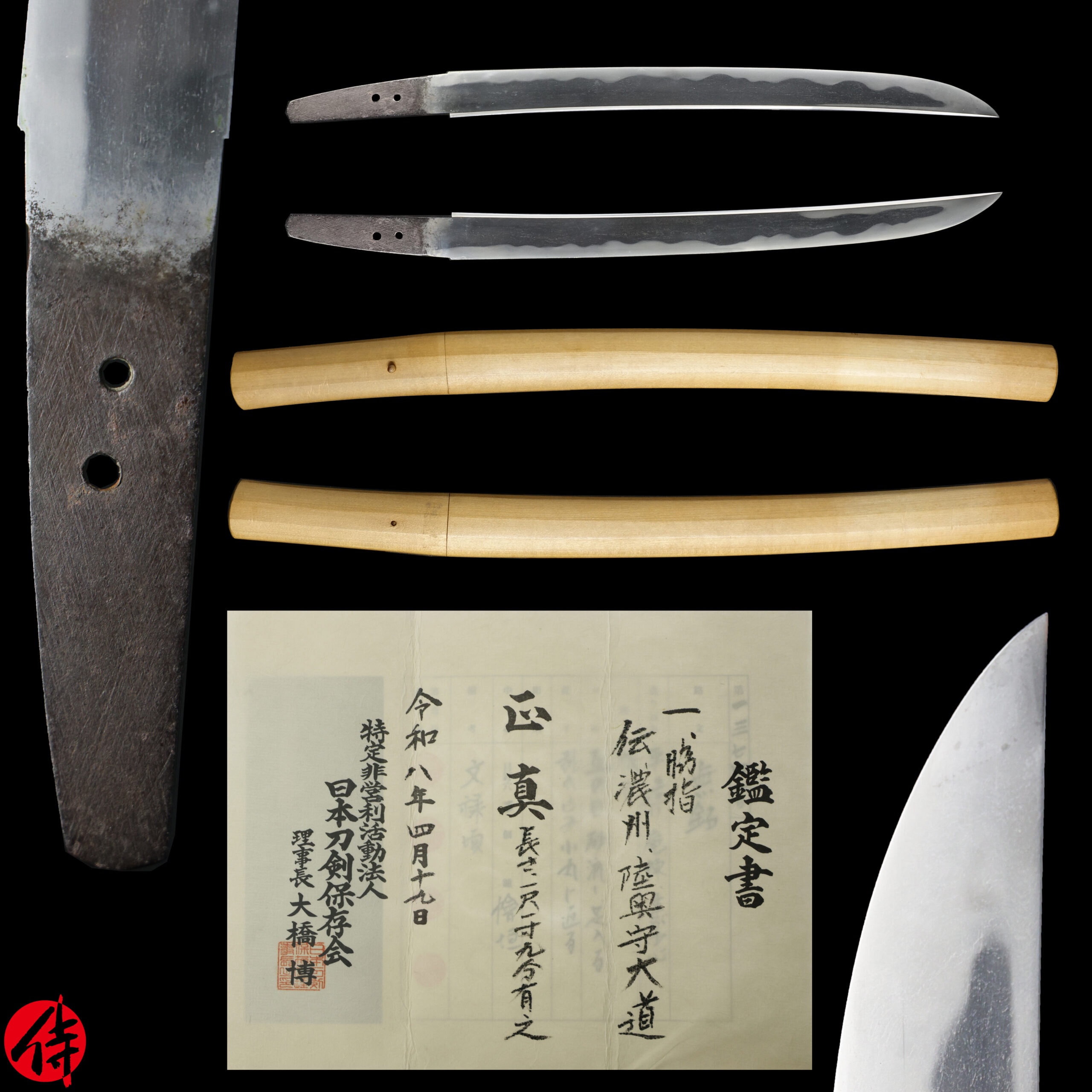
(特別保存刀剣) issued by NBTHK (Nihon Bijutsu Touken Hozon Kyokai:日本美術刀剣保存協会). This authentication paper was only given to authentic Japanese swords, especially well preserved and high quality with artistic value.
*Please keep in mind that there are a couple of Kitae Kizu on this blade. If you like to see the detailed condition, please feel free to contact us.
【Blade】
Cutting Edge Length(Nagasa)
:
47.1
cm (18.5
inches)
Curvature(Sori)
:
0.75 cm (0.29 inches)
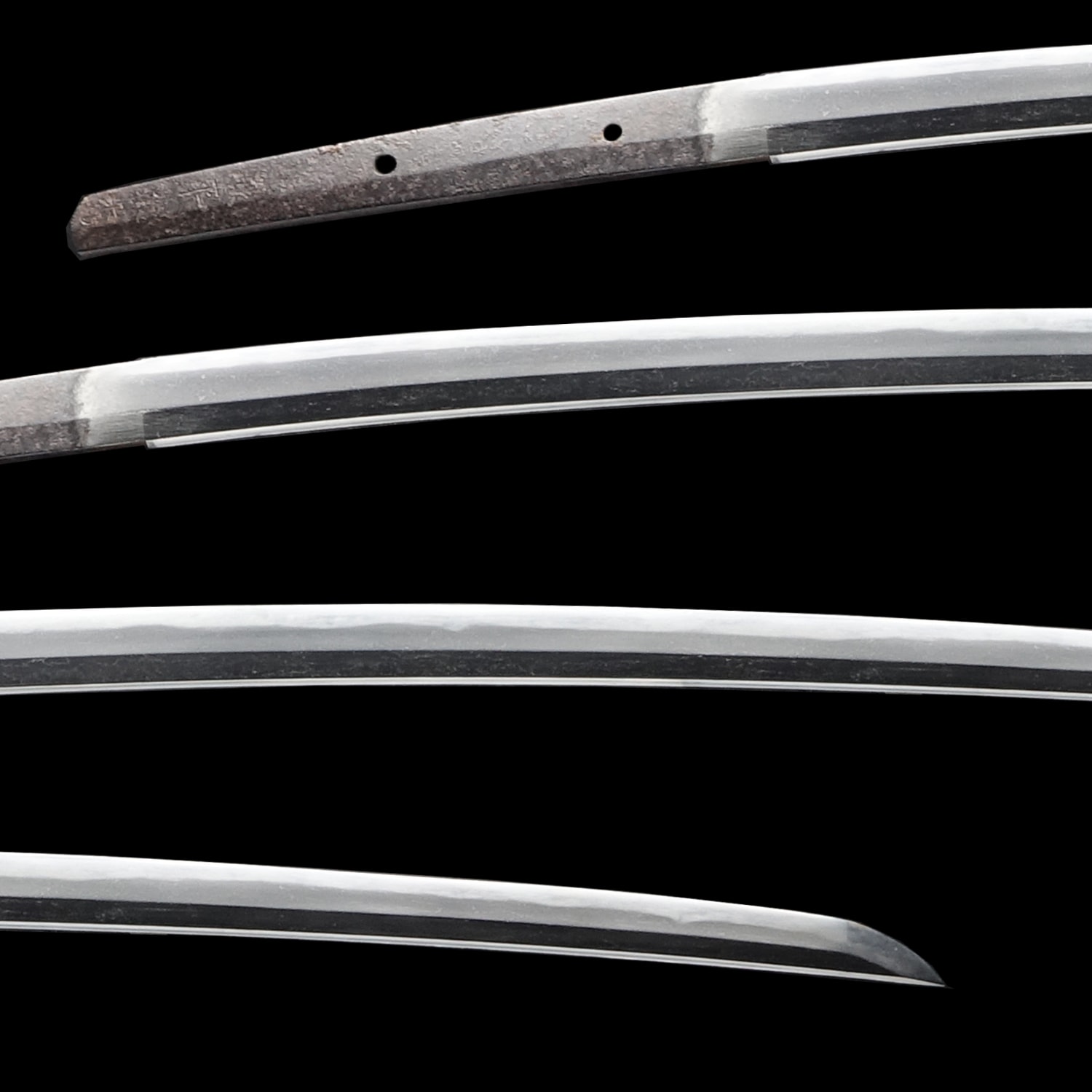
Hamon
:
The crystalline structure which forms along the cutting edge of a blade as a result of the hardening process
Jimon(Jihada)
:
visible steel surface pattern created by folding and hammering during forging process
Kissaki
:
Kissaki is the tip of the Japanese sword.
Nakago
:
Nakago is the tang of the Japanese sword.
Japanese swordsmiths left the black rust on the tang because it prevents red rust while the tang is in its handle. And the discoloration of the tang was created over time, and it is a great indicator for a Japanese sword specialist to estimate when the sword was forged.
Koshirae
:Koshirae is the mounting of the Japanese sword. There are several parts that consist of Koshirae such as Saya (Scabbard), Tsuka (Handle), Tsuba (Handguard).
Fuchi-Kashira
:
A pair of matching sword fittings that cover the upper and bottom parts of its sword hilt.
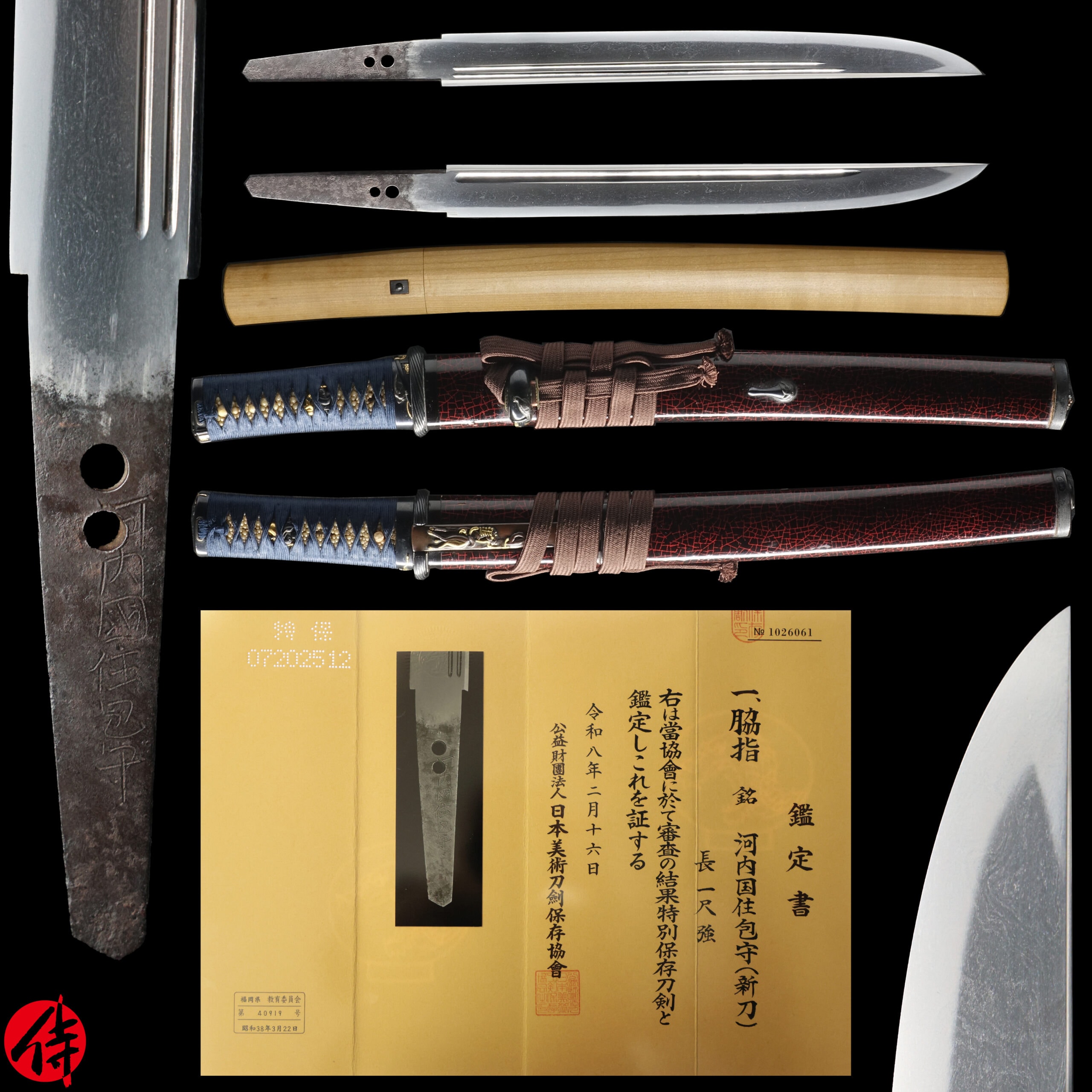
While the Fuchi part depicts a dragon and man, the Kashira part depicts a man on a horseback crossing a bridge on the river.
In addition, the surface of this Fuchi Kashira is decorated with the Nanako-Ji (魚子地) technique. This process makes a uniform minimal protrusions pattern by hitting the Nanako-Ji Tagane (魚子地鏨, a chisel for this technique) on a metal surface. This decorative technique is often seen on sword mountings.
Tsuka and Menuki
:
Tsuka is the handle of the Japanese sword and Menuki is its decoration.
We assume the motif of this Menuki might be related to Sangokushi (三国志), The
Records of the Three Kingdoms.
Its original was written by Chen Shou and published in the 3rd century. These th